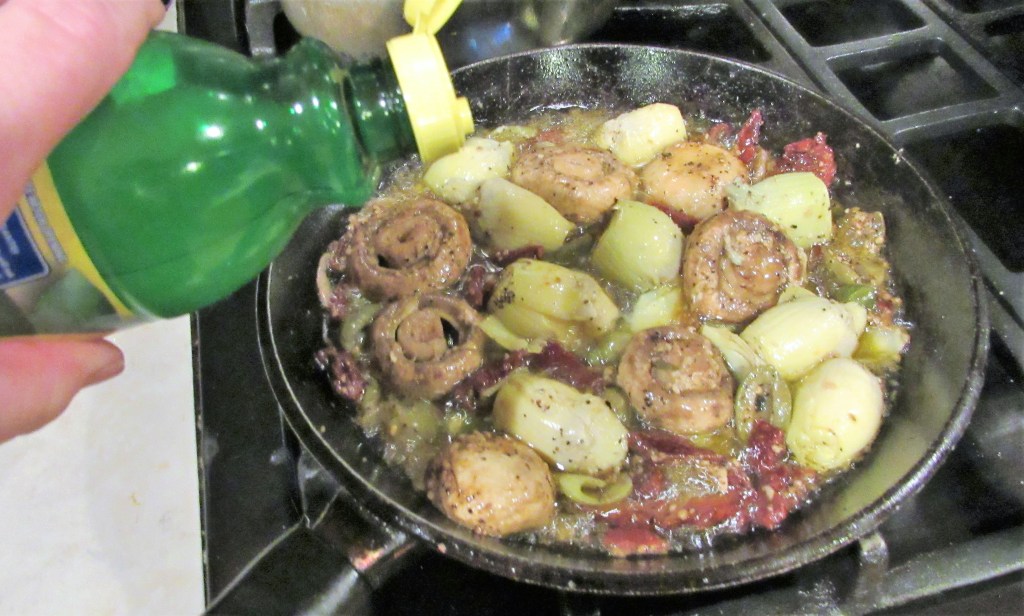
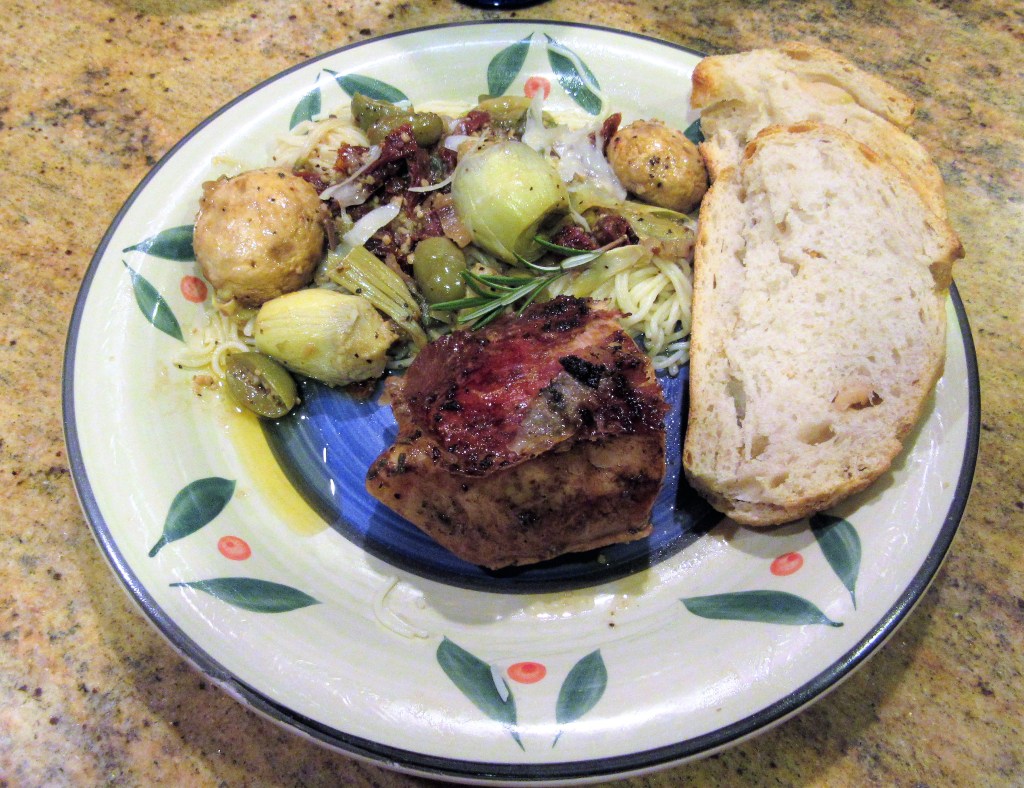
The Last of the Spanish Tomato Sauce

After four completely different dishes using my Spanish tomato sauce, it is now finally gone. As you can tell, I REALLY like this sauce a lot. You all know I LOVE using up leftovers and recreating them. I think I got A LOT of mileage from this Spanish tomato sauce, and everything was different and delicious. The first dish I used it for, was for the original recipe for the Galician scallops. Galician Broiled Scallops. Then I used it for my leftover Italian short ribs, though I never showed you the recipe for that. Italian Style Short Ribs. Next, I mixed together with vodka and peppers to make my bloody Mary steak. Bloody Mary Steak. No matter what I used it for, it seemed to just keep growing, and there was always smore left over. I just finally finished the last of it and made some pasta with hot Italian sausage and shrimp that I served with some garlic knots on the side.
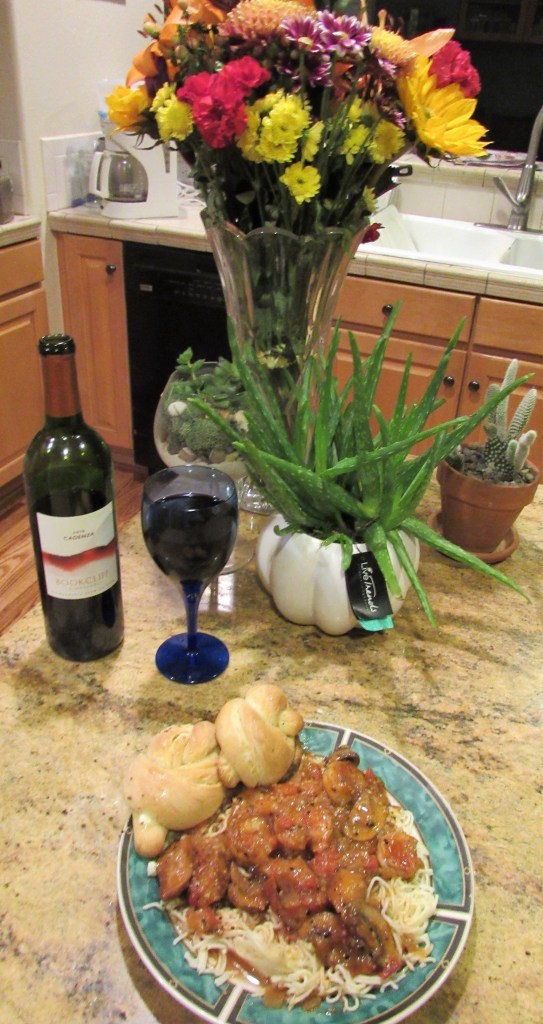
Spanish Style Sausage and Shrimp Pasta

There is no real recipe here, since the main recipe is for the sauce, and you already have that. This was easy-peasy and mostly from leftovers. All I did was add some hot Italian sausage, but you can use whatever kind you like; some shrimp, peeled and deveined; angel hair pasta, or again, any kind you like, although I would suggest a lighter pasta because it is more of a delicate sauce and mushrooms, which of course are optional. I also added another diced tomato to my sauce and a dash of lemon juice. Of course I used olive oil for the cooking process too. I think I need to invest in olive oil and olive production. I keep the olive oil makers in business.
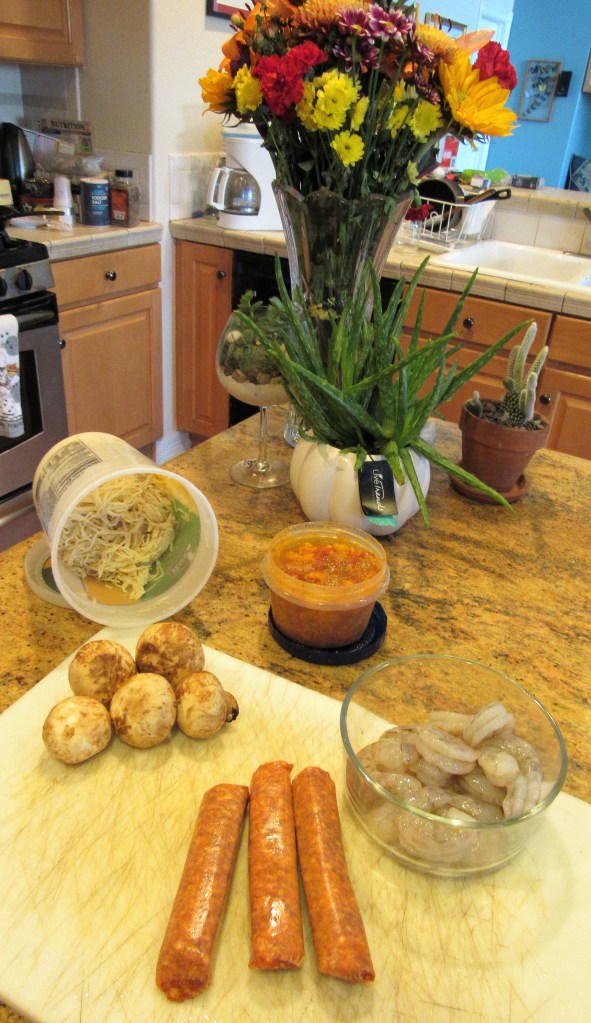
Cook the sausage first. Then the shrimp.
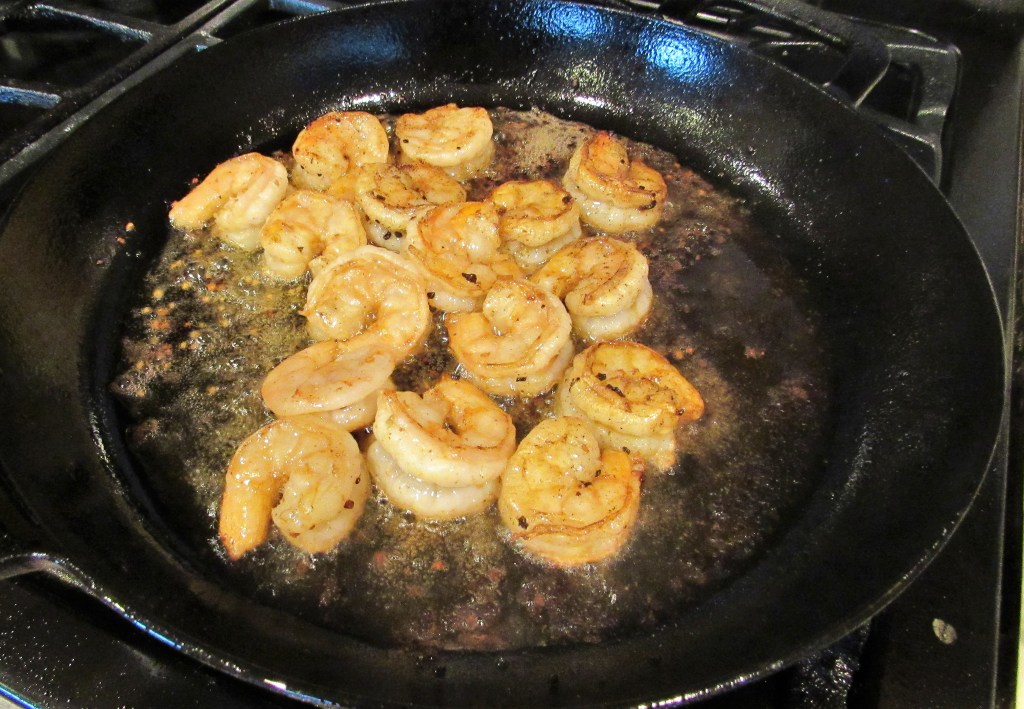
After the shrimp was cooked, I added a bit more olive oil, then cooked the mushrooms. I added the lemon juice in with the mushrooms, so I could scrape the bottom of the skillet to get all the drippings from the sausage and shrimp too.
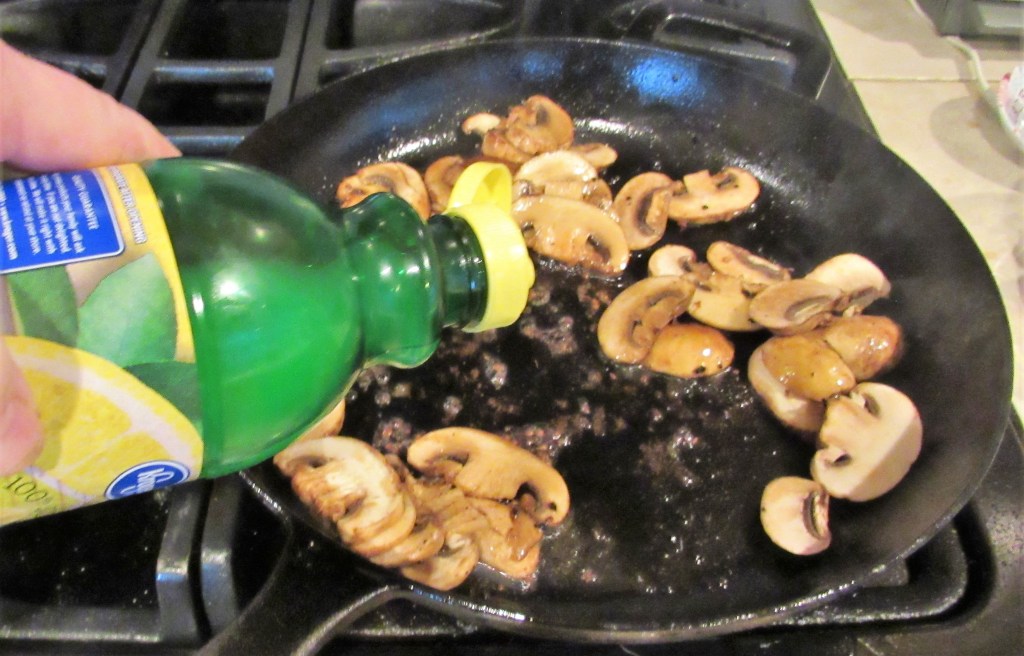
Once the mushrooms were cooked, I sliced the sausage and re-added that and the shrimp to the skillet. Then I added the leftover sauce and another diced tomato. Bring it all to a boil, then reduce the heat to a simmer and continue to cook until everything is heated through.
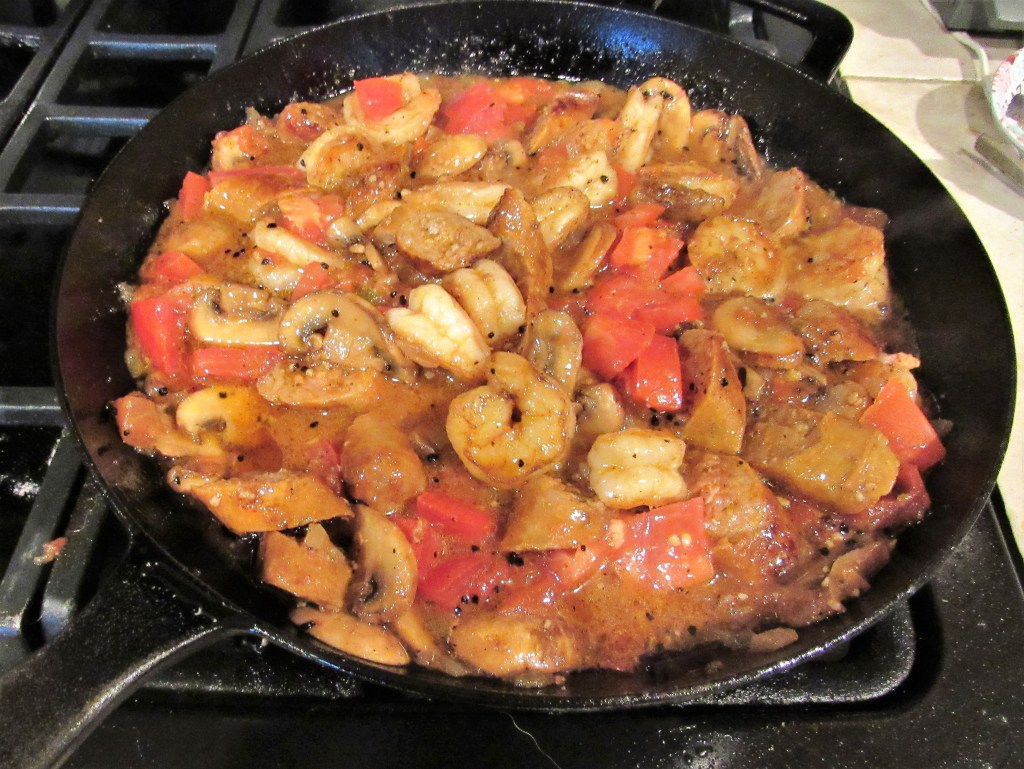
Serve it all up over your favorite lighter pasta, and dinner is served.
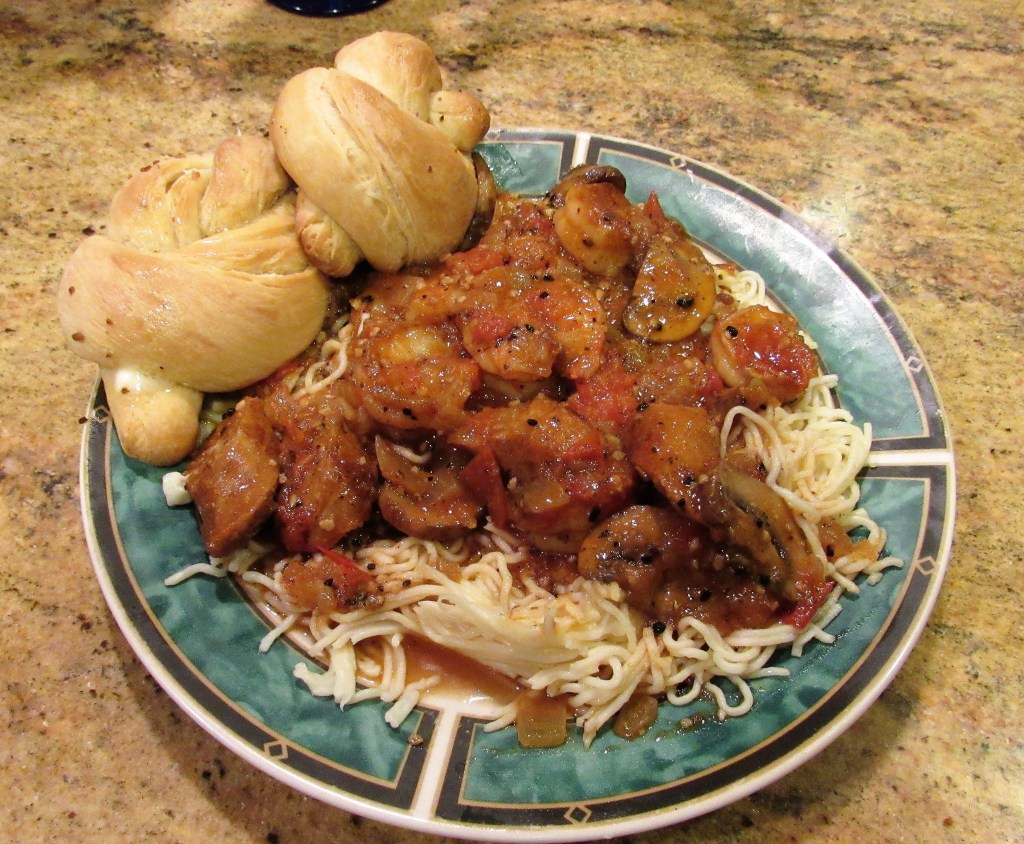
!Desfruitas! Enjoy! This is just the way I like it too; simple, easy-peasy, AND I get to used up leftovers. Life is good!

Stay safe and stay well Everyone. ‘Til next time.

My New Refrigerator

I have been spoiled by having two refrigerators for many years. Having two really comes in handy, especially when I am doing a lot of cooking for entertaining and the holidays. But a couple of months ago, our old refrigerator in the garage died. It lived a good long life. It must have been at least 25-30 years old. It was a major inconvenience when it died too. The one in the house can only hold so much, and it has been over flowing for these past couple of months. Originally the plan was to move the one in the kitchen into the garage and have the new one in the kitchen, but we forgot to do that before getting our new hardwood floors, and then decided we didn’t want to because we did not want to ruin the new floors. ARRRGGGHHHH! Finally, the new refrigerator for the garage came. It was delivered yesterday. At the moment, it is still empty. We had to let it cool before putting anything in it. It came just in time for the holidays, although this holiday season will be very low key.

This is my main refrigerator in the kitchen. I really like the stainless steel and I like the bottom freezer. We wanted, or I should say I wanted, another one similar to this for outside. It didn’t happen.

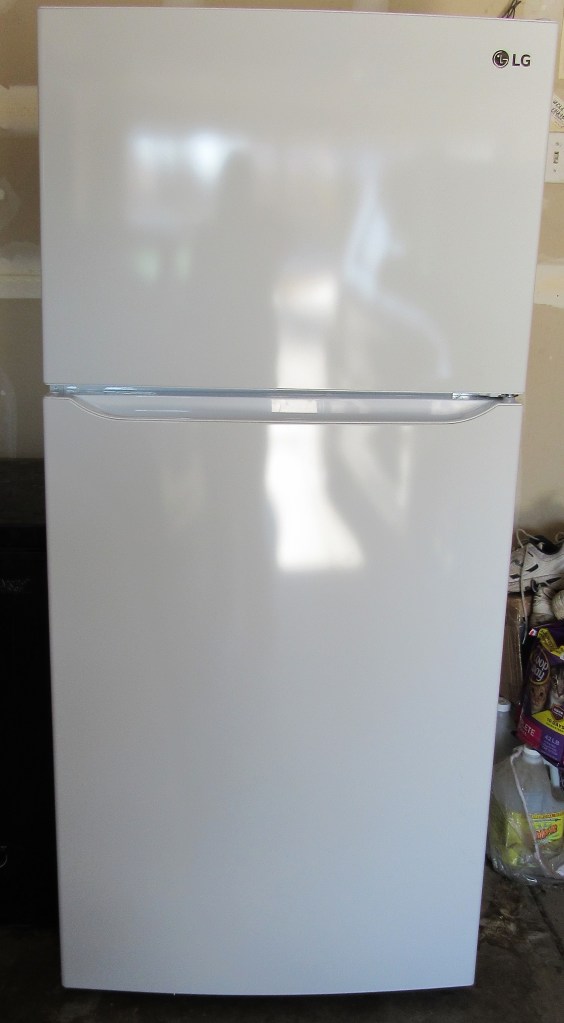
This is my new refrigerator for the garage.

We also have a freezer in the garage too. We are always prepared for just about anything that comes along. As you all know, no one will ever go hungry at my house.

Not only did our second refrigerator die, but so did my second microwave, which is also a convection oven. They died about the same time. I still need to get that replaced too. I really depend on having that second microwave and oven. Maybe that will come from Santa for Christmas.

Stay safe and stay well Everyone. ‘Til next time.
Hamming It Up

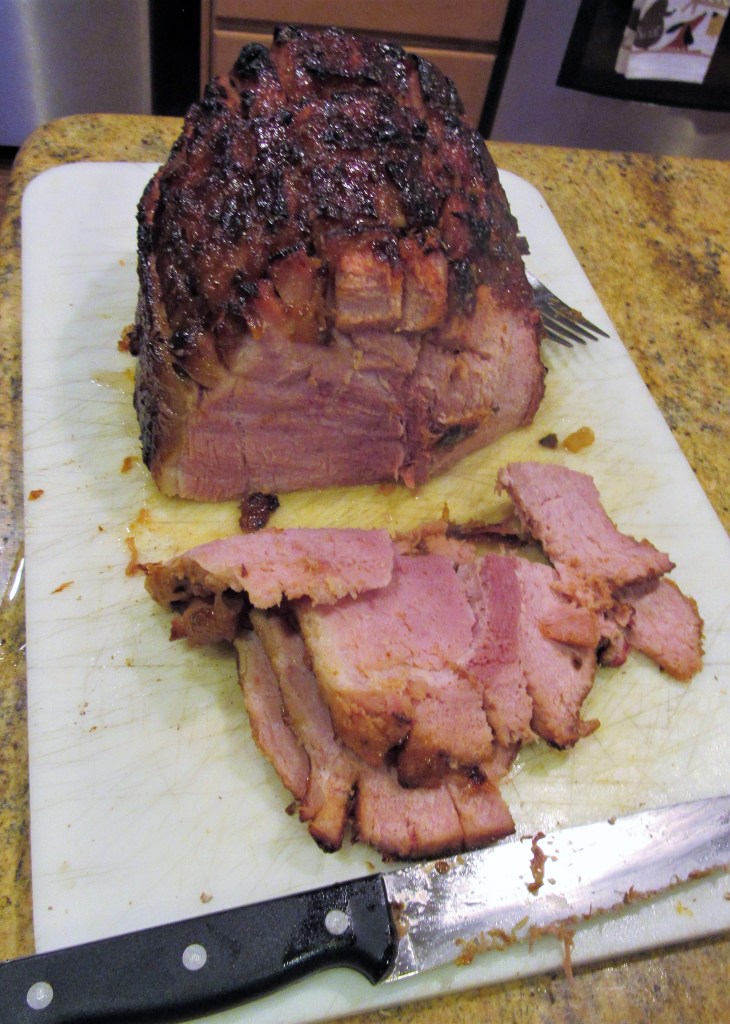
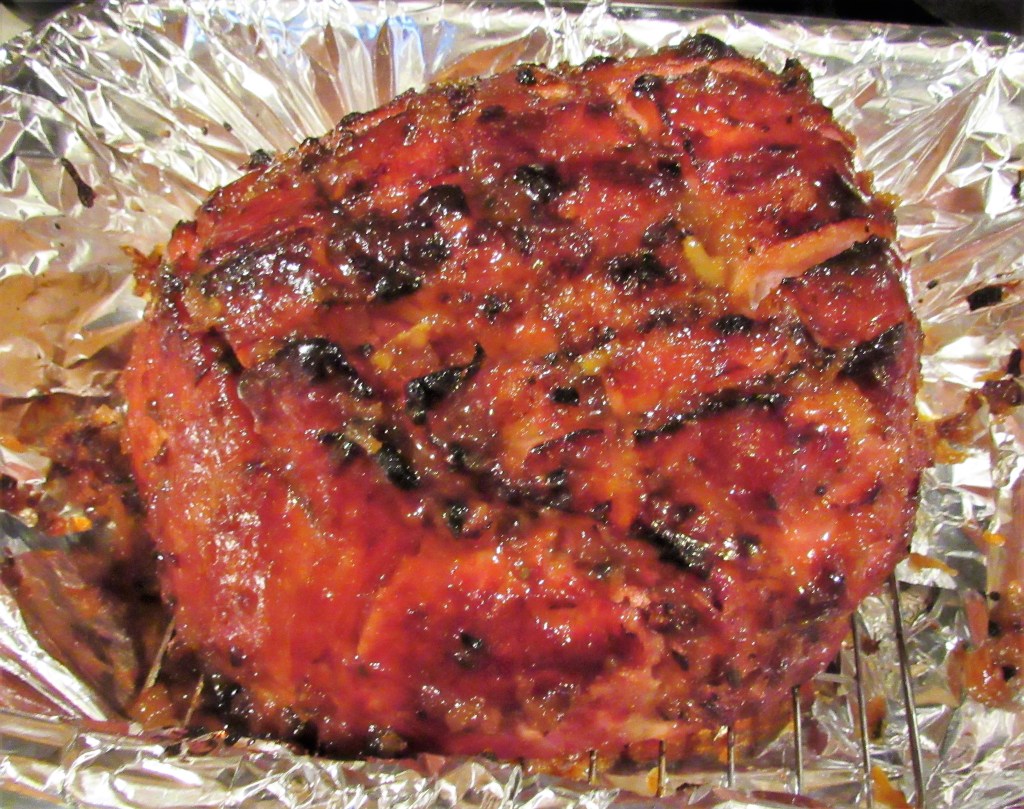
It was another snow day for us, and that meant it was another good day to have the oven on. And it was a good day to roast a ham too. I love ham no matter how it is cooked, but I have to admit, the ham itself can be a little boring. The sauce is what brings it to life.

As you all know, I love my foods with a bit of a kick. I like to spice things up as much as I can. My ham is no exception. This time I kicked it up by adding a spicy-sweet sauce, made from chipotle peppers, crushed pineapple, orange marmalade, and a dash of two of tequila. In a word …. YUM!

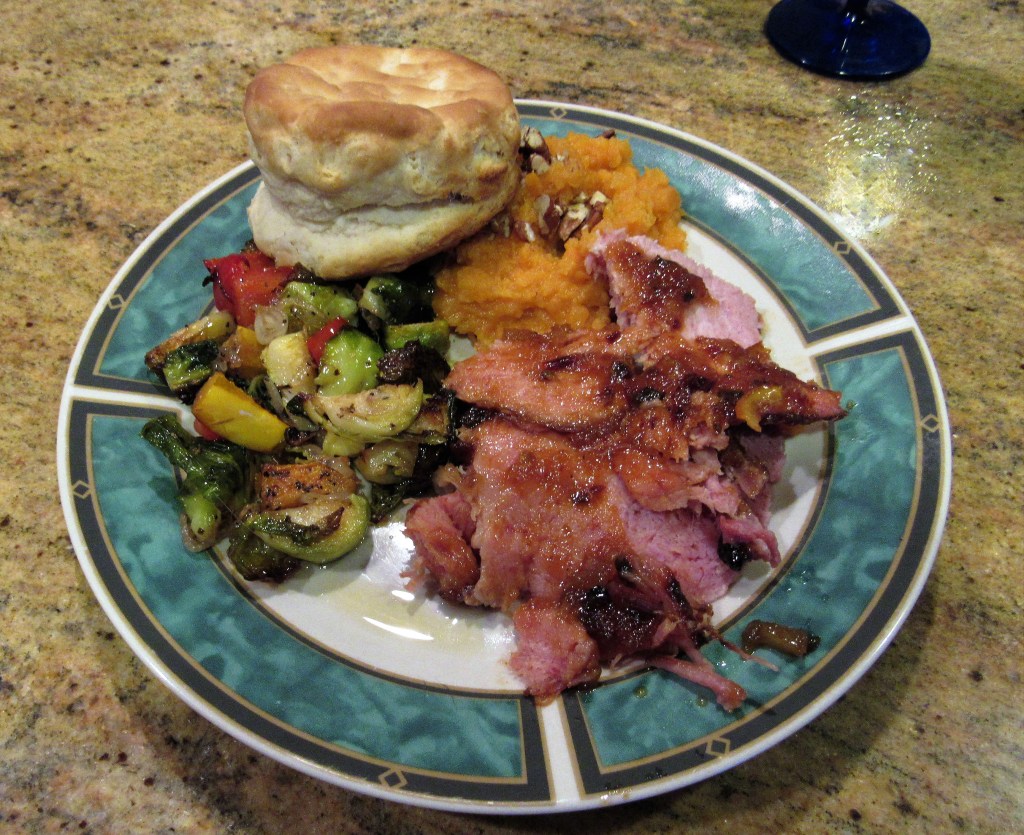
I served my ham with some mashed sweet potatoes made with maple syrup and topped with toasted pecans, some roasted winter vegetables and biscuits, with a dry slightly citrusy chardonnay on the side. It was perfect comfort food for a cold wintery day.

Ham with Chipotles, Crushed Pineapple, and Orange Marmalade

1 cooked ham on the bone, about 6-8 lbs

1/2 cup crushed pineapple, with the juice

1/2 cup orange marmalade

1/4 cup brown sugar

2 TBSP Dijon mustard

2 TBSP tequila, optional

2 TBSP chipotle peppers with sauce, minced

Preheat the oven to 325*F or about 160* C.

Place the ham in a deep baking dish, fat side up. I like to line mine with aluminum foil. It makes for a much easier clean up process.

Score the ham by cutting diamond patterns into the fat portion of the ham. Roast for about 2 hours or until the internal temperature of the ham reaches about 125* F.

To make the sauce, combine all the ingredients together into a sauce pan. Bring to a boil, then reduce the heat to a simmer and continue to cook for about 20 minutes, stirring occasionally.

When the ham reaches 125* internally, remove the ham from the oven and turn up the temperature to 400* F or about 200*C . Generously spread the glaze over the top of the ham and place it back in the oven to continue cooking for about 30-40 minutes.

When the ham is done, remove it from the oven and allow it to cool for a few minutes before slicing.

When the ham is sliced, top it with some of the extra sauce and serve it with your favorite side dishes. This same sauce can also be used for pork loin, chicken or turkey too. It is a hearty sauce, so it needs to be served with a hearty meat.

Stay warm, stay safe and stay well. ‘Til next time.

The Poppies of Flanders Field

It is Veteran’s Day, the 11th day of the 11th month, in the 11th hour. Veterans Day, formerly known as Armistice Day, was originally set as a U.S. legal holiday to honor the end of World War I, which officially took place on November 11, 1918. In legislation that was passed in 1938, November 11 was “dedicated to the cause of world peace and to be hereafter celebrated and known as ‘Armistice Day.'”. Veteran’s Day is dedicated to honor all those military personnel who are alive and living a retired life and is a celebration to honor America’s veterans for their patriotism, love of country, and willingness to serve and sacrifice for the common good.

In Flanders Fields

Flanders Poppy on the First World War battlefields.

by John McCrae, May 1915

In Flanders fields the poppies blow
Between the crosses, row on row,
That mark our place; and in the sky
The larks, still bravely singing, fly
Scarce heard amid the guns below.

We are the Dead. Short days ago
We lived, felt dawn, saw sunset glow,
Loved and were loved, and now we lie
In Flanders fields.

Take up our quarrel with the foe:
To you from failing hands we throw
The torch; be yours to hold it high.
If ye break faith with us who die
We shall not sleep, though poppies grow
In Flanders fields.

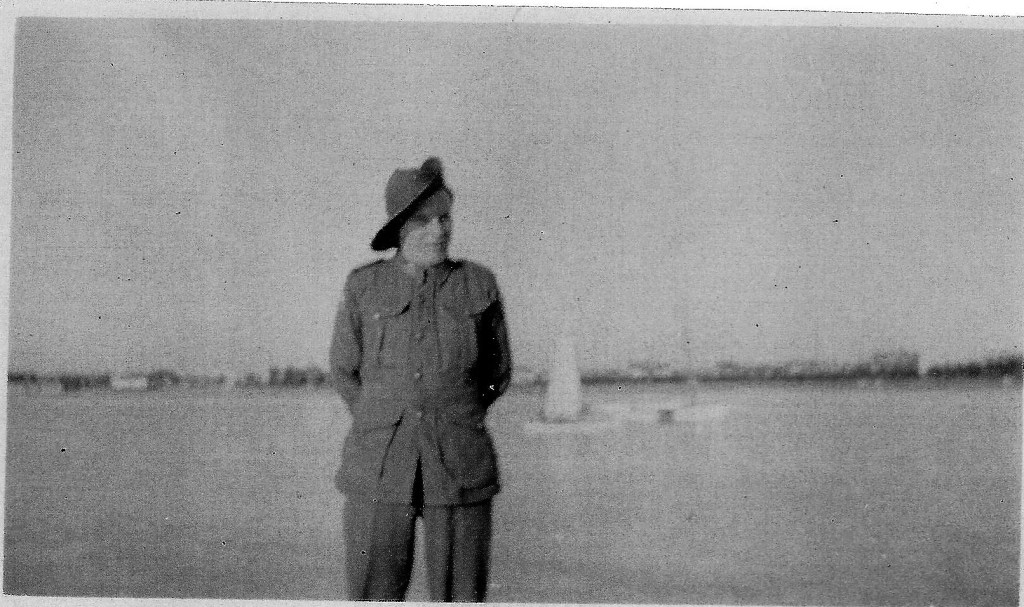
My dad was not alive during the times of WWI, but he did fight in WWII. He was fighting in North Africa at the age of 14, as a member of the Australian Army. Though he was not an original member of ANZAC, he was still an ANZAC. The ANZACs were the combined Australian and New Zealand armed forces, the corps that served with distinction in World War I during the ill-fated 1915 Gallipoli Campaign, an attempt to capture the Dardanelles from Turkey. In 1916 Australian and New Zealand infantry divisions were sent to France. My dad lost a lot of uncles in Gallipoli.

My daddy in 1939 in Prince William Island, Melbourne, Australia, right before being deployed to North Africa.

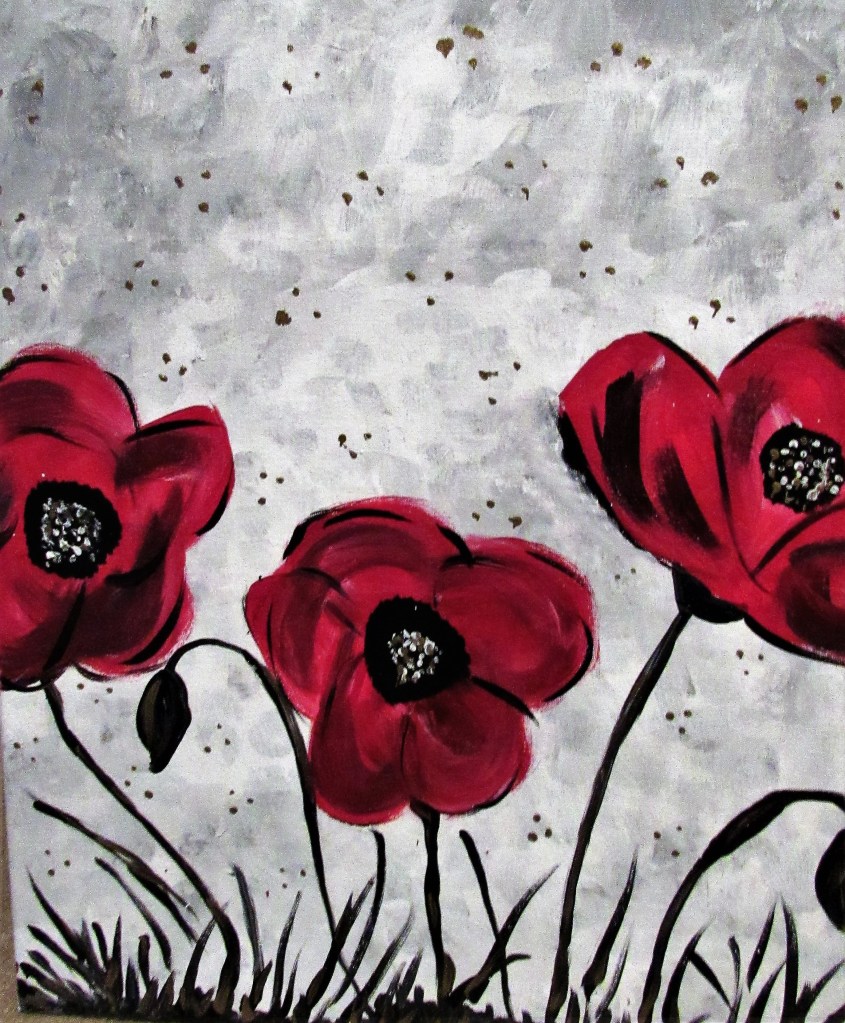
My poppy painting and tribute to those who fought, served and sacrificed.

Thank you to all who served and sacrificed. You are not forgotten. I am eternally grateful. God Bless you all, always and forever.

I will never forget our Veterans and all they have done for us.

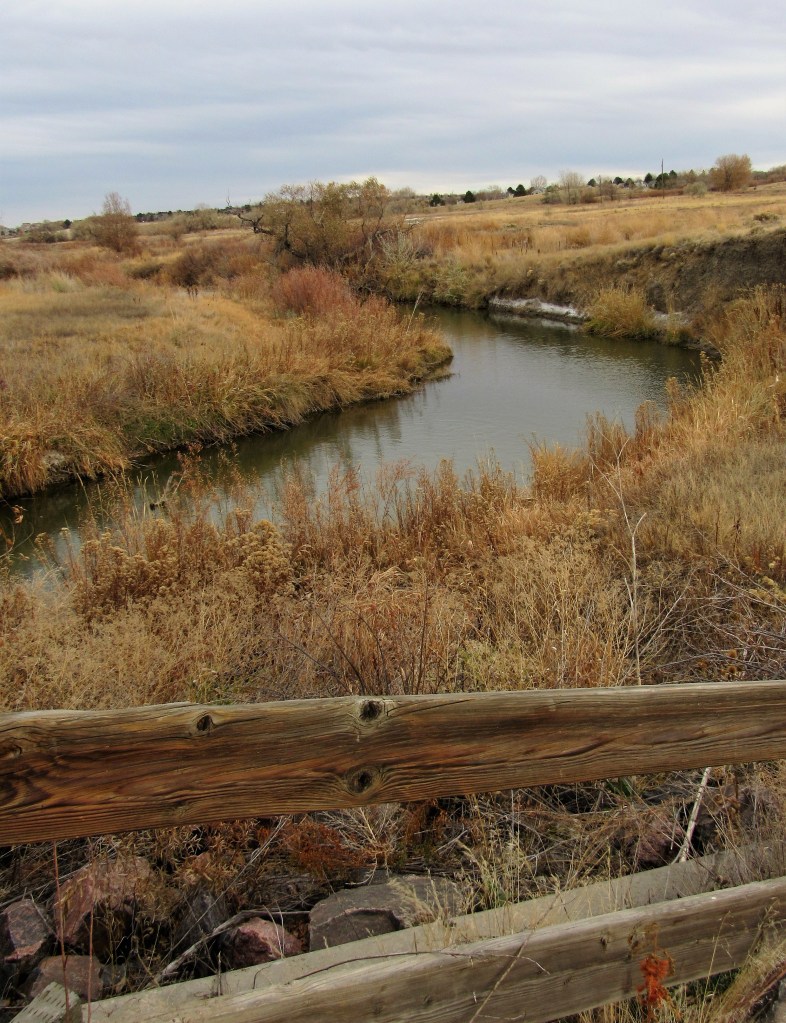
Nature Walks – Tranquility

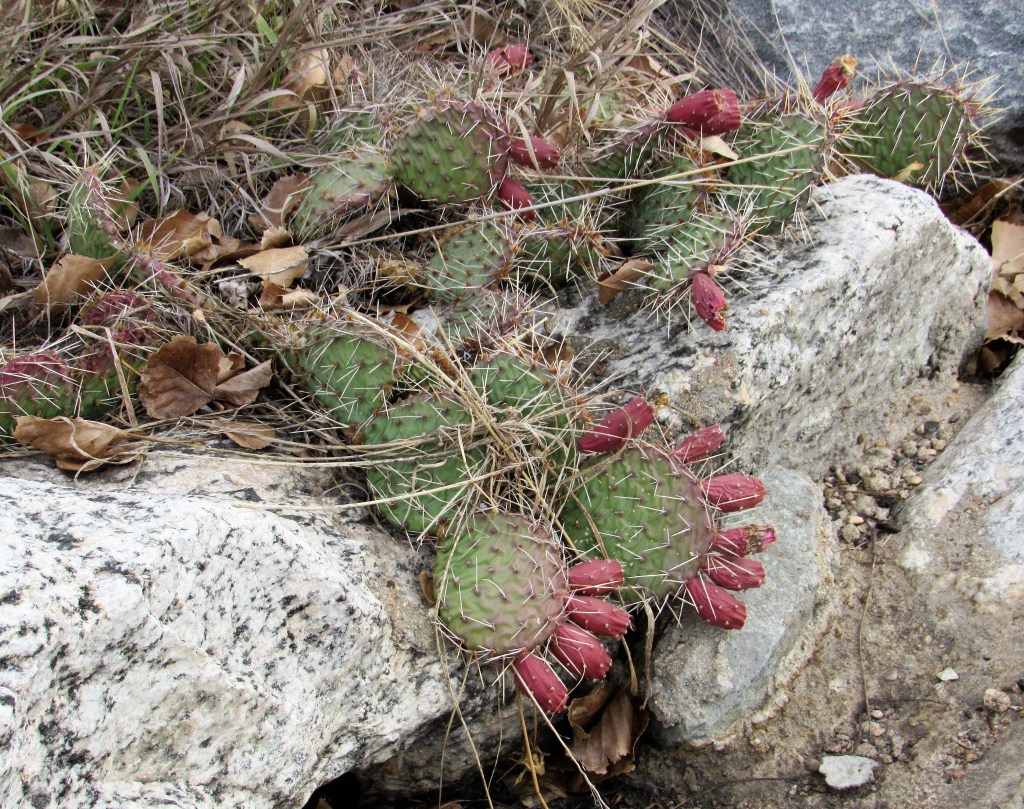
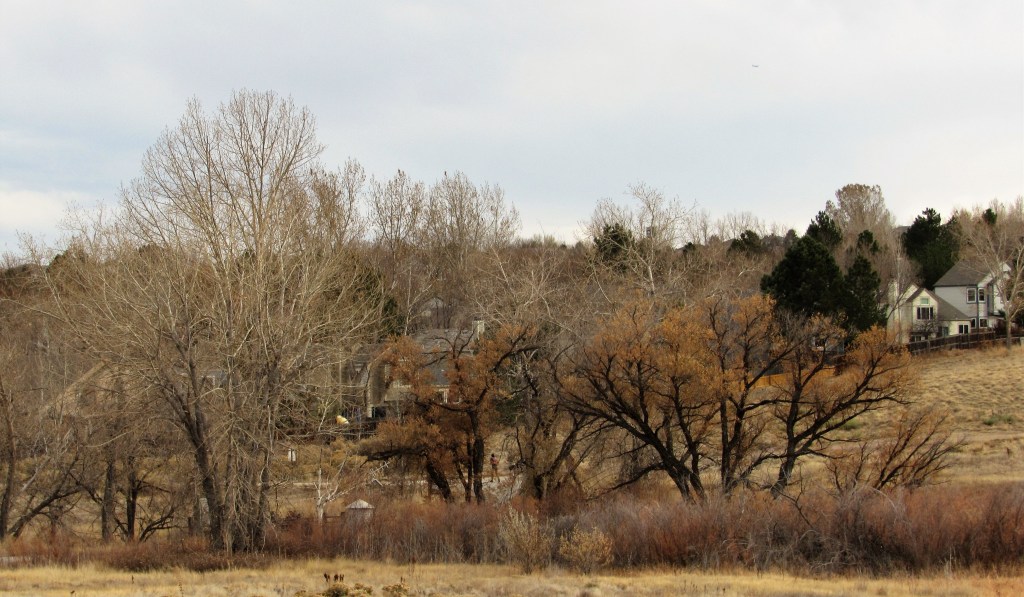
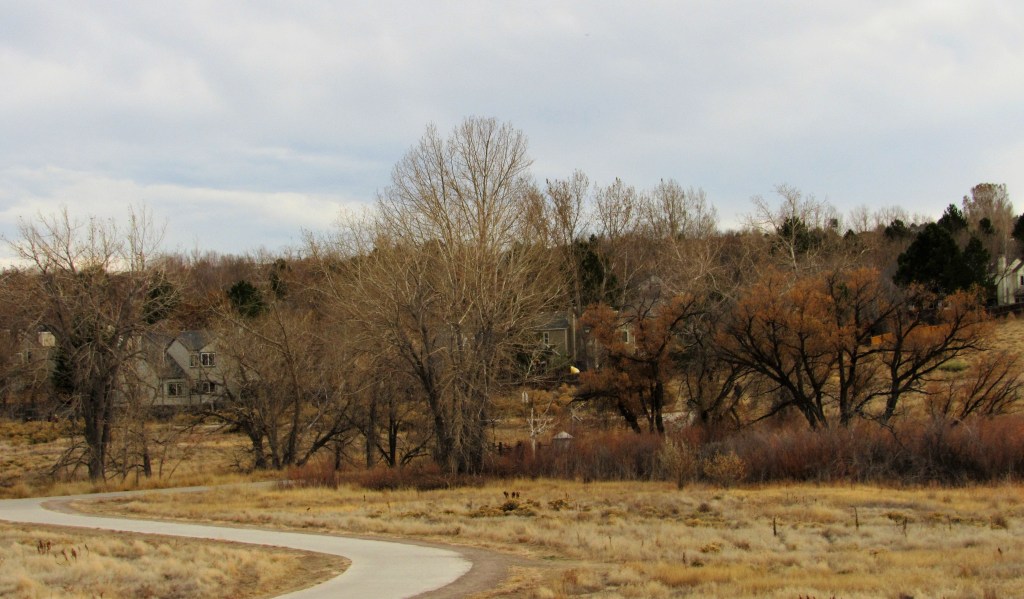
Winter is coming. Most of the beautiful fall colors are now gone and most of my feathered and furried friends have left for the season as well. Now what is left around the lakes is tranquility. Everything is quiet, with only hints of life left about. But that’s OK. The peace and quiet is very soothing and comforting, and I know, it won’t be long before life around the lakes will be hopping again.

Every time has its season and every season has its time. There is beauty to be found in all.

More Fun With Wine

Wine! The nectar of the Gods. You all know how much I love my wines. I have been lucky enough to sample and enjoy many great wines from around the world. It’s hard to pick favorites because there are so many different styles and varieties. I probably love my wines as much, if not even more so, than I do good foods. You know good foods need good wines to make the meals complete. And just in case you didn’t already know this, if you are sharing wine with friends and family, it’s bad luck to open a bottle and not finish it. So, to hedge my bets, and to make sure bad luck does not come my way, I ALWAYS make sure to finish the bottle. 🙂

I thought I would share some wine facts with you today for no other reason than …. just because.

  1. What is VINTAGE wine?

Vintage is a word that comes from two French words – Vin for wine and age, for well, age. The vintage date always refers to the year the grapes were grown and harvested, not the date of the wine’s release. Historically, vintage dates were given to wines so the drinker would know how old the wines are. Later, the age of wines was a mark used to determine the quality of wines by the wine judges.

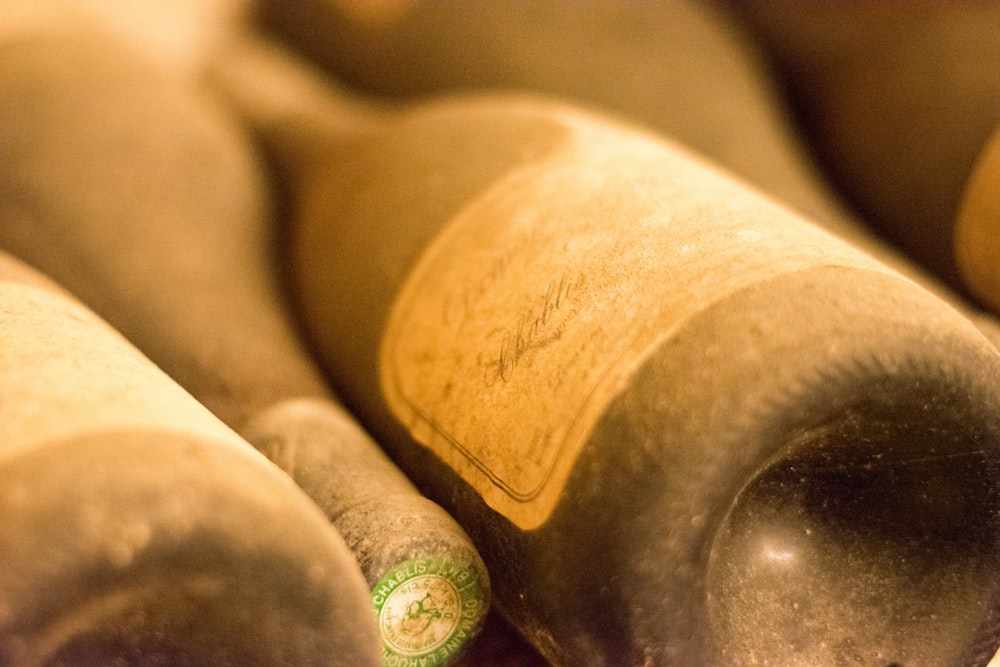
brown glass bottles

2. What is the meaning of a Corked Wine?

It is said that wine is “corked” when certain fungi in the cork cells interact with minute amounts of chlorine and other chemical residues that remain in the corks or the wine itself. Corked wines are not dangerous or harmful, although they will give off unpleasant aromas and flavors to the wines. A corked wine will smell like wet dog. Fortunately, only a small amount of wines produced are actually ever corked. It is unpredictable and can happen with any wine, regardless of the price paid for the wine or the varietal.

3. Can smelling the wine cork tell you if the wine is good or bad?

Not really. Smelling the cork will only tell you whether or not the cork smells good or bad, not the wine itself. The only way to determine the quality of the wine is to smell and taste the wine. The quality of the wine really has nothing to do with the quality of the cork. This tradition actually started to make sure the label on the bottle and the wine inside matched.

4. What country drinks and consumes the most wines per capita?

Is it Italy? Is it France? Is it Spain? Is it the United States? The answer to all of these questions is NO. The little, tiny country of The Vatican, with only about 830 people who live in the Vatican State, is the correct answer. These people love their wines, and it is estimated that each person consumes about 16 gallons of wine per year. In the United states, the per capita consumption is about 3 gallons of wine per year. Who are they counting? I know I drink a lot more wine than that. 🙂 Granted, a lot of this wine consumption in The Vatican is due to the use of wine for religious purposes, but still … they drink a lot of wine over there.

Cheers! A Votre Sante! Salud! Slainte! However you say it, here’s a drink to your health.

Stay safe and stay well Everyone. ‘Til next time.

Video #16 – Eat at EAT! Food & Drink

It’s video time again, and this time I did something a little different. We made a video of our favorite breakfast and brunch restaurant, EAT! Food & Drink in Broomfield, CO. I apologize for some of the sound quality. It was kind of windy out, and the wind over powered my voice at times. Other than the wind, it was actually a beautiful, warm and sunny day. I dressed for colder weather because the weather forecasters said it was going to snow. HMMMMM! I was definitely over dressed for the day.

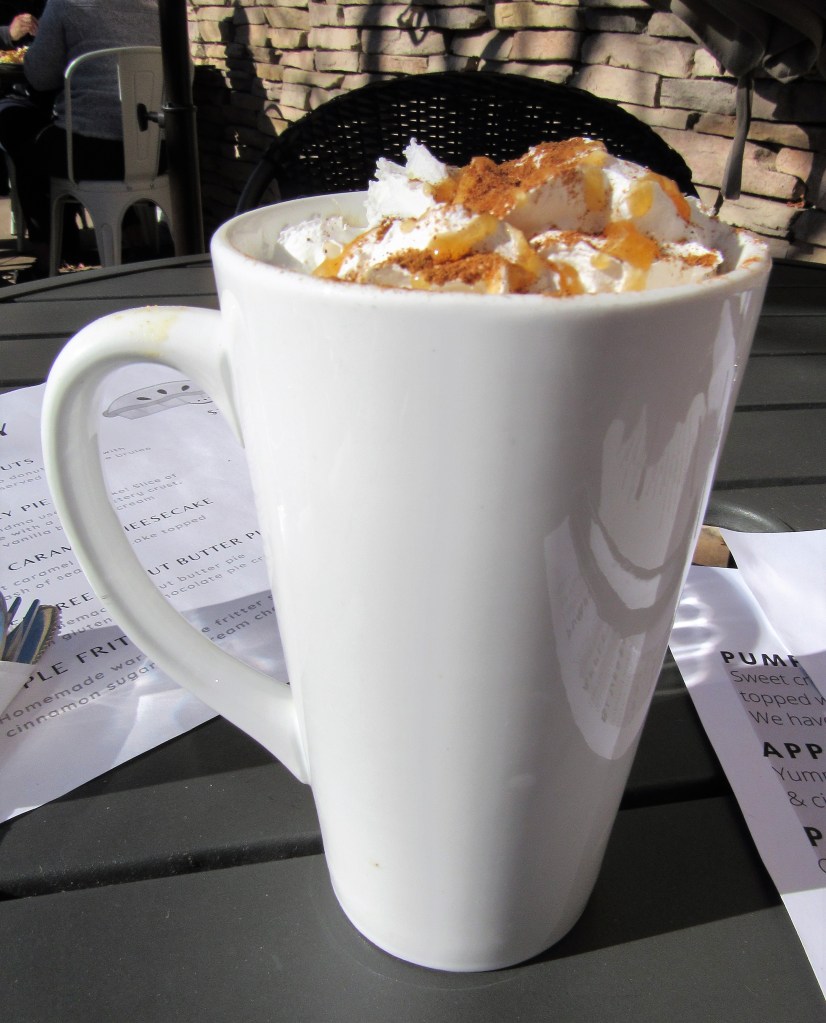
Today, we started off by trying some of EAT’s fun Fall specials. I had a pumpkin spiced latte, the adult version, though you can have it without the alcohol too if your prefer.

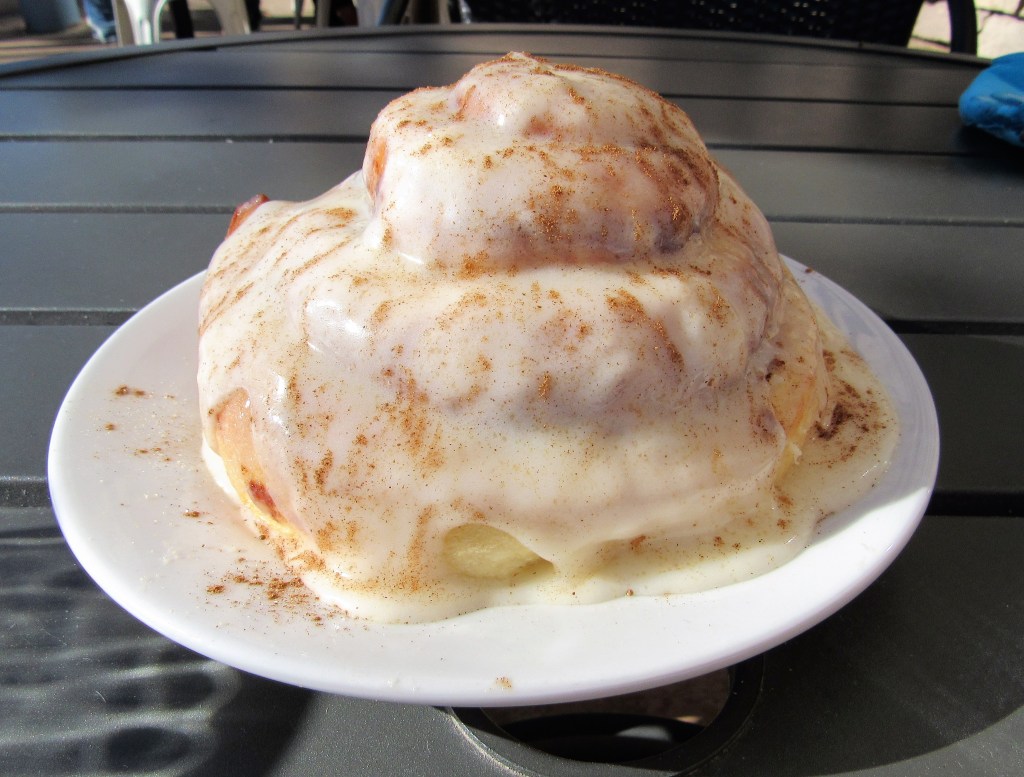
Then we sampled a delicious pumpkin spice cinnamon roll, that Brittany promised me was low calorie. It doesn’t look like there are a lot of calories in it, right?!

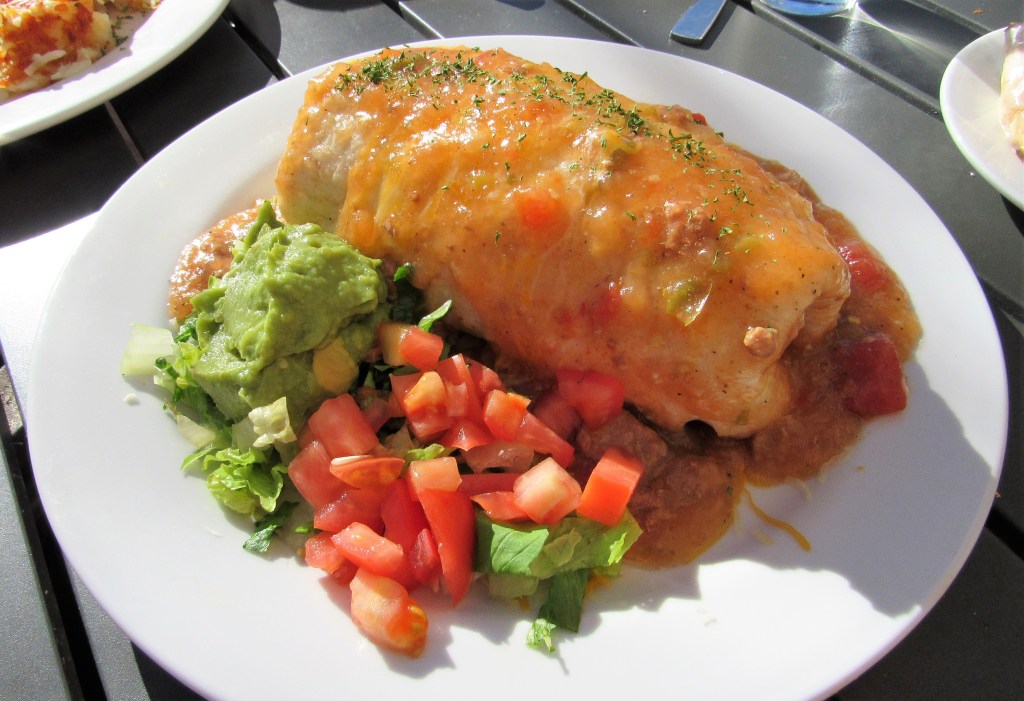
The pumpkin spice latte and the pumpkin spice cinnamon roll would have been a scrumptious brunch on their own, but we didn’t stop there. No, no, no. The food at EAT! is way to good to stop there. Larry ordered the Flatiron Burrito, which was as big as the State of Colorado.

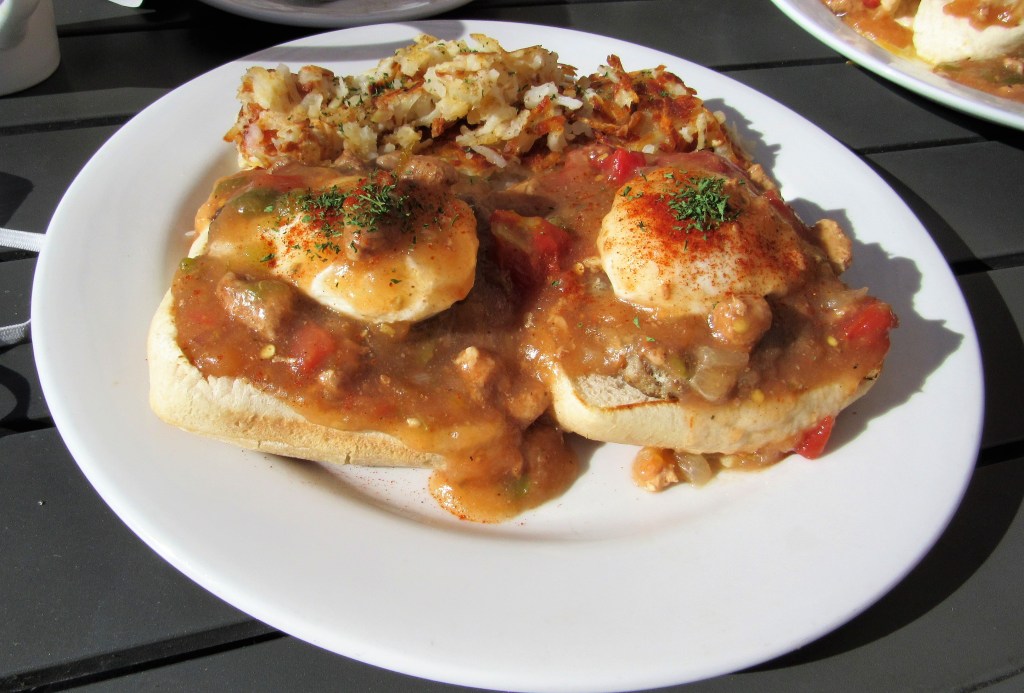
I ordered the Way South of the Border Benedict, with Argentine style handmade sausage. Everything was FABULOUS, as always, but there was absolutely NO WAY we could eat it all. Thank goodness for to-go boxes. I’m just sayin’. 🙂

Brittany, the General Manager of EAT! Food & Drink, and her staff always take such good care of us, and they will take great care of all of you too. EAT! Food & Drink is located at 520 Zang Street, Unit N, Broomfield, CO. You can reach them online at EATatEAT.com or you can call them at (303) 728-9990. Bring your friends and definitely bring your appetite!

Stay safe and stay well Everyone. ‘Til next time.
Elizabeth Makes Masala

Masala means spice, or many spices combined together which are used in South Eastern and Indian recipes. Masala is loosely translated as “spice” and although there are many varieties and preferences, masala is typically made up of 5-7 spices. The definition of masala is a spice mixture that has been ground into a powder or paste used for cooking Indian food, or a dish flavored with this powder. Garam masala is a spice blend widely used in Indian cuisine, from curries and lentil dishes to soups. Whole spices of cinnamon, mace, peppercorns, coriander seeds, cumin seeds, and cardamom pods are toasted in a pan to release their aromatic flavors, then ground to a powder. There are many types of masalas, found all throughout the Southeast Asian countries. This particular masala is a North Indian version.

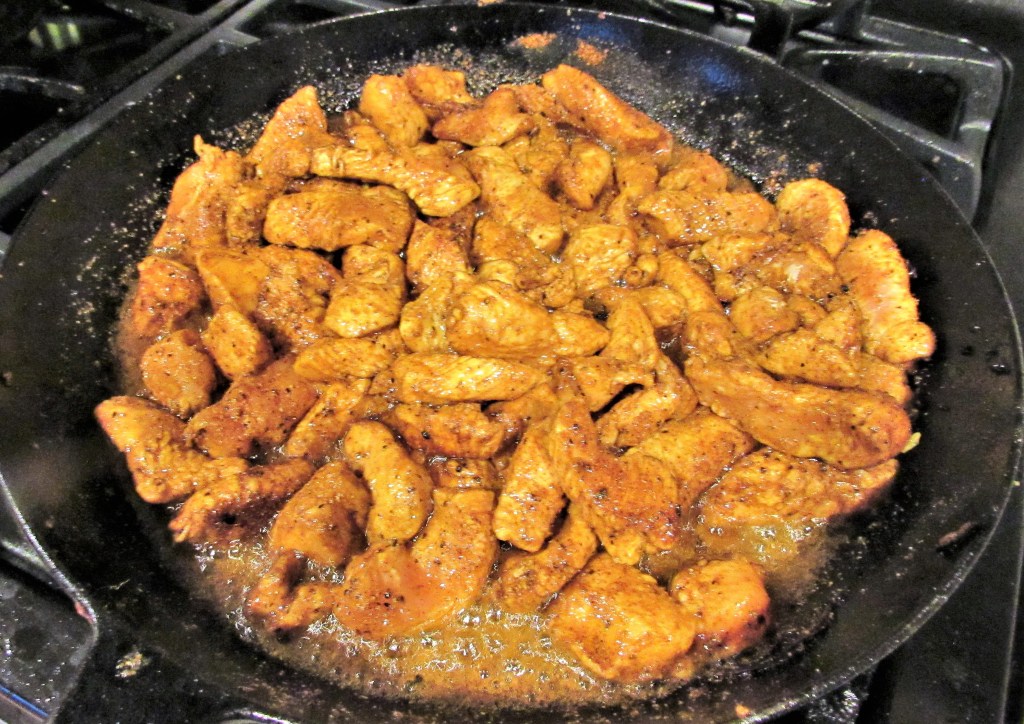
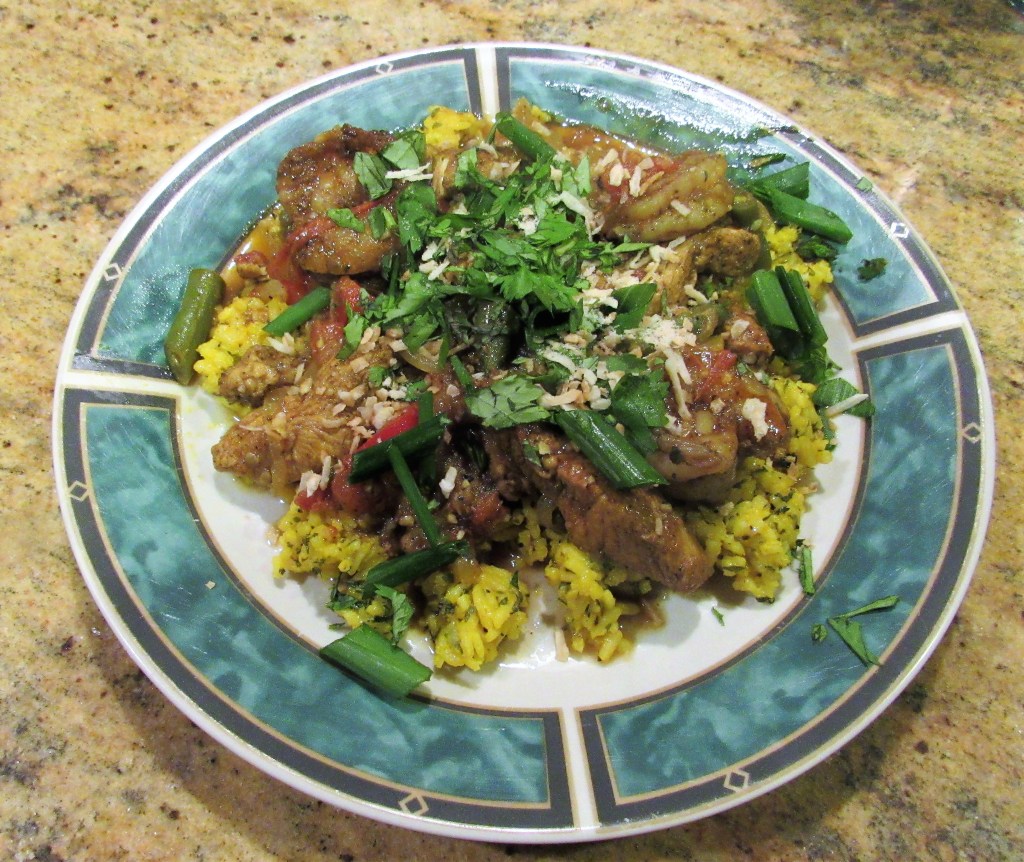
My friend Elizabeth has been bitten by the cooking bug. She has a huge bucket list of things she wants to learn to make, and rather than whittling them down, her list just keeps growing. And that’s perfectly OK by me. I am more than happy to show her, and everyone else who is interested, how to make them. Her latest request was to learn how to make masala, but she couldn’t decide if she wanted chicken or shrimp, so we added both. I mixed the spices together and coated the chicken and the shrimp with them, then let her do the rest, with only some guidance from me.

Chicken and Shrimp Masala

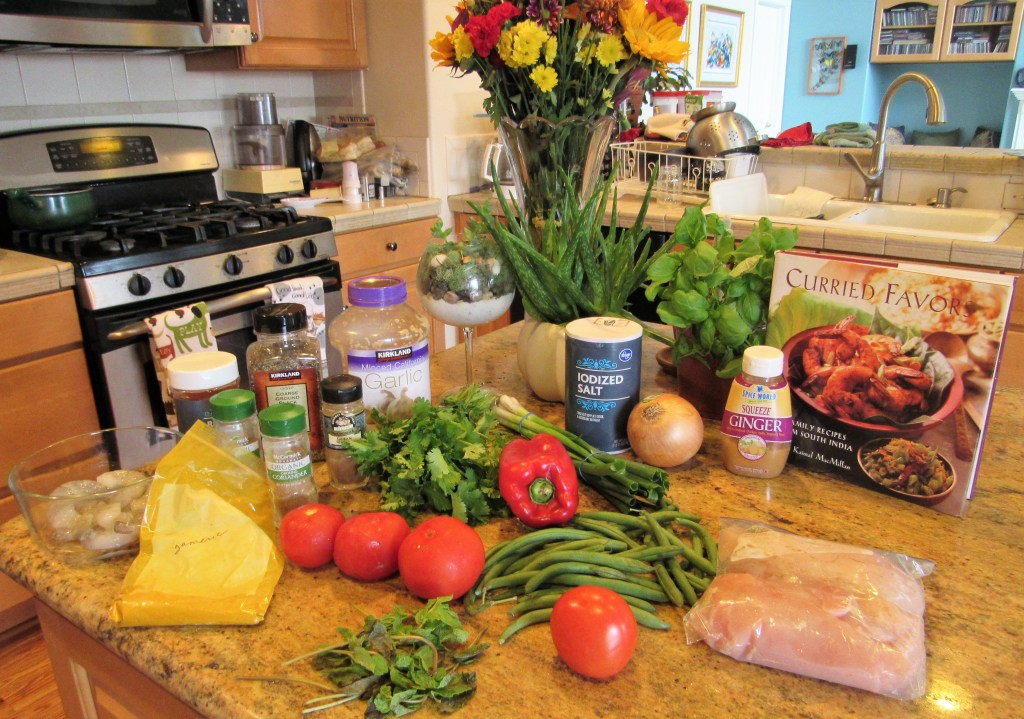
1-1 1/2 lbs chicken breast, cut into thin strips

3/4 lbs shrimp, peeled and deveined

6 tsp ground corinader

2 tsp cumin

1 tsp garam masala

1 tsp turmeric

1 tsp cayenne pepper, or to taste

salt & pepper to taste

1 onion, sliced very thin

1/3 each, red, yellow, orange and green bell pepper

2 cups tomatoes, medium dice

1 cup green beans, cut into 1 inch pieces

1 1/2 TBSP garlic

1 1 /2 TBSP minced ginger

olive oil or vegetable oil for cooking

1 cup water

1 TBSP each fresh mint and fresh cilantro, chopped

toasted coconut, optional for topping

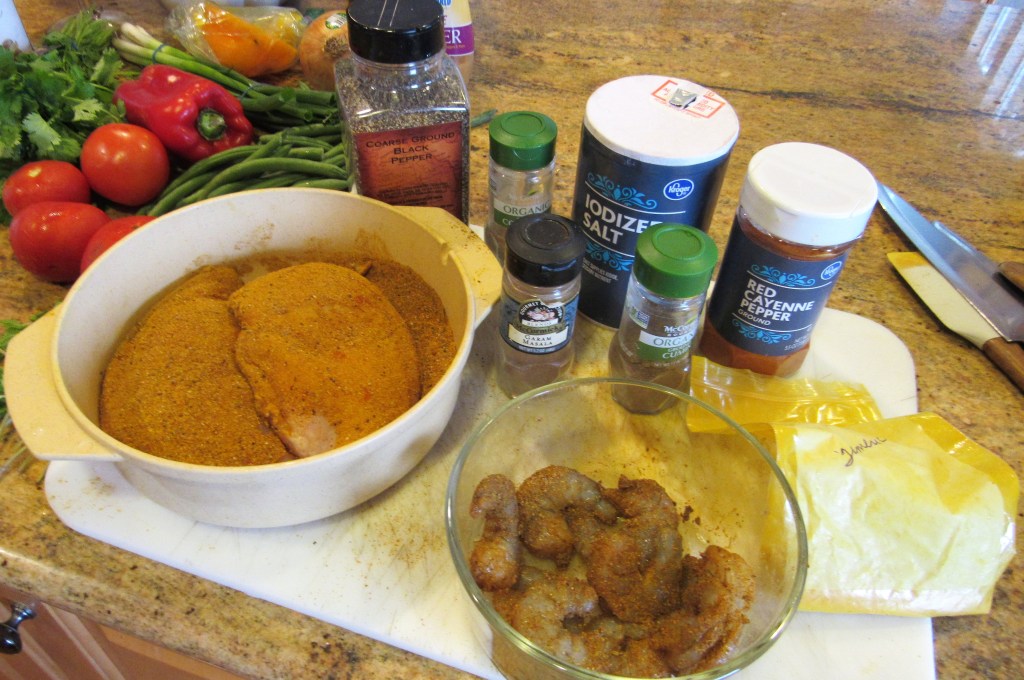
Mix all the dried ground spices together, then coat the chicken and shrimp with the spice mixture, or the “masala”.

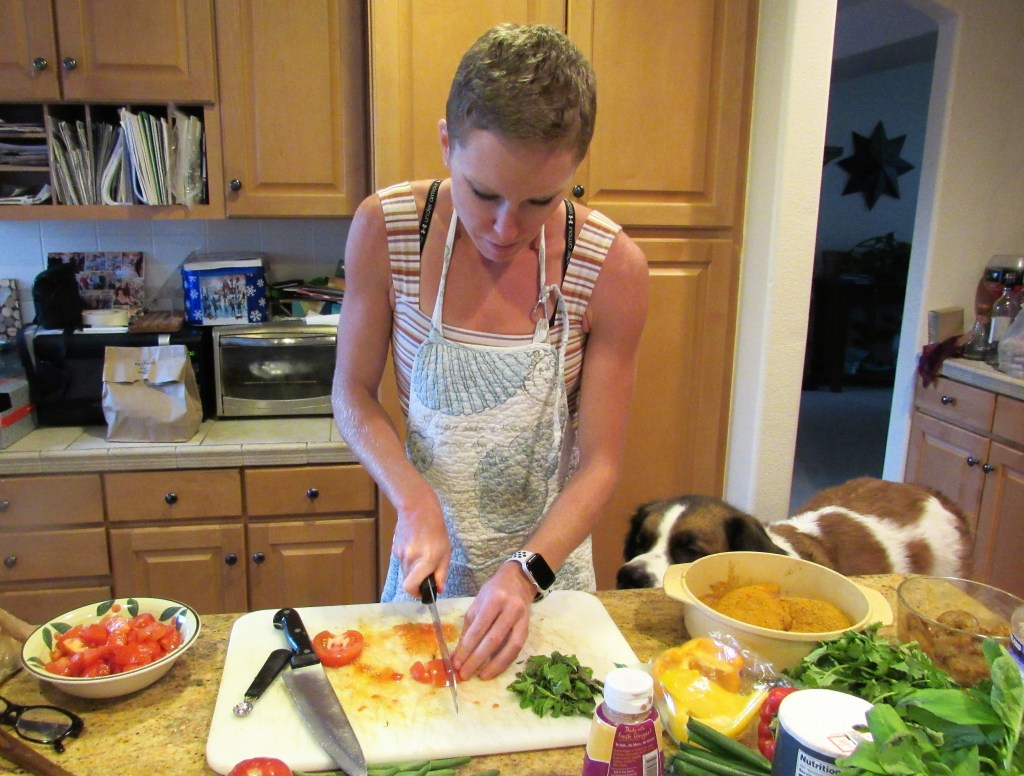
Elizabeth is hard at work cutting all the vegetables. She is being assisted by the one and and only Vinnie.

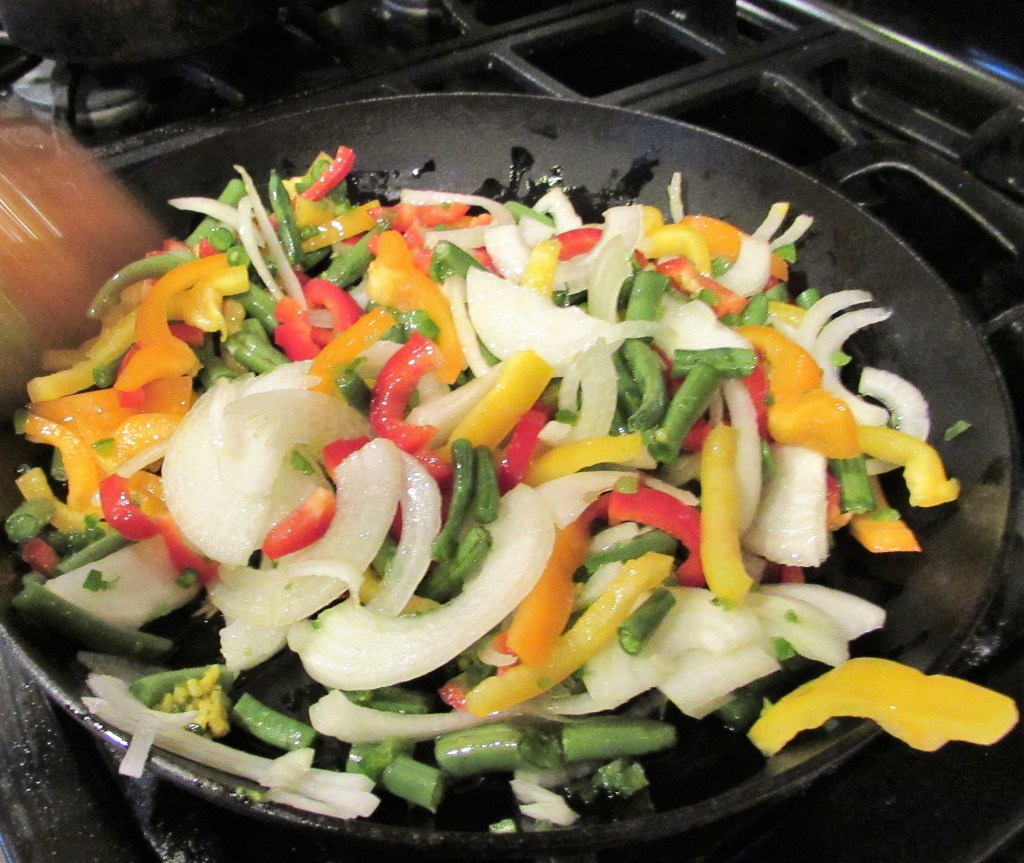
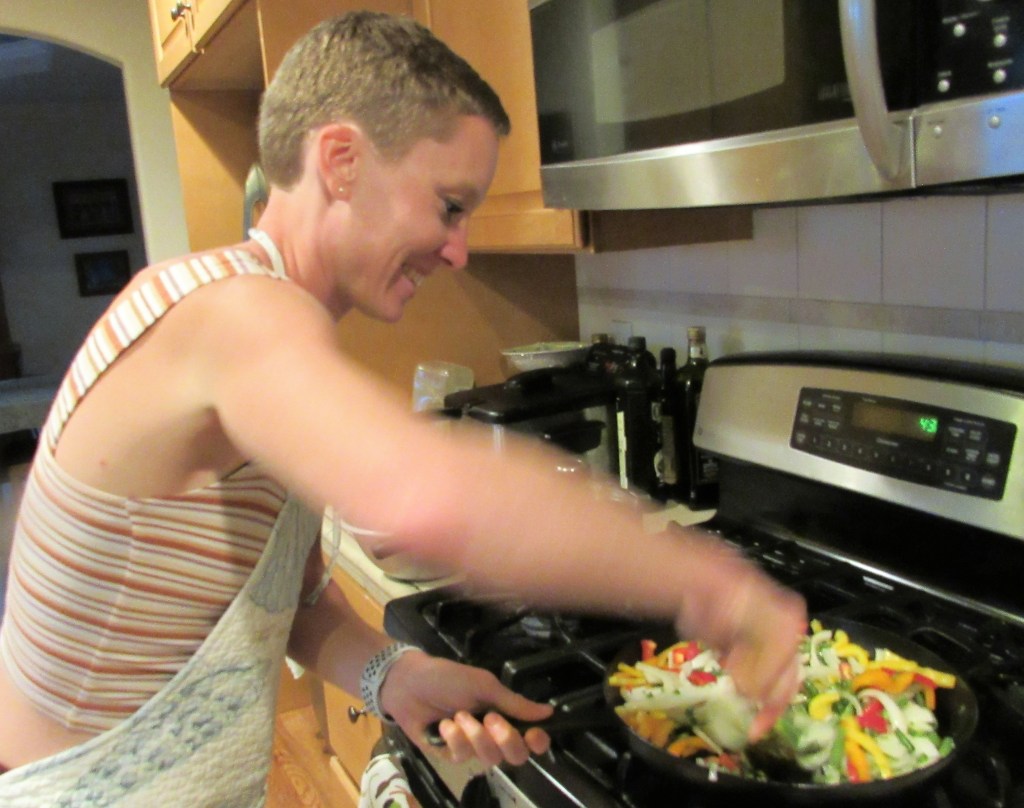
Get the oil nice and hot, and saute the vegetables, garlic and ginger, all except the tomatoes.

Once the vegetables are cooked, yet have still just a bit of crunch left to them, remove them and set them aside.

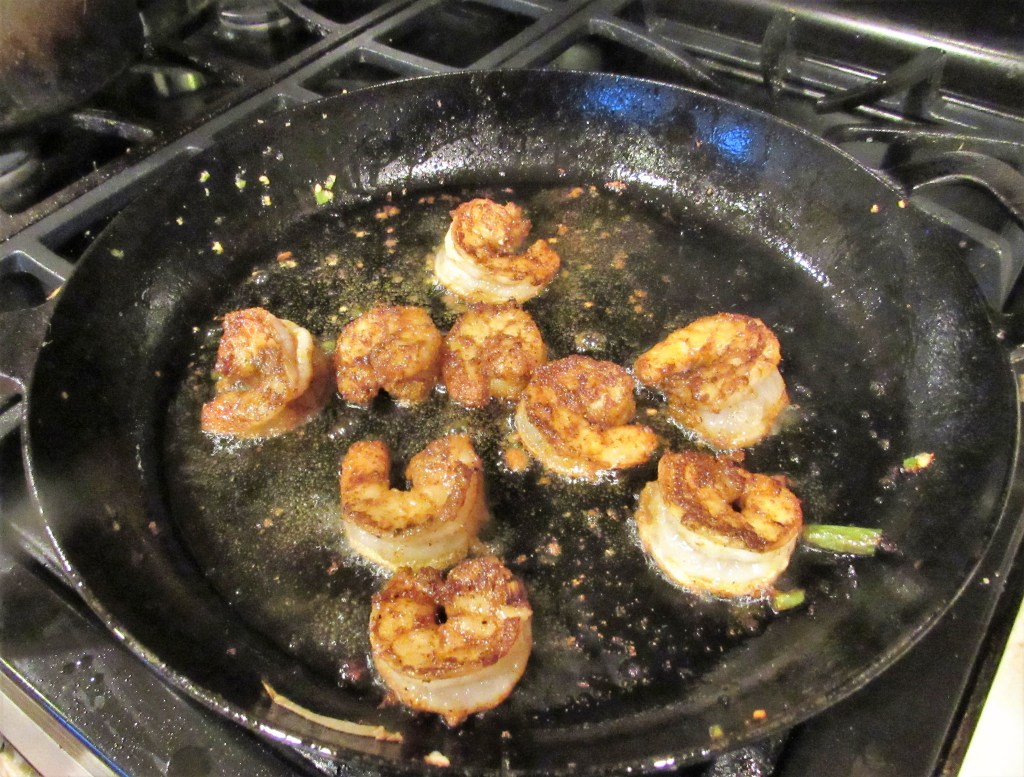
Next comes the shrimp. Cook them in the same pan, adding more oil if necessary, until they are done.

When the shrimp is done, add it to the vegetables and cook the chicken until it is done.

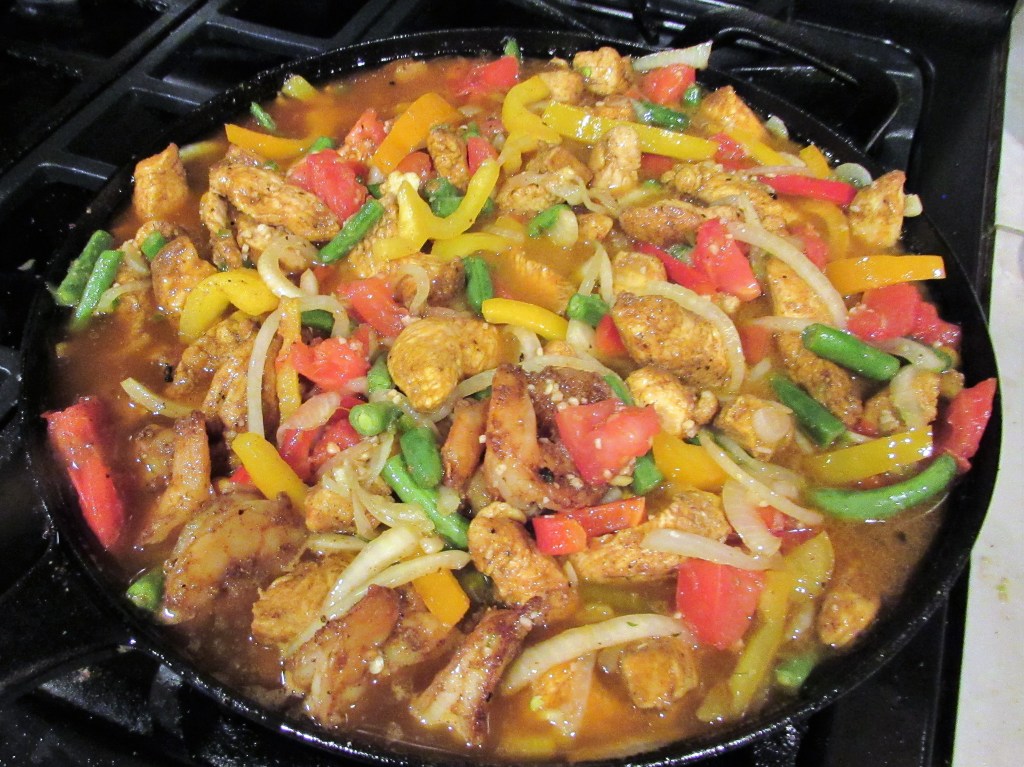
When the chicken is cooked, re-add the shrimp and the vegetables, as well as the tomatoes and the water. Mix everything together well. Bring to a boil, then cover and reduce the heat to a simmer. Continue to cook for about 30 more minutes, making sure to stir occasionally.

Taking it all in.

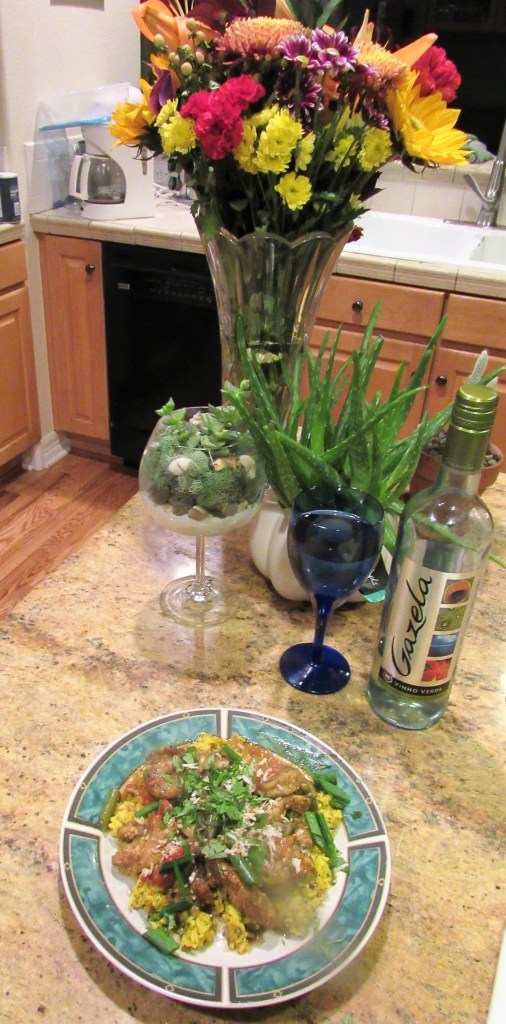
Once the masala was cooked, we served it over some lemon rice, with some heated naan bread on the side. I chose a light, effervescent chardonnay to go with meal. The light citrusy taste and the hint of bubbles went very well with the spiciness of the dish. I topped the dish with some chopped mint, cilantro and toasted coconut before serving.

For dessert, I went to one of our local and favorite Indian restaurants, The Jewell of India, and picked up some carrot pudding and gulab jamun, or honey balls as I like to call them. In between enjoying our delicious dinner and ending on a sweet note, we played a few friendly rounds of Farkle. Larry won a couple of rounds, Elizabeth won 3 rounds, and sadly, I lost them all. Oh well. We all had a good, fun evening, and that is really all that counts.

Stay safe and stay well Everyone. ‘Til next time.

Pasta Napoletana

I usually start from coming up with a theme for dinner, and then find and create recipes that fit into that theme. That is actually why back in the day, I preferred catering to working in restaurants, although, I certainly have many, many years of experience in both. I love to theme cook. So when I made my Saltimbocca alla Pollo, which is Italian, I knew I wanted an Italian side dish to go with it. Saltimbocca alla Pollo. I found a recipe that sounded really delicious, but me being me, I couldn’t just leave it without changing it and “Jeannefying” it. The original recipe was for artichokes Napoletano, which I turned it into Pasta Napoletano. I added more stuff, including the pasta. We all know I like “stuff in my stuff”, so I stuffed my pasta and loaded it with Italian goodness.

“Along the side of the motorway, at the edges of fields and on scruffy wasteland, the most majestic of all of Italy’s wild flowers reigns with nobility”. The wild artichoke.

Artichokes have been a part of the Mediterranean diet throughout the ages. They were cultivated by the Arabs in the 4th century B.C. and have been used for medicinal purposes and delicious foods ever since. The Arabs named this soft-hearted, thorny flower karshuf or karshaf, which is very similar to the Italian name of carciofi. Artichokes were introduced to the Napoli region and from there, spread throughout the Italian world, where they have become a favorite food of the Italian people. Italy is the world’s number producer of artichokes, producing almost 366,000 tons annually. Artichokes are eaten everywhere, and especially in the Mediterranean regions of the world. We love artichokes here in the United States too. California produces 100% of the artichokes consumed in the United States.

I am one of the many, many people who absolutely LOVES artichokes. I could eat them everyday and never get tired of them. That is why I am always delighted to find good recipes for artichokes, that I just have to make and share with all of you. For my pasta Napoletano, I started with artichoke hearts and created a recipe around them. I admit, I rarely purchase whole artichokes. They require too much work. I prefer them already prepared for me. But I buy canned artichoke hearts and bottoms all the time.

Pasta Napoletano

1 lb angel hair pasta, cooked

1 can artichoke hearts, drained

1 TBSP garlic

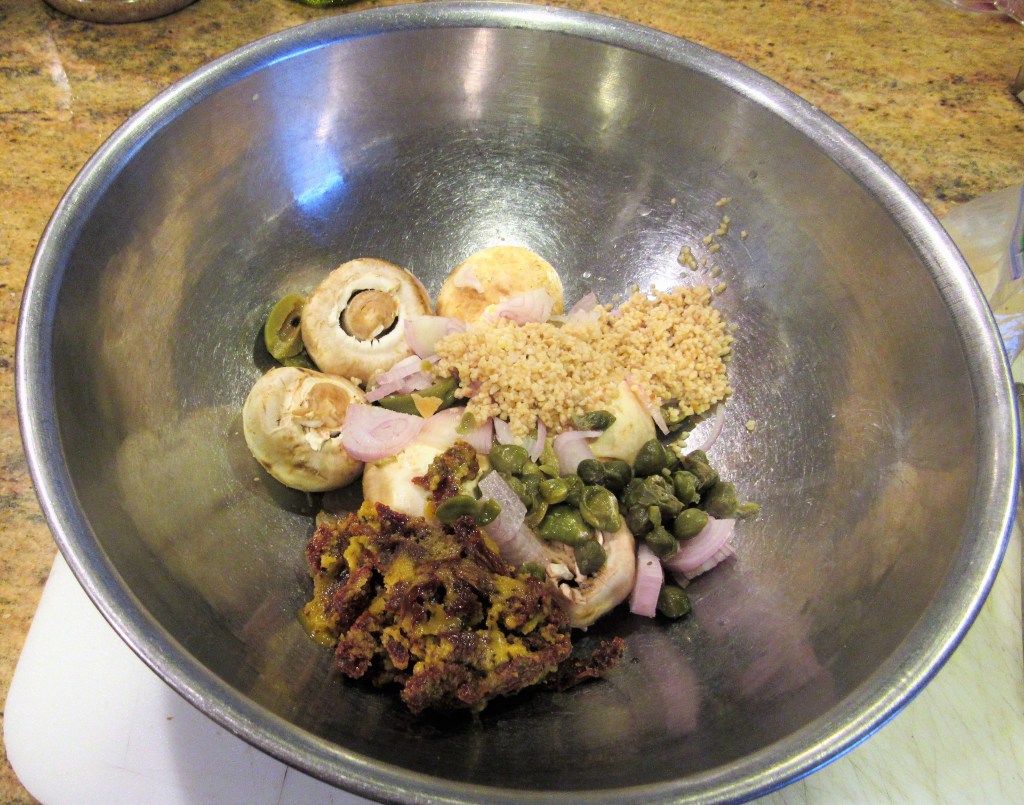
1-1 1/2 cups mushrooms – for this dish, I kept them whole

1/2 cup sundried tomatoes, in oil

1-2 shallots, sliced very thin

1 cup green olives, pitted and cut in 1/2

1 TBSP capers, drained

1/4 cup lemon juice

1/2 cup olive oil

salt and pepper to taste

parsley for topping

Parmigiano cheese for topping

Cook the pasta according to the directions.

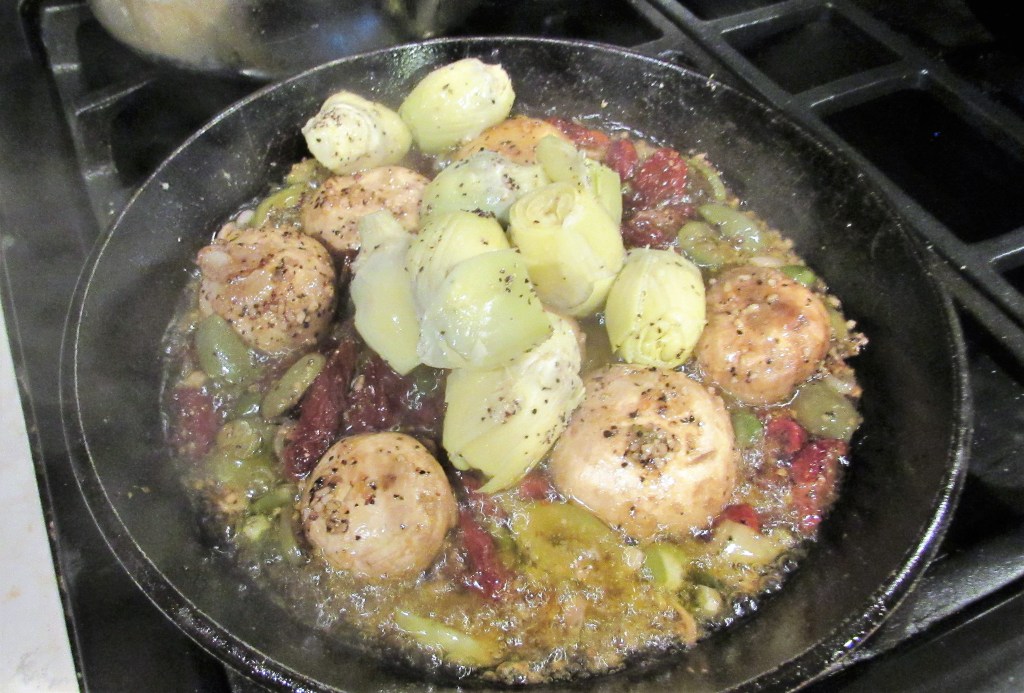
Sautee the sundried tomatoes, shallots, capers, salt and pepper and garlic together in the olive oil for about 2 minutes, or until the shallots soften and become translucent.

Add the artichoke hearts, olives and lemon juice and continue to cook for about 10 more minutes or until the mushrooms are tender.

When the pasta is completely cooked, al dente style, spoon the vegetables and sauce over the pasta and top with both the parsley and the Parmigiano cheese. !Mangia e Buon Appetito!

Stay safe and stay well Everyone. ‘Til next time.

Photo Challenge Shore Birds

I love participating in the photo challenges whenever I can. This one is about shore birds. Thank you Lisa for the challenge. Bird Weekly – Photo Challenge – Shorebirds by Lisa Coleman

You wouldn’t think Colorado would have a lot of shore birds, since we are known for the Rocky Mountains, and not the coastal shores. But we do. As many of you have seen through my Nature Walks series, we live on lakes, and we have a lot of shore birds that call our Colorado lakes home. Here are some of our resident shore birds. Most of them are seasonal, but some reside here year round.
We have our blue herons.

Lots and lots of mallards,

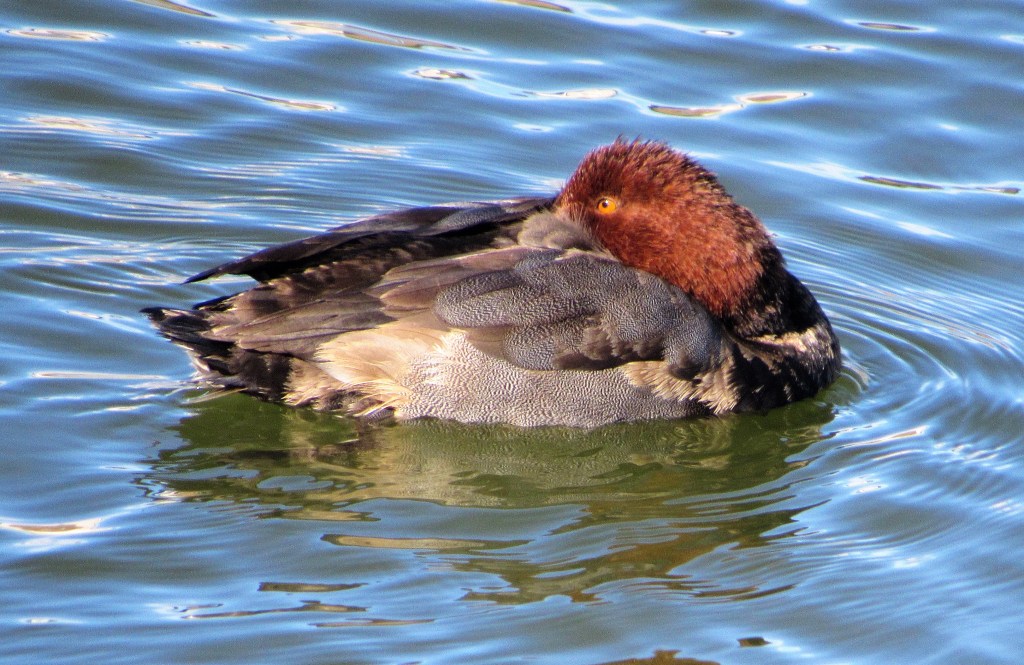
Redheads,

Cinnamon teals,

Hooded mergansers,

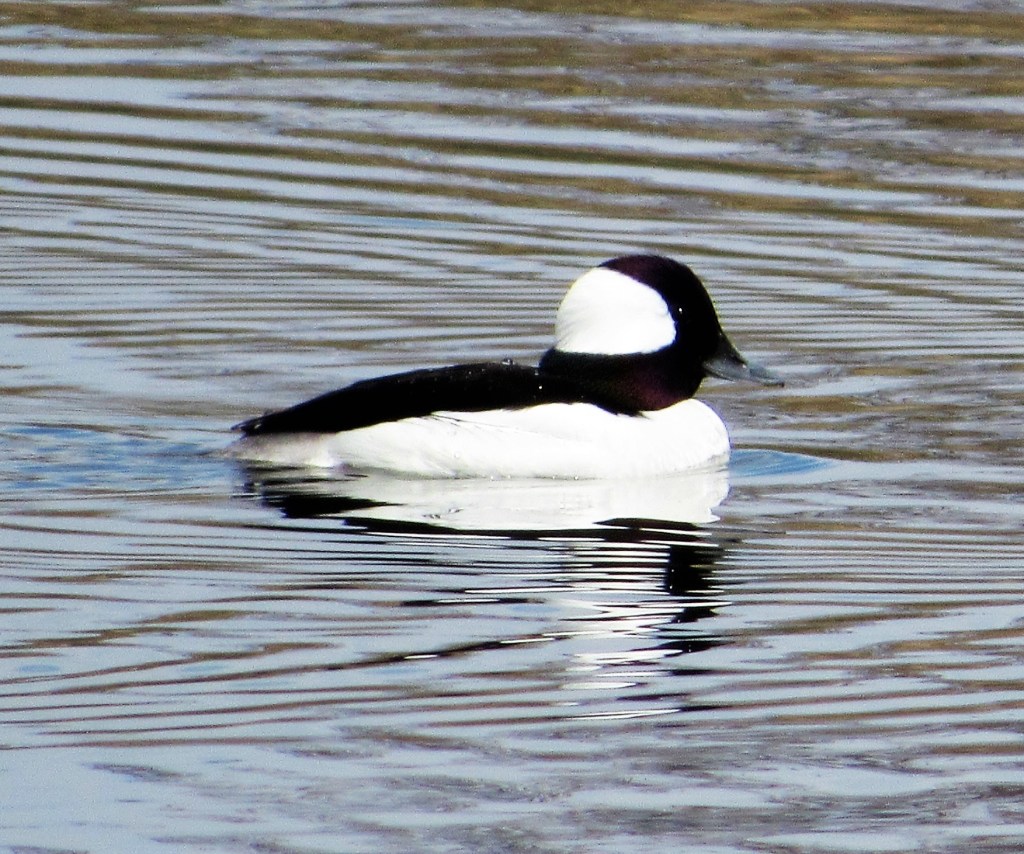
Buffleheads

and our ring-necked ducks.

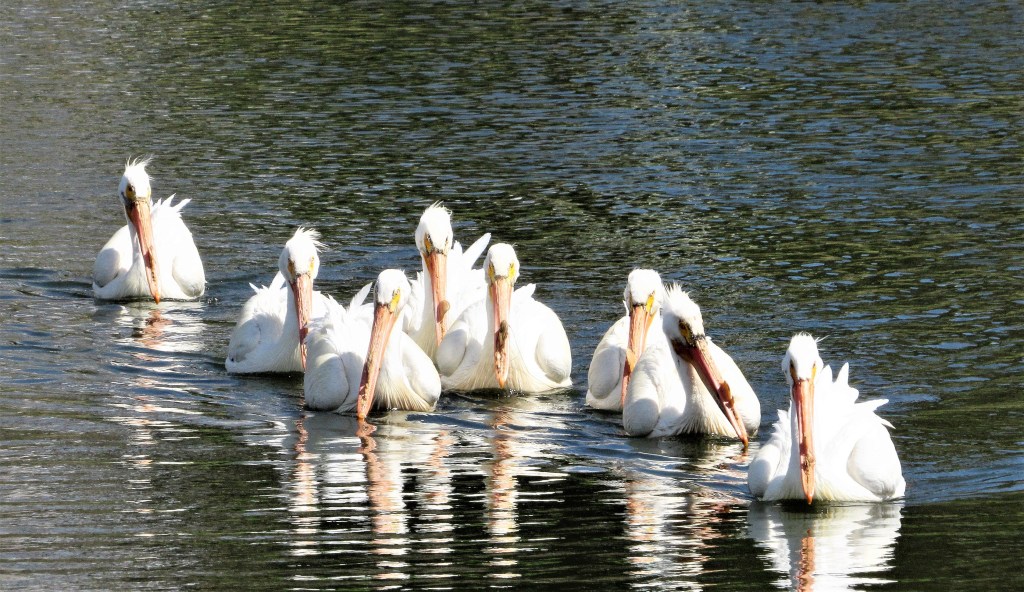
We have American white pelicans,

Snowy egrets,

Double crested cormorants,

And of course we have our geese. We have both cacklings,
And tons and tons of Canadian geese.

So even though I do not live close to a beach any more, I still live by the water’s edge, and we have our fair share of shore birds too.