I have created this site to help people have fun in the kitchen. I write about enjoying life both in and out of my kitchen. Life is short! Make the most of it and enjoy!
Since our return home from Bonaire, we have been non-stop busy. There have been so many birthdays and parties, and I’m not done yet.
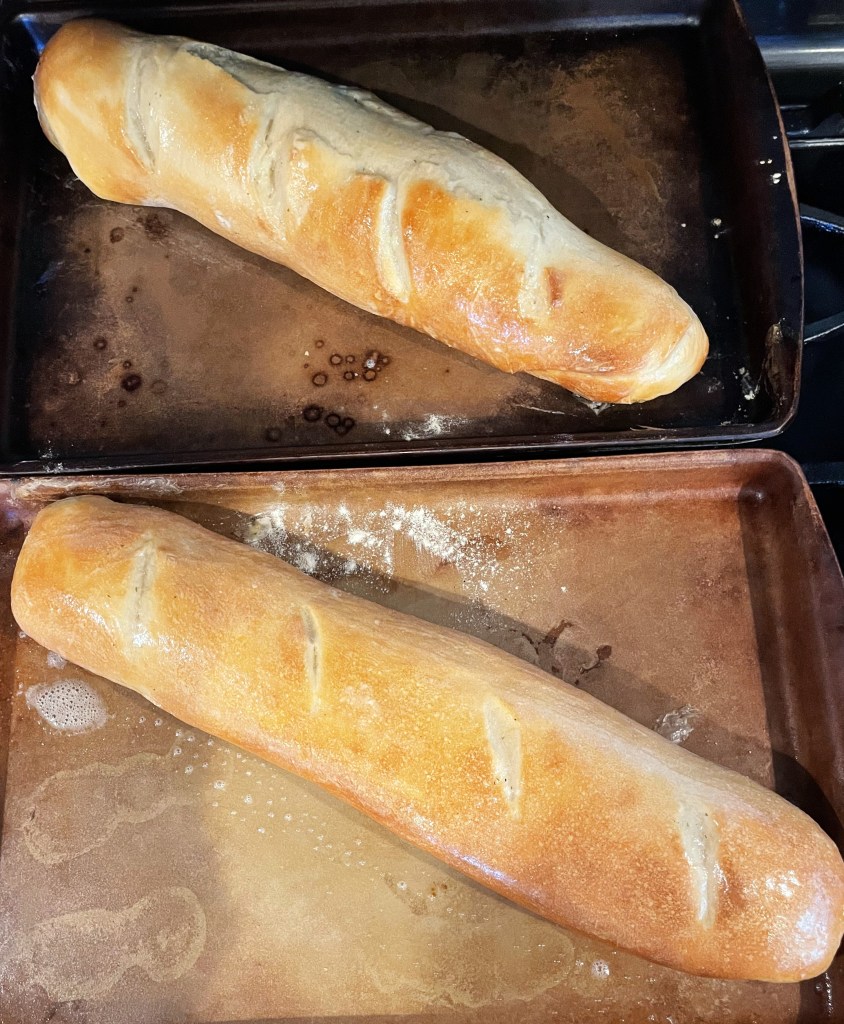
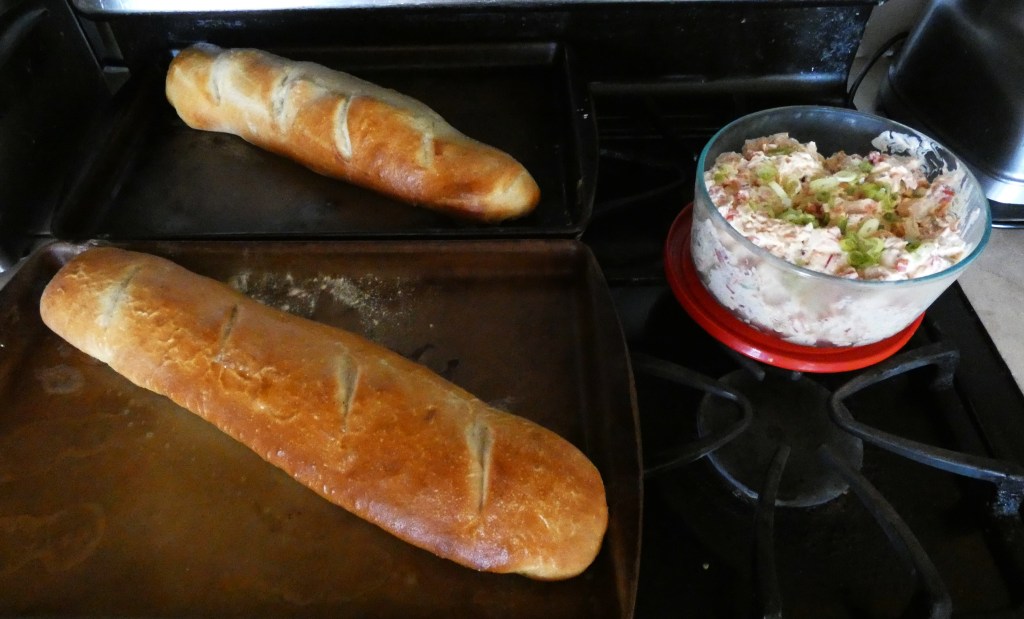
Today, we have another “bling party” at my jewelry school. My sourdough bread I made last time Soft Sourdough, per request, was such a big hit that it was once again requested for today’s gathering as well. Of course I willingly obliged. 🙂
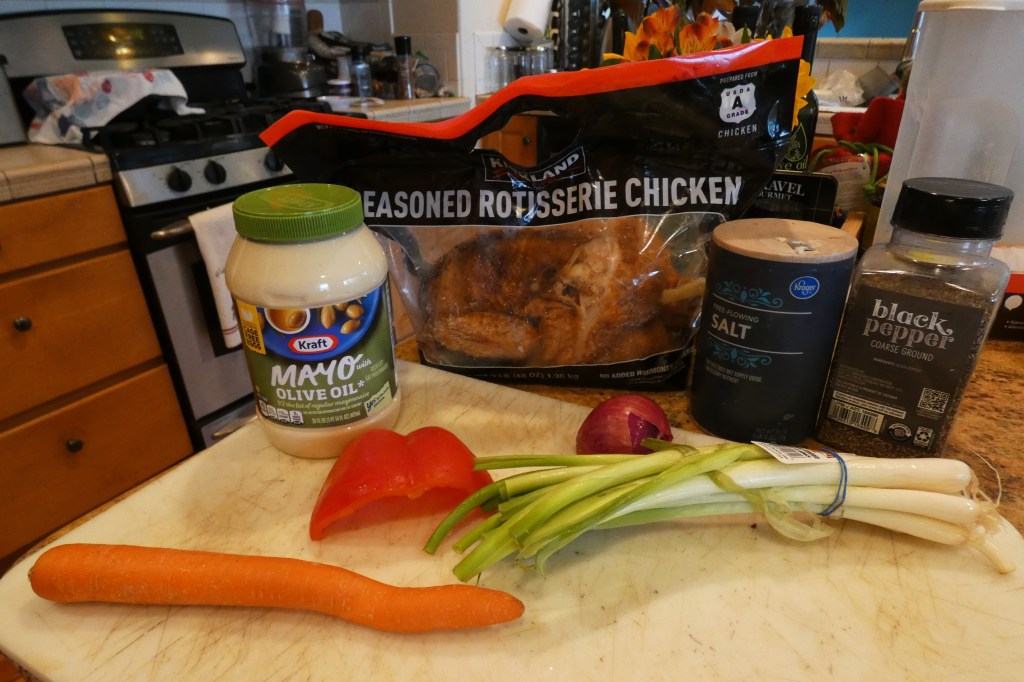
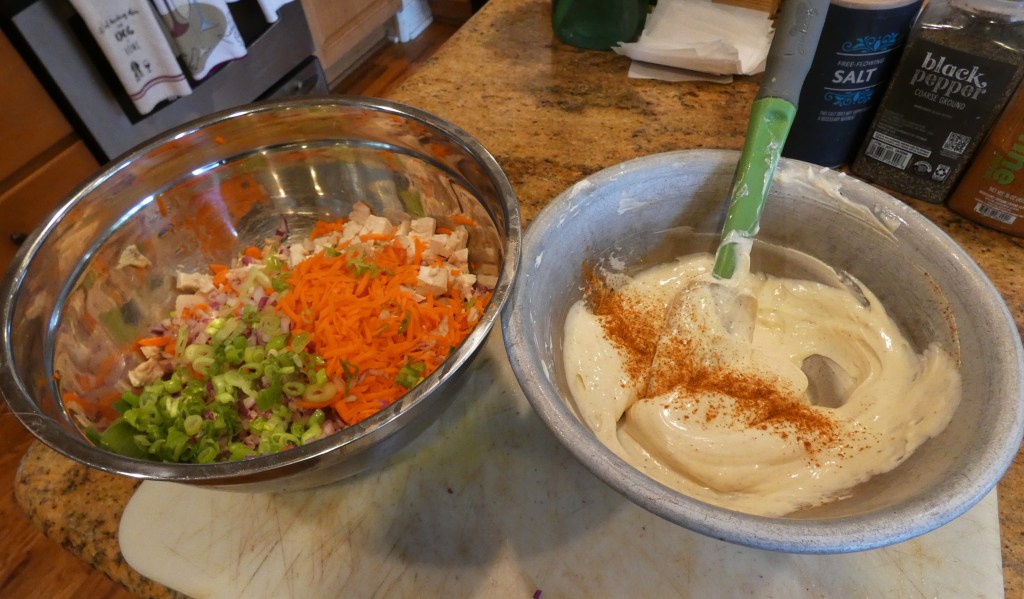
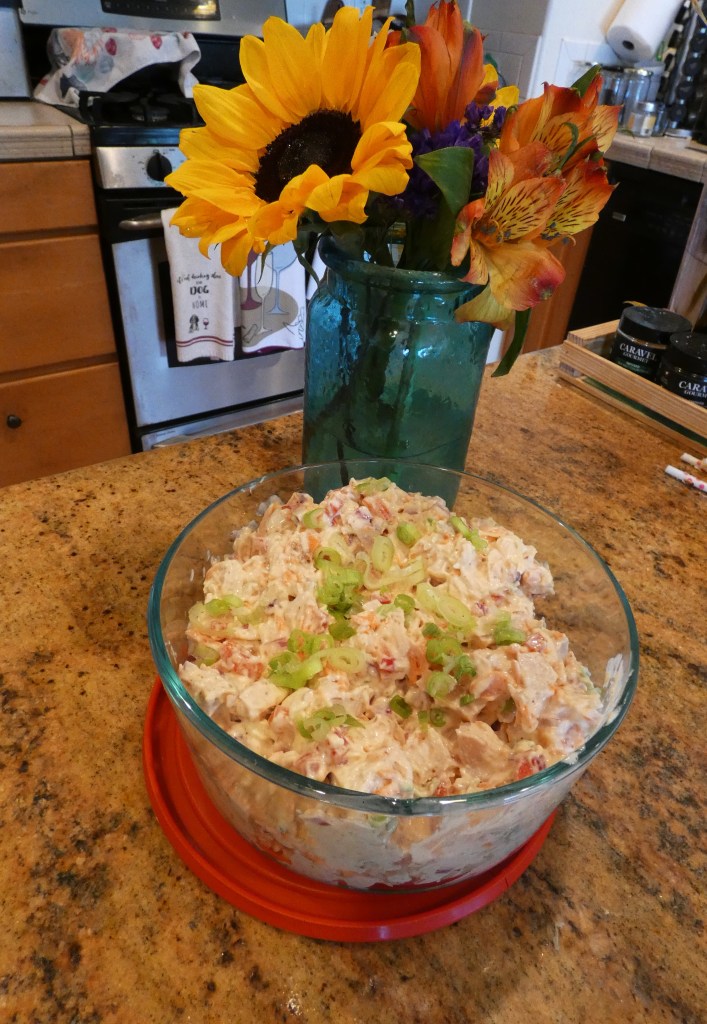
I also made another version of chicken salad for today’s celebration to go with the bread. Chicken salad, just like chicken itself, lends itself to so many different varieties and ways to prepare it. There is never just one way.
This version is just a simple salad, with simple everyday ingredients.
I have no idea what others are bringing for today’s celebration, but these are the things I am bringing. And believe it or not, we have another one next week too; and then we will be officially entering the holiday season too, so that means even more parties. Party on my friends. Party on. 🙂
Have a great day and make everyday great. Live life to the fullest and enjoy the ride and all the adventures that come your way, no matter what you do. ‘Til next time.
Succotash is as American as it gets. It was eaten by the Native Peoples long before America was a country. Succotash is a traditional American dish of corn and beans with origins tracing back centuries to Indigenous peoples of the Northeastern Woodlands. The word comes from the Narragansett (Algonquian) term msíckquatash (or sahquttahhash), which translates to “boiled corn kernels. There are regional differences found all across our country. Local ingredients were used and the ingredients changed according to the seasons, the hunt and the location. Summer succotash used fresh sweet corn, shell beans, and summer squash; winter succotash used dried corn, dried beans, and pumpkin. It was often enriched with game or fish, such as bear meat, venison, or shellfish.
Succotash comes from the three sisters of Native American cooking. The “Three Sisters” are corn, climbing beans, and squash, which were planted together in symbiotic mound. The corn provided a stalk for beans to climb, the beans enriched the nitrogen in the soil, and the squash shaded the ground to block weeds.
Succotash today has evolved a lot since it’s early days as a staple for Native Americans. It has also had many different influences from different regions and different cultures. Today, succotash is primarily a dish made with vegetables, specifically corn, beans and squash, but rarely contains any meats, unless it is bacon thrown into the mix.
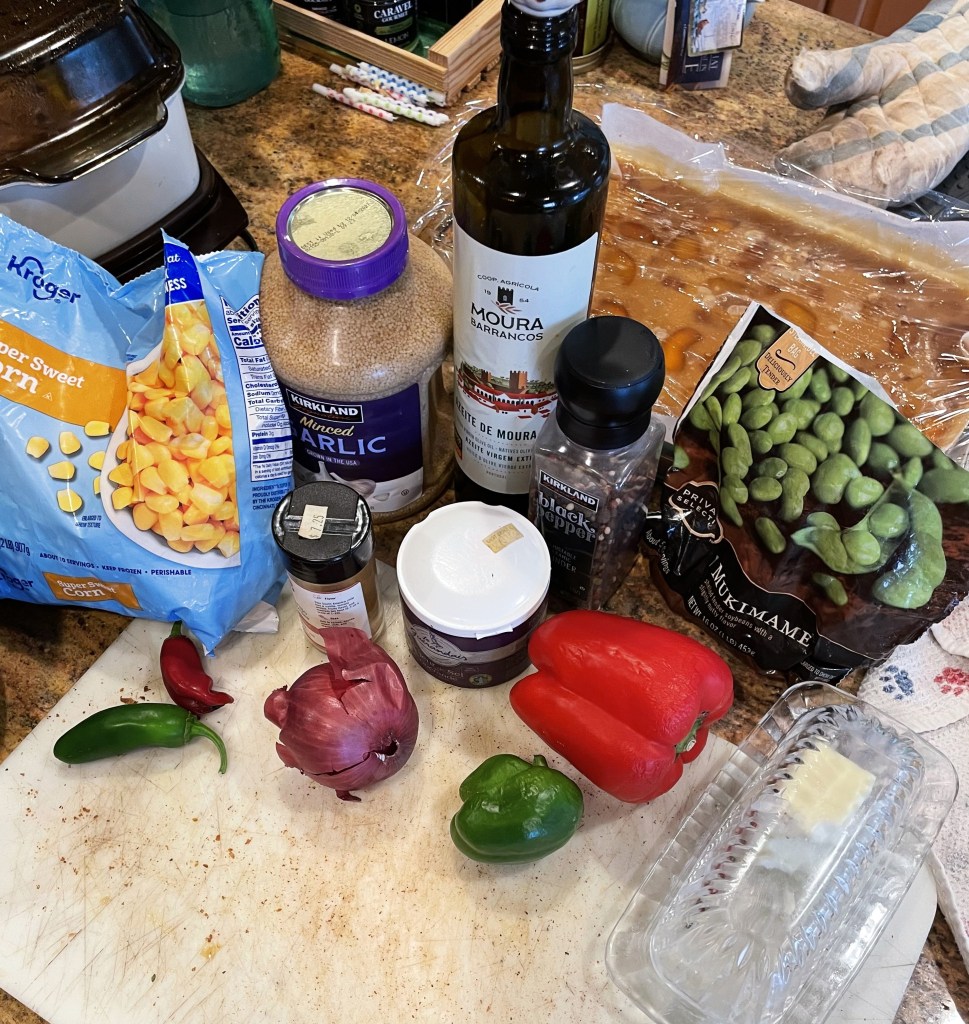
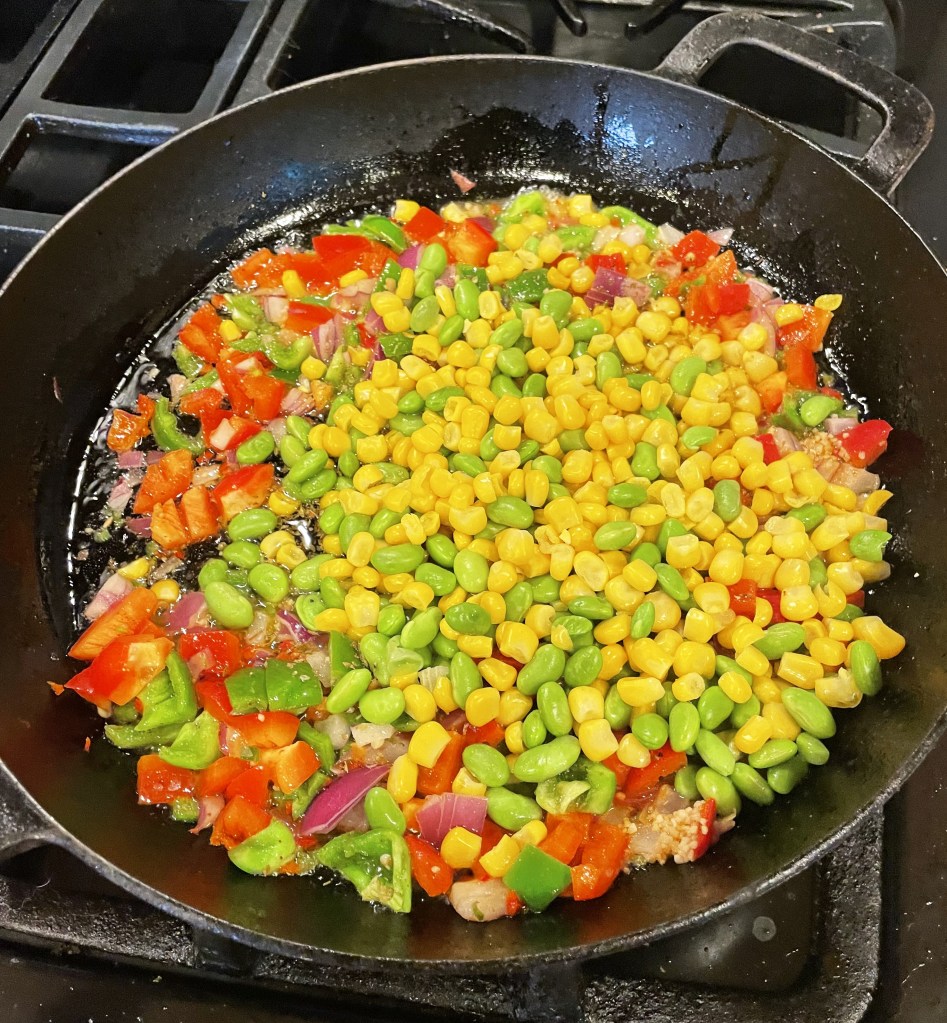
I cook like I am a “Native American” and use what I have on hand, thus making my own recipes different each time I make them, depending on what I have at the time. I made succotash again, using what I had, and I used peppers as well. I should have thrown in some bacon too. Next time.
Southwestern Succotash
The red, green, spicy peppers (gifts from Bob’s prolific garden) and garlic are what made this version a Southwestern version. Lima beans have been hard to find lately, but I had some edamame beans; not the best choice for this dish, but they worked in a pinch. Lima beans are usually used for this recipe, but any kind of broad bean will work.
2 cups corn
1 cup lima beans or broad beans
1 onion, diced
1/2 red bell pepper, diced
1/2 green bell pepper, diced
1 small spicy red pepper, diced fine
i jalapeno, diced fine
1 TBSP garlic
salt & pepper to taste
1-2 tsp chili pepper seasoning
dash of cayenne pepper
olive oil
1-2 TBSP butter
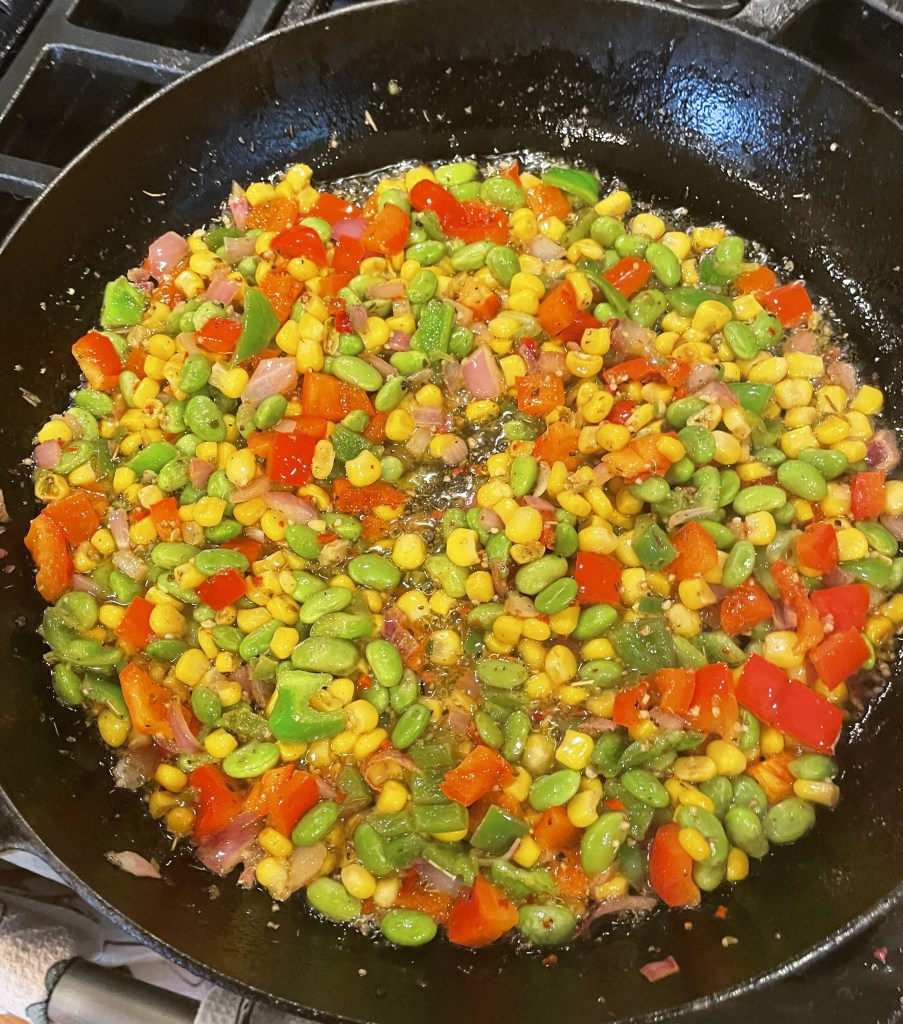
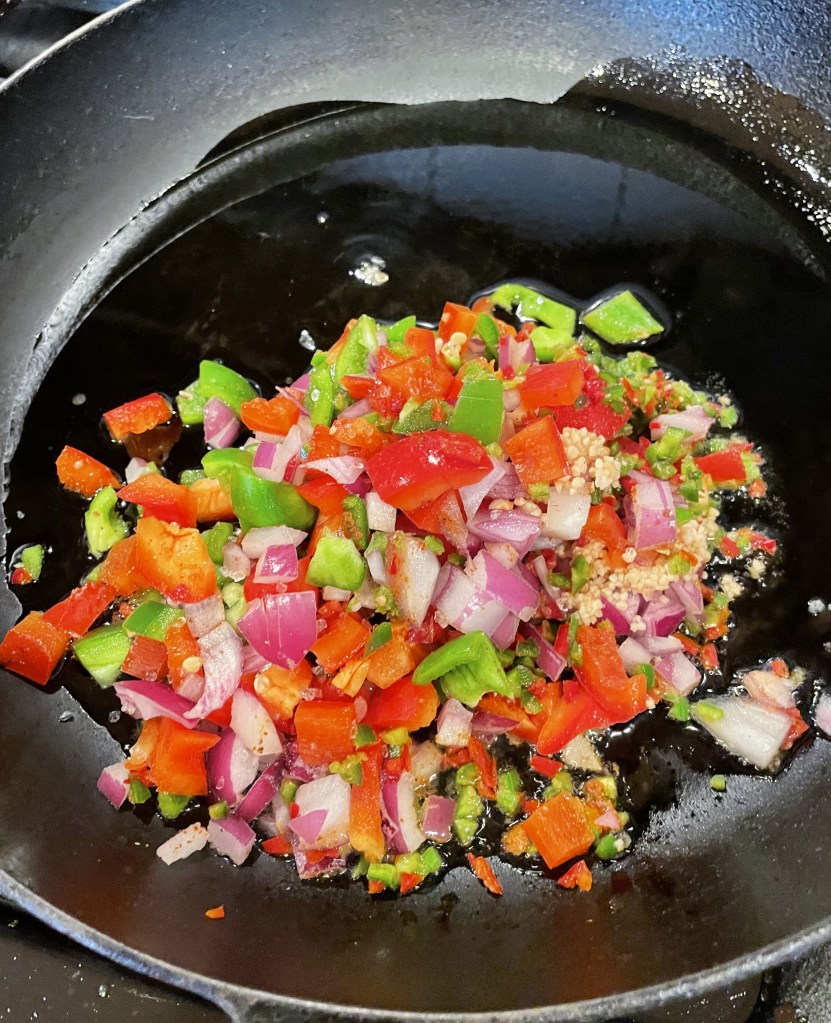
Get a skillet very hot and add the olive oil and butter. Then add the peppers, onions and garlic and saute for about 5 minutes. If you are using bacon, cook the bacon first, then crumble it and cook the vegetables in the bacon grease. Re-add the bacon at the end of the cooking process.
Add the corn and beans and continue to cook until all the vegetables are cooked al dente; soft, with a hint of bite still left to them.
Serve as a side dish next to your favorite entree and enjoy.
Have a great day and make everyday great. Live life to the fullest and enjoy all the adventures that come your way, no matter what you do. ‘Til next time,
I have been finding some interesting and unusual foods lately that I thought were just to good to pass up. I just had to share them with you. Here are some of the strangest foods in the world that most of us don’t see everyday, if at all.
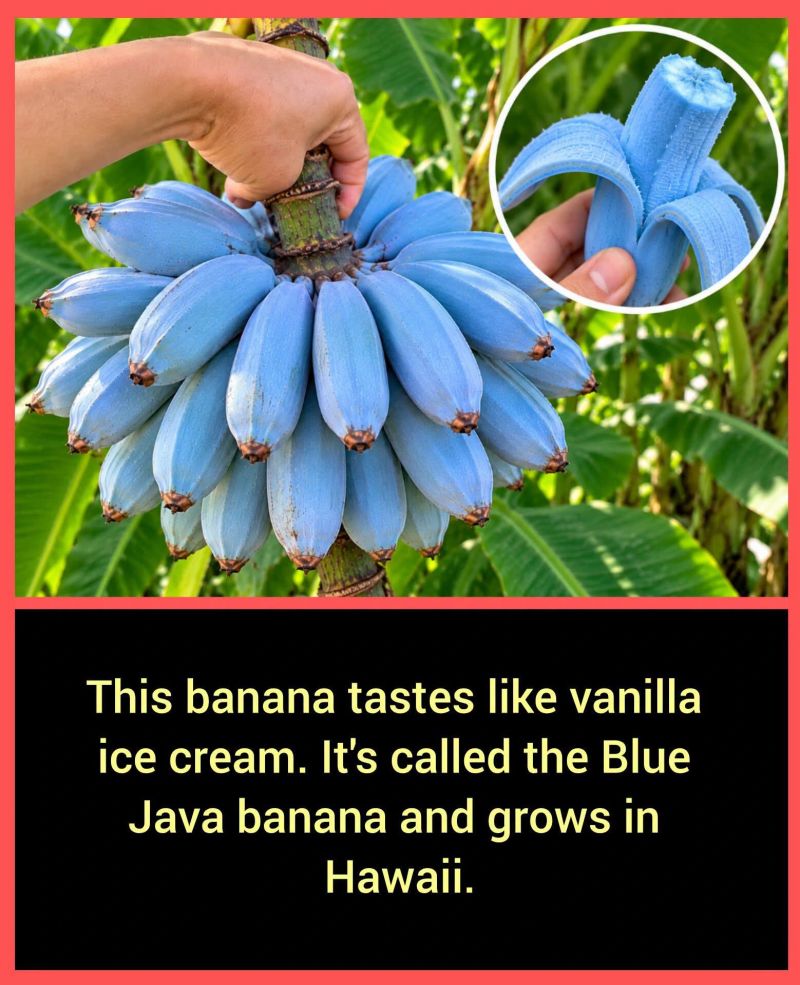
Blue Java Bananas
Yes, they are really blue, from the inside out. The Blue Java banana is a naturally occurring hybrid banana cultivar known for its silvery-blue unripe peel and creamy, vanilla-like flavor. Their botanical name is Musa acuminata × balbisiana (ABB Group) ‘Blue Java’. They are a hybrid from 3 different types of bananas. They are a cross between the two wild Southeast Asian banana species, Musa acuminata (yielding sweet traits) and Musa balbisiana (yielding starchy/plantain traits). Originally they were grown in Southeast Asia and Northern Australia. Today, they are also grown in Hawai’i.
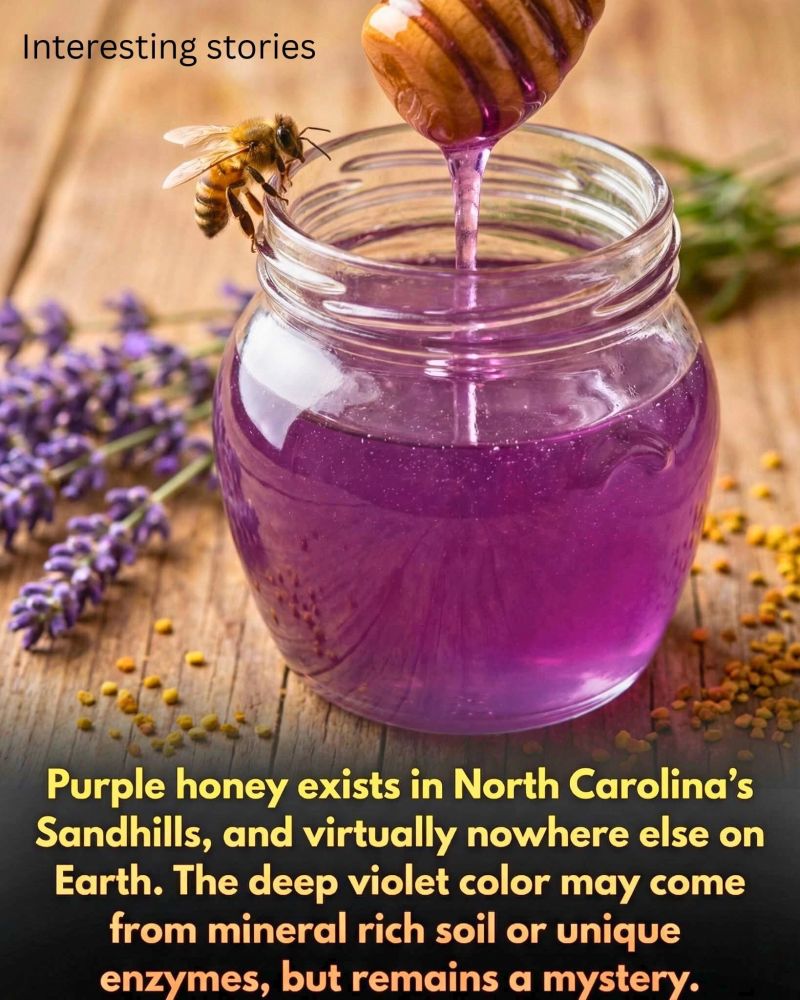
Purple Honey
I love the color of this honey. This is a rare occurrence and doesn’t even happen every year. It usually appears only during hot, dry summer months or drought conditions. The colors range from lilac to deep red, almost the color of red wine. It typically tastes sweeter than standard amber honey with mild fruit, berry, or grape-like notes.
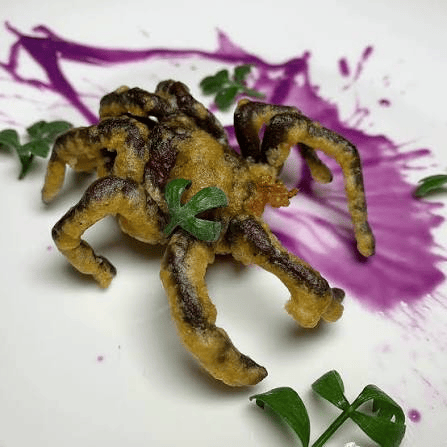
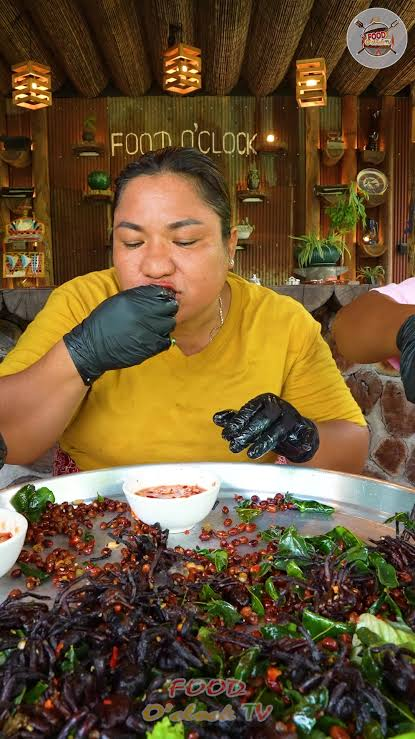
Deep Fried Tarantulasfrom Cambodia
Deep-fried tarantulas—known locally in Cambodia as “a-ping”—originated as a critical survival food during the brutal Khmer Rouge regime in the 1970s and evolved into a popular regional delicacy. I am a pretty adventurous eater, but I don’t know if I would be so willing to try this. But I guess if you are hungry enough you will eat anything.
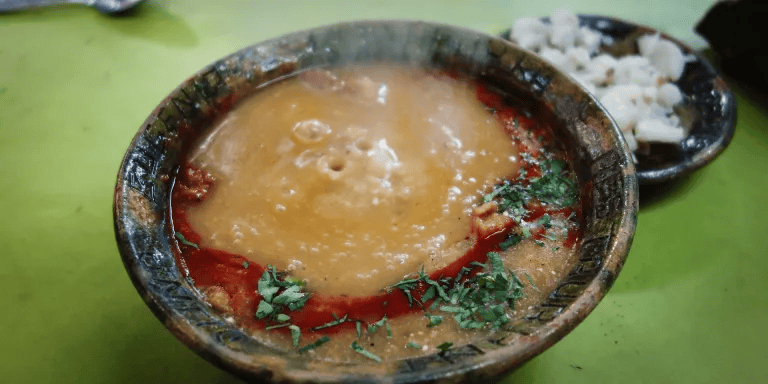
Volcanic Soup orK’ala Phurkafrom Bolivia
At an altitude of more than 4,000 metres, mornings are freezing, and K’ala phurka is a perfect Bolivian dish to warm anyone up. The soup is served with volcanic stone, so it still bubbles while you eat it. In fact, with the red chili sauce swimming on top of the dish, it almost looks like a bubbling volcano or one of the many hot springs you can find in the area. K’ala phurka traditionally consists of cornflour, chilli and potatoes and you will usually either find beef or llama meat inside and sometimes get a serving of giant corn on the side.
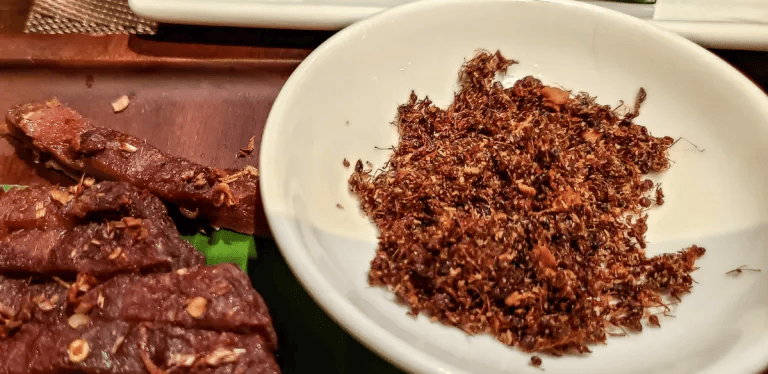
Ant Saltfrom Southeast Asia
Visitors to some areas of the world where consuming insects is more common might be surprised to find ant salt on the menu. It can be a stand-alone side or sometimes come as part of the meal. Ant salt, however, is just what it sounds like. Crispy fried ants mixed in with salt. It is a topping for many dishes, and can be found throughout areas of Southeast Asia as well as South America. It is not a delicacy, but more of a fancy topping than an everyday food. Prepared well, you will see the bodies of the ants still intact and well blended with the salt.
There are a lot of very strange foods found around the world. I am sure there will be more posts featuring these strange and exotic foods again. If you have ever tried any of these foods, or something just as strange, please let me know about your experiences. I am always curious.
Be bold, be brave and walk on the wild side. Venture out of your comfort zone and try something new. Live life to the fullest and enjoy the ride while you can. Have a great day and make everyday great. ‘Til next time.
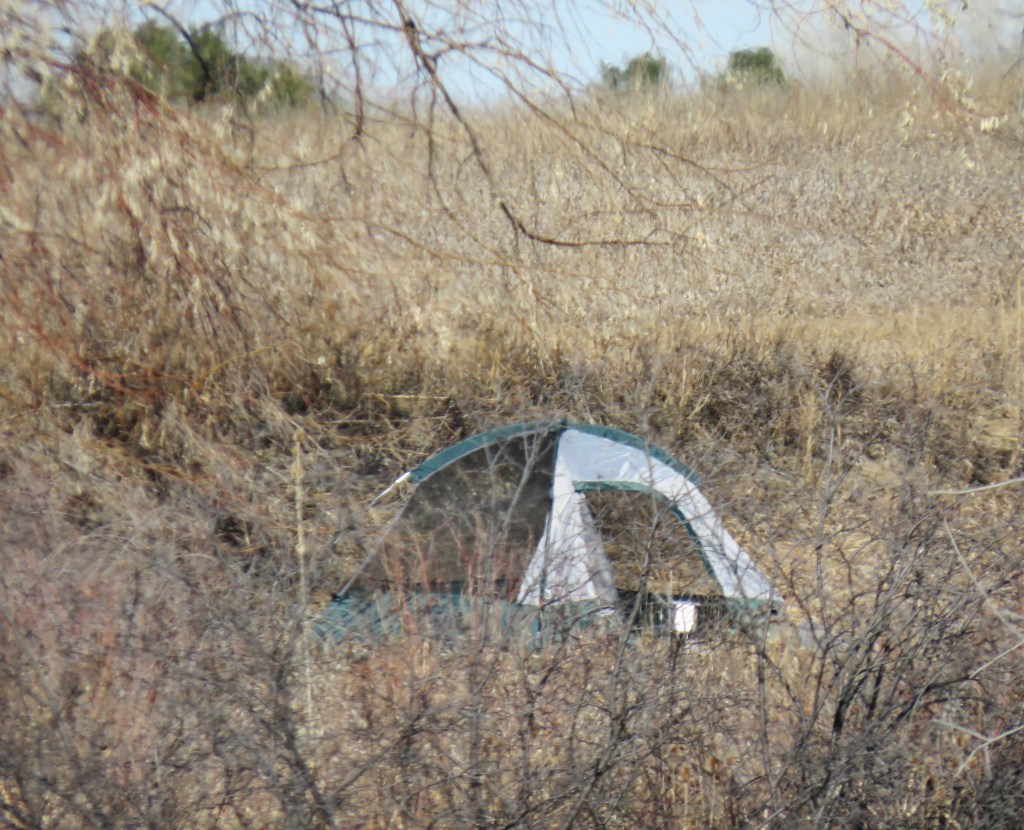
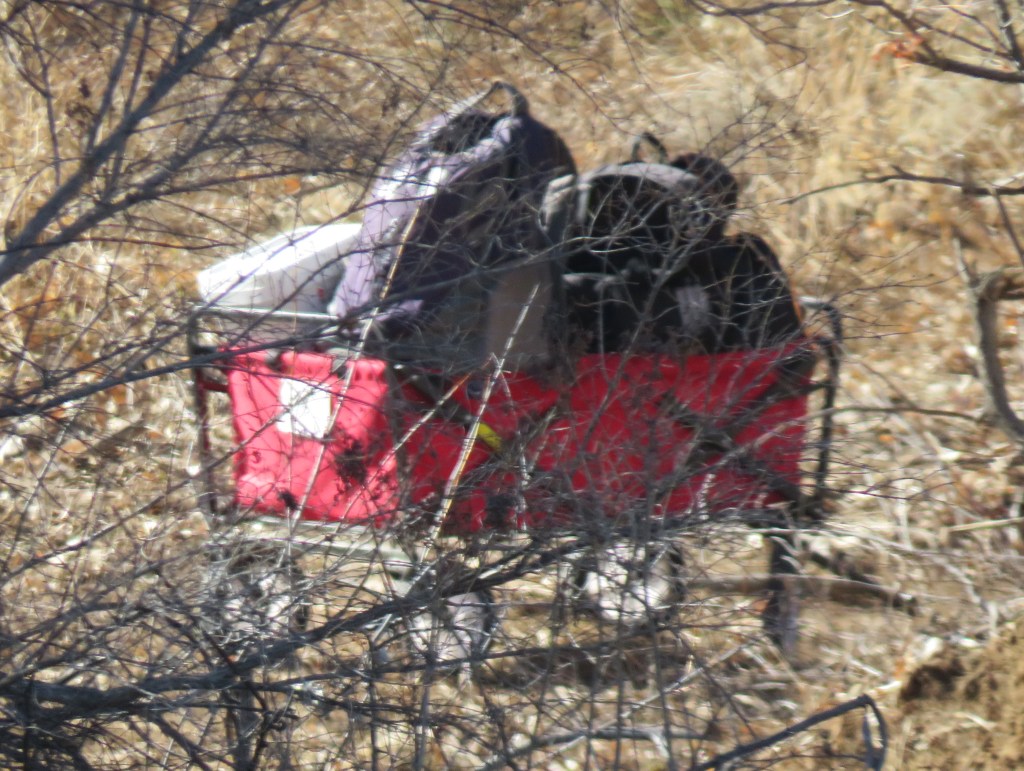
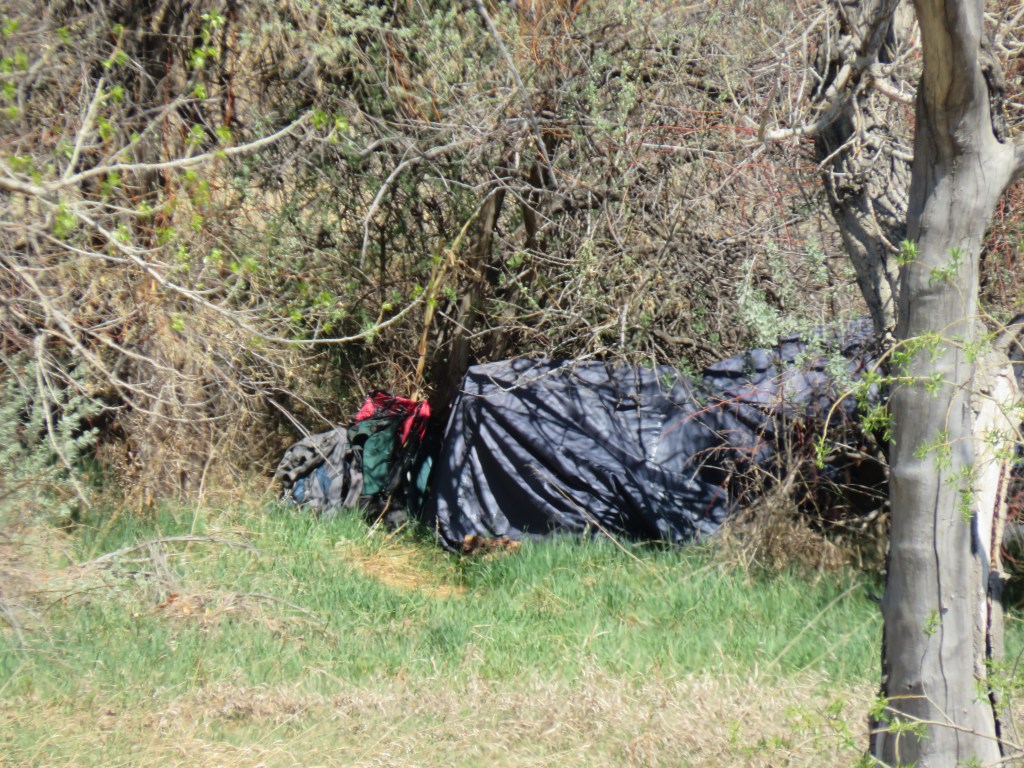
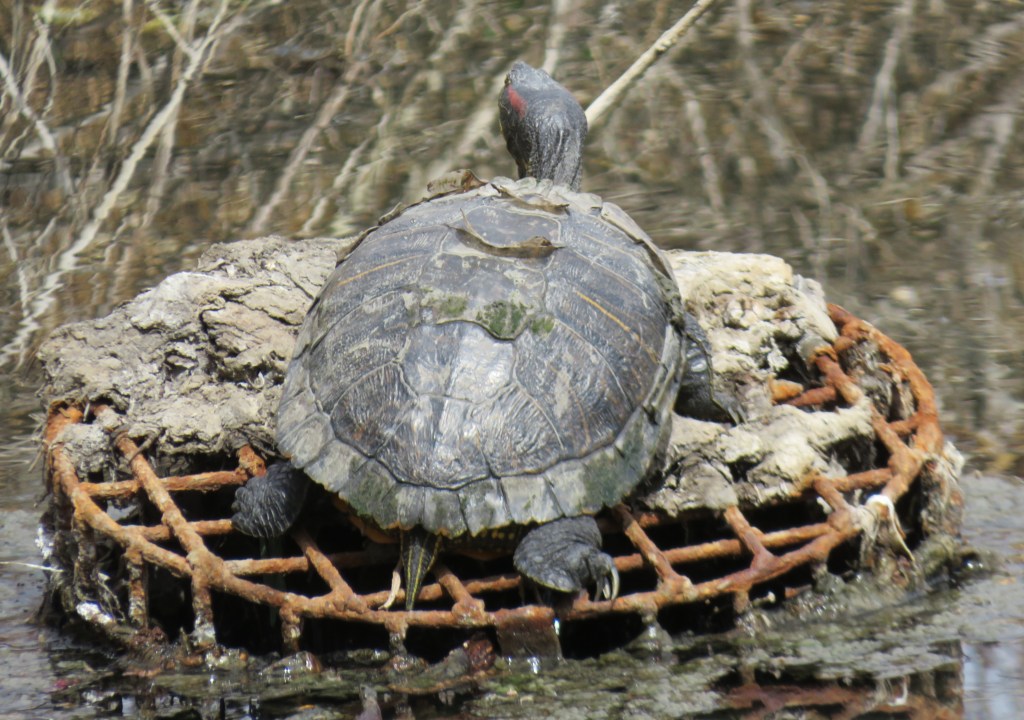
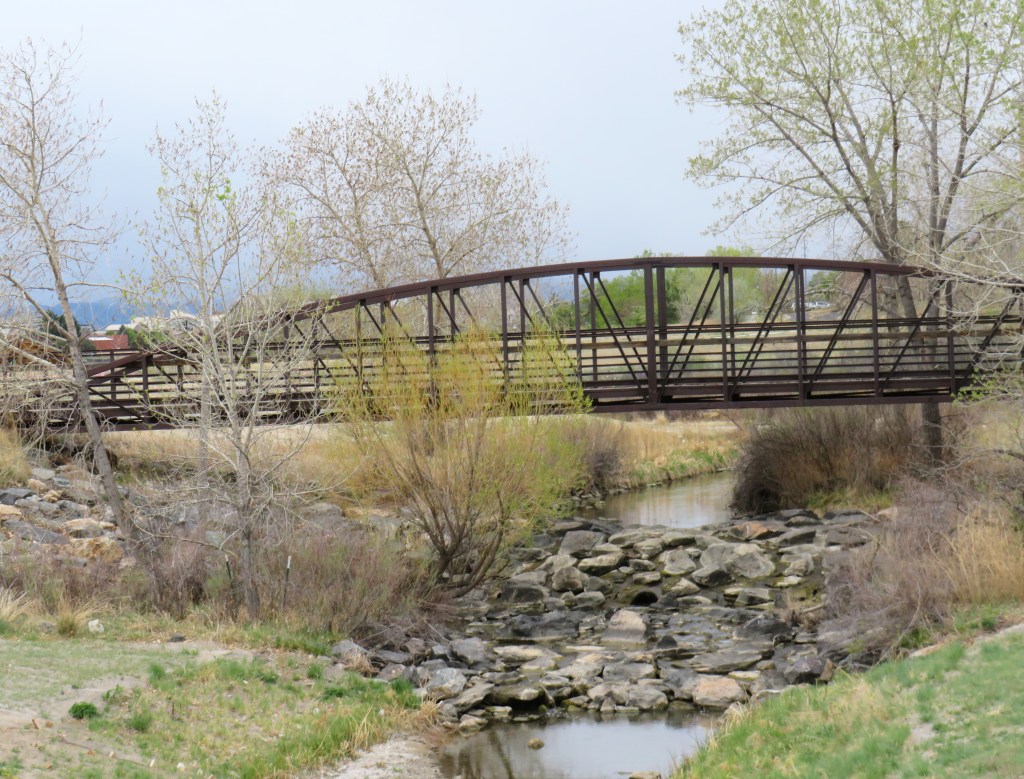
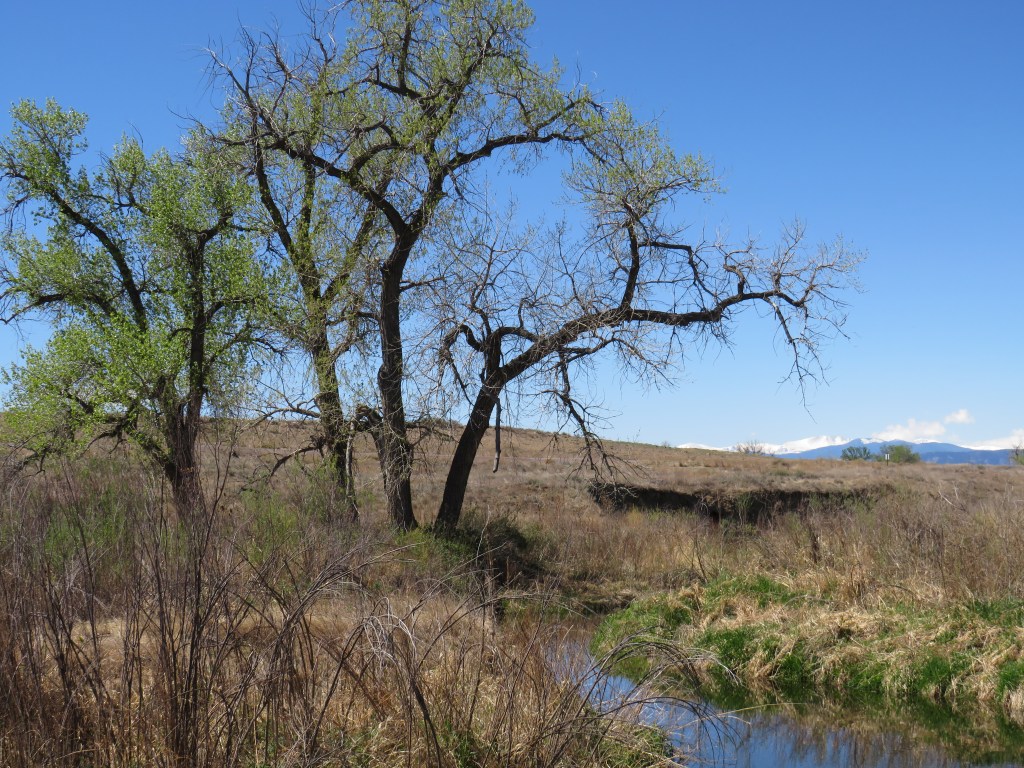
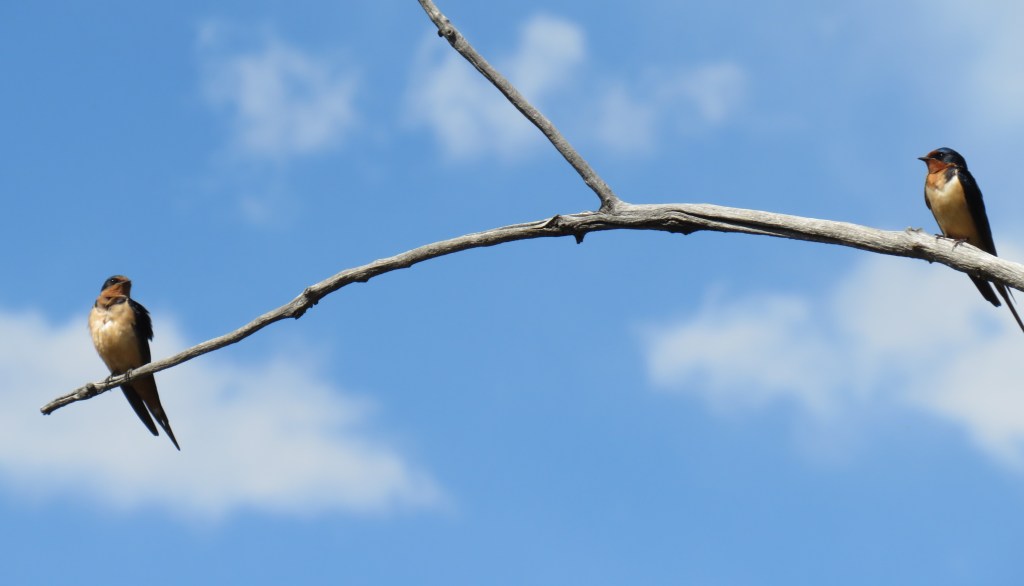
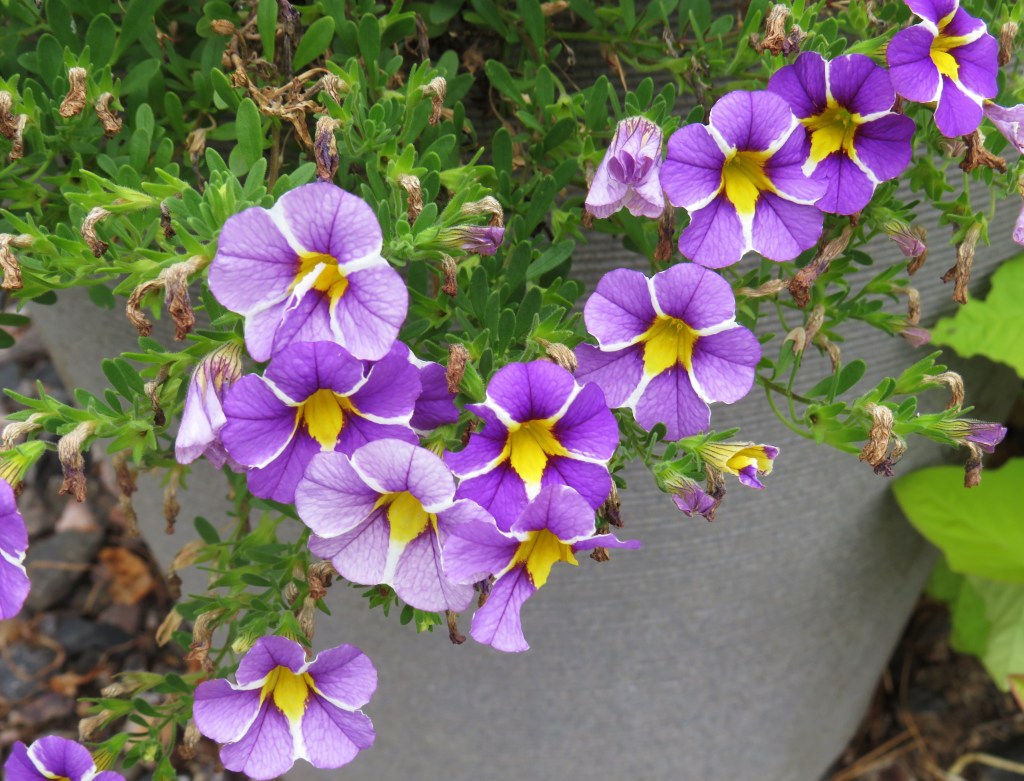
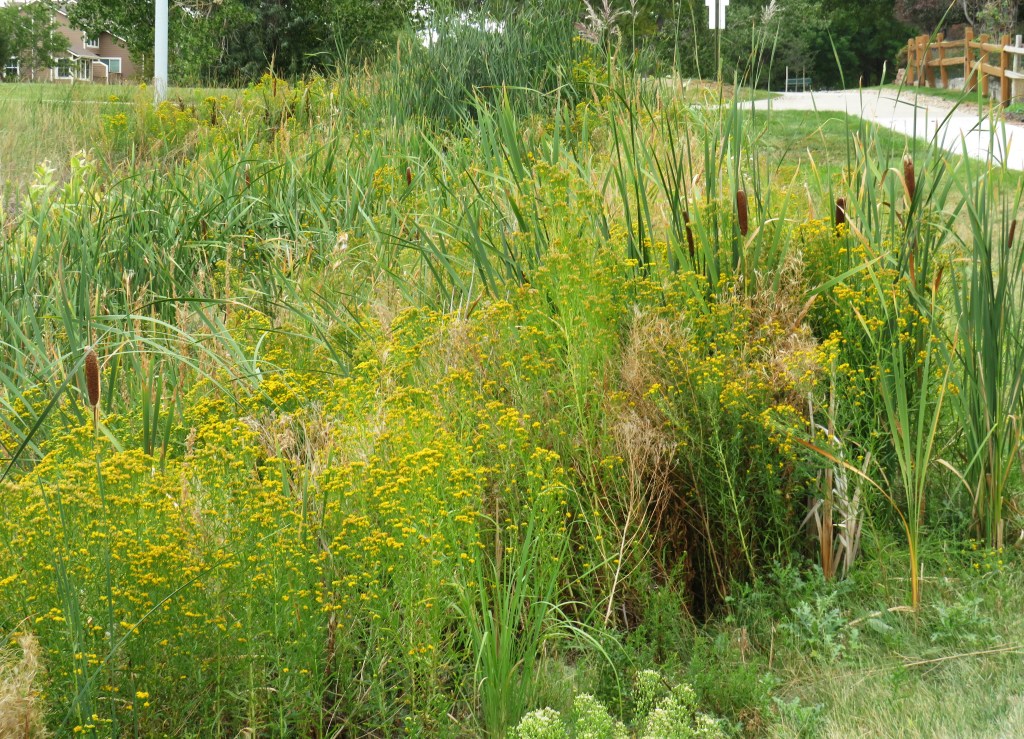
Lately, when out on my walks, things have been VERY quite. There really hasn’t been a lot to see for quite a while, but there are still things that capture my attention. Here are some of those random attention catchers. Some are good, some are bad and some are ugly.
There is always something interesting to see. And every picture has a story to tell. Have a great day and make everyday great. ‘Til next time.
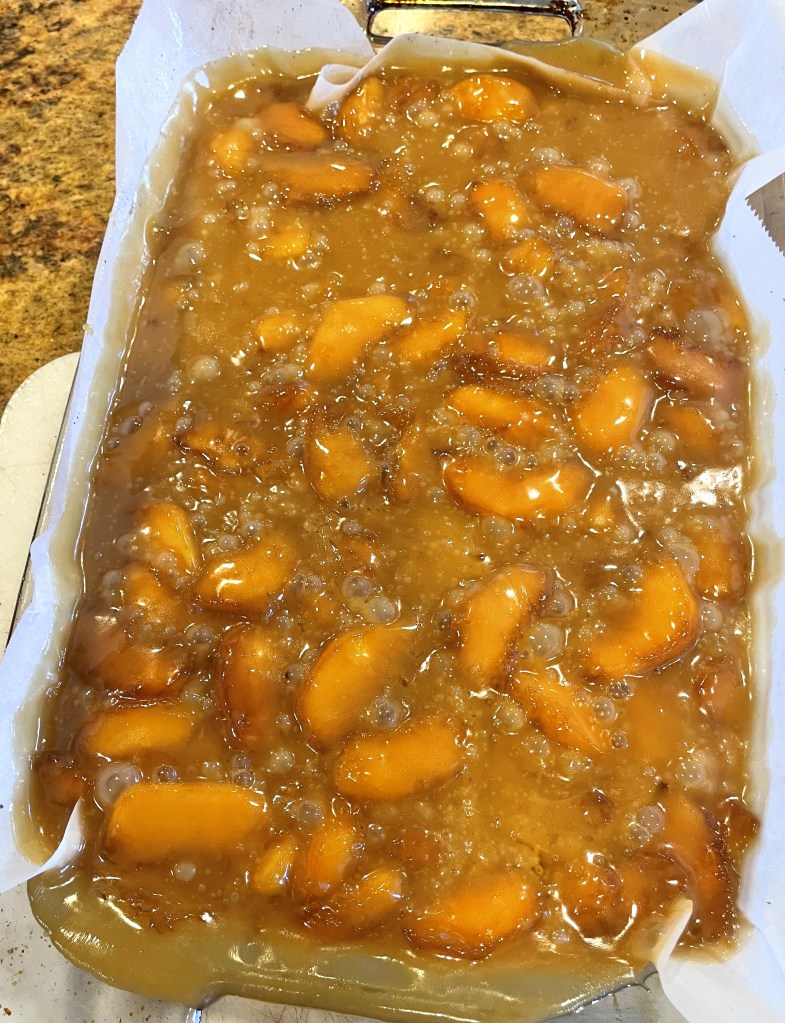
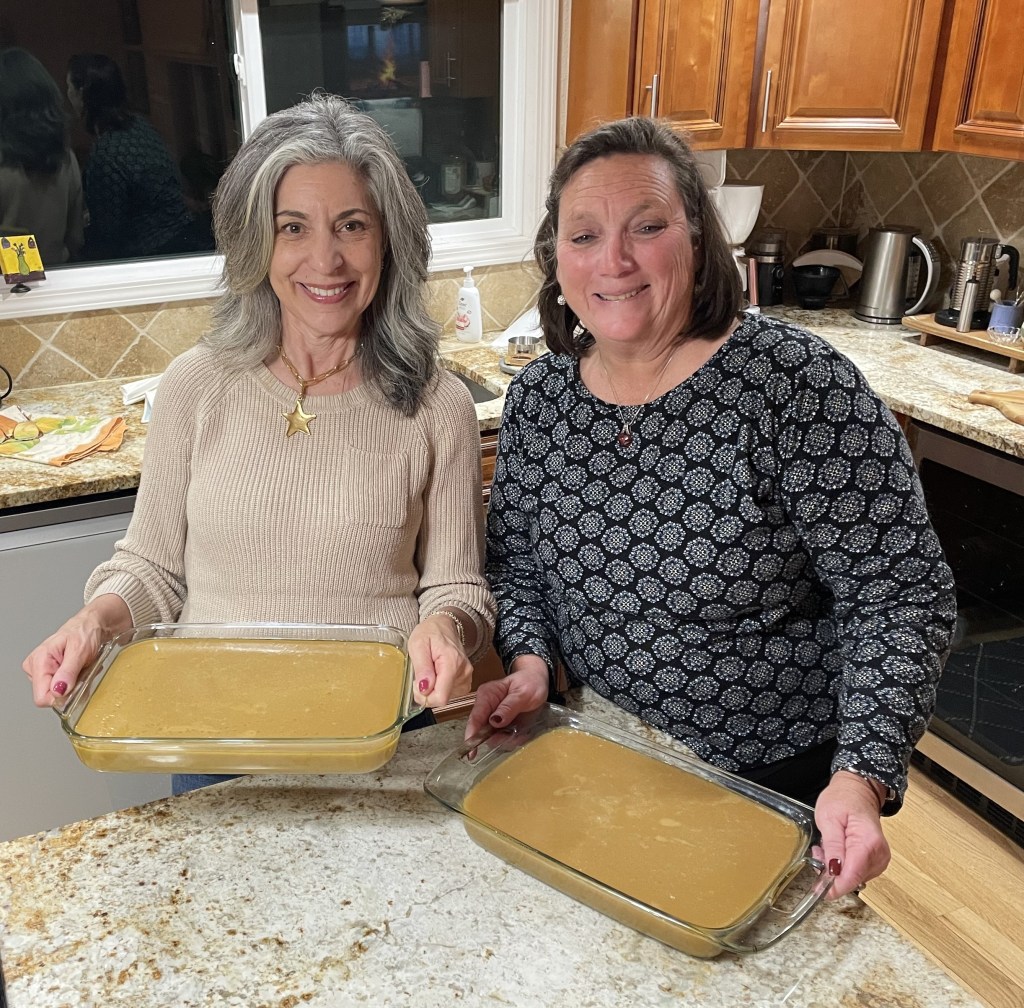
Every year Priscilla and I make our delicious caramels together. It’s a tradition we have been continuing for many years. We will make our first batch of the season together on Saturday. But I started early, since I always make a bunch of different batches. I made my first batch yesterday, and it is a new flavor too.
This year’s new caramel flavor is peach pecan.
I had some peaches in my freezer that I needed to use, and I thought why not put them into some caramel. I haven’t cut them yet. I will do that today. After making the caramel, it always has to sit for about a day to set before cutting it. I tested it earlier this morning, and it is set well. It’s ready to cut.
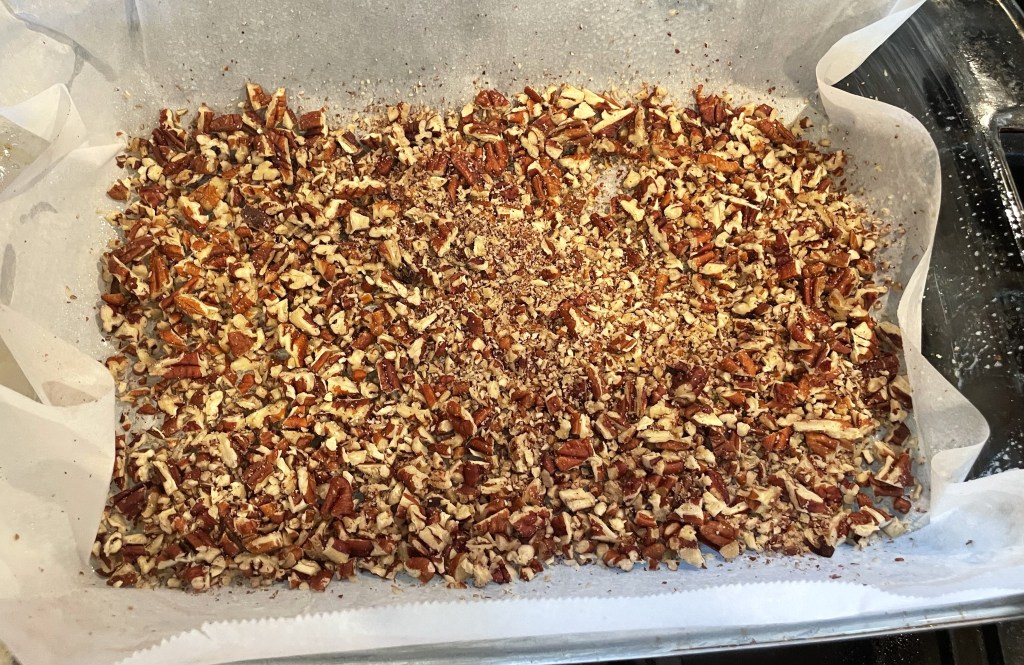
I chopped up my pecans and added them to the bottom of my baking dish that I buttered, sprayed with cooking spray and lined with parchment paper, that I also sprayed with cooking spray.
The Basic Caramel Recipe
These proportions make a double batch, and fill a 9×13 baking pan.
1 lb butter
4 cups sugar
4 cups Karo dark syrup
4 cups heavy whipping cream, divided
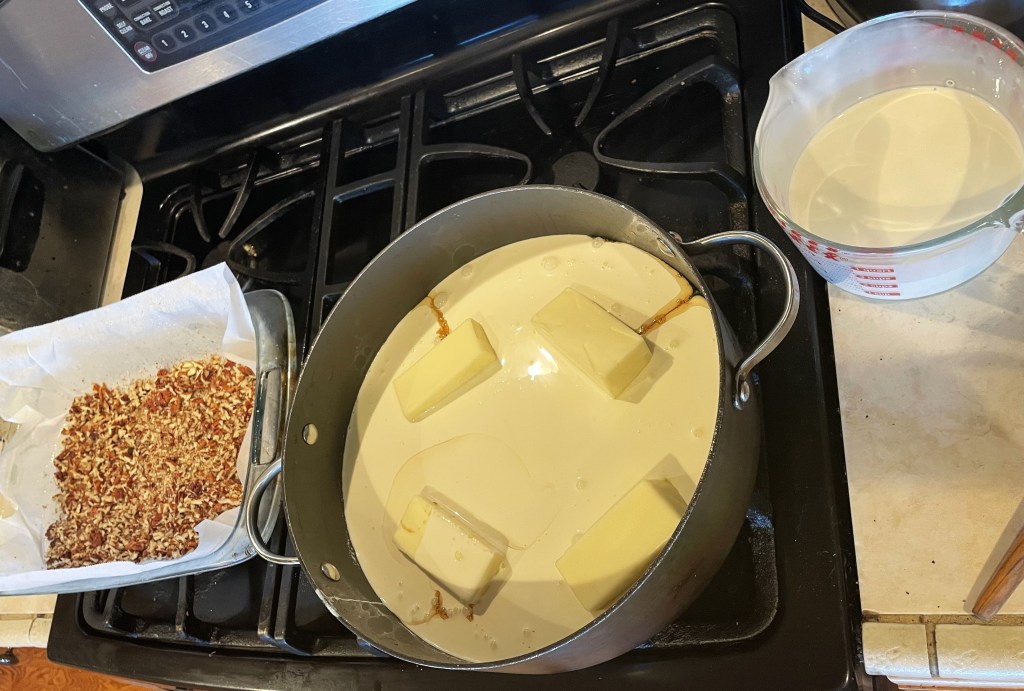
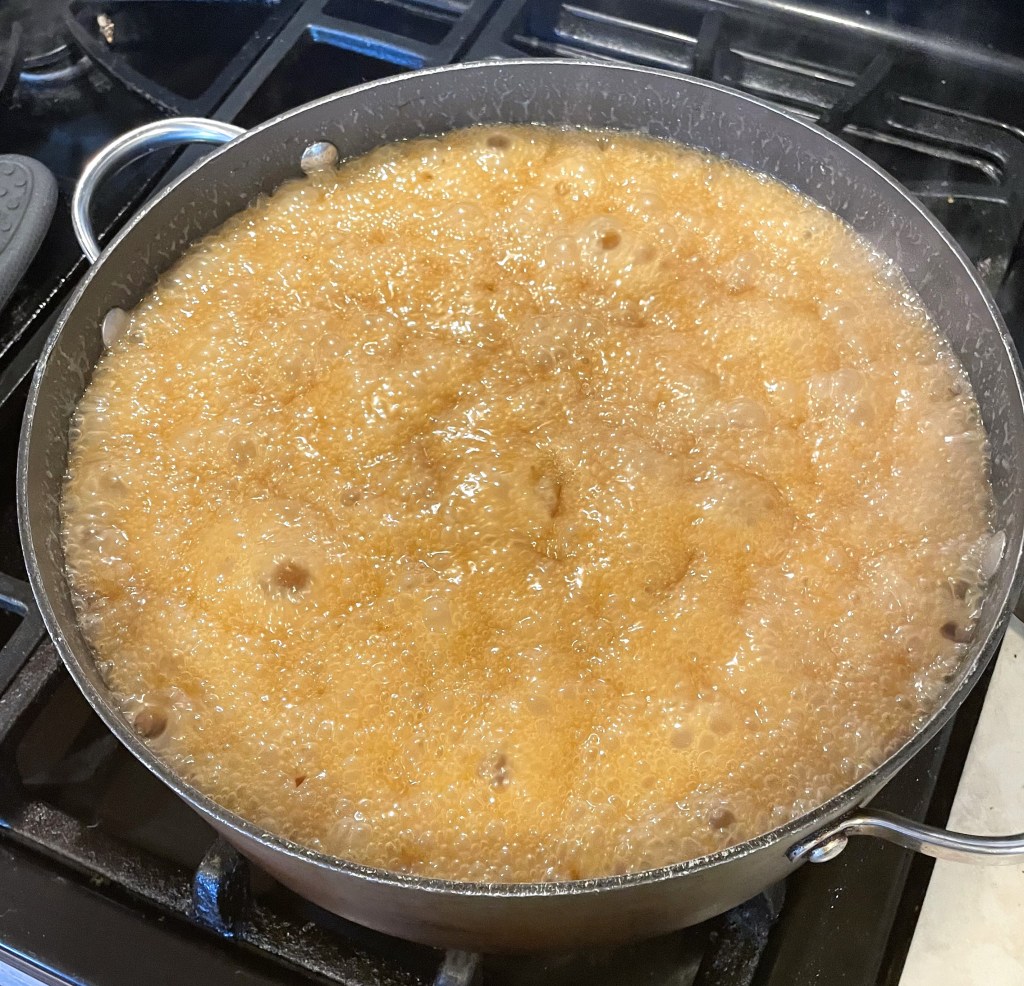
Put everything in a LARGE pot, except only use 1/2 the cream at first. Stir constantly, in a figure 8 method, until the caramel reaches it’s first boil and reaches 235* F or 113*C.
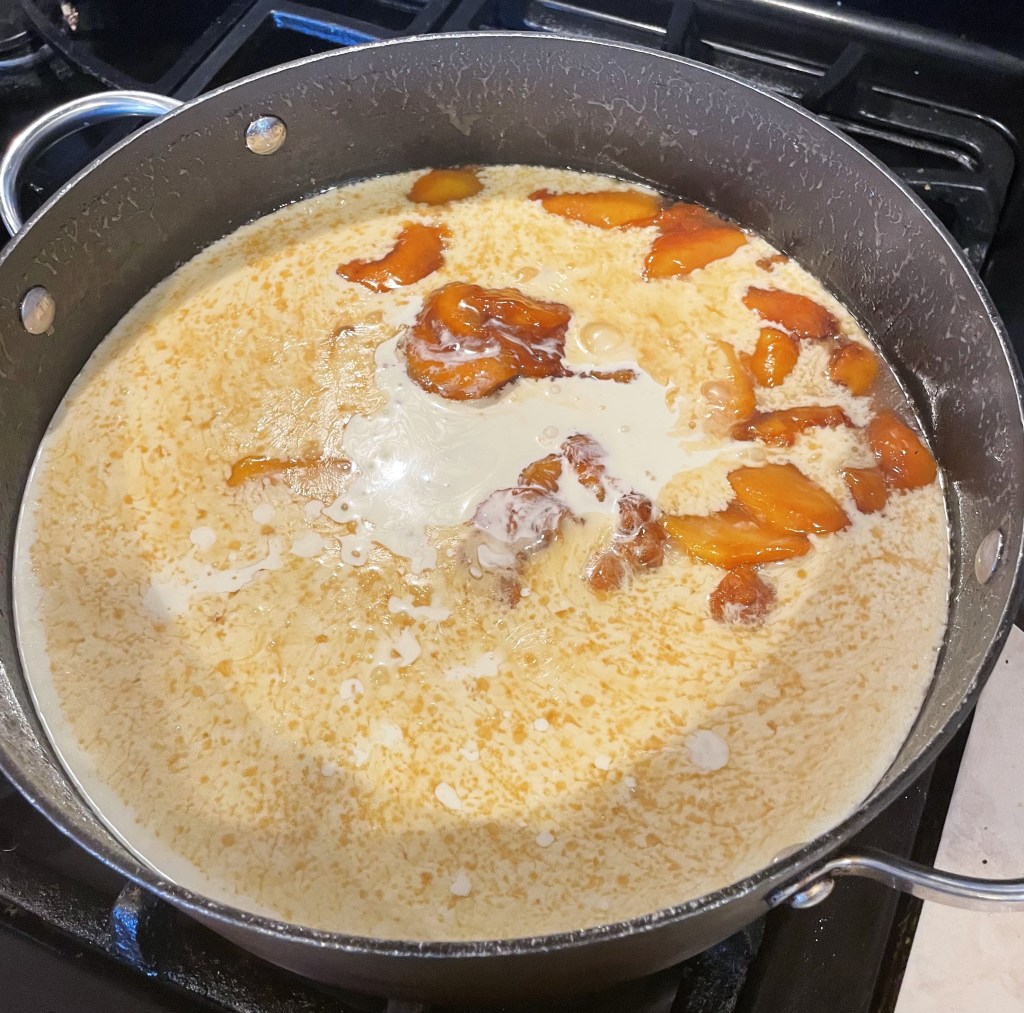
Turn off the heat and mix in the rest of the cream. This is also the time to add the other ingredients if you are getting creative and/or adventurous.
Turn on the heat once again and bring to the second boil at 235*F, once again stirring constantly. Once you reach 235*F the second time, turn off the heat and carefully pour the caramel mixture into your prepared baking dish. Cover with plastic wrap and let sit for about 24 hours before slicing it.
After lots of trials and tribulations, Priscilla and I have mastered our caramel making technique and the recipe. The basic recipe and technique are the same. Once the basics are mastered, you can play around with it however you like for all the added touches and specialty flavors.
The peach pecan caramel is my first batch of quite a few more yet to come for this season. Stay tuned and bring your sweet tooth. 🙂
Have a great day and make everyday great, no matter what you do. Live life to the fullest and enjoy the ride and all the adventures that come your way your while you can. ‘Til next time.
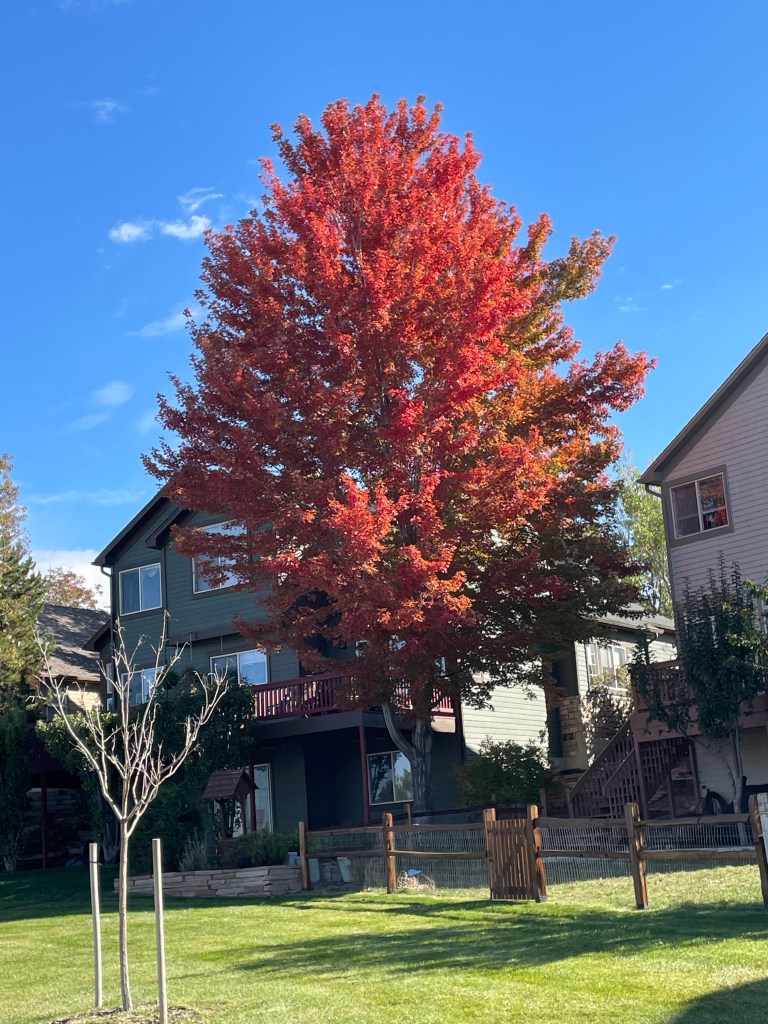
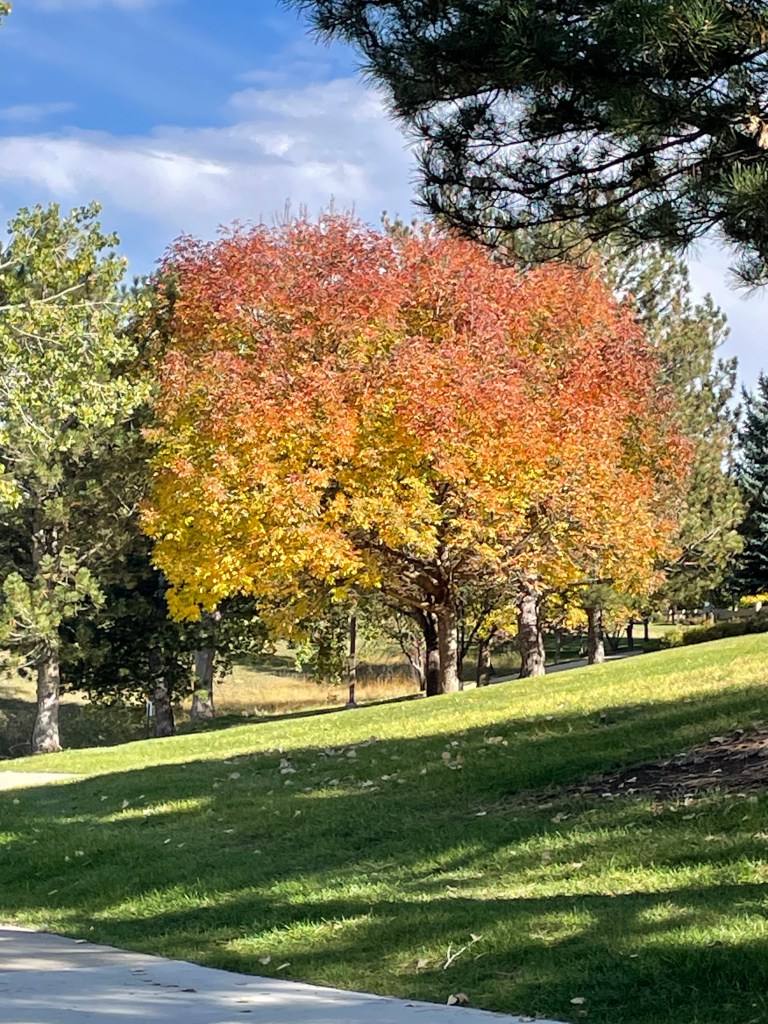
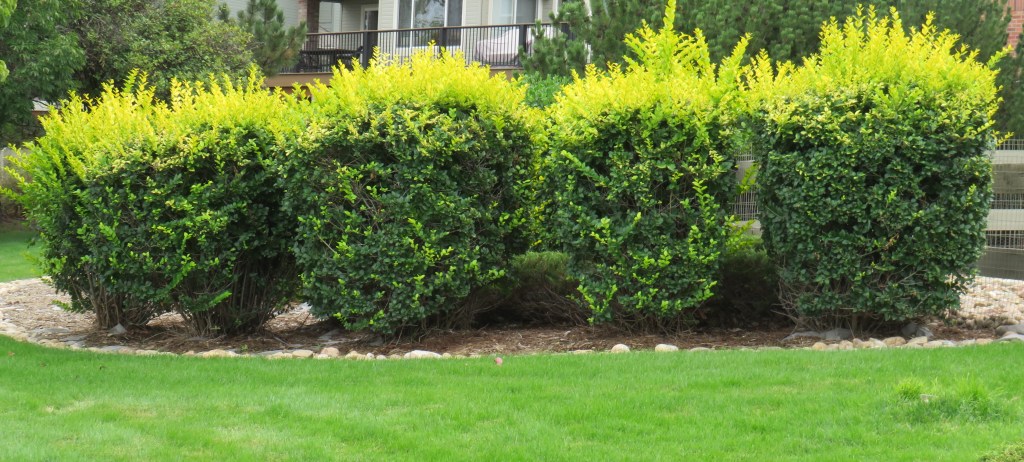
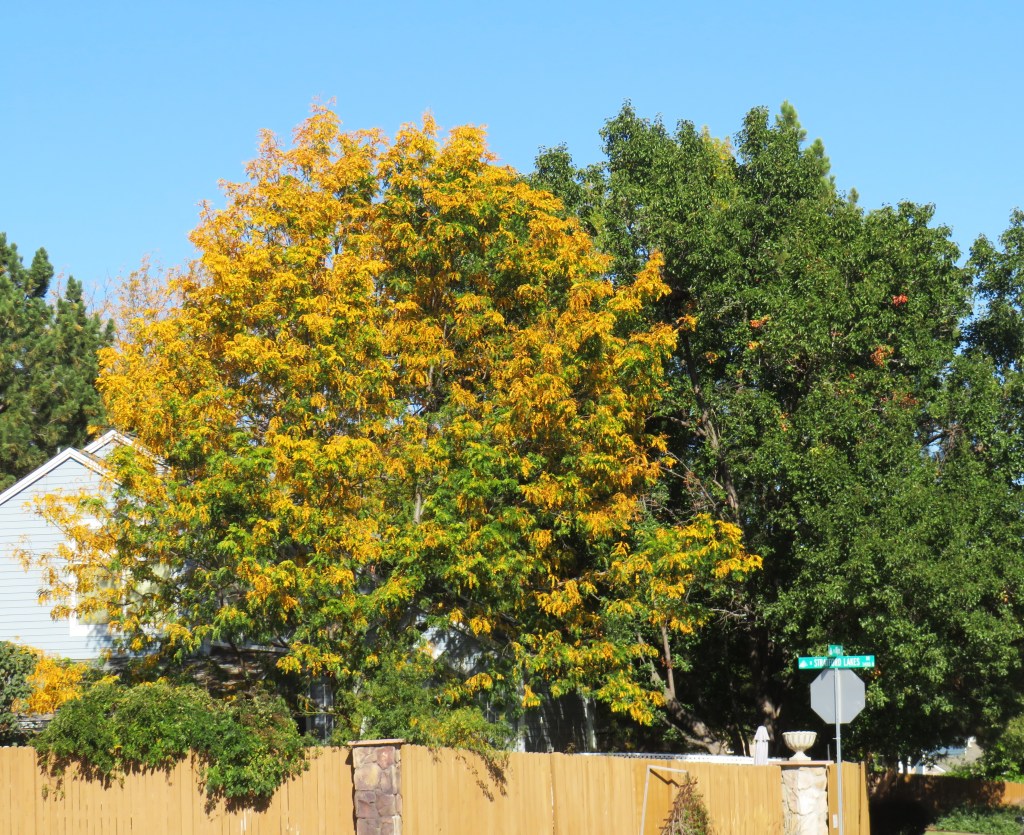
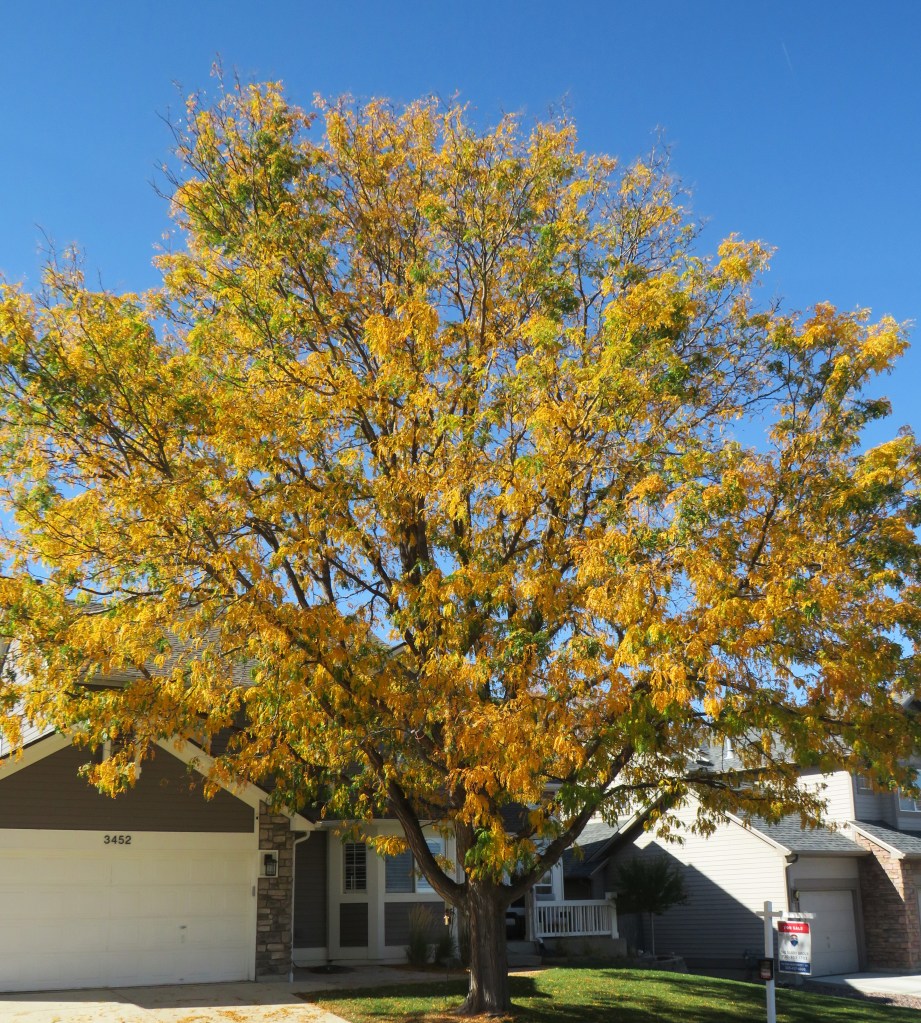
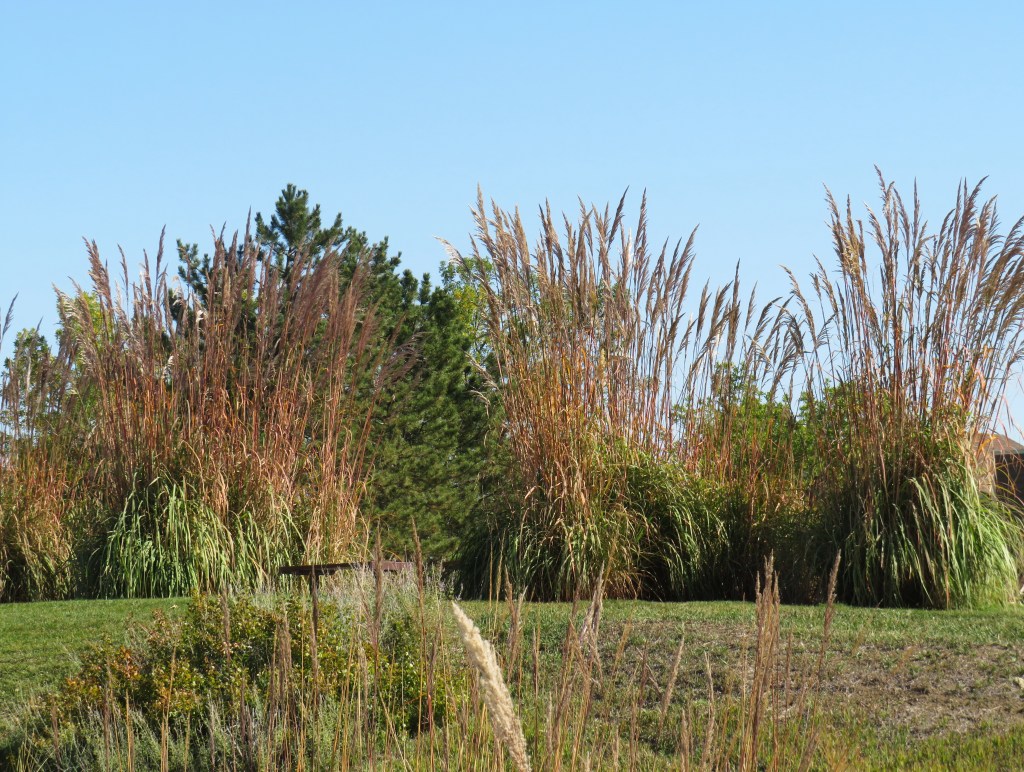
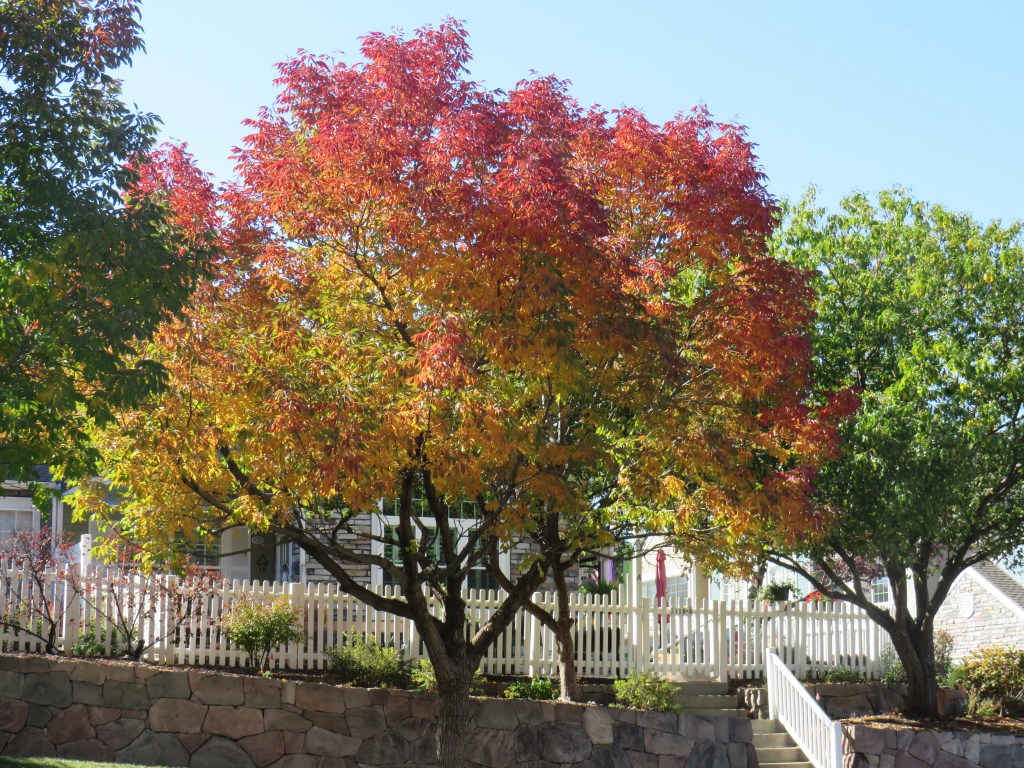
It is fall, or autumn, here in the United States. I love fall and all the beautiful fall colors. Usually our colors are spectacularly vibrant. This year, our colors haven’t been as vibrant or as plentiful as they have been in years past. We have had only a small fall this year, with very mild and warm temperatures. But nonetheless, we are still getting some very pretty fall colors. I thought I would share some of them with you.
Have a great day and make everyday great. ‘Til next time.
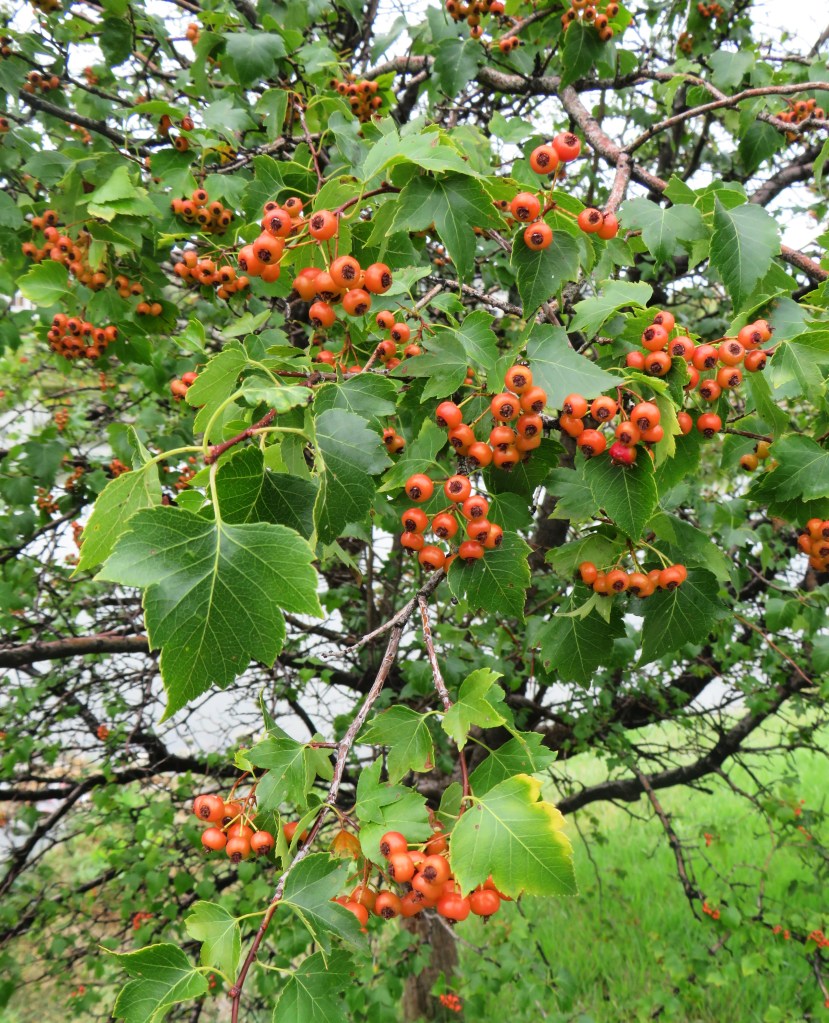
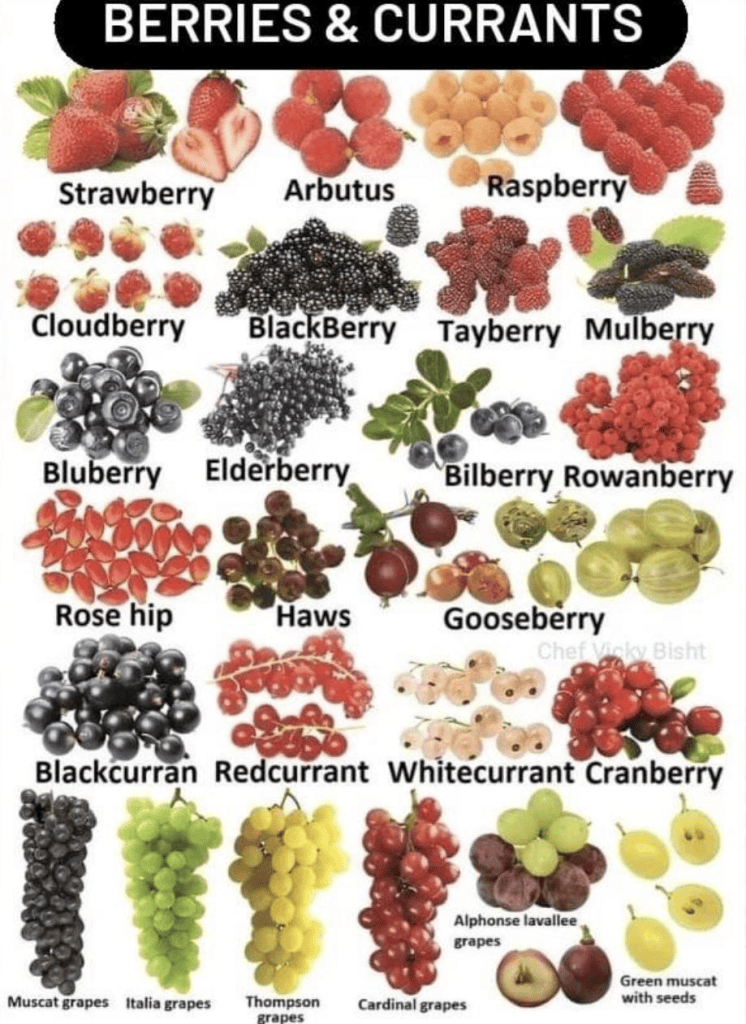
Currants are not so popular, or even that well known here in the United States, but they are very popular all over Europe. If you are not familiar with currants, you may ask what is a currant.
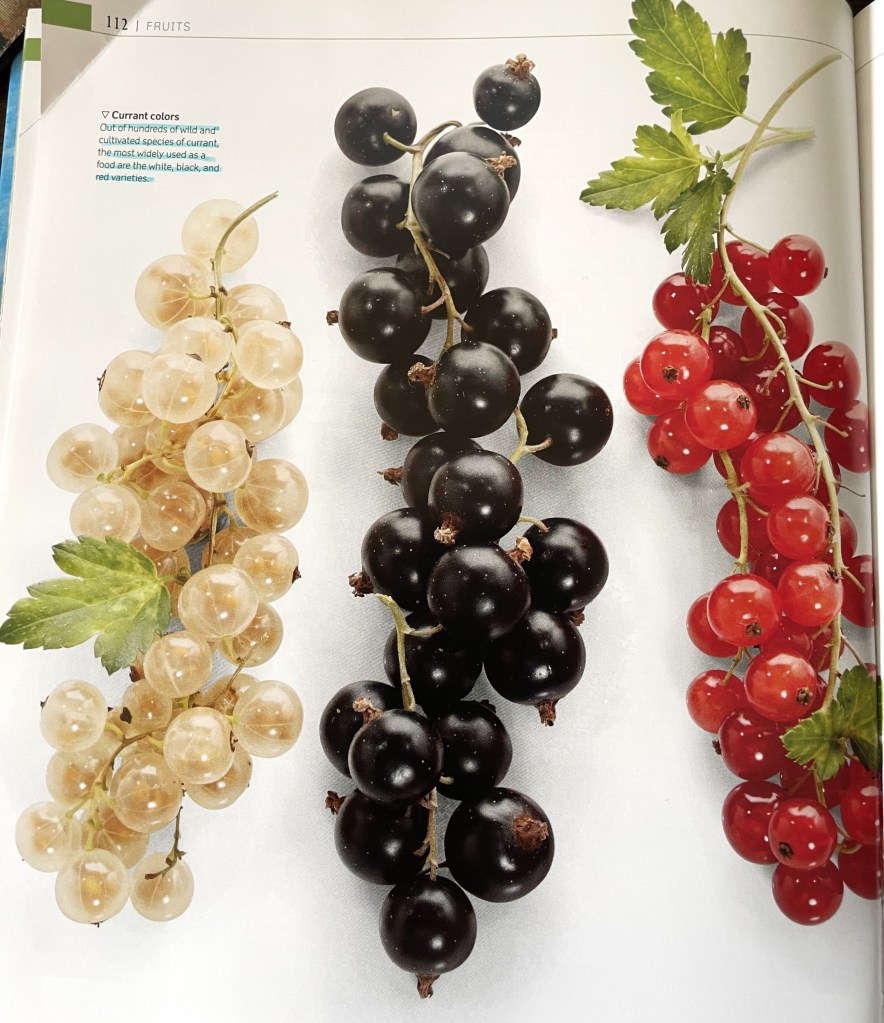
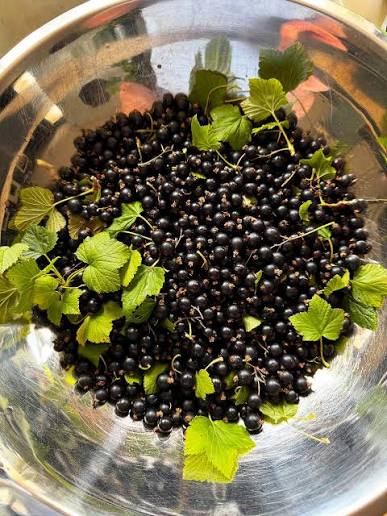
There are two main species of currants – zante currants and ribes currants. Zante currants are dried small seedless grapes originally from Corinth, Greece. Their name means raisins of Corinth. There are also Ribes berries which are tart red, black, or white shrubs native to the cooler temperatures of Europe and Asia. Zante currants are very old and have been traded since ancient times. Ribes berries are very old too, and were first cultivated in European monasteries by 350 AD and grew wild across northern Europe and Asia, with written records of Russian black currant farming dating back to the 11th century. They grow wild all over the United States too, and many of the wild varieties are found in the US, but they are not cultivated much here and were Federally banned from being cultivated in 1911 because they are a natural host to the parasitic fungus known as blister rust, which was killing the white pines, the backbone of America’s timber industry. (p. 113 – The Story of Food). The Federal ban was lifted in 1966, but most states still voluntarily enforce it. In the United States, currants are also known as gooseberries, especially the white currants, and are most often the Zante varieties.
Currants were originally grown and used for medicinal purposes and for decorative and ornamental uses. They are loaded with Vitamin C and Vitamin K, and contain lots of calcium and magnesium as well. One cup of currants provides you with up to 200% of your daily Vitamin C requirements, which helps your immune system and helps fight off viruses and diseases. They boost your immune system, lower inflammation, improve blood circulation, and support heart, eye, and gut health. Black currants rank as one of the most nutrient-dense berries you can find. Currant plants are also natural pest controllers for your garden too.
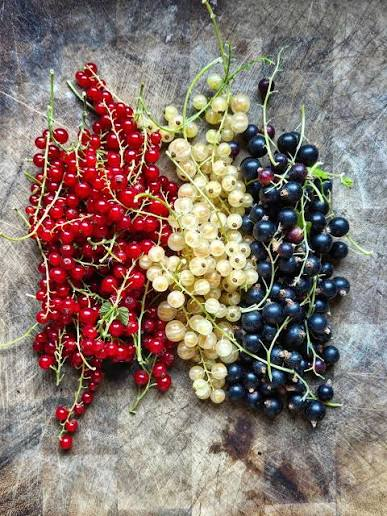
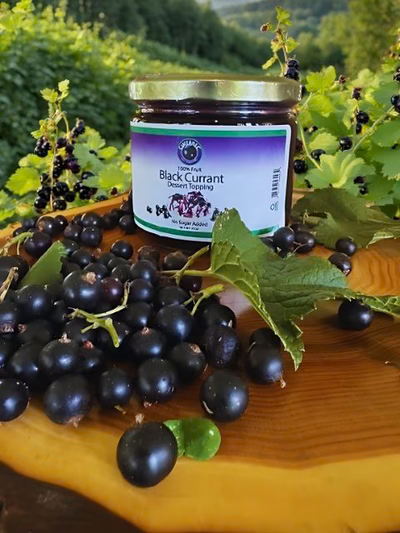
There are about 150 different varieties of currents, but the most popular ones are the red, black and white ones. In Europe, currants are still used for a number of medicinal reasons, but they are primarily enjoyed in desserts, jams, jellies and juices. And in France, currants are one of the main ingredients for their famously delicious liqueur, Cassis or Creme de Cassis. Cassis is the French name for the black currants.
Now you know. Now you are current on your currants.
Have a great day and make everyday great, no matter what you do. Live life to the fullest and enjoy the ride and all the adventures along the way. ‘Til next time.
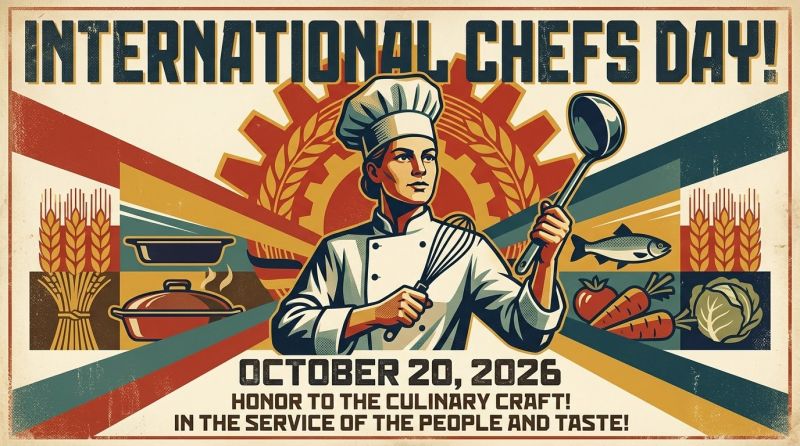
I had no idea there was a day that celebrated chefs, and that it is an international day too. But there is. And it’s today, October 20. Today is International Chef’s Day, celebrated all over the world for all those that cook for everybody everyday. Today, is the 22nd official year that chefs have been recognized and honored, though chefs have been feeding a hungry world all throughout history. Let’s hope this trend continues. 🙂
International Chef’s day was created to honor the culinary profession and to encourage chefs to pass on their skills, knowledge, and passion to the next generation. The day was established by the late Chef Dr. Bill Gallagher, who was then the president of the World Association of Chefs Societies (Worldchefs) in 2004. Dr. Gallagher created International Chefs Day to recognize the noble role of chefs as educators, mentors, and community leaders—focusing heavily on teaching children about healthy eating, nutrition, and sustainability.
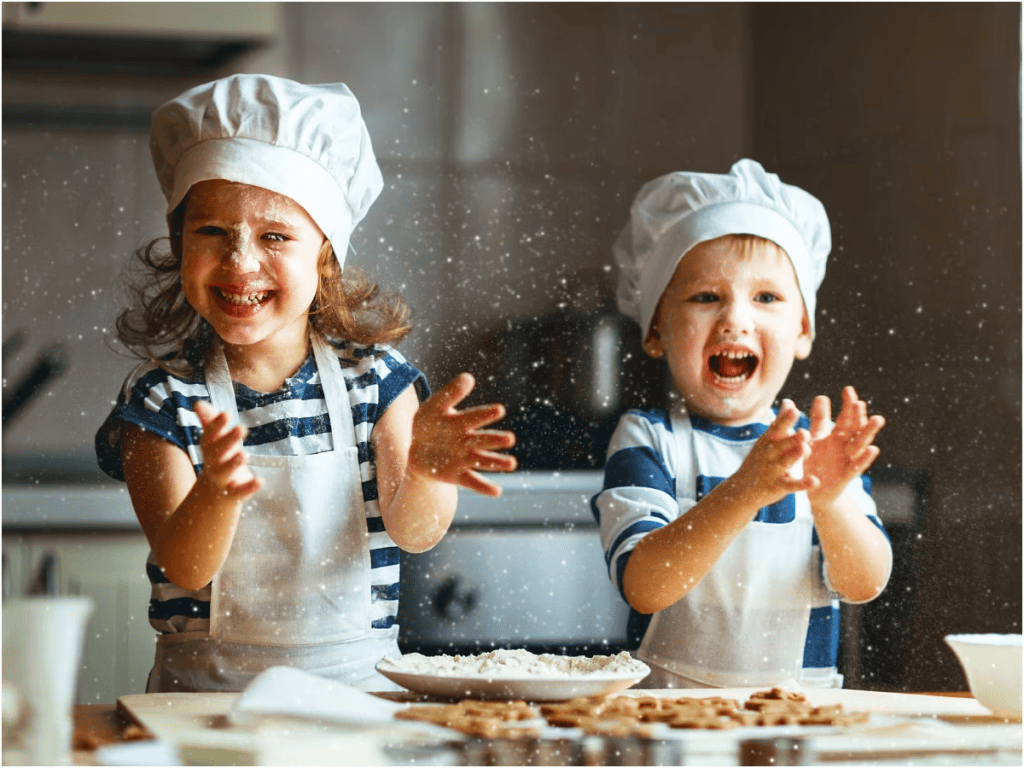
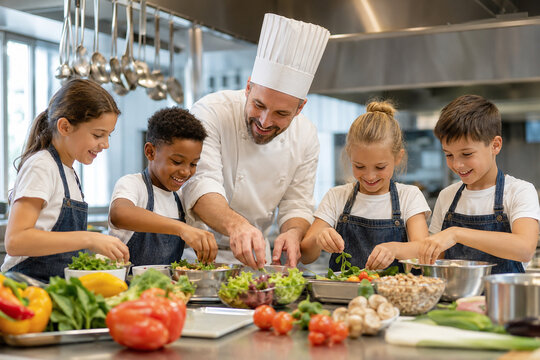
This year’s theme for International Chef’s Day is “Food Explorers”. This theme was chosen to encourage people of all ages—especially children—to explore ingredients, discover where food comes from, learn how it is grown or harvested, and understand healthy eating, sustainability, and the joy of cooking. This is right up my alley. I LOVE doing this, and do it all the time. Every chef, in every corner of the world, has something to teach. By sharing your knowledge, skills, and passion for food, you can help future chefs become curious, confident Food Explorers.
So whether you are a professional chef, who has been in the industry for many years or just starting out or a “home chef” or teaching young kids the joys of cooking, hats off, or toques off, to all of you. You deserve to be recognized for all that you do.
I loved teaching kids how to cook, and still do. I just don’t know that many kids anymore. They’ve all grown up. 🙂
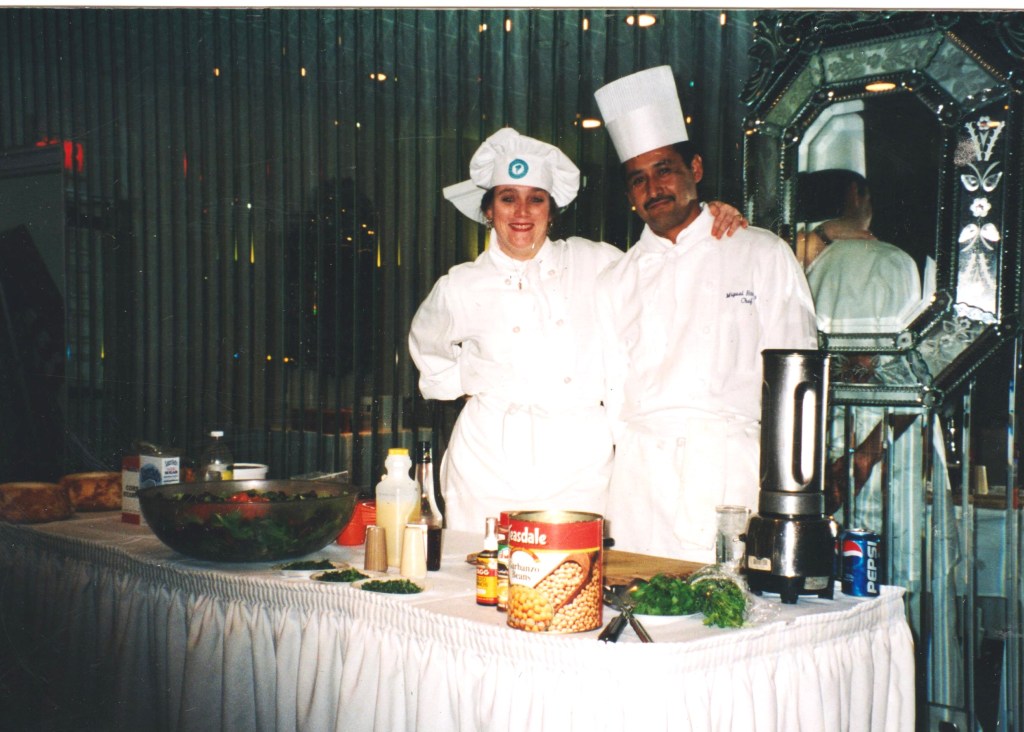
Me as a much younger, much thinner chef, with my Sous Chef Miguel.
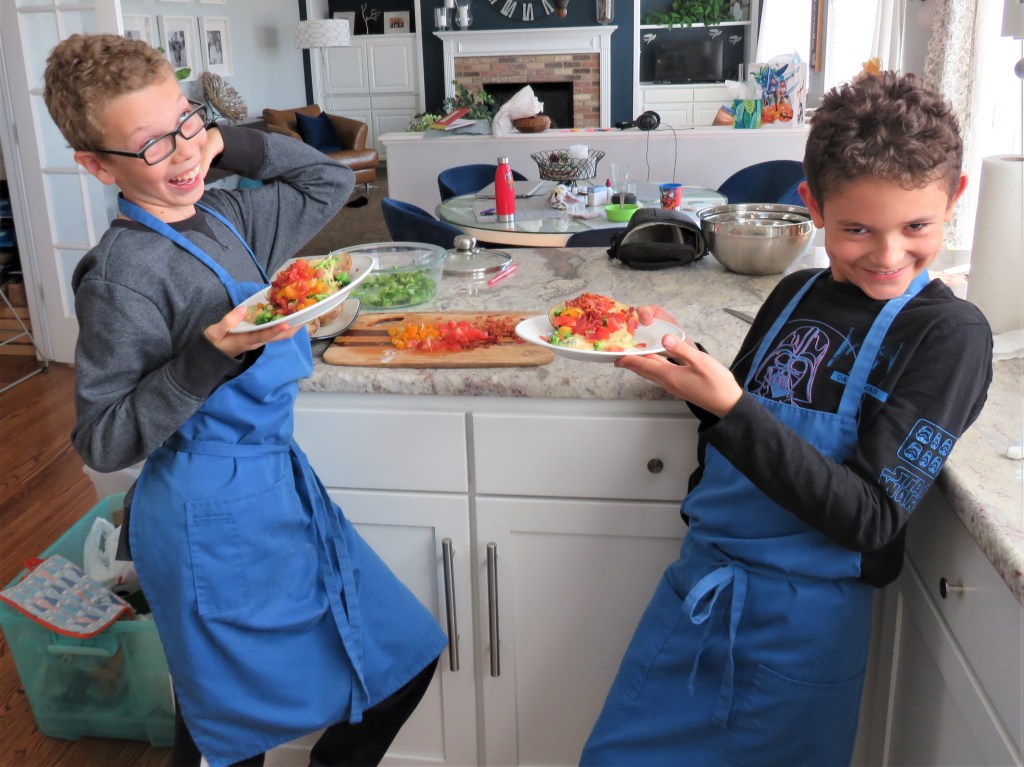
And as a much older, more seasoned chef, passing down my love of cooking to the next generation, with brothers Micah, Asher and Noah.
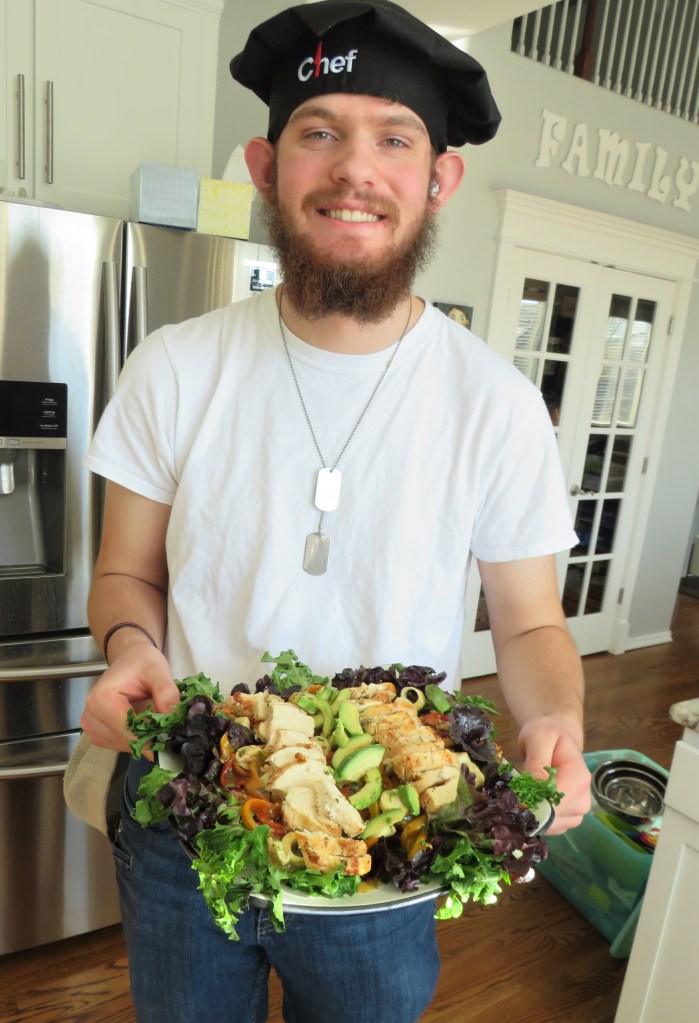
And me today, still doing what I love – cooking for and feeding people, especially for those I love. 🙂
Have a great day and make everyday great. Do what you love and love what you do. Live life to the fullest and enjoy the ride and all the adventures that come your way. ‘Til next time.
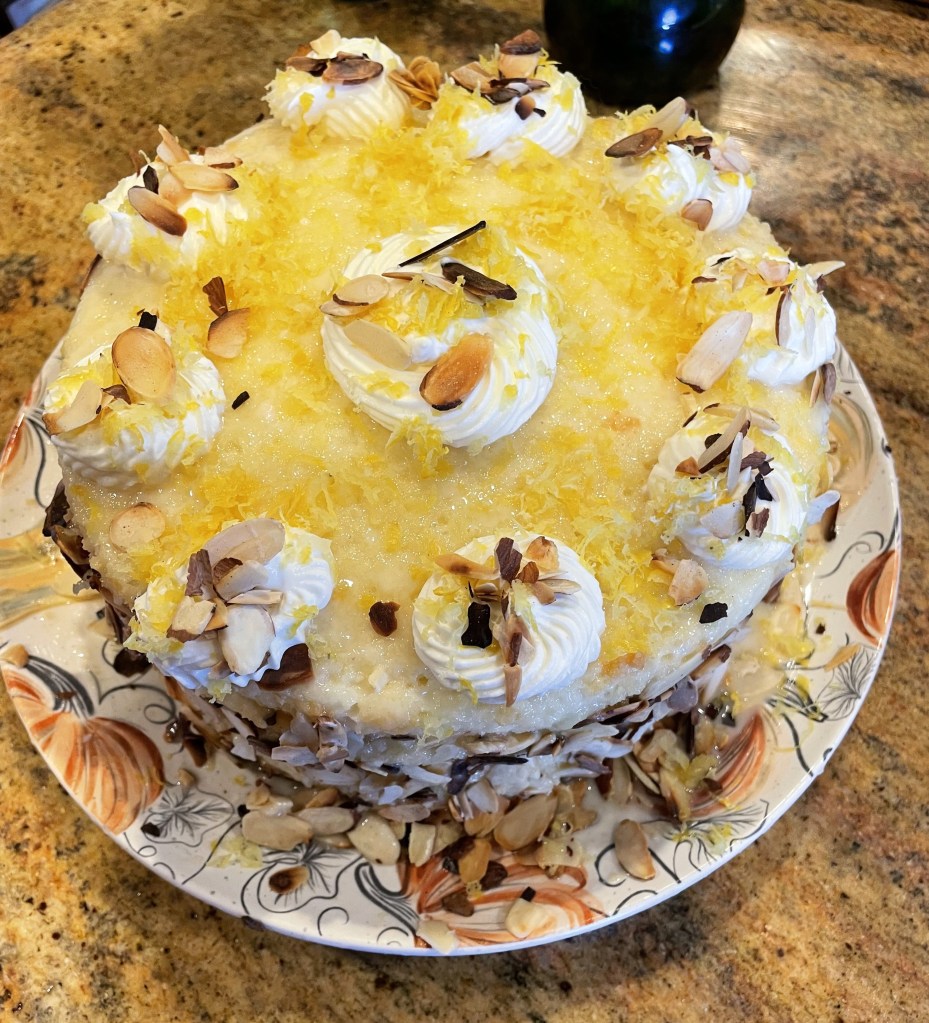
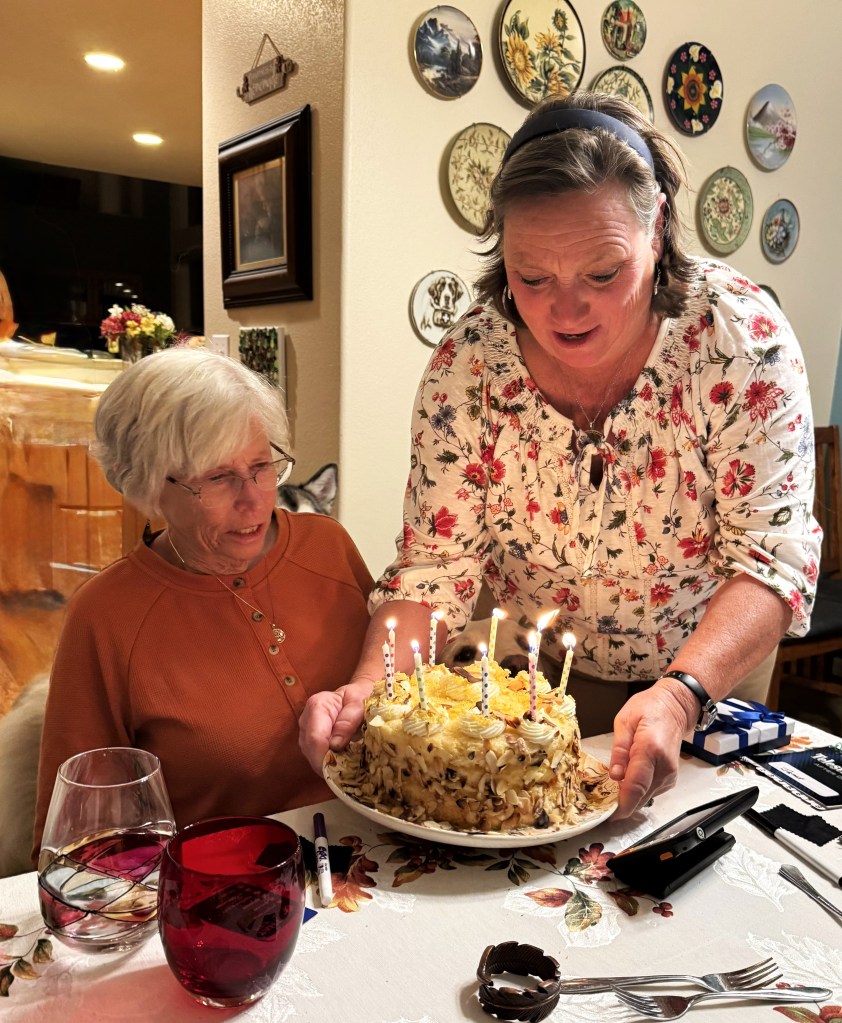
What’s a birthday party without cake, right?! Since Janet’s birthday menu was Italian, I had to make her cake an Italian cake too. I searched through my Italian cookbooks and nothing was really jumping out at me. I finally had it narrowed down to two; either an apple or a lemon cake. I asked the birthday girl what her preference was, and she said lemon. I think I was sending out secret messages to her, because I was hoping she would choose lemon. 🙂
Italy is part of the Mediterranean region. That whole area is known for its abundance of fresh citrus fruits, such as lemons and oranges. These delicious citruses have been an integral part of the Mediterranean cooking and diet for centuries. Lemons in particular, are then unofficial symbols of Italy, and specifically Southern Italy.
Italian Cream Cake
This is another cake that takes a lot of time to make and is another labor of love, but is definitely worth all the effort.
The Sponge or Torta di Spagna
Preheat the oven top 325* F or 163*C.
Spray (2) 8 1/2-9 inch cake pans with cooking spray and line the bottoms with parchment paper.
7 eggs, separated
1 1/2 cups sugar
4 TBSP lemon juice
1 1/2 tsp fresh lemon zest
1 tsp lemon extract
1/2 tsp vanilla
1/2 tsp salt
1 1/2 cups sifted cake flour
Combine the flour and salt together and set aside.
Separate the eggs and beat the egg whites until they form stiff peaks. Mix the sugar with the egg yolks, then add the lemon juice, lemon zest, vanilla and lemon extract.
Fold the egg yolks into the egg whites then add into the flour and fold in together until everything is thoroughly mixed together. Pour equal amounts of the batter into the prepared pans and spread evenly.
Bake for about 30 minutes, or until golden brown and a toothpick comes out clean when inserted in the middle. Allow the cake to cool, then place in the freezer for at least 3-4 hours before cutting and filling.
After the cake has completely chilled, make the Limoncello simple syrup and lemon filling.
Limoncello Simple Syrup
1/2 cup water
1/2 cup sugar
1/2 cup Limoncello liqueur
Bring the water and sugar to a boil, then reduce the heat and let simmer for 5 minutes. Make sure the sugar is completely dissolved, then add the Limoncello and mix in thoroughly. Let cool for a bit.
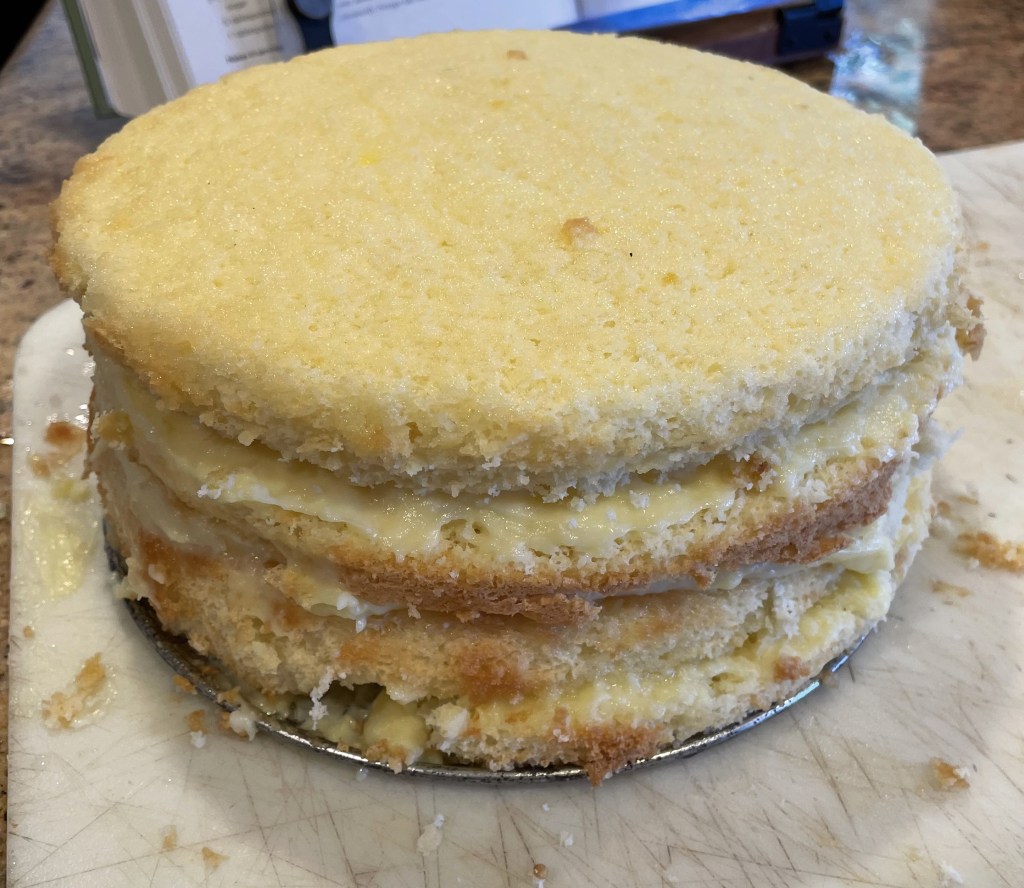
Cut the cake rounds in 1/2, making 4 rounds. Generously brush the simple syrup onto each round.
Lemon Cream Filling (Lemon Custard)
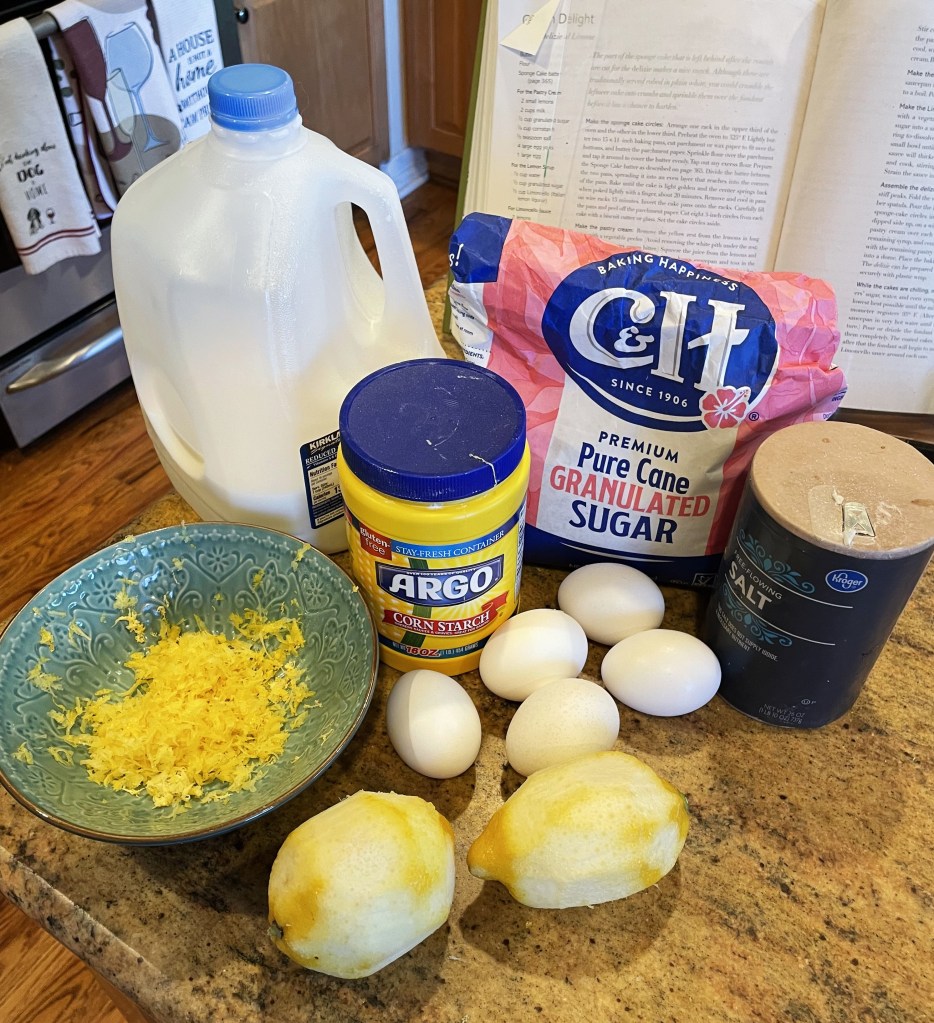
2 lemons
2 cups milk
1/2 cup sugar
1/4 cup cornstarch
1/2 tsp salt
4 large egg yolks
1 large egg
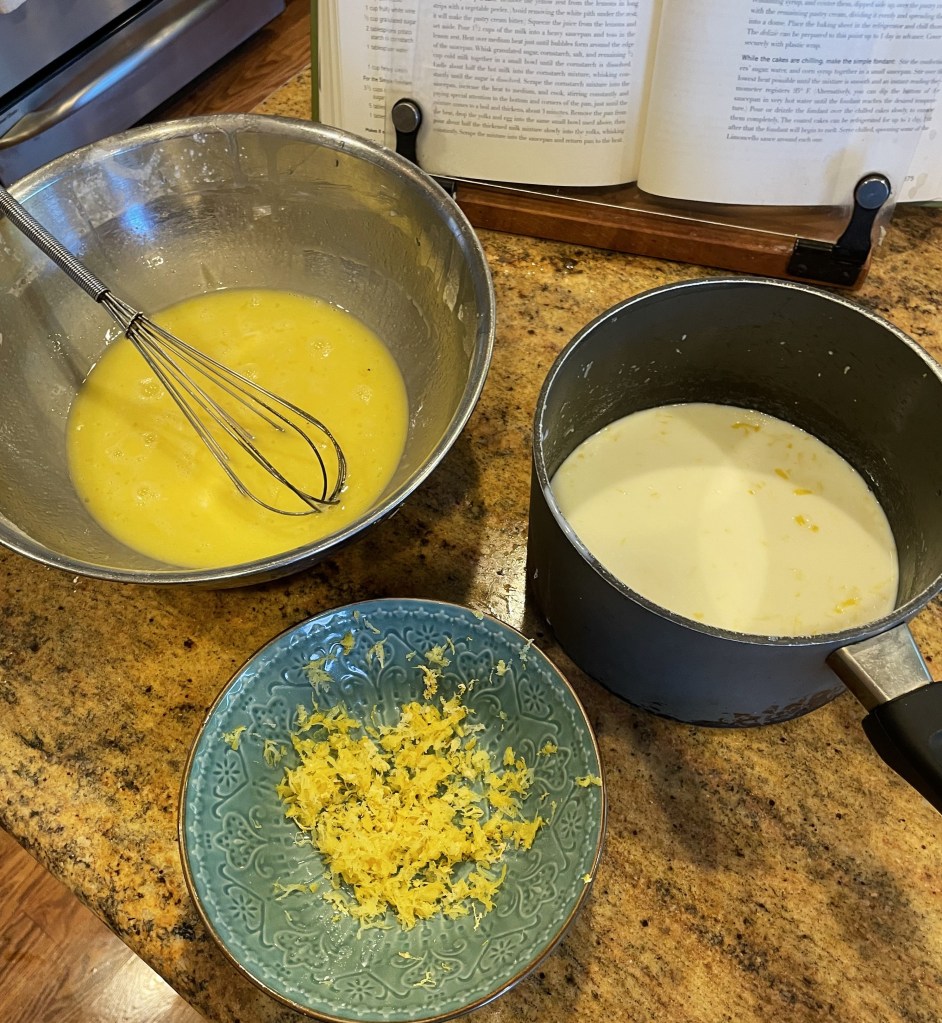
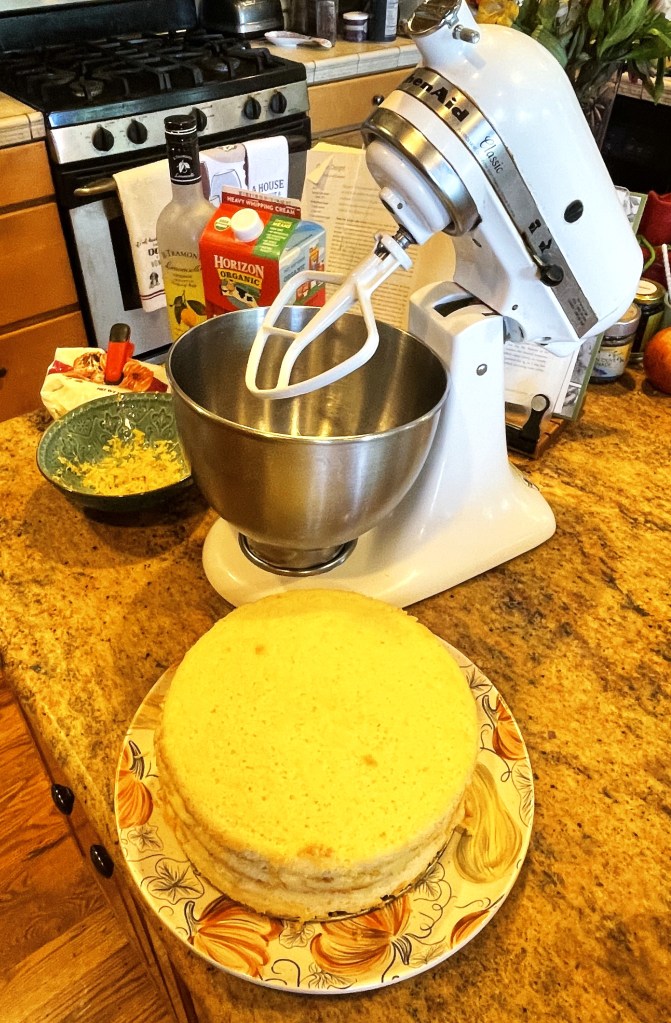
Grate the lemons with a lemon zester, making sure to not get any of the white pith. Squeeze the juice from the lemons and set aside.
Mix the eggs, sugar, and cornstarch together.
Mix the milk and the lemon zest in a saucepan and just bring to a boil.
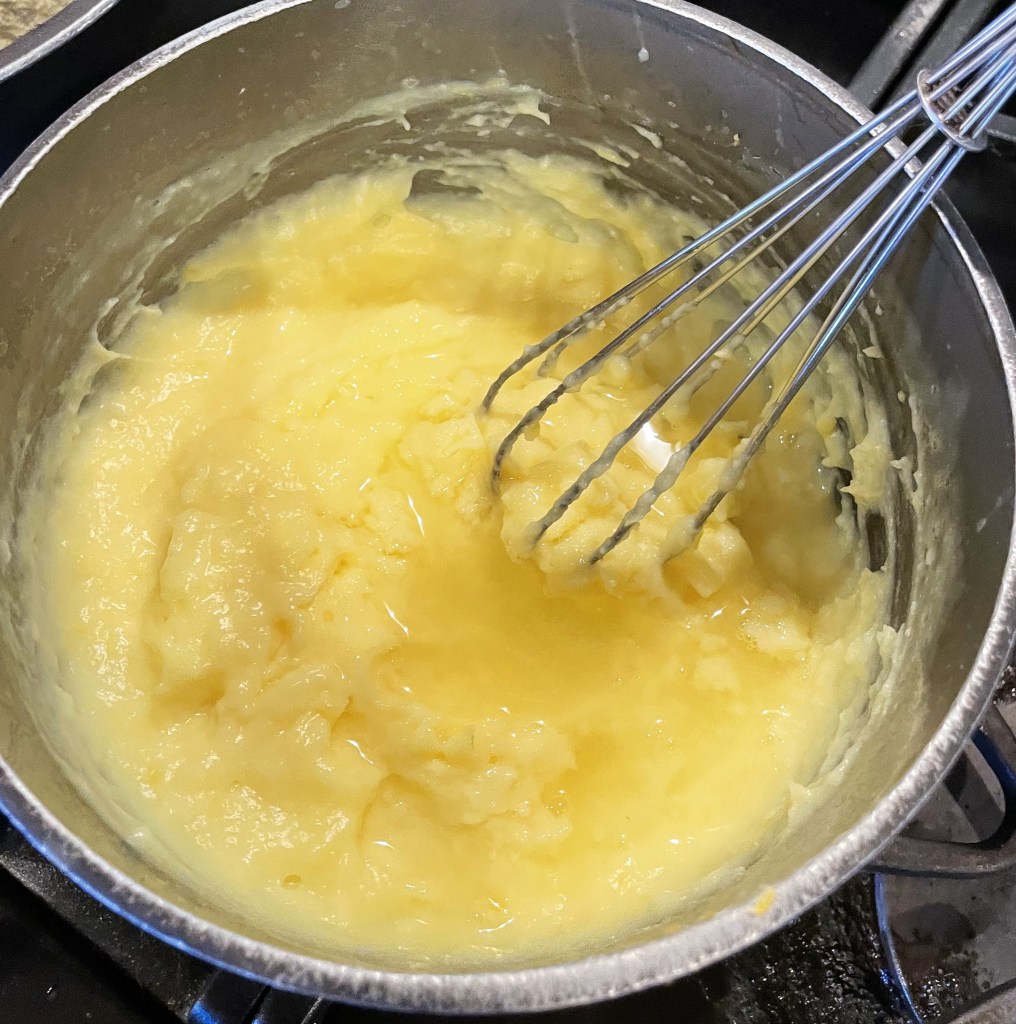
Add a little bit of the hot milk mixture to the eggs, making sure to stir constantly while adding so the eggs don’t scramble. Once everything is thoroughly mixed together, add the whole mixture into the rest of the milk, and mix constantly over a medium-low heat until it starts to thicken. Add the lemon juice and mix in completely. Chill in the refrigerator for at least an hour before using.
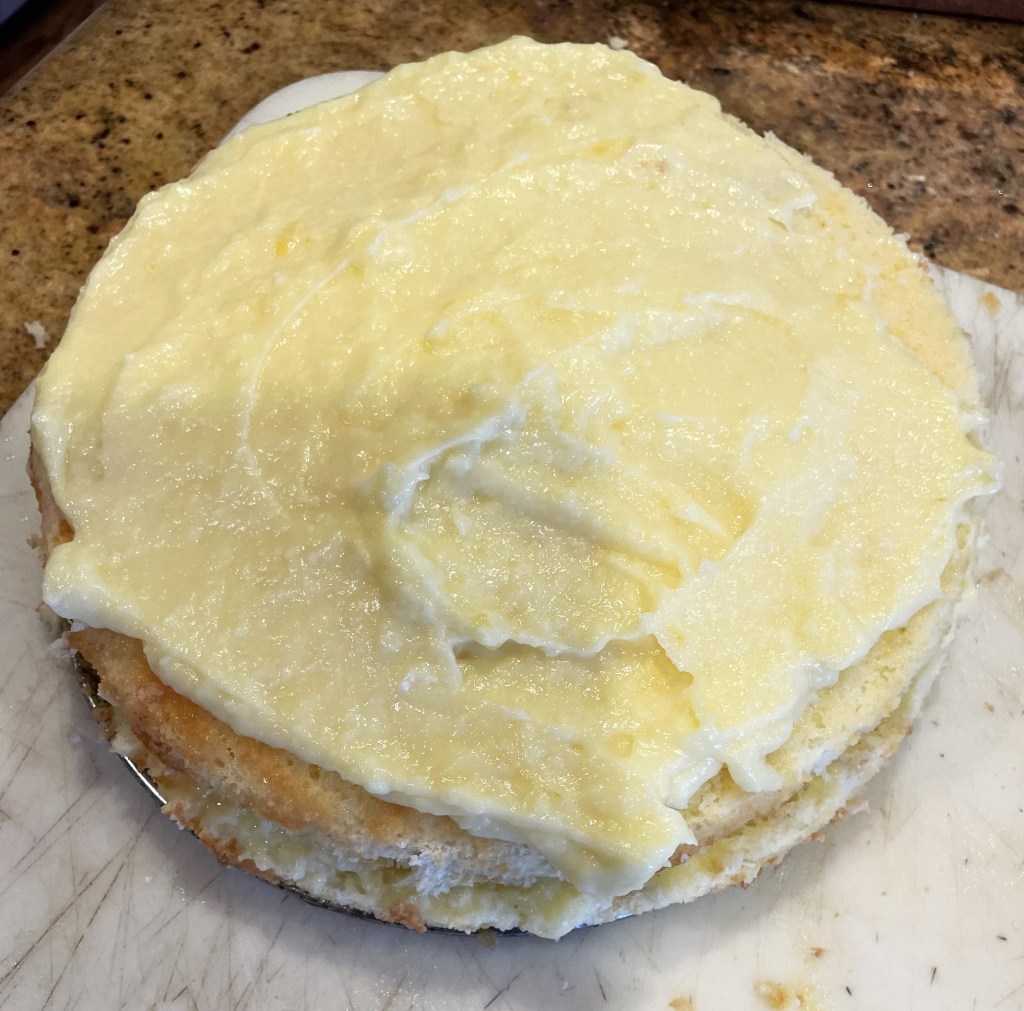
When ready, spread the lemon custard generously over three of the four cake rounds, and layer one of top of the other. Leave the top layer clean.
Put the cake back in the refrigerator for at least an hour before finishing with the fondant.
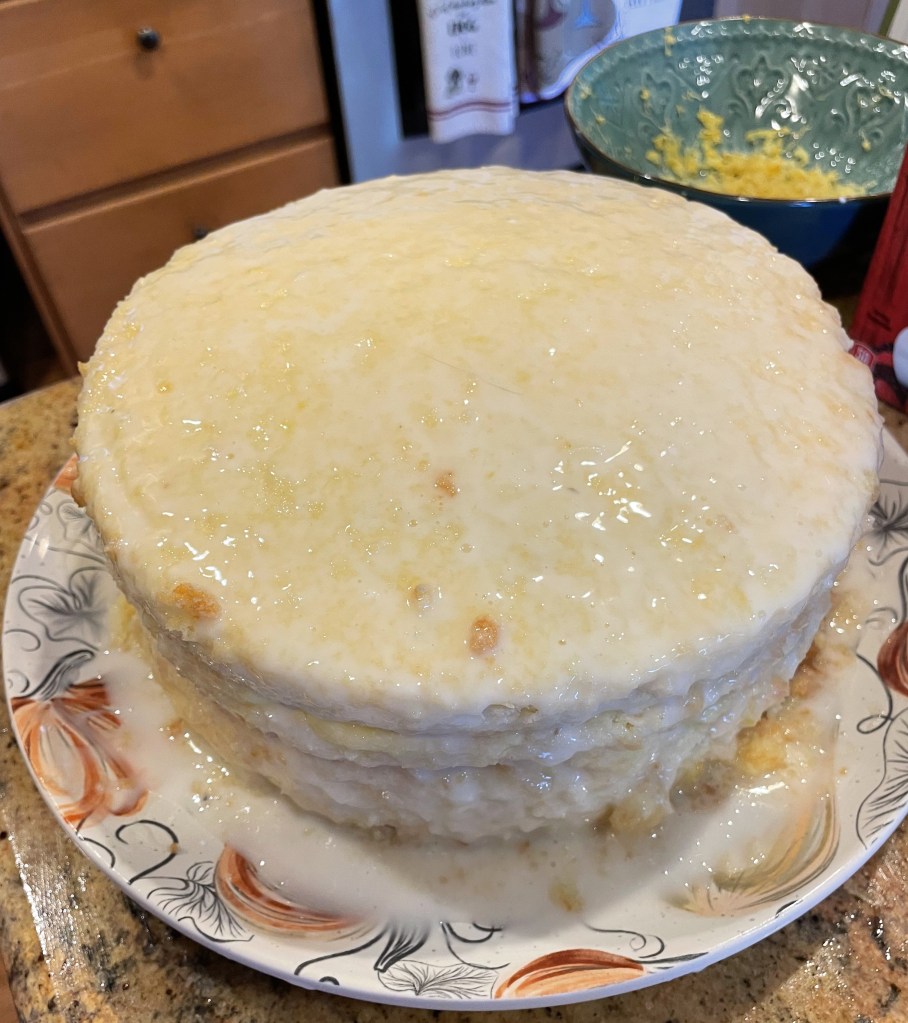
The Fondant
3 1/2 cups powdered sugar
5 TBSP milk or water – I used milk
1 TBSP lemon extract
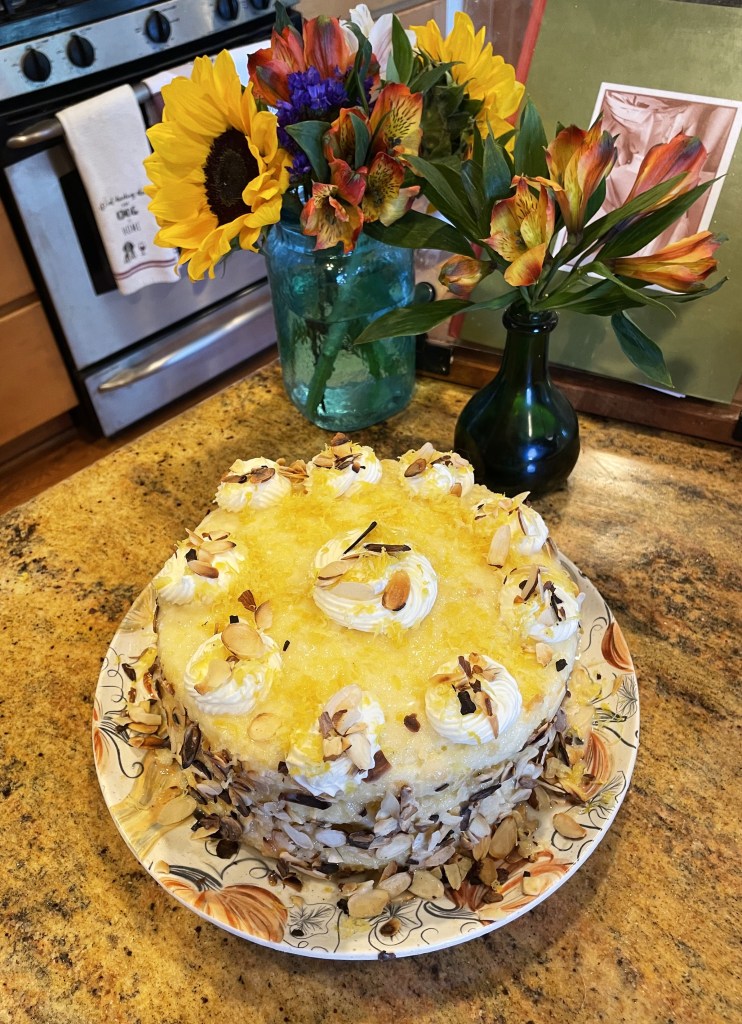
Mix together thoroughly and pour over the top of the cake and spread all around the sides of the cake. I had extra toasted almonds from my Cassata alla SicilianaCassata Alla Siciliana, and my cake needed something else, so I added the almonds around the sides of my cake. Then I made a little whipped cream, using my leftover Limoncello sauce, and finished my cake with that and added the rest of my lemon zest on top.
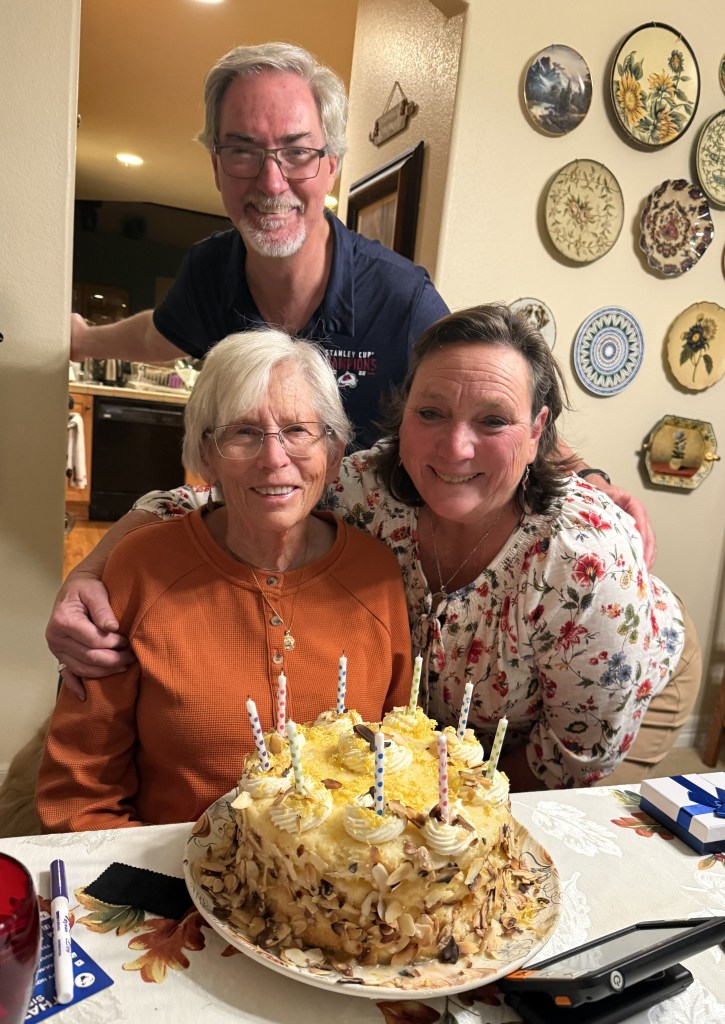
The final results ….. DELICIOSO!!!!! Everyone raved about the cake. It was so moist and filled with lemony freshness. It was a huge hit. 🙂
No matter what you do, make the most out of everyday. Life is short. Live life to the fullest. Have a great day and make everyday great. ‘Til next time.
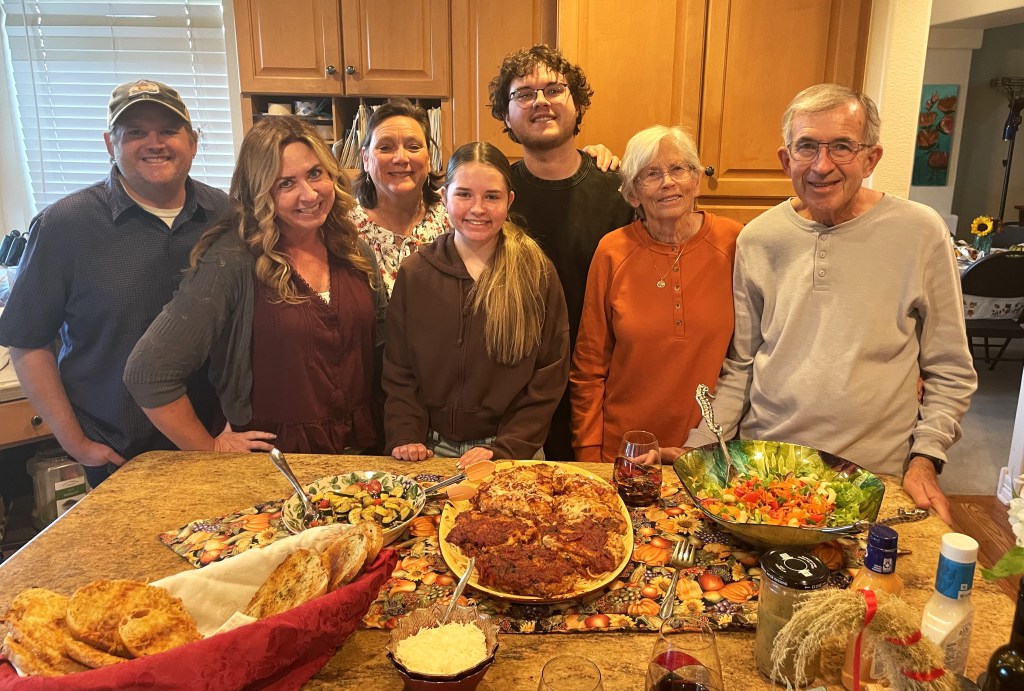
Janet’s birthday was the last of my September/October birthdays, and we celebrated in style. Janet said she wanted a simple dinner; one that her grandkids Peter and Emily would enjoy too. I knew Peter liked chicken Parmigiano, so that’s what Janet picked for the menu. The rest of the dinner was simple rustic Italian that would compliment the chicken Parmigiano.
I was in the kitchen most of the day getting everything prepped and working on Janet’s cake. The cake too followed the Italian theme, and was an Italian lemon cream cake.
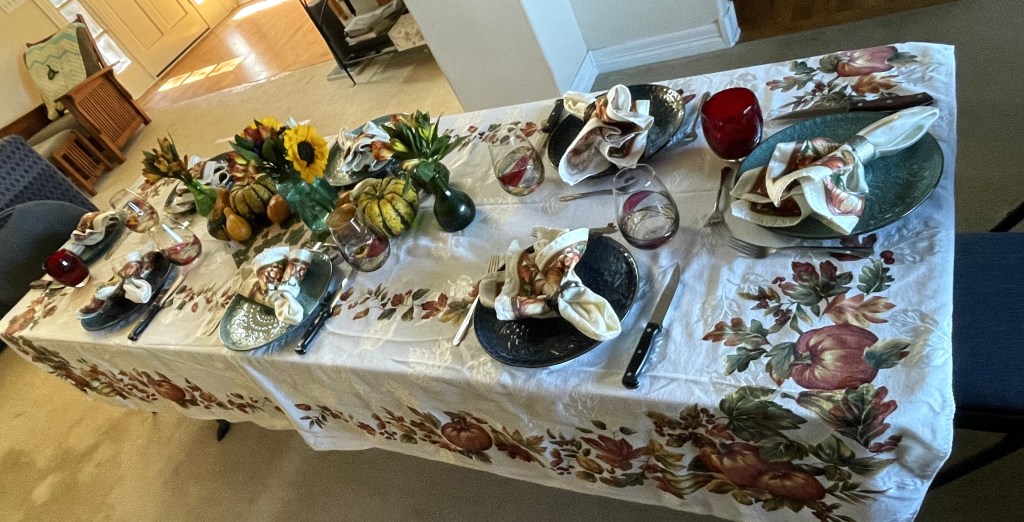
Larry and I also cleaned the house to get it ready for our little party. I set the table and got it looking very festive. (I accidentally broke my nice camera yesterday too, in the midst of the melay, so for now, I am limited to using cell phone pictures until we can either get it fixed or replaced).
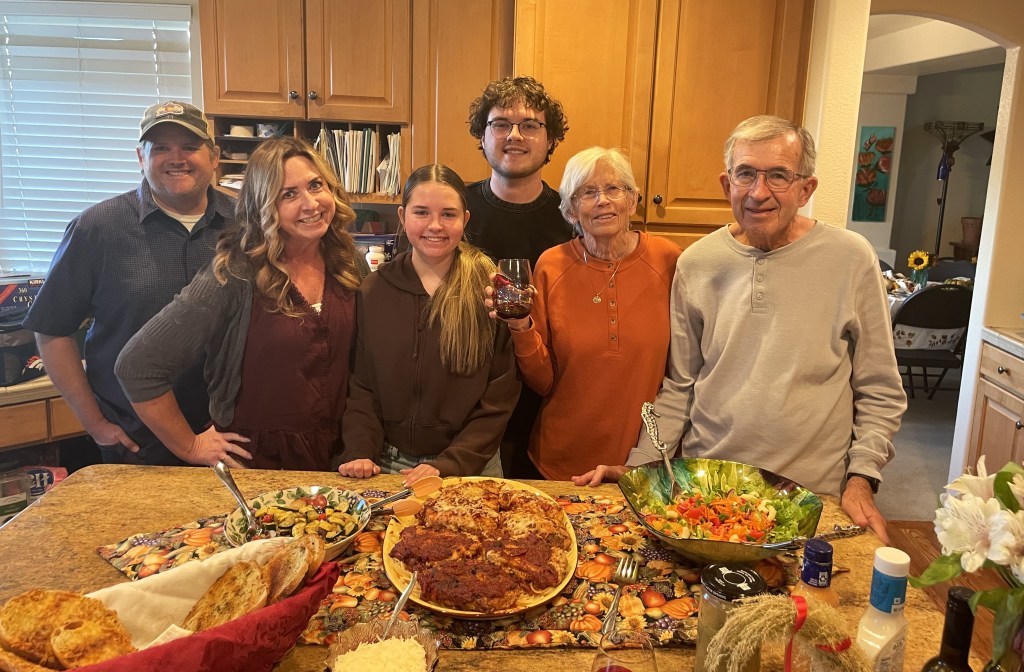
We set the time for 5:30, but Janet and Bob came earlier since Bob was helping Larry with the sprinklers. Janet and I visited in the kitchen as I was cooking. Once everything was finished, and Janet’s son Brian and his family arrived, it was time to get the party started.
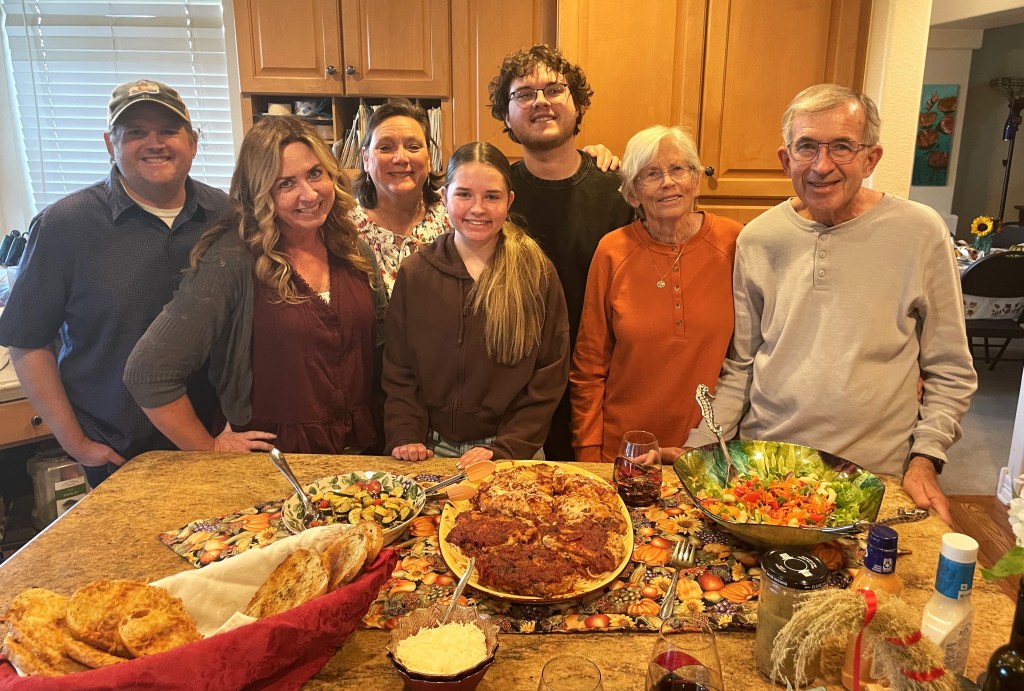
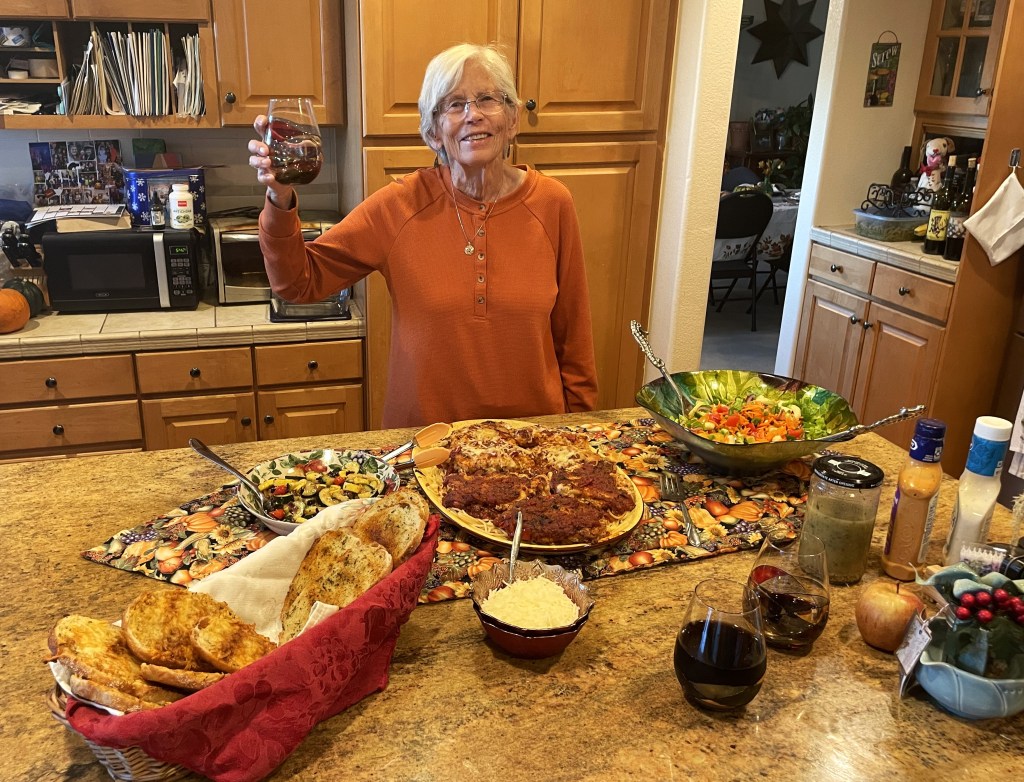
The birthday girl. The menu was chicken Parmigiano, a simple salad, garlic bread and sauteed zucchini and crookneck squash. Of course we enjoyed some Italian red wine to compliment the meal as well.
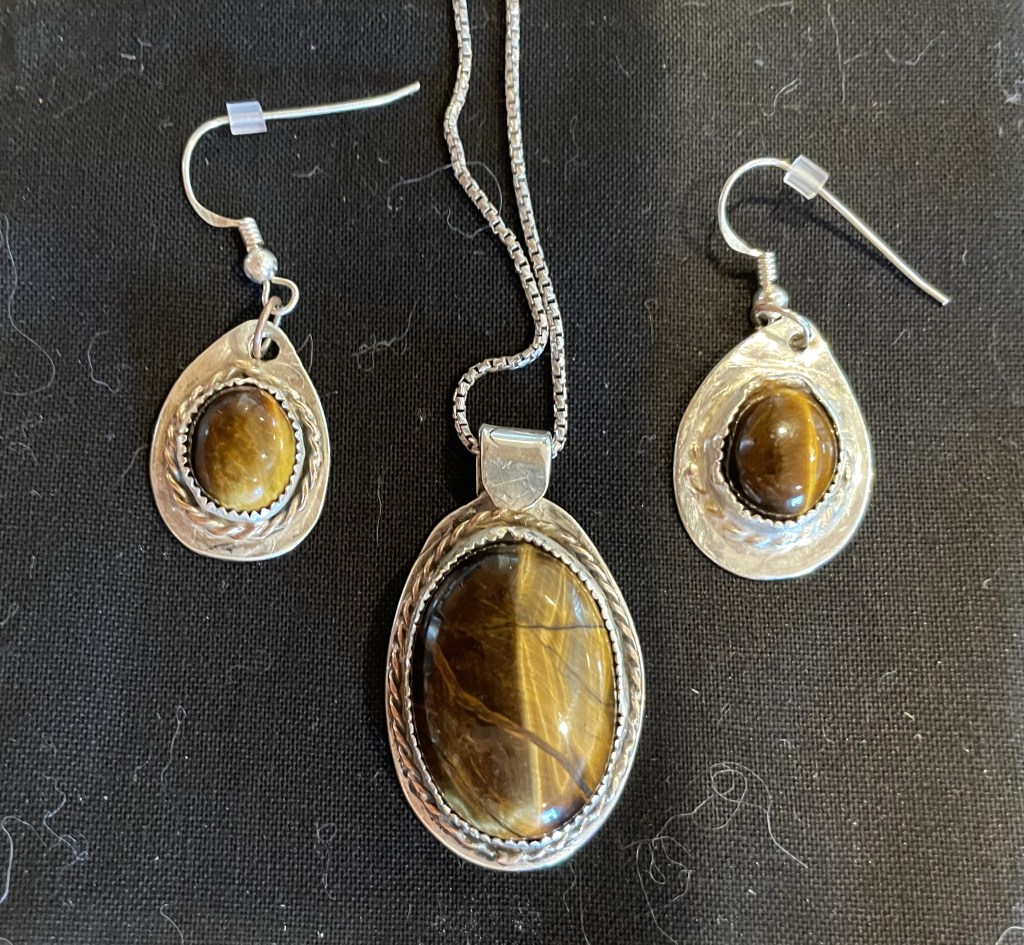
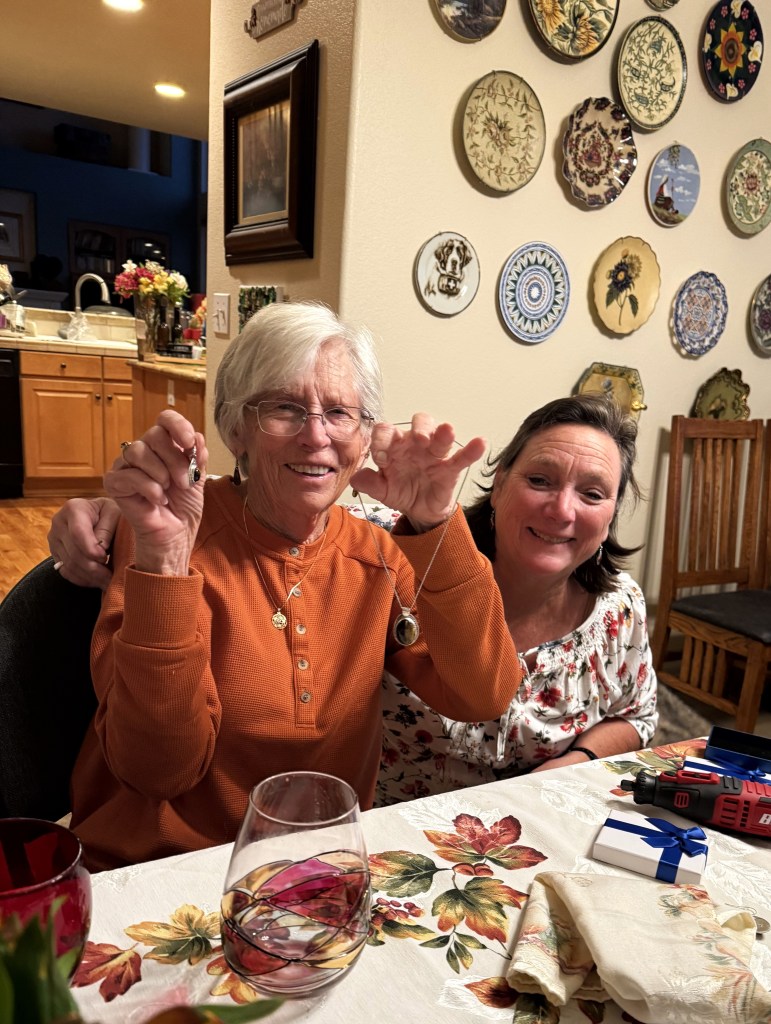
After dinner, it was time for presents, games and of course, CAKE. Even though Janet’s birthday is in October, ironically, hers was one of the first jewelry sets I finished in this busy birthday season. She likes warm earth tones, so her set is Tiger’s eye.
Janet loved her set and had me “autograph” it for her too. I recently started signing my pieces, and Janet wanted hers signed as well.
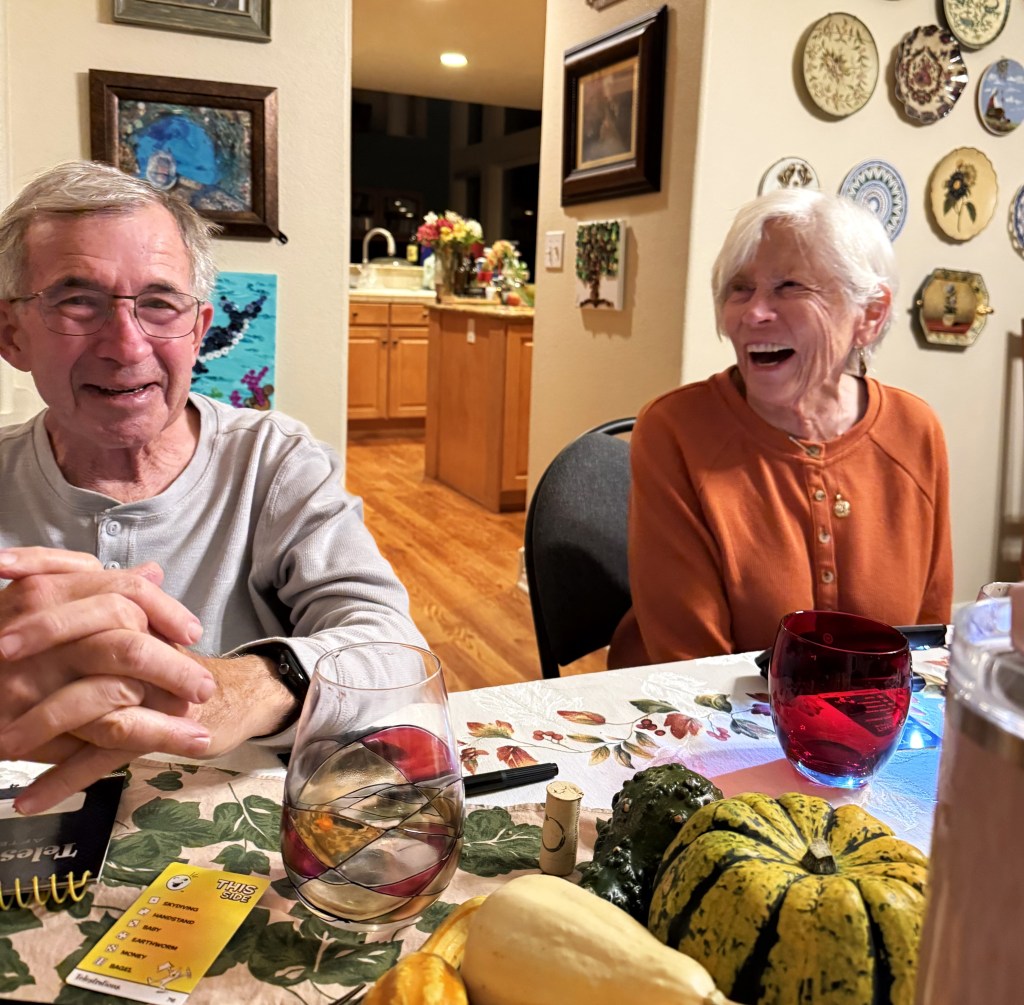
We took a little breather in between our big dinner and presents with a game of Telestrations, which is a hoot and a half. It’s similar to Pictionary. We play this game quite a bit, and we have all discovered it is much more fun when none of really know how to draw at all. The things we came up with; oh my. We laughed so hard and had a ton of fun.
After a few rounds of fun and laughter, it was time to bring out the cake (more on the cake later).
After cake, we played a few more rounds of Telestrations before everyone called it a night. Brian and his family had an hour drive back home. Dorrie and Juneau had to be part of the birthday celebrations too. They hate not being included in all the fun and festivities. After all, they are part of the family too. Even Otis and Nicky joined us after awhile.
Emily and Dorrie became fast friends. Juneau was camera shy, but she managed to get a little bit of her paw in the picture too. 🙂
It was a very fun and festive evening and Janet had a very Happy Birthday. Life is all about getting together with friends and family and enjoying all the good times together, especially over good food. Good friends, good food and good times! It doesn’t get much better than that. 🙂 We’ve been good friends with Janet and Bob for about 20 years, and counting. We decided years ago, we are more like sisters and family rather than just friends. 🙂
Have a great day and make everyday great. Celebrate all the good times as much as you can while you can. Life is short. Live life to the fullest and enjoy the ride, no matter what you do. ‘Til next time.