An Argentine Dinner with Seven Fires

My friend Priscilla is originally from Argentina. She knows how much I love to cook, and particularly all kinds of great ethnic foods from around the world. And as you have seen, we love to cook together too. So for my birthday, she gave me this fabulous new Argentine cookbook.
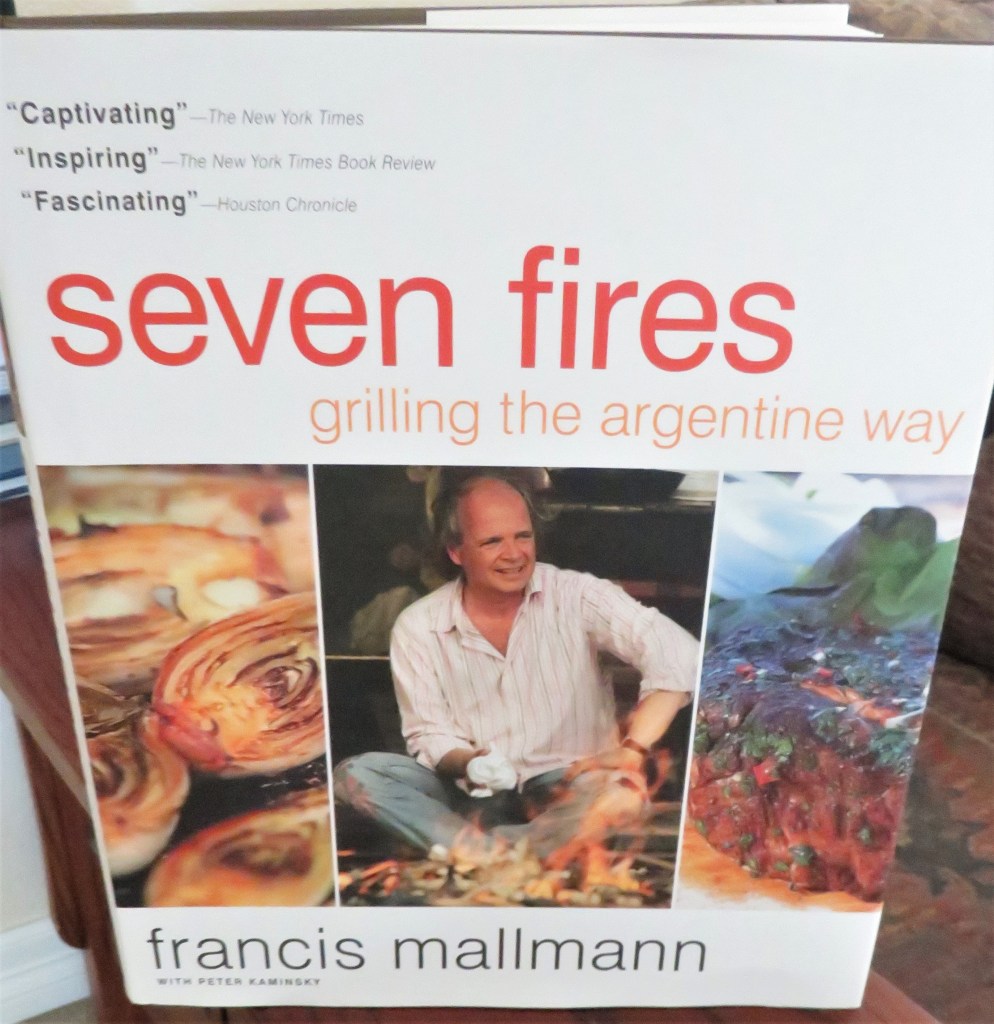
I was dying to try some of the mouthwatering recipes featured in this beautiful book, and I thought what better time to initiate it than when we have company over. After our busy day of touring around and taking in the sights of the southern Denver Metro area, A Very Busy Day, I cooked us all a delicious Argentine style dinner, using this fabulous cookbook as my guide.

Argentina is known for its great meats, and they love to grill everything up on open fires. The book “The Seven Fires” by Francis Mallman, explains the seven different “fires” used in Argentine cooking. They are:

  • Parrilla – cooking meat over an open wood fire or grilling.
  • Chapa – a method for quick cooking or searing to produce a crust without drying the meats out.
  • Infiernillo – small inferno or little heat, usually with two heat sources, one from above and one from below.
  • Horno de barro – cooking in a wood oven at the back of the oven.
  • Rescoldo – cooking directly on hot hot embers
  • Asador – cooking large, whole pieces of meat on an open spit.
  • Caldero – cooking in a big iron pot or calderon.

Well since I do not have the capacities to do prepare foods in most of these traditional ways, I improvised, as any home cook would do. I grilled the steaks Parillo style, on the grill. Everything else I cooked on the stove, either Parillo or Chappa style, with my mini indoor grill, or Caldero style, with my cast iron skillet or Horno de barro style, in the oven. Who knew we all cooked in the Argentine way almost everyday? 🙂

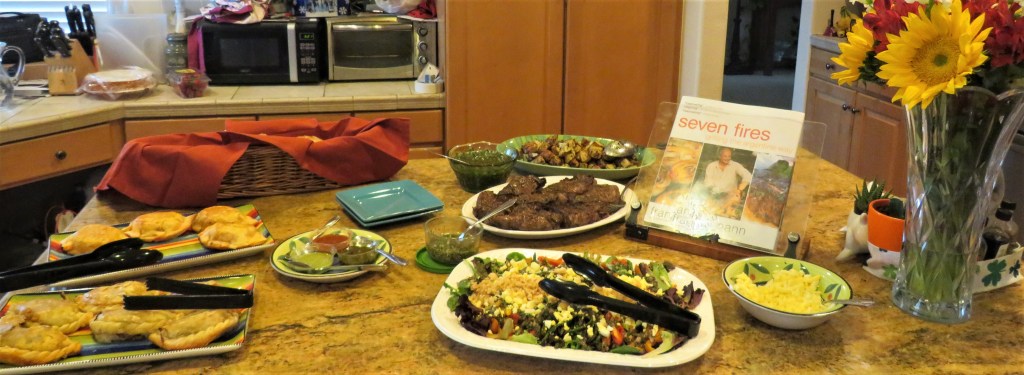
Our menu for the evening was Steak Chimichurri, Steak Chimichurri, roasted potatoes, empanadas (due to lack of time, I purchased them from Rincon in Boulder, Empanadas de Rincon Argentino rather than making them myself), and a roasted vegetable salad with roasted peppers and asparagus, with some warmed bread and dipping sauces on the side. Priscilla brought a delicious ricotta genoise cake with strawberries tossed in Cara-Cara orange balsamic vinegar.
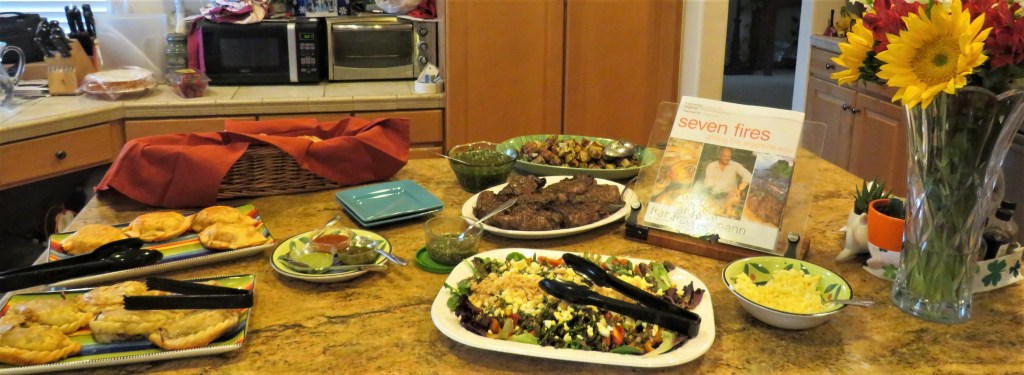
At some point, you have experienced my other Argentine flavors I prepared for this meal, but this particular salad is new to all of us. It is full of flavor and loaded with a lot of different layers and textures too.

Roasted Vegetable Salad

1 lb roasted asparagus

1/4 cup olive oil

salt & pepper to taste

4 roasted bell peppers – I used 2 red, 1 orange and 1 yellow, peeled and seeded

mixed greens

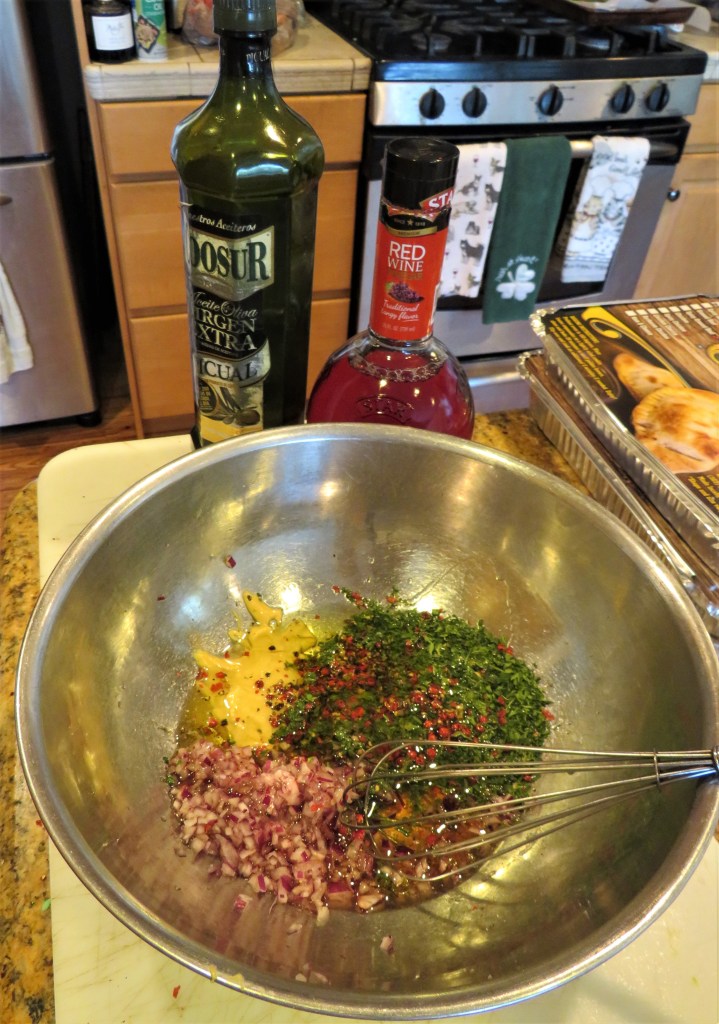
The Dressing

3 hard boiled eggs, diced

1/3 cup red wine vinegar

1/2 cup olive oil

1 TBSP Dijon mustard

1 TBSP crushed peppercorns

dash of salt

1/2 cup red onion, diced fine

1/2 cup parsley, chopped fine

toasted bread crumbs

Toss all the ingredients together well. The dressing is meant to be chunky and full of texture.
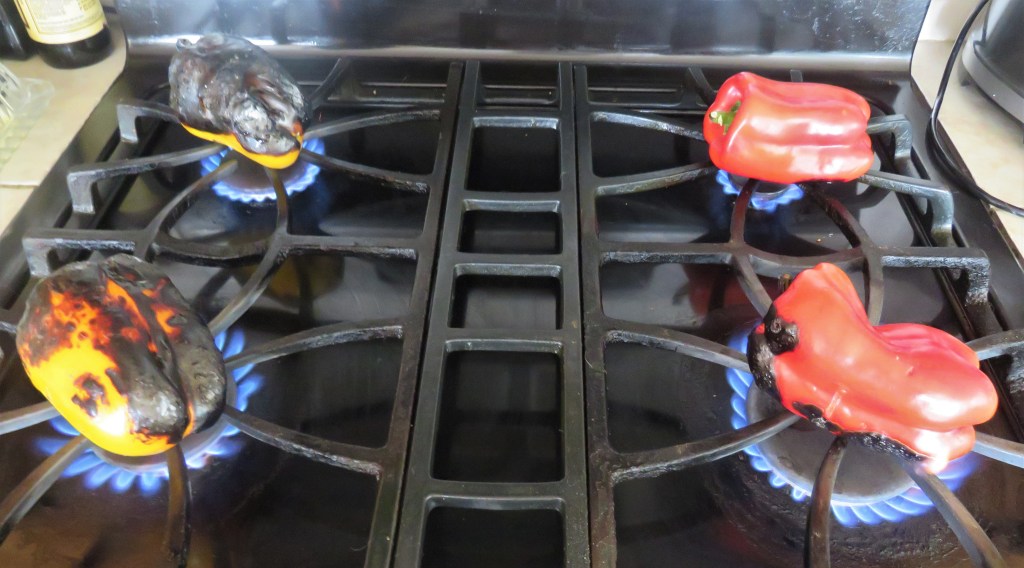
Roast the peppers directly on the fire, or Rescoldo style.
Coat the asparagus in the olive oil and salt and pepper, and place on a hot grill.

Grill the asparagus for a few minutes, or until it is softened and slightly charred. Then remove from the heat and set aside. I prefer the smaller asparagus spears to the larger ones. I think they are more tender and have more flavor.

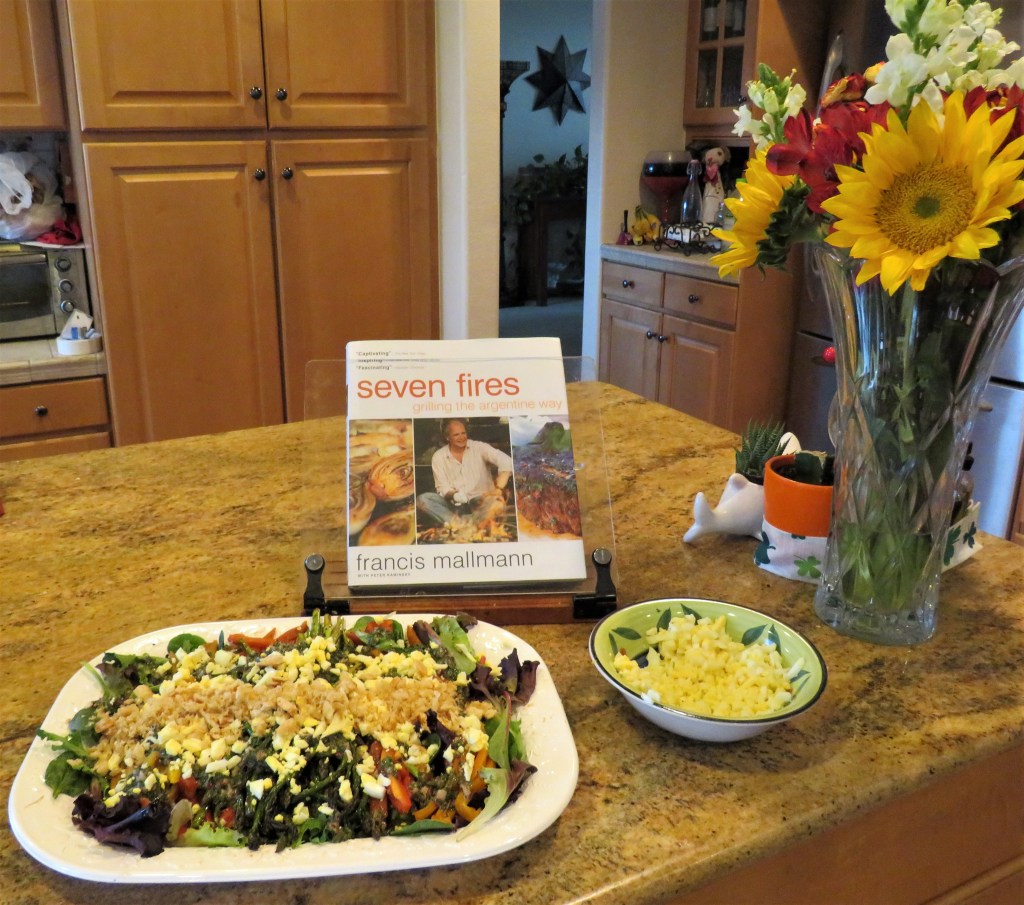
Once everything is cooked and the dressing is made, lay a bed of mixed greens on a platter, then decoratively add the peppers and asparagus on the platter. Next, drizzle the dressing on top, and add the hard boiled eggs. Finish it all off with the toasted bread crumbs. I used some leftover crostini that I crushed up. The finished product was a gorgeous, delicious salad that was a treat for our taste buds. !Delicioso!
Make the most out of everyday, and spend time doing things with those you love and those who make you happy. Stay safe and stay well Everyone. ‘Til next time.

A Very Busy Day

My friend Karen was only here for a few days, but we wanted to show her the most the we could in the time that we had. Larry did not work on Saturday, so after he made breakfast burritos for all of us, we hit the road and headed to the mountains. We headed south, towards Evergreen.

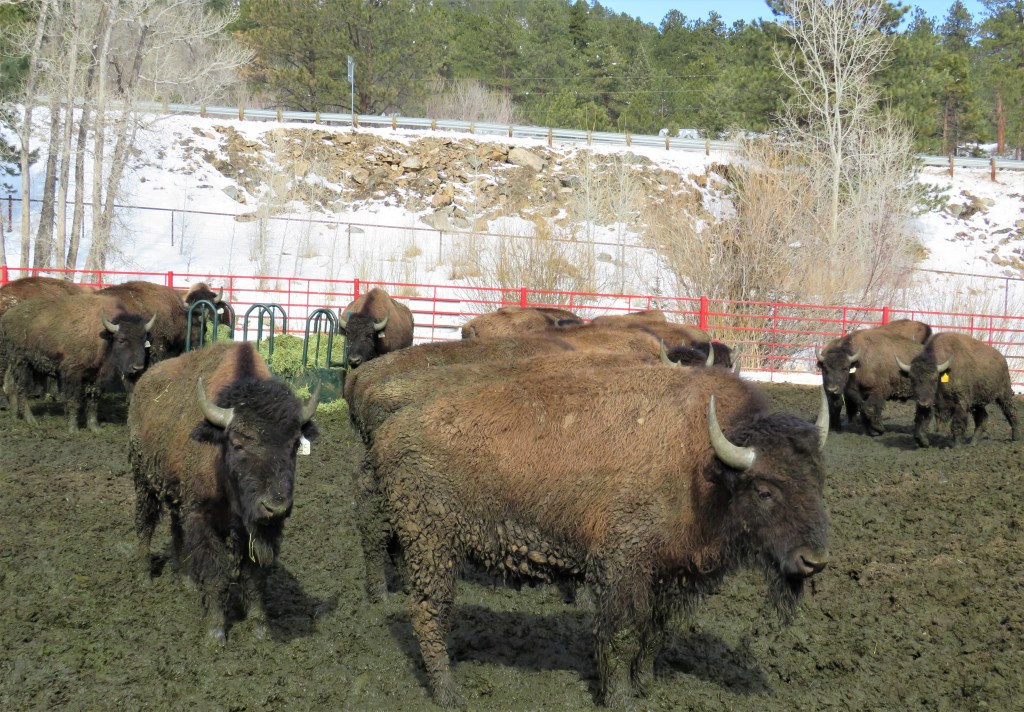
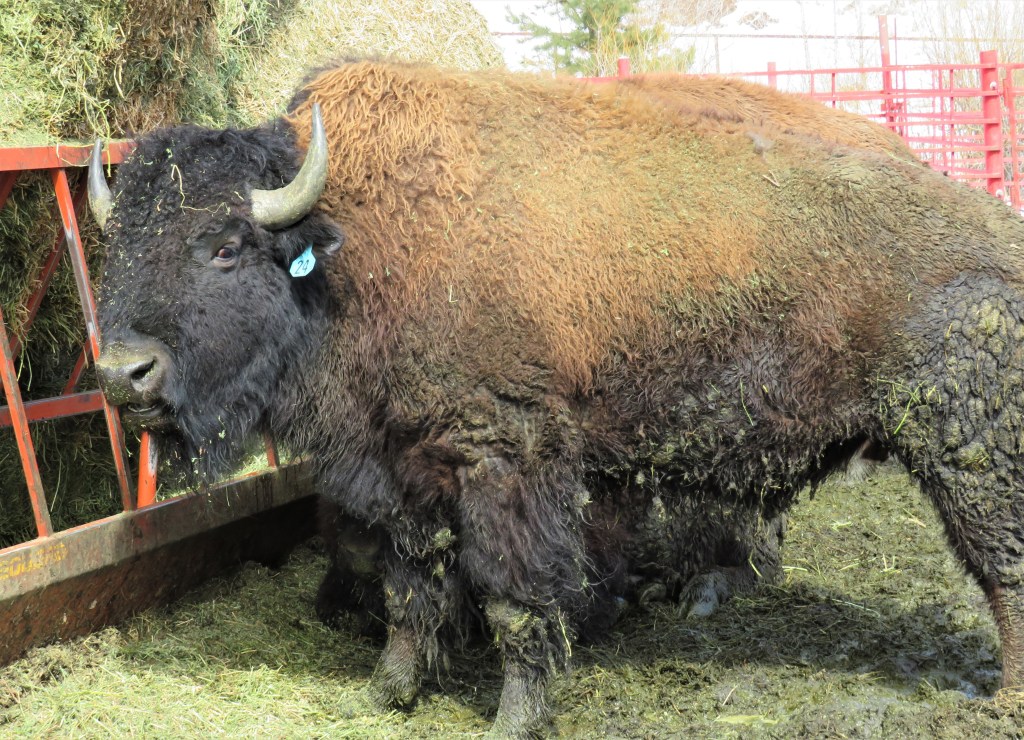
Our first stop was the Adams Natural Meats Home of the Buffalo Seeing a huge herd of bison or buffalo is NOT something we all see everyday, and especially not for someone from Southern California, via England. Even if the herd is “domesticated” like these bison were, it is still not an everyday occurrence for most people. There were lots of bison/buffalo to see too.

Adams Natural Meats offers a wide selection of different cuts of buffalo meat as well as other types of game meat. If you’ve never eaten buffalo meat, it is very tasty and very lean, which makes it very healthy too. It is a bit gamey for those who are new to it, which can make it an acquired taste, but I love it. It is full of flavor. We bought some buffalo chorizo that I will make into something yummy very soon. Our lovely hostess, Karma gave us some delicious new recipes to try.

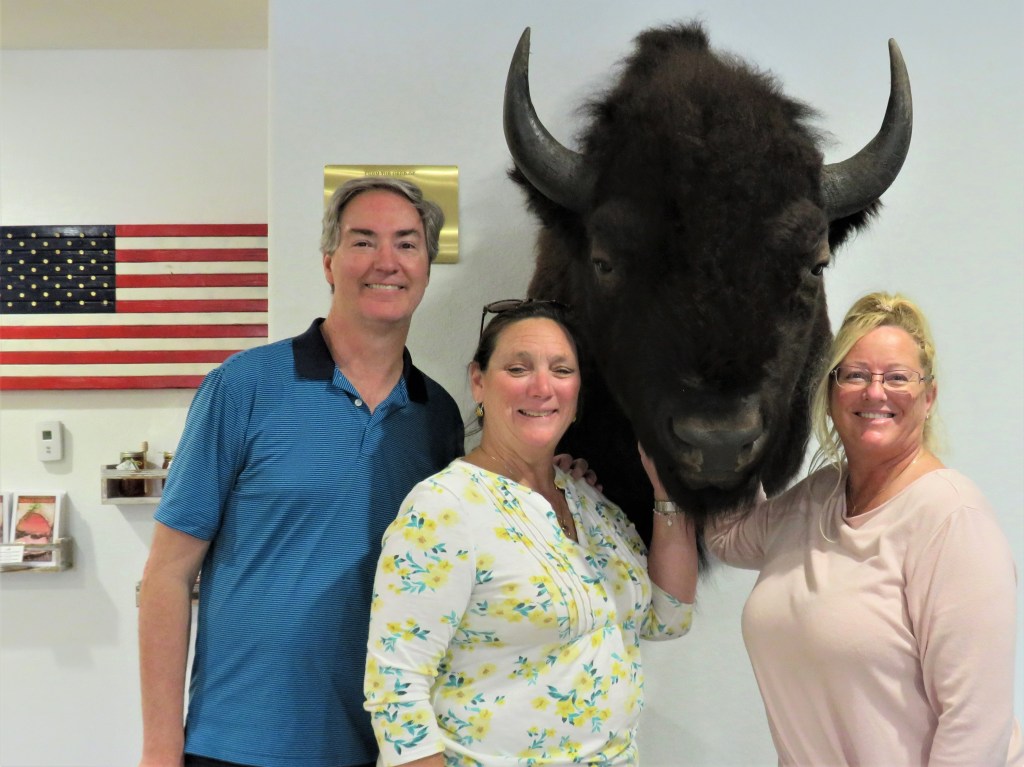
We are posing with Hank. Hank oversees all the operations at Adams Natural Meats and makes sure everything is done just right.

After paying a visit to the bison, we were on the road again. We we were still southbound. Our next stop was through the town of Evergreen. Evergreen is a southern suburb of Denver, but it is also a cute little mountain town that is far enough way from the city that it takes you away from the hustle and bustle of urban life. We walked around and stretched our legs a bit and took in the sights.

Evergreen gets its name from all the evergreen trees throughout the area. We were looking for the elk that normally hang out around the library. No elk this time though. Just some gorgeous scenery.

After a brief walk around in town, we headed back to the trails for some more beautiful scenery. Even though there was still plenty of snow all around, it was actually a beautiful, sunny and warm day. We couldn’t have asked for better weather.

A cool refreshing mountain swim.

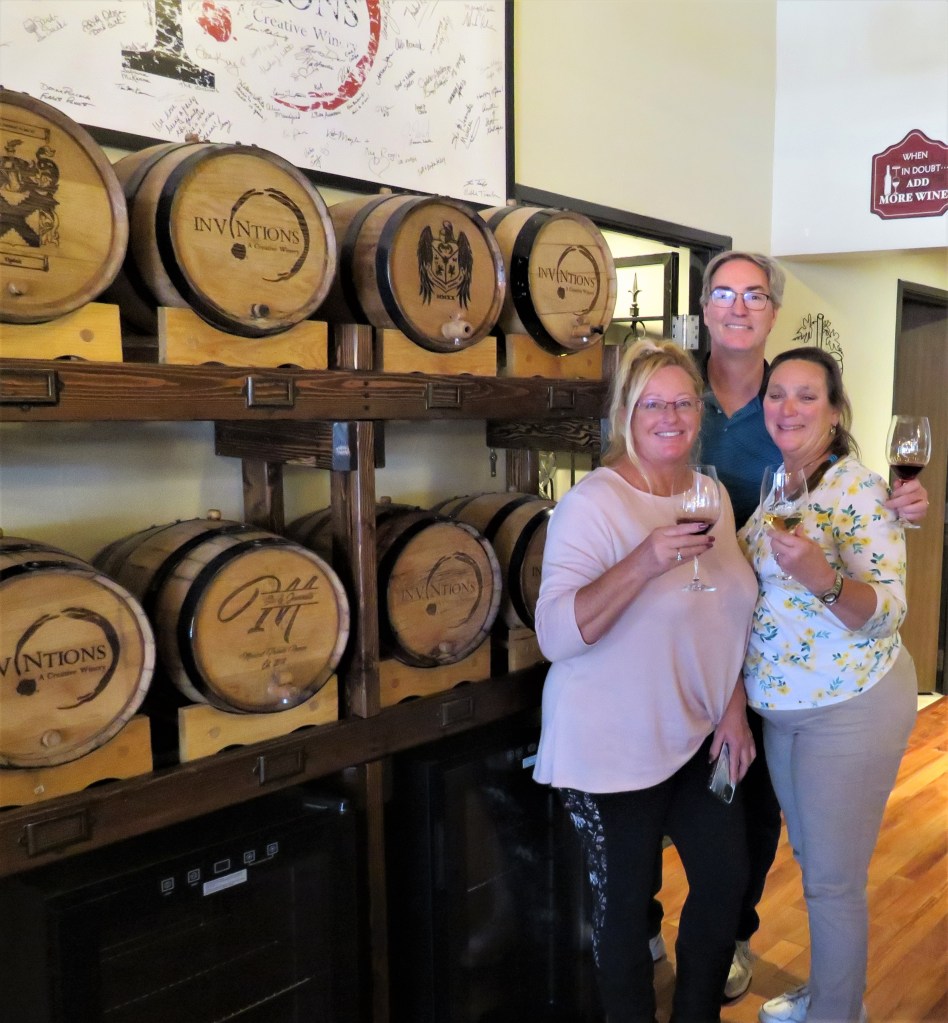
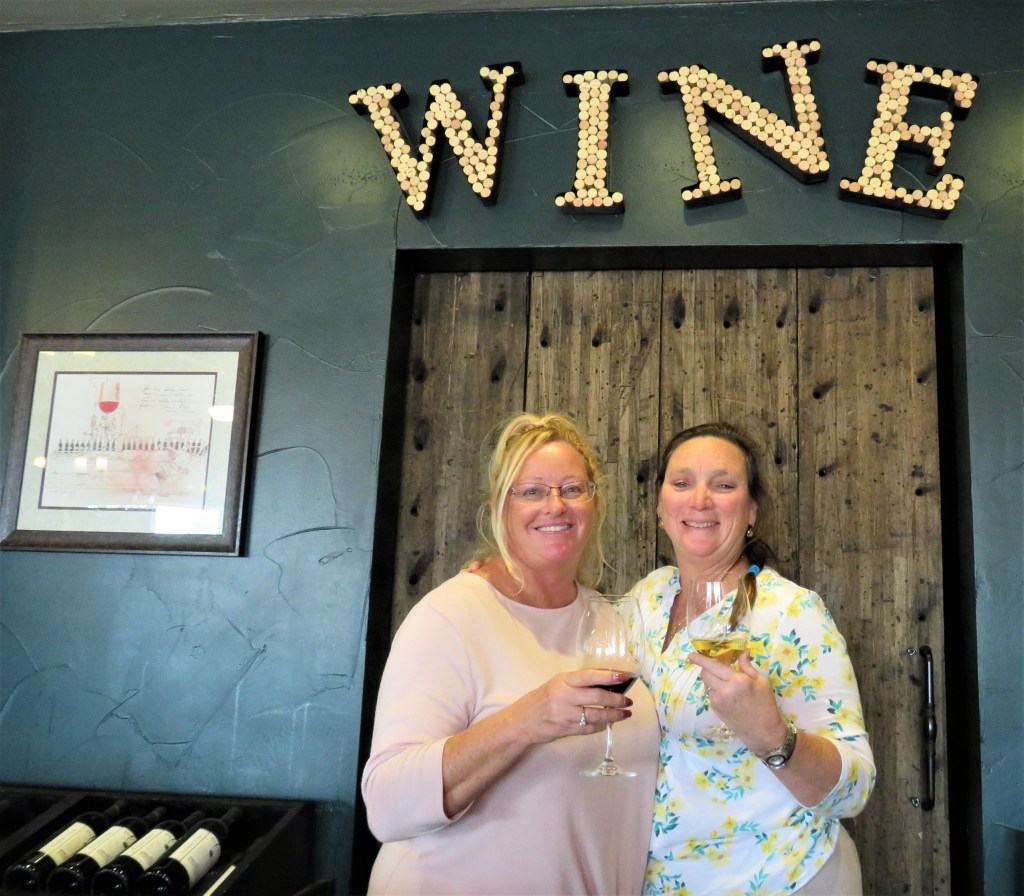
Next stop, our favorite winery, InVINtions. to wet our whistle.

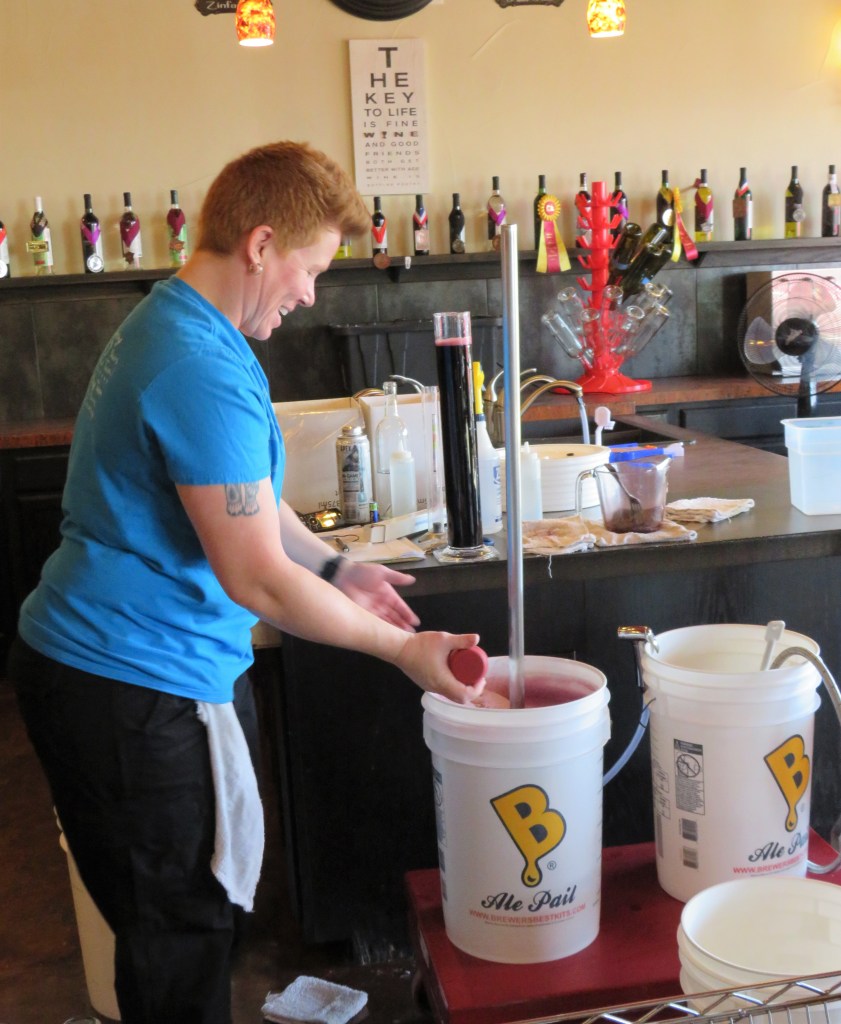
As we were enjoying our libations, Emily was busy making some wine in the background too. You can tell she is having fun while she works.

Our day was not finished though. Once we returned home, we were still celebrating and had Jonathan, Priscilla and Laura over for an Argentine dinner. I will stop here for now, and feature our Argentine dinner in a separate post. I want to tempt you a bit first. 🙂

Stay tuned. Don’t touch that dial. There is plenty more coming your way.

The Dushanbe Teahouse

Our fun and fabulous girls’ day was a say spent in Boulder. We started off at Bookcliff Vineyards Mini Vacation is Over and then met up with the rest of the beautiful ladies at the Dushanbe Teahouse for an afternoon tea.

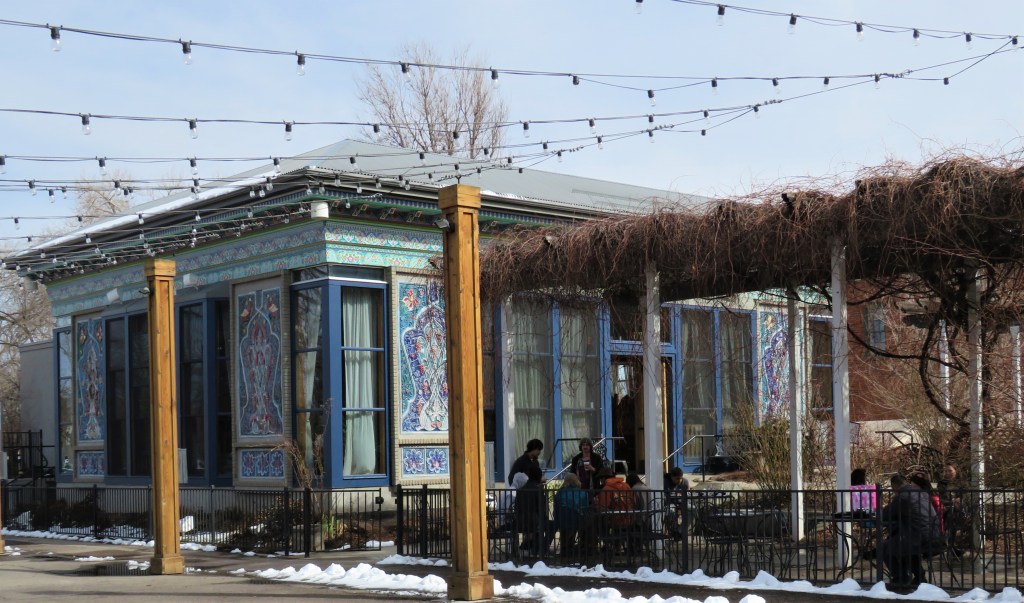
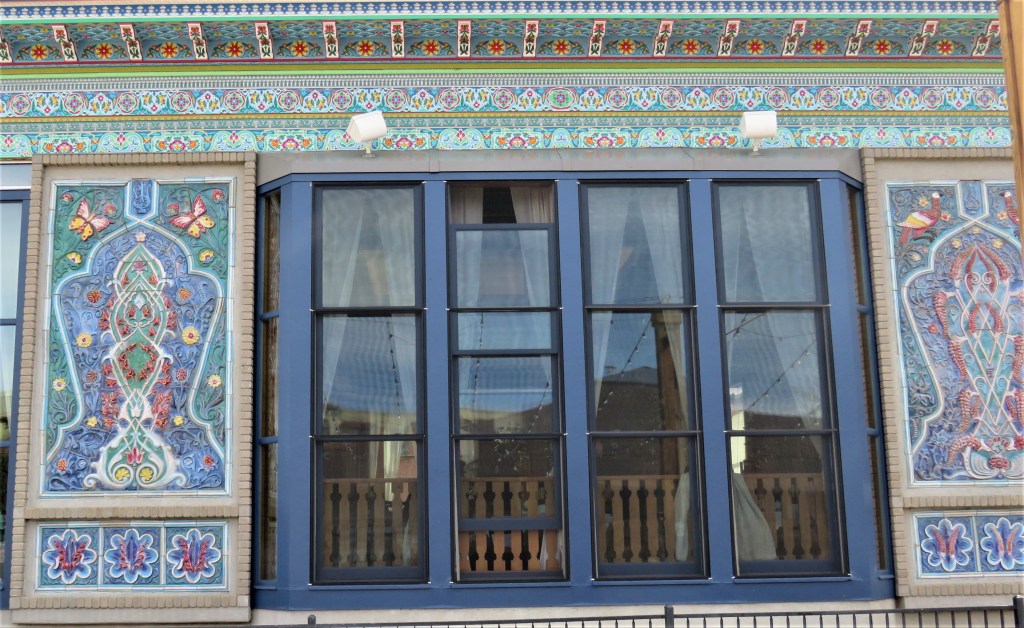
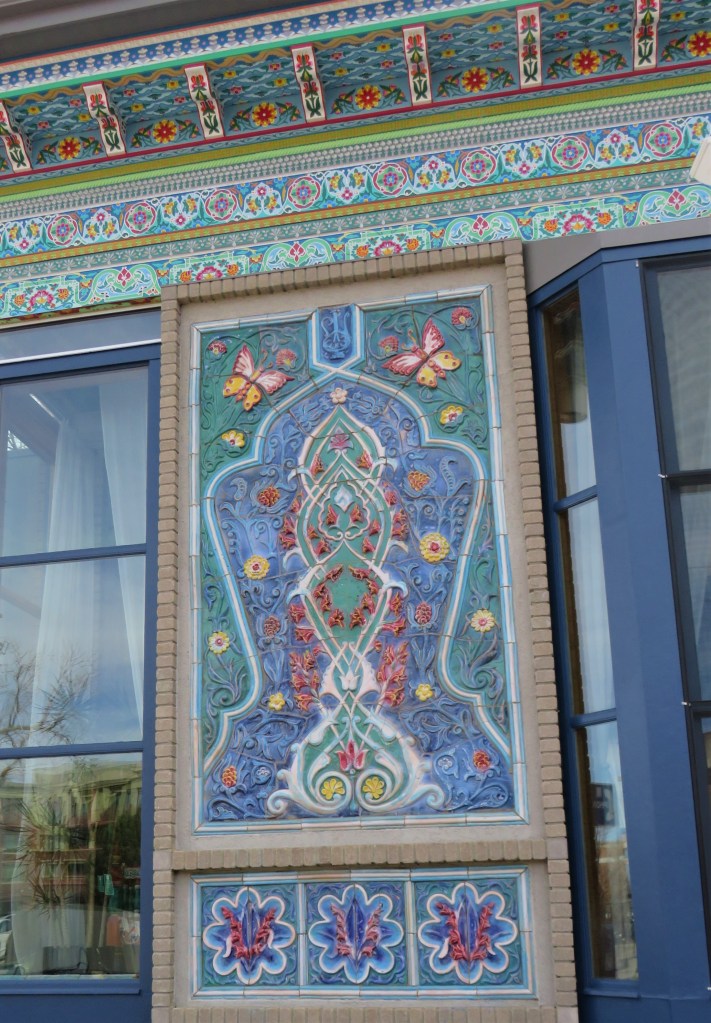
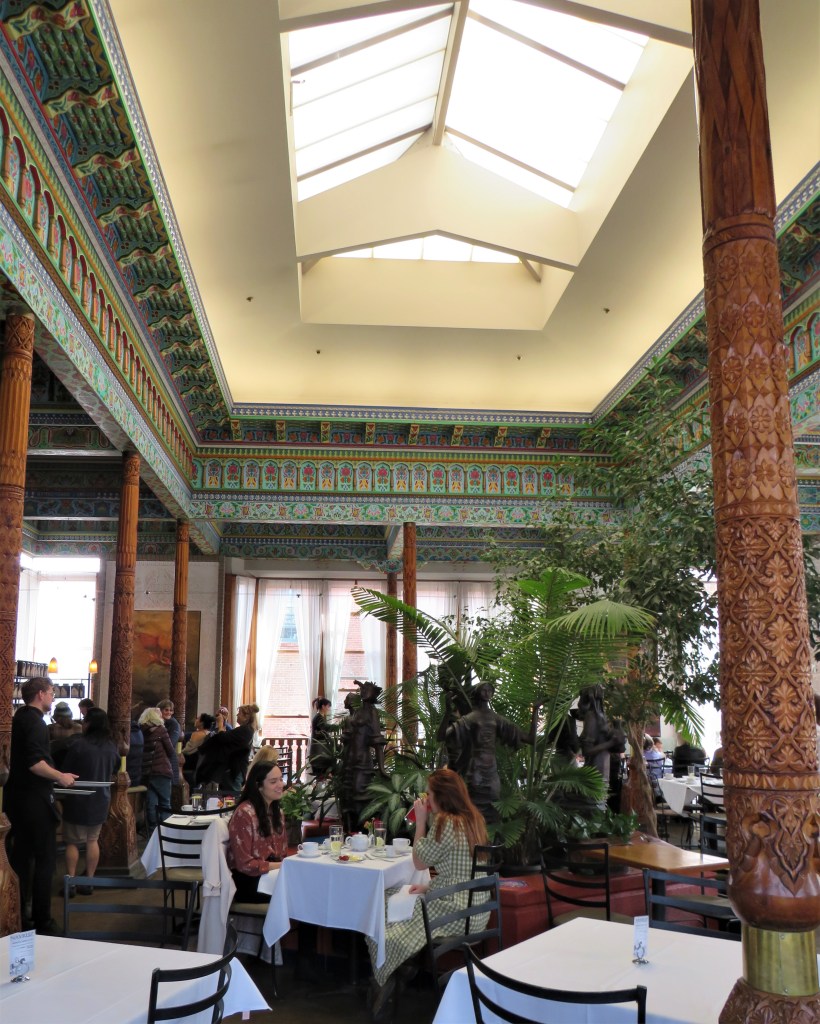
The Dushanbe Teahouse is an exotic, one-of-a-kind structure that is truly a gorgeous work of art, both inside and out. It is designed in the Persian style of art and architecture that has been artistically displayed for about 2000 years. It was designed and created as a gift from Dushanbe, the capitol of Tajikistan, which is the sister city of Boulder. The name Dushanbe, pronounced {doo-shan-bay’} means Monday. Mondays were the day of the week on which a bazaar was held in the village on the site. We went of a Friday, instead of a Monday, and it was a beautiful and delicious way to end the week and to start the weekend.

The outside of the Teahouse. We did NOT sit in the gardens, as it was pretty cold out and snow was still all around. But it would be a perfect place to dine in the warmer, sunnier times.

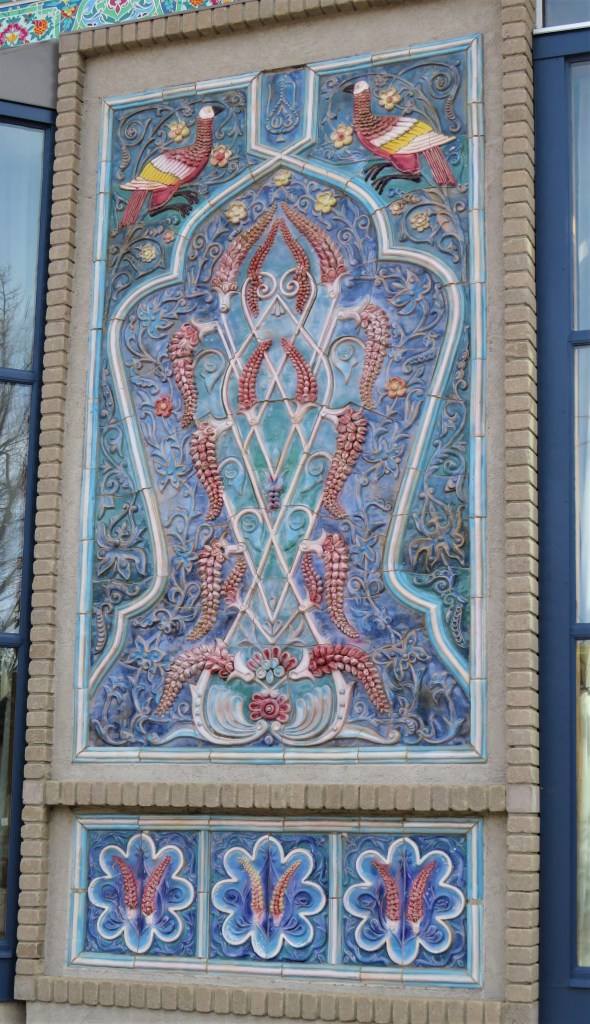
In Central Asia, teahouses serve as gathering places where friends meet to talk or play chess over a cup of tea. Many teahouses are traditionally decorated with Persian art, characterized by the use of motifs from nature – stellar, solar, and floral, by the repetition of patterns, by form over representation and pattern over detail, and by lavish decoration and color. It was crafted by more than 40 artisans in several cities of Tajikistan created the decorative elements [the] Teahouse, including its hand-carved and hand-painted ceiling, tables, stools, columns, and exterior ceramic panels. Often these skills are handed down from generation to generation within families. Lado Shanidze served as chief architect.

These handcrafted tiles are just gorgeous and the attention to detail is amazing.

In the 7th Century BC, the area we now know as Tajikistan was settled at the eastern periphery of the Persian Empire. Situated a bit south of the Silk Road trails, the area has seen invasions by Alexander the Great, Mongols, Arabs, Turks, and Russians. Today, Tajikistan, with a population of 7 million, is about the size of Iowa, and is bordered to the east by China, to the north by Uzbekistan and Kyrgystan, and to the south by Afghanistan. At the western end of the Himalayas, its terrain is 93% mountainous, with peaks towering to 24,000 feet. The Tajik language is like Persian.

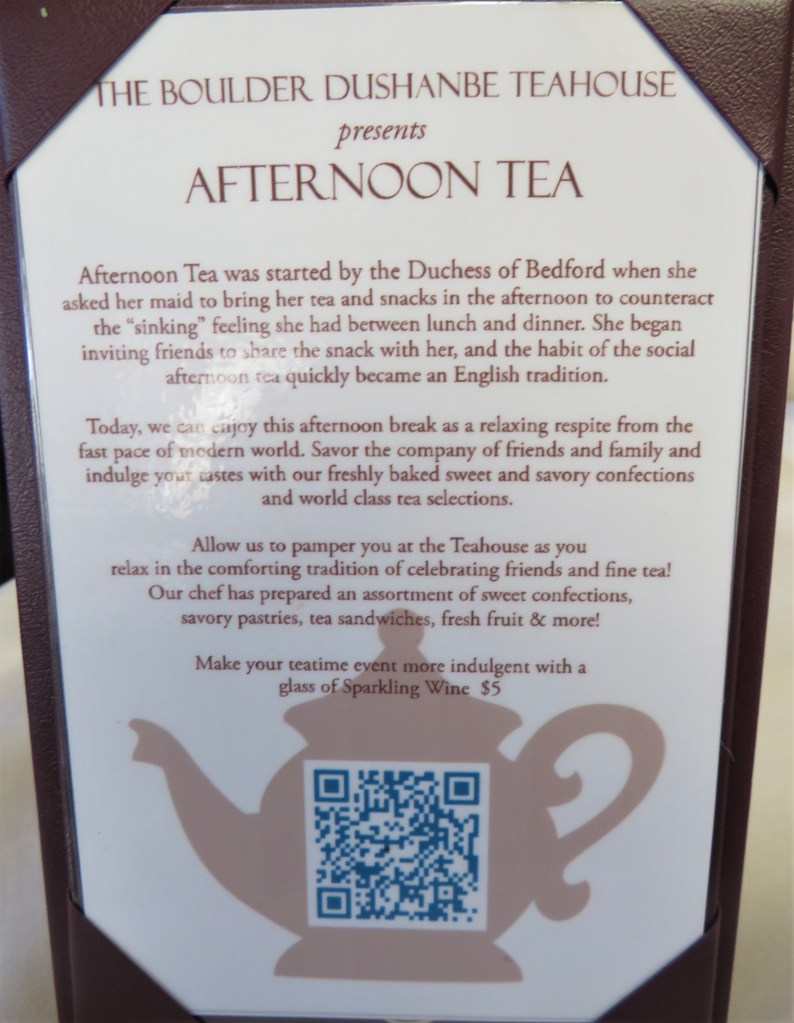
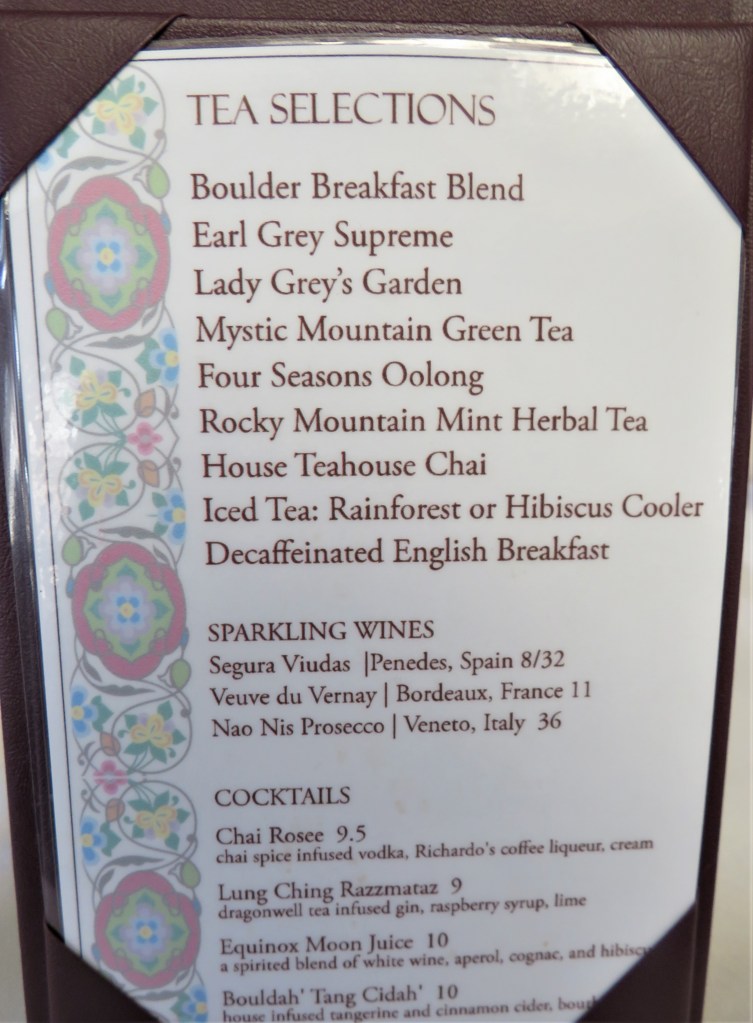
The Dushanbe Teahouse offers a varied menu, for both lunch and dinner, but we opted for the high tea experience instead. It was a lot of fun. I have dined there for both lunch and dinner as well, and the food is exquisite. As you might guess, tea is the main attraction, and they feature teas from around the world.

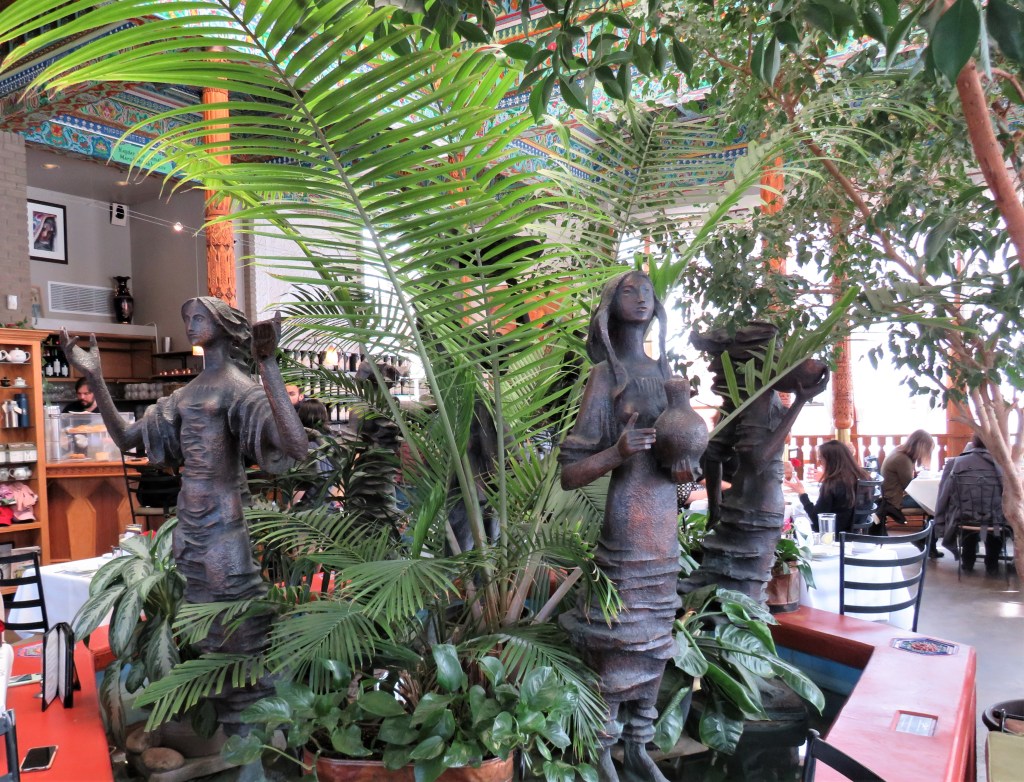
The inside of the Teahouse is just as beautiful as the outside, with just as much, if not more attention to detail. These lovely ladies are known as the “seven beauties”. They represent social justice, morality, and appreciation of nature. In the middle ages, the number “SEVEN” was considered a sacred number. Both mythological and scientific beliefs of the day held that the world was divided into seven countries, there are seven planets, weeks are divided into seven days, and the spectrum is composed of seven colors.

The seven beauties were the seven wives of the Shah of Iran, Bahram, based on a famous Persian poem. On the proper day of the week, Bahram would dress himself in the appropriate color, and go to visit the wife that corresponded with the day. Each woman would relate to him a story from her native land and praise the attributes of her own color. All the tales are closely related to popular folklore and combine the scientific and philosophical views on the symbolic effects of the colors. The poem inspires honesty, virtue and kindness, while denouncing arrogance, villiany, greediness and treachery. And so, the princesses’ tales serve not only to entertain the Shah, but to ponder life and consider the secrets on the universe and human nature.

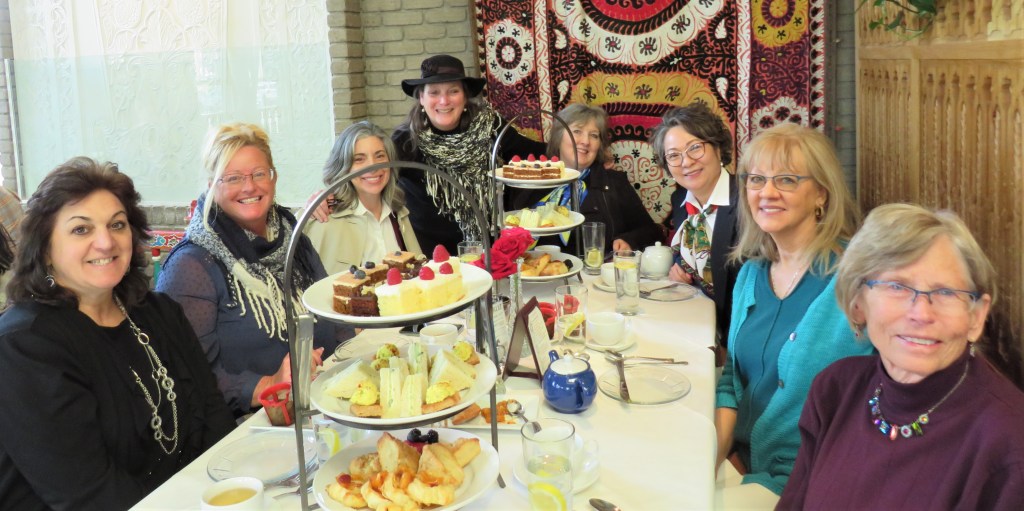
Our group for the day consisted of not seven beauties, but eight – starting from the left and working around, we have Lauren, Karen, Priscilla, me, Laura, Su Yeun, Linda and Janet. We also enjoyed some beautifully delicious foods as well.

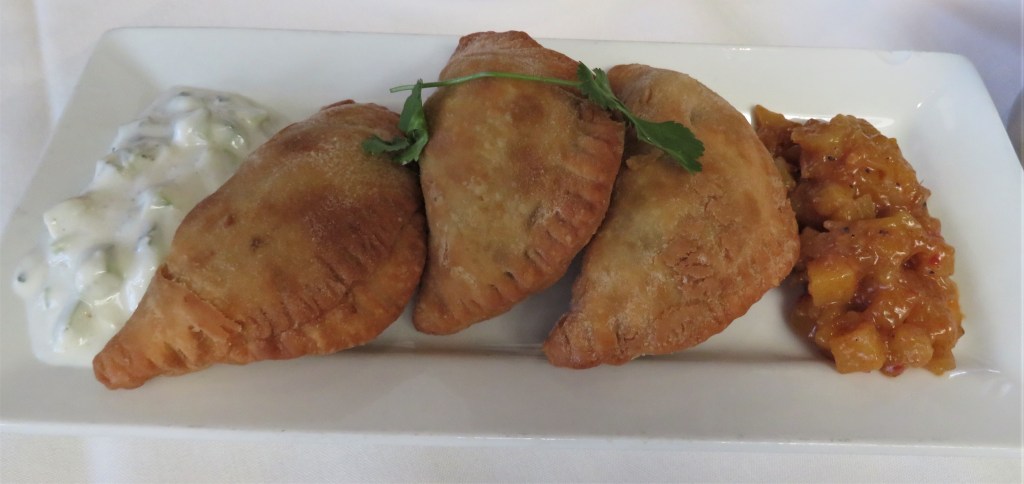
We started off with some scrumptious samosas, with both a yogurt raita and a mango chutney.

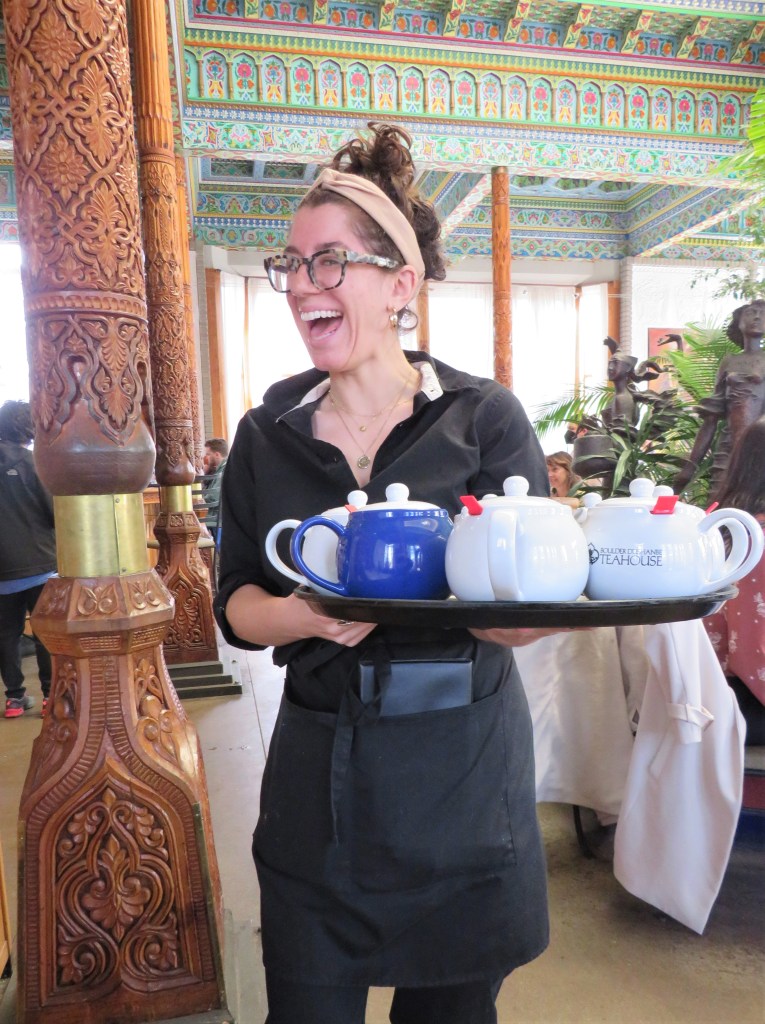
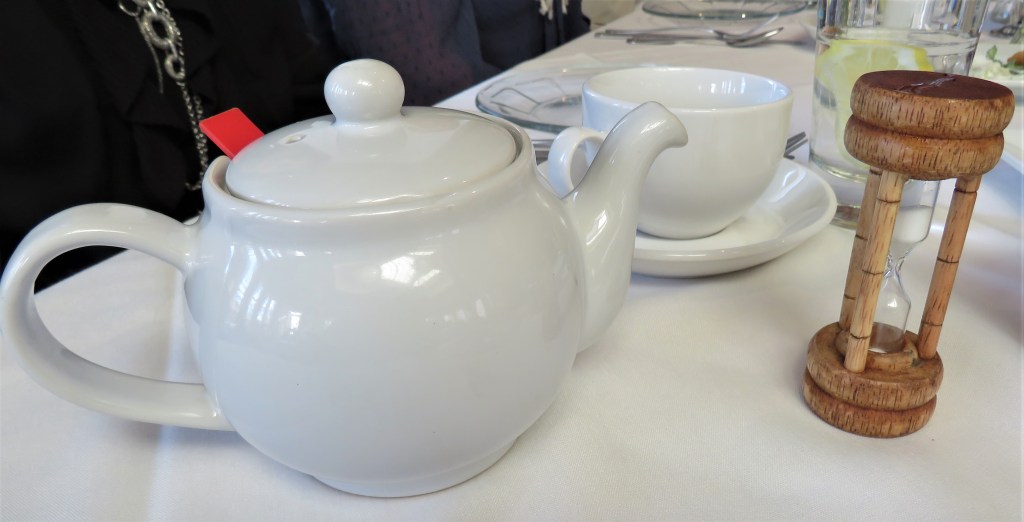
Then our very fun and friendly server Carrie, started us off with our teas. We all ordered a different kind of tea. The teas were set on a timer to make them just right. When the sands of time had dropped, our teas were ready for us to enjoy.

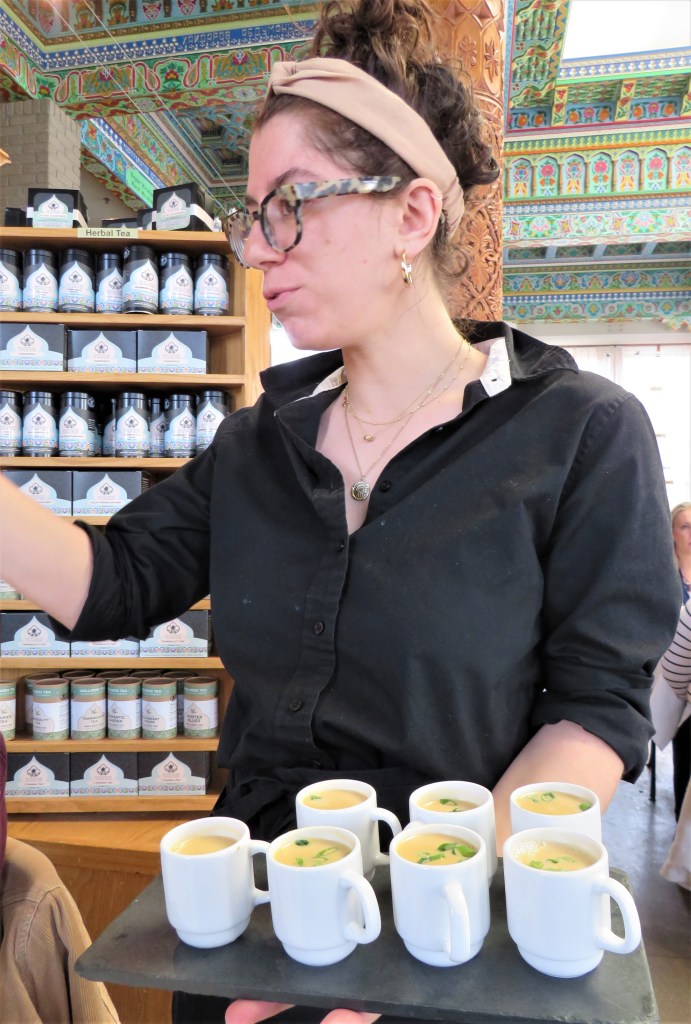
Next, Carrie brought out some delicious butternut soup in little individual cups. Carrie was so full of personality and she really helped to make our day into a very fun and entertaining experience.

We all raved about how delicious the soup was.

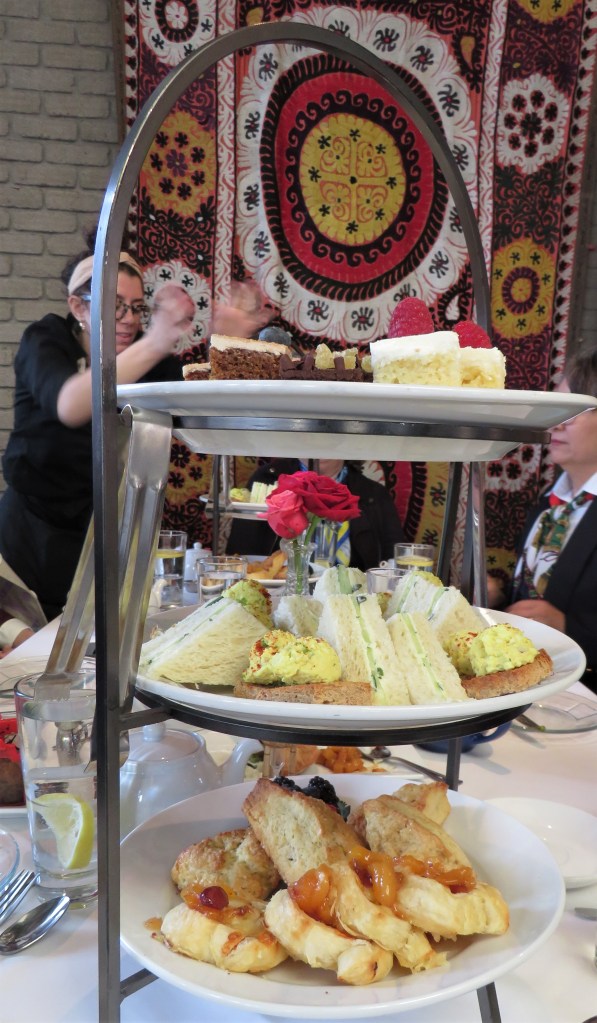
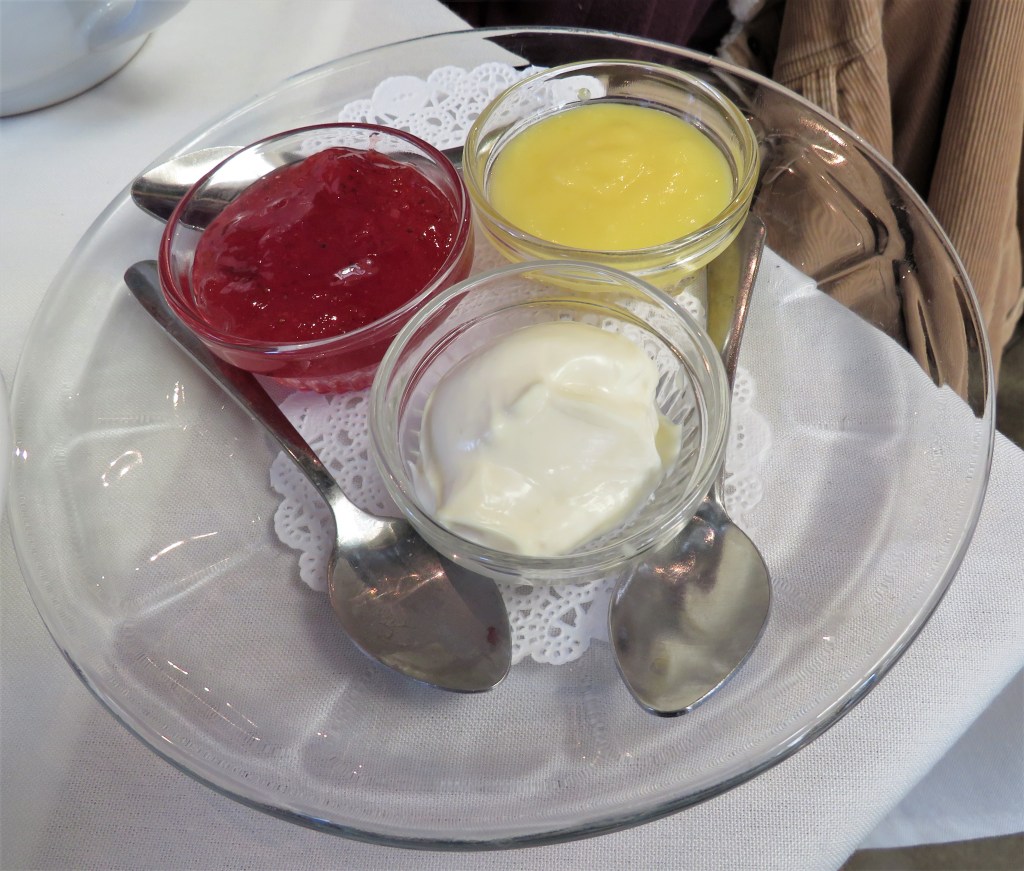
And then came all the finger sandwiches and pastries, along with the clotted cream, lemon curd and strawberry jam, all served in the manner of a traditional English tea.

The entire tea experience was an absolute delight. This is not something we can do everyday, but it is sure fun to do for special occasions. The best part of our tea adventure though was getting together and visiting with so many wonderful ladies. We were old friends and new all joined together to celebrate each other.

The Dushanbe Teahouse is located at 1770 13th Street, Boulder, CO. I would definitely make reservations, since it is always a very popular place. You can either make reservations online at info@boulderteahouse.com or by phone. 303-442-4993. The Teahouse is closed on Mondays, but is open for tea Tuesday-Sunday.

Make the most of everyday, and celebrate life with friends and family, since after all, that’s what make everyday a celebration. Stay well and stay safe Everyone. ‘Til next time.

Mini Vacation is Over

My little mini vacation is over. 😦 Karen left this morning and she is already back home, in California now. We had such a good time and covered a lot of ground while she was here. We took her to and did as many places and things as time would allow while she was here. We had a blast. It just flew by so quickly though.

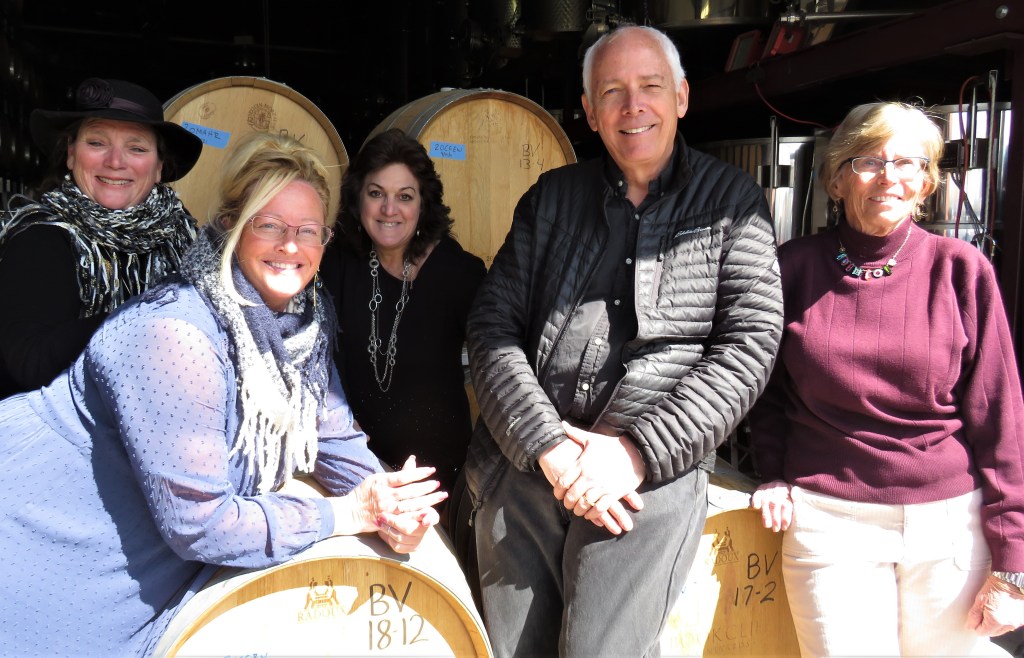
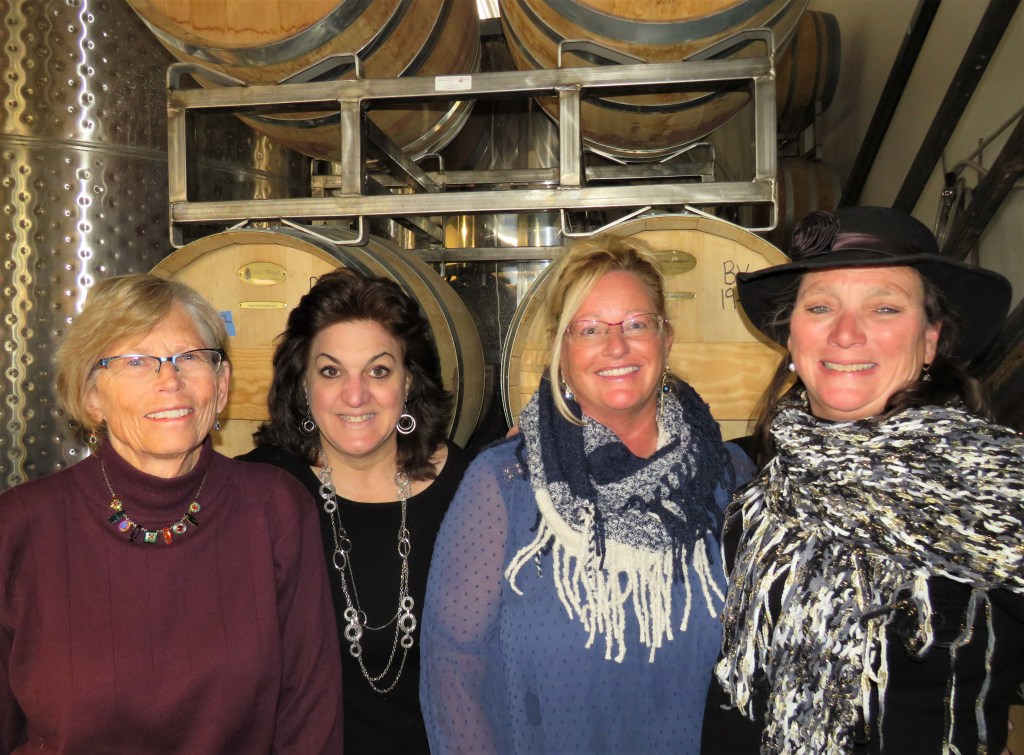
The first thing we did was to have a “Girls’ Day” at the Dushanbe Teahouse, in Boulder. There were eight of us who celebrated high tea at Dushanbe (you’ll just have to wait for another post on this one. I know, I am such a tease. 🙂 ). Before we met everyone at Dushanbe though, we stopped in a Bookcliff Vineyards Winery, also in Boulder, for a tasting. Bookcliff Vineyards in Boulder Our wine tasting crew was Janet, Lauren, Karen and myself. Janet and I have been to Bookcliff many times, and are/were both members. It was the first time for both Lauren and Karen though. John, the owner, was there and showed us around a bit, which made it even more special.

The barrel room.

John and the Girls.

Ladies day out.

Bookcliff is a local winery that actually grows and produces most of their own grapes too. They grow their grapes in Palisades, over on the Western Slope, outside of Grand Junction, Colorado. They also do tastings and events there as well. Their Boulder location is at 1501 Lee Hill Drive, Number 17
Boulder, CO 80304.  Their phone number is 303.499.7301.  They would love it if you go visit and taste. Give them a call, or stop on by next time you are in the neighborhood. 🙂

Not Much Green This Time

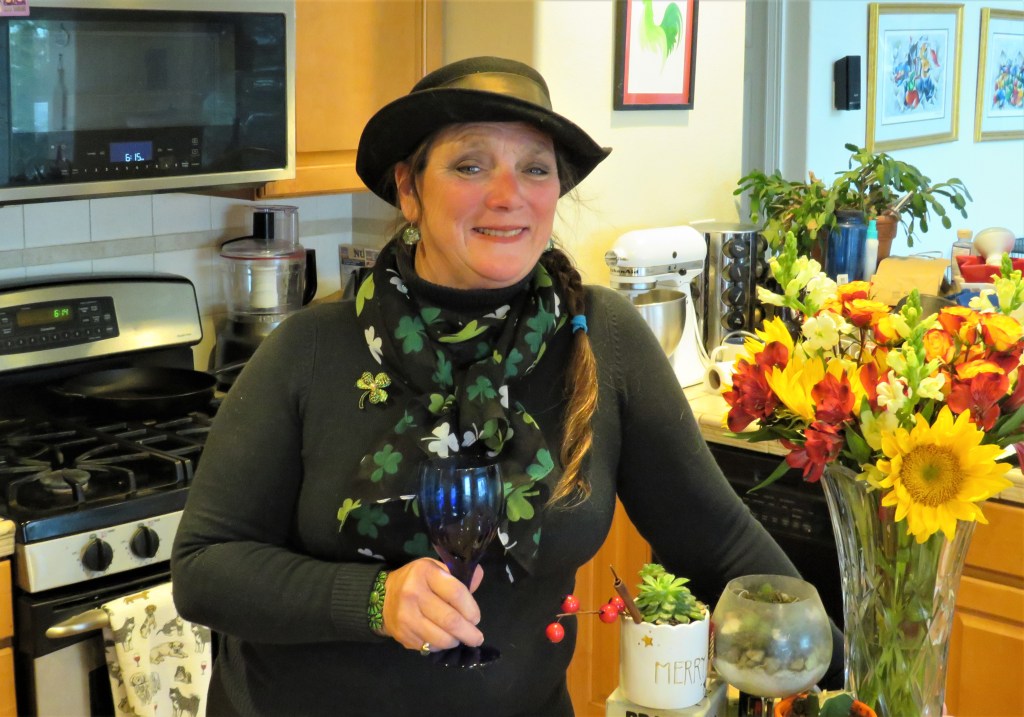
Hope you al enjoyed your St. Patrick’s Day festivities. We were supposed to go out and celebrate Irish style, but because of the weather, Karen’s flight was delay considerably. So Larry and I ate the rest of our corned beef as Reuben sandwiches while we waited to go pick Karen up from the airport. They were still really good too. But now all our corned beef is gone. I guess I will just have to make some more. 🙂 I did get dressed up for the occasion though. I was proudly displaying my Irish roots.

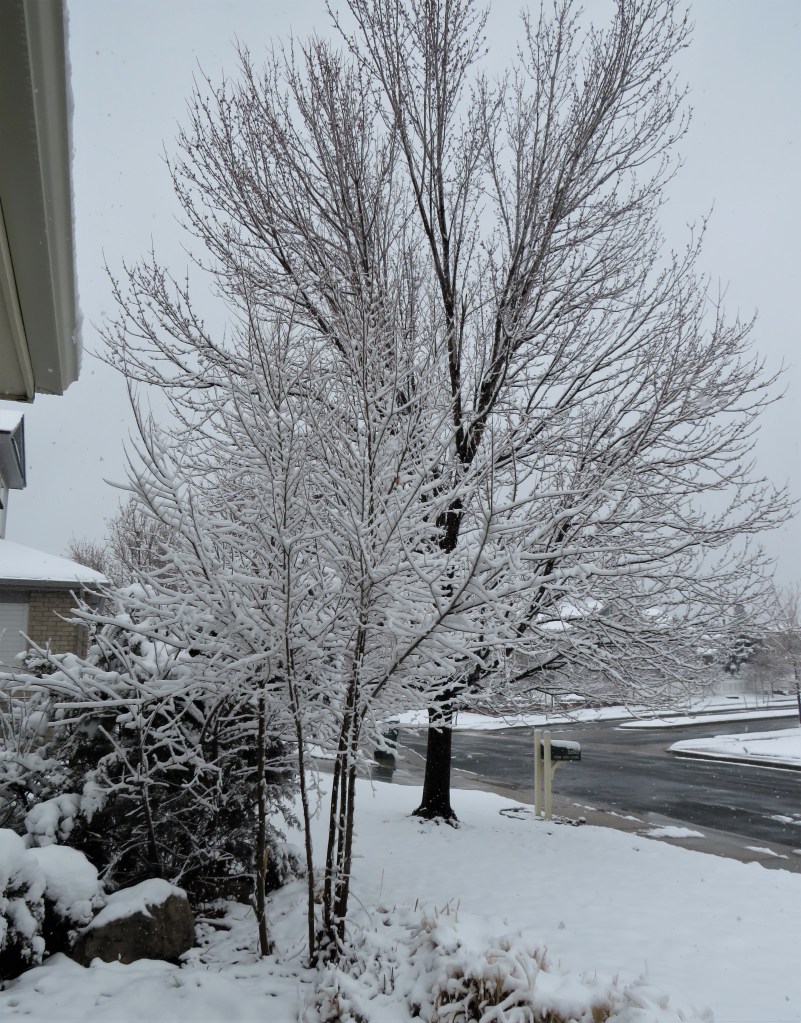
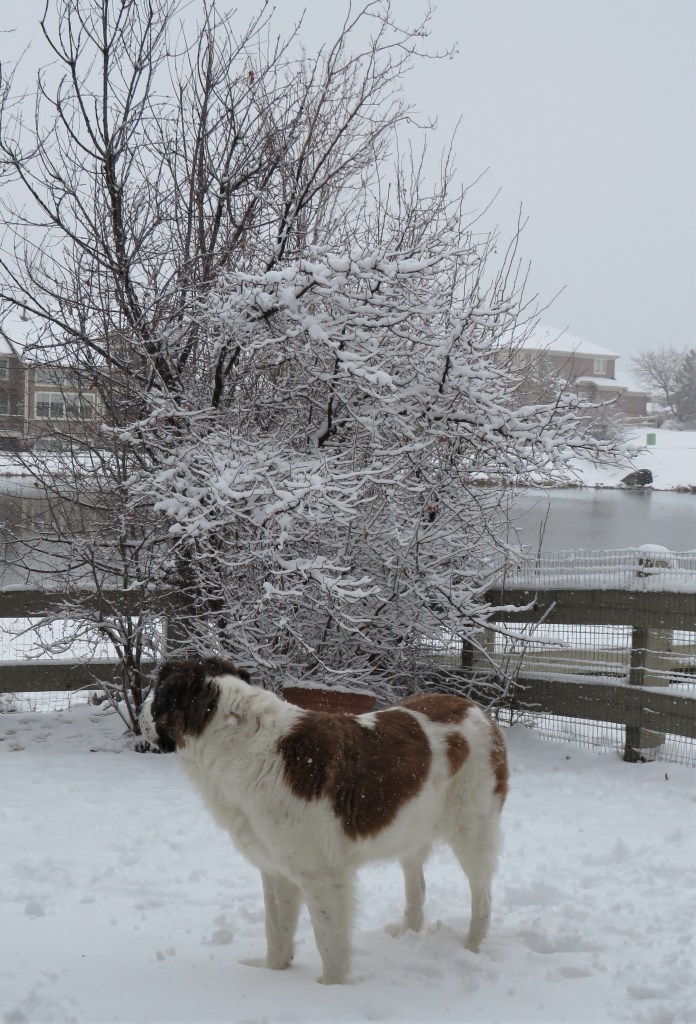
Instead of green, we got snow. It snowed all day, but not much of it stuck around for to long; just long enough to delay Karen’s flight for about 4 hours. They kids enjoyed it while they could though. They love playing in the snow. They say, let it snow, let it snow, let it snow. 🙂

Once Karen arrived safely, we went home and stayed up talking and enjoying a nice bottle of a cozy pinot noir until the wee hours of the morning. I may not be posting for the next few days. I am going to be enjoying my friend and showing her as much of our beautiful state as I can in the time she is here.

They kids love their Auntie KK.

Stay safe, stay warm and stay well Everyone. ‘Til next time.

Corned Beef with Tarragon Mustard Cream Sauce

There is a large Irish culture here in the United States. People of Irish heritage are the second largest ethnic group here in the States, representing roughly 33.3 million people. St. Paddy’s Day. We have certain foods that are always associated with certain holidays. For instance, most Americans eat turkey on Thanksgiving and roast beef at Christmas. We also eat a lot of corned beef and cabbage on St. Paddy’s Day. In Ireland, pork or lamb and cabbage are traditionally served on St. Paddy’s Day rather than beef, but when the Irish immigrants came to America, beef and potatoes were substituted because they were cheaper and more readily accessible than pork and cabbage at the time.

The Irish immigrants were very poor when they came to America and their traditional foods were hard to find or were to expensive to buy. So of course, substitutions were made, and those have since become traditional Irish foods here in America. What we now know as corned beef, and as a “traditional Irish food” was actually kosher beef bought from the Jewish butchers and delis in New York. It was thrown into a large pot with cabbage and potatoes and slow cooked. It was usually a brisket, which is a cheaper, tougher cut of beef that is best when slow cooked. The potatoes and cabbage were also cheap and affordable foods that go a long way in feeding the hungry.

How did corned beef get its name? There is no actual corn in the beef, but it got its name as “corned beef” from the dry curing process that was used to preserve the meat. A slice of beef was covered in “corns” (large, coarse pellets of salt), which would draw out the moisture and prevent the growth of bacteria.

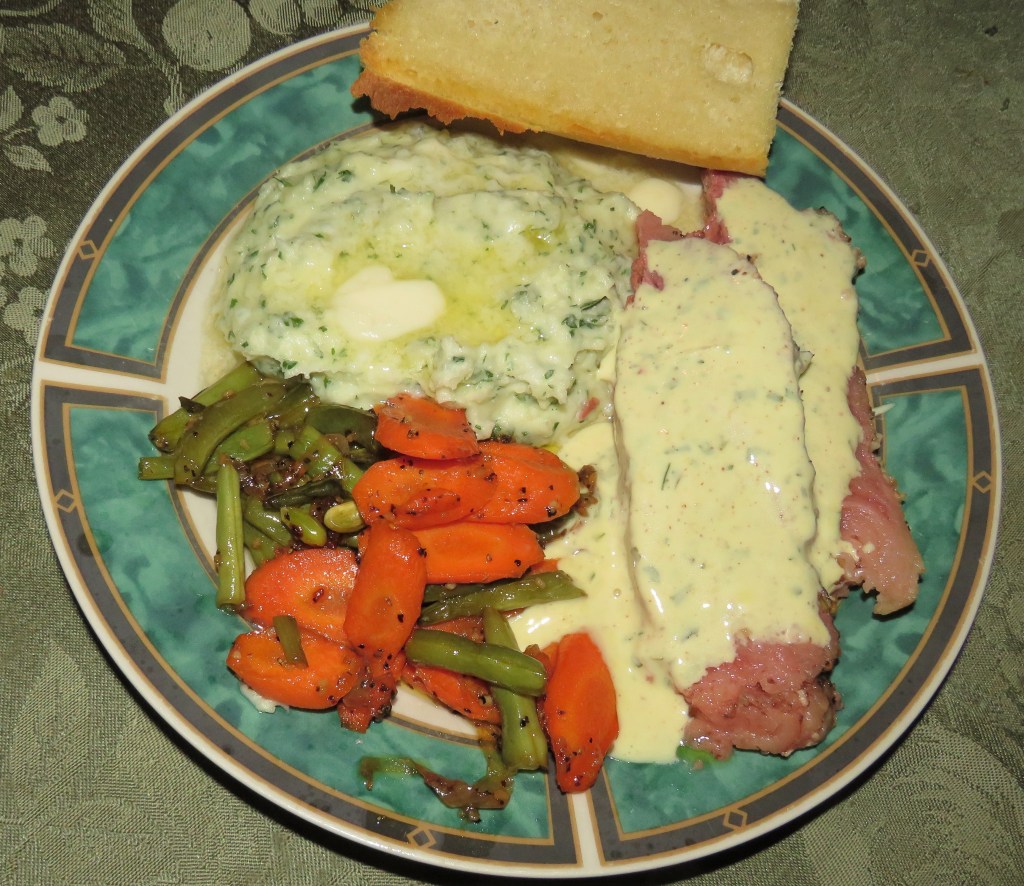
Corned beef is NOT one of my favorite foods, but I do eat it every now and then. Larry likes it a lot more than I do. I do usually cook it around St. Patrick’s Day, but not always on the day. I prefer many of the real traditional Irish foods instead. This time, however, I did actually prepare corned beef. I made it with a slight twist, and then made a tarragon mustard cream sauce to top it. Rather than boiled potatoes, I served it with Irish champ (mashed potatoes with parsley) and sauteed carrots and green beans in a ginger butter glaze.

I slowed cooked the corned beef for about 6 hours at a low heat. It came out so tender and juicy. Even I have to admit I liked it quite a bit.

Tender Corned Beef with Tarragon Mustard Cream Sauce

The Beef

4-5 lbs corned beef, with the pickling spices

2 TBSP apple cider vinegar

1 TBSP garlic

2 TBSP sugar

2 bay leaves

salt & pepper to taste

water to cover only about 25% of the beef

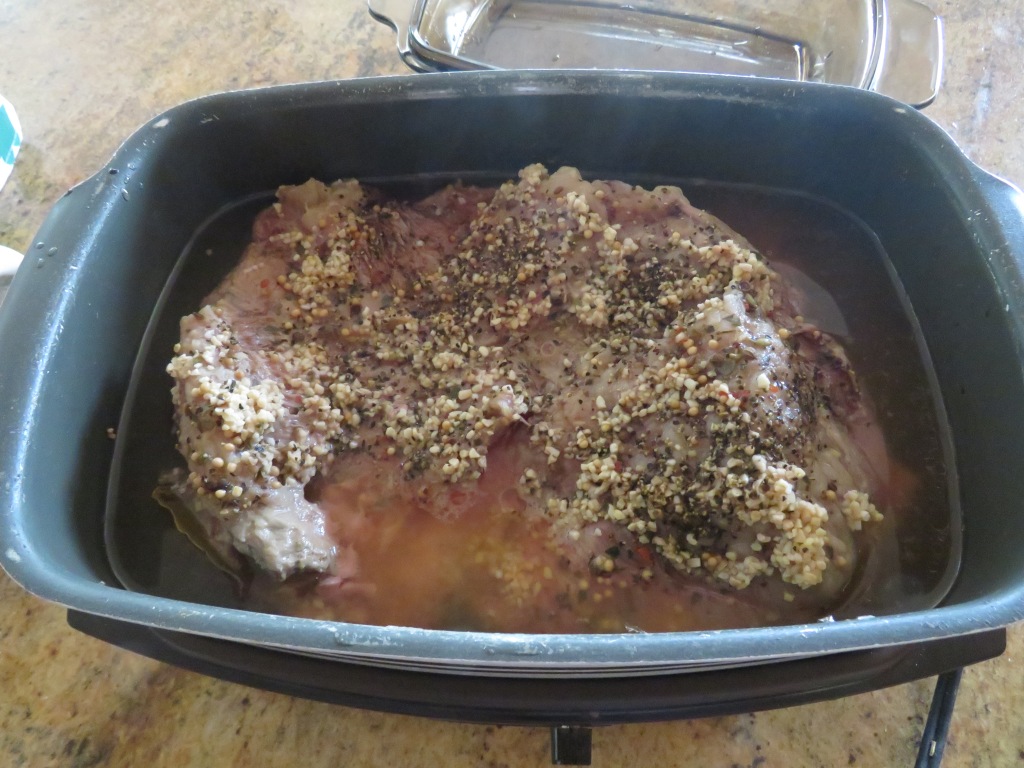
Place the beef fat side up in a slow cooker. Add the spices, garlic, sugar and vinegar and evenly cover the beef. Add just enough water to cover about 25% of the beef on the bottom. Add the water at the sides of the slow cooker. Add 2 bay leaves to the sides as well. Cover and cook at a low heat for about 6-8 hours or until the beef is browned and tender.

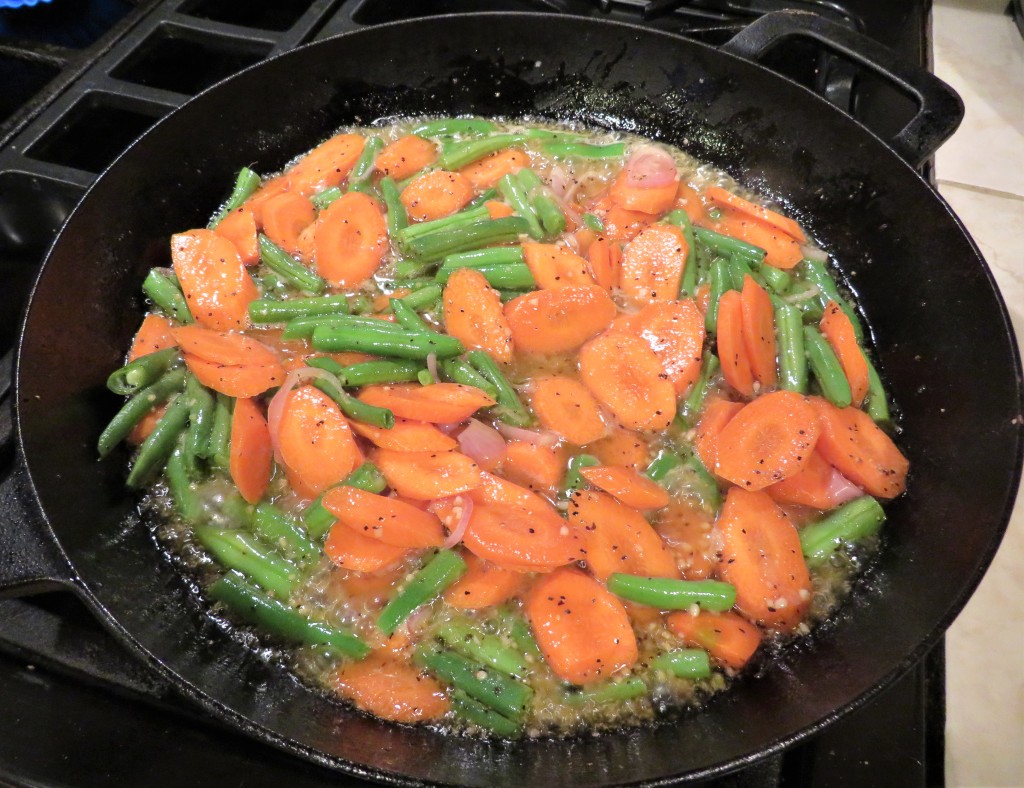
I cooked my carrots and green beans separately and just sauteed them in a ginger honey balsamic vinegar and butter, with some sliced shallots and salt & pepper.

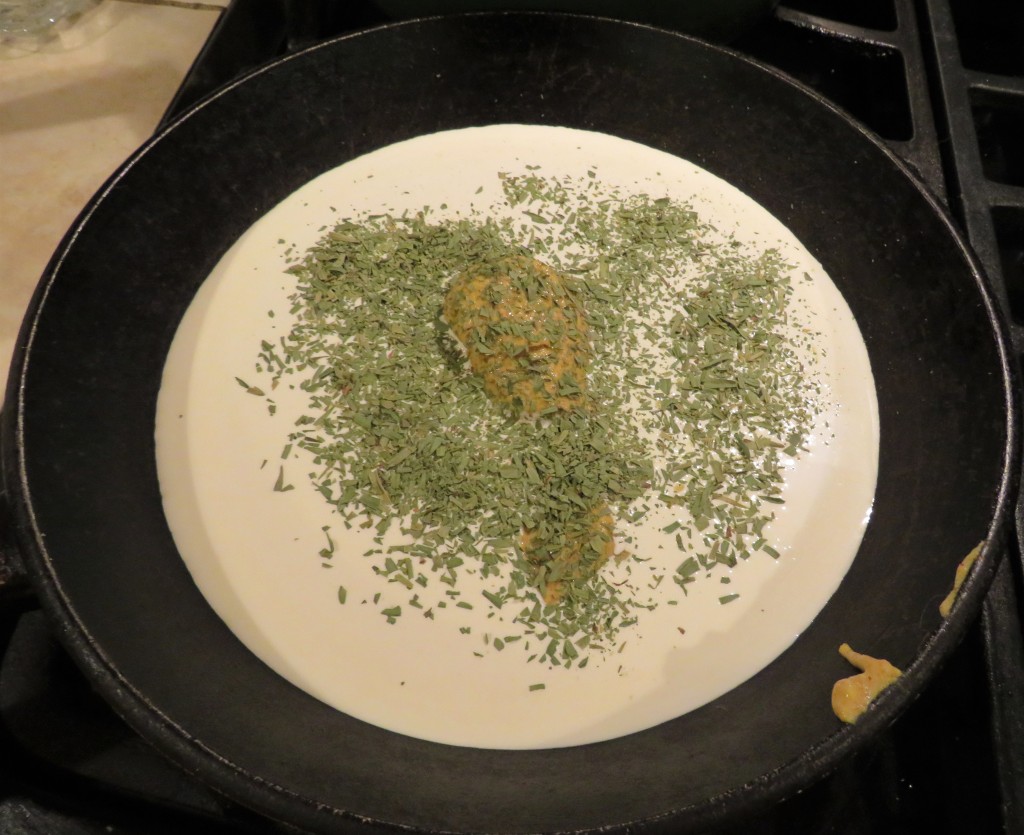
I made a tarragon mustard cream sauce for the meat. I just put everything together in a small skillet and cooked it at a medium heat for about 5-7 minutes, stirring constantly. Add the butter at the end as a finish to the sauce.

Tarragon Mustard Cream Sauce

1 cup heavy whipping cream

1-1 1/2 TBSP Dijon mustard

1 TBSP tarragon

salt & pepper to taste

2 TBSP butter

We had the corned beef a wee bit early, but we will be celebrating Irish style tonight, at an Irish pub. My friend Karen is coming in to visit, and she is flying in tonight. Her request was to celebrate the day in the traditional ways of the Irish, or at least the Irish at heart. And celebrate we will too.

“Cheers” in Irish is sláinte which is pronounced a bit like “slawn-che”. Sláinte means “health”, and if you’re feeling brave, you can say sláinte is táinte (“slawn-che iss toin-che”), meaning health and wealth.

St. Paddy’s Day

It’s that time of year again, when everyone celebrates being Irish. Even those who are not Irish celebrate the day. It is St. Patrick’s Day, of course. With a name like Jones, you know I have a lot of Celtic blood running through my veins. I am a true American mutt, with a lot of different nationalities mixed together, but I am predominantly, Irish, Scottish, Welsh and Australian (a combination of all of these nationalities too). It is estimated that roughly 33.3 million Americans have Irish roots, or roughly 10% of the population. Irish Americans are the second largest ethnic group in America, followed by German Americans.

Why do we celebrate St. Patrick’s Day? “He returns to Ireland and brings Christianity with him. He is who made the Celts and the pagans into Christians.” St. Patrick’s Day is celebrated on March 17, the day he is assumed to have died. The holiday originally was tied to religious ideals but now is also a symbol of Irish pride.” The day commemorates Saint Patrick, a missionary who arrived in Ireland during the 5th century and introduced Christianity to the Irish people. March 17 is widely believed to be the day he died, and Ireland has been at the forefront of celebrations commemorating its patron saint on that day since the ninth century. St Paddy’s Day started as a religious celebration in the 17th century to commemorate the life of Saint Patrick and the arrival of Christianity in Ireland. This “Feast Day” always took place on the anniversary of Patrick’s death, which was believed to be March 17, 461 AD.

Today, it is not celebrated so much as a religious holiday, but a day to honor the Irish and Irish pride. Today, it is a festive event with parades and everything green and orange. The green is said to represent the Catholic population and the orange represents the Protestant population of Ireland. Every year on March 17th, St. Patrick’s Day is celebrated in Ireland and all across the globe. It’s the time for shamrocks, costumes, parades and of course, leprechauns. 

Dancers in traditional Irish costumes.

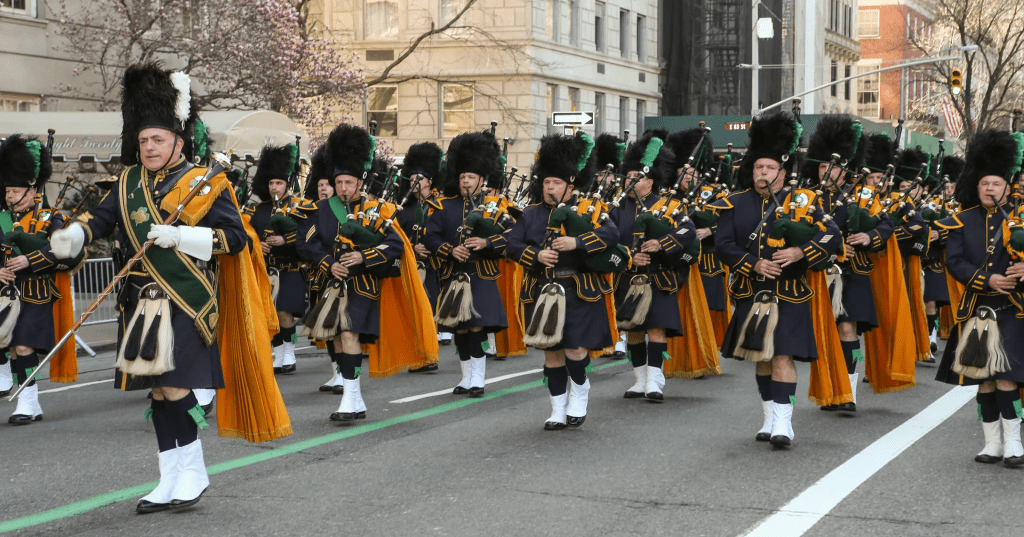
An Irish bagpipe corps marching in stride.

Leprechauns everywhere. Leprechauns are often associated with riches and gold. What happens if you catch a leprechaun? The rule is, if you’re lucky enough to catch a leprechaun, you can never take your eyes off him or he’ll disappear. In one tale, a man managed to catch a leprechaun and forced the fairy to divulge the secret location of his treasure. But in folklore their main vocation is anything but glamorous: they are humble cobblers, or shoemakers. Where’s the fun in celebrating a humble shoemaker though? It is much more fun to try to catch the trickster who is full of shenanigans.

Whether you are Irish or only Irish for the day, celebrate the day in style and a wee bit of fun.

Nature Walks – Ducks of the Day

Our Colorado weather is being true to form, meaning it is being completely unpredictable, once again. Yesterday I was in shorts. It was a beautiful, sunny day with the temperature in the low 70’s (F). Today, the skies are gray and over cast and we are expecting more snow again tonight. Go figure.

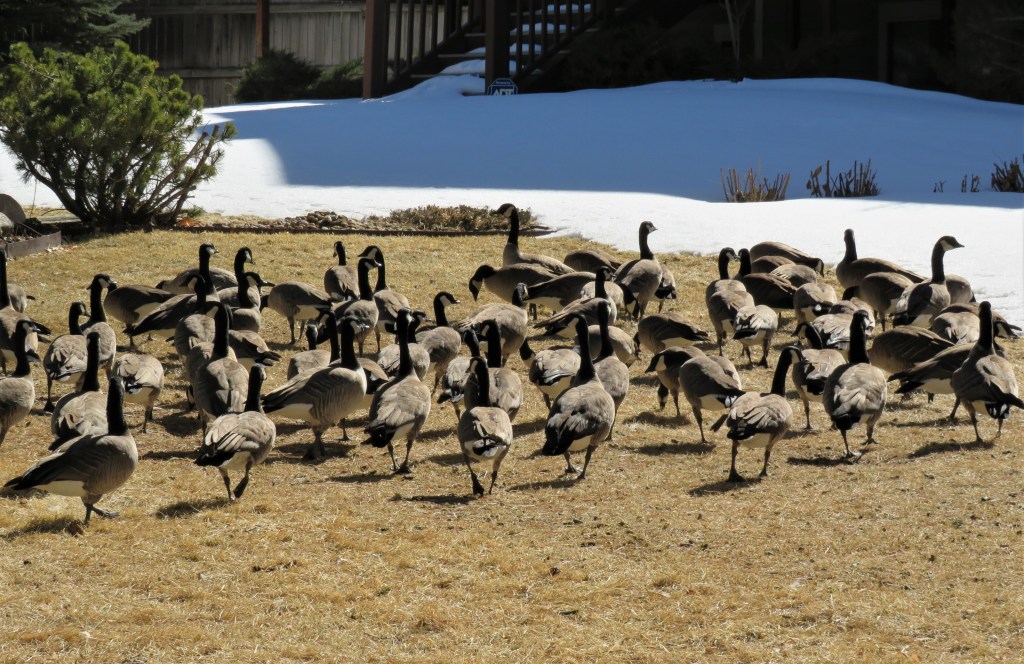
I took advantage of our beautiful warm weather and went walk-about around our lakes, as I do as much as possible. The ducks were out too. We had so many ducks and geese out, all of whom were enjoying the beautiful day as well.

Of course our mallards were out,

as were our Canadians,

along with their close cousins, the Cacklings. There was one lone Wood Duck swimming along with the Cacklings too. Look closely, and you will see him.

I zoomed in on him and made him stand out so you can see his beautiful colors. I didn’t see him at first either. It was only after I was editing my pictures that I noticed him.

We also had some Hooded Mergansers out and about,

as well as some Common and Barrow Goldeneyes.

And last but definitely not least, we had some buffleheads out too.

It was fun seeing so many different ducks out and all together. I LOVE my lakes. You just never know what you are going to see or who you are going to meet. Everyday is a gift.

Maize a la Mexicana

It is believed that corn was first cultivated in Mexico around 7000 years ago. It morphed into the corn of of today from a wild grass known as teosinte. It was then brought up to North America and has been a staple in the lives of Native Americans ever since. To the Native Americans, corn is known as maize. Corn comes in all colors of the rainbow. Each variation has a slightly different taste and subtly different characteristics, but in the end, they are all good.

In many parts of the world, corn is used as grain for stock animals’ food. It is also used to produce ethanol fuel. It is also used to make starch, sweeteners, corn oil, beverages and industrial alcohol. And believe it or not, it is loved and enjoyed by most Americans, whether they are are from North America, Central America or South America, just for the pure, delicious, goodness of this sweet grain. We love and eat a lot of corn, prepared in many different ways, though I have to admit, one of my absolute favorite ways to enjoy it is POPCORN!

When I made my Southwestern BBQ Chicken pizza Southwestern BBQ Chicken Pizza with Blue Corn Crust I had a lot of the sauce leftover. I used it as a marinade for some chicken breasts. I wanted something with a Southwestern or Spanish personality to go along with it as a side dish, so I made some wild rice and my maize a la Mexicana to serve with my chicken. It was a quick, easy-peasy, delicious meal that was full of color and full of flavor.

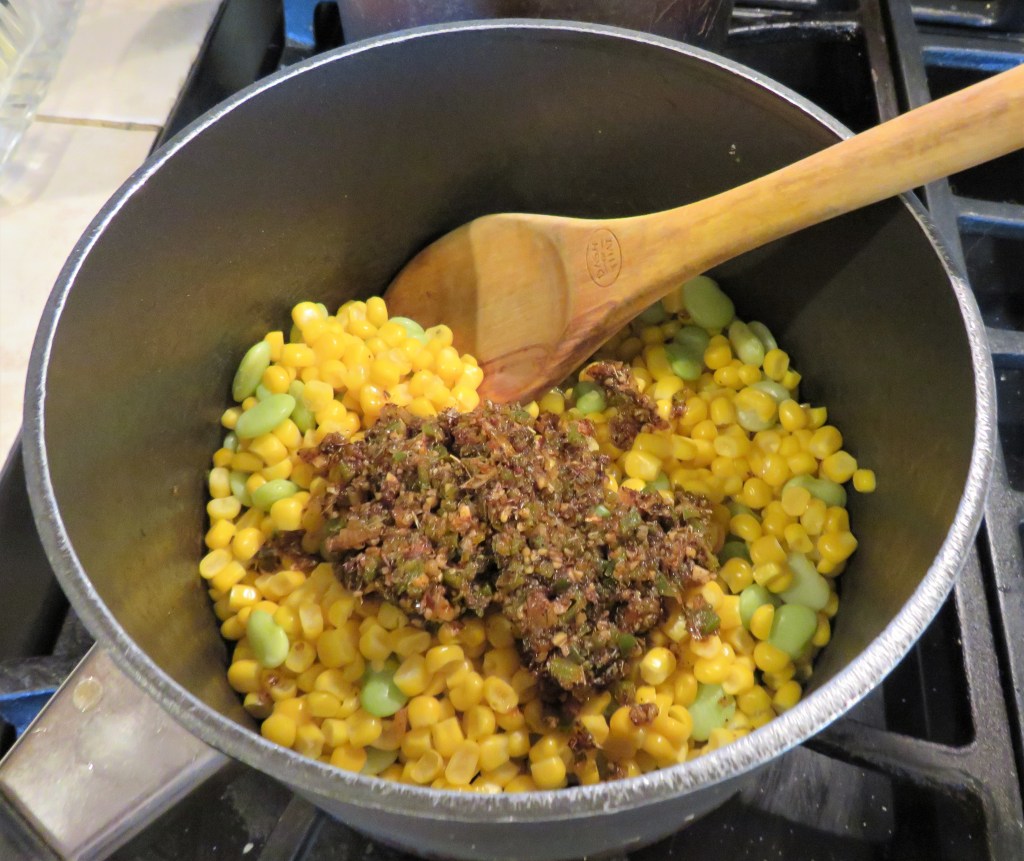
I was making up my maize a la Mexicana as I went along and didn’t think about taking pictures until later. I boiled the corn or maize and lima beans or habas together until they were cooked. While they were cooking I started preparing the spice mixture.

Maize a la Mexicana

2 cups frozen corn

1 cup frozen lima beans

1 shallot, diced fine

1 TBSP garlic

1 tsp dried thyme

1 tsp dried orgeano

1 tsp chili powder or specialty chili powder – I think I used adobo chili

1 jalapeno diced fine

salt & pepper to taste

a dash of cayenne pepper

butter

olive oil and/or lime infused olive oil

toasted pecan pieces, optional

crumbled cotija cheese, optional

Combine the corn, lima beans and enough water to completely cover the corn. Bring to a rapid boil on high heat, then turn the heat down to a medium heat and continue to cook for about about 10-15 minutes, or until they are done. When the are cooked, drain the liquid off and set aside.

While the corn and beans are cooking, in a separate pan, start the spice mixture. Get the pan very hot then add the butter and oil. Combine all the rest of the ingredients into the pan and saute for about 5 minutes, stirring constantly.

Once the spices are cooked and the onions and peppers are softened, add the whole mixture to the corn and mix together thoroughly. You can also use red bell peppers, but I didn’t have any at the time. Once everything was done, I added some toasted pecan pieces as a topping too.

Serve alongside your favorite main dish and a tasty dinner is served.

I like color and I like texture so I am always mixing and matching things until I get them just right. As I always say, don’t be afraid to play with your food. You just never know what you’ll create. 🙂

Stay safe and stay well Everyone. ‘Til next time.

Cherry Almond Bites

Cherries and almonds make a great flavor combination that has been enjoyed around the world for many centuries. They still are. I love cherry anything and almonds are some of my favorite nuts, so for me, combining them is just a given. To borrow a phrase, it is “two great tastes that taste great together”. This time I combined them to make little cherry and almond bites. It was very similar to a cherry frangipane, which is like a cherry cake. They were part of this week’s feature for the coffee cart, along with some toffee scones and festive cupcakes decorated in green, purple and white for St. Patrick’s Day.
Cherry Almond Bites

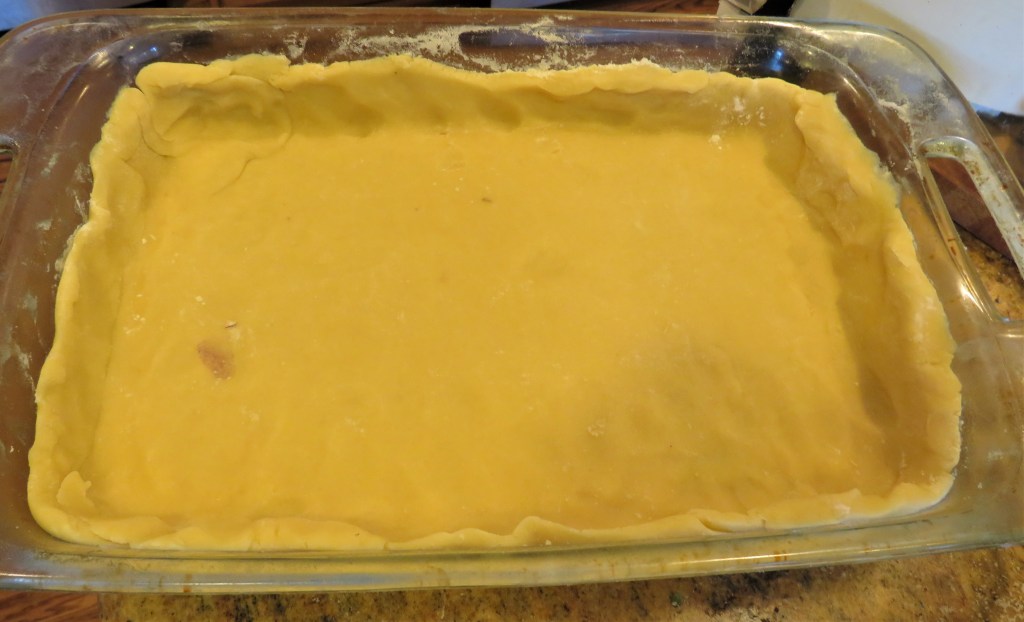
I started with a pate sucre, or a sweet pastry dough. Once the dough was set, I lined a 9×13 baking pan sprayed with cooking spray and a sprinkling of almond flour on the bottom then formed the pate sucre on the bottom and sides of the pan.

Sweet Pastry Dough

1 1/2 cups flour

1/2 cup almond flour

6 TBSP cold butter, cubed

2 TBSP powdered sugar

dash of salt

1 egg

5-6 TBSP heavy whipping cream

Place the flour, butter, salt and powdered sugar in the food processor (you can also mix it together by hand or with a pastry cutter too) and pulse until it all resembles a course sand. Then add the egg and flour and mix again until it forms into a ball. Wrap the dough ball in plastic and refrigerate for at least 30 minutes before using. When the dough is ready, shape it how you like.

The Filling

1 cup pitted cherries, quartered

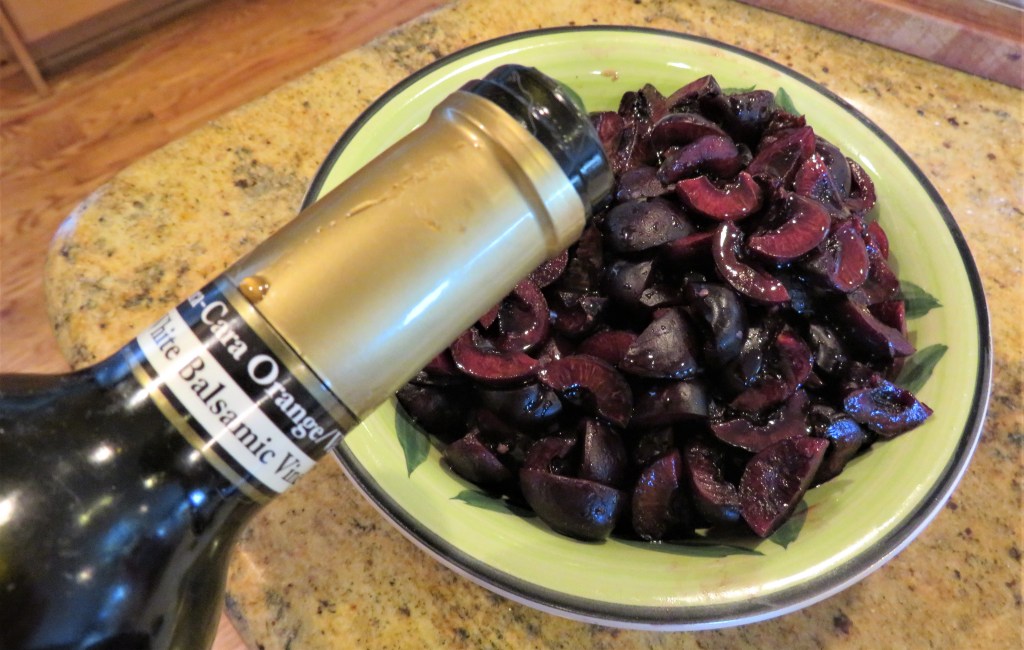
1/3 cup orange juice or orange balsamic vinegar

2/3 cups + 2 TBSP sugar, divided

1 1/2 cups almond slivers, divided

2 eggs

1 stick softened butter, cut into TBSP portions

1/2 tsp vanilla

1/4 tsp almond extract

1 TBSP flour

While the dough is setting, cut and pit the cherries and mix them with either 1/3 cup orange juice or Cara-Cara orange balsamic vinaigrette. Heat in the microwave for about 1 minute, mix everything together once again, then let rest before using.

Preheat the oven to 350*F or 190* C.

Place 1 cup of the almonds and everything else in the food processor, except the cherries, and pulse until the mixture resembles coarse sand.

Add the cherries and the liquid and pulse again. I also added the additional sugar at this point too.

Once everything is combined well, pour it into the pasty shell and evenly spread it out to fill the shell.

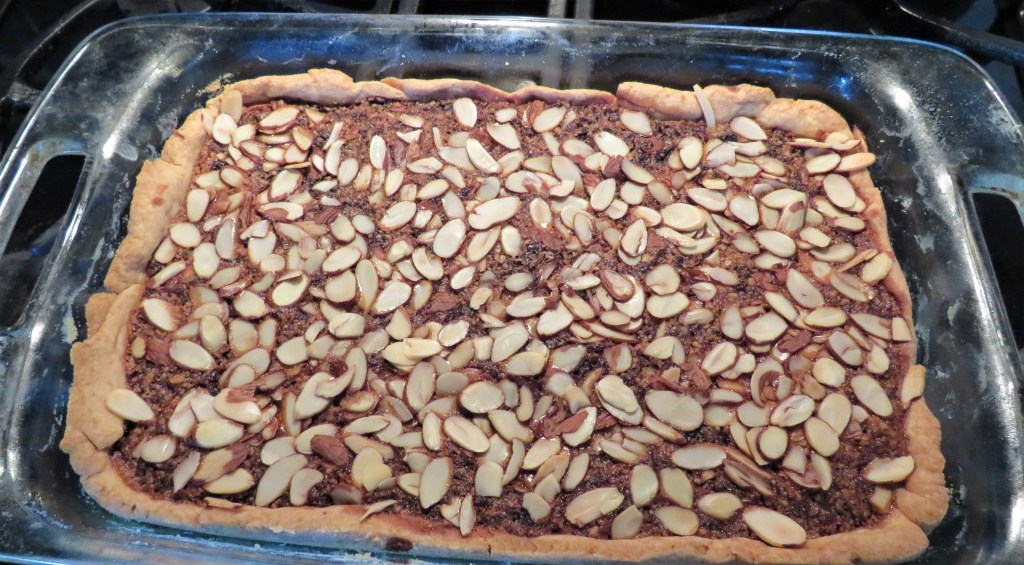
Top the filling with the remainder of the almond slivers.

Bake for about 40-50 minutes or until the dough is golden brown and the center is set.

Allow to cool completely before adding the glaze and cutting into bite-sized squares.

The Glaze

1/2 cup powdered sugar

2 TBSP heavy whipping cream

1/4 tsp almond extract

Combine everything together and drizzle over the pastry. Then cut into squares.

If you like the cherry and almond combination like I do, you are going to love this. Once again, it was a big hit. Everyone loved it. This was absolutely cherrilicious.

Stay well and stay safe Everyone. ‘Til next time.