Cous Cous is a Type of Pasta

Cous cous?  What is it?  Is it a grain or is it some kind of rice?  Cous cous is actually a type of pasta that is made from semolina flour.  Semolina is the hard part of the wheat grain that resisted being ground from the primitive medieval millstones.  Originally, cous cous hails from North Africa, but is found and eaten all over the world today.  There are many different varieties of cous cous, but here in the United States, the most popular types are either the white or the whole grain varieties.  Cous cous is pasta that is shaped into tiny granules of semolina pasta that are made from two different sizes of husked and crushed unground semolina.  There are a couple of theories on how the name came about.  One theory is that it is a word derived from the Arabic word kaskasa, which means to pound small.  Another theory is that it is derived from another Arabic word, kiskis, which is the name for the type of steamer that is used to cook cous cous.  The French translation for the kiskis is couscousi.  We may never know the answer to this question.  What I do know is that I love cous cous.  We eat it quite often, usually with a Mediterranean or Greek dish.  Cous cous looks like rice, but is much healthier than rice.  It contains a lot of protein, with about 6 grams per serving in the regular type and about 9 grams in the whole wheat version.  It is also loaded with selenium, containing about 66% of the daily recommended amount in one serving.  Cous cous also has about half the calories that rice has, making it very friendly for dieters who are trying to cutback on their caloric intake.

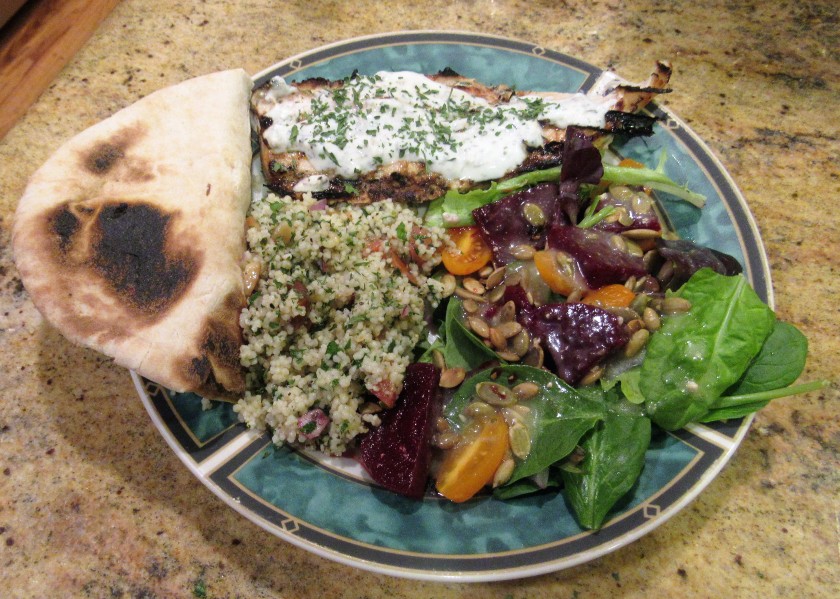
I was a little pressed for time last night when making dinner, so I needed something that was quick and easy.  I went “Greek” and made a lemon, herb yogurt marinade for chicken, and served it alongside my lemony cous cous and a mixed baby green salad.  Chardonnay was the wine choice.  A crisp white was the perfect choice to accompany the meal.
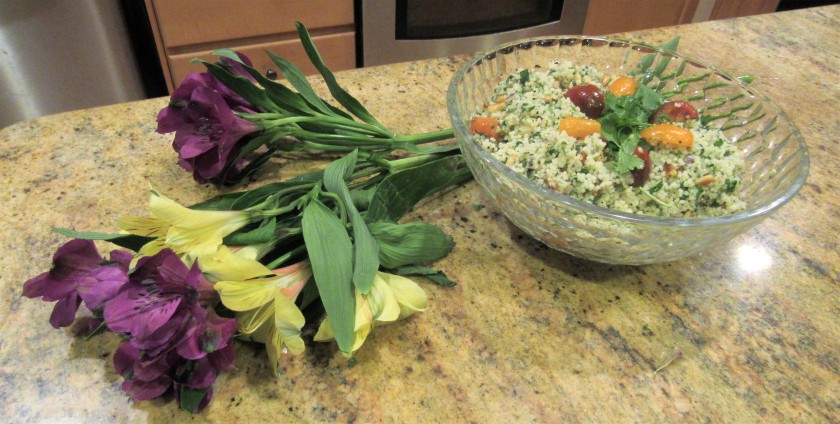
img_4951

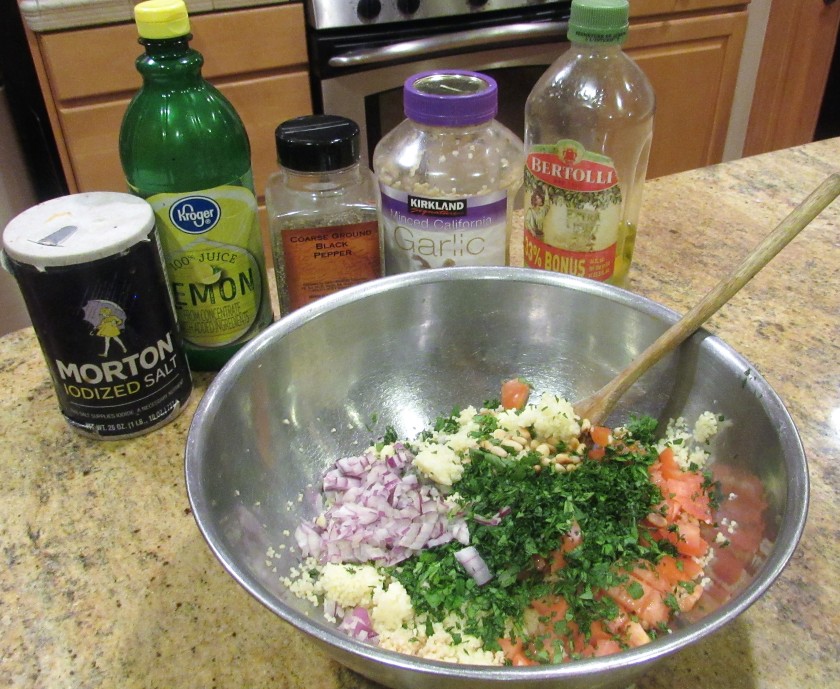
Lemony Cous Cous

1 12/ cups cooked cous cous

1/3 cup toasted pine nuts

1/4 red onion, diced very fine

1 1/2 TBSP garlic

1 tomato, diced fine

salt & pepper to taste

1 bunch parsley, chopped fine

1 TBSP lemon juice

1/3 cup olive oil
 

img_4949

Traditionally, cous cous is steamed in the kiskis, but I boil the water with a tsp of salt and 1 TBSP of olive oil, then I turn off the heat and add the cous cous, mix it up and let it soak up the hot water.  It is almost a 1:1 ration of water to cous cous.  Too little water and the cous cous will be dry and too much will make it mushy.

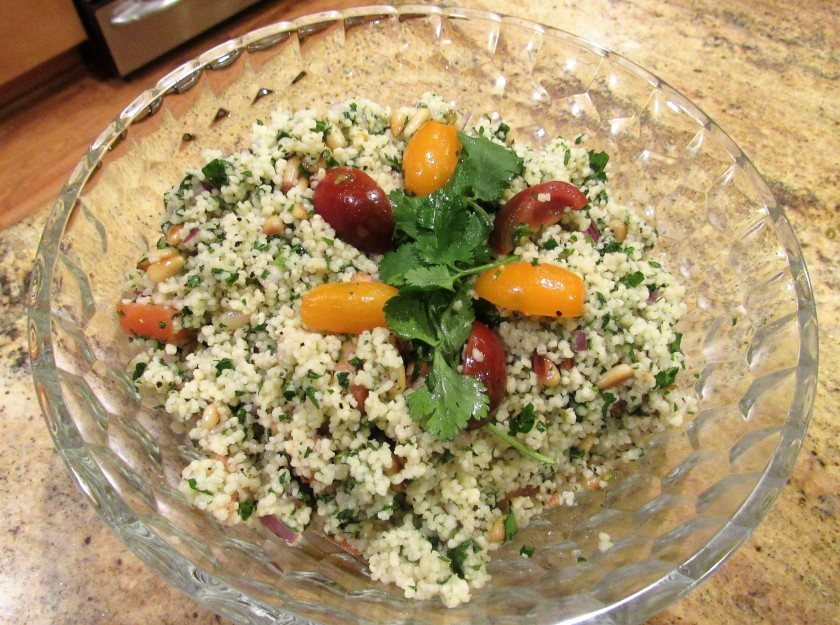
Once the cous cous is cooked, I added all the rest of the ingredients and combined everything well.  You can eat it cold, warm or hot.  It is good at whatever temperature you like it.  You can easily eat it on its own or mix it with shredded chicken.  It is great as both a side dish or a meal, especially when the chicken is added.  If you want to make tabbouleh, the recipe is the same, except the dish is primarily parsley, with less cous cous.

A very healthy Greek meal.  Lemon-herb-yogurt marinated chicken, that I grilled and topped with more of the lemon-herb-yogurt sauce, served with lemony cous cous and a salad of mixed greens and a piece of pita bread.  Very little fat, and a ton of protein.
img_4956

img_4952


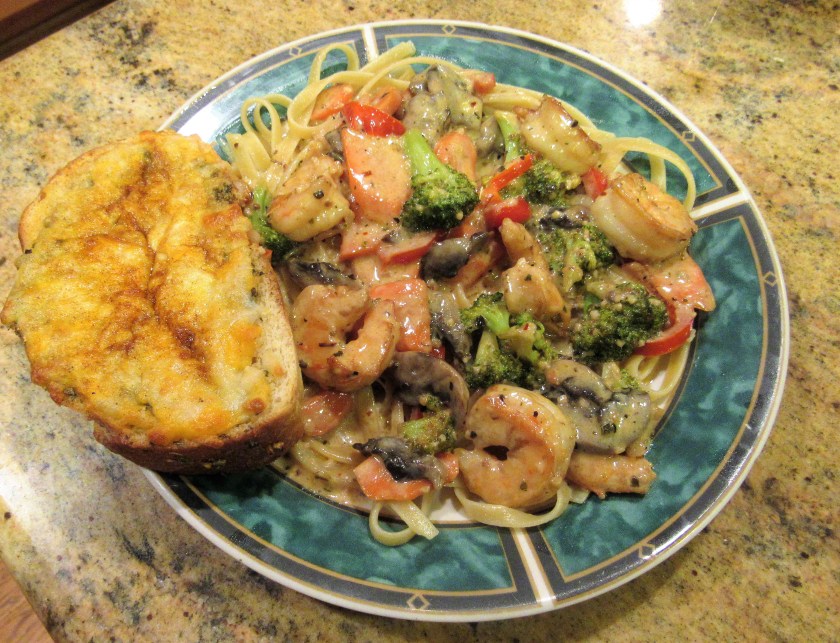
Shrimp and Vegetable Alfredo

I LOVE pasta, and I could easily eat it everyday, although fortunately for my waistline, I do not.   I love all kinds of sauces and toppings to go in and on my pasta too, although a warm and cream Alfredo is always one of my favorites.  Besides being so versatile, pasta dishes are very easy to make as well, and are perfect for just about any occasion.  This is one of those dishes that you can make it with whatever you have on hand and it will turn out delicious.  This dish is delicious with chicken, shrimp, sausage, any combination thereof, or just with vegetables to make it vegetarian.  Make it how you like it.

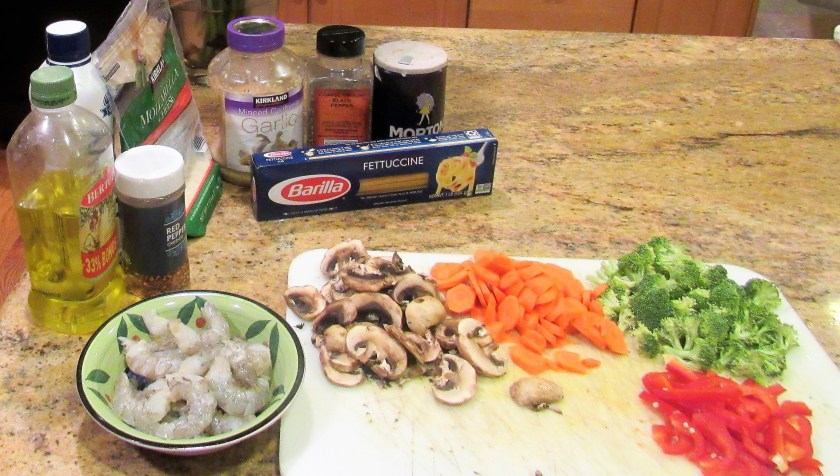
img_4938

As I have said many times, we always have a wide variety of vegetables in the fridge, so I mix and match vegetables all the time.  Today, I used carrots, red bell peppers, broccoli and mushrooms, and of course, garlic.  Adding a lot of color and texture with your vegetables also adds a wide variety of nutrients as well.

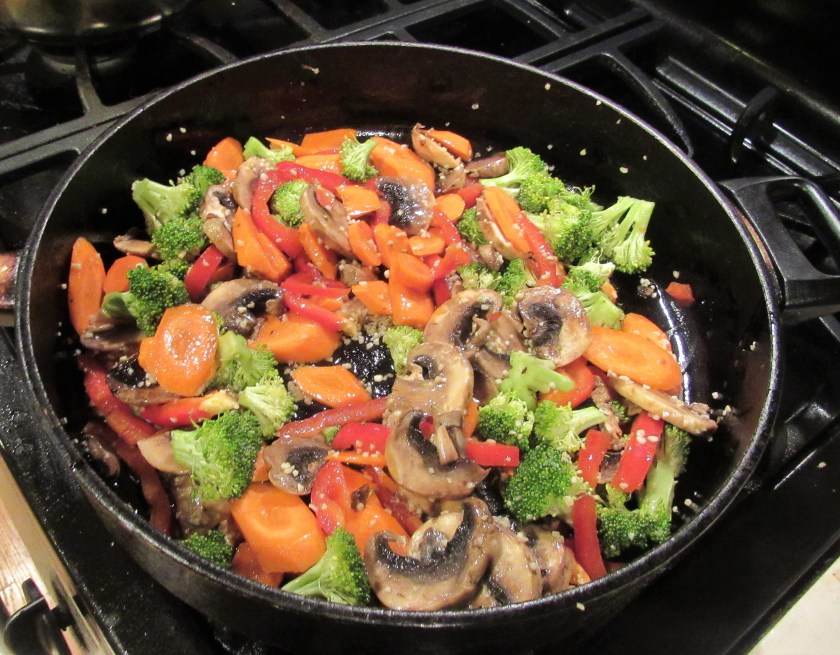
img_4922

Once your vegetables are all cut, saute them in olive oil with the garlic until they are just soft, yet still have a little crunch left, for about 7 minutes or so.  Saute your heartier vegetables first, then add the more delicate vegetables towards the end.  Once they are cooked,  remove them and set them aside.

img_4923

Once the vegetables are done, add your meat and cook.  We had shrimp which does not take long to cook at all.  Cook the shrimp for about 2-3 minutes per side, or until it is a nice pink color.  Then remove and add to the vegetables.

img_4927

Spicy Alfredo Sauce 

1/2-3/4 cup dry white wine

2 cups, or more if needed, heavy whipping cream

1/2 cup white cheese of your choice, (today, I made it with jalapeno jack which added a little more pizzazz)

salt & pepper to taste

1 tsp red pepper flakes or to taste

1 tsp cayenne pepper or to taste

2-3 TBSP butter


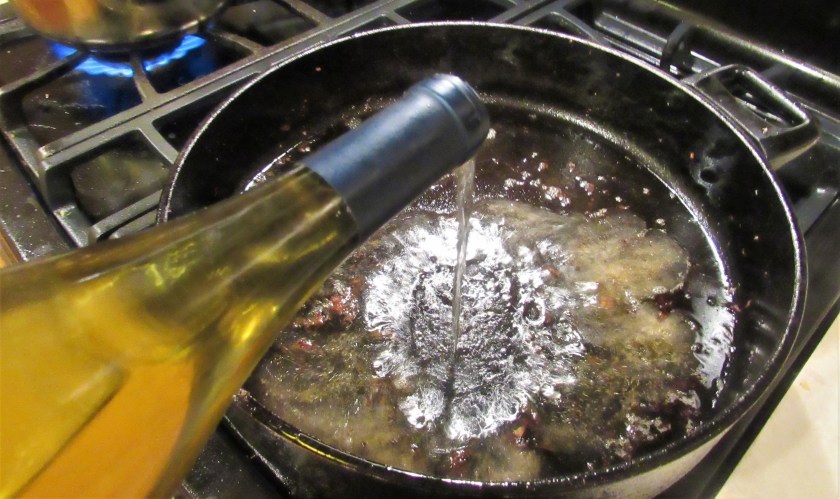
After removing the vegetables and the shrimp, in the same pan, add the wine and cook until the liquid is mostly gone.  Make sure to scrape all the drippings into the wine.

img_4929

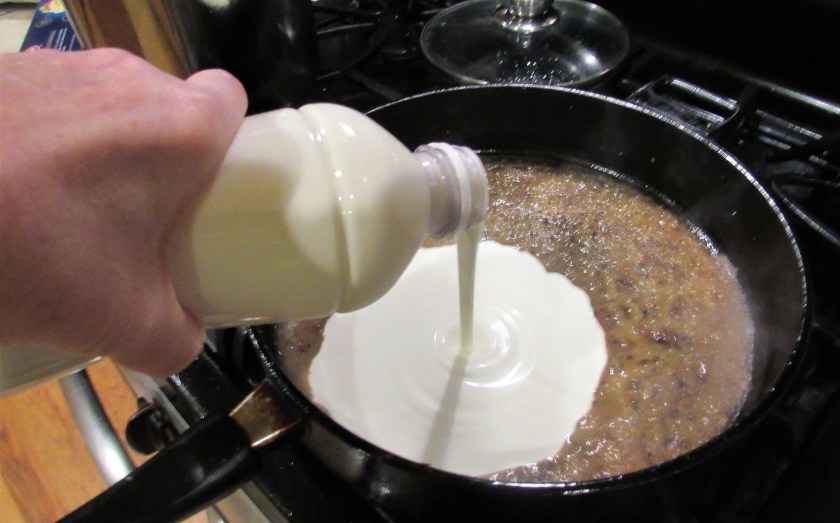
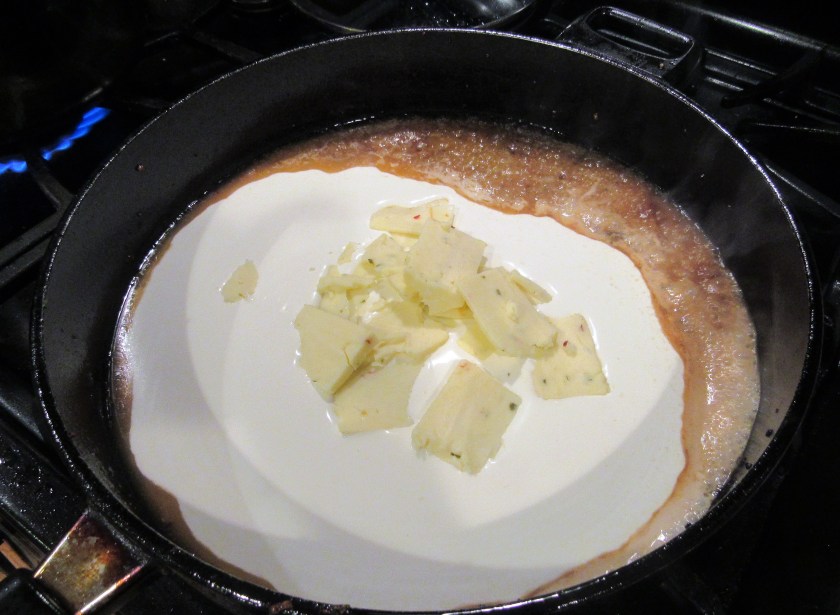
Add the cream and incorporate well.  Then add the cheese and the seasonings and mix in quickly.

img_4930

img_4932

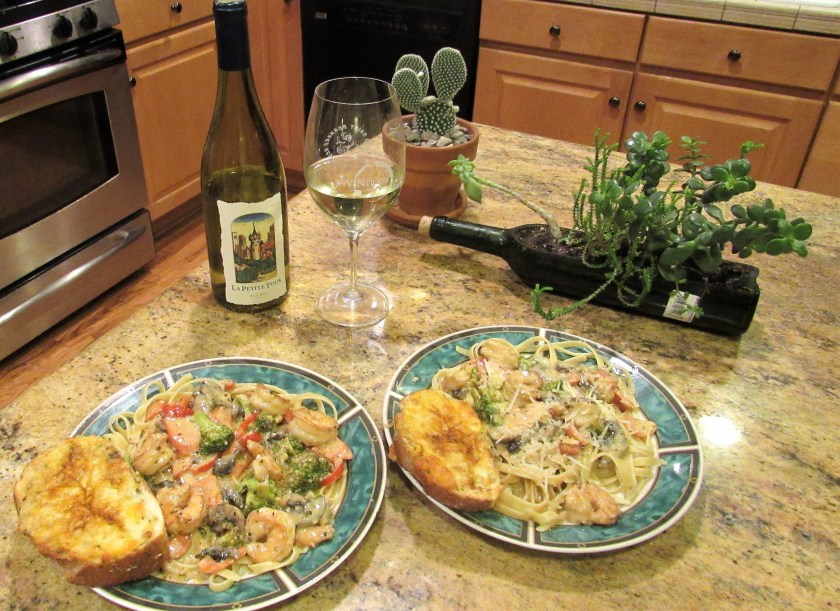
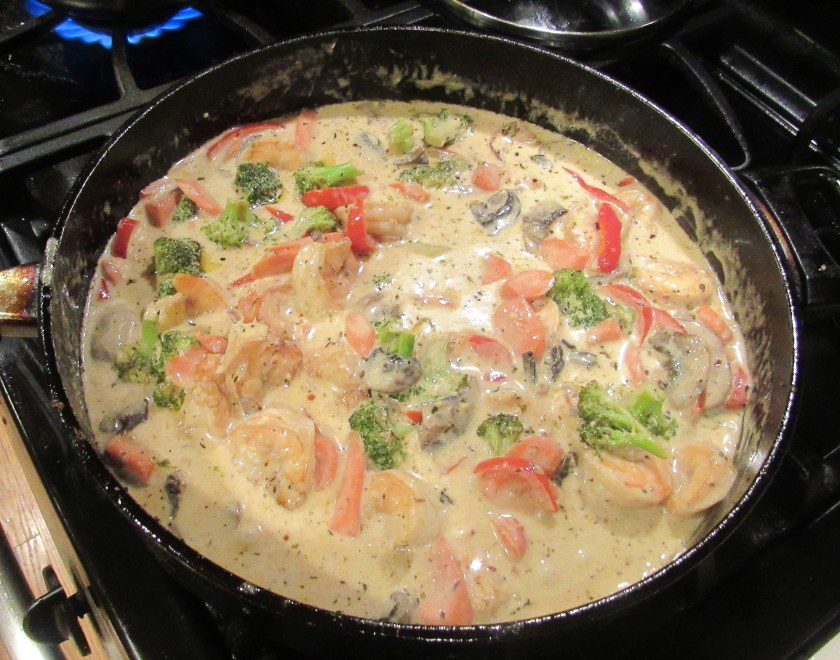
Once everything is well blended and the cheese is melted, add the cooked vegetables and shrimp (or meat of your choice).  Finish with the butter to make the dish rich and creamy, with a nice buttery sheen.  Serve over your favorite pasta and it is now ready to eat.  I would use a heartier pasta, like fettuccine or farfelle/bowties, since this is a heavy sauce.  I served it alongside my famous garlic-herb cheese bread and a glass or two of a cold chardonnay with hints of melon and apples.  Mangia!

img_4936

img_4940


Live, Love, Eat

Well, the holidays have come and gone and we are at the end of  the first week of the new year.  Sadly, it is time to take down the trees and all the Christmas decorations and put them away until next Christmas.  So because we are busy taking down all the decorations and cleaning up after, I will once again leave you with some friendly words from others who love to cook, to be in the kitchen, and who love life.

All you see, I owe to spaghetti

~ Sophia Loren~

Image result for sophia loren cooking


Give me books, French wine, fruit, fine weather and a little music played out of doors by somebody I do not know.

~ John Keats~


We are indeed much more than what we eat, but what we eat can nevertheless help us to be more more than what we are.

~ Adelle Davis~

Image result for adelle davis pictures


There is NO such thing as a little garlic.

~ Author unknown, but obviously someone of fine taste.~

Image result for pictures of garlic cloves


A smiling face is half the meal.

~Latvian Proverb~

Image, A smiling face is half the meal.

Winter One Day, Spring the Next

You gotta love Colorado’s weather.  We have a saying that if you don’t like the weather, just wait five minutes and it will change.  And believe me, this is so true.  Even though we are supposed to be in the throws of winter, you would never know it by today’s weather.  A couple of days ago, it was bitter cold, and the highs were only in the teens and the lows were in the negative numbers.  Today, however, you would think it was a beautiful spring day.  Most of the snow from the other day is already long gone, the sun is shining brightly and the temperature is in the 60’s.  Monday, we are supposed to have snow again.  Go figure!  So with our ever chancing weather, we also have to constantly adjust our menu.  A few days ago, we were eating warm, hearty foods that would “warm the cockles of our heart” as my dad would say, and today we had a salad.  As I said; you gotta love Colorado’s weather.
I made a mixed baby green salad with beets, green onions, tomatoes, hard boiled egg, Cajun chicken and avocado, topped with a tomato vinaigrette and toasted pepita seeds and Mediterranean Babka on the side. Babka with a Mediterranean Twist .

img_4919

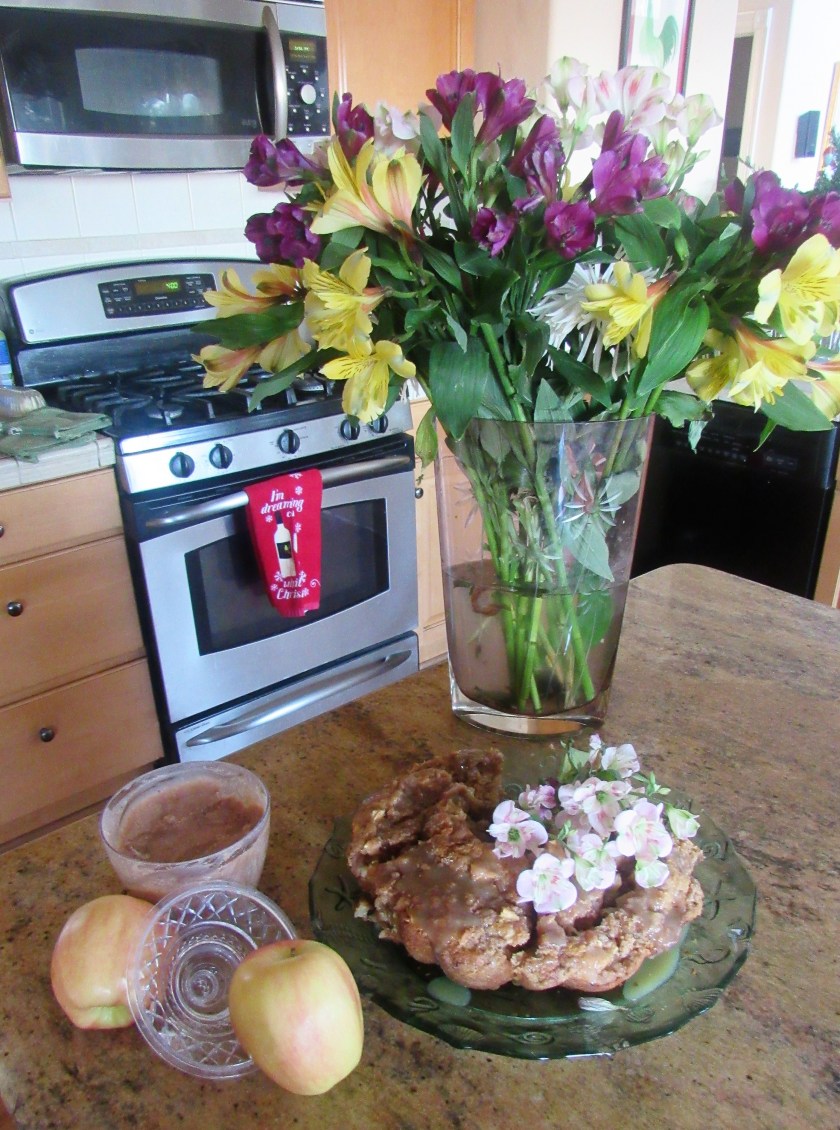
Apple Cinnamon Coffee Cake with Caramel Sauce

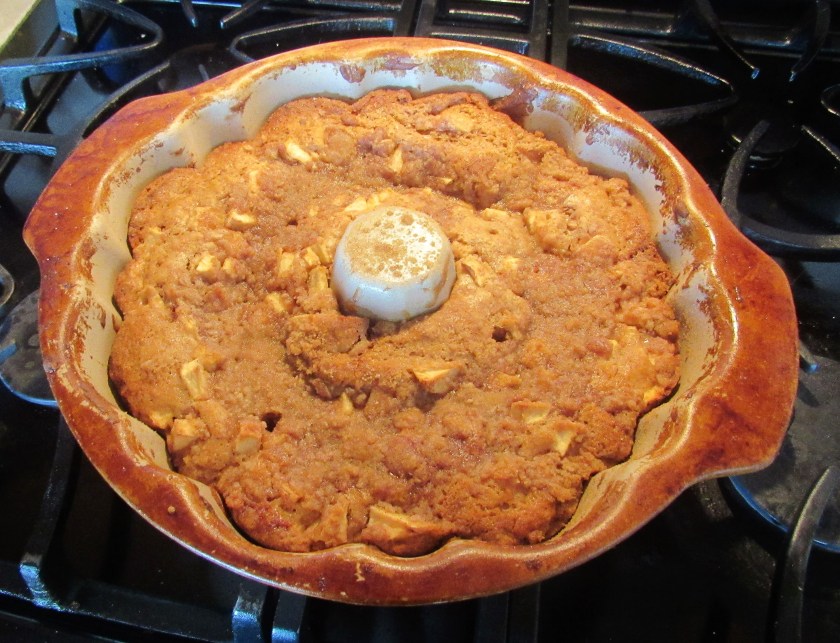
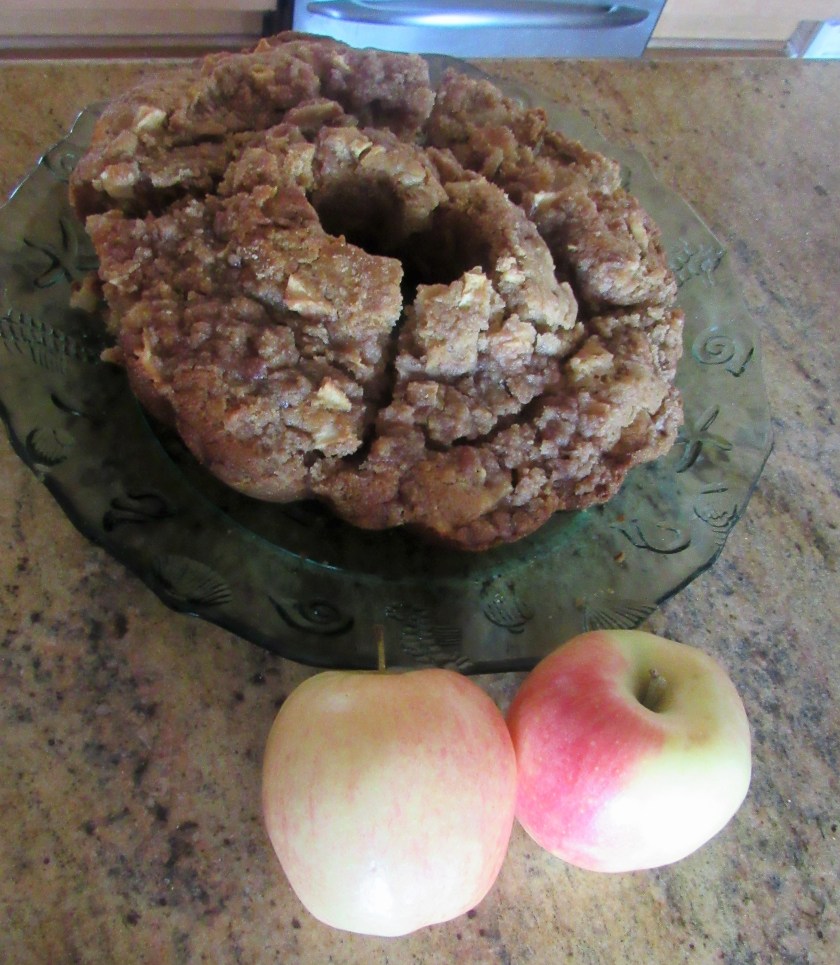
Last week our nephew got married in Hays, KS.  Hays is where my husband grew up and he is German-American, being almost purely of German heritage, as is most of the population in Hays.  The German roots are very strong and very prevalent there.  Some of the older residents still speak German.  Apples and cinnamon are very popular within the German culture and there was a lot of food items at the wedding that had either apples or cinnamon, or both.  The family cooked all the food, which means we brought home a lot of leftovers.  Some of the leftovers were two dishes filled with cinnamon butter.  I thought one of the best ways to re-use some of this delicious cinnamon butter was by making an apple cinnamon coffee cake.   Well, I made the coffee cake, and it came out delicious, but I did not use nearly as much of the cinnamon butter as I had hoped.  In fact, it seems as though I barely even made a dent in it.  So, I guess there will be more cinnamon recipes in our near future.  It’s a good thing we like cinnamon butter, because I still have A LOT leftover.
img_4913

Apple Cinnamon Coffee Cake with Caramel Sauce

img_4898

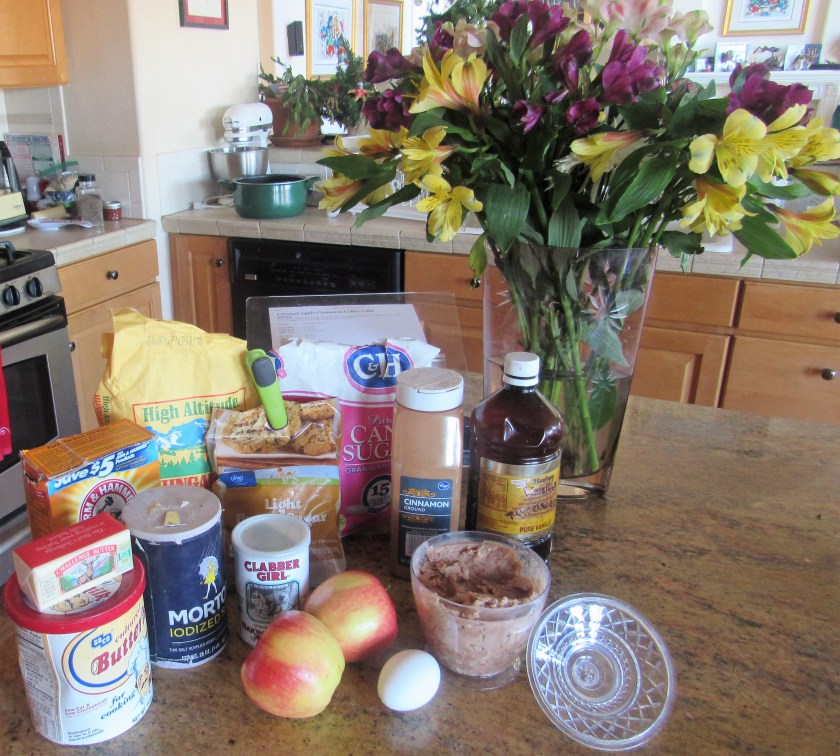
For the Streusel

1/4 cup apple cinnamon butter, cold

1/2 cup flour

1/4 cup brown sugar, firmly packed

1 1/2 tsp cinnamon

1/4 tsp salt


Mix everything together using either a pastry blade or your hands.  I find crumbling everything together with my hands works better than a pastry blade, but that is just me.  You want the consistency to be light and crumbly.  When done mixing, set aside.

img_4900

For the Cake

6 TBSP butter, softened

1/4 cup + 2 TBSP sugar

1/4 cup + 2 TBSP brown sugar, firmly packed

1 egg

1 1/2 tsp vanilla

1 1/2 cups flour

2 tsp baking powder

1/4 tsp baking soda

1/4 tsp salt

1 tsp cinnamon

3/4 buttermilk

2 apples, peeled and diced

caramel sauce for topping


Preheat the oven to 350* F or 180* C


Beat the butter and sugars together until soft and creamy, then add the egg and continue to mix.  Add the vanilla and mix everything together thoroughly.

Mix all the dry ingredients together then add about 1/3 of the flour mixture to the butter and sugar mixture. Mix at a medium speed.  Add about 1/2 of the buttermilk and mix.  I absolutely hate buttermilk to drink, so I buy the powdered buttermilk and mix it with regular milk when I need it for baking.  Repeat, alternating the flour and the buttermilk until both are completely incorporated into the mixture.

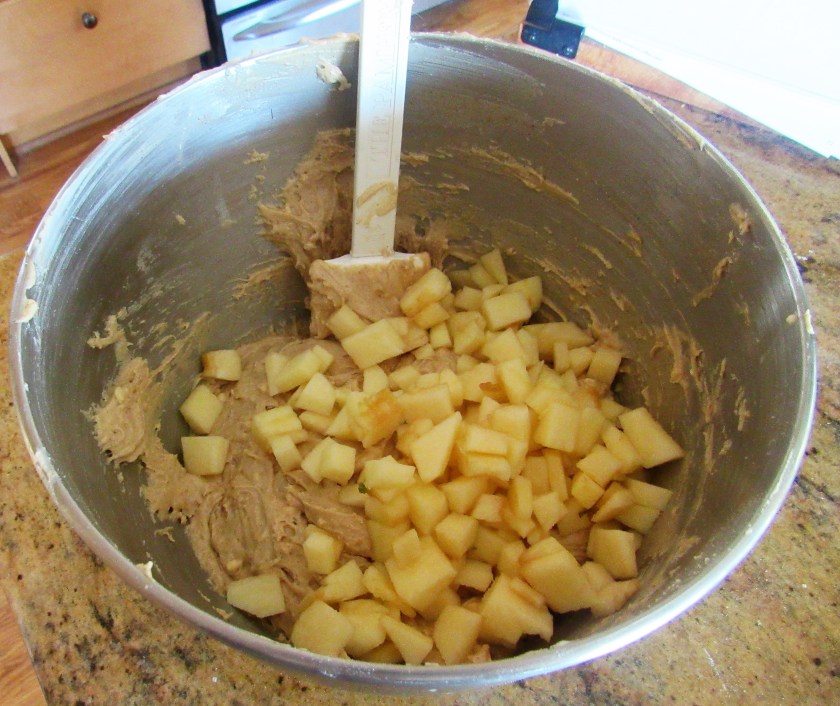
Once the batter is all mixed together, gently fold the apple chunks into the mixture.  I used a bundt pan, coated with cooking spray, but you can use a 9″ cake pan if you prefer.  I spread half the batter with the apples into the pan, then added a layer of streusel topping.  Repeat the process again, finishing up with streusel on top of the cake.

img_4903

img_4905

Once the pan is filled, place it into the oven and bake for about 1 hour or until a toothpick inserted into the middle of the cake comes out clean.  Let the cake cool completely before removing it from the baking pan and before topping it with the caramel sauce.

img_4910

img_4911

Caramel Sauce

1 cup brown sugar, firmly packed

1/2 cup heavy whipping cream

4 TBSP butter

a pinch of salt

1 TBSP vanilla


Combine the heavy whipping cream, sugar, butter and salt and mix together well until all the sugar has melted and everything is incorporated together, for about 5-6 minutes.  Turn off the heat and add the vanilla and mix well.  let cool or chill until ready to use.  I drizzled it over the cake once the cake was completely cooled.


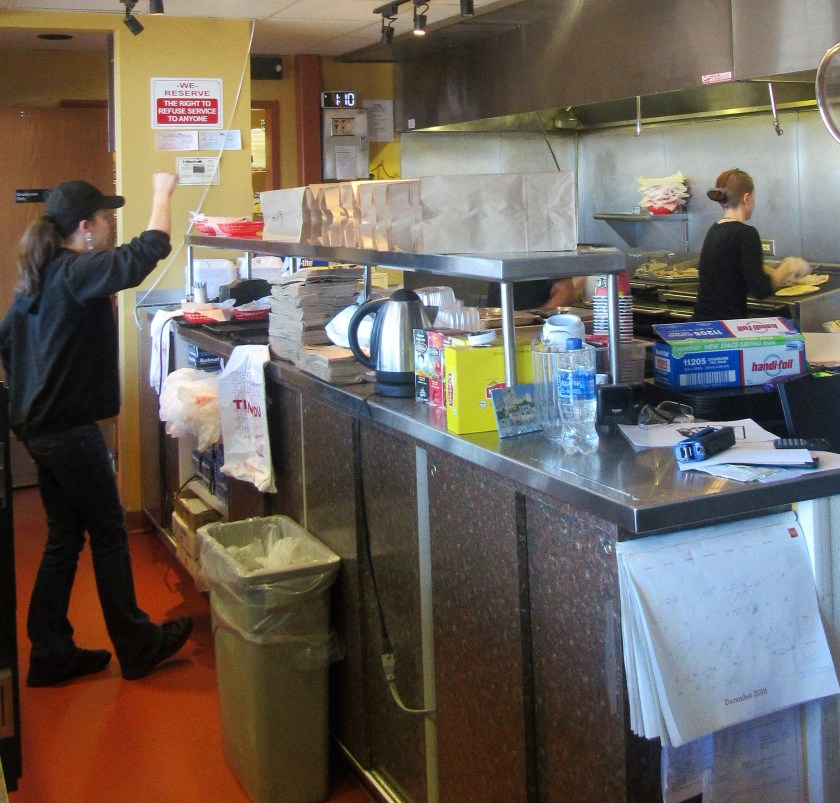
Mediterranean Mumtaz

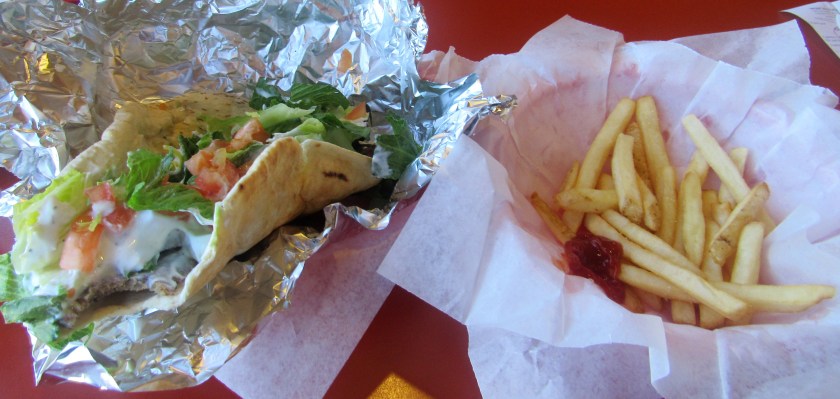
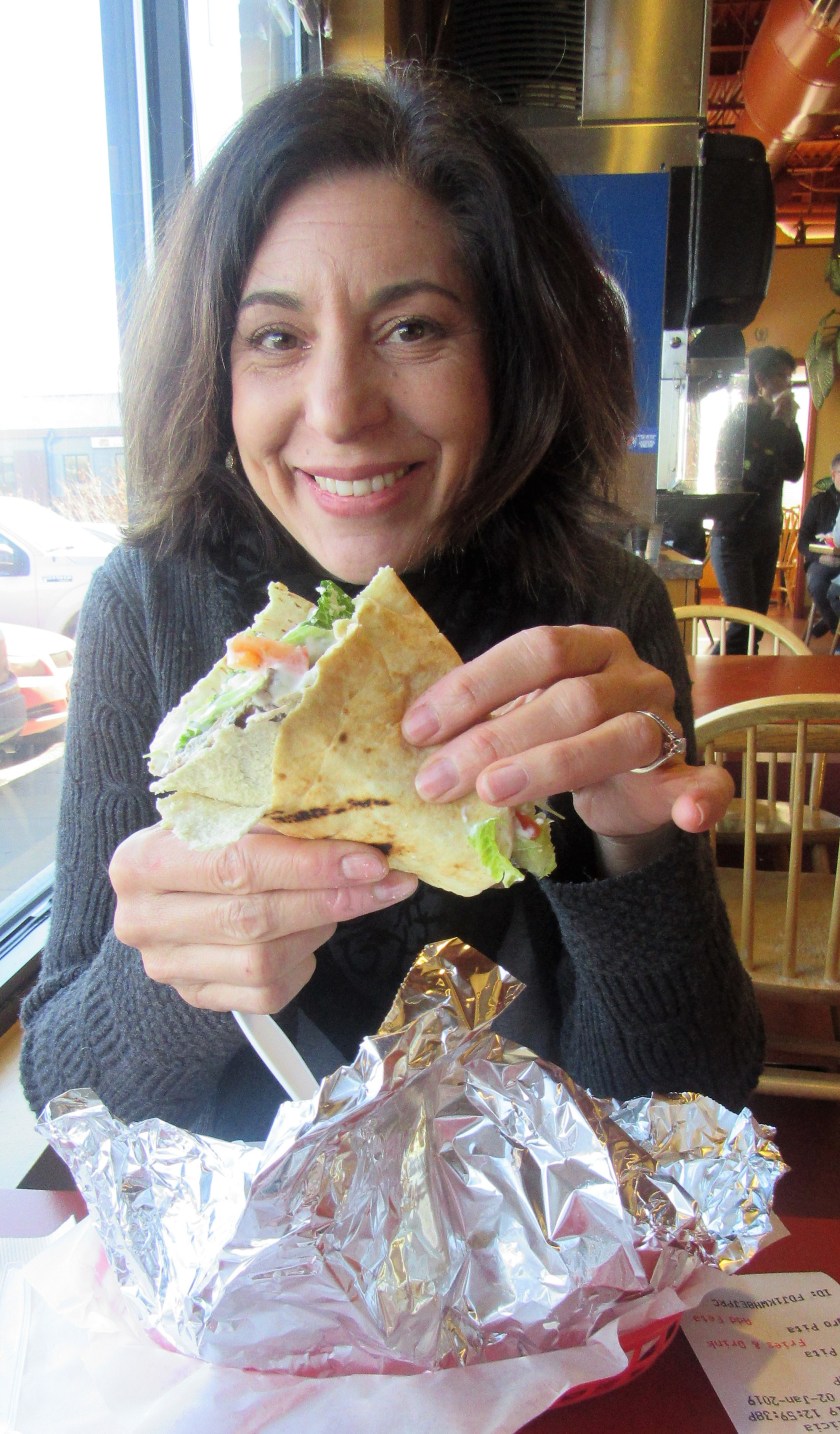
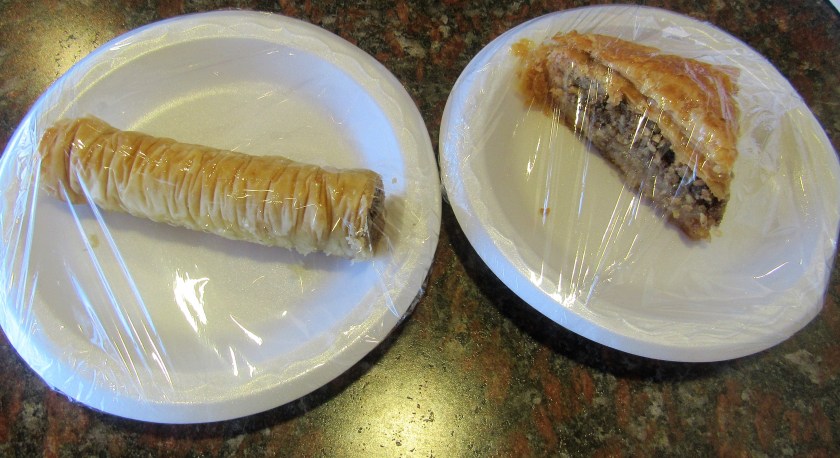
Years ago, I was introduced to a fabulous little family owned restaurant called Mumtaz,  located in Lafayette, Colorado.  I have been going there ever since, and it is most definitely one of my favorite restaurants around.  Mumtaz’ menu is all delicious Mediterranean food, with a Lebanese flair.  Everything is fresh and is made in house daily.   It is truly a family affiar, and everything is made with the most important ingredient that goes into any dish, LOVE.  The baklava is made fresh daily by Grandma, and is the best baklava I have ever tasted.  The owner and operator,  Hiam Jamell, or MO, as he prefers to go by,  is always at the helm, and is often on the grill cooking.  I do not get a chance to go to Mumtaz as often as I would like, however, every time I do get a chance to go, Mo is always there with a big friendly hello and a warm, welcoming smile.  All of the food at Mumtaz is fabulous, but my favorite is the gyro.  It is loaded with lots of fresh lettuce, tomatoes and tsaziki sauce, and a very generous amount of delicious gyro meat.  You can get it with or without feta cheese as well.  Aside from fantastic gyros, Mumtaz also offers homemade falafels, kefta, dolmas and mezza, among many other delectable dishes.

My dear friend Priscilla and I had a rare opportunity for a lunch get together yesterday, and I introduced her to the deliciousness of Mumtaz.  She too is now a fan, but then how could anyone not be.

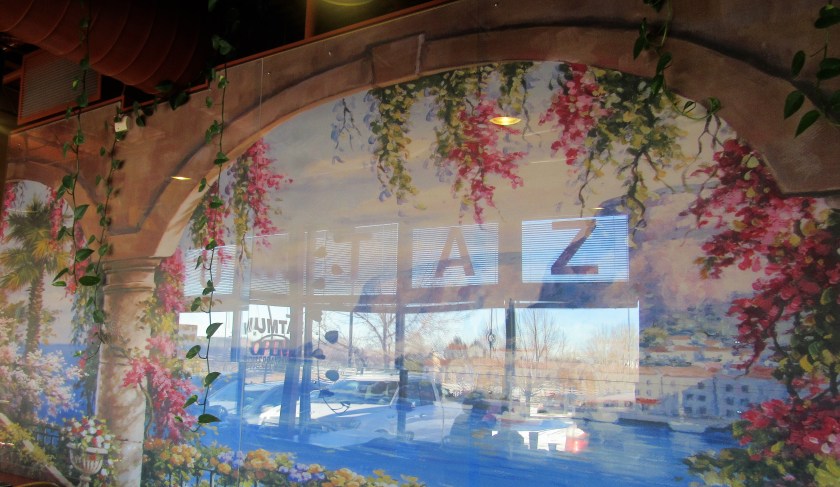
This beautiful mural makes you feel as though you are dining right on the Mediterranean Coast and takes you far, far away, even if only for a short little bit of time.

IMG_4889

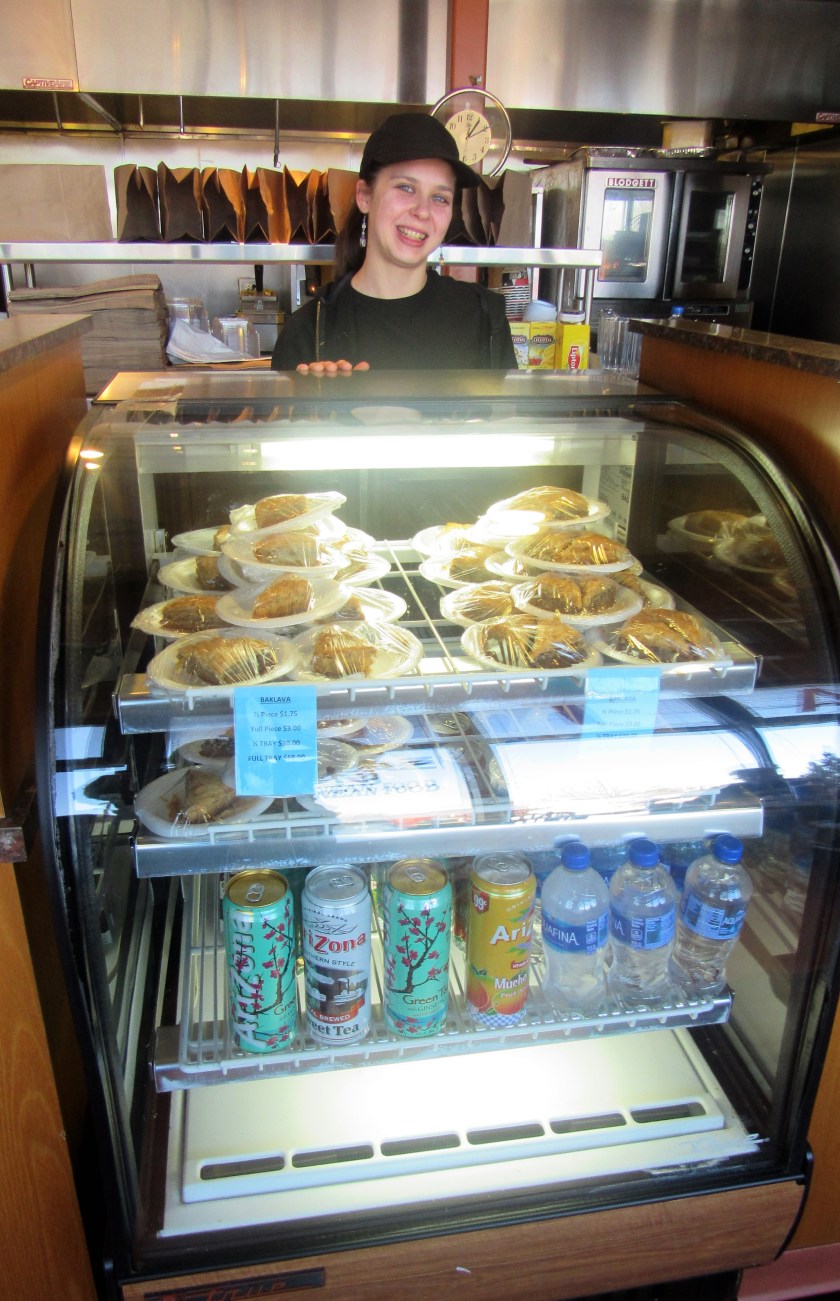
Felicia smiling in front of the dessert case, filled with the best baklava around.

IMG_4890

Making everything fresh and delicious.

IMG_4892

Enjoying the best gyro you can find.

IMG_4894


IMG_4897

Grandma’s baklava for dessert.

IMG_4891

As I have said many, many times, spending time with great friends and enjoying good food are the best things in life.  So enjoy!  Mangia!


*** Mumtaz is located at 588 N. US HWY 287, ste 100, Lafayette, CO.  You can contact them at (303) 926-1400 or check out their website at http://www.mumtazfood.com. 


The Price of Popularity

Hello out there.    This is by all means a good “problem” to have, and in no way am I complaining, however, “A Jeanne in the Kitchen” is quickly growing by leaps and bounds and I am getting overwhelmed.  Definitely, overwhelmed in a good way though.  With this growth spurt, it is becoming more and more challenging to keep up with all the e-mails and to catch up with all of you and your blogs.  So, please be patient with me.  I do my best to read as much as I can and to respond to as many of you as I can.  It’s just going to take me awhile to get through everything.  I have so many e-mails on a daily basis, that I am working my way from the bottom up in hopes of reading things on the FIFO, or first in, first out method.  Not only is “A Jeanne in the Kitchen” growing by leaps and bounds, but I have also taken on more aqua classes and I have been assigned more coaching shifts as well.  All of these are very good things, and I am always up to a challenge and do my best to rise to every challenge that presents itself.  Sometimes, it just takes a little more time than I expected or planned for though.  I guess all of these challenges are all part of  “the price of popularity”.  So please, please don’t stop sending me things, just know that I may not get back to you right away, unless it is something urgent and pressing.  It’s good that I like to be busy, and busy, I certainly am.  I have always said I do much better when busy then when I have idle time on my hands, but be careful what you ask for; you just may get it.  Thank you all for your support and your patience.  It is greatly appreciated.

20170930_162615

Babka with a Mediterranean Twist

Babka is a type of bread that is swirled and twisted, and is both dense and light at the same time, all in the same bite.  It is famous for it swirls of goodness that run through the bread loaf.  It’s origins are still a bit of a mystery, but it is a very popular type of bread all throughout Eastern Europe and areas with large Jewish populations and communities.  Some say it was originated in Poland or in the Ukraine, and others believe it came from Italy, as a “Russified” version of the Italian panetone bread.  Babka, also known as babcia, translates to mean little grandmother and this term is used in the Russian, Ukrainian, Eastern European and Yiddish languages.  Some say it is called “little grandmothers” because the pans it was first baked in were pleated and reminiscent of the pleats in an old woman’s skirt.  Others say it is called this because the older women or “little grandmothers” were the ones who most often made it.  Babka first came about in the early 1800’s when Jewish housewives would use the leftover scraps of challah and mixed it with either jam, cinnamon, almond paste or seeds and nuts and twisted them into the bread before baking it.   When the Jewish immigrants came to New York in the early 20th century, they started making it with chocolate as well.  By making it with chocolate, it supports the Italian theory of origin, because in the late 15th century, a lot of the Italian chocolatiers were Jewish.  Today, babka can be either sweet or savory, and is a delicious swirled and twisted bread to be enjoyed at anytime, as a compliment to the meal or served and eaten all on its own.

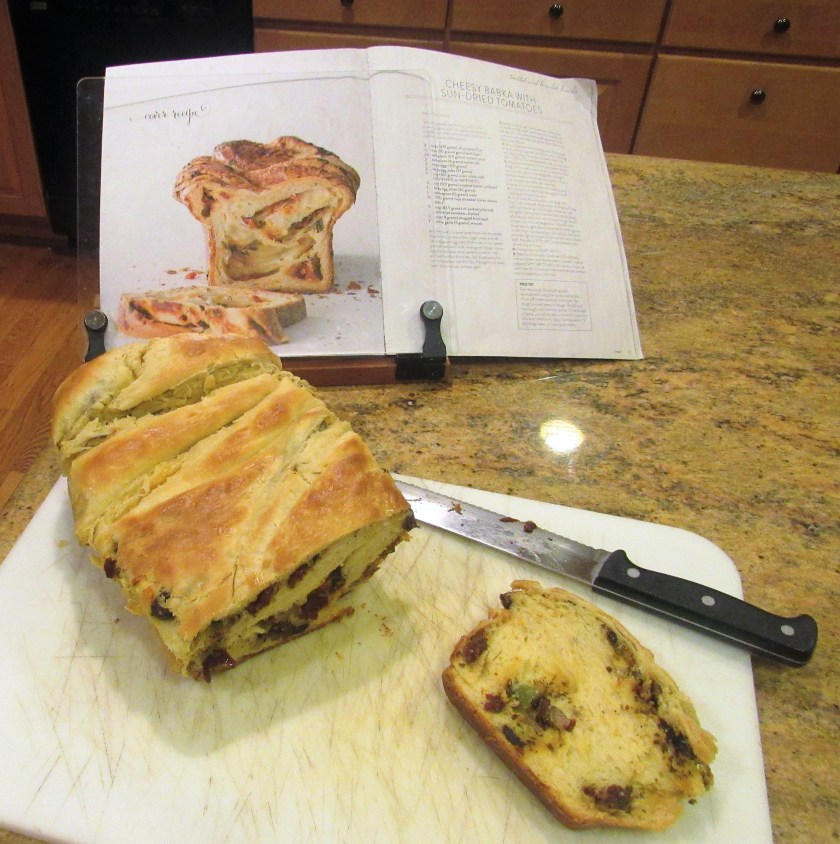
I made a Mediterreanean babka to go along with my black-eyed pea and ham soup for New Year’s Day. New Year’s Good Luck with Black-Eyed Peas and Ham Soup  This is definitely a bread I will be making again and again.  It is very time consuming to make, and is truly a labor of love, but definitely worth every minute and all the effort put into it.  Maybe it is called the “little grandmothers” because of all the love that goes into making it.

IMG_4887

Mediterranean Babka

3 cups flour

1/4 cup sugar

2 3/4 tsp yeast

2 tsp salt

3 large eggs

2 large egg yolks

2/3 cup warm milk

3/4 cup butter, softened (or olive oil if keeping parve)

1 large egg white

1 TBSP water

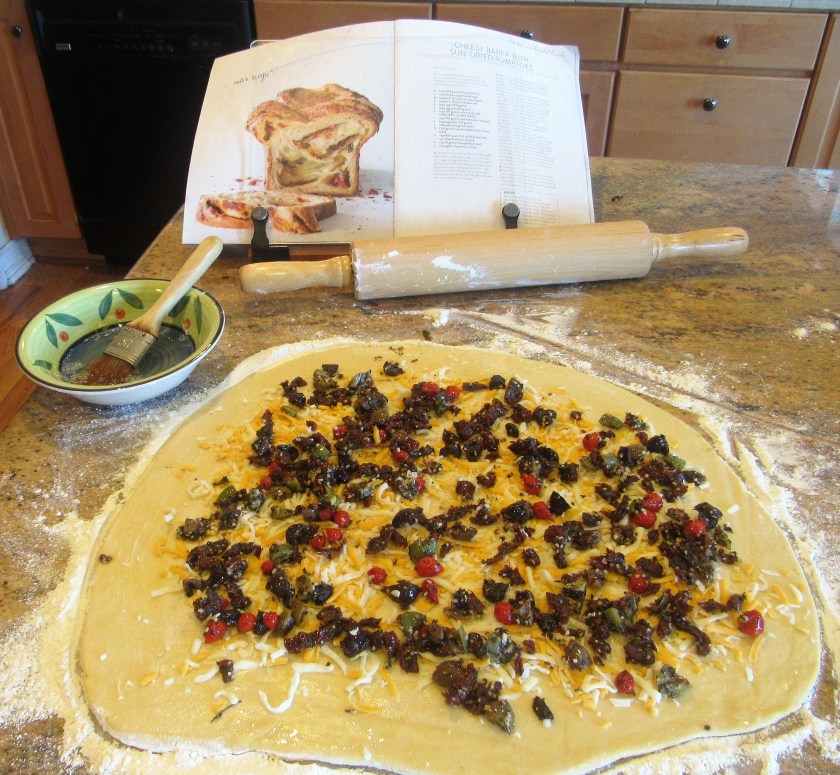
1 1/2 cups shredded Italian cheese

3/4 cup sun-dried tomatoes, chopped

3/4 cup of mixed olives, chopped rough and Spanish peppers (if you can find them)

1/3 cup fresh basil or 1/4 cup of dried basil

1 1/2 TBSP garlic


IMG_4859

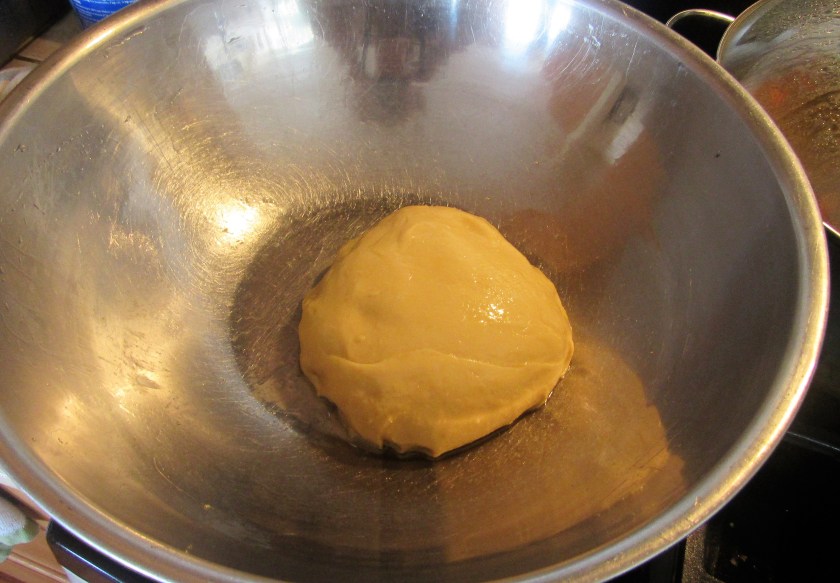
Mix together the flour, sugar, yeast and salt and combine well.  Then add the eggs, and egg yolks and mix everything together in a mixer with the paddle attachment at a low speed.  Slowly add the warmed milk and continue to mix until the dough comes together.  Then increase the speed of the mixer to high and continue to mix for about 6-8 minutes or until the dough becomes thin and starts to pull away from the center and stretches out.  This is known as the “window pane” test.

IMG_4863

Once the dough is at the window pane stage, switch to the dough hook and add the butter in 3 separate stages, making sure to blend it thoroughly at each stage.  Mix the dough until it becomes elastic and starts to form into a ball and pulls away from the sides of the mixer.

IMG_4865

When the dough has formed into a ball, place it in a large bowl that has been oiled down with olive oil.  Cover it and and set it in a warm place to let it rise.  It needs to double in size, so let it rise for about 1 1/2-2 hours.

IMG_4866

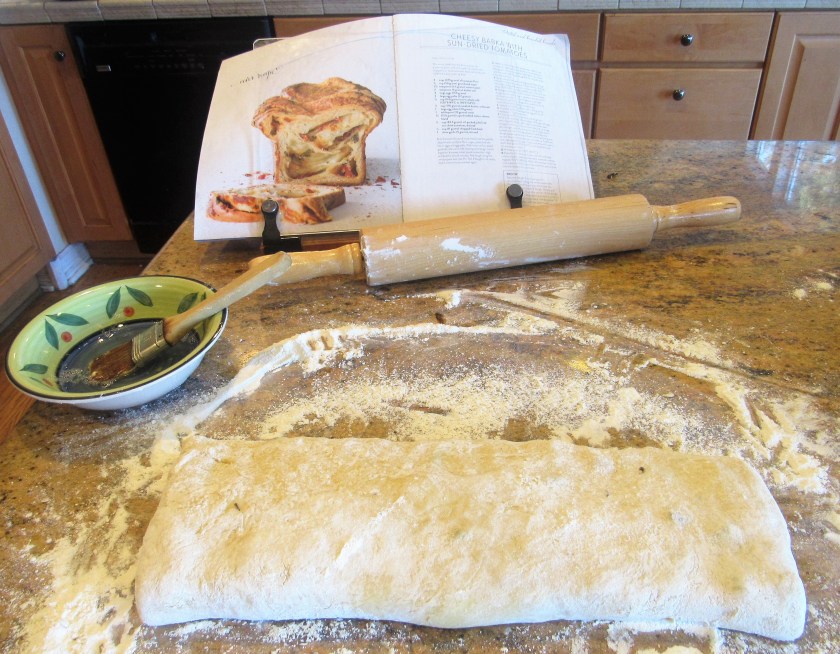
When the dough has risen and doubled in size, wrap it in plastic and let it chill in the refrigerator for at least 30 minutes.  You can also leave it overnight as well.  The dough is a very soft, very sticky dough.  After it has chilled, roll it out onto a heavily floured surface to about 16×12″ in size.  Make the egg wash with the egg white and 1 TBSP of water, and brush the edges of the dough.  Add your cheese and olive mixture.  Then fold over the edges and wrap to make the dough into a rectangle.

IMG_4872

IMG_4875

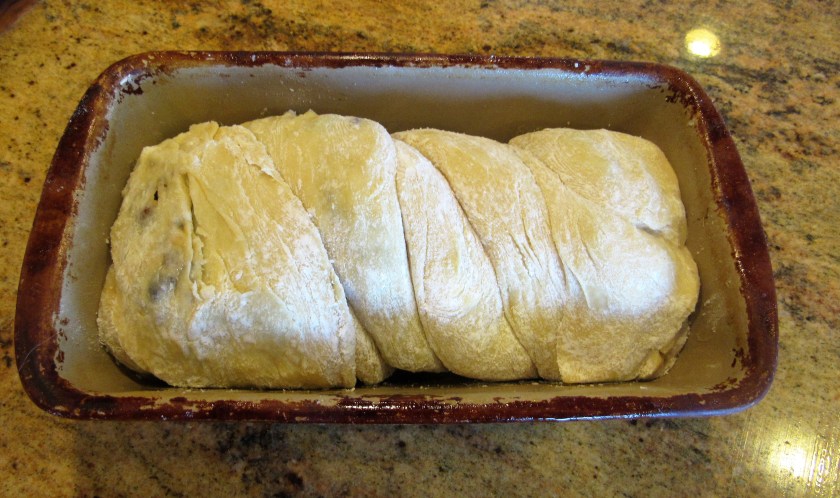
Gently twist the dough and fold it to make it fit into a loaf pan that has been sprayed with cooking oil.

IMG_4878

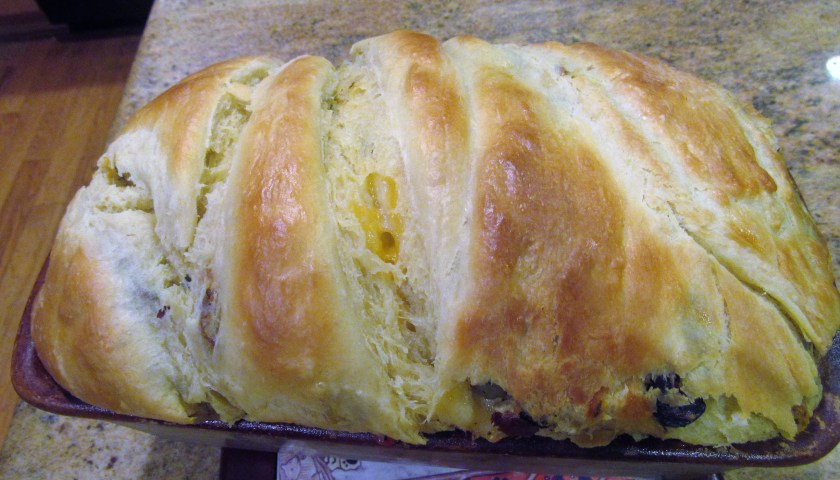
Once again, cover it and let it rise in a warm spot for about an hour, or until it again doubles in size.  Once is has risen for the second rise, preheat the oven to 350* F or 180* C and brush the top with the egg wash.  Bake for 20-30 minutes uncovered, then cover it with aluminum foil and continue to bake for about another 45-50 minutes.  Let it cool completely before cutting.  Let there be bread.

IMG_4880

IMG_4883

New Year’s Good Luck with Black-Eyed Peas and Ham Soup

Happy New Year Everyone.  WOW!!!!  It’s 2019 already.  I hope everyone enjoyed their New Year’s Eve festivities.  We are big hockey fans, and our team is the Colorado Avalanche, so that’s where we celebrated last night.  It would have been more of a celebration had the Avalanche won, but it was still fun, even though they lost 2-3 in over time.  After the game, there was an indoor firework display which was pretty cool too.  Then we came home and just barely made it to midnight before crashing and saying good-bye to 2018.

As many of know, I have both Southern and Australian roots.  My mother was from South East Texas and my father was from Melbourne, Australia, then they moved out to Southern California, where I am originally from.  Now, I live in Colorado, and have been here or 19 years.  Colorado is where I call home, even though there is no ocean anywhere near-by.  Because of my mixed roots, I try to honor the traditions from all of these places as much as possible.  In the south, it is a New Year’s Tradition to eat black-eyed peas on New Year’s Day.  It is supposed to bring good luck and prosperity.  So, of course, I would like both and have to keep up with traditions.  It is not worth the risk of either bad luck or lack of prosperity to not follow the time-honored traditions of the South. This New Year’s Day, we are dining on black-eyed pea and ham soup with some Mediterranean Babka.  Cooking From A to Z.

IMG_4870

Black-Eyed Pea Soup with Ham

IMG_4844

1-1 1/2 lbs cooked ham, cubed

1 (1 lb bag of dried) black eyed-peas, or 3 cans

3 carrots, peeled and diced small

3 celery ribs, diced small

1 onion, diced small

1 TBSP garlic

8-10 cups of broth

1/2 cup tomatoes, halved

salt & pepper to taste

1 TBSP dried oregano

2 tsp of each dried thyme and dried marjoram

1-1 1/2 tsp allspice

olive oil


Cook the black-eyed peas according to the package directions.  I did a quick soak, then brought them to a boil in 8 cups of water and let them boil for 3 minutes.  After the 3 minute boil, I turned the heat off and let them rest for about 1-2 hours.

IMG_4845

The ham I used was the left over ham from Christmas Eve.  Happy Holidays .  I made my own ham stock from the bone and used the meat that was still on the bone, as well as the rest of the meat we had already separated from the bone earlier.  You can also use either beef, chicken or vegetable stock too.

IMG_4856

As the stock and the beans are cooking, dice your vegetables and ham.  Saute the vegetables in olive oil until the onions are translucent.

IMG_4846

IMG_4848

When the beans and vegetables are done, add the ham and the cooked beans to the vegetables and the seasonings into a large soup pot and mix together well.  Add the stock, bring to a boil, then reduce the heat and simmer for at least an hour or until the beans are tender, stirring occasionally.

IMG_4854

I added the tomatoes right at the end, just before serving.

IMG_4857

Let’s ring in the New Year right, and bring on the good luck and prosperity.  The soup is on!

IMG_4868


Happy New Year

Hey There Everyone.  The kitchen was closed for a couple of days.  We were out of town for our nephew’s wedding.  But we’re back, and the kitchen is once again open for business.

2018 is in it’s final hours, and soon it will be a whole new year filled with new possibilities and opportunities.   Let’s make the most of it!  Let’s make 2019 a GREAT year!  I wish everyone a Happy, Healthy New Year.

featured-image-new-years-eve-cruise

shutterstock_532280209.0