A Meal from the Middle East

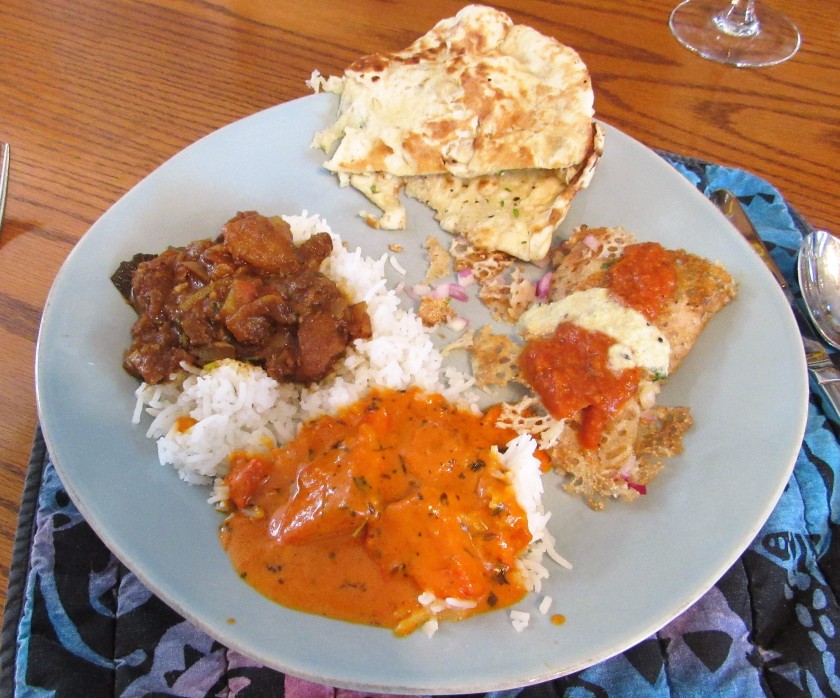
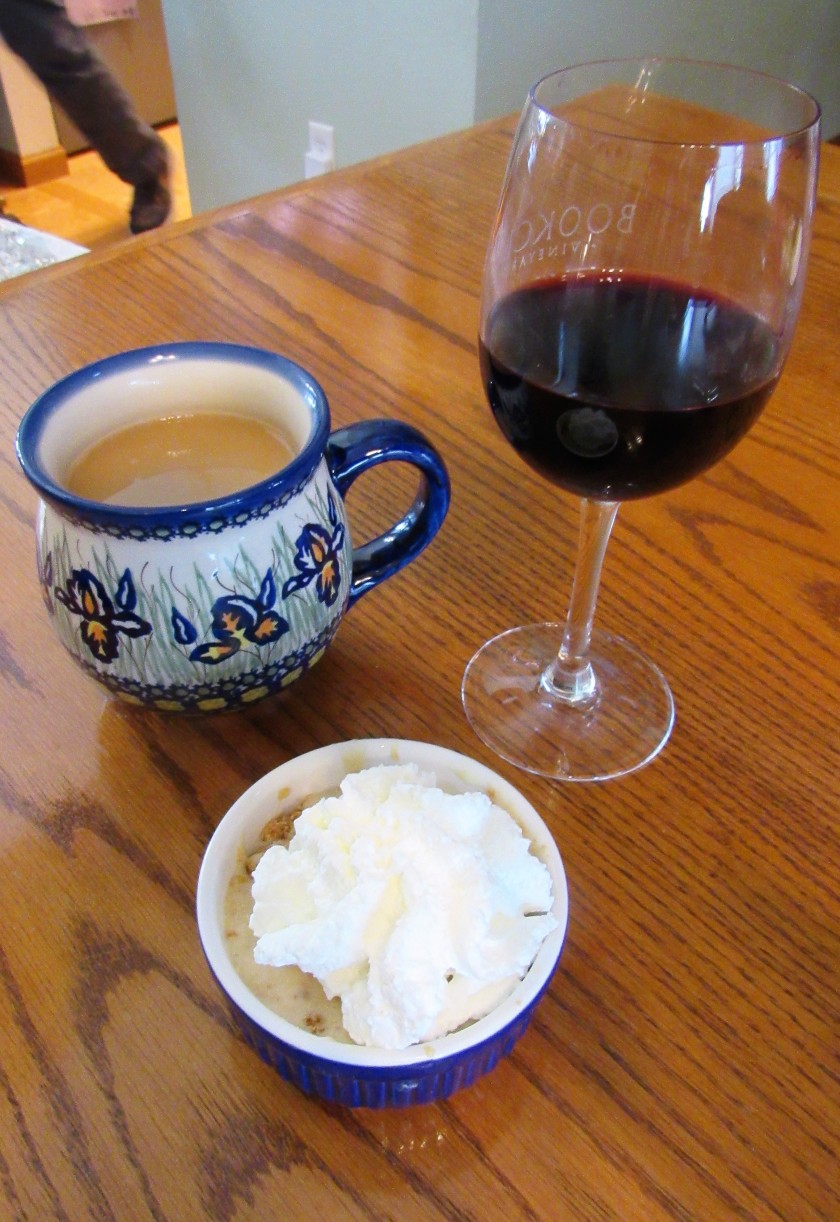
When I think of Middle Eastern food, I have to admit, shrimp is not the first thing that comes to mind.  I think more of lamb, hummus, baba ganoush, falafels or baklava than I do of shrimp and seafood.   But there are a lot of Middle Eastern seafood dishes as well, especially in the countries that border the seas.  I made a delicious Middle Eastern recipe with prawns that originated in the fishing villages of Beirut, Lebanon.  It was made with very simple, basic ingredients that I keep on hand all the time.  If I can, when I make ethnic dishes, I like the whole meal to be as ethnic as possible.  This dish was no exception.  I made sauteed prawns with lime and cilantro that I served over couscous with some roasted vegetables seasoned with typical Middle Eastern spices, warmed pita bread and hummus.  I finished it all with one of my favorite chardonnays that had hints of apples and melon, which paired very nicely with the warm aromatic spices in the vegetables and the fresh lime and cilantro of the prawns.

IMG_9665

Sauteed Prawns with Lime and Cilantro

IMG_9657

1 1/2 lbs large prawns, peeled and deveined

1 1/2 TBSP garlic

1/4 red pepper, diced fine

3 TBSP olive oil

2-3 TBSP lime juice

2 tsp minced lime peel

1-2 tsp black pepper

salt to taste – easy on the salt though, because the lime juice will add a little  “saltiness” to the dish.

1 bunch cilantro, chopped rough


In a hot skillet, saute the garlic, lime peel and red pepper in olive oil for about 1-2 minutes, then add the shrimp and continue to cook until the shrimp is completely cooked.

IMG_9658

IMG_9659

When the shrimp is cooked, add the lime juice and the cilantro.  Mix everything together thoroughly and serve over cooked couscous, rice or pasta.

IMG_9664

This is one of many, many variations of this simple and delicious recipe.  As with most recipes, there is not just one way to make it, but many.  Make them way you like them.

IMG_9666


Rays of Sunshine

More sunshine has come my way, in the form of another Sunshine Blogger Award nomination.  This time it comes from my friends over at Brother’s Campfire.  Thank you, thank you, thank you.  I am honored yet again to be nominated for this award.  It is always a big honor, because it tells me that in my own small way, I am making a difference and bringing a little sunshine to others as well through my blog, “A Jeanne in the Kitchen”.

Image result for the sunshine blogger award

As for the Sunshine Blogger Award, it’s an award given by bloggers to other bloggers they find creative, talented and entertaining. Generally, it’s a great way of opening yourself to the community as well as to your readers, since you need to answer 11 questions from the blogger that nominated you. Moreover, you then write your own 11 creative questions and nominate up to 11 additional bloggers that need to do the same.

The questions that were asked of me:

  1.  How many days would you last in solitary confinement? How would you pass the time?

I don’t think this would really be much of an issue for me.  Even though I am by nature very social and gregarious, I am also an only child, and can easily find ways to entertain myself and pass the time.

2.  What is the strangest thing you believed as a child?

When I was really young, I did not understand how television worked, and I thought that the actors were actually somehow inside the TV.

3.  Are you more inclined to “build your own empire” or unleash the potential of others?

Hmmmmmm.  I think a little of both.

4.  In what area of your life are you immature?

I can be very naive at times.  Some also say because I am blunt, that I lack diplomacy.  Those both might be considered immature to some.

5.  When do you find yourself singing?

I used to sing all the time, but I don’t so much any more.  To many years of teaching in pools has ruined my voice.

6.  What are you willing to die for?

I am willing to lay down my life fighting for things I strongly believe in, like my freedoms or my country, or my family and loved ones.

7.  What job would you be terrible at?

Any job that would keep me stuck doing the same old mundane things day in and day out.  I constantly need to learn and grow in order to thrive and prosper.

8.  What kind of art do you enjoy most?

Art is subjective.  It’s hard to say what will inspire me or speak to me, or when.

9.  What is special to you about where you grew up?

I grew up in a community where we all knew our neighbors, and we would all help each other out.  This is lacking in society today.

10.  What small things make your day better?

You said it.  It is the small things.  Coming home to all of my fur babies, lovingly greeting me at the door; children playing or laughing; seeing people truly in love and happy.

11.  If all jobs had the same pay and hours, what job would you like to have?

These are two completely different and separate things.  If all jobs had the same hours and pay, that would not be right or just, and would be very boring and a lot less productive.  I say follow your heart and do the things you love, and the money will come.


As I have said many times, there are so many wonderful, fun, creative and provocative blogs out there, which makes it very difficult for me to narrow it down to select those who stand out.  Rather than nominating a whole bunch of bloggers, I will stick to just nominating a few.  They are:

Rozina from

Catherine from
and
My questions to all of you are:
1.  What is your favorite holiday and why?
2.  Who would you want to have dinner with and why?  It could be anyone, dead or alive, real of fictional.
3.  What do you do when not blogging?
4.  Do you like animals?
5.  Do you have any pets?
6.  If you do have pets, are they just pets, or are they part of the family?
7.  If time travel was real, would you use it to travel in either the past or the future, or both?
8.  Where is your favorite place to visit?
9.  What is your favorite type of food?
10.  What was your favorite subject to study in school?
11.  Would you want to be famous?
Best of luck to all, and to all of you, please keep up all the good work and your great blogs.  I think by sharing our thoughts and our worlds we are helping to bring the world together.  In our own ways, we all bring a little sunshine to others.
Image result for the sunshine blogger award


The Tradition Continues

My friend Priscilla and I have been making our caramels together for quite a few years now.   It is become our annual tradition.  Making Caramels  Our friends and family from around the world have learned of our tradition, and have sampled the goods, so every year our request list grows by leaps and bounds.  It is getting harder and harder to meat those demands, but we keep on trying.    Awwwww!  The price of fame I guess.  🙂  Yesterday was our designated caramel day.  As usual, we made two double batches each.  One is the plain caramels and the other is chocolate pecan.  It only takes about 45 minutes to actually make one batch of the caramels.  It is the cutting and wrapping them all individually that is so time consuming.  We usually stand side by side stirring our batches on the stove, talking and laughing the whole time.

Our caramels are at different stages at this point.  Priscilla’s has almost reached it’s first boiling point, and I am still melting the butter in mine.

IMG_9641

Priscilla is on batch #2, the chocolate pecan batch.

IMG_9645

And now, they cool.  They have to cool completely for at least about 4 hours before they are ready to cut.

IMG_9644

The cutting and wrapping process has begun.  I just finished cutting and wrapping all the chocolate pecan caramels.  I will start the process all over again tomorrow with the plain caramels.  Every now and then, there are a couple of strays that randomly need to be tested, you know, for quality control, just to make sure we haven’t lost our touch.  This year, so far, they are even more delicious than last year, so we’re still good.

IMG_9646


Quick and Easy Gyros

Gyros (pronounced yeer-ros) are delicious sandwiches that are made with finely sliced meat, topped with cucumbers, tomatoes, raw red onions, sliced very thin and tzatziki sauce all wrapped together in warmed pita bread.  The origins of this delicious sandwich are up for debate.  Are they Greek?  Are they Turkish, where they are known as doners? Or did they come from other parts of the Middle East, where they are known as shawarma?  Regardless of where they come from, they are all very similar and are always very tasty.  Some say they date back as far as the days of Alexander the Great.  Others say they were invented in Turkey and then migrated to other parts of the Mediterranean.  Then there are those that claim they are Greek- American and were first introduced in either the 18th or 19th century.  Bottom line, no one really knows for sure where these wonderful, meaty sandwiches come from or how long they have been around.  The only thing we can agree on is how good they taste.

The word gyro, along with the words doner and shawarma, all mean to turn or turning.  They get their names because the meat used is usually thinly sliced meat that is carved from meat that is on a rotating spit.  The meat can be lamb, beef, pork, chicken, or a combination of any of those, depending on where you find them. In Greece, gyros are served with tzatziki sauce, but in other parts of the Middle east, they are not.  Tzatziki sauce is a yogurt sauce made with garlic, cucumbers, olive oil, and lemon juice, and sometimes with dill, mint or parsley.  It is always served cold, often as an appetizer or a starter.

Most Americans think McDonald’s was the one of the originators of fast food, but the Greeks would strongly disagree.  The gyro was actually one of the first global fast foods to be found, and is believed to have been eaten by the ancient Greeks as Greek street food.

I made my gyros from my leftover lamb.  I added some of my leftover lemon sauce to my yogurt for my tzatziki sauce.  Roasted Lamb with a Mustard Herb Crust  I also combined my lentils with the spinach and mushrooms and some white rice, to serve as a side dish.  Oh, the Queen is so proud of how I am always recreating from leftovers.  🙂

IMG_9636

Just heating up the lamb and the pitas.

IMG_9633

All you need for a quick, simple tzatziki sauce.  My marinade that I used for my lamb already had all the other ingredients necessary for tzatziki.  It was made with lemon juice, olive oil, garlic and herbs, along with Dijon mustard.  I added about 2 TBSP of my leftover sauce to the yogurt to make the perfect tzatziki sauce for my gyros.

IMG_9634

It’s all wrapped up and ready to eat.  D-E-L-I-C-I-O-U-S!  I LOVE gyros.  I think they are among my favorite Greek foods.

IMG_9639


Stir-Fry Pork and Vegetables

We all have heard of and most likely eaten many stir-fried meals.  We also all know, a stir-fry dish is an Asian way of cooking that was created in China, many centuries ago, and then traveled to other parts of Asia, and eventually to many other parts of the world.  Stir-frying is a method of cooking foods with a small amount of very hot oil, traditionally cooked in a wok.  You can use just about any kind of meat and/or vegetables in a stir-fry.  Stir-fry is just the name used to describe the cooking method, not necessarily the ingredients used.  The term “stir-fry”, however was never used to describe this method of cooking until 1945, when the Chinese cookbook author Buwei Yang Chao coined the term in his cookbook, How to Cook and Eat in Chinese.    There are many reasons why this is a preferred method of cooking. It preserves the nutrition and the freshness of the foods and ingredients used; it needs very little oil; it saves time; and the foods have a very nice presentation.  

A wok is a type of cooking pan that is rounded at the bottom and has high sides which allows the food to be seared at a very hot temperature while it is cooking, without using a lot of cooking oil.   Today, many people, myself included, use a skillet rather than a wok to achieve the same results.  I have a wok, but I actually prefer using my skillet.  Sometimes, using a non-stick skillet instead of a wok is actually better.  It is usually healthier because you use even less oil than you would by using a wok, by about 1/2.  A non-stick skillet can actually cook the food at a higher temperature too.  Most woks can withstand temperatures of about 400* F, whereas, the non-stick skillets can withstand temperatures of over 500* F.  Otherwise, there is not much difference between cooking your stir-fry in a wok vs. a skillet.  It all boils down to your personal preference.


IMG_9631

Pork Stir-Fry with Vegetable

IMG_9621

1/2 lbs pork, cut into small, thin strips

1-1 1/2 cups fresh green beans, cut into 1″ pieces

1 cup sliced mushrooms

1/2 onion, red or yellow, sliced very thin

1/2 bell pepper, red, yellow or orange, or a combination thereof, sliced into thin strips

1/2 jalapeno, diced very fine

1 1/2 TBSP garlic

1 1/2 TBSP ginger

2 cups orange juice

1/2 cup soy sauce

2 TBSP honey

2 tsp Chinese 5 Spices

1/2 cup corn starch

2 TBSP olive oil

1 TBSP peanut oil


In either a very hot wok or skillet, heat the oil and cook the vegetables, the garlic and the ginger, stirring constantly until they are cooked, but still with a bit of a snap to them.  Remove them from the pan and set aside.

IMG_9622

IMG_9623

While the vegetables are cooking, coat the pork strips with the cornstarch and seasonings, making sure to completely coat the meat.  Once the vegetables have been removed from the cooking pan, add the pork to the hot oil, and cook until the meat has a light crust and is completely browned.

IMG_9624

IMG_9625

IMG_9626

To make the sauce, combine the orange juice, honey, soy sauce and red pepper flakes together.

IMG_9627

Put the vegetables back into the hot skillet, and add the sauce.  Once everything is combined well, add the meat back into the mixture.  Bring the mixture to a boil, then reduce to a simmer and continue to cook for about 5-7 minutes.

IMG_9628

Serve immediately over cooked rice.  Top with green onions, cut in Asian style or at an angle, if you choose.  I served this with some potsickers (store bought, I know) and a dry white wine.  The dry white wine will go very nicely with the spice of the dish, although it is a mild spice.

IMG_9632


Technical Difficulties Today

I have been trying to make my post today, but for some reason, my computer is not accepting my pictures from my camera disc today.  I have no idea what is going on, since everything was working just fine yesterday.  So I thought I would do my back-up plan, and feature a new guest chef, but I am having problems downloading her recipes and her pictures too.  Hang tight.  I will soon have all these technical difficulties worked out.  Thank you for your patience.

20170930_162615

The Hunters’ Chicken

Back in the Renaissance period of Italy, during the 14th-16th centuries, there was a lot of wild game and a lot of hunters.  Hunting wild game was one of the main ways people ate in those times.  Cacciatore was originally known as an Italian hunters’ stew, and was most often made with rabbit or other wild game the hunters caught for the day.  The word cacciatore is Italian for hunter.   Today, cacciatore is mostly made with braised chicken instead of rabbit or wild game and it is still known as “hunters’ chicken” in some parts of Italy.  The main ingredients for the stew have not changed so much over the centuries, with the exception of chicken being the primary meat used for the stew instead of game.  The other ingredients include either tomatoes and/or a tomato sauce, vegetables and wine.  The vegetables, as with many regional dishes, vary depending on the region.  In Northern Italy, white wine is often used and in Southern Italy, red wine is usually the wine choice for the sauce.  The dish is most often served over pasta with some kind of a rustic bread, and either red or white wine depending on the wine you use for the sauce.  I made a traditional Southern Italian cacciatore with braised chicken, served in traditional style.  It was definitely delicious!


IMG_9619

Chicken Cacciatore

IMG_9611

1-2 lbs chicken breasts

1 cup sliced mushrooms

1 zucchini, sliced

1 crookneck (yellow squash), sliced

1/2 bell pepper, any color

1 1/2 TBSP garlic

1-2 cups tomatoes, medium dice

olive oil

2 cups tomato or marinara sauce

salt & pepper to taste

1/2 cup flour

1 tsp each dried oregano, basil, thyme, marjoram – 2 tsp each if using fresh herbs

1 cup red or white wine

cooked pasta – fettuccine or linguine is usually best


Saute all the vegetables in hot olive oil, seasoning as needed.  Once the vegetables are cooked, remove them and set them aside.

IMG_9612

While the vegetables are cooking, mix the flour, salt and pepper together, then dip the chicken in the mixture.  Lightly coat the chicken all around.

IMG_9613

Pan-fry the chicken in the same olive oil as the vegetables, adding more if necessary.   Brown the chicken completely, then remove it once it is cooked.

IMG_9614

While the pan is still hot, carefully add the wine, and scrape the skillet to make sure to get all the droppings.

IMG_9615

IMG_9616

After the steam has dissipated, re-add both the vegetables, the tomatoes, the sauce and the herbs.  Mix everything together well, and then add the chicken again.  Adjust the seasoning as necessary.  Bring to a boil, then reduce the heat to a simmer, and continue to cook for about 10 minutes, stirring frequently.  Once the chicken and vegetables are completely cooked spoon it over pasta sand serve it with your favorite bread and wine.  Delicisimo!

IMG_9618

IMG_9620

Many Swimmers are Veterans Too

Once again, a very heartfelt thank you to all our Veterans out there.  Veterans are in every part of our lives, and do all the same things we do and enjoy.  Being a swimmer and a swim coach myself, I just had to add this tribute too.

74607709_10221443983234365_7121492811165204480_n

Roasted Lamb with a Mustard Herb Crust

Lamb is not for everyone.  It is definitely an acquired taste.  If you like it, you love it, but if you have not acquired a taste for lamb, you won’t like it, no matter how it is is prepared.  I love lamb.  Maybe eating lamb is just part of my Australian heritage.  For me, the best way to eat it is nice and juicy, cooked to a perfect medium rare, leaning more towards the rare side.  Lamb, like many other meats, is very versatile, and can be prepared in many, tasty and delicious ways.  Often times, you can substitute lamb for beef in a lot of recipes, which adds a bit more variety and versatility.

Here in the United States, eating lamb is not nearly as popular as it is in many other parts of the world.  We refer to all lamb meat as just “lamb”.  In other parts of the world, where lamb is a staple meat that is part of the regular diet, there is also mutton, which is meat from the older, more adult sheep, where lamb is the term used for the younger, more juvenile sheep.  Lamb meat once was a term that meant the flesh of a baby sheep that had not yet eaten grass, or that it was young enough that it was growing entirely from the ewe’s milk. Meat from such lambs are almost white when cooked. Once a lamb starts to eat grass the cooked flesh is darker and there is more flavor to the meat.  Lamb meat is often considered to be “gamey” like a lot of other meats, such as buffalo or bison, venison or elk.   The terms “gaminess” or “gamey” refer to the strong, tangy flavor and odor of some meats, particularly meats that are wild or livestock that is fed on wild grasses and foods, or animals that have abnormal dieting patterns.  Most domestic livestock, at least here in the United States, is fed a diet of predominantly hay and other dried foods, that give the meat a milder, more even taste.  Lamb, coming from the younger sheep, is a lot milder in taste than the meat that comes from mutton, which tends to be more gamey.  If the strong gamey flavors are a bit much for your palette, cooking the meat with garlic and/or lemon juice, or something else acidic, will help eliminate the gamey characteristics.  Cutting off a lot of the fat will also help eliminate the gamey qualities of meats.  Soaking the meat in yogurt will help too, due to the acidity of the yogurt.

It was another cold night last night, with a hint of snow, making it perfect weather to have the oven on to roast the lamb and the vegetables.  It was definitely good comfort food that helped warm us up, as well as the house.  This was a fairly simple recipe, made with a few basic ingredients and herbs.

IMG_9609


Roasted Lamb with Mustard-Herb Crust

IMG_9602

2-3 lbs of lamb roast, trim most of the excess fat off

2 TBSP Dijon mustard

3 TBSP olive oil

1 TBSP lemon juice

2 tsp each, fresh rosemary, thyme, and sage, chopped fine

1 TBSP garlic

salt and pepper

3/4 cup dry bread crumbs


Pat the meat dry with a paper towel, then generously rub salt and pepper over the entire lamb and sear for about 4 minutes per side in a HOT skillet, with both butter and olive oil.  You want the meat to be completely browned all over.

IMG_9604

Preheat the oven to 350 * F or 180* C  or 325* F if using a convection oven.

While the meat is cooking, make the mustard-herb sauce by mixing all the herbs, mustard, lemon juice and olive oil together, and combining everything together well.  Once the meat is cooked, brush the meat with the mustard sauce, applying it generously all over the lamb.  Save the left over sauce as a topping for the finished lamb.

IMG_9606

Then coat the lamb with the breadcrumbs, making sure to gently press them into the meat.

IMG_9607

Roast the lamb for at least 20-30 minutes if you like it rare to medium rare, or when the internal temperature reaches 125-130 degrees.   Cook for longer if you prefer the lamb to be medium rare to medium or when the internal temperature reaches 135-140 degrees.  I would not recommend cooking the lamb much beyond this temperature, at the risk of it becoming tough and dry.  Once the lamb has been removed from the oven, let it cool for about 5-10 minutes before slicing and serving.

IMG_9608

Since I had the oven on for the lamb, I roasted my vegetables as well.  We had roasted Brussels sprouts with pumpkin, garlic, shallots, and pecans, along with mashed sweet potatoes.  I used some of the leftover mustard-herb sauce as my topping for the lamb, and served it all with a bold, velvety red blend.  MMMMMM!  It was definitely comfort food and it was definitely delicious.

IMG_9610


To the Veterans, a Heartfelt Thank You

To all the Veterans who served and sacrificed, I wish you all a very heartfelt thank you.    On the 11th day of the 11th month, at the 11th hour, thanks to all the sacrifices you made, we are free.

In Belgium, the In Flanders Fields Museum in Ypres, named after the poem and devoted to the First World War, is situated in one of Flanders’ largest tourist areas.  “In Flanders Fields” is a poem written by John McCrae during the first World War.

The poem describes poppies blooming between gravestones. Poppies are considered the battlefield flower, because they are the first to grow back after war pockmarks the landscape.  The war created prime conditions for poppies to flourish in Flanders and north-west France. Continual bombardment disturbed the soil and brought the seeds to the surface.  Its powerful use of the symbol of the poppies blooming from the churned earth led to the tradition, to this day, of the poppy as a symbol of remembrance for those killed in service. By 1917, “In Flanders Fields” was known throughout the English-speaking world.  Flanders Fields, the name of World War I battlefields in the medieval County of Flanders, which spans southern Belgium and north-west France. Flanders Field American Cemetery and Memorial, a World War I cemetery on the southeast edge of the town of Waregem, Belgium.


In Flanders Fields

In Flanders fields the poppies blow
Between the crosses, row on row,
    That mark our place; and in the sky
    The larks, still bravely singing, fly
Scarce heard amid the guns below.
We are the Dead. Short days ago
We lived, felt dawn, saw sunset glow,
    Loved and were loved, and now we lie,
        In Flanders fields.
Take up our quarrel with the foe:
To you from failing hands we throw
    The torch; be yours to hold it high.
    If ye break faith with us who die
We shall not sleep, though poppies grow
        In Flanders fields.
I painted these pictures a while ago and thought they were perfect for today.
IMG_9600
IMG_9599
As many of you know, my dad was originally from Melbourne, Australia.  Many of his relatives fought in WWI, and died in the fierce battles of Gallipoli.  The Gallipoli campaign, also known as the Dardanelles campaign, the Battle of Gallipoli or the Battle of Çanakkale (TurkishÇanakkale Savaşı).  It was a campaign of the First World War that took place on the Gallipoli peninsula (Gelibolu in modern Turkey), from 17 February 1915 to 9 January 1916.  The campaign is often considered to be the beginning of Australian and New Zealand national consciousness; 25 April, the anniversary of the landings, is known as ANZAC Day, the most significant commemoration of military casualties and veterans in the two countries, surpassing Remembrance Day (Armistice Day).  My dad himself ran away at the age of 14, lied about his age and fought in the Australian Army in the battles of North Africa during WWII.  He was an ANZAC.  The ANZACS were members of the Australian and New Zealand Army Corps.  One of his proudest moments, one of the last times he went back home to Australia, was to march in the ANZAC Parade.  When he emigrated to the United States, shortly after WWII, his life was in the Merchant Marines, where he also bravely fought in 2 additional wars.  He did military sea lift command for both Korea and Vietnam.  Thank you Daddy, and to all the other brave men and women who fought and served.  You will NEVER be forgotten.
My daddy, John Bailey Jones, circa 1939, before heading off to North Africa.
Image may contain: one or more people, people standing, hat and outdoor