Bierocks and Soup

Larry is 100% German, from a very German part of the country, Hays, KS.  Bierocks are very popular in Hays, and especially Ollie’s bierocks (Larry’s mom).  Bierocks, also known as runzas, are meat pockets made with ground beef and cabbage, wrapped in dough and then baked.  A Little Taste of Germany  Ollie used to make them for the school and then has sold them to her loyal customers for years and years.  She doesn’t make them so much anymore, because it is to hard for her to make them now.  She is, after all, 90 now.  She does still make bierocks for the family on special occasions and for their birthdays though.   When she came into town for Randy & Roger’s party, More Festive Celebrations  she brought a batch of fresh bierocks for the birthday boy.  Growing up, a typical meal for Larry and his family was bierocks and soup.  We had that meal the other day.  Ollie made the bierocks and I made the soup.

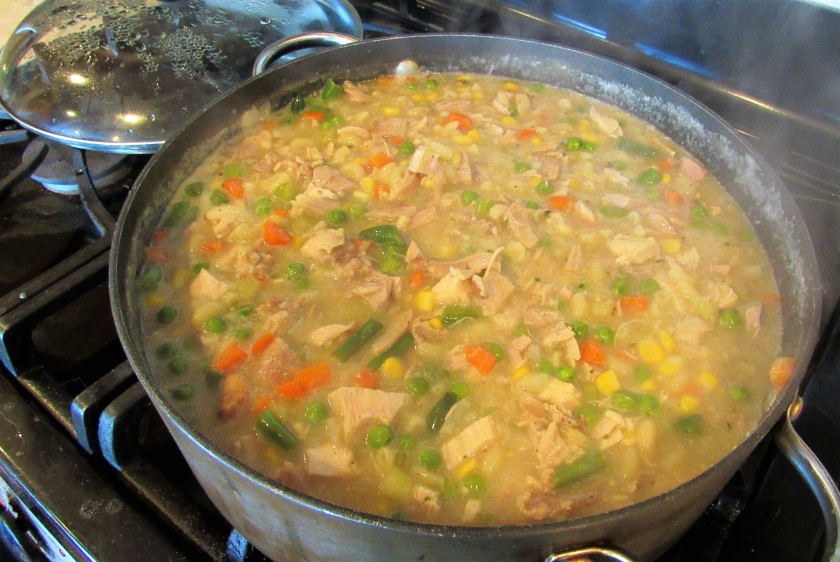
After Thanksgiving, I froze most of our turkey, since it was just the two of us eating it then.  I still have quite a bit left in my freezer, and I am pulling it out a little at a time.  But I did pull out enough to make a big pot of turkey and vegetable soup.
IMG_9909

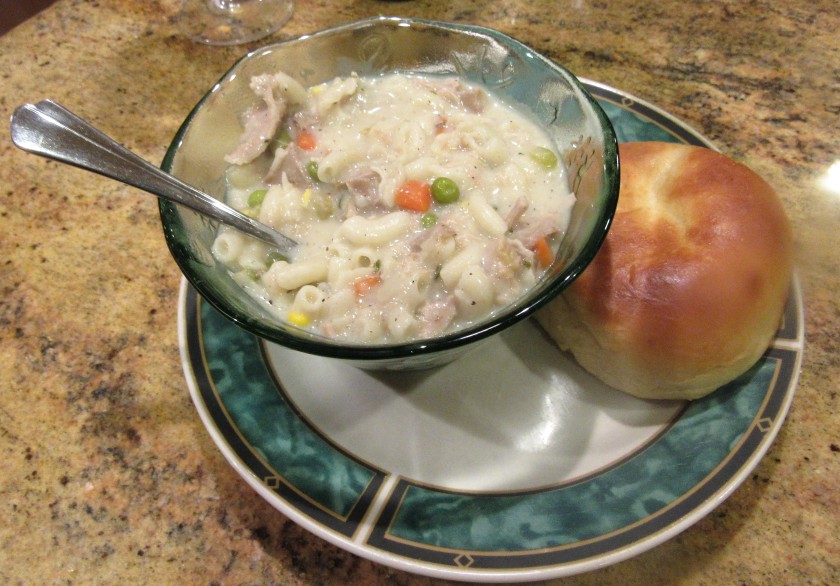
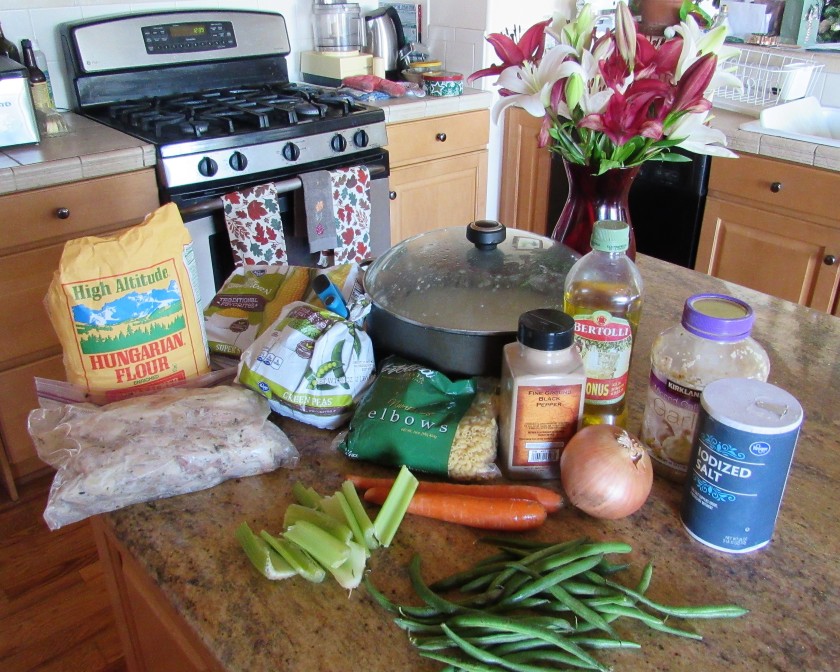
Just a few simple ingredients and a lot of vegetables, and before you know, it’s time for soup.
IMG_9904

Turkey Soup with Vegetables

2-2 1/1 lbs cooked turkey, diced

4 carrots, peeled, cubed small

3-4 celery stalks, cubed small

1 onion, diced fine

2 TBSP garlic

1 cup of frozen peas’

1 cup or frozen corn

1 cup of green beans, cut in pieces about 1/2 ” in size

3-4 TBSP flour, optional

3 TBSP olive oil

salt & pepper to taste

6-8 cups chicken broth

pasta, optional

2 tsp fresh thyme


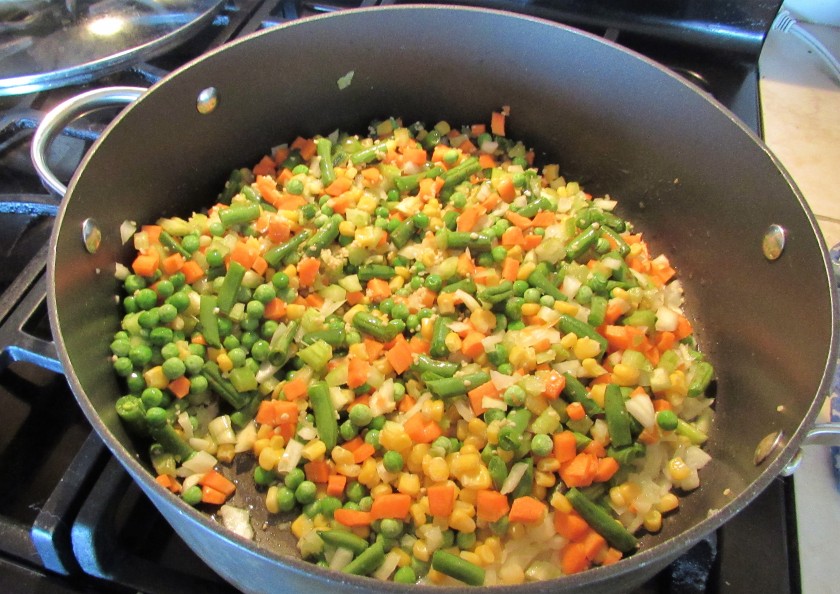
Saute all the vegetables in the oil until the onions are translucent.
IMG_9905

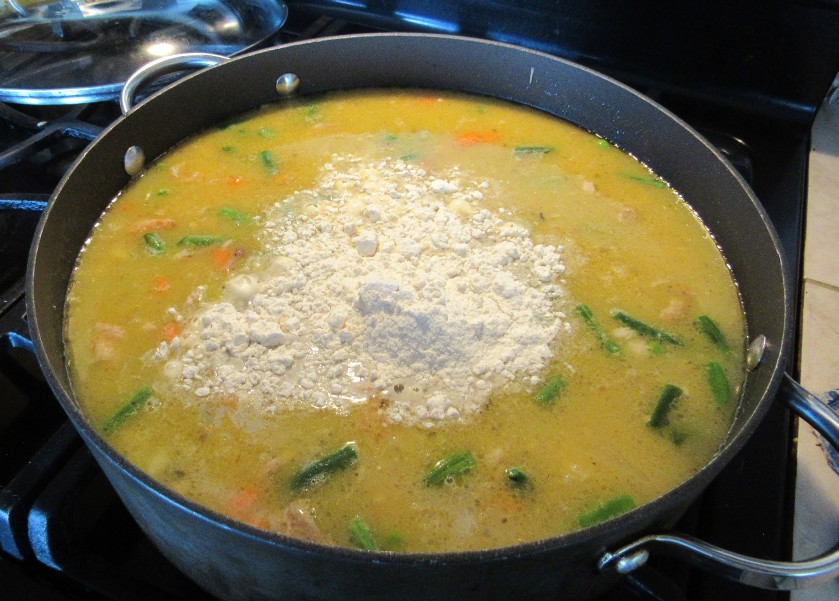
When the vegetables are cooked, add the turkey, seasonings and the chicken broth and mix everything together well.  If you like a thicker soup like I do, add the flour and make sure to mix it in very thoroughly.  No one likes lumps of flour in their soup.  You do not have to use flour if you want it more like a broth though.  Cook for about 20-30 minutes, at a medium heat, stirring occasionally.
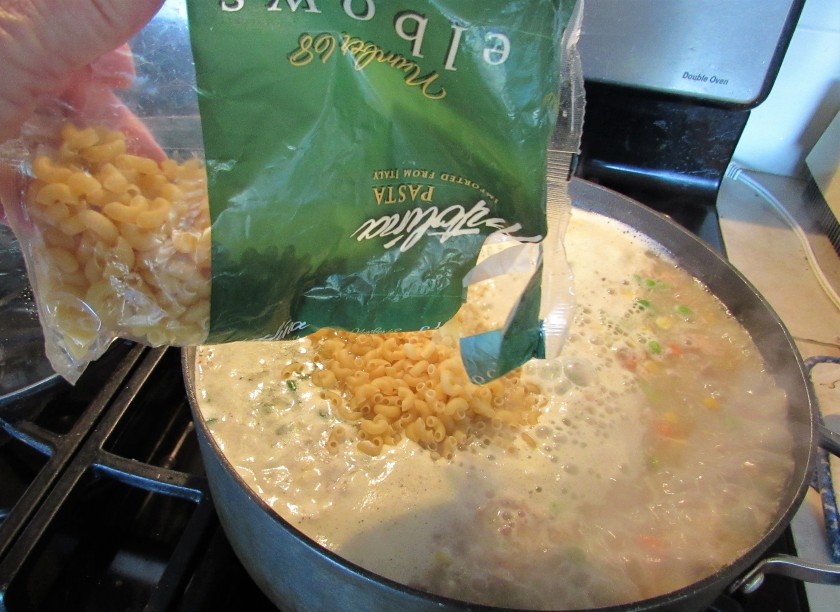
IMG_9906If you are using noodles or pasta of any kind, add it right at the end, bring the soup back up to a boil, then reduce it to a simmer and continue to cook for about 10 additional minutes.  If the pasta or noodles are in for too long, they will absorb the liquid and you will have more of a casserole than soup, which can still be very good too.  If this does happen, no big deal.  You can either add more liquid to make it soup again, or you can add some cheese and breadcrumbs and bake it to make it more of a turkey tetrazzini type of dish.  Because I made such a big pot of soup, I might just do that with some of the leftovers.  The Queen and I are always thinking about what we can do with the leftovers.  🙂
IMG_9907

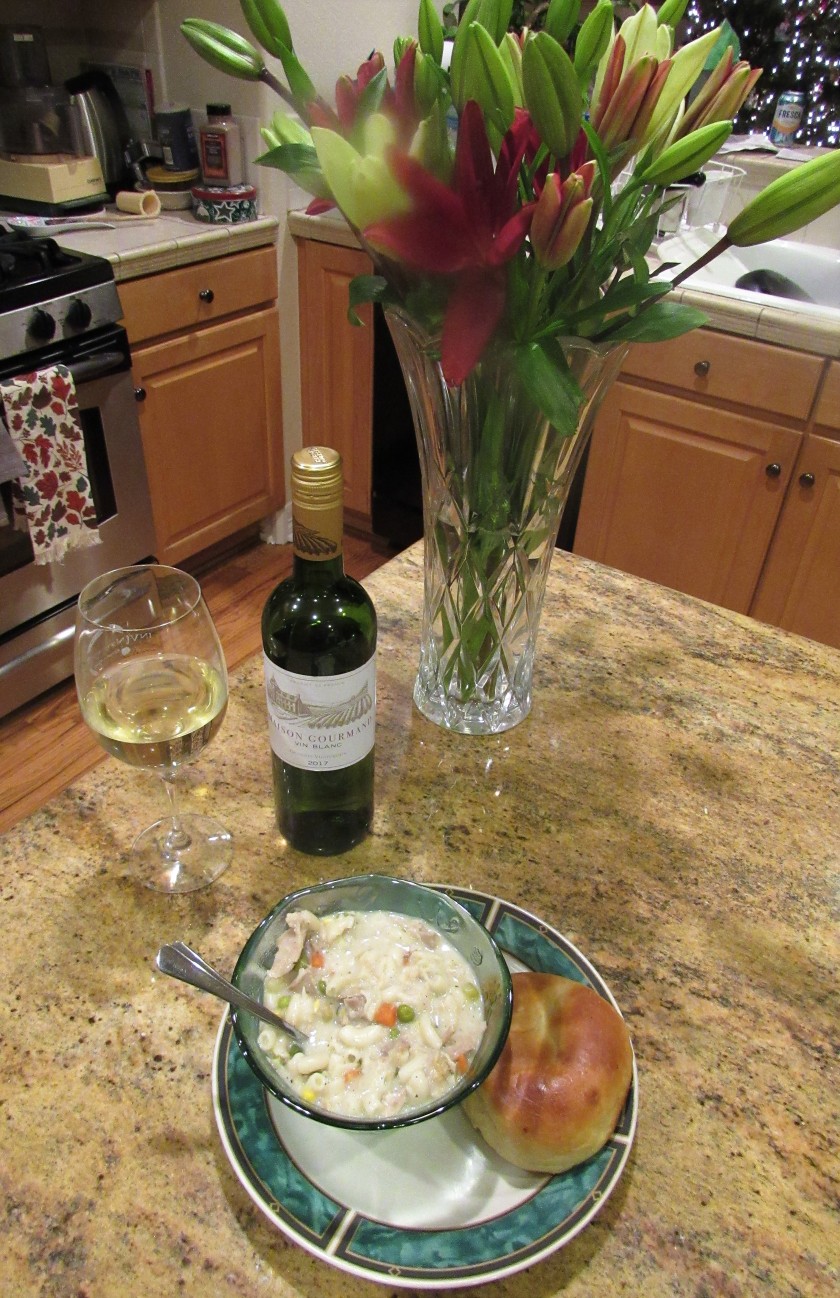
Once the soup is ready, dish it up and enjoy.  There is always something comforting about eating a big bowl of turkey and vegetable soup, especially on chilly days.

I went with a white vin blanc to accompany the soup, but I could have gone with a red, like a merlot or a pinot noir too, to go with the beef in the bierocks.  Red or white, either way, you can’t go wrong.
IMG_9926

IMG_9927


Something from the Sea

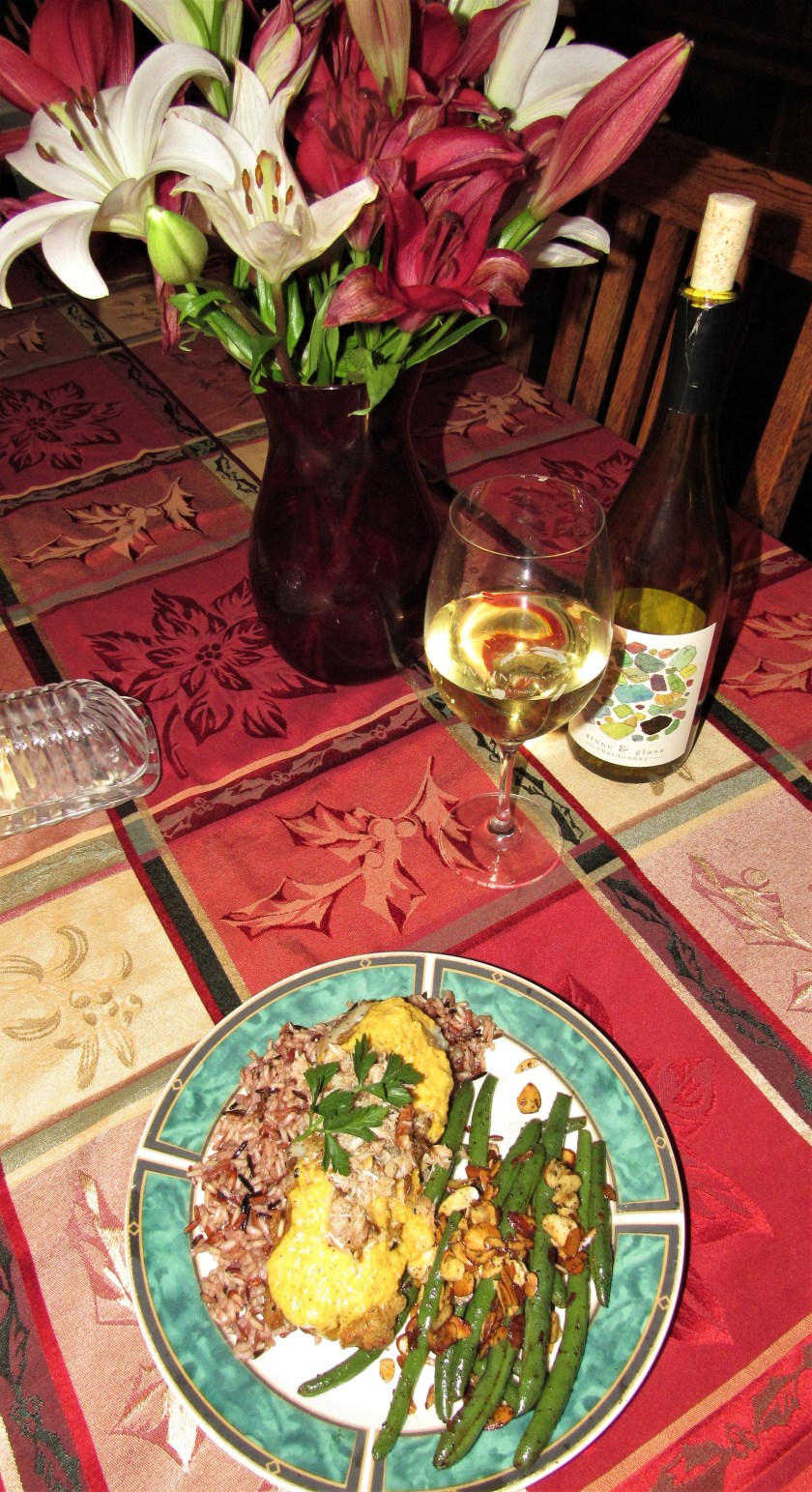
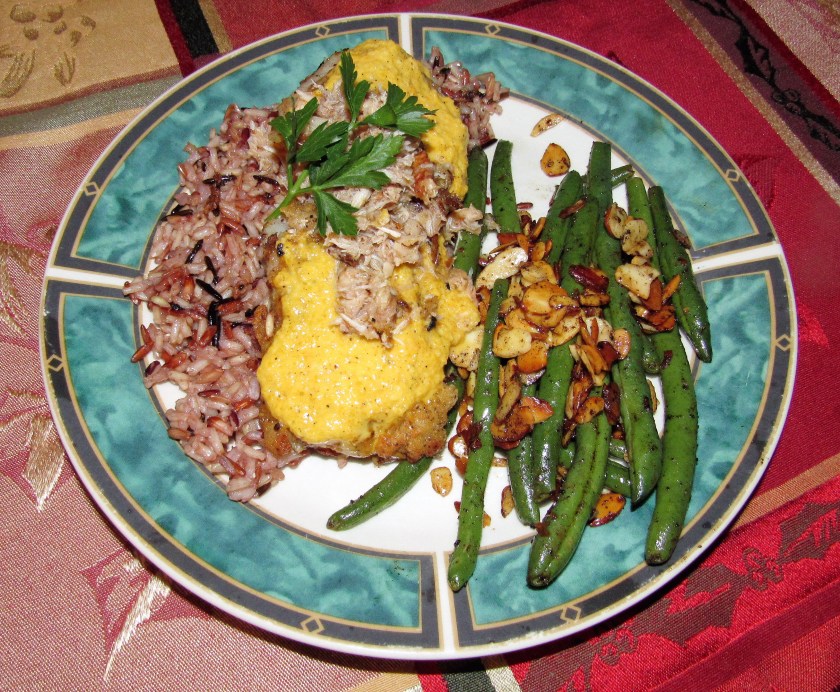
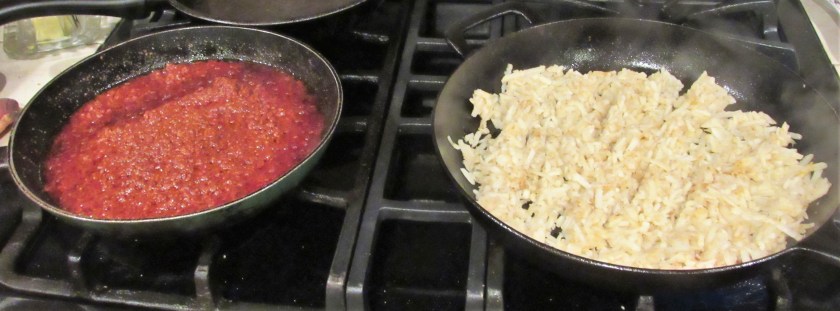
We love seafood, although we don’t get to eat fresh seafood as much we would like, since we are landlocked in the middle of the Rocky Mountains.  Meats of all kinds are our specialties, not seafood, at least not fresh seafood.  But that does not stop us from enjoying our seafood dishes.  Our seafood is frozen, and that’s OK with me.  At least we still get to enjoy the gifts from the sea this way.  I had bought some delicious cod not too long ago and some crab for the Steak Oscar I prepared for Larry’s birthday dinner.  It’s Birthday Day – Part 2 – Lucie and Larry.  We used some of the cod for fish & chips, and had some left over that needed to be cooked as well.  So it was time for another delicious seafood dinner.  This time I pan-fried it and served over wild rice, with an orange bell pepper coulis, topped with crab, served along side green beans almondine.  And of course there was wine.  I served it all with a crisp chardonnay that was mildly oaked and had hints of citrus.

Cod is a cold water fish that likes to live close to the bottom of the ocean, near its floor.  It is a white, flaky fish that has a mild, sweet flavor.  Because it is a white, flaky fish, it is also a lean fish and is low in calories.  It is a healthy fish, full of protein, omega-3 fatty acids, vitamins, such as D and B12, and minerals such as potassium.  It is a very versatile fish that lends itself to many recipes, which also makes it a very popular type of fish to eat.  Sadly though, because of its popularity the world over, it is vulnerable to being over fished and wild cod is becoming harder and harder to find.  Like many other types of fish though, it is often farmed in fish farms, which makes it more readily available.

This elegant dish is actually very easy to make and does not require a lot of time in the kitchen.

IMG_9924

Make the rice and coulis first, since they take the longest to cook and prepare.  The coulis is super easy.  You can use any color of bell peppers you like and roast them over an open fire or on top of a hot grill until they are completely black on the outside.  Then sweat them in a plastic bag for about 1/2 an hour so they can cool.  The blackened skin just peels right off in your fingers.  Give them a rinse once they are peeled and seeded.  Then place the peppers into a food processor with about 4 TBSP olive oil, salt & pepper to taste and about 1 TBSP of garlic, and process in the food processor until it becomes a pureed sauce. Roasting Peppers

Coat the fish in flour, mixed with salt & pepper and lemon pepper if you like.

IMG_9913

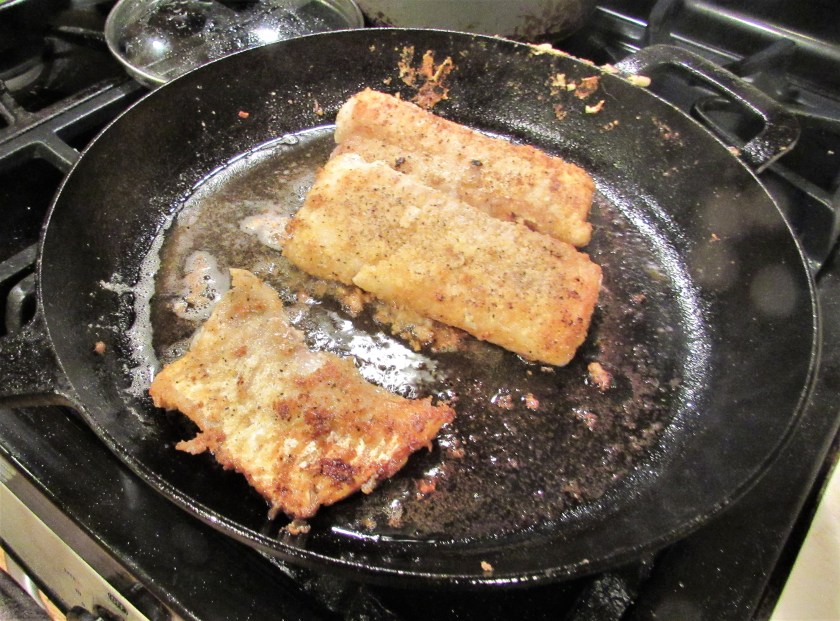
Carefully place the coated cod fillets in a hot skillet with both butter and olive oil and pan-fry for about 3-4 minutes per side, depending on the thickness of the fillets, or until it is golden brown and completely cooked through.

IMG_9922

When the fish is cooked, you are ready to dish it up.  I cooked a little of the crab as wel,l and topped the cod with it.  Bon Appetit!

IMG_9925

Name that Food Quiz

Even I was stumped by a few of these. I got 7 out of 12. Not bad, but not good either. It just goes to show that even “A Jeanne in the Kitchen” has some things to brush up on. 🙂

equipsblog's avatare-Quips

I got 4 out of 12 and need to reconsider my self-assertionovereating food orgy as a foodie.
“Test your knowledge of food and food words” with Merriam-Webster’s “Name that Food Quiz.”

View original post

Merry Christmas To All

I celebrate Christmas, and therefore I say Merry Christmas.  If I know someone celebrates a different holiday, I will express a sentiment that reflects that holiday, and yes, I even do say “Happy Holidays” on occasion, although that to me is the least personal phrase out there.  I do not believe it is the actual words that are spoken, but the sentiment behind the words.  However you say it, it comes out of love and peace and wishing good tidings onto others.  So, Happy Channukah, Feliz Navidad, Buon Natalie, Joyeux Noel, Froelich Weinachten, Mele Kalikemaka, Happy Eads and Merry Christmas to All, and to All, a good night.

regular


Too Much Eggnog?

Eggnog is a typical holiday beverage.  It can made with or without spirits, although most adults prefer the spirited version.  Some people add whiskey, others add rum, and still others use brandy.  But how did this often rich, boozy beverage become a holiday tradition?

It is believed that what we know as eggnog today originated from a medieval British drink known as posset.  Posset is a hot milky ale-like drink.  The milk was curdled with either wine or ale and spices such as nutmeg or cinnamon were often added.  In the 13th century, monks drank this posset along with eggs and figs, and it was used as a remedy for colds and the flu.  It was also considered a drink for the wealthy, since eggs, milk and sherry were in short supply and were expensive.  The poorer people could only afford it on special occasions, such as the holidays, and they drank it with toasts of good health and prosperity for the upcoming year.  Eggnog became more popular during the 1700’s, when the British crossed the pond and formed the colonies, because the farmers were able to produce more eggs and milk at a cheaper cost.

No one really knows for sure where the name eggnog comes from, although it is believed to have come from either the word noggin, meaning a wooden cup, or grog, which means strong beer.  Wherever the term eggnog came from though, it is has been used for this rich, creamy, eggie beverage since the late 18th century.  This is not just a British holiday tradition though.  Mexico has a similar drink called rompope and Puerto Rico has one they call coquito, that is made with coconut milk.

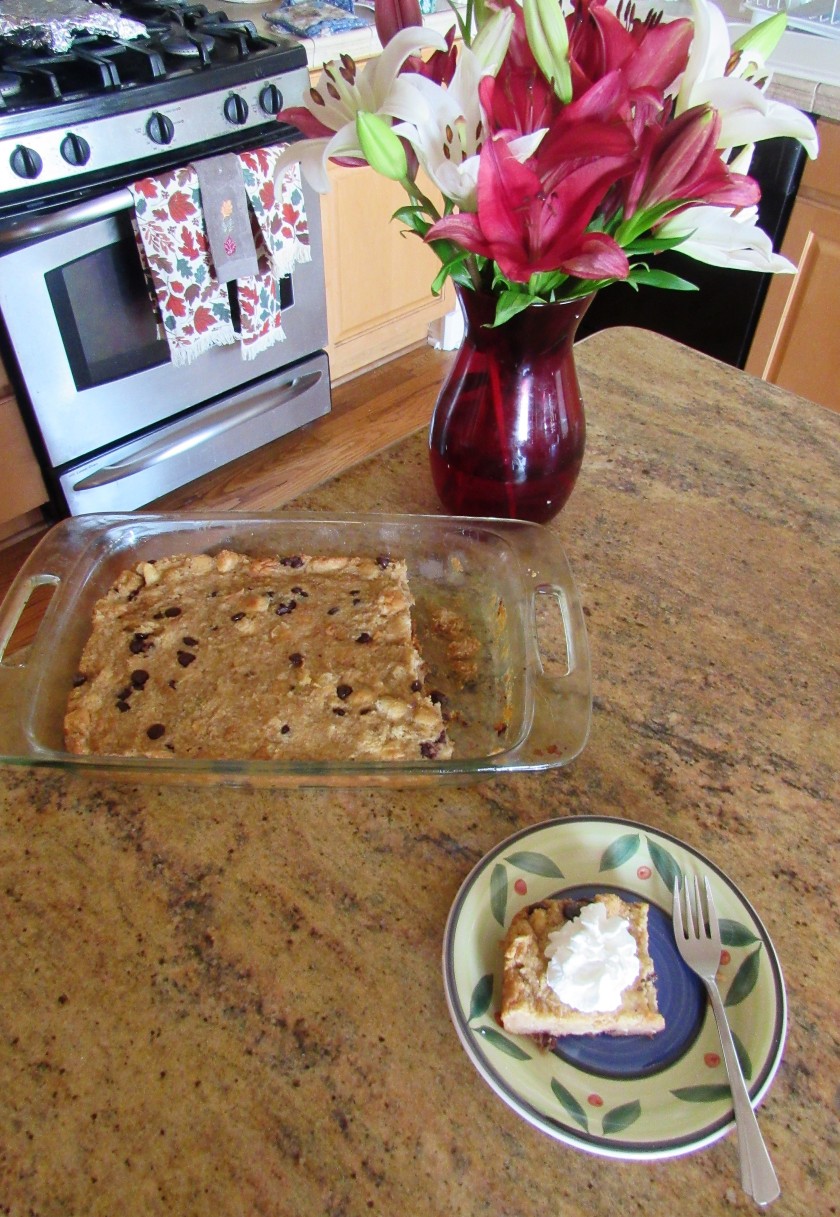
I like eggnog, but I can only drink it in very small quantities.  I bought some for our party, but it was hardly touched and I had a lot leftover.  You all know how I hate to throw food away if I can help it, so of course, I re-purposed it.  I have really been trying not to make so many sweets, treats and desserts, lately, because I have NO willpower when it comes to sweets, but every now and then I do make exceptions.  Besides, it is Christmas time, so I am allowed to cheat just a bit, right?! I decided to make an eggnog bread pudding.

Bread pudding is a simple dessert that is loved by many the world over.  It is known as a poor man’s dessert.  Apple Bread Pudding with a Rum Caramel Sauce  You can mix it up however you like.  You can add fruits or chocolate or nuts.  There is no limit to the variations you can make.  This time, I had just a few chocolate chips left in my bag, so I added those to my bread pudding as well.

IMG_9901

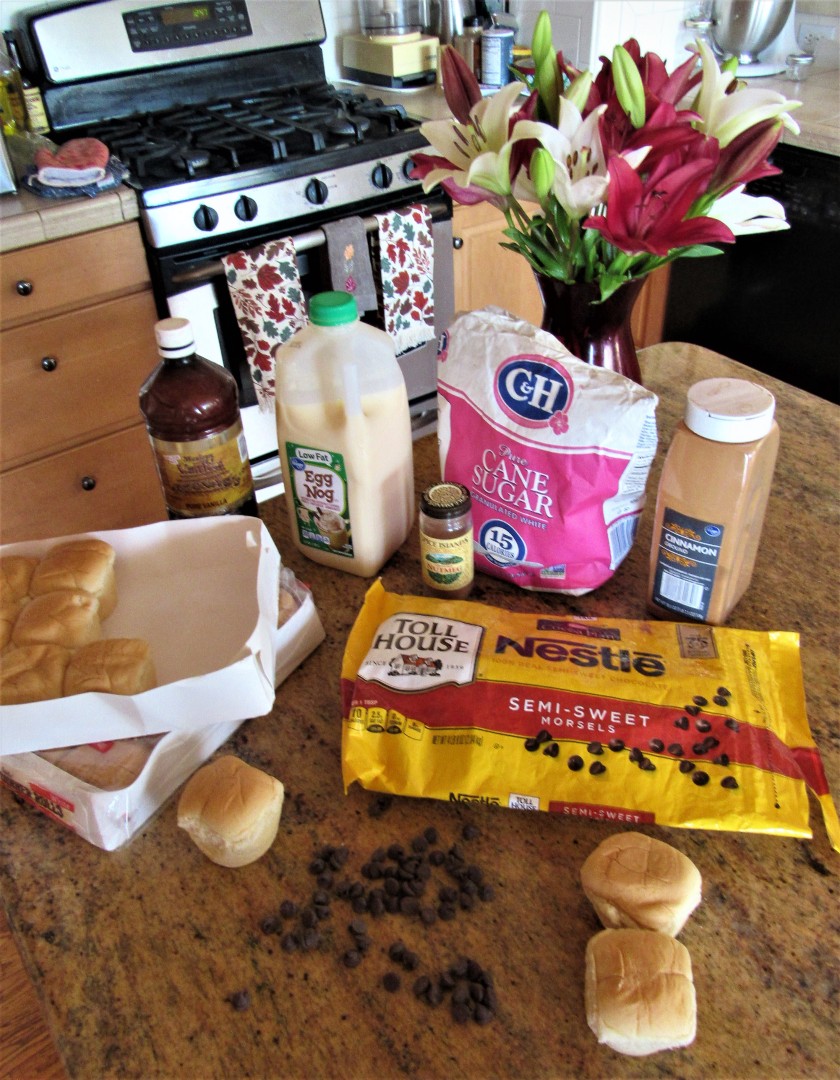
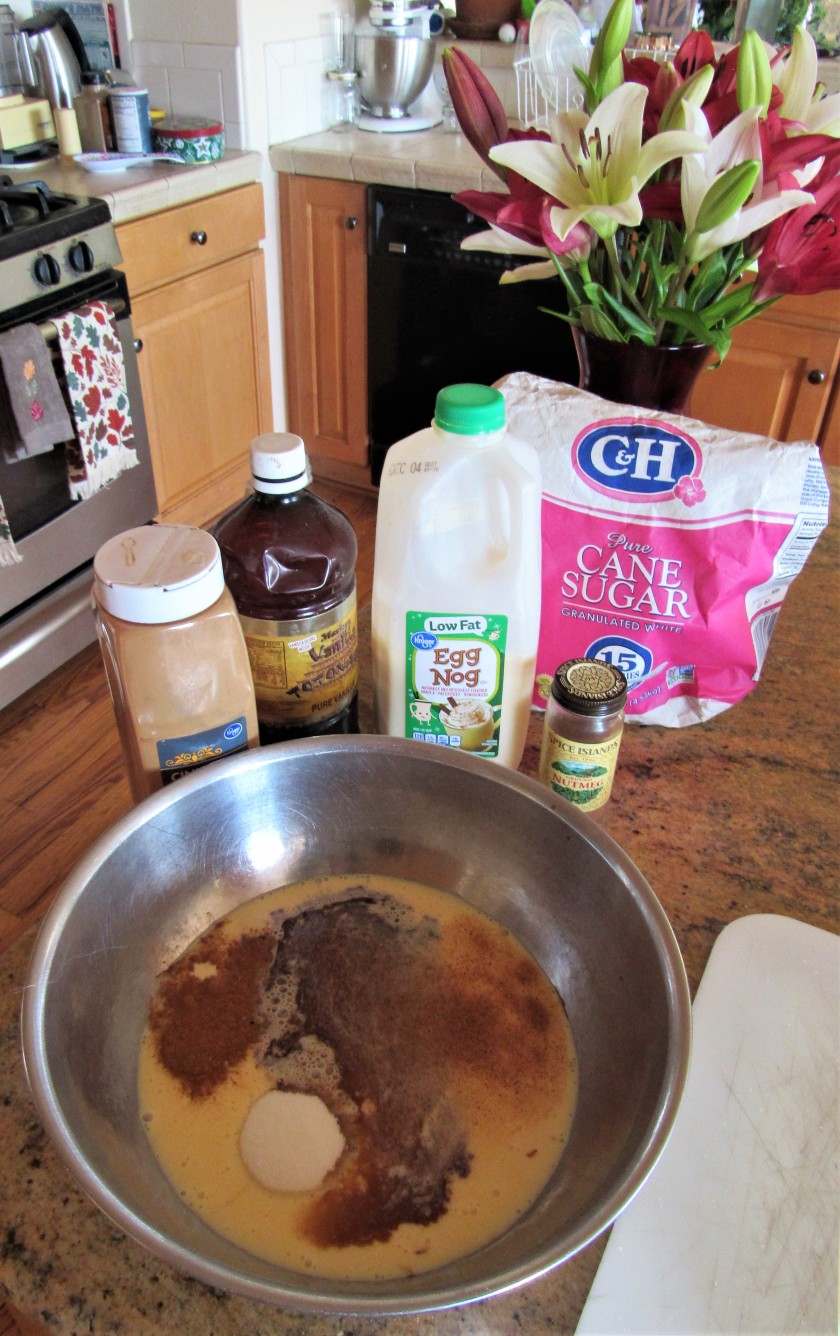
I had some dinner rolls that needed to be used, as well as the leftover eggnog.  I waved my magic wooden spoon, and mixed those two items together, along with about 3/4 cup of sugar, 2 tsp vanilla, 2 tsp cinnamon and 1 tsp of nutmeg, and about 1/2 cup of chocolate chips, and low and behold; eggnog bread pudding was made.

IMG_9896

This is such an easy dessert to make, but don’t be fooled by its simplicity.  It is always going to be a favorite when it comes time for something sweet.

Preheat the oven to 350* F or 180* C.

Spray a 9×13 baking pan with cooking spray.

IMG_9897

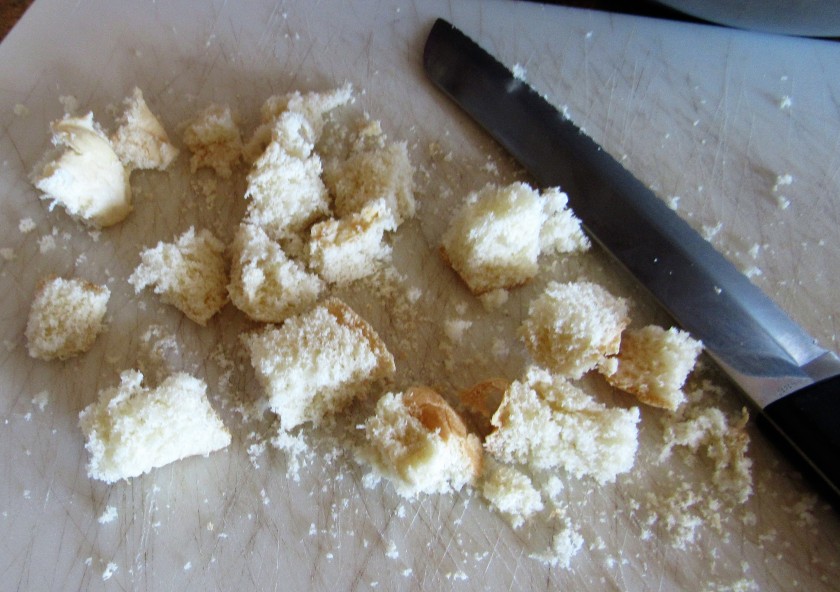
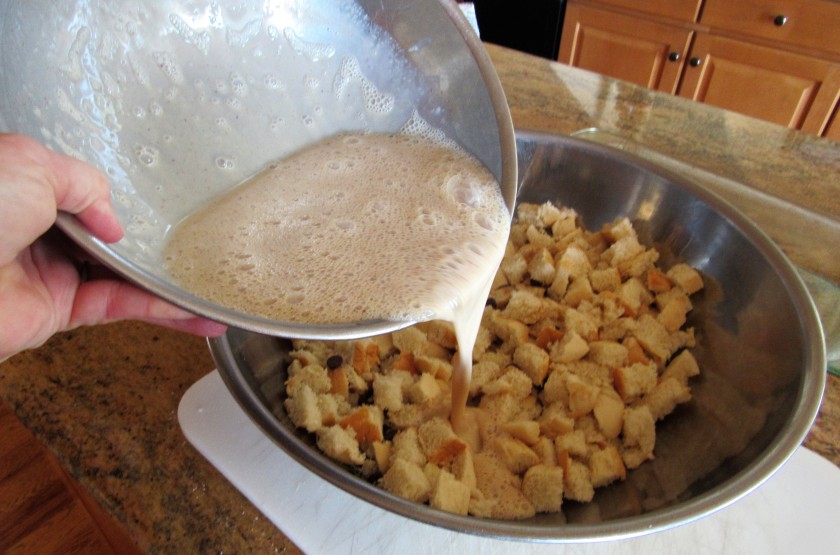
I cubed my rolls, into large cubes.  Then I mixed all the other ingredients together and poured them over the bread cubes and chocolate chips.

IMG_9898

IMG_9899

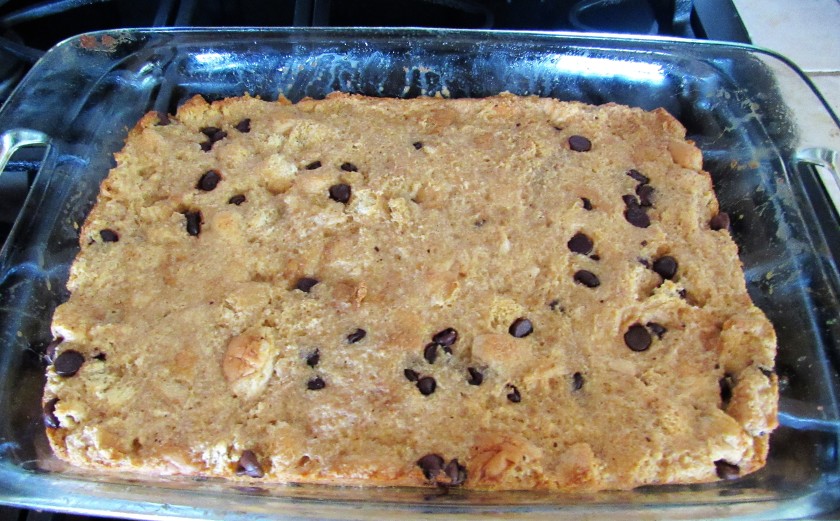
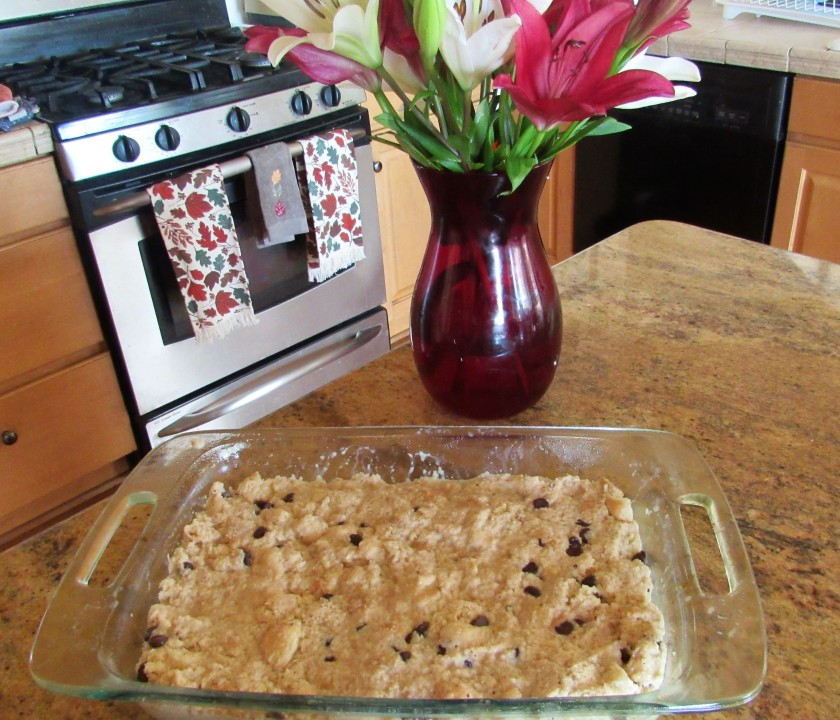
Once the liquid was poured over the bread and chocolate chips, I mixed everything together thoroughly, making sure the bread absorbed all the liquid.  Then I poured it all into a 9×13 baking pan sprayed with cooking spray and pressed it all down firmly.  Before putting the bread pudding in the oven I covered it tightly with aluminum foil, and baked it for about 35 minutes.  I removed the foil and continued to bake it for about another 20 minutes to let it brown.

IMG_9900

Usually when I make a bread pudding, I make a sauce to go with it.  But because of the eggnog, this was already so rich, it did not need any additional sauce.  I just added a dollop of whipped cream, and it was ready to eat.

IMG_9903

Pop the Cork

With the holidays being here, the champagne will be flowing freely, so I thought it would be fun to give a little history of our favorite festive bubbly.

Champagne is a type of sparkling wine, but not all sparkling wines can be champagne.  In order for a wine to be classified as champagne, it has to be produced from the Champagne region of France and has to be made according to the rules of appellation.  The Champagne winemaking community, under the auspices of the Comité Interprofessionnel du vin de Champagne (CIVC), has developed a comprehensive set of rules and regulations for all wine produced in the region to protect its economic interests. They include codification of the most suitable growing places; the most suitable grape types (most Champagne is a blend of up to three grape varieties, though other varieties are allowed); and a lengthy set of requirements specifying most aspects of viticulture. This includes pruning, vineyard yield, the degree of pressing, and the time that wine must remain on its lees before bottling. It can also limit the release of Champagne to market to maintain prices. Only when a wine meets these requirements may it be labelled Champagne. The rules agreed upon by the CIVC are submitted for the final approval of the Institut national de l’origine et de la qualité (formerly the Institut National des Appellations d’Origine, INAO).

The champagne region of France is about 90 miles northeast of Paris.  The conditions are perfect in the Champagne region of France to make our favorite effervescent drink.  It is a cold climate and the soil is rich with limestone.  This combination is exactly what is needed for magically turning regular wines into champagne.   Only certain types of grapes, from specific vineyards can be used to produce champagne as well, using only the specified vineyard practices and methods to produce it, including a secondary fermentation process of the wine in the bottle.  This secondary fermentation process is what causes the carbonation and the bubbles.  Pinot noir, pinot meunier and chardonnay are the primary grapes used to make all champagnes, but there can also be small amounts of pinot blanc, pinot gris, Arbane and Petit Meslier grapes used as well.  No other types of grapes can be used if you want to produce a real, authentic champagne.

Image result for photos of champagne

The name Dom Perignon is probably one of the most famous brands of champagne, but Dom Perginon himself did not actually create champagne, although he did make important contributions to the production and quality of both still and sparkling Champagne wines.  Sparkling wines were created by accident when the pressure in the bottles made the bottles explode and blew the corks out.   The oldest recording of a sparkling wine dates back to 1531, and was the Blanquette de Limoux, which was invented by the Benedictine monks from the Abbey of Saint-Hilare, near Carcassonne.  Dom Pierre Perignon was one of these French Benedictine monks. They first made their sparkling wines by bottling the wines before the initial fermentation process had finished.  This method became known as the methode rurale.  One century later, in 1662, the English scientist Christopher Merrit, added sugar to the finished wine, which produced a secondary fermentation.  This secondary fermentation process became known as the methode champenoise.  However, Champagne did not use this methode champenoise to produce champagne until 200 years later.  This new method for producing sparkling wines also created a lot of pressure in the wines and the glass used for the bottles was not able to withstand this additional pressure.  At the time, the French bottle makers and glass makers did not have the technology to produce bottles that were strong enough to withstand the added pressures of these sparkling wines, so the task was given to the English glassmakers who were able to produce bottles that were strong enough to withstand the secondary fermentation process of the wines.  In 1844, Adolphe Jaquesson invented the muselet that prevented the corks from blowing out, and sparkling wines were then intentionally made.  But it was not until the 19th century when all the pieces for champagne making were put together and champagne production saw exponential growth from the initial 300,000 bottles produced per year to over 338.7 million bottles produced in 2007.

Image result for photos of champagne

In the 17th, 18th and 19th centuries, champagne was the favorite drink of royalty and nobility, most probably because of the limited production and expensive prices.  During the 19th century, champagne makers started selling off name brands of champagne, so it could be sold for less which increased its consumer base.  It was becoming more and more available and affordable and thus more and more popular among the middle class as well as the royalty and noble classes.   Champagne for anyone other than royalty and nobility was associated as a special drink for special occasions, and still is today.  For most people, it is not an everyday wine, but is reserved for days of celebration.

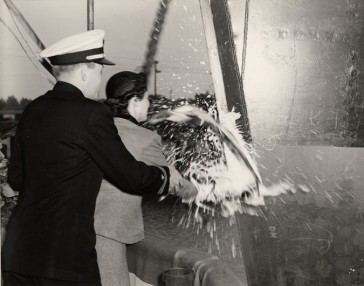
Another legendary use for champagne is when it is smashed over the hull of a ship during its launching.  If the bottle fails to break, it is considered to be bad luck.

Champagne is usually served in a champagne flute, whose characteristics include a long stem with a tall, narrow bowl, thin sides and an etched bottom. The intended purpose of the shape of the flute is to reduce surface area, therefore preserving carbonation, as well as maximizing nucleation (the visible bubbles and lines of bubbles).   Champagne is always served cold.  Its ideal drinking temperature is between 7 to 9 °C or 45 to 48 °F. Often the bottle is chilled in a bucket of ice and water, half an hour before opening, which also ensures the Champagne is less gassy and can be opened without spillage. Champagne buckets are made specifically for this purpose and often have a larger volume than standard wine-cooling buckets to accommodate the larger bottle, and more water and ice.

To reduce the risk of spilling or spraying any champagne, open the champagne bottle by holding the cork and rotating the bottle at an angle in order to ease out the stopper. This method, as opposed to pulling the cork out, prevents the cork from flying out of the bottle at speed. (The expanding gases are supersonic). Also, holding the bottle at an angle allows air in and helps prevent the champagne from geysering or spraying out of the bottle.

So now you know all about champagne …

Tis the season.  Pop the cork and celebrate.   Cheers Everyone.


It’s Birthday Day – Part 2 – Lucie and Larry

Larry and our big girl, Lucie, share the same birthday, or at least we celebrate them on the same day.   When we rescued Lucie from the Colorado Saint Bernard Rescue @ gotdrool.org 7 years ago, all we knew was that her birthday was in December, but we did not have an exact day.   So to make things easier, we just decided to celebrate her special day on Larry’s special day, December 10th.

As I mentioned in my previous post It’s Birthday Day – Part 1 – Breakfast Burritos Larry made breakfast burritos for his co-workers.   I made his favorite meal for dinner after I got home.   Larry’s favorite meal is Steak Oscar.   Steak Oscar  Other than that, Larry’s birthday was pretty low-key.  It wasn’t a big number and it did not end with either a zero or a five, plus it was a “school day”.   Both of us had to get up early for work today, so going out and painting the town red was not an option (not that we do that anyway).  He will be celebrating more tonight when he goes to the Av’s game.  Larry is a big hockey fan, and the Avalanche is our team.  Go Av’s!!!!!!

Lucie got a new “baby” for her birthday.  She was very happy with it.  She has been carrying it around with her all day.  Lambchops seems to be a favorite of both Lucie and Vinnie.  This one is their 3rd.  Lucie is very gentle with her babies whereas Vinnie likes to destroy them.   Hopefully Vinnie will let Lucie enjoy her Lambchops for awhile before he decapitates it and rips out the squeaker.  🙂  Lucie is now 8, which is up there for a big dog.  She is showing her age, but then again, aren’t we all.  She knows she is well loved, and that is really all that matters. Larry is slightly older than 8.  He’ll tell you he feels pretty old too though.  🙂
IMG_9895

IMG_9893

IMG_9894

Happy Birthday to both Larry and Lucie.  Love you lots.
It’s Birthday Day – Part 1 – Breakfast Burritos

Larry’s birthday was yesterday.  He has made it for yet another turn around the sun.  Larry decided to be the giver rather than the receiver on his special day, so he got up early and made breakfast burritos for his co-workers.  They were all a little surprised that he made them breakfast on his birthday, but they all helped “celebrate” his day and ate the burritos.  They were very good.  he did a great job on them.

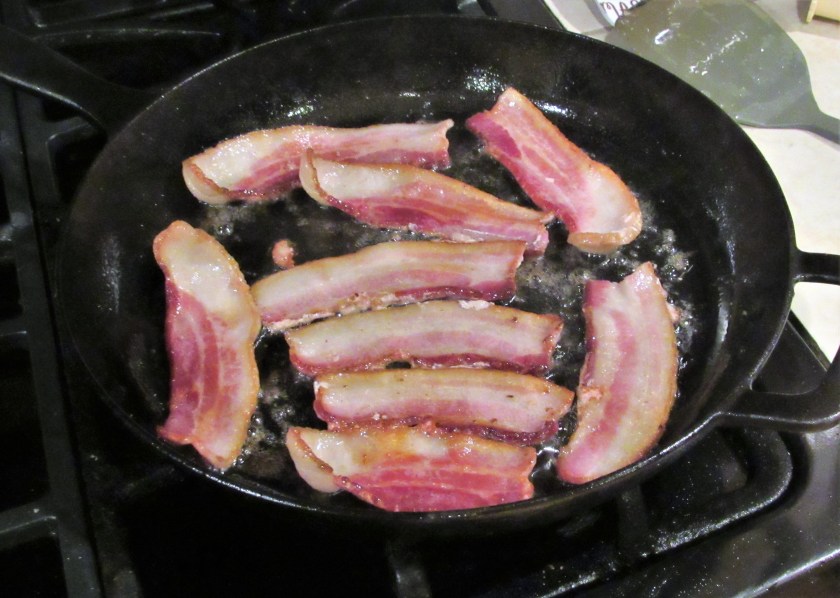
First, Larry scrambled the eggs, then he fried the bacon.

IMG_9887

Once the bacon was ready, he fried up some hash browns and cooked the chorizo.

IMG_9888

After everything was cooked it was time to start the burrito assembly line.  Larry lined the island with aluminum foil and placed a tortilla on each piece of foil.  He then started layering all the ingredients, then wrapped the burritos up and then rolled them all individually in the foil.  Some of the burritos had bacon and some had chorizo, but they all had scrambled eggs, hash browns, green chili (left over green chili I made a while ago) and cheddar cheese.

IMG_9890

IMG_9892 (2)

Happy Birthday and burrito day Larry.

It’s Cookie Time

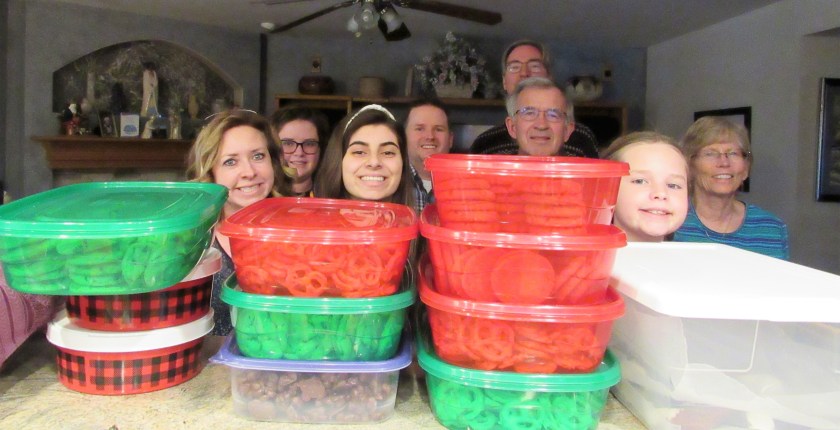
My friends Janet and Bob have a great tradition they share with their kids and their grandkids.  Every year at Christmas, they bake a ton of cookies to give to their teachers, girl scout/boy scout leaders, and everyone else who is a part of their community.  For the past few years, Larry and I have been a part of this tradition as well.  It is always so much fun.  Janet and Bob have an exchange student from Israel who is staying with them this year.  This was Nadeen’s first time experiencing this fun Townley Family holiday tradition too.

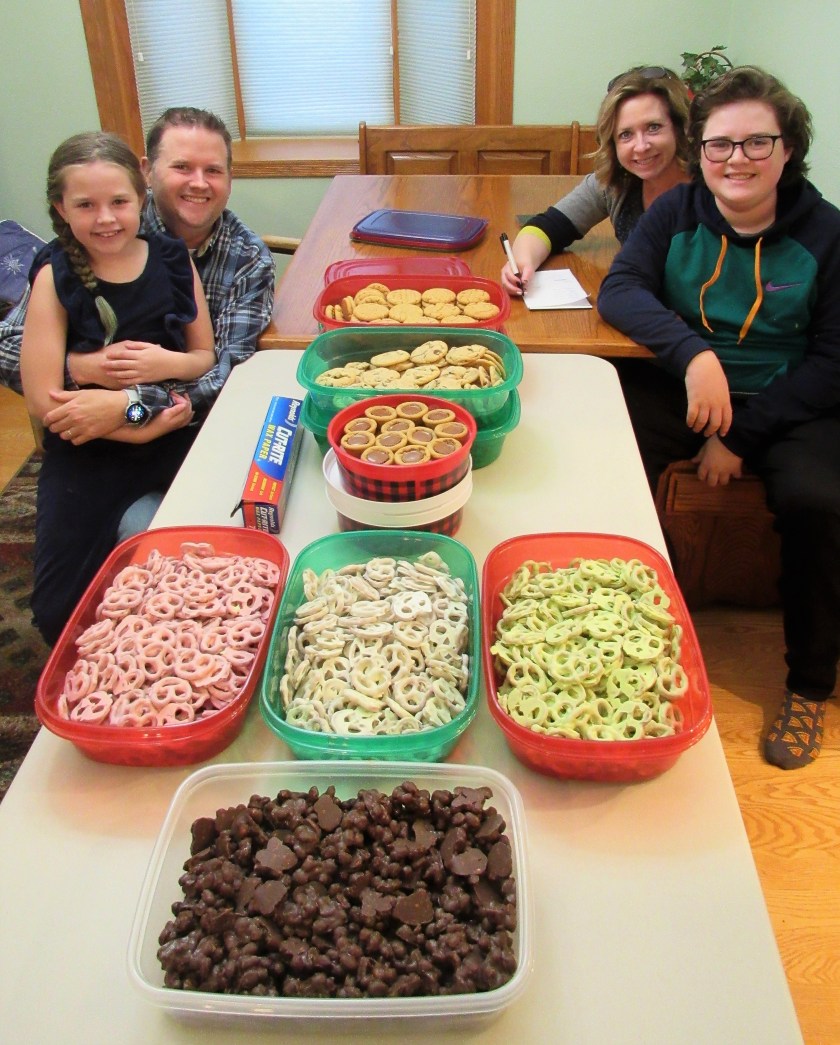
Everyone is buried behind a wall of cookies.  We did not decorate these cookies.  They were baked and ready to be boxed up for their lucky recipients.

IMG_9877

Brian is proudly displaying his favorite cookies, the peanut butter cookies with Reese’s peanut butter cups.

IMG_9879

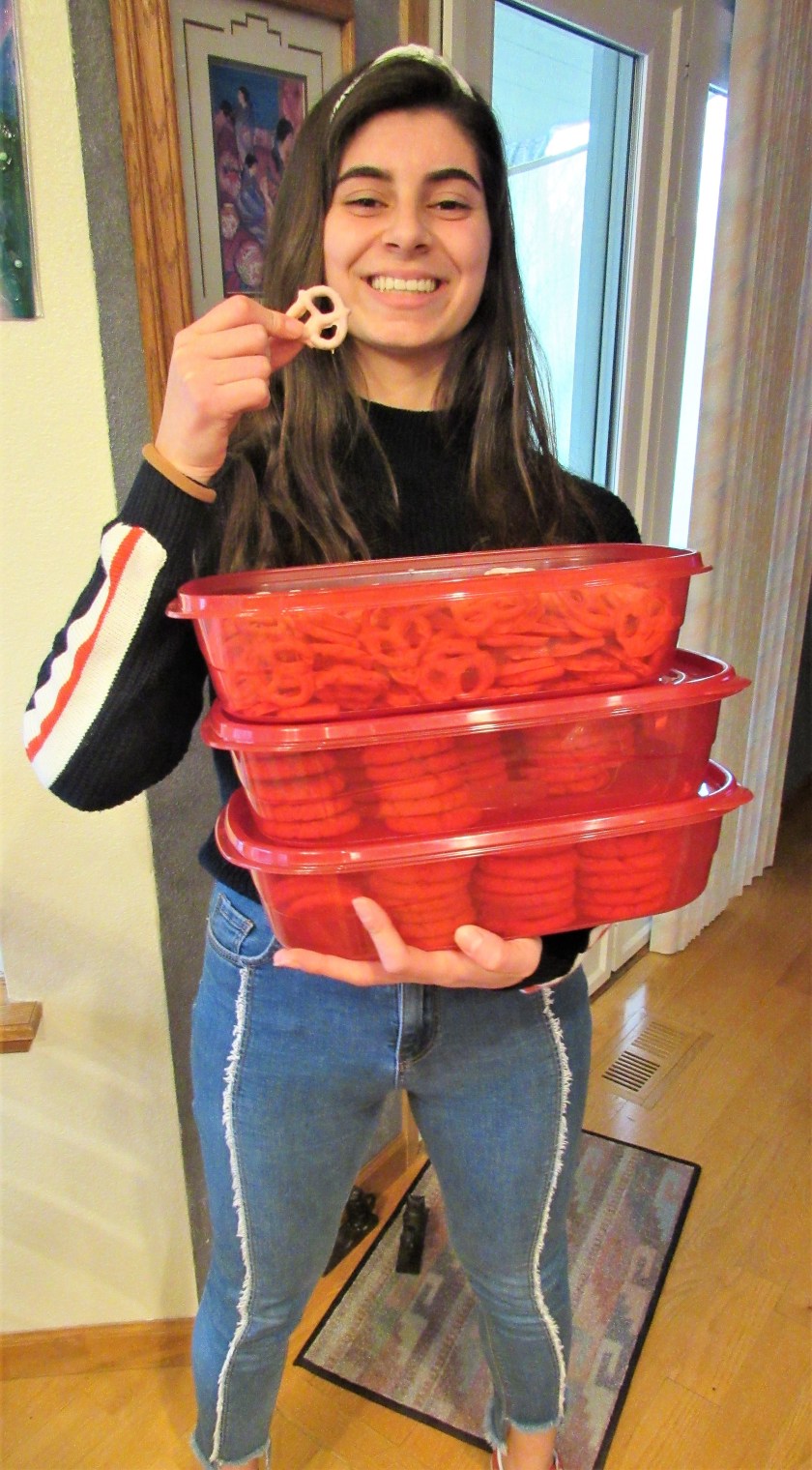
Nadeen is sampling the chocolate covered pretzels.  I think she likes them.

IMG_9878

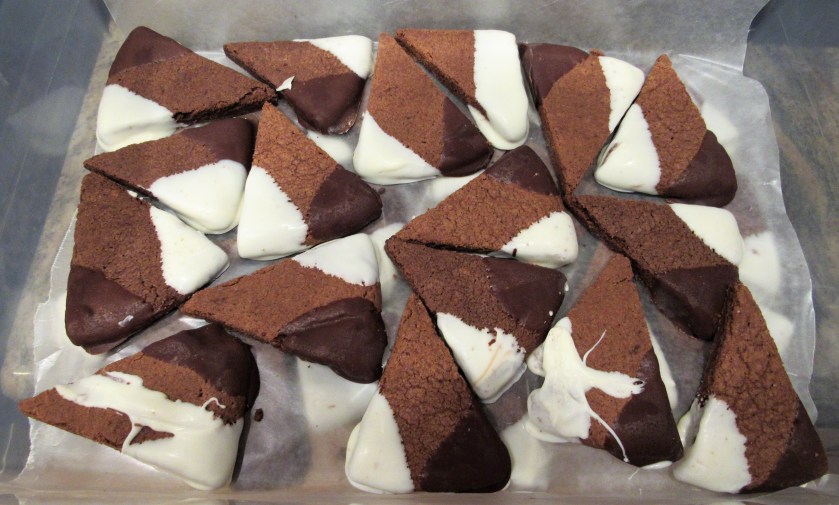
Janet calls these her “6-hour” cookies.  They are chocolate shortbread cookies dipped in both white and dark chocolate.  They are so good.

IMG_9881

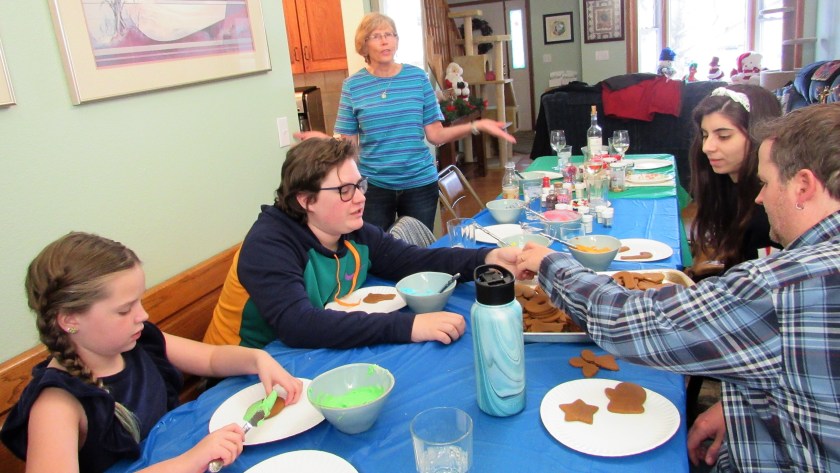
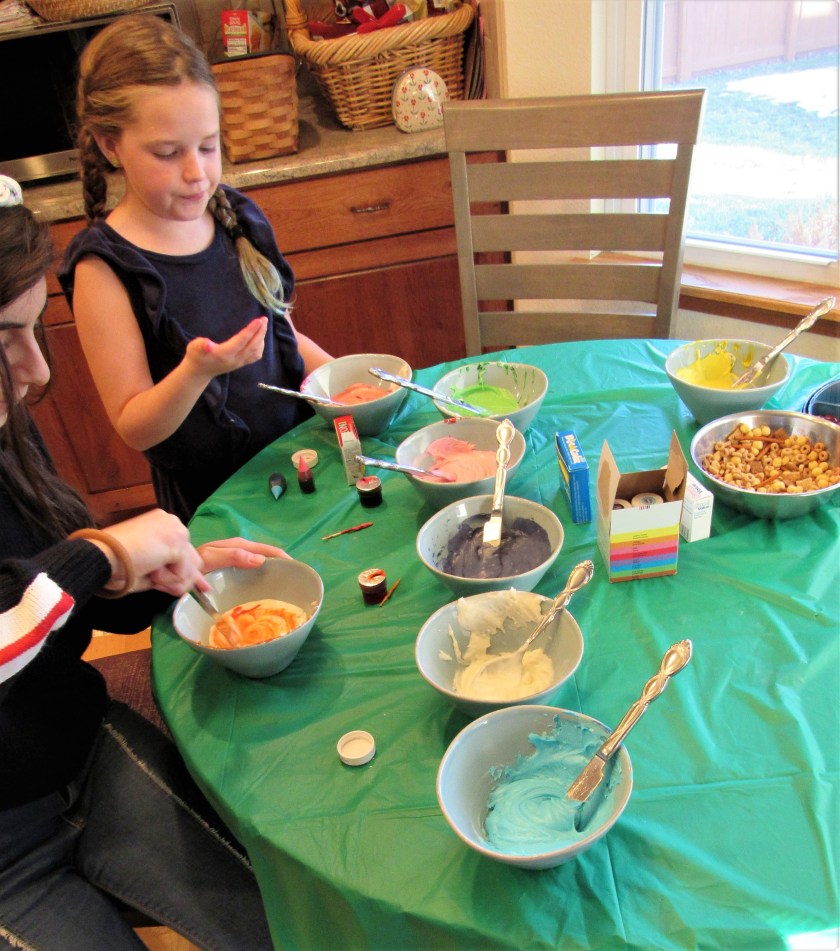
Let’s let the decorating begin.  Part of the tradition is to have all the generations help make the frosting for the cookies.  This year, Nadeen is part of the whole process too.

IMG_9851

Once the frosting is made, it needs to be colored.  This year our colors were, red (dark pink), light pink, green, blue, yellow, orange and a dark purple.

IMG_9852

Emily and Nadeen are the mix masters of color.

IMG_9865

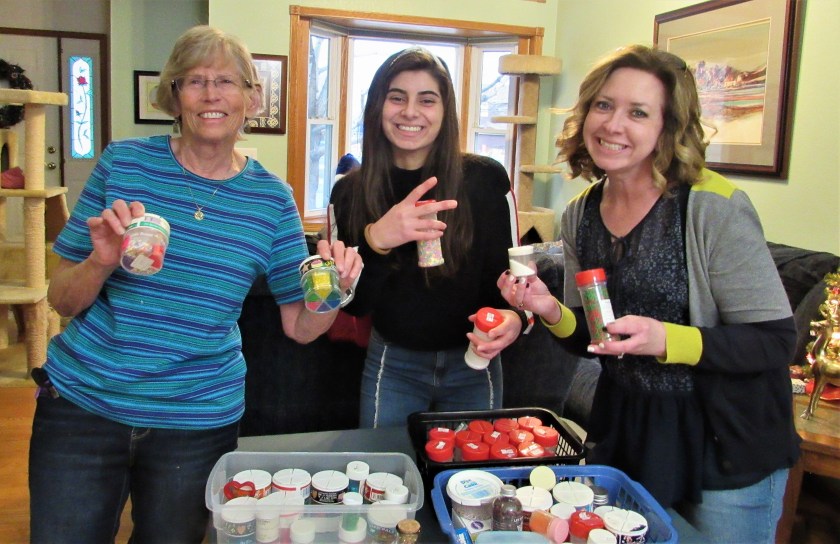
So many different decorations from which to choose.  Oh, but what fun it is to play with all these cool and different goodies.  Every year, Janet’s inventory grows by leaps and bounds.

IMG_9882

At last, the cookie decorating begins.  All these cookies will soon be decorated.  We all followed our wild imaginations, and came up with some pretty amazing decorative cookies.

IMG_9867

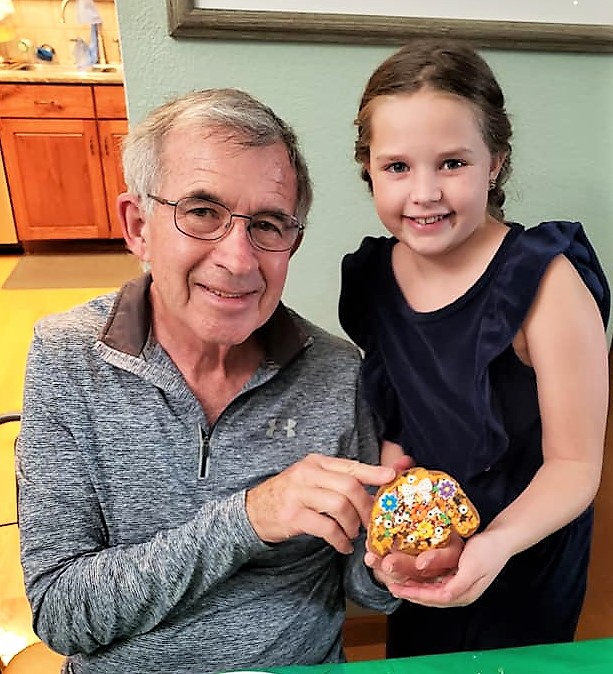
Nadeen is proudly displaying her first cookie of the season.

IMG_9870

The cookie masters are hard at work.

IMG_9868

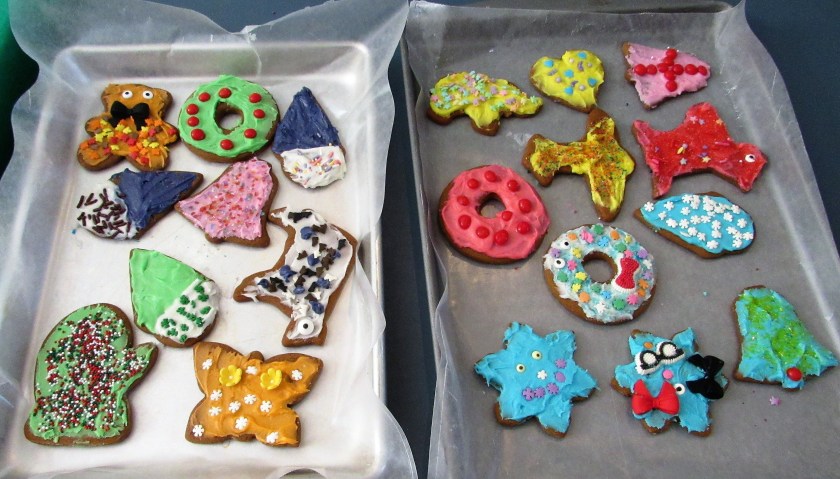
Here is a small sampling of our cookie creativity.

IMG_9871

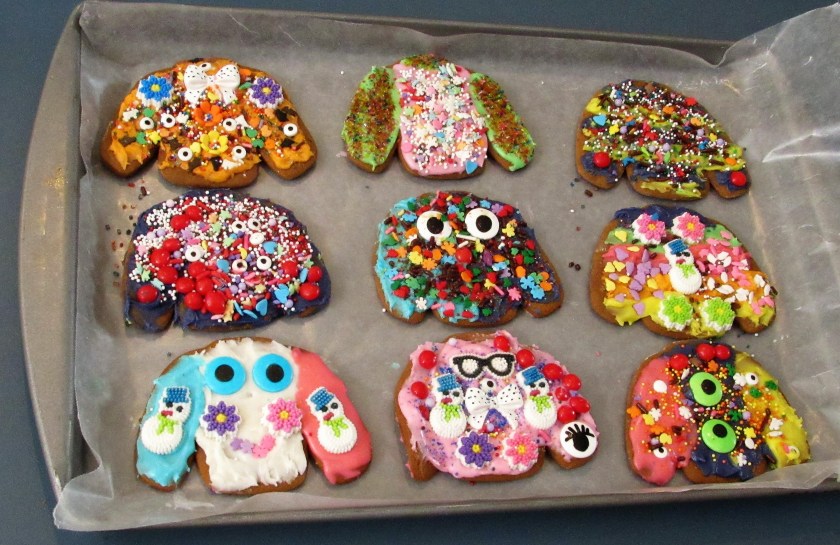
Every year, we all get one ugly sweater to decorate.  The goal is to make it as ugly as you can, using the decorative leftovers from previous cookies.  Somehow Emily did two cookies this year.  Are either of these sweaters the “ugliest”?  Stay tuned.

79360881_10216439207393525_558793142338322432_n

IMG_9872

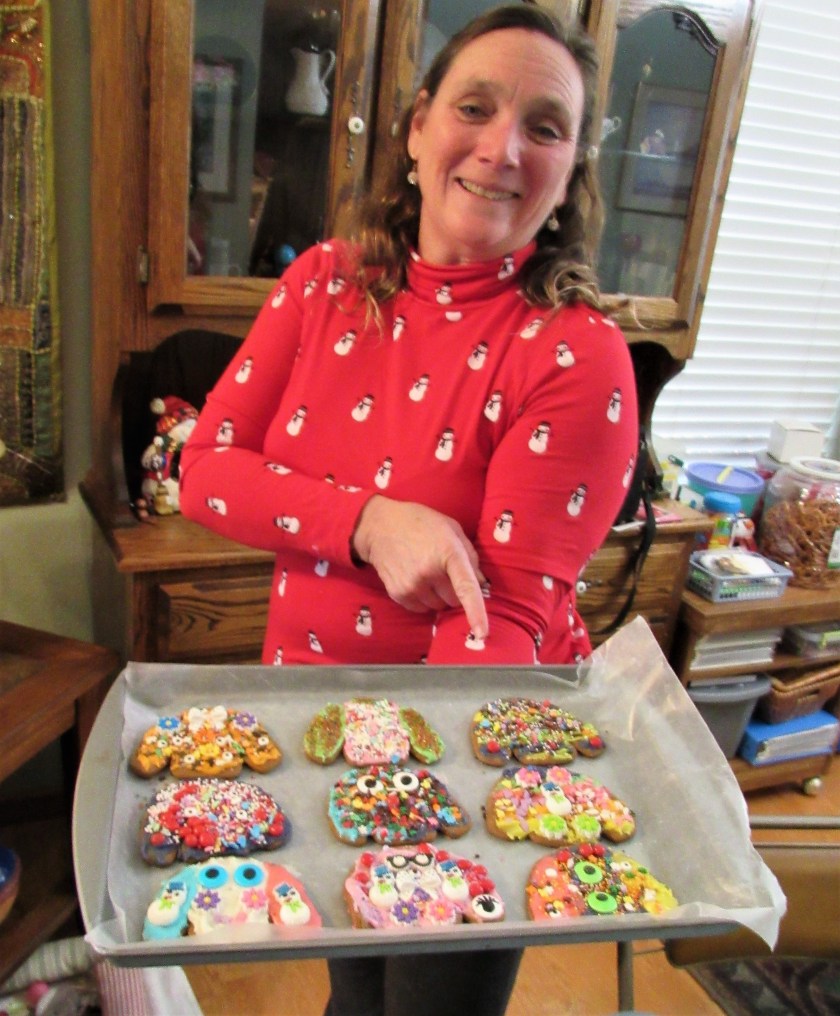
This year’s nominees for ugliest sweater.  And the winner is …..

IMG_9873

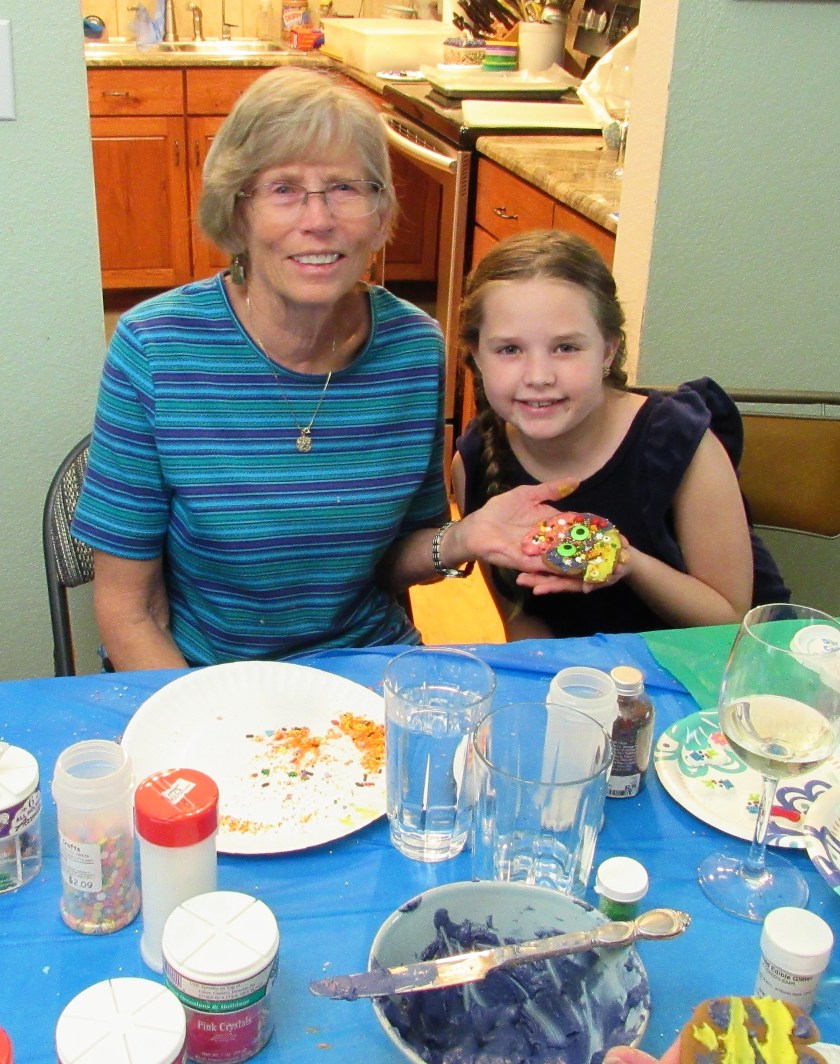
Me.  My sweater was the ugliest this year.  That’s what purple and yellow stripes mixed with 2 red hot cinnamon drops will do for you.  🙂

IMG_9874

The cookies are all baked and decorated and are now ready to be boxed up and delivered to their lucky recipients.  Brian, Shelly, Peter and Emily are all taking a cookie break before the cookie boxing begins.

IMG_9884

Thank you Janet, Bob, Brian, Shelly, Peter, Emily and Nadeen for always letting us join in on the fun and the family tradition.  It is an event we look forward to every year.  All hail the cookie!


More Festive Celebrations

I love Christmas and love to decorate and get into the spirit of the season, but my brothers-in-law, Randy and Roger, are the best when it come to Holiday celebrations and decorations.  They always make their house so beautiful and festive.  According to them, this year they scaled back considerably, but no one would ever guess that.  One year, they had over 20 Christmas trees decorating their house.  This year I think they were down to only a dozen or so.  Whether it is 20 or 12, their house is always a sight to behold though.

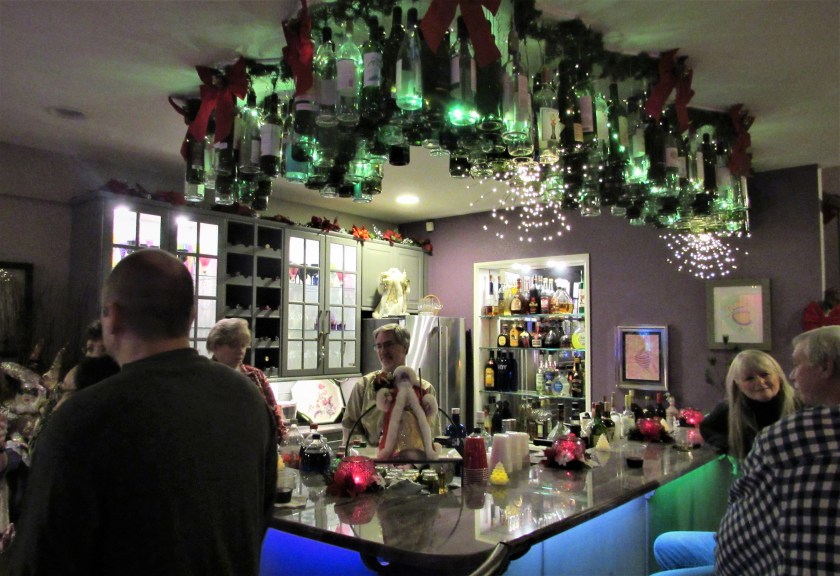
This is the bar.  Larry was bartender for the night.  Randy is very, very creative and a few years ago, he made this lighted wine bottle hanging.  Yes, many of those bottles were contributed by me and my “sister” Jaala.

IMG_9843

This is one of Randy & Roger’s fun and festive trees.

IMG_9848

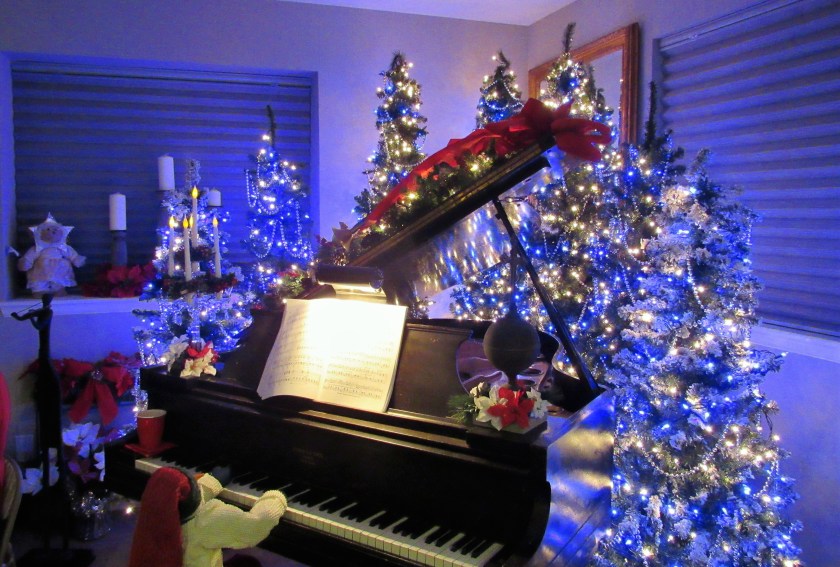
The trees around the piano area.

IMG_9847

As beautiful as all these trees and decorations are, the main focal point is always their upside down Christmas tree.  It is so unusual and different.  It always gets people talking.

IMG_9835

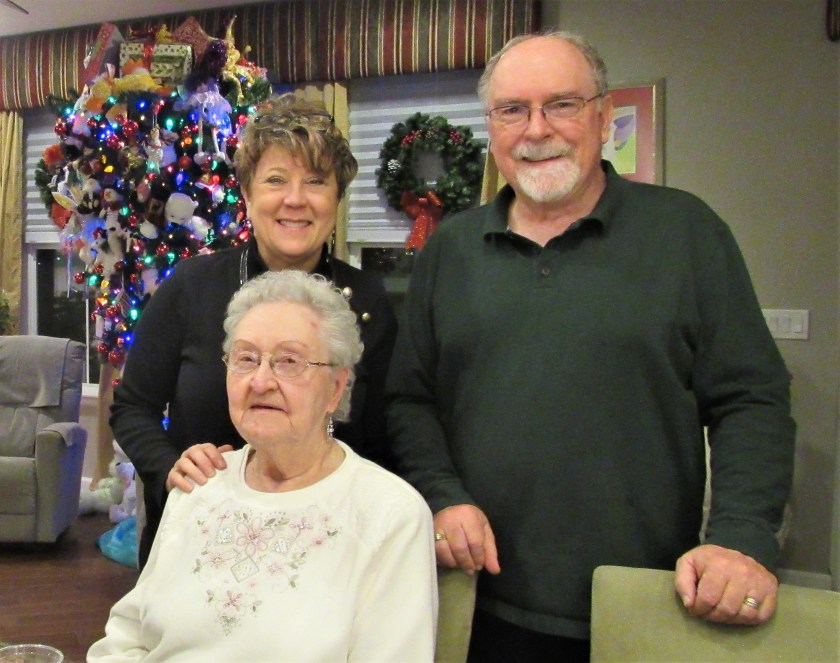
This is Larry’s mom, Ollie, along with one of our sisters-in-law, Sheri and Larry’s brother Randy, the host with the most.

IMG_9836

Usually Randy & Roger prepare all the food for their festivities, but this year, they had a potluck.  As with any potluck, you always get a wide range of delicious foods, and this party was no exception.  I was visited by the Queen once again, and once more, she was in the holiday spirit.  You know how the Queen and I love to visit.  🙂

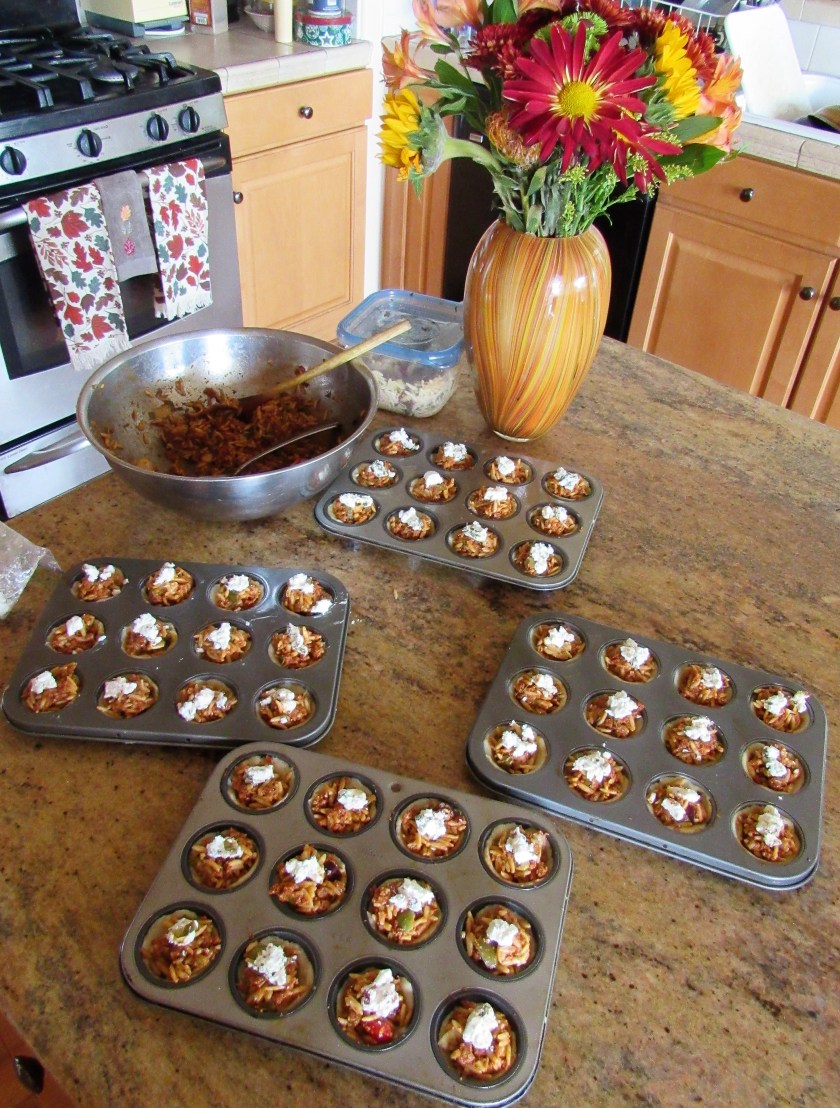
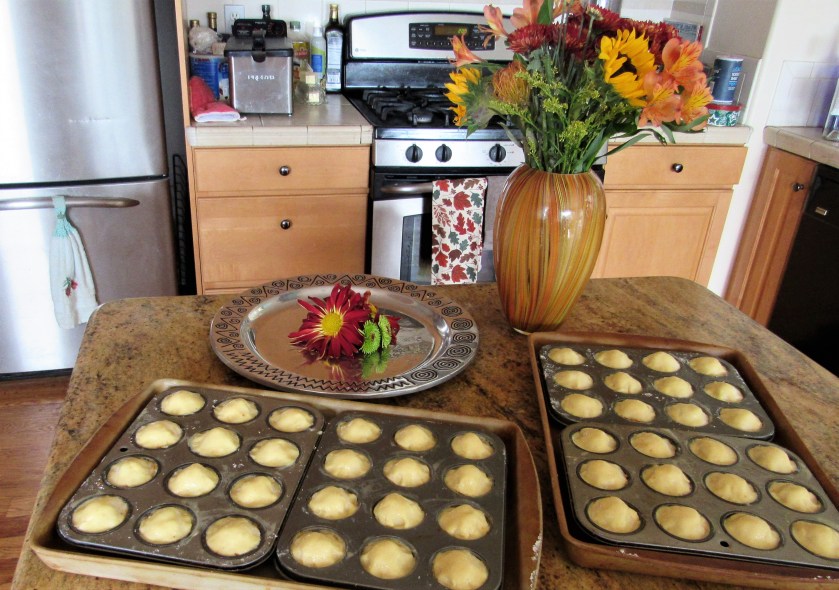
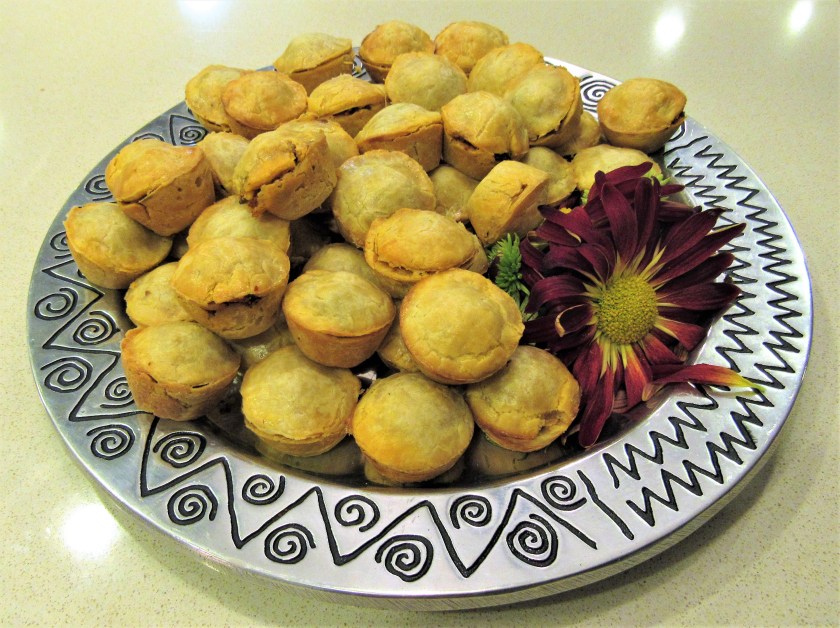
I promise you, this will be the last reincarnation of my artichoke and olive mixture for this season.  More Holiday Cheer  I didn’t think I had made that much, and I really didn’t think there was that much left over, however, when I added the orzo,  I more than doubled what I had leftover.  From Appetizer to Dinner  Larry has always said I have a knack for making my leftovers grow, and well …. I certainly did that this time around.  So for this last recreation, I turned the artichoke, olive, and now orzo, mixture into Mediterranean chorizo artichoke and olive cups.  They were yet again a big hit, and one of the guests at the party said they were the best appetizers he had ever had.  Thank you for the compliment Sir, but I think you are being way to nice.  🙂

You already have the main recipe(s), and the only things I added where the chorizo and a little goat cheese.  I mixed the cooked chorizo in with the artichoke and orzo mixture, then filled my pastry cups and added a tiny bit of goat cheese on the top.  Once my cups were filled,  I covered everything with another layer of the pastry dough, brushed them with an egg wash and baked them.  To make them small bite-sized appetizers, I baked them in my mini muffin pans at 350* F for about 20 minutes, or until they were golden brown.

IMG_9827

IMG_9828

IMG_9830

IMG_9832

And here they are, ready to eat …

IMG_9841

Happy Holidays Everyone!