My Argentine Feast – Part 5 – Charred Vegetables with Shaved Parmigiano and Lemon & Basil Dressing

Though the Argentine diet is very meat heavy, they do enjoy eating their vegetables too. Like with so much of their food, they like to cook their vegetables over fire. They even like them charred. I can’t say that I blame them either. I charred mine and they came out so good. πŸ™‚

Charred Vegetables with Lemon Basil Dressing and Shaved Parmigiano Cheese

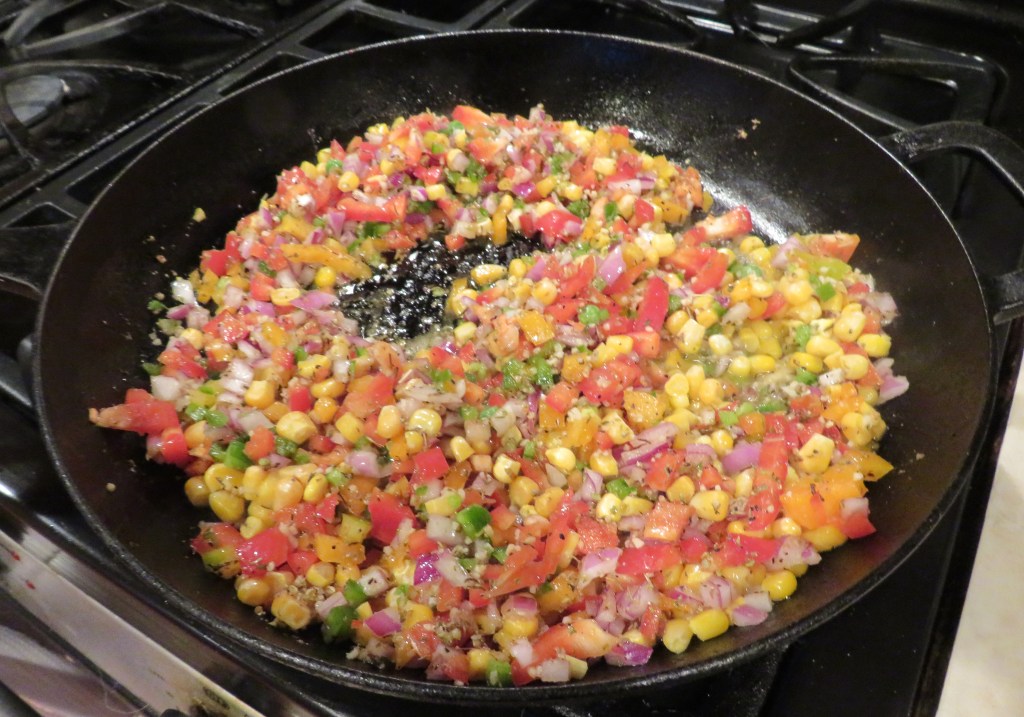
Of course I did what I normally do. I had a basic recipe, then added to it. It’s just what I do. I can’t help myself. πŸ™‚ Bob had just given me yet another batch of his delicious fresh tomatoes, so I added some to the vegetable mixture. I think they made the vegetables much better and certainly more colorful too. I also added garlic, and garlic oil, basil oil and oregano.

4 small fennel bulbs, cut in 1/2

3 zucchini, sliced into thick rounds

2 or 3 tomatoes, cut in 1/2 or 1/4

1/2 cup olive oil

1-2 TBSP garlic olive oil, optional

1-2 TBSP basil olive oil, optional

coarse salt & fresh ground black pepper to taste

1-2 tsp lemon zest

2 TBSP lemon juice

1/2 cup fresh basil leaves, chiffonade

1-2 TBSP fresh oregano, chopped

4 oz shaved Parmigiano cheese

Gently toss all the vegetables in about 1/3 of the oil(s) with the salt & pepper.

Combine the rest of the oil(s), lemon zest, lemon juice, garlic and fresh herbs together and set aside.

The Argentine way to char these vegetables is in a chapa, or very hot skillet. I cooked them all on my inside grill, while Larry was cooking all the meat on the outside grill. Char the vegetables for about 2-3 minutes, or until charred, then gently flip over and repeat.

Once the vegetables are charred to your liking, gently toss them together with the oil, lemon and herb mixture. You can toss them with the Parmigiano cheese too, to mix it all in, or you can just add it to the top of the vegetables. Since I am not a big cheese eater, I just added it to the top. You can also leave the cheese off completely too, if you prefer. If I were making it just for Larry and I, I probably would have left the cheese off. But since I was serving it to a bunch of cheese lovers, I added it to the top. It was a good compromise.

It was a big hit and everyone loved it. The freshness of the vegetables really came to life with the lemon basil dressing. !Desfruta!

Have a great day and make everyday great. Stay safe and stay well. ‘Til next time.
Nature Walks – More Flicker Fun

I have been seeing so many Northern Flickers lately. And that is perfectly OK with me. I love seeing them. I think they are beautiful birds.

I have also seen quite a few Robins as well. Sometimes, they are even side by side.

Everyday has its beauty. Sometimes you just have to look a little harder to see it. πŸ™‚

My Argentine Feast – Part 4 – Chicken And Vegetable Empanadas

No Argentine meal would be complete without empanadas. Empandasoriginated in Spain and were brought to Argentina by Spanish colonists in the 16th century.Β The word “empanada” comes from the Spanish word empanar, which means “to wrap or coat in bread”. Though empanadas are found all over Spain and Latin American countries, Argentina is really known for its empanadas. Each region of Argentina adapted the empanada to suit their local produce and preferences. The Argentinian Ministry of Culture has declared the Creole empanada of Buenos Aires a Cultural Heritage of Food and Gastronomy.

In Argentinian history, theΒ empanada was once known as the working man’s mealΒ because it contained a full meal that was easy to carry to work. In many Latin American countries, the empanadas are made from a corn or maize dough. In Argentina, however, they are made from flour. They are filled with anything you want to fill them with, and are both sweet and savory.

Of course I made empanadas for my Argentine feast. How could I call it an Argentine feast without empanadas? I made chicken and vegetable empanadas. I actually make them quite often. I love empanadas. Empanadas de RinconΒ Argentino, Southwestern Chicken Empanadas, Pork and PumpkinΒ Empanadas, From Leftovers toΒ Empanadas

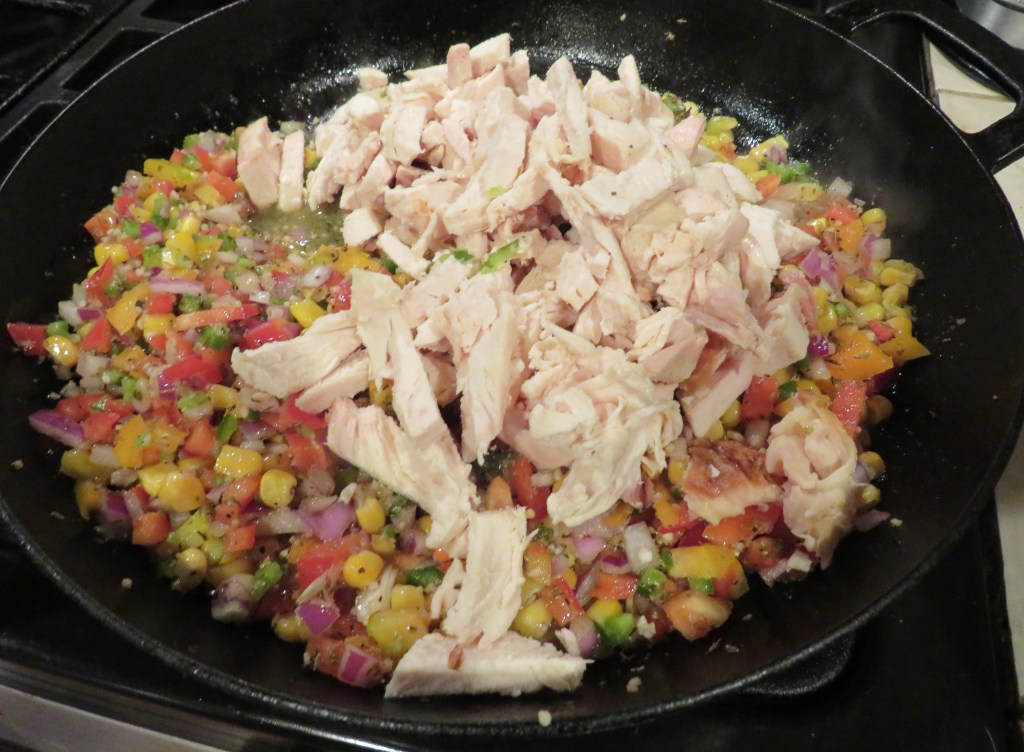
This time my filling was a chicken, vegetable and wild rice combination.

You can bake them or fry them, but my preference is to fry them. You can’t really go wrong wither way though. πŸ™‚

As you might expect, these all disappeared rather quickly. They were light and airy and just melted in our mouth. πŸ™‚

Have a great day and make everyday great. Stay safe and stay well. ‘Til next time.
Nature Walks – One Shots

No, my new camera hasn’t arrived yet, but fortunately, I have lots of pictures in stock.

If I am lucky, I am able to get multiple shots of things I like. But that isn’t always the case, especially with birds or other wildlife. Sometimes, you are lucky to get one shot. So today, I am sharing my “one shots” with you.

Cassin’s Vireo – For this one, I did get lucky and was able to get 2 shots before it flew away.

Gray-Headed Junco

Spotted Piper

Magpie

Red-Naped Sapsucker

Sometimes you only get one shot. Make the most of it. πŸ™‚

My Argentine Feast – Part 3 – Olive Caper Chicken

As with most Argentine meals, mine too, was meat heavy. They eat a lot of meats of all kinds in Argentina. Not only did I make the beef tournedos My Argentine Feast – Part 2 – BeefΒ Tournedos as a a main dish, but I also had chicken. I used another delicious recipe from the Seven Fires cookbook and made chicken with capers and olives. This is yet another recipe with both Argentine and Italian influences, as are so many of the Argentine recipes.

I plated both my chicken and my beef tournedos together.

Chicken with Capers and Olives

The recipe called for Kalamata olives. Don’t get me wrong, I love Kalamata olives, but I also love green olives. In fact, I actually like green olives more. So I ALWAYS mix my olives and use a variety of types. I have about 3 or 4 different kinds of olives in my fridge right now, but I also had a mixed olive tapenade, which worked perfectly for this recipe, especially since I had to chop them anyway.

4 chicken breasts about 6 oz each

coarse salt and fresh ground black pepper to taste

1/2 cup chopped olives

1 TBSP capers

1 TBSP fresh oregano, chopped

1 TBSP fresh thyme, chopped

1/4 cup olive oil

Combine all the ingredients together and mix thoroughly.

Pat the chicken dry with a paper towel. Coat the chicken on both sides with the olive mixture, and firmly press into the chicken.

You can cook this on top of the stove, in a very hot skillet or chapa, or you can grill it parilla style. We grilled both the tournedos and the chicken this time. As you would expect, it got rave reviews and was a big hit. Both were. I just heard from Janet and she said she gained 2 lbs from this meal alone. πŸ™‚

As I have said many times, often times, the simple recipes are the best recipes, using simple ingredients. So much of what makes a dish fancy is the presentation, and even more importantly, the love that goes into making the meal, more than anything else. πŸ™‚

!Desfruta! ! Mangia! Enjoy! Have a great day and make everyday great. Stay safe and stay well. ‘Til next time.

Nature Walks – Missing My Camera

I sure do miss my camera. It was stolen at an event we attended the other day . 😦 😦 😦 I went walk-about yesterday and saw a beautiful Heron. I tried my best to get good shots with my phone, but none of them turned out. I couldn’t zoom in and it was grainy. I also tried to take good pictures of the beautiful fall colors, that are now on full display, but again, they just didn’t turn out well.

I ordered a new camera, that is a slight upgrade to what I had. It is the same camera, just a newer version. We received notification that my new camera has been shipped, so it is just a matter of days before it is delivered. But everyday that passes is a day of missed opportunities for good shots. I also ordered a bigger memory disk, but this is what is on the way. The sooner the better!

My Argentine Feast – Part 2 – Beef Tournedos

After bottling our beautiful new wine, Midnight Malbec The Bottling Project it was time to celebrate our efforts with a feast. All vintners celebrate the harvest and the bottling with a feast, so now that we are vintners, we had to continue the tradition. Besides, I will take any opportunity to cook up a feast. πŸ™‚

All the food is authentically Argentine, and from my cookbook Seven Fires, Grilling The Argentine Way, by Francis Mallman, or at the very least, inspired from that book. πŸ™‚

The name Seven Fires refers to the seven different types of grilling methods used in Argentine cooking. They are:

  1. Asado – The Argentinian barbecue technique that involves slow cooking meat over wood coals on a brick surface.Β The word asado comes from the Spanish word asar, which means “to grill”.

2. Chapa – Β A cast-iron griddle used for cooking thinner cuts of meat and vegetables.

3. Parilla – A barbecue grate used over live coals.

4. Infusion Grilling – Wood is placed near the grill to release a gentle smoke.

5. Don’t touch –Β A principle that states to not move food once it’s in contact with heat, as this can break the crisp surface and dry out the food.

6. Use a spatula –Β Instead of poking the meat to check if it’s done, use a spatula to flip it.Β Poking the meat can cause the juices to run away and potentially catch fire.

7. Adjust the grill height – Β Authentic Argentine grills have adjustable grills so that the height can be lowered to slow down the cooking temperature and time.

Grilling meats is an artform in Argentina, and it is taken very seriously. The Argentines value quality meat and believe that slow cooking meat is better.Β They also consider the asado to be a gathering of friends and family to enjoy each other’s company. So in keeping with the Argentine tradition, I offered this delicious spread. My asado.

Beef Tournedos Wrapped in Bacon and Sage

To make these tournedos even more authentic, I topped them with chimichurri sauce.

Argentina is known for its great quality beef. Beef dishes are very prominent in the Argentine culture.

steak rounds, also known as tournedos or filet mignon, about 1 inch thick and 5 oz each

thick bacon for each piece of meat

4-5 fresh sage leaves for each piece of meat

coarse salt & fresh ground black pepper

I cut off the excess fat, then used a round cookie cutter to shape my meat.

Once the meat is cut into rounds, pat them dry with a paper towel, then lay each piece on a piece of wide cut bacon with sage evenly spaced on the bacon. Roll them up and tie tightly with cooking string to keep everything in place.

After each tournedo is rolled, season them with coarse salt and fresh ground black pepper on each side. I prepped these in advance, then took them out of the refrigerator about an hour before we placed them on the grill to cook. We cooked them on the grill, but you can also sear and cook them in a cast iron skillet on top of the stove too.

The cooking time depends on the thickness of the steak. But for a delicious, juicy medium-rare, start with about 2 minutes per quarter side, then flip until all the sides of the bacon are cooked, with some charring. Once the bacon is cooked, turn it meat side down and cook the meat for 2-3 minutes, then flip and repeat. Obviously, if you like your steak cooked a bit more, cook it a little longer. But for me, a rare medium-rare, somewhere between a 2-3, closer to 2, is perfect for me. πŸ™‚

I topped all the tournedos with chimichurri sauce, which is aΒ sauceΒ of fresh herbs, garlic, olive oil, and vinegar used to accompany barbecued meats or churrasco (grilled beef or chicken) that originated in Argentina and is also popular in Uruguay. My chimichurri sauce was authentically Argentine as well.

Chimichurri Sauce

This is a simple sauce with lots of fresh chopped parsley, garlic, olive oil, red pepper flakes, balsamic vinegar, coarse salt and fresh ground black pepper and just a dash of lemon juice. You can also use red wine vinegar too if you prefer.

1/3 cup olive oil

2-3 TBSP balsamic vinegar

1 heaping TBSP garlic

1/2 cup chopped parsley

1 tsp red pepper flakes or to taste

coarse salt and fresh ground black pepper to taste

a dash of lemon juice

Mix everything together and set aside. Then use it for your meats and anything else you want to top with it. Chimichurri sauce is the Argentine salsa, and goes with everything.

!Desfruta! Enjoy!

Have a great day and make everyday great. Stay safe and stay well. ‘Til next time.

The Bottling Project

As you know, the wine is done. We bottled it yesterday. This too was quite a project. Once again, we are used to all the technology that InVINtions has, and it was a lot different doing it the old fashioned way, on our own. But it was still fun and still an adventure. Midnight Malbec is finished and in the bottles.

Once again, Priscilla donated to this Argentine event by donating these beautiful glasses for us to use for our new wine making adventure.

Before bottling the wine, we racked it twice more and cleaned and sanitized all the bottles. We also soaked the corks in warm water for a few minutes.

Then we all gathered out on our back deck to let the bottling begin. It was definitely a group effort.

We found out that not all bottles are created equal. The juicer worked for some bottles, but not for others. So we put those aside and filled them with a funnel from the good bottles.

Once the bottles were filled, we corked them. Our little corker is a lot more difficult and challenging than InVINtions’ larger corker.

Once the bottles were corked, Bob put the foil toppers on and sealed them with his heat gun.

And …. SUCCESS!!!! Midnight Malbec is created and bottled. We are toasting our success for another fun and good day of wining adventures.

We were all very pleased with the results and the wine came out very good. We were all a little surprised at how good it did come out too, actually. In fact, we liked it so much, we have already purchased two more wine kits. One will be a chardonnay and the other a Pinot Noir. There is more wine making in our near future once again. Cheers! Slainte! Salud! A Votre Sante! Raise a glass in celebration.

Have a great day and make everyday great, and even better with a little wine. πŸ™‚ Stay safe and stay well. ‘Til next time.

My Argentine Feast – Part 1 – Cremona Bread

I made the things I can make ahead of time yesterday, such as my Cremona bread, the empanadas (they still need to be fried), and my chimichurri sauce. Everything else will be made today.

My friend Priscilla, is Argentine/Italian. She is actually in Argentina right now too. She has approved of my Argentine menu and has given it two thumbs up. But then, she did give me the cookbook, Seven Fires, by Francis Mallman, and my recipes all came from there. The name Seven Fires comes from the seven different types of “fires” used in Argentine cooking.

I am always making and trying out new things, new recipes and new learning techniques. As you know, I love to make bread, but there are so many different kinds of breads to be made. So I try them out one at a time. A new bread for me was my Cremona bread, also known as pan de Cremona. Mine didn’t come out exactly as it was supposed to, but not bad for a first attempt. This just means I need more practice, and need to make more. πŸ™‚ This is my version.

This is how it is supposed to look. Oh well. Next time. πŸ™‚

Cremona bread is an Italian bread, and most of the Argentine population is of Italian descent. The city of Cremona is known for being the home of the Stradivarious violin, since it was the home of Stradivari, the creator. It is also known for its bread. The Cremona bread traveled to Argentina with the Italians, when the Italians flocked to Argentina between 1870 and 1960 to escape economic hardship and the devastation of both world wars and they brought the Cremona with them. This bread is popular in Argentina – probably even more so than in Italy. The fringed horseshoe shape looks cool – great for feeding a crowd.

Cremona Bread

As with so many other delicious breads from around the world, it is made with simple ingredients. What makes it so special are the love and techniques used to make it. From start to finish, this bread takes about 4 hours to make.

Originally it was made with lard, but I used butter instead. Next time, I will use garlic butter too.

2 1/4 tsp dry active yeast

1 1/4-1 3/4 cups water, as needed

4 cups flour

1 TBSP coarse salt

1 TBSP olive oil

6 TBSP melted butter

Dissolve the yeast in the water and whisk together. Let set for about 5-10 minutes. Mix in the olive oil

Combine the yeast and salt in a mixer, then add the yeast mixture and mix together, starting with the paddle attachment and mix just until blended.

Switch to the dough hook and mix again at low-medium speed for about 5 minutes, or until the dough is smooth and elastic.

Shape the dough into a round ball and dust with flour. Cover and let rise for an hour, or until it doubles in size.

Roll the dough into a rectangle about 24 inches long and 8 inches wide and about 1/4 inch thick.

Brush the melted butter on the dough, then fold the shorter, wide sides into the middle, flip the dough, and repeat. You want two folds. It is similar to making puff pastry. Let it rise again for about 30 minutes.

Roll it into a rectangle and brush with the melted butter again. Then fold the dough over lengthwise, leaving about 1/2 inch of the bottom half exposed

With a sharp knife, cut slices all along the edge, making fringe or fingers.

Bring the edges together to make a flat circle. I think my problem was then I made it into a circle, like the recipe said to do, rather than making into a semi -circle. See, once again, I followed the directions, and it didn’t turn out. πŸ™‚

Cover and let rise again for about 45 minutes. Preheat the oven (or horno) to 400*F or 200*C. Brush with more melted butter, if you like, and bake for about 30-40 minutes, or until it is golden brown and crisp.

I will reheat it again right before serving, so it it will be nice and hot. I did take a little sample. It is very good. !Disfruta! πŸ™‚

Have a great day and make everyday great. Stay safe and stay well. ‘Til next time.
Nature Walks – Things That Fly

Not all winged creatures and things that fly are birds. Lately, I have been seeing a lot of other things that fly too.
There are lots of grasshoppers all around these days. I don’t remember so many from years past.

We also have a lot of bees, which is a very good thing. We need our bees.

We also have quite a few moths fluttering around too.

Size doesn’t always matter. Just like with diving, sometimes we need to focus on the smaller animals too.