I have created this site to help people have fun in the kitchen. I write about enjoying life both in and out of my kitchen. Life is short! Make the most of it and enjoy!
Author: ajeanneinthekitchen
I have worked in the restaurant and catering industry for over 35 years. I attended 2 culinary schools in Southern California, and have a degree in culinary arts from the Southern California School of Culinary Arts, as well as a few other degrees in other areas. I love to cook and I love to feed people.
I have been seeing a lots of crows lately and yesterday I saw one just posing in my neighbor’s tree. He was begging me to take his picture. Of course I obliged. I think he was very photogenic too.
Have a great day and make everyday great. Stay safe and stay well. ‘Til next time.
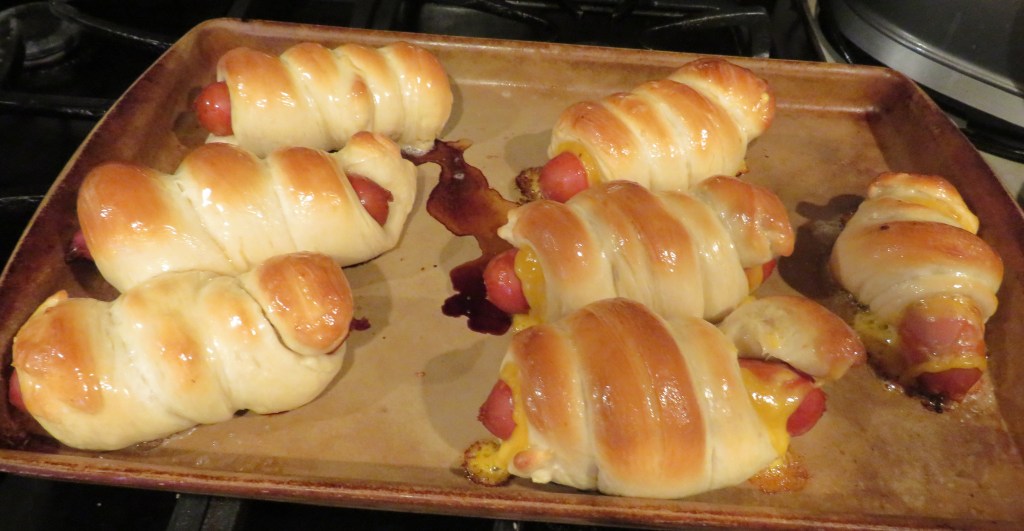
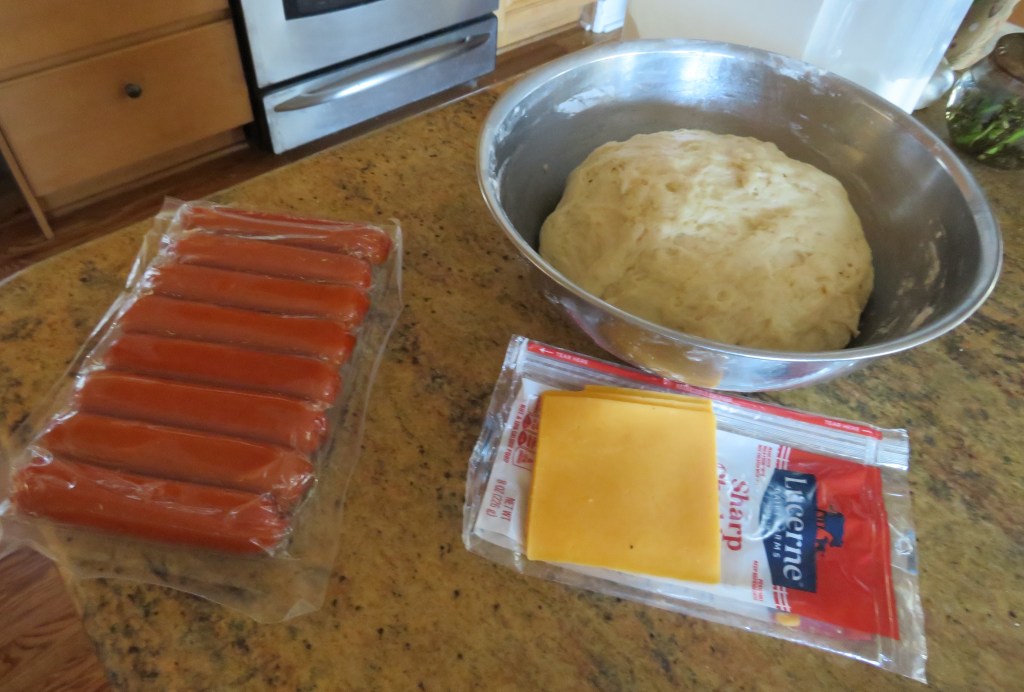
The other day, while in the store, I came across some hot Polish sausages. They made me think of something my mother-in-law Ollie makes a lot; sausage rolls. It’s something Larry grew up with, and they just sounded so good. Ollie makes hers with the same dough she uses for her bierocks (runzas), Baking Bierocks but I wanted to try them with my soft pretzel dough instead. They came out really good too. Each bite was a mouthful of spicy, soft and chewy, with just a bit of a crunch too. YUMMY!
I used my same soft pretzel dough that I made my pretzel’s with for New Year’s Day. Double Good Luck – Part 2 Some I made with cheese and some were just plain.
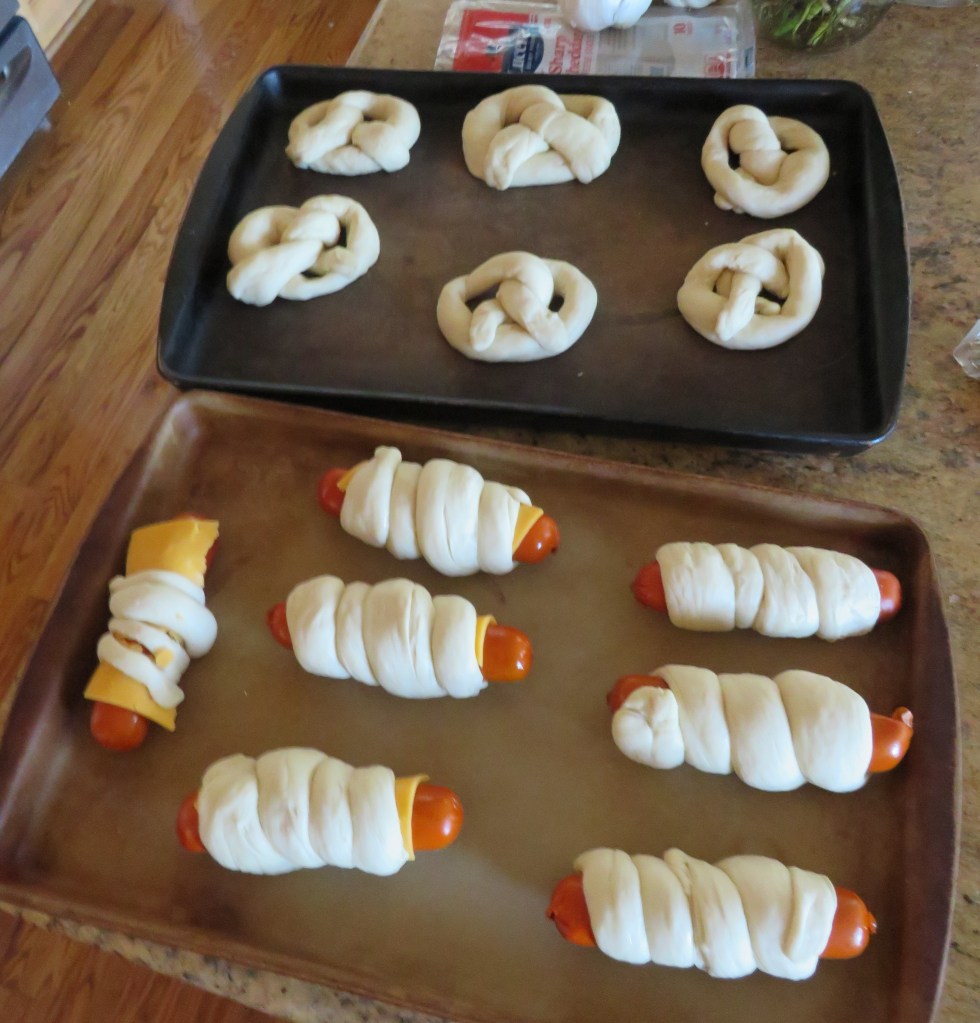
I rolled the dough out into very thin long strips, just the same as I would for pretzels, and then just wrapped it around the Polish links. For the cheese links, I just added a piece of cheese before wrapping it. One was just some of the extra dough I had.
I did make a few pretzels too, which I ended up taking over to my neighbor across the street.
For the Polish rolls, I added an egg wash to the dough before baking them. I baked them at 450*F or 232*C for about 20 minutes, or until they browned up. And just like I did with the pretzels, I brushed them with a little melted butter immediately after removing from the oven, to give them a little extra shine and a light buttery flavor. I did not cook the sausages before wrapping them. You can use any kind of sausages you like for these too.
These were dinner last night, served with French fires and some peas. It was just a simple dinner. Sometimes, we need those. It was also a little trip down memory lane for Larry, since he grew up with these. Things don’t have to be fancy to be good. Sometimes, we just want good, simple, comfort food. 🙂
Have a great day and make everyday great. Stay safe and stay well. ‘Til next time.
Anything even remotely sounding like Spanish food is definitely going to peak my interest. So when I found this recipe for chicken Marbella, I knew I definitely had to try it. The name, as you would guess, was inspired by Spanish and North African foods and ingredients found around Marbella, Spain and North Africa.
Chicken Marbella was created by the owners of The Silver Palate in New York in the 1970’s. The dish features a unique combination of ingredients, including prunes, olives, capers, garlic, red wine vinegar, brown sugar, and white wine. We’ve been to Marbella and dived there too. I LOVE Marbella, but then again, I also absolutely LOVE all of Spain! 🙂
Chicken Marbella
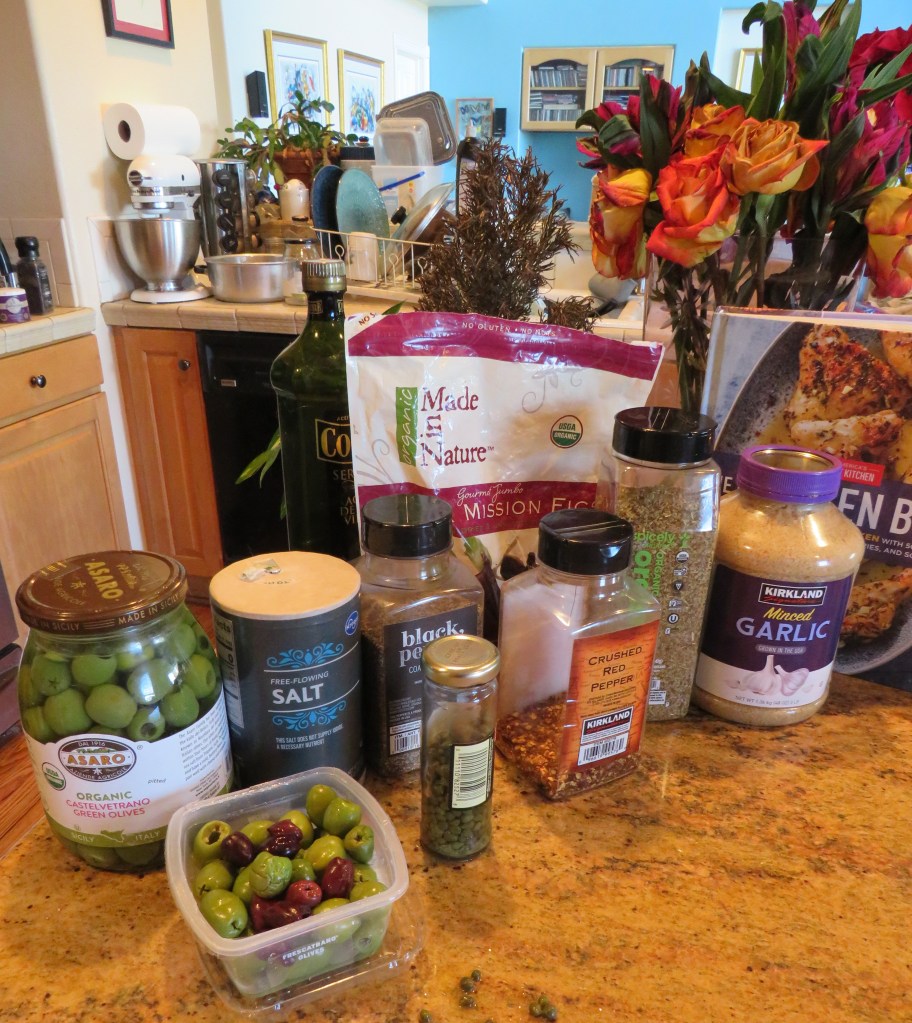
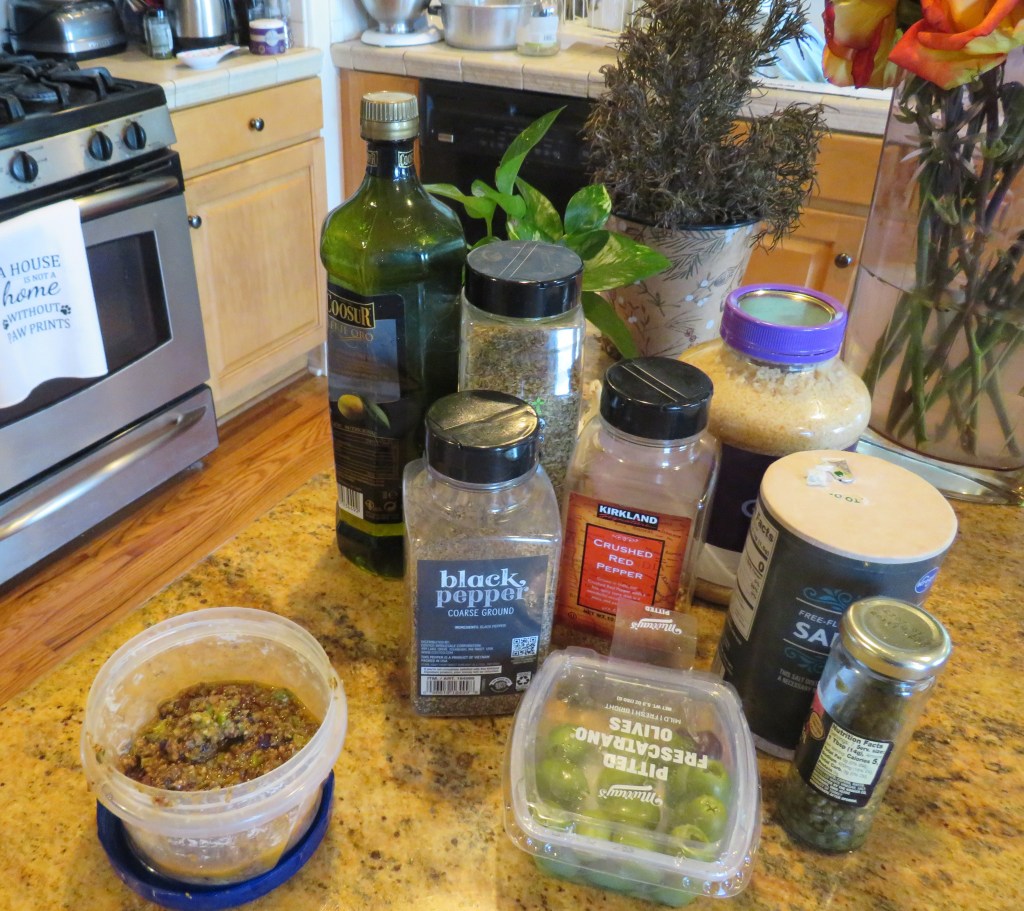
I made my olive paste first. I know I had prunes, but of course, on the rare occasion that I wanted to use them, I couldn’t find them. I used figs instead of prunes, which I actually prefer anyway. So you can use either, and the recipe will turn out very good indeed. The original recipe also called for anchovies, but I HATE anchovies, and NEVER use them. So needless to say, they were not a part of my recipe either. 🙂
The Paste
1/3 cup pitted green olives
1/2 cup soft figs
3-4 TBSP olive oil
1 TBSP garlic
1/2 tsp dried oregano
salt & pepper to taste
pinch of red pepper flakes, or to taste
Put everything into the food processor and process until it becomes a chunky paste. You can make this up to 24 hours in advance too, and just keep it in the refrigerator until ready to use.
The Chicken
2 1/2-3 lbs chicken
salt & pepper to taste
1 TBSP olive oil + more for cooking the chicken
3/4 cup chicken broth
1/3 cup dry white wine
1/3 cup pitted green olives, cut in half
1 TBSP capers, rinsed
1/3 cup soft figs, chopped
1/4 cup Peruvian peppers, optional
butter
1 tsp red wine vinegar
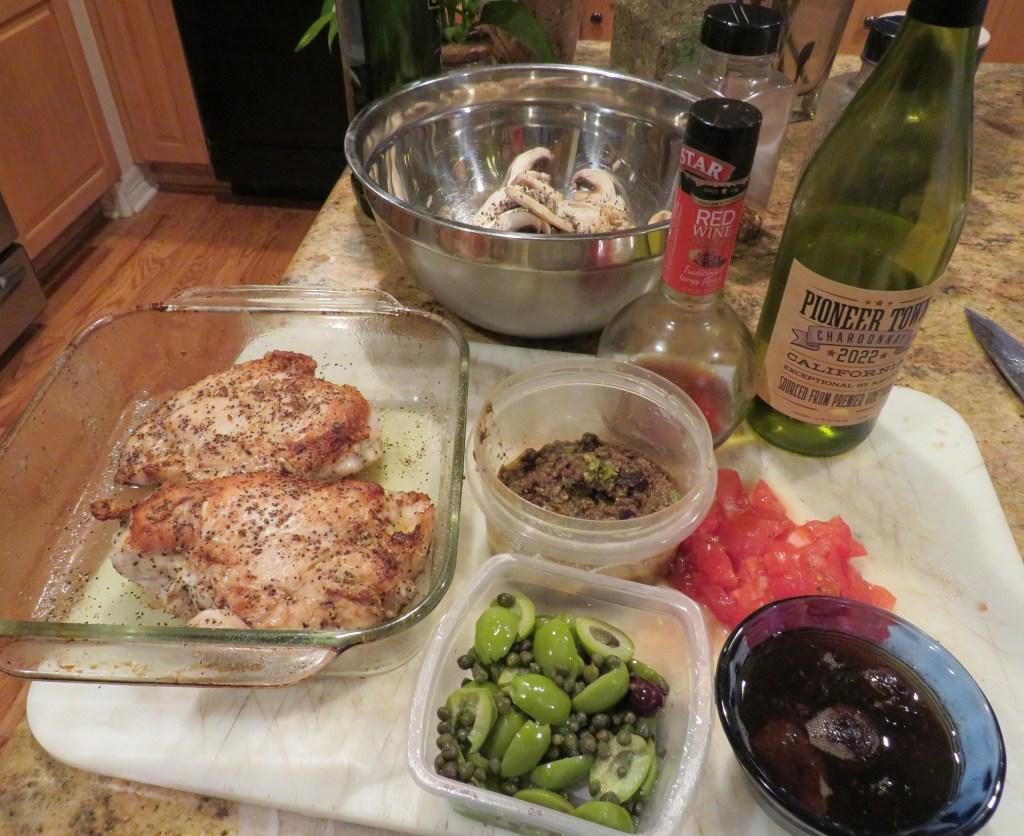
Pat the chicken dry with paper towels, then coat with salt, pepper and olive oil on both sides. I used lemon olive oil to give it a little extra umph.
Preheat the oven to 400*F or 205*C.
Spray a baking dish with cooking spray.
Get a very large skillet very hot and add olive oil and butter to brown the chicken completely. Cook for about 8-10 minutes.
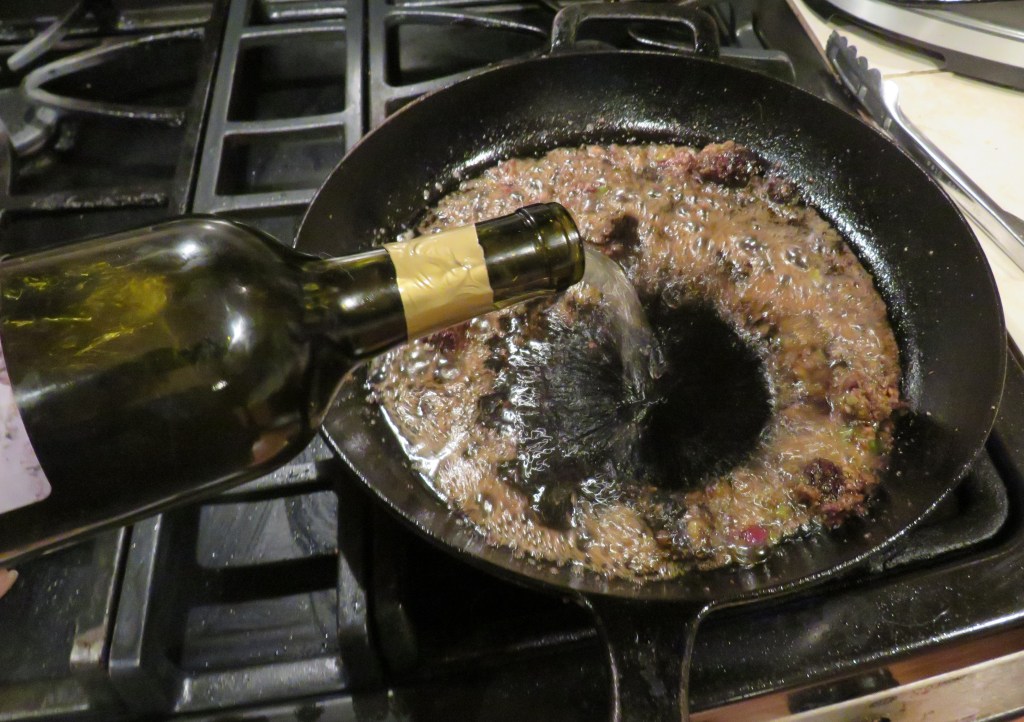
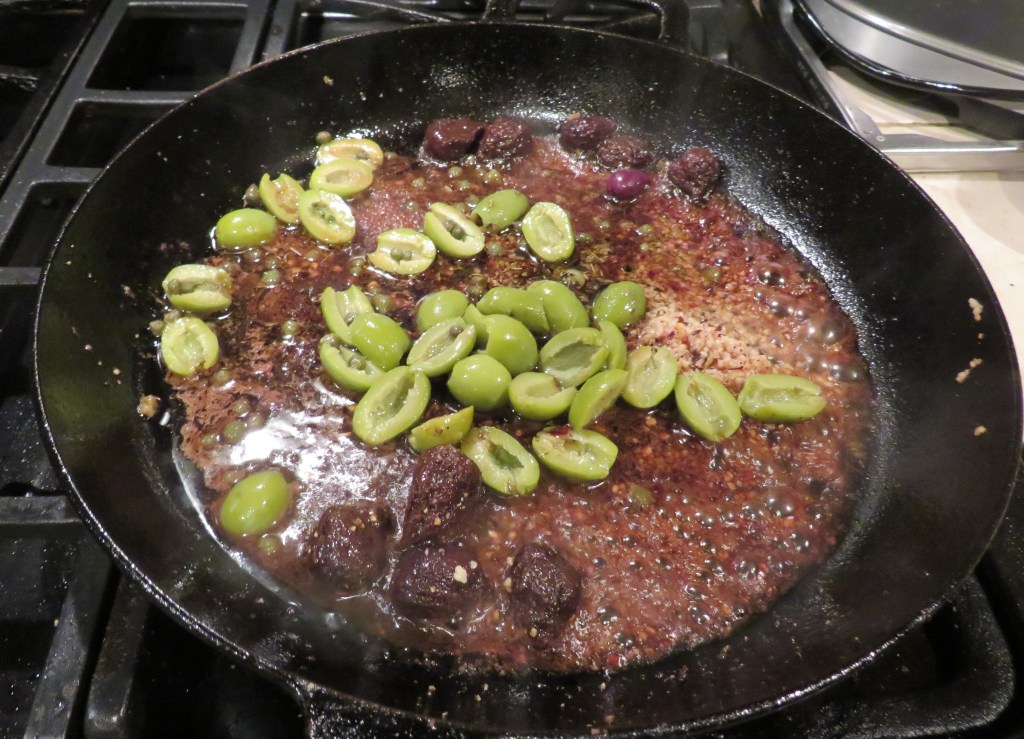
Drain off the excess fat from the skillet, then add about 1/3 cup of the olive paste to the skillet, and cook for about 2 more minutes. Deglaze the pan with the wine, and let cook for an additional 2 minutes, then add the broth, olives, capers and figs.
My figs needed reconstituting, so I just soaked them in a little wine, and added the whole thing to my mixture. I also added Peruvian peppers to the mix as well.
Combine everything together in the prepared baking dish and re-add the chicken. Bake uncovered for about 15-20 minutes, or until the chicken is completely cooked and the internal temperature reaches about 160*F or 71*C.
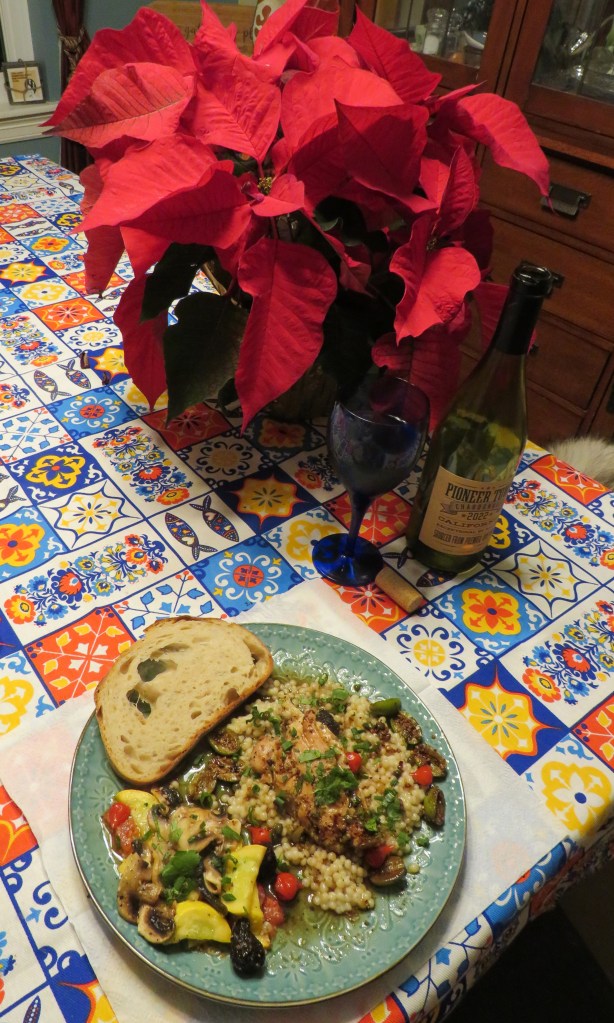
Keeping in the Spanish/North African themes, I served it over couscous. I also added some sauteed crookneck squash, shallots, garlic and more Peruvian peppers on the side, for more vegetables, and added some warmed sourdough bread and a cool, crisp chardonnay on the side too. A Spanish Albarino would be perfect, but I didn’t have any on hand. I topped it with a little chopped cilantro and green onions.
!Esta mui bueno y delicioso! This is definitely something you would find all throughout Southern Spain and Northern African, particularly around Cueta (been there too) and Morocco. If you like Spanish foods, I guarantee you are going to like this dish.
Have a great day and make everyday great. Stay safe and stay well. ‘Til next time.
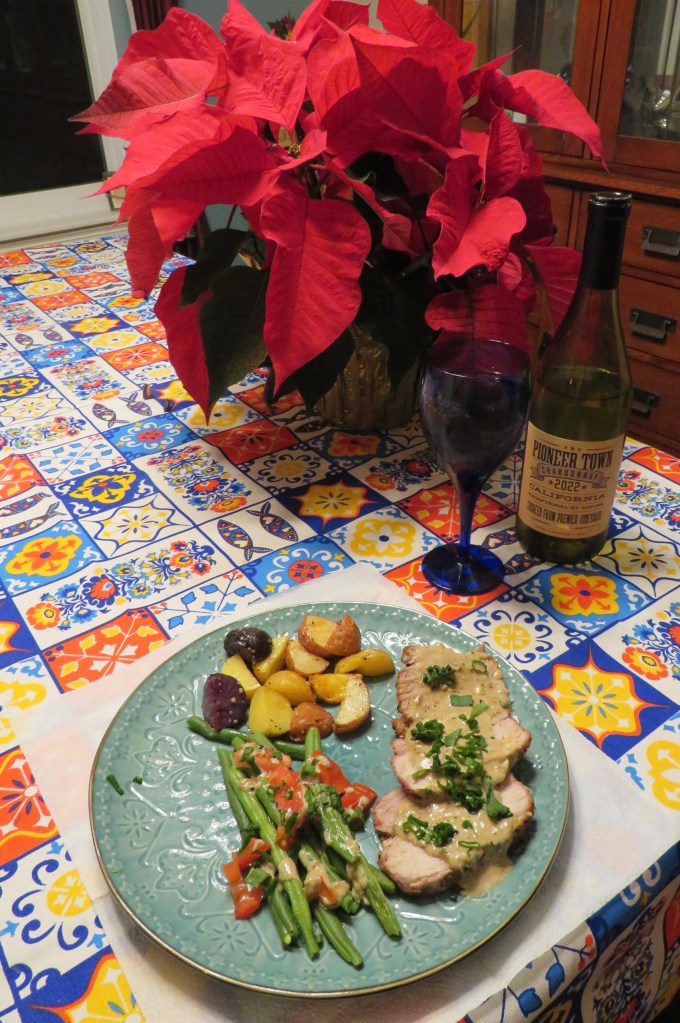
Pork roast was our meat choice for dinner, since it was what we most recently took out of the freezer and was next in line in the meat rotation. It was a chilly day, and we are taking down all the Christmas decorations, so it just sounded like a perfect post holiday meal. To me, no meal is complete without a sauce, and the sauce makes the meal. I made a dry vermouth and shallot sauce to go with the pork. DELICIOUS! I served it with some roasted potatoes and green beans topped with tomatoes, with a cool, crisp chardonnay on the side.
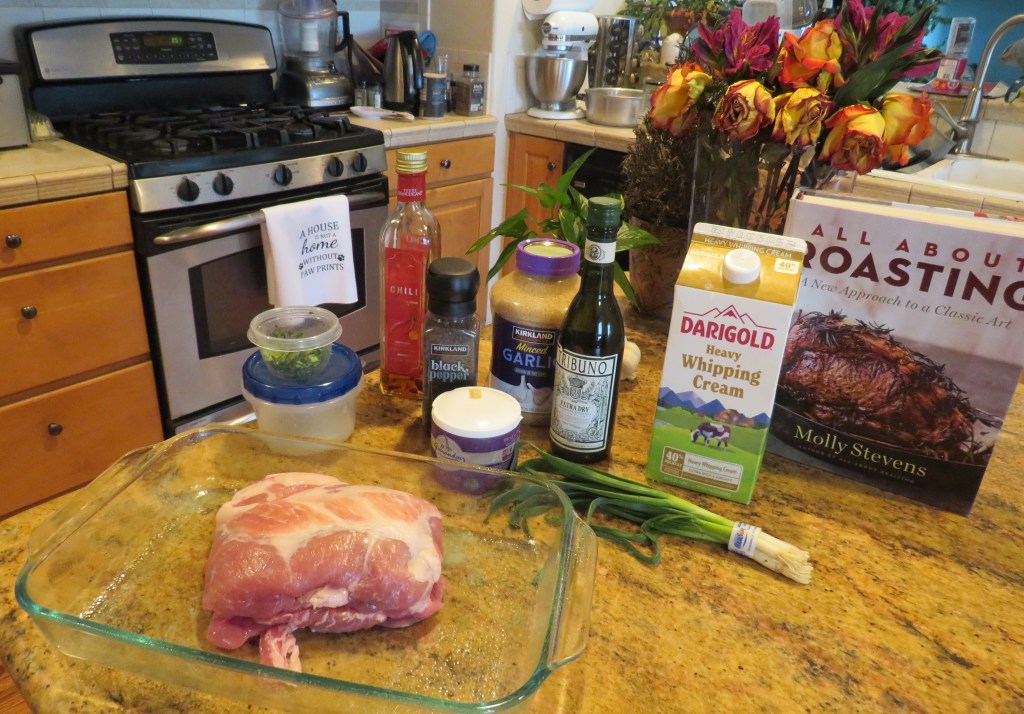
My pork roast was between 3-4 lbs. After patting the roast dry with paper towels I coated it thoroughly with coarse salt, pepper and a little chili oil. Normally I would have let the pork rest with this coating for about 3-4 hours before starting to cook it, but I didn’t know this was what I was making for dinner until it was too late to do this. So I only let it rest for about 30 minutes instead. It all worked out fine though, as things usually do. I was worried that my roast would be tough because I didn’t have a chance to let the salt tenderize it. But I was wrong, and it was so tender, juicy and full of flavor.
Preheat the oven to 400*F or 205*C.
Spray a baking dish with cooking spray.
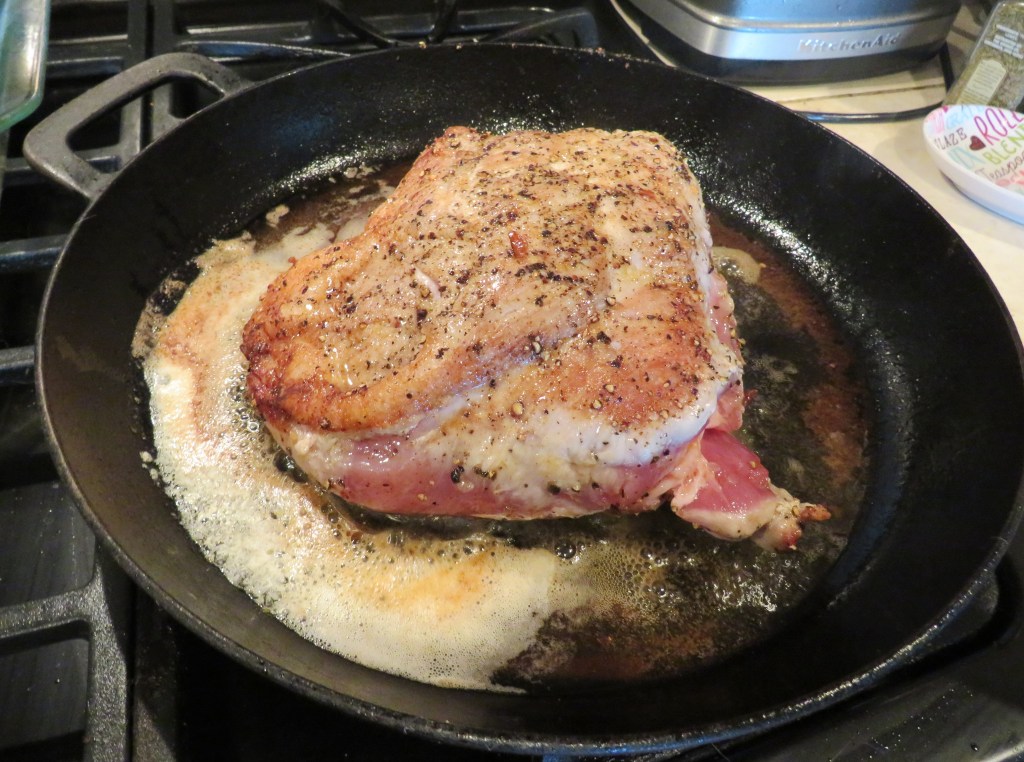
I let it rest at room temperature for about 30 minutes before searing it on all sides to give it a nice crust. I seared it for about 3 minutes per side in a VERY hot skillet with both olive oil and butter.
Once the pork was seared completely, I roasted it for about 40 minutes, or until the internal temperature reached 160* F or 71*C.
While the roast was cooking, I made everything else for dinner, and then made my dry vermouth and shallot sauce, all while still wrapping up the Christmas decorations and ornaments too. 🙂
Dry Vermouth Shallot Sauce
1 large shallot, minced
1/4 cup dry vermouth
1 cup chicken broth
1 cup heavy whipping cream
freshly ground black pepper to taste
After removing the pork from the skillet, I drained off some of the oil and butter, then added the minced shallots and let them cook for about 2 minutes.
Next came the vermouth, that I let cook down for about 3 minutes after scraping the bottom of the skillet. You always want to deglaze your pan. Those scrapings are full of flavor and texture and they really add depth to your sauces.
Add the chicken broth and pepper, thoroughly incorporate and cook for an additional 5 or so minutes, or until it reduces by about half.
Add the cream, bring to a boil, then reduce the heat to a simmer and continue to cook for about 5-7 minutes, stirring frequently.
When the roast is at the internal temperature of 160*F, remove it from the heat and let it set for about 5-10 minutes before slicing. Slice into thin slices and top with the dry vermouth and shallot sauce and serve with side dishes of your choice. Top with chopped parsley and/or cilantro and green onions.
Like I said, I was afraid my roast would be tough because I didn’t let it rest and set like I usually do, but thankfully, it was so tender and juicy instead. It came out just perfect.
Have a great day and make everyday great. Stay safe and stay well. Continued prayers to Californians in these scary and horrific times. ‘Til next time.
Yesterday, I was in a serious frame of mind and posted about the devastation of my hometown and hometown areas Phoenix Rising. I am still in shock and dismay. As my dear friend Priscilla so profoundly said, “I am both sad and mad about all that is taking place in California right now”. Priscilla too is from Pasadena. We grew up together, in the same area, going to the same school, and knowing the same people. But all we can do, especially with both us now living here in Colorado, is pray for California and Californians. Thank you all so much for the kind words, thoughts and prayers. They help more than you know.
But that was yesterday. Today, let’s lighten things up a bit. I am going to share some healing food thoughts that will hopefully bring a smile or two and hopefully bring a little healing therapy as well.
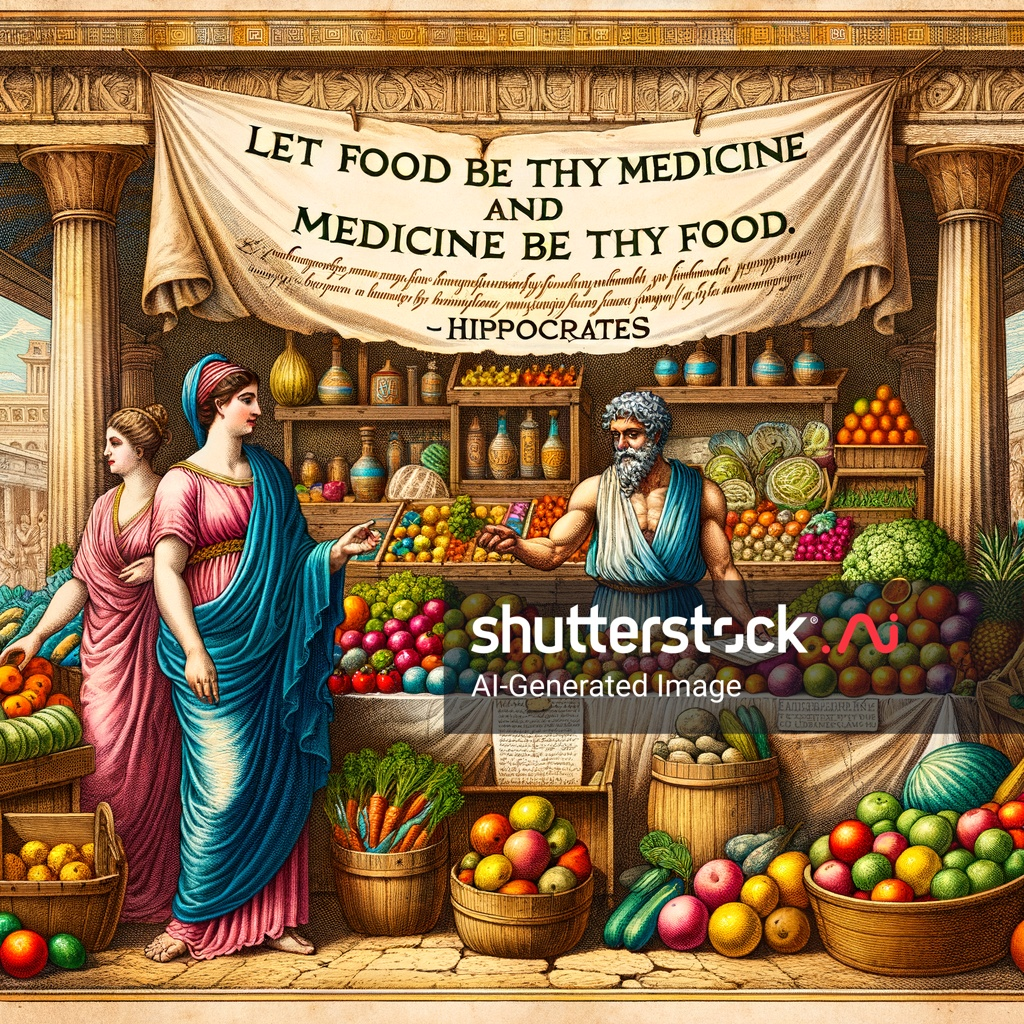
“Let food be thy medicine and medicine be thy food.” – Hippocrates
2. “Healthy citizens are the greatest asset any country can have.” ― Winston Churchill
3. “Eating crappy food isn’t a reward — it’s a punishment.” ― Drew Carey
4. “The first wealth is health.”― Ralph Waldo Emerson
5. “No disease that can be treated by diet should be treated with any other means.” ― Maimonides, Jewish philosopher, jurist, and physician, the foremost intellectual figure of medievalJudaism
6. “In my food world, there is no fear or guilt, only joy and balance. So no ingredient is ever off-limits. Rather, all of the recipes here follow my Usually-Sometimes-Rarely philosophy. Notice there is no Never.” ― Ellie Krieger, “The Food You Crave: Luscious Recipes for a Healthy Life”
7. And my favorite – “If your arteries are good, eat more ice cream. If they are bad, drink more red wine. Proceed thusly.” ― Sandra Byrd, “Bon Appetit”
Have a great day and make everyday great. We all have bad days and bad things happen to all of us. It is how we deal with those things that defines who we are. I was always taught we have two choices – we can either be a victim or we can be victorious. I choose victory over victimhood all the time, everyday. And you can too. ‘Til next time.
As you all know, I am from Pasadena, California. Pasadena is a major suburb of Los Angeles, about 13 miles northeast of the city, and is a major city in its own right. Pasadena, Malibu, Pacific Palisades, Altadena and Sierra Madre, and many other places in Los Angeles County have all been burnt to a crisp. The once beautiful areas now look like war zones. I know many people who have been affected by these horrendous fires. I have friends who were helping fight the fires to protect their homes and the homes of their neighbors. I have friends who have been evacuated. And I have friends who have lost everything. All they know right now is sheer and utter chaos and uncertainty. No one knows what tomorrow will bring, and many people have no idea if they still have a home or not. Many of the places that meant so much to us over the years are now gone forever, swept up by the flames. Everyone I know is devastated, whether we live in California or not. I also know that Angelinos are tough and resilient. They will rebuild. They will move on. They will prevail. And they will rise up from the flames like the Phoenix. God speed and God bless.
A phoenix risingin vibrant flames, emerging fromsmoldering ashes, is a symbol ofrebirth and strength.
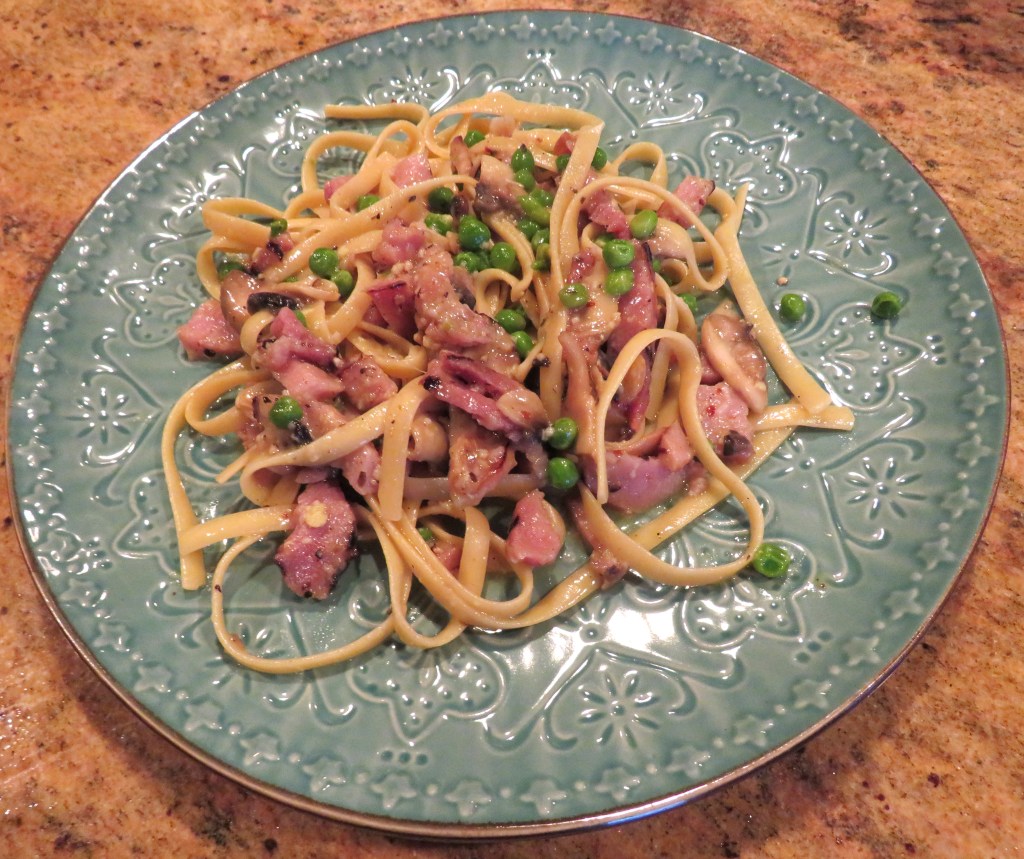
The “Queen” stopped over again to pay a visit. This time we were going Italian style, making fettuccine carbonara out my leftover ham and pasta. I love it when she come by to visit. We always get so creative. 🙂
Carbonara dishes are definitely Italian in origin, but no one is exactly sure what part of Italy it originated in. There is speculation and debate on this. Some people say it hails from Rome and the Lazio region, where others believe it originated in the Naples area because it closely resembles pasta cacio e uova, a Neapolitan dish of pasta tossed with melted lard, beaten raw eggs, and cheese, as documented in Ippolito Cavalcanti’s 1839 Neapolitan cookbook. The word carbonara comes from the word carbonaro, which means coal burner. It is believed it came about by men working outside for long periods of time, and was a hearty, easy to make meal for them. Others trace it to the Allied liberation of Rome in 1944, with American GIs bringing their daily ration of eggs and bacon to local restaurants to add to the limited Italian menu. No one knows for sure, and as with many things, it is surrounded by mystery and speculation.
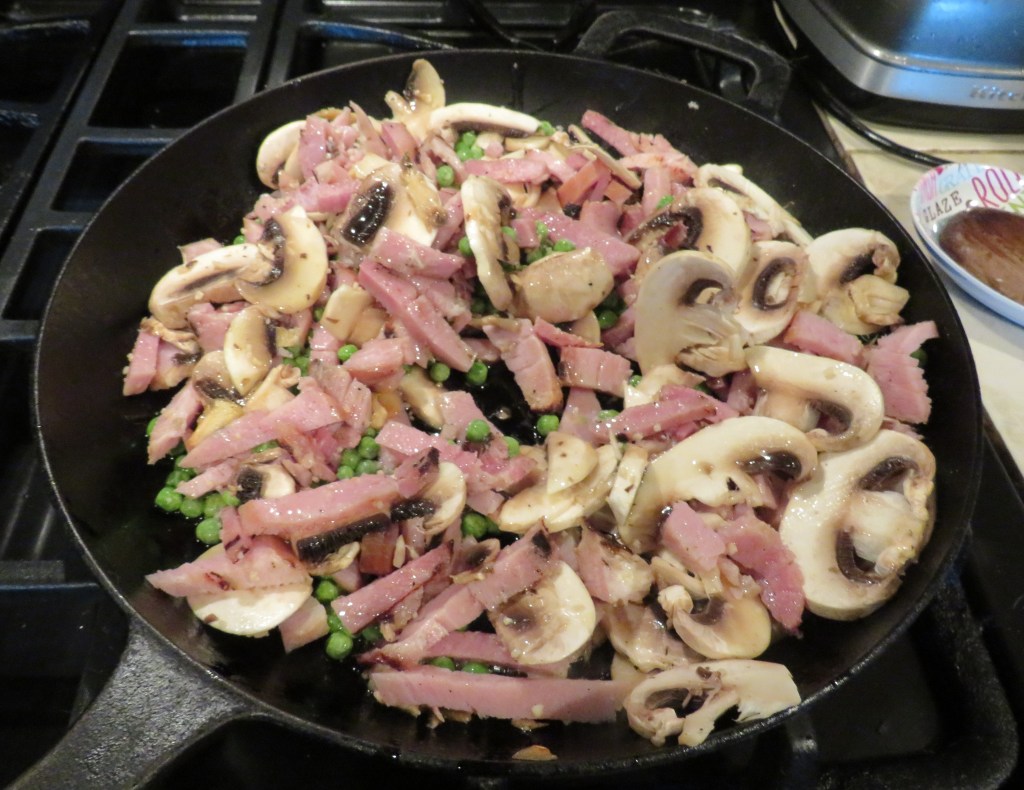
Any type of pasta can be used for this simple dish, but most often it is spaghetti, linguini or fettuccine. It is a simple, poor man’s dish made from pasta tossed with a creamy sauce of raw beaten eggs, accentuated with crisp bits of guanciale, and finished with a shower of grated aged Pecorino Romano cheese plus freshly ground black pepper. I added ham instead of the guanciale, Italian bacon, and added peas and mushrooms as well. What can I say, I like stuff in my stuff. 🙂
Fettuccine Carbonara
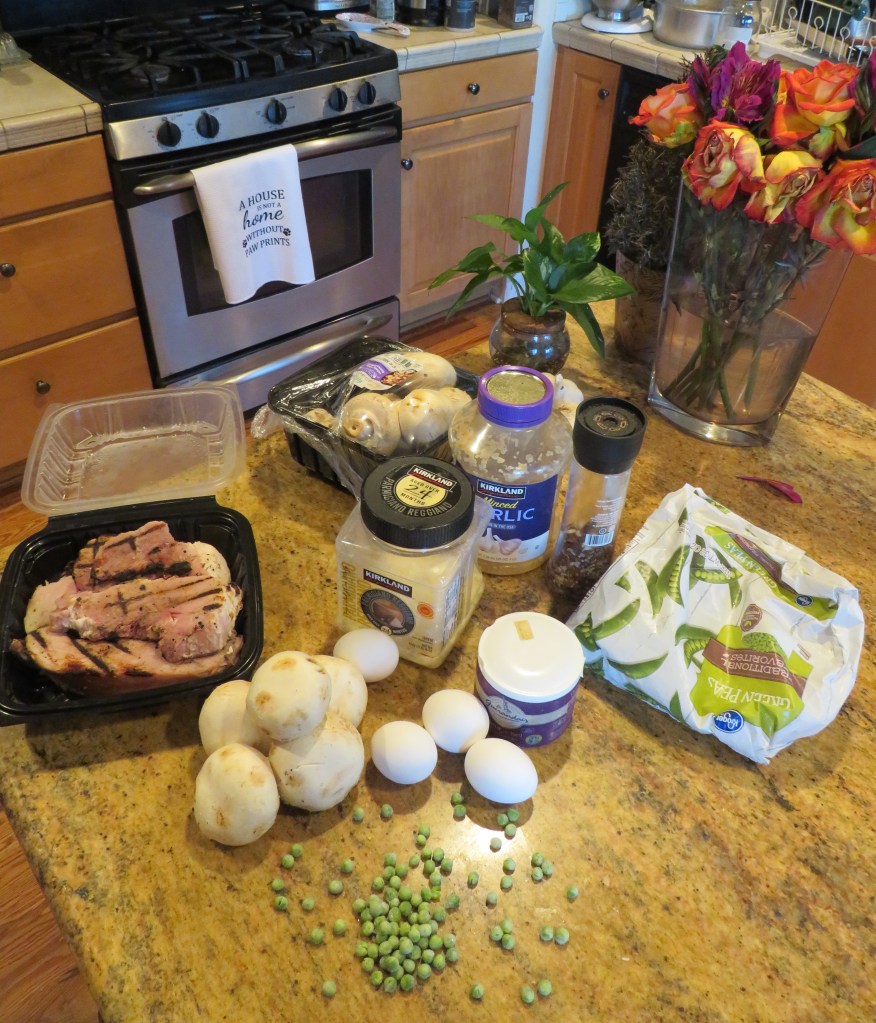
16 oz cooked fettuccine
1/2 lb ham or bacon, cut into batons or thin strips
2 whole eggs + 2 egg yolks
1 cup shredded Parmigiano cheese
1 TBSP garlic
lots of fresh ground black pepper
1- 1 1/2 cups peas
1-1 1/2 cups mushrooms, sliced
olive oil for cooking
Combine the eggs, cheese and pepper together and set aside.
Get a large skillet very hot, then add some olive oil and add the ham, peas, mushrooms and garlic. Cook for about 5-7 minutes, or until everything is hot and the meat is cooked.
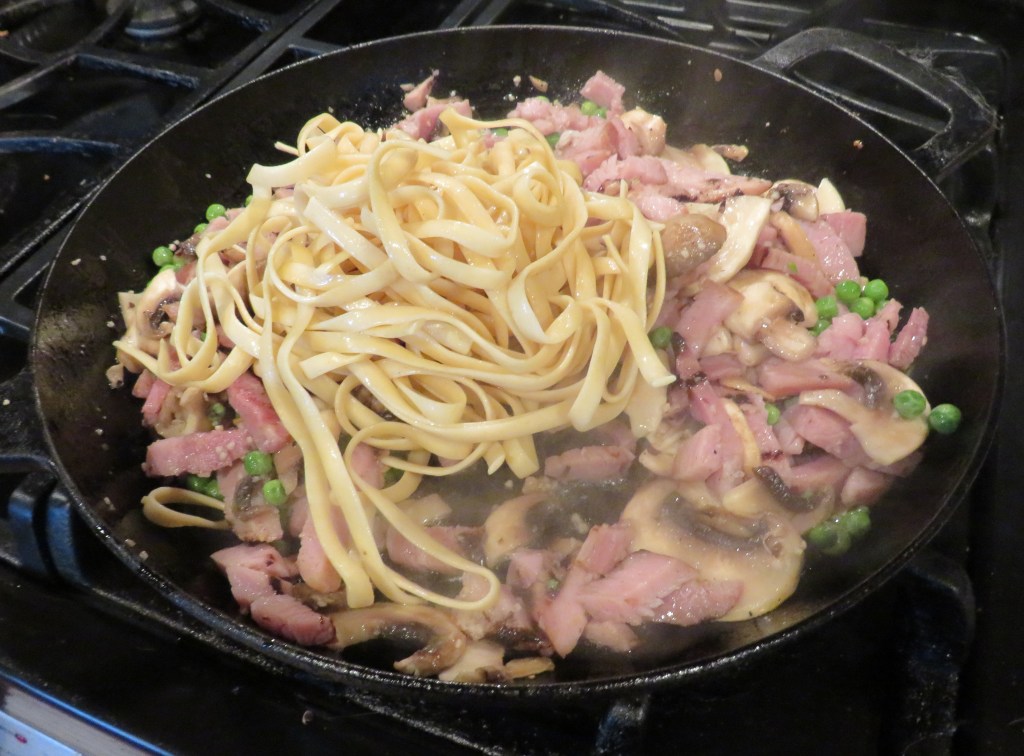
When everything is cooked, add the cooked pasta and toss everything together well.
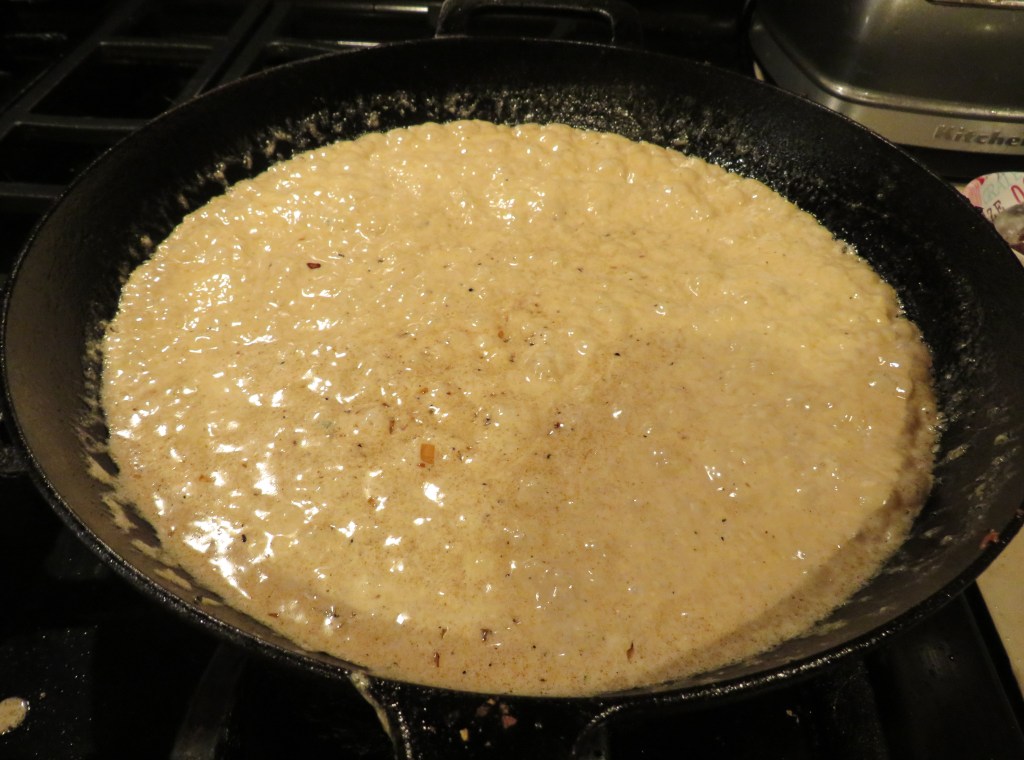
Turn off the heat. Whisk the egg and cheese combination together and add to the pasta mix. Mix everything together thoroughly.
Serve immediately after, with a cool, crisp chardonnay, or Pinot Grigio on the side and enjoy. !Mangia!
This is a quick, easy-peasy, hardy meal that will keep everyone coming back for more.
Happy New Year everyone. May it be a healthy, happy, prosperous year for all. ‘Til next time.
We humans LOVE our sweets. We have for many 1000’s of years. Archeologists have discovered that we have been craving sweet tasting foods for at least 10,000 years. There are many theories behind our sweet cravings too.
One reason for our sweet tooth is because foods that taste sweet usually have a higher caloric count and provide an energy boost. The sugar high is real. Back in the early years of humans, these characteristics were helpful survival methods.
Another theory is that sweet foods helped people avoid bitter tasting toxic foods. It was thought the sweeter the food, the safer it would be. (Not taking into account all the problems we now know of that are attributed to eating too much sugar today).
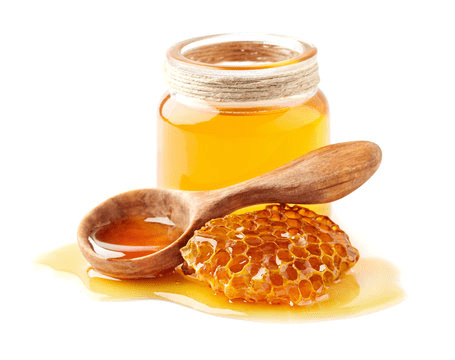
Honey was the first form of sweet foods. Evidence supports that honey was gathered by the primitive peoples of the Mesolithic Period, over 10,000 years ago. Honey is thought of as one of the most prized foods in history. Today, honey is cultivated all over the world.
Honey is rich in nutrients and has many curative and healing properties for all kinds of ailments and wounds. In the early days, these healing properties often made the difference between life and death to many people.
Honey is also one of the few foods that NEVER really goes bad, if properly stored. Honey has been found in ancient Egyptian tombs, that is 1000’s of years old, that is still good and edible today.
In the tropics of New Guinea, there was another type of sweet produce that was growing wild. It was the native sugar canes. The New Guineans started cultivating this wild plant about 6000 BCE. Through trade, the popularity of this delicious sweet cane spread to Polynesia and India. The crude form of sugar was extracted from the sugar cane came from India abound 400 BCE. From there, sugar cane spread again, and is grown in warm, tropical climates all over over the world.
Brown sugar is another form of sugar, that is richer and darker than refined white sugar. Brown sugar is made by adding molasses syrup to boiling sugar crystals or coating white granulated sugar with molasses. It contains more moisture than white sugar, which is why it hardens over time and behaves differently in baking. While sugar beets and sugar cane are used to make white granulated sugar, only molasses from sugar cane is used in the production of brown sugar. Molasses from sugar cane is what gives brown sugar its color, with less needed to make light brown sugar and more for dark brown sugar.
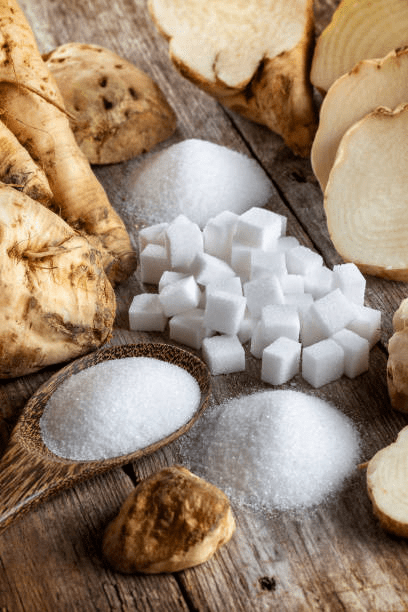
During the Renaissance times in Europe, sugar was only something the very rich could afford. Sugar was known as white gold and a small bag would cost the equivalent of a day’s wages. It wasn’t until the early 19th century that refined sugar became popular amongst the average lay people. And that was after German chemist, Andreas Margraff, discovered the sweet sugar qualities from sugar beets.
In 1700, people consumed about 4 pounds of sugar per year. By 1800, people consumed about 22 pounds per year. By 1900, people consumed about 90 pounds per year. By 2012, over 50% of Americans consumed a half pound of sugar per day – or, over 180 pounds of sugar per year. We definitely have an insatiable sweet tooth! The more we have, the more we want.
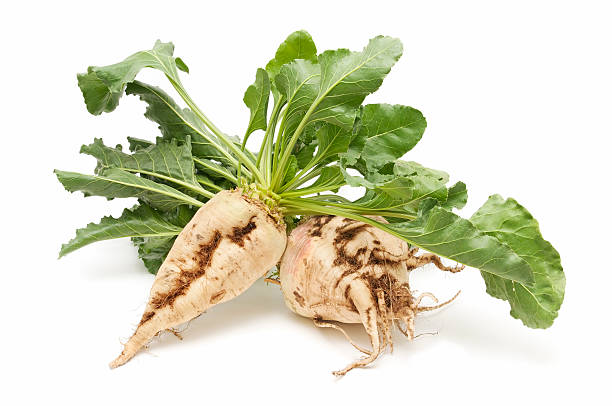
Sugar beets are root vegetables that prefer colder climates, so they are grown all over Europe and Russia. With the discovery of the sugar beets, sugar became much more readily available and cheaper to everyone, thus becoming a staple in the 19th and 20th centuries around the world.
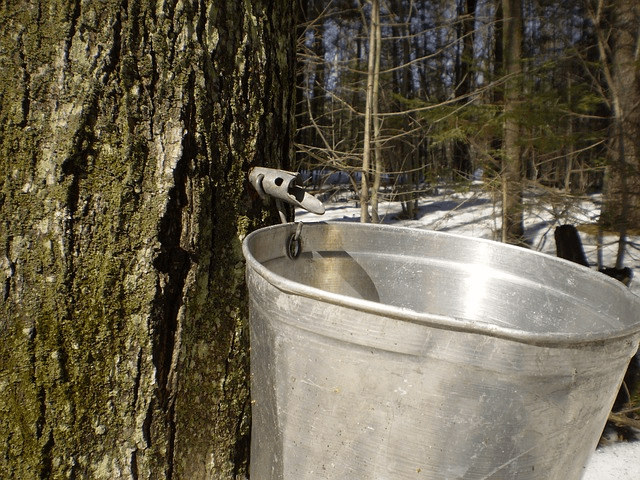
There is also maple syrup, only produced in Canada, New England and the Appalachian Mountains of the United States. There are roughly 128 different species of maple trees, but only a few are suitable for making maple syrup, with a high sugar content of about 2-5%. About 80% of the world’s maple syrup comes from the Quebec area of Canada. It is graded on the density and color of the syrup, that has been boiled down from the sap. The darker the color, the stronger the flavor.
So satisfy that sweet tooth, but in moderation. As we know, consuming too much sugar, or anything for that matter, definitely has its consequences too. Happy New Year. May it be safe, happy, healthy and prosperous for all. ‘Til next time.
The other day, when I made my mole beef short ribs, Mole Short Ribs I had a lot of mole leftover. You all know how I love to re-create with my leftovers, and I did once again. This time I used my mole to make enchiladas with chicken and vegetables o enchiladas con mole, pollo y verduras.
Enchiladas are very popular, and can be made savory or sweet. They lend themselves to just about anything. You can roll them or layer them. I do both. This time I layered them. I actually prefer them layered.
Preheat the oven to about 375*F or 191*C.
Spray a 9×13 baking dish with cooking spray.
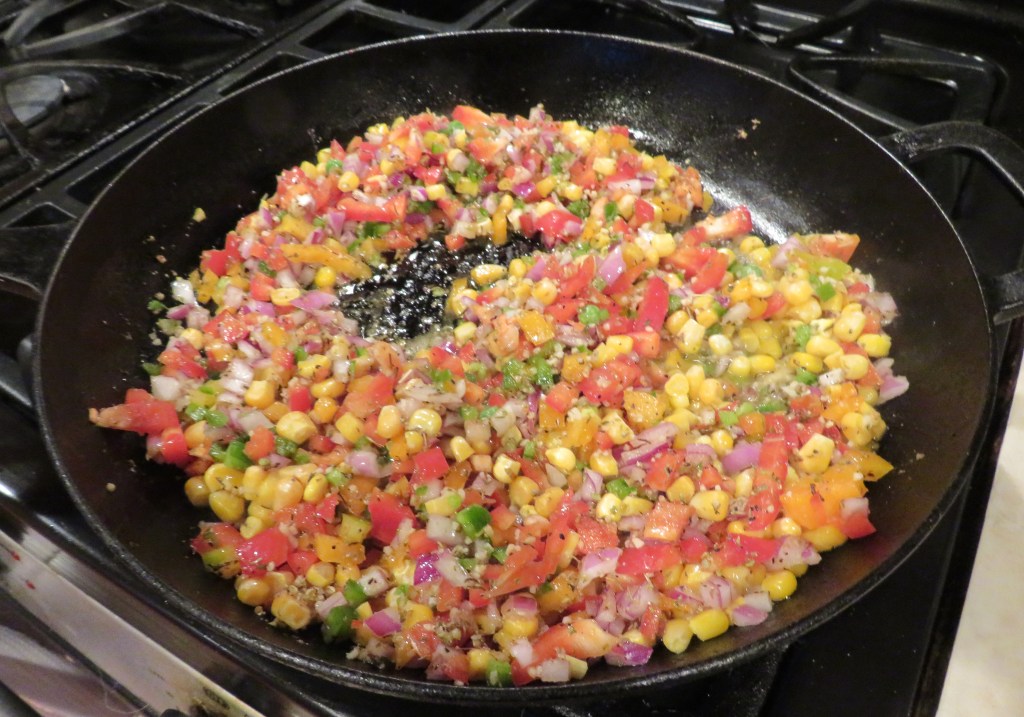
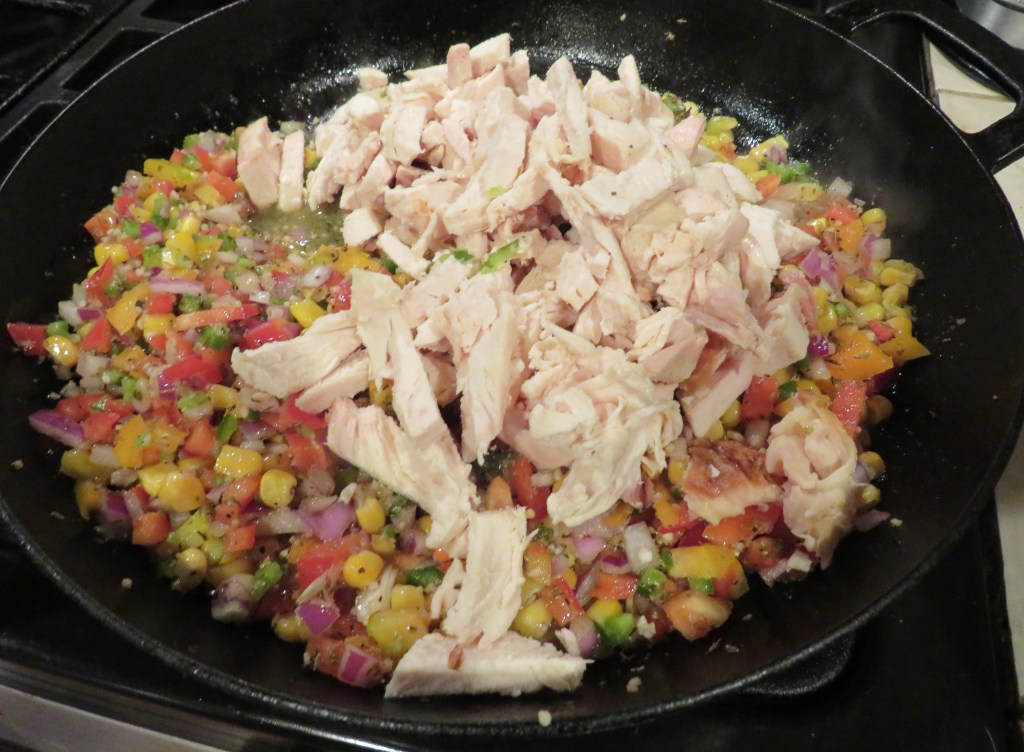
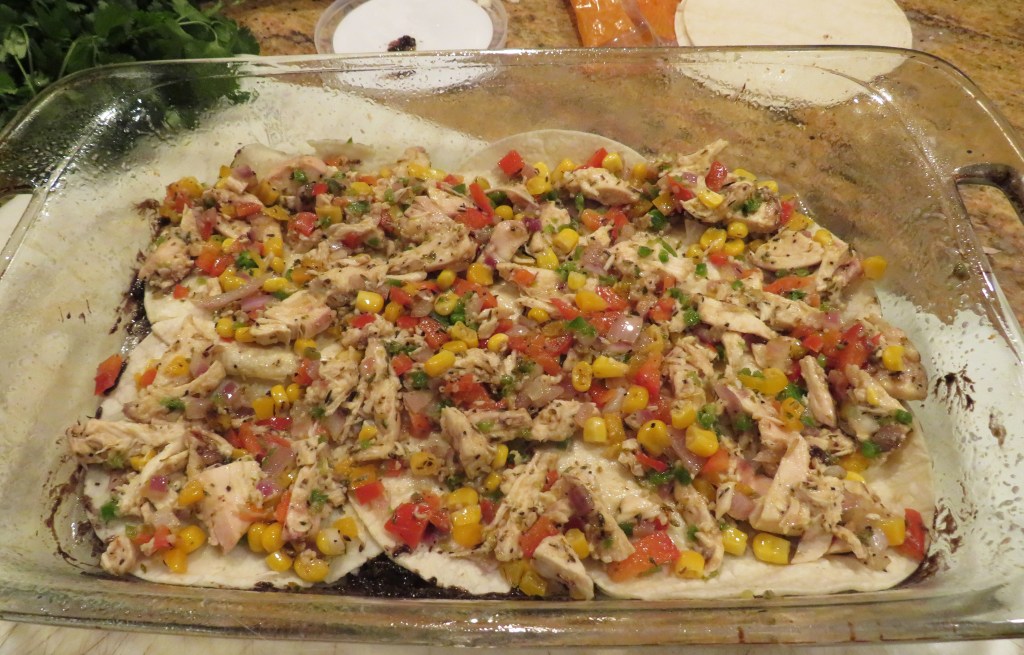
You can use any kind of vegetables you like, but I kept it simple, with Mexican style vegetables. I used red and orange bell peppers, garlic, red onions, jalapenos, and corn as my vegetable filling. I sauteed them until they were softened and tender, then added some leftover shredded chicken (already cooked). I added some cumin, oregano, thyme and salt & pepper to the mix.
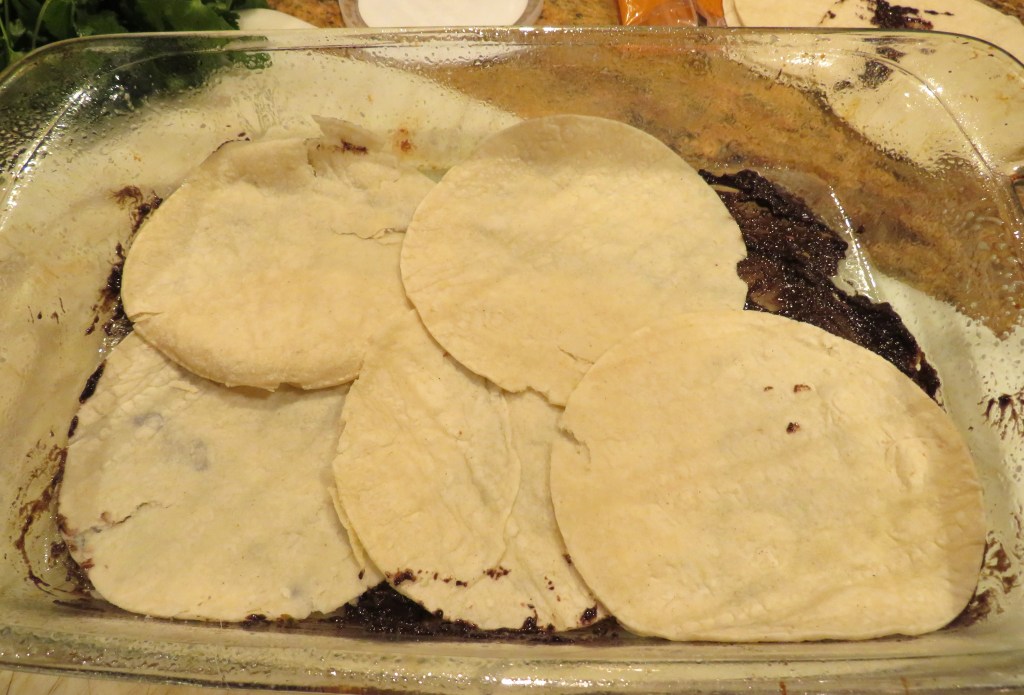
When the chicken and vegetables were ready, it was time to start the layering process. I heated the mole sauce and lightly spread some on the bottom of the prepared baking dish. Then I heated up the tortillas (I just put them in the microwave for about 30 seconds) and placed them on top of the mole.
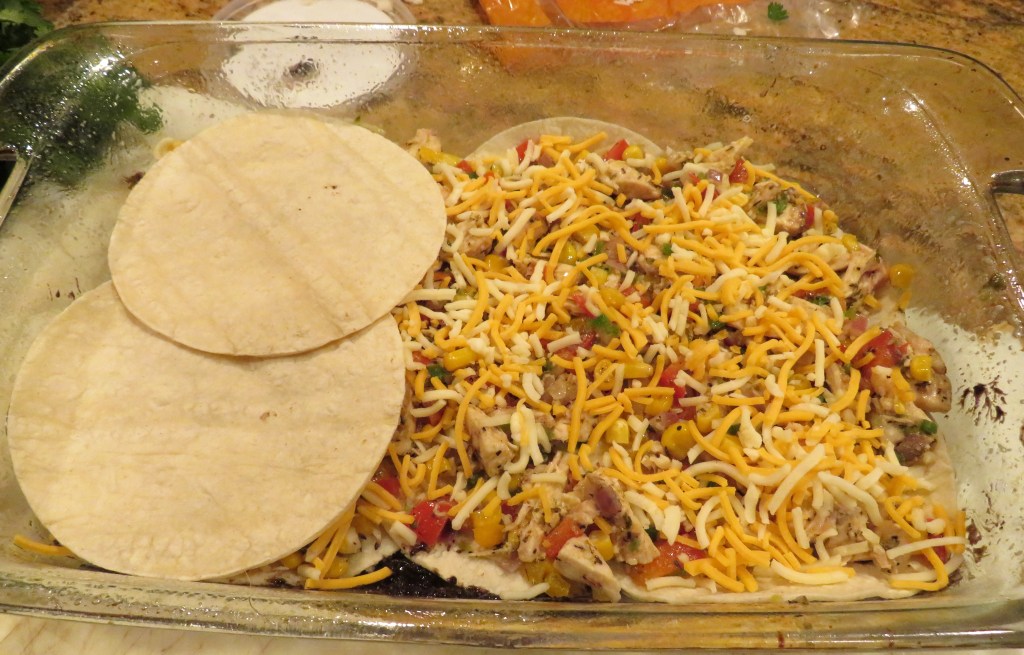
Next came a layer of the vegetables and chicken mixture, topped with shredded cheese. I used a Mexican blend.
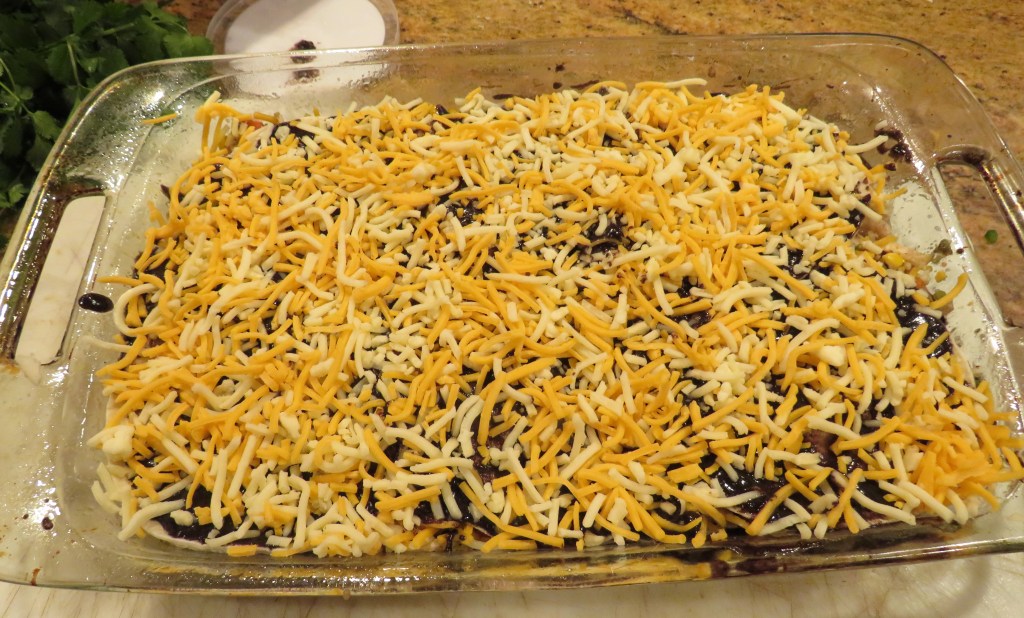
Repeat until the pan is full, adding more mole sauce on top of the layers of tortillas, finishing with another layer of cheese. Then bake for about 40-45 minutes, or until the cheese is all melted and the internal temperature of the casserole is about 160* F.
As soon as the casserole was done, I added some chopped cilantro, green onions, and pickled onions on top. Pickled Onions
This goes well with rice and/or beans. I served it with some of my leftover black-eyed peas. Double Good Luck – Part 1 I am making the good luck extend as long as possible. 🙂
Have a great day and make everyday great. Stay safe and stay well, and if you are in the cold part of the country, definitely stay inside and stay warm. ‘Til next time. Happy New Year.
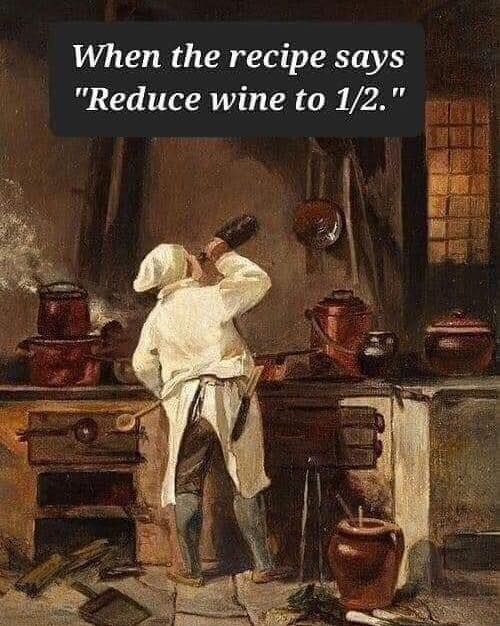
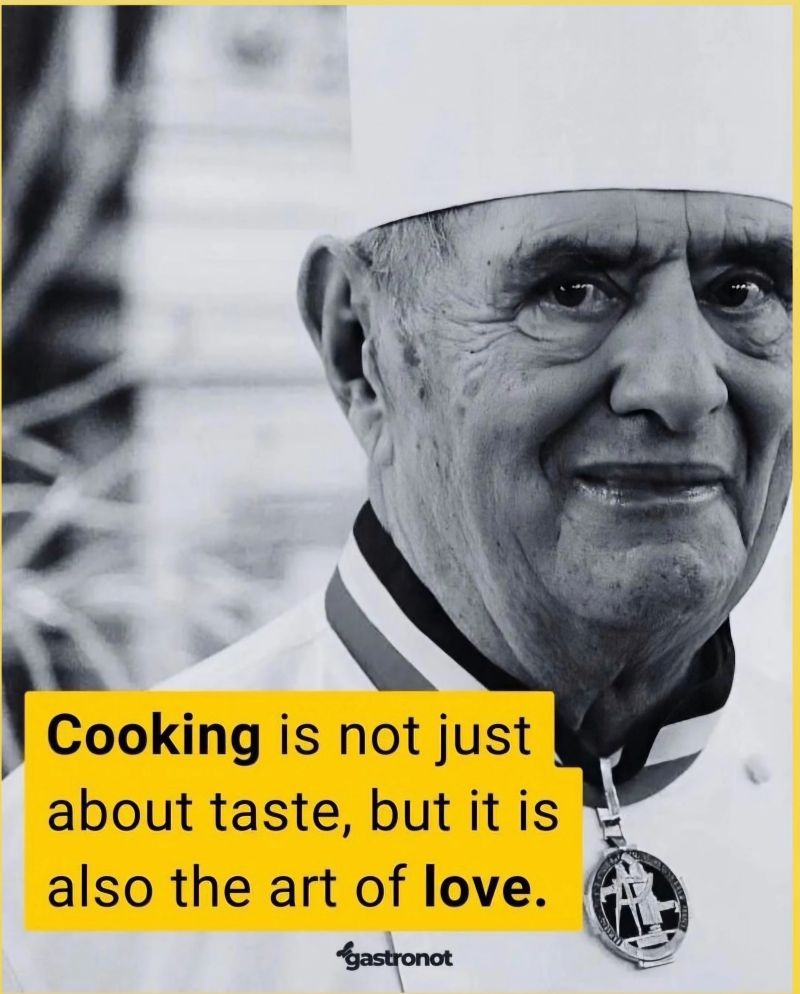
In a professional kitchen the Chef always has the last word – ALWAYS! Here are some words of wisdom from chefs that are words to live by.
Every chef wants the last bite to be as good as the first bite. We all strive for this level of perfection.
NEVER argue with the chef! NEVER!
A chef after my own heart indeed. 🙂
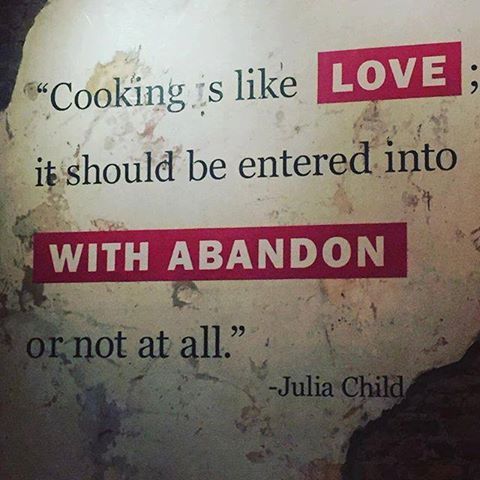
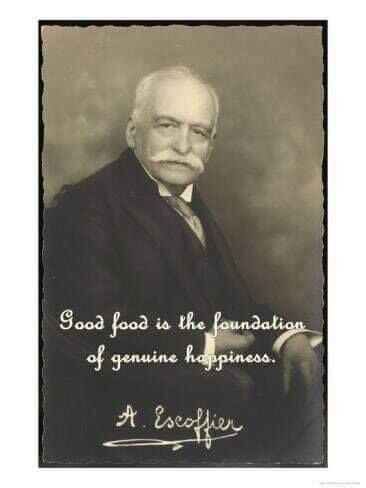
And perhaps the wisest words of all, from the founder of modern cooking himself, Auguste Escoffier.
Love what you do and do what you love. Have a great day and make everyday great. Happy New Year. May it be filled with happiness, good health and prosperity for all. ‘Til next time.































 A Jeanne in the Kitchen