Seared Pork with a Brandy-Mushroom Cream Sauce

We are back home and life is back to normal. That means I am once again back in the kitchen, cooking up all kinds of good things. The temperatures are beginning to cool down a bit, so it is time to once again use the oven more too. One of my latest creations was a seared pork loin with a mushroom-brandy cream sauce.

I started off by making a crushed peppercorn crust for my pork loin, then seared it for 3 minutes per side until it had a nice, golden crust all around.
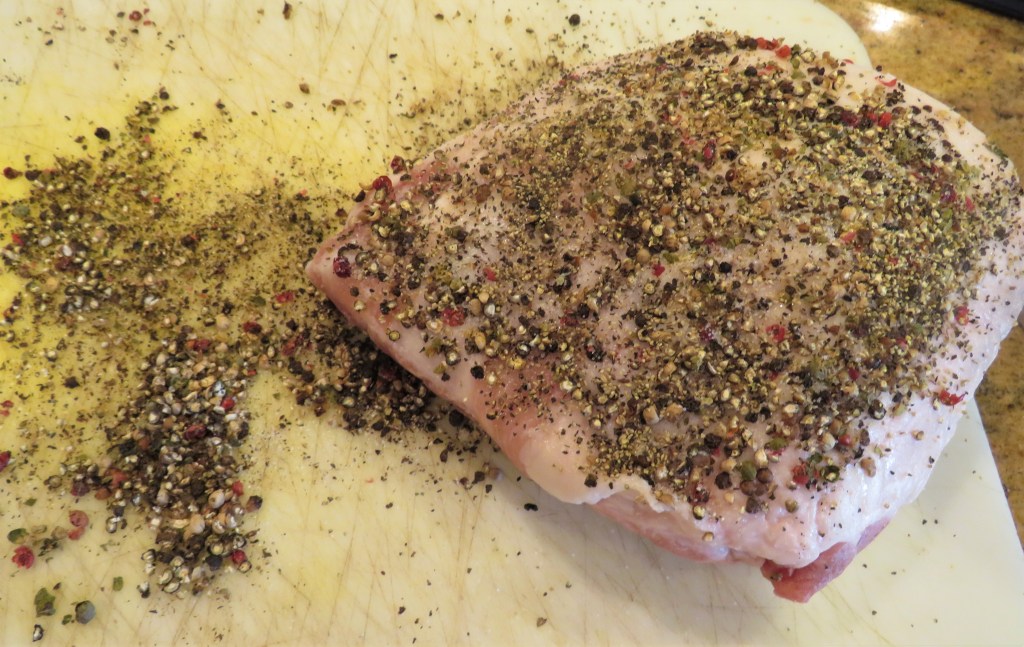
For the perfect sear, you want the skillet to be VERY, VERY hot first, then add olive oil and butter to the skillet, then carefully add the meat. If you have a cast iron or oven proof skillet, you can out it in the oven to heat up for about 30 minutes too.
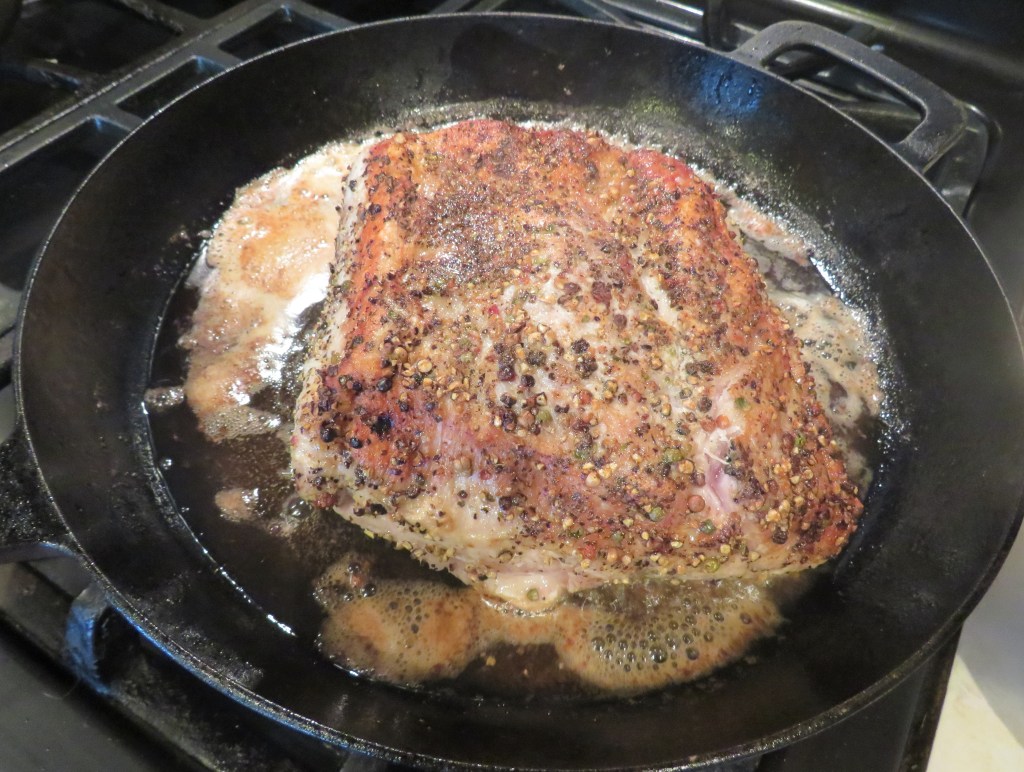
As the pork was forming its nice crust, the oven heating up at 425* F or about 230*C. When all the sides of the pork loin were crusted over, transferr the pork into a baking dish and drizzle a little olive oil and black fig balsamic vinegar over the top. Then in to the oven it goes to cook until the internal temperature is at least 160* F.
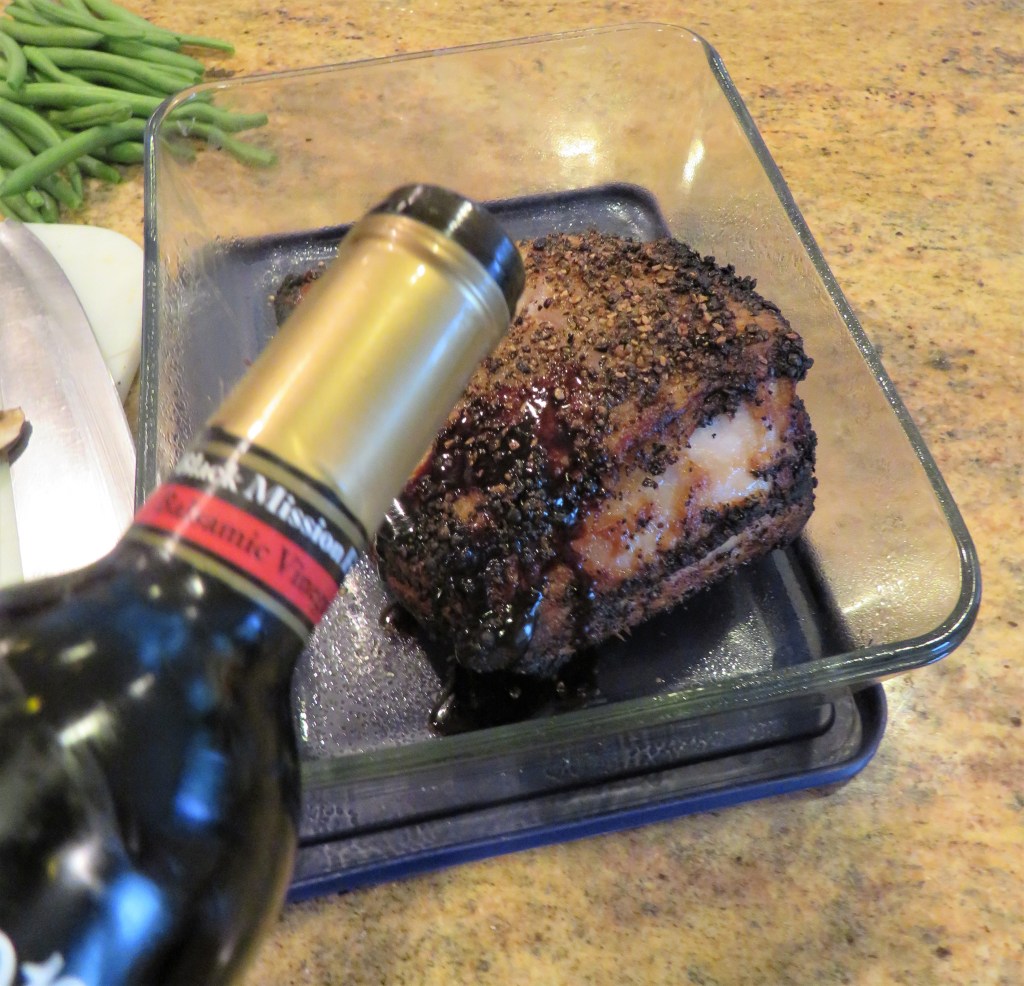
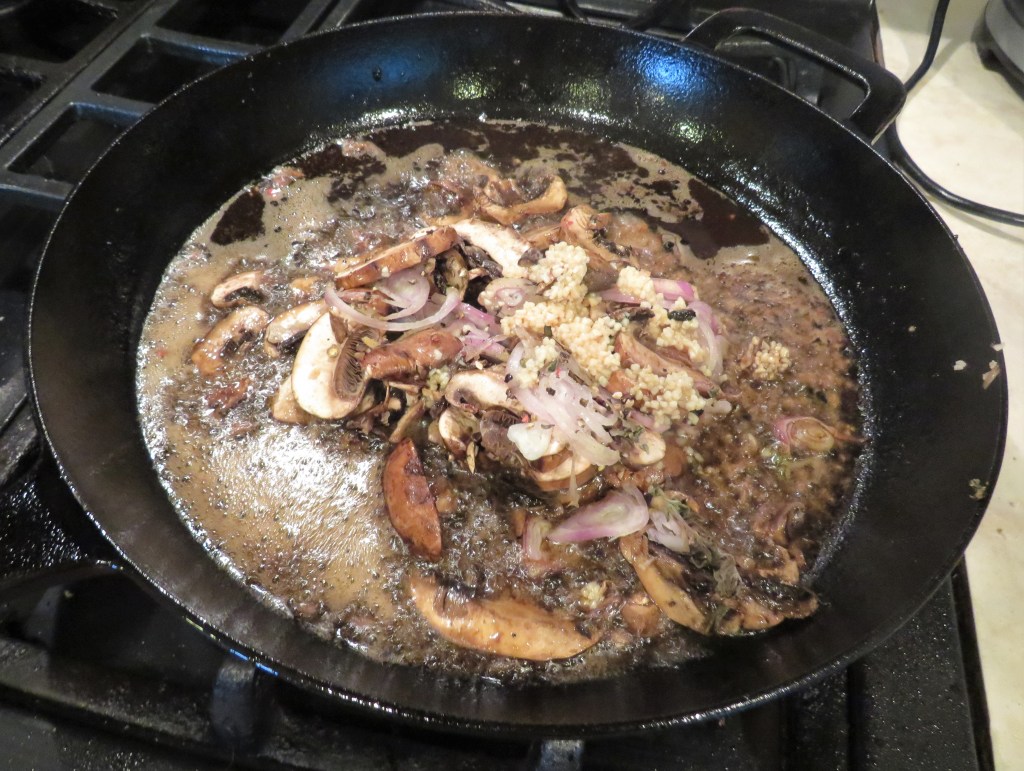
For the sauce, add about 1/4 cup of brandy and a dash more of the balsamic vinegar to the skillet, to deglaze it. Reduce the liquid to about half, then then add about 1-1/2 cups sliced mushrooms, 1 shallot, sliced very thin and about 1 TBSP of garlic and salt & pepper to taste, though you will still have some pepper from left from searing the pork loin, and cook for about 5-7 minutes, or until the onions and mushrooms are cooked.
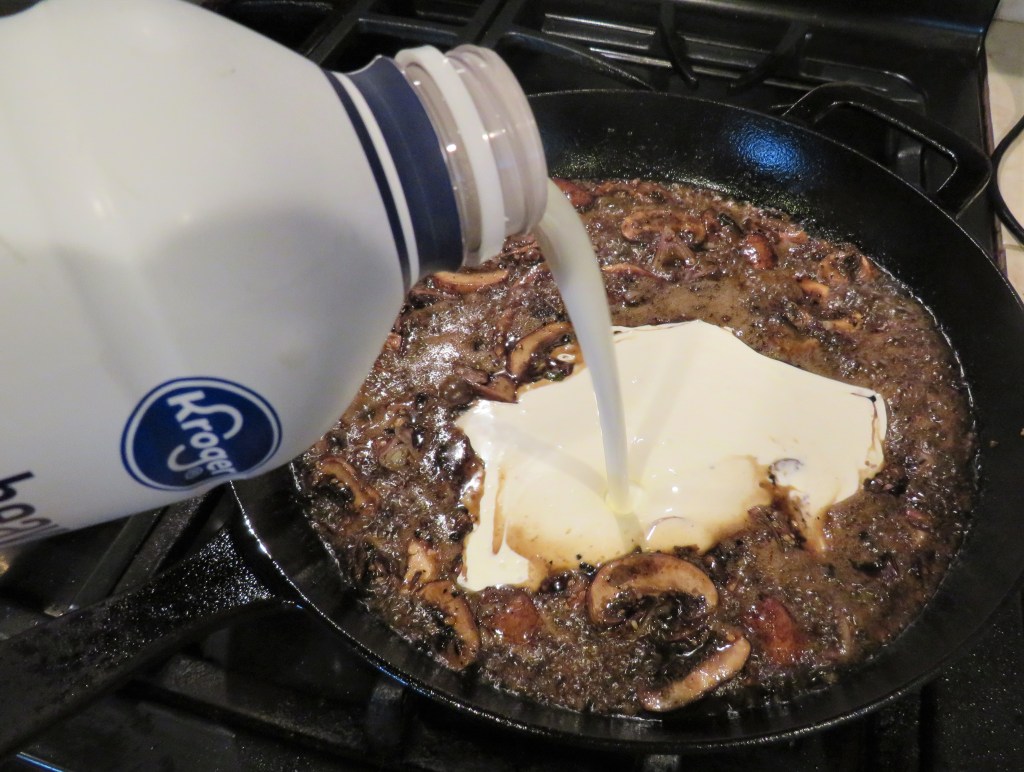
Add about 3/4-1 cup of heavy whipping cream to the mix and combine thoroughly. Bring to a boil, then reduce the heat to a simmer and continue to cook for about 7-10 minutes, stirring often.
When the pork loin has reached the internal temperature of about 160-165* F, remove it from the oven and let it sit for about 5-7 minutes before slicing. Then slice into thin strips.

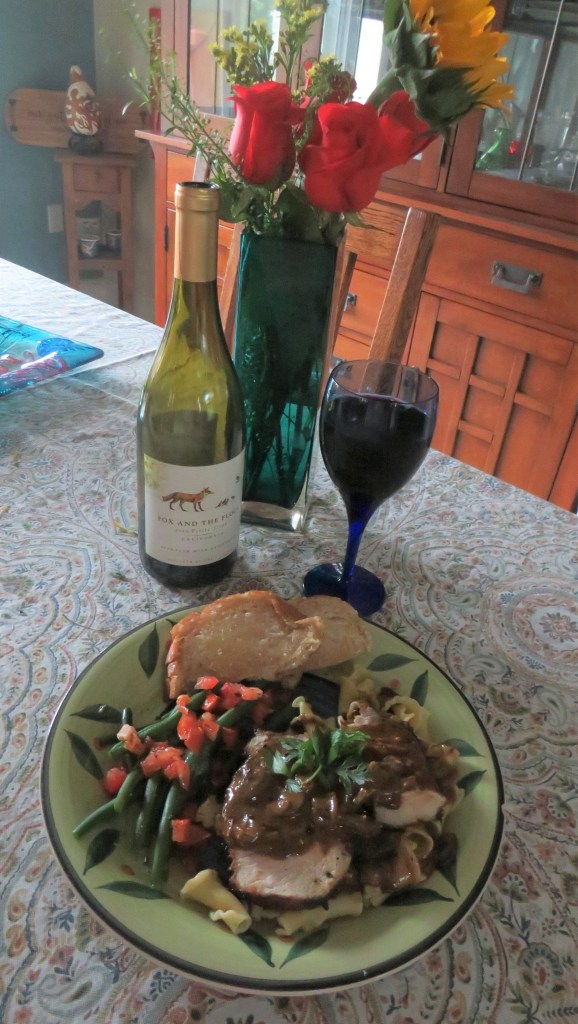
Top with the sauce and serve with your favorite side dishes. I served it with some cooked pasta and green beans topped with tomatoes, and a glass or two of a deliciously smooth red blend to complete the meal. Delicious!
Make everyday special. Live it up and enjoy life. Stay safe and stay well Everyone. ‘Til next time.

The Glass Blower

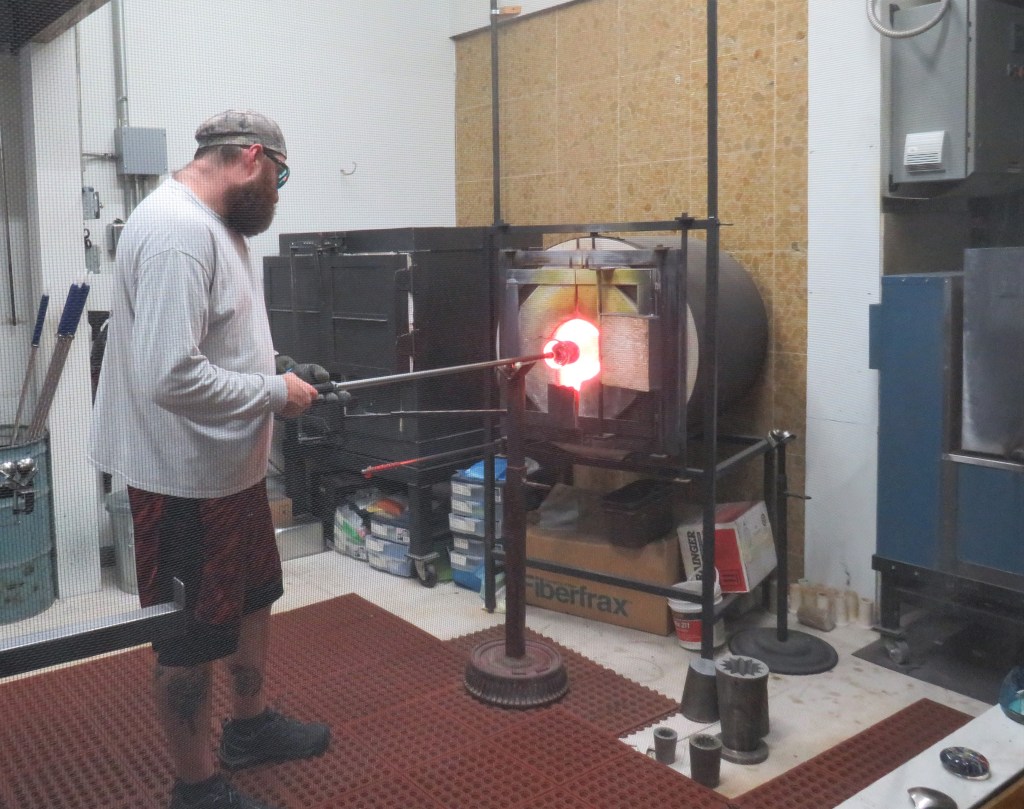
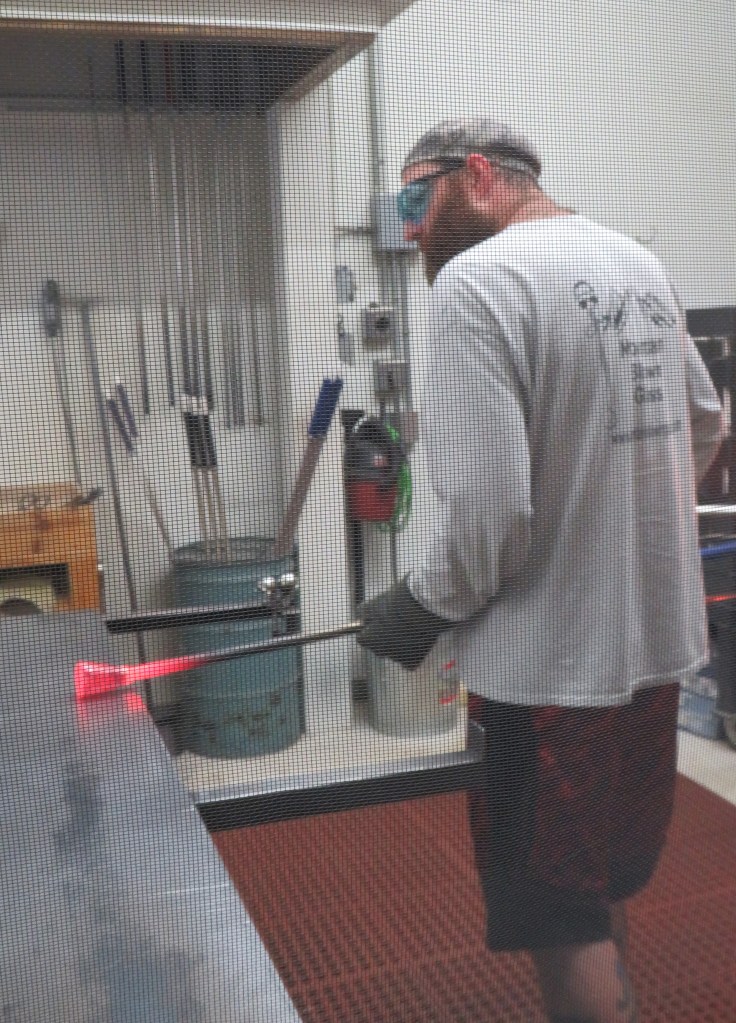
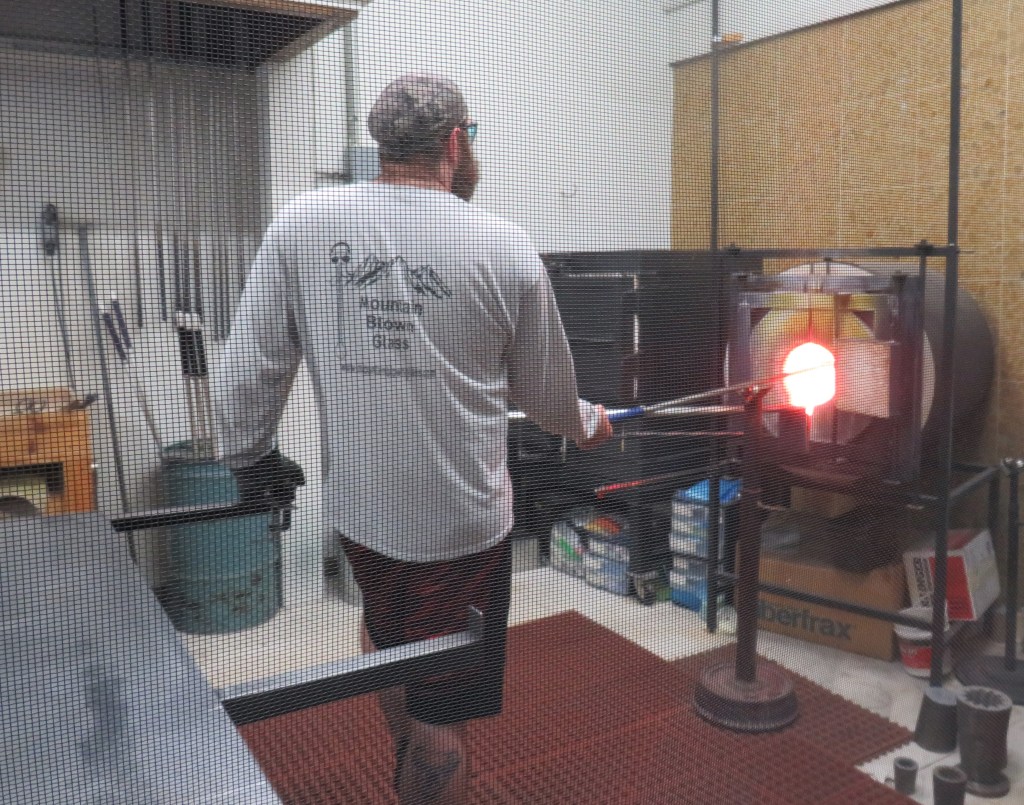
I am fascinated by glass arts. I just love them. I like to make things with glass too, although I haven’t done that in quite some time. When we were up in Estes park last week, One Moose, Two Moose one of the things we did was watch one of the local glass blowers do his art. He made it look so easy and effortless, but we all know he has put in a lot of time to master his art.

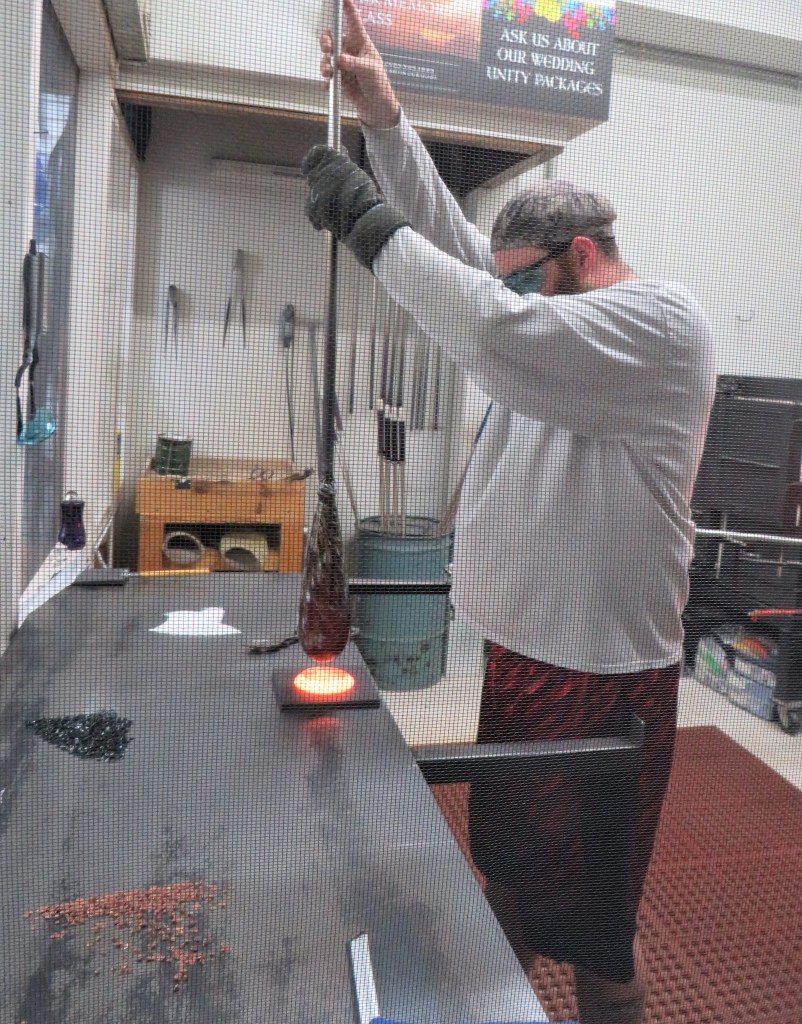
This vase took less than 20 minutes for him to get it made, though it will have to cool in the cooling oven for about 12 hours before it is done.

He is making the bottom for the vase and attaching it.

One last firing before he waved it around a few times.

After he shaped it and got it all pieced together he put it in a cooling oven, where it will stand for about 12 hours to cool down. The heating oven is at about 1800* F and the cooling oven is set at about 900* F.

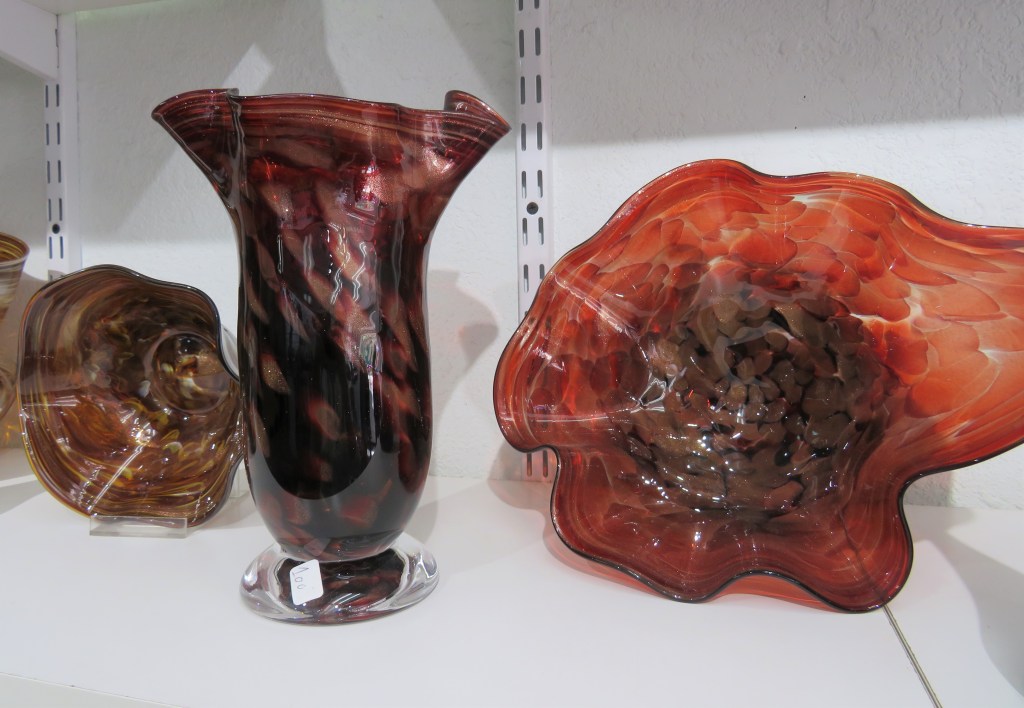
This vase with the wavy top is what the glass blower was making, and about this same color too. Each piece is an original and no two pieces are exactly the same, but this is the general idea of what the finished piece will look like. Isn’t it gorgeous?!

Have a great day Everyone. Take it all in and make the most our f everyday. 🙂

Gumbo, Bayou Style

Gumbo is true Louisiana Bayou food. It was originally the food of the poor, since it was made from whatever you had on hand at the time of the making. And because it was made with whatever you had on hand, every pot would be different from the last. Who knows exactly what its roots are, since it is rumored to have come from many sources. Gumbo is often cited as an example of the melting-pot nature of Louisiana cooking, but trying to sort out the origins and evolution of the dish is highly speculative. Gumbo may have been based on traditional native dishes, or may be a derivation of the French dish bouillabaisse, or Choctaw stew, but most likely all of these dishes contributed to the original recipe. Gumbo crosses all class barriers, appearing on the tables of the poor as well as the wealthy. Although ingredients might vary greatly from one cook to the next, and from one part of the state to another, a steaming bowl of fragrant gumbo is one of life’s cherished pleasures, as emblematic of Louisiana as chili is of Texas.

The name gumbo derives from a West African word for okra, ki ngombo. The use of filé (dried and ground sassafras leaves) was a contribution of the Choctaws and, possibly, other local tribes and roux has its origin in French cuisine, although the roux used in gumbos is much darker than its Gallic cousins. So it is a hodge podge of many different recipes from many parts of the world, and it’s all brought together with love.

Today, the gumbos people are most familiar with are seafood gumbo and chicken and sausage gumbo. But that merely scratches the surface of gumbo cookery, both historical and contemporary.

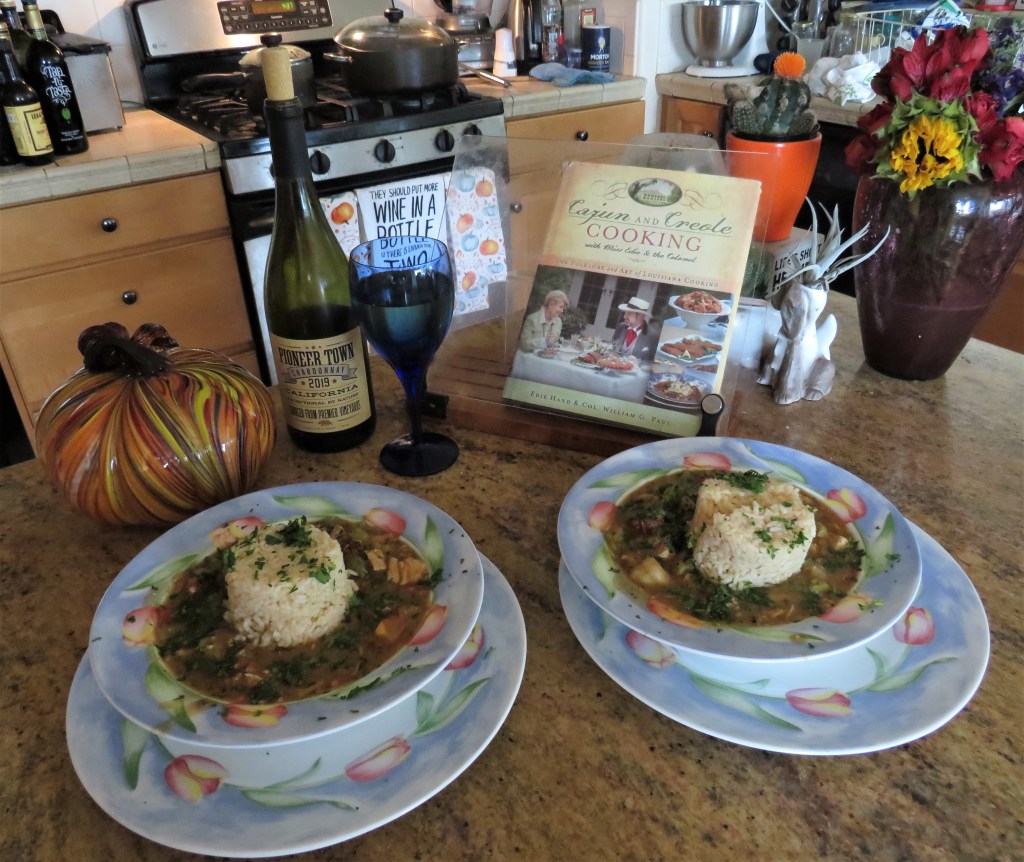
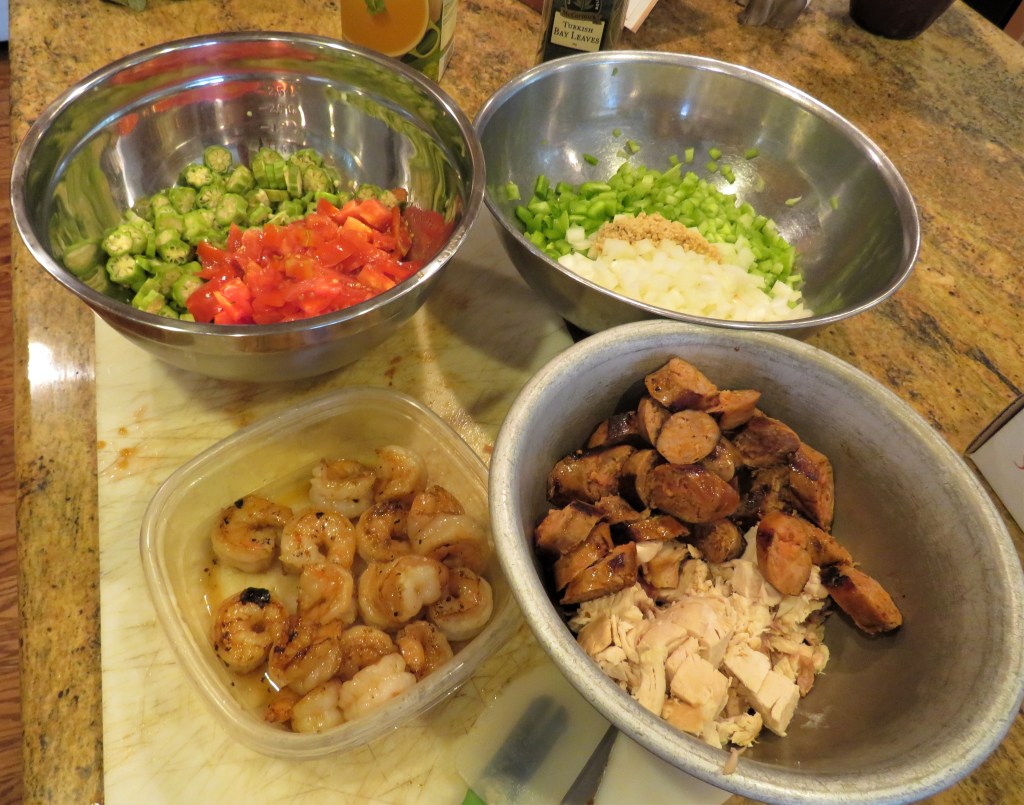
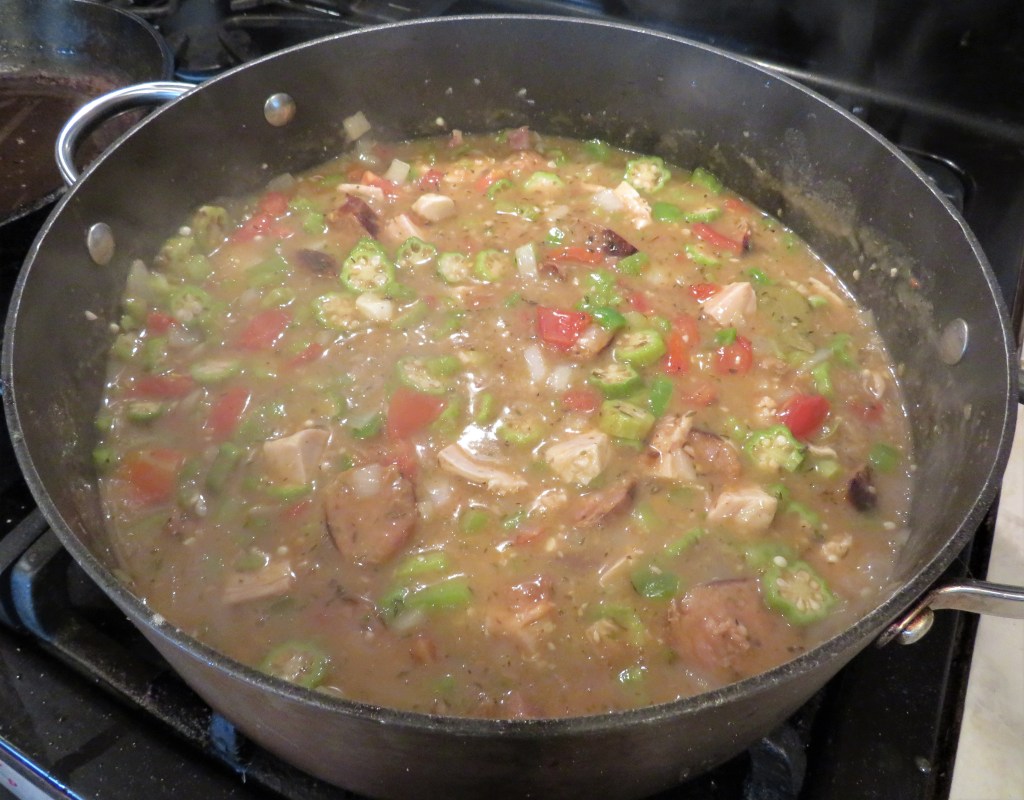
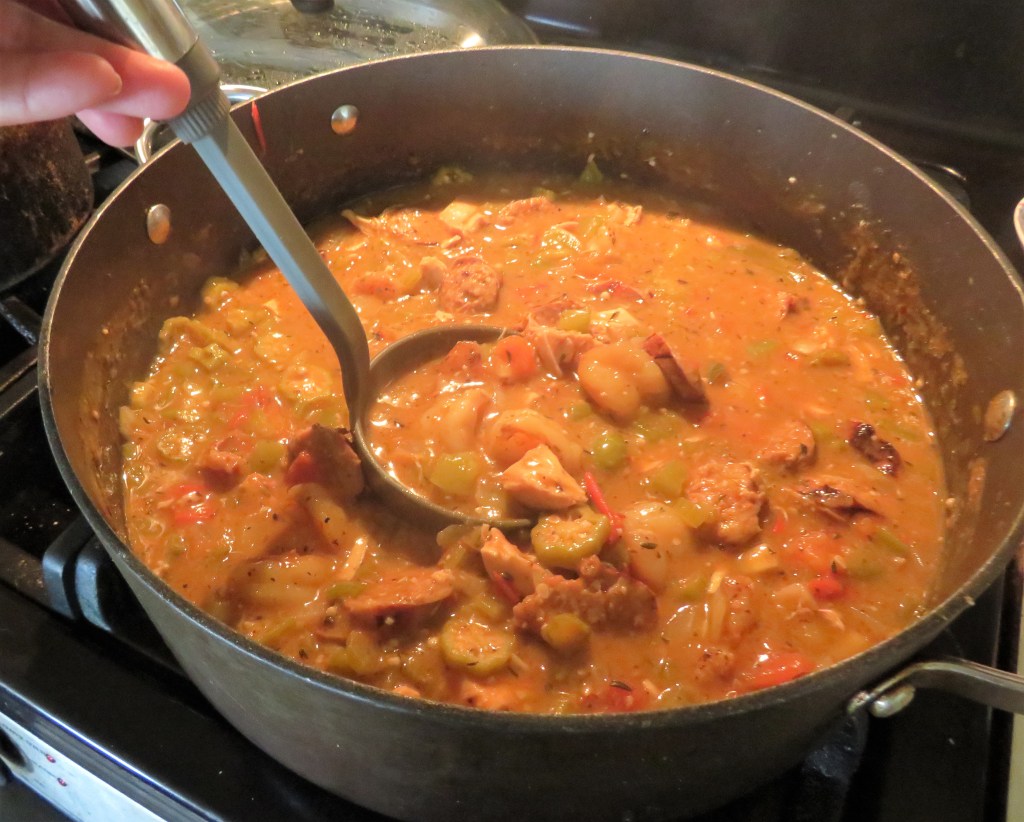
I just made a big pot of gumbo that was a combination of chicken, sausage and shrimp. I used both file and okra in it too. Some recipes will use either one or the other, but I like it with both. And of course, you have to start with the Holy trinity – green peppers, onions and celery. The Holy trinity is the basis for all good Cajun and/or Creole food.

Gumbo with Chicken, Sausage and Shrimp

I used up some more of my tomatoes and peppers from Janet and Bob’s garden. Gift From The Garden

2-3 TBSP Cajun or Creole spice mix

5 cups chicken broth

1/4 cup olive oil

1/4 cup flour

1 lb sausage

1-2 lbs chicken

1 lb large shrimp or prawns

2 cups okra, sliced

1 onion, diced medum

1 green pepper, diced medium

3 stalks celery, diced medium

1-2 TBPS garlic

2 cups diced tomatoes

1 tsp Worcestershire sauce

1-2 bay leaves

1 tsp dried thyme

1 tsp dried oregano

1 tsp dried basil

1 TBSP file powder, optional

salt & pepper to taste

cayenne and/or red pepper flales, optional to taste

cooked rice

Cook all the meat first, separately though, and set aisde.

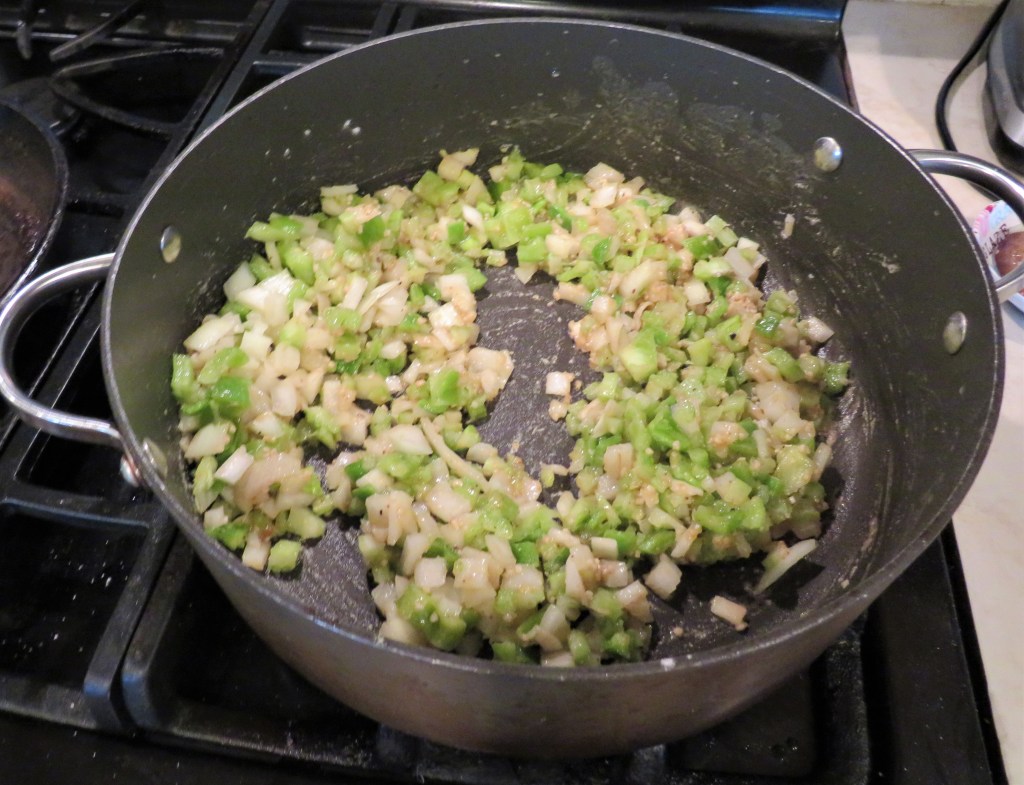
Make your roux, with the flour and the olive oil (equal parts of both. You can also use butter, but olive oil is slightly healthier). Mix them in a hot pan until the roux is made, whisking together constantly. You can make it as light or dark as you like, but a medium to dark roux will have the best flavor and consistency. Then add the peppers, onions, celery and garlic. Continue to cook for about 5 minutes or until the onions and peppers have softened and are tender.

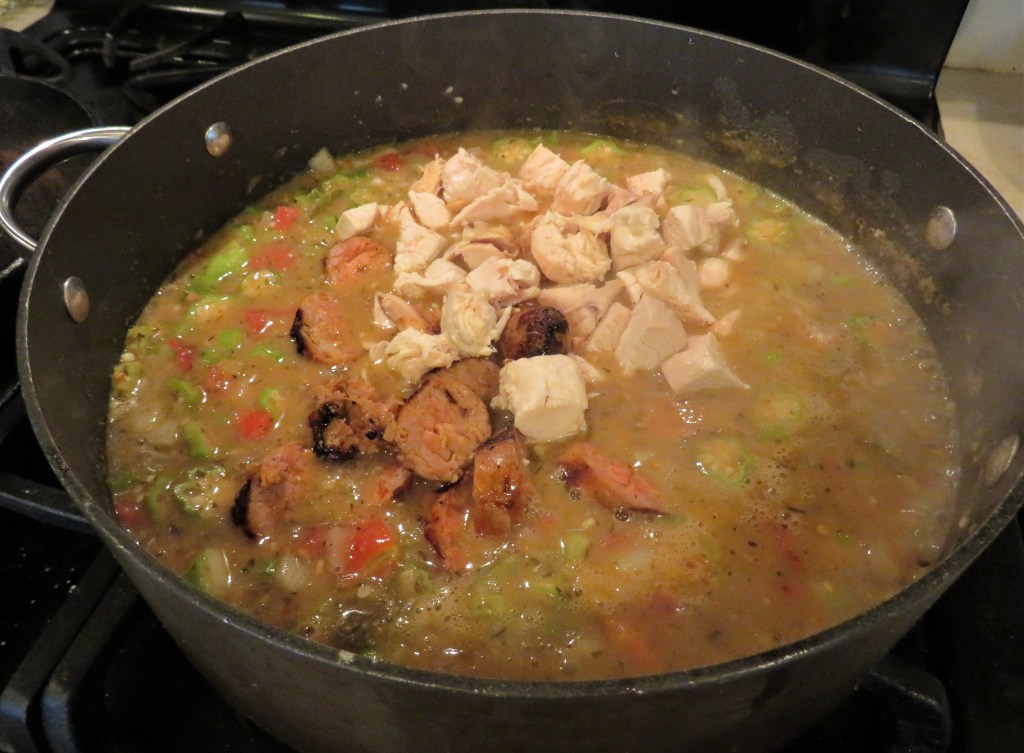
Add all the rest of the ingredients, except the cooked shrimp, mix together well and bring to a boil, the reduce the heat to a low simmer, cover and continue to cook for about 2 hours, stirring often.

Add the shrimp around the last 15 minutes of cooking and incorporate well.

While the gumbo is cooking, cook up either white rice or seasoned rice. This time I made seasoned rice by cooking it in chicken broth with some Creole spice added into the broth.

You can buy your Cajun/Creole spice already made up, or you can make it on your own. It is very easy to make.

Cajun/Creole Spice Mix

1 tsp sweet paprika

1 tsp dried thyme

1 tsp dried basil

1 tsp dried parsley

1/2 tsp salt

1/2 tsp cayenne pepper

1/2 tsp black pepper

1/2 tsp dried garlic powder

1/2 tsp dried onions powder

Mix everything together well and set aside.

You can top your gumbo with green onions and parsley if you like. I Gar-un-tee you’re going to love this dish. You can use all chicken, or all shrimp, or mix it up however you like. Serve it with some kind of warmed bread or biscuits, and you have just gone down to the bayous for dinner.

Spice up your days and spice up your life. Stay safe and stay well. ‘Til next time.

One Moose, Two Moose

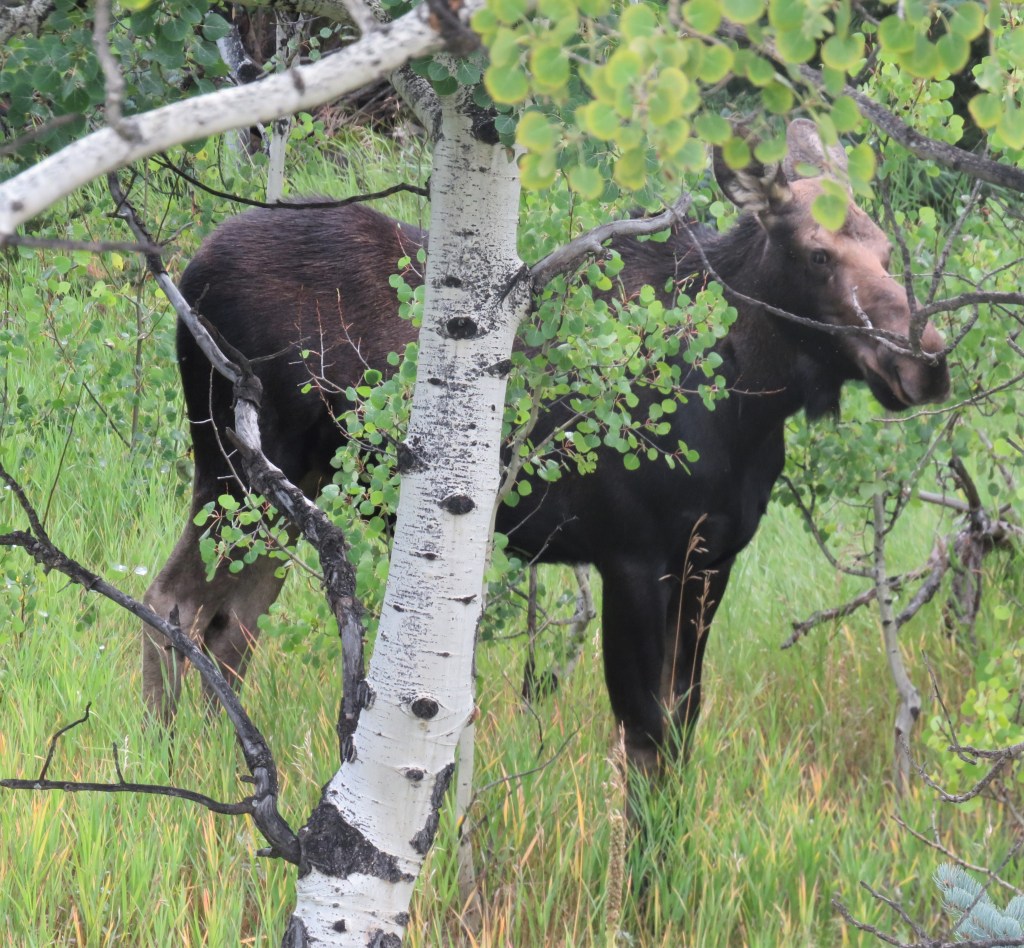
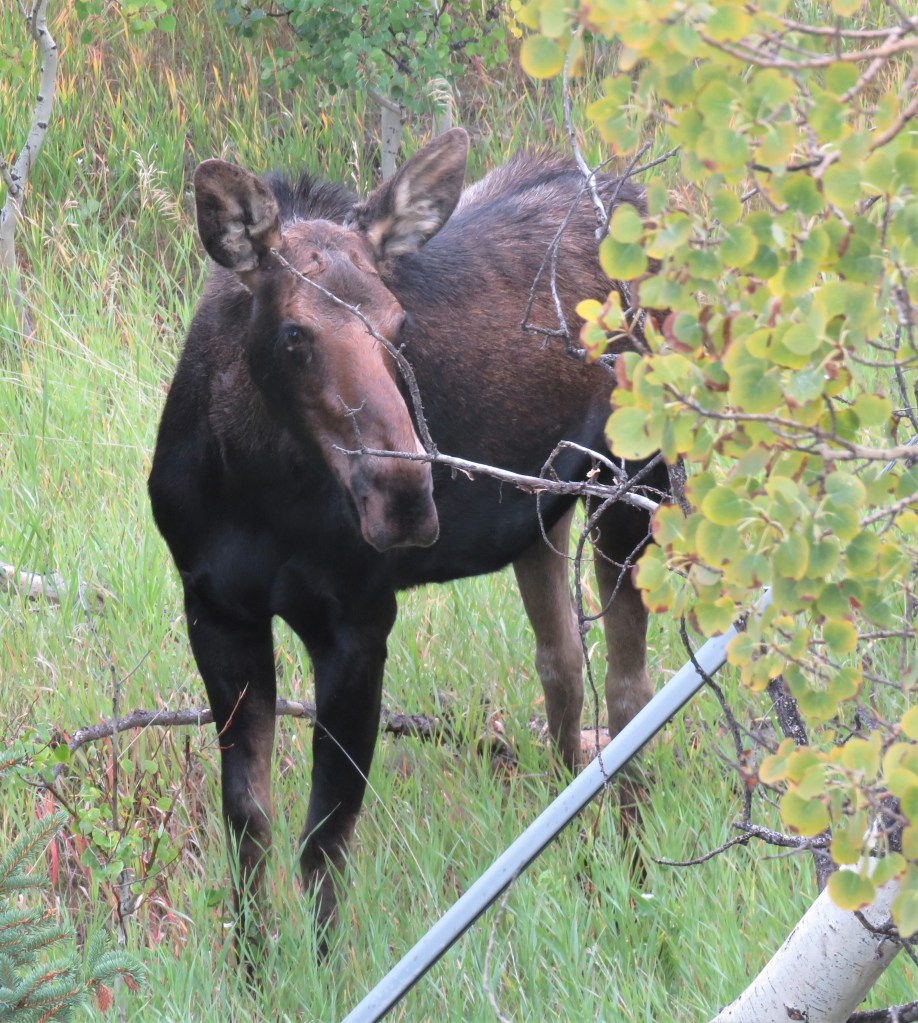
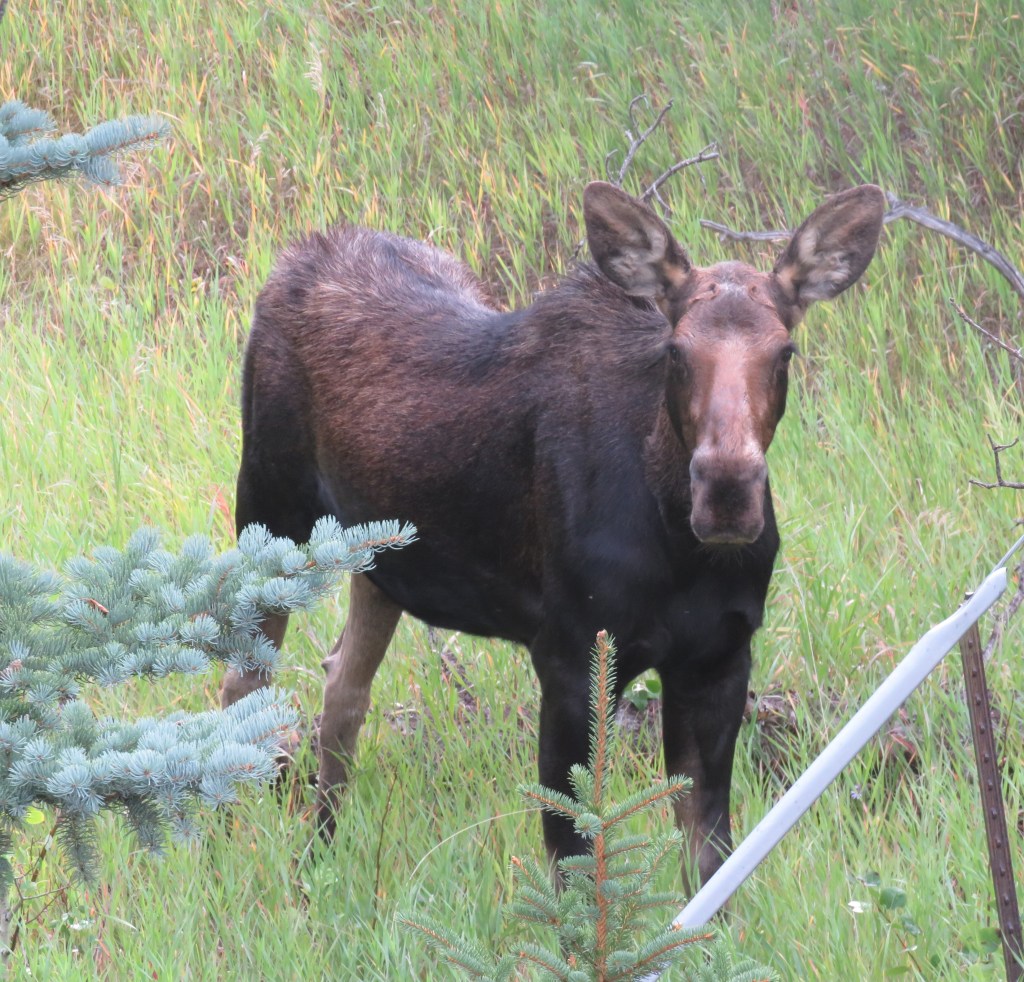
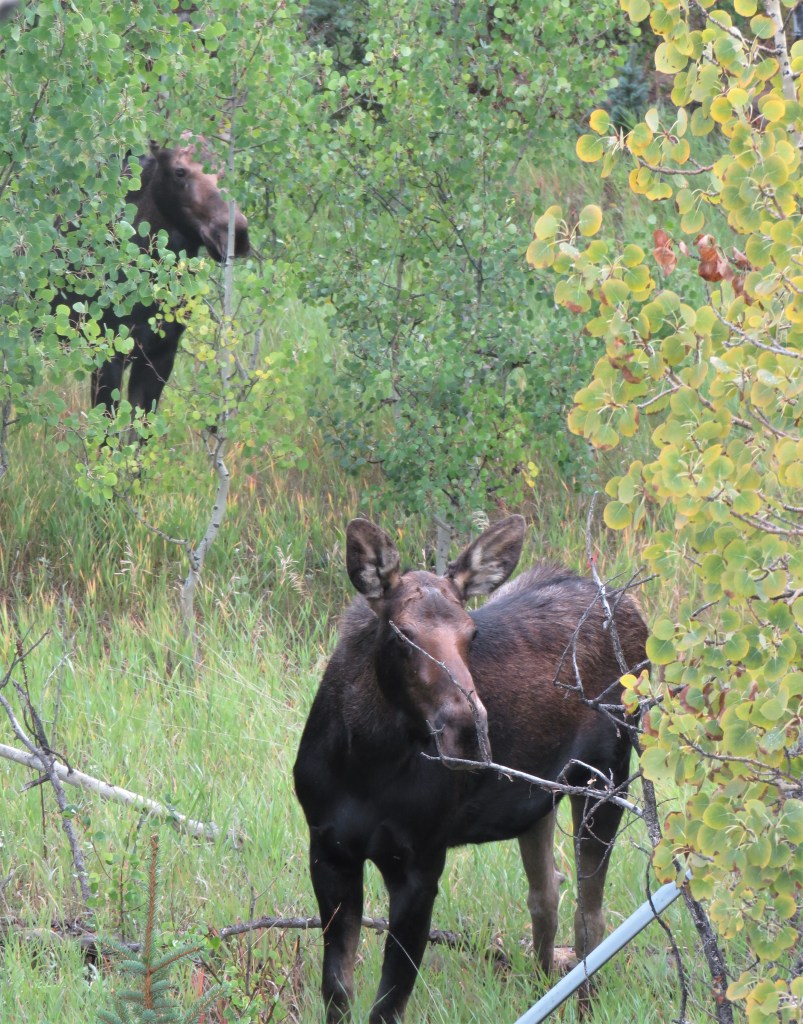
Life for us is one big, continuous adventure. And I LOVE it! I wouldn’t have it any other way. As you all know, we just recently returned from out trip to Bonaire. Last weekend, we were up in Estes park with our friends Mike and Lauren. Estes Park is only a little over an hour away from us, but sometimes it feels like a different world up there. We had a fun time just meandering around town, taking in all the sights, and just generally having a good time with good friends. On our way home, we saw not one, but two moose, grazing on the side of the road. We see moose every now and then, but they are not a common site. They are always exciting to see, and seeing two was twice as nice.

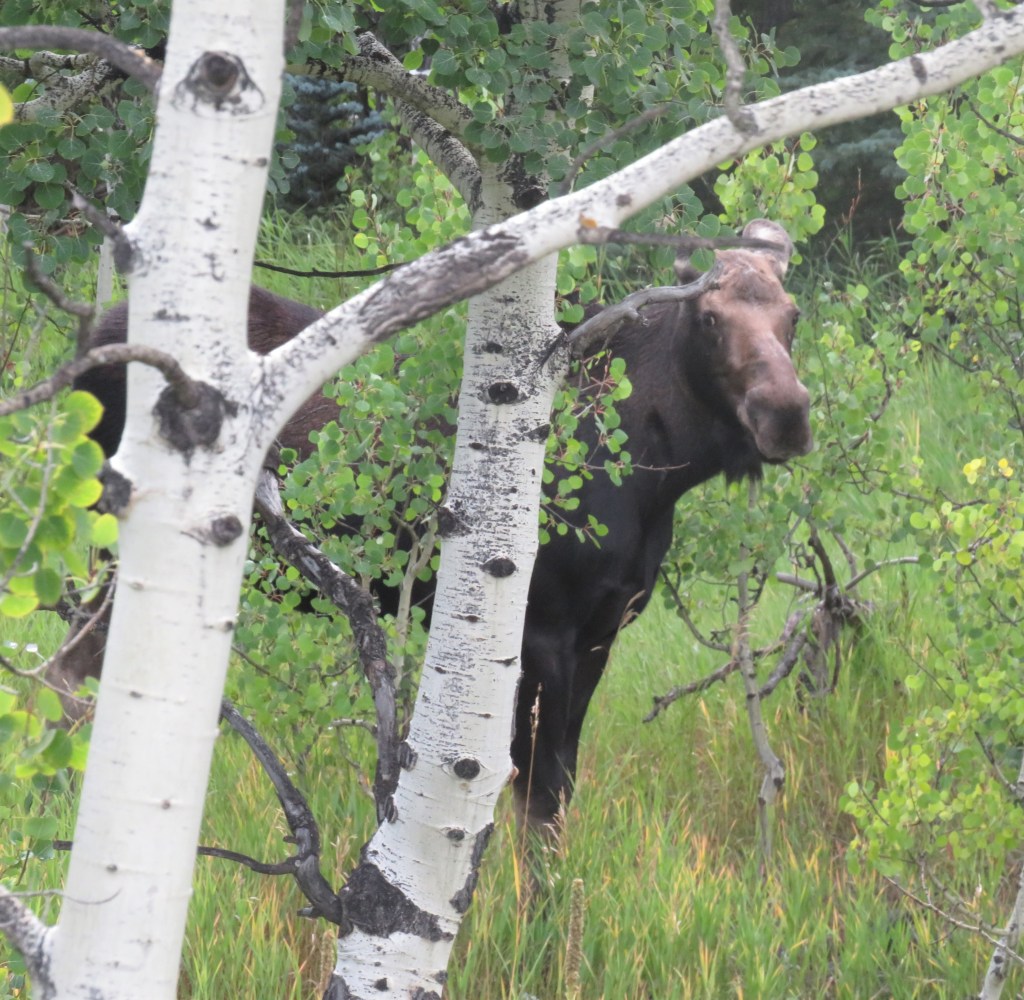
We think it was a mother and her calf. The mother was upfront by the road and her calf was hiding in the bushes behind her.

I see you. Do you see me?

Make the “moost” of your day, today and everyday. Stay safe and stay well Everyone. ‘Til next time.
Berry Focaccia

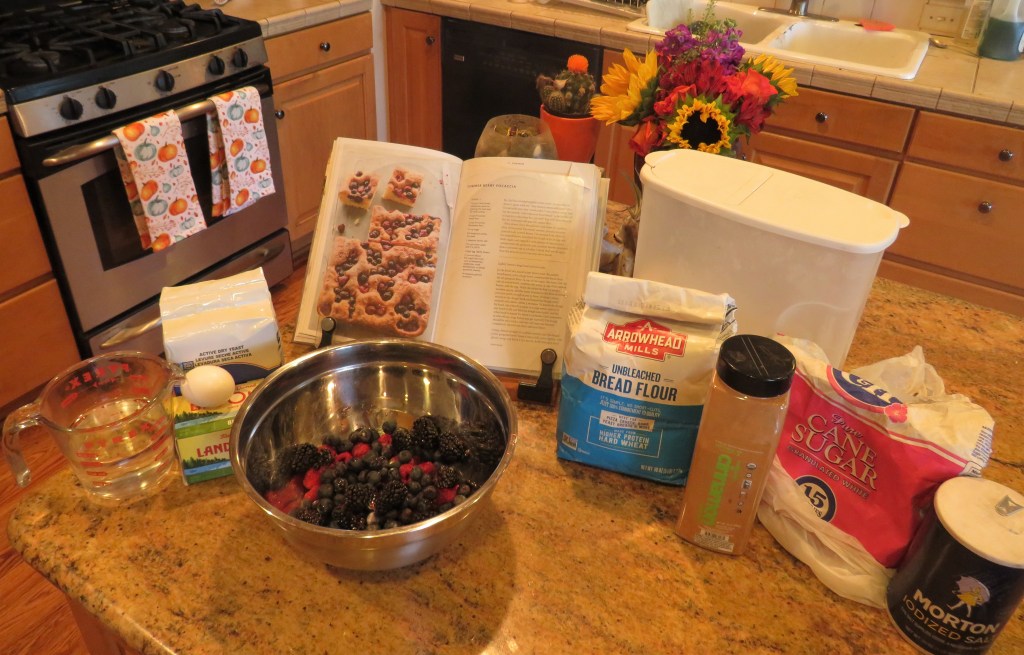
Focaccia is a type of bread that is made with yeast, but it contains more yeast than a normal bread dough, which allows it to rise even higher, and makes it lighter and fluffier. Usually focaccia dough is dimpled before putting it in the oven, which helps to preserve its moisture. The dimples also reduce the air in the dough and keeps the bread from rising too quickly. After proper kneading and proofing there will be plenty of large bubbles in the dough. All of this gives the focaccia a lighter, cake-like consistency than regular bread.

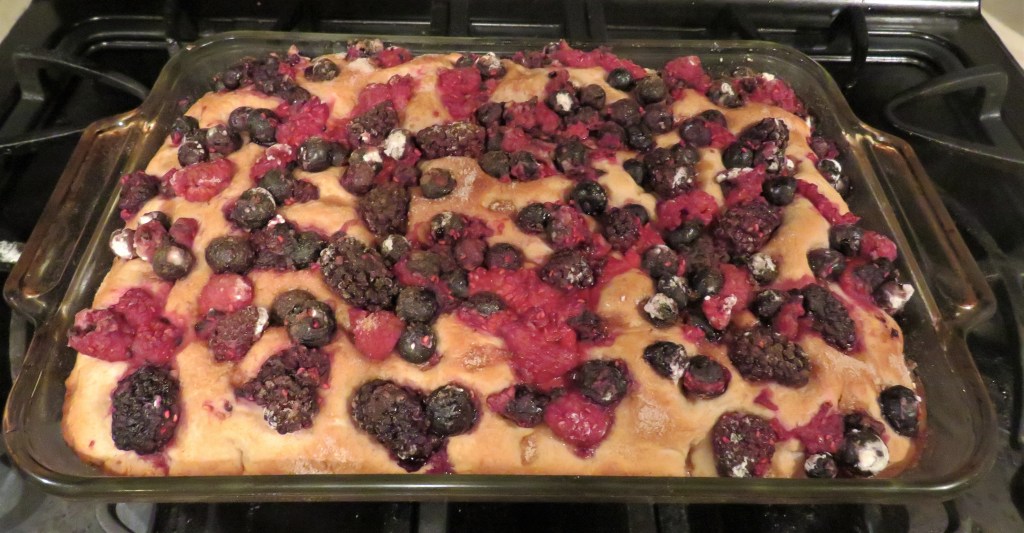
I love focaccia of all kinds, but usually when I think of focaccia, I think of it being a savory bread to go with a meal rather than a sweeter, breakfast bread which can be a meal in and of itself. You can top focaccia with just about anything. You can make it fancy or keep it simple. I have made many different types of focaccia. But I just made my first breakfast focaccia, topped with a variety of berries and a little cinnamon sugar. It was everything I expected it to be – sweet, tart, fruity, light and fluffy, and delicious all at the same time.

Berry Focaccia

1/2 cup or 1 stick of melted butter

2 cups bread flour

2 cups regular all-purpose flour

1/2 cup sugar

2 1/2 tsp dry active yeast

1 tsp salt

1 1/2 cups warm water (105* F)

1 egg, lightly beaten

12 oz of mixed berries and/or pitted cherries

1-2 TBSP cinnamon sugar

Whenever I am making something with fresh berries, I usually coat them in a little flour first to prevent them from bleeding into my batter or dough.

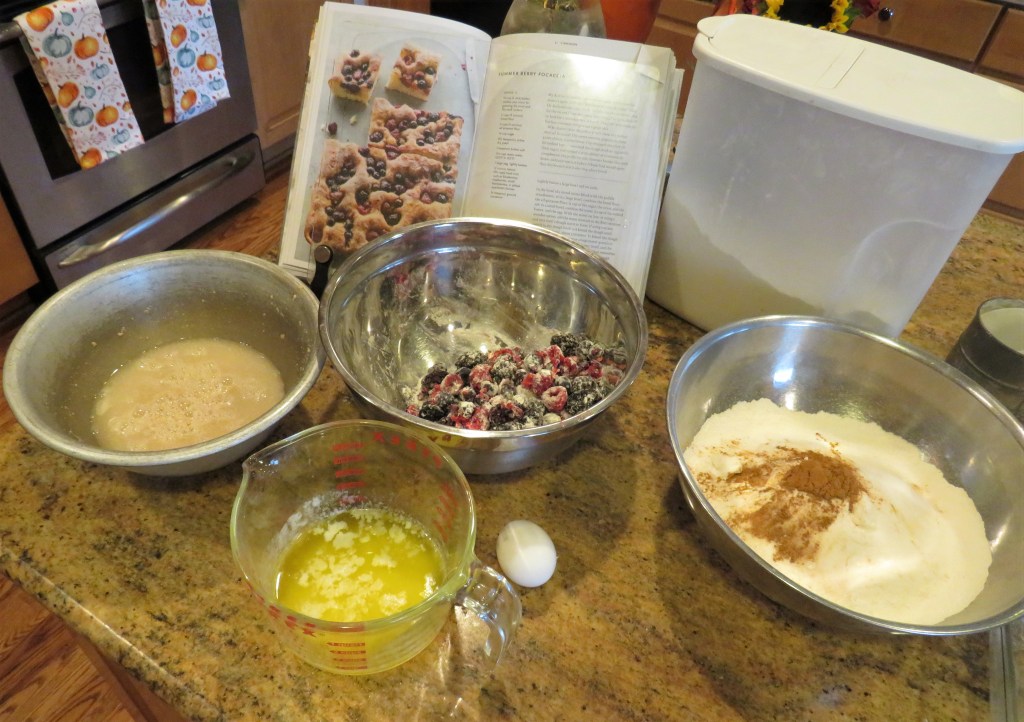
Mix the warm water, 1/4 cup of the sugar and the yeast together and let stand for about 5-10 minutes or until it becomes frothy.

Combine both flours, salt and the remaining sugar together and mix well.

I beat my egg in the cooled melted butter then added them both to the dry mixture and then added my yeast mixture. Mix everything together until it forms into a soft dough. Cover the dough and let rise for about 1-1 1/2 hours, or until it doubles in size.

Grease a 9×13 baking pan with butter and add the dough into the prepared pan. Evenly spread the dough into the pan and cover and let rise for about another hour.

Preheat the oven to 450* F or about 225* C.

When the dough is ready, dimple it with your finger tips and let is set for a few minutes.

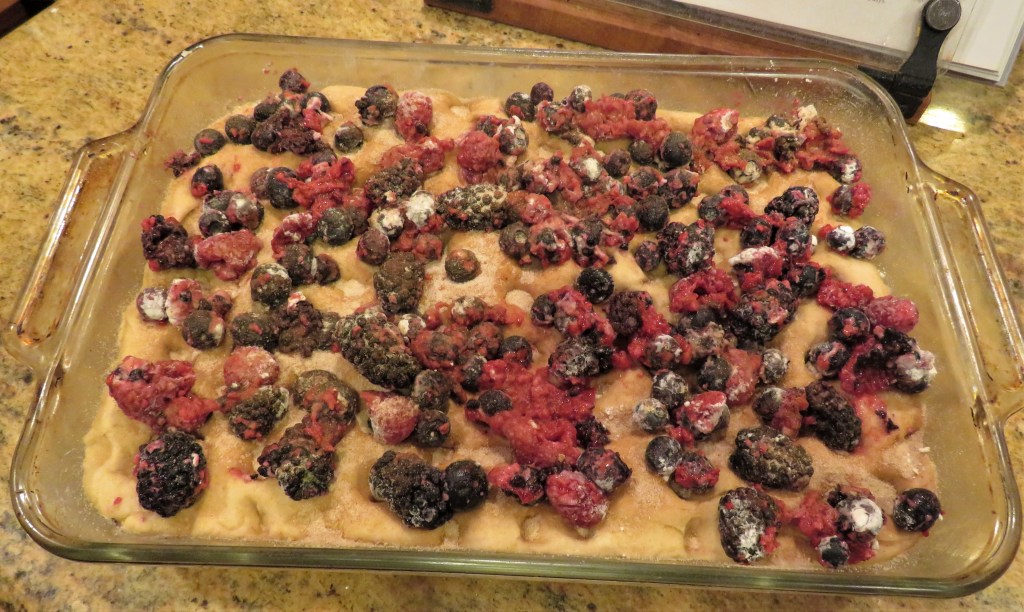
Add the berries, flour and all and cover the top of the dough. Then generously sprinkle with the cinnamon sugar on top of the berries. I used raspberries, blackberries and blueberries.

Bake for 20-25 minutes, or until it is golden brown and done in the middle. Let cool for a few minutes, then lice it up serve it nice and warm. YUM! This is perfect for breakfast, or anytime you are in the mood for a light snack.

Make the most out of everyday. Stay safe and stay well Everyone. ‘Til next time.
THE JOY OF SHARING

This is the latest from Mel about our upcoming 2022 Great Blogger’s bake-Off. EVERYONE is welcome to participate. We want to see what’s baking in your kitchen. 🙂

THE JOY OF SHARING

 CARAMEL LEAVE A COMMENT

By now many of you will have read that THE 2022 GREAT BLOGGERS’ BAKE -OFF has a marvellous theme:

The Joy Of Baking

Undeniably, the greatest joy that comes with baking is sharing our creations with others.

So this year, we are asking you to share with us who you bake with or who you bake for. It could be your:

  • family
  • friends
  • neighbours
  • co-workers
  • congregation members
  • club members

We would love to hear how you share the joy of baking and who you share it with!

Although there is a completely open choice with regards to your baking – bread, cakes, biscuits, pastries, sweet or savoury – this year we are going to be drawing attention to three areas that will help us to taste the JOY OF BAKING throughout the dark, cold winter ahead.

We are so excited to be sharing THE JOY OF BAKING with you again for another fabulous GREAT BLOGGERS’ BAKE OFF!!!

Please send in your photos to:

cushedcaramel@gmail.com

We are already preparing the posts to feature our GREAT BLOGGERS on WordPress which will be paraded on BAKE OFF weekend:

15th & 16th October 2022

Bonaire – The Tasty Bar

This is my last post, other than maybe the flowers, from our recent trip to Bonaire.

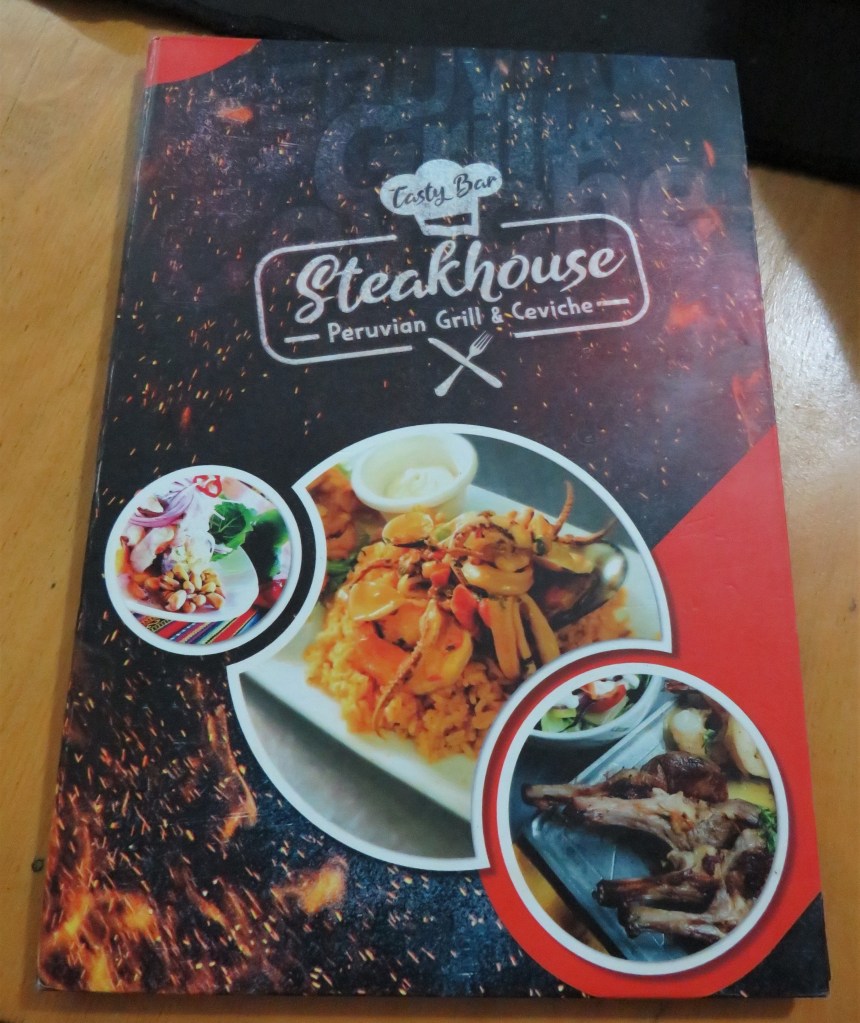
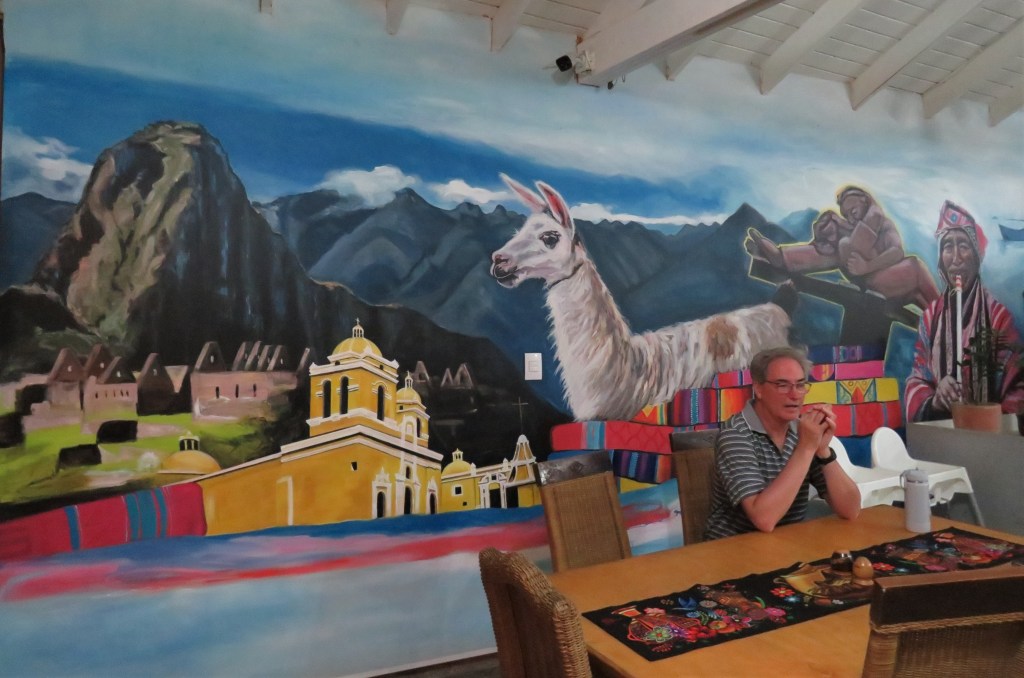
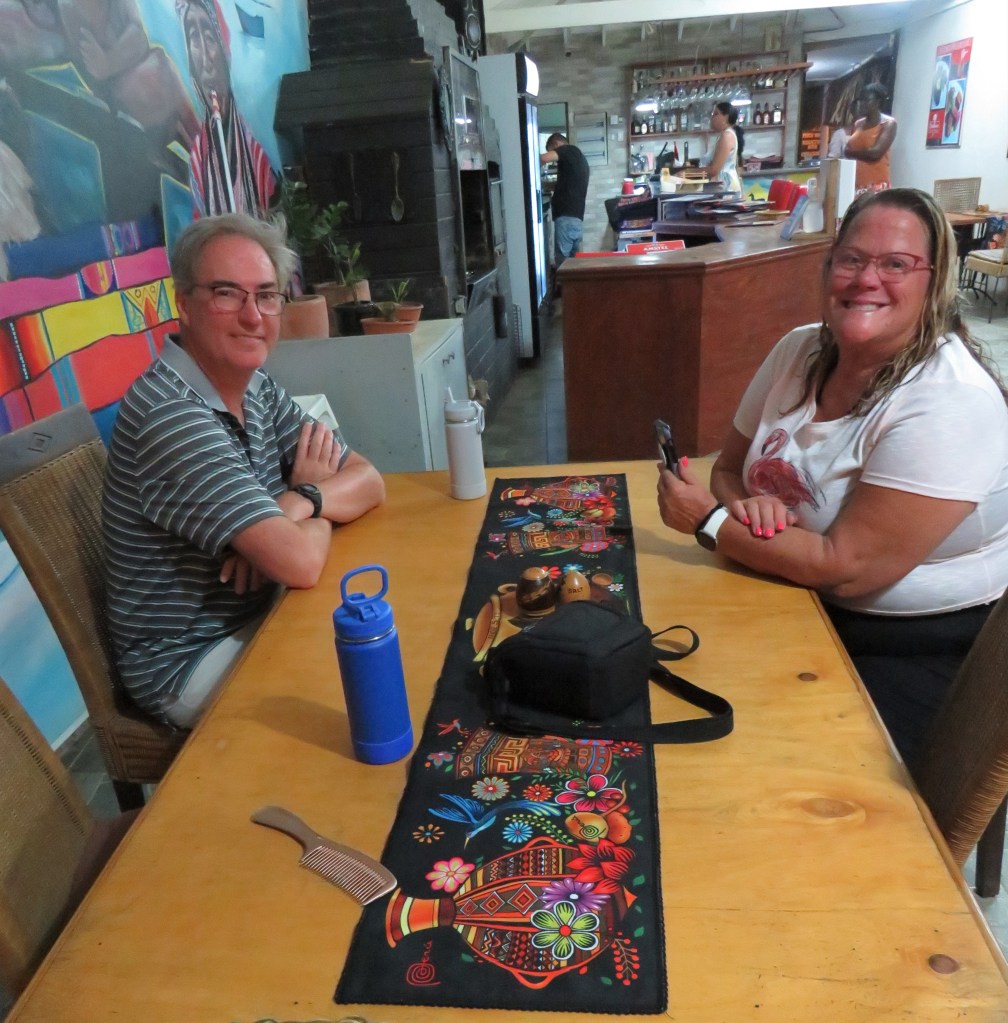
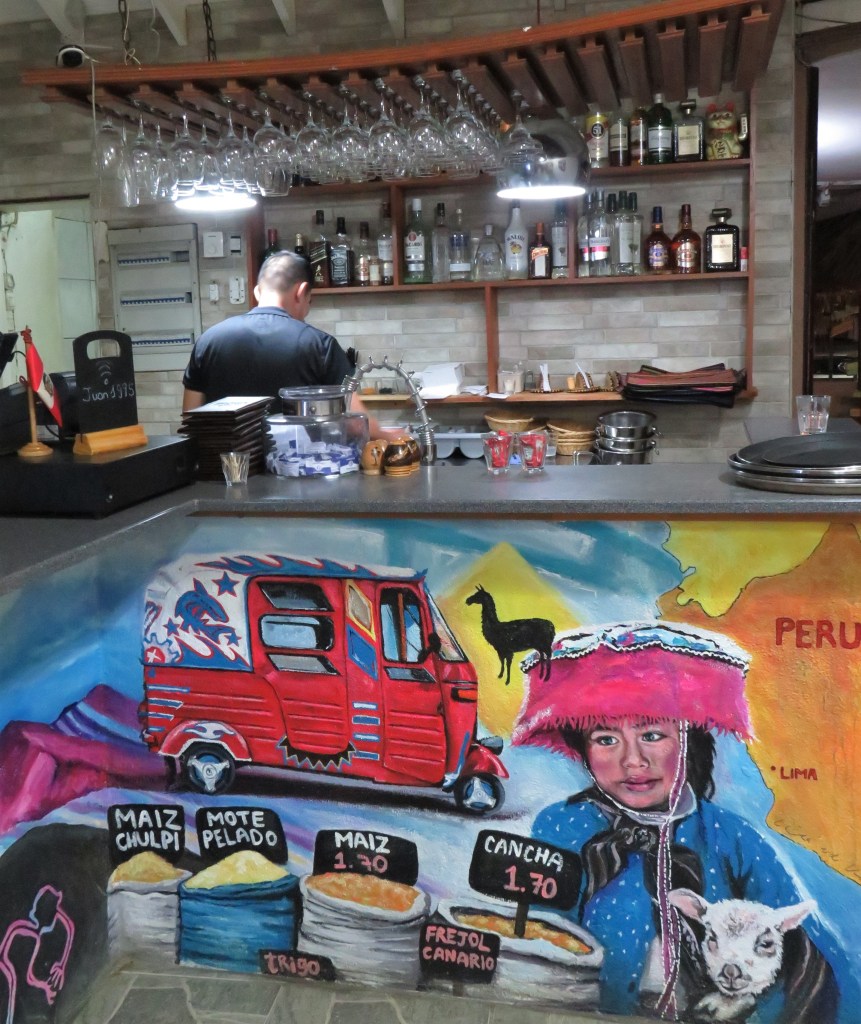
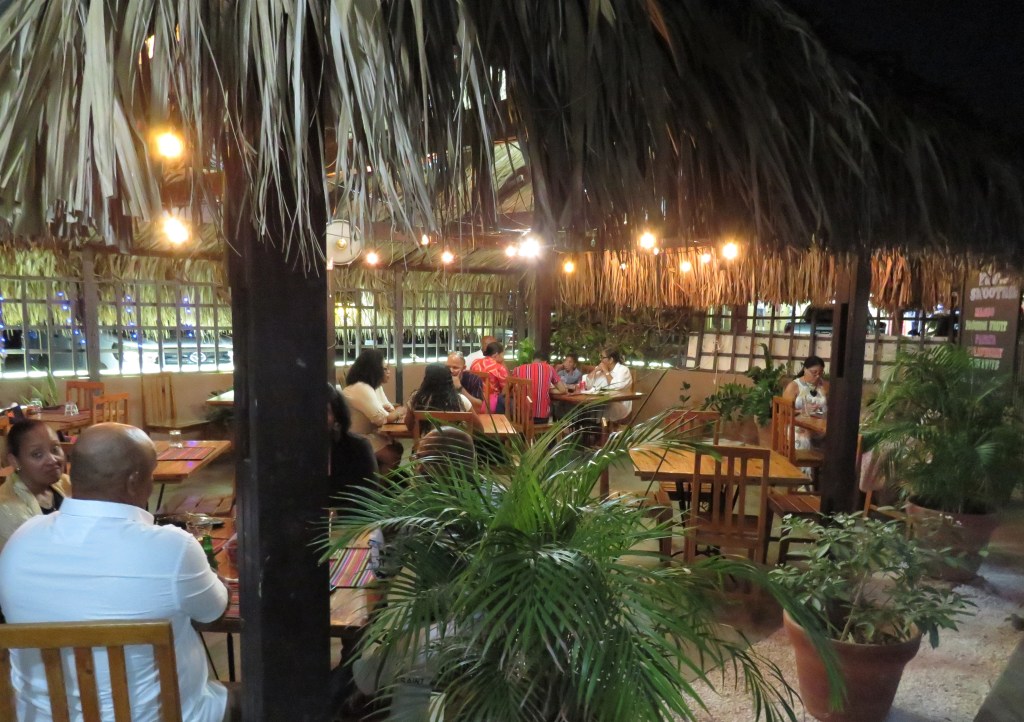
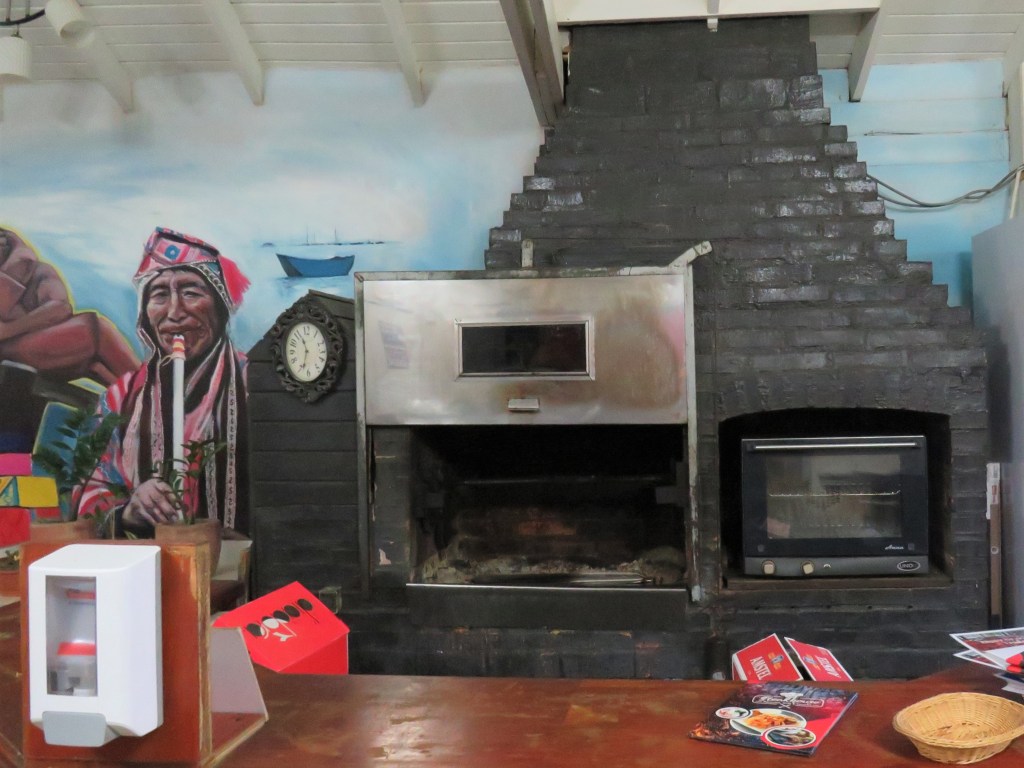
On one of our last nights, we ventured into Kralendijk one more time for a delicious dinner. This time we went to a Peruvian Steakhouse called The Tasty Bar.

So far, other than restaurants, we have never been to Peru, but with so many other countries, it is definitely on our one-day list. Rather than shrining down our list, it only seems to keep growing instead, and that is perfectly OK by me. 🙂 I know by the food alone, we are going to thoroughly enjoy Peru when we do make it there, but so far, Bonaire, and the Dutch Antilles are the closest we have ever come to South America. We are not far, only less than 50 miles off the coast of Venezuela, but we haven’t made it there yet.

We had just completed our last dive and our last night dive of this trip, and we were all tired and hungry. It takes a lot out of you when you do 26 dives, or more in Nancy’s case, in one week. We needed to just sit down and relax and enjoy the evening. And enjoy it we did too. The food was so good.

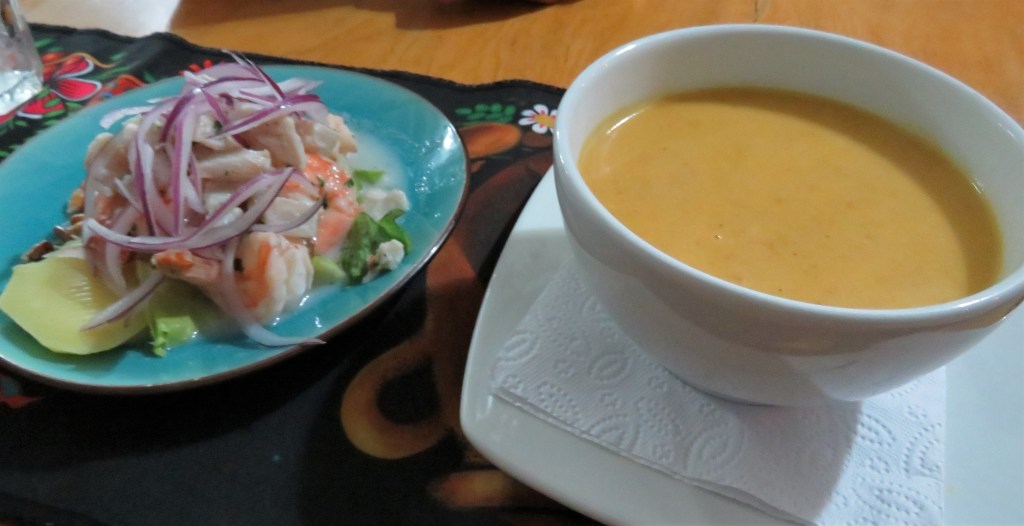
We ordered another batch of fresh ceviche and a seafood soup to start off with. Both were excellent, and just loaded with fresh seafood. All the shrimp, mussels and scallops are hidden in the soup.

Nancy was done with seafood and ordered a steak. She said it was really good, but she said her potatoes were even better.

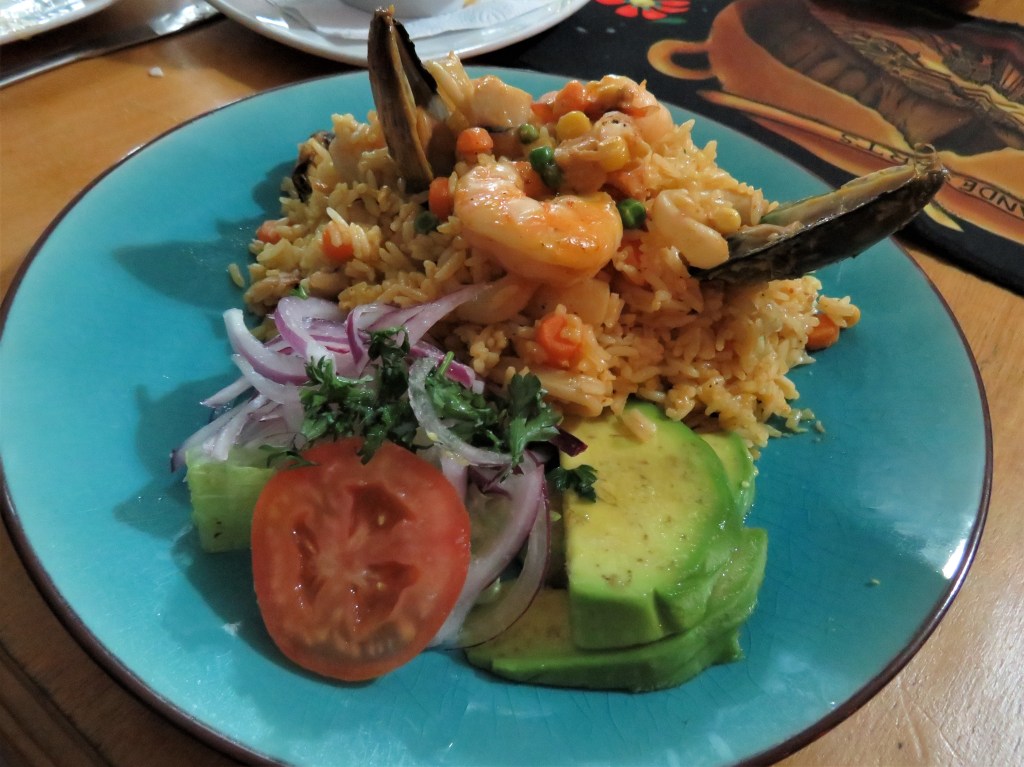
Larry and I were still in a seafood frame of mind, so we ordered and shared the Arroz de Mariscos, or seafood and rice. This was very good too.

With very full tummies, and lots and lots of diving done, we were winding down our trip. Sad to say, the vacation was quickly coming to an end, and it was soon time to go home, back to reality.

This concludes my series on our Bonairian adventures. I hope you have enjoyed it as much I enjoyed sharing it with you. There are always more adventures ahead, you just have to make everyday an adventure and seize the day. Carpe diem.

Stay well and stay safe Everyone. ‘Til next time.
Gift From The Garden

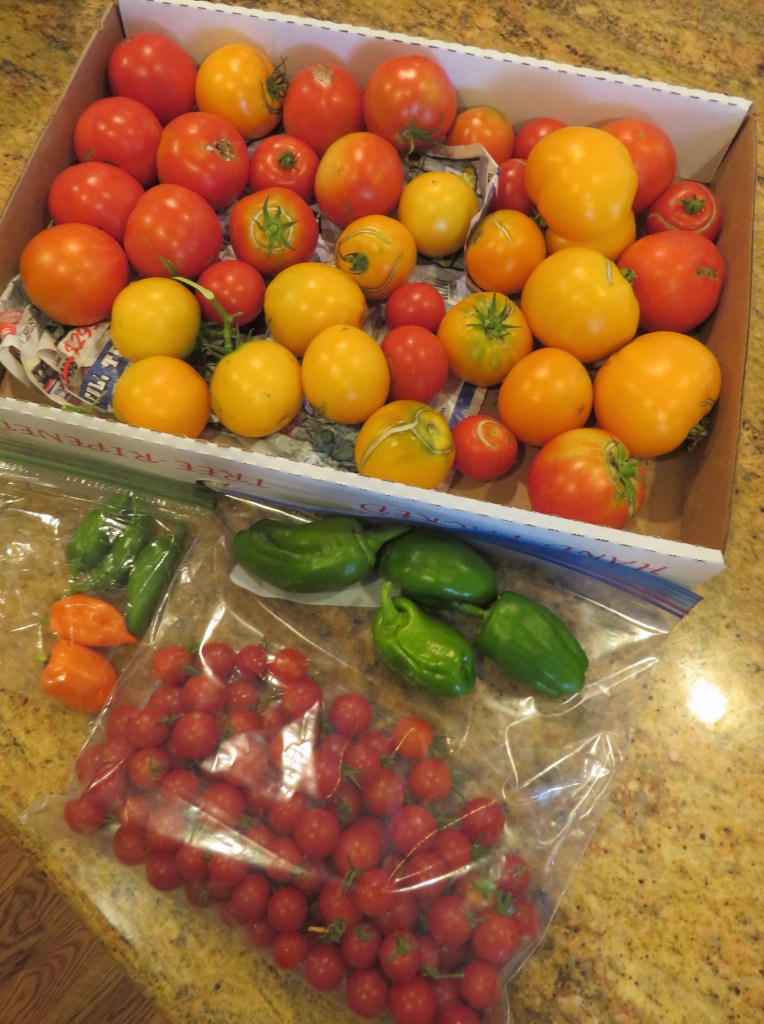
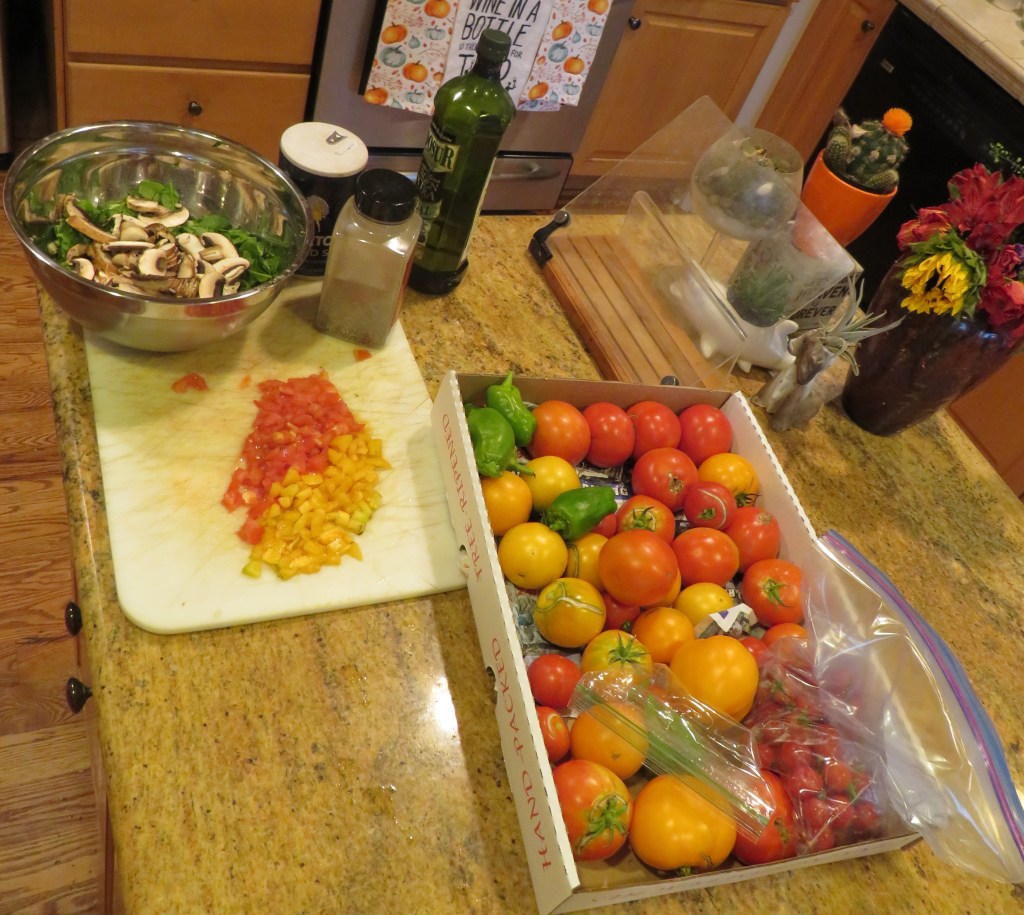
Bob and Janet’s garden went wild this season. They had so many tomatoes, and different varieties of tomatoes too, as well as peppers and beets. Bob called and asked if I would take some more tomatoes off their hands, since Janet was “sick of tomatoes”. Of course I am going to take this tasty gift. We LOVE tomatoes. This was my second “harvest” of their very prolific season this year. I can always find plenty of good uses for fresh veggies and tomatoes.

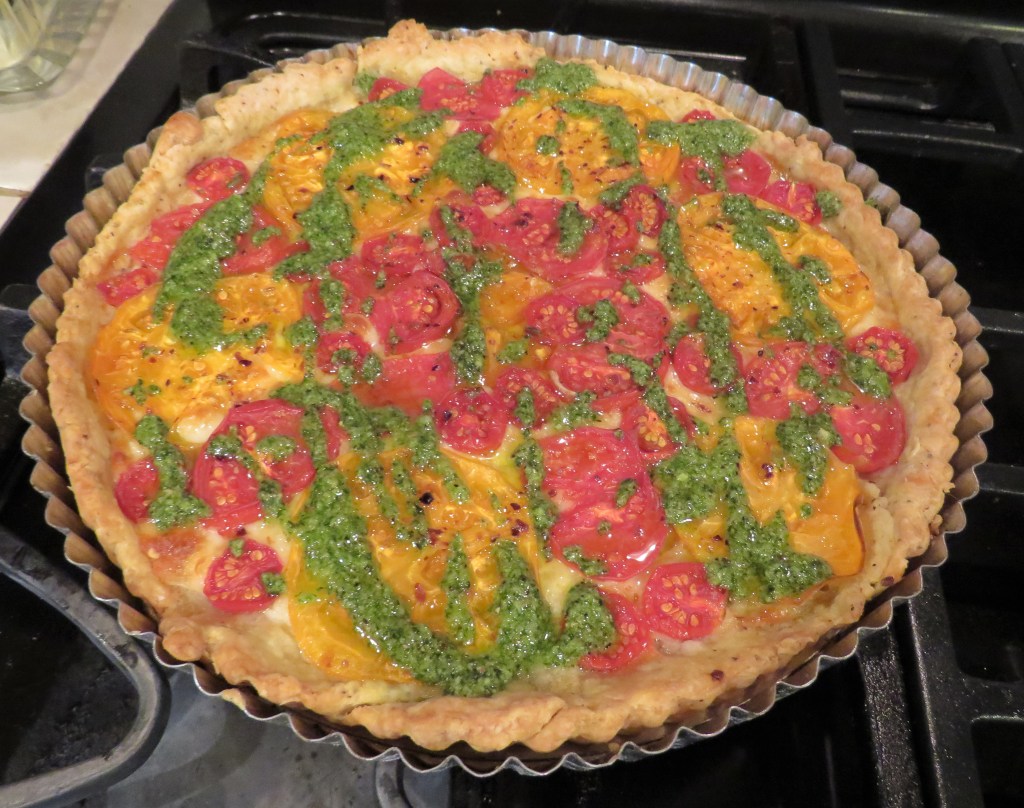
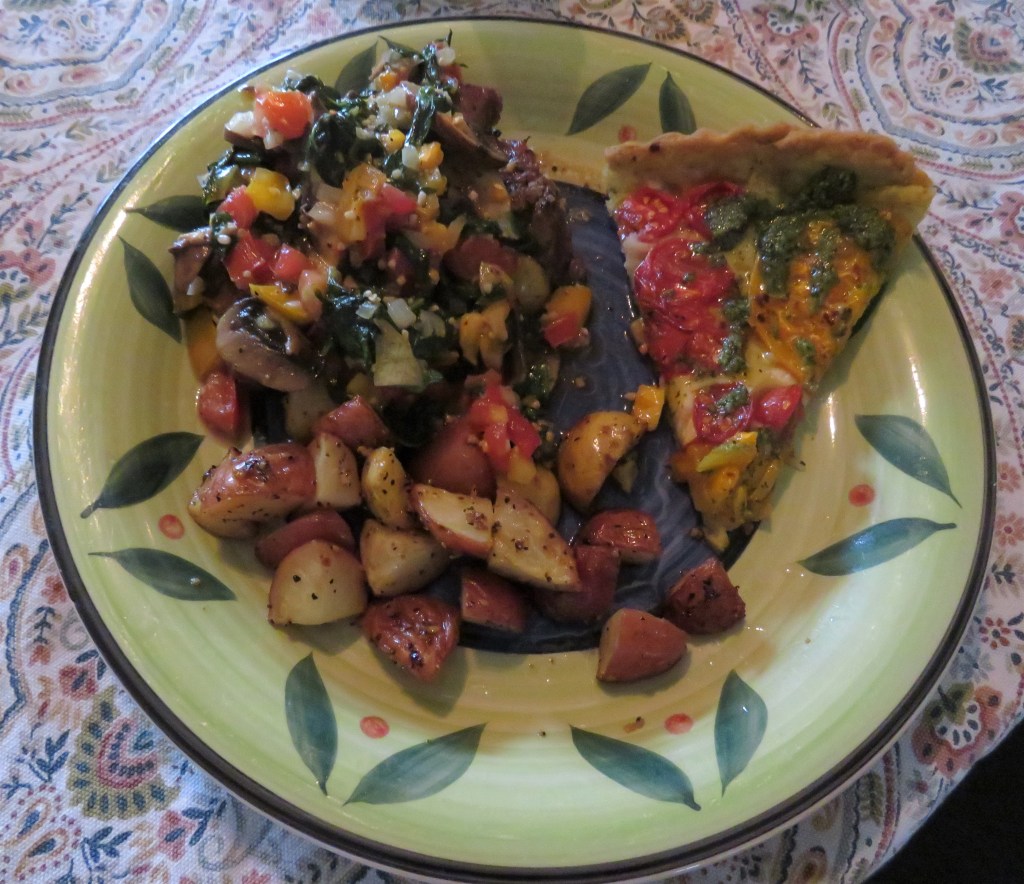
The first thig that came to mind was a tomato tart, drizzled with fresh pesto sauce.

Of course, this only used a handful of tomatoes, but it was a start. I used a few more as part of my Tuscan topping for our steak too. The steak was leftover, but it become new again by adding the Tuscan topping. So, a few more of the tomatoes were used up. Though it doesn’t even look like I made a dent in the tomato box.

I have a sneaky feeling that there will be more tomato recipes coming your way in the very near future. Thank you Janet and Bob for this delicious box of goodies. You know I will always take them and put them to good use. 🙂

Have a great day Everyone. Stay safe and stay well. ‘Til next time.
Bonaire – Get My Goat

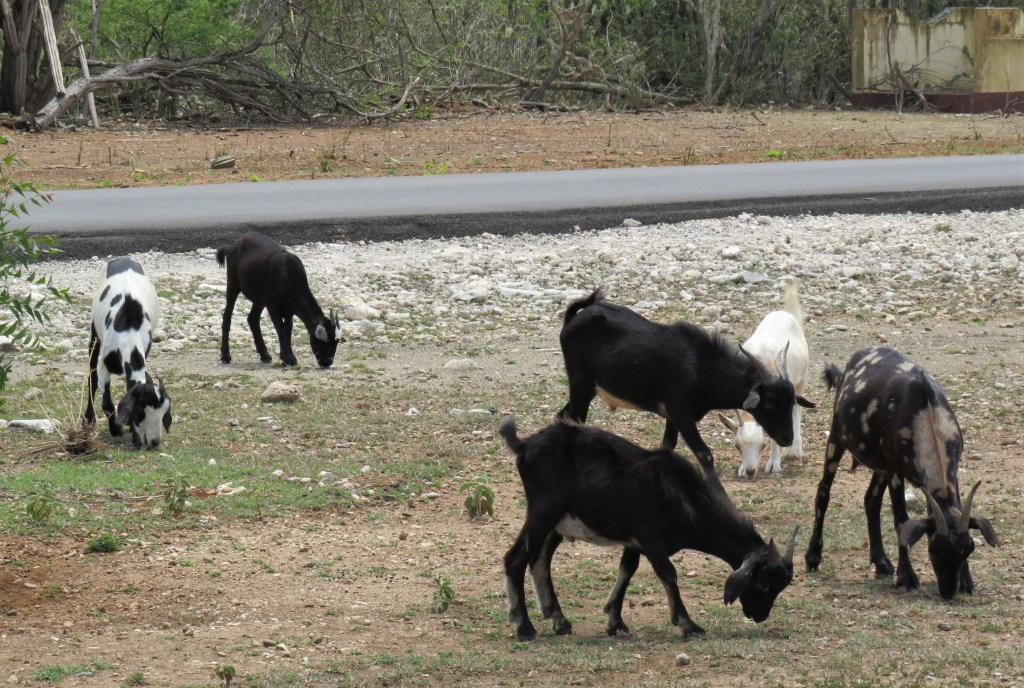
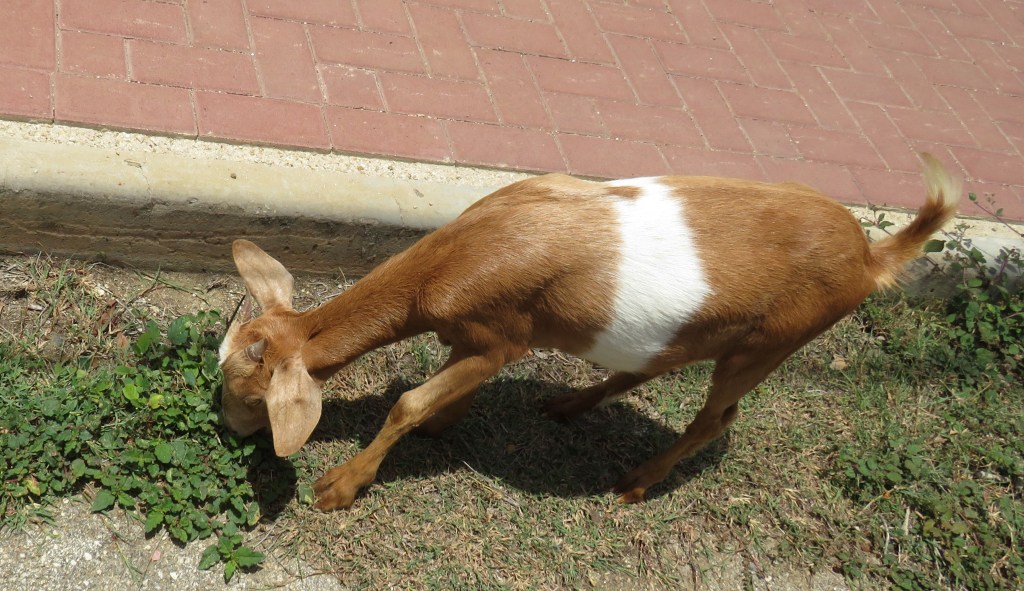
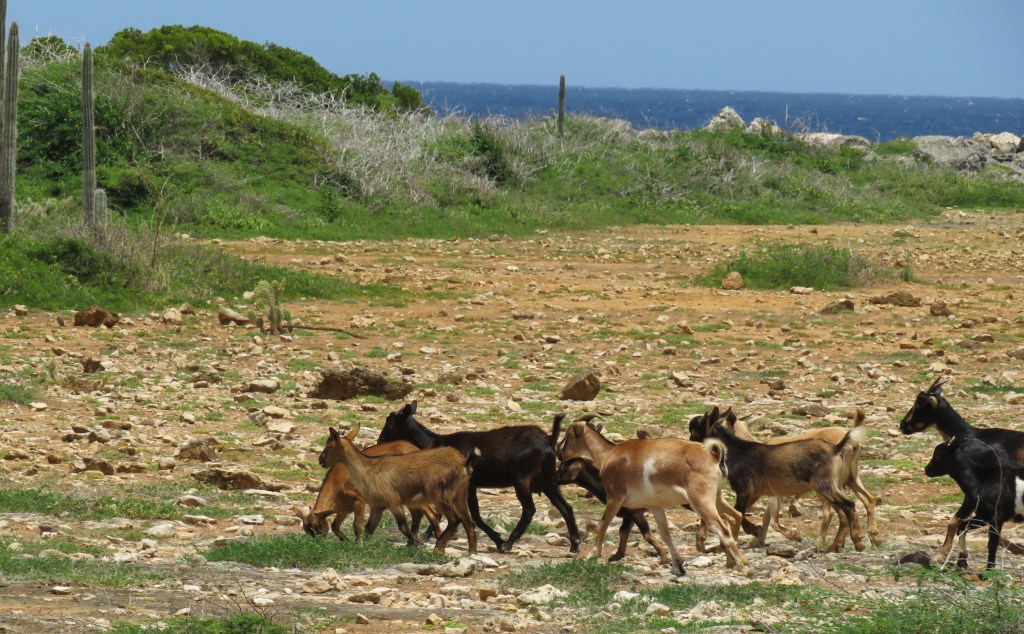
Goats have inhabited the island of Bonaire since the 16th century. In 1526, Juan de Ampues, governor of Bonaire, Curacao, and Aruba, began to raise cattle on the island. He brought in a number of Caiquetios and some Indians from Venezuela as laborers, and within a few years cows, sheep, goats, pigs, donkeys, and horses were being raised on the island. Valued less for their meat than for their hides, the animals needed little tending and were generally let loose to wander freely around the island. Before long they greatly outnumbered the human inhabitants, and today the island counts substantial populations of donkeys and goats among its wildlife.

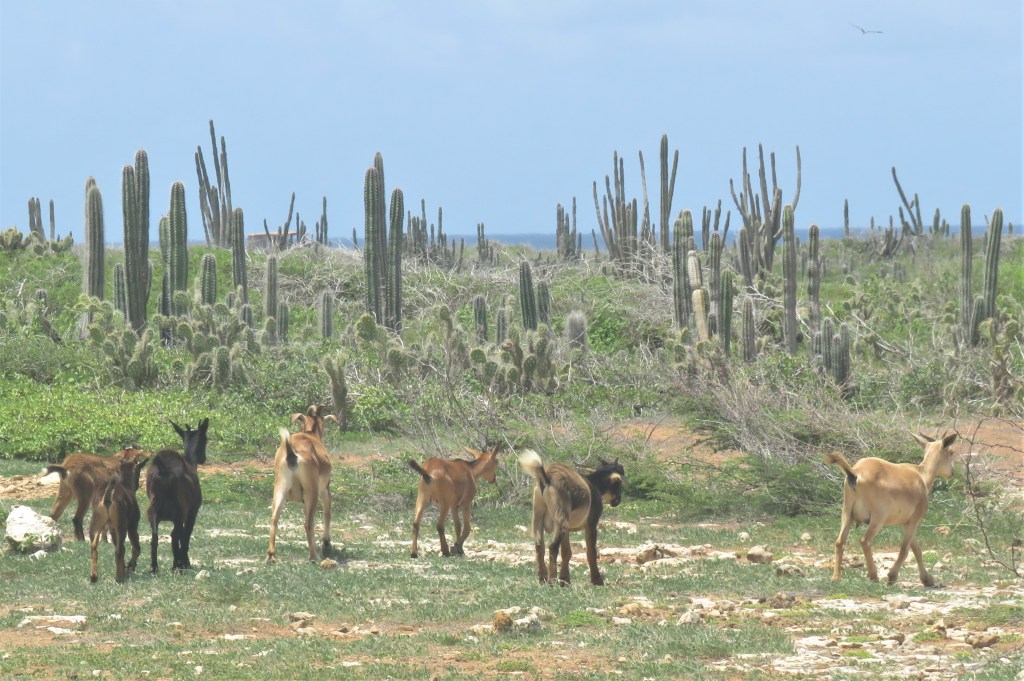
Goat populations on Bonaire have remained high in recent decades, often causing irreversible damage to columnar cacti. Wild, free-roaming goats are the 2nd most invasive species on the island. The problem of roaming livestock is particularly acute in the Caribbean Netherlands.

As harmful as the wild goats may be to the island and to the indigenous cacti, I have to admit, I loved seeing them. As with many things though, the free- roaming goats and donkeys Bonaire – The Donkeys of Bonaire are a double-edged sword, bringing both good and bad results.

Run free and run wild for as long as you can. Stay wild, stay safe and stay well. ‘Til next time.
Bonaire – The Donkeys

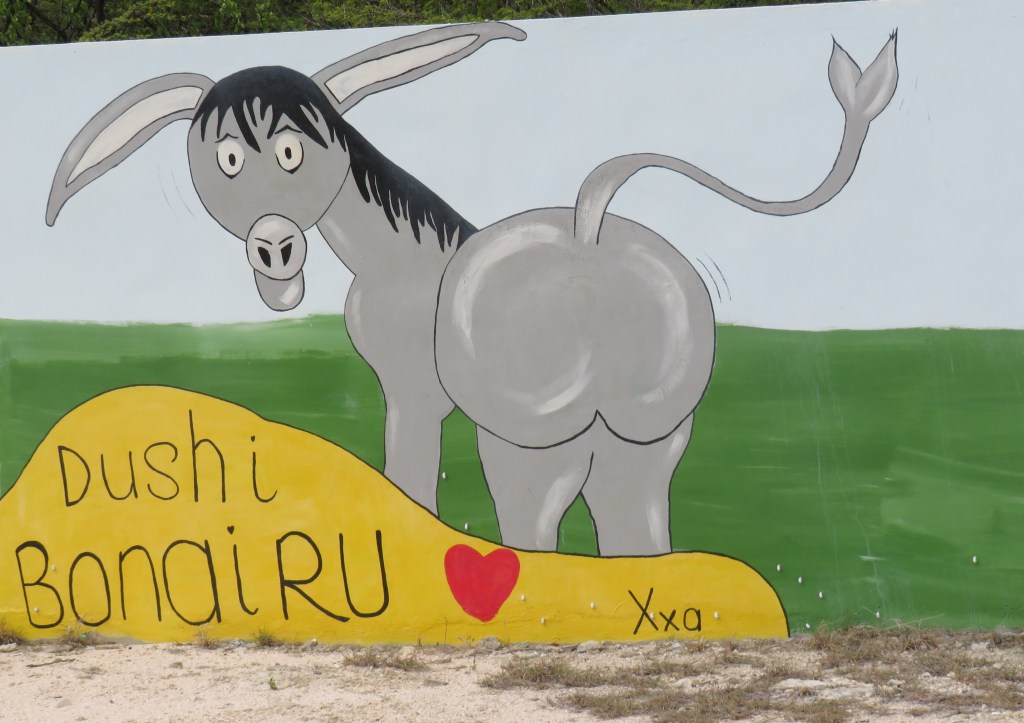
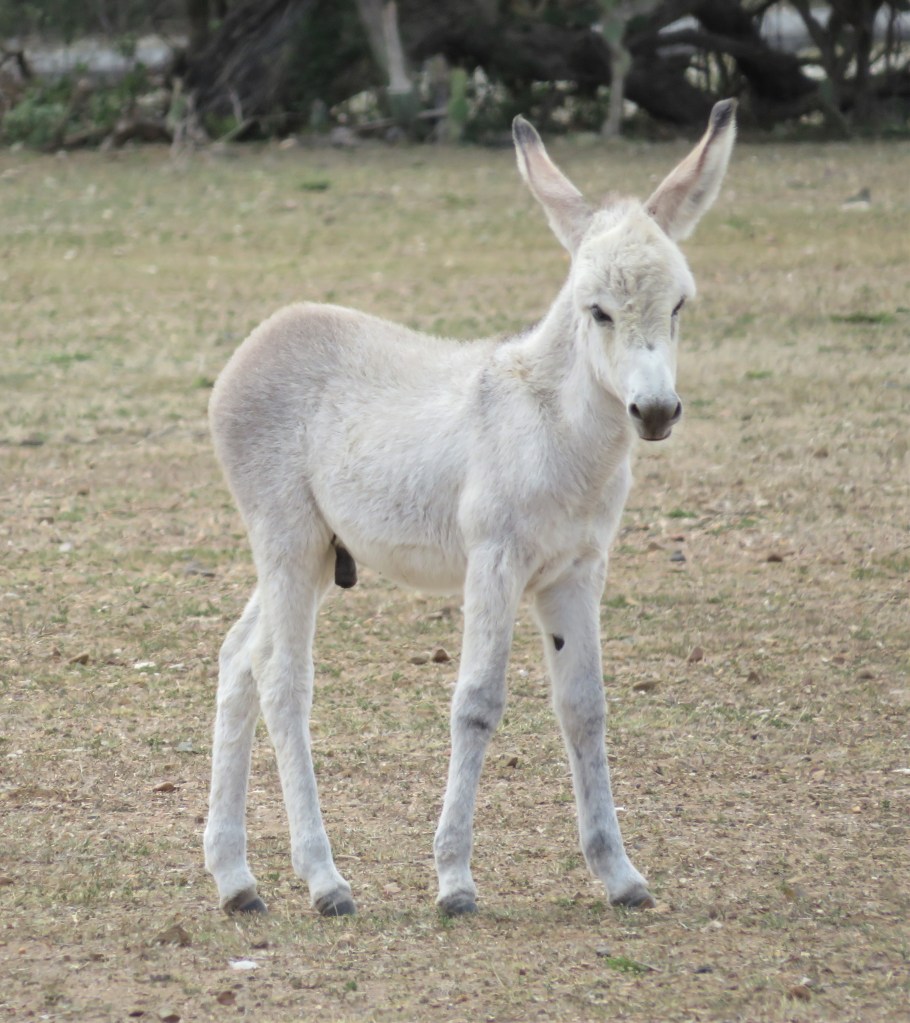
Donkeys have been living on Bonaire for hundreds of years. The animals were originally brought over by the Spaniards in the 17th century and used to perform hard labor. Once modern transport made these animals superfluous to requirements they were left to their lot. Because these donkeys have been left and abandoned, there are many who just roam the areas looking for food where they can. Many are sick and need medical assistance. In 1993, a Dutch couple, Marina Melis and her husband Ed Coopman, established the Donkey Sanctuary of Bonaire. Today, there are over 400 donkeys who call the Donkey Sanctuary home. They are healthy and are thriving.

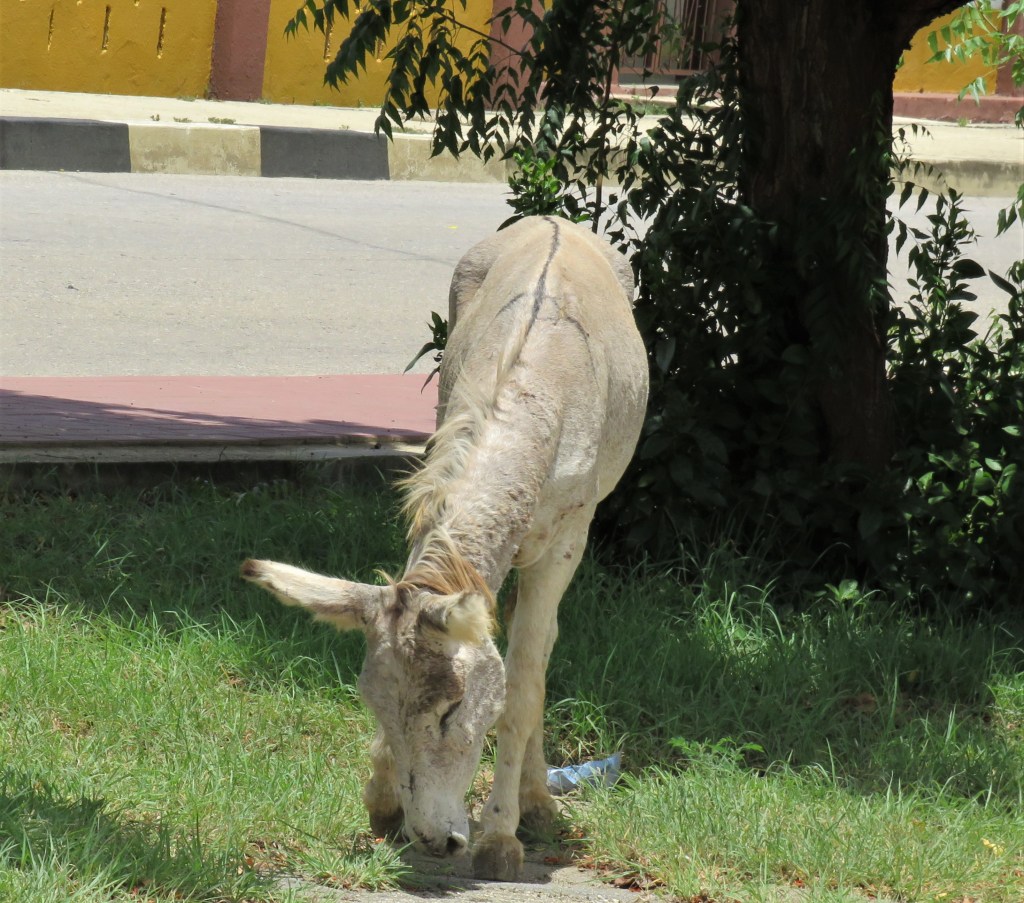
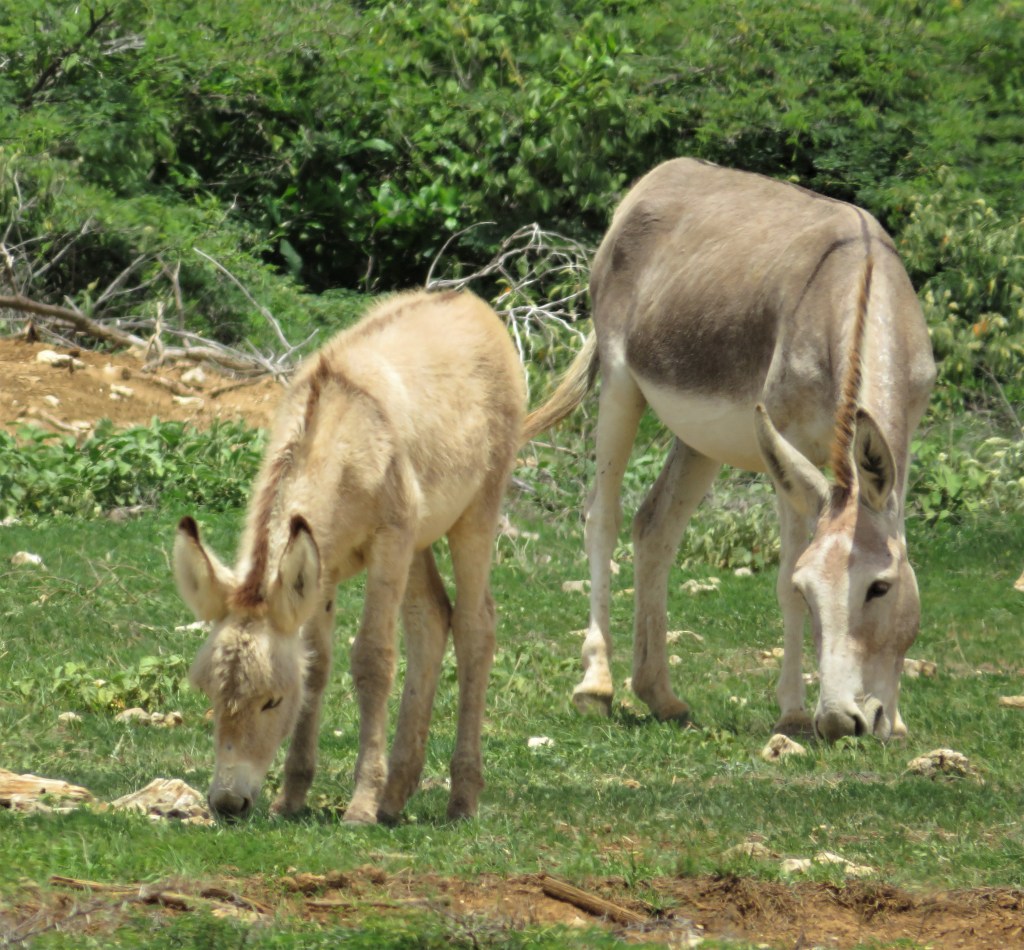
Not only are there over 400 donkeys who reside at the Donkey Sanctuary, but you can still see many roaming around freely too. Bonaire’s donkeys are world famous. These free roaming, wild donkeys can be found roaming wild on the island and are a perfect “vacation memory” for the island visitors. But island residents also have much love for the island’s “historic donkeys”. The donkeys are an integral part of Bonaire, its eco-system, and heritage and have always been naturally free and wild. When man interfered, the problems started. The donkeys have been identified as a “unique genetic resource” and a “unique legacy from past generations”. Bonaire’s wild donkeys have co-existed with man on Bonaire for close to 500 years.

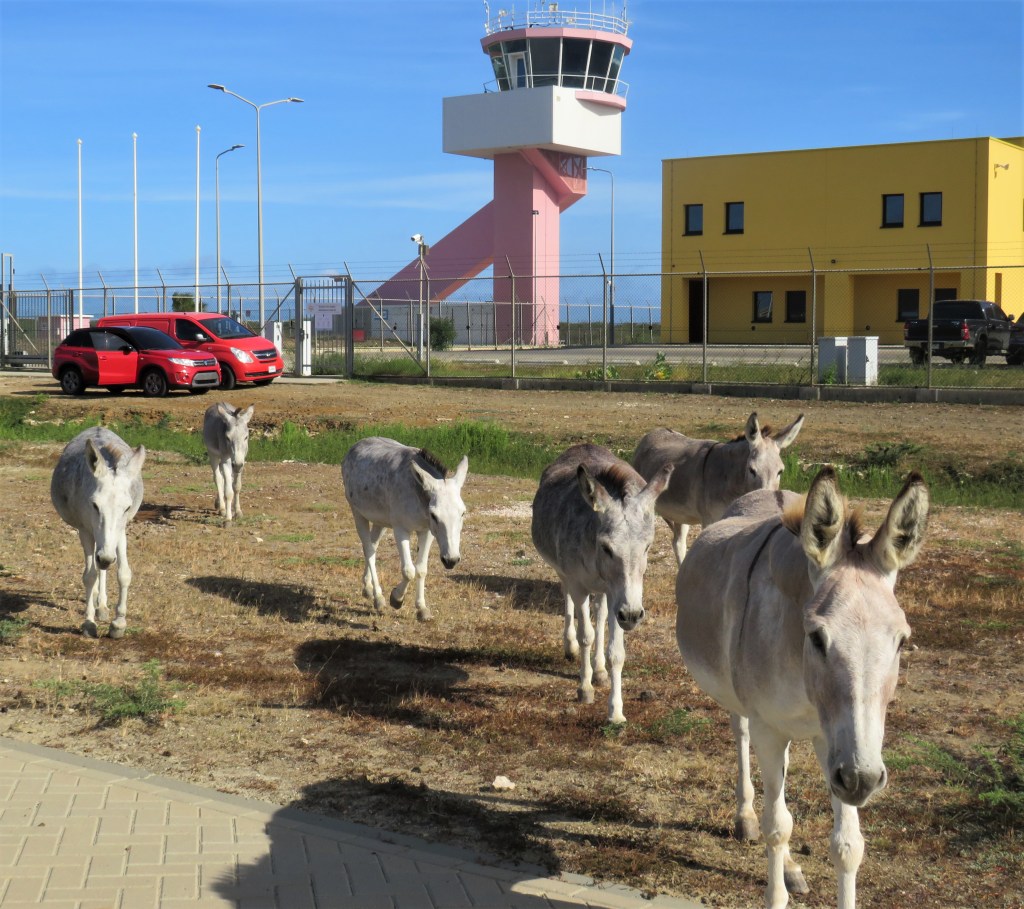
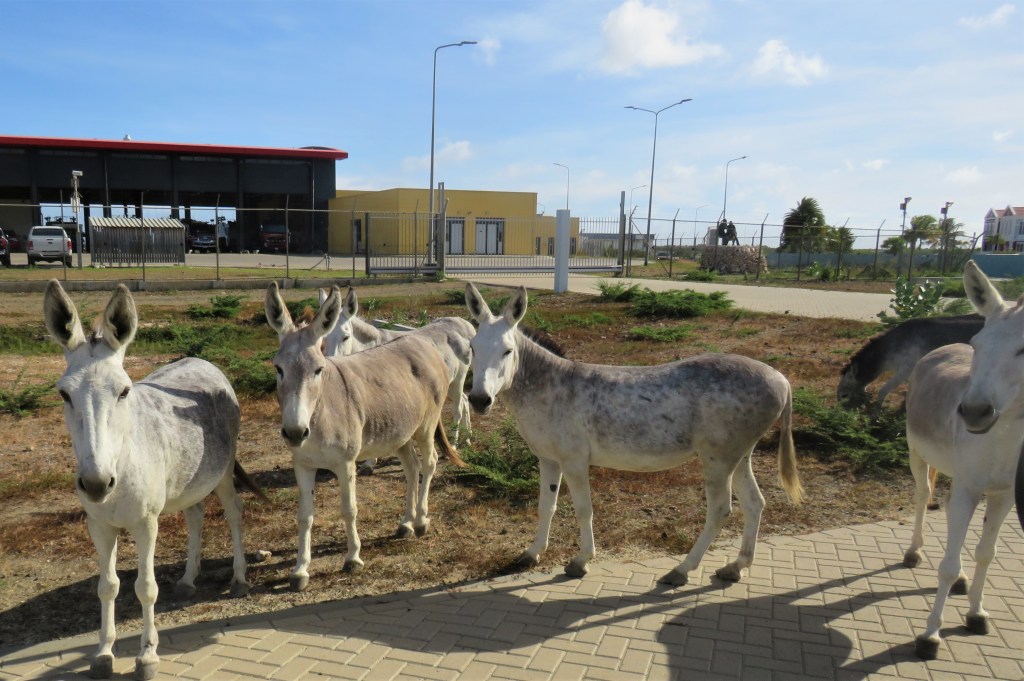
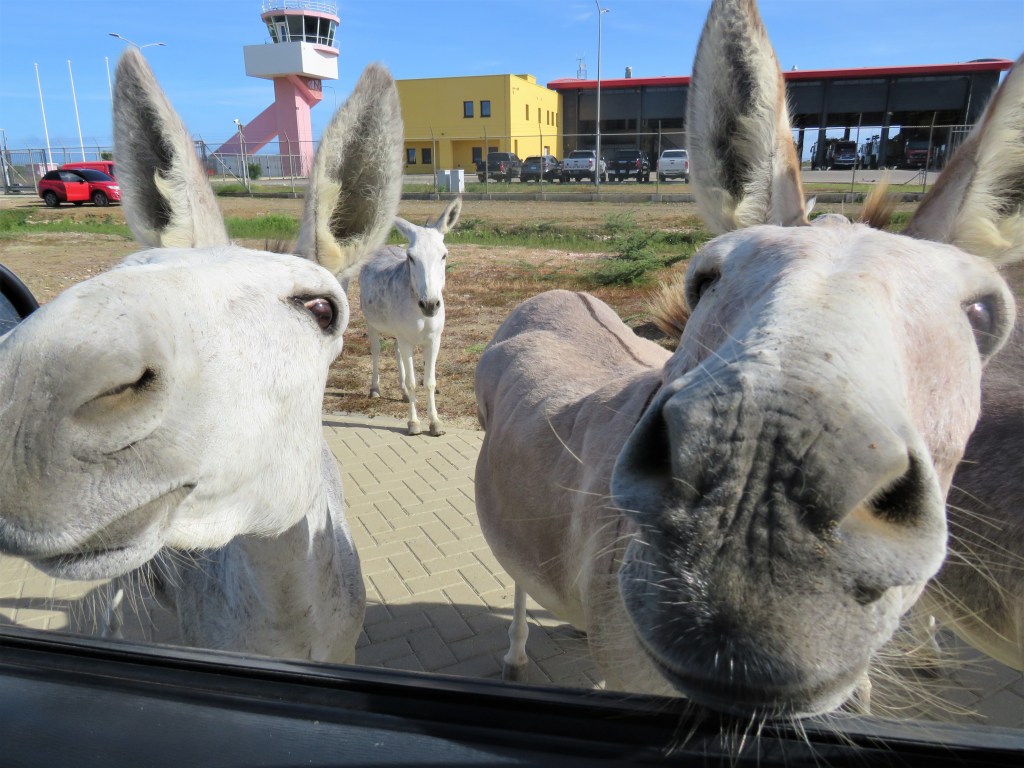
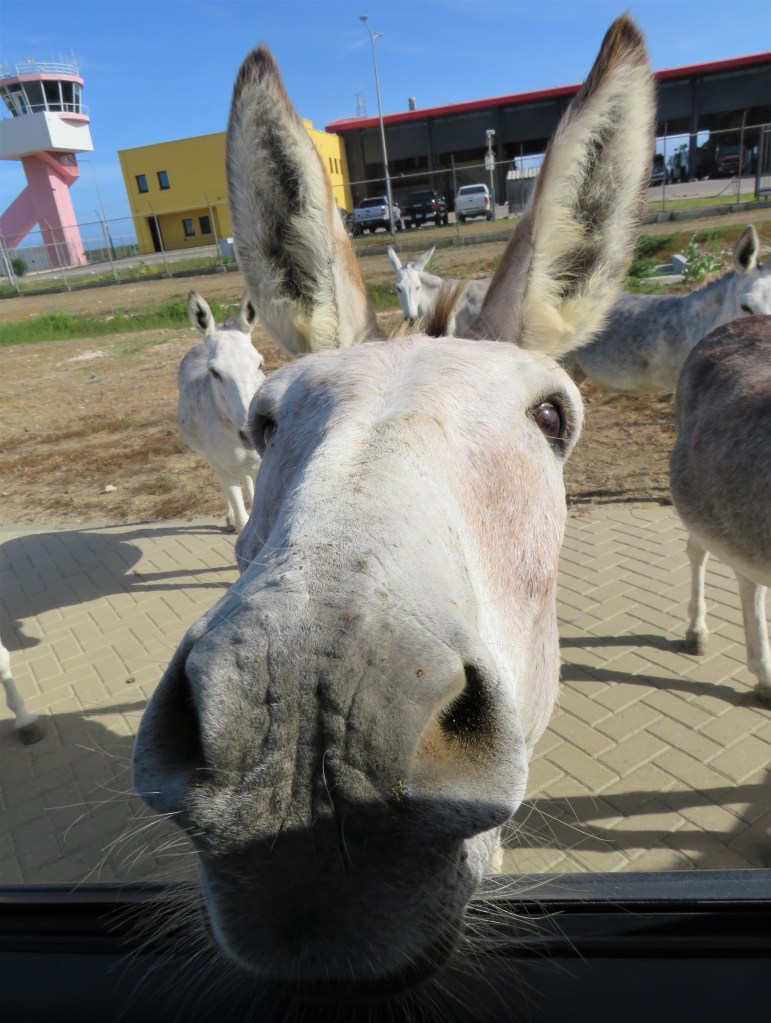
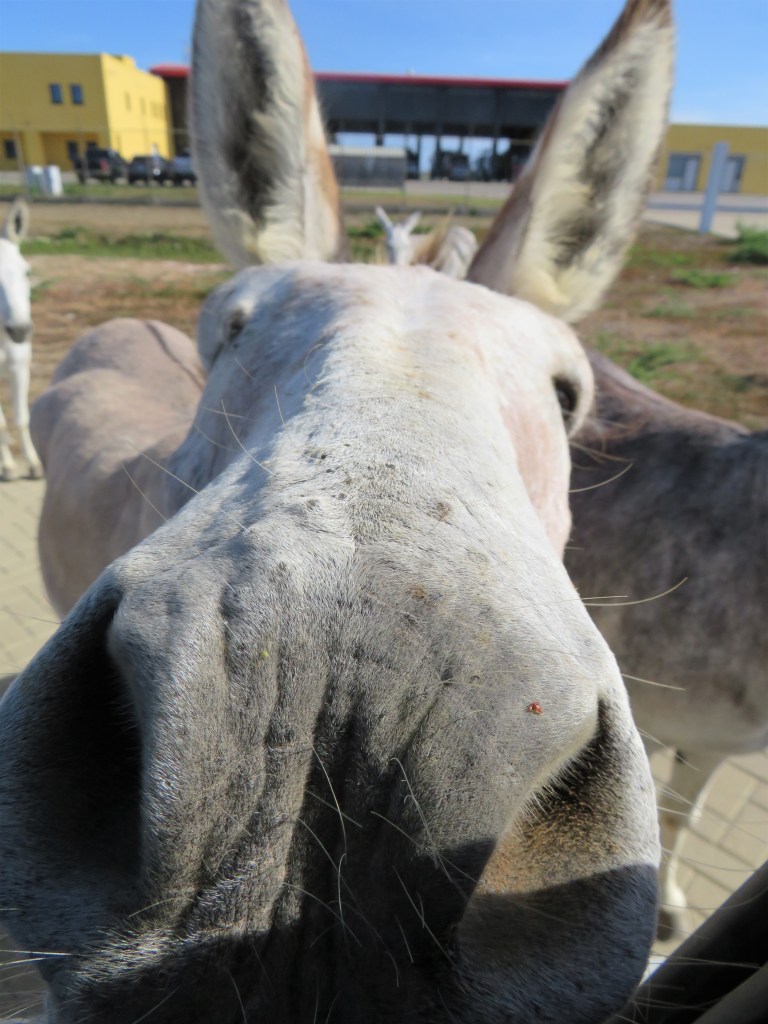
We saw a lot of the donkeys. We also had some very curious ones come right up to the car window, looking for love and looking for whatever goodies we had to share. Unfortunately, we didn’t have any goodies, but we did offer them some much needed love and attention. They seemed very happy with that. These donkeys are right outside the airport.
What ya doin? Do you have something yummy for me to eat?

Let me give you some donkey kisses.

The donkeys were fun to see. We kept seeing them when of course we didn’t have our cameras with us, but as you can now see, we finally caught them with our lens. I had no idea about their history with the island, but now, we all do. I just love to learn new things, and better yet, to share them with all of you.

Have a great day. Stay safe and stay well Everyone. ‘Til next time.