I know most people like to eat corned beef for St. Patrick’s Day, and that’s perfectly OK. We had some corned beef a few days ago. But I never like to go with the flow. I much prefer to do my own thing rather than follow the crowd. I know. I’m a rebel to the core! 🙂 I did cook Irish food though. I made an Irish beef stew Irish Stew and Irish soda bread for the occasion.
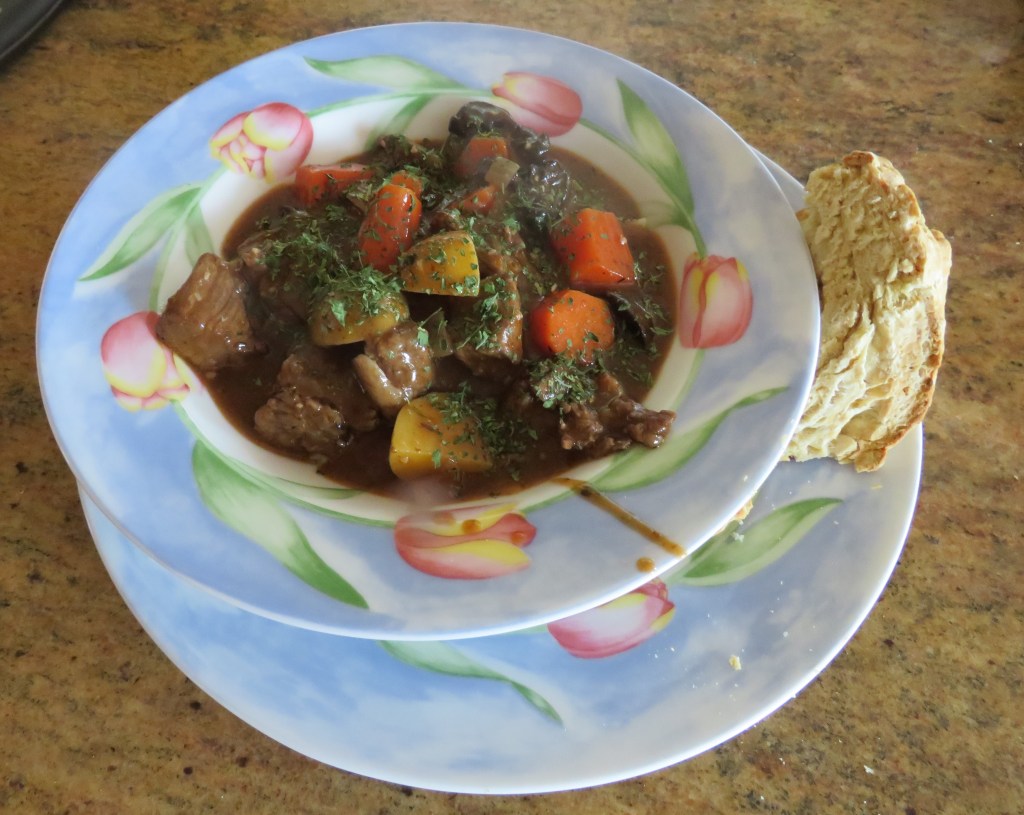
My stew was loaded with beef, carrots, onions, mushrooms and potatoes, and even some Guinness to really give it a lot of flavor. I served it over some mashed potatoes too, making it even more Irish, if that’s possible. 🙂

It’s believed that Irish beef stew, or Stobhach Gaelach in Gaelic, originated sometime during the 17th and 18th centuries, by Irish shepherds and rural farmers who had access to only a few ingredients but needed a nourishing meal to sustain them through long days of work. Traditionally though, Irish stew was made from lamb or mutton, not beef. Beef was used more in the stews when the Irish immigrants came to America during the potato famine, as beef was more readily available and cheaper than either lamb or mutton. Other differences between the traditional Irish stew and beef stew are that beef stew usually includes more vegetables and has tomato paste added to the stew to add more body and more flavoring, whereas traditional Irish stew does not. Today, traditional Irish stew, made with lamb or mutton, is the national dish of Ireland.
The original staple for Irish stew was potatoes which was easy to obtain. If the household was lucky enough to have a little meat, then adding it to a stew was the best way to stretch the meat out to feed the family. Beef was available, but only affordable to British landowners. Your typical Irish cook would use lamb meat or mutton rather than sacrifice their only dairy cow. The addition of the neck bones or shanks also provided more flavoring to the stew.
Each region of Ireland will also have their different version of stew. Southern Ireland will add barley which is an affordable and nutritious filler. Other regions may cap their stew with a crust of mashed potatoes making more of a shepherd’s pie. No one is quite sure when or how the addition of Guinness became part of the stew, but it is sure part of the stew today. Although purists say Irish stew should not have Guinness added to it. I am NOT a beer or stout drinker at all, but I do love the addition of Guinness to my Irish beef stew. When Guinness stout beer cooks down it adds a nice roasted caramel and chocolatey flavor to the stew.
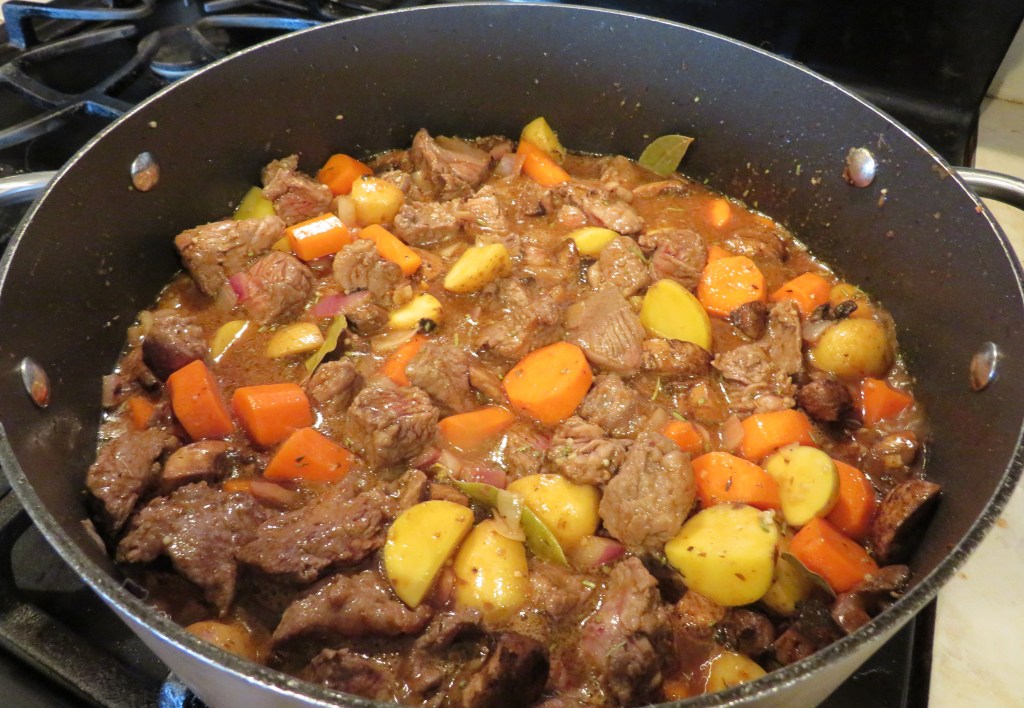
As with anything that has been around for a long time, there are always many different variations. And you can choose what works best for you, or better yet, tweak it a bit to make it your very own. Either way, I’m sure you are going to enjoy this traditional hearty stew.
Have a great day and make every day great. Stay safe and stay well. ‘Til next time.

 A Jeanne in the Kitchen
Very St Pat’s
LikeLiked by 1 person
Indeed. 🙂
LikeLiked by 1 person
Yummy! 😋
LikeLike
Thank you. 🙂
LikeLiked by 1 person
You’re very welcome my dear friend! ❤️
LikeLiked by 1 person
❤️
LikeLiked by 1 person
Thanks again. 🙂
LikeLiked by 1 person
❤️
LikeLiked by 1 person
I love lamb stew, beef is good too but lamb stew is my favourite!
LikeLiked by 1 person
They are both very good. I slightly prefer beef. 🙂
LikeLike