My Birthday Party – Part 1 – Let’s Get This Party Started

Yet another successful party is officially in the books. I was busy cooking and prepping all morning for our Ethiopian feast, aka my birthday party. Most everything needed to be cooked al minute, and I couldn’t cook too much ahead of time. But I had a lot of prep work to do. Because I am very fast and efficient in the kitchen, all this prep work only took about 3 1/2 hours. I made a large menu and was cooking for 23 people, so there was a lot of food and a lot of prep work. But I got it all done in good time. Because I couldn’t really make too much in advance, I literally was using up all my big bowls and pots to hold all my prepped ingredients. 🙂

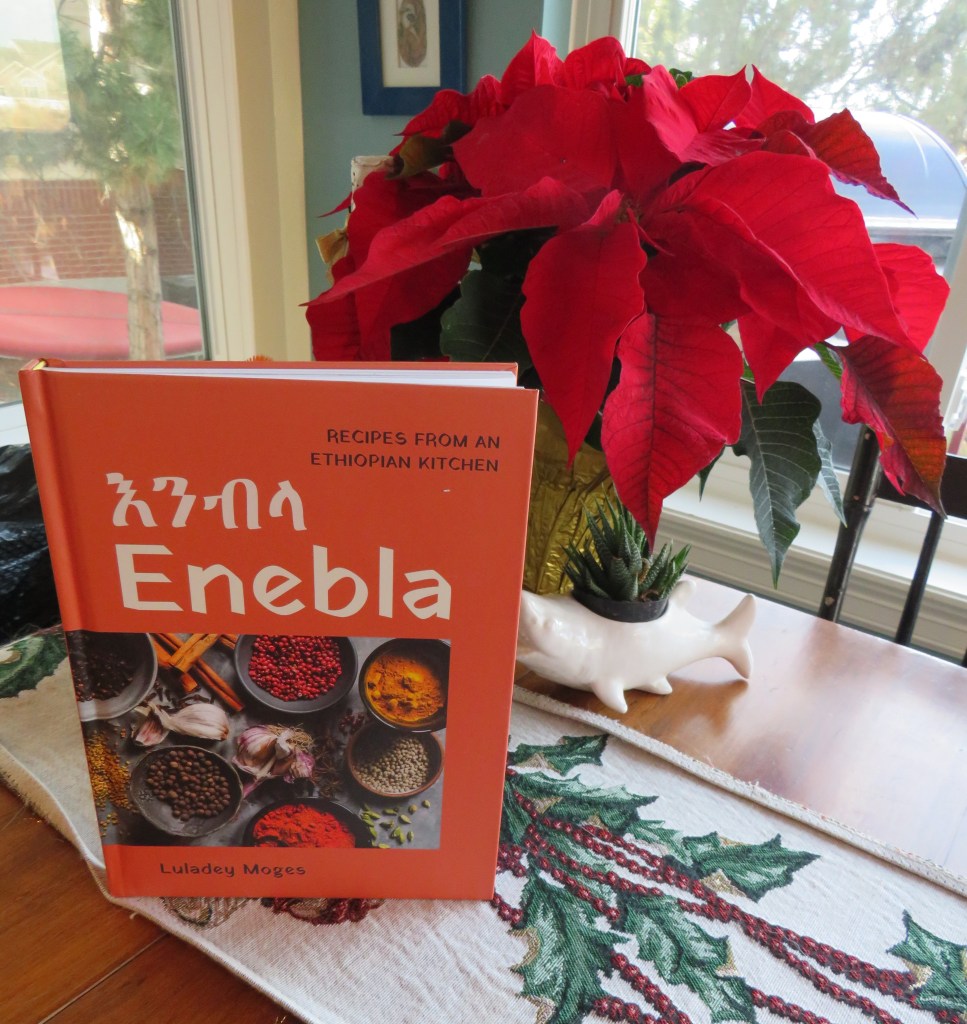
Almost everything I made came from the cookbook I am holding, Enebla, by Luladey Moges. It is an Ethiopian cookbook given to me by Julia. Ethiopia is located in the Horn of Africa, surrounded by Sudan, South Sudan, Kenya, Somalia, Djibouti, Yemen and Eritrea. It is considered the epicenter of civilization. Ethiopians believe in big get-togethers with friends, family and community. These get-togethers always involve an abundance of food and a wide variety of foods too. Food is the center of all gatherings; same as it is at my house too. HMMMMM! I am picking up on a theme here. I too invite everyone over, and will find or make up any excuse to celebrate and get together, and I too ALWAYS have an abundance of and a wide variety of food. 🙂

The name of the cookbook, Enebla means “let’s eat”. The term enebla is also used as an invitation to others to join you in your celebrations of and with food. Ethiopians like to eat in large groups, making it very hard to just cook for one or two. Again, something I can relate to.

I made my batter 4 days in advance, and followed the recipe. I know, something I don’t do particularly well. 🙂 The batter had to have two fermentations. When is it is ready, it will resemble a crepe batter, and unless you have a special Ethiopian injera maker, which most people do not, it is made in large skillets, like a crepe as well.

Injera Bread

You can’t eat Ethiopian food without injera bread. It is like Mexican food without tortillas. It just can’t be done. The traditional eating style for Ethiopians is to eat with their hands. Injera bread is the scoop that helps pick everything up.

The Starter

1 cup teff flour

1 cup warm water

1/4 tsp yeast

Mix everything together, wrap tightly with plastic wrap, and let set and ferment for 3 days.

After 3 days, there will be a build up of water. Pour off the excess water then make the batter.

The Batter

6 cups teff flour, NOT seeds

1 tsp ground fenugreek

2 cups water

sparkling water, optional

the starter

I could not find fenugreek at all, so of course I improvised. It’s just what I do. Julia said she would have been surprised if I had actually followed the recipe completely. 🙂 I found out what the qualities of fenugreek were, and kind of made my own. I used some of the Ethiopian spices Julia had given me and 3 TBSP of maple syrup.

Once everything was mixed together, I wrapped it in plastic again and let it ferment once again, for another day.

Julia and Bruce came over early and Julia helped me make the injera bread, since I have to admit, I was a little intimidated by making it and Julia knew exactly what she was doing. Usually I am fearless, especially in the kitchen, but when I am entertaining for a large crowd, and I making something completely foreign to me, every now and then I like a little help from people in the know. Julia is certainly someone in the know. She loves to cook all kinds of interesting and exotic foods just like I do. In fact, the first time I ever ate Ethiopian food was with Julia. http://retirementrvdream.com/2025/02/23/jeannes-birthday-party/ She said my batter looked exactly how it was supposed to look, even though I got teff seeds instead of teff flour. But we made it work but adding about a cup of flour to the mix, and no one was the wiser; until I fessed up and told people. I admit and own up to my mistakes, even it it takes me a while. 🙂 Teff is a very small, tiny ancient grain native to East Africa.
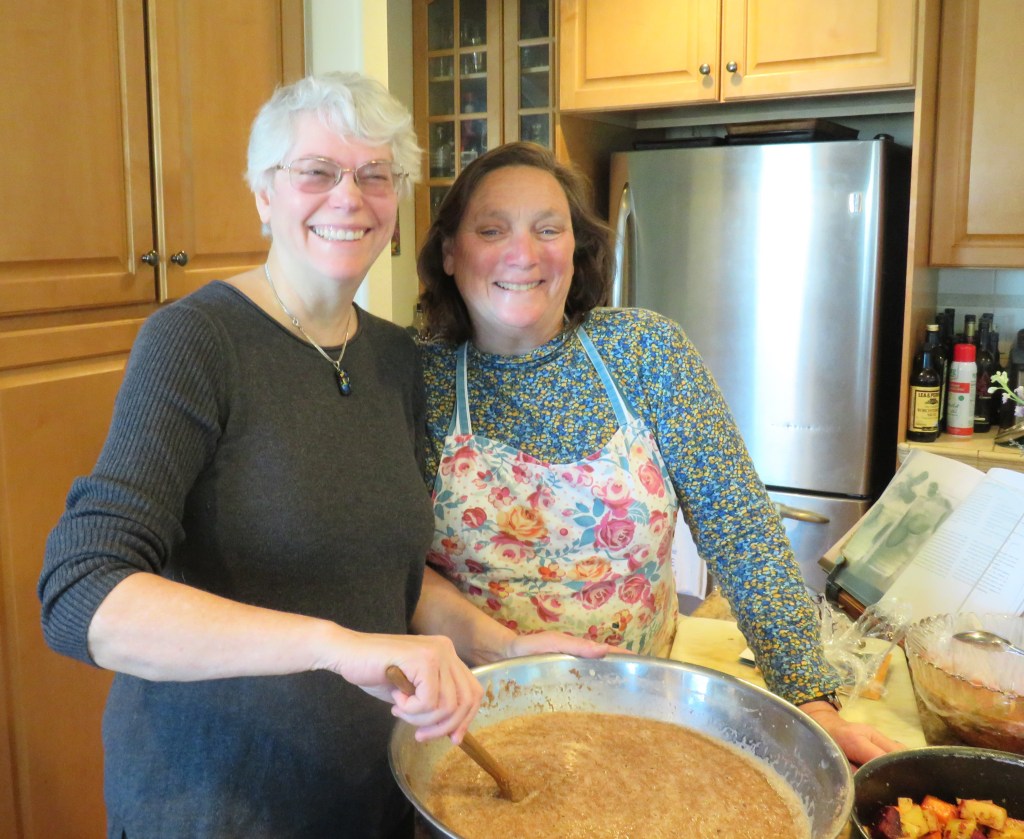
I lovingly put Julia to work, and you can see it in her smile, she was happy to help too. She made the injera bread, and when they were done, I rolled and cut them. We make a good team. 🙂

Once we got the injera bread made, it was time for me to start the actual cooking of all the rest of the food. That was easy since I had everything all done and ready to go ahead of time.

Everyone else came around 5:00 PM, and it was time to party. 🙂

We had a great time and everyone had a lot of fun. Life is short, make the most out of everyday, since everyday is a gift. Stay safe and stay well. ‘Til next time.
Cherry Pistachio Rice Pudding

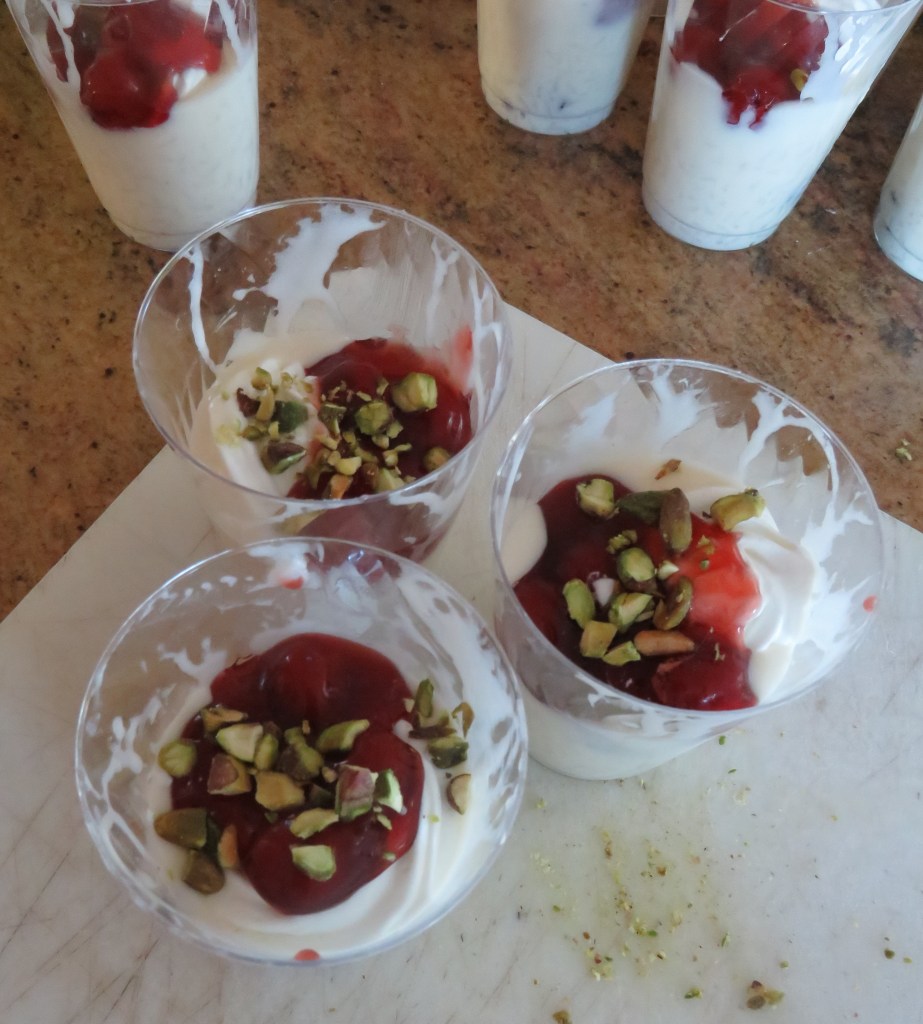
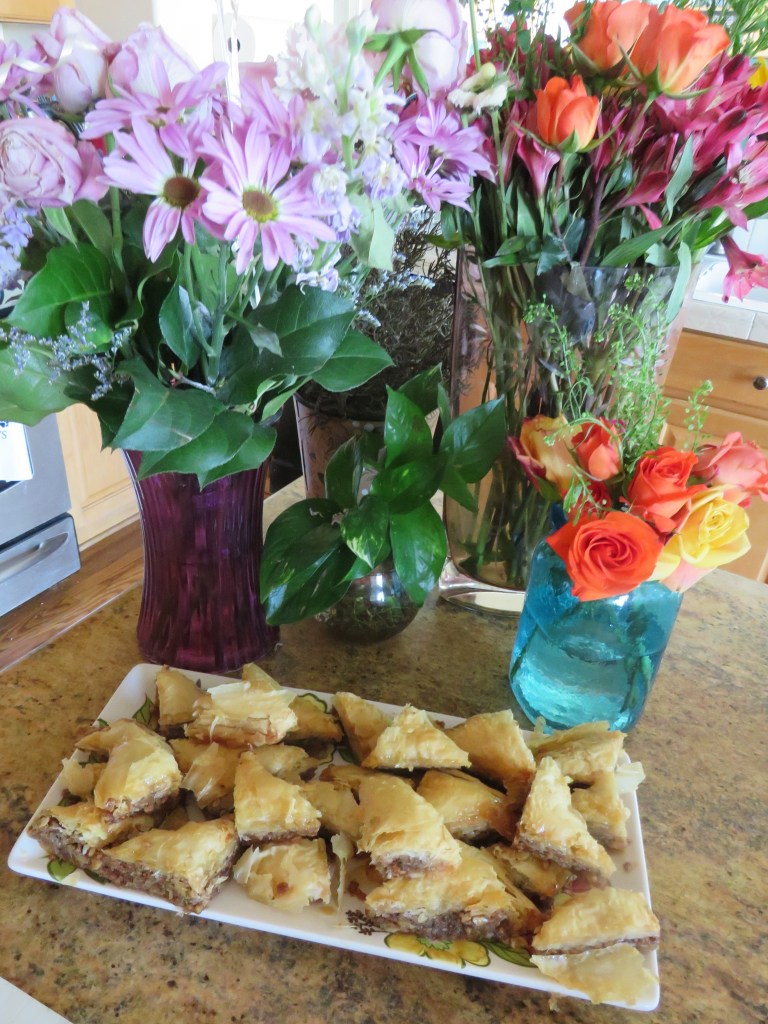
Rice pudding is a favorite all over the world. Because it is a world favorite, there are many different variations too. We are having my belated birthday party today, and it is an Ethiopian/Middle Eastern theme. My desserts are baklava and a cherry pistachio rice pudding. The baklava I bought from my favorite Mediterranean/Lebanese restaurant, Mumtaz. Mediterranean Mumtaz I could make it, but I want it to be perfect, so I bought it instead. The cherry pistachio rice pudding is my own interpretation from another one of my Middle Eastern cookbooks.

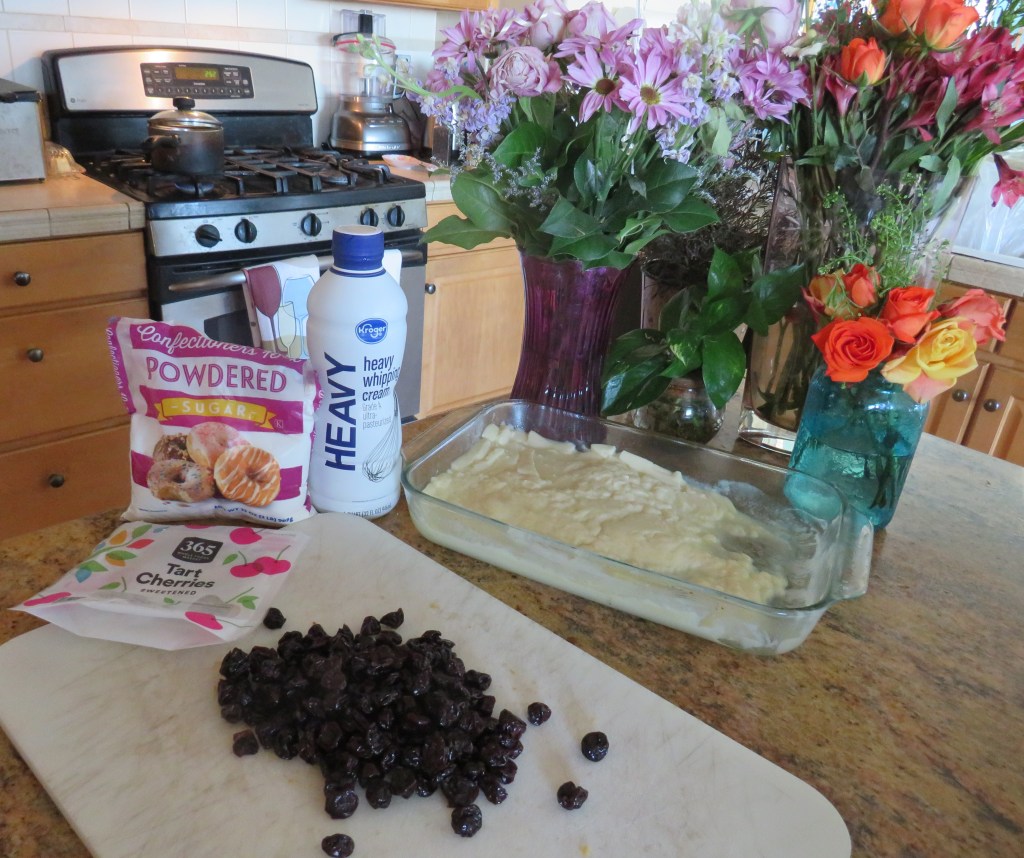
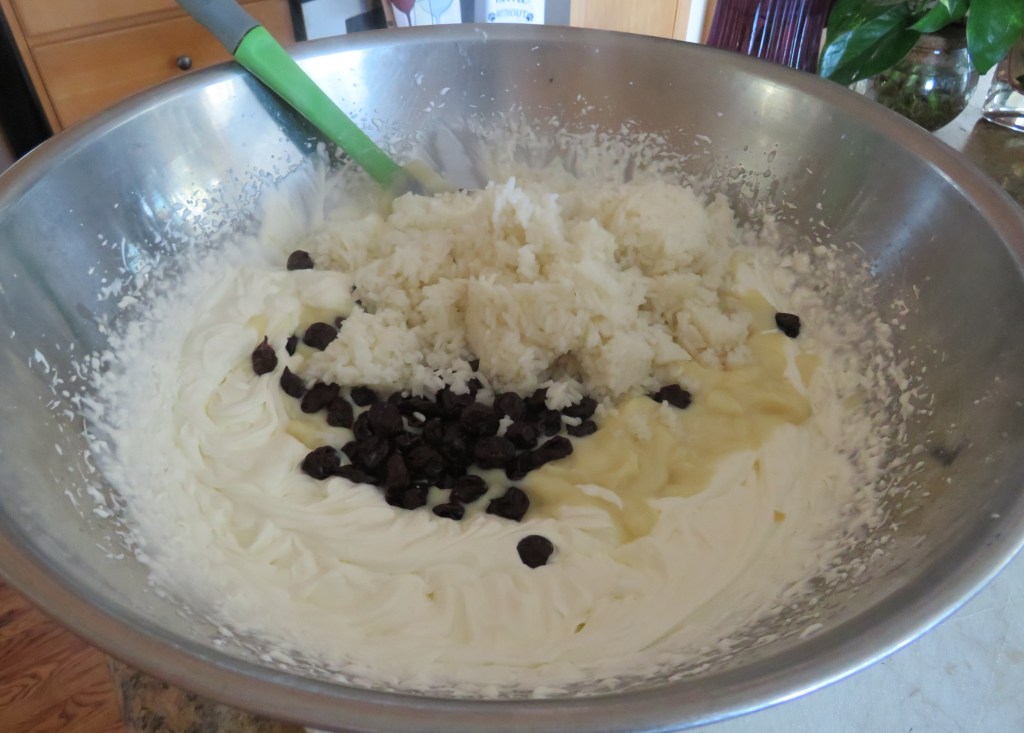
I had custard leftover from when I made my chocolate strawberry tart Chocolate Strawberry Tart and mixed it with whipped cream to make a pastry cream, then added dried cherries and cooked rice.

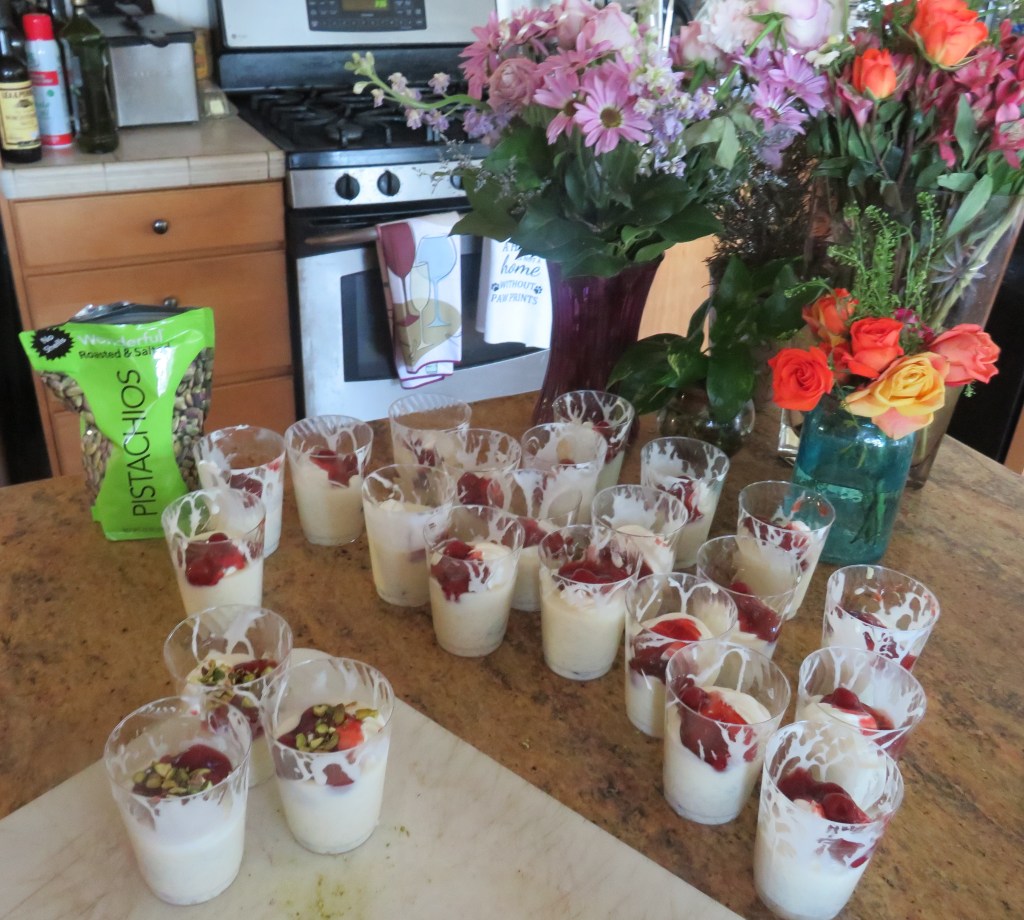
We are going to have a houseful of 23 people, so I portioned it into individual cups and added more whipped cream on top. It still needed some more pizzazz, so I added some cherry pie filling and then topped them off with chopped pistachios.

My friend Karen asked how I decided on an Ethiopian theme. That was easy. My dear friend Julia, yes, our very own from https://retirementrvdream.com/, now Blackberry Homestead, gave me a wonderful Ethiopian cookbook and Ethiopian ingredients for Christmas. Ironically, the Middle Eastern cookbook I used was also from Julia too. 🙂 This delicious cookbook was my inspiration for my party. Yes, I could have easily made recipes for just us, but it’s much more fun to cook for a party of people. 🙂

I have a whole Ethiopian/Middle Eastern feast planned for the party, so stay tuned. You don’t want to miss a thing. 🙂

Have a great day and make everyday great. Stay safe and stay well. ‘Til next time.
Chocolate Strawberry Tart

When not diving or traveling, I am always in the kitchen, cooking up something good. Larry and I don’t usually do anything for Valentine’s Day since my birthday is just the week before. I’d much rather do something special for my birthday than for Valentine’s Day. But I did make a delicious chocolate strawberry tart for the occasion. We shared it with Mike and Lauren over game night.

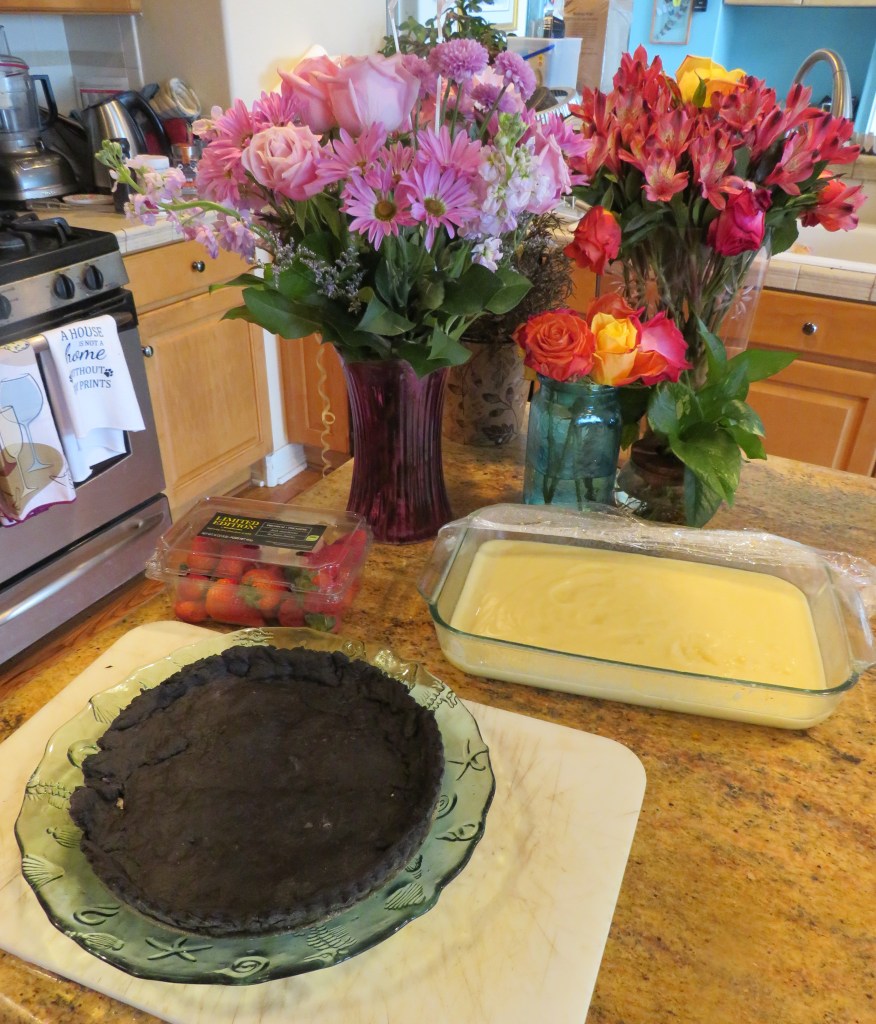
I made a chocolate pate sucre, or chocolate sugar crust and baked it.

Chocolate Pate Sucre

1 1/2 cups flour

1/2 cup powdered sugar

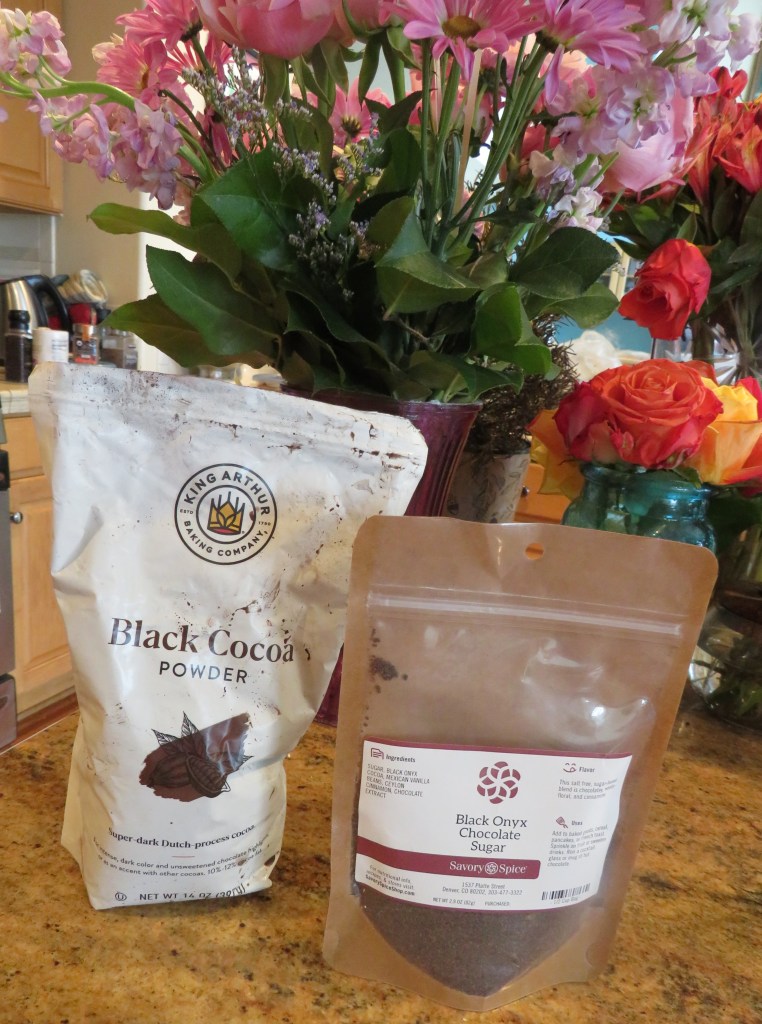
1/2 cup black or dark cocoa powder

dash of salt

6 TBSP cold butter, cubed

1 egg

5-7 TBSP heavy whipping cream

Add all the dry ingredients and the butter to a food processor and process for about 30 seconds to a minute. Then add the egg and cream and mix until it all forms into a ball. Wrap in plastic wrap and refrigerate for at least 30 minutes before using.

When ready to use the dough, roll it out to fit into a tart pan, and press firmly into the pan. Preheat the oven to 375* F or 191*C and bake until it is set and firm. Allow the tart shell to cool completely before filling.

I made custard Jeanne Dear, Can You Make Me Some Custard for my filling and generously filled the tart shell. Once the shell was full of as much custard as it could hold, I added a layer of strawberry slices. Then added some whipped cream and topped it all with a sprinkling of black onyx sugar.

It was pretty easy-peasy and beautifully delicious. It was also perfect for Valentine’s Day or the day of love. But this sweet tart will win over your sweetheart any day. It’s not just for Valentine’s Day. 🙂

Have a great day and make everyday great. Stay safe and stay well. ‘Til next time.
Birthday Bread

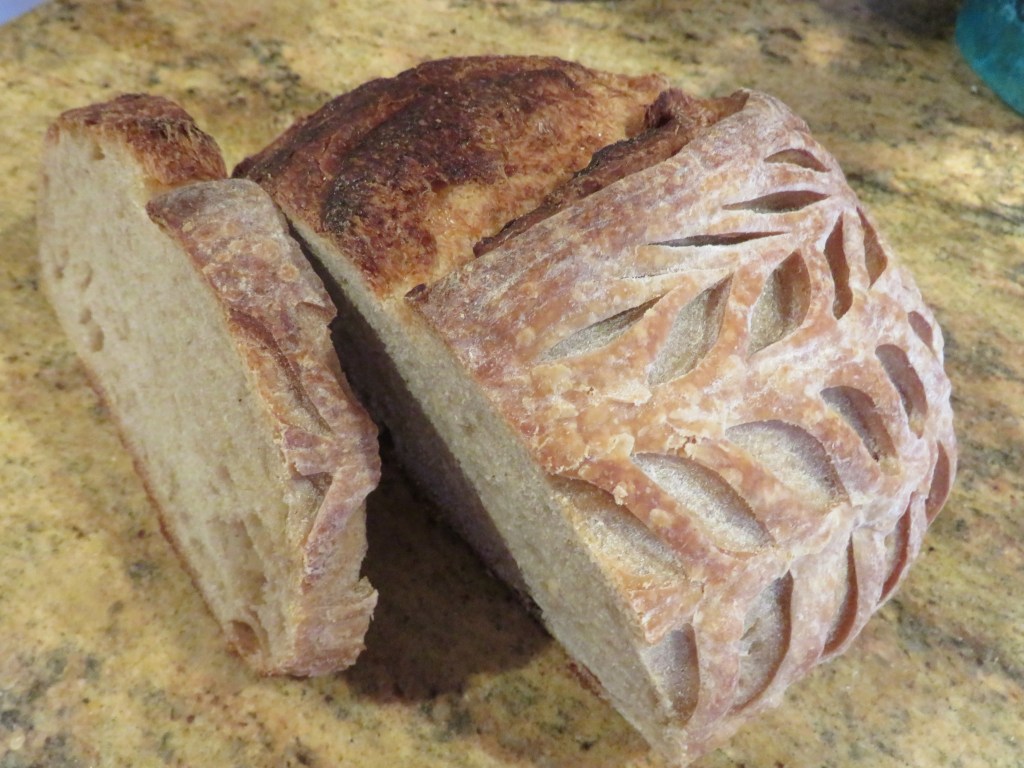
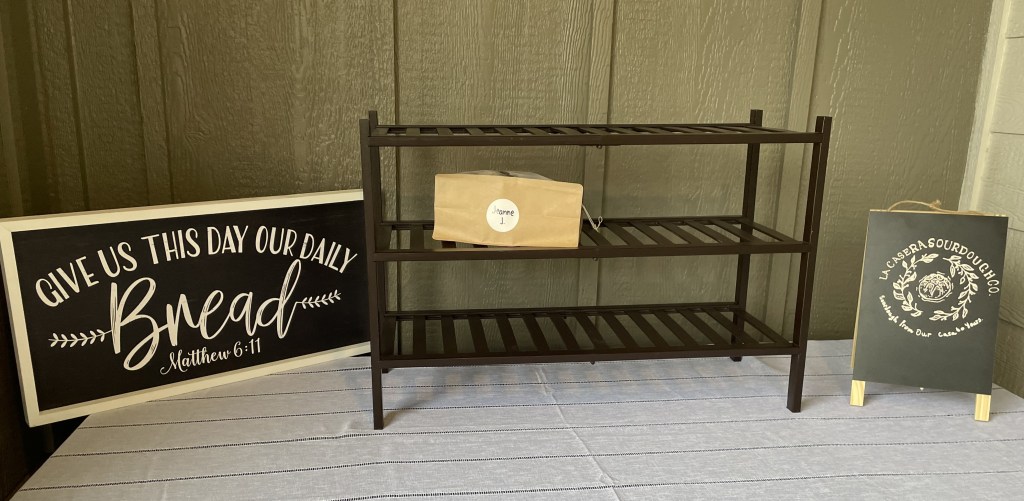
My dear friend Andrea sent me a gift certificate for some homemade sourdough bread from a little micro bakery called La Casera Sourdough Co for my birthday. She knows how much I LOVE my breads. I have only purchased one loaf so far, and still have more $$$ remaining on my gift card for more breads later.

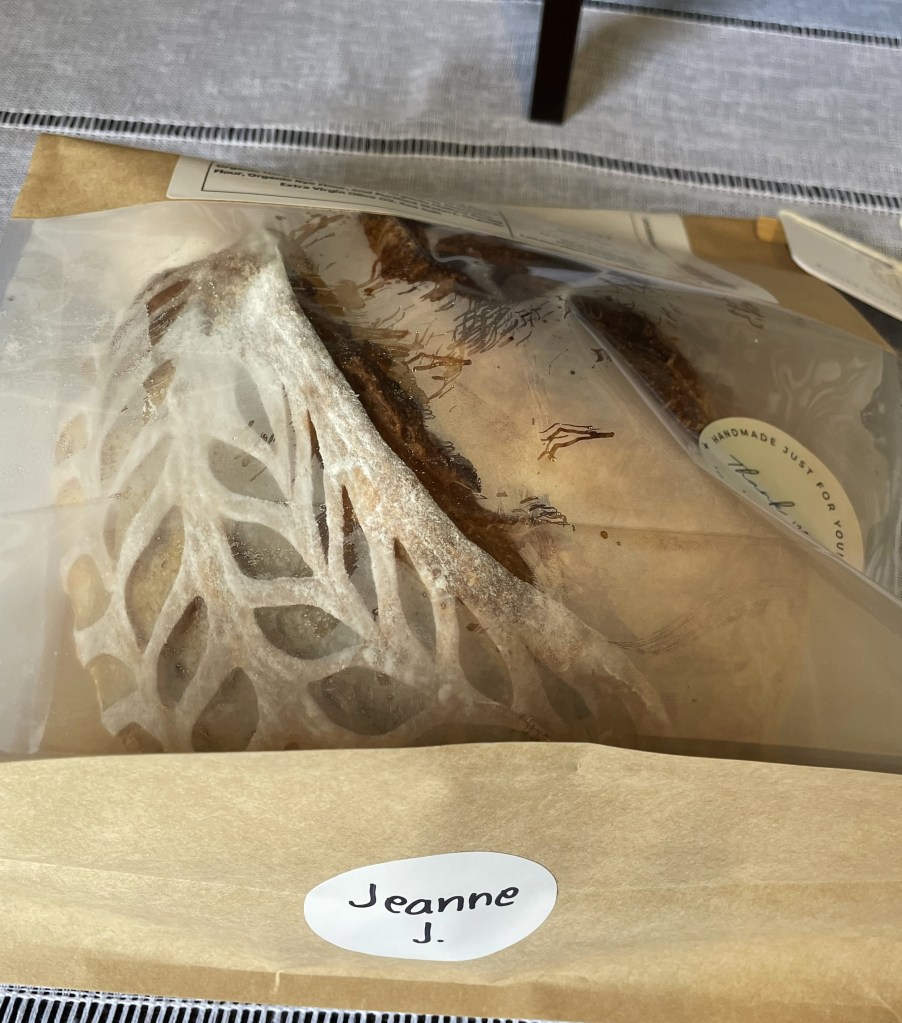
Isn’t this a gorgeous loaf of bread? It tastes every bit as good as it looks too. It’s almost too pretty to eat. Almost. 🙂

La Casera makes homemade sourdough breads, and all are lovingly baked made by breadmaker Christina Moore, in her home kitchen, here in Thornton, CO. At La Casera Sourdough Co., everything is made with care, organic flour, and high-quality ingredients—from classic sourdough loaves to focaccia, cinnamon rolls, cookies, and more. Christina believes good food sparks joy and connection. Christina started baking her breads because of her love for sourdough. In her own words, “its simplicity, artistry, and connection to timeless baking traditions. [It’s] [s]ourdough from our casa to yours”.

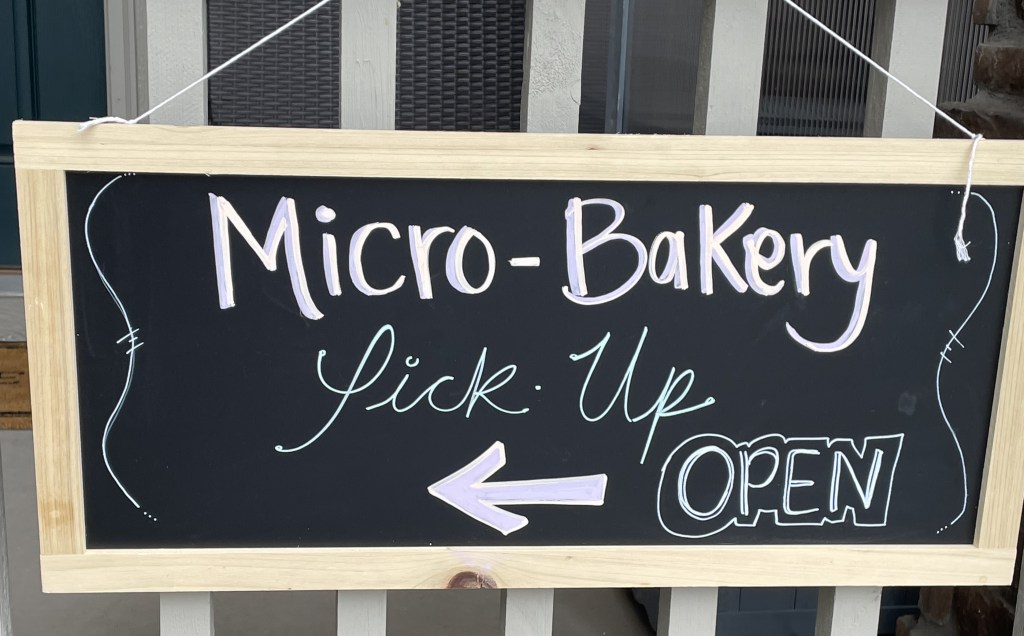
I had never heard of La Casera Sourdough Breads before receiving my gift certificate. But I know about it now. 🙂 Because Christina bakes the breads from home kitchen, you have to pre-order what you like, then she gives you a pick-up time. When it is ready to pick up, Christina will have it waiting for you on her front porch, with your name on it.

I do not know if Christina ships her breads or not, but if you live in the Denver Metro area, you can easily order and pick up your breads from her front porch. You can order your breads online at LaCaseraSourdoughCo@gmail.com or call at (720) 441-3270. All of the breads and baked goods are beautiful works of edible art. You can find them all online on the La Casera website.

Thank you Andrea for this delicious gift. Bread is the food of life.

Have a great day and make everyday great Stay safe and stay well. ‘Til next time.
Cozumel – Part 9 – Happy Birthday To Me

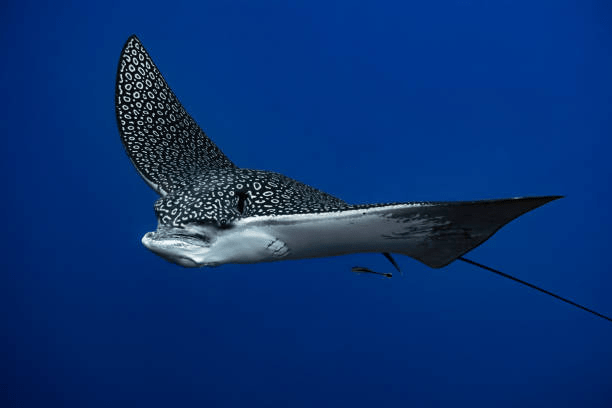
There were two main reasons for going to Cozumel at this time of the year. One, to dive and the other, to dive on my birthday. And that we did. Besides, February is a great time to dive where it is warm and tropical, especially when it is cold and snowy at home. And it is eagle ray season. This trip to Cozumel covered ALL the criteria. 🙂

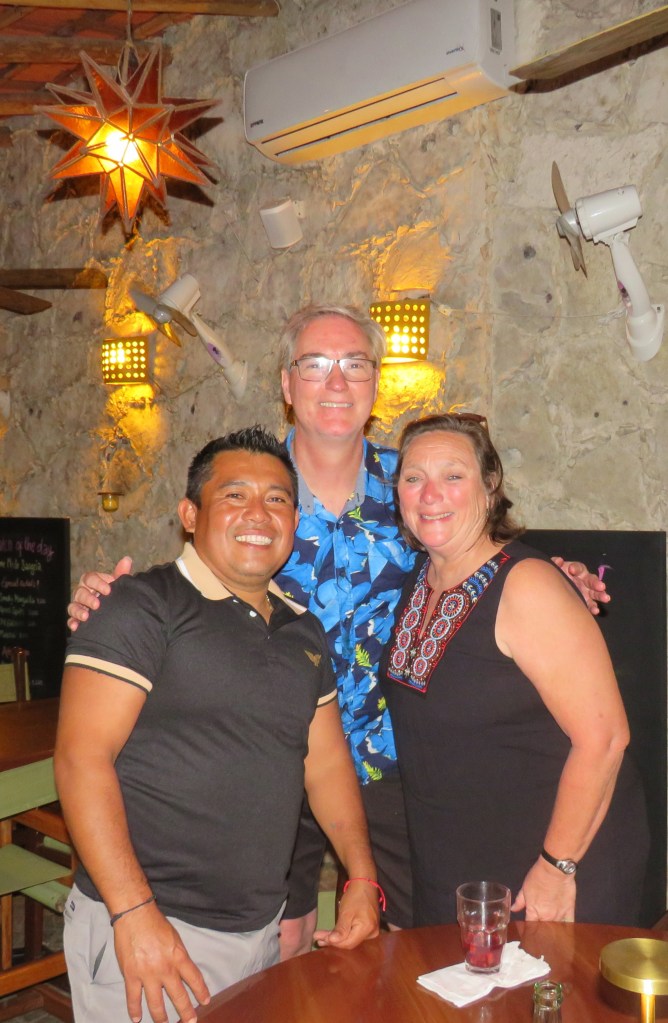
We having been diving with our friend Julio Cen, Dive With Julio https://www.divewithjulio.com/, for at least 15 years. He is not only the best dive master and our friend, but he is familia. We told Julio that it was my birthday, and on our rest interval, in between dives, Julio presented me with a birthday cake, that we shared with everyone on the boat, after everyone sang Happy Birthday to me. That was a lot of fun. And the cake was very goods too.

Once we were done diving, we showered and changed and relaxed for a bit, before one more last hoorah for the trip. Last time we were in Cozumel, we discovered a delicious Italian restaurant called Guido’s, with our friends Maureen and Milos, Guido’s. I wanted to go back there for my birthday this year too. Julio joined us and we all enjoyed yet another delicious birthday meal.

Julio and I both enjoyed the pork with a sour cheery sauce and a creamed brie sauce, though I ordered mine without the creamed brie sauce, since I am not much of a cheese eater.

Larry ordered lasagna, mainly because it is something I don’t make or eat at home, because of how cheesey it is. 🙂

The food was just as good and delicious as we remembered it to be. At the end of the meal, there was one more birthday celebration and dessert that we shared; a birthday creme brulee, complete with more singing and celebrations.

It was an awesome trip and a fantastic way to celebrate my birthday. I can’t think of a better way to celebrate my birthday than diving in my favorite spot, AND the spectacular eagle ray show too.

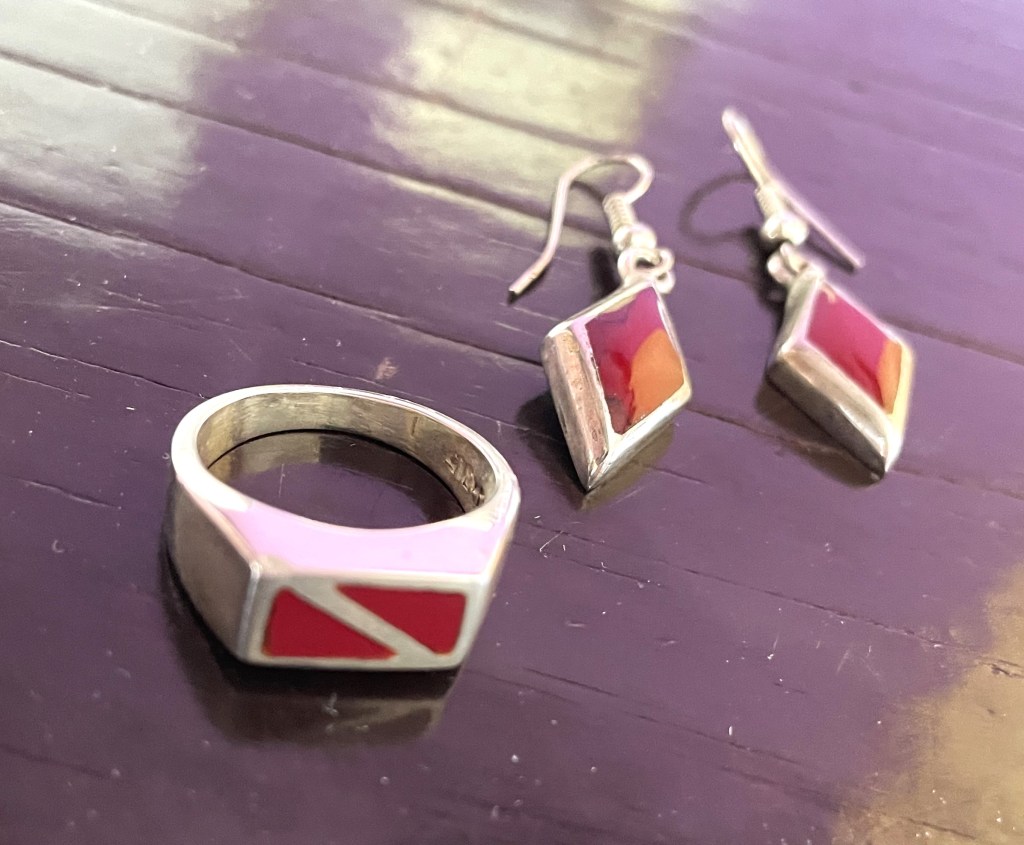
I love jewelry. I always have. And I especially love things that are unique. Larry told me I could pick out some jewelry for my birthday. I chose a pinky ring with the international dive flag and earrings to match. They are made from red coral and silver, by a local jeweler. It is the perfect jewelry for an avid, international scuba diver. 🙂

Thank you Larry for an awesome birthday trip and present. 🙂 But my birthday celebrations are not over yet. This Saturday, we are hosting a belated birthday party with friends, here at home. Stay tuned. I will have lots to share on that too. 🙂

This concludes my Cozumel series. I hope you enjoyed it as much as I enjoyed sharing it with you. Adios Cozumel. Hasta la proxima; until next time. Have a great day and make everyday great. Stay safe and stay well. ‘Til next time.
La Comida – Part 5 – Gusto’s

Every time we drove down south, around the Punta Sur area, we would pass by Gustos’s Restaurant. We kept seeing their signs for lobster pizza, and since we saw so many huge lobsters on our dives, we just had to give it a try. We even ran into some of our dive buddies as well. 🙂

Gusto’s was a beautiful tribute to all things Cozumel. It was fun and quirky and full of personality, but the food was delicious. It has a limited menu of primarily seafood dishes, but don’t let that stop you. We thoroughly enjoyed what we ordered, and so did our dive buddies.

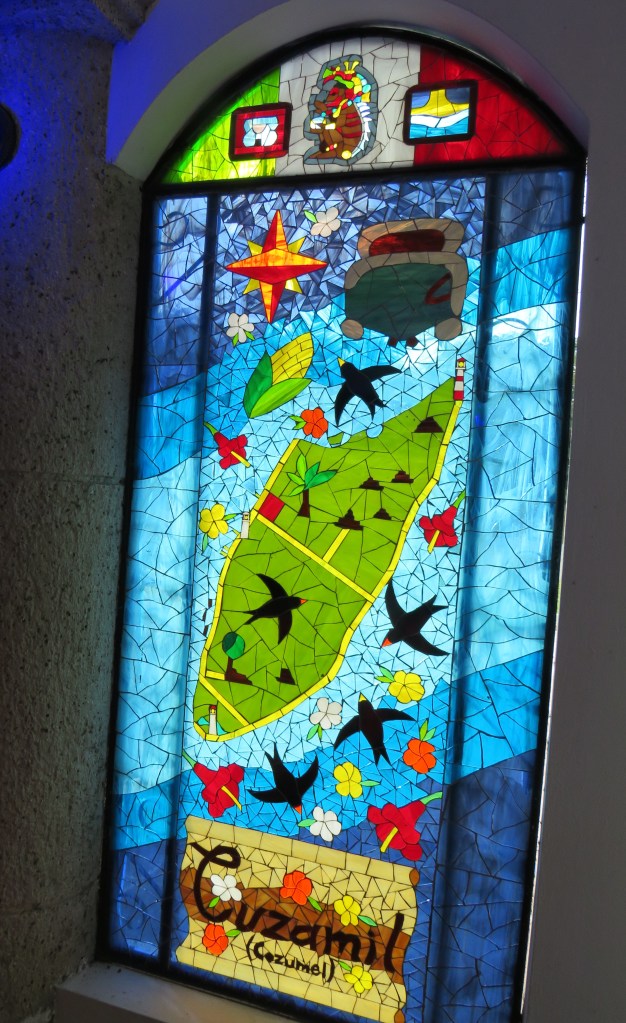
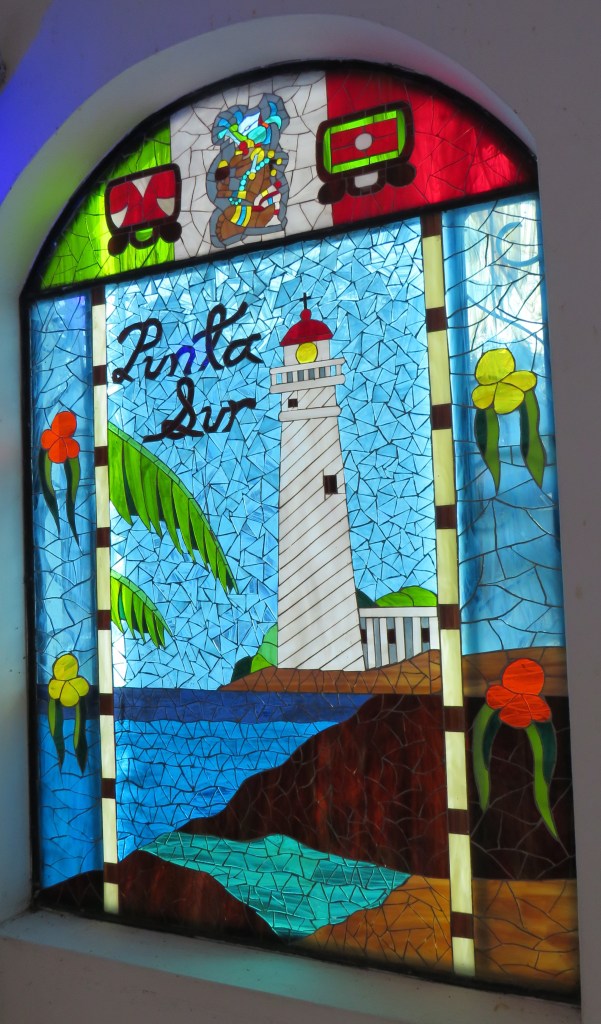
I LOVE all these stained glass windows depicting life in Cozumel. These are definitely labors of love. A lot of hard work went into making these.

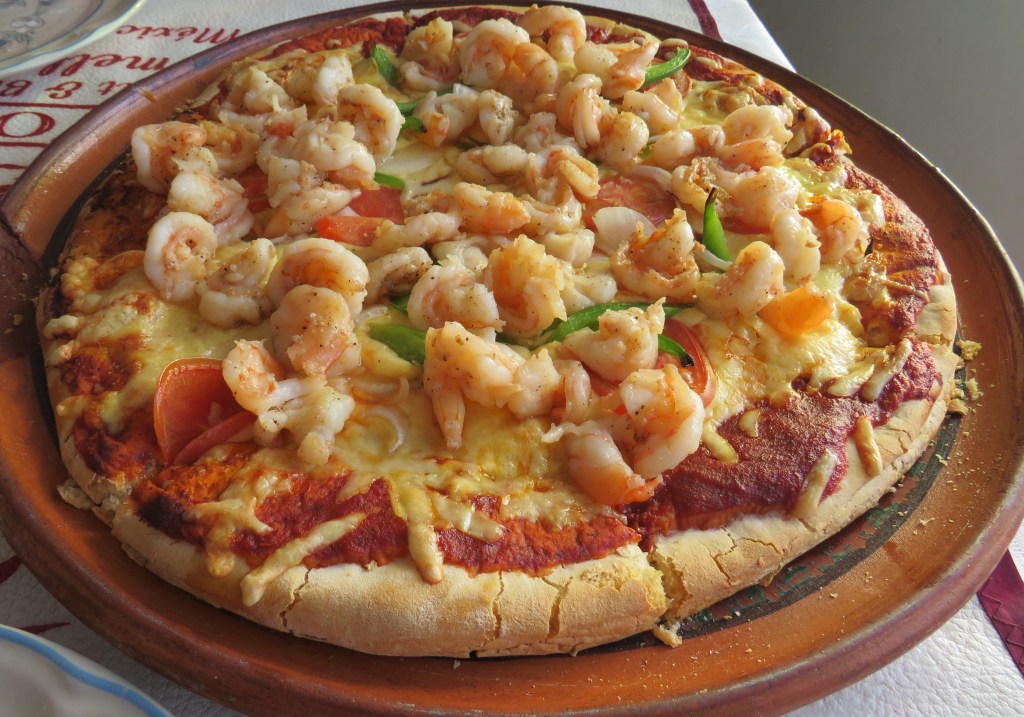
We did order lobster, just not lobster pizza. We ordered lobster ceviche instead and then a shrimp pizza to go with it. We didn’t intend to eat so much pizza on this trip. It just happened that way. But it was all different and all good.

Both were loaded with lobster and shrimp. Once again, couldn’t finish it all and took it home for later.

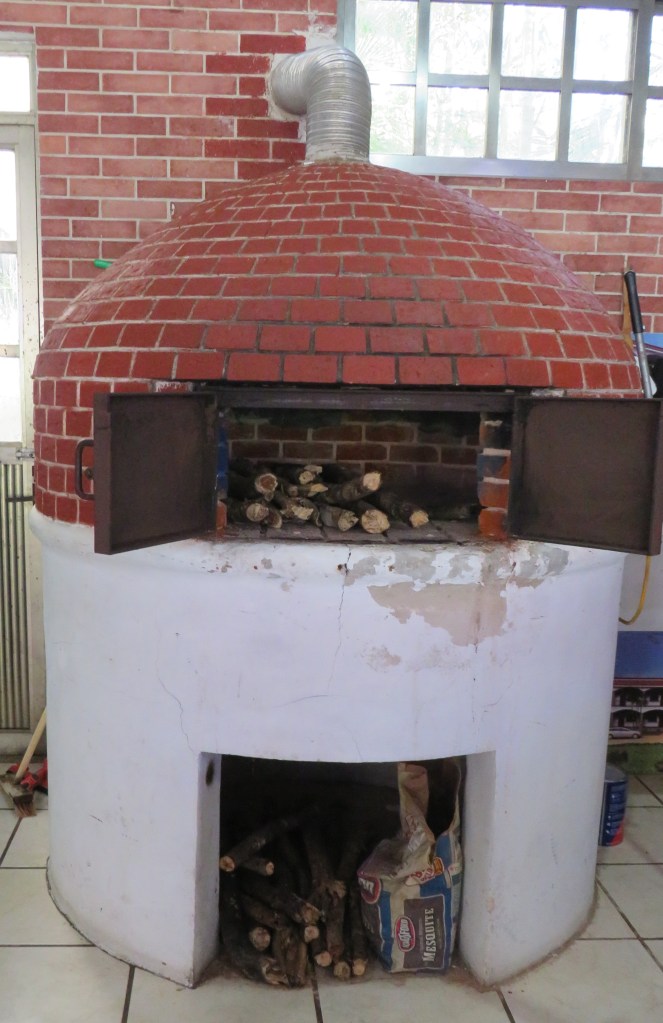
Gusto’s has a charming little wood burning oven to make the pizza too.

For the most part, when we travel, we just kind of pop into restaurants that speak to us. We don’t really plan where we are going to eat, we just drop in. Usually we are very pleased with where we go too. I love living on the edge and flying by the seat of my pants. Larry is the planner. So some things we plan, and other things we just wing it.

Have a great day and make everyday great. Stay safe, stay well, and eat deliciously. ‘Til next time.

Cozumel – Part 8 – Living Wild

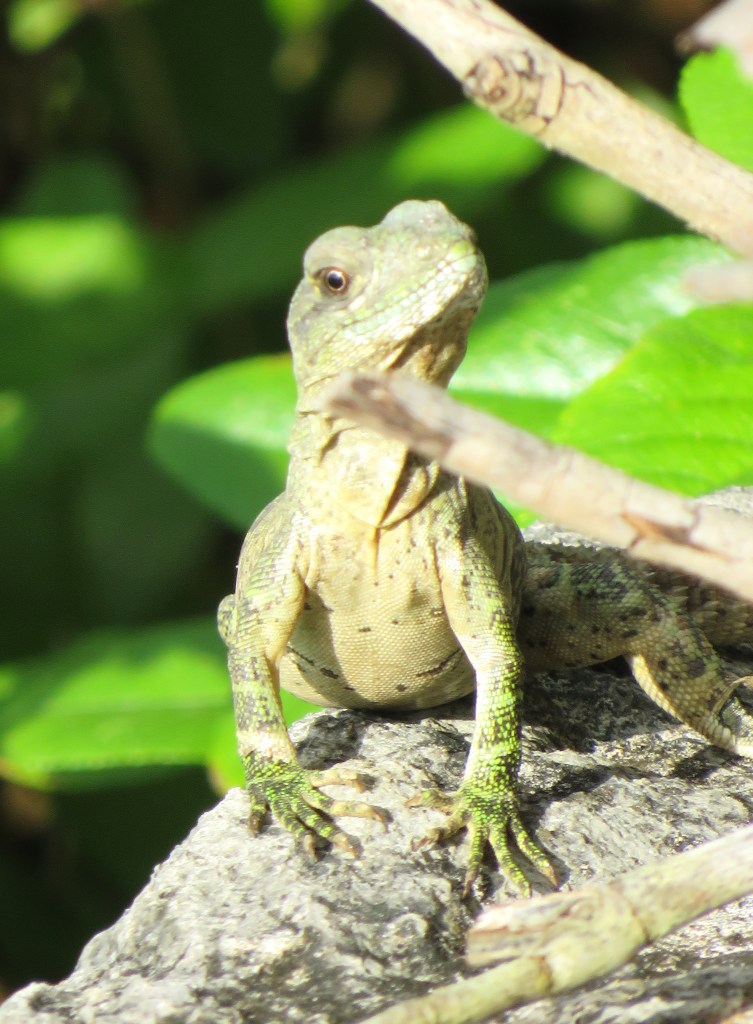
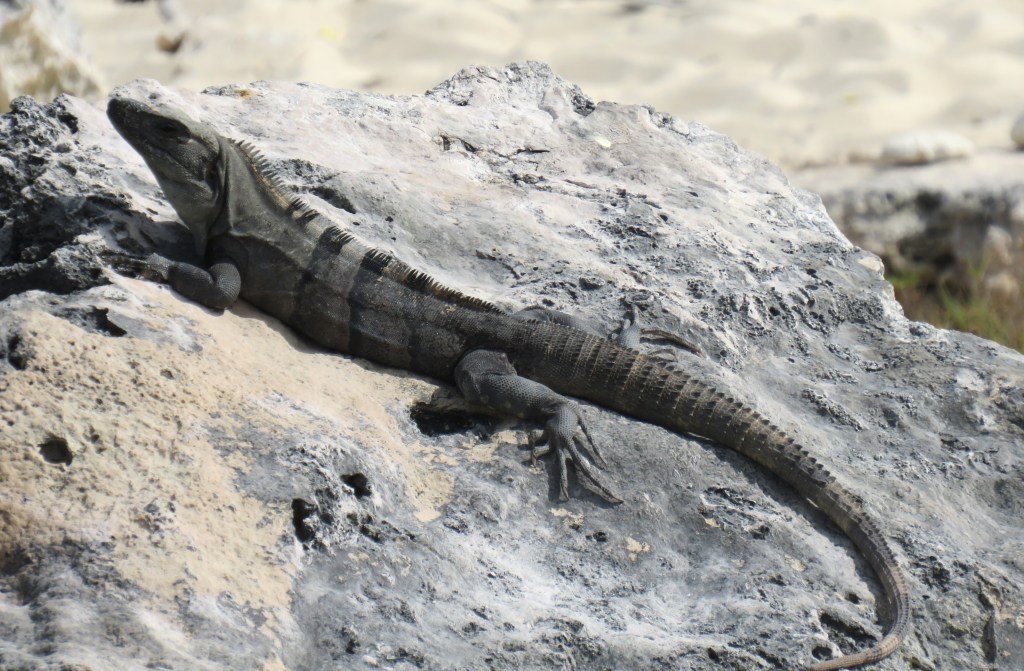
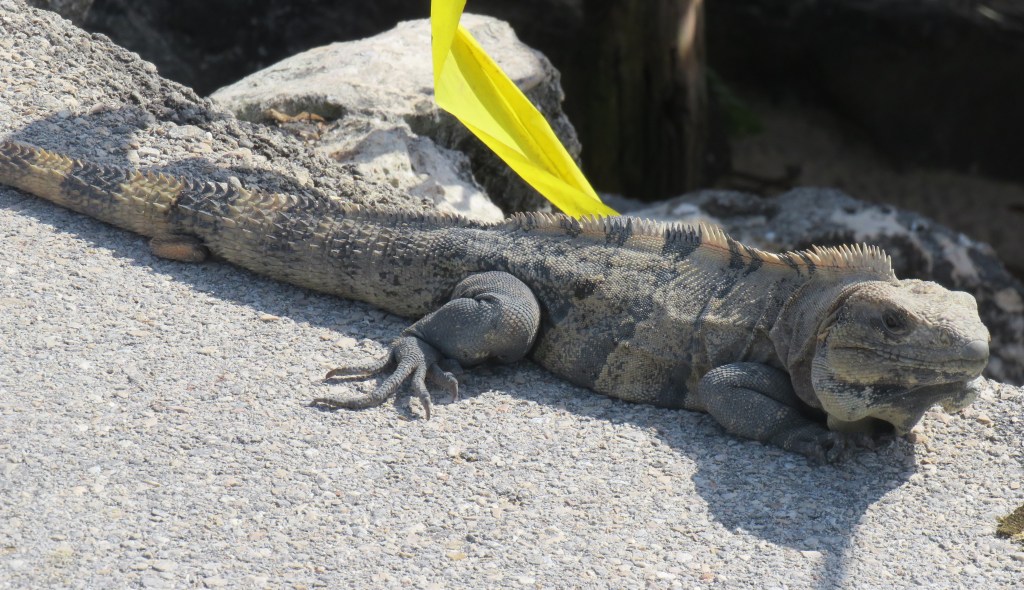
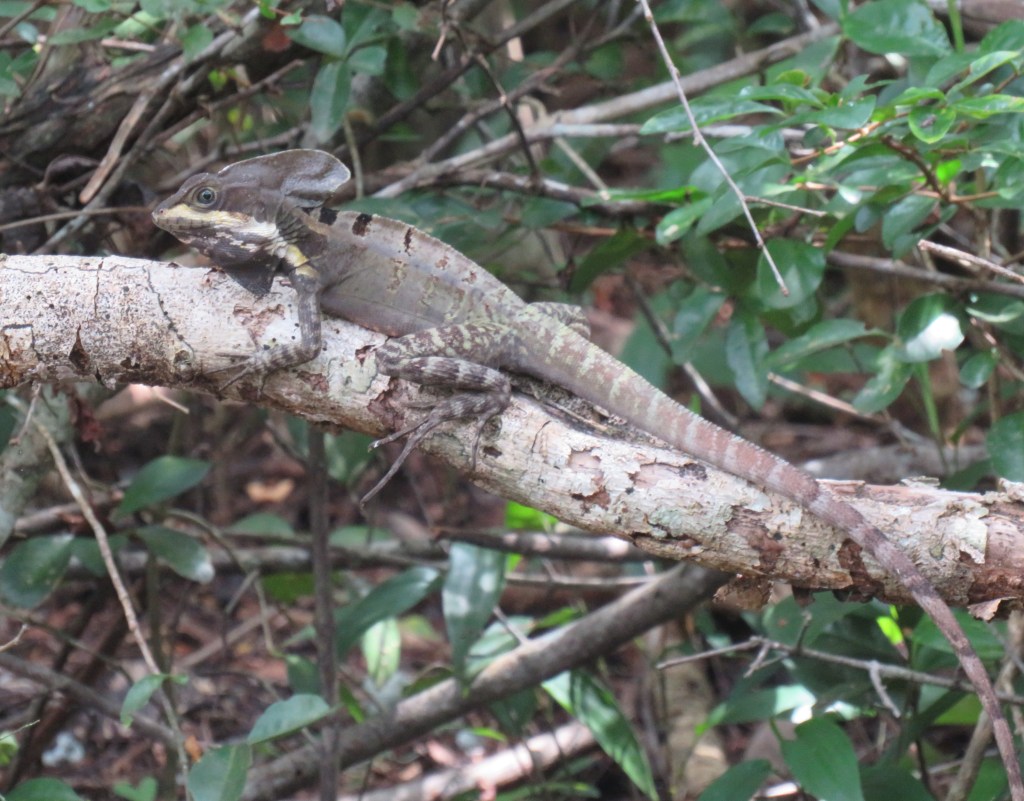
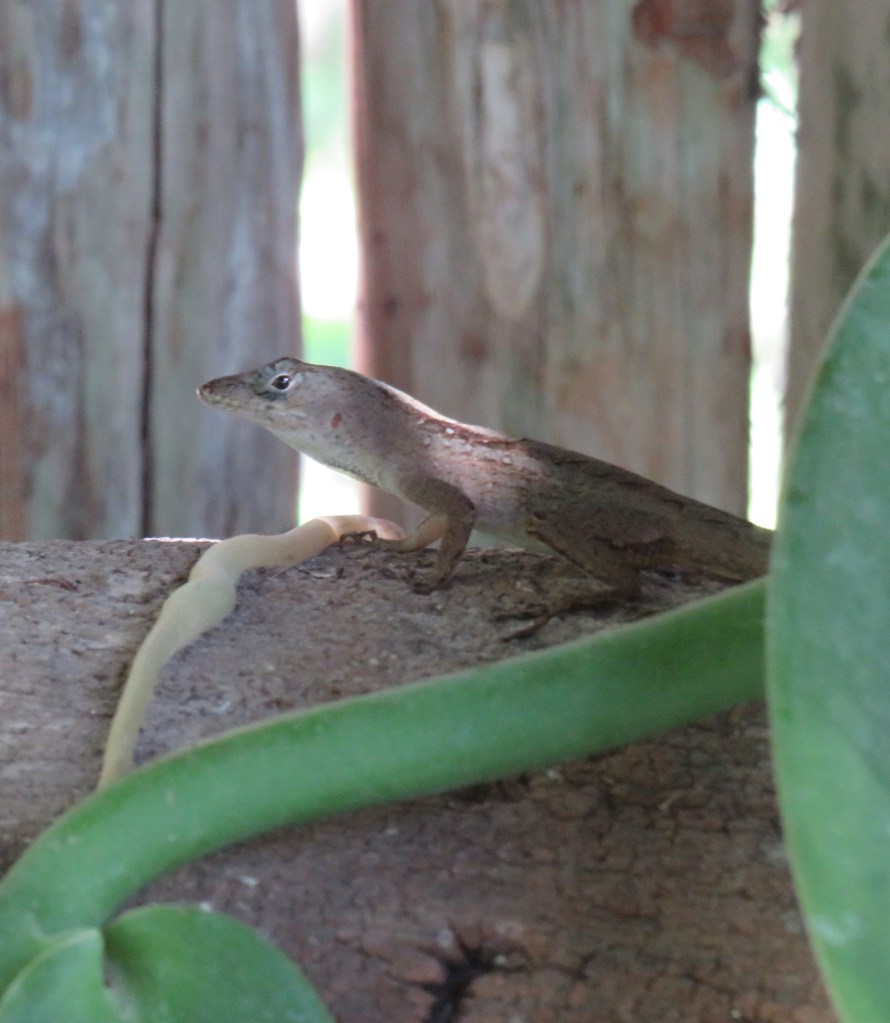
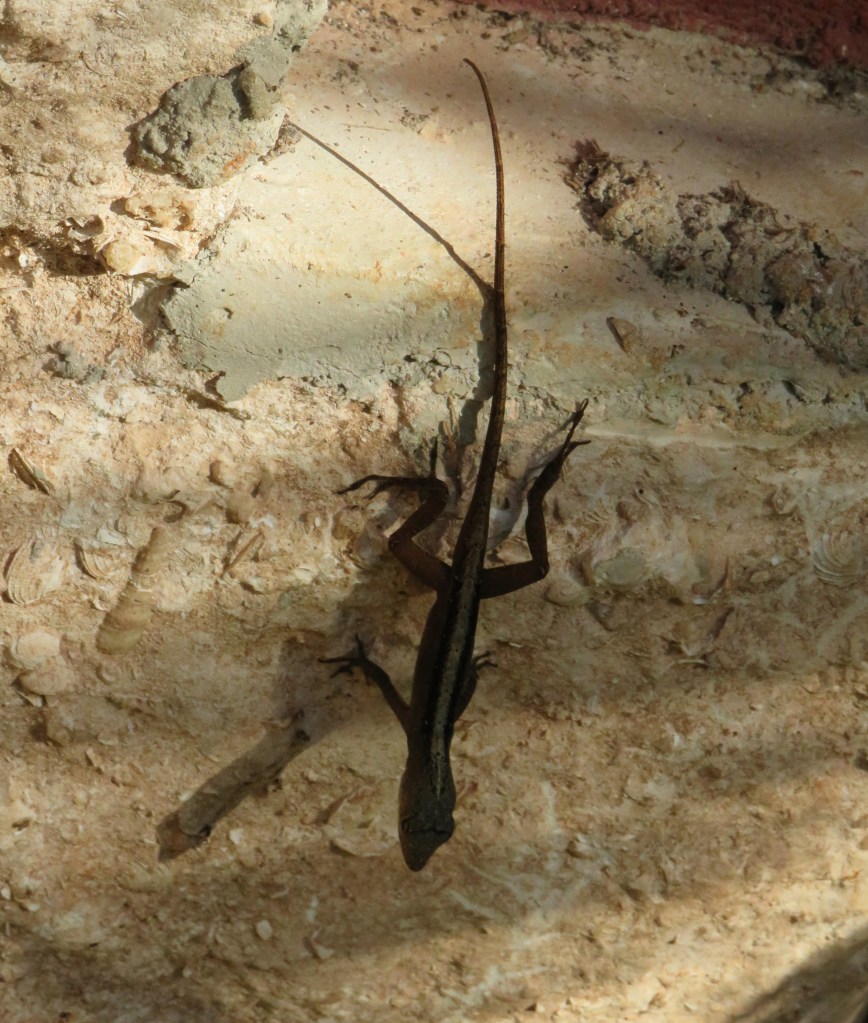
No trip to Cozumel would be complete without seeing some of the local, wild residents, like iguanas, lizards and geckos. We even saw a crocodile. He was a resident of the crocodile farm, but he looked like he was just hanging out in open space. I wouldn’t want to get to close to him, that’s for sure. I made sure to keep my distance.

Have a great day and make everyday great. Stay safe and stay well. ‘Til next time.

Cozumel – Part 7 – The Mayan Cacao Company

Chocolate, or more explicitly, the cacao beans that make the chocolate, was sacred to the Ancient Mayans and Aztecs. Cacao is the name for the earlier stage, where the beans have not yet been roasted, while cocoa is the name used once the fermenting begins. Cacao beans, like coffee beans, are roasted to perfection before they are consumed.

Early evidence for chocolate consumption is found among the Maya, dating back to 600 BC. They used it for many things, and it was not just a sweet treat to enjoy. Chocolate was used in official ceremonies and religious rituals, at feasts, weddings, and festivals, as funerary offerings and for medicinal and cosmetic purposes. Cacao beans were considered a symbol of wealth and status. The Mayans and Aztecs believed that chocolate was a gift from the gods.

Cocoa had a vital place in Mayan mythology. The Mayan creation story tells us that humans were created from a mixture of the divine blood or the gods, and cocoa pods. Cocoa was part of the birth of humanity, but the cacao tree, which grows in shaded areas, was also associated with death. From the ancient Mayans and Aztecs who considered it the food of the gods to its modern-day consumption, chocolate has been imbued with spiritual meaning, symbolizing everything from sacredness and transformation to love and luxury. Cacao beans were so valuable to the Mayans that they used them as a form of currency and traded chocolate, or cacao beans, for other goods, such as woven cloth and maize grain. They also buried cacao pots with people, possibly as part of funeral ceremonies. Cacao was also used as a medicine and in cosmetics by extracting oil from the seeds to flavor food and made ointments to treat skin conditions, burns, and other ailments.

Maya religion states that cacao was originally given to the people by the god Hunahpú, and thus of sacred value, only second to maize (corn). Later records show Ek Chuah, the god of chocolate – and it also appears that the goddess of fertile land and successful harvests was named Ixcacao in its honor.

The Mayans called the drink chocolhaa (bitter water) and Aztecs called it Xocolatl. From those words eventually evolved the word “chocolate.” The Mayans were the first to drink chocolate on a large scale. They made the drink from ground cacao beans, water, and chilies, and called it xocolatl, which means “bitter water”. 

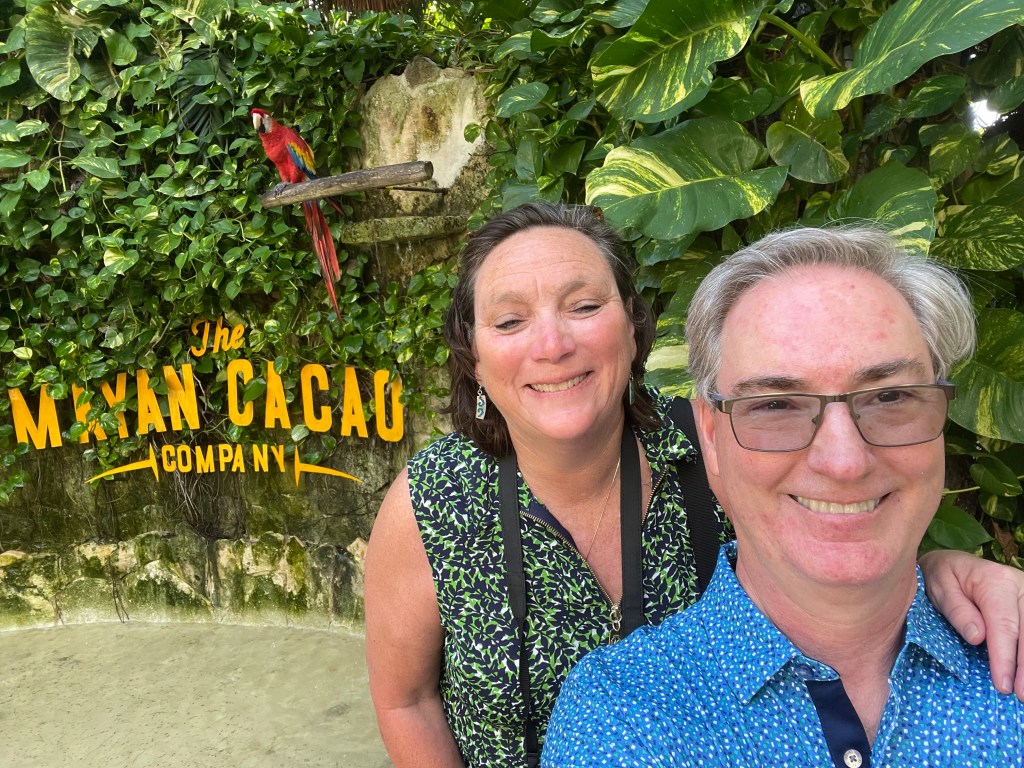
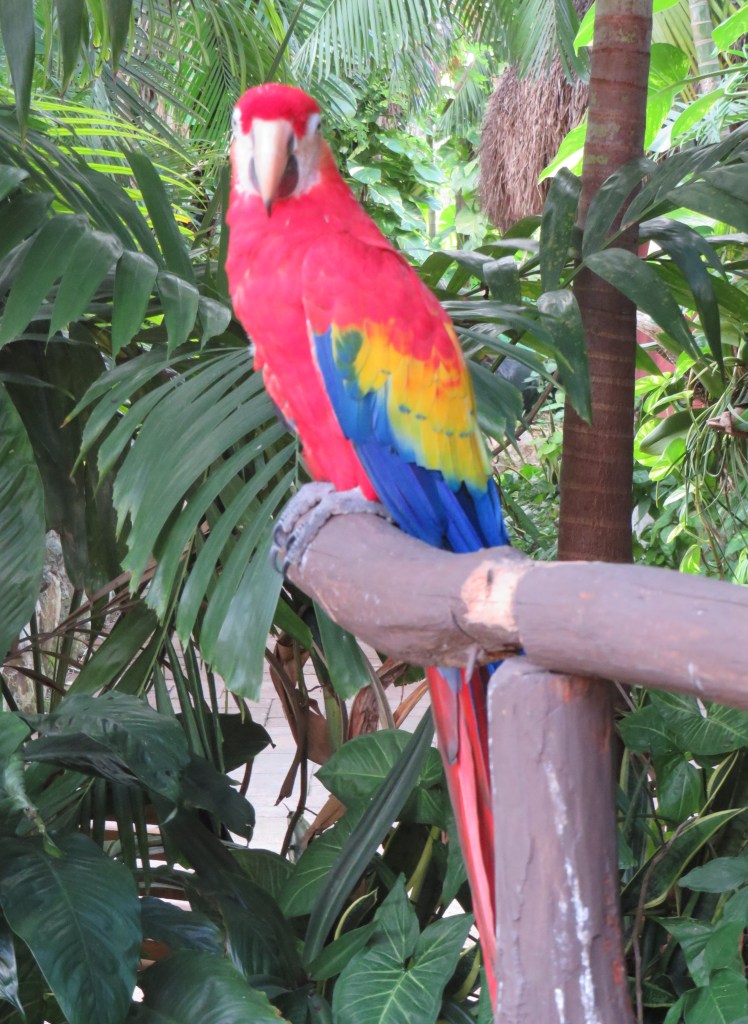
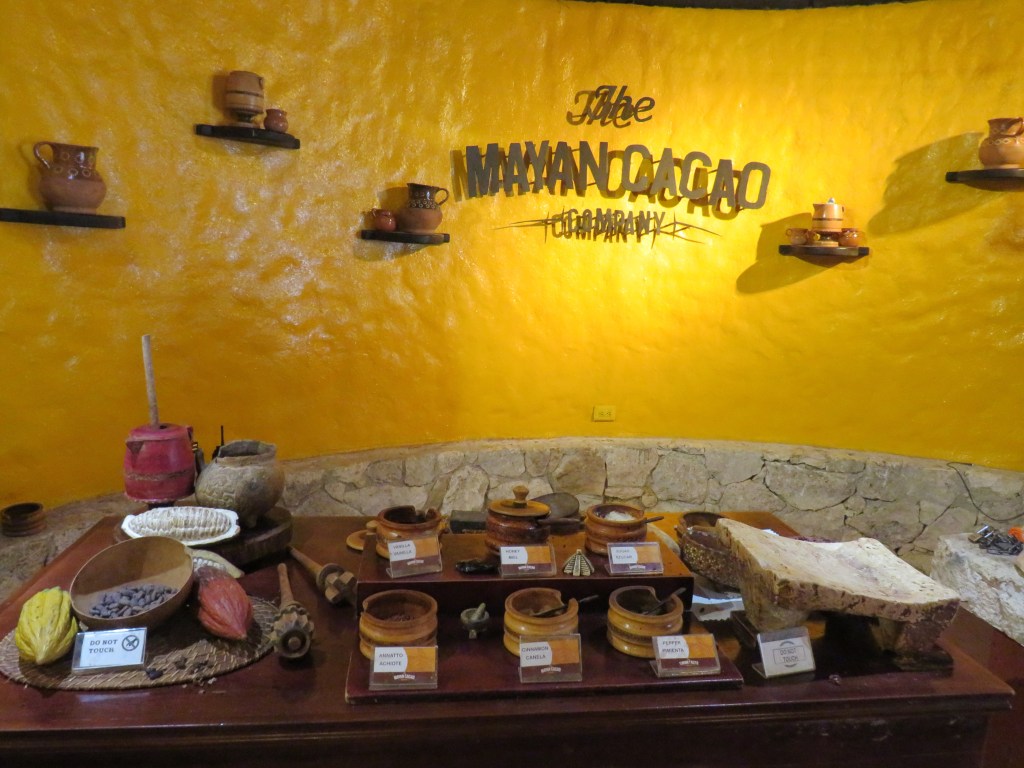
The Mayan Cacao Company is a place to discover the origins of chocolate in the same land of its creators: The Mayas. It is not a museum, but is an interactive place in which you become in an explorer of the history of the most popular food in the world. The Mayan Cacao Company was yet another discovery from our trip to the Museo de Isla de Cozumel, and another post diving activity. We learned about so much of the Mayan culture from our visit to the Museo. We are so glad we went to the Museo de Isla de Cozumel, which led us to other fun and interesting Mayan discoveries as well.

Once again, Larry and I had a private tour with just the two of us. I could easily get spoiled to these private tours. 🙂

Eduardo was our guide extraordinaire. Here he is (at the end of the tour) offering Mayan chocolate as it has been prepared for centuries. He was so knowledgeable and truly loves what he does. He is also very proud of his Mayan ancestry.

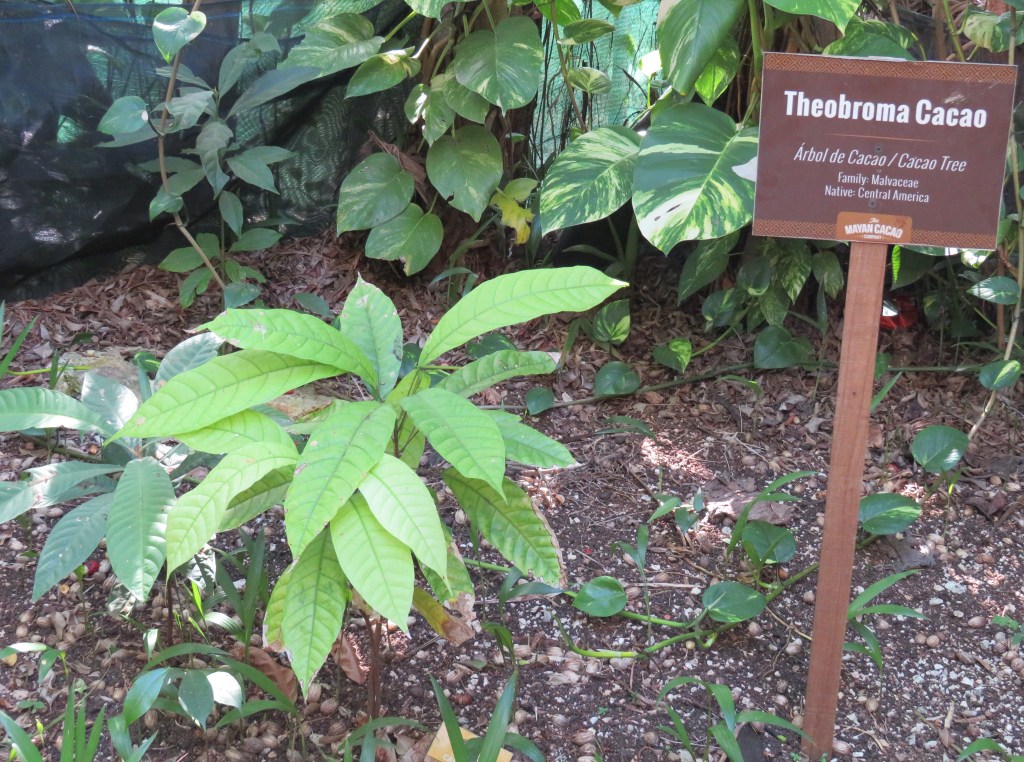
We started the tour with an introduction to an actual cacao plant, still in it’s early stages of growth and delvelopment.

Then we went into a little Mayan hut for the first presentation and brief overview of the history and significance of Mayan Cacao. Here is a list of the value of the beans as currency, along with the goddess of cacao, Ixkawkaw (pronounced “ess-ka-kow”). She is the Mayan fertility goddess of chocolate.

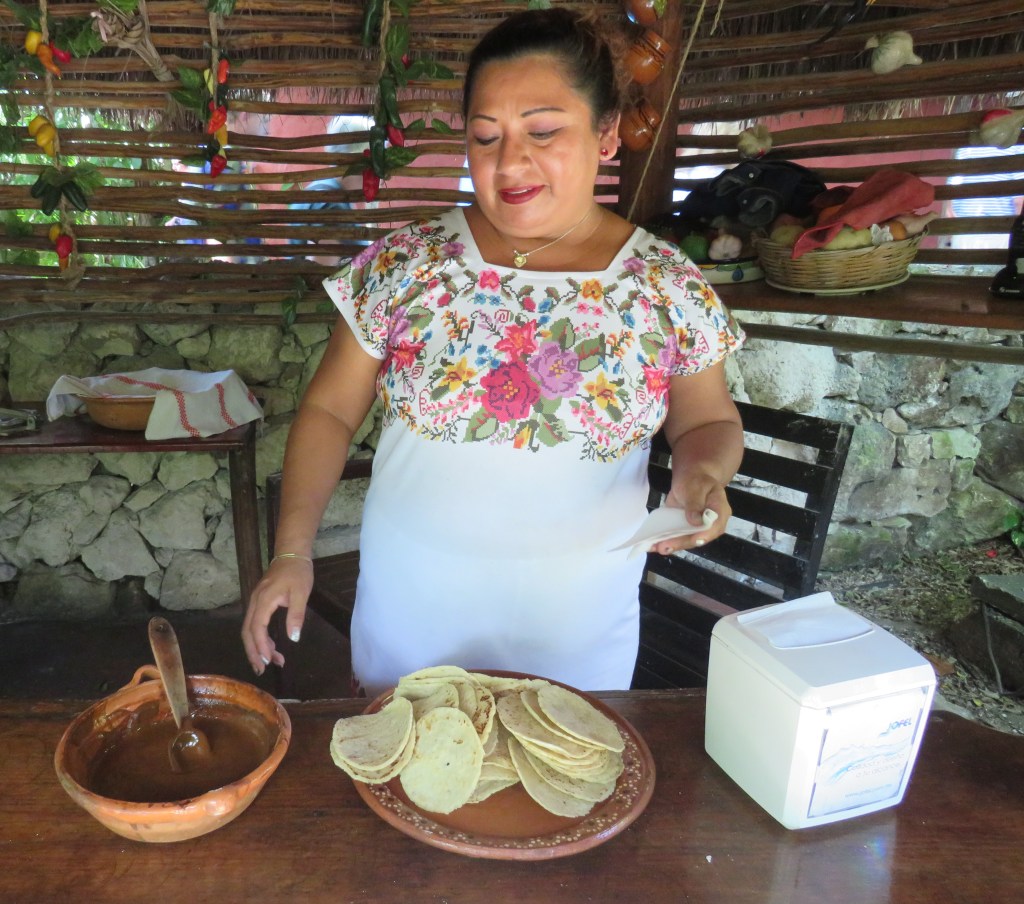
After leaving the cacao hut, we were welcomed with some fresh mole sauce and tortillas, made by Maria. It was so good too.

The next stop was into a typical Mayan hut. A lot of people in Cozumel still live in very similar conditions, though more in houses than huts. Eduardo said he had never slept in an actual bed until he went off to college. He had slept in hammocks all his life, and there are many Mayans today who still do.

Honoring the dead loved ones is a sacred tradition of the Mayans, Aztecs and all people of Mexican heritage. Offerings are still a part of most of the homes. Some large like this, but most are smaller offerings.

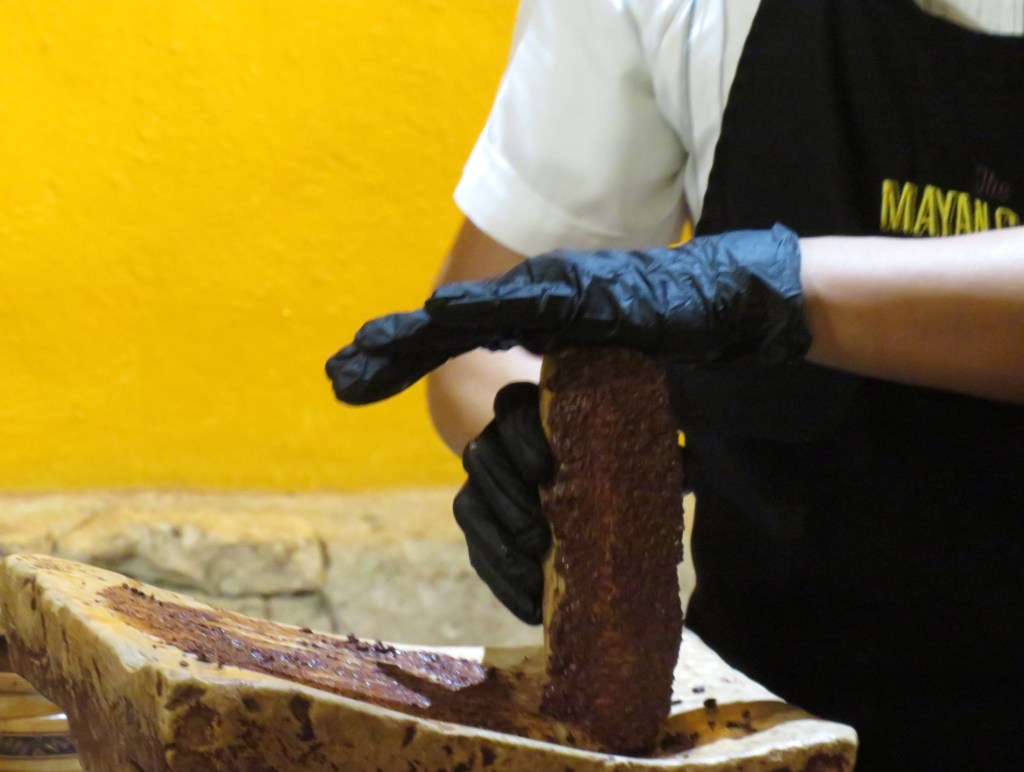
The final part of our presentation was a demonstration by Eduardo on how the Mayan chocolate was made.

We had a private tour, with Eduardo, but there was a large tour from one of the cruise ships that came in for the chocolate presentation too. After they all left, I also tried my hand at making some Mayan chocolate.

You could even enjoy a chocolate margarita after leaving the presentation if you wanted, but Larry and I just decided to take a swing or two on the swings.

And of course, we couldn’t leave without going through the gift store. We tried all kinds of the Mayan chocolates too. They are completely different, and more bittersweet, which I love, than most of the chocolates we are familiar with. Larry is more of a milk chocolate fan.

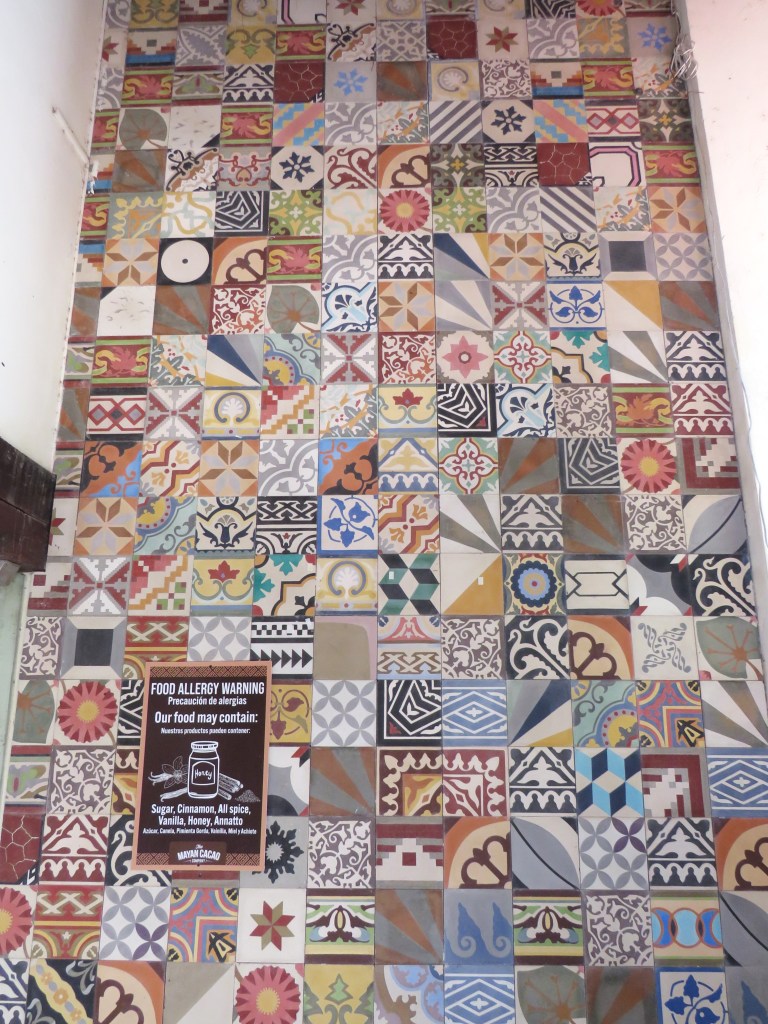
I love all the decorative tiles found all over the place too.

Going to The Mayan Cacao Company was yet another fun, informative and interesting find. I would recommend going here to anyone who is a chocolate lover. You will learn so much about chocolate and the traditional Mayan way to make and use chocolate. 🙂

Have a great day and make everyday great. Stay safe and stay well. I hear dark chocolate is healthy for you, so eat some chocolate too. ‘Til next time.

La Comida – Part 4 – El Toro

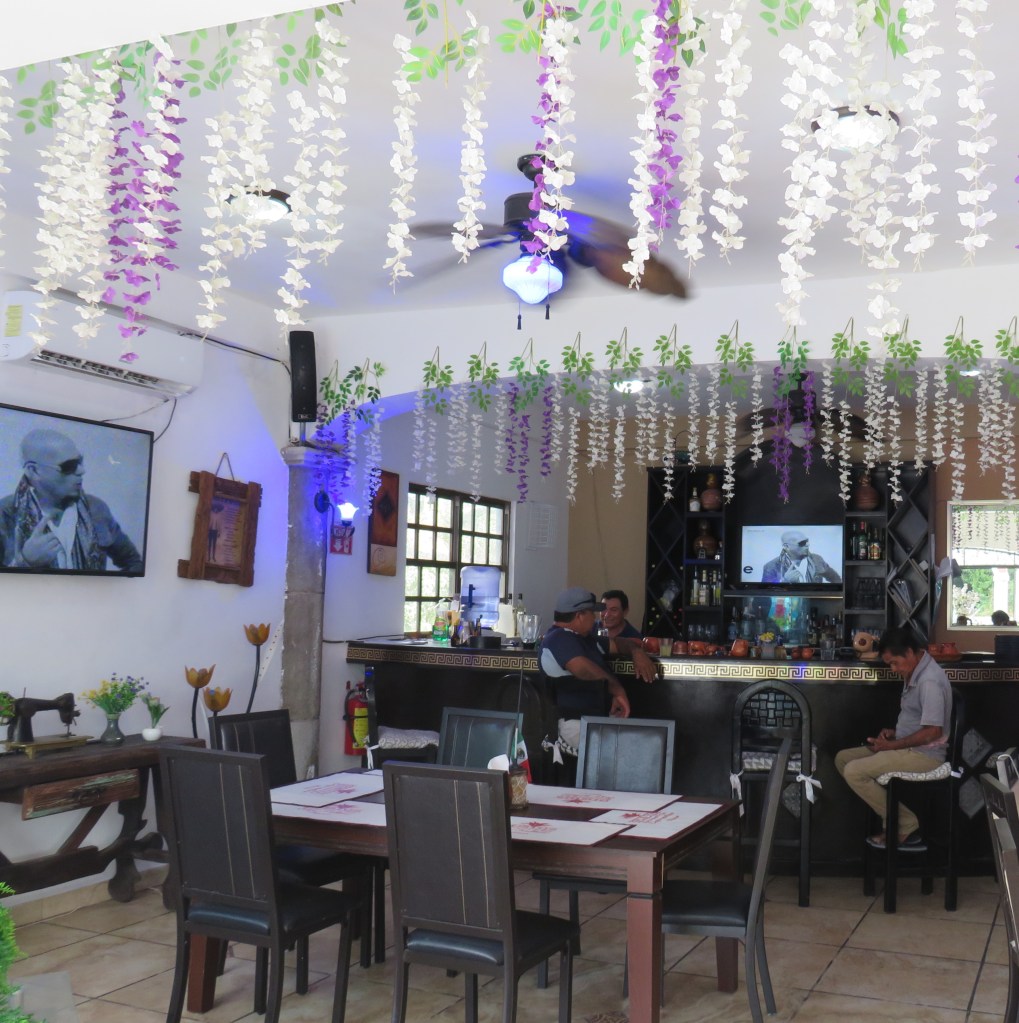
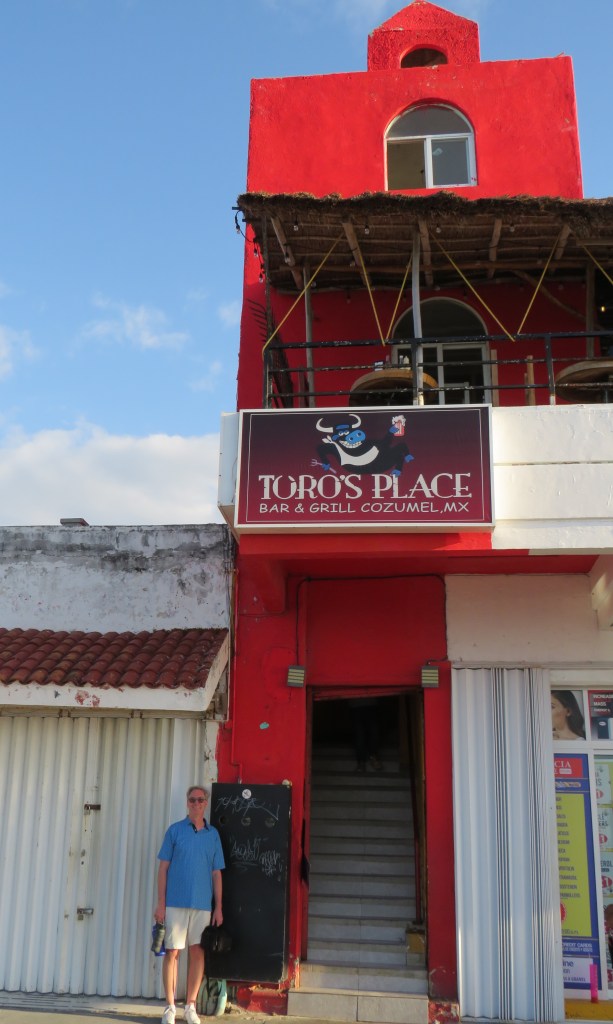
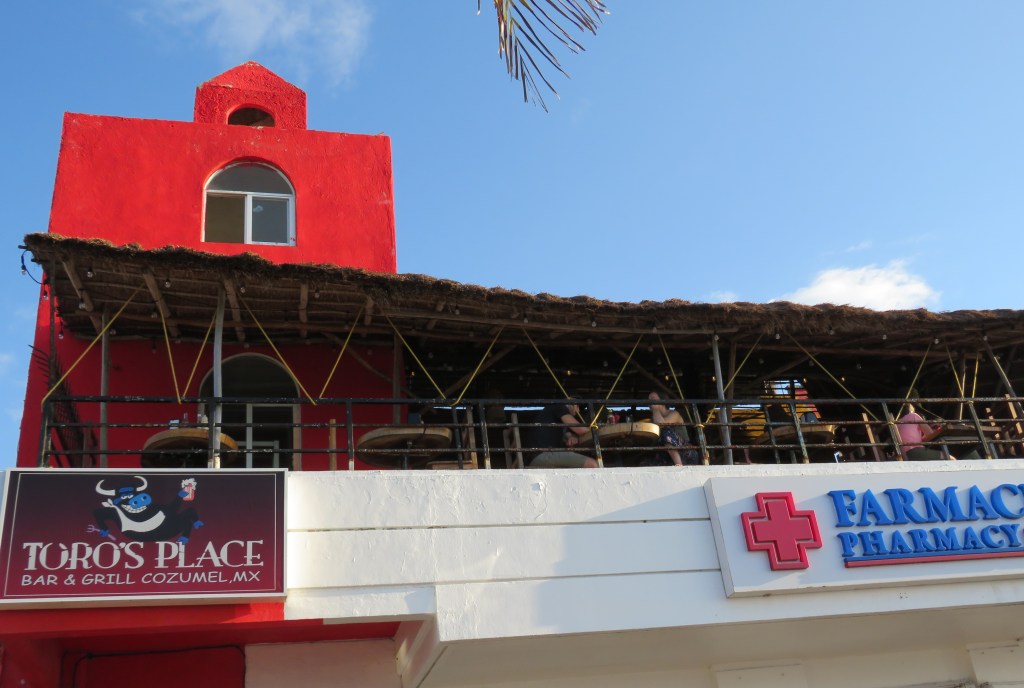
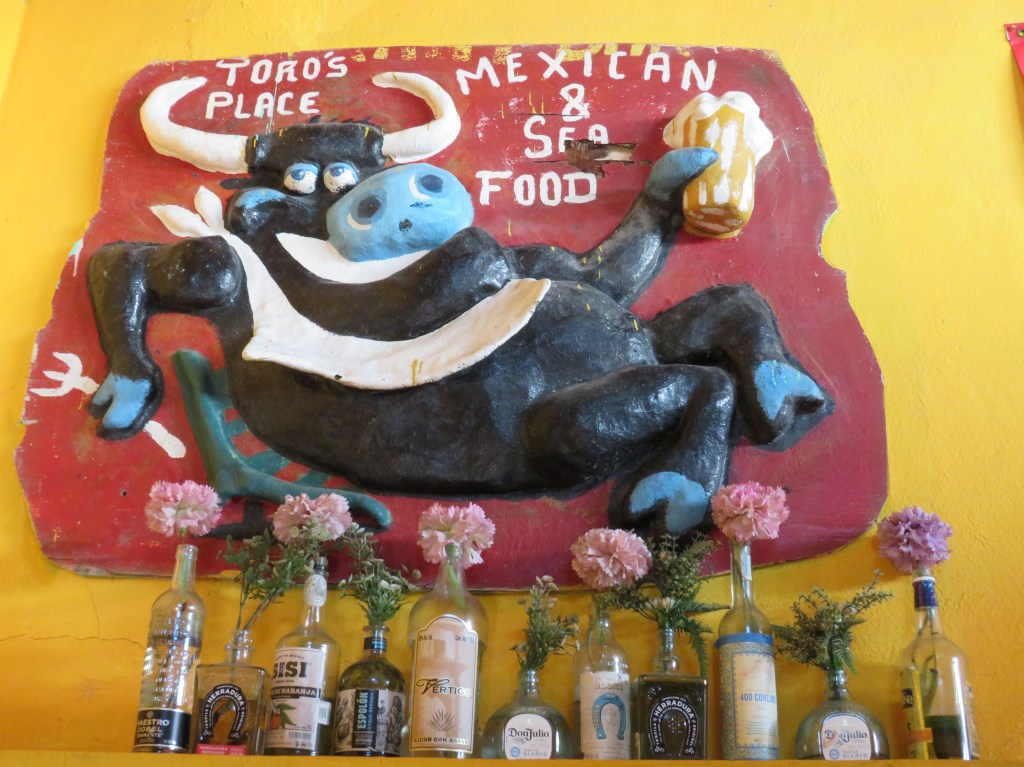
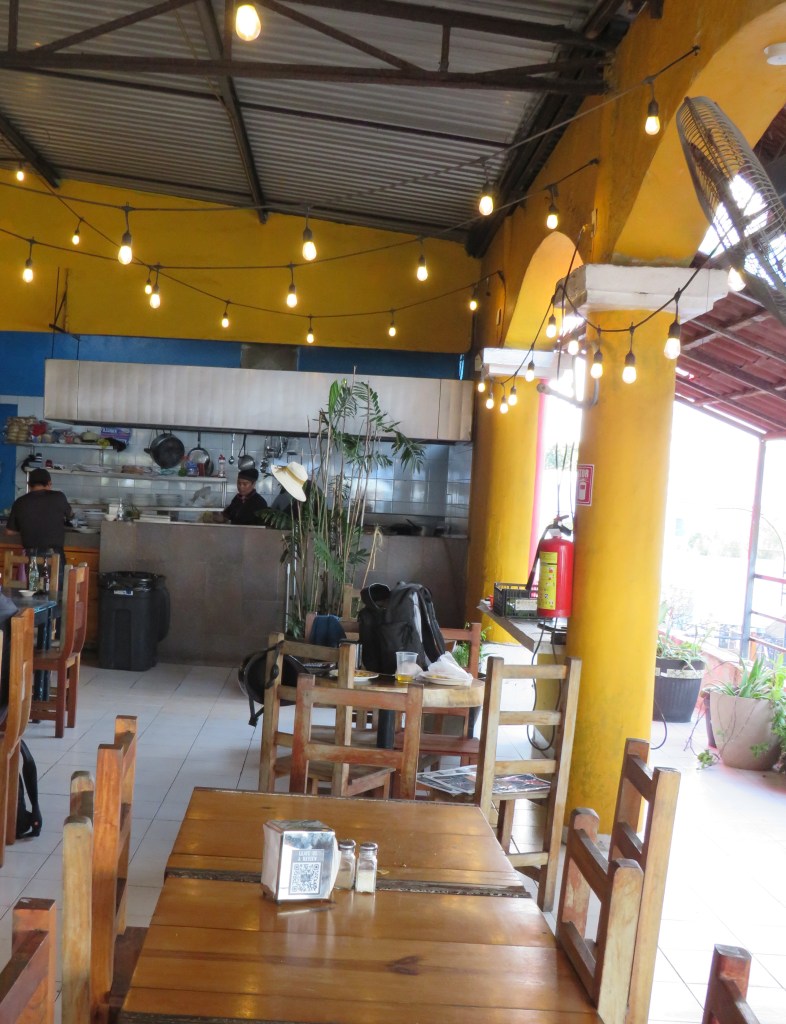
There was a restaurant called Toro’s Place, that was just down the street from where we were staying, that Larry wanted to try.

This was our dining view.

Toro means bull, which is a cow, which = steak. But we eat steak at home, quite often too. We were by the sea and wanted fresh seafood. And fresh seafood we got.

Once again, we started with another version of fresh ceviche, and a cool refreshing bebida made with peaches and coconut rum.

Then we ordered the seafood platter. It was loaded with calamari, shrimp, lobster and grouper, with rice, vegetables and guacamole on the side. !Todos estuvo delicioso!

Once again, our eyes were bigger than our stomachs, and once again, we took it back to our hotel to enjoy again at a later time. By taking home our leftovers and re-eating them again later saved a considerable amount on our food costs. We just mixed all the seafood that was leftover together, added more lime juice and made a BIG serving of ceviche for later.

Yet another very delicious seafood platter and meal(s).

Cozumel – Part 6 – Tasting The Tequila

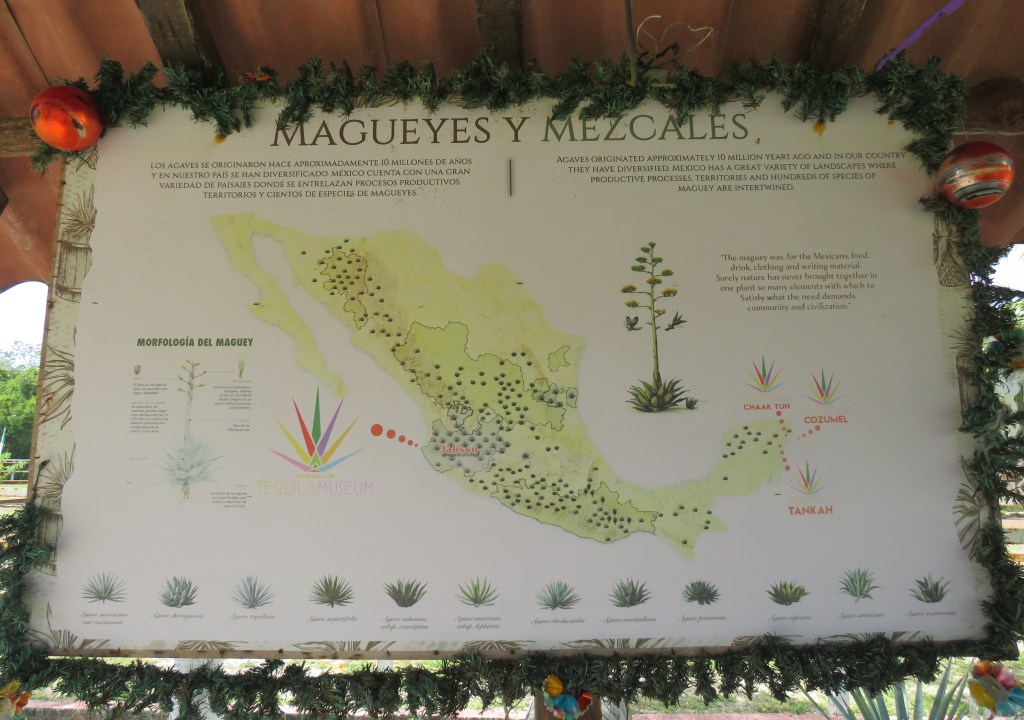
Tequila, the well-known Mexican spirit, has been around for centuries.

1000 B.C. to 200 A.D.: The Aztecs Ferment Agave

Tequila didn’t start out as the partier’s shot of choice. It didn’t even start out as the tequila we know today. The Aztecs prized a fermented drink known as pulque, which used the sap of the agave plant (this technique was also likely used by the Olmecs, an even older civilization dating back to 1000 B.C. that was based in the lowlands of Mexico). The milky liquid was so important to Aztec culture that they worshipped two gods known for their relationship to booze. The first was Mayahuel, the goddess of the maguey, and the second was her husband Patecatl, the god of pulque. Though the first documentation of pulque—on stone walls, of course—appeared around 200 A.D., the drink really caught on centuries later when the Aztecs received a surprise visit from the Spanish.
1400s & 1500s: The Spanish Distill Agave

While there are multiple theories on the beginning of agave distillation, a common telling involves the Spanish invasion and primitive mud stills. The parched Spaniards couldn’t be without their brandy for too long, so when supplies began to run low, they improvised with mud and agave, essentially creating what we know today as mezcal. (Remember: All tequilas are technically mezcals, but not all mezcals are tequilas.) In the mid-1500s, the Spanish government opened a trade route between Manila and Mexico, and in the early 1600s, the Marquis of Altamira built the first large-scale distillery in what is now Tequila, Jalisco.

1700s to 1800s: Modern Tequila is Born

The Cuervo family, who everyone now knows and loves, began commercially distilling tequila in 1758, followed later by the Sauza family in 1873 (and, we’re sure, a few other small producers in between). According to Salon, Don Cenobio Sauza was responsible for identifying blue agave as the best for producing tequila—and by this point what we now know as tequila was likely being produced at these distilleries.

1974: “Tequila” Becomes the Intellectual Property of Mexico

In a move to take ownership of the term “tequila,” the Mexican government declared the term as its intellectual property in 1974. This made it necessary for tequila to be made and aged in certain areas of Mexico, and it also made it illegal for other countries to produce or sell their own “tequila.” The Tequila Regulatory Council was additionally created to ensure quality and promote the culture surrounding the spirit.

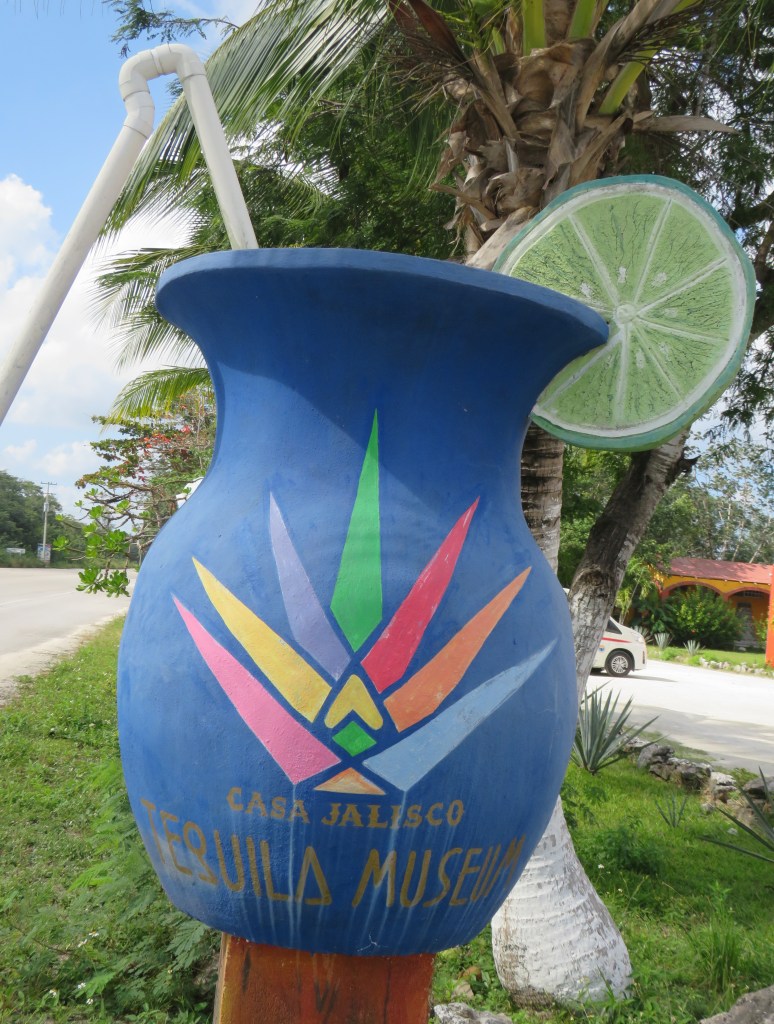
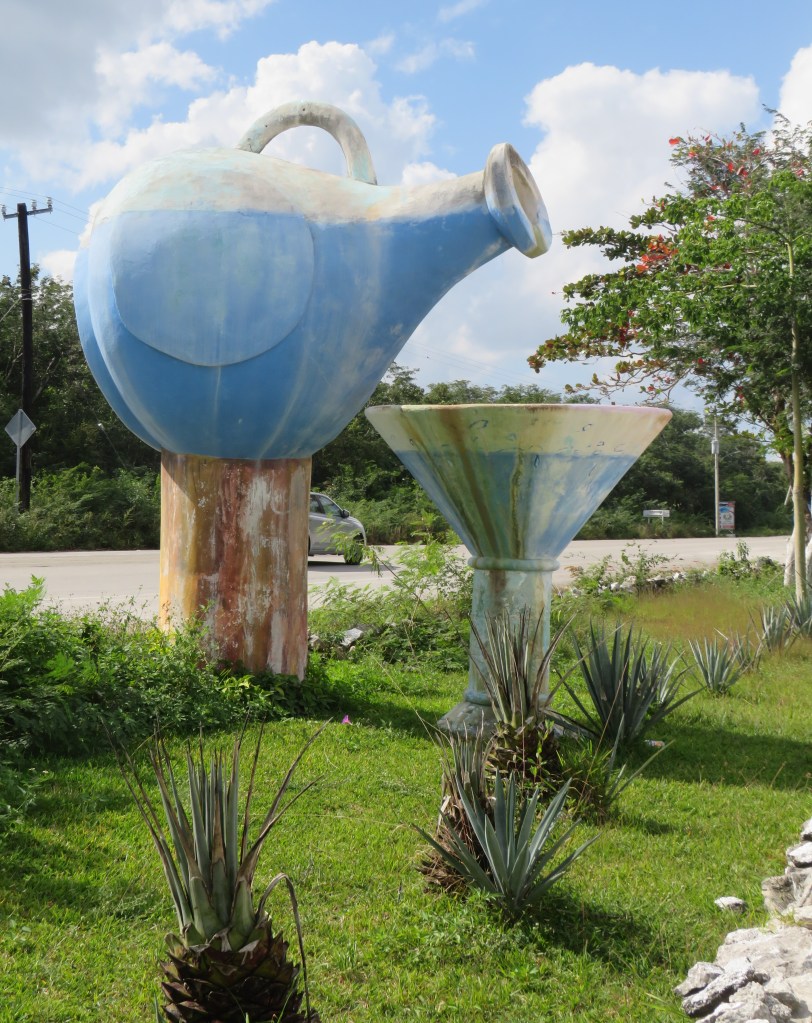
Tequila is a large part of the Mexican culture. We had to do our part to learn and appreciate the culture more. We were more than happy to do some tastings, in the name of higher learning of course. 🙂 There was a Tequila Museum, with a couple of locations on the island. We did not know they were part of the same family owned business until later.

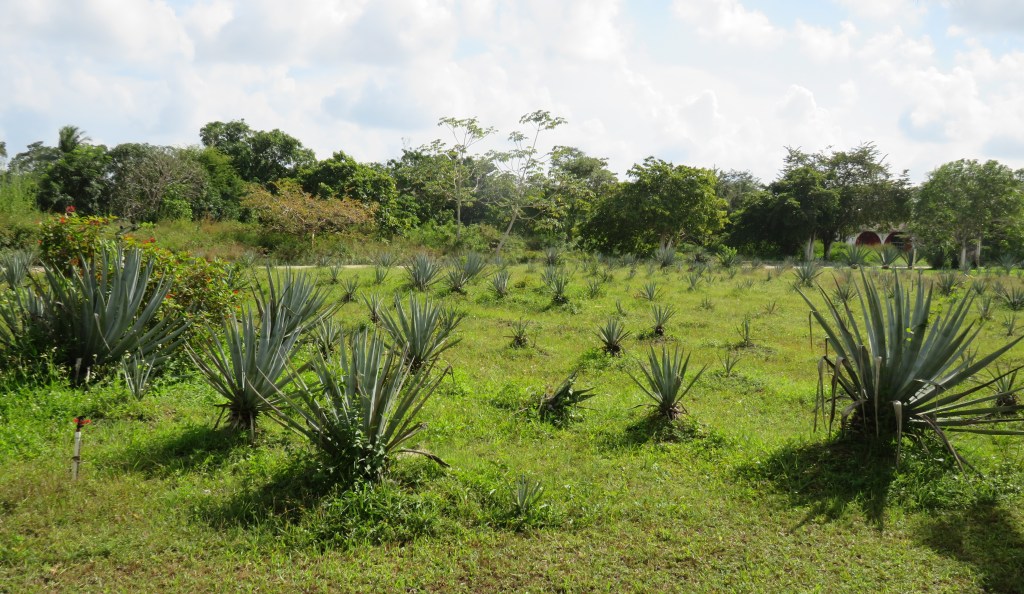
At the first place we went to, we were told the tour was free, but we were expected to buy at least one bottle of tequila for at least $60. We declined and almost left, but then we were told we could visit the grounds up to the house, but we could not go any further, and we could not take pictures inside the house. We agreed to that.

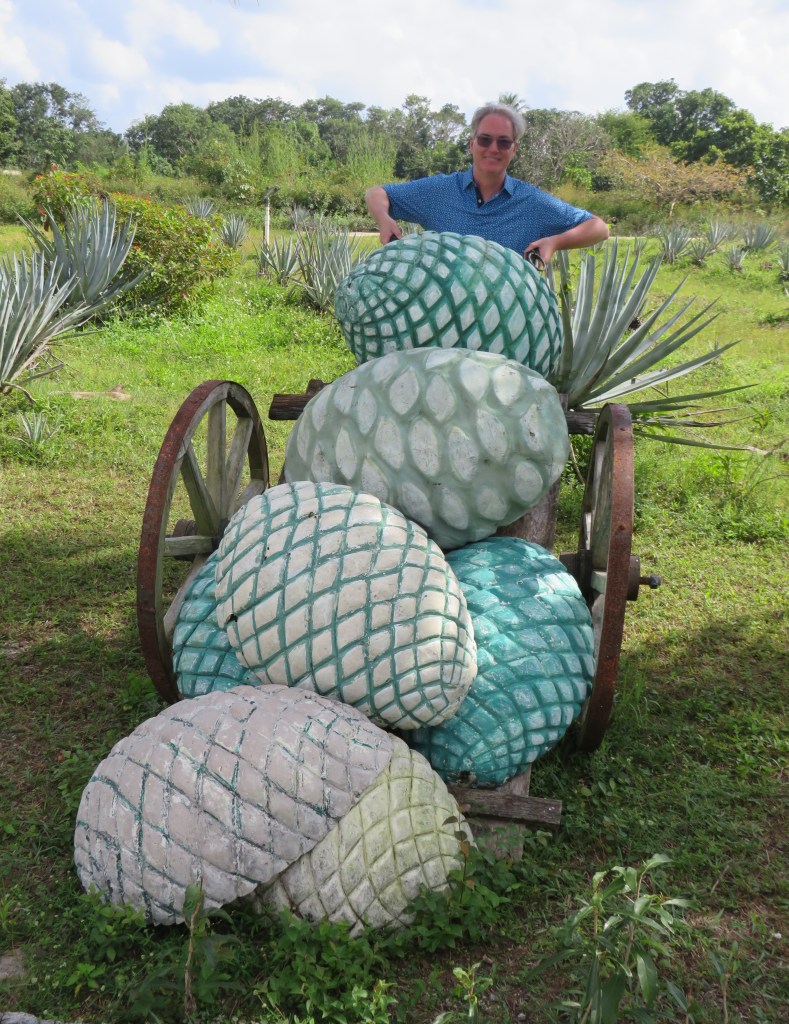
Larry is hard at work.

After “hauling around the bases of the agaves”, Larry needed a break and is sitting on the head of the snake. In Mayan culture, the snake represents life, rebirth, renewal, and a connection between the gods and humanity.

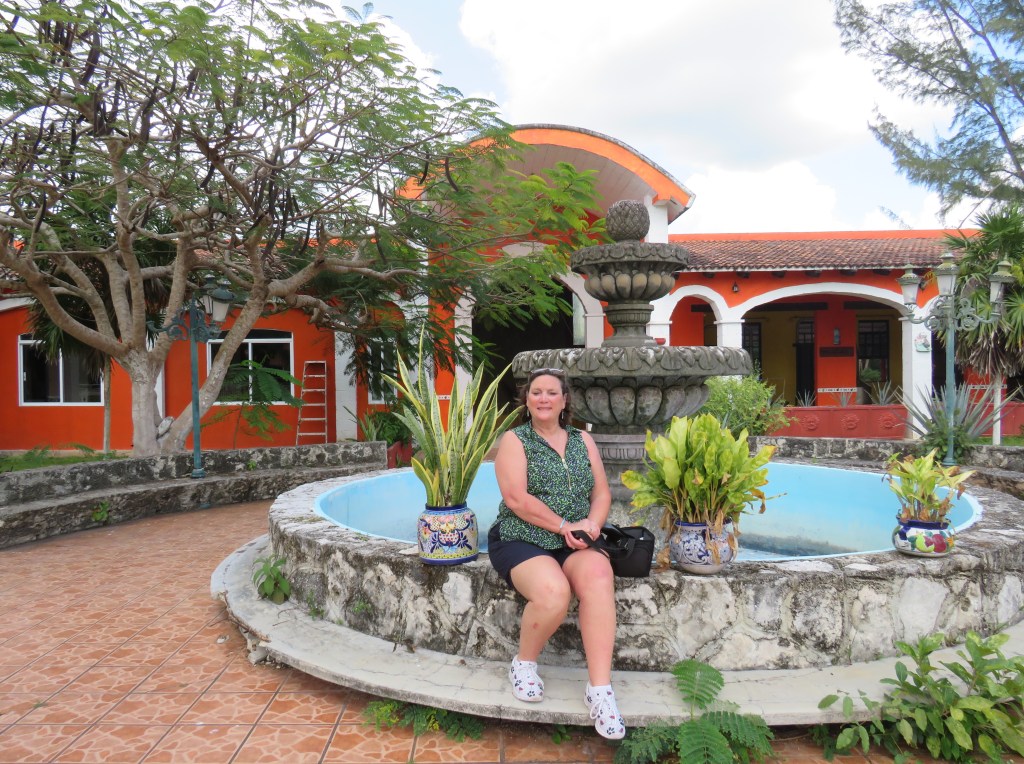
As you all know I am NOT a fan of snakes, at all, so I chose to sit by the fountain instead. The house in the background is the museum.

One of the tequila gods.

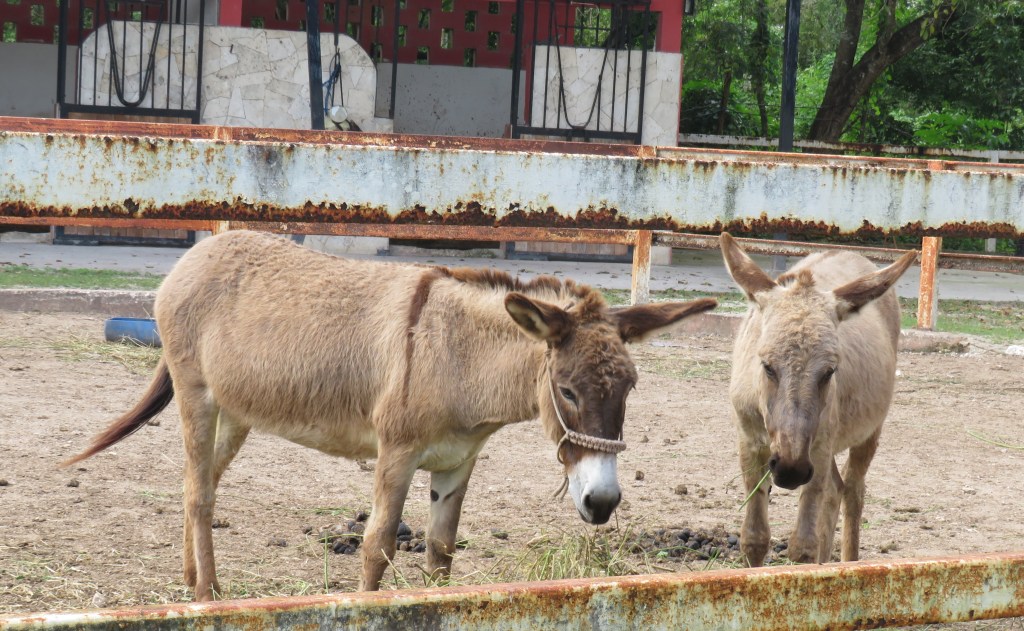
Horses and burros are an integral part of the tequila industry, even today.

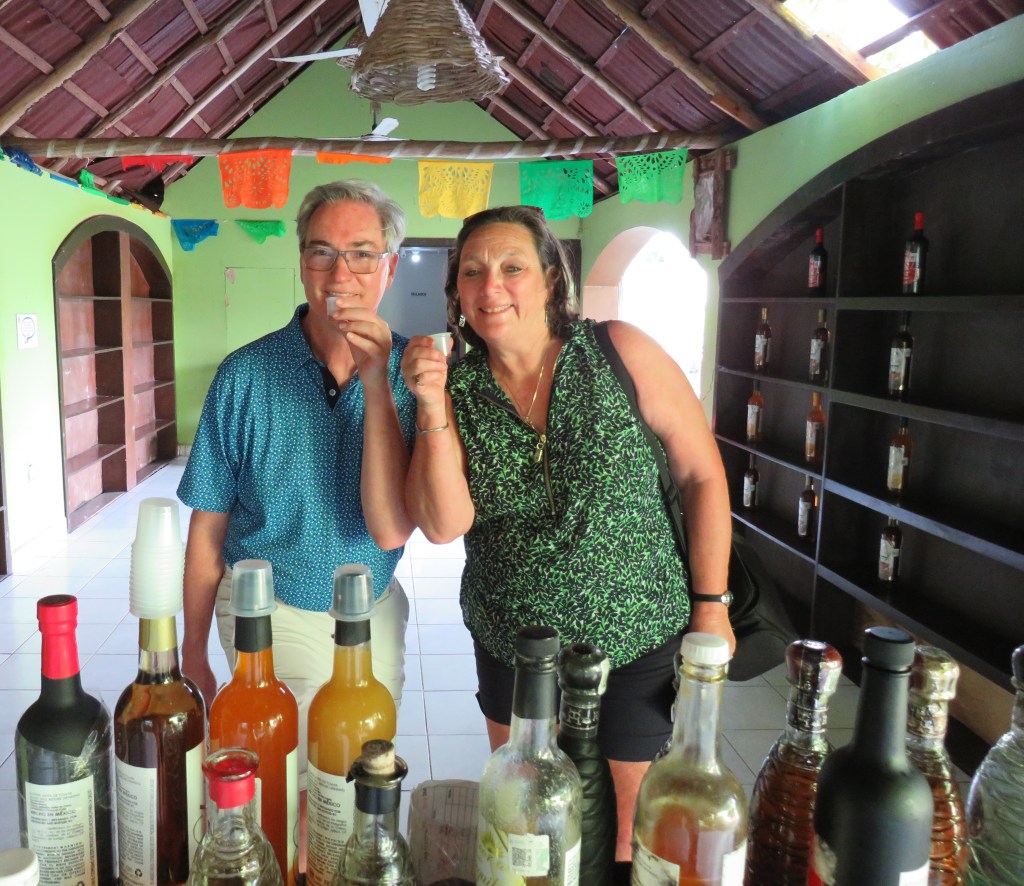
This was all we could see at the first place without the mandatory purchase of an expensive bottle of tequila. But a couple of days later, we found a place where we could taste the tequilas, with no expectations of making a purchase. That is when we found out they were part of the same family.

This lovely lady gave us the history of tequila and the tastings for free.

They were all good, and we each had our favorites. My favorite was the aged, sipping tequila. Of course. That was one of the more expensive options. Larry liked one of the lighter tequilas. We tasted, but did not purchase any. I love my wines, as you all know, but neither of us really drink much hard alcohol at all. So a little taste was all we really needed.

!SALUD! Cheers!

Have a great day and make everyday great. Stay safe and stay well, and don’t let the tequila take over. 🙂 ‘Til next time.