Swimilicious Cookies

As you all know, I love to cook and bake, and I especially love cookies.   These beautiful cookies decorated with swimmers and our team logo, Cudas, (short for the Front Range Barracudas) are just awesome!  I cannot take credit for these, although I wish I could.  They were given to me by one of my swimmers as a gift.  I don’t know if she and her mom actually made them or if they had them specially made, but they are incredible, either way.  These cookies are just perfect for the cookie loving swimmer and swim coach that I am.  They are absolutely swimilicious!
My swimilicious cookies with my coach’s badge, my stop watch, my goggles and my swim cap du jour.

img_5032

I am an all around swimmer, but my favorite and most powerful stroke is definitely my freestyle.  I used to be a sprinter in my youth, but since I am now old and fat, I have become more of a distance swimmer.  Two years ago, before my injuries, when I was still competing for the Masters, I was swimming about 5-6 K or 3-4 miles per day for training.  I am just now starting to get back to my swimming again, in hopes of returning to the Masters.  I think I still have quite a few races left in me.

img_5034

Diving off the blocks.

img_5035

Go CUDAS!!!!!  We coach all ages from 6-18.  I coach the 6-10 year olds.

img_5033

img_5036


Let’s Get Cooking Back in Schools

I have been cooking my whole life, and if I do say so myself, I am pretty darn good at it too.  Not only do I know how to cook well, but I also know a lot about nutrition.  When I was first in college, I was a biology major, studying to become a doctor, and had to take a number of nutrition courses.  I also had to take nutrition courses while I was in culinary school.  I furthered my nutritional journey, focusing a lot on sports nutrition, as I became more involved in the world of sports and coaching.   More and more, people, kids in particular, rely on fast food as their food source, and this reliance on fast foods is wreaking havoc with our bodies in many ways.  People today do not know about proper nutrition and the problems of obesity and other diet related issues due to poor diets and sadly, major health issues due to poor diets are steadily on the rise.  I have always said that if we taught people how to eat and to cook properly, we would not have near as many problems with obesity and diseases as we do.  I am all for teaching cooking and nutrition classes in schools, churches, community centers, hospitals, Boys & Girls’ clubs, etc.  I have attached the comment and the link to a petition to do just that, and to start teaching cooking and nutrition classes in schools again.  This was a link forwarded to me from an acquaintance of mine, Anthony Davison.  I think this is a fabulous idea.  I hope you do too.  If you agree, please sign the petition and forward it on.  If not, no worries.  I am only providing the information.

Image result for pictures of kids cooking

Image result for pictures of kids cooking

Hi Jeanne, and thanks for the link up, as a foodie I thought you would like this: When 20% of NHS budget is spent on food related disease please read & sign our petition; “Get Food, Growing Cooking and Nutrition at the core of the School Curriculum” More here: http://chng.it/YhNkxrB87W Please promote the petition to your contacts as I think we need lots of signatures to get the government to change. 

Chicken Cordon Bleu

The term “cordon bleu” was originally meant to be a blue ribbon that was a gift of honor awarded to the knights of the highest order, L’Ordre des chevaliers du Saint-Espirit, by France’s Henri III, in 1578.  Today, the term “cordon bleu”, particularly when used in the culinary world, is a term that is associated with foods that have been prepared to a very high standard by outstanding cooks.  It is also a very popular dish that has evolved over time.  Most of the time when we think of cordon bleu, as a dish, we are thinking of it as a chicken cordon bleu, which evolved from chicken kiev.  The dish as we most often think of it today, was created in Brig, Switzerland, around the 1940’s.  It is a schnitzel, which is a meat that is wrapped around a cheese filling and is then breaded and either fried or pan-fried.  It can be made from veal, ham or chicken, and can have a cheese and vegetable filling or a filling made from cheese and ham.  Usually it is topped with a sauce as well.  We love chicken cordon bleu, and eat it fairly often.

img_5062

I had some left over ham, although not enough to eat as a meal on its own, it was the perfect amount to use as my filling for chicken cordon bleu.  I topped it with a yellow and orange pepper coulis and served it over wild rice with Brussels sprouts cooked with apples, bacon, shallots and garlic, a biscuit BAM! You Have Biscuits and a crisp, chardonnay with hints of apples and melon to complete the meal.  C’est manifique!

The recipe only calls for a few simple ingredients, yet comes out looking so elegant and tasting so good.  I was experimenting with crackers instead of bread crumbs and they results came out great.  There really was not much difference from the crackers or the breadcrumbs.  By using herbed crackers, there was a little hint of the herbed flavor in the chicken crust, but it was very subtle.

img_5038

Chicken Cordon Bleu

1 1/2-2 lbs chicken breasts, pounded thin

3-4 oz white cheese of your choice – I used jack cheese

1 cup shredded ham, cooked

salt & pepper to taste

1- 1 1/2 cups crackers crumbs or breadcrumbs

1 egg

3 TBSP milk

oil for cooking


img_5041

Generously wrap the chicken in plastic wrap and pound to about 1/4-1/2 ” in thickness with a meat tenderizer on a cutting board.  Make sure the chicken is completely covered with the plastic wrap, otherwise it will tear and be destroyed by the meat tenderizer.

img_5043

Once the chicken is to the desired thickness, unwrap the plastic and discard.  Add the cheese and the ham to the chicken, leaving a little bit of an edge all around.  Then gently roll it up, making sure to tuck in the sides and ends.  Tie it with a large piece of cooking string to hold it together.

If using crackers, grind them up in a food processor until they ground into crumbs.

img_5040

Mix the egg, milk and salt & pepper together to make the egg wash.  Roll the chicken log into the egg mixture, making sure to completely cover it.  Once the chicken is covered with the egg wash, roll it into the crumbs, again, making sure to completely cover it with crumbs.

img_5046

img_5047

In a hot skillet, add your oil for cooking.  Olive oil is fine, however, it has a much lower smoke point than vegetable oil, so if using olive oil, watch it carefully to make sure it does not burn.  Add your chicken log and brown completely on both sides.  This takes about 4-6 minutes per side.

img_5049

Preheat the oven to 375* F

When the chicken logs are golden brown on both sides, remove it and place it in baking dish sprayed with cooking spray and bake for about 30 minutes.  Before serving, remove the cooking string and top with your favorite sauce.  I made a yellow and orange pepper coulis and topped my chicken with that.  I love a roasted pepper coulis and it is super easy to make.  It is relatively healthy too.  I make them with either red, yellow or orange bell peppers.  Today, I used both 1 yellow pepper and 1 orange pepper.

img_5060


BAM! You Have Biscuits

Almost everyone has heard of Chef Emeril Lagasse.  He is one of New Orleans’ hometown “boys”, and is famous for his restaurants, TV shows, cookbooks, etc.  Me personally, I LOVE Emeril.  I think he is hilarious, and he has a ton of personality.  He is also widely known for his BAM!  Besides all that, he is a fabulous chef too.  I love his recipes.  When I made my gumbo, Time for Gumbo we took it with us when we had dinner with friends.  I did not make any bread or biscuits that day, because my friend Priscilla had already taken care of the bread.  However, we had a lot of leftovers that needed to be eaten, and I just had to make some biscuits to go with it.  Because gumbo is the most famous food of New Orleans, I thought it would only be fitting to make some bread or biscuits that were also from New Orleans.  I chose to make Emeril’s famous herbed biscuits, from his restaurant Delmonico’s.  According to Chef Emeril, “the secret to great biscuits is not handling the dough more than necessary.  Over handling develops the gluten in the flour, which makes biscuits (or any baked good goods) tough”.  I have always followed this advice, and very rarely do I ever have tough biscuits.  My mother was from the South after all, and I know my biscuits.

img_5023

Chef Emeril’s Herbed Biscuits

2 cups flour

1 TBSP baking powder

3/4 tsp salt

1/4 tsp baking soda

1/4 cold vegetable shortening

2 TBSP cold butter, cubed

3/4 cup + 2 TBSP buttermilk (I always use the powdered buttermilk mixed with milk)

1 TBSP chopped, fresh assorted herbs or dried herbs

img_5015

Preheat the oven to 425* F

Sift the flour and mix in all the dry ingredients.  If you are using dried herbs, you can mix those in as well.  Usually I use fresh herbs, but today all I had was the dried, so that is what I used.  They work fine too, just the flavor is not as pronounced as it would be by using fresh herbs.  Add the butter and the shortening and mix together until the dough is soft and crumbly.  You can use either a pastry cutter or your hands.  I find working with my hands is the best way.  Add the buttermilk and fresh herbs, if using, and mix together with the dough, just until blended together.

img_5016

On a lightly floured surface either pat or roll the dough to about 3/4″ thick.  Emeril says to pat the dough; I prefer to roll it.  Either way, just don’t over do it.

img_5018

Once the dough is to the desired thickness, use 3″ fluted biscuit cutters to shape your biscuits.  Do not twist the cutters into the dough.  Just firmly press it into the dough.

img_5019

Place the biscuits on an ungreased baking sheet and bake for about 12-15 minutes, or until they are lightly golden.

img_5021

Butter them up while they are nice and hot and BAM!  You have biscuits.

img_5025

New Products to Sample

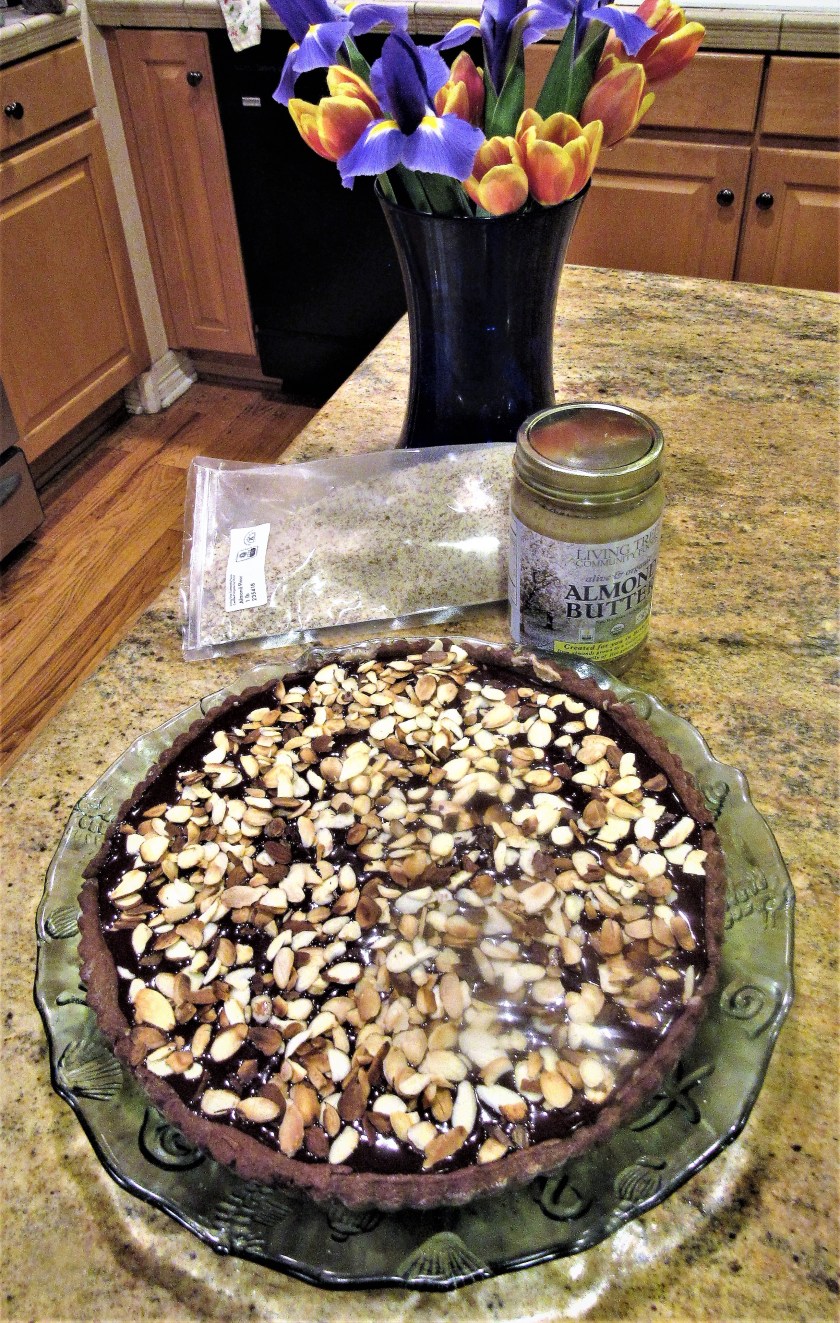
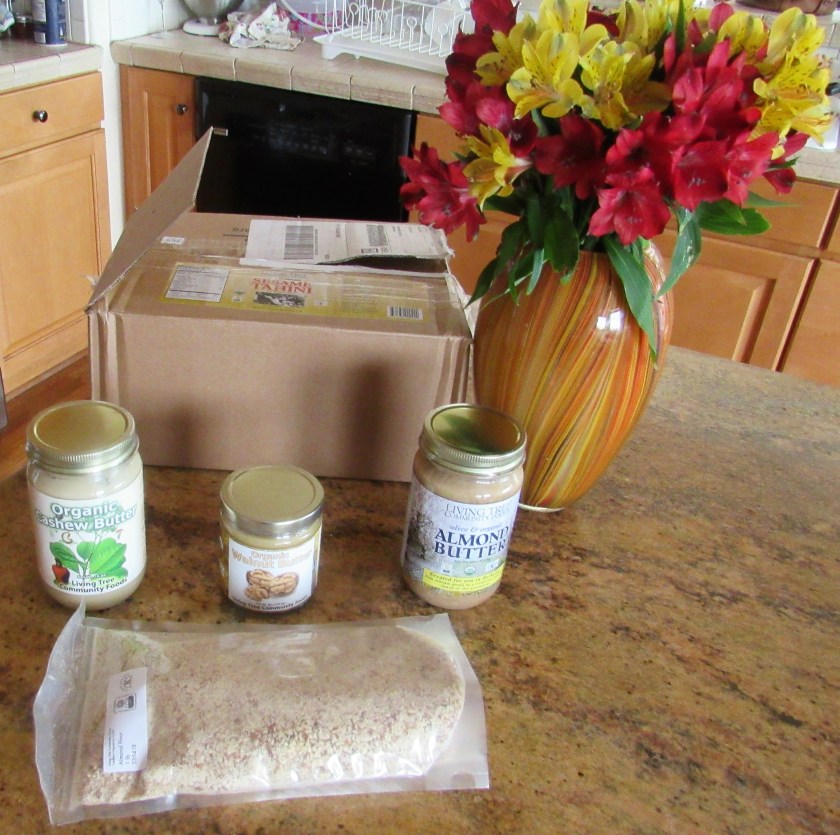
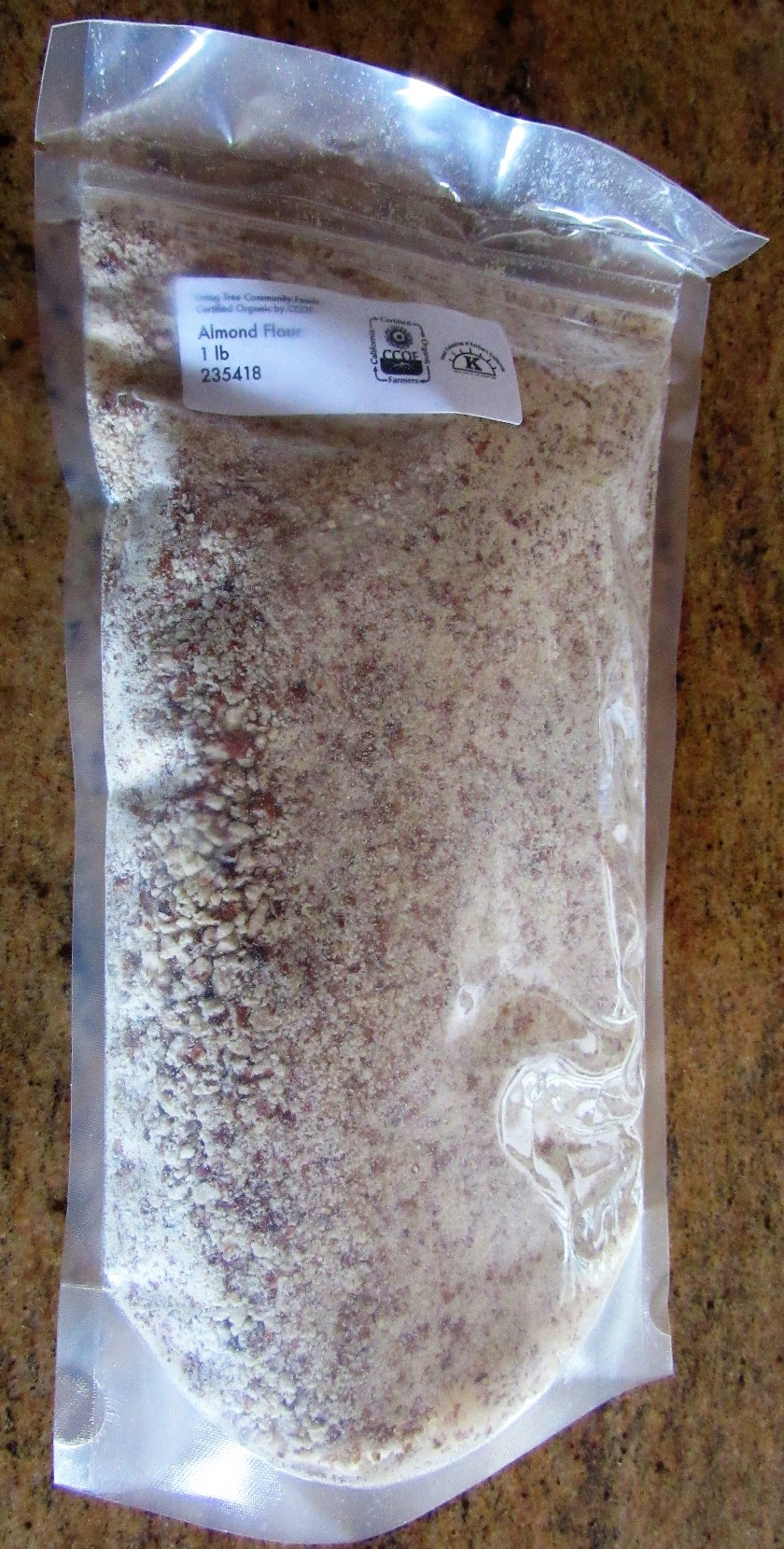
This afternoon, I received two brand new products to sample from Living Tree Organic Foods, Alive & Organic, located in Berkeley, CA.  I was gifted with some delicious Almond Butter as well as some Sesame Tahini.  They both arrived today, and I wanted to give a special “shout out” and thank you to President, Founder and CEO, Jesse Schwartz, for allowing me this opportunity to sample his products.  I am very excited about trying these products and creating some new and delicious recipes with them as well.  Of course, all of you will get to share my new experiences too.  Living Tree Community Foods tries to purchase their produce and ingredients from family farmers as much as possible, and definitely believe in giving back to the community.  They donate their foods and products to live food workshops all over the country and Costa Rica.

img_5028

The Alive & Organic Almond Butter is made from farmers who have been growing almonds in California for five generations.  The process for making the Living Tree Almond butter takes course over several days.  The almonds are sliced, not ground and it is made often, in small batches to keep it fresh and alive.

img_5031

The Alive & Organic Sesame Tahini is made from alive and organic, mechanically hulled sesame seeds.  Once again, it is made slowly and the seeds are sliced and never ground.

img_5030

Living Tree has a wide range of natural and organic products available, ranging from nuts and seed butters to dried fruits and vegetables to organic chocolate, spices and salts and grains and pastas, just to name a few.  Go to their website at info@livingtreecommunity.com or http://www.livingtreecommunity.com to see all the wonderful, organic products they offer.

Once again, many thanks to Jesse Schwartz for this wonderful tasting opportunity.  I am looking forward to creating some new and delicious recipes with both the Almond Butter and the Sesame Tahini.  Those will be coming to you very soon.

Time for Gumbo

Gumbo is the most recognized and most famous food of Louisiana.  Gumbo is to Louisiana like chili is to Texas.  Everyone eats it, whether they be rich or poor, and there are endless variations of how to make it. The art of making gumbo is serious business in Louisiana.  It started out as a a “poor man’s” food, and was made with whatever people could catch and/or had on hand at the time.  By 1803 though, gumbo had already established itself as a local favorite, and was served at a gubernatorial reception in New Orleans.  No one knows where gumbo was originated, but the name gumbo is derived from the West African word for okra, quingombo.  Okra is most definitely one of the key ingredients of any gumbo.  It was originally used as a thickener for gumbo, as well as file, before the times of refrigeration.  All gumbos are made and thickened with either one or a combination of all three of these ingredients, okra, file and a browned roux.  A roux is flour cooked with either oil or another fat, and is browned to various shades of tan or brown.  File is the ground seasoning made from the dried leaves of sassafras trees.  It is used as both a thickener and a flavoring agent for gumbos and other Creole dishes.  Gumbo, is ALWAYS served with rice.  There is no changing that.  That is written in the books.  Some traditions just cannot be changed or tampered with at all.  No, no.  That’s just bad ju-ju.

As I mentioned above, there are many, many different varieties of gumbo.  You can add whatever you like.  This time, I made mine with chicken, shrimp and Andouille sausage.

img_5005

Mixed Meat Gumbo

1-1 1/2 lbs peeled shrimp

1 lb Andouille sausage, cooked

1/2 lb chicken, cooked

1 cup, 3 TBSP cooking oil (I used olive oil)

4 bay leaves

1 onion, minced

1-2 cups okra

1 TBSP file seasoning

1 TBSP garlic

3 celery stalks, diced small

1 green pepper, diced small

1-2 jalapenos, diced fine

3 tomatoes, diced medium

6-8 cups chicken stock

salt & pepper to taste

1 tsp cayenne pepper

2 cups flour

cooked rice

img_4989

Cook the meats and set a side.  Once the meats are cooked and cooled, cut them into small bite-sized pieces.  Cut all the vegetables and saute the peppers, onions, celery and garlic in 3 TBSP oil, until the onions are translucent.

img_4994

When the vegetables are cooked, add the tomatoes, okra, seasonings and the stock.  Bring to a boil, then reduce the heat to a simmer and add the cooked meats.  The shrimp is added raw and will cook while the soup is simmering.  Cook for about 10-15 minutes.

img_4996

img_4998

While the “soup” is simmering, make the roux.  I used the additional olive oil and mixed it with the flour. You can also use butter instead of oil.  I have made it both ways, and both are very good.  Using oil is a little healthier and a little less “fatty” than using butter, but using butter gives it a bit of a richer taste.  Both are good, and both are acceptable.

img_4999

img_5000

Keep stirring the roux until all the fat is absorbed into the flour.  You can make it as light or as dark as you like.  The darker the roux, the more “nutty” the flavor will be, and the thicker it will become.  Play with it.  Different types of gumbos call for different colors and textures of the roux.  Again, there is no right or wrong way.  It is a personal preference.  When the roux is to your desired likeness, add it to the soup and combine it well.  Simmer for about 10 minutes, until the soup is thickened, then ladle it into your favorite soup bowls, and add a little rice on top.  I used my leftover dirty rice, which was just perfect for the dish.  Vegan Dirty Rice and Andouille Sausage  To complete the meal, I served it alongside a delicious, crisp, sparkling white wine. C’est manifique et bon appetit!

img_5001

img_5002

img_5007

Vegan Dirty Rice and Andouille Sausage

I apologize for being a bit remiss in the kitchen as of late.  I have been SUPER busy with work.  My real jobs, the ones that pay me, take precedence, which means I have not had a lot of time to be in my 2nd favorite place, the kitchen.  I picked up 9 extra classes per week while one of our other instructors recuperates from a broken ankle.  We also have been busier than usual with more swim meets too.  As much as I LOVE being in the kitchen, I am truly in my element when in the water, whether it be teaching, swimming, coaching or my real passion, scuba diving.  With that being said, we still have to eat, we are just not eating anything fancy or things that take a lot of time to prepare at the moment.  Dinner last night was a simple meal of Andouille Sausage, vegan dirty rice and the last of the Mediterranean babka,  Babka with a Mediterranean Twist and a glass of one of my favorite red wines, Mozzafiato Rossa, from one of my favorite local wineries, InVINtions, A Creative Winery.  Mozzifiato Rossa is a smooth, velvety red wine with a light spiciness and hints of chocolate.  Let’s Make Wine

img_4986

I purposely did not add sausage to the dirty rice because I knew I would be serving it with sausage.  I didn’t think we needed sausage with more sausage.  I drizzled my sausage with Heinz 57 Sauce, although I really wish I had more Edith’s Best Triple A Sauce instead.  Sauce It Up with Edith’s Best

Vegan Dirty Rice

img_4975

1 1/2 cups cooked rice

2 jalapeno peppers, diced fine

1/2 red bell pepper, diced fine

1/4 red onion, diced fine

2-3 stalks celery, diced fine

1-2 TBSP sweet Spanish peppers (optional since they can be hard to find)

1 TBSP garlic

1 can kidney beans, drained

salt & pepper to taste

Tobasco sauce to taste

1 tsp cumin

2 tsp oregano

olive oil


Cook the rice according to the package directions.

Saute all the vegetables, except the Spanish peppers, and garlic together until they are soft and the onions are translucent.

img_4977

Once the vegetables are cooked, add the kidney beans and the Spanish peppers and the seasonings, then combine well.  Cook for an additional 5 minutes.  Mix everything together with the cooked rice and blend together well.

img_4978

img_4982

img_4983

Serve the rice along side your favorite meats and/or vegetables, and it’s time to eat.

img_4985


La Reina de la Cocina

Most of you all know I have dubbed myself “The Queen of Leftovers”.  I love re-creating new dishes from leftovers.  I love the challenge and the creativity that comes with finding new uses and making new dishes that are totally different than the “first overs” as I call them.  It makes life in the kitchen exciting, and I never know what the results will be until I have finished the dish.  It is like creating an edible piece of art.   Last night, the Queen paid yet another visit to my kitchen, but this time she came speaking Spanish.  I had just a little bit of mole left (that is not in the freezer) Dining Mexican Style but not really enough to use for a complete meal.  When our nephew got married, we brought home some smoked pork along with the cinnamon butter.  Apple Cinnamon Coffee Cake with Caramel Sauce.  So, La Reina suggested I combine those two ingredients, along with a few other Spanish staples to make quesadillas de puerca y mole.  The result …. esta mui delicioso.

img_4971

Quesadillas de Puerca y Mole

img_4958

3/4 lb cooked pork, shredded

1 jalapeno, diced fine

1/4 red onion, diced fine

1 small pumpkin, peeled and cubed small

1/4 red bell pepper, sliced thin

1 TBSP garlic

1/2 cup mole sauce

salt & pepper to taste

olive oil for cooking

jalapeno jack cheese, or cheese of your choice

tortillas


Once the vegetables are all cut, saute them in olive oil until they are tender and the onions are translucent.

img_4960

When the vegetables are cooked, add the shredded pork and the mole sauce and combine well.

img_4962

img_4964

Melt the cheese onto the tortillas in a hot skillet, until all the cheese is melted.  I do one tortilla at a time, per skillet.

img_4967

When both tortillas are done and the cheese is melted, start layering the quesadilla, with one tortilla on the bottom, then the filling, and another tortilla on top.

img_4969

I topped mine with salsa and avocado chunks and a bit of cilantro.  Delicioso!  All I need to finish the meal is a margarita especial, and then listo!

img_4971


Cous Cous is a Type of Pasta

Cous cous?  What is it?  Is it a grain or is it some kind of rice?  Cous cous is actually a type of pasta that is made from semolina flour.  Semolina is the hard part of the wheat grain that resisted being ground from the primitive medieval millstones.  Originally, cous cous hails from North Africa, but is found and eaten all over the world today.  There are many different varieties of cous cous, but here in the United States, the most popular types are either the white or the whole grain varieties.  Cous cous is pasta that is shaped into tiny granules of semolina pasta that are made from two different sizes of husked and crushed unground semolina.  There are a couple of theories on how the name came about.  One theory is that it is a word derived from the Arabic word kaskasa, which means to pound small.  Another theory is that it is derived from another Arabic word, kiskis, which is the name for the type of steamer that is used to cook cous cous.  The French translation for the kiskis is couscousi.  We may never know the answer to this question.  What I do know is that I love cous cous.  We eat it quite often, usually with a Mediterranean or Greek dish.  Cous cous looks like rice, but is much healthier than rice.  It contains a lot of protein, with about 6 grams per serving in the regular type and about 9 grams in the whole wheat version.  It is also loaded with selenium, containing about 66% of the daily recommended amount in one serving.  Cous cous also has about half the calories that rice has, making it very friendly for dieters who are trying to cutback on their caloric intake.

I was a little pressed for time last night when making dinner, so I needed something that was quick and easy.  I went “Greek” and made a lemon, herb yogurt marinade for chicken, and served it alongside my lemony cous cous and a mixed baby green salad.  Chardonnay was the wine choice.  A crisp white was the perfect choice to accompany the meal.

img_4951

Lemony Cous Cous

1 12/ cups cooked cous cous

1/3 cup toasted pine nuts

1/4 red onion, diced very fine

1 1/2 TBSP garlic

1 tomato, diced fine

salt & pepper to taste

1 bunch parsley, chopped fine

1 TBSP lemon juice

1/3 cup olive oil


img_4949

Traditionally, cous cous is steamed in the kiskis, but I boil the water with a tsp of salt and 1 TBSP of olive oil, then I turn off the heat and add the cous cous, mix it up and let it soak up the hot water.  It is almost a 1:1 ration of water to cous cous.  Too little water and the cous cous will be dry and too much will make it mushy.

Once the cous cous is cooked, I added all the rest of the ingredients and combined everything well.  You can eat it cold, warm or hot.  It is good at whatever temperature you like it.  You can easily eat it on its own or mix it with shredded chicken.  It is great as both a side dish or a meal, especially when the chicken is added.  If you want to make tabbouleh, the recipe is the same, except the dish is primarily parsley, with less cous cous.

A very healthy Greek meal.  Lemon-herb-yogurt marinated chicken, that I grilled and topped with more of the lemon-herb-yogurt sauce, served with lemony cous cous and a salad of mixed greens and a piece of pita bread.  Very little fat, and a ton of protein.

img_4956

img_4952


Shrimp and Vegetable Alfredo

I LOVE pasta, and I could easily eat it everyday, although fortunately for my waistline, I do not.   I love all kinds of sauces and toppings to go in and on my pasta too, although a warm and cream Alfredo is always one of my favorites.  Besides being so versatile, pasta dishes are very easy to make as well, and are perfect for just about any occasion.  This is one of those dishes that you can make it with whatever you have on hand and it will turn out delicious.  This dish is delicious with chicken, shrimp, sausage, any combination thereof, or just with vegetables to make it vegetarian.  Make it how you like it.

img_4938

As I have said many times, we always have a wide variety of vegetables in the fridge, so I mix and match vegetables all the time.  Today, I used carrots, red bell peppers, broccoli and mushrooms, and of course, garlic.  Adding a lot of color and texture with your vegetables also adds a wide variety of nutrients as well.

img_4922

Once your vegetables are all cut, saute them in olive oil with the garlic until they are just soft, yet still have a little crunch left, for about 7 minutes or so.  Saute your heartier vegetables first, then add the more delicate vegetables towards the end.  Once they are cooked,  remove them and set them aside.

img_4923

Once the vegetables are done, add your meat and cook.  We had shrimp which does not take long to cook at all.  Cook the shrimp for about 2-3 minutes per side, or until it is a nice pink color.  Then remove and add to the vegetables.

img_4927

Spicy Alfredo Sauce 

1/2-3/4 cup dry white wine

2 cups, or more if needed, heavy whipping cream

1/2 cup white cheese of your choice, (today, I made it with jalapeno jack which added a little more pizzazz)

salt & pepper to taste

1 tsp red pepper flakes or to taste

1 tsp cayenne pepper or to taste

2-3 TBSP butter


After removing the vegetables and the shrimp, in the same pan, add the wine and cook until the liquid is mostly gone.  Make sure to scrape all the drippings into the wine.

img_4929

Add the cream and incorporate well.  Then add the cheese and the seasonings and mix in quickly.

img_4930

img_4932

Once everything is well blended and the cheese is melted, add the cooked vegetables and shrimp (or meat of your choice).  Finish with the butter to make the dish rich and creamy, with a nice buttery sheen.  Serve over your favorite pasta and it is now ready to eat.  I would use a heartier pasta, like fettuccine or farfelle/bowties, since this is a heavy sauce.  I served it alongside my famous garlic-herb cheese bread and a glass or two of a cold chardonnay with hints of melon and apples.  Mangia!

img_4936

img_4940