When You Can’t Go To the Pub, Bring the Pub To You

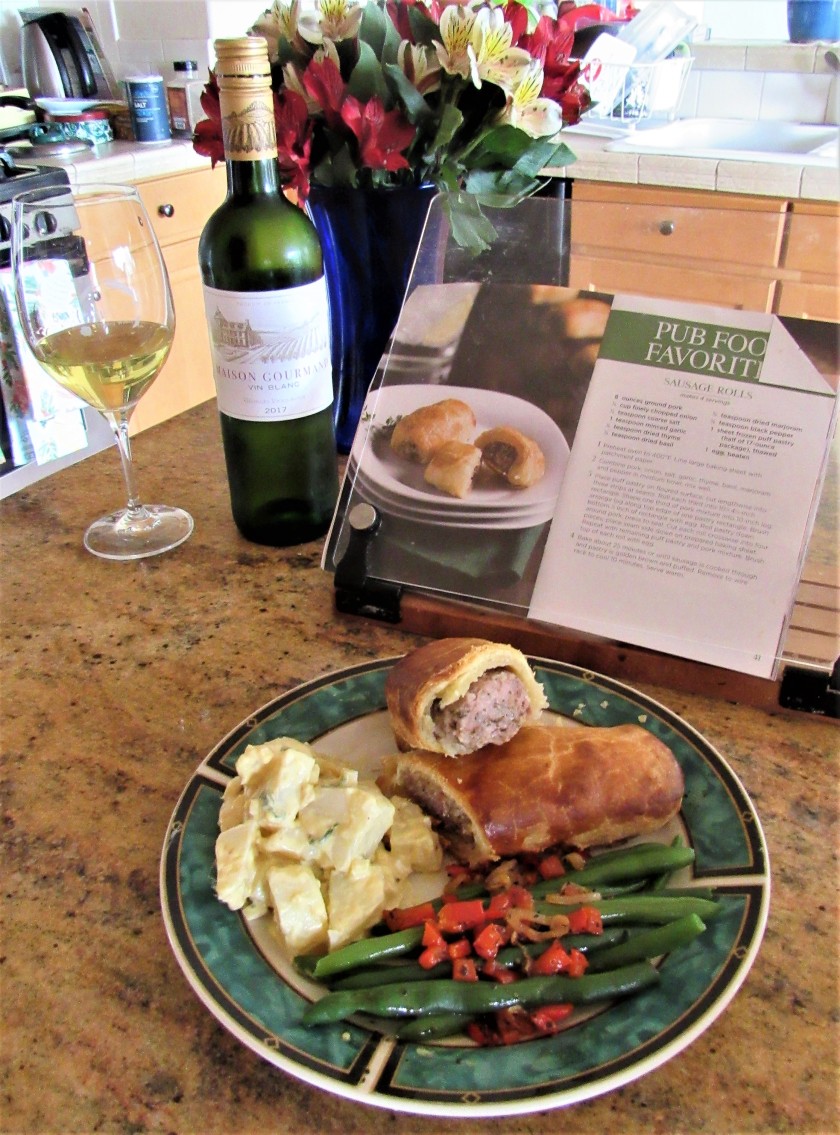
I think most of the world is shut down at the moment due to this coronavirus mess, and no one is allowed to go out for anything “non-essential”.  Being a social butterfly, this is killing me.  I am going stir crazy.  That being said, going out for dinner, unless it is to go or for all my British and Australian friends and rellies, take-away, is just not happening right now.  So ….. Since we can not go out, I made some “pub food” at home.   I made some sausage rolls and served them with some leftover potato salad and green beans.  Typical pub food without the pub,  served in the comfort of our own home, safe and socially distanced from the world outside.
IMG_1176

Pub-Style Sausage Rolls

IMG_1171

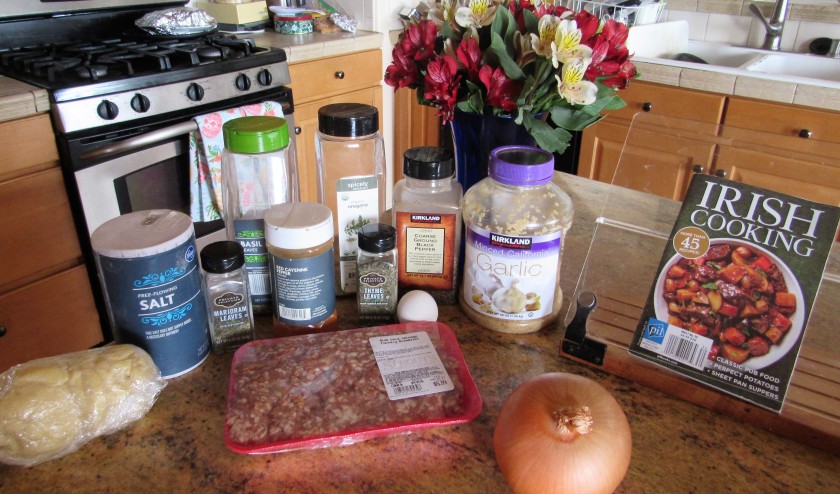
8 oz ground pork

1/4 cup onion, chopped fine or 2 TBSP dried onions – I used dried onions

1 tsp salt

2 tsp garlic

1 tsp each dried oregano, dried thyme, dried basil, dried marjoram

1 tsp pepper

1/2 tsp cayenne pepper

1 egg, lightly beaten

basic go-to dough


Basic Go-To Dough

1 1/2 cups flour

6 TBSP cold butter, cubed

dash salt

1 egg

5-6 TBSP heavy whipping cream


In a food processor, pulse the flour, butter and salt together until it resembles crumbly sand.  Then add the egg and the cream and continue to mix together until it forms a ball.  Wrap the dough ball in plastic wrap and refrigerate for at least 1/2 hour before working with it.  When you are ready to work with he dough, lightly flour your work surface, divide the dough into equal quarters and roll the dough to about 1/4 in in thickness.


Preheat the oven to 400* F or 200*C.

Line a baking sheet with parchment paper.

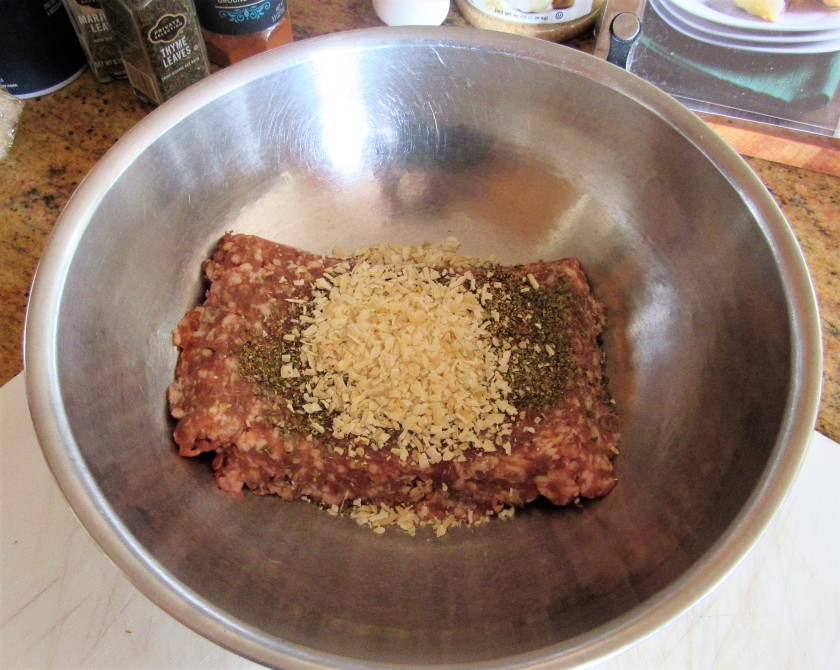
For the sausage, mix all the ingredients together well .  I find mixing everything by hand works best.
IMG_1172

Divide the sausage into 4 equal parts and shape into log rolls that fit the size of the dough.
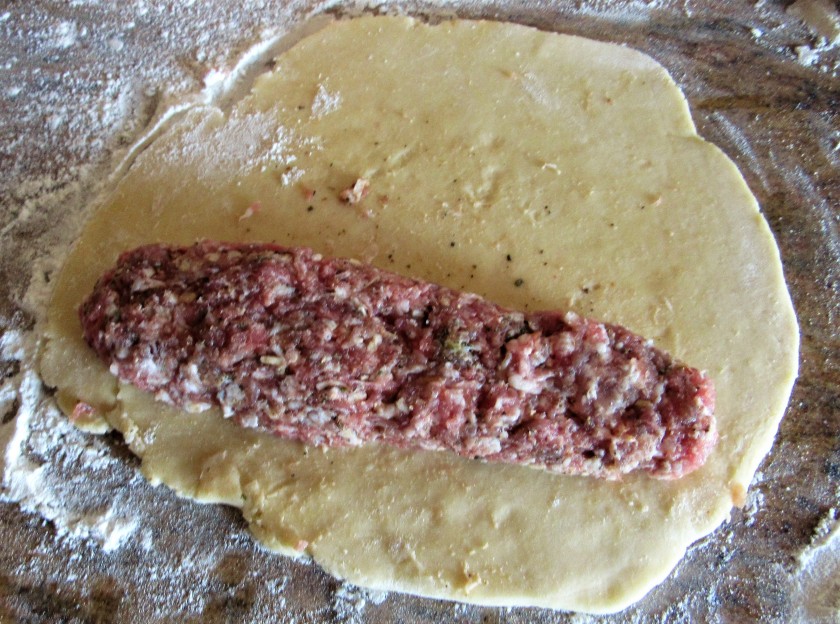
IMG_1173

Carefully roll the dough around the sausage, burrito style, folding in the edges as you go.  Pinch the ends together then dip your finger in water and gently “glue” the seams together, forming a tight seal.  Place the seal side down on the baking sheet.  Make an egg wash ans generously coat the entire sausage roll with egg wash.
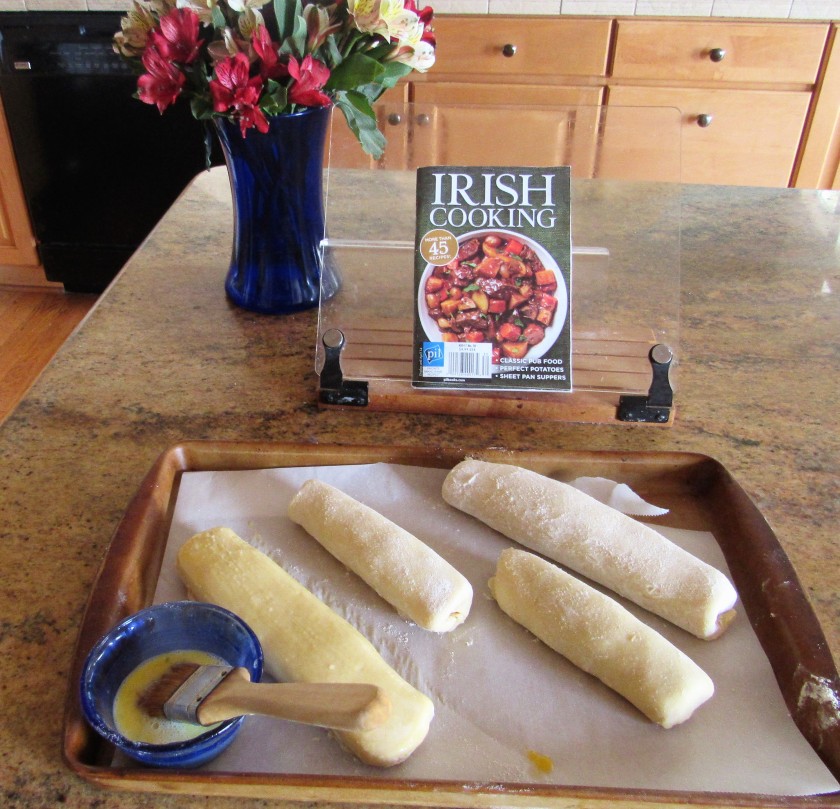
IMG_1174

Bake for about 30 minutes or until the sausage rolls are golden brown.
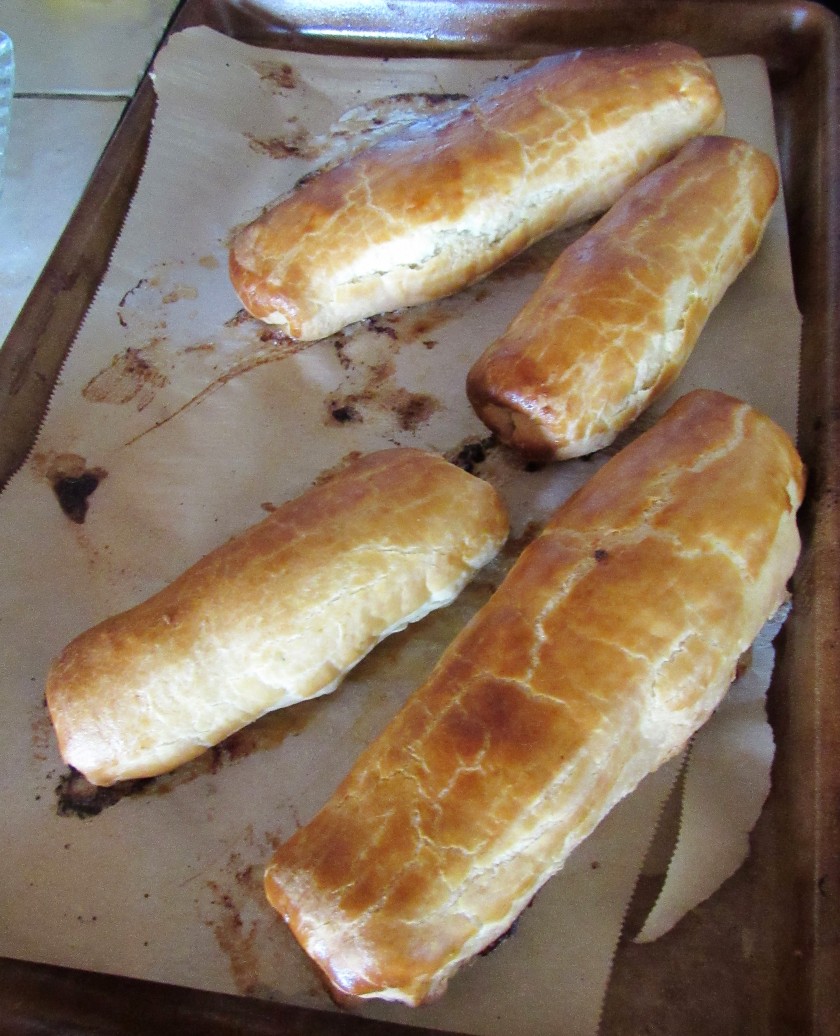
IMG_1175

Now pour yourself your libation of choice and enjoy an imagine you are sitting in your favorite Irish pub.  If you like, you can serve this with a little honey mustard or some Dijon mustard on the side.  You have now brought the pub into the comforts of your own home.  Slainte!  This sausage roll is light and flaky and just melts in your mouth.
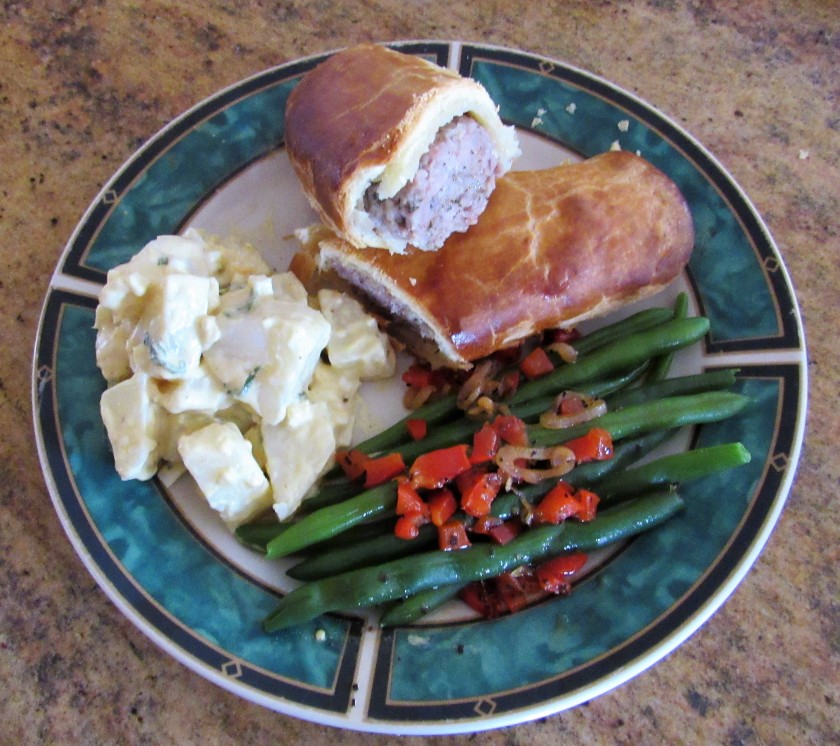
IMG_1177


Guinness in the Stew, Guinness in the Bread

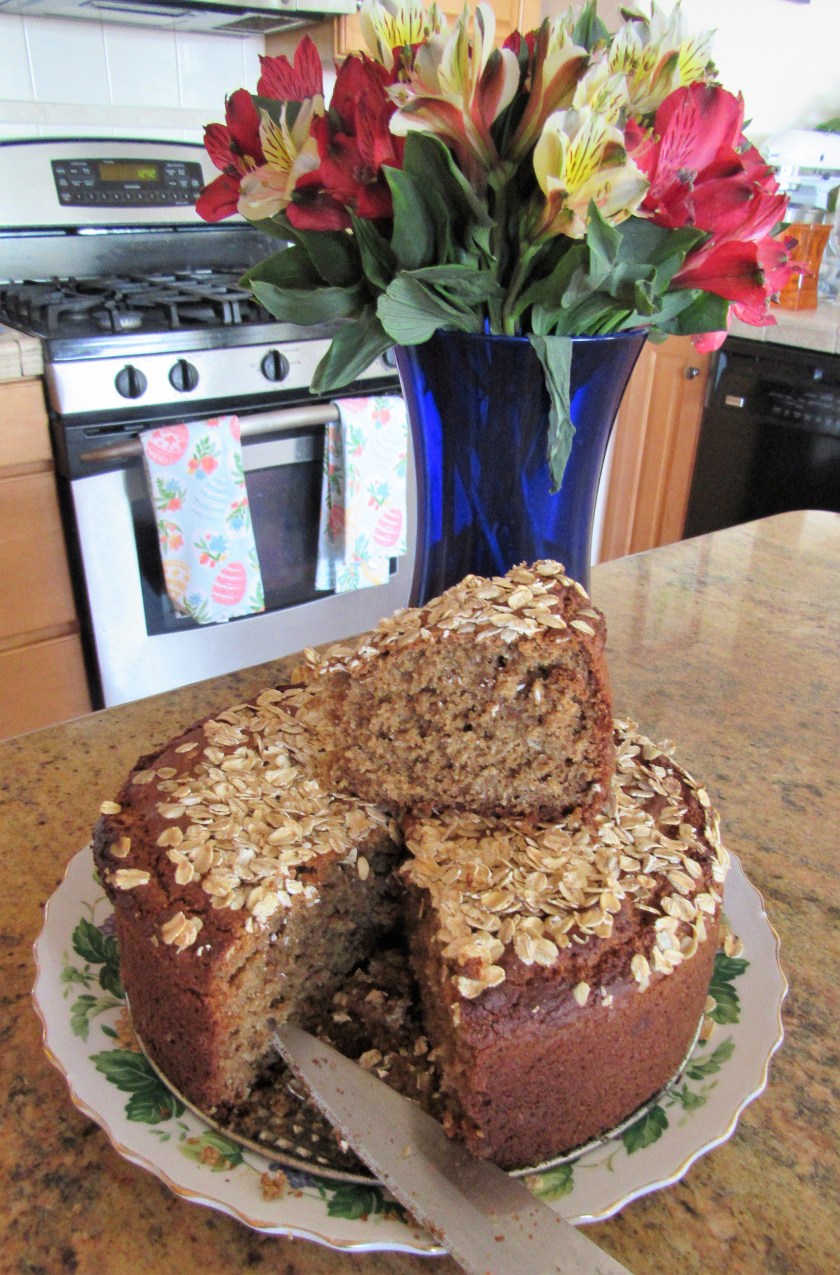
When I made my Irish beef stew for St. Patrick’s Day, Irish Stew I had some of the Guinness leftover.  Neither Larry or I like Guinness, so I knew we were not going to drink it.  But I did not want to waste it either.  So once again, I put on my creative thinking cap and came up with a great way to use it.  I put it some brown Irish soda bread.  It came out great.  I know, it looks like a cake, but it’s a bread.  It’s best when it is served warm with butter on top.

IMG_1156

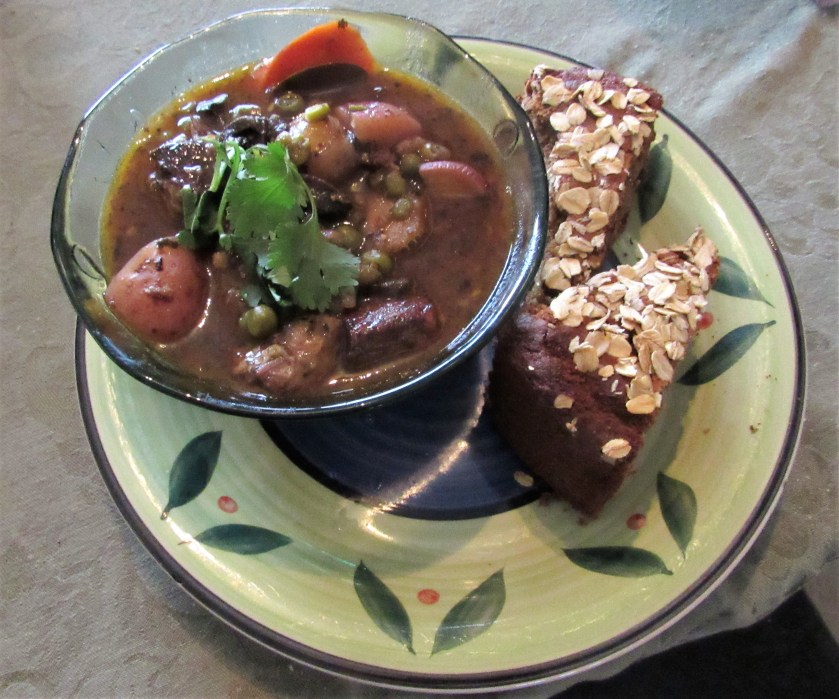
We are going through all our leftovers, and since we still had some Irish stew, why not serve it with the Irish soda bread, right, and of course some red wine as well.

IMG_1159

Irish Brown Soda Bread

IMG_1151

2 1/4 cups whole wheat flour

1 cup old fashioned oats

1/2 cup brown sugar

2 1/4 tsp baking soda

1 tsp baking powder

1/2 tsp salt

1/3 cup butter, melted

1 tsp vanilla

1 cup buttermilk – I use the dried buttermilk mixed with milk

1 1/2 cups Guinness stout

additional oats for topping


Preheat the oven to 425* F.

Spray a round baking pan with cooking spray.


Mix together all the dry ingredients in one bowl and all the wet ingredients in another bowl.

IMG_1152

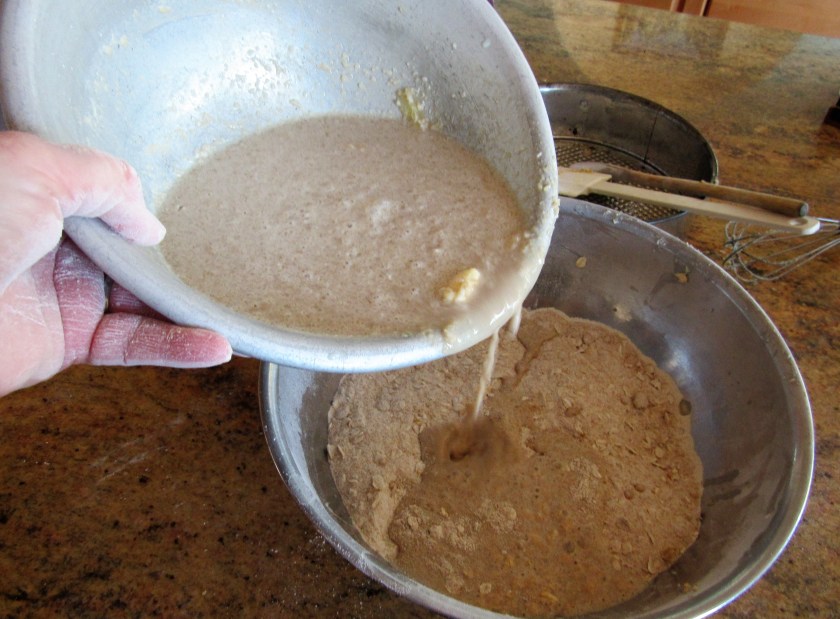
Once everything is thoroughly mixed together, add the wet ingredients to the dry ingredients and combine well.  You will have a thick batter.

IMG_1154

Evenly spread the batter in the baking pan, then top with more of the oats.

IMG_1155

Bake at 425* F for 30 minutes, then reduce the temperature to 400* F and continue to bake for another 30 minutes or until the bread is done.  When the bread is done, turn the oven off, crack the oven door open and let the bread cool while still in the oven.  Once it is cooled, slice it, slathe it with butter and enjoy.  This is good as a side dish or even as a breakfast or snack bread too.

IMG_1157


We Are Supporting Our Local Businesses

In these crazy days, life has been put on hold, indefinitely.  Though we have plenty of food to keep us going for quite some time, and yes, I can make just about anything, we also feel it is important to keep the businesses open and operating as much as possible too.  Because we want to help our local businesses, we decided it was a pizza night.   It’s not much, but at least it is something.  We should all support our local businesses as much as possible in these tough, chaotic times.  They need us more than ever right now.

IMG_1149

IMG_1150


What Am I Going To Do With the Leftovers?

You all know how the Queen and I are very close.  We are the bestest of buddies.  She has been showing up in my kitchen a lot lately; a lot more than usual, because of this whole COVID19  stuff going on.  Most of the world is going threw this same thing, and sadly, most of us are all stuck at home, with nowhere to go.  Larry is one of the fortunate few (for now) and he can still go into work, although he is not going in as frequently, which means he is not taking lunches with him so much either.  And this means, I have even MORE leftovers in my fridge than normal too.  So I have to get even MORE creative with my leftovers than usual.  But that’s OK.  I LOVE these creative, culinary challenges.

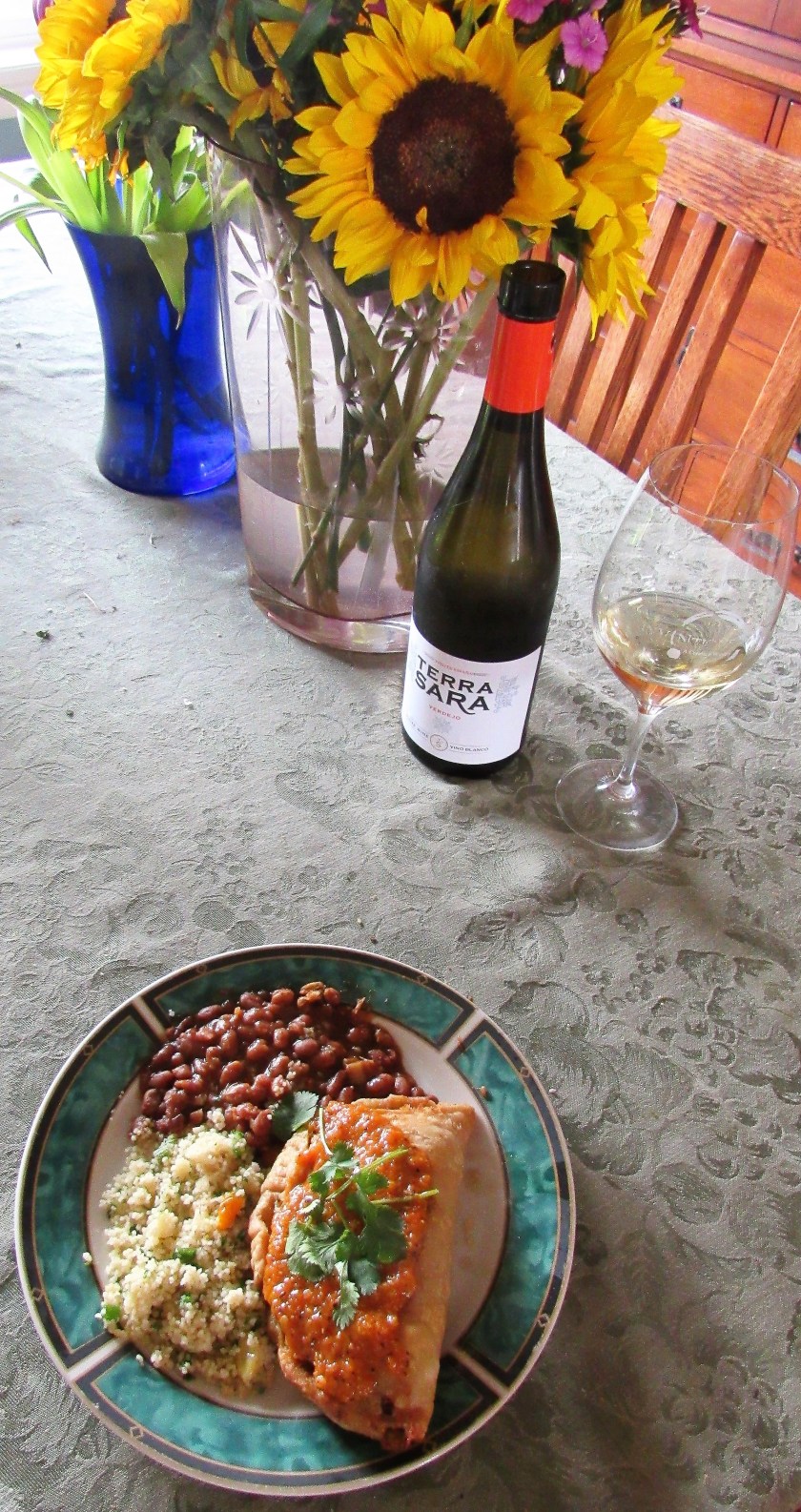
Not long ago, I made some Southwestern ahi tuna steaks that were oh so good.  Southwestern Ahi Tuna Steaks  I liked the green chili and corn sauce so much for the tuna that I made it again, but this time I made some pork empanadas from the remainder of our smoked pork that I pulled out of the freezer.  As good as the sauce was with the tuna, it was even BETTER with the pork and the empanadas.  Smoked Pork and Vegetable Enchiladas with Roasted Tomatillo Salsa  Most definitely, a do-over!

This time around, the whole meal was comprised of leftovers – leftover pork and beans, leftover couscous, the pork in the empanadas, and the red pepper coulis as well.  Parmagiano Crusted Pork Chops  It may not have been the most ideal combination, but somehow, it all magically came together just fine.  That, AND it also cleared out some space in my fridge for even MORE leftovers to come.  🙂

IMG_1072

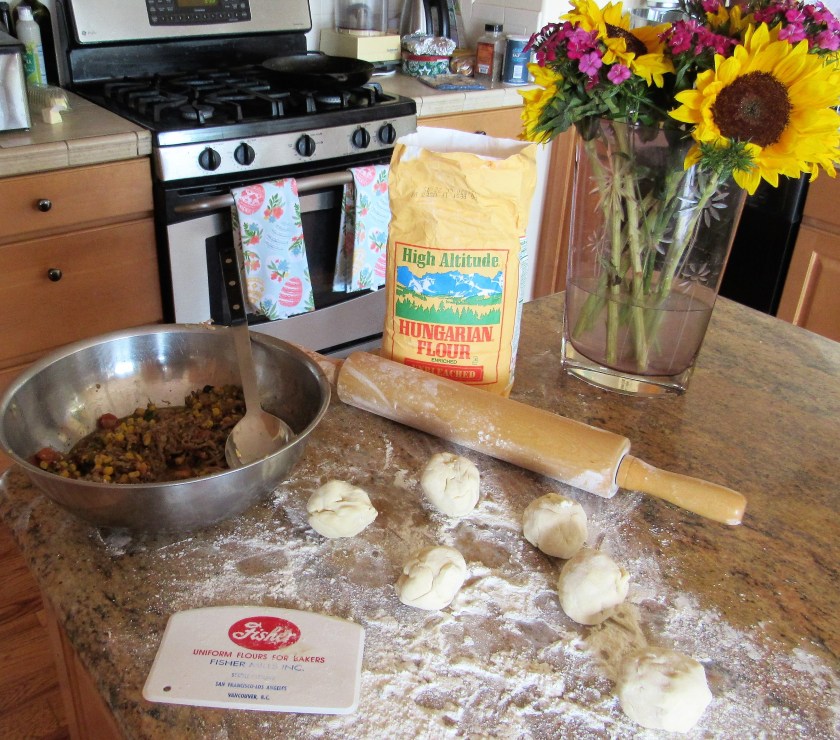
Since these are all made from leftovers, I am not going to give the actual recipes again, but I will show how I made them instead.

IMG_1064

IMG_1067

IMG_1068

The thinner you can make your dough, the flakier the empanadas will be.  However, you do not want to make your dough so thin that it will not hold your filling either.   I rolled my dough to about 1/4 ” in thickness.  Also make sure your surface has enough flour to ensure the dough does not stick to it when rolling it out.

IMG_1070

When the empanadas are made, put them in the refrigerator for at least 30 minutes to an hour before cooking them.  Make sure you seal the edges well, so the juices don’t run out and make your dough to mushy.  You can either bake them or pan-fry them.  I have done both, but I prefer to pan-fry them.  I think they come out lighter, crispier and flakier if they are pan-fried.  If you are going to bake them, add an egg wash to them before baking them.  That will help brown them up.

IMG_1071

I love empanadas, and make them quite frequently.  It really doesn’t matter what I fill them with either.

Don’t let these tough times get to you.  Look them in the “eye” and rise to the challenges they present.  We will all get through this.  We just need to be strong and hang in there.

IMG_1073


It’s a Soupy Kind of Day

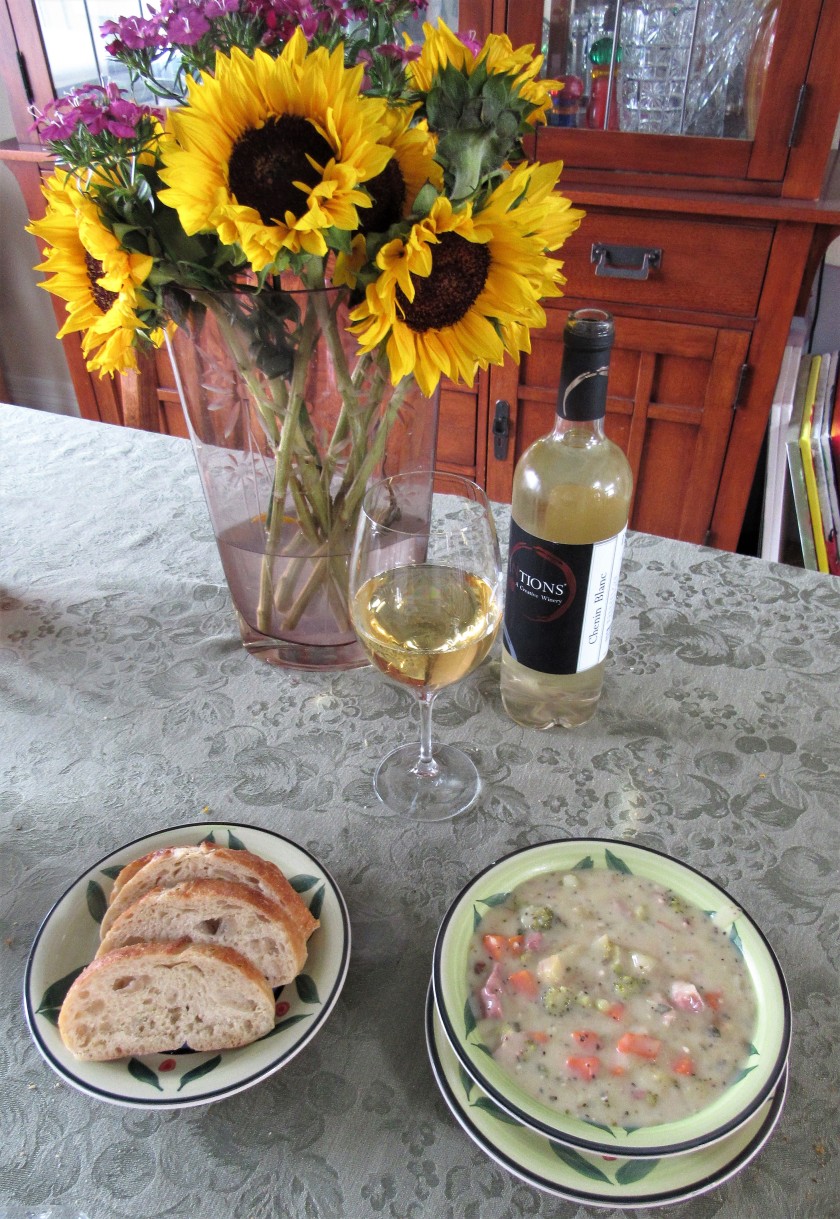
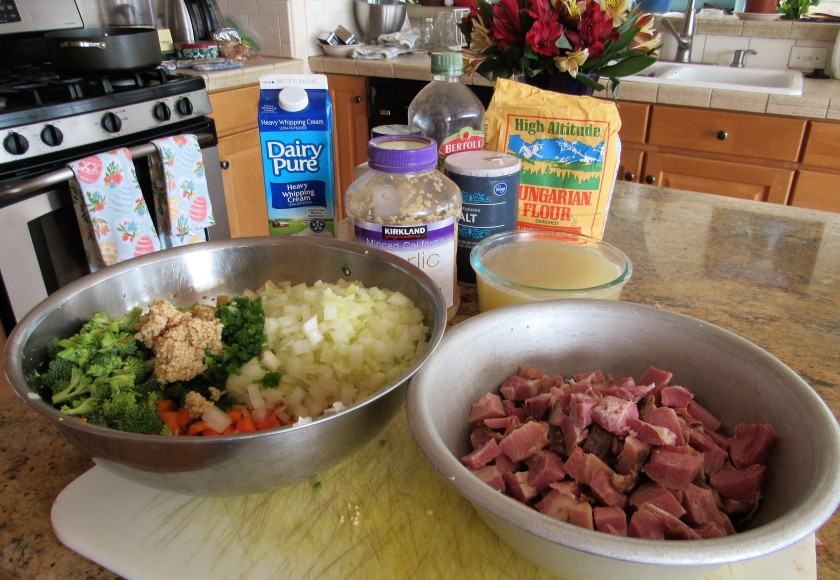
When it’s cold and there is a thick blanket of snow covering everything outside, the best thing to make for dinner is a warm, thick chowder to help take off the chill.  I took some ham our of the freezer and decided to make a ham chowder.  Chowders are my favorite soups and it was just the perfect day for a chowder.  It was most definitely a soupy kind of day.


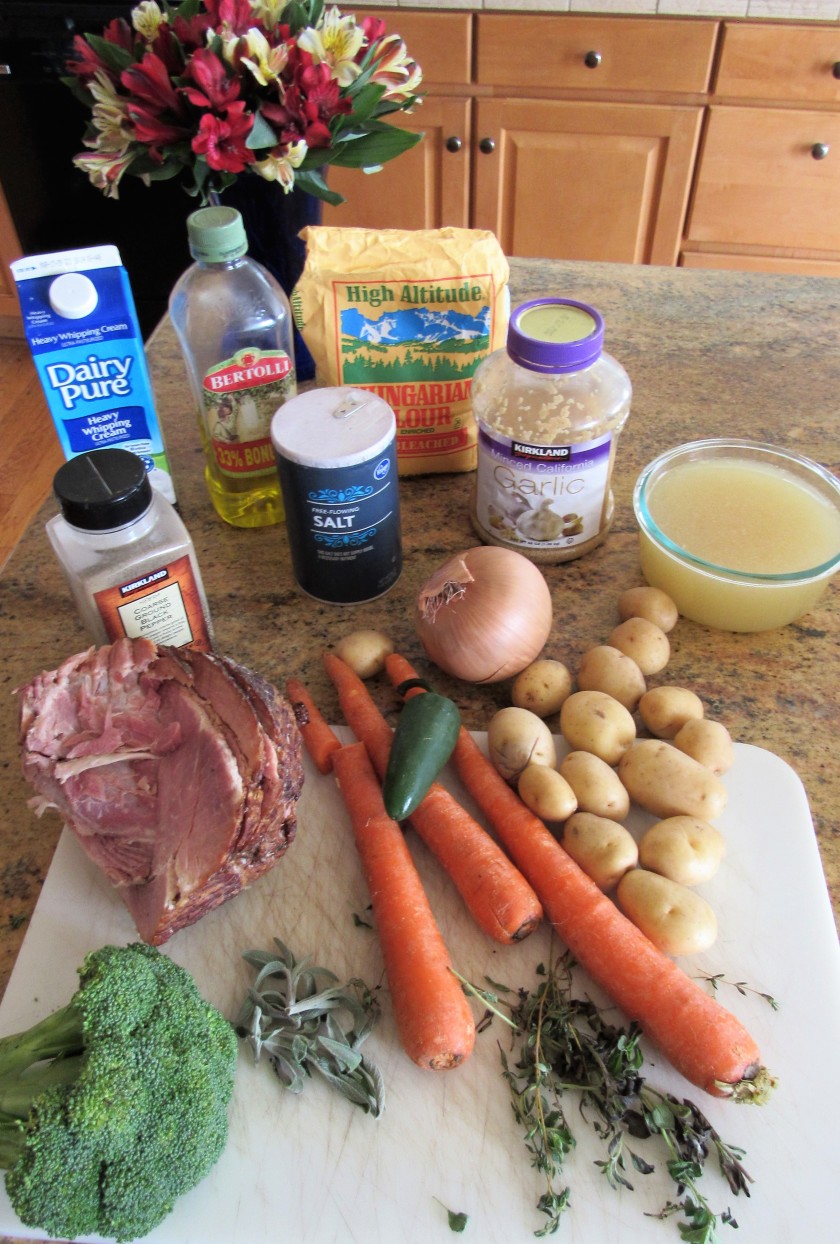
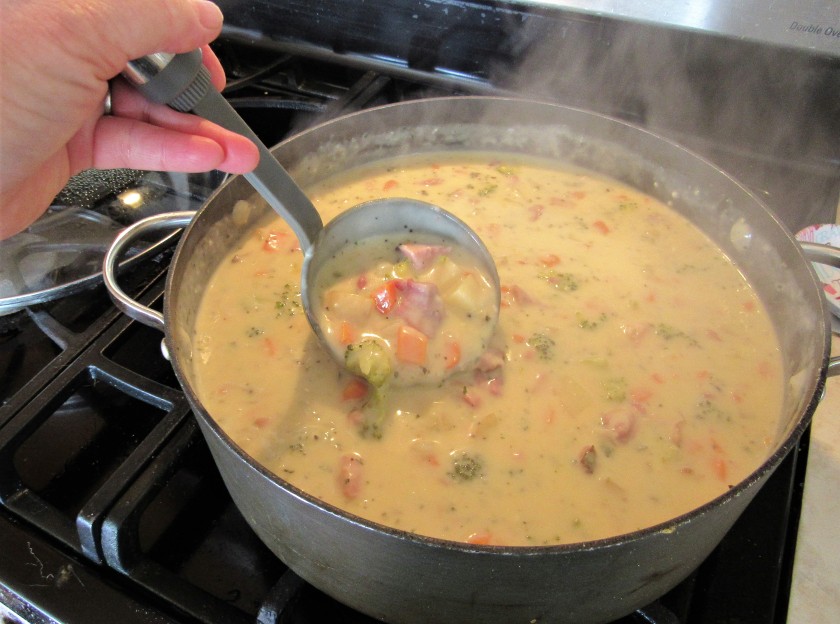
When I make soups, I like to make them nice and chunky and loaded with stuff.  With my soups and chowders, you KNOW what’s in the soup.  You can see all kinds of hearty goodness and you can actually see lots of ingredients, unlike store bought soups, where they often leave you guessing.  This chowder is loaded with big chunks of ham, potatoes and vegetables.  I used carrots, onions, broccoli and to spice it up just a tad, I also threw in 1 jalapeno pepper.  I made my own ham stock and chicken stock too.  It was a simple meal that just hit the spot.

IMG_1134

Ham Chowder

IMG_1114

5-6 cups, cooked ham, cubed

3 large carrots, cubed

1 onion, diced

2 TBSP garlic

1 small of head broccoli, cut into small florets

1-1 1/2 lbs potatoes, cubed or quartered, depending on the type of potatoes you use – I used the golden fingerlings

1 jalapeno, diced fine – optional

6-8 cups broth – I used both ham and chicken

salt & pepper to taste

olive oil and butter

1 TBSP fresh herbs, chopped fine – I used sage, thyme and oregano

1/2 cup flour – or more or less depending on how thick you like your chowders

1 cup heavy whipping cream


IMG_1115

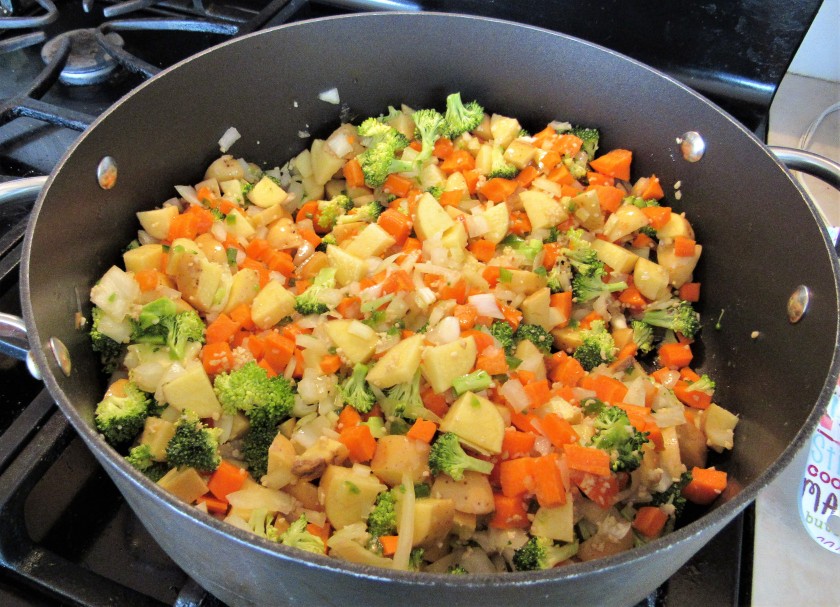
In a big soup pot, get your oil and butter hot, then add the vegetables and saute for about 7 minutes, or until the onions are translucent and the carrots and potatoes are semi tender.

IMG_1116

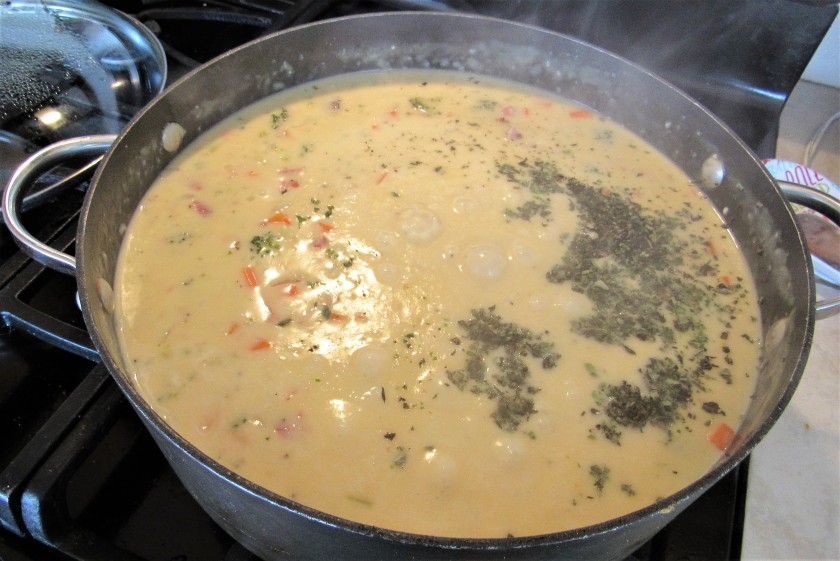
Add the ham, the broth, the seasonings and the flour.  Mix everything together well.  Cover, bring to a boil, then reduce the heat to a simmer and continue to cook for about 30 minutes or until the vegetables and potatoes are tender, stirring occasionally.  Add the cream and the herbs and mix everything together well.   Adjust the seasonings if needed and add a little more flour if you like your chowders thicker.  If you are adding more flour, make sure to incorporate it very well and continue to cook for about 10 minutes.  There is nothing worse than getting a mouthful of uncooked flour in your soup.

IMG_1131

Once everything is ready, it’s time to soup it up.  It is the perfect feel good, comfort food for a cold wintery day.  It warms you up from the inside out.

IMG_1132


Chicken with Honey and Lemon Sauce

Nothing says spring better than lemons, rosemary and asparagus.  I combined them all together, hoping to bring in the spring with this delicious spring meal.  The meal WAS delicious, but spring is a bit late coming to town this year.  Oh well, at least we had a bit of spring at the table.

I don’t know what happened to the rest of my photos for this meal, and the preparations, but it was very easy to make, so I think you will all be just fine.

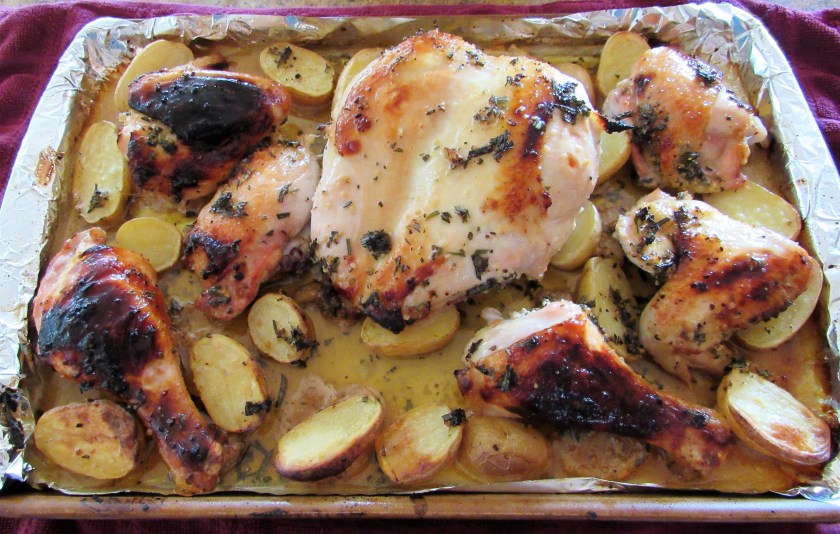
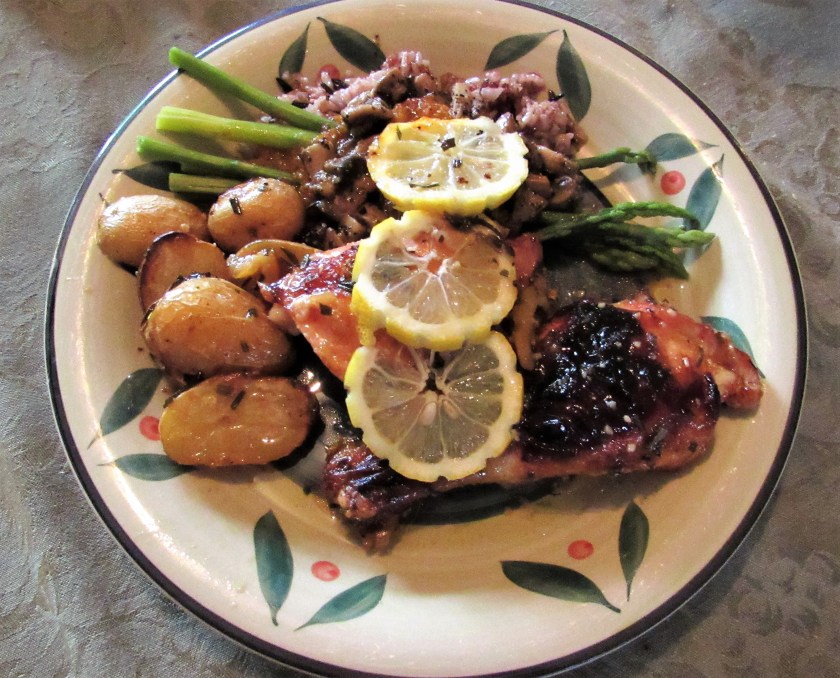
Dinner was chicken with lemon-honey-rosemary sauce, golden potatoes, wild rice and asparagus with mushrooms and the rest of my red pepper coulis.  Parmagiano Crusted Pork Chops  I also finished off the rest of my wine and cheese bread.  Some Colorado Wine & Cheese Bread  You all know how I love to use up those leftovers, so whenever I can do so, it just makes my day.  The Queen (of leftovers for those of you who are unfamiliar with my alter ego, and one of my best friends to cook with) would be oh so proud.  The meal was completed with a nice citrusy Spanish chardonnay.  It may not have been spring outside, but at least we had a little spring on the inside.

IMG_1095

Chicken with Honey Lemon Sauce

3 lbs of chicken pieces, bone in and skin on

1 1/2 lbs small potatoes – I used the golden potatoes, cut in 1/2 lengthwise

3 TBSP butter, melted

3 TBSP olive oil

2 TBSP honey

2 TBSP garlic

2-3 springs of fresh rosemary, chopped fine

1 tsp salt

1 tsp pepper

1 TBSP lemon juice

1-2 tsp lemon zest

2 lemons


Preheat the oven to 375* F.

Line a baking sheet with aluminum foil.

Slice the lemons and line the bottom of the pan with the lemon slices.  Add the potatoes.  Place the chicken over the lemons and potatoes.

Mix all the rest of the ingredients together combining well, then pour over the chicken, lemons and potatoes.

IMG_1092

Place the chicken in the oven and roast, uncovered for 1 hour, or until the internal temperature of the chicken reaches 165* F.  Baste the chicken with the sauce periodically too, to help keep it moist.  If the chicken starts to brown to much, cover it with foil for the remainder of the cooking time, if needed.

IMG_1094

When the chicken is done, plate it up and top it with more of the sauce.  The chicken is slightly crispy on the outside and very moist and tender on the inside.  OMG!!!!  It came out so good.  You don’t have to wait for spring to come to enjoy this spring-like meal.  It is perfect anytime.  🙂

IMG_1096


The First Day of Spring – Really?

I think Mother Nature is a bit confused at the moment.  In the last days of winter, the temperatures were in the 70’s, and I was in shorts.  The first day of spring gave us anywhere from 5-18 inches of snow, depending on where you are.  WHAT?????  Really?????  Today is still cold, but at least it is not snowing any more.  Although, to be fair, March is supposed to be Colorado’s snowiest month.  February is going to be very hard to beat though.  This February, we had a ton of snow.
This is what we looked like yesterday, the first day of Spring.  We started off with rain.

IMG_1098

The rain quickly turned to snow,

IMG_1101

and the snow came down for the rest of the day.  Early on, you could see signs of my irises popping up, but those were soon buried too.

IMG_1104

We are completely blanketed beneath a thick layer of snow.  And this is how our spring is starting off.

IMG_1109

IMG_1107

IMG_1127

We are home bound because of the Corona virus, but we cannot even go outside for long because of Mother nature.  At least Lucie and Vinnie are prepared.  Lucie is busy playing with all of her babies, and is even willing to share them with us.

IMG_1126

Irish Potato Cakes with Brussels Sprouts

We all know how much the Irish love their potatoes, so it comes as no surprise to see how creative they are when creating new potato recipes.  I love potato cakes and could eat them anytime.  I also love Brussels sprouts.  Combining them just made them even better.  I also added bacon, green onions and some leftover sauteed apples.  They had a hint of saltiness and a hint of sweetness.  I know it sounds like a strange combination, but all these flavors really worked well together, and is something I definitely plan on making again.  I served these along with my Beef & Guinness stew for St. Patrick’s Day. Irish Stew

IMG_1089

Potato Cakes with Brussels Sprouts

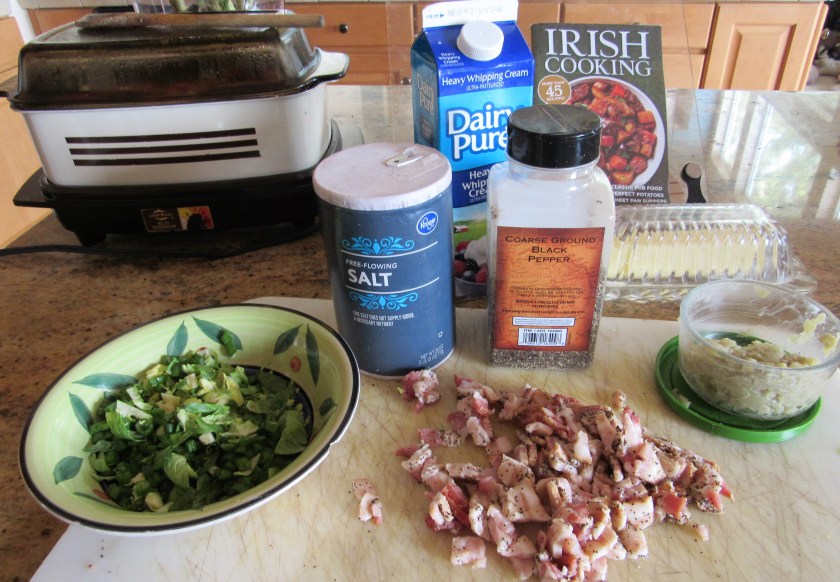
IMG_1078

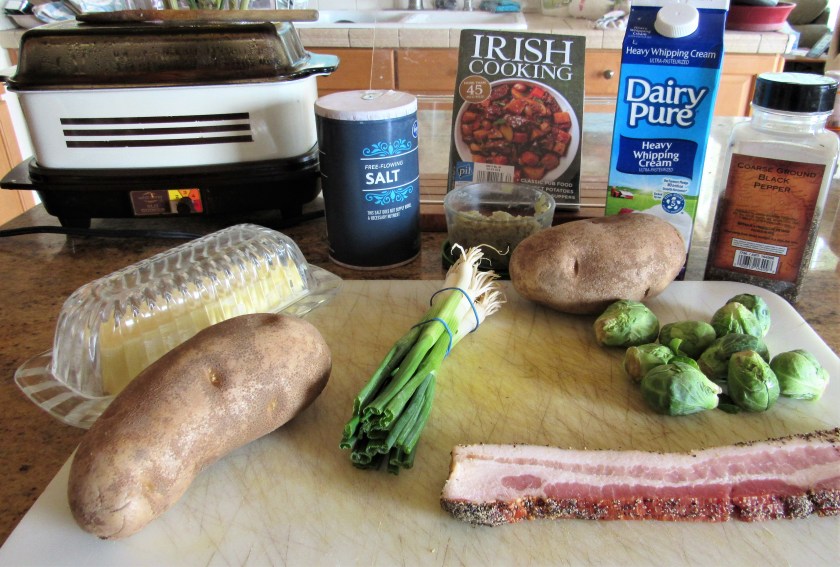
2-2 1/2 lb potatoes, peeled and diced

3/4 stick butter

1/3 cup heavy whipping cream or milk

2 tsp salt

1 tsp pepper

4-6 slices bacon, diced

1/2 cup cooked apples, optional

3 TBSP vegetable oil

2 cups Brussels sprouts chopped

6 green onions, sliced thin

1/2-3/4 cup flour and/or breadcrumbs, as needed


Cook your potatoes and mash them with the cream, butter and salt.  You want the potatoes to be stiff for these.  If they are too soft add the flour and/or breadcrumbs as needed to thicken them up.  Let them cool so you can work with them.

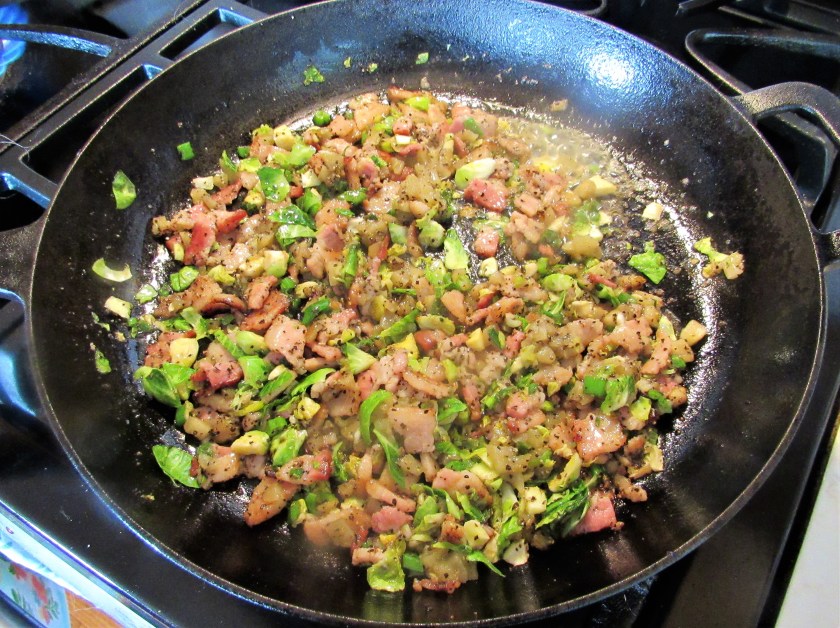
In the meantime, cook your bacon first, until it is almost crispy.  Then add the Brussels sprouts, green onions and apples if you are using them, and the salt & pepper. Saute everything together until everything is cooked and the vegetables and apples are cooked.

IMG_1079

IMG_1081

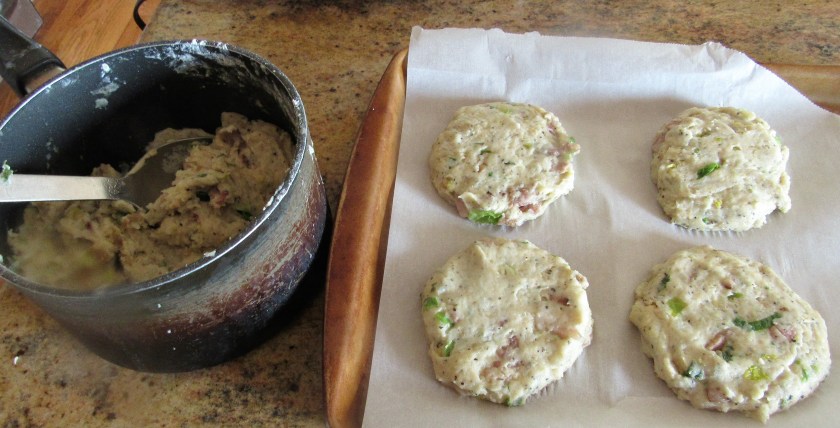
When the vegetables are tender and the bacon is cooked, mix everything thoroughly into the mashed potato mixture.  Add a little flour to your hands and form into patties and place them on a baking sheet lined with parchment paper.  Put them in the refrigerator for at least 30 minutes to set before frying them.

IMG_1083

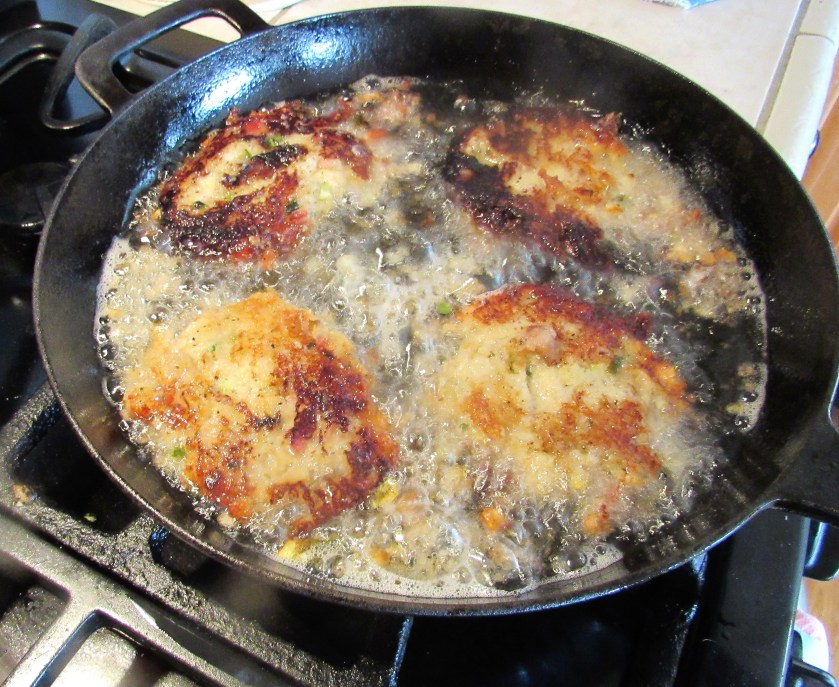
Heat the vegetable oil until it reaches about 350* F.  Carefully add the potato patties and let fry for about 3-4 minutes per side, carefully turning them over in the skillet or pan.  You want them browned and crisp.   Serve immediately and eat while hot.  Delicious!

IMG_1085


Irish Stew

I find it very interesting that some of the most popular foods today started out with very humble beginnings, and were the foods of the peasants and the poor.  Irish stew definitely falls into this category.   Today, Irish stew is good comfort food that you can find in any Irish pub, but it grew out of necessity.  Irish stew was created by using very simple ingredients that were readily available and could be thrown together and cooked in one pot.  Originally, mutton was used instead of lamb or beef.  Mutton is old sheep.  It was readily available because people kept their sheep through old age for their wool and the milk.  Because mutton is older sheep, it is also tougher meat, which meant it needed longer cooking times.  When the Irish started to emigrate to the United States, lamb was not as popular here, but beef was plentiful, so beef was substituted for the lamb and mutton.

The potato was brought to Western Ireland via South America and the New World in the 16th century and has been a vital ingredient to Irish cooking ever since.  The potato is probably the most valued ingredient in all of Irish cooking.

The method of stewing foods is one of the oldest cooking methods, dating back to the times of the Roman Empire.  Stewing foods became popular to the Irish in the late 19th century, during times of turmoil and poverty and was an easy way to prepare foods with minimal effort and minimal ingredients.  It became a way of survival in tough turbulent, economic times.  Often times, the stews were cooked in stouts or other alcohols because clean water was not as readily available.  By cooking with the stouts, it not only added flavor and moisture, but also added some much needed nutrients as well.  The most basic version of Irish stew was mutton, potatoes, and onions.  Root vegetables, such as carrots and parsnips, were added if they were available.  Today there are many variations to Irish stew, but it always has potatoes and onions, and is still very true to its peasant roots, no matter where you go.

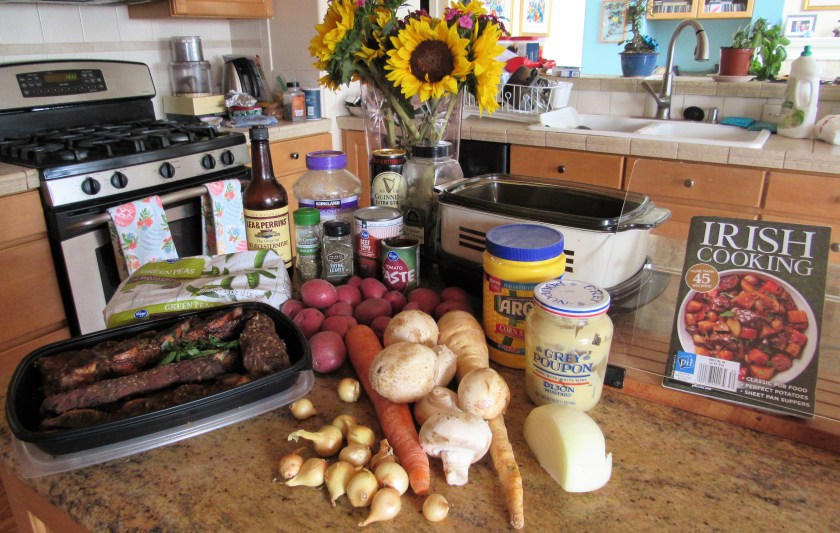
Being true to the Irish in me, and believe me, I have quite a bit of the Celtic blood flowing threw my veins, I used leftovers.  When Larry smoked the ribs, there was no way we could eat them all in one sitting, so of course, we had some leftover.  I used the meat from the beef short ribs for my stew, so I was able to cut out one step of the stew-making process by not having to cook my meat again.

IMG_1077

Irish Beef Stew

IMG_1074

2 lbs beef, cut into pieces

salt & pepper to taste

olive or vegetable oil

1 onion, diced

2 carrots, sliced

2 parsnip, sliced

2 cups mushrooms, sliced or quartered

1 lb small potatoes, quartered – I used red potatoes

1 TBSP garlic

1 tsp each, dried thyme, marjoram, rosemary

2-3 bay leaves

1 14 oz can Guinness or other dark stout

1 can beef broth

1 TBSP Dijon mustard

1 TBSP Worcestershire sauce

1-2 cups frozen peas

1 cup pearl onions

2 tsp water

2 tsp cornstarch


Season the meat with salt and pepper and brown in the cooking oil.  When the meat is completely browned, place it a slow cooker.  Add all the vegetables and potatoes to the meat.  I like to mix everything up together to ensure everything cooks and is flavored evenly, but you do not have to.

Mix all the wet ingredients, the bay leaves and the cornstarch together then pour them over the meat and vegetables.  Again, I like to mix everything together, but this not necessary if you do not want to.

IMG_1076

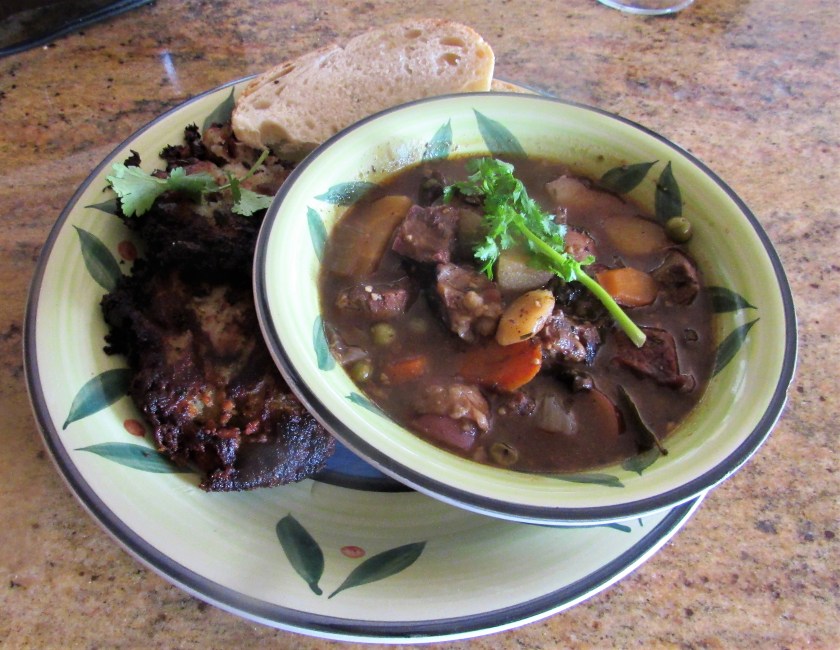
Once everything is combined in the slow cooker, cook it at a medium temperature for about 4 hours, stirring occasionally.  When it is ready, and the meat and vegetables are tender, remove the bay leaves and dish it up.  I served my Irish stew with some Irish potato cakes (stay tuned for the recipe), warmed bread and my wine choice was a bold and fruity red blend.  Now to be completely traditional, you could serve it with more Guinness or Irish stout, or Irish whiskey too.  Slainte!

IMG_1089


About St. Patrick’s Day

St. Patrick’s Day observes of the death of St. Patrick, the patron saint of Ireland. The holiday has evolved into a celebration of Irish culture with parades, special foods, music, dancing, drinking and a whole lot of green.  While St. Patrick’s Day is now associated with wearing green, parades (when they’re not canceled) and beer, the holiday is grounded in history that dates back more than 1,500 years. The earliest known celebration was held on March 17, 1631, marking the anniversary of the death of St. Patrick in the 5th century.

Much of what is known about St. Patrick’s life has been interwoven with folklore and legend. Historians generally believe that St. Patrick, the patron saint of Ireland, was born in Britain (not Ireland) near the end of the 4th century. At age 16 he was kidnapped by Irish raiders and sold as a slave to a Celtic priest in Northern Ireland. After toiling for six years as a shepherd, he escaped back to Britain. He eventually returned to Ireland as a Christian missionary.

St. Patrick

Among the legends associated with St. Patrick is that he stood atop an Irish hillside and banished snakes from Ireland—prompting all serpents to slither away into the sea. In fact, research suggests snakes never occupied the Emerald Isle in the first place. There are no signs of snakes in the country’s fossil record. And water has surrounded Ireland since the last glacial period. Before that, the region was covered in ice and would have been too cold for the reptiles.

Three-leaf clovers symbolize spring.

The shamrock, a three-leaf clover, has been associated with Ireland for centuries. It was called the “seamroy” by the Celts and was considered a sacred plant that symbolized the arrival of spring. According to legend, St. Patrick used the plant as a visual guide when explaining the Holy Trinity. By the 17th century, the shamrock had become a symbol of emerging Irish nationalism.

While people in Ireland had marked the birthday of St. Patrick since the 1600s, the tradition of a St. Patrick’s Day parade began in America and actually predates the founding of the United States.   Records show that a St. Patrick’s Day parade was held on March 17, 1601 in a Spanish colony in what is now St. Augustine, Florida. The parade, and a St. Patrick’s Day celebration a year earlier were organized by the Spanish Colony’s Irish vicar Ricardo Artur. More than a century later, homesick Irish soldiers serving in the English military marched in Boston in 1737 and in New York City on March 17. Enthusiasm for the St. Patrick’s Day parades in New York City, Boston and other early American cities only grew from there.

Image result for photos of st. patricks day

The meal that became a St. Patrick’s Day staple across the country—corned beef and cabbage—was an American innovation. While ham and cabbage were eaten in Ireland, corned beef offered a cheaper substitute for impoverished immigrants. Irish-Americans living in the slums of lower Manhattan in the late 19th century and early 20th, purchased leftover corned beef from ships returning from the tea trade in China. The Irish would boil the beef three times—the last time with cabbage—to remove some of the brine.

Corned Beef and Cabbage

This year there will be no parades, no gatherings in bars to drink green beer, and no traditional Irish festivities to celebrate the day.  It will be quite and somber day this year due to the Coronavirus global shut downs.  So, in lieu of the normal fun and frolicks, make up your own ways to celebrate the day and do your best to enjoy.  Happy St. Patrick’s Day.  I will do my best to make some Irish food, but it all depends on what is available.  I will certainly have my green creative thinking cap on though, and I will still come up with something delicious.