I have created this site to help people have fun in the kitchen. I write about enjoying life both in and out of my kitchen. Life is short! Make the most of it and enjoy!
WHOOOOO HOOOOOOO!!!!!!!! Charlie DeSando is one of our very own from our own world of blogging. You can find Charlie at https://cookingsecretsformen.com/ Charlie and I have become friends through our blogs, and we have so much in common. He called and asked me if it would be alright for him to recreate my Shrimp Pomodoro recipe Shrimp a la Pomodoro in his own way. My answer to him was ABSOLUTELY!!!!!!! This is exactly why I have my blog in the first place. I want you all to feel comfortable in the kitchen and to make things how you like them. Charlie did an amazing job with this recipe. Now he has me hungry for Shrimp a la Pomodoro too. 🙂 So, Charlie is our latest guest chef. Give him a HUGE round of applause for a job VERY WELL DONE!!!!!!!!!
Sauce, as we call it in English, comes from the Latin word salsa, which actually means salted, though today, we think of salsa in a different way. Sauces have been used on foods since the 3rd century B.C. Sauces are rarely eaten by themselves but are served either on top of or on the side of meats, fish and vegetables. Sauces can be creamy, liquidy or semi-solid and basically can be made with and from just about anything. They can be used for both sweet and savory foods and they can be either hot or cold. Contrary to present day preference, the main reason for using a sauce seemed to be to disguise the natural taste of food – possibly to conceal doubtful freshness, possibly to demonstrate the variety of costly spices available to the host.
There are five major savory sauces and everything else derives from them. These five sauces are bechemal, veloute, espagnole, hollandaise and tomato and are known as the “Moher Sauces”. We add sauces to foods because they add flavor, moisture, eye appeal and improve the texture of the foods we serve them with. 1) A bechamel sauce is a white sauce made from a roux made with flour, boiled milk, and butter. It is usually served with white meats, eggs, and vegetables. When it was first created, it was considered a luxury sauce, because most people did not have a way to keep their milk fresh. 2) A veloute sauce is is a stock-based white sauce that can be made from chicken, veal, or fish stock thickened with a white roux. 3) Espagnole or Borderlaise sauce is a brown sauce, made from a brown roux, to which veal stock and tomatoes are added and simmered until reduced. 4) A Hollandaise (or Holland style) sauce is a sauce made with butter and egg yolks. It is served hot with vegetables, fish, and eggs (like egg benedict). 5) And a tomato sauce, is pretty obvious it is made from tomatoes, and goes with everything.
I am always using some kind of a sauce, and I use sauces on most things I cook. I love all kinds of sauces and use them all the time. But then, you already knew I was a saucy kind of girl. 🙂 Very rarely do I stick with the basic “mother sauce recipes” though. I start with them as a base and then go from there. As always, I make things in my own unique way. I remember when I was in culinary school, I was always getting reprimanded for doing things my own way too. Sometimes I would get in trouble and would be punished, and other times I was praised. It all depended on what chef I was working with at the time. Chef Averseng actually like the way I did things and would frequently comment, “Oh Jeanne (pronounced She-ne), dis is good”, in his very French way of saying things. Chef Averseng, or Chef Andre as I used to call him, was from Avignon, France.
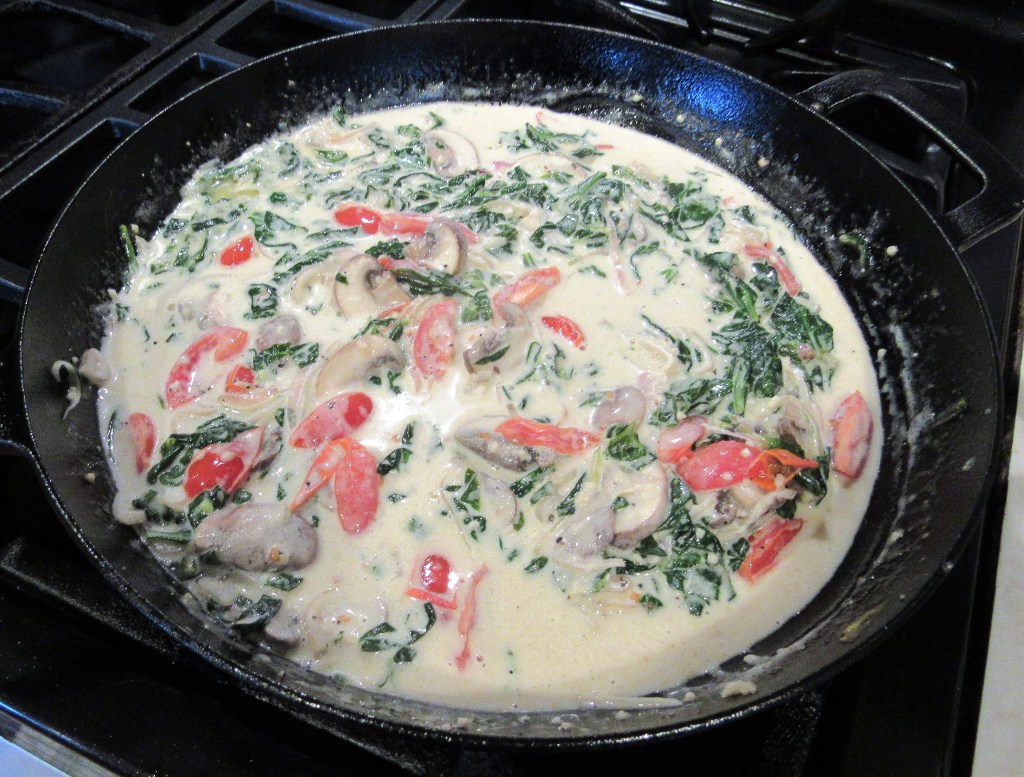
My most recent sauce was a creamy spinach and mushroom sauce. I used it for both chicken and steak on different occasions. I like stuff in my stuff, so I am always adding things and changing things up.
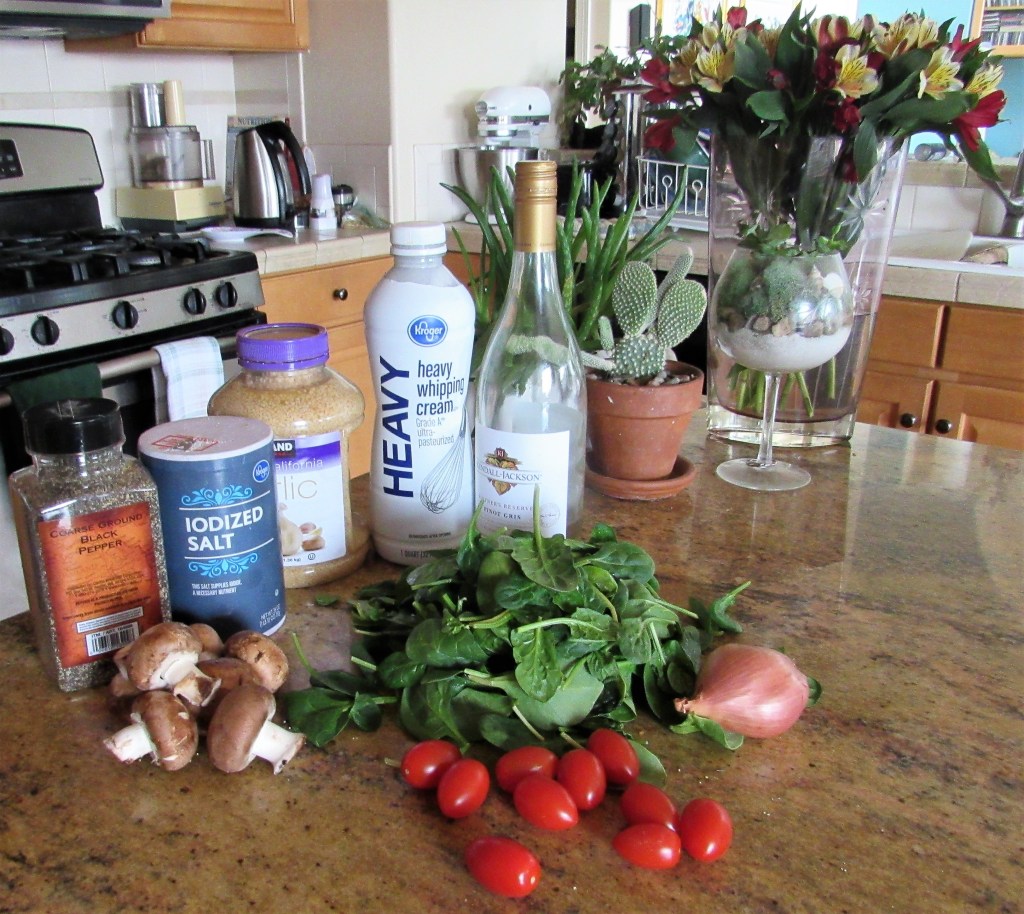
The sauce was a very easy derivative of a bechamel sauce. It was made with heavy whipping cream instead of milk, and white wine, garlic, shallots, tomatoes, spinach and mushrooms, with salt and pepper added and finished with some butter.
I cooked the shallots, garlic, spinach and mushrooms first in olive oil and seasonings, then added the wine and continued cooking until most of the liquid had evaporated.
Once the wine was evaporated, I added the cream.
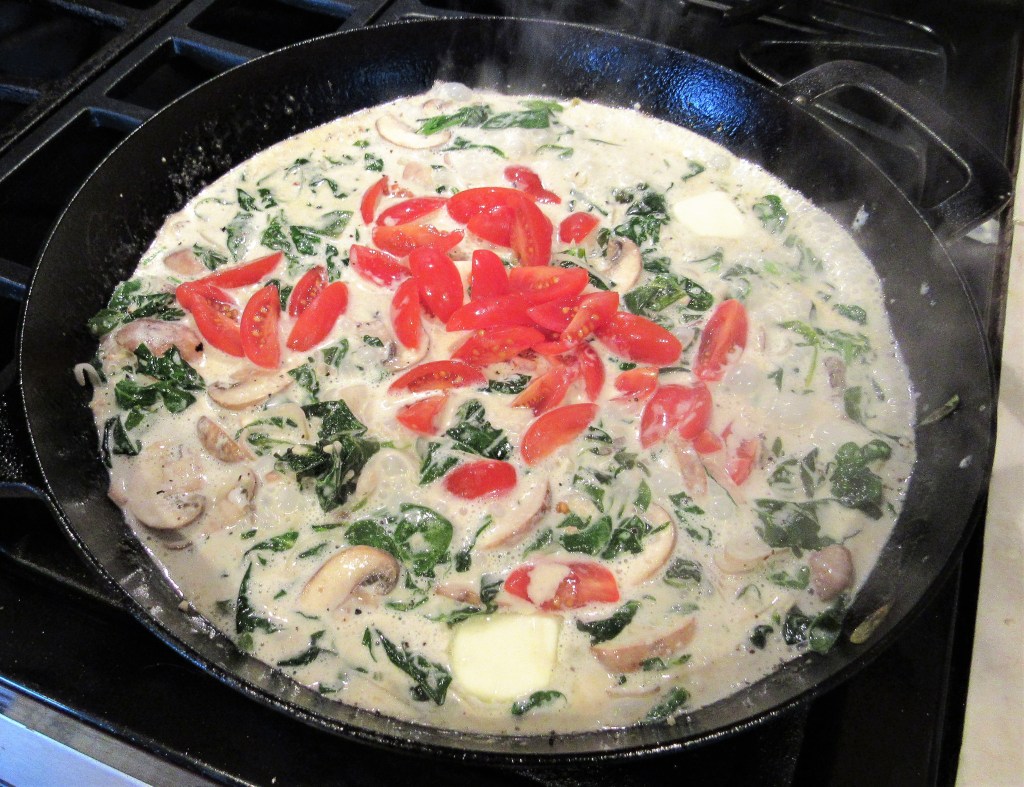
Bring everything to a boil, then reduce the heat to a simmer and continue to cook for about 5-7 minutes, stirring constantly. Add a little butter and mix in thoroughly. At the very end, add the tomatoes and cook just long enough for them to heat up.
When the sauce is ready, serve it over your favorite meats et voila! Bon Appetit! C’est ce bon!
It is a beautiful sunshiny day, without a cloud in the sky. I heard a lot of birds, but I didn’t see to many. They were hiding in the trees and in the reeds, but they were busy singing away. I did, however, see a lot of ducks. I even saw a new duck today too.
I saw mallards,
Hooded mergansers,
Common goldeneyes,
and ringneck ducks.
I have seen all of these ducks around the lakes for quite some time now. But today was the first day I “discovered” my new ducks, the Northern shovelers.
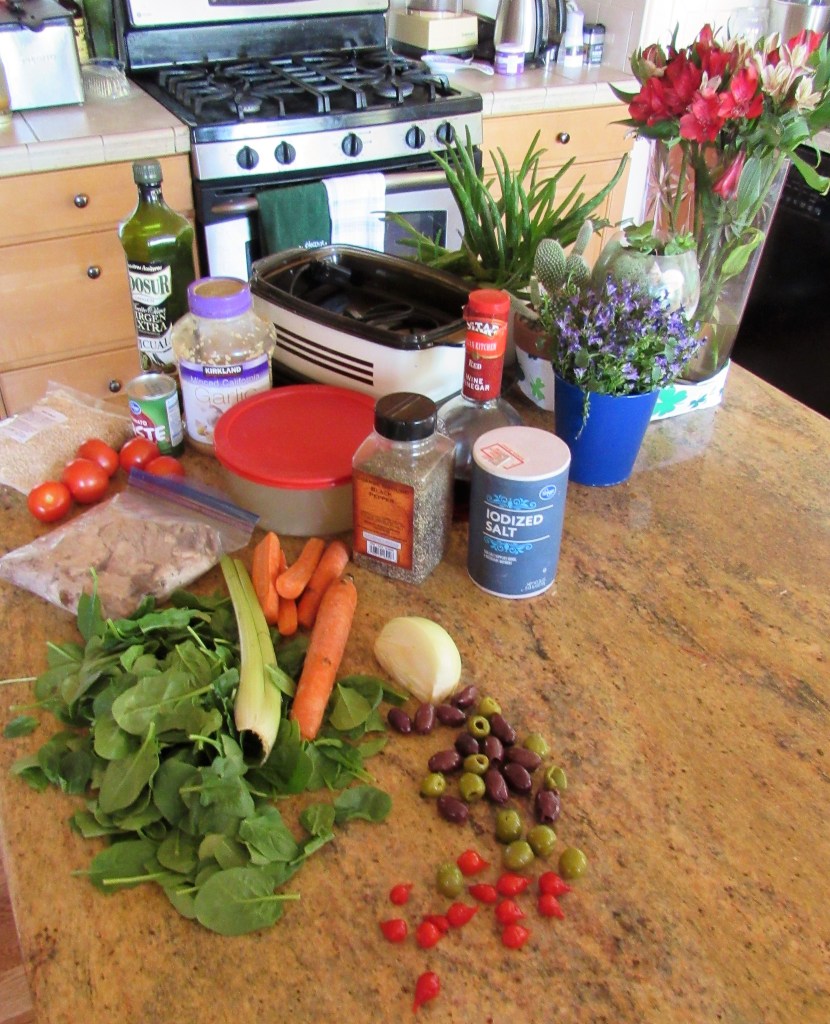
We had some shredded pork that was in our meat rotation, from when Larry was smoking all of his meats for our Carnivores’ Gathering A Carnivores’ Gathering. We use shredded pork a lot for burritos, sandwiches, quesadillas, and even salads, but I was looking for something different. I searched and searched, but surprisingly, most of the recipes I found were for burritos, and sandwiches. I was persistent though and kept searching until I found a recipe that sounded really good and was totally different. It was a recipe for shredded pork and barley stew.
When I think of barley, I almost always think of my dad’s favorite soup, beef barley. Barley is one of those very underrated grains, but it is so good and so good for you too. Barley has been around for about 10,000 years, so obviously it has been used for more than soup, for a very long time. Barley is a cereal grain that is used for breads, beverages, soups, stews, salads and more.
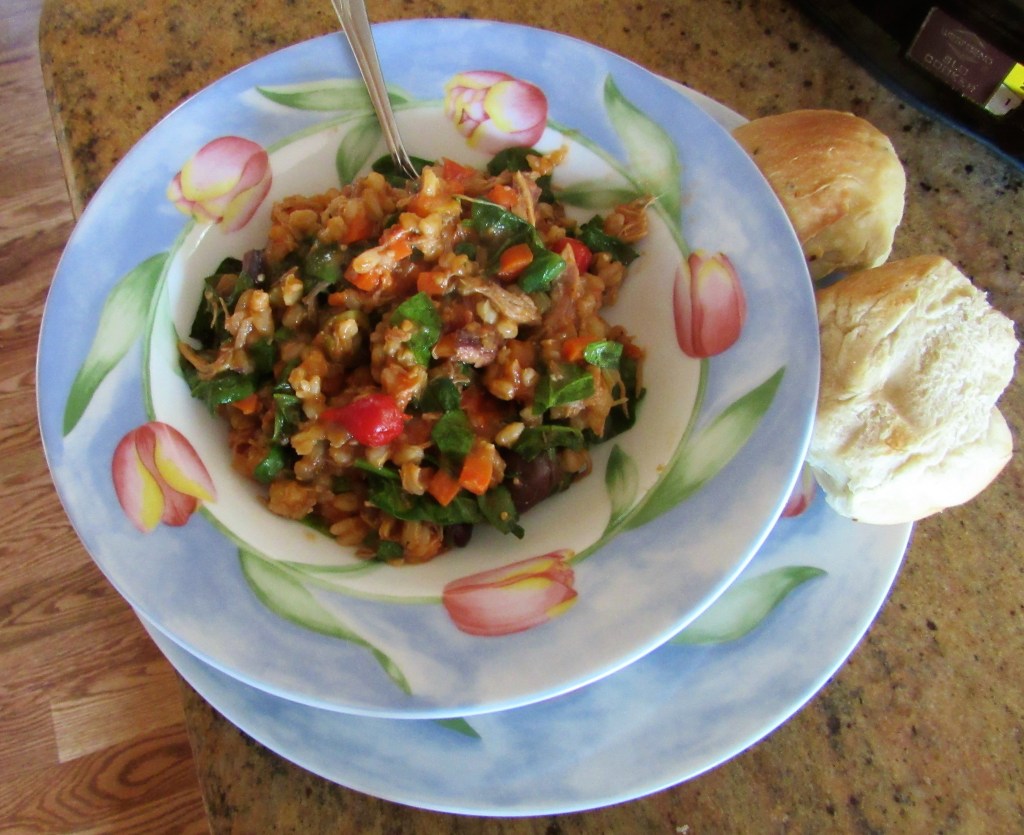
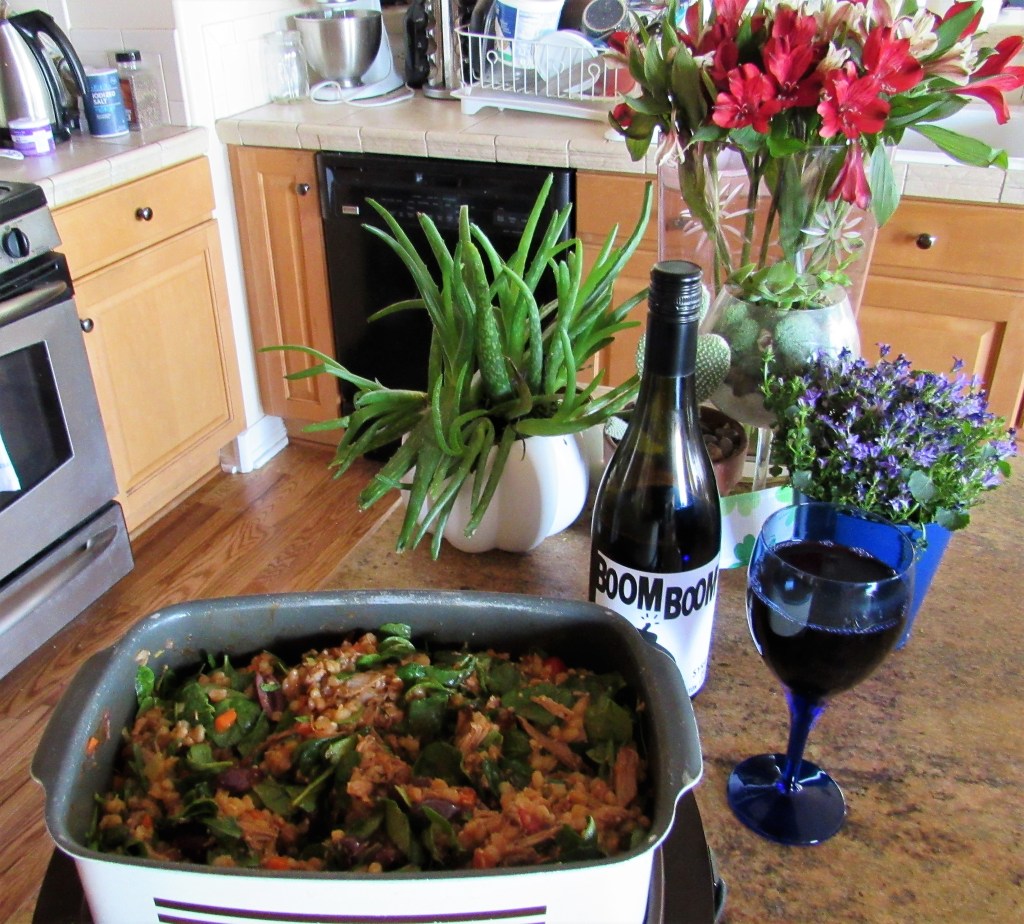
This recipe for pork and barley stew is so colorful and so full of flavor. It is a little like risotto, but not. It is a little like stew, but not. It is a little like soup, but not. It really is unique and stands alone and doesn’t really compare to anything else. It is full of character and personality. I served it with some rolls and a glass or two of a red, robust syrah on the side to make the meal complete.
Shredded Pork and Barley Stew
1 1/2-2 lbs cooked, shredded pork
1 cup pearl barley
2 carrots, small dice
2 celery stalks, small dice
1 onion, small dice
1 TBSP garlic
3-4 tomatoes, diced medium
1/3 cup tomato paste
3 1/2-4 cups chicken stock
1 TBSP red wine vinegar
1/2 cup olives, sliced in 1/2 – I mixed my olives
salt & pepper to taste
1 TBSP olive oil
2 cups fresh spinach, stems removed and cut in rough cut
1/4 cup Peruvian peppers, optional
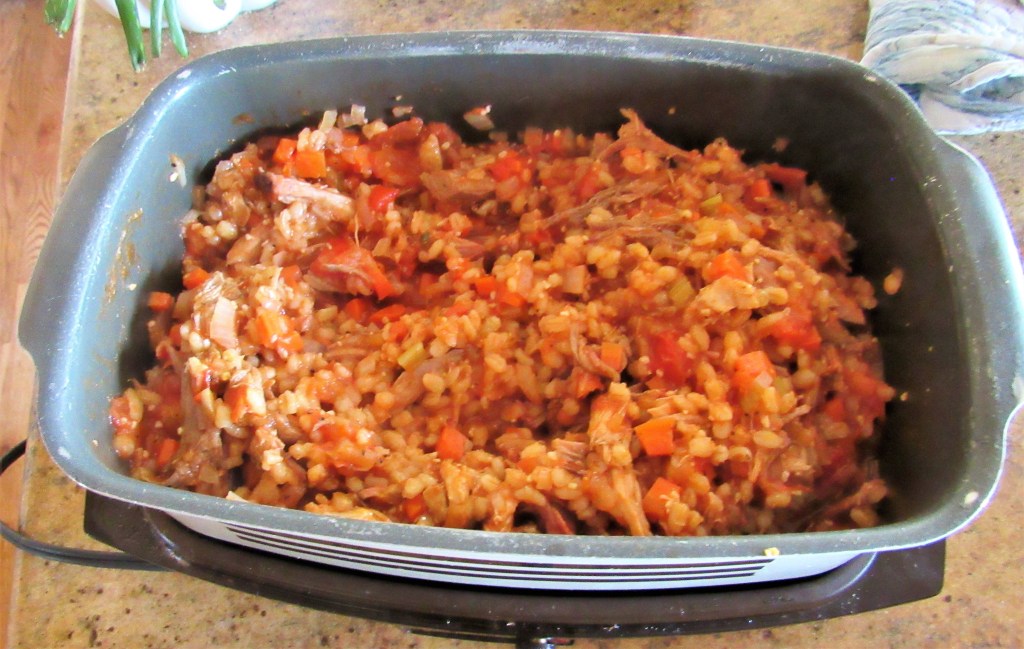
This is all cooked together in a slow cooker. I started with the first layer of pork, then the barley and last, I added all the vegetables on top, all except for the spinach, olives and Peruvian peppers. Those don’t come until much, much later.
I mixed all my liquids and tomato paste together with the salt, pepper and olive oil, and poured it on top of the vegetable and pork mixture, then mixed it all together. Cover and cook at either high temperature for 6 hours or at a lower temperature for 8 hours. Make sure to check on it and stir occasionally too. If you need more liquid, add more as needed to make sure nothing sticks and you have enough liquid to cook the barley completely.
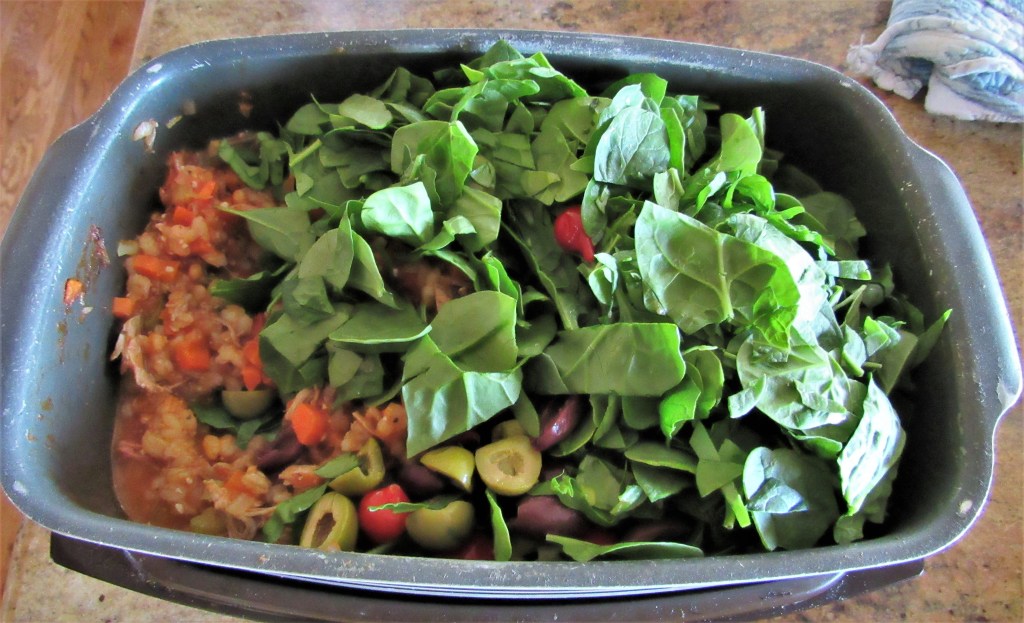
When the stew is mostly done, and most of the liquid is gone, add the spinach, peppers and olives and thoroughly mix in with the stew.
Once everything is all mixed together and the spinach is a little wilted, it is time to serve it up and enjoy. Because has a tomato base, a red wine is best with this dish. This stew is full of bold flavors and needs a bold wine to go with it. Bon Appetit!
Yesterday, we had a bit more snow, but as usual, it is already gone. The skies are turning blue once again, and the sun is shining. It doesn’t get much better than that. Everyday, there are more and more signs of spring popping up everywhere I go. There are more buds opening up, more birds singing, and more animals out in general. Spring has sprung.
It won’t be long and this tree will be full of colorful blooms.
He is shouting it from the rooftops – Spring has Sprung!
The ice has melted so it is perfect time for a swim.
A dragonfly rock.
Mr. Robin scouting out the grounds.
I spy a squirrel in the tree.
Spring is all around. Make sure to take it all in.
The Southwest is a culture unique to about seven states in the south western portion of the United States. Those states include, Arizona, California, Colorado, New Mexico, Nevada, Texas and Utah. The foods are influenced by the Native American cultures from both North America and Mexico, as well as the dry, arid weather conditions found in these regions. The dryness is only favorable to a few hearty crops, and those are the foods that are found in almost all Southwestern cuisines. These foods and crops have been around since as early as about 7000 B.C.E.
The basic ingredients you will find used all throughout Southwestern cuisines are any combination of corn, beans and squash or pumpkins. These are collectively known as “The Three Sisters”. There is also a fourth “sister” that is used just as frequently, and that would be chilies; chilies of all kinds. Southwestern cuisines are also almost always flavored with garlic, onions, cumin, oregano, paprika, coriander, black pepper and cayenne pepper too. These ingredients are the basic ingredients for all Southwestern recipes. Have these basic ingredients stocked in your panty, and you are all set. I know they are ALWAYS stocked in my pantry. Southwestern flavors are some of my absolute favorites. 🙂
I used almost every single one of these ingredients when I made my Southwestern beans to go with my chicken. Flavors of the Southwest Beans of all kinds are used in Southwestern cooking, but my favorites are black beans. I like the flavor better and, depending on how they are fixed, they tend to be a little lower in calories too. But I eat and love all kinds of beans though. Beans of all kinds are a great source of both protein and fiber.
Southwestern Black Beans
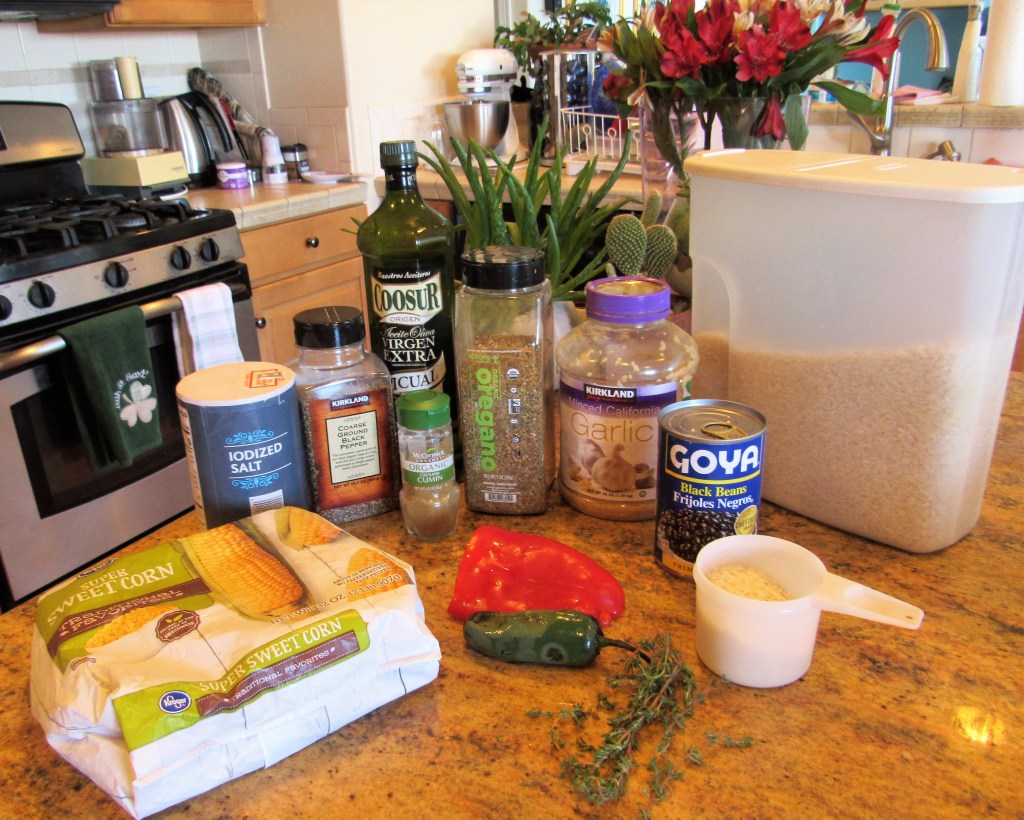
1 can black beans, drained and rinsed
1/2 onion, diced fine
1/2 red pepper, diced fine
1-1 /2 cups corn
1 jalapeno, diced fine
1 TBSP garlic
1 tsp dried oregano
1 tsp dried thyme or about 4 sprigs of fresh thyme, chopped fine
1 tsp cumin
salt & pepper to taste
olive oil
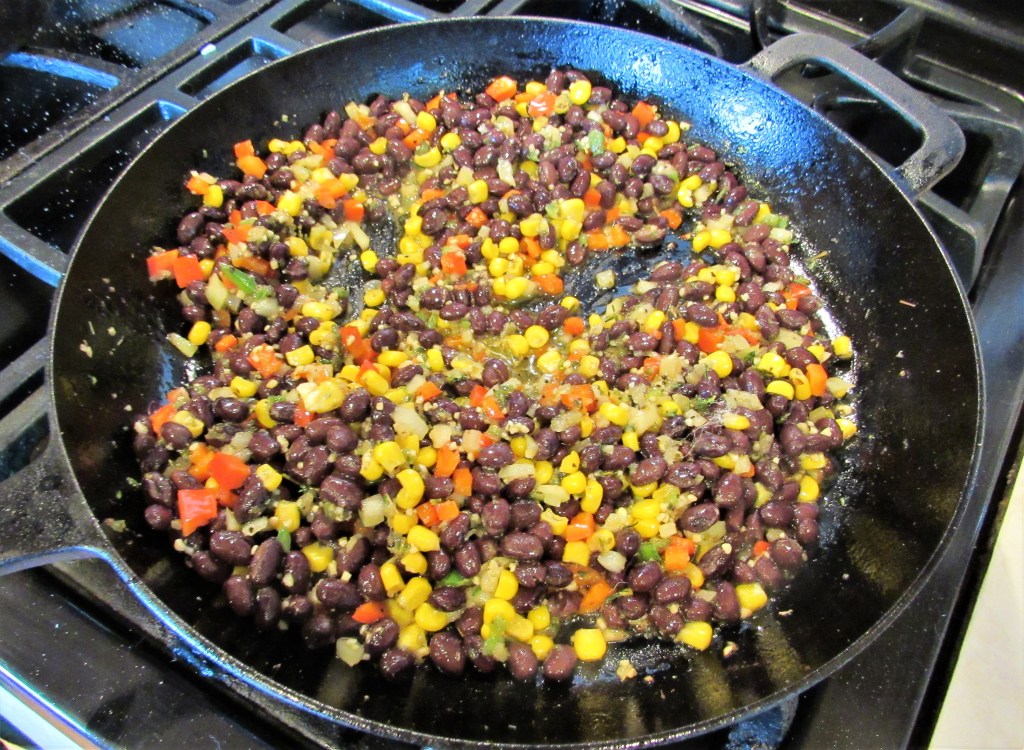
Mix everything together except the beans and saute in hot olive oil for about 5-7 minutes, or until the onions are translucent and the vegetables start to soften. You want all your ingredients to be about the same size to help them cook more evenly.
Add the beans and cook just long enough for them to heat up.
When everything is thoroughly heated, serve the beans up alongside your favorite meats or mains and you are all set. I like to serve mine over rice as well. Top with either a little fresh cilantro or parsley y desfruitas!
Once again I was raiding the refrigerator, trying to use up as many of my leftovers as I could. And once again, my good friend, the Queen, paid me a good visit. This time she donned the crown as La Reina de la Cocina. This time our creations took on the flavors of the Southwest, some of my favorite foods to cook.
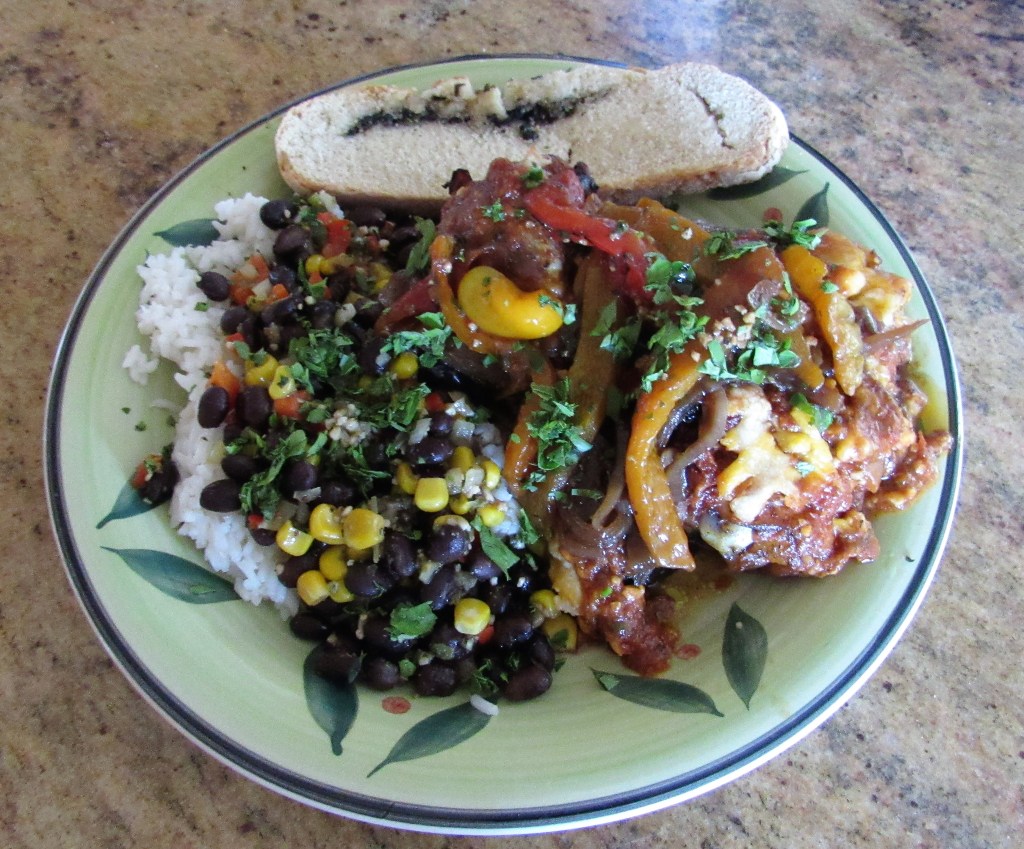
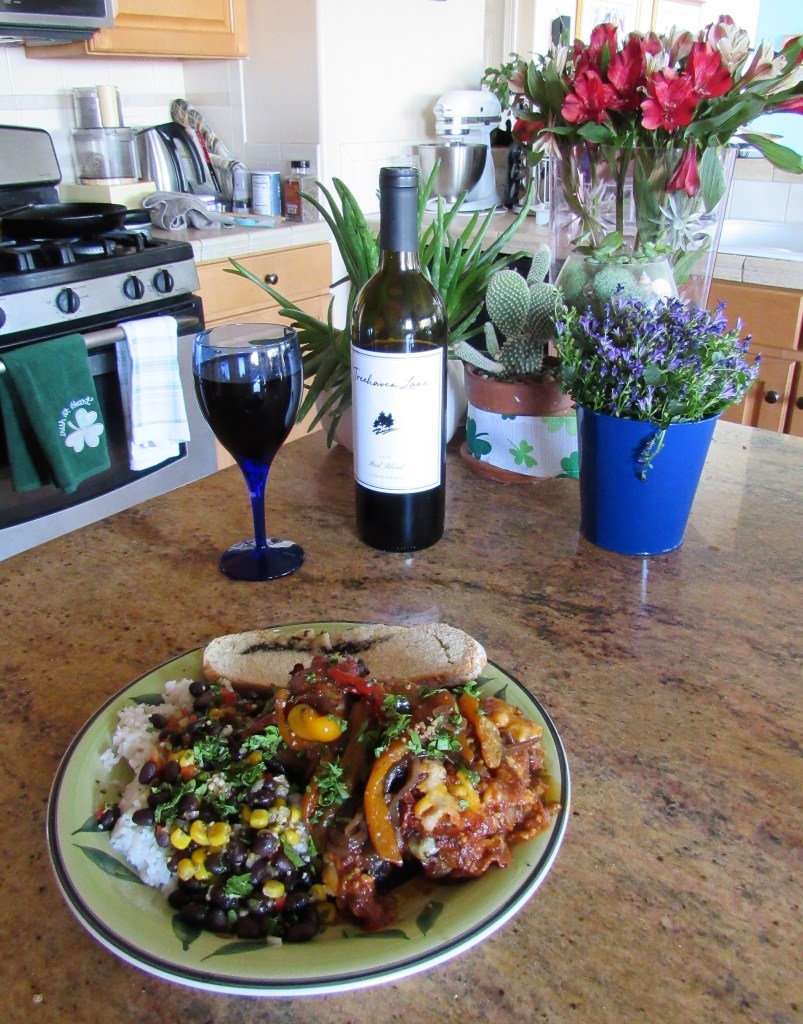
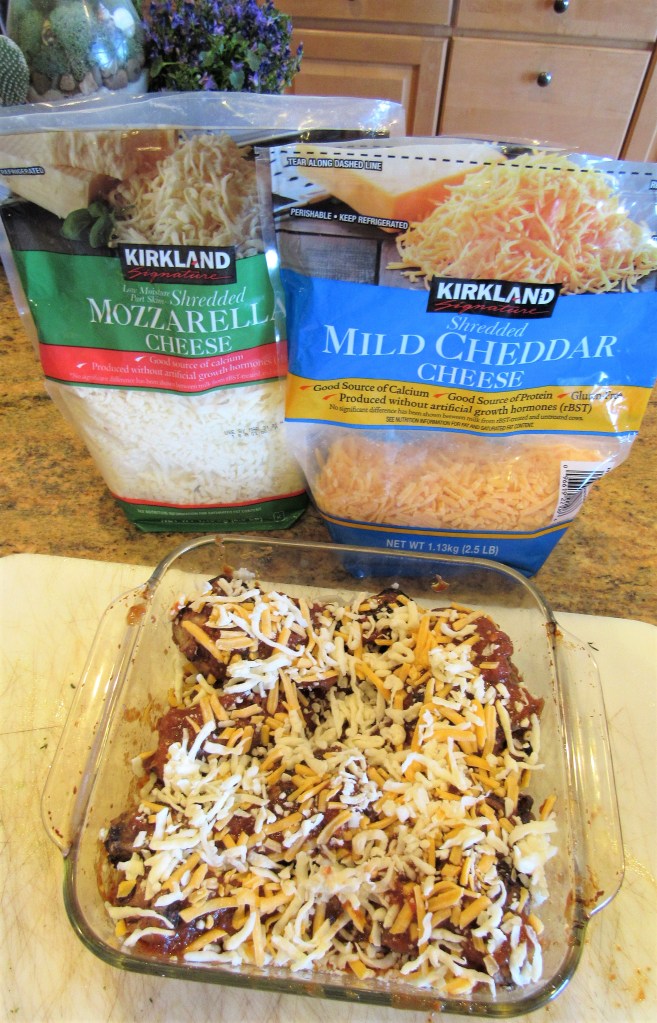
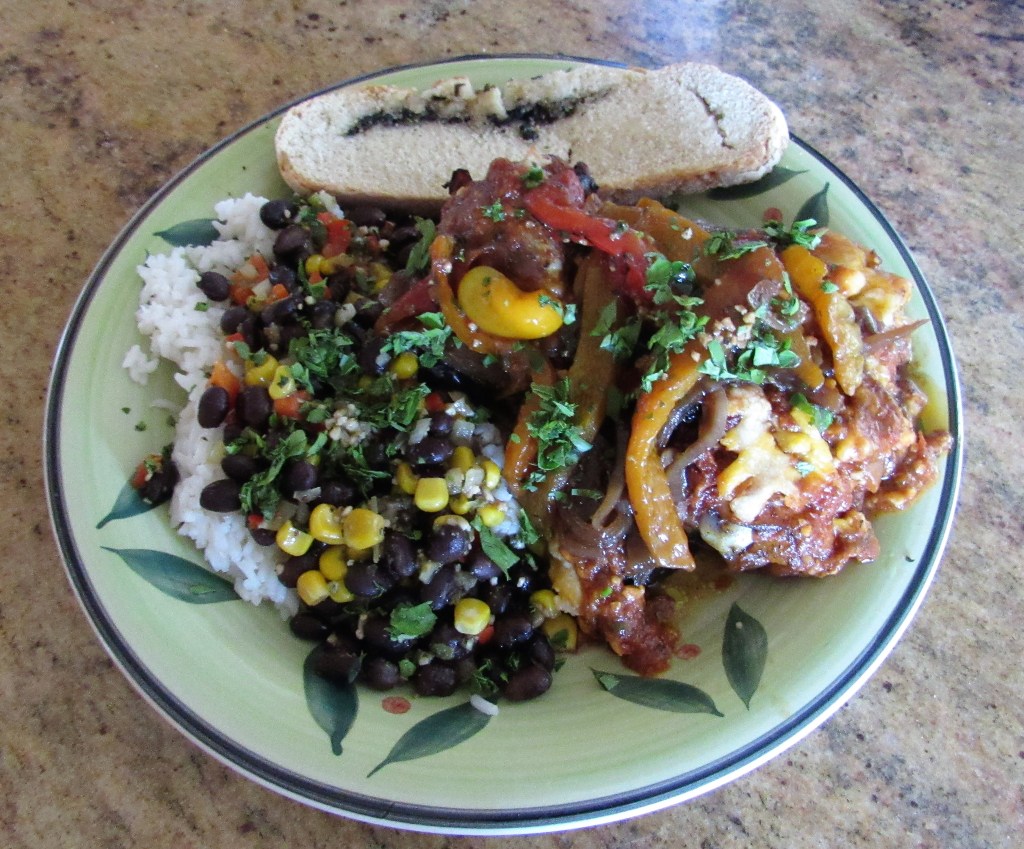
I built my meal around some of the smoked chicken Larry made for our Carnivores’ Gathering. A Carnivores’ Gathering. I also had some salsa that was getting a bit vinegary, which is perfect for cooking. I added some more balsamic vinegar and garlic, and that was my sauce for the chicken. Then I added some cheese on top and put it in the oven. I finished it off with the last of my roasted peppers and caramelized onions. I made some Southwestern black beans and served it over rice as a side dish, along with some of my olive bread Pane con le Olive and a smooth red blend to complete the meal.
Most people will throw salsa away once it starts to get vinegary. No, no, no. You can still use it. When it starts to turn a bit tangy, and has a bit of a vinegary bite to it, it is perfect for using as a marinate for a sauce, especially if you add more vinegar to to the mix as well. Be creative, play with your food and see what you come up with.
This time, I coated my chicken with my “new sauce” then topped it with cheese and baked it at 375* F or 190* C for about 30 minutes. The chicken was already cooked, but by baking it in the sauce, it came out so tender and moist as well as very flavorful.
When the chicken was done, I topped it with my roasted peppers and caramelized onions and sprinkled a little parsley on top. If you didn’t know this was made from leftovers, you would never be able to tell. 🙂 Larry is always amazed at how I recreate from leftovers and often times come up with just as much, or even more, from the second time around as I did from the first time around. All I can say is that it is a gift; one that I have mastered well. 🙂
As you know, I love taking pictures from my walks. You never know what you are going to find. Sometimes there is a lot to see, and other times, not so much. But it has certainly trained me to keep a sharp eye and to look in places I might not normally look. This time, I focused on the first of our spring flowers. I am also connecting this with Cee’s challenge flower of the day challenge. https://ceenphotography.com/Flower of the Day (FOTD) Challenge
Challenge rules, why not join in?
1.Feel free to post every day or whenever you you feel like it. You can either post new flower photos or dig back into your archives.
2. Depending on the time of year, you can post any of these types of things for your FOTD.
Single flowers
Buds
Multiple flowers
Bouquet
Flower fields
Wildflowers
Tree or bush blossoms
Autumn leaves
Spring leaves
Decorative Cabbage
Berries
Still life
Fake or Silk Flowers
It seems the purples and the yellows are always the first of the spring flowers to arrive. This time I saw some yellow daffodils and purple crocus and hyacinth. They are so pretty. They are also a bit on the brave side, since we are getting more snow again today. But it is only a light little spring snow. It’s not so bad. Our flowers are hearty just like we are. A little snow doesn’t bother them. In fact, it just makes them stronger.
This little flower is trying so hard. She is even popping up through the bricks.
Why do things always sound so much more romantic and interesting when they are spoken in a different language? English can be so …. BORING sometimes. This is certainly the case with my Pane con le Olive, as it is known in Italian. In English, it’s just simply known as olive bread. Regardless of how it sounds though, whether you say it in Italian or in English, it is the taste the really counts, and this bread is delicious!
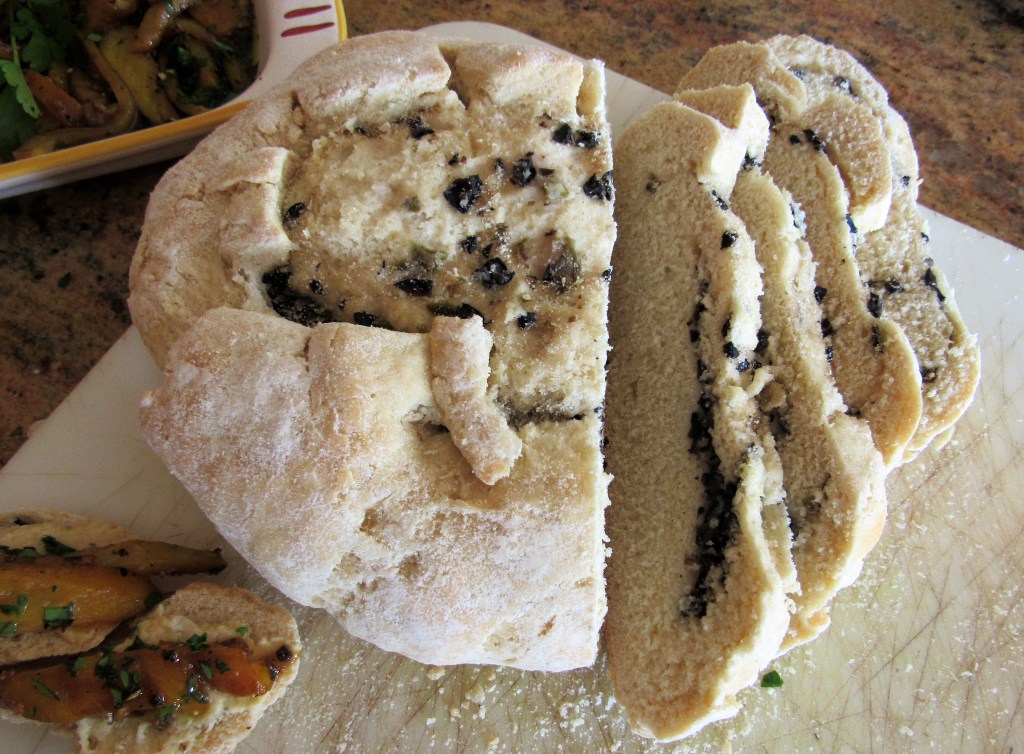
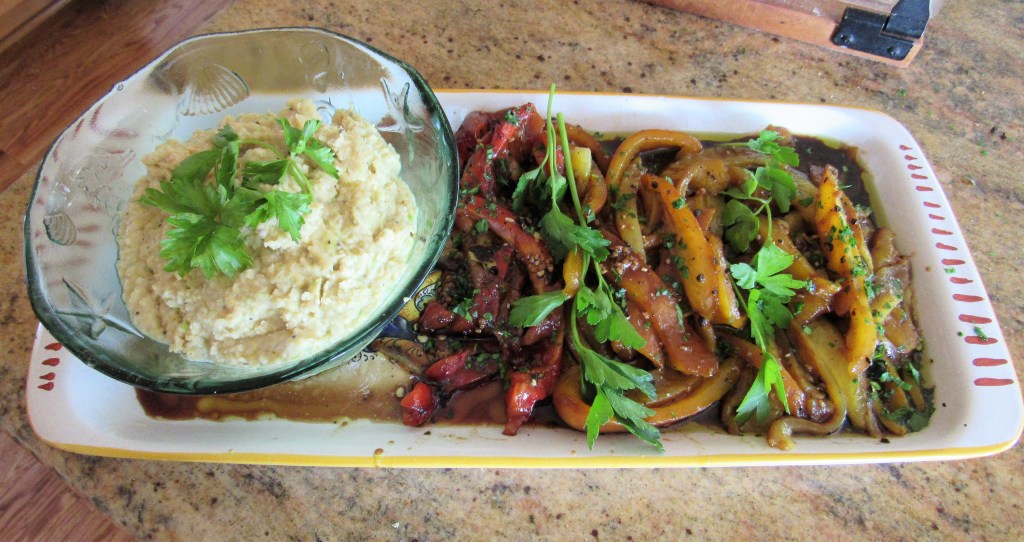
I made this Pane con le Olive to take with us when we went to InVINtions Video #17 – INVINtions, A Creative Winery the other day, as part of our wining extravaganza. More Wine, More Nibblies I used it as the base for both my lemony garbanzo spread and my roasted peppers. All the flavors just complimented each other so well. And since the recipe made two round loaves, I repeated the same taste sensations this morning to take with me to my women’s group as well. These combinations were a big hit at both gatherings.
I have made many other versions of olive bread. I like them all. I do not have a favorite version, though I do love trying all the new recipes and different styles and “personalities” of each new recipe. 🙂 As long as I have enough butter and/or spread to go with my breads, I could easily live on breads from all over the world. I LOVE bread.
Pane con le Olive – Italian Olive Bread
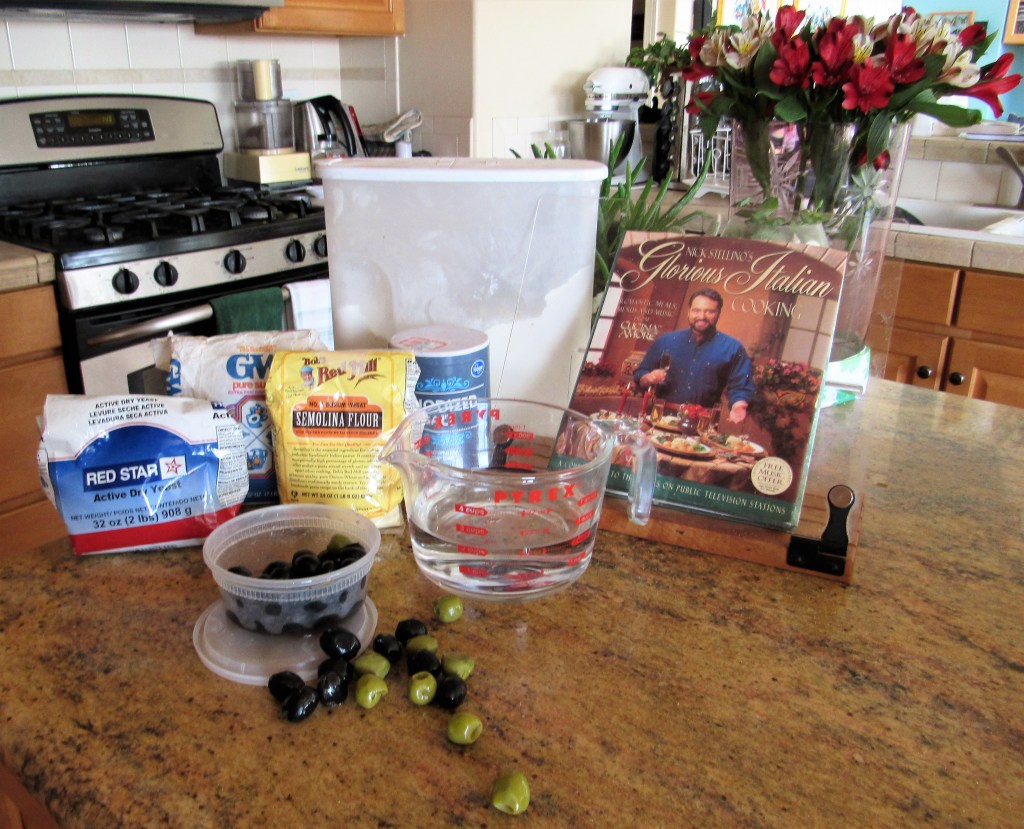
about 5 1/2 cups flour, divided
1 TBSP sugar
1 1/2 TBSP active dry yeast
2 1/2 cups warm water
2 cups semolina flour
2 tsp salt
8 oz olives, chopped fine. – I like to mix and match my olives
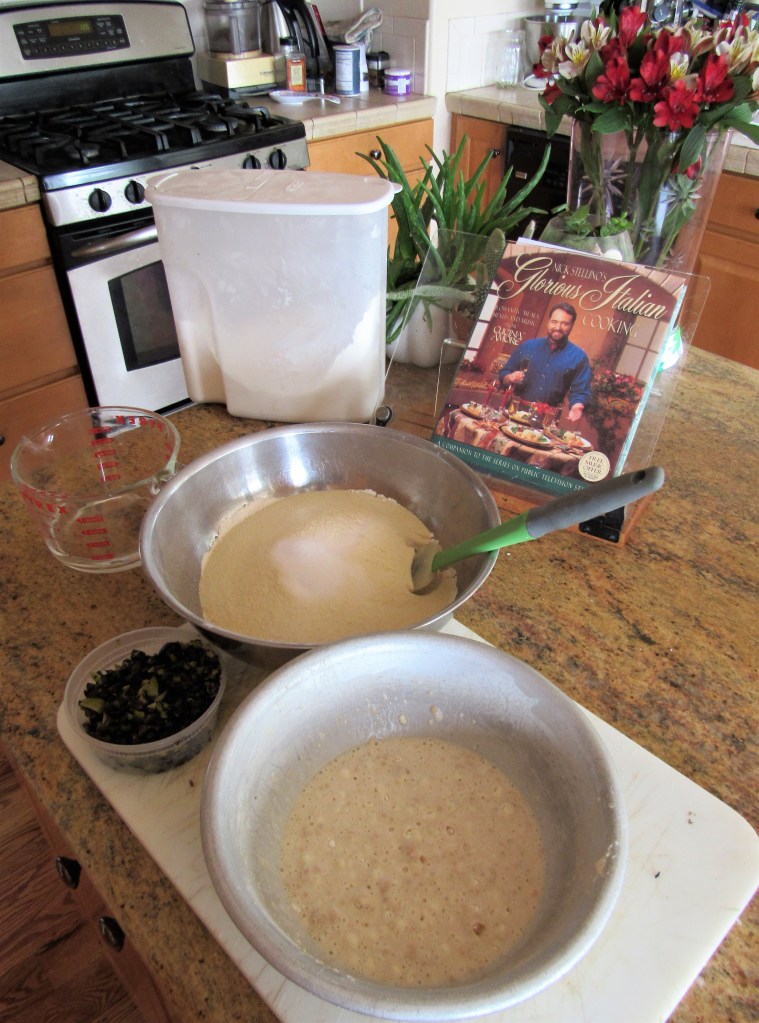
Make a starter in one bowl by mixing 1 cup of the all purpose flour with the sugar, yeast and 1 cup of warm water. Mix it together and let it set for about 15 minutes or until it doubles in size and becomes bubbly.
In another bowl, mix 3 1/2 cups of the all purpose flour, the semolina flour, and salt. Add the yeast mixture and the rest of the water and combine everything together well. You can either mix in a mixer or by hand. If you are mixing it in a mixer, switch to the dough hook and mix. Mix for about 8 minutes then turn the dough onto a lightly floured surface and knead for about 10-12 minutes or until the dough forms into a ball and has a soft, elastic texture. Once the dough forms into a ball, place it in a bowl that has been lightly coated with olive oil (I actually like to coat my bread as well) and cover. Let the dough rise for about 1 1/2 hours, or until it doubles in size.
Once the dough has doubled in size, again, turn the dough out onto a lightly floured surface and divide in 1/2. Form the dough into rectangular shapes and roll out. Spread the olives evenly on top of the surface, and press them into the dough. (This is how the recipe calls for it, however, next time I make this bread, I cam going to mix the olives in before I do the first rise, so the olives are more evenly distributed).
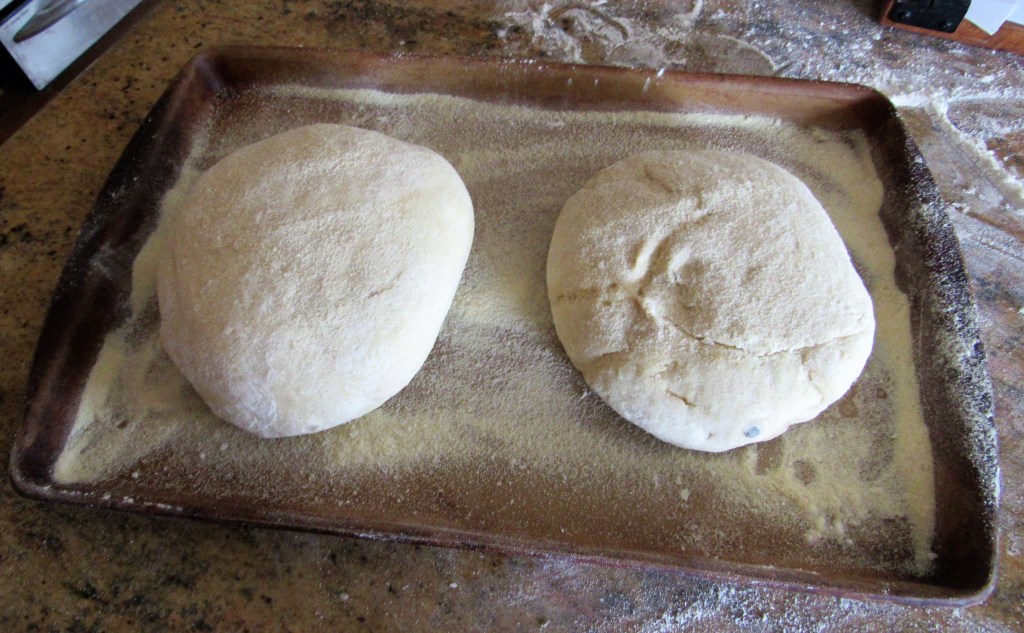
Fold the edges into the center and form into a ball. Spread some semolina flour on the bottom of your baking pan and place both dough balls on top of the flour.
Cover the dough again and let it rise one more time, from 45-60 minutes, or until it doubles once more.
Preheat the oven to 375* F or 190* C.
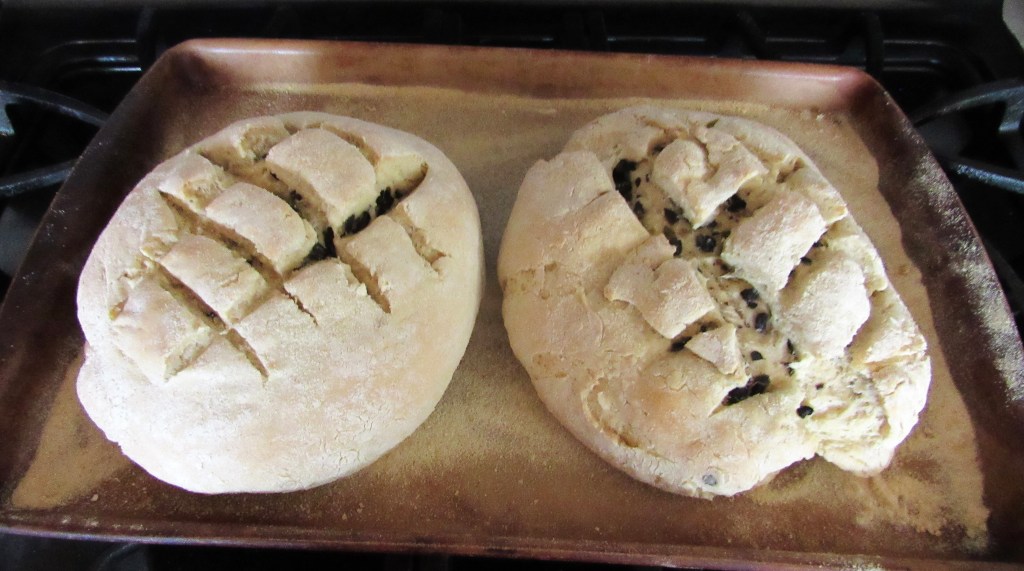
Sprinkle some more semolina flour on top of the dough and score the top in a criss-cross fashion.
Bake for about 40 minutes or until the bottom sounds hollow when tapped. Let the bread cool completely before slicing it, then top with either the lemony garbanzo spread Lemony Garbanzo Spread or butter e mangia! This bread is very tasty. !Buon Appetito!
One of the other dishes I made to take with us on our latest evening of wining More Wine, More Nibblies was a lemony garbanzo spread, or as it is known in Italian, the Pure di Ceci al Limone. It always sounds so much more exotic and romantic in Italian than it does in English. I think that makes it tastes better too. 🙂
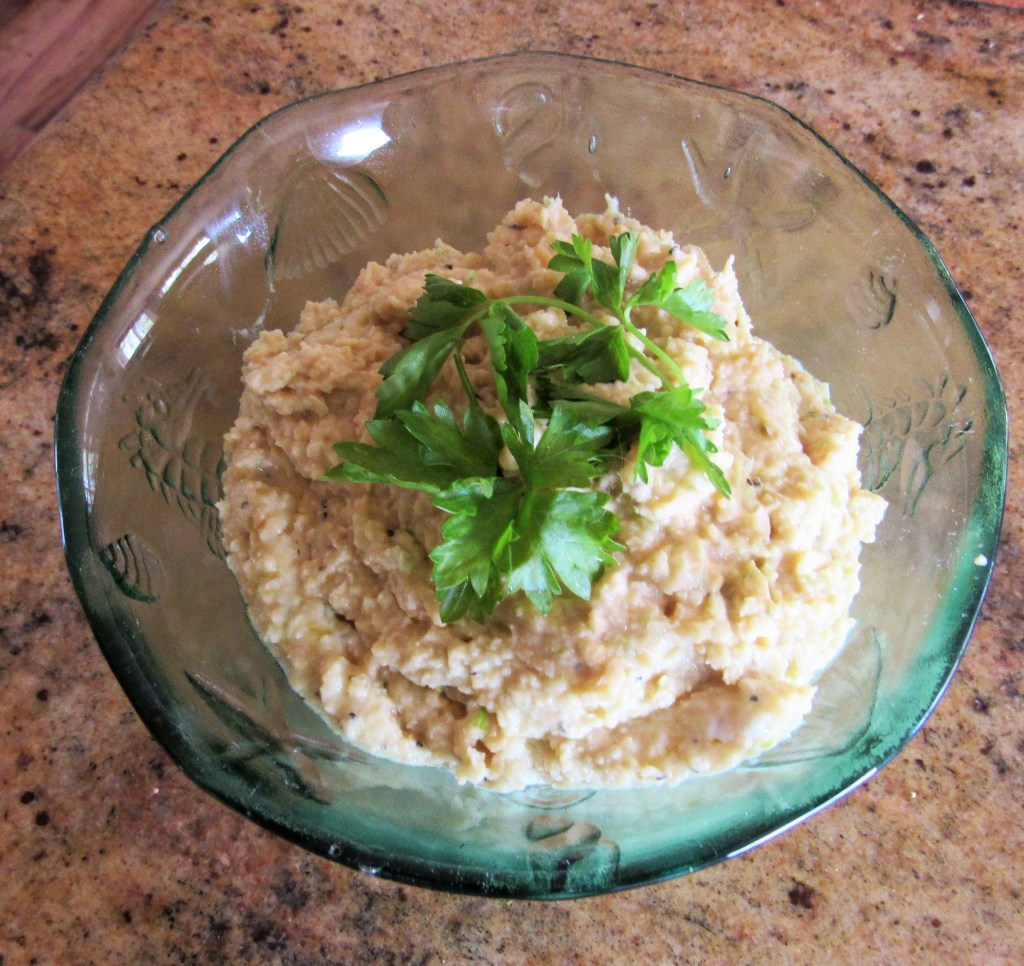
This healthy, traditional Mediterranean spread is made from garbanzo beans, also known as chickpeas, has added zest and zing to centuries of eating and enjoying breads of all kinds. It is also good as a dip for fresh crispy vegetables. It is similar to hummus, but it has its own style and personality as well. Hummus is not as lemony and usually has a smoother, creamier texture. This delicious spread has a very distinct lemony flavor and is a thick spread that went perfectly with my olive bread and the roasted peppers or peperoni arrosti. All the flavors just really complimented each other very well.
Just like the roasted peppers in balsamic vinegar, this was yet another very easy, simple dish to make, using only a handful of everyday ingredients.
Lemony Garbanzo Spread or Pure di Ceci al Limone
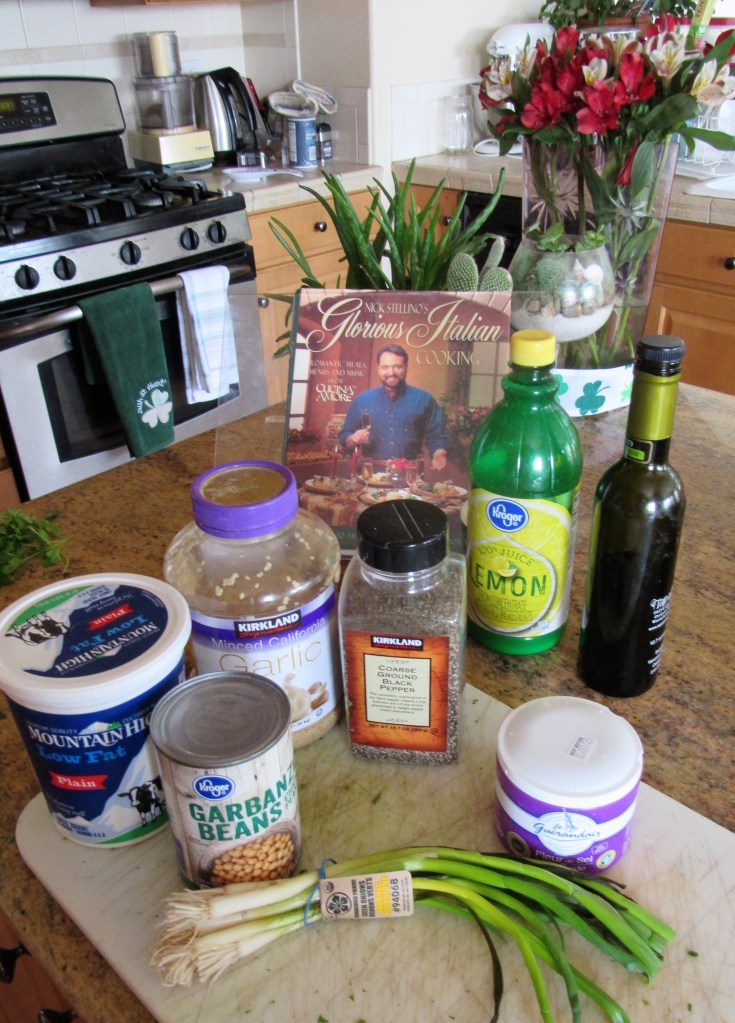
1 can of garbanzo beans, drained and rinsed
1 TBSP garlic
2 green onions, sliced
2 TBSP lemon juice
2 TBSP extra virgin olive oil
1/4 tsp salt or a little fleur de sel
1/4 tsp black pepper
2 TBSP plain yogurt
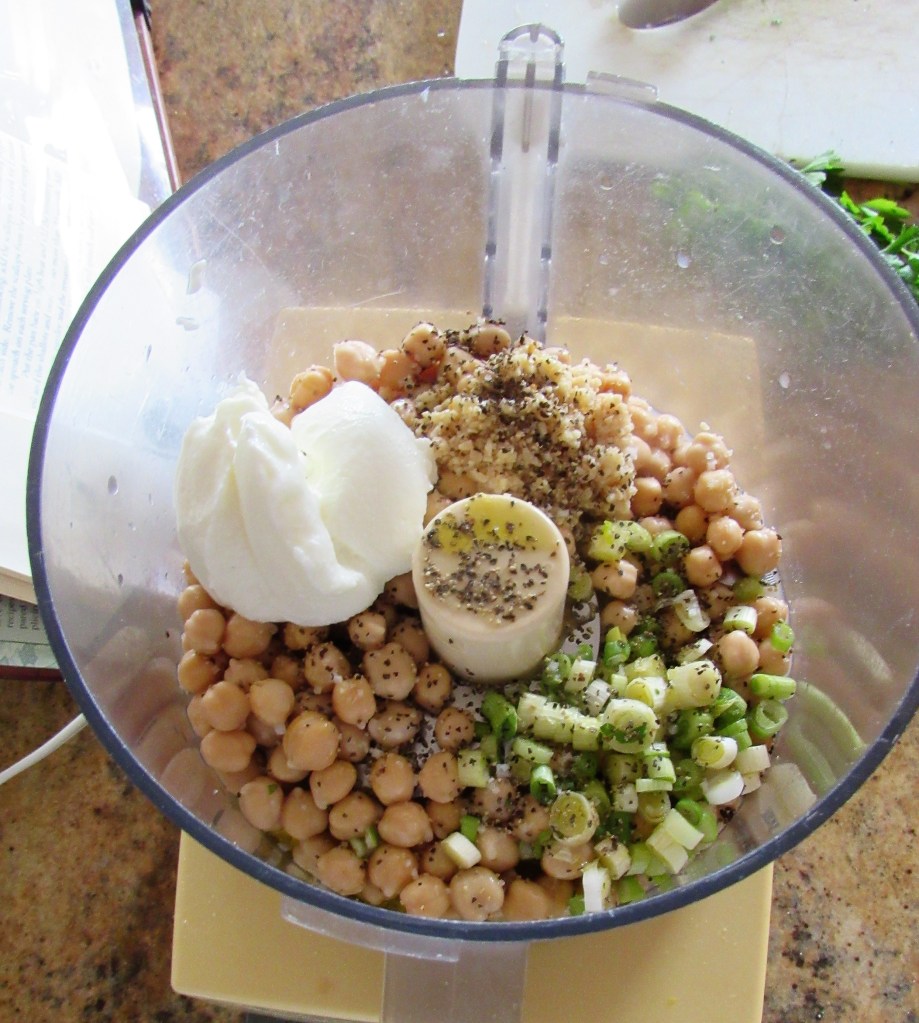
Just place everything in the food processor and pulse it up until it is a thick, creamy spread. You can also add curry and/or cumin as well as other herbs too if you want to change it up a bit.
Once the spread is made, keep it cool in the refrigerator until you are ready to spread it on your favorite bread or use it as a dip for your vegetables.
This spread is very healthy. It is very low in fat and high in protein. Plus, it is absolutely delicious. You just can’t go wrong with this simple spread, and you are really going to love it. I promise. 🙂


























 A Jeanne in the Kitchen