Chocolate Soup

Following directions or recipes is not one of my strong suits, and for good reason too. Usually when I follow the directions of a recipe, the recipe doesn’t turn out. I don’t know why that is, but it happens more so than not. Hence, I usually make up my own rules and do my own thing, and most of the time, things turn out just as I was hoping and expecting. This was most certainly the case when I tried to make Keto friendly chocolate lava cakes. I am not all that well versed in cooking the Keto style, so I was really trying to follow the recipe, and hopefully learn something new. Well, I followed the recipe to a “T” and it did NOT work. My lava cakes did not turn out as lava cakes, but came out as chocolate soup instead.

We went out to dinner with our friends Eric and Shannon and they came over here for dessert after. They are following a Keto diet, which I have to admit I do not know that much about. So I did my research to find a good dessert that was Keto friendly. I found a recipe for a Keto friendly chocolate lava cakes that sounded just perfect. Better yet, I already had all the ingredients necessary. I thought to myself, “Great! This will be great for dessert”. Everything was going according to plan until …….

Here is the recipe I found. Obviously, I still need to tweak it and work with it, but if you can make it work for you, I give you a round of applause.

Keto Friendly Individual Chocolate Lava Cakes

This recipe was made as an individual recipe, so instead of making just 1, I multiplied everything by 4 so the 4 of us could “enjoy” it. That should not have made a difference though. Believe it or not, I am very good at math, and I definitely know how to multiply things by a factor of 4. I will give you the individual recipe for 1, as I found it.
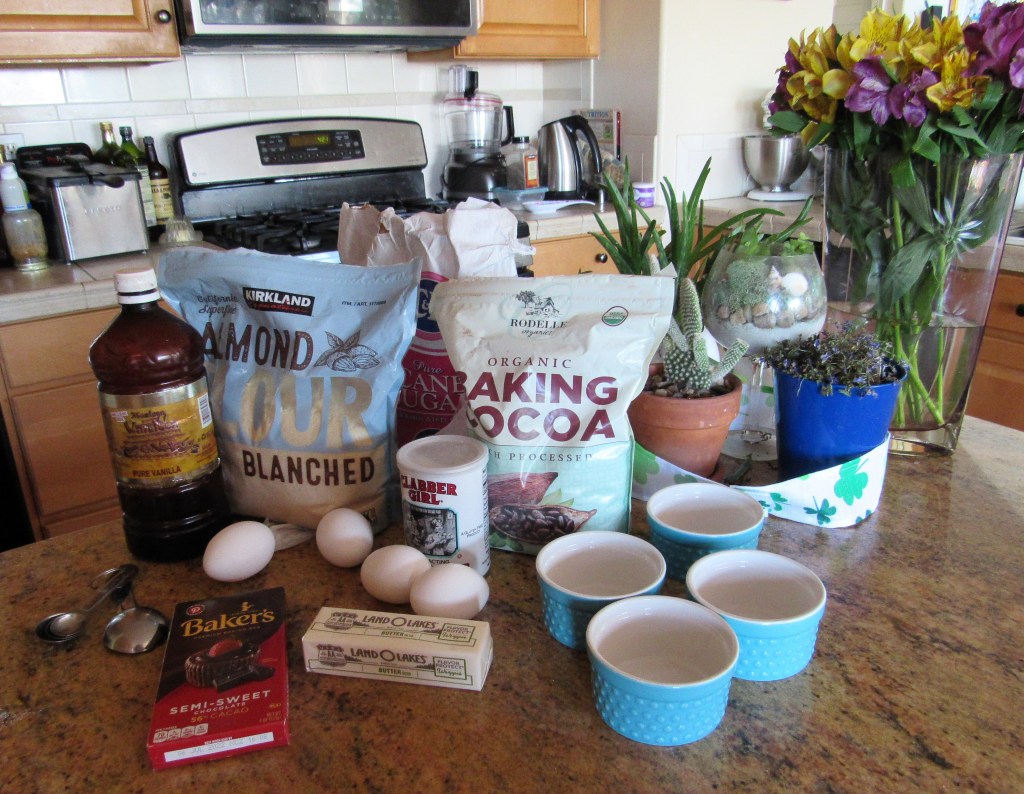
1 TBSP butter

3 TBSP almond flour

1 TBSP cocoa powder

2 TBSP sugar

1/2 tsp baking powder

1 egg beaten

1/2 tsp vanilla

4 squares of baking chocolate

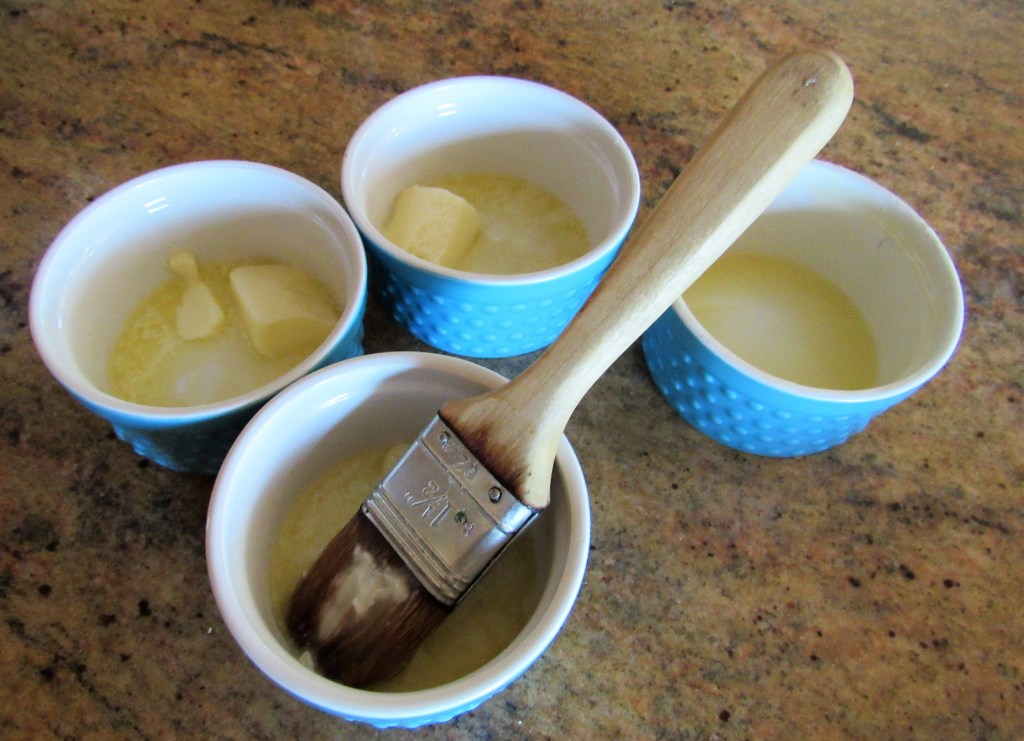
Melt the butter in the ramekin in a microwave for about 10-20 seconds and swirl it all around to coat the ramekin completely.
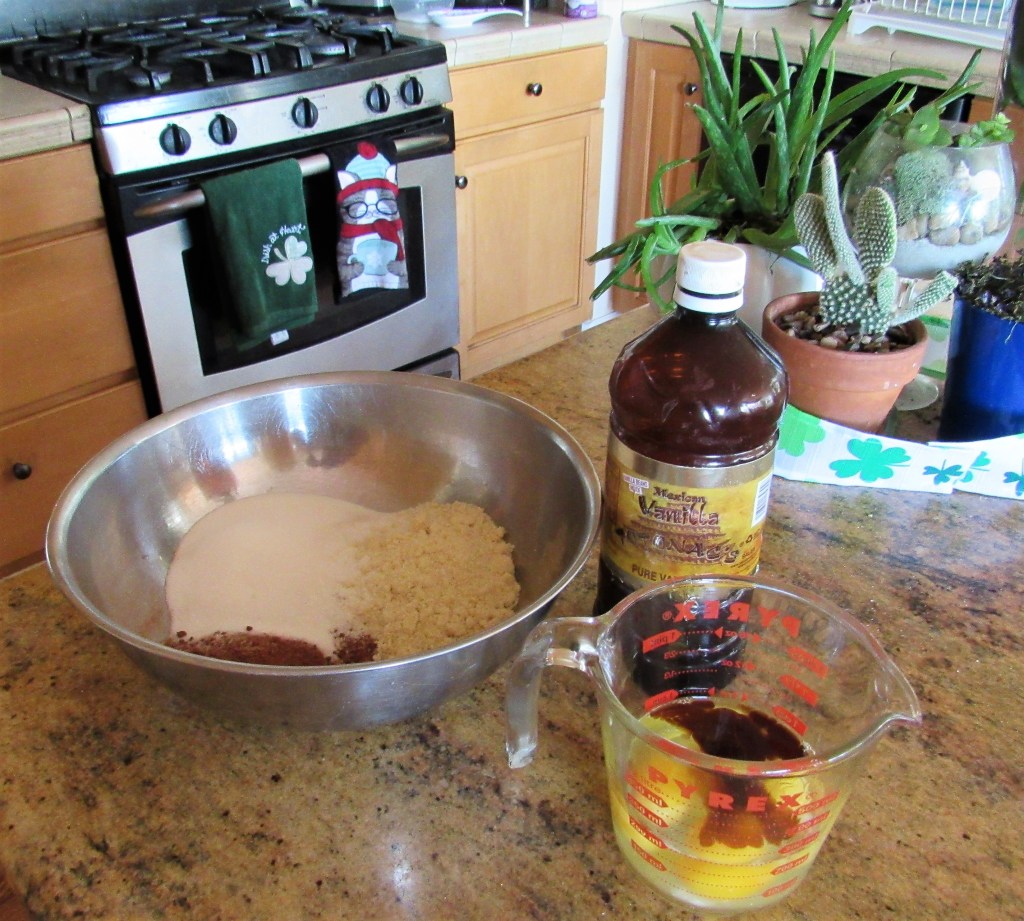
Combine all the dry ingredients and blend together thoroughly.

Mix the eggs and the vanilla together and beat slightly. Add the egg mixture to the dry ingredients and mix everything together until it is incorporated and you have a thick batter.
Fill the ramekin about 1/2 way and add the baking chocolate, then fill the ramekin with more batter. Fill the ramekin to about 3/4 full.
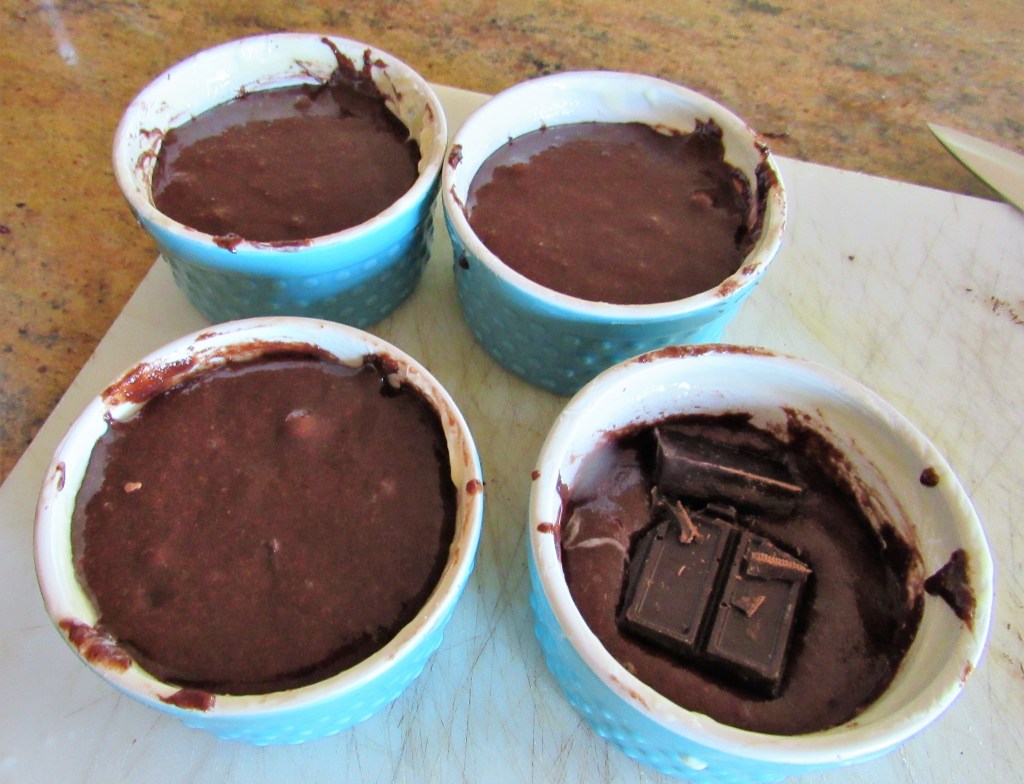
This recipe can either be microwaved or baked in the oven. If you are using the microwave, cook it at high for about 1 minute. If you are placing it in the oven, bake it at 350* F or 180* C for 10 minutes, or until the outer edges are set. You do not want to over cook it because the “lava” will set and will not flow. Up to this point, everything was perfect. No problems at all. The top of my cake was like a cake should be, and was set. The edges were as they were supposed to be too. They look just like they are supposed to right?
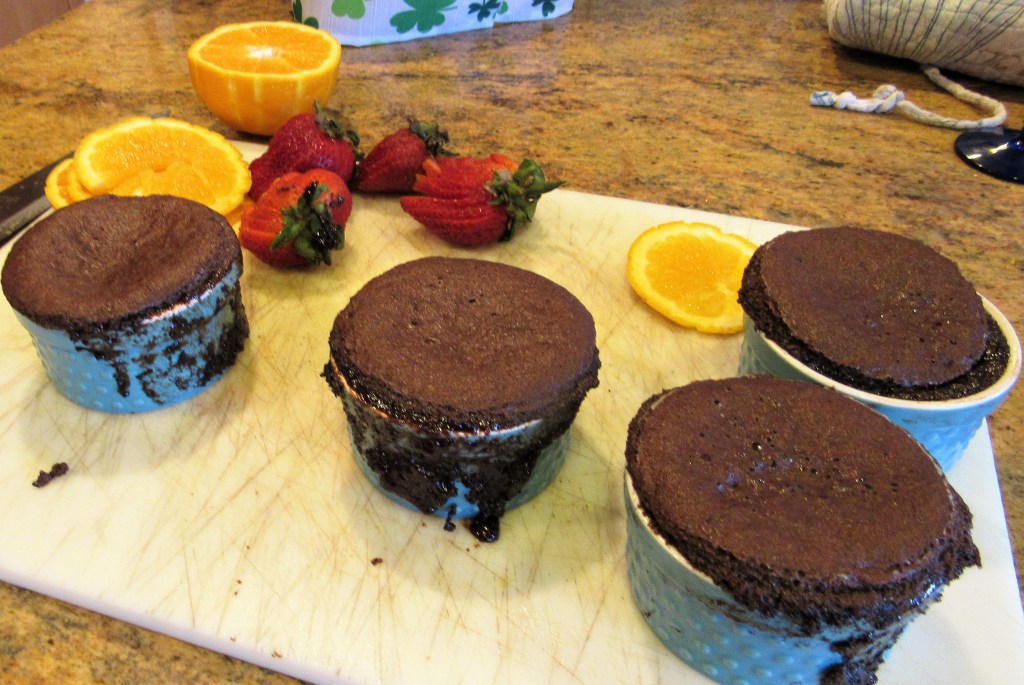
Once I removed the ramekins from the oven, I quickly turned them over on to a plate, like I was supposed to do. But instead of having a beautiful lava cake, the result I got was chocolate soup. It was a big ooey-gooey mess. The cake did NOT set at all. But being the ever creative and inventive one that I am, all was not a complete loss. Since the tops came out the way they were supposed to, I salvaged them and topped them with a dab of ice cream and served the orange slices and strawberries on the side, like I was planning on anyway. It actually worked out pretty well, all things considered, since we were all pretty full from dinner.

I am sharing my mishaps with you to let you know you are NOT alone. I have gremlins in my kitchen too. Even I, Jeanne, from “A Jeanne in the Kitchen” have those days when things just don’t turn out as expected or hoped. The moral of the story …. Don’t follow the recipes. Tweak them however you need to. 🙂

Stay safe and stay well Everyone. ‘Til next time.

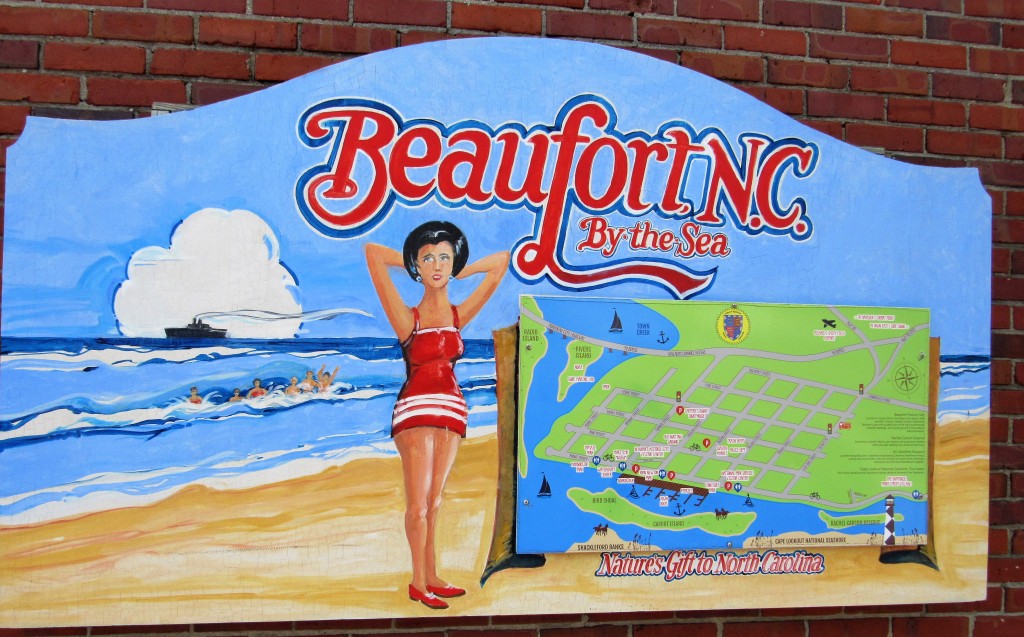
Strolling Around Beaufort and the Sea

Before our delicious seafood meal at The Dock House Dining At the Dock House, we went to the Maritime Museum. The Maritime Museum had an interesting display of life on the sea. There was a lot of information about Edward Teach, aka Blackbeard, who was the most famous and most ruthless pirate of the area.

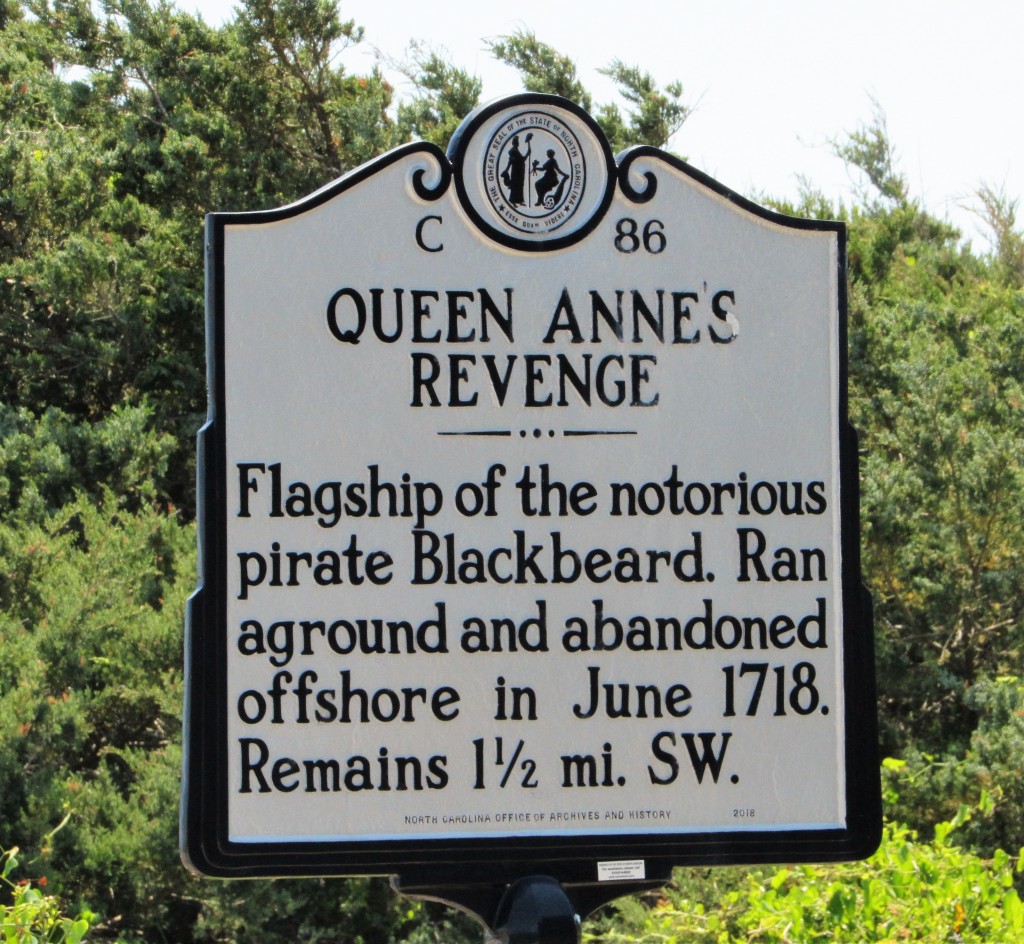
Blackbeard was an English pirate who operated around the West Indies and the eastern coast of Britain’s North American colonies. Little is known about his early life, but he may have been a sailor on privateer ships during Queen Anne’s War before he settled on the Bahamian island of New Providence. Teach captured a French slave ship known as La Concorde, renamed her Queen Anne’s Revenge, equipped her with 40 guns, and crewed her with over 300 men. He became a renowned pirate, his nickname derived from his thick black beard and fearsome appearance; he was reported to have tied lit fuses (slow matches) under his hat to frighten his enemies. He formed an alliance of pirates and blockaded the port of Charles Town, South Carolina, ransoming the port’s inhabitants. He then ran Queen Anne’s Revenge aground on a sandbar near Beaufort, North Carolina. Teach was a shrewd and calculating leader who spurned the use of violence, relying instead on his fearsome image to elicit the response that he desired from those whom he robbed. Easily the most famous buccaneer on the list and possibly the most terrifying pirate of all time, Blackbeard had a reputation of horrific magnitude in his day. He was romanticized after his death and became the inspiration for an archetypal pirate in works of fiction across many genres.

Blackbeard: Myths About The Infamous Pirate Who Was (Almost) Impossible To  Kill | History Daily

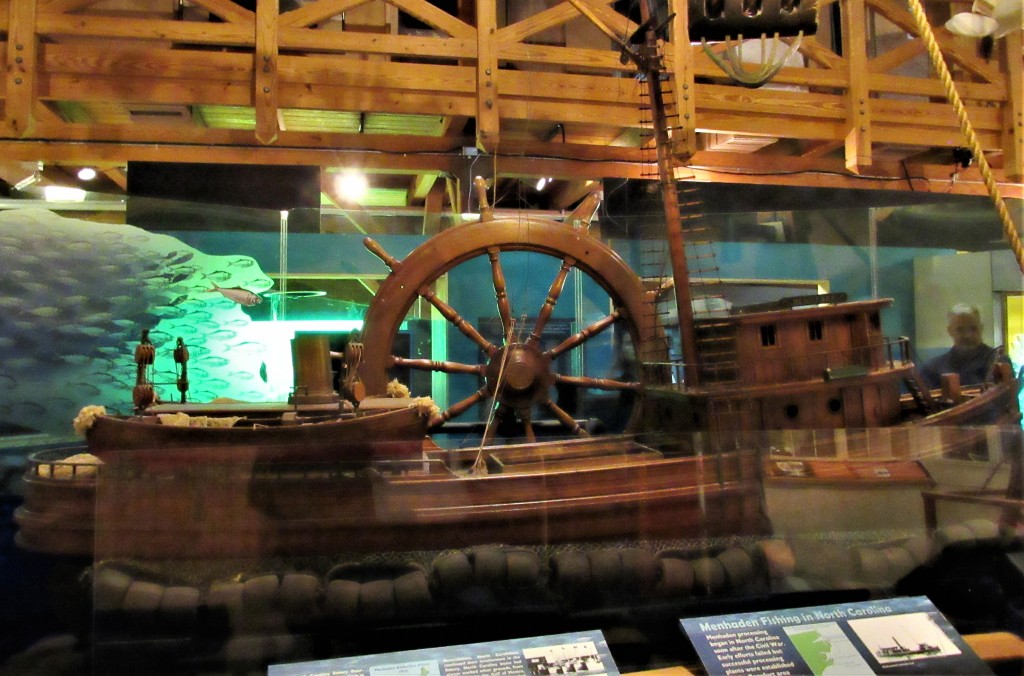
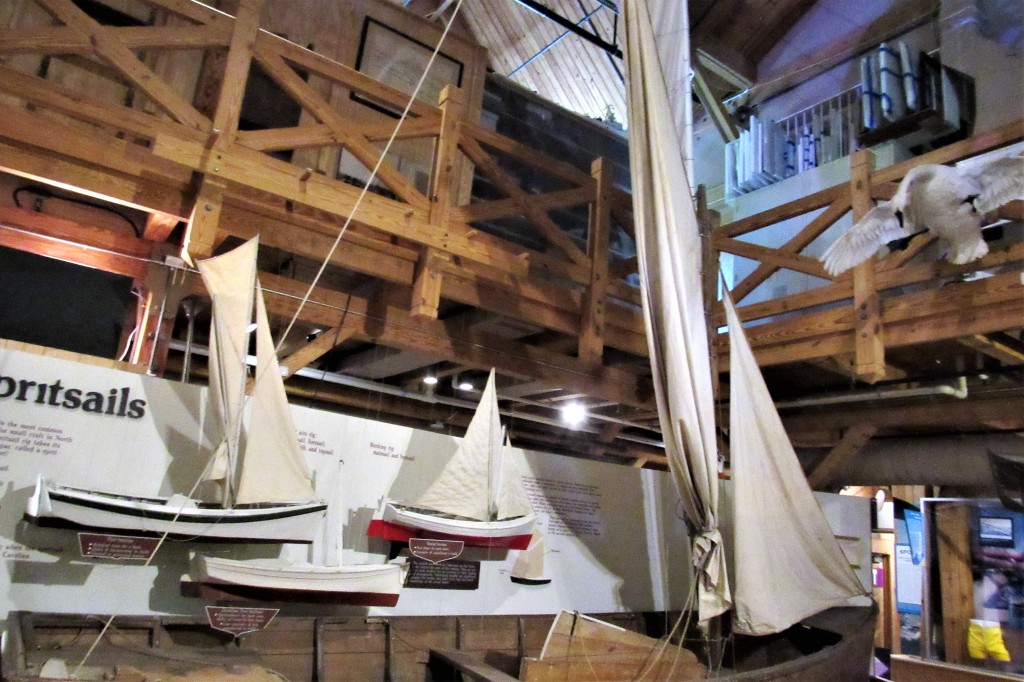
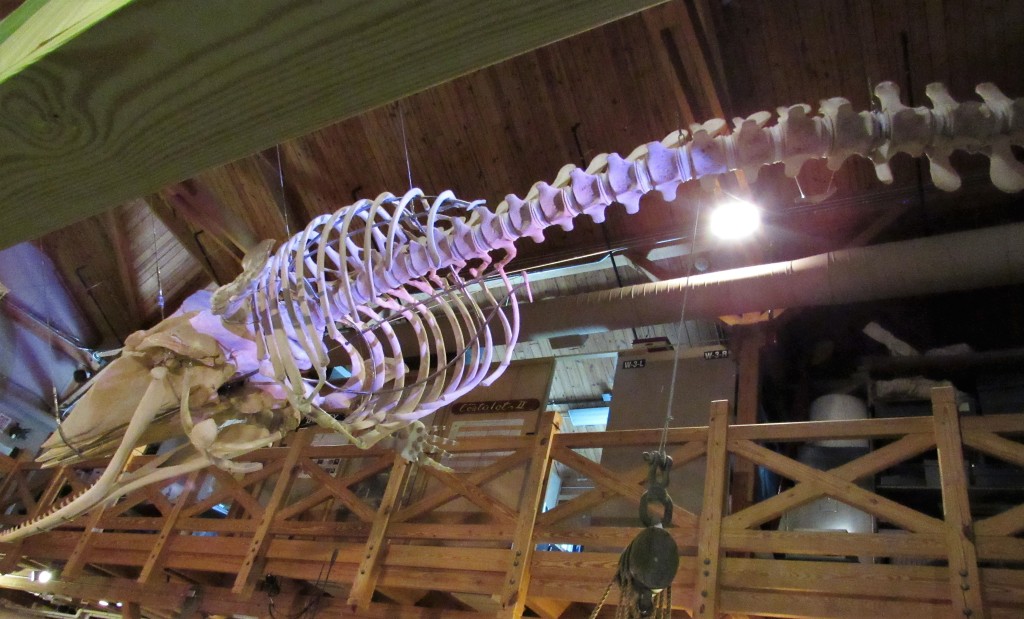
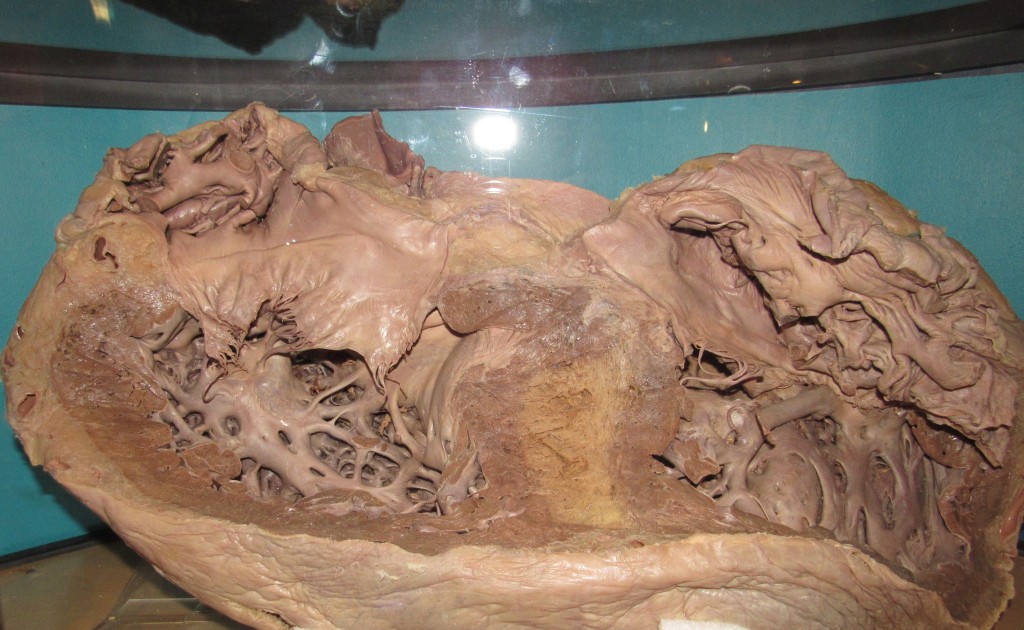
Some of the other things featured in the Maritime Museum were artifacts recovered from the sea, and from Blackbeard’s “Queen Anne’s Revenge” specifically, as well as replicas of the many boats and ships from the area and a skeleton of a sperm whale along with its heart.

This image has an empty alt attribute; its file name is img_9668.jpg

This is an actual heart of a sperm whale that has been well preserved. Looking at the heart gives you an idea of just how big these magnificent creatures really are.

This image has an empty alt attribute; its file name is img_9670.jpg

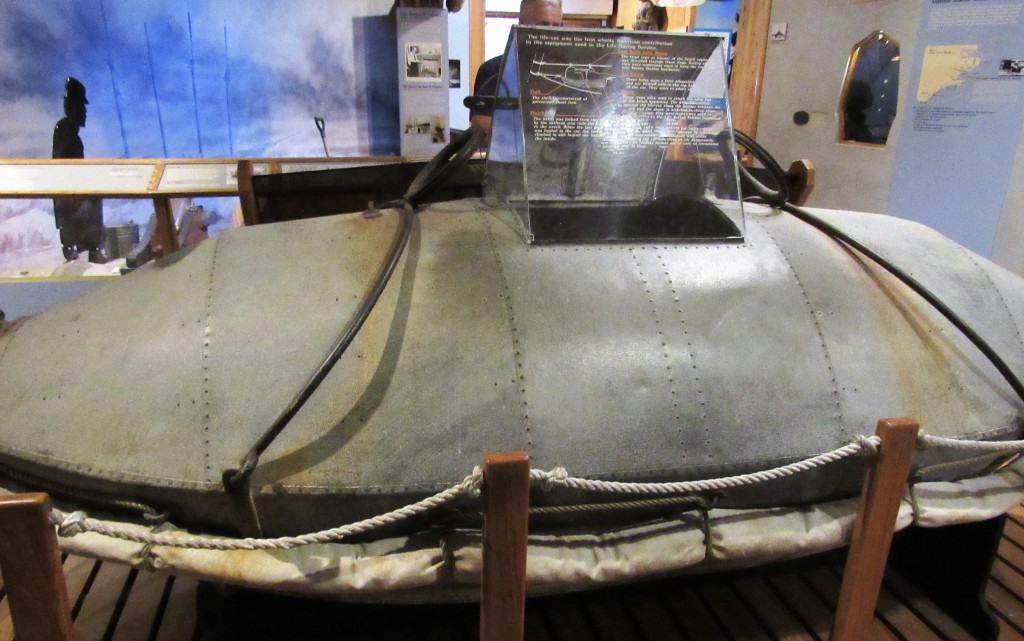
There was even a replica of one of the first rescue boats ever used.

This image has an empty alt attribute; its file name is img_9667.jpg

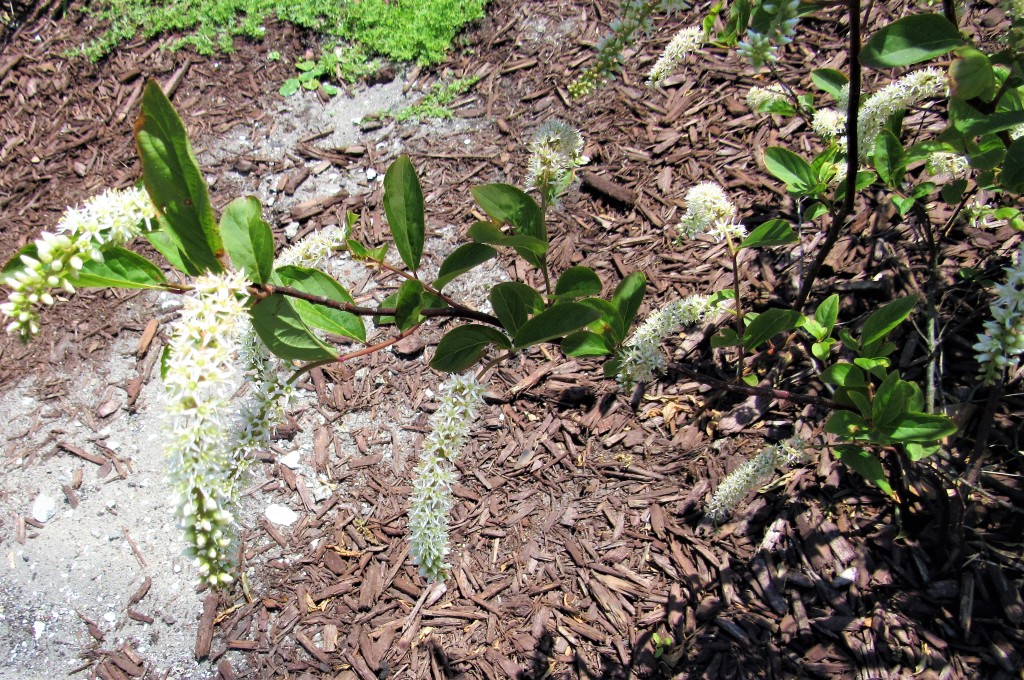
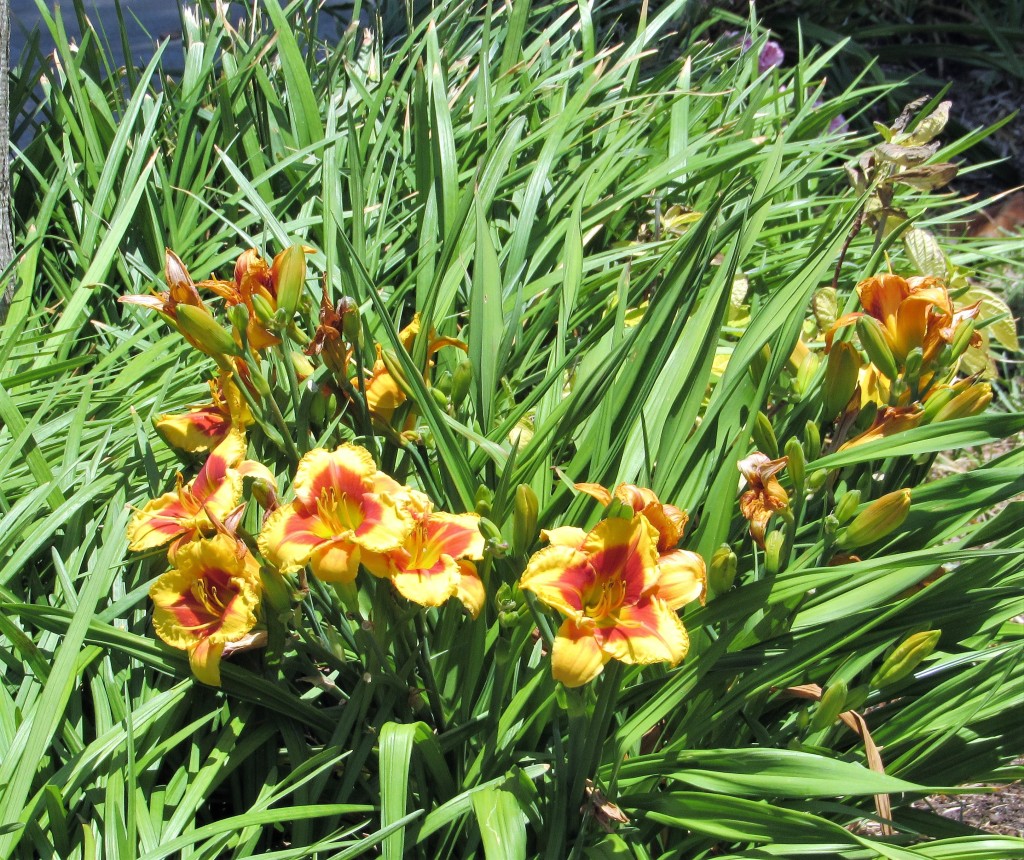
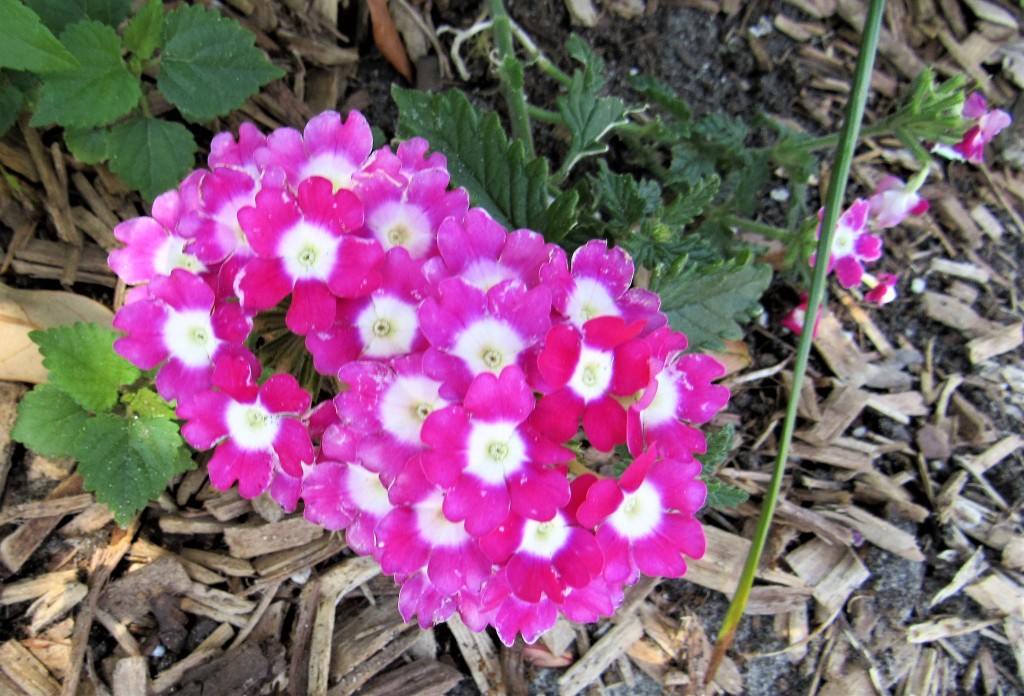
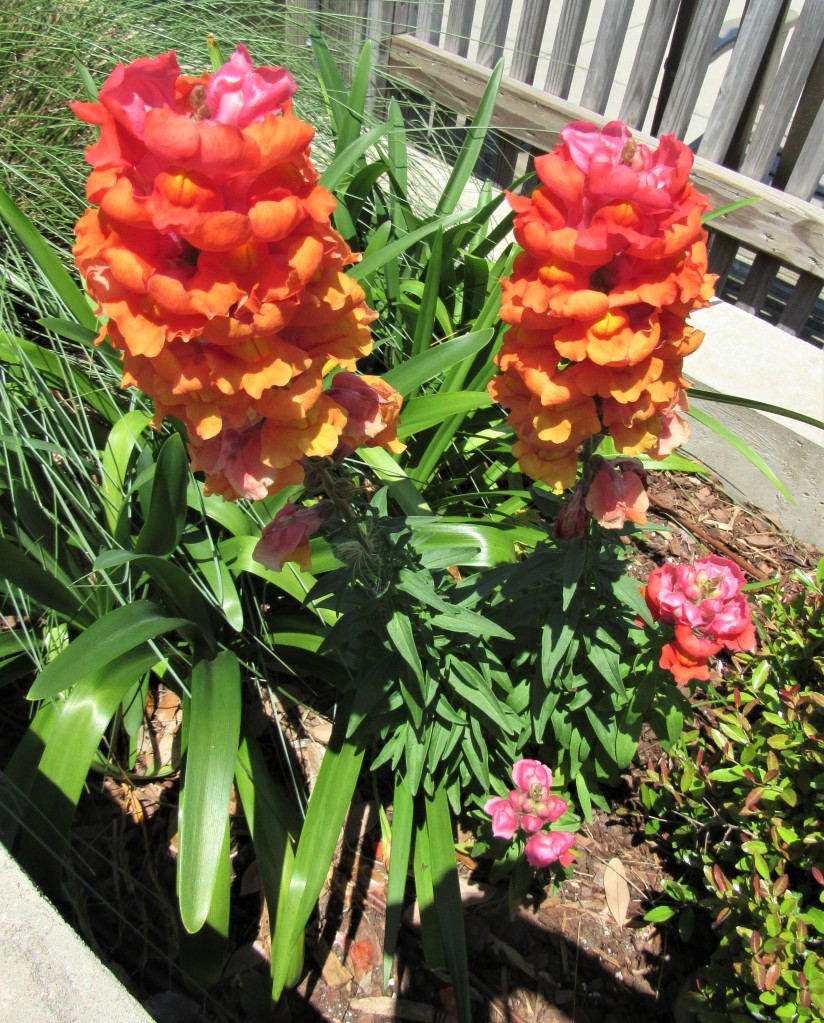
Strolling around outside the museum was beautiful too. There were so many beautiful and colorful flowers.

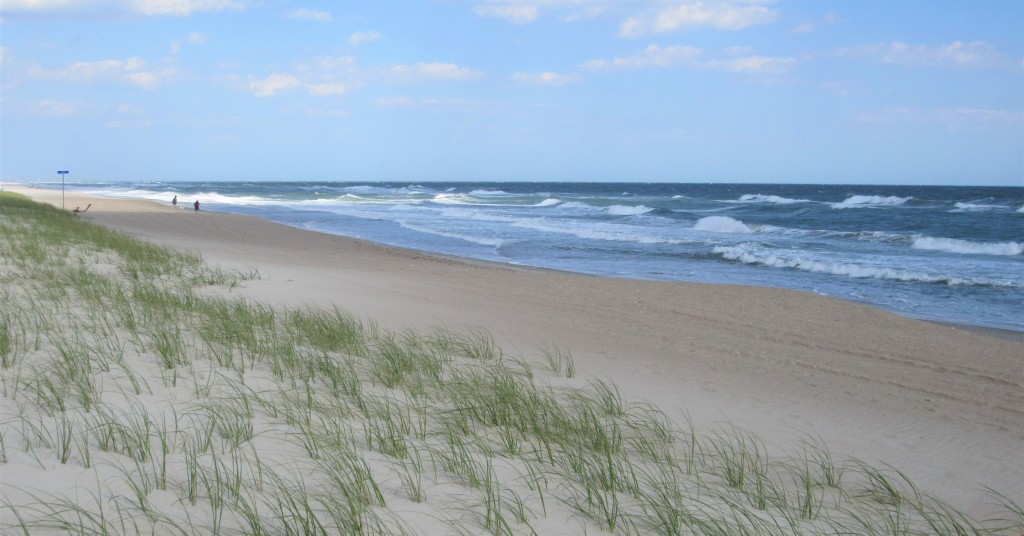
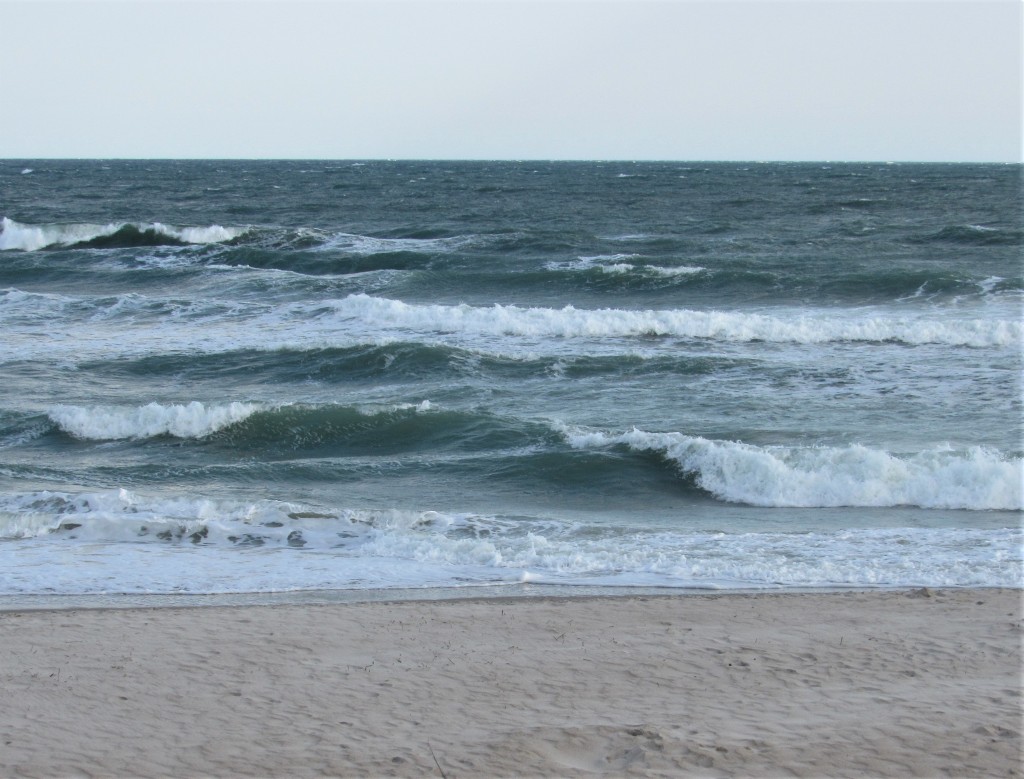
Since it was out last day, we just had to see more of the seashore before heading home, back to our mountains and lakes. I love the sea and I have the waters of the oceans flowing through my veins, as did my dad. I can never get enough of the salty seas.

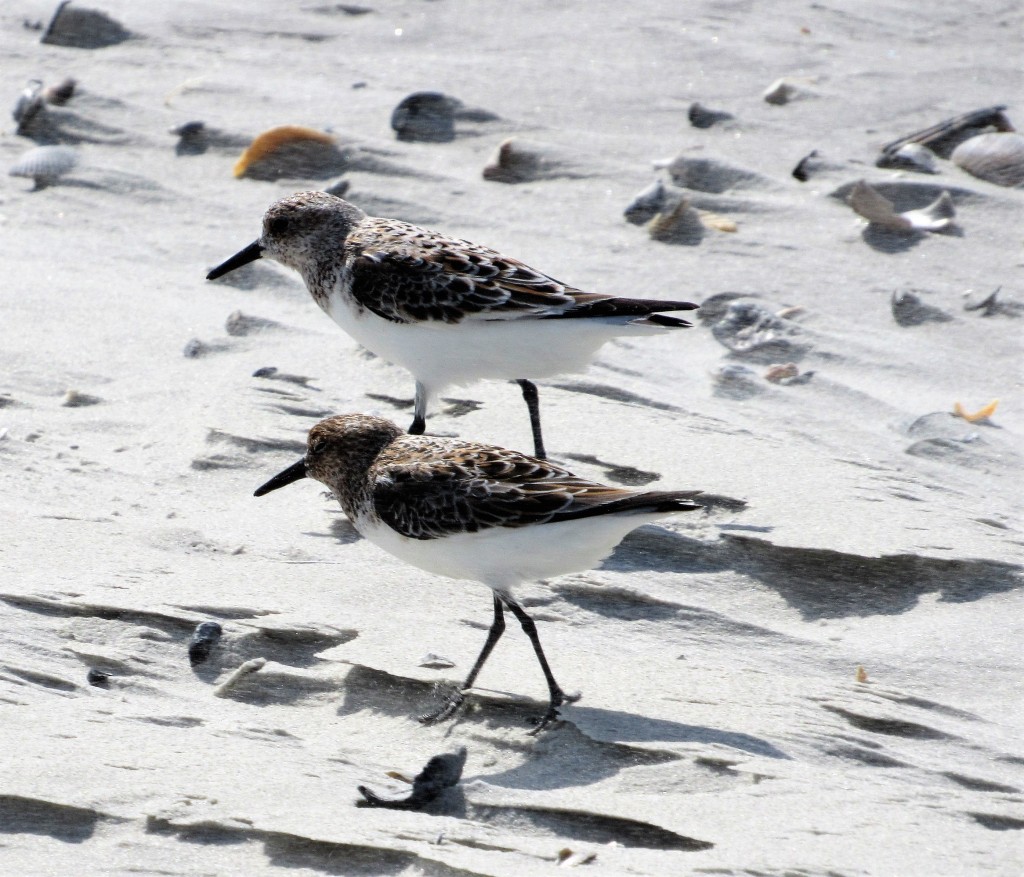
Two sandpipers combine the beach.

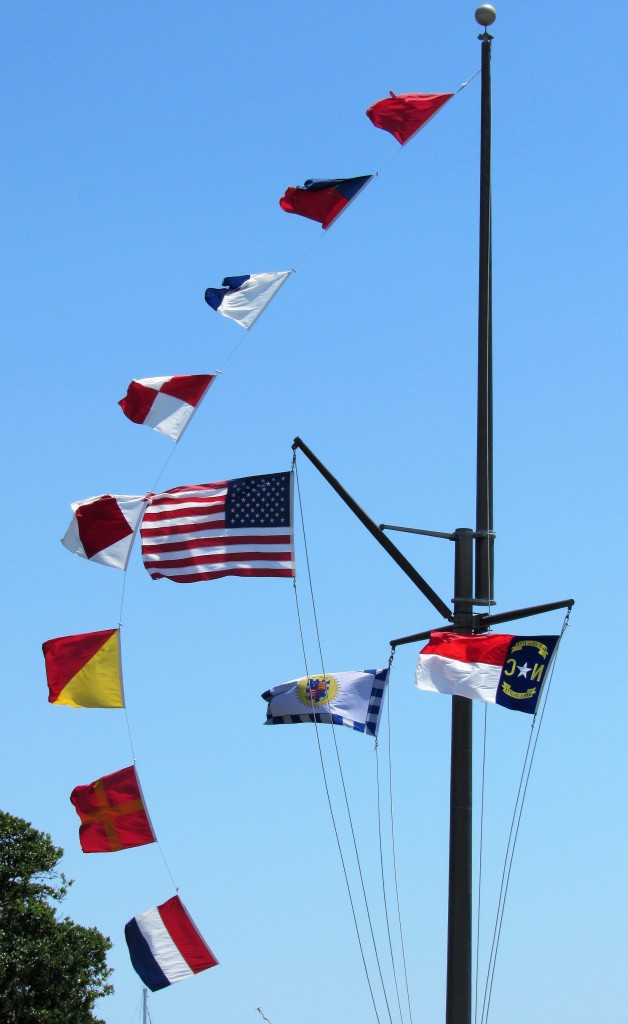
I don’t know the language of flags, though I am sure my dad did, but we think these flags spell out Beaufort.

I have one more post from our trip and then it will be time to start more new adventures. In the meantime, you know I am safe and sound, back home and back in my kitchen, cooking up all kinds of good things to share.

Stay safe and stay well. ‘Til next time.
Dining At the Dock House

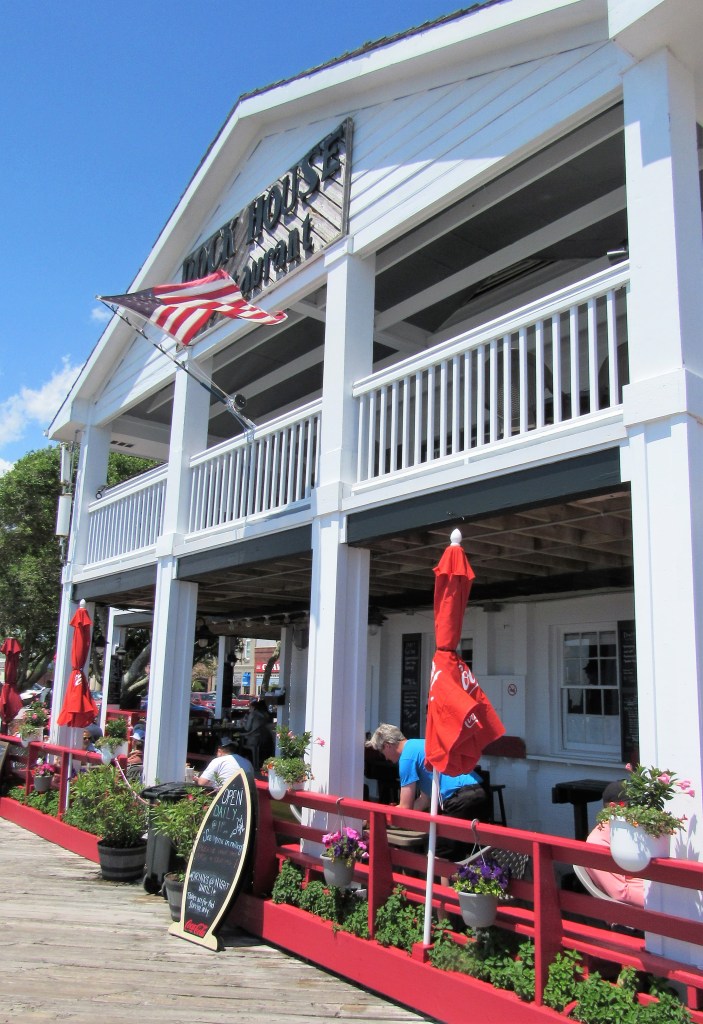
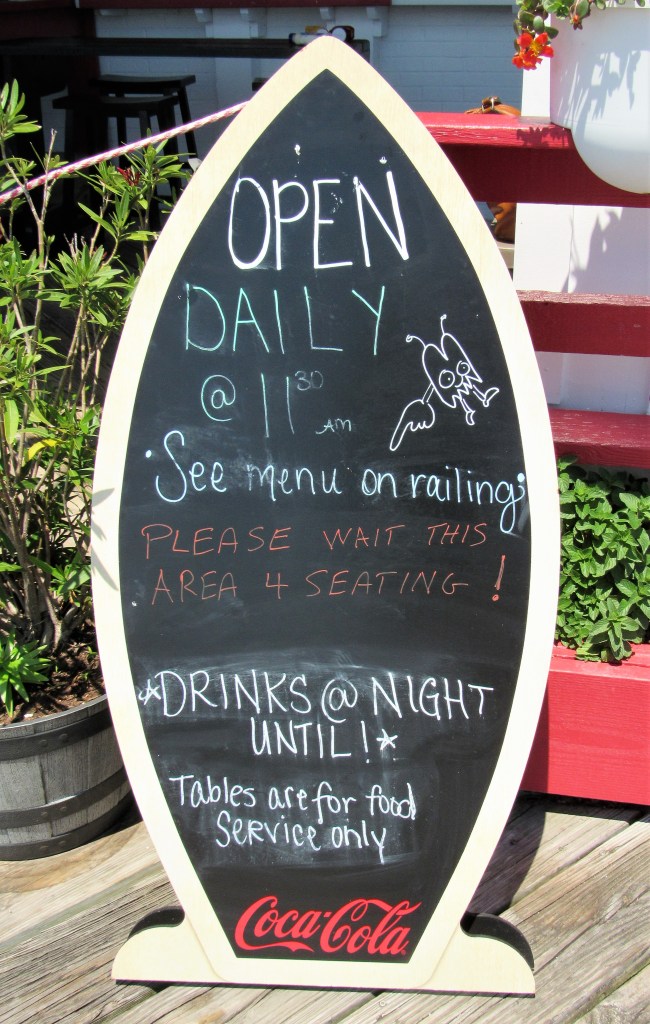
Whenever we visit the seashore, we always try our best to dine on good, fresh seafood. We were not actually at the seashore for all that long, however, we did stumble upon a great seafood restaurant while strolling along the boardwalk. It was called The Dock House. It was casual, fun and full of personality, and offered great, fresh and simple seafood too. It was most definitely a very good find, especially on our last day of vacation.

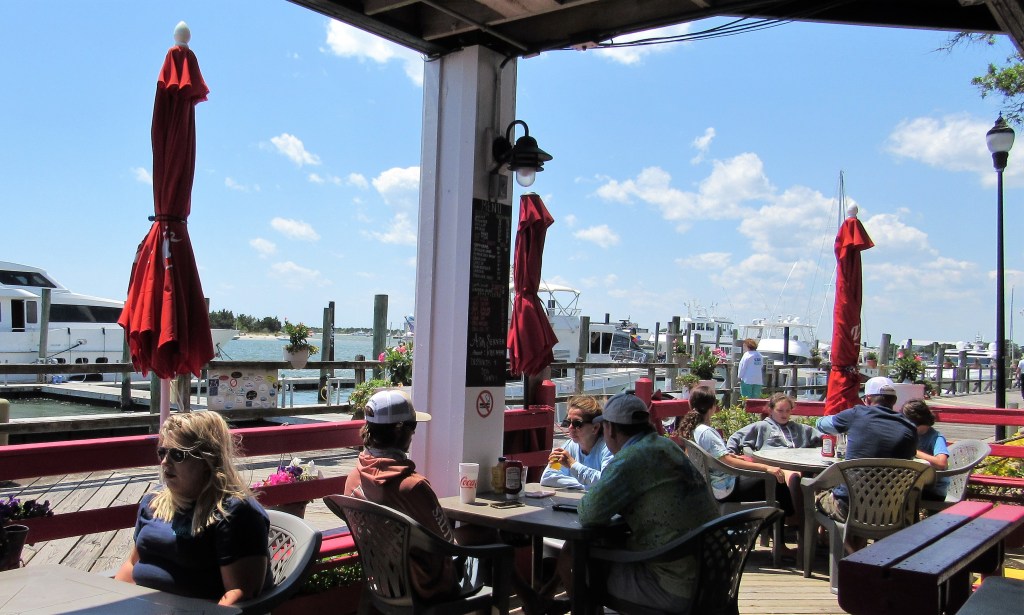
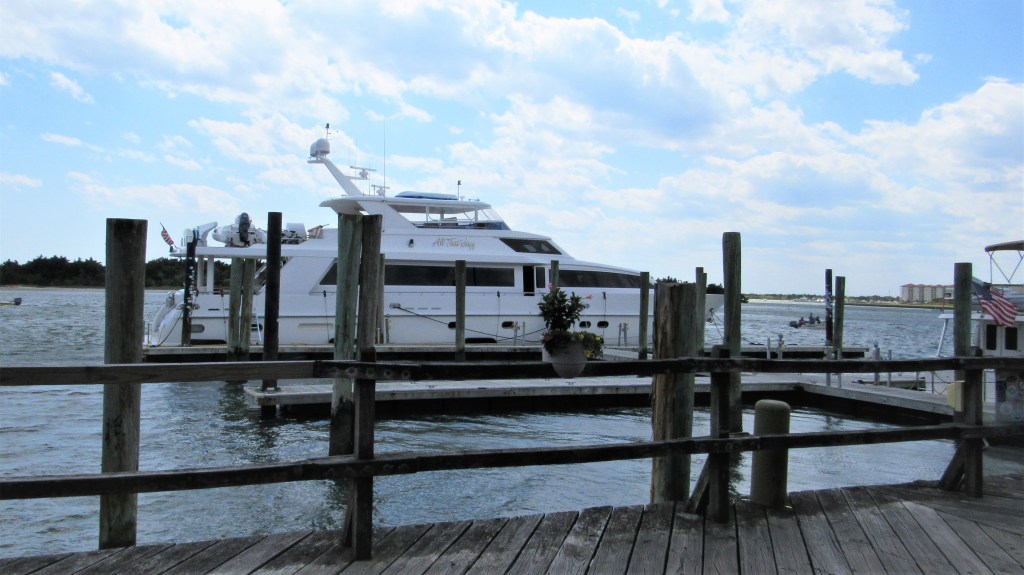
“If you are looking for a cool place to eat you have found the spot. Dine inside or out on our patio overlooking the wild ponies on Carrot Island and the Rachel Carlson Reserve across Taylor’s Creek.” It was a beautiful, though breezy day, so of course, we opted to dine outside. We didn’t mind a little bit of wind. We had a table that overlooked the water’s edge, with a beautiful yacht docked right beside us. I was able to day dream for a bit and pretend that yacht was ours and we could just sail away, off into the sunset.

The Dock House Restaurant was established in 1978. The Dock House, as the locals call it, has been serving the folks in Beaufort, North Carolina on the beautiful waterfront over looking Taylor’s Creek for over 30 years. The Dock House is a well known spot for listening to live music in Carteret County as well. 

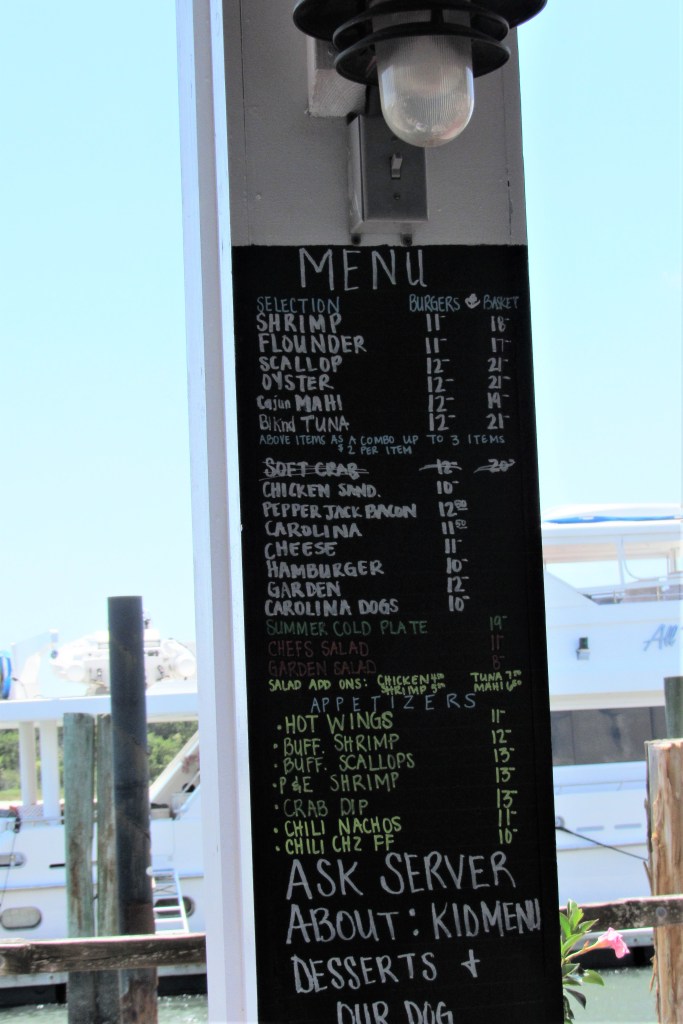
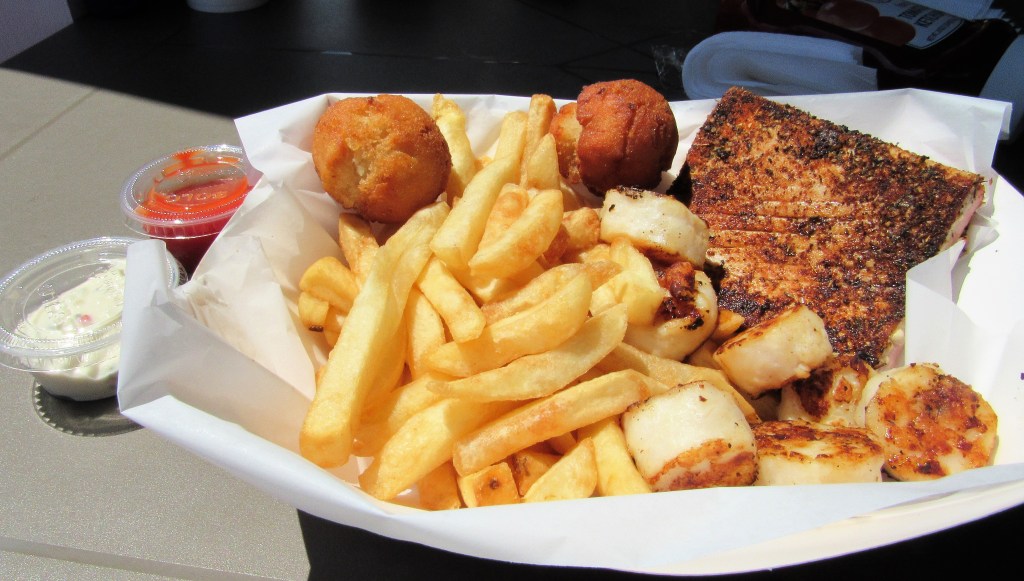
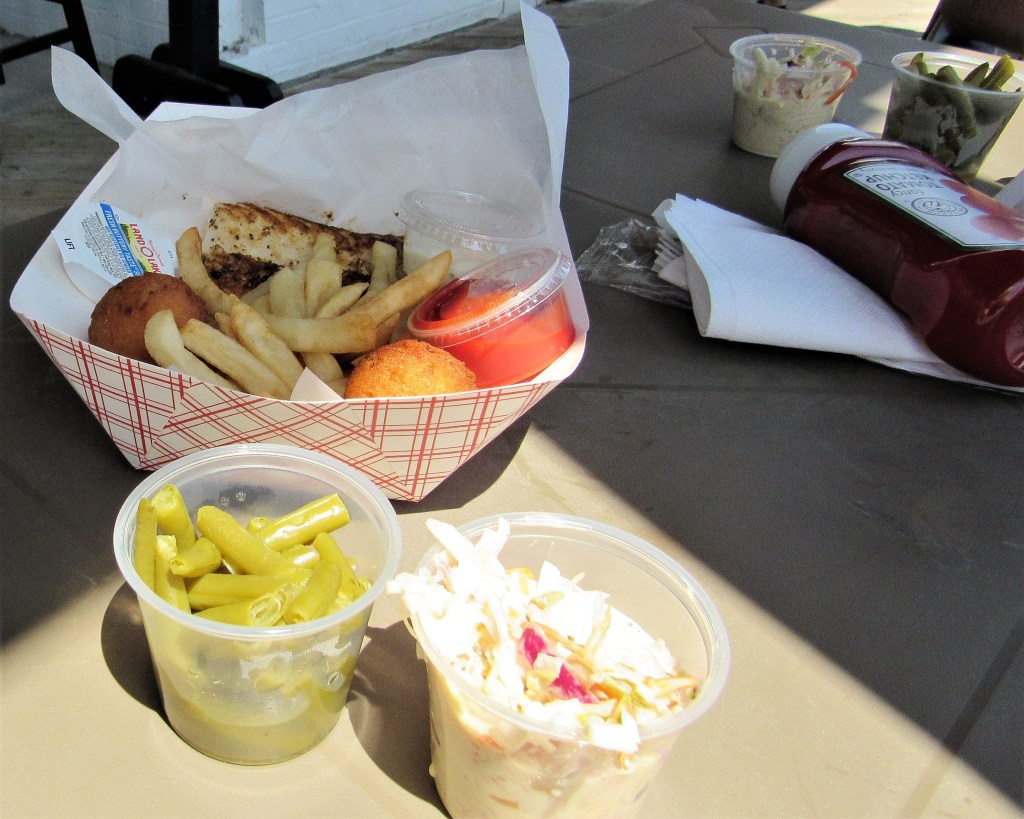
The food was simple and fresh and absolutely delicious! Larry ordered a combo plate with scallops and blackened tuna and I ordered the Cajun mahi mahi. We shared a little bit of everything, like we usually do, so we could both sample all of the fish. Everything was so good. The platters came with fries, hush puppies, coleslaw and green beans. It was most definitely A LOT of food and was quite the fisherman’s catch. Larry did a pretty good job of finishing his. I could not, and I had a smaller portion too.

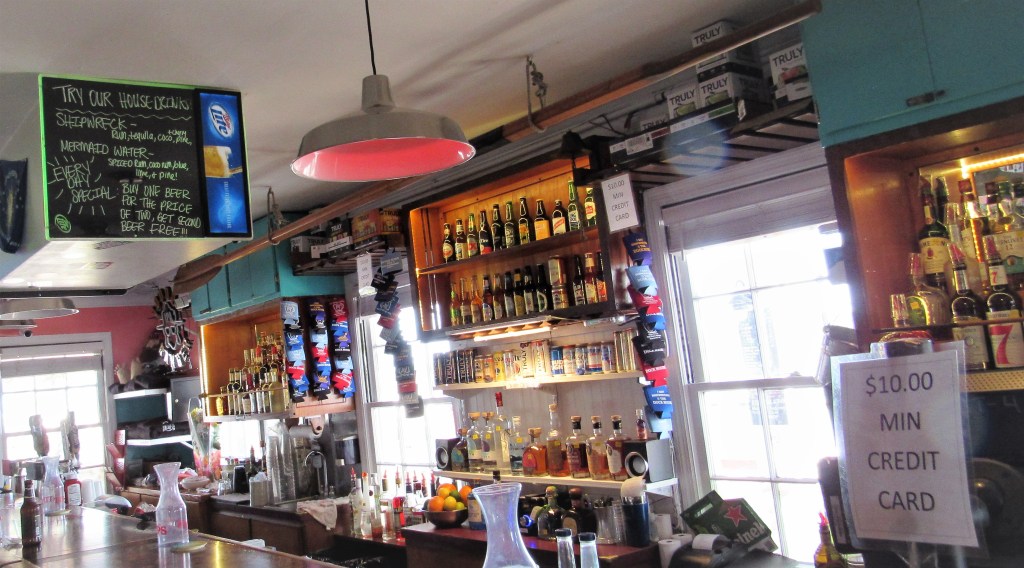
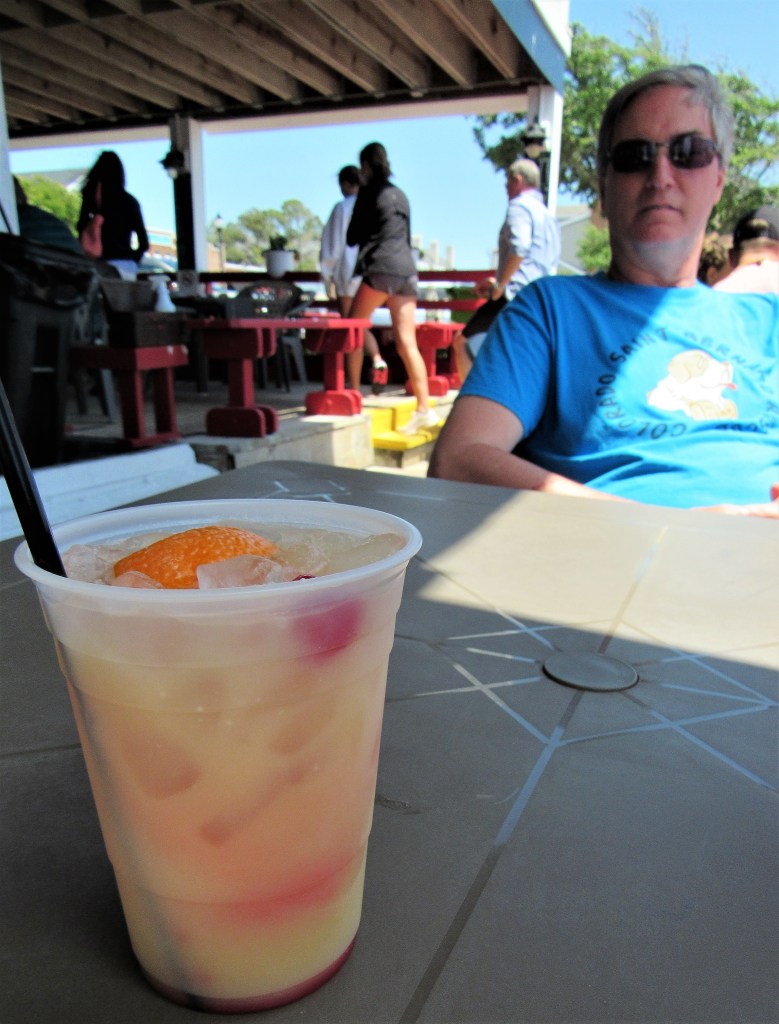
Because we were in shipwreck alley, it was only fitting that I relaxed a bit with a Shipwreck drink too. It was very similar to a hurricane, and was very tasty. Drink them slowly though, and don’t over indulge, or you will be definitely shipwrecked yourself. 🙂

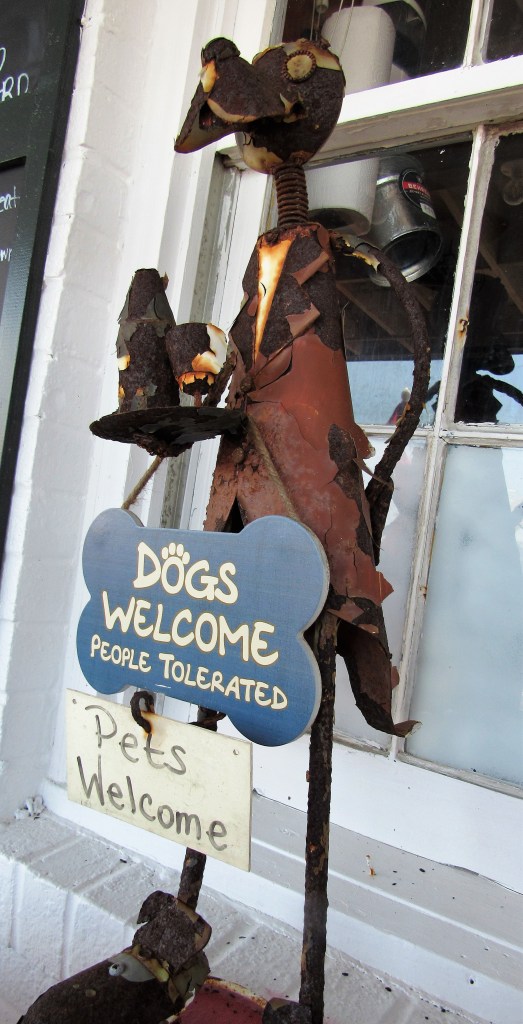
Not only is The Dock House a fun and friendly environment for us, but it is also a fun and friendly environment to man’s best friends too. If your dogs are friendly, The Dock House is friendly to them as well. There were quite a few dogs enjoying their stay while their humans enjoyed the food and fun.

The Dock House is located at 500 Front Street, Beaufort, N.C. 28516. You can call them at (252) 728-4506. The next time you are strolling around through Beaufort, N.C. definitely stop in at The Dock House. Bring your dog too, and you and your dog will both be in for a good time with great food and a fantastic view.

Starting Off the Summer in Style

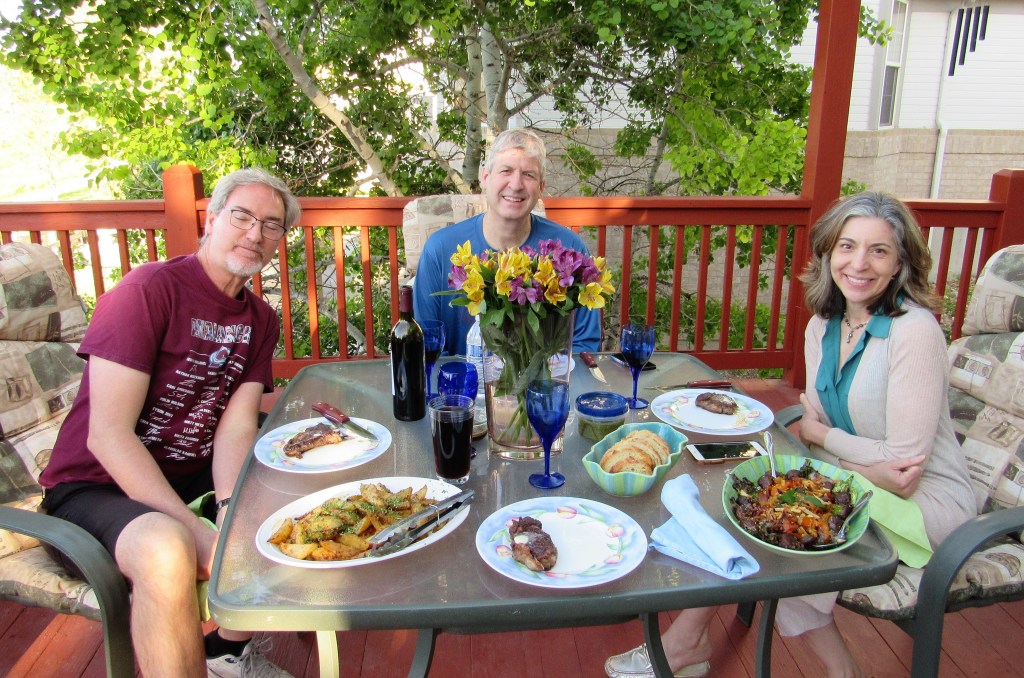
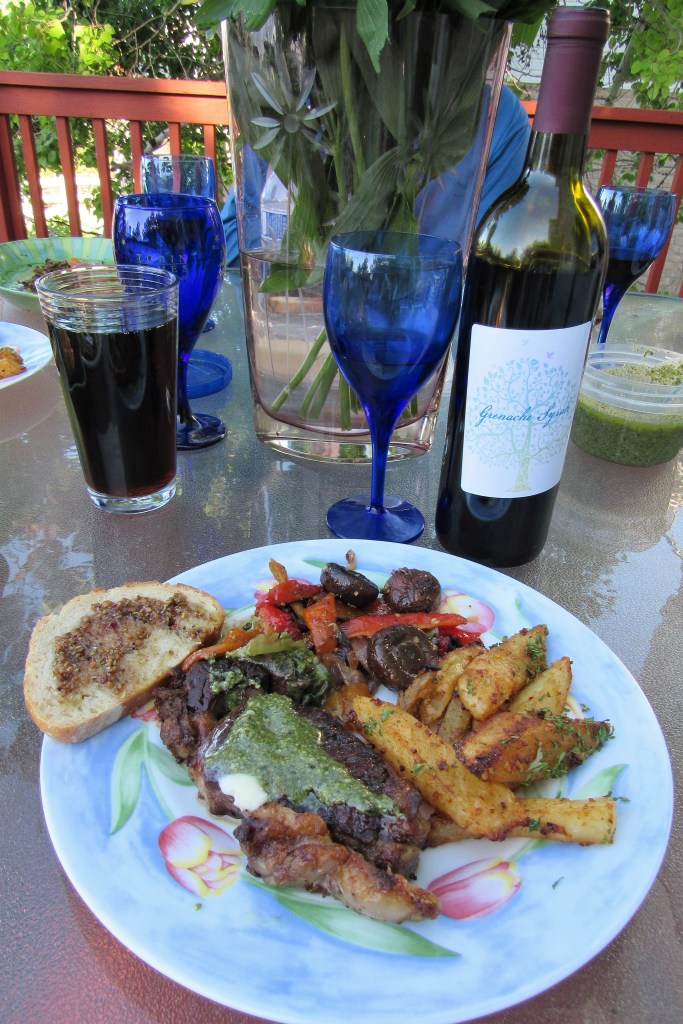
As you all know, we love our deck, and eat out there as much as we possibly can. Yesterday, we had a quick, impromptu dinner with Priscilla and Jonathan to start off our summer season. All of the dishes I made, you’ve seen before, but it was a fun, delicious way to start off the summer season. Steaks were seared to perfection, there was plenty of good wine and great friends. Great friends are the best gift of all.

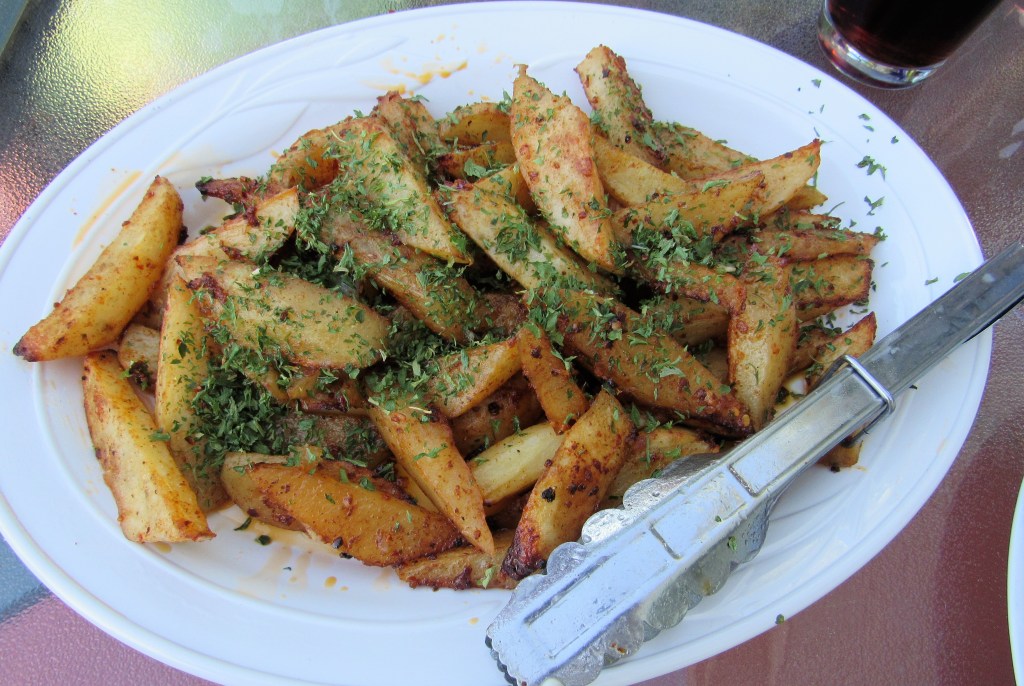
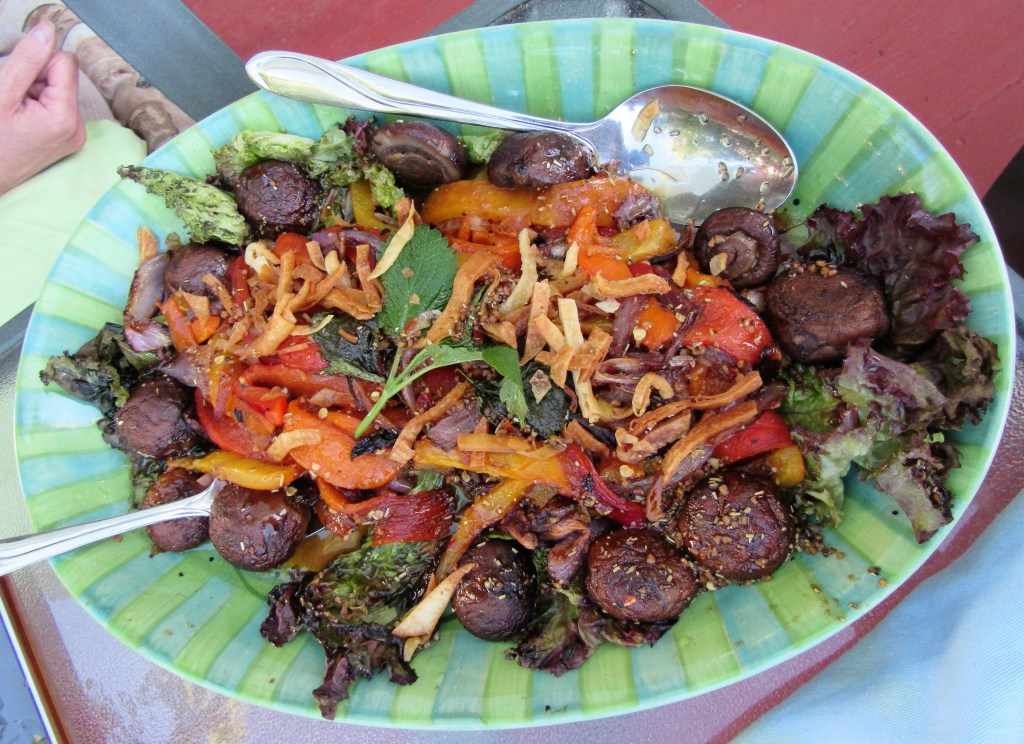
I seared my steaks in my new favorite way to eat steaks, the way I learned from America’s Test Kitchen. Steak Seared to Perfection For side dishes, I made a roasted pepper and mushroom salad with a rosemary vinaigrette Roasted Pepper and Mushroom Salad with Rosemary Vinaigrette and roasted potato wedges. I topped the steaks with pesto and served it all with a Grenache-Syrah red blend, that we actually made and bottled a couple of years ago. It was a perfect start of summer meal.

Priscilla made a light Argentine cake roll, but of course, silly me, I forgot to take pictures of that.

We started of our summer season in style. There will many more such meals ahead. Stay tune. Don’t touch that dial. ‘Til next time.
More From the Outer Banks

We had one full day at the Outer Banks, exploring the area a bit more. It is truly beautiful and different. The Outer Banks of North Carolina Though everything we saw and all the places we ventured to were beautiful. And everywhere we went there was so much history just waiting to to be discovered and learned.

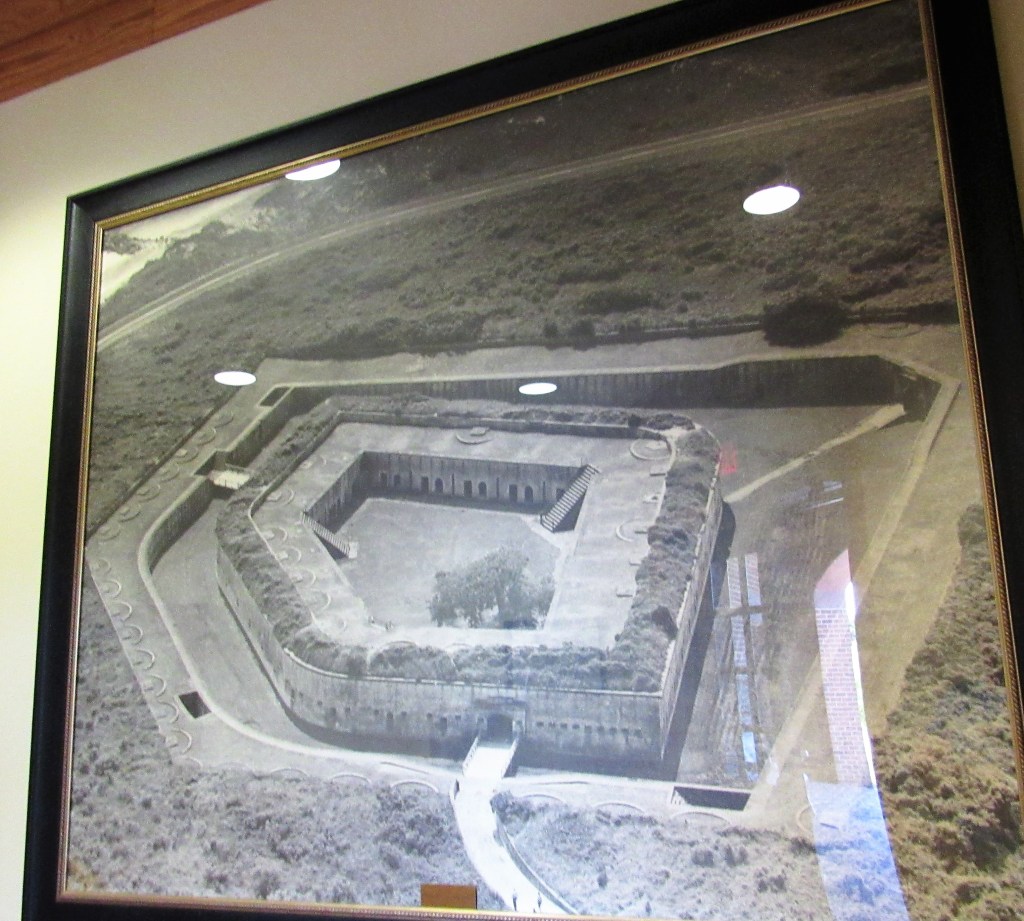
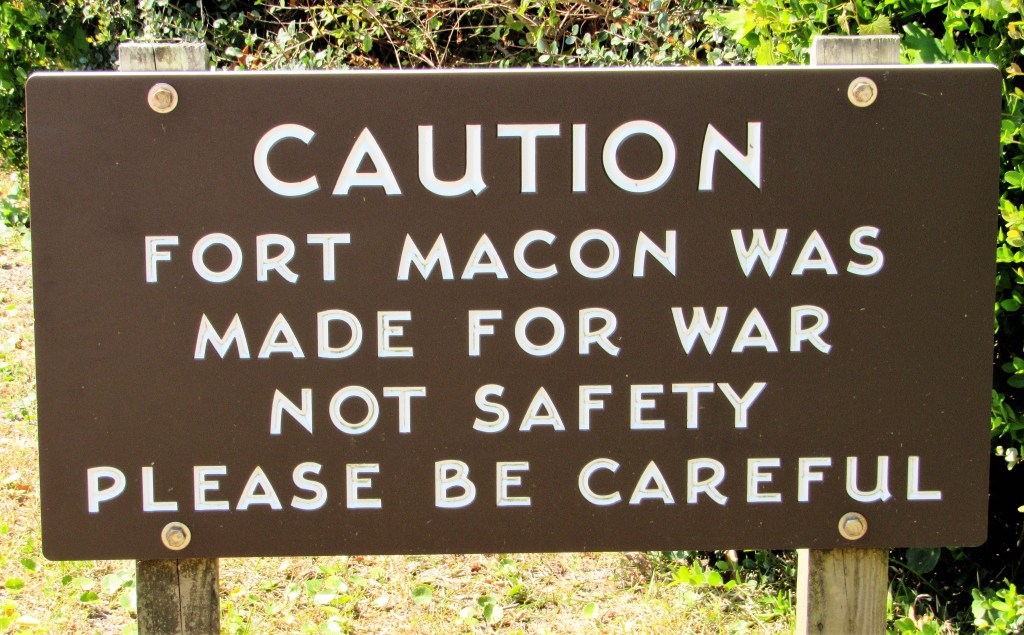
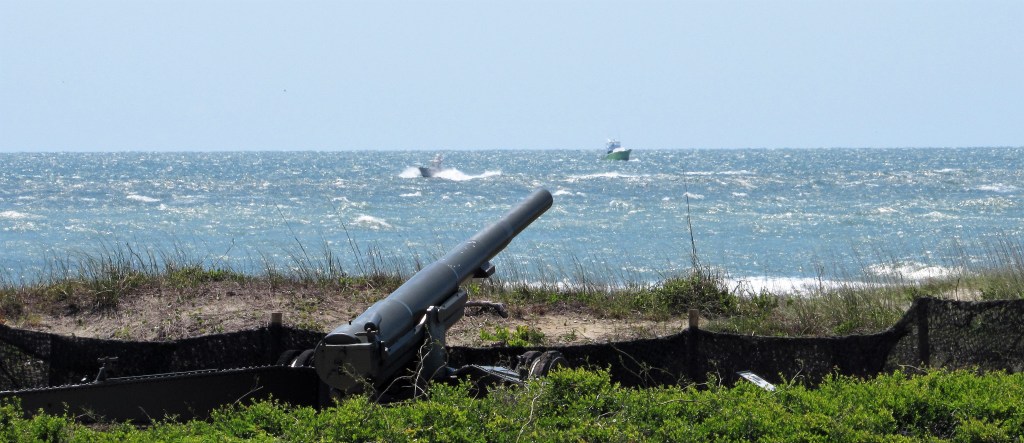
On the last day of our trip, we toured around more of the Outer Banks and the Crystal Coast area. Our first stop for the day was Fort Macon. Fort Macon is surrounded by water on three sides and it is located outside of Beaufort, North Carolina. The Carolina waters and inlets provided a safe haven for sailors, seafarers and pirates alike, which meant there was often danger lurking about in the surrounding waters. The inlets were in constant danger of being raided by pirates or hostile nations. The need for protection for the area first became evident in 1747, when Spanish raiders attacked the British Colonists and captured the town of Beaufort for several days. Beaufort was captured once again, this time by the British, in 1782. Plans for construction of a fort were first started in 1756, but were not completed until 1808, meaning the coast was left unprotected and vulnerable for all those years in between. The first fort was Fort Dobbs. Unfortunately, however, Fort Hobbs was destroyed by a hurricane in 1825. Fort Macon was constructed a year later, and still stands today.

Fort Macon was constructed after the Revolutionary War, but was used as a fort during the American Civil War. Depending on which side you were fighting for, it was either good news or bad news, when at the start of the Civil War, Fort Macon, which is located in the South or the Confederate States, was seized by the Union or Northern soldiers. The Confederates regained control of the fort, only to have it be seized once again by the Union soldiers in 1862. The fort served as a coaling station for the Union Navy for the duration of the war.

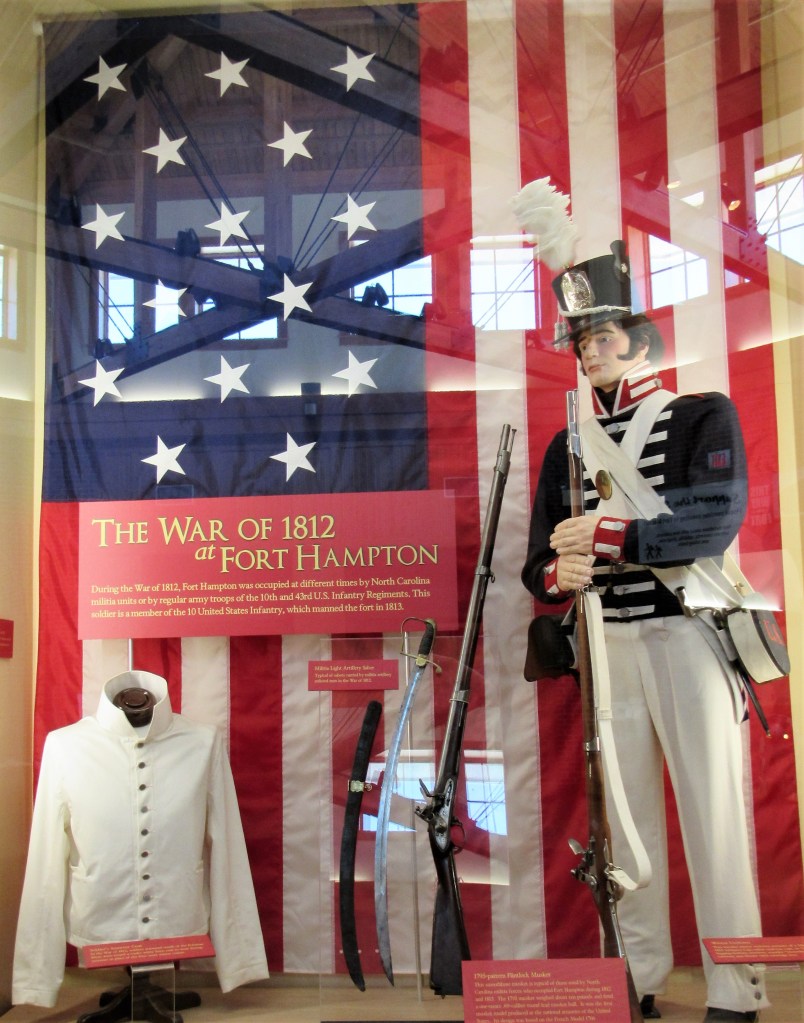
After the Civil War, Fort Macon was used as a Federal Prison from 1867-1876. Like Alcatraz, off the coast of San Francisco, the warden and some of the prison guards and their families lived on the premises. They lived in what was called “collapsible houses”, which just meant they were easy to construct and take down, and they were not fancy or elaborate at all.

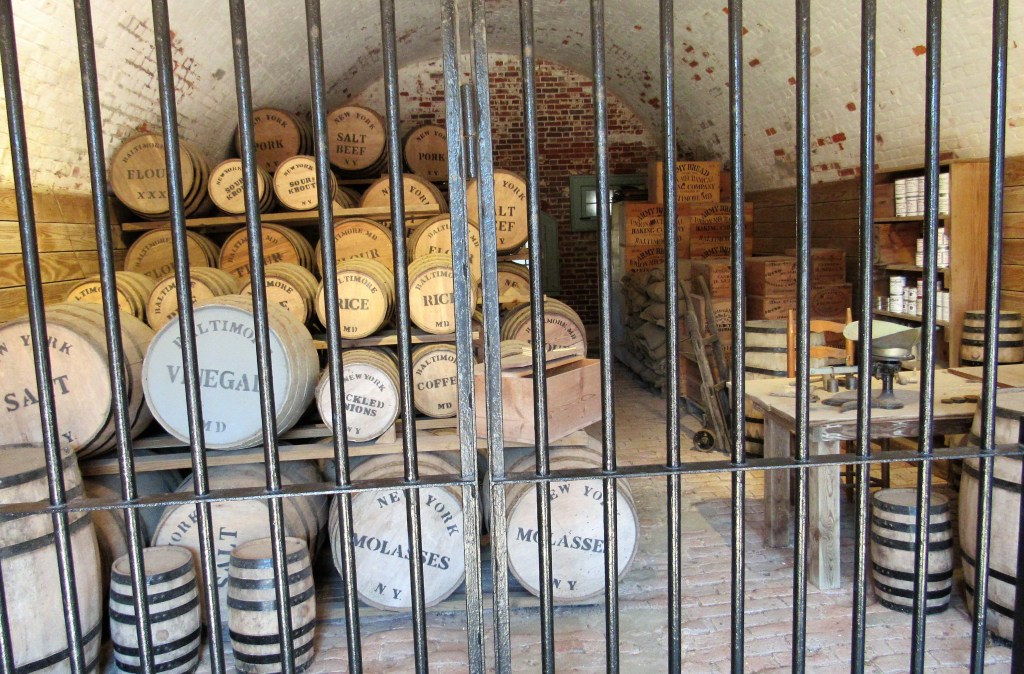
The local “grocery store” for the residents was located in one of the cells.

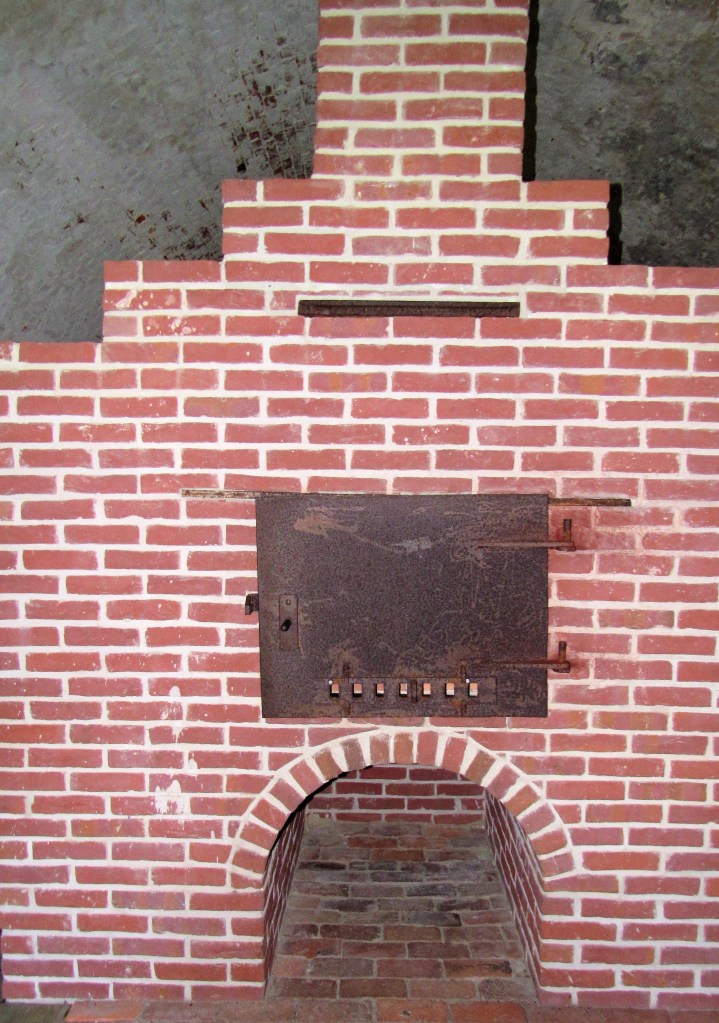
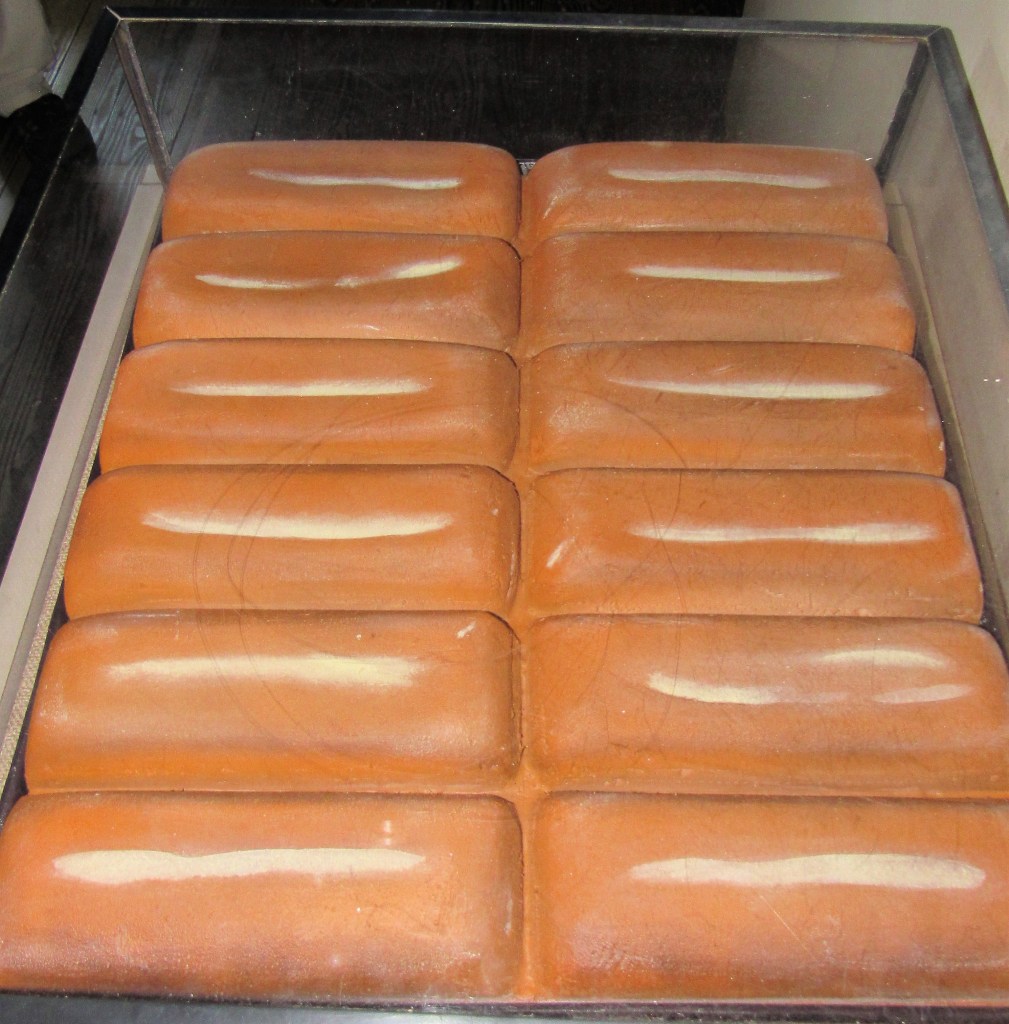
Because of the isolation everything was made on site as much as possible. Certainly all the food was made and/or grown on site as much as possible. Here is the bakery oven used to bake all the bread. Rumor has it, the bread was like bricks and if not eaten right away, could be used as a brick or like a weapon.

Out tour guide was “convinced” this was the actual bread from the day, rather than just replicas, because the bread was notoriously so bad and so hard.

Our tour guide was very knowledgeable and informative which made the tour very interesting.

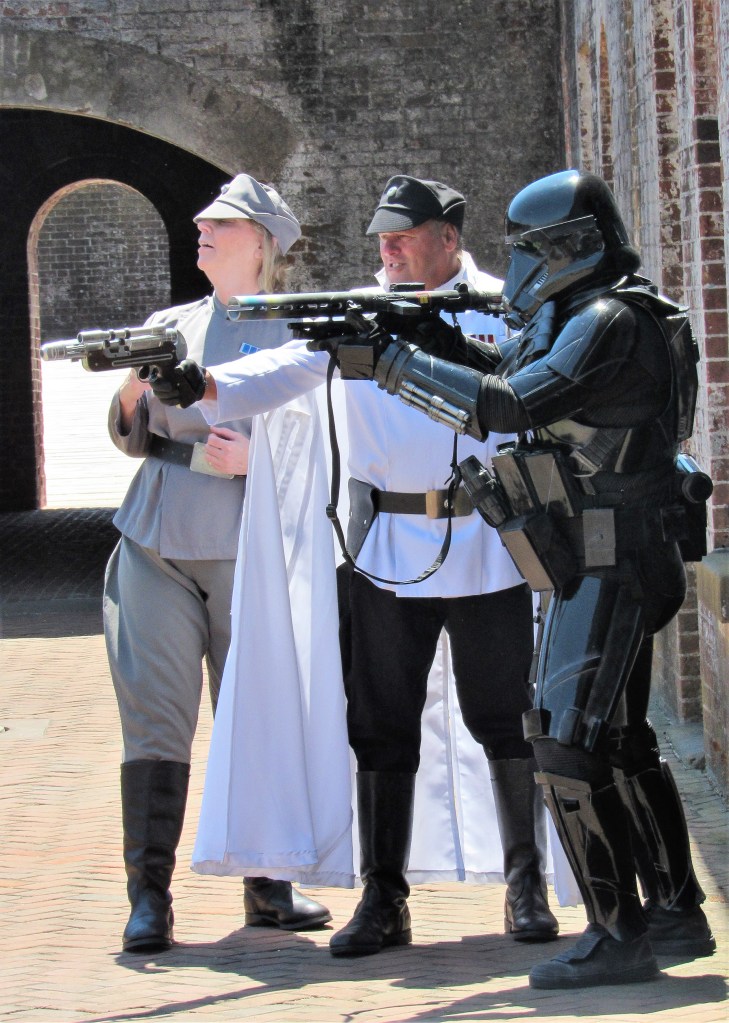
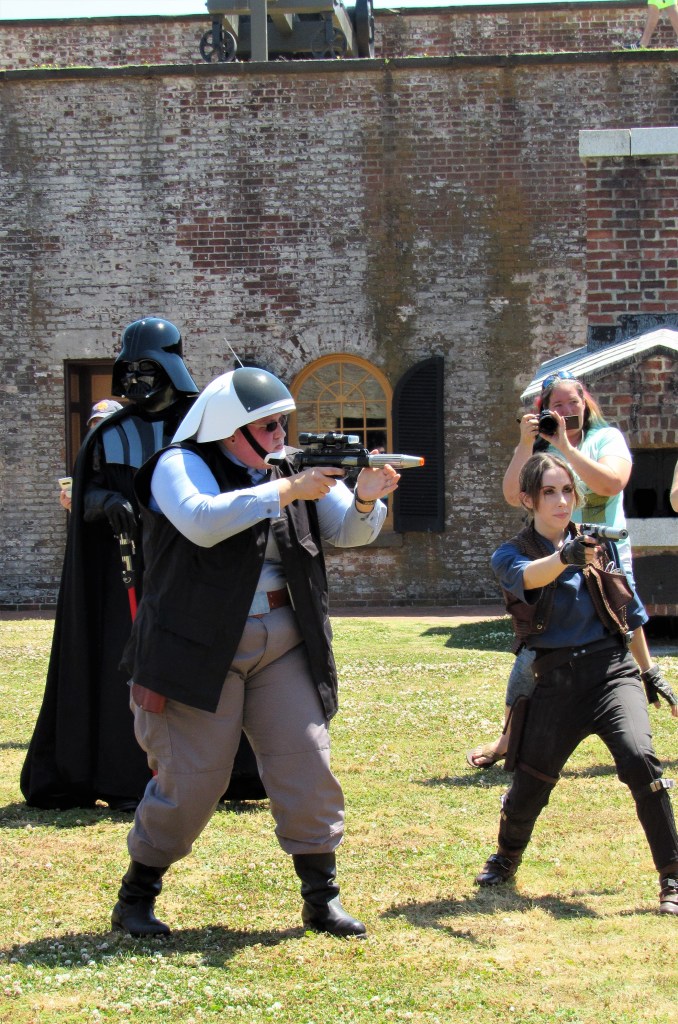
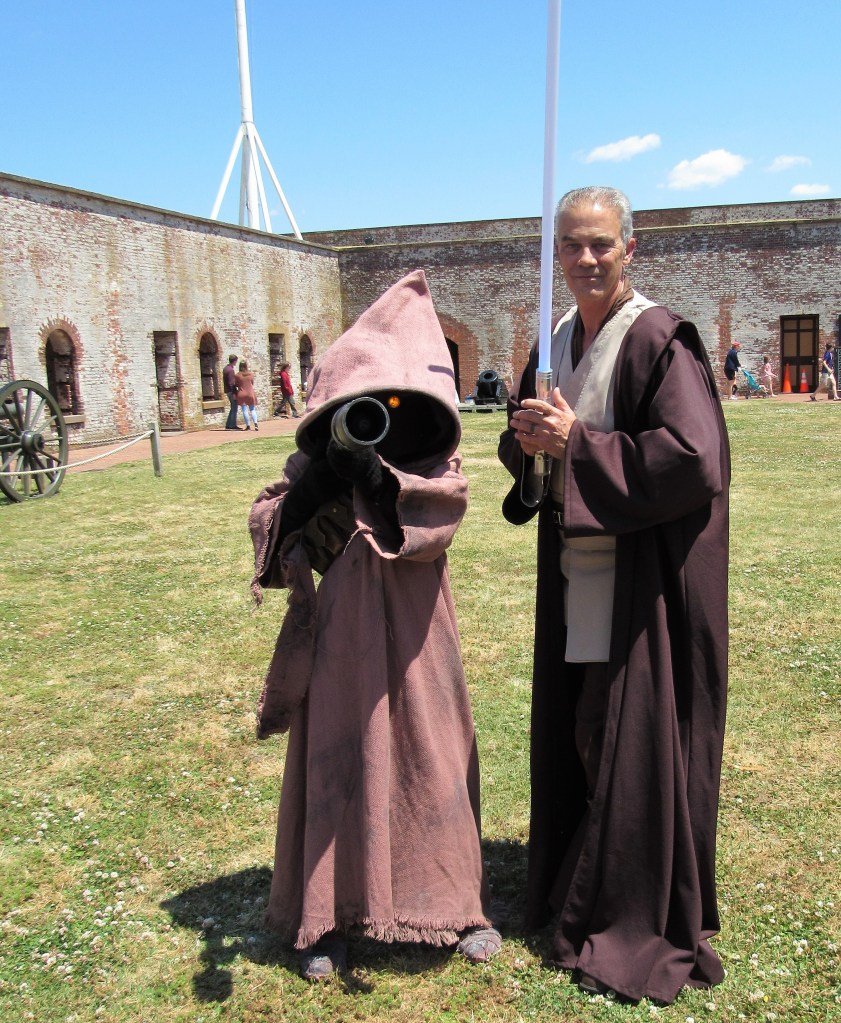
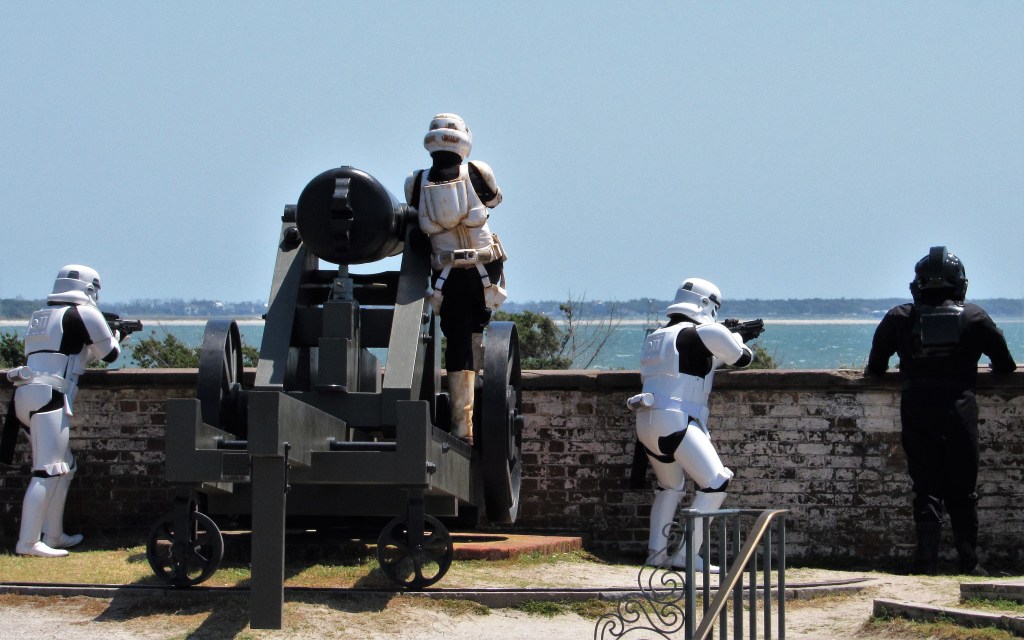
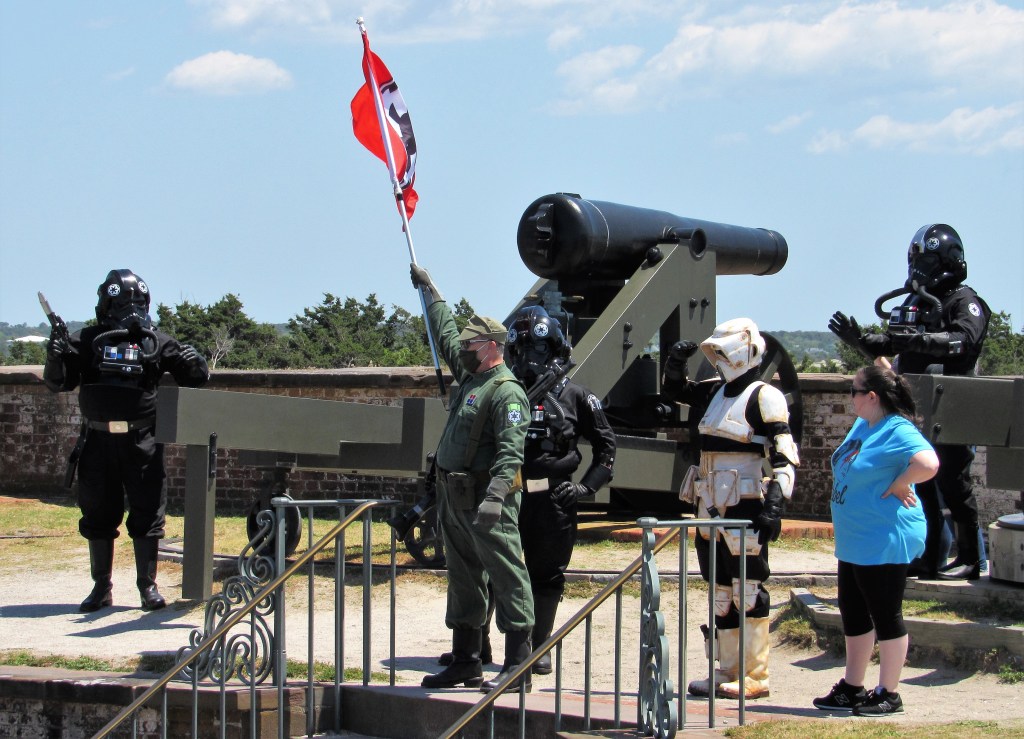
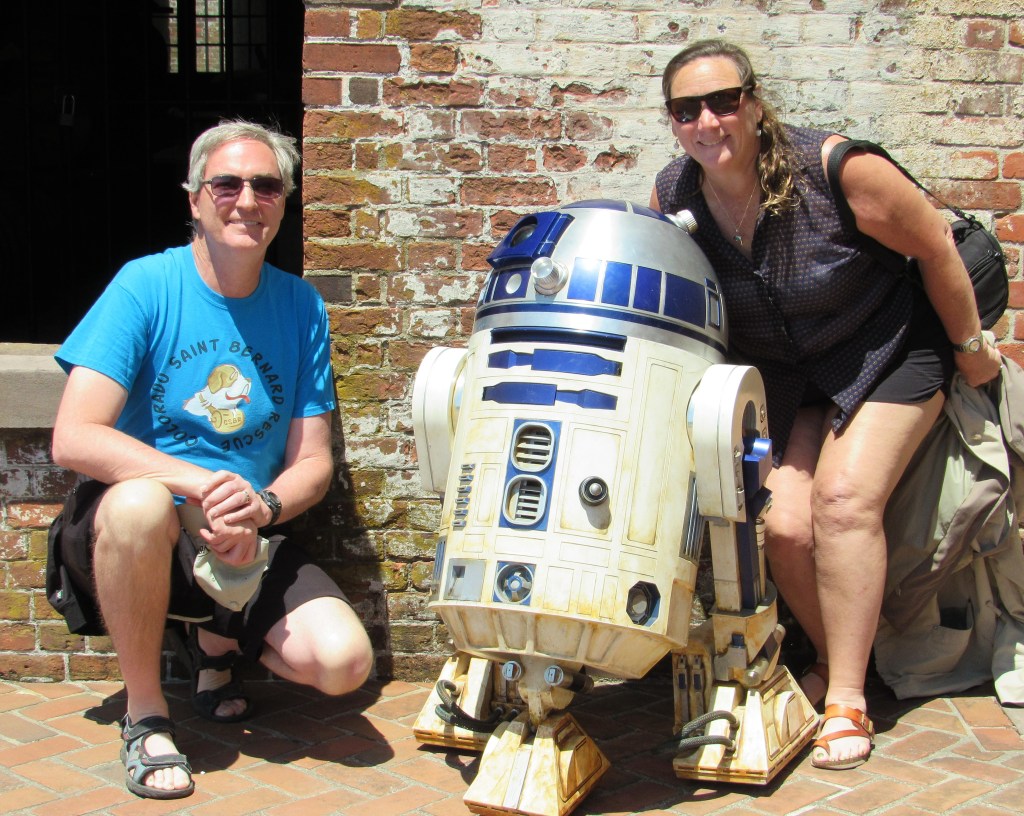
Fort Macon was officially recruited for service one more time, during WWII. Unofficially though, it is still used for “battles” today. On the day we were there, there was a Star Wars photo shoot taking place, so we got to see some Star Wars and intergalactic action too, which made our visit even more fun and unique.

Fort Macon is located in Carteret County on the eastern end of Bogue Banks, between US 70 from Morehead City and South of N.C. 58, crossing the bridge to Atlantic Beach, at 2303 E. Fort Macon Road, Atlantic Beach, N.C. 28512. You can contact them either by phone at (252) 726-3775 or online at fort.macon@ncparks.gov or http://www.ncparks.gov. You just never know what you are going to see or who you are going to meet and that always makes life much more interesting.

The Outer Banks of North Carolina

We are now on the last legs of our trip, and will soon be heading home (per this recitation. We have already been home for about 2 weeks in reality). We flew in and out of Charlotte North Carolina. At the beginning of our trip, we took the Blue Ridge Parkway through the Blue Ridge Mountains heading into Virginia First Stop – Charlotte, North Carolina. Going back to Charlotte, we took the coastal route, known as the Outer Banks. They were very beautiful, and they too are filled with a rich and colorful history, from Indians, to European settlers to the first flight made by the Wright Brothers to pirates, Blackbeard in particular.

The Outer Banks (frequently abbreviated OBX) are a 200-mile (320 km) string of barrier islands and spits off the coast of North Carolina and southeastern Virginia, on the east coast of the United States. They line most of the North Carolina coastline, separating Currituck SoundAlbemarle Sound, and Pamlico Sound from the Atlantic Ocean

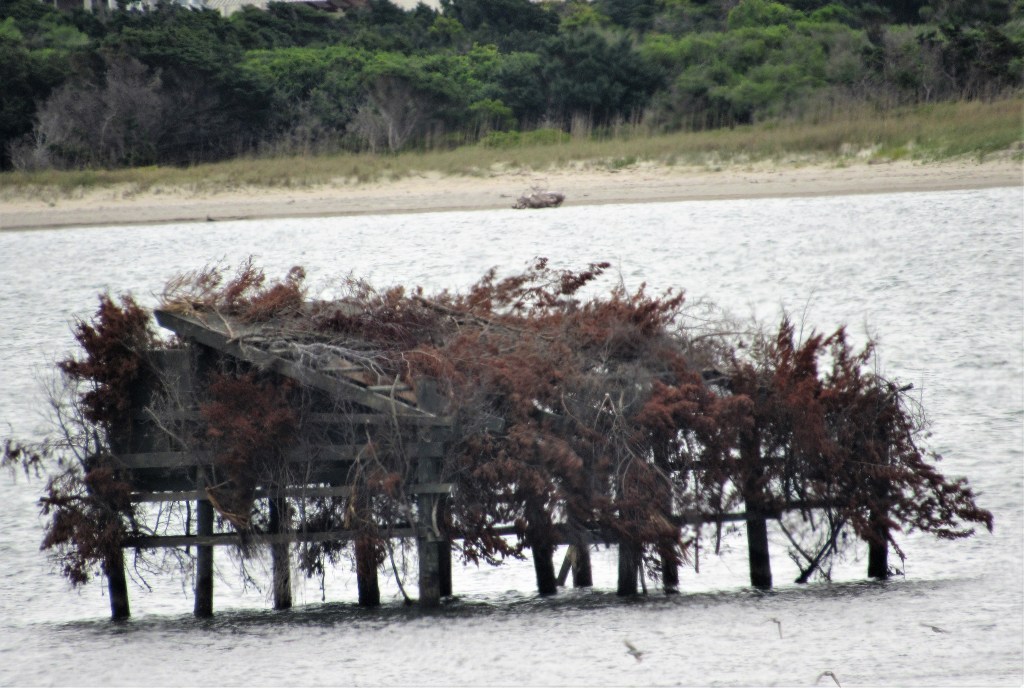
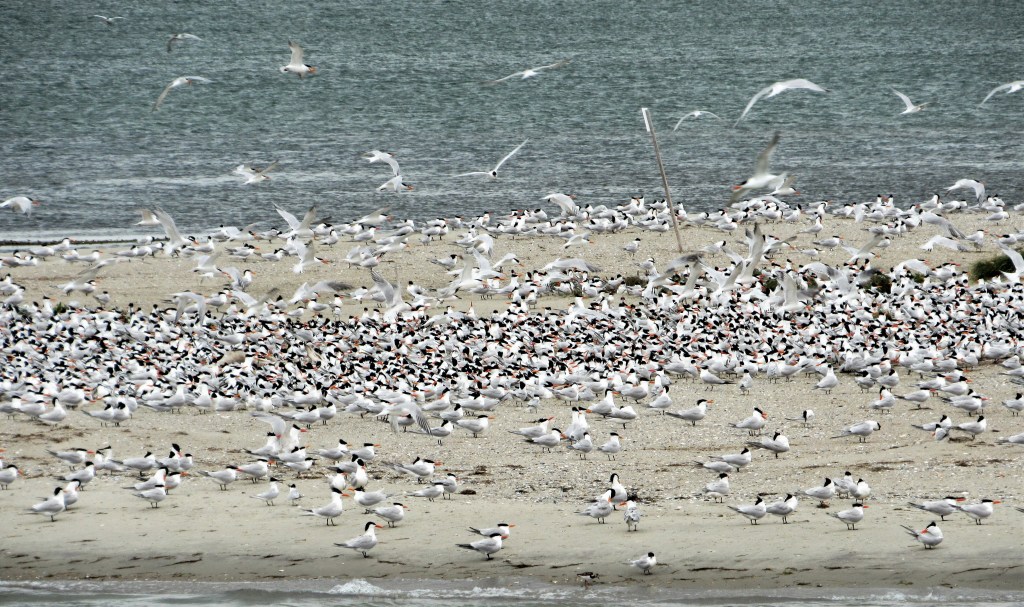
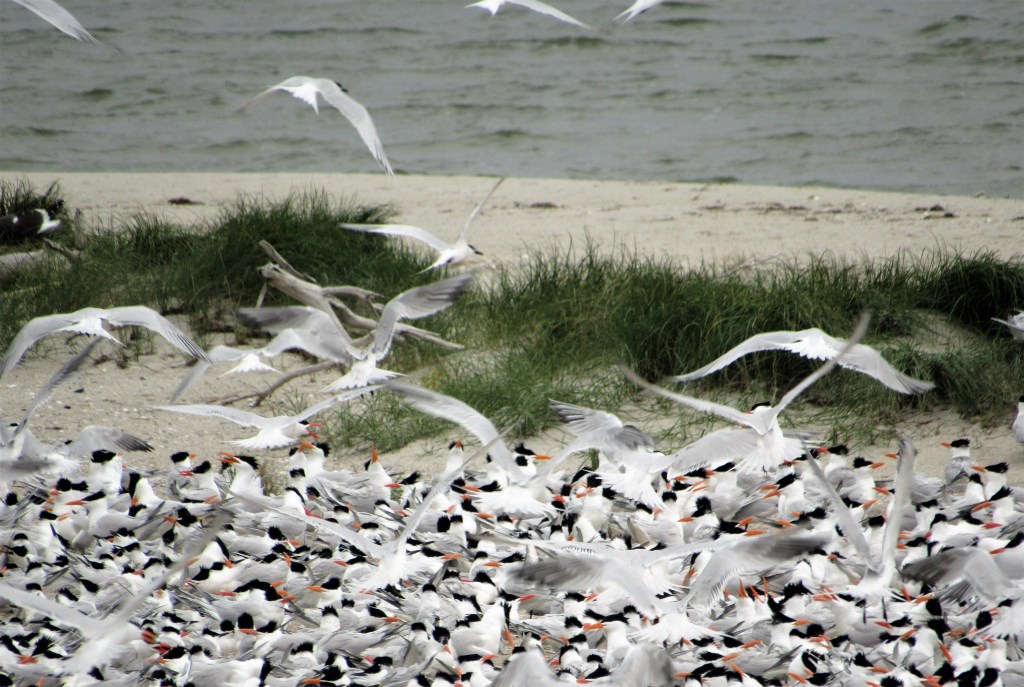
I called this island “Bird” or “Frigate” Island, but I have no idea if this is really the name or not. There were 1000’s of frigate birds out on the island. Before getting onto the ferry, I tried and tried to get some good shots of the frigates, not knowing that in a very short time, I would see 1000’s of them.

Before bridges were built in the 1930s, the only form of transport between or off the islands was by boat, which allowed for the islands to stay isolated from much of the rest of the mainland.

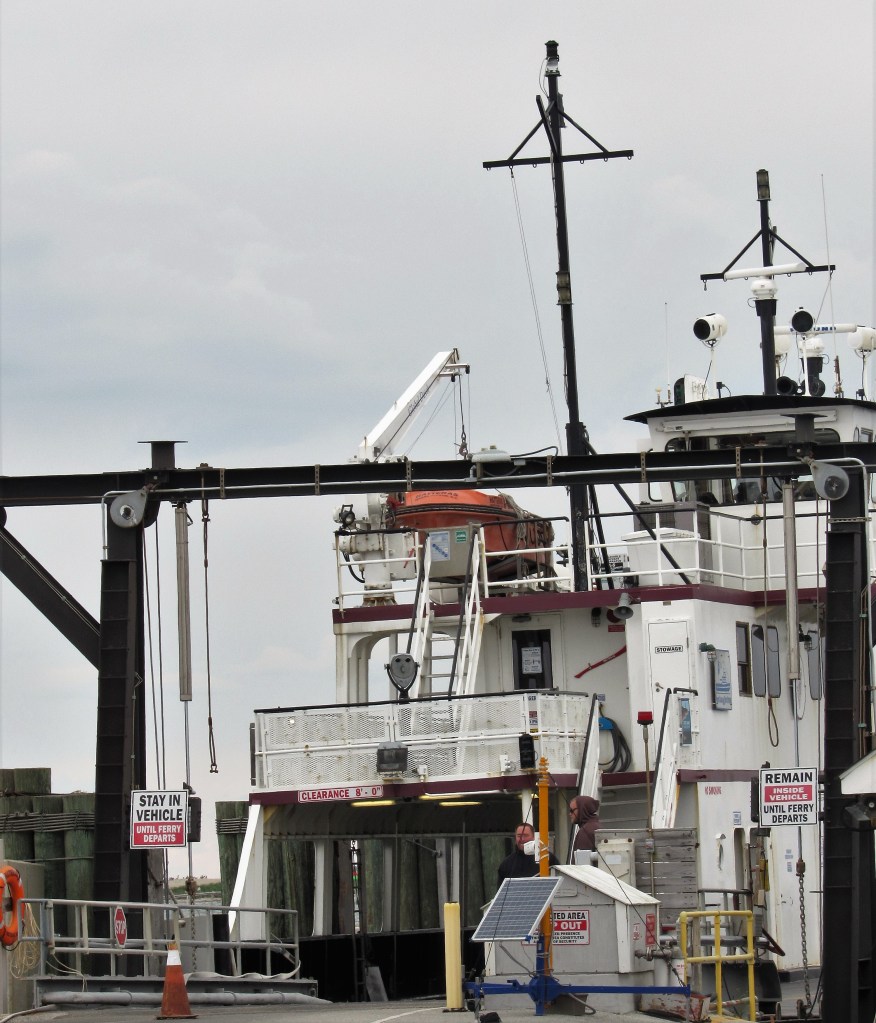
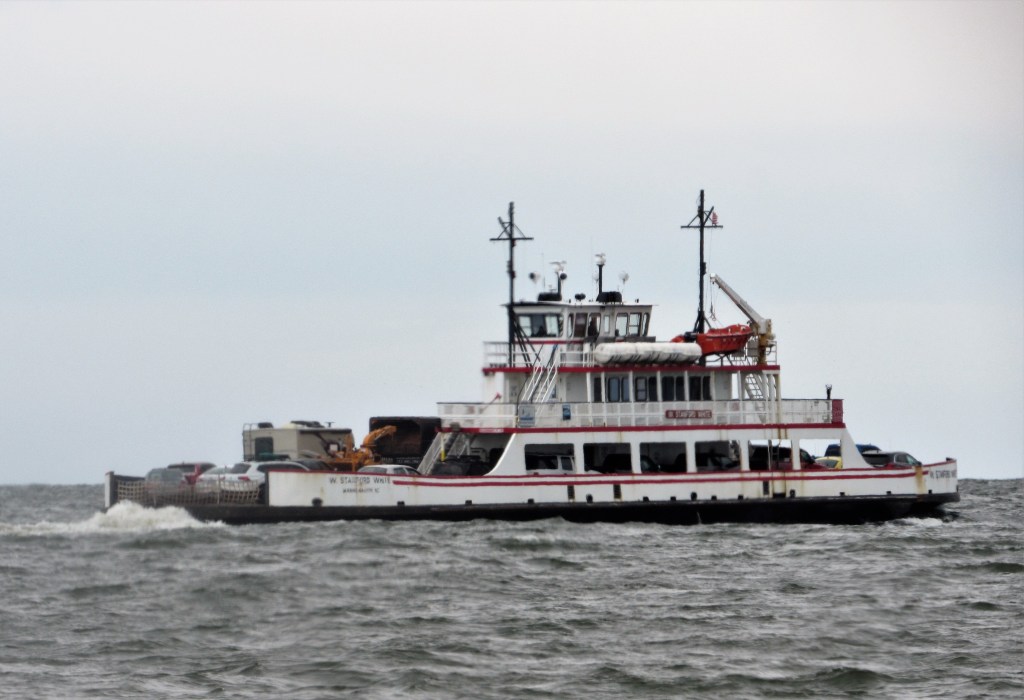
Getting onto the ferry at Hatteras Island. This ferry ride took a little over an an hour. We were headed to Okracoke Island. Once on Okracoke Island, we took another ferry to get us back over to the mainland. That ferry took about 2 1/2 hours. We even saw some dolphins on that part of the journey, but they were too fast and I could not get any pictures of them.

This day was a VERY long day of nothing but travel. We were completely frazzled by the end of the day. We left Richmond, VA about 8:30 AM and did not arrive at our hotel in Jacksonville, NC until about 10:30 PM. We barely had time to stop and enjoy things because we had the two ferries to catch that we had reservations for. The pictures I got were all from just along the way.

The outer banks have unusual weather patterns because of their unique geographical location. As the islands are jutted out from the eastern seaboard into the Atlantic Gulf Stream, the Outer Banks has a predisposition to be affected by hurricanes, Nor’easters (usually in the form of rain, and rarely snow or mixed precipitation), and other ocean-driven storms. Because of the propensity for heavy rains, storms and hurricanes, all of the homes are built up high on stilts.

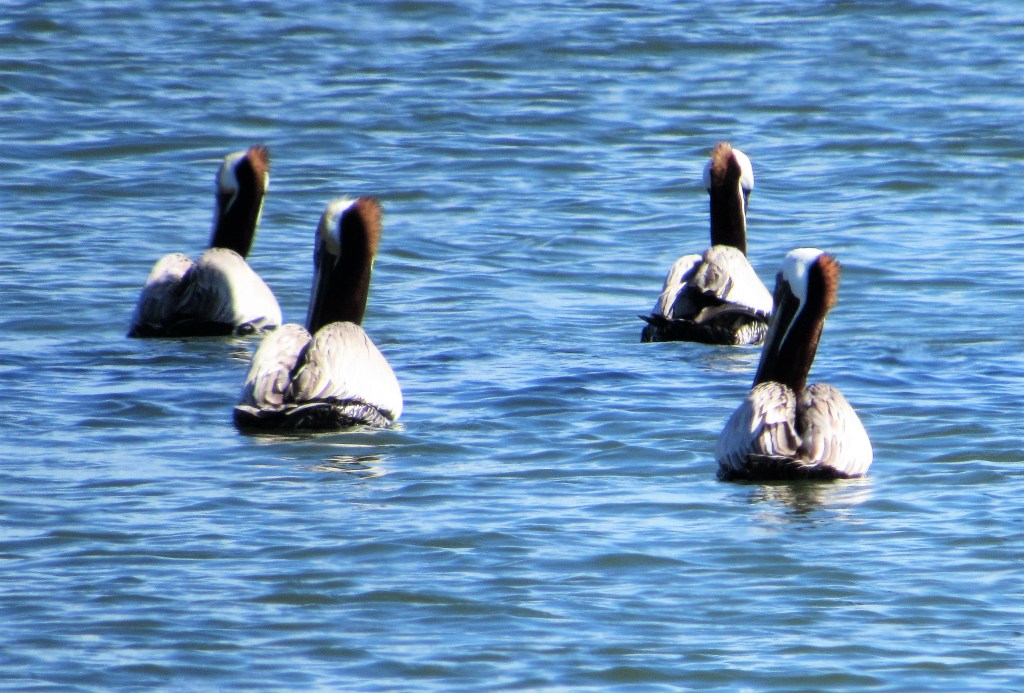
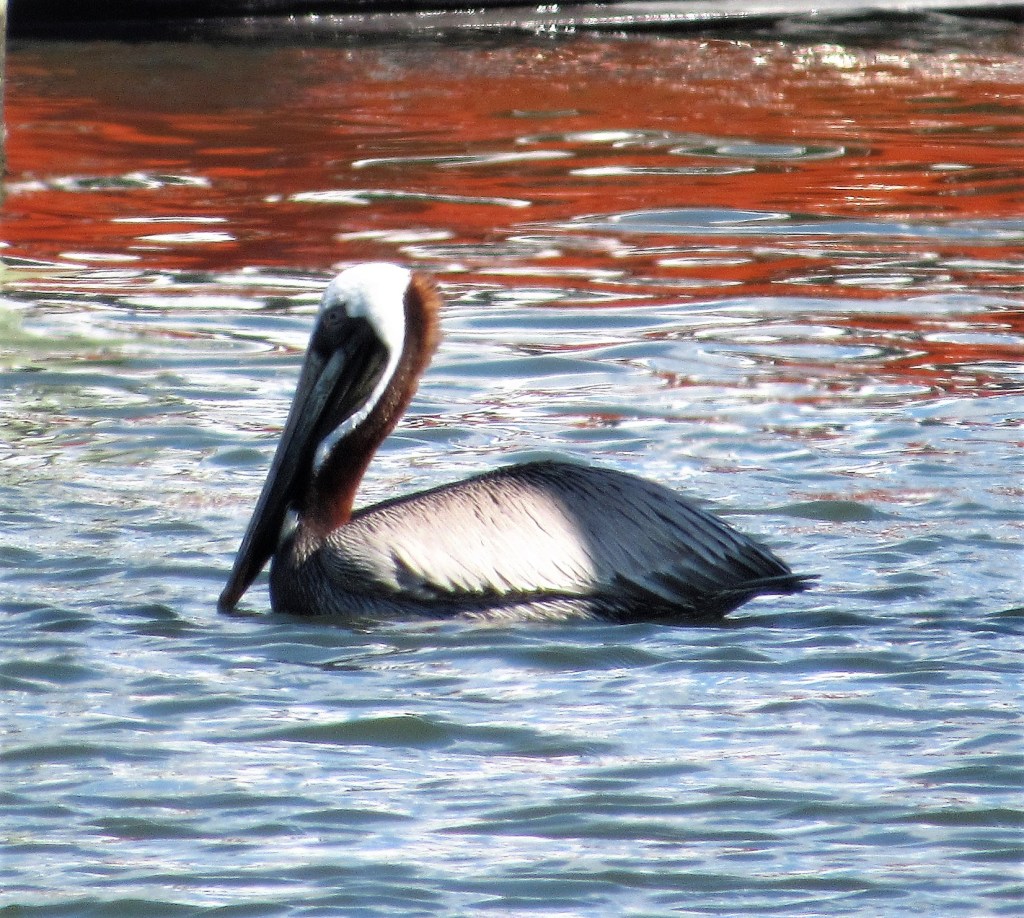
Here are some shots I got while island hopping. I would have loved to have spent a lot more time here, and gone diving too. This is a diving location known for all its wrecks. Maybe next time. I did get to see a lot of pelicans though.
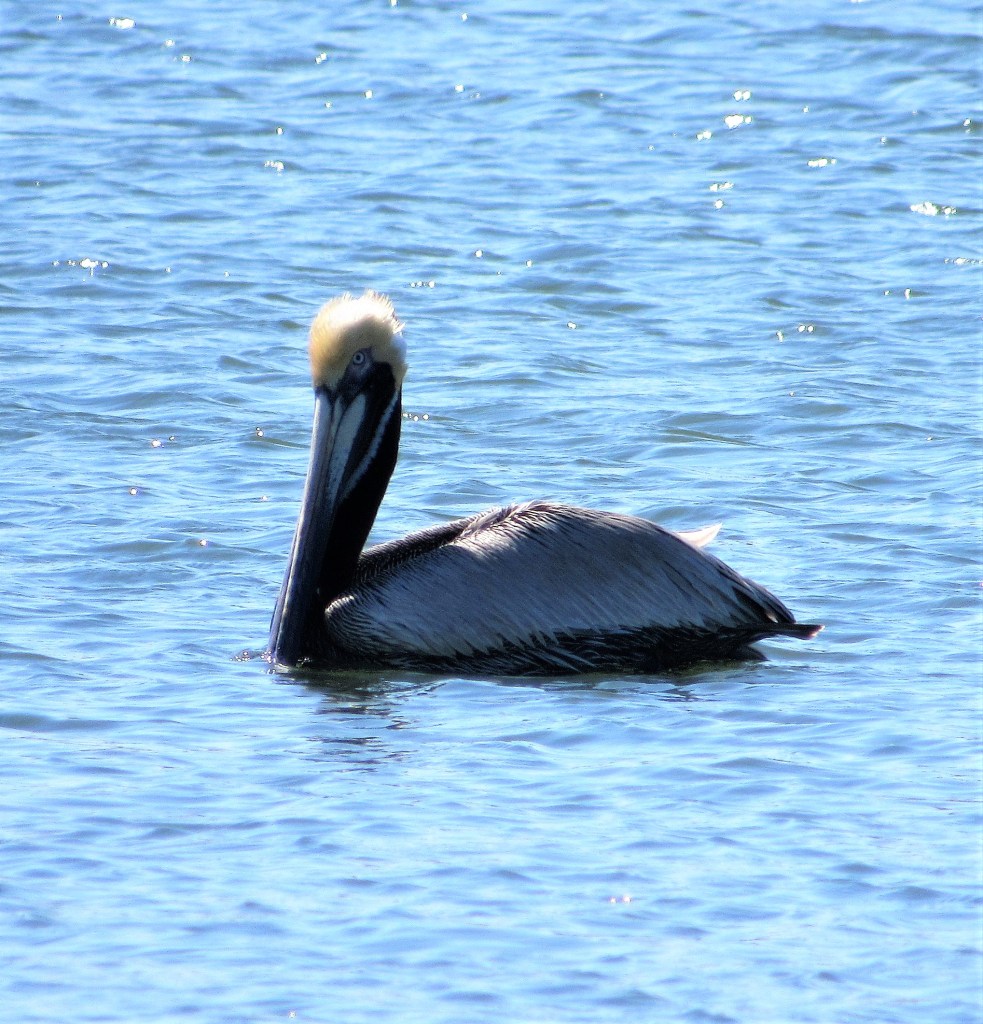
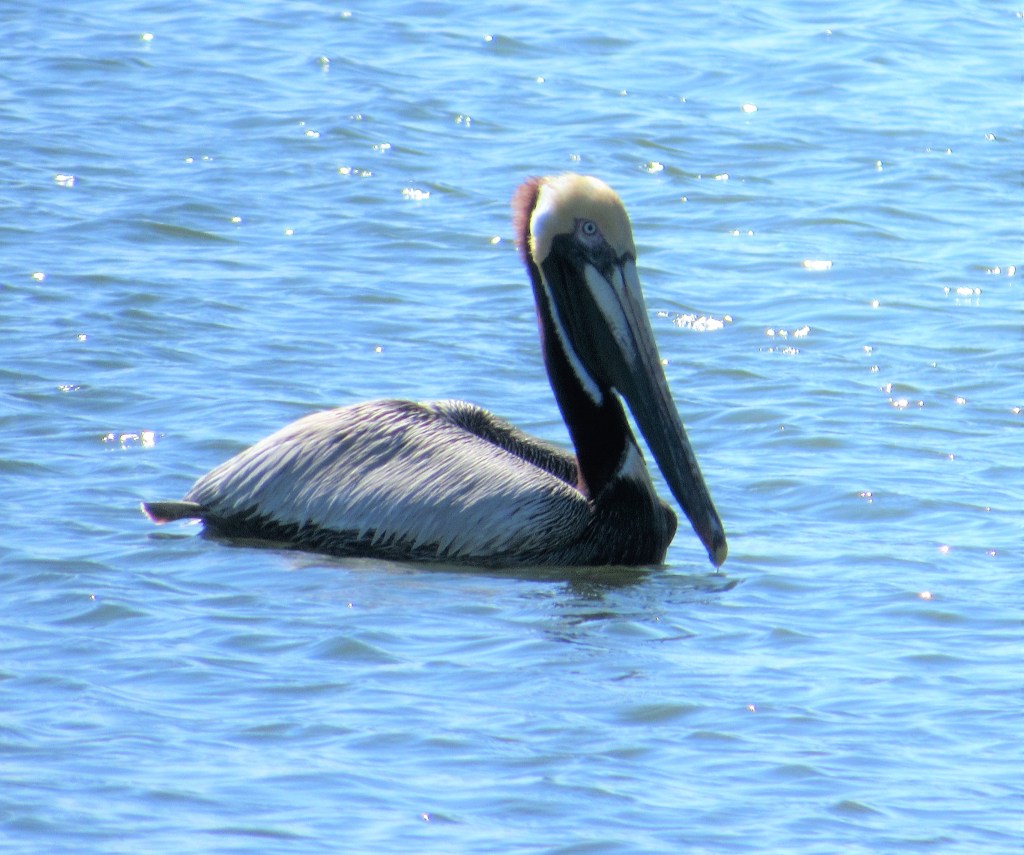
These are brown pelicans, unlike the American white pelicans we have here at home.

Some residents of the Outer Banks, known as wreckers, made part of their living by scavenging wrecked ships—or by luring ships to their destruction. Horses with lanterns tied to their necks would be walked along the beach; the lanterns’ up and down motion would appear to ships to represent clear water and a ship ahead; the unsuspecting captain would then drive his ship ashore following this false light.[21] Ocracoke was the last refuge of pirate Edward Teach, better known as Blackbeard. It is also where the infamous pirate was killed November 22, 1718, in a fierce battle with troops from Virginia.

The Outer Banks were sites of early settlement in the United States and remain important economic and cultural sites. Most notably the English Roanoke Colony vanished from Roanoke Island in 1587 and was the first location where an English person was born in the Americas, Virginia Dare was born.[2] The hundreds of shipwrecks along the Outer Banks have given the surrounding seas the nickname Graveyard of the Atlantic. The Outer Banks were also home to the Wright brothers‘ first flight in a controlled, powered, heavier-than-air vehicle on December 17, 1903, at Kill Devil Hills.

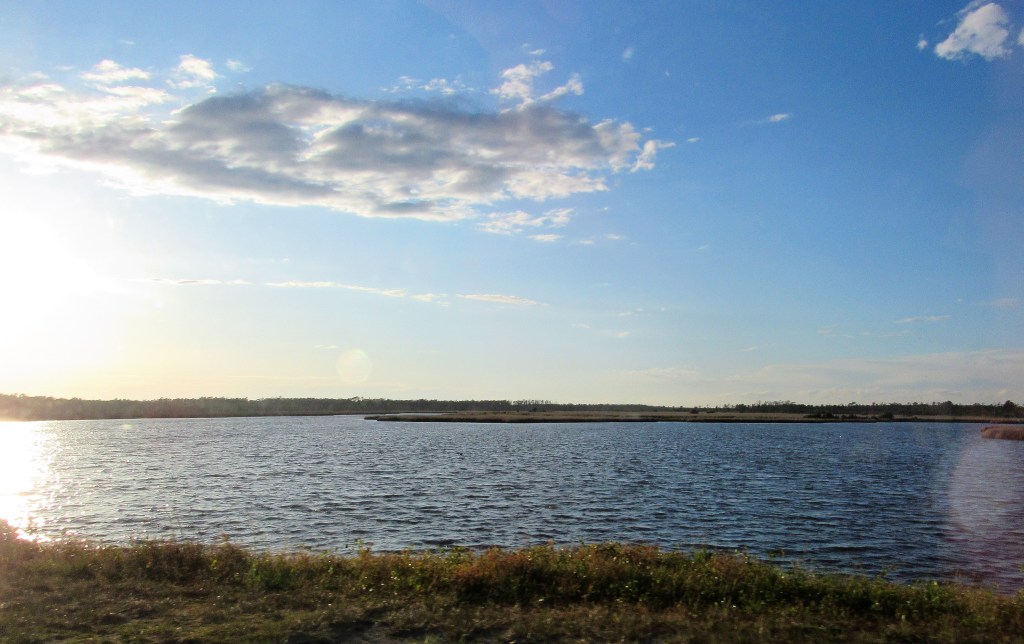
Once we got off the ferries, we drove along the marshes for quite some time.
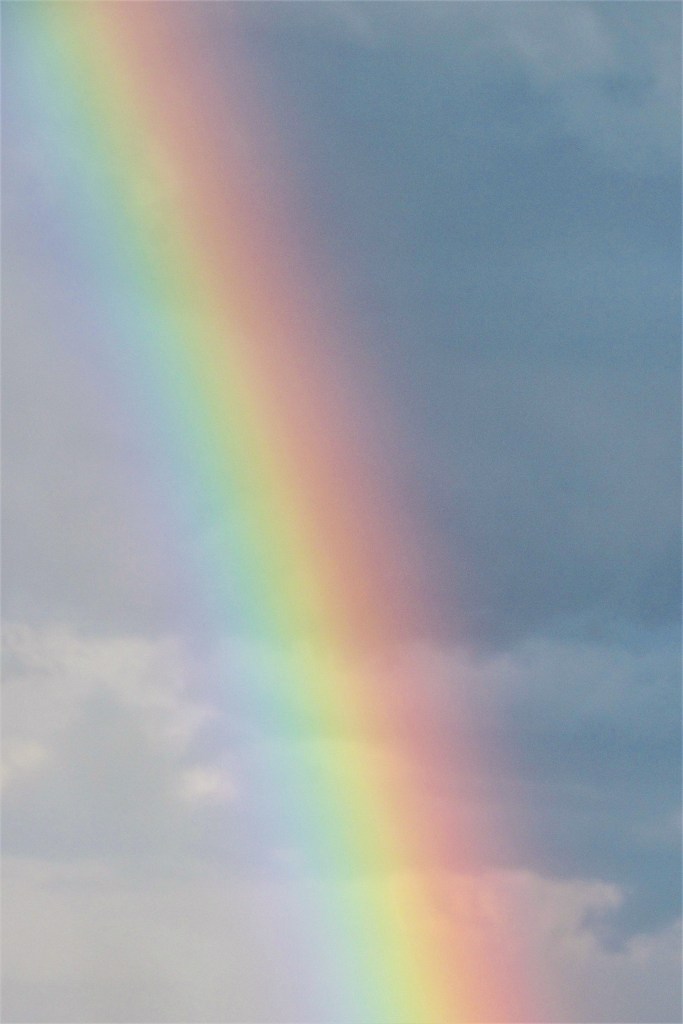
We hit some heavy rain, but it didn’t last too long, and it gave a us a beautiful rainbow too. At the end of the day, we were presented with a gorgeous sunset. It was a great ending to a very long day of travel.

The Battlegrounds of Yorktown

From the American Revolutionary Museum Learning Our History – Part 2 – Yorktown we ventured out to the actual battlegrounds of Yorktown. Here at Yorktown, in the fall of 1781, General George Washington, with allied American and French forces, besieged General Charles Lord Cornwallis’s British army.  On October 19, Cornwallis surrendered, effectively ending the war and ensuring independence.  We downloaded the app that gave us the history of each location as we toured around the sites. It was very interesting and informative.

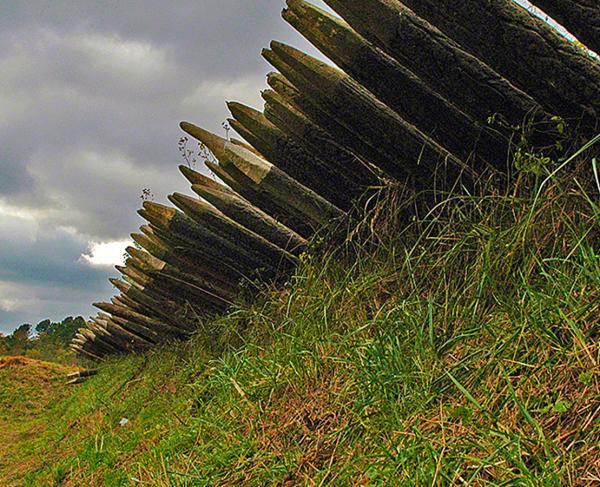
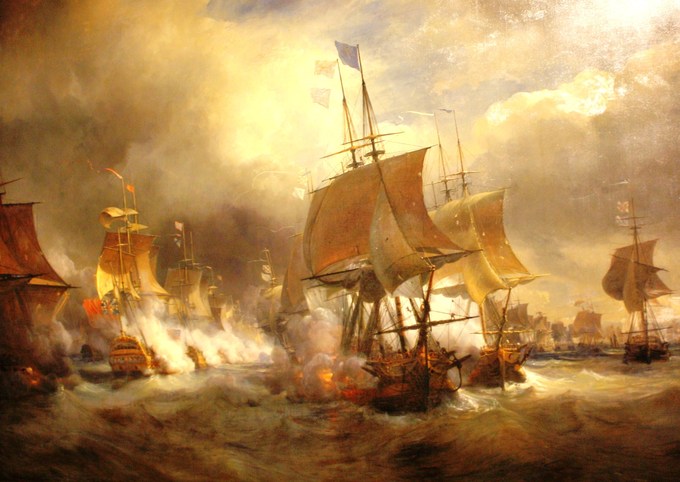
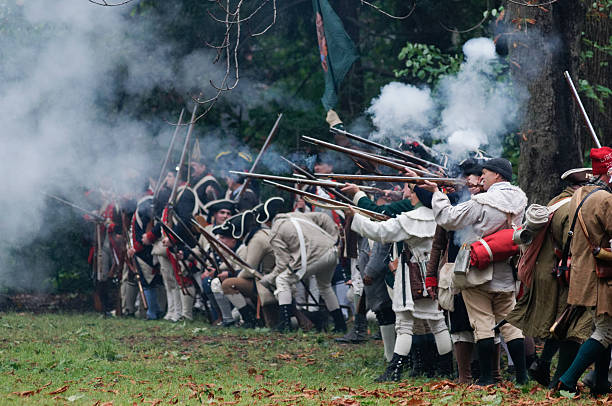
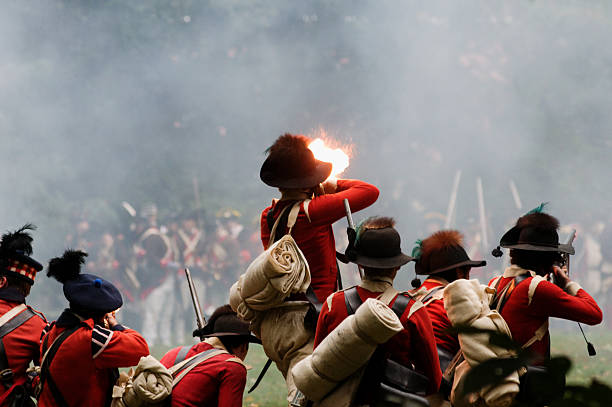
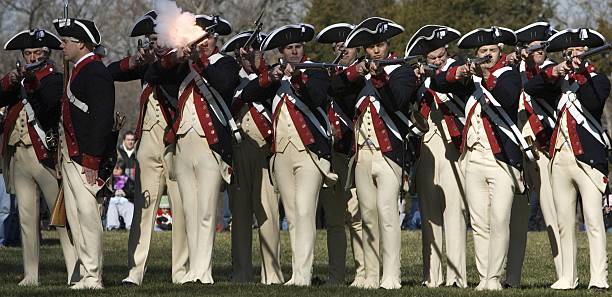
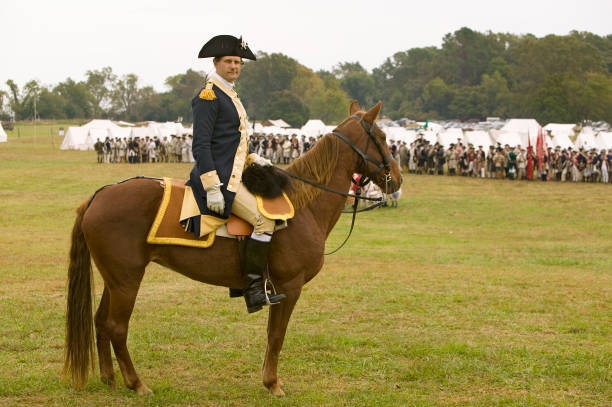
I had taken a whole bunch of pictures from the area, but somehow, they got lost in the shadows of cyberspace. I have no idea where they went, but I will give your some generic shots and re-enactment shots to help with visuals. I really felt like I was reliving those Revolutionary days.

The battles were fought both on land and sea.

annual historic revolutionary germantown festival, northwest philadelphia, pa - revolutionary war reenactment stock pictures, royalty-free photos & images
Only one member of an Old Guard platoon's musket fires during a Revolutionary War battle demonstration at the Mount Vernon Estate and Gardens on...
General George Washington reviews Patriot and Colonial Troops at camp before marching to Surrender Field at the 225th Anniversary of the Victory at...

The grounds of Yorktown, as well as so many other places around the Colonial parts, are hallowed grounds indeed. But here at Yorktown, battles were fought for freedom during both the Revolutionary War as well as in the Civil War. Much thanks and gratitude to all the brave men who fought and sacrificed in the name of freedom. Long live freedom. Long live the land of the free and the home of the brave.

Learning Our History – Part 2 – Yorktown

After visiting Williamsburg, Learning Our History – Part 1 – Williamsburg and feasting at Dog Street Pub Lunch in Williamsburg we were ready for more explorations into our early American and Revolutionary history. Next stop, Yorktown.

Yorktown was established by Virginia’s colonial government in 1691 to regulate trade and to collect taxes on both imports and exports for Great Britain. By the early 1700s, Yorktown had emerged as a major Virginia port and economic center. A well-developed waterfront boasted wharves, docks, storehouses and businesses. But Yorktown will forever go down in history as the place where British General Lord Charles Cornwallis and his army surrendered to General George Washington’s American force and its French allies at the Battle of Yorktown on October 19, 1781, it was more than just military win. The outcome in Yorktown, Virginia marked the conclusion of the last major battle of the American Revolution and the start of a new nation’s independence. Yorktown is the official birthplace of the then new country, America. Today, it is a historic tourist destination, visited by millions every year.

Our first stop in Yorktown was the American Revolutionary Museum, located at 200 Water St, Yorktown, VA 23690. Their phone number is (757) 253-4838. It was fascinating to learn more about the makings of America. The museum presented everything beautifully. There were videos, artifacts and living history portrayals and re-enactments too. We felt like we had stepped back in time, back to the days of the Revolutionary War.

These are all the flags from the original 13 colonies.

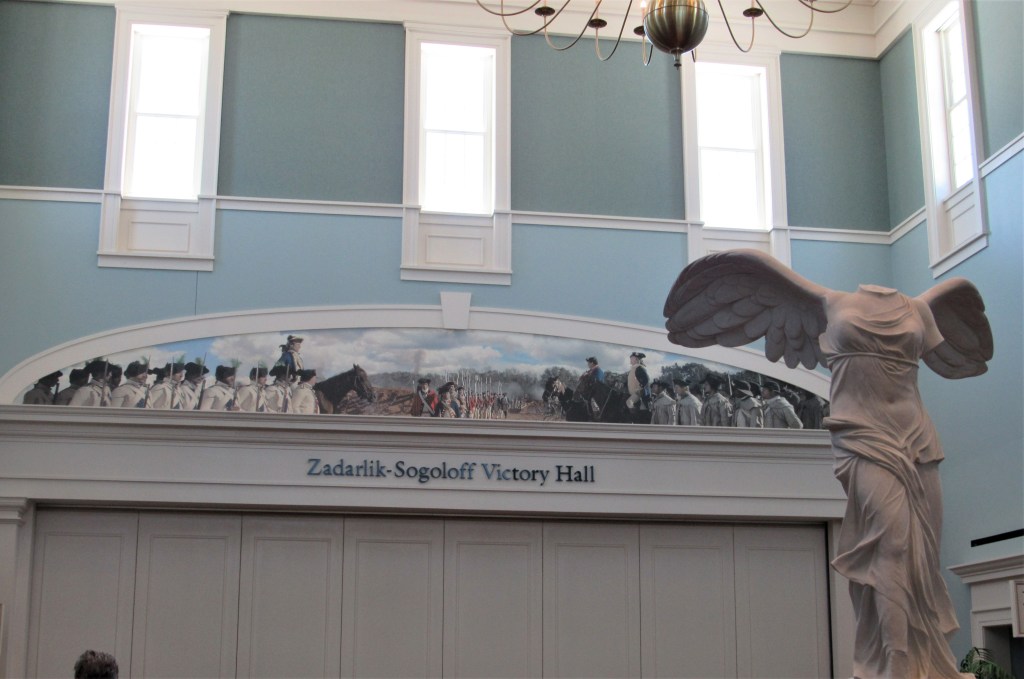
When you first walk in, you are greeted by “The Wings of Victory”. The Winged Victory of Samothrace, also called the Nike of Samothrace, is a marble Hellenistic sculpture of Nike (the Greek goddess of victory), that was created in about the 2nd century BC. 

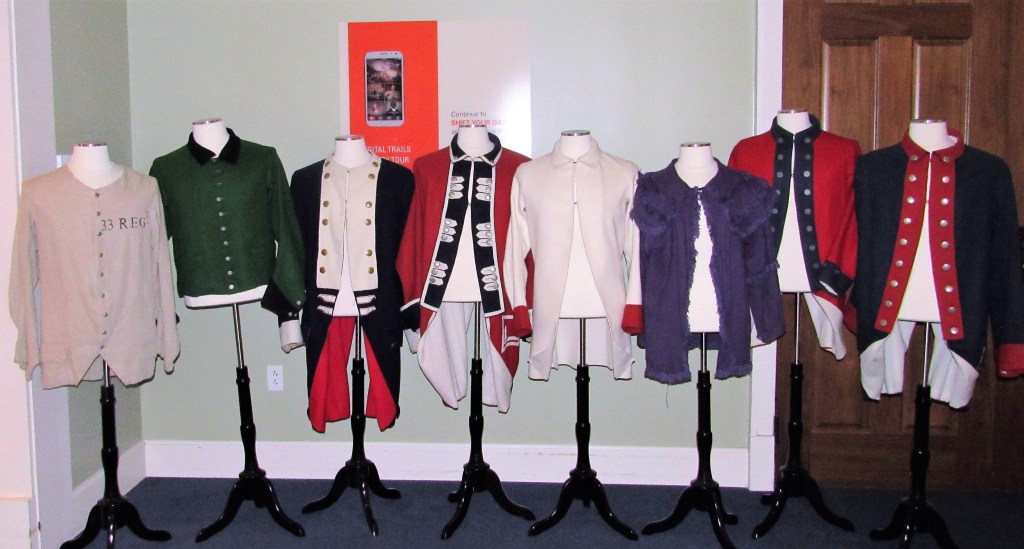
The display and presentation of the Revolutionary War uniforms, from both the British and the Colonials, was very impressive and informative.

We learned how George Washington and his men got secret information out without it being detected by the British. Ingenious secret codes were used by everyone to help spread the information. When the women were doing the washing, if they put red out on the clothing lines it meant the Red Coats were near. Each red item represented a troop. For instance, one red sock meant there was one troop, two red socks meant there were two troops near by, and so on. We also got to see some of the secret code keys and learned how they were used to relay information. Only the messenger and the recipient had the keys to unlock the codes. Without the keys, they just looked like regular letters. There were many other ways of dispersing the information too. All of these crafty ways of spreading the word helped us win the war. Without them, who knows what might have happened.

As fascinating as all of this was though, I was really impressed with the living portrayals and re-enactments.

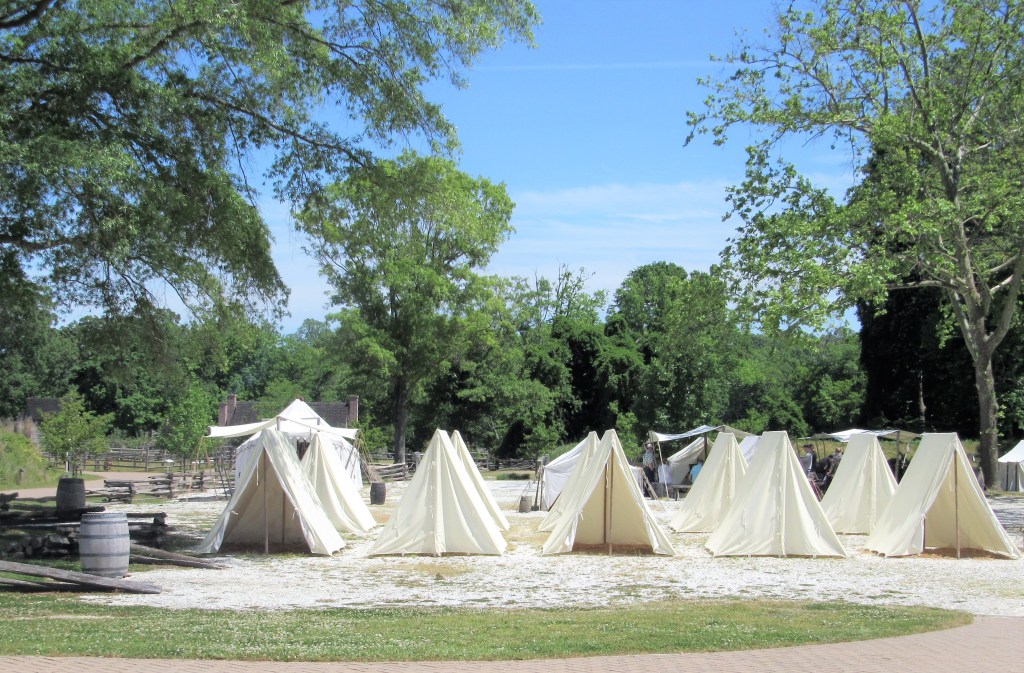
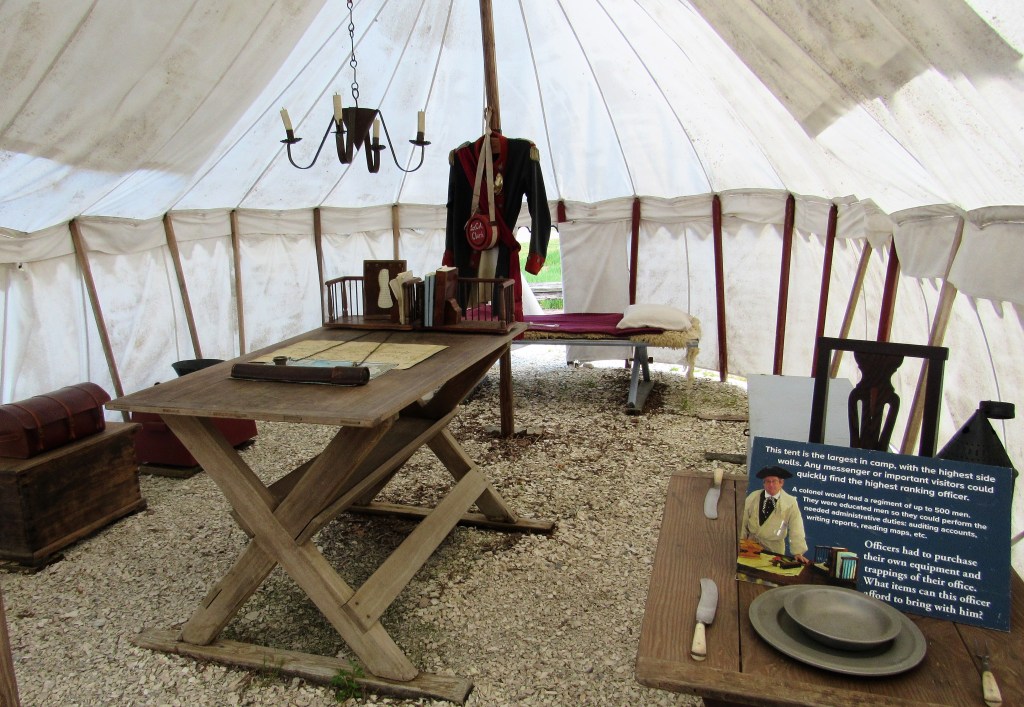
The encampments. Each encampment had around 400-500 men. Six men to a tent. Talk about tight quarters.

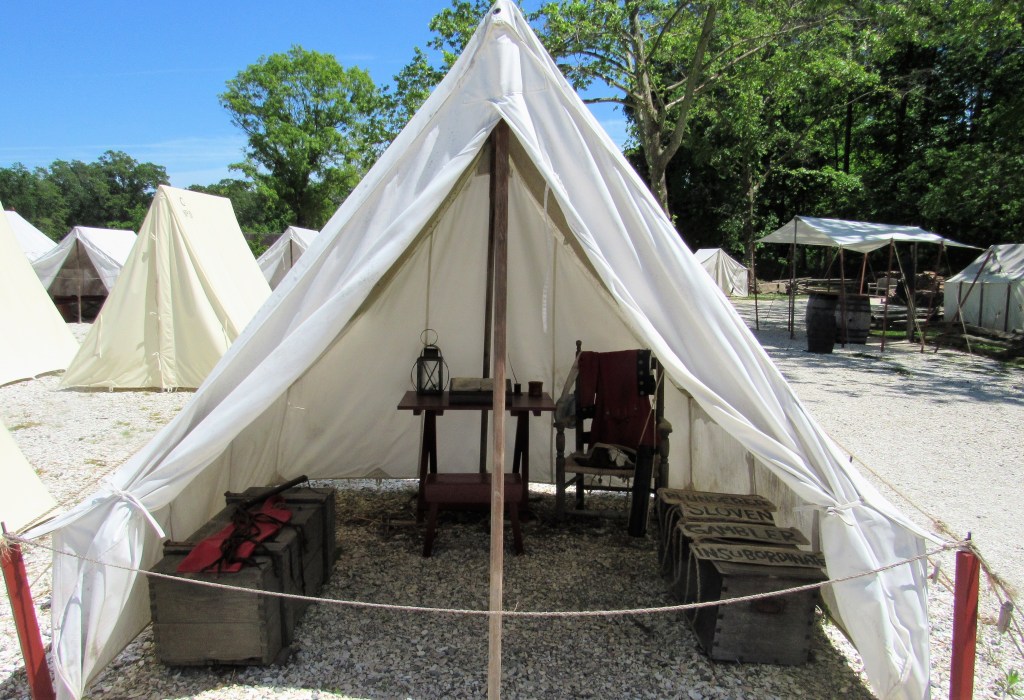
The largest tent was for the most senior ranking officer. They were easy to spot.

The General’s tent was the largest of all.

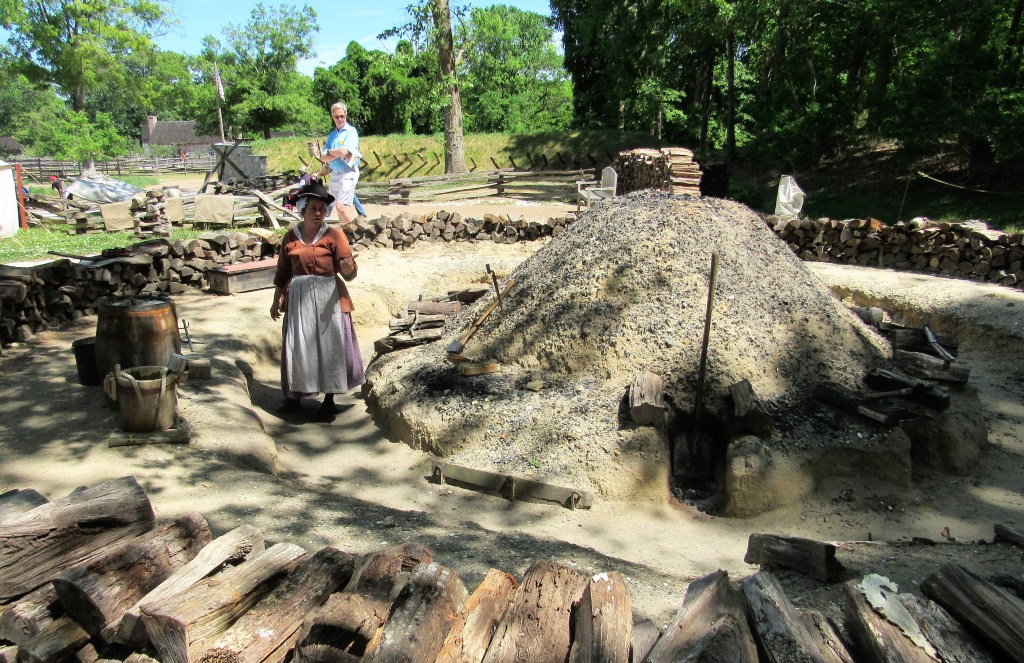
Each tent assigned one person to cook for the rest of their tent mates. This was a typical war time “kitchen”. I have cooked in many different kitchens in my day, and am comfortable in them all, but I think even I would be very challenged to cook in this “kitchen”. A big fire pit was created, with a moat around the hot spot to keep the flames away from the tents and the munitions. A lot of women followed their men from camp to camp and a lot of women did some of the cooking as well. We don’t realize how much the women contributed to the war efforts as they actually did. If you look behind the lady (at Larry’s foot), there is a box. These boxes were used to cook the food during the day, since it often took hours to cook. There was a box for each tent and they would be inserted into the hot spots to cook the food.

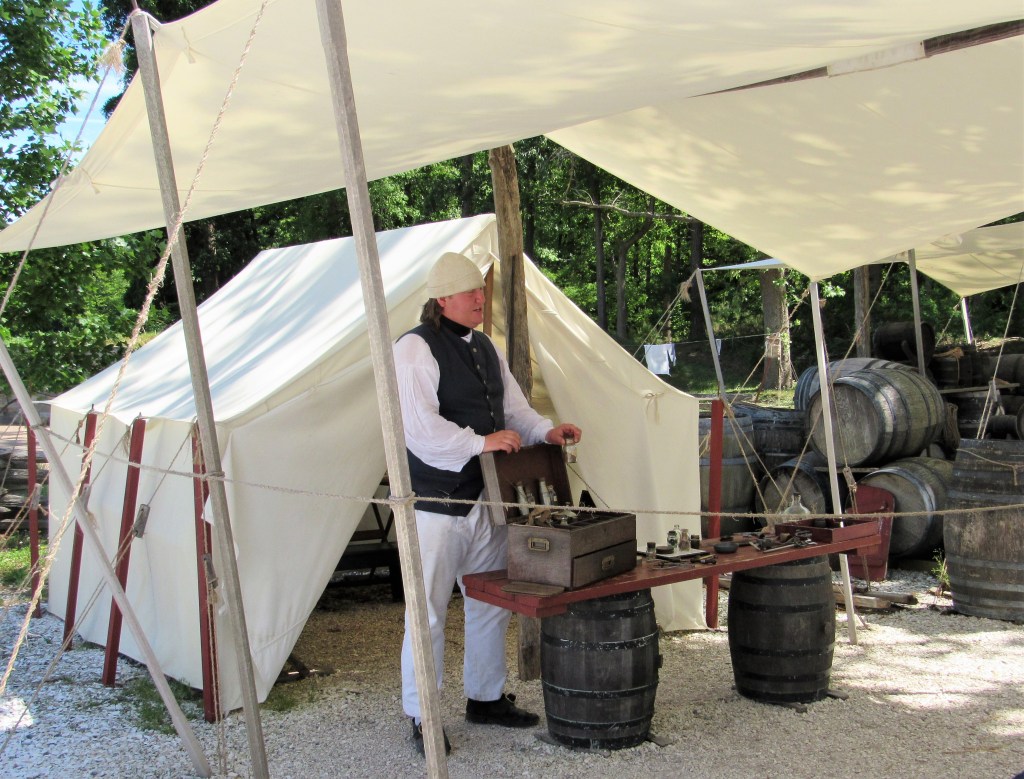
The surgeon’s tent was where all the medical needs were taken care of. They were very rudimentary, offering little in the form of medicines or equipment. There was usually only one “surgeon” per encampment, if they were lucky enough to even have one.

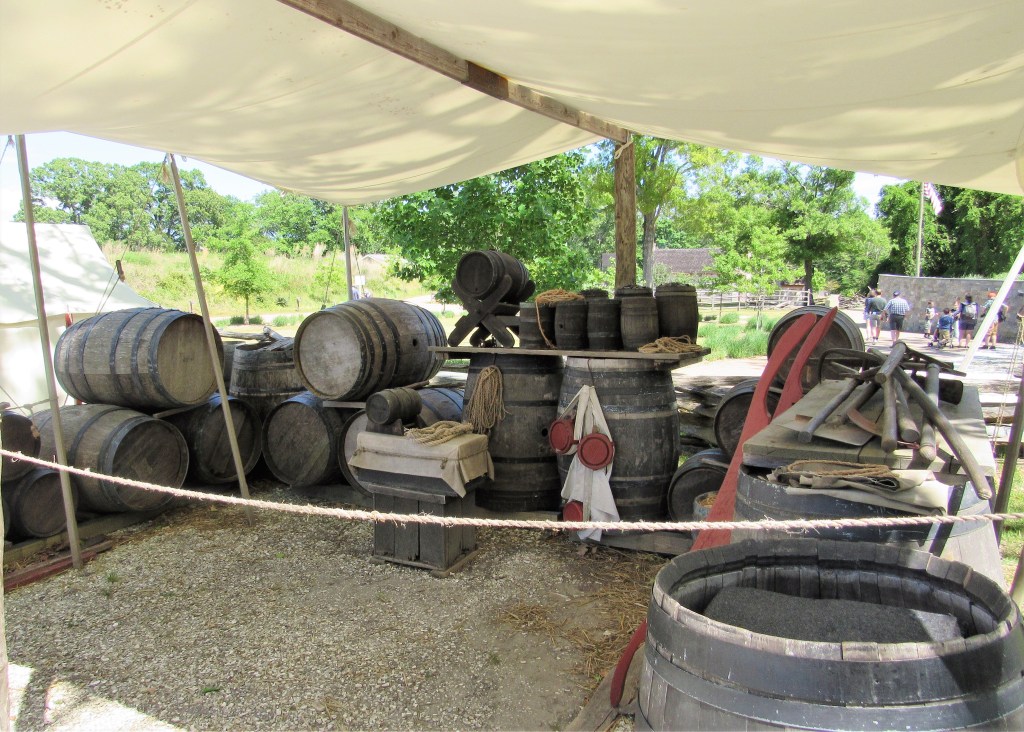
The munitions tent was where all the weapons were stored.

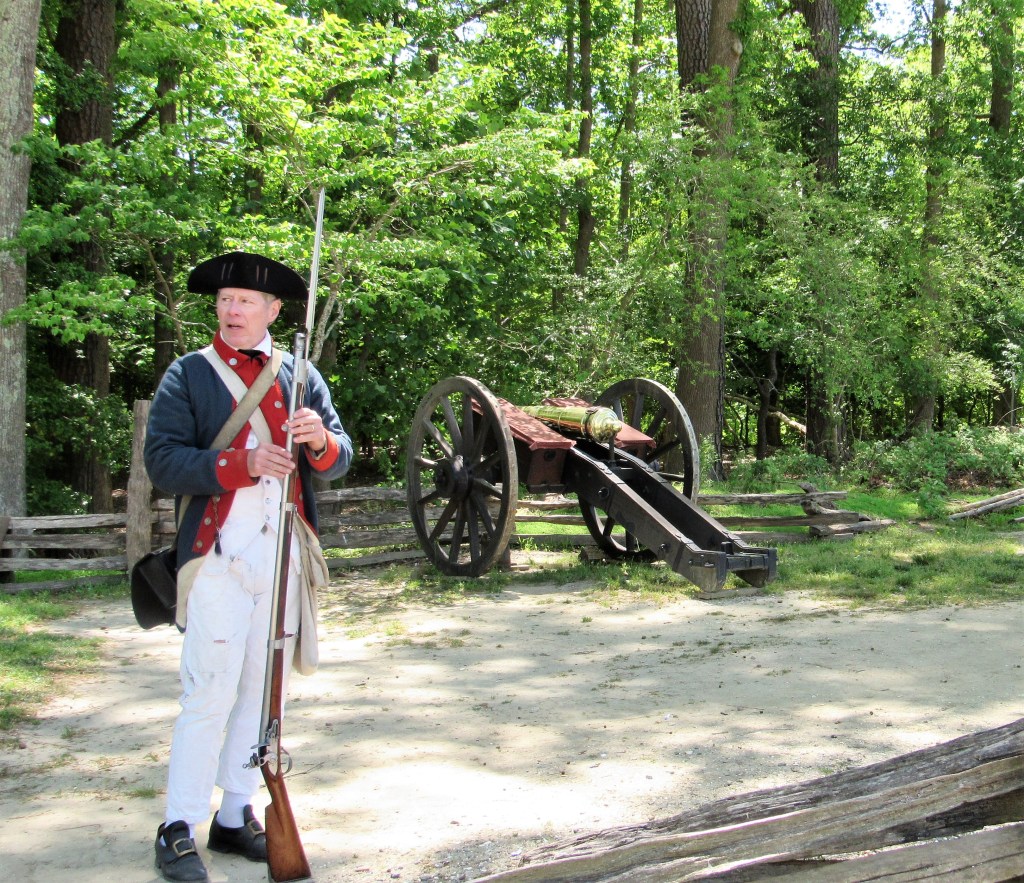
And the weapons themselves. These muskets were considered the best of their time. These were built for “speed” and not necessarily for accuracy, but their speed, at best, would be about 15-30 seconds in between each firing, all the while each soldier was being fired at and was in a constant cloud of smoke and confusion.

The typical life of the times was harsh and brutal at best. No one had an easy time of life in the Revolutionary days.

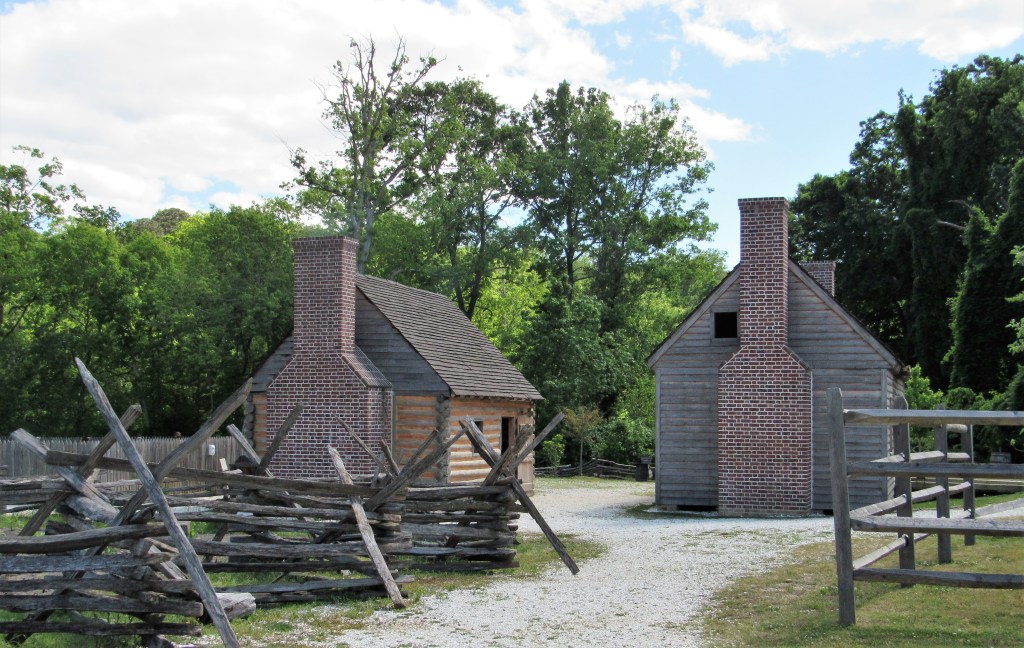
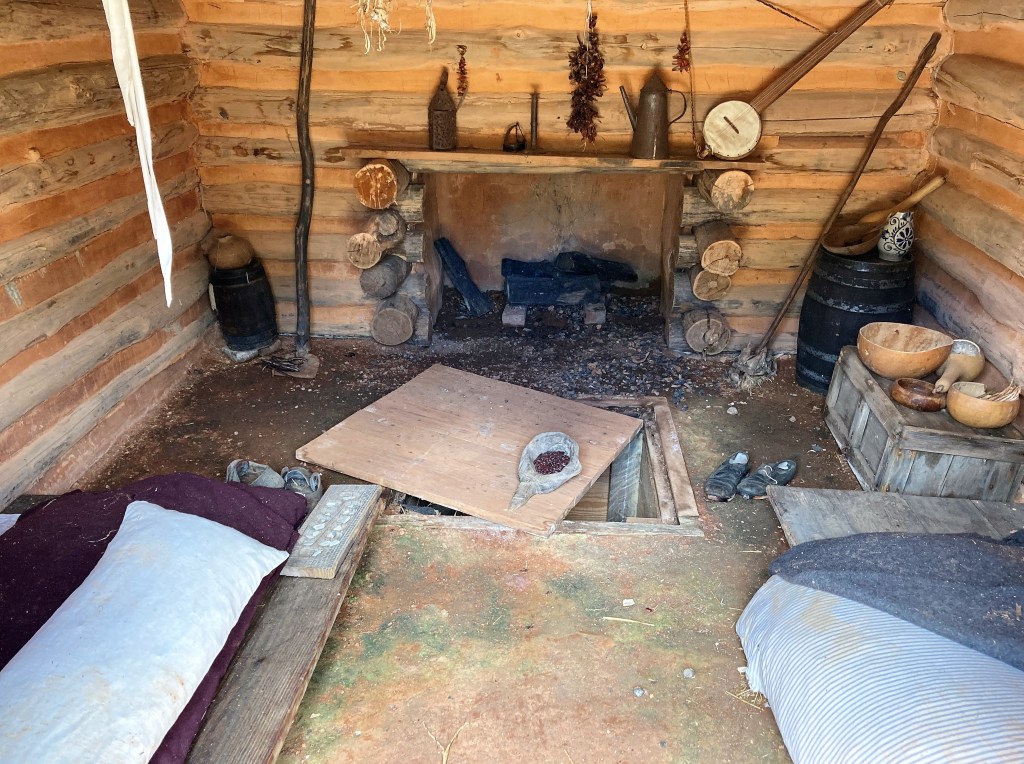
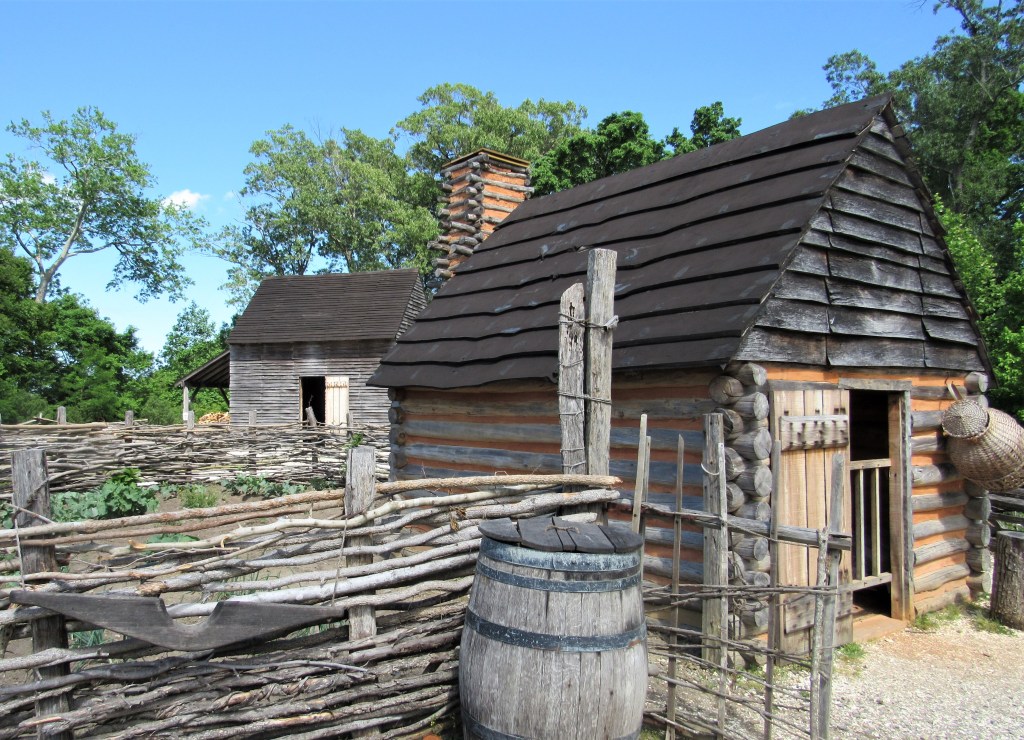
The homes people lived in were usually just one room homes, with either an attic or basement or both that served as sleeping quarters. These houses were often for very large families too.

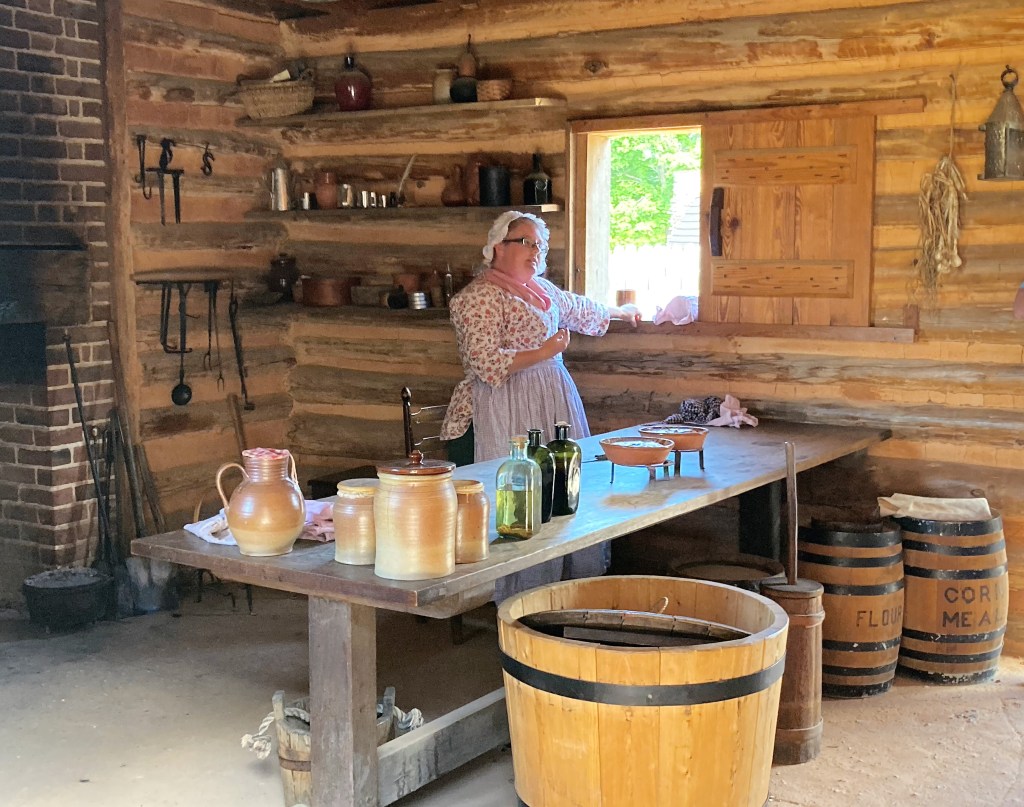
The kitchens were separated from the house. Based on the look of it, they were communal kitchens too. Everyone grew their own food and shared it with the community.
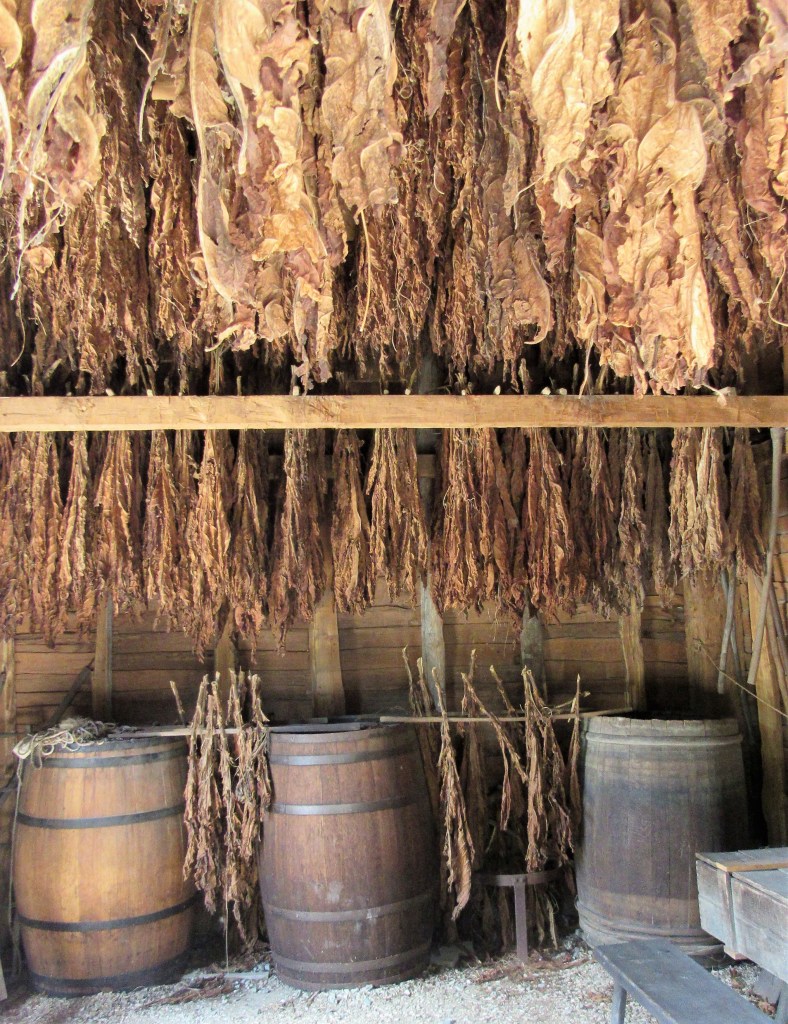
Tobacco was the main cash crop of Virginia. This is a typical tobacco barn.

The Colonials were made of strong fibers in those days. They had so little but fought so hard and over came all obstacles that were thrown their way. And because of those battles fought and the hardships that were endured and the obstacles that were overcome, we became the United States of America. Thank you to all and for all your efforts.

Lunch in Williamsburg

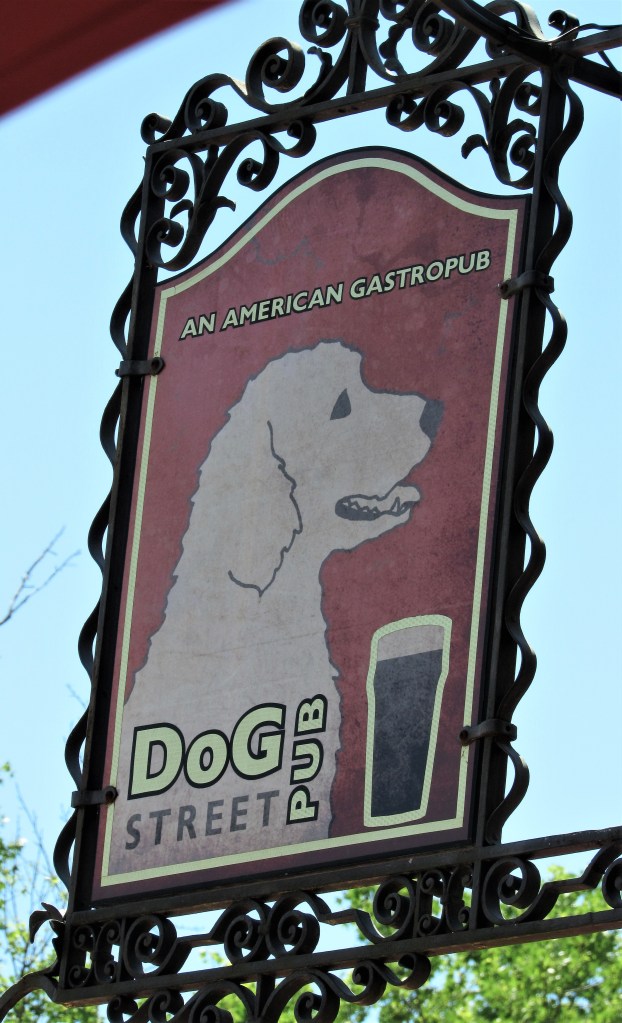
All that walking around through history Learning Our History – Part 1 – Williamsburg gave us quite an appetite, so it was time to eat. We found a little place in town that served “traditional” English fare as well as other fine eats as well. It was called Dog Street Pub. Being the dog lover that I am, I love the name too. Dining at Dog Street Pub will allow you to step back in time to the days of Colonial America without being to far removed from the modern world. You will be sitting on the corners located between yesterday and today.

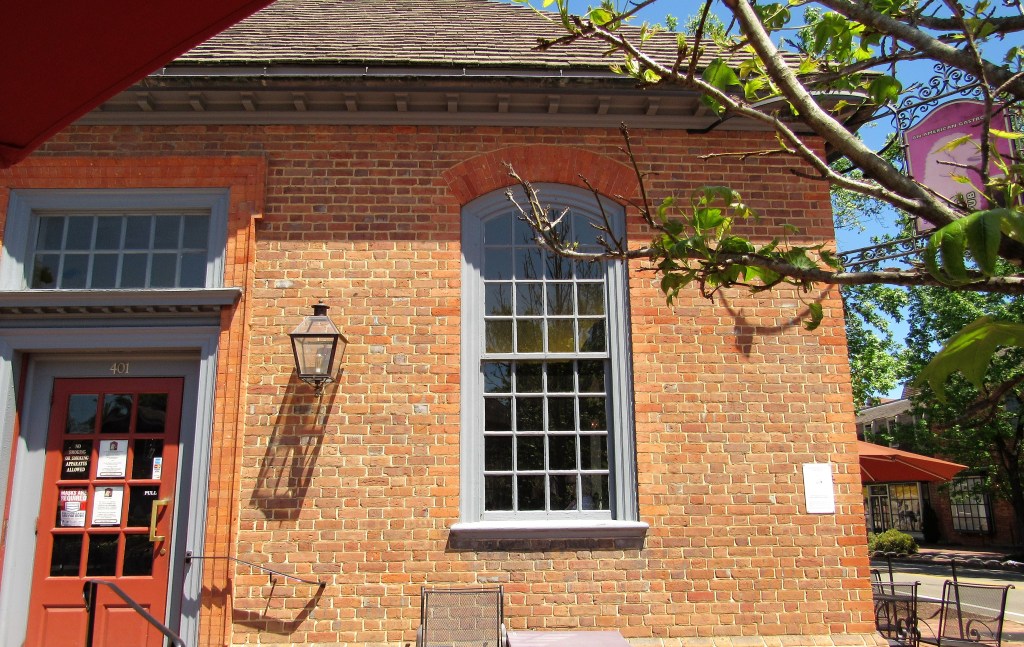
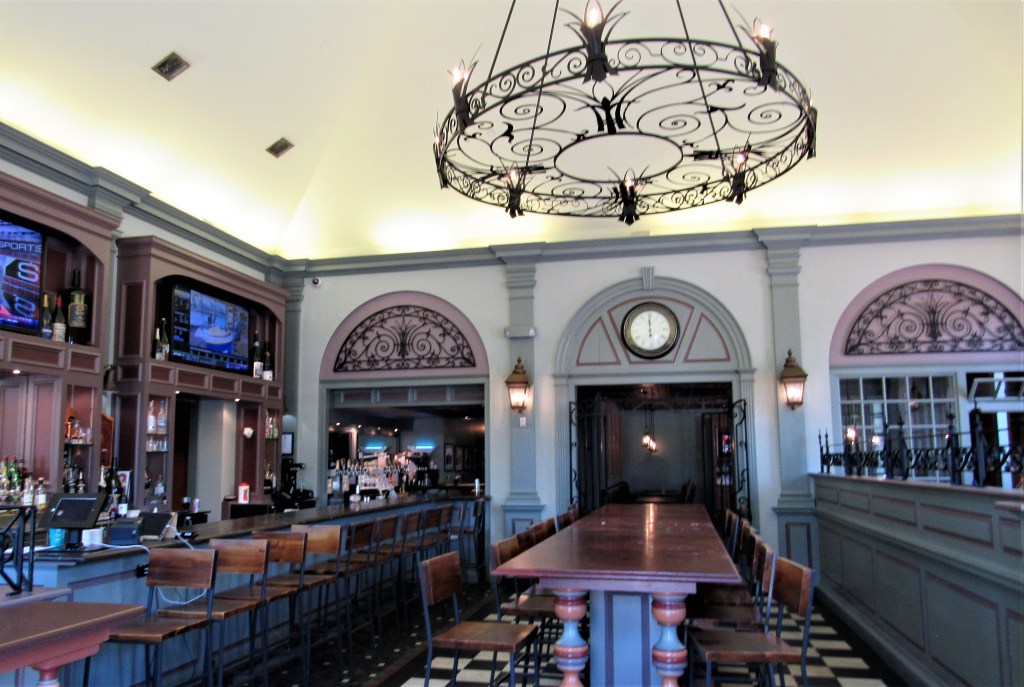
Dog Street Pub is an American Gastropub with an English accent. It was a bank building that was converted to a restaurant in 2012. “It is in the heart of Colonial Williamsburg and has been serving craft & elevated British influenced fare in a family friendly environment” since its inception.

I just love all the attention to detail here.
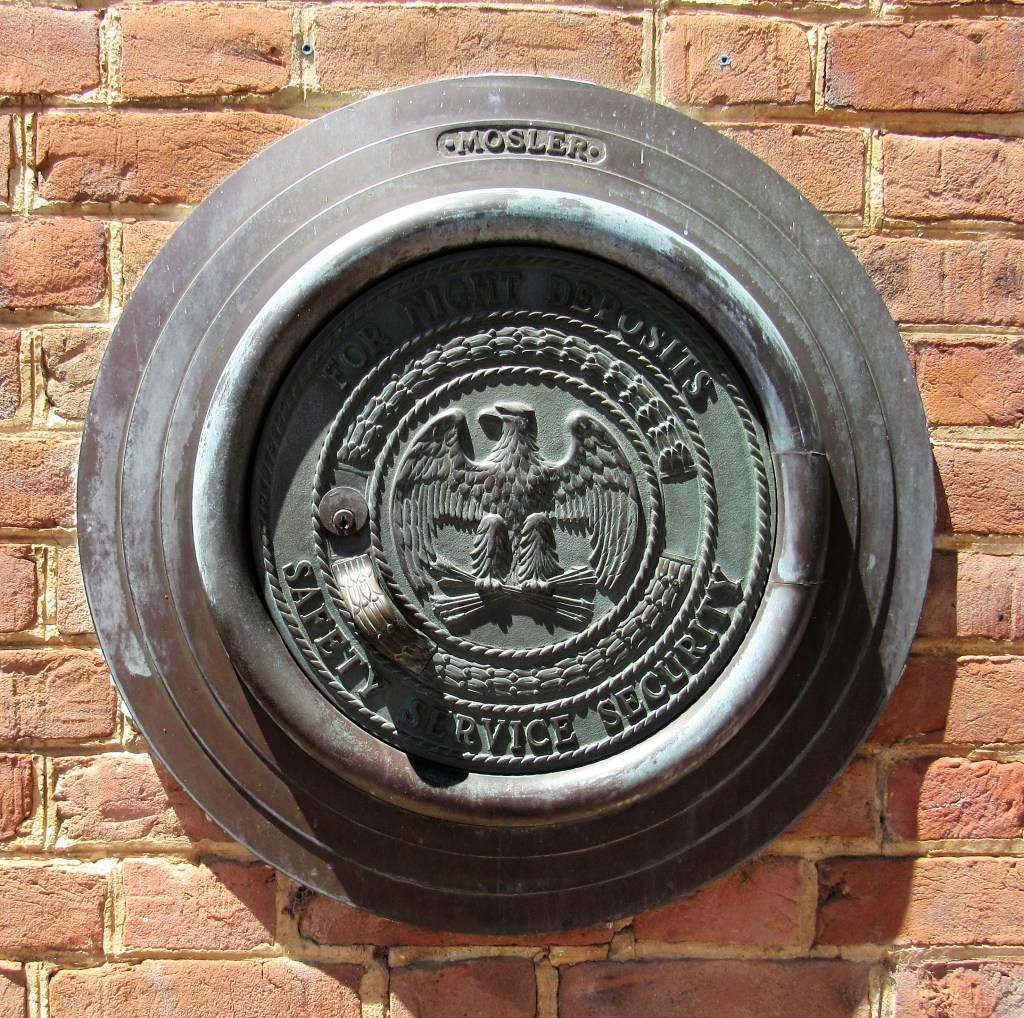
The night depository. Again, I just love all the attention to detail. I wish we paid so much attention to all the details today.
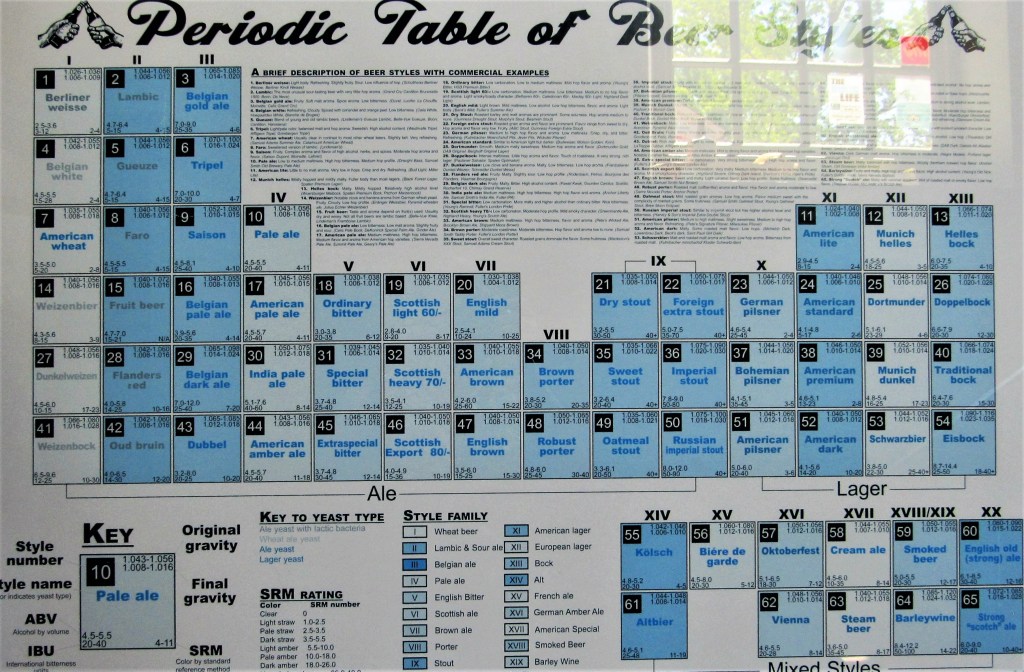
All this attention to detail was found in all the food and libations as well.

We have all heard of the Periodic Table of Elements used in chemistry and science, but here at Dog Street Pub, they also have a Periodic Table of Beers and Ales.

The Dog Street Pub specializes in traditional English food with a “revolutionary” American attitude. Everything was so good, AND there was so much of it. I think Larry was the only one who actually finished his food, plus he got quite a bit of mine as well. We all ordered something different and it was all scrumptiously delicious.

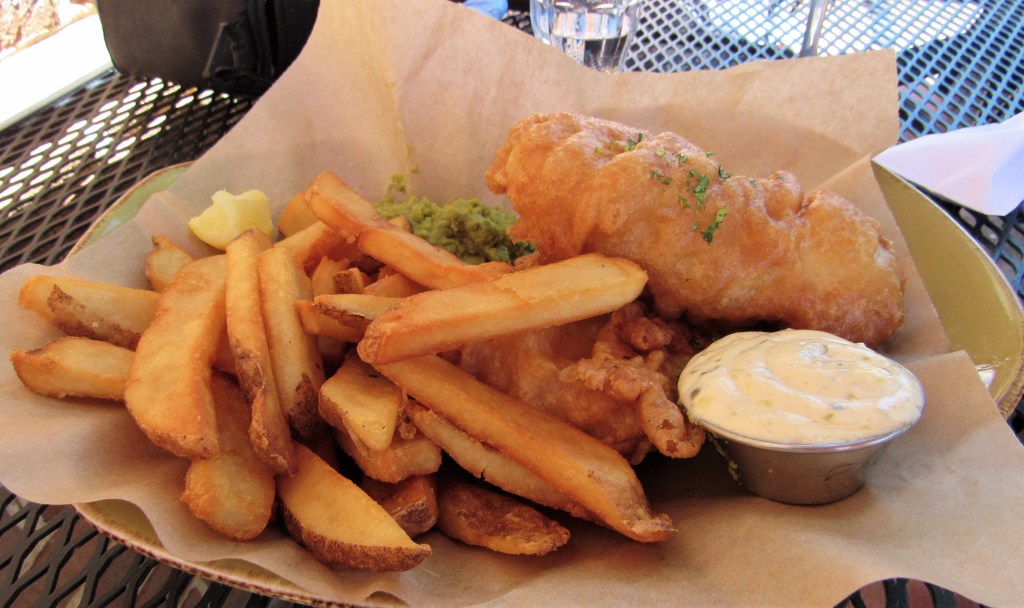
Larry ordered traditional fish & chips. I just had to try some as well. Perfect!

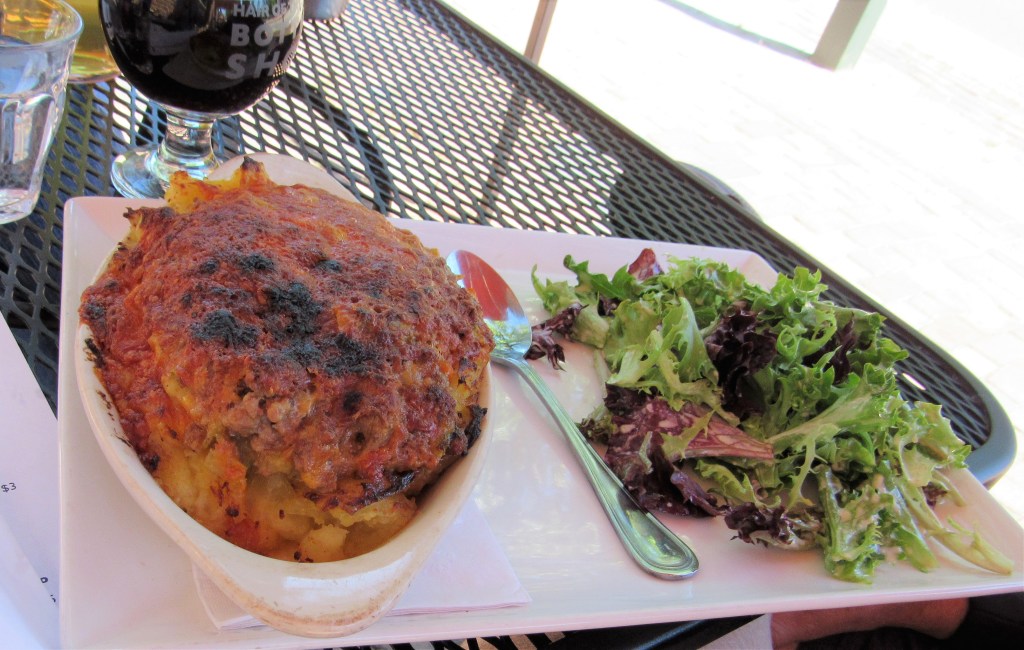
Marvin ordered Shepherd’s Pie with a dark ale on the side.

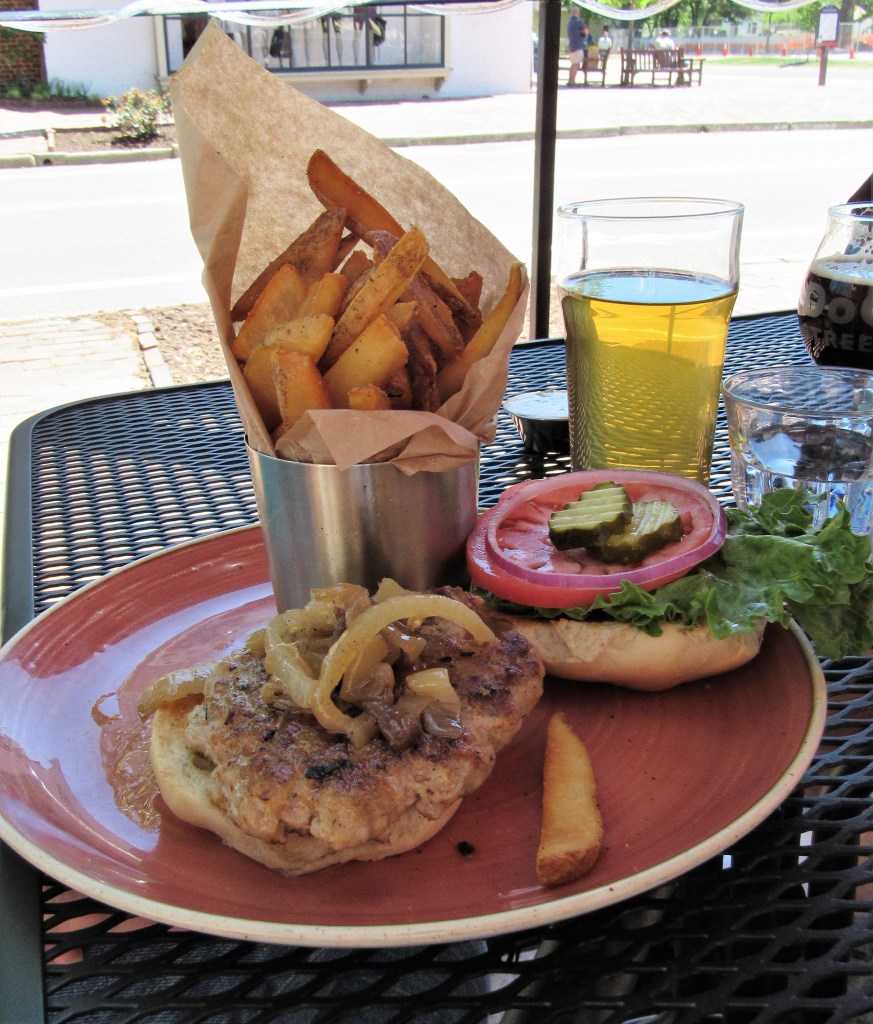
Lori feasted upon a brat burger with a homemade mustard sauce and a light lager.

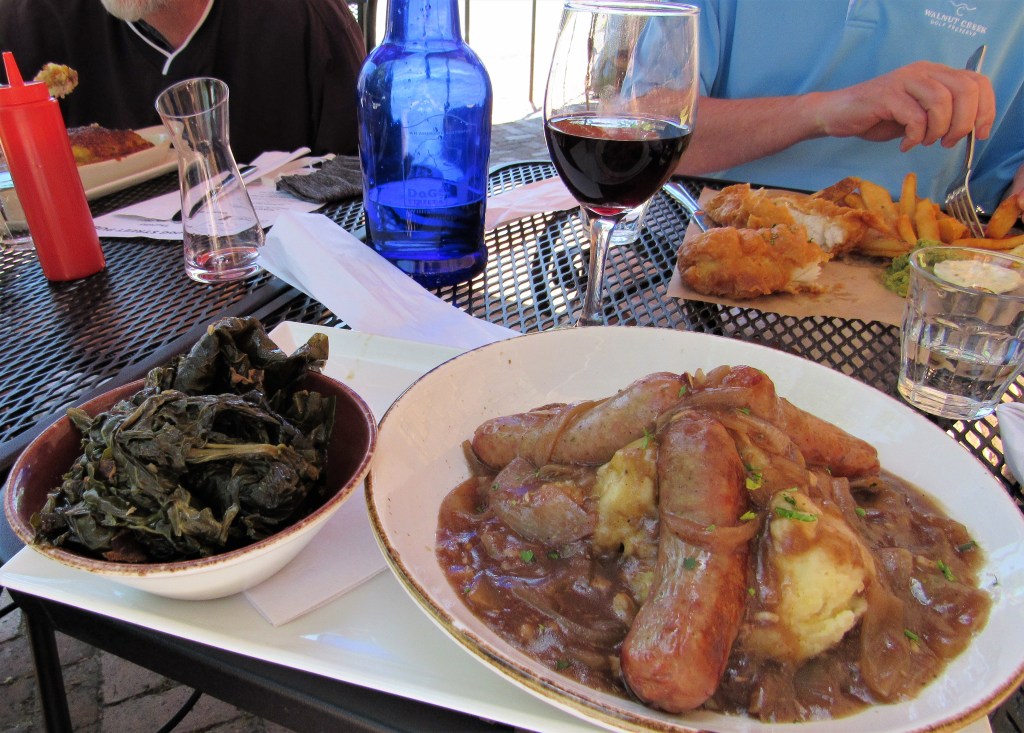
And I ordered bangers and mash that came with collard greens. And of course, I had to sample a glass of Virginia red as well. Everything just hit the spot perfectly. We were all very full and completely satisfied after our British feast.

Dog Street Pub is located at 401 W. Duke of Glouchester Street in Williamsburg, VA. You can call them at (757) 293-6478 or contact them online at http://www.dogstreetpub.com. Either way, stop by and enjoy the food and stepping back in time to the early days of Colonial America.

Learning Our History – Part 1 – Williamsburg

After the wedding, A Wedding in West Virginia we spent a couple of days with one of Larry’s sisters and her husband, who live outside of Richmond, VA. They took us to Williamsburg first and from there we went to Yorktown. Both are so full of history, both Revolutionary and from the Civil War.

Williamsburg is the “Colonial Capital” of Virginia and is internationally known for its restoration activities and re-creation of 18th-century America at Colonial Williamsburg. Williamsburg was founded in 1632 as Middle Plantation, a fortified settlement on high ground between the James and York rivers. The city was the capital of the Colony and Commonwealth of Virginia from 1699 to 1780 and the center of political events in Virginia leading to the American Revolution. 

Today, Williamsburg is a tourist destination for those who love history, and particularly those who love history about the early days of America. Everything has been restored to represent what life was like in Revolutionary times. The city does a great job of re-enacting the history of the times. There are plenty of shops and restaurants and other buildings you can wonder through as well. You can stroll at leisure on your own, or you can take a guided tour. Either way, you will learn what life was like in the 18th century.

Life in 18th century Williamsburg was torn between the Loyalists, who wanted to remain part of England and still live under the Crown rules and the Patriots who wanted to break free.

This flag was known as the Grand Union flag, which was the first true U.S. flag .

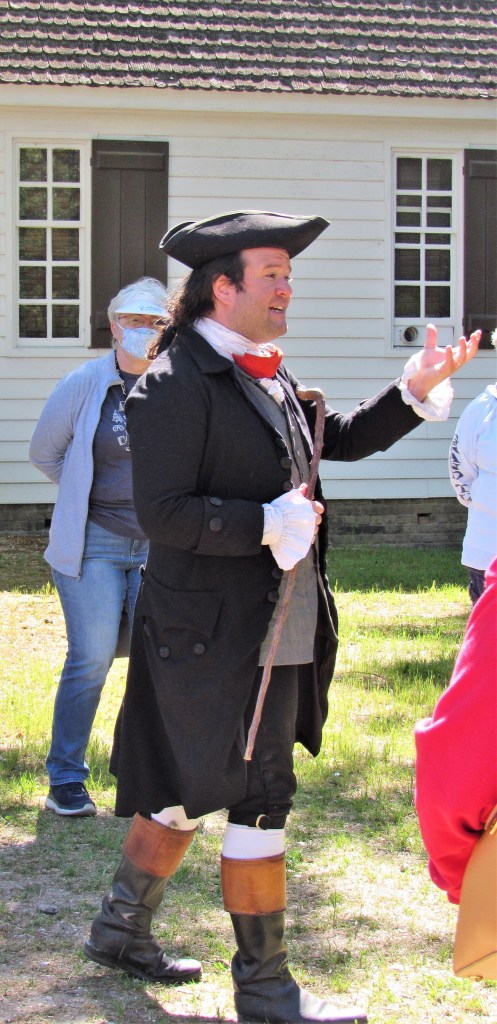
The rise of the patriots. This gentleman was saying he can trace his roots back to the colonial days and his ancestors were part of the founding colonials of Williamsburg.

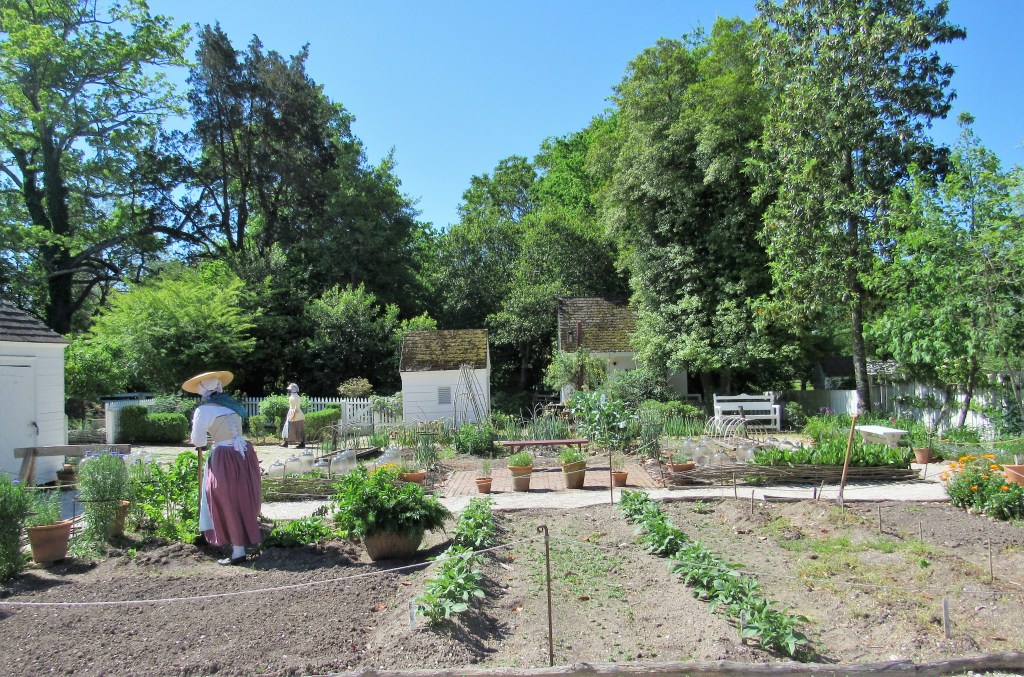
Life in the early colonial days. The women were out tending to the gardens.

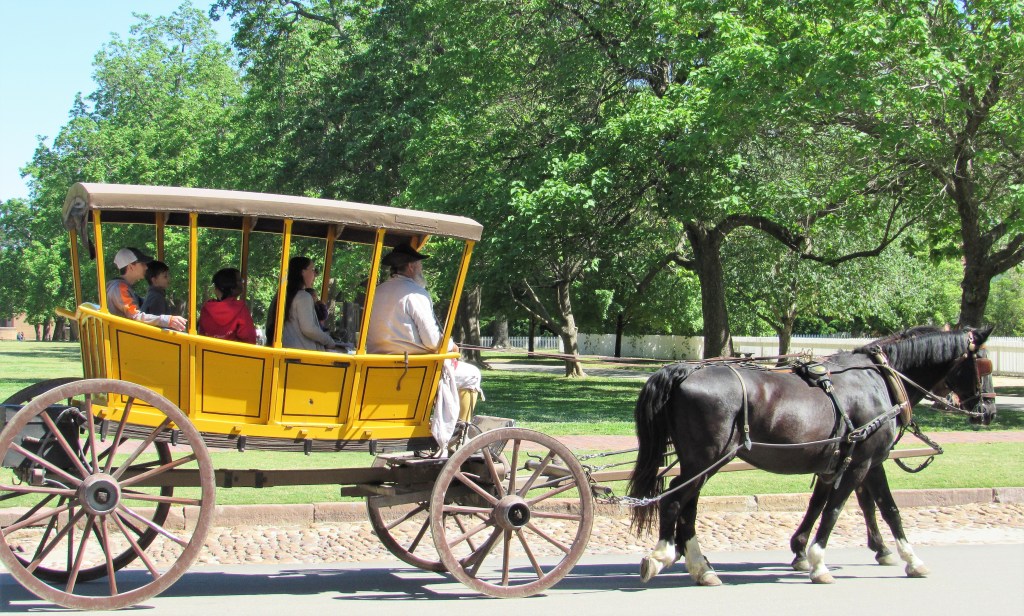
The public transport of the day.

Everyone was on high alert and ready for action. This is the armory. It was always guarded by centuries.

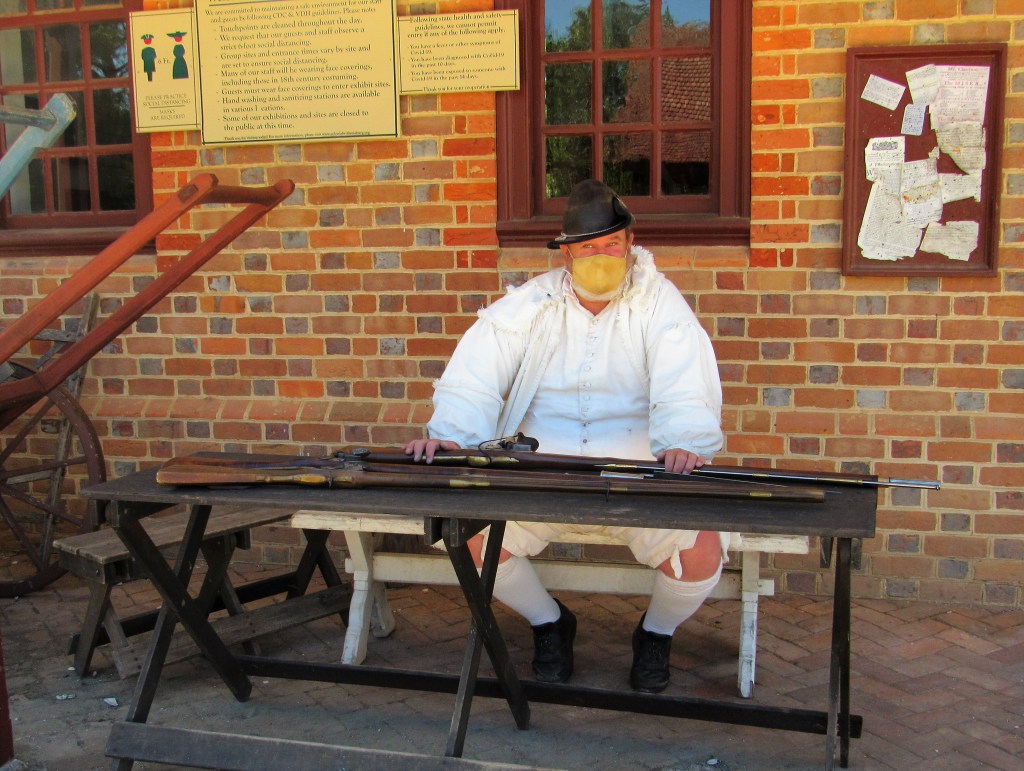
Everyone was armed and many people had their muskets always at the ready.

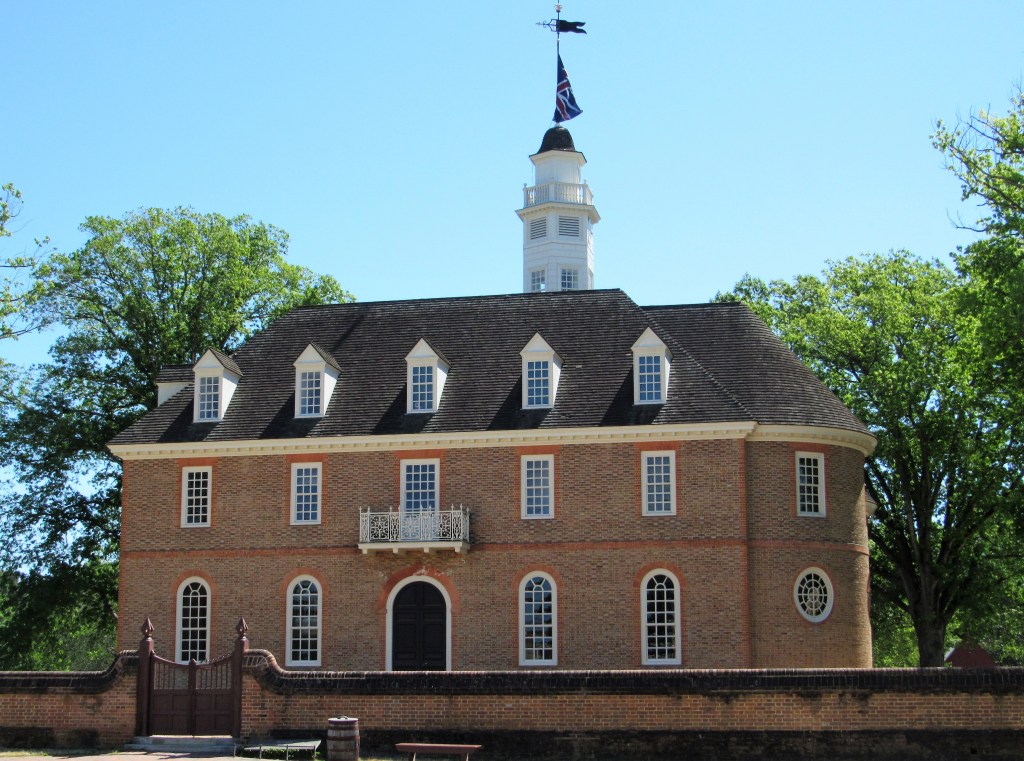
While under British rule, a Governor was appointed and sent from England. This is the Governor’s mansion.

I believe this was the customs house.

The church was a central figure in everyone’s life. Bruton Parish Church is one of the oldest churches in America and it has been in continual service since 1715.

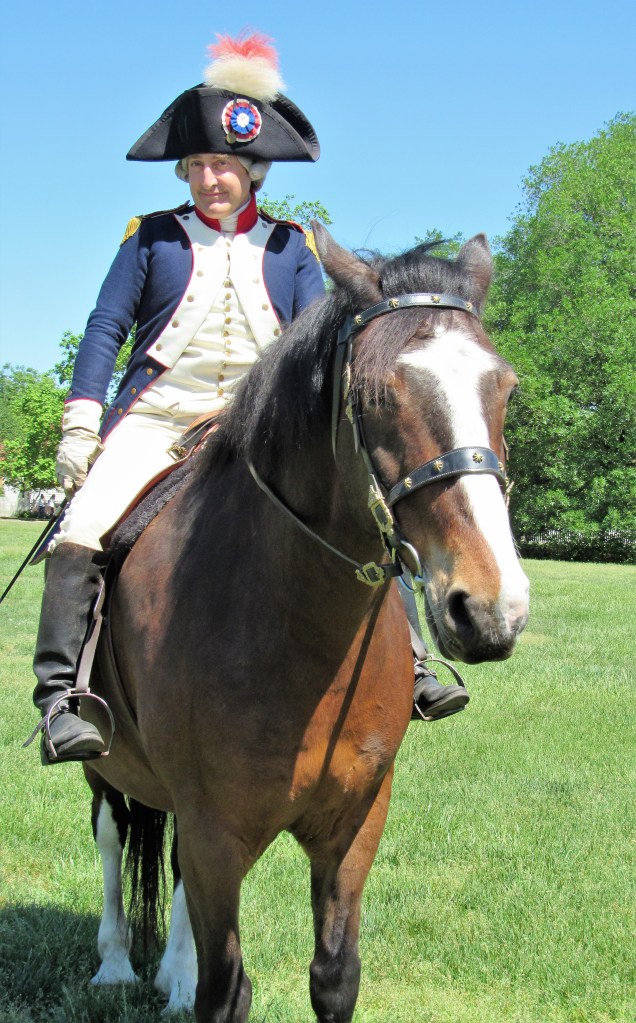
The Revolutionary War was a war fought for freedom for many, not just the Colonials. This is “Rochambeaux”, the famous French officer who aided the Patriots. There were also plenty of Germans who helped with the war efforts as well.

Only the educated elite knew how to read. Most people were illiterate. The signs to the businesses were in pictures so people knew where to go to attend their daily business.

The “Colonials”. Larry with his sister Lori and her husband Marvin.

I could have easily spent a lot more time here. I love history and I love to learn. I can only speak for myself, but spending the day here, and seeing how people lived, I gained even more appreciation for everything that people went through and the sacrifices they made for our freedoms that we enjoy today. Long live FREEDOM!