I have created this site to help people have fun in the kitchen. I write about enjoying life both in and out of my kitchen. Life is short! Make the most of it and enjoy!
Author: ajeanneinthekitchen
I have worked in the restaurant and catering industry for over 35 years. I attended 2 culinary schools in Southern California, and have a degree in culinary arts from the Southern California School of Culinary Arts, as well as a few other degrees in other areas. I love to cook and I love to feed people.
At the moment, my lakes are filled with Canadian Geese. They do share the lakes with other birds too though. This time, they were sharing the lakes with some Ring-necks. I just love seeing the variety of wildlife we have right in our own backyard. Everyday is different, with different visitors all the time.
There were a bunch of male Ring-necks, but only one female in the bunch. She didn’t seem to mind too much though. She was doing her own thing and thoroughly enjoying herself.
I love any and all kinds of bread. I also love pesto sauce. So when the two are combined, that’s just like a little slice of Heaven. 🙂
We were invited over for dinner at our friends Erik and Shannon’s and Shannon wanted me to bring some kind of bread. I was totally on it. I love making bread. There is something very therapeutic to me about making bread. So I looked through my bread books to come up with a good recipe. I found a recipe for an easy-peasy pesto bread that just hit the spot.
I had made pesto earlier, so that made the recipe even better. 🙂
Pesto Bread
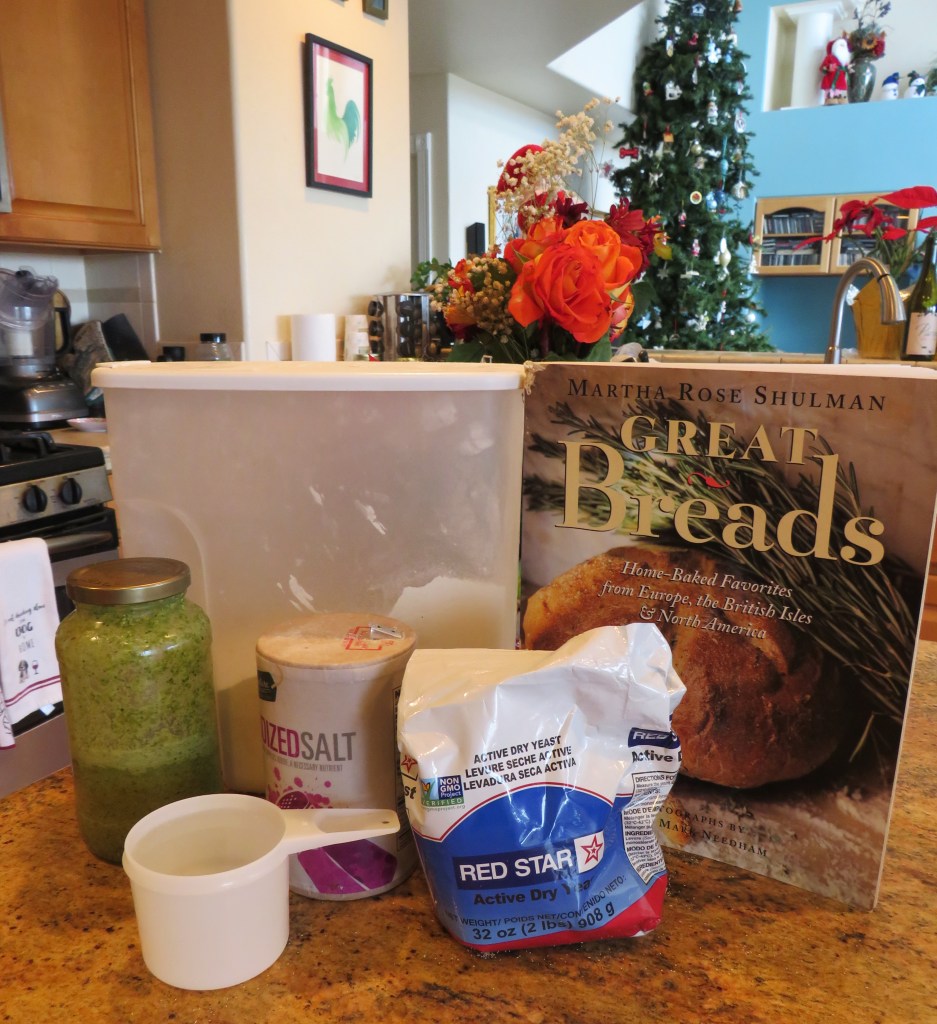
This easy-peasy bread only needs a few basic ingredients, but when you mix them all together, it’s pure magic. You can make your own pesto or use store bought. I used my own that I made.
2 1/2 tsp dry active yeast
1 cup lukewarm water
2 1/2-3 cups flour, divided
1 tsp salt
about 1/2-3/4 cup pesto sauce
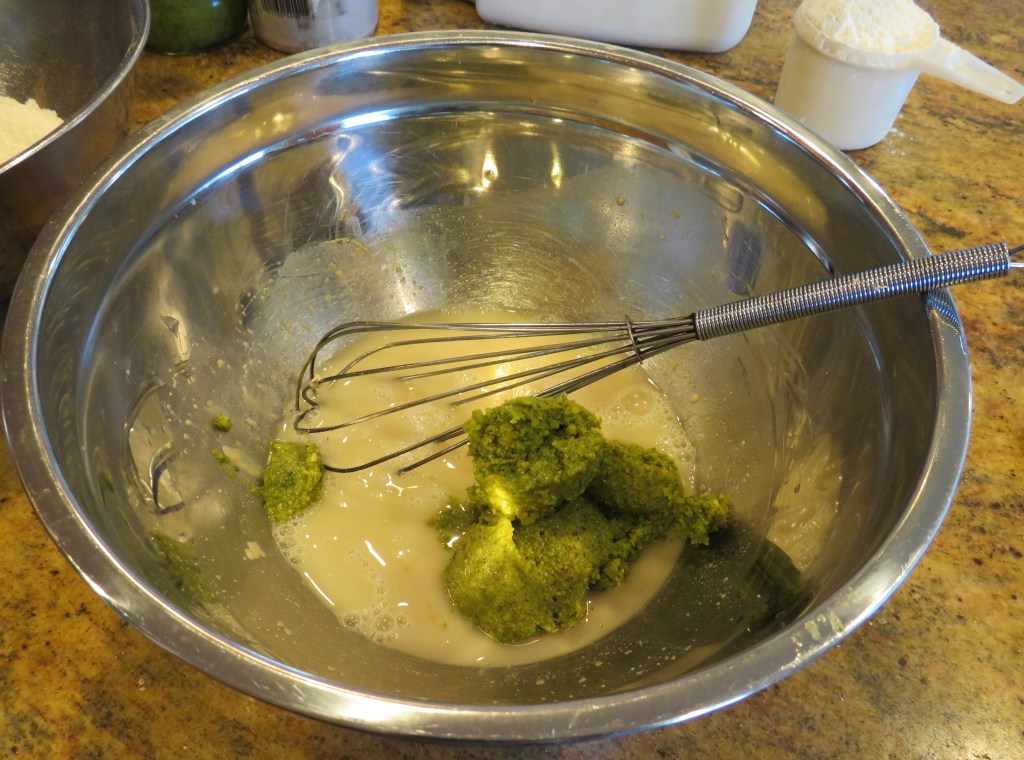
Dissolve the yeast into the water and let it set for about 10 minutes so it can get frothy.
Combine about 2 cups of flour with the salt.
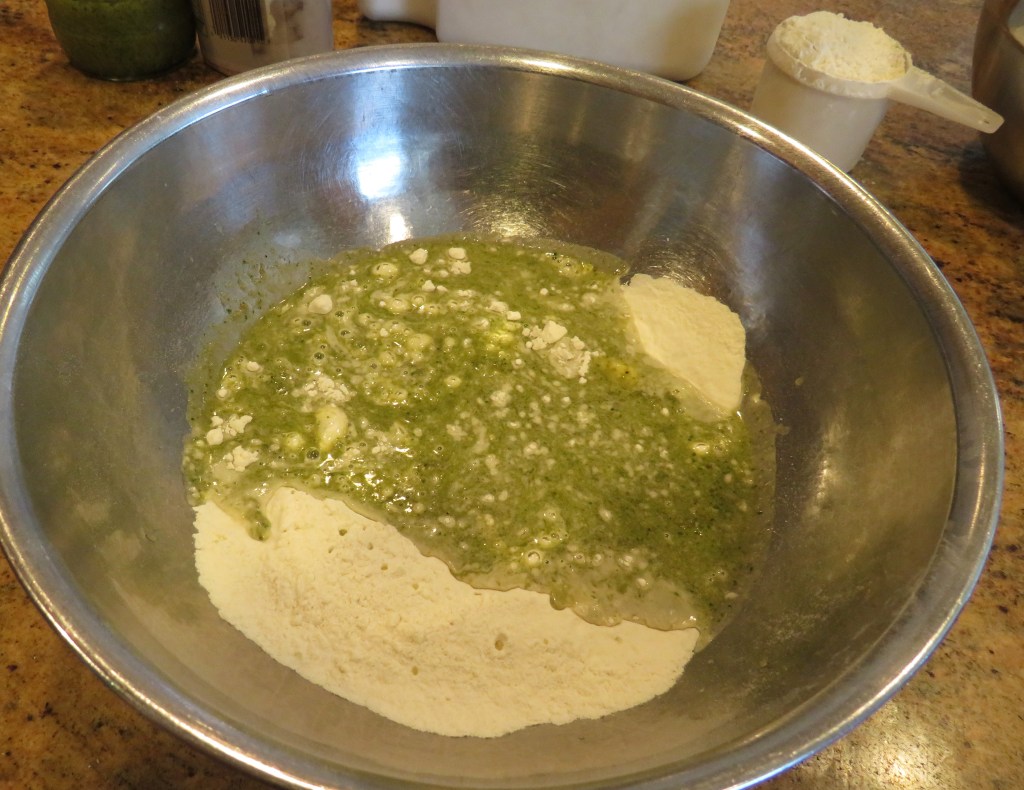
Add the pesto to the yeast mixture and mix well, then add to the flour and salt mixture.
Fold it all in, then knead it together on a lightly floured surface, incorporating as much flour as the dough will take, for a few minutes to make a soft dough ball.
Lightly oil a large bowl and the dough and place the dough in the bowl. Cover with a towel and let rise for about 1 1/2 hours, or until it doubles in size. Punch down the dough, and you can either divide the dough in 1/2 to make 2 smaller loaves of bread, or keep it all together to make it into one large loaf. Let the dough rise again for an additional hour.
Preheat the oven to 450*F or 232*C.
Before placing the bread into the oven, make some deep slashes into the top of the dough. Brush it with an egg wash, then reduce the oven temperature to 400*F or 204*C.
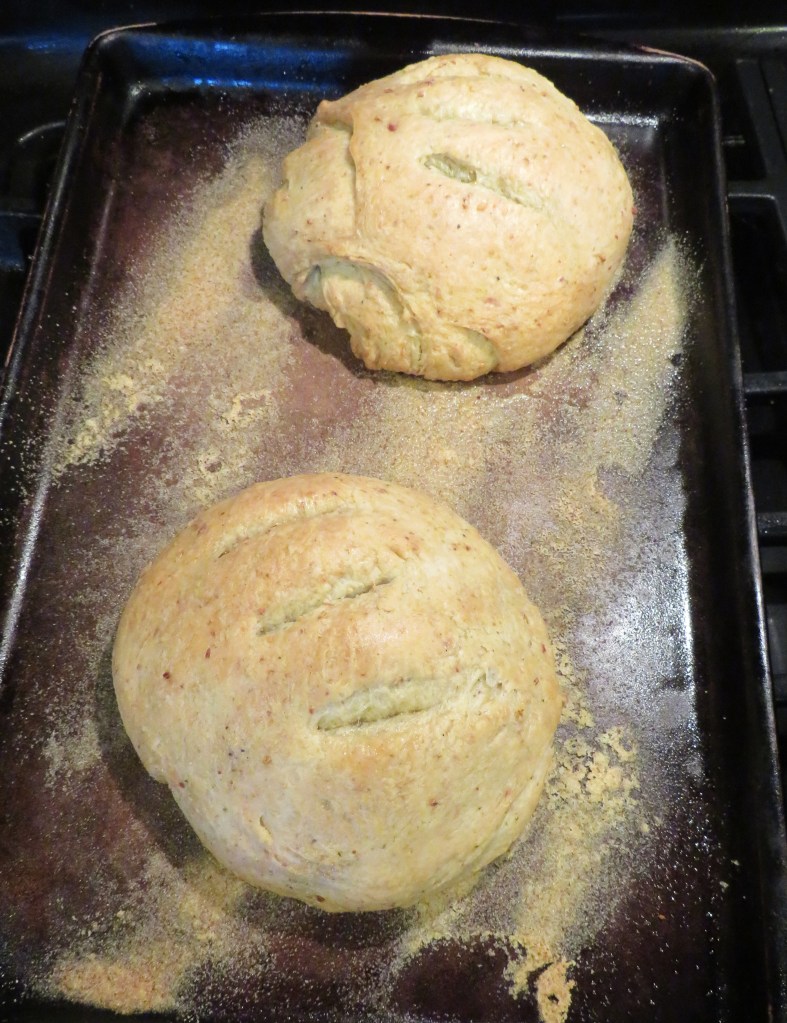
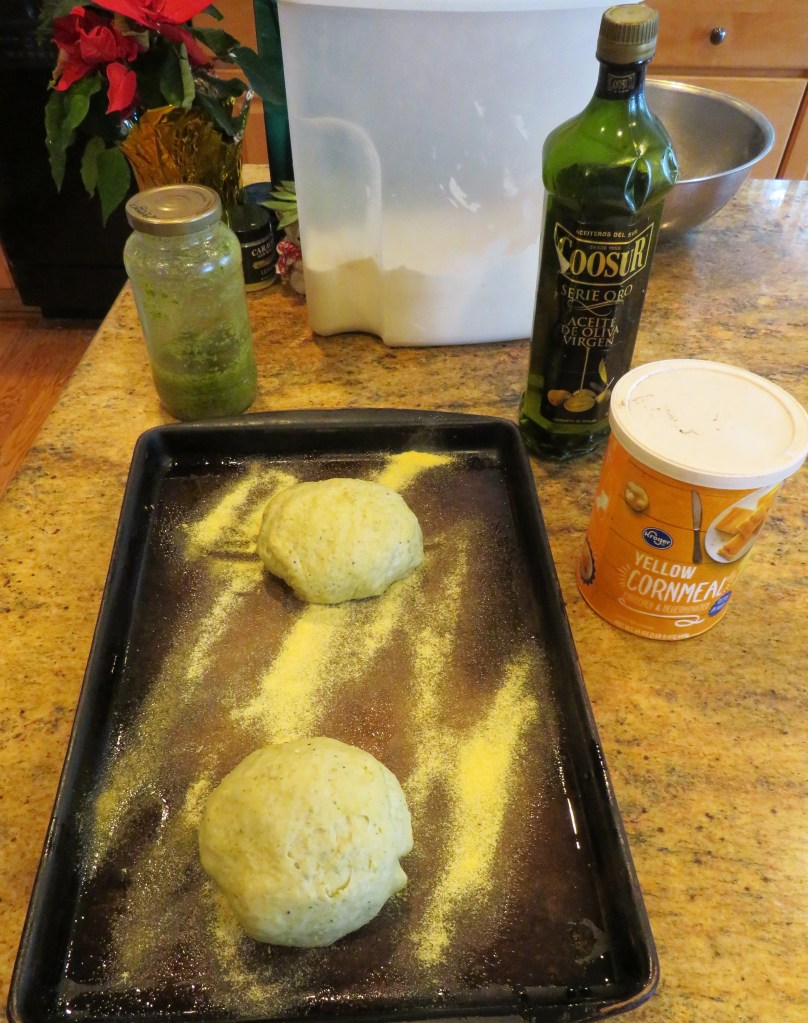
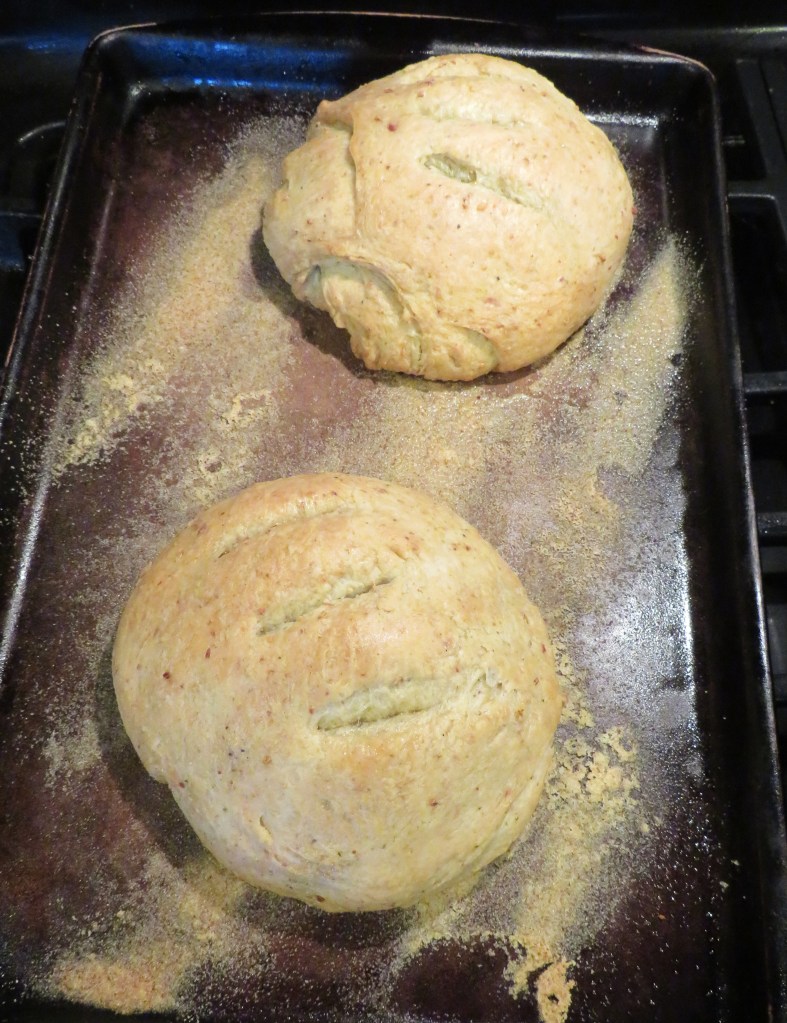
Lightly oil a baking sheet then sprinkle cornmeal on the bottom. Place the dough on top. Bake for about 40-50 minutes for 2 loaves or about 50-60 minutes for 1 larger one, or until the bread is lightly golden and hollow when tapped on the bottom. Spray water into the hot oven about 3 times within the first 10 minutes of baking. Spraying water into a hot oven while baking bread creates steam, which keeps the dough’s crust soft and allows for maximum “oven spring” (expansion), resulting in a taller loaf with a thinner, crispier, and shinier crust, better flavor.
When the bread is done, remove it from the oven and let it set for a few minutes before slicing. Enjoy with either butter or olive oil.
Have a great day and make everyday great. May 2026 be filled with happiness, good health and prosperity for all. ‘Til next time.
My birthday is in February, but I just received a very special early birthday present from my dear friend Julia; our friend Julia from Blackberry Homestead at http://retirementrvdream.wordpress.com/.
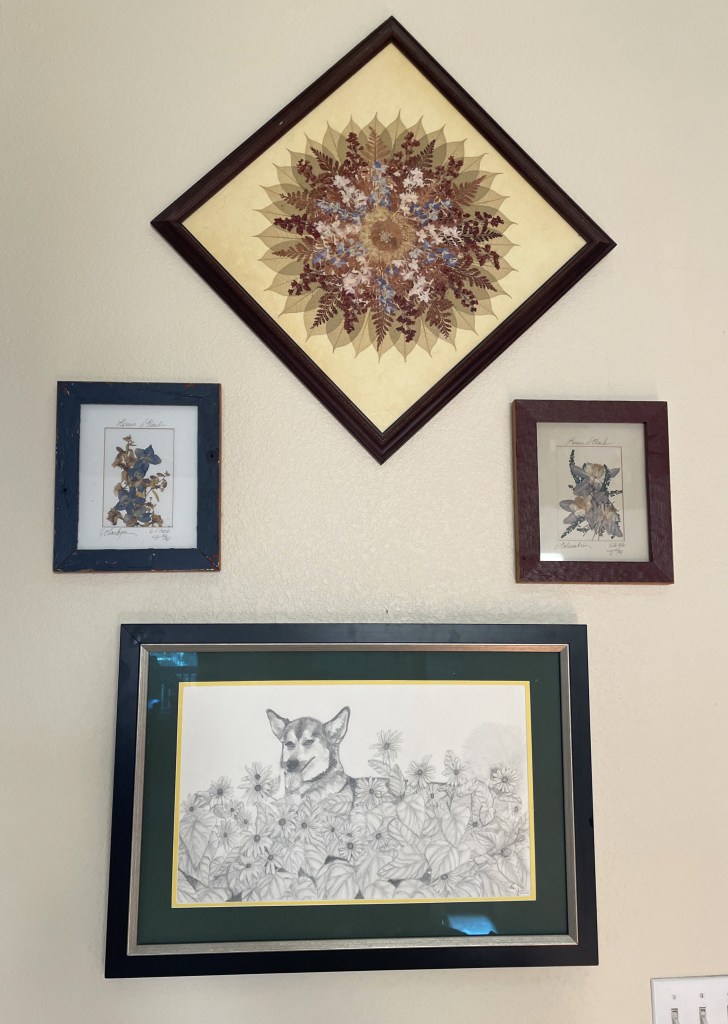
Julia is a very talented artist and she loves to draw. I have been gifted with a couple of Julia’s beautiful creations, with the latest one being a portrait of my Juneau, aka Juni Bug, in the sunflowers. This was the photo that was the inspiration for my present.
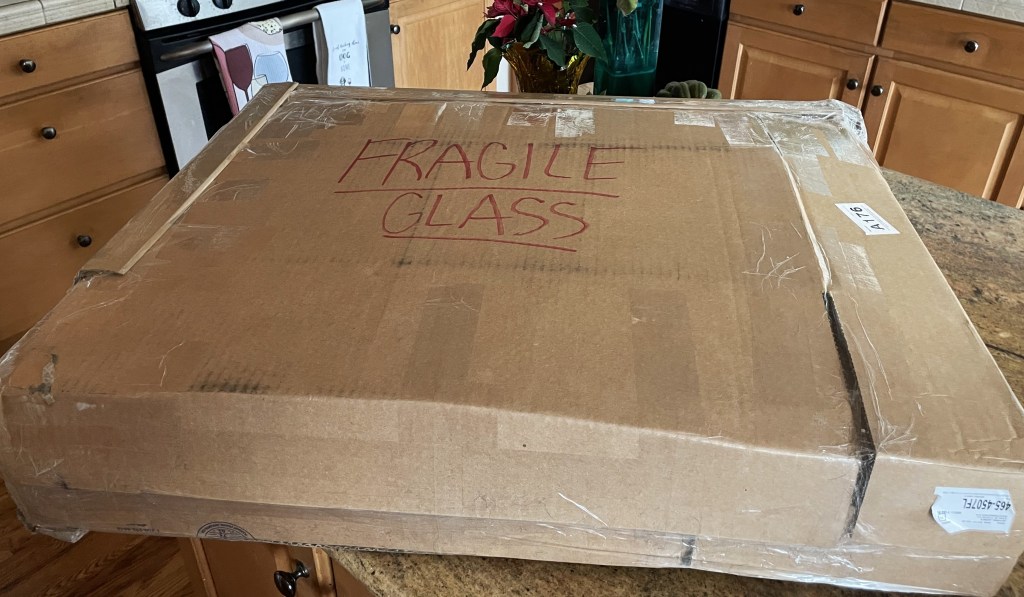
This was my beloved early birthday present from Julia. It arrived yesterday. Julia actually asked me to open it as soon as it arrived, though I would have anyway unless specifically requested NOT to. She wanted to make sure it arrived safely, and that it did.
The box it arrived in was HUGE!!!!! It was very well wrapped and protected, and took me about 30 minutes to unwrap. But with determination and diligence, I finally got to the prize inside. 🙂
Julia did an AMAZING job on this picture. I thought it was going to be a small picture, but I was blown away to find out how large it really was. WOW!!!!!!
We cleared a spot on the wall and Larry helped me hang it. It needed a large spot, since it is a large picture. The floor plan of our house is very open, so finding large wall spots is a challenge, but I found the perfect spot for it. It now proudly hangs on the wall right by our front door, so everyone who walks into the house via the front door will immediately see it.
Thank you so much Julia for this absolutely gorgeous and thoughtful gift. But the real gift is the gift of our beautiful friendship. I am blessed beyond words to have such a beautiful and loving friend. 🙂 🙂 🙂
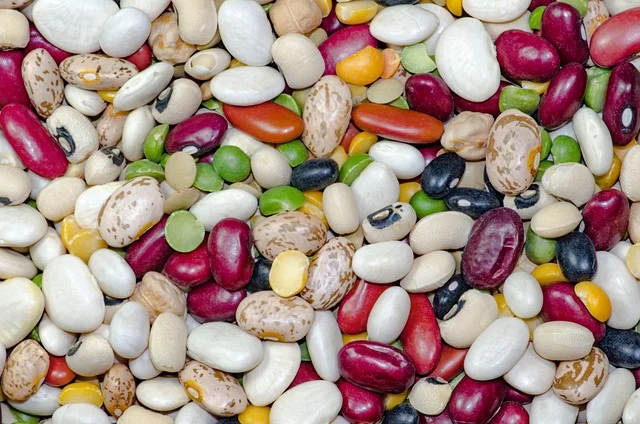
Beans, beans, good for your heart. The more you eat, the more you ______. Most of us who have been around for awhile know how to fill in the blank. We’ve all heard the saying. But jokes aside, beans are really very nutritious, in many ways. They provide essential protein, fiber and nutrients, and have been a staple food in many cultures for 1000’s of years. They come in all shapes, sizes and colors.
Beans are members of the Leguminosae or legume family. They were one of the first cultivated crops, and have been around for many 1000’s of years. Some type of bean or legume has been found in many places around the world and are eaten by almost every culture. The first cultivated beans appeared over 9,000 years ago in the Aegean, Iberia, and transalpine Europe and they were large-seeded broad beans. Beans have been found in Guitarrero Cave, an archaeological site in Peru, over 4,000+years ago too, proving that beans appeared practically everywhere and where one of the staple foods of the early peoples.
In Mesoamerica, beans were known as part of the three sisters, which included beans, corn and squash. Part of the reason they were called the three sisters by the Native Americans is because the legumes, when planted in conjunction with other crops, helped support the other crops, helping them all to survive through nitrogen fixation. Mexico is known for their cultivation of smaller beans, while Peru and the Andes are known for growing larger beans. The indigenous people of the Americas relied on the common bean as a dietary staple, particularly in the Andes and Mesoamerica. This vining plant, characterized by small seeds and twisted pods, serves as the progenitor of nearly all modern bean varieties, including dry, soup, shell, and snap beans. Most of the kinds of beans commonly eaten today are part of the genus Phaseolus, which originated in the Americas.
In Ancient Egypt, Asia and Europe, what we now call “beans” evolved from wild plants into diverse varieties like black, kidney, and pinto beans, essential for nutrition, sustainable farming, and global cuisine. Wild variants of broad beans (fava beans) were gathered in Afghanistan and the Himalayan foothills. Beans were also found in the tombs of the kings of the Ancient Egypt where they were left as the food for the departed and their souls in the afterlife. For thousands of years, the common bean has migrated across the world – from the American continent to Europe and then back again with European immigrants and explorers.
Depending on where they are grown, different beans are grown and harvested for different reasons and uses. Many bean varieties were grown specifically to be dried and stored, then reconstituted later, such as Kidney Beans, Black Beans, Great Northern Beans, and Navy Beans. “Though the basic bean preparation is universal. To be edible, dry beans must be slow-cooked in liquid from anywhere to 45 minutes [for] split peas to four hours [or more for things like] chick peas” p. 184 Dairy Hollow House Soup & Bread, A Country Inn Cookbook, by Cresent Dragonwagon). Different beans lend themselves to different flavorings and different preparations too. But don’t limit yourself just by type. Play around with different beans to create new possibilities. The limitations are with your own imaginations.
Different places prepare beans in a variety of ways. For instance, in China (more precisely in Sichuan), broad beans are mixed with soybeans and chili peppers and fermented into a paste called doubanjiang. In Dalmatia, a part of Croatia, people prepare a traditional dish made of stuffed artichokes with fava beans and peas. Greeks also cook stew of artichokes and fava beans but while they are still green and in their pods. The Southern United States eat a “Hoppin’ John” – a dish made of black-eyed peas and rice. Cuisine called “akara” is traditional in West Africa and the Caribbean. It is prepared by mixing mashed black-eyed peas, salt, onions and peppers and frying the mixture. East Asian adzuki beans are boiled with sugar and made into a sweet paste to be used as an ingredient for many desserts. Mung beans are cooked with coconut milk, sugar and a little ginger and made into a porridge which is a dessert snack called “es kacang hijau”. On the other hand, when the mung bean is made into a fine paste with ginger and salt it is eaten for breakfast. As I said, the possibilities are endless.
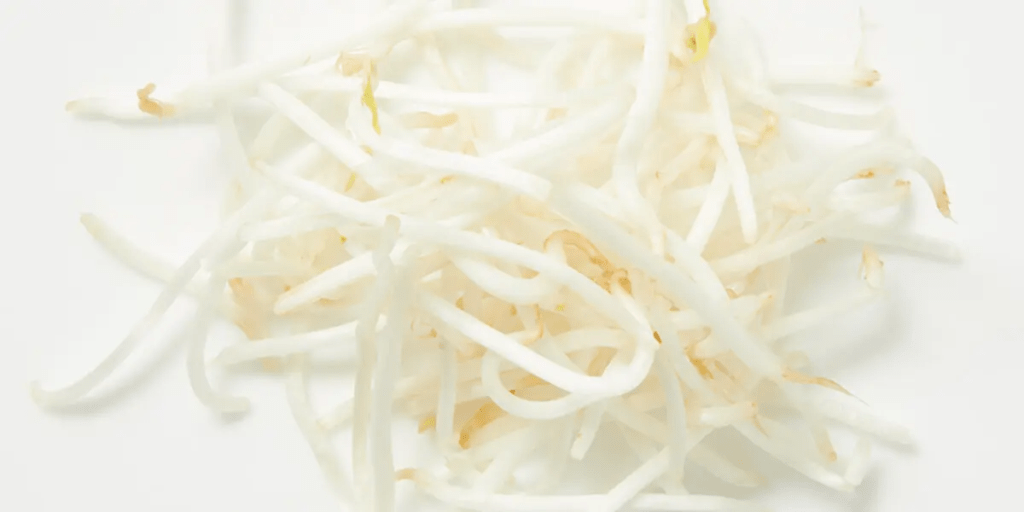
Bean sprouts, or the young small bean “rootlet”, are eaten in many different Asian countries and cultures, and have been for 1000’s of years as well. Bean sprouts, primarily from mung or soy beans, have an ancient history in Asia, used medicinally and as a food source for over 5,000 years, especially by the Chinese to prevent scurvy on long sea voyages. Part of their attraction is because they are easy to grow without soil or sun (though a dark, moist environment is needed) made them ideal for shipboard cultivation and home sprouting.
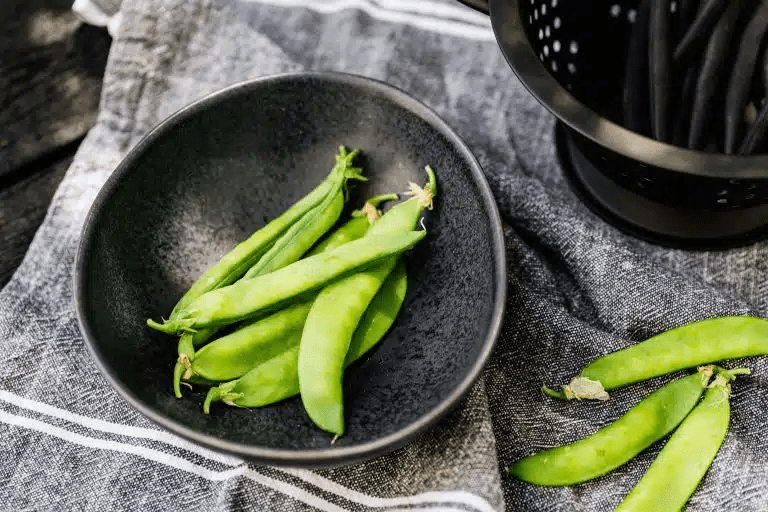
Sometimes, the soft, green pods that are young and under developed are eaten too. The most common type of young bean pods eaten are what we typically call snow peas, or Holland peas, or he lan dou. Peas are one of the oldest cultivated vegetables, with evidence found from 9750 BC in Southeast Asia and 3000 BC in Bronze Age Europe.
As you can see, beans have played an important role in the world’s diet for many 1000’s of years, with many different options and varieties. They are still a healthy choice today too. Don’t skimp on your beans. Add them to your diet in as many different, creative ways as you can.
One tip I learned that helps in the cooking process too, is to add about 1 TBSP of baking soda to the boiling water, during the cooking process. It will help soften the beans and help eliminate some of the natural gases they contain. Adding a small amount of baking soda (sodium bicarbonate) to your bean soaking or cooking water helps them soften faster and cook more quickly by making the water alkaline, which breaks down pectin in the bean’s cell walls, resulting in creamier, more tender beans and potentially reducing gas by breaking down complex sugars. The baking soda or sodium bicarbonate makes the beans easier to digest, and helps eliminate the unpleasantries of eating beans, referring back to my first sentence. 🙂
Eat your beans, be healthy and enjoy. Have a great day and make everyday great. May 2026 be filled with happiness, good health and prosperity for all. ‘Til next time.
Did you know January is National Soup Month? I didn’t know about it either, but apparently, it’s a real thing. It was started by the Campbell Soup Company back in 1984. It was created to to celebrate the comforting, nourishing, and versatile nature of soup during the cold winter months, encouraging people to enjoy or create their own hearty bowls of goodness.
Soups are nutritious was of using up leftovers. They warm us up on cold, chilly days or nights. They can be a good, balanced meal all unto themselves, especially my soups that I pack with all kinds of hearty goodness. 🙂 There are endless soup possibilities too. Anything goes. Some of the world’s most popular soups are:
chowders
phos
gumbo
ramen
borscht
wonton soups
noodle soups
chili
I make all kinds of soups. I make them from everything, and use everything I have. Back in my restaurant days, eons and eons ago, my chef and I would actually plan our menus using a lot of leftovers for the chilies and soups. We had to have soup and chili options everyday, and every restaurant wants to use up as much of their inventory as they can on a regular basis. So one way to not have a lot of leftovers is to add them to soups and chilies. We certainly did that all the time too. Our soups and chilies always got rave reviews, though in all honestly, all of our foods did. 🙂
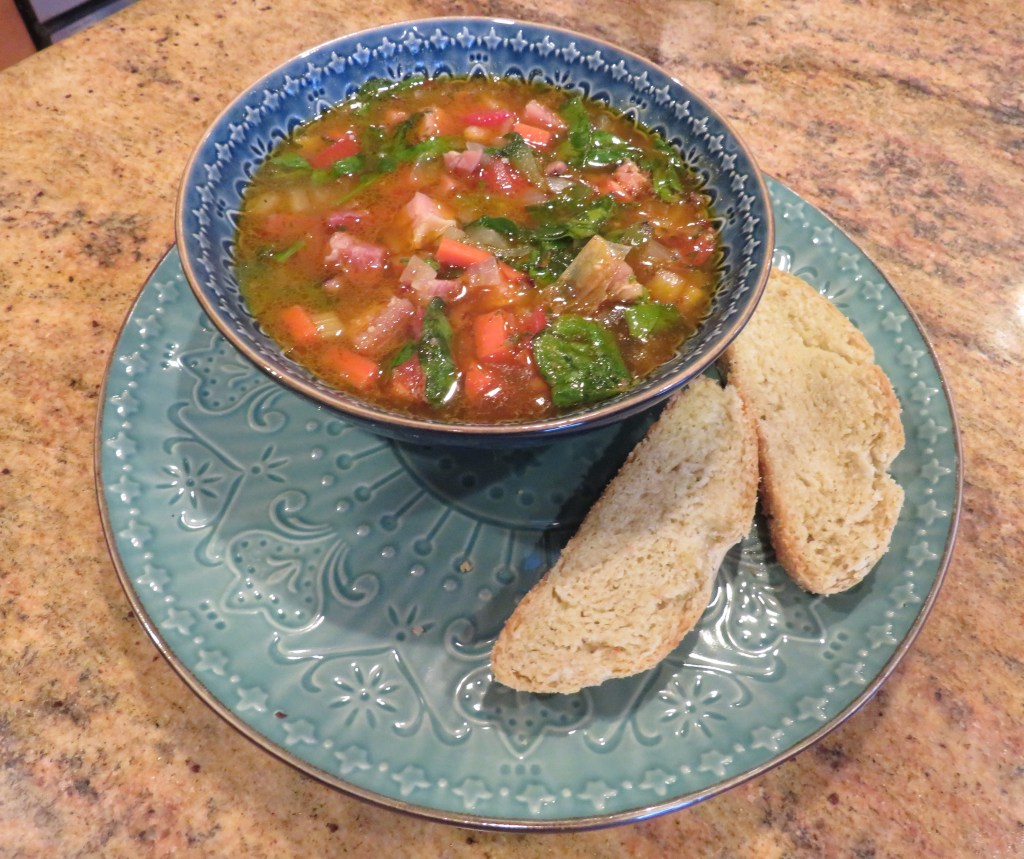
My most recent soup was made from my big batch of my New Year’s black-eyed pea and ham salad. Keeping Our New Year’s Traditions I am doing my best to ensure we will have good luck all throughout the year.
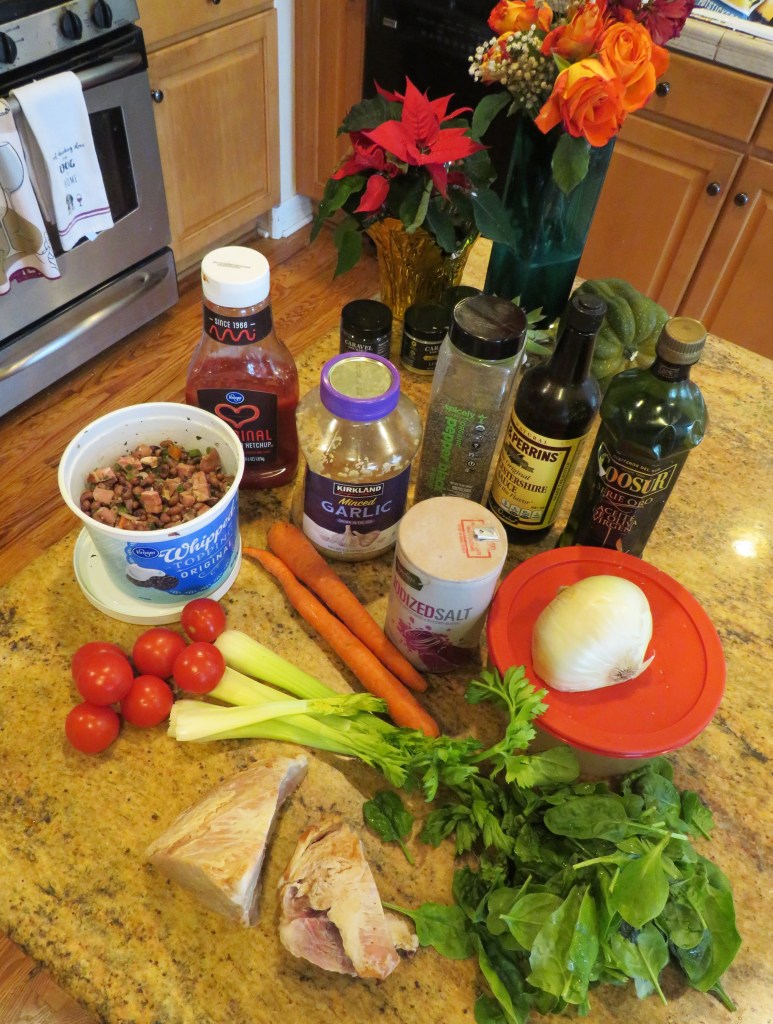
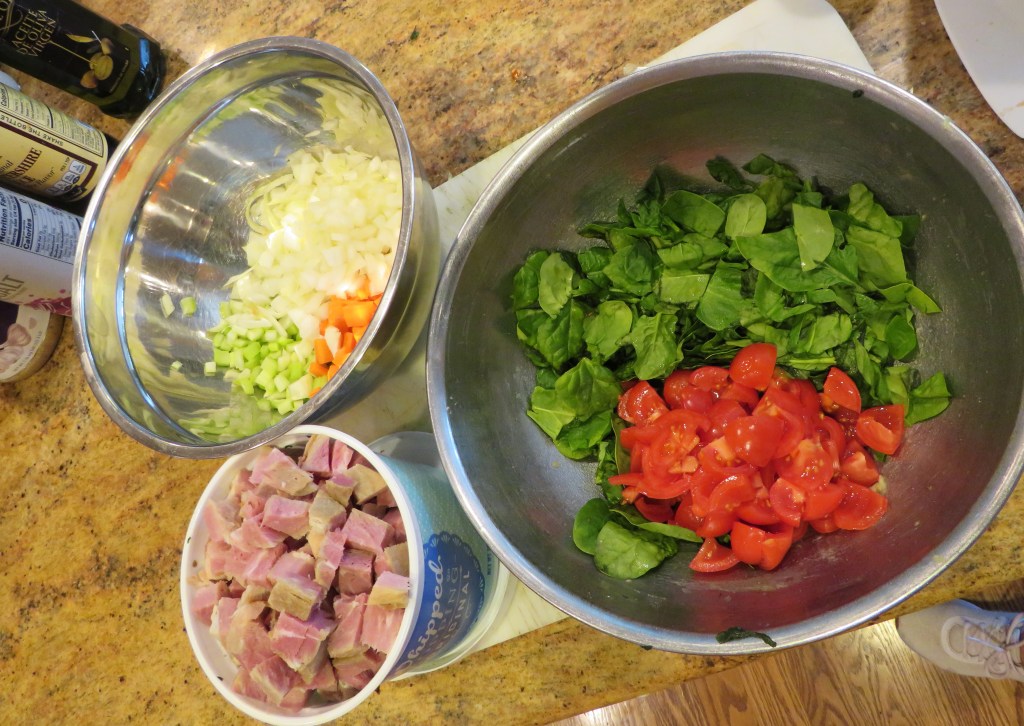
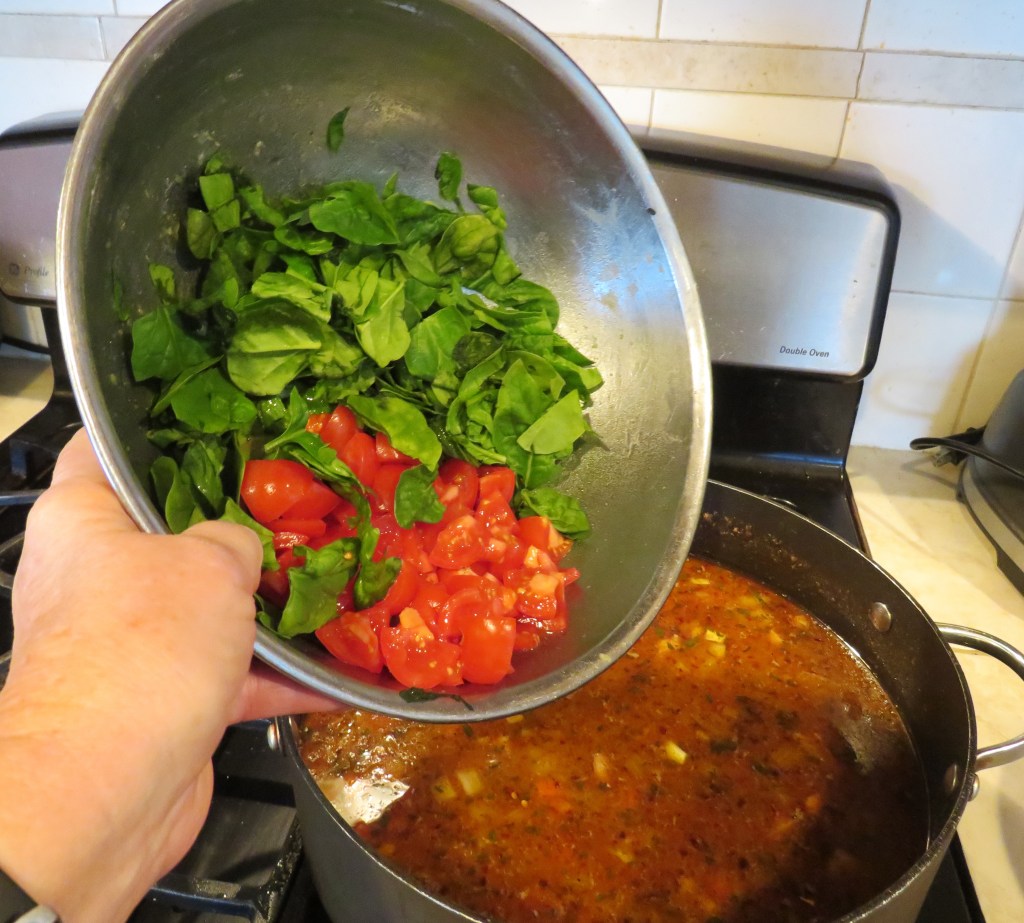
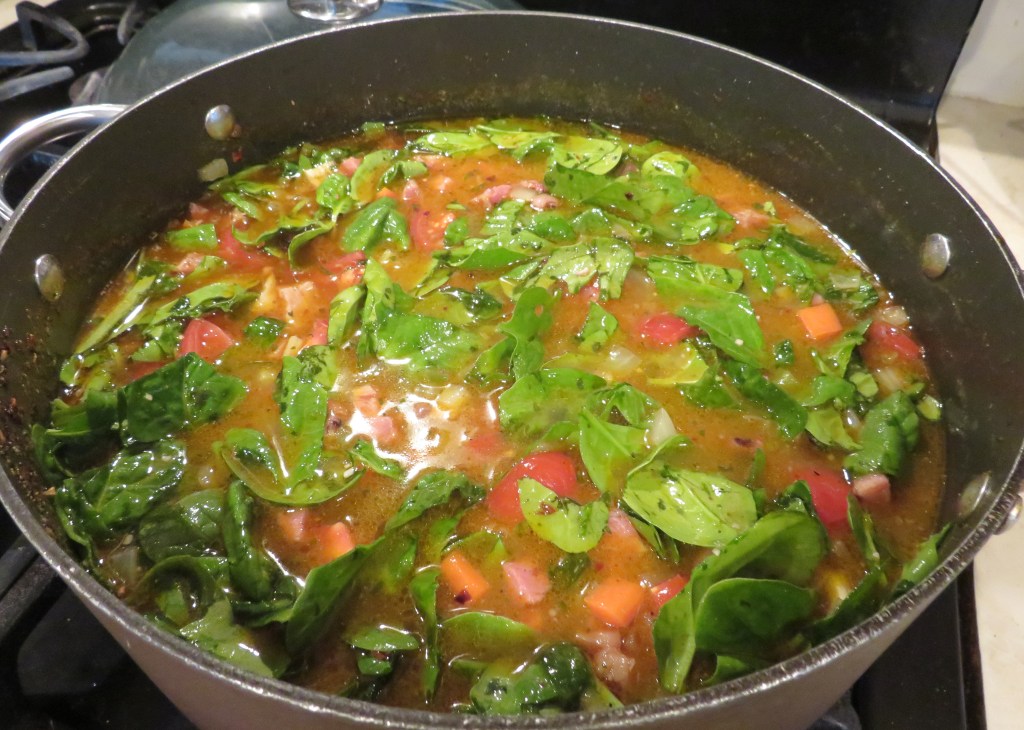
I made a BIG batch of black-eye pea and ham salad for our New Year’s Day meal, and needed to turn it into something else. Soup it was. I added celery, carrots, garlic, more onions, more ham, spinach and tomatoes.
For my broth, I mixed ham broth with salt, pepper, 2 TBSP of ketchup and a couple of tsp of Worcestershire Sauce.
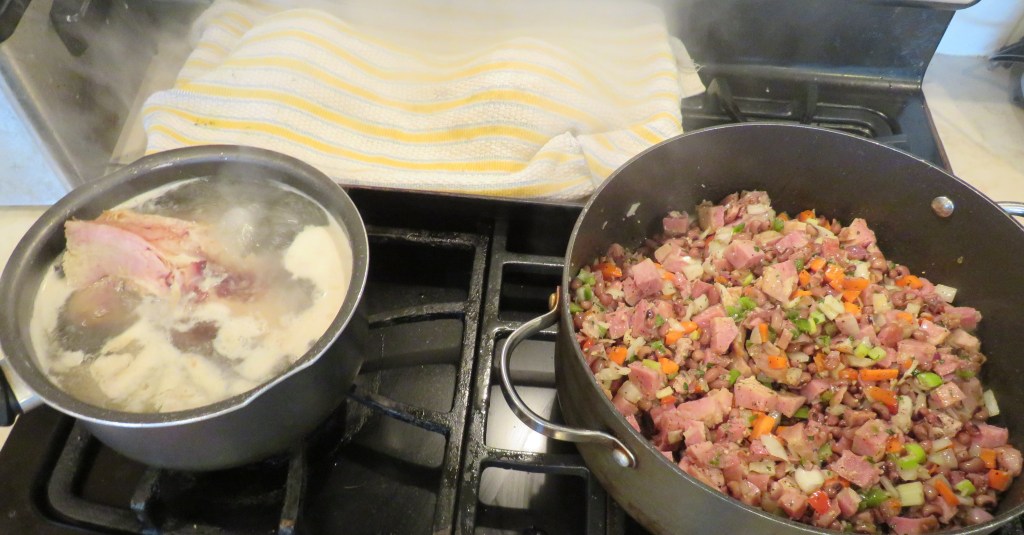
I cooked the vegetables that needed to be cooked in olive oil until they were al dente.
Then I added the black-eyed peas and ham salad and the additional ham I cut from the bone. Once I cut off all the ham I could, I made my ham broth from the bone. When the broth was ready, I mixed in the ketchup and Worcestershire sauce then added it to the pot. (Dorrie and Juneau enjoyed the remainder of the meat that I was able to get off the bone after I made my broth too).
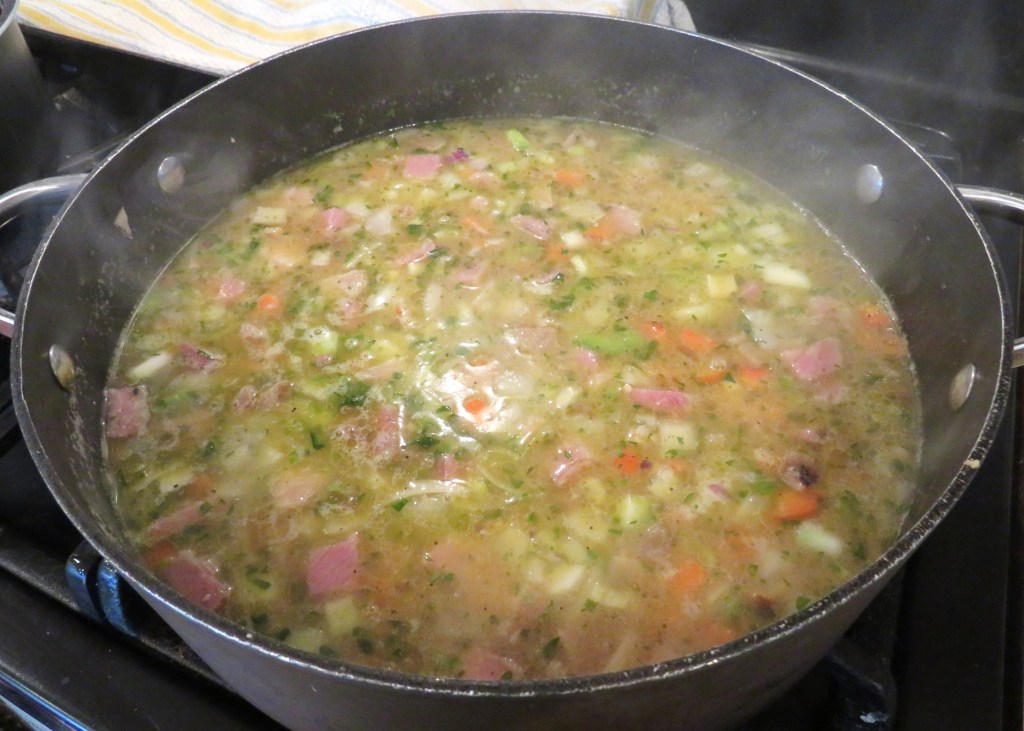
I brought it all to a boil, then reduced the heat to a simmer and allowed it to continue to cook, for an additional 30-40 minutes, stirring the pot every now and then; though anyone who knows me knows I like to stir many pots all the time, but I digress. 🙂
The spinach and tomatoes came right at the very end, not long before serving the soup.
The end result was a delicious, healthy hearty soup that was definitely a meal by itself. All that was needed was some homemade bread on the side, which I did too. I made a pesto bread that paired perfectly with this delicious bean soup. 🙂
When the weather is cold outside, warm yourself up from the inside out with a hearty bowl or two of soup. Any kind of soup will do. 🙂
Have a great day and make everyday great. May 2026 be filled with happiness, good health and prosperity for all. ‘Til next time.
Pot pies, both chicken and beef, are American favorites. Pork pies are popular too, though here in the States, not as popular as chicken or beef. They have been around in various versions since the early Greek and Roman days. They are not new. Pot pies were first introduced to us about 9500 years ago. Back then, they went by the name of artocreas. The Ancient Greeks did not put a crust over the top though, just on the bottom. Adding a top crust was a Roman invention that the Greeks later adopted. The crust was a way to preserve the meat and leftovers, though at first, often times the crust itself was inedible. The crust was the “container”. The popularity of these portable meat and fish pies spread all across Europe. They became popularly known as “pies” around the 14th century, by the author Geoffrey Chaucer. The ingredients used for pot pies were generally easy to find, and sometimes leftovers from previous meals that would be repurposed as pie fillings. This turned them into an economical and satisfying dish, leading to the pot pie becoming a true staple in England. When the early settlers arrived in the Colonies, they brought their love of meat pies with them.
Beef pot pies were always a favorite for my dad, but then he was an Aussie, and the Aussies love their meat pies just like their British cousins. I love pot pies too; all kinds.
Beef Pot Pies
We had just enough beef down to make beef pot pies, and it was good weather for something to warm us up from the inside out. The filling kind of overflowed as they were cooking, but who cares. They still tasted very good, and that’s really all that matters. 🙂 I filled them with all kinds of hearty goodness.
1 1/2-2 lbs steak, cubed
1/2 cup flour
salt & pepper to taste – I used my new smoky bacon & chipotle salt
Cube the meat and coat with flour and salt & pepper. Get a large skillet very hot, add a combination of both olive oil and butter, and brown the meat.
When the meat is mostly browned, add the vegetables and potatoes and continue to cook for an additional 5-7 minutes, or until the onions are translucent and the potatoes and peppers are softened.
Add the beef broth and heavy whipping cream and mix together thoroughly. Bring to a boil, then reduce the heat to a simmer and cook until the liquid has thickened. Adjust the seasoning if needed.
Roll the dough out nice and thin and cut just a smidge larger than the ramekins.
Spoon the mixture into the prepared ramekins, then top with the dough. Press it down firmly and crimp the sides. Slash the tops with a sharp knife. Brush with an egg wash and place in the oven for about 40-60 minutes, or until the crust is golden brown.
Allow the pies to cool for a bit before eating because they are going to be HOT, HOT, HOT, but they will also be delicious! 🙂
Have a great day and make everyday great. May 2026 be filled with happiness, good health and prosperity for all. ‘Til next time.
Yesterday it snowed all day, but we did not get a lot of accumulation. But it snowed again over night, and I woke up to this.
Winter finally came. But as soon as the sun comes out and the temperature starts to warm up, it won’t last long. I enjoy it while I can though. We definitely need the moisture.
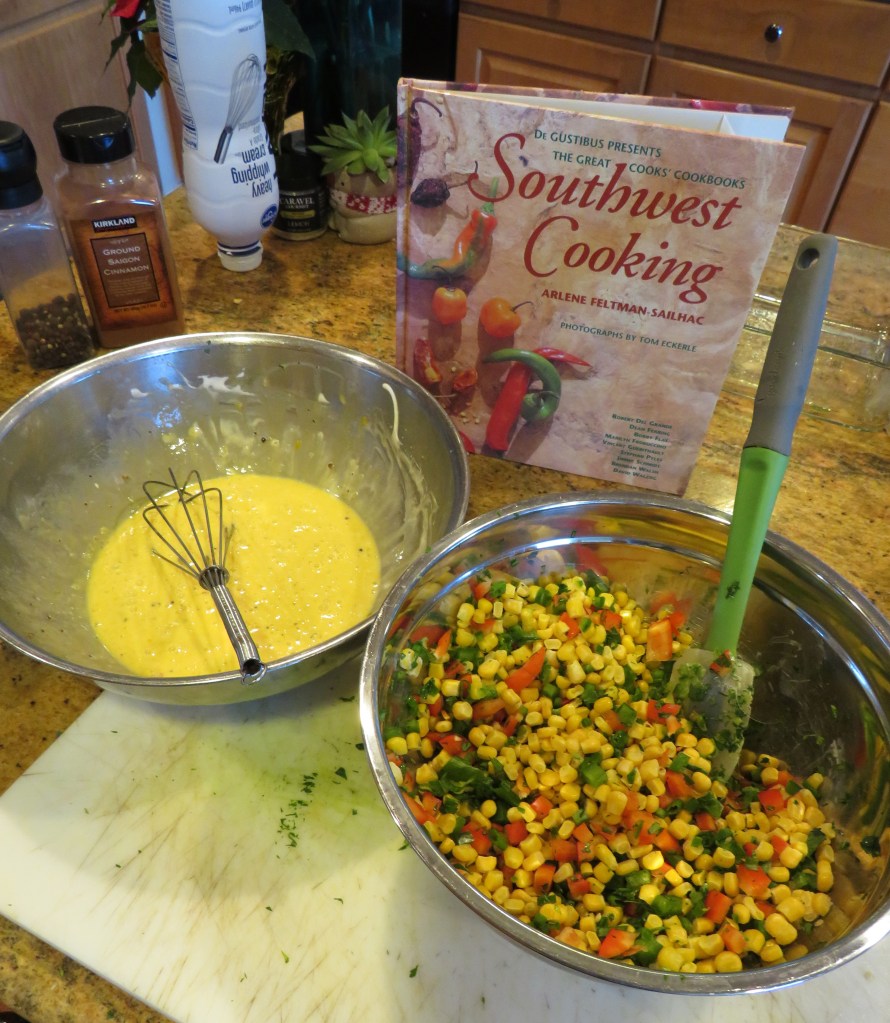
Corn pudding was born in the Americas. Originally it was a staple for the early Native Americans, then it morphed and evolved into a staple for early American settlers too. Originally the Native Americans used corn (maize) to make simple porridges, like sagamite, which early European settlers observed and adapted. The early European settlers took the sagamite, and mixed it with their hasty pudding and the result was corn pudding. The settlers, particularly those who settled in the South, learned and adapted to the use of corn or maize for their original oats or wheat, since they were more readily available. By the 1640s, colonists were making “sump” or “Indian pottage,” combining cornmeal with milk and butter, sometimes adding dried blueberries as a substitute for European currants. By the 18th century, molasses and sugar became more available, replacing berries and creating a sweeter, more custard-like baked dish. Today, “corn pudding” can refer to a range of dishes, from sweet desserts (often using creamed corn and cornbread mix) to savory Southern sides, showcasing the ingredient’s versatility. Corn pudding goes by a few names too. Besides corn pudding, is also known as pudding corn, puddin’ corn, hoppy glop, or spoonbread.
I love corn pudding. I have never had it as a dessert, but I love enjoying it as a savory and delicious side dish. Again, it is a Southern thing, and part of my Southern roots, though it is popular all over the Southwest and in Many Mexican-American homes too. 🙂 As always, there are many different varieties and adaptations. There is never just one way to make it. rarely, is there just one way to make something. I myself make it slightly different all the time too. Some people add cream cheese, which to me, is a hard NO. I prefer it sans cheese, and more custard like. Corn pudding is a soft, creamy, spoonable casserole that’s resembles a custard or soufflé, using eggs, dairy, and creamed corn for a rich, scoopable texture.
Creamy Corn Pudding
This is just one of many different versions of corn pudding. What makes this one intriguing is the use of maple syrup as the sweetener. When cooking, I like to use pure maple syrup.
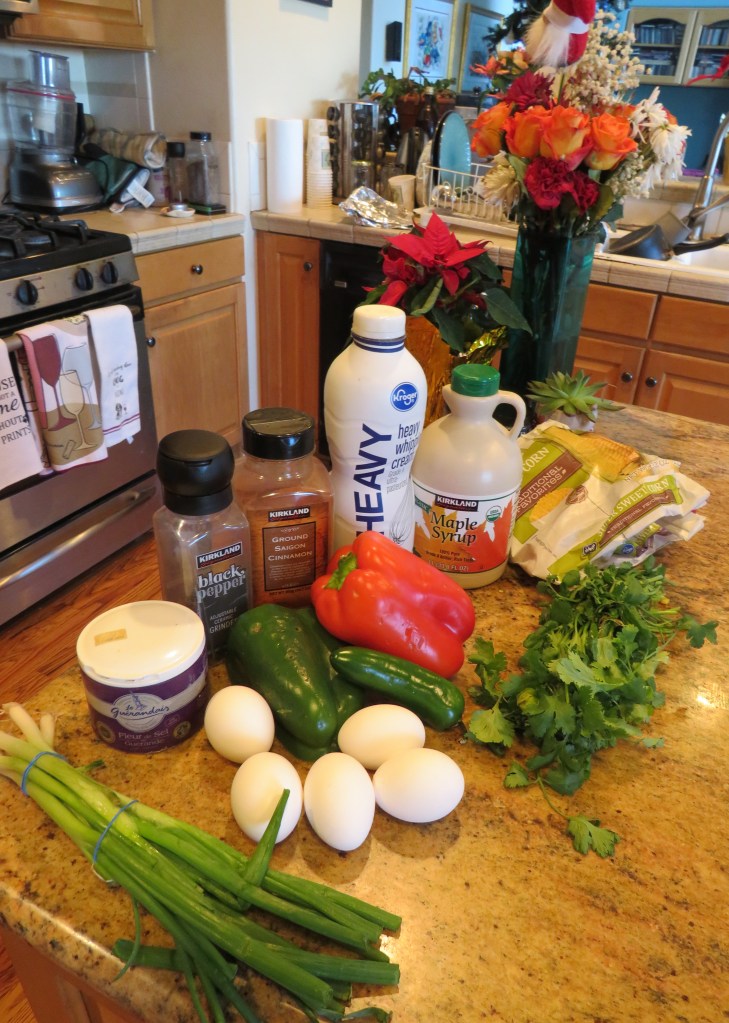
5 cups corn
1/2-3/4 cup heavy whipping cream
3 eggs
2 egg yolks
1/2 red bell pepper, diced
1/2 green bell pepper diced
1 jalapeno, diced fine
1/4 cup green onions, sliced
1-2 TBSP cilantro, chopped
2 tsp maple syrup
salt & pepper to taste
1/4 tsp cinnamon
Preheat the oven to 375* F or 191 *C.
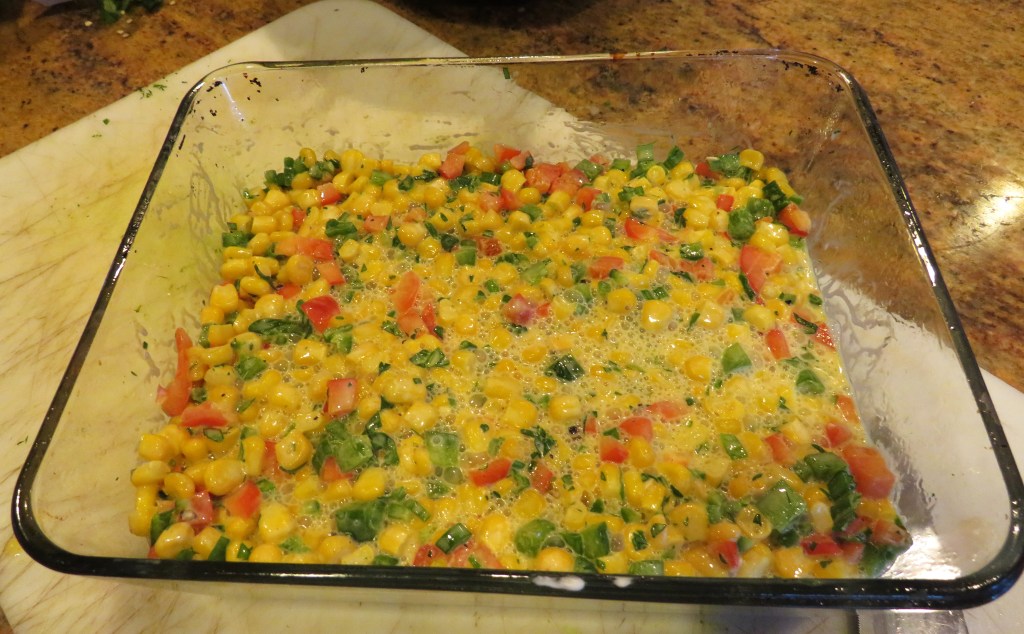
Spray a 9 inch square baking dish with cooking spray.
Saute the peppers slightly in oil or butter to soften them.
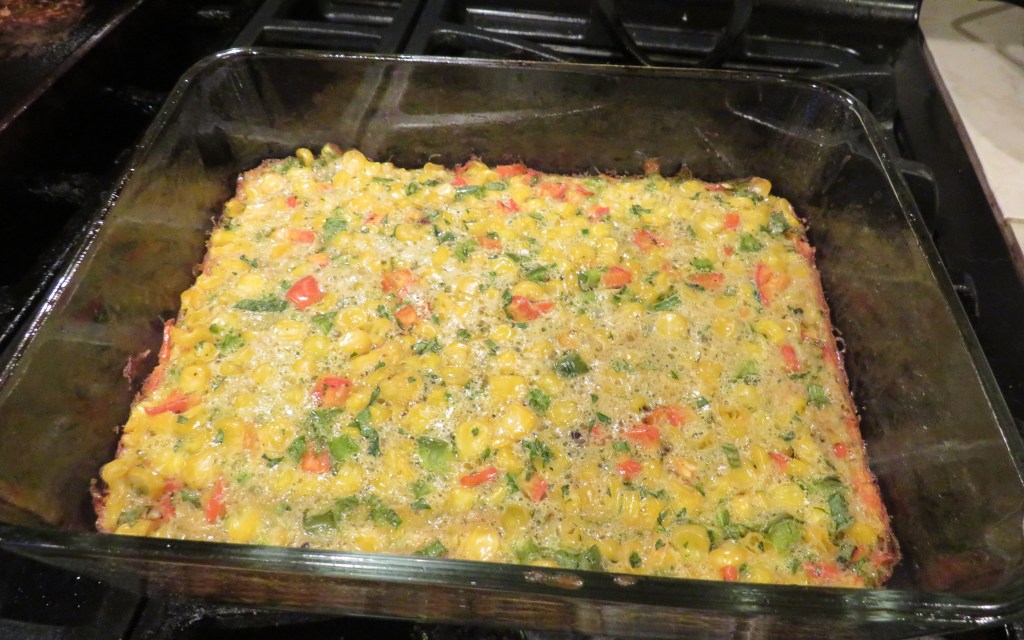
Beat the eggs and cream together. Mix everything together and place into the prepared baking dish.
Bake fore 25-35 minutes or until the “pudding” is set. Serve hot along side your favorite main dish and enjoy. 🙂
Have a great day and make everyday great. May 2026 be filled with happiness, good health and prosperity for all. ‘Til next time.
My lakes were filled with Canadian geese and a whole bunch of other various ducks. It was nice to see my lakes filled with so much variety again. But there was one surprise I almost missed and had to stop and do a double take. In a lake filled with Canadian geese, there was one, and one only, snow goose too. It was trying its best to blend in and not be seen, but I noticed it and let my camera snap a few good shots before walking away. 🙂
Don’t just blend in. Be yourself and be the one who stands out in a crowd. 🙂
Larry and I love fish and all kinds of seafood. I felt like it was time for something fishy. I had my pineapple cucumber salsa Crab Cakes With Pineapple Cucumber Salsa left, so I thought those would be a great combination. After all, I originally served it over crab cakes, so already knew it paired perfectly with seafood. 🙂
Aioli is a condiment used all over the Mediterranean regions of Europe. It is similar to mayonnaise, but with heavy garlic influences, and often often flavors as well. It is often described as garlic beaten up with olive oil and lemon or lime juice. I’d say that’s a pretty fair description.
I have an inside grill that I place over my burners when I am just grilling a little bit. It’s also perfect for using during inclement weather when I don’t want to go out into the elements. 🙂 I got that real hot, then added both olive oil and lime olive oil before placing the cod on the grill. I cooked the cod for about 4-5 minutes per side, or until it was lightly browned.
Lime Aioli
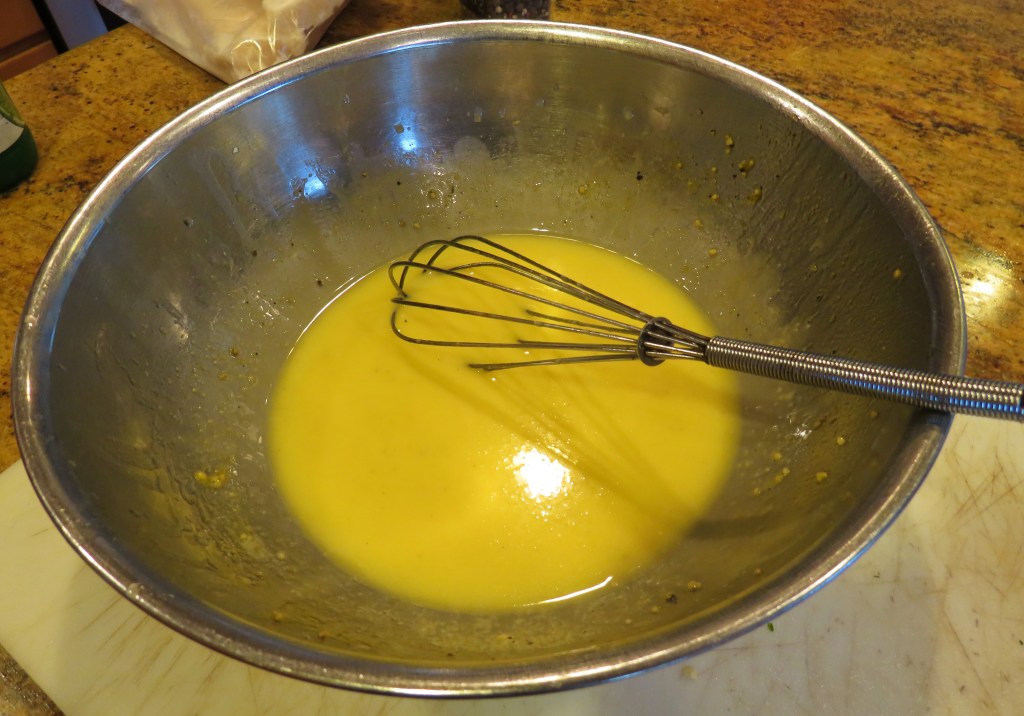
This particular version of aioli is intentionally light. It is meant to be drizzled over foods. To make it thicker, just add another egg yolk or two, if using them. There is a debate on the use of egg yolks. Purists think the use of egg yolks makes it more like mayonnaise than a true aioli.
1 tsp salt
1 tsp sugar
1/4 tsp fresh ground black pepper
2 tsp garlic
2 egg yolks
1/4 cup lime juice
1 1/2 cups olive oil
2 tsp water, if necessary
Place everything in a food processor except the olive oil. Slowly add the olive oil at the same time the processor is emulsifying the mixture.
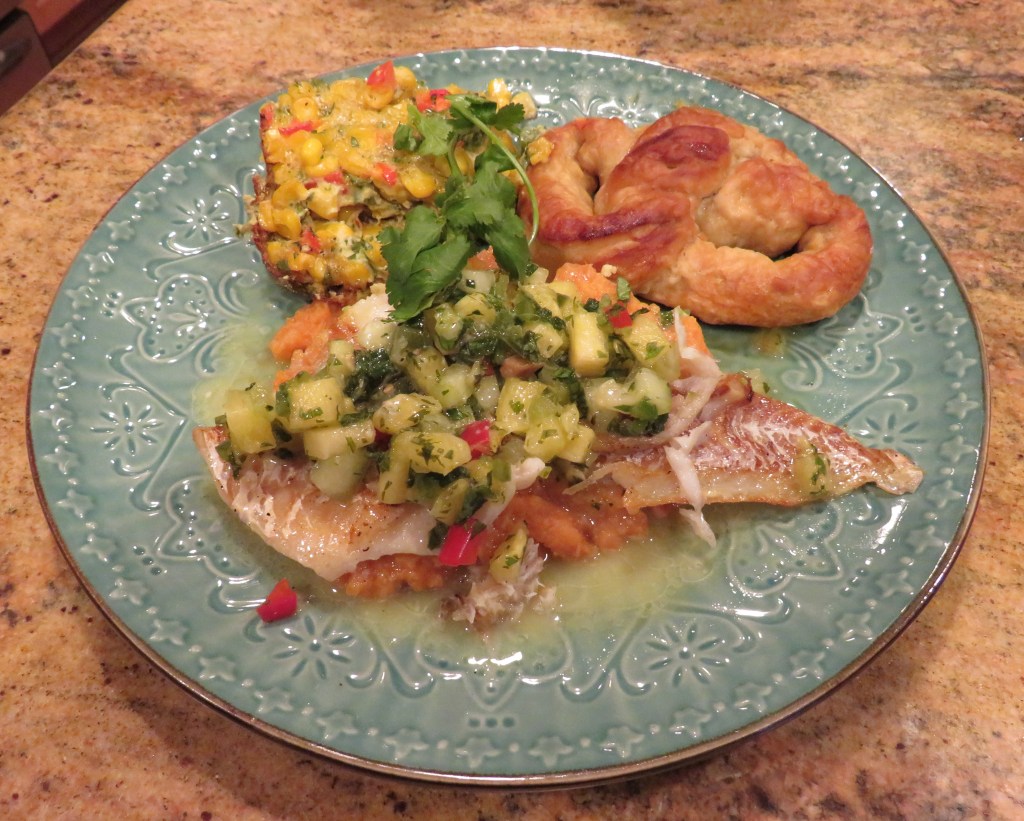
I placed the cooked cod on top of a bed of pureed sweet potatoes, then added some of the lime aioli on top, and finished it with a generous dollop or two of my pineapple cucumber salsa. I finished the dish with some corn pudding and the last of my New Year’s pretzels Keeping Our New Year’s Traditions and served it with a chilled Pinot Grigio on the side (one of ours, that we made). !Delicioso!
Have a great day and make everyday great. May 2026 be filled with happiness, good health and prosperity for all. ‘Til next time.




























 A Jeanne in the Kitchen