Butter Chicken

I was going to make this dish a few days earlier, but plans changed and it got pushed back a couple of days. No problem. I made it for just Larry and I rather than sharing it with Mike and Lauren too. I made butter chicken, or murgh makhani.

Butter chicken is a dish that originated in Delhi, India. It was created at the Moti Mahal Restaurant in the 1950’s, by adding butter and tomatoes (makhan) to the sauce for the chicken. Its sauce is known for its rich, creamy texture. It is similar to chicken tikka masala, which uses a tomato paste. It resulted from a cooking experiment when the leftover marinated chicken was combined with a rich tomato-based gravy (Indians call any kind of sauce gravy), resulting in a heavenly creation. Traditionally this is more of a restaurant dish rather than something people make at home because the chicken is cooked in a tandoor oven, and most people do not have a tandoor oven at home. But when there is a will, there is a way. Today, many people make their own versions in the comfort of their own kitchens, like I did, without a tandoor oven.

Butter Chicken

2-3 lbs chicken – I used breasts, but you can use pieces or a whole chicken too if you prefer.

2 cups plain yogurt

1 TBSP garlic

1 TBSP ginger

1/2-1 tsp red pepper flakes, or to taste

1 tsp chili powder

1-2 tsp paprika

1/4 tsp coriander

1 tsp cumin

1 tsp garam masala

1 tsp turmeric

2 tsp lime juice

salt to taste

Mix everything together and let the chicken marinate for 1-2 hours, or even overnight if you like before cooking it.
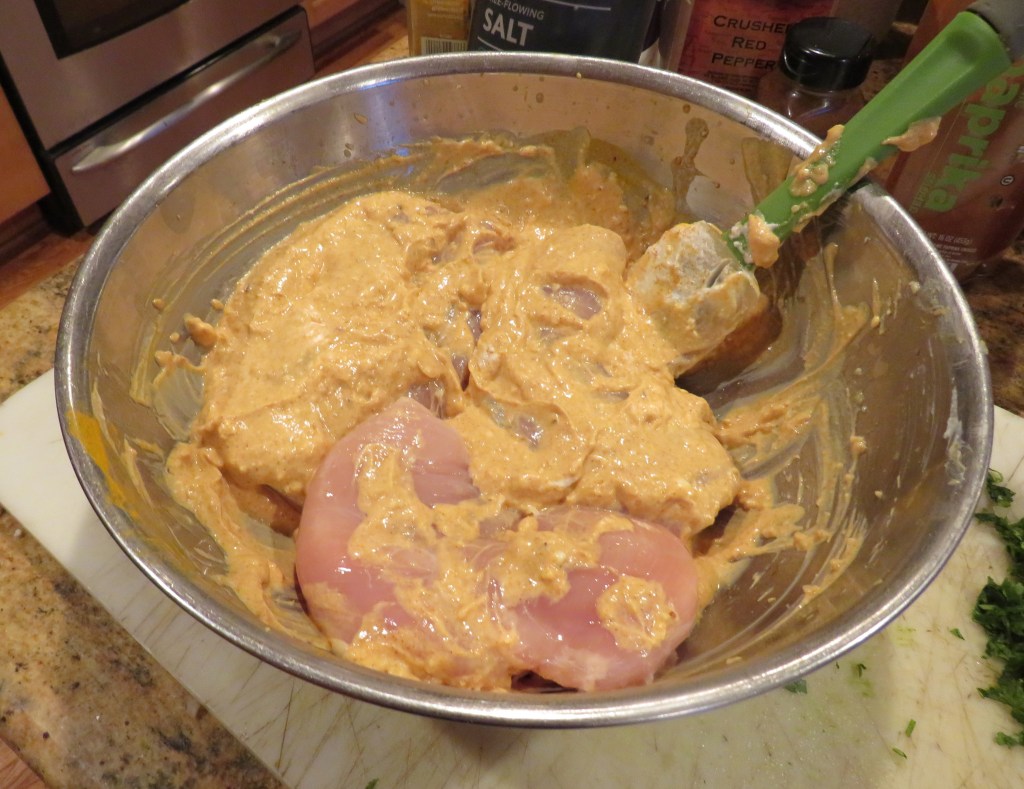
Get a large skillet very hot and add oil and/or butter or ghee. Cook the chicken completely, with the sauce.

The Makhani Sauce

1 1/2 lbs tomatoes, roasted

1/2 tsp fenugreek

3 oz butter

1/2 tsp paprika

few drops of vinegar

1/4 tsp garam masala

salt

3-4 TBSP heavy whipping cream.

Combine everything for the Makhani sauce and put it in the food processor, except for the cream. Add to the chicken and sauce, then add the cream and butter and incorporate into the sauce. Continue cooking for an additional 2-3 minutes, stirring constantly, or until everything is fully incorporated into the sauce. I confess, I completely skipped this whole step. I was in a hurry and was feeling rushed, and just overlooked this part. But no worries, the chicken still came out great, and this step wasn’t even missed. πŸ™‚

I served this over over a rice dish with vegetables and red kidney beans or Pulao, with some warmed naan bread and potstickers, and a cool, crisp chardonnay on the side (one of our own chardonnays that we made too). I was going to make some samosas, but Larry was hungry and wanted potstickers instead. No problem. I am definitely flexible when it comes to the kitchen.
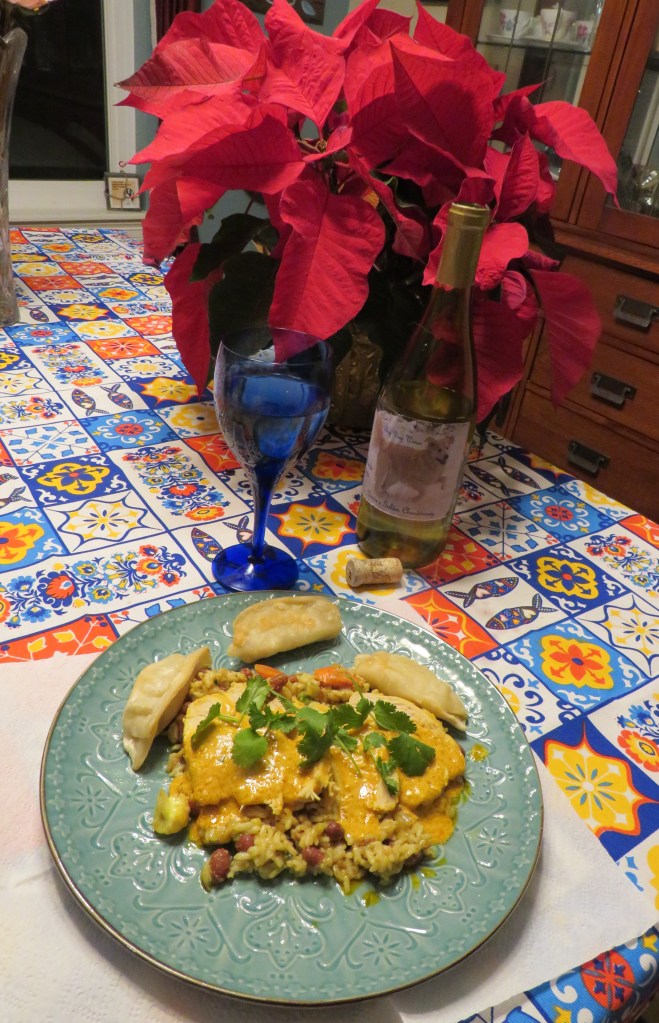
This dish was a delicious way to help warm things up, especially since it was frigid outside.

Have a great day and make everyday great. Stay safe, stay well, and stay warm. ‘Til next time.
Potato Focaccia

I love baking bread, especially when the weather outside is frightful. And it has definitely been frightful lately too. Our high today is only going to be 7*F or -14*C. BRRRR! Some of the best ways to fight the frigid weather are to stay indoors, to bake bread, and make a big pot of hot soup. I did all of the above. We stayed inside. I made a big pot of split pea soup Split Pea Soup and I made a potato focaccia.

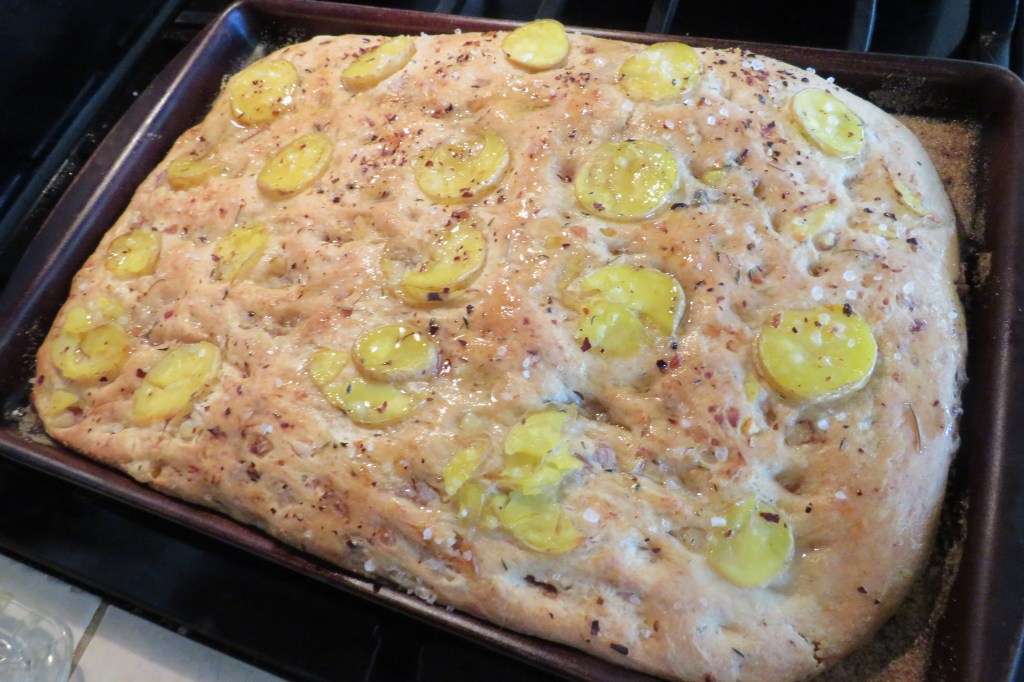
I make all kinds of focaccia, on a regular basis. But I had never made a potato focaccia before now. They are all fun to make, and all are delicious too. I don’t have a favorite. I enjoy them all. This focaccia was a little different than my usual ones though, because I used both regular flour and whole wheat flour, and I added potatoes both to the dough and on top of the focaccia before baking.

Potato Focaccia

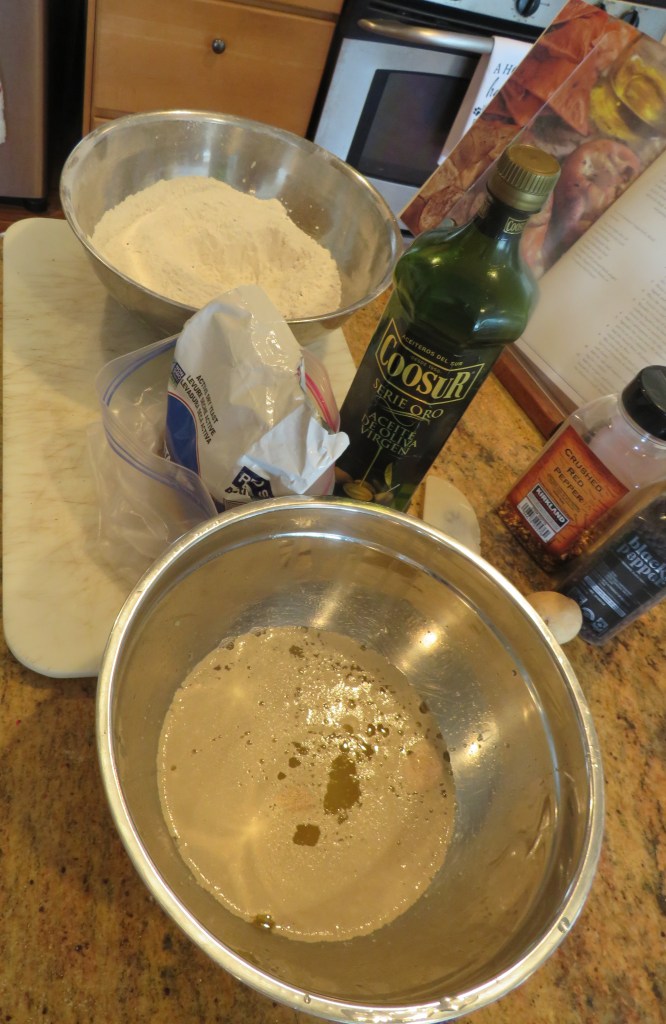
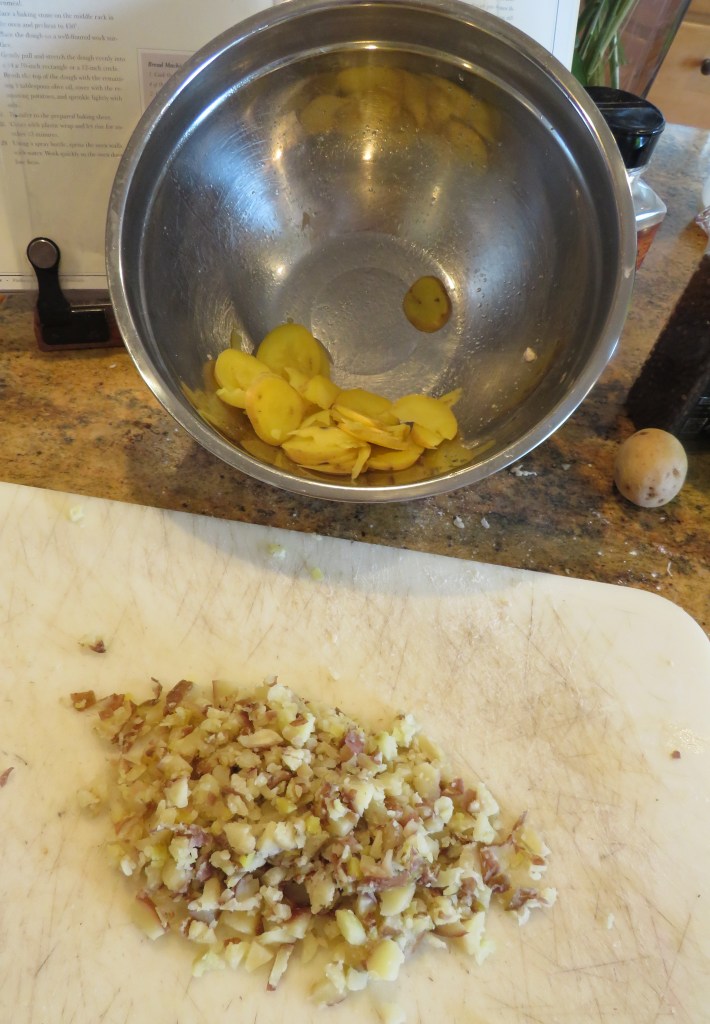
First I par-boiled the potatoes. Some I diced very small and some I sliced very thin. I used the diced potatoes for the dough and added the sliced potatoes to the top of the focaccia right before placing it in the oven.

6-7 small new or red potatoes, 34/ diced small and 1/4 sliced thin

1/4 cup olive oil

2 tsp dry active yeast

3-4 cups flour

1/2 cup whole wheat flour

1 1/2-2 cups water

2 tsp coarse salt

1/2-1 tsp fresh ground black pepper

2 tsp dried thyme and/or marjoram

1/4-1/2 tsp red pepper flakes or to taste

olive oil for drizzling on top

Par-boil the potatoes for about 12-15 minutes. Then drain and let cool, reserving 1 1/2 cups of the water.

Combine the flours and dry ingredients together and make a well in the center.

Add the yeast and 1/4 cup of olive oil to the reserved potato water, whisk together and let set for about 2-5 minutes.

When the yeast mixture is frothy, add it to the center of the flour mixture and mix from the inside out until it is all mixed together. Then knead on a lightly floured surface for about 6-8 minutes, or until it forms into a soft dough. Add more flour as needed. Place the dough in an oiled bowl, cover and let rise for about an hour or until it doubles in size.

Cut the potatoes and set aside.

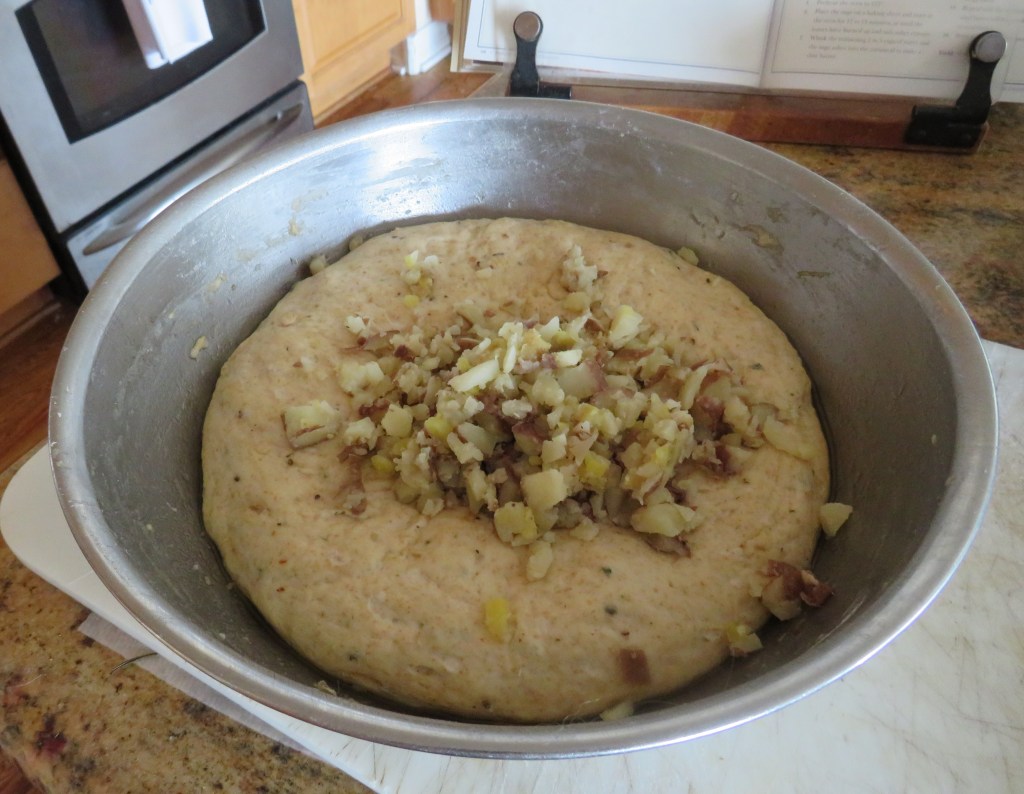
Add the diced potatoes to the dough and fold in until they are all incorporated into the dough. Cover again and let rise for another 30 minutes.

Preheat the oven to 450*F or 232*C.

Add some olive oil and cornmeal to the bottom a baking sheet and spread around evenly.

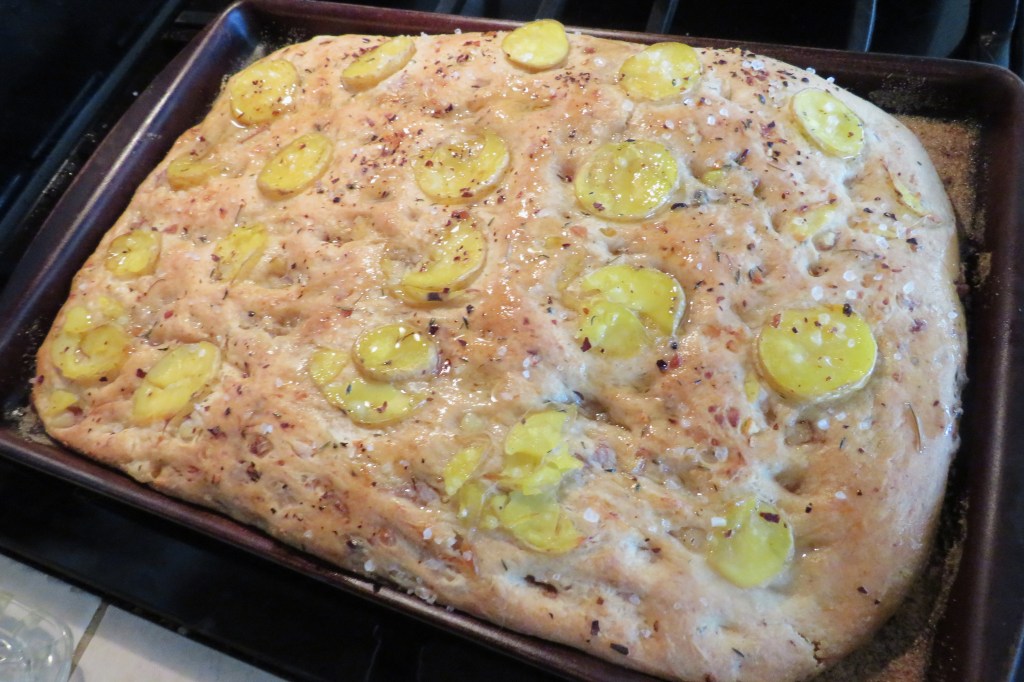
Place the dough onto the prepared pan and pat it out to fit the pan with your hands. Then dimple the dough with your fingers to let out some of the extra gases. Place the sliced potatoes on top of the dough. Add a little more of the dried thyme, coarse salt and red pepper flakes, optional on top. Drizzle more olive oil on top.

Bake for about 15-20 minutes, or until golden brown and slightly crispy. Spray the oven with water 3 times within the first 10 minutes of baking to ensure a crispy crust. Allow the focaccia to cool slightly before slicing it.

It came out so light and fluffy. In keeping with the Italian tradition, I dipped it in olive oil mixed with a little fresh ground pepper and balsamic vinegar too. DELICIOUS! !Mangia!

Have a great day and make everyday great. Stay safe, stay well and stay warm. ‘Til next time.

Crafting Again

I don’t know what’s going on in our house, but we have been eating a lot of leftovers lately. It seems like much more so than usual. I don’t feel like I am making larger batches of food, but we certainly seem to have a lot more leftovers than usual. Maybe it’s just because we started eating less, which is certainly the case, meaning, we have more meals of the same dishes. All I know is that because we are having more leftovers, I am cooking less. It’s bittersweet, but it is what it is. Have no fear though, I WILL ALWAYS be cooking, just sometimes not as often. Oh well. These things happen. But by cooking less, I have more time for more crafting.

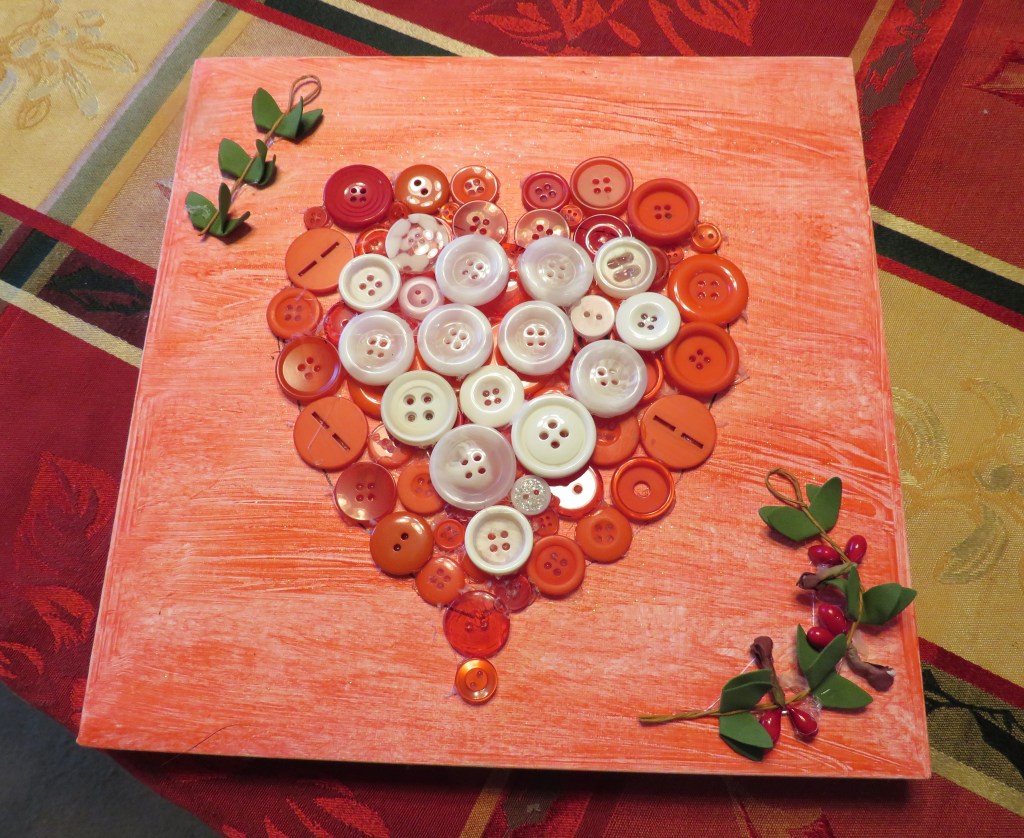
I mentioned awhile ago that I am doing a lot of crafts with all my many buttons lately. Button Up I started working with my buttons to use them up, but it seems like my button collection is actually growing rather than diminishing. My buttons just keep multiplying. Here are some of the latest things I’ve been working on.

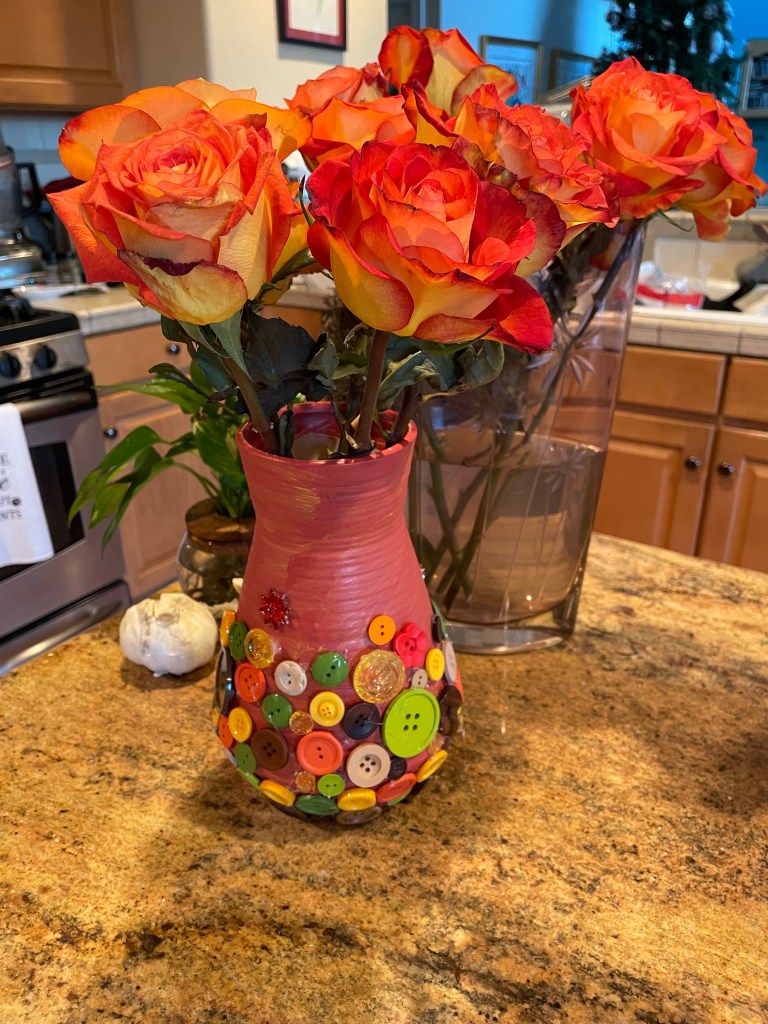
I’ve been busy creating colorful button vases.

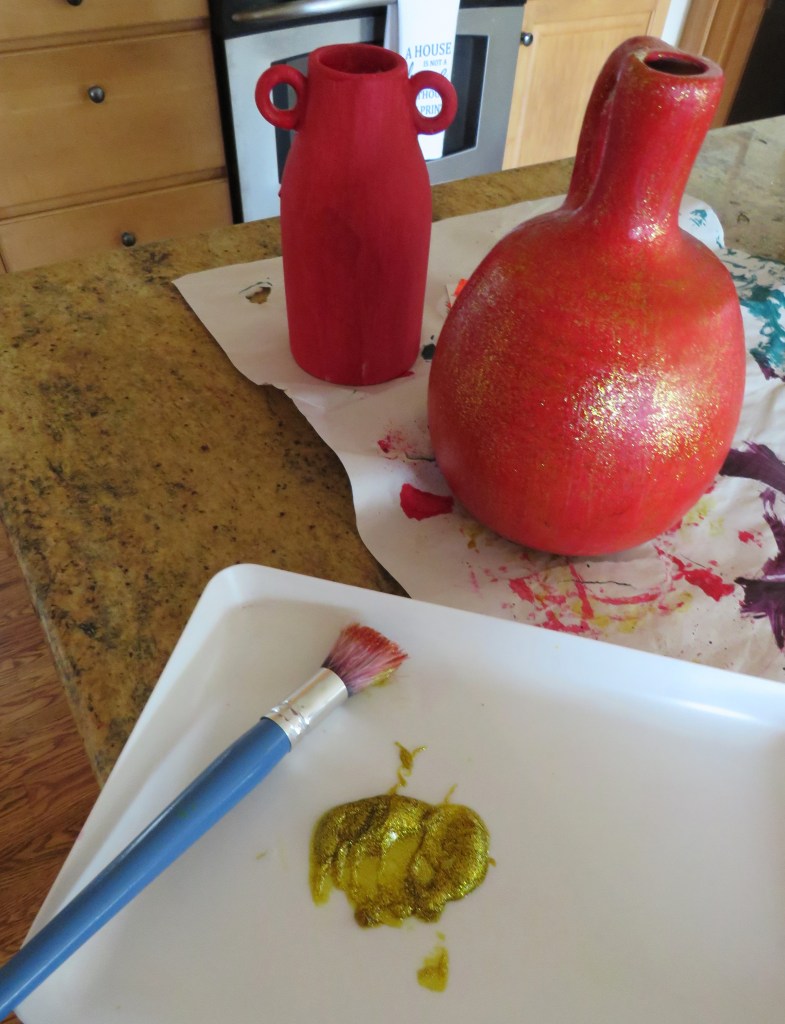
First I paint them in different colors.

And sometimes, I give them a second coat of a different color, with sparkles.

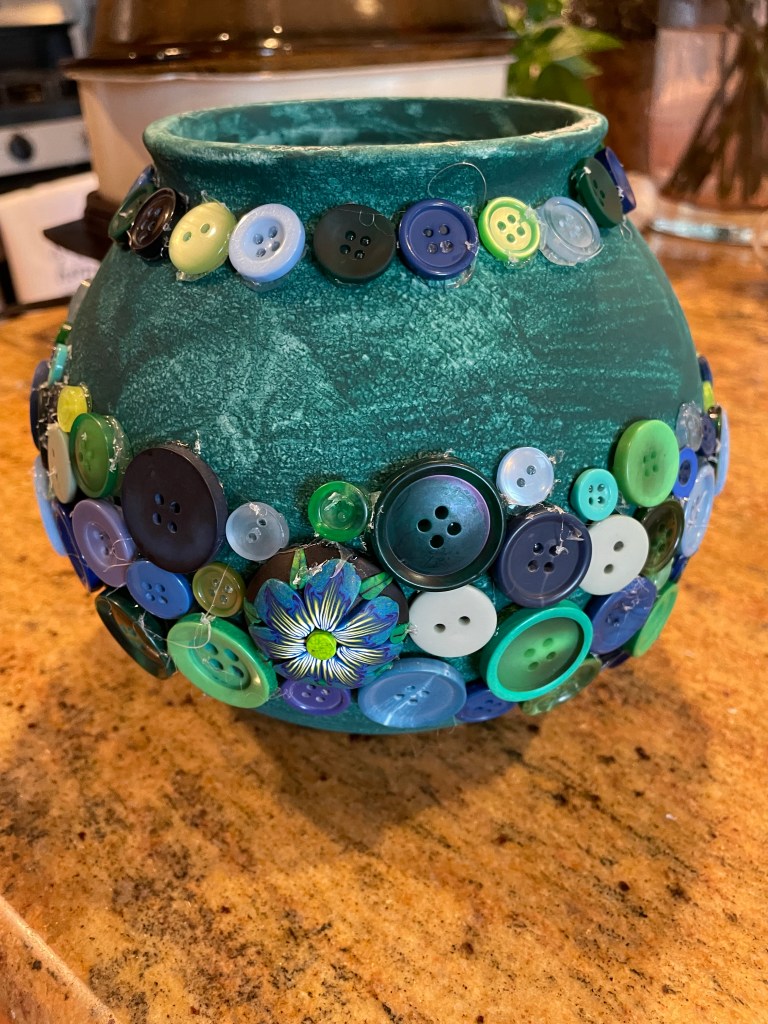
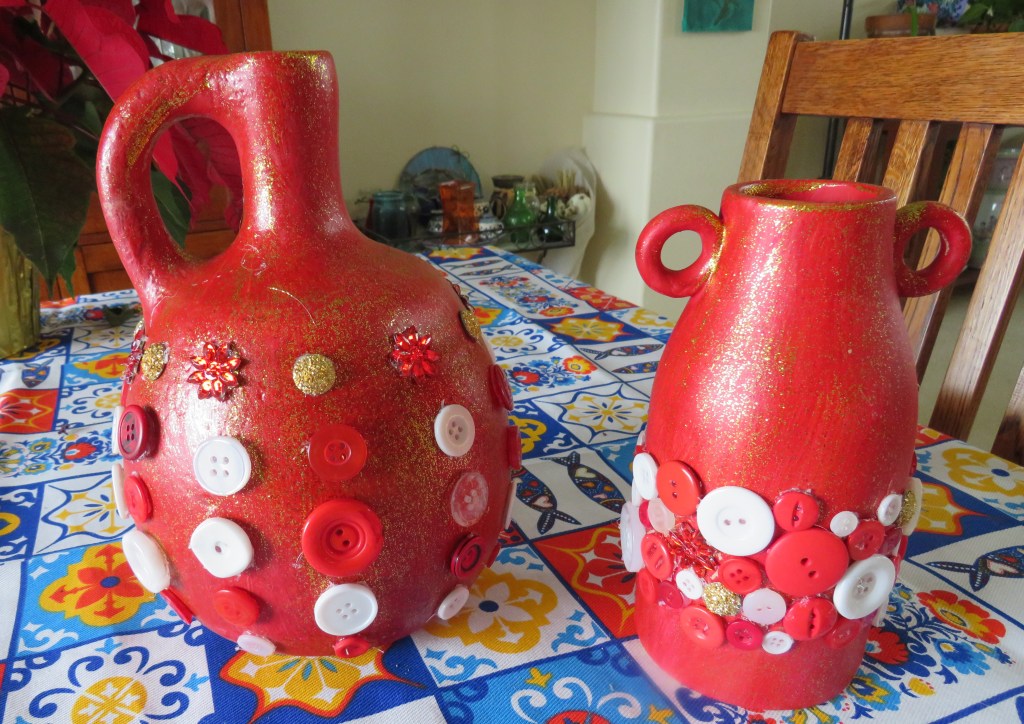
After the paint is dried, I decorate them with coordinating colored buttons.

I like using the terra cotta vases. I like the earthy texture from the terra cotta. Each vase has it’s own personality and they are all different.

Before giving these out, I have to make sure I clean up all the excess glue off the buttons, vases and other projects. Sometimes it is easier to clean them once the glue is fully dried. These are all spoken for, but if anyone wants anything, I am more than happy to create something that is one-of-a-kind for you. πŸ™‚

I mentioned above that my button collection seems to be growing rather than shrinking, however, that being said, I am actually making a small dent in some of my buttons. But I have lots more projects in mind too. In case you haven’t noticed, I am very creative person. I am always thinking up something creative to do. I get that from my mom. In fact, I was always the creative force pushing her on ideas and then we would work on them together. I sent my cousin some of my pictures and she said I have inspired her with some creative button ideas too, using buttons from her mom, my aunt Gloria.

Here are some of my other fun button projects too.

This was my first button creation. I actually have it hanging on my kitchen wall now. I love my tree of life creation. πŸ™‚

I still have a ton of buttons, and I still have a ton of ideas too. πŸ™‚

Be creative and have fun, especially if you are bound to the indoors because of inclement weather. Let your imaginations run wild. The possibilities are endless. Have a great day and make everyday great. Stay safe and stay well. ‘Til next time.

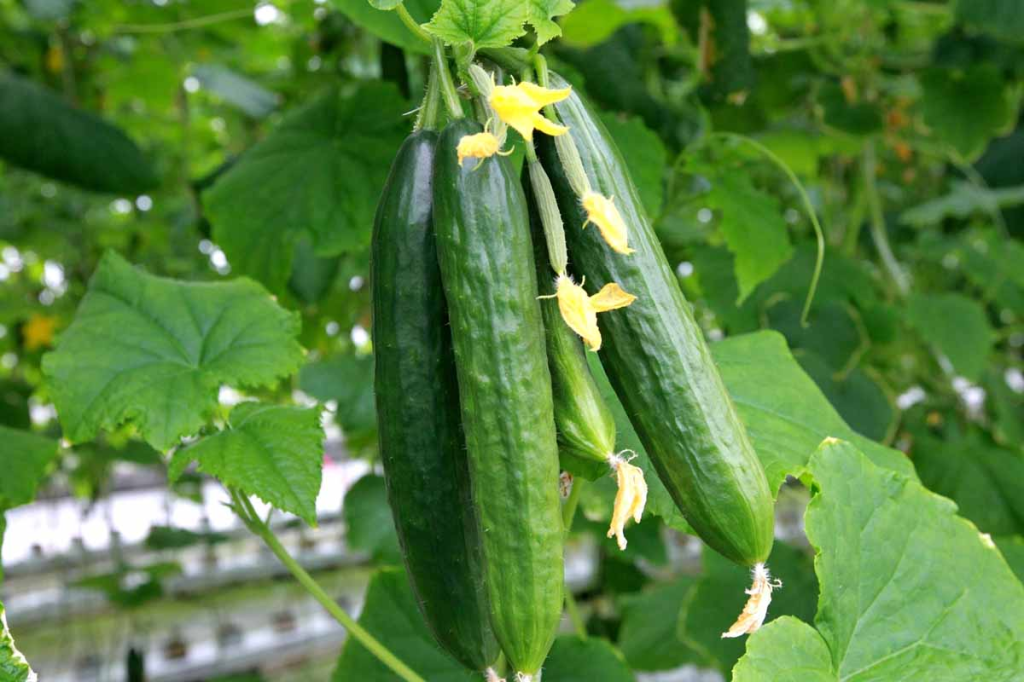
Cucumbers, More Than Just For Pickling

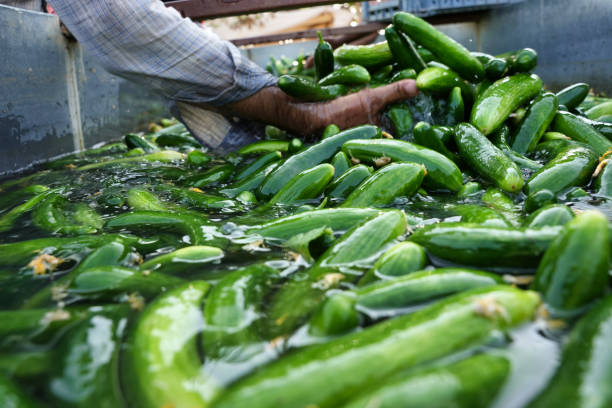
Cucumbers are cool refreshing vegetables that we always seem to associate with summer and warm weather. This is because of their cooling, refreshing qualities.

Anyone who eats pickles knows that cucumbers are used for making pickles. It was the Ancient Egyptians who introduced the brining of cucumbers to make pickles, around 2035 BCE. The term pickle is derived from the Dutch word pekel, meaning brine. The brining and pickling is done with many different vegetables, not just cucumbers. Before the word pickle entered the English language, the Old English word for the vegetable wasΒ eorΓΎΓ¦ppelΒ or earth-apple. But there is so much more to cucumbers than just using them for pickles or salads or dips. They are very versatile and have many health benefits as well.

Cucumbers are native to India and have been cultivated for over 3,000 years.Β They are now a staple in many cuisines, especially in Asia, the Middle East, and the Mediterranean. They spread from India to Greece, then to Rome, where the Romans introduced them to the rest of Europe. Once again, Christopher Columbus was instrumental in introducing them to other parts of the world, but this time, he brought them to the New World from the Old World, where usually it was the other way around, and he brought foods from the New World back home to the Old World.

Back in the ancient times, cucumbers were often used for medicinal purposes, such as treatments for scorpion bites and bad eyesight. They were even used to help scare off mice. They are still used for medicinal and healing purposes today, often as part of a facial or spa treatment. All that water in cucumbers canΒ help keep you hydrated. Plus, the fiber boost they give you helps you stay regular and avoid constipation. The vitamin K helps blood clot and keep your bones healthy. Vitamin A has many jobs, like helping with vision, the immune system, and reproduction.

Because the seeds are found inside the fleshy center, cucumbers are considered to be fruits rather than vegetables. The seeds are the flavor packets of cucumbers, yet ironically, the seeds are what we normally throw away. They grow on a vine, and one vine can produce between 25-125 cucumbers, depending on the variety.

In today’s society, cucumbers are just another ingredient tossed into a salad, but, for the people in the early modern period, cucumbers were a representation ofΒ excess, salvation, and the ever-envious ability to have surplus. In the old days, having cucumber vines growing on your property was a status symbol. It is believed the Roman Emperor Tiberius ate cucumbers everyday.

Today, cucumbers are eaten all over the world. They are used for all kinds of recipes and dishes. The British have made them famous in the cucumber tea sandwiches. Now just about every culture uses cucumbers in many of their traditional foods and recipes. Today, the possibilities for incorporating cucumbers into recipes are endless.

The cucumber originates in Asia extending from India, Nepal, Bangladesh, China (Yunnan, Guizhou, Guangxi), and Northern Thailand, but now grows on most continents, and many different types of cucumber are grown commercially and traded on the global market. It seems everyone loves cucumbers, and rightfully so.

I hope you have all enjoyed learning a little more about these cool, refreshing fruits we all enjoy. Have a great day and make everyday great. Stay safe, stay well, and stay warm if you are in the cold belt right now. ‘Til next time.

Nature Walks – Kestrels at Metzger Farm

I love my little American Kestrels. They are small members of the falcon family and they love the open spaces of Colorado. I am seeing more and more of hem on a regular basis, and I am perfectly OK with that too. The other day, while hiking around Metzger Farm, I saw a couple of Kestrels, high up in the trees. Even though I was at a distance, they saw me watching them, and they were posing for the camera.

I would have been happy if my Kestrels were all I saw that day, but as you know, my deer kind of escalated my joy to much higher level. Nature Walks – One Deer, TwoΒ Deer

Have a great day and make everyday great. If you are in the cold belt, like I am, stay inside and stay warm. ‘Til next time.

Peas In A Pod

I’ve found you either love peas or hate them. There isn’t really any middle ground. I LOVE peas! I have always loved my peas. Maybe it’s because I have a lot of British/Australian/Celtic roots, or that peas are very popular in the South, and my mother was a Texan girl. Who knows? But I have always loved peas. I remember one time as a little girl, my parents took my to a nice restaurant. I must have been about 5 or 6 years old at the time, and there wasn’t anything I was interested in on the menu. I was NOT the food connoisseur I am today. But I saw peas were offered on the menu, and I politely asked the server if I could have a big bowl of peas with butter. He looked at me like I was some kind of freak, and I probably was (still am for that matter), but he brought me a big bowl of peas and butter. I was a very happy customer indeed.

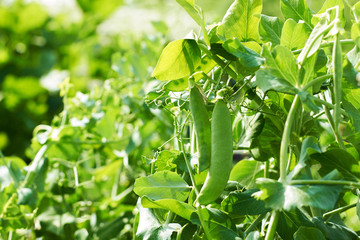
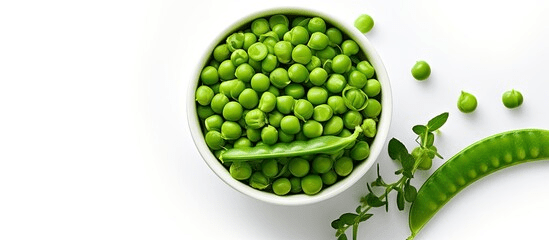
Pease are in the legume family, but they are actually technically more of a fruit than a vegetable because the seeds are internal. Legumes are defined as members of the bean family. This family is large and diverse and contains over 16,000 species, including peas and beans of all kinds. In terms of importance to humans, the legume family is second only to theΒ grass family. Every major civilization has had a legume as well as a grain as a part of their support system.

Peas originated in in the Middle East, in the Fertile Crescent, which is now Turkey and Iraq, and were among the first plants cultivated by humans around. They are some of the oldest cultivated crops in human history. Peas spread to Europe during the Neolithic period, around 8000 BC, and the first evidence of the garden pea in Europe is from Switzerland, around 3,000 BCE. Β There is evidence that people started eating wild peas about 23,000 years ago.

Originally peas were harvested and dried for storage, rather than eaten fresh. Dried peas were a great source of protein in lean times. Eating fresh peas was a luxury that didn’t really start becoming popular until around the 12th century. But they were an expensive luxury item for most people, and were too expensive for the main populations to eat on a regular basis. People didn’t actually start eating the pea pods until much later again, in the 17th century. Eating fresh peas or “fresh” frozen peas didn’t really become popular until the invention of the food-freezing techniques by the American company Birdseye, in the 1920’s. Today, peas, and legumes in general, are eaten by people around the world, on every continent, with the exception of Antarctica.

Some fun food facts about peas:

  1. On average everyone in Britain eats nearly 9,000 peas per year.
  2. The world record for eating peas is held by Janet Harris of Sussex who, in 1984, ate 7175 peas one by one in 60 minutes using chopsticks!
  3. There are 35,000 hectares of peas grown in the UK each year, equivalent to about 70,000 football pitches. This produces about 160,000 tons of frozen peas – that’s 2 billion 80 gram portions.
  4. Global pea consumption is set to reach almost 6 million metric tons by 2026. This represents a growth of 0.4% per year since 2017.Β India was the top consumer in 2021 with 2.3 million metric tons.Β China, Ethiopia and Bangladesh followed in that order.
  5. Peas areΒ a good source of vitamins C and E, zinc, and other antioxidants that strengthen your immune system. Other nutrients, such as vitamins A and B and coumestrol, help reduce inflammation and lower your risk of chronic conditions, including diabetes, heart disease, and arthritis.
  6. Peas rank #7 on the top healthiest and nutrient packed list of vegetables.

Once again, we pea lovers can all thank Christopher Columbus for introducing the Old World to the peas and legumes from the New World.

I will always say yes please to peas. Have a great day and make everyday great. Stay safe and stay well. ‘Til next time.

Nature Walks – One Deer, Two Deer

I decided to switch my walks up a bit and went to nearby Metzger Farm. I always see so much when I go there. And once again, I was not disappointed. I was happy with the other things I saw, but when I saw my deer I was VERY happy indeed. This is is the second time I’ve seen deer at Metzger Farm. They are probably the same two deer too.

At first I saw the one deer, and I was able to get some great shots. Even though we were quite a distance apart, we were both watching each other for quite some time. But then I had an even better surprise. She was with a friend. I got quite a few good shots of both of them too. They are our local White-Tailed Mule Deer.

Always be prepared for the unexpected. Life is full of surprises. Make the most of all the surprises life brings to you. Have a great day and make everyday great. Stay safe and stay well. ‘Til next time.
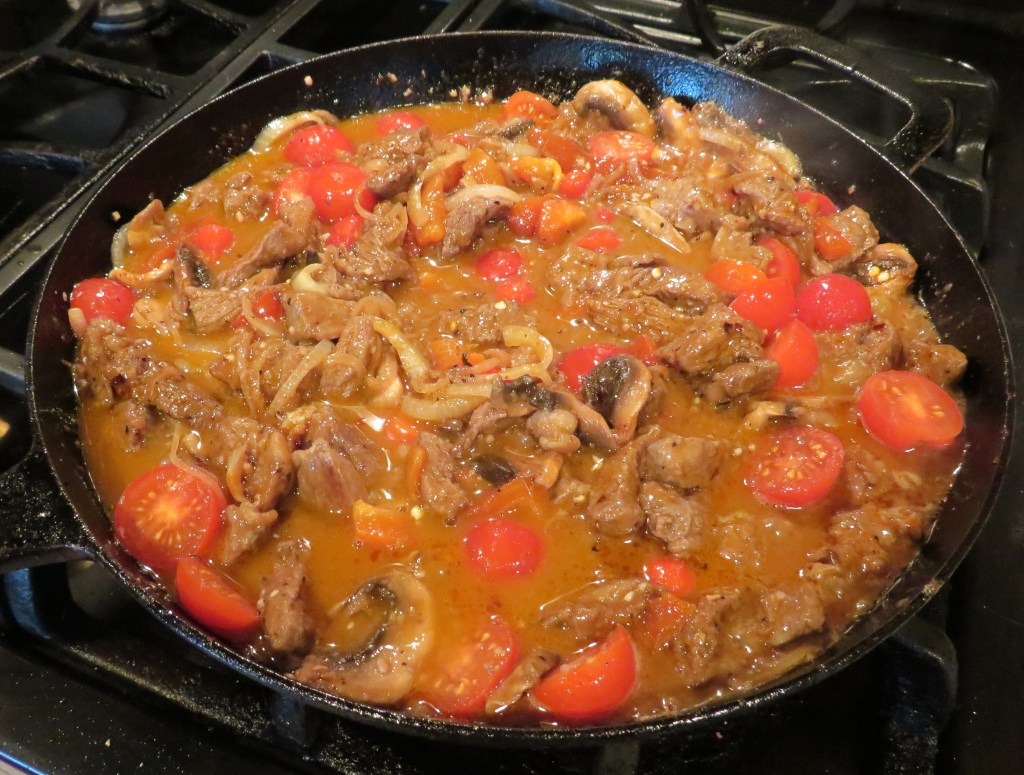
Spicy, Peppery Beef Goulash

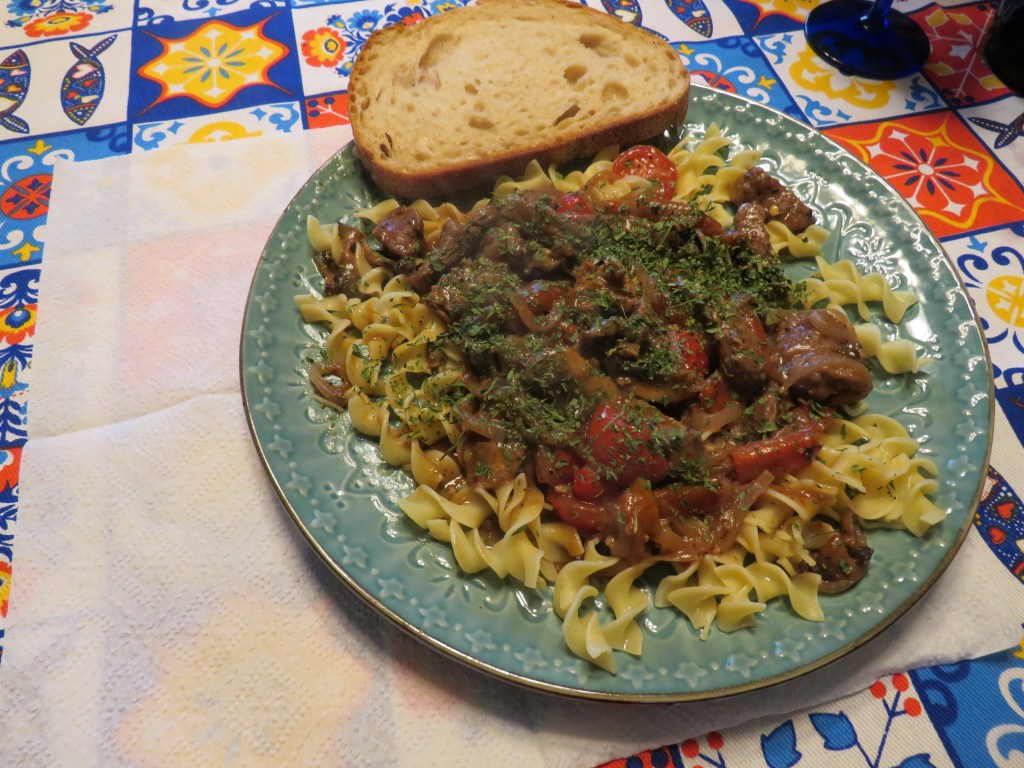
Larry was in the mood for steak, but we eat a lot of steak. I was in the mood for something else. Originally I was going to make beef stroganoff, but I didn’t have any sour cream and my yogurt had turned into a science experiment, so that was out. No problem. I quickly changed gears and made a spicy, peppery beef goulash instead. I served mine over noodles this time, but you can also serve it over mashed potatoes, which I also do quite frequently.

Goulash is yet another poor man’s food, coming to us from Eastern Europe, and specifically Hungary. Goulash was the food for Hungarian shepherds, and the name goulash, gulyΓ‘s means herdsmen. This dish became popular in the 9th century, but it is vastly different today.

Earlier versions of goulash did not include paprika. Today, goulash is known for its use of paprika, or a seasoning made from dried, crushed sweet peppers. Peppers were not introduced to Southern Europe until the 16th century. Today, paprika is a key ingredient to Hungarian and many Eastern European dishes. Onions are also a large part of Hungarian foods and goulash, but again, they were not introduced to Europe until the 16 century, so they were not part of the earlier versions of goulash either. Same with tomatoes. Peppers, onions and tomatoes were all introduced to Europe after Christopher Columbus made his American explorations. I personally am very thankful for the culinary treasures Christopher Columbus brought back with him. I use them ALL the time, in most of my cooking. πŸ™‚

Spicy, Peppery Beef Goulash

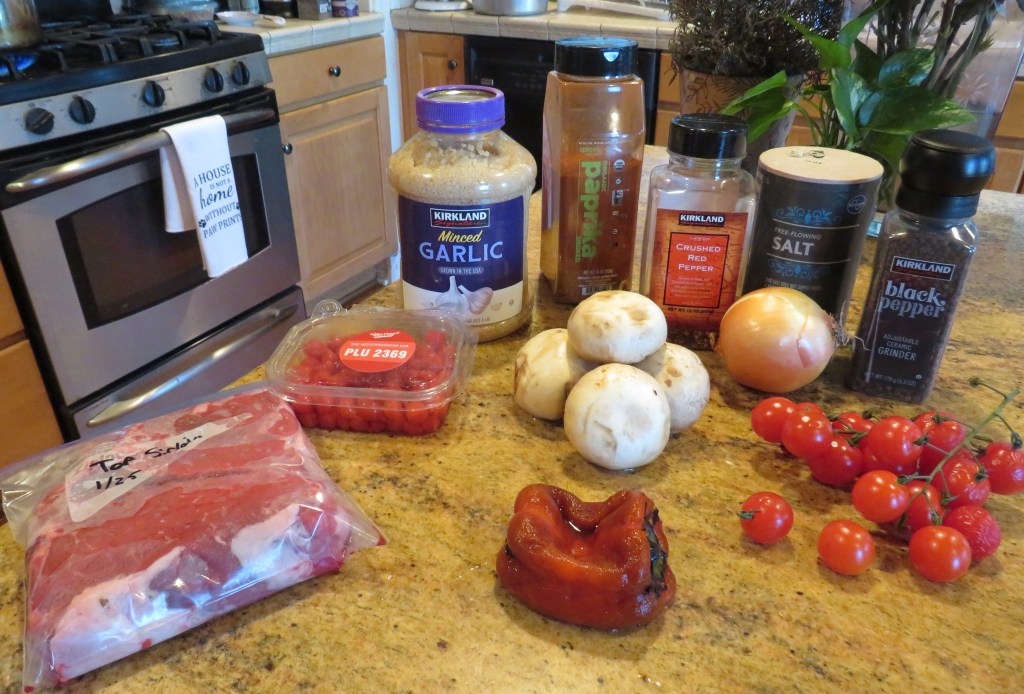
As the name implies, I added a variety of peppers to this dish. I of course used a fair amount of paprika, as well as black pepper, red pepper flakes, and then I added a roasted red pepper and some small, sweet Peruvian peppers too. And of course, there were onions and tomatoes added to the mix as well.

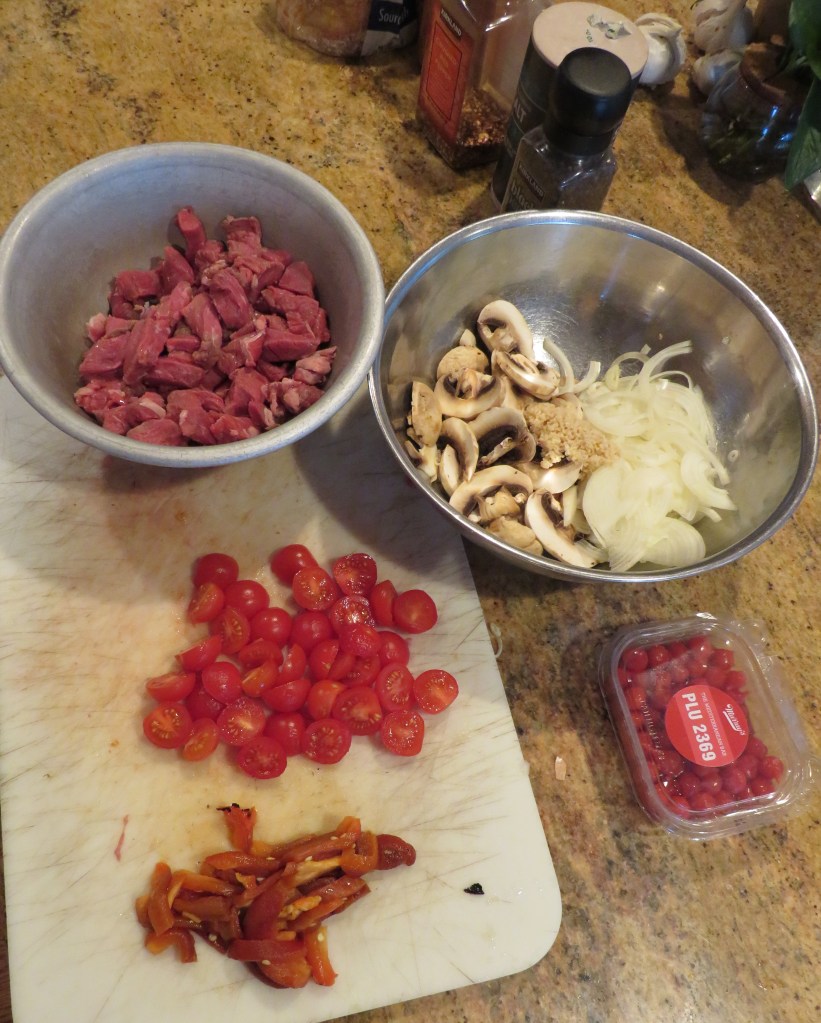
2-2 1/2 lbs meat, sliced into thin strips

1-2 TBSP garlic

1 onion, sliced very thin

1-1 1/2 cups tomatoes, diced – or smaller Campari tomatoes cut in half

4-6 mushrooms, sliced

1 roasted red bell pepper, cut into thin strips

1-2 cups chicken stock

1 cup dry red wine

salt & pepper to taste

flour to coat the meat

1-2 TBSP paprika

1-2 TBSP Peruvian peppers, optional

butter and olive oil to cook the meat

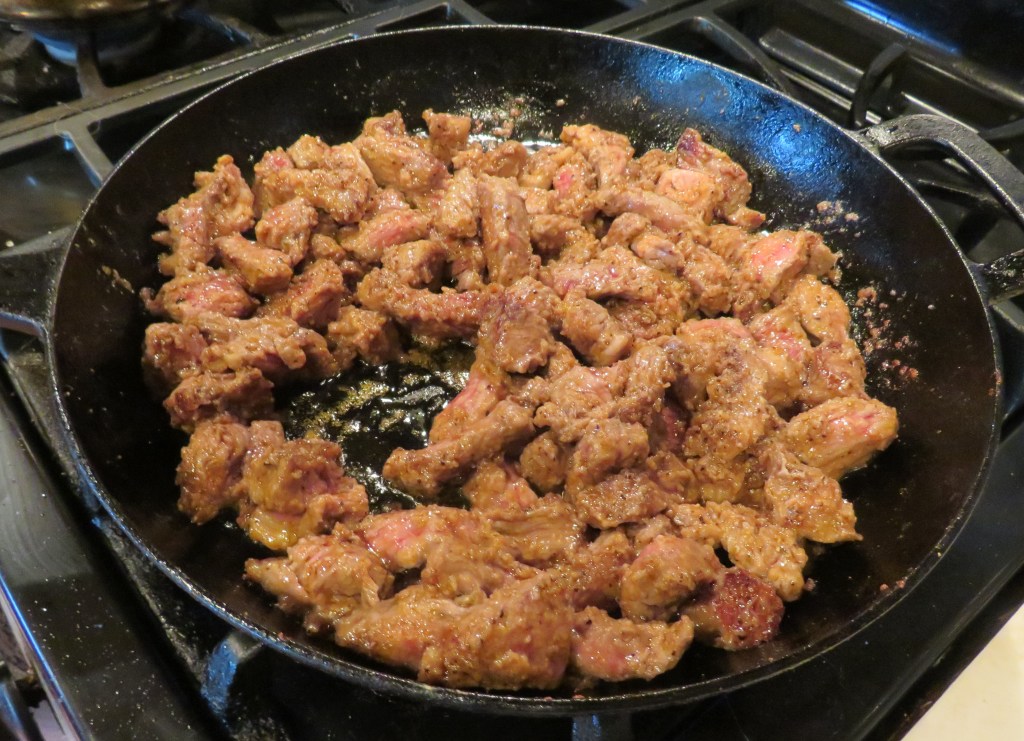
Coat the meat with salt, pepper, paprika and flour. Get a large skillet very hot, then add olive oil and butter and brown the meat completely. Once the meat is completely browned, remove it from the heat and set aside.

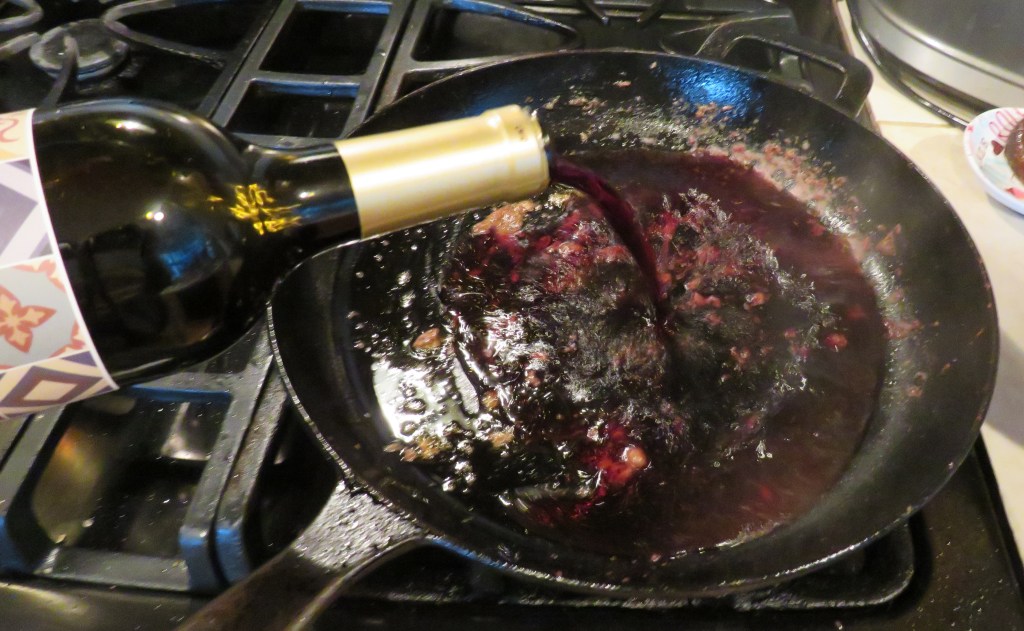
Deglaze the pan with the wine.

Add the mushrooms, onions and garlic and cook for about 2 minutes, or until softened.

Add the chicken stock and mix together thoroughly. Then re-add the meat and the tomatoes and peppers, and adjust the seasonings as needed. Bring to a boil, then reduce the heat to a simmer and continue to cook for an additional 10-15 minutes, stirring frequently.

When everything is cooked, add to either mashed potatoes or cooked noodles, like wide egg noodles. I added some hot sourdough bread on the side, and the same dry red wine I used for the sauce. Delicious!

I always have a back-up plan. When things don’t go as planned for Plan A, switch to Plan B. Be creative and think on the fly. Have a great day and make everyday great. Stay safe and stay well. ‘Til next time.
The Stinking Rose

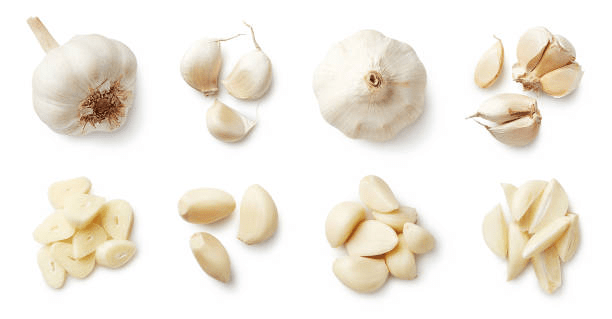
I use garlic in just about everything. If a recipe doesn’t call for garlic, I add it. Today this bulbous food, also known as the stinking rose, is well loved by just about every culture around the world. But that wasn’t always the case. Garlic isn’t just good to eat, but it is loaded with all kinds of health benefits too. Plus it keeps the vampires away.

Garlic is one of the oldest crops grown, dating back at least about 5000 years. It grows all over the world, but is believed to have originated in Central Asia, and then spread from there. There is evidence that garlic was used for both food and health reasons in the Ancient Egyptian tombs. For over 5,000 years garlic has been used as food, medicine, an aphrodisiac, money, and magic potions.  Garlic warded off the evil eye, was hung over doors to protect medieval occupants from evil, gave strength and courage to Greek athletes and warriors, protected maidens and pregnant ladies from evil nymphs, and was rubbed on door frames to keep out blood thirsty vampires. Garlic clove pendants hung around the neck protected you from the sharp horns of a bull, warded off local witches, kept away the black plague, and even prevented others from passing you (or your horse) in a race.

For a long time, garlic was considered food for the “lower class” of people. It was food for the working man. The wealthy, upper class did not want anything to do with garlic, unless they had to for medicinal reasons, because of its pungent odor. The Roman poet, Horace called it” the essence of vulgarity”, claiming it would drive one’s lover to the other side of the bed. It was also banned in many religious buildings in Ancient Islamic beliefs, stating that “anyone should not approach [the] mosque until its odor dies”. (p. 60 – The Story of Food, An illustrated History of Everything We Eat). Greeks wishing to enter the temple of Cybele had to pass a garlic breath test. In England, garlic breath was also deemed entirely unsuitable for refined young ladies and the gentlemen who wished to court them. I believe it is still forbidden for royalty to consume garlic even today.

Garlic has been used in the foods of the common man for millenia, but it wasn’t until around the 19th century when it starting becoming popular to everyone, when the French chefs starting using garlic for many of their dishes. Garlic was brought over to the United States in the 1700’s, with the Polish, German and Italian settlers. But even then, it wasn’t really popular in American foods until the late 20th century. Today, Americans consume roughly 2 lbs of garlic each year, and in some households, like mine, it is considerably more than that. πŸ™‚

Not only does garlic enhance the flavors of food, but it also contains numerous health benefits, such as including immune system support, reductions in high blood pressure, fewer blood clots, aid in cognitive function and works as a natural anti-biotic, among other health benefits as well. It is believed it can also help prevent cancer. According to the Iowa Women’s Health Study, women who ate garlic regularly with other vegetables and fruits had aΒ 35% lower chanceΒ of getting colon cancer. I am very healthy, and I attribute a lot of my good health to all the garlic we eat. The Ancient Greeks also believed it enhanced athletic performances as well, and fed it to their ancient Olympians.

Here are some fun facts about garlic you may not have known.

  1. The heaviest head (bulb) of garlic was 2 lbs 10 oz. It was grown by Robert Kirkpatrick of Eureka, CA USA in 1985.
  2. Olive Farmer took home first place and  Β£100 (about $173) by eating 49 prepeeled garlic cloves in five minutes. Twenty six really tough tongued people took place in the September 2013 competition which was run by a garlic farm in Dorset, England. The competition raised money for charity with all entrance fee profits donated to Weldmar Hospicecare Trust and Dorset and Somerset Air Ambulance. I LOVE garlic, but even I can’t eat 49 heads of garlic, especially in 5 minutes. πŸ™‚
  3. Because I eat so much garlic, and love it, I can’t believe there are actually people who are allergic to it, but there are. Fear of garlic is called alliumphobia: people with this disorder get a fearful and/or anxious reaction when they see or smell garlic. People with alliumphobia may also fear other pungent alliums such as onions, leeks or chives. Symptoms include sweating, feelings of doom or dread, dizziness, anxiety attack, rapid and irregular heartbeat, or feelings of irrational anger.
  4. Garlic and warts: some people believe that garlic can cure warts. The garlic wart cure involves rubbing a fresh garlic clove all over the wart(s) and covering it with a bandage. Warts are commonly caused by the human papilloma virus. Although scientific data on this is limited, since garlic kills many viruses it may also kill warts. One small study found that garlic oil applied 2x day removed warts within 1-2 weeks (Dehghsani et al. 2005).
  5. Garlic is both a vegetable and a herb. Good to know. Now I know I am eating yet another vegetable on a daily basis. πŸ™‚
  6. During WWII garlic was given to wounded soldiers to treat gangrene. It was known as ‘Russian Penicillin’. See garlic and medicine for more on garlic’s use in ancient medicine.
  7. The Russian term for garlic is chesnok. So Chesnok Red means ‘garlic red’, or so it is bas been told. Dolly, my dear friend from http://koolkosherkitchen.wordpress.com/, who is also my Russian expert, I am counting on you to verify this. πŸ™‚
  8. Garlic consumption in the United States has tripled since the 1990’s, with more people discovering the delightful properties of this bulb.  Worldwide there are over 2.5 million acres in garlic cultivation! That’s a lot of garlic! 
  9. The name garlic comes from garleac, an old Anglo-Saxon word meaning “spear leek.” Garlic is believed to be descended from Allium longicuspis, a wild strain of Asian garlic but its origins are still in question. It is from the lily (Liliaceae) family and related to onions, leeks, chives, and shallots.

Today, garlic is used for everything, and there are endless possibilities to its uses. Can you imagine a world without garlic? I would be so lost without garlic. It is truly a favorite in my house. πŸ™‚

Have a great day and make everyday great. Stay safe and stay well, especially if you eat your garlic. ‘Til next time.
Nature Walks – Mama Flicker

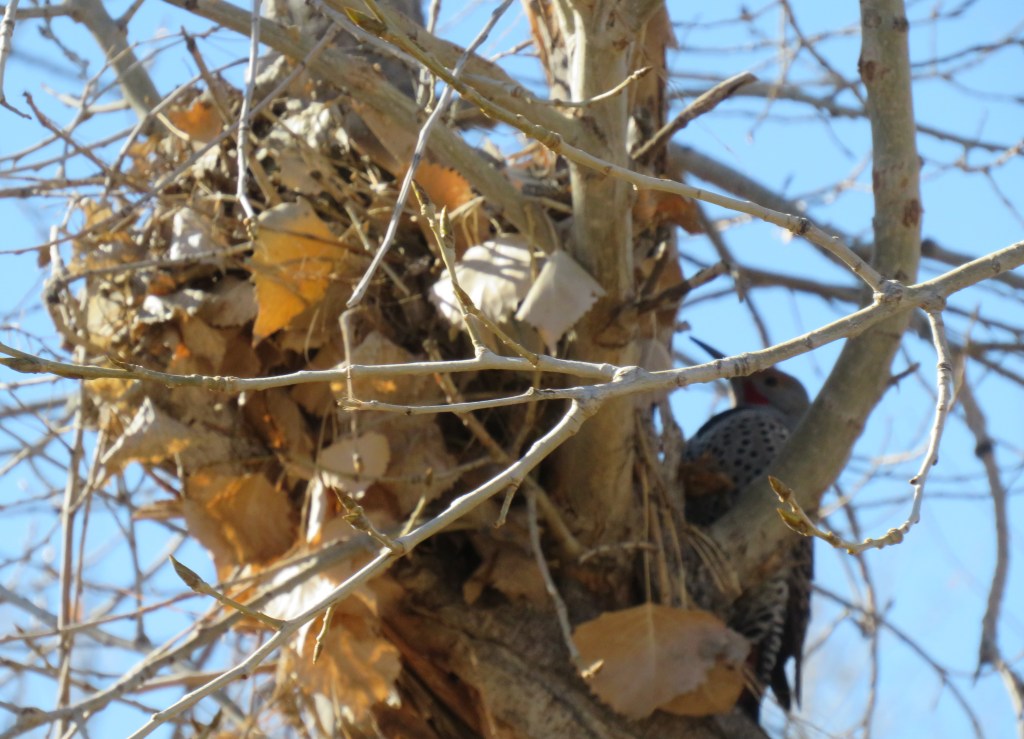
I see lots of Northern Flickers, and I love seeing them. But this time I actually saw Mama Flicker feeding her babies in the nest. I don’t see that very often. She only let me get a couple of shots before flying off, but at least she let me get a couple of shots. I could hear the babies, but I didn’t see them.