Once again, a very heartfelt thank you to all our Veterans out there. Veterans are in every part of our lives, and do all the same things we do and enjoy. Being a swimmer and a swim coach myself, I just had to add this tribute too.

Once again, a very heartfelt thank you to all our Veterans out there. Veterans are in every part of our lives, and do all the same things we do and enjoy. Being a swimmer and a swim coach myself, I just had to add this tribute too.

Lamb is not for everyone. It is definitely an acquired taste. If you like it, you love it, but if you have not acquired a taste for lamb, you won’t like it, no matter how it is is prepared. I love lamb. Maybe eating lamb is just part of my Australian heritage. For me, the best way to eat it is nice and juicy, cooked to a perfect medium rare, leaning more towards the rare side. Lamb, like many other meats, is very versatile, and can be prepared in many, tasty and delicious ways. Often times, you can substitute lamb for beef in a lot of recipes, which adds a bit more variety and versatility.
Here in the United States, eating lamb is not nearly as popular as it is in many other parts of the world. We refer to all lamb meat as just “lamb”. In other parts of the world, where lamb is a staple meat that is part of the regular diet, there is also mutton, which is meat from the older, more adult sheep, where lamb is the term used for the younger, more juvenile sheep. Lamb meat once was a term that meant the flesh of a baby sheep that had not yet eaten grass, or that it was young enough that it was growing entirely from the ewe’s milk. Meat from such lambs are almost white when cooked. Once a lamb starts to eat grass the cooked flesh is darker and there is more flavor to the meat. Lamb meat is often considered to be “gamey” like a lot of other meats, such as buffalo or bison, venison or elk. The terms “gaminess” or “gamey” refer to the strong, tangy flavor and odor of some meats, particularly meats that are wild or livestock that is fed on wild grasses and foods, or animals that have abnormal dieting patterns. Most domestic livestock, at least here in the United States, is fed a diet of predominantly hay and other dried foods, that give the meat a milder, more even taste. Lamb, coming from the younger sheep, is a lot milder in taste than the meat that comes from mutton, which tends to be more gamey. If the strong gamey flavors are a bit much for your palette, cooking the meat with garlic and/or lemon juice, or something else acidic, will help eliminate the gamey characteristics. Cutting off a lot of the fat will also help eliminate the gamey qualities of meats. Soaking the meat in yogurt will help too, due to the acidity of the yogurt.
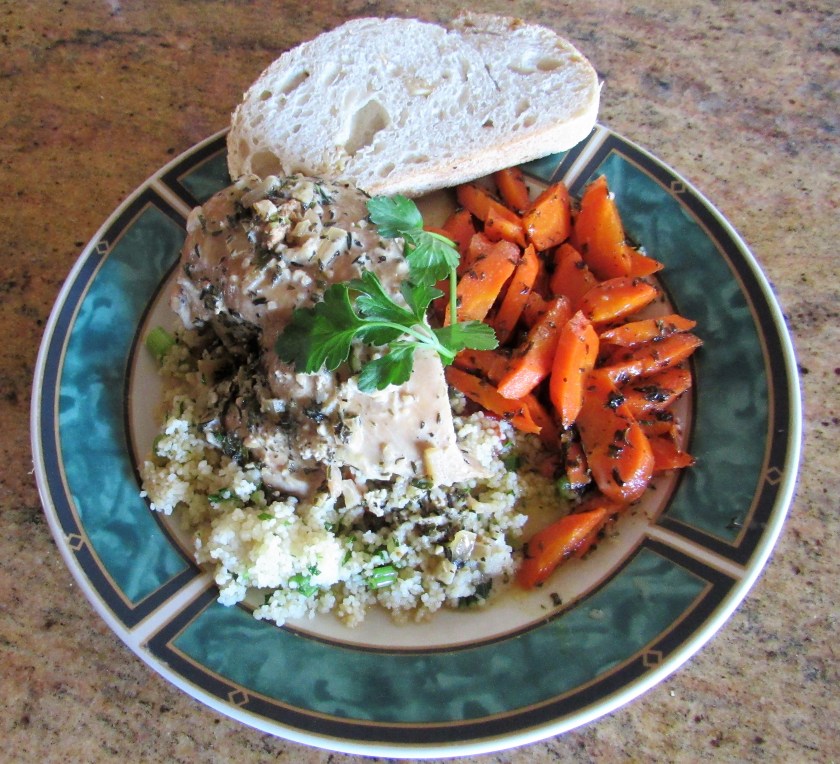
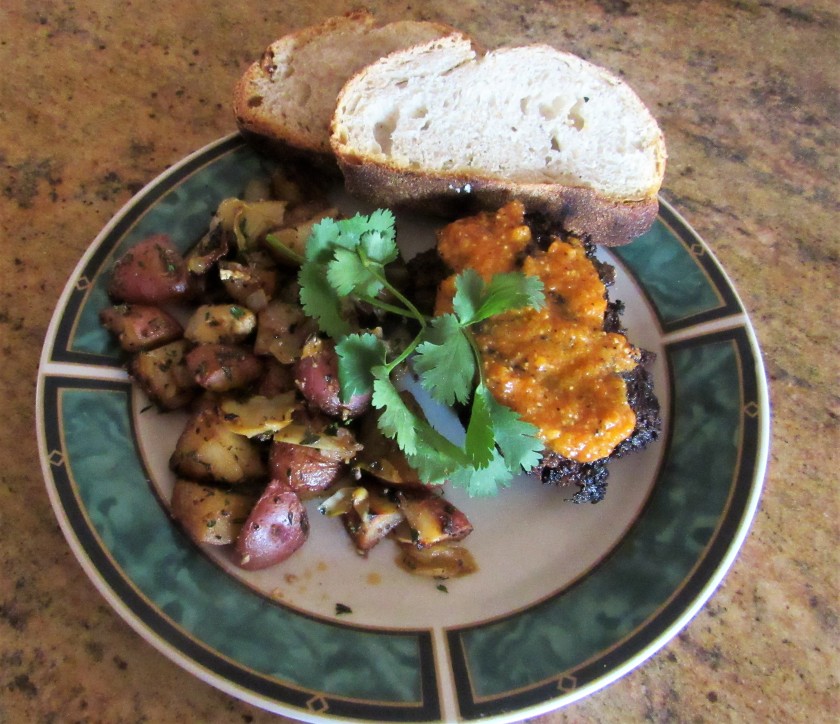
It was another cold night last night, with a hint of snow, making it perfect weather to have the oven on to roast the lamb and the vegetables. It was definitely good comfort food that helped warm us up, as well as the house. This was a fairly simple recipe, made with a few basic ingredients and herbs.

Roasted Lamb with Mustard-Herb Crust

2-3 lbs of lamb roast, trim most of the excess fat off
2 TBSP Dijon mustard
3 TBSP olive oil
1 TBSP lemon juice
2 tsp each, fresh rosemary, thyme, and sage, chopped fine
1 TBSP garlic
salt and pepper
3/4 cup dry bread crumbs
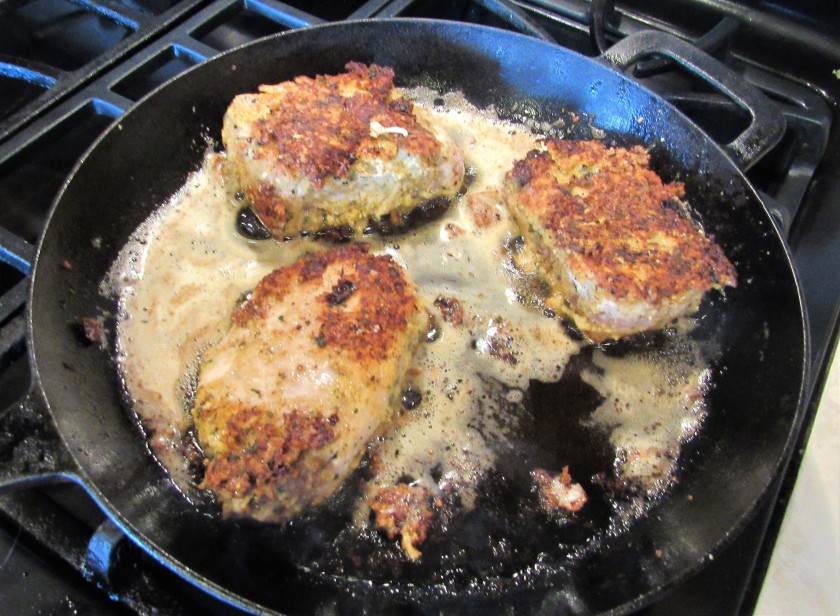
Pat the meat dry with a paper towel, then generously rub salt and pepper over the entire lamb and sear for about 4 minutes per side in a HOT skillet, with both butter and olive oil. You want the meat to be completely browned all over.

Preheat the oven to 350 * F or 180* C or 325* F if using a convection oven.
While the meat is cooking, make the mustard-herb sauce by mixing all the herbs, mustard, lemon juice and olive oil together, and combining everything together well. Once the meat is cooked, brush the meat with the mustard sauce, applying it generously all over the lamb. Save the left over sauce as a topping for the finished lamb.

Then coat the lamb with the breadcrumbs, making sure to gently press them into the meat.

Roast the lamb for at least 20-30 minutes if you like it rare to medium rare, or when the internal temperature reaches 125-130 degrees. Cook for longer if you prefer the lamb to be medium rare to medium or when the internal temperature reaches 135-140 degrees. I would not recommend cooking the lamb much beyond this temperature, at the risk of it becoming tough and dry. Once the lamb has been removed from the oven, let it cool for about 5-10 minutes before slicing and serving.

Since I had the oven on for the lamb, I roasted my vegetables as well. We had roasted Brussels sprouts with pumpkin, garlic, shallots, and pecans, along with mashed sweet potatoes. I used some of the leftover mustard-herb sauce as my topping for the lamb, and served it all with a bold, velvety red blend. MMMMMM! It was definitely comfort food and it was definitely delicious.

To all the Veterans who served and sacrificed, I wish you all a very heartfelt thank you. On the 11th day of the 11th month, at the 11th hour, thanks to all the sacrifices you made, we are free.
In Belgium, the In Flanders Fields Museum in Ypres, named after the poem and devoted to the First World War, is situated in one of Flanders’ largest tourist areas. “In Flanders Fields” is a poem written by John McCrae during the first World War.
The poem describes poppies blooming between gravestones. Poppies are considered the battlefield flower, because they are the first to grow back after war pockmarks the landscape. The war created prime conditions for poppies to flourish in Flanders and north-west France. Continual bombardment disturbed the soil and brought the seeds to the surface. Its powerful use of the symbol of the poppies blooming from the churned earth led to the tradition, to this day, of the poppy as a symbol of remembrance for those killed in service. By 1917, “In Flanders Fields” was known throughout the English-speaking world. Flanders Fields, the name of World War I battlefields in the medieval County of Flanders, which spans southern Belgium and north-west France. Flanders Field American Cemetery and Memorial, a World War I cemetery on the southeast edge of the town of Waregem, Belgium.


As I mentioned a few days ago, life has been very hectic and chaotic lately. Sadly, when I am running from one place to the next and back again, there is not a lot of time to cook. Fortunately, there are always some good stand byes that are quick, easy and convenient, and relatively healthy as well, not to mention, delicious. Costco chicken is ALWAYS a very nice alternative to me cooking when time is tight. We can usually get at least 2-3 meals out of a Costco chicken, depending on what I do with with.
This latest leftover creation was from some of that delicious Costco rotisserie chicken, and whatever else I could think of on the fly, based on what leftovers were in my fridge. The Queen and I were on a roll. I was pulling out this and that to make a tasty, impromptu meal. I cooked up some lentils, and sauteed some spinach with mushrooms, garlic, and shallots, added the chicken, and some mozzarella cheese, then topped everything with a pistachio pesto and tomatoes. I wasn’t sure if it would all work together, but magically, it did. Especially with a good white wine and some warm olive bread to complete the meal.

There is no real recipe for this, since it was literally a little of this and a little of that, but I can show you the process of how I put everything together.

First, I started by cooking the lentils. Then I sauteed the spinach, garlic, shallots, and salt and pepper together in oilve oil.

Once those were cooked, I just started layering things on top of each other. First, the lentils, then the spinach mixture.

Followed by the chicken and the cheese. I stuck it in the microwave to melt the cheese.

Then I topped it all with the pistachio pesto and some chopped tomatoes. The finish was a few additional chopped pistachios on top, with some warmed olive bread on the side. Not to bad at all for some leftovers and quick, easy vegetables. All it took was a little creativity and imagination, and VOILA! Dinner is served.

Hello Everyone! As you know, we are in a new month, and I am looking for November’s guest chef. It can be any recipe, any dish.
You know the rules:
I always get so excited to see the recipes and dishes that come my way. I can’t wait to see what you are cooking.

What’s cookin’ in your kitchen?
The last couple of days have been pretty stressful for me. The best way to wind down and de-stress, at least for me, is with a glass or two of wine. When the temperatures drop, it is even better to relax in front of the fire with that wine. And to make it just perfect, add a good book to the mix. Ahhhh! Perfection! This is the best way to unwind and get away from the world.
Wine is truly a gift from above and has been revered throughout the times. Here are a few things that others have to say about the “nectars of the Gods”.
“Wine is like the incarnation – it is both divine and human”

~ Paul Tillich, Philospoher and Theologian ~
“When it comes to wine, I tell people to throw away the vintage charts and invest in a corkscrew. The best way to learn about wine is the drinking”.
~ Alexis Lichine, Wine Writer ~

“To rich and poor alike hath He granted the delight of wine, that makes all pain to cease”.
~ Euripedes, one of the ancient Greek tragedians ~

“Great wine requires a madman to grow the vine, a wise man to watch over it, a lucid poet to make it, and a lover to drink it”.
~ Salvador Dali, surrealist artist ~

“Accept what life offers you and try to drink from every cup. All wines should be tasted; some should only be sipped; but with others, drink the whole bottle”.
~ Paulo Coelho, Brazilian novelist ~
Is it from Barcelona Spain or is it from the restaurant Barcelona in the RiNo District of North Denver? Actually, it is from both. I made this delicious Castilian stew from my cookbook Barcelona, which is a cookbook of the restaurant’s recipes I bought when we went for my friend Janet’s birthday, Birthday Celebrations – Part 2 – Barcelona all of which are originally inspired from Spanish recipes from Barcelona, Spain. It’s all good. Believe me! There are so many delicious recipes just waiting for me to make and try. My big dilemma, ALWAYS, too many dishes, too little time. Eventually I will get around to making them all.

The recipe I made was a “morph” from the original Caldo Gallego. A Caldo Gallego is a broth which is originally from the northern Spanish region of Galicia. It is a dish with very humble beginnings, associated with the farmers of Spain. The recipe is one that varies from season to season, region to region, and household to household. Since it is a dish of the farmers, it was basically whatever they grew in their own gardens or had as their livestock on their own ranches that was all thrown together into this very tasty, savory stew. Caldo Gallego is traditionally eaten in the colder months since it is a dish meant to be served very hot. This particular stew was loaded with pork. It had bacon, ham and chorizo. Sorry, this stew is not for vegetarians. You’ve got to love meat and you’ve got to love pork to really enjoy this dish.
Castilian Stew

1/2 lb cooked ham, large dice
1/2 lb bacon, diced
2 cups chorizo
1/2 cup olive oil
1 large shallot, diced fine
2 TBSP garlic
1/2 red bell pepper, medium dice
2 large potatoes, peeled and medium dice
2 cans tomatoes, with their juice
6 cups spinach, cut rough
5-6 cups chicken broth
salt & pepper to taste
red pepper flakes to taste
In a large soup pot that is very hot, cook the bacon and the chorizo in the olive oil over a medium high heat for about 10 minutes. Add the ham, the garlic, peppers, shallots and the potatoes and mix everything together thoroughly.

Add the tomatoes and the chicken broth and the seasonings. Bring everything to a boil, then reduce the heat to a simmer for about 15 minutes, or until the potatoes are tender.


When the potatoes are tender, add the spinach and mix in with the stew. Serve the stew immediately with the warm bread and wine. Esta muy delicioso!

This was yet another simple dinner, with the Castilian stew, warmed olive bread and a bold red blend. This is a perfect dish for a cold and chilly night. Ever since we got back from Spain, there have been many more Spanish influences in my cooking. This was my first recipe out of many more to come from new Barcelona Cookbook.

*** The restaurant Barcelona is located at 2900 Larimer Street, Denver, Co 80205. You can contact them at (303) 816-3300 or go to their website at barcelonawinebar.com.
I hate it when I follow a recipe and the recipe just doesn’t turn out quite the way I expected or hoped. Ironically, when I make up own recipes and/or do my own thing, they always turn out better. Oh well. As I have always said, recipes are just guidelines and suggestions any way. Recipes Are Just Suggestions I found this beautiful recipe that I was very excited about and that I couldn’t wait to try too. It did still end up tasting very, very good, but my presentation was not what I was looking for at all. No worries, all that means is that I need to keep working on it. Hopefully next time it will not only taste delicious, but well look pretty as well.
I love pumpkin everything, especially in the fall, so when I found this recipe for a pumpkin cinnamon twist I was stoked. It came out just as it was supposed to until it came time to making the twist in the skillet. That’s where it all started to unravel, or to come un-twisted. I think the problem was my skillet was to large for the size of the bread dough. As you can see, mine did not look anything like the picture. Live and learn though, right?! Now I know what I need to change next time. As I said though, it still tasted very good, and in the end, that is really all the matters.

Pumpkin-Cinnamon Twist

Pumpkin Dough
1/2 cup warm water
2 TBSP sugar
2 1/4 tsp dry active yeast, or 1 package
2 1/2 cups flour
1 tsp cinnamon
1/4 tsp allspice
1/2 tsp nutmeg
1 1/2 tsp salt
1/2 cup pumpkin puree
2 TBSP melted butter
Mix the sugar, water and yeast together and let set and rest for about 5 or so minutes, or until the mixtures becomes frothy.
Carefully mix the flour, salt and spices together in a mixer. Then blend in the yeast mixture, the pumpkin puree and the butter, mixing at low speed just until everything is combined. Then switch from the beater to a dough hook and continue to mix until the dough is smooth and elastic. This should take about 7 minutes.


Once the dough is formed, oil the bowl and and cover the dough to rest in a warm area for 1 hour, or until the dough has doubled in size.
The Filling
1/2 cup butter, softened
1/2 cup firmly packed brown sugar
1/2 cup pecans, finely chopped
2 TBSP cinnamon
dash of salt
Mix the sugar, butter, salt and cinnamon together until it is crumbly.

Spray a 10″ skillet with cooking spray
When the dough is ready, roll it out into a 16×12″ rectangle on a lightly floured surface to about 1/2 inch thickness.
Then spread the butter, sugar and cinnamon mixture evenly over the dough, leaving about 1/4 inch clear all around the edges. Sprinkle the nuts evenly over the mixture. My cinnamon sugar mixture came out more like a paste, which is OK too, just evenly spread it around the dough. Once in the oven, it will melt and spread.

Roll the dough tightly into a log. So up until this point, everything came out just the way it was supposed to. When you have the log made, you can cut it into pieces about 1 1/4-1 1/2 inches thick and make pumpkin cinnamon rolls too. Perhaps, that is what I should have done. But to make the twist, and not rolls, cut the dough in 1/2 lengthwise, with about 2 inches at the top in tact and carefully twist the dough, making sure the sides stay up. Pinch the ends together so none of the filling comes out. Spiral the dough into the skillet. Cover and let the dough rise again for about 45-60 additional minutes. (Now I know what I did wrong. I thought it needed a second rise, but for whatever reason, I completely missed this step. I did not realize this until just now. See, even I make stupid mistakes in the kitchen too. I would love to blame this on the fact that I made this was injured, but unfortunately, that was not the case at the time. It was just me with too much on my plate at the time, once again trying to do too much in a rush).

Preheat the oven to 350*F or 180* C
After the second rise, bake the twist for about 30-40 minutes or until it is golden brown. remove it from the oven and let it cool completely before adding the glaze and cutting it.
The Glaze
1 1/2 cups powdered sugar
1/4 cup orange juice
Mix together thoroughly and drizzle over the bread. Serve warm and enjoy.
This is what the Pumpkin-Cinnamon Twist was supposed to look like. It will, especially now that I know what I did wrong. Let’s just consider this a learning experience for all of us, myself included. 🙂

My dear friend Priscilla heard about my wrist and sent over a delicious care package to help things out. She made a delicious tomato and herb soup, some cornbread and some festive sugar cookies. She is always so thoughtful. This is one of the many, many reasons why I love her so much. We have known each other for about 45 years, and every year just keeps getting better and better.


Good News!!!!! The Kitchen is once again open for business. My wrist is not yet 100% healed, but it is about 85% healed, which means I can move it all around and can do almost everything. Thankfully, it was NOT broken after all, and was indeed just a severe sprain. WHOOOOOO HOOOOOOO!!!!! Although, believe me, the sprain was certainly very painful indeed.
The first thing I made after reopening the kitchen was a simple turkey tetrazzini with some leftover turkey. Snomeggedon. This was a very simple and easy meal to make that did not put to much strain on my already sprained wrist.

I started with some of the leftovers we had from this golden bird. I am sure there will be quite a few turkey and turkey leftover features, since November is after all the month of Thanksgiving, where everyone in America will have turkey on the menu.

Turkey Tetrazzini

1 lb cooked pasta – either spaghetti, linguine or fettuccine is best
3/4 stick butter
6 TBSP flour
4 cups turkey stock or chicken broth
3/4 cup heavy whipping cream
3/4 cup milk
1 tsp each dried thyme, sage, marjoram, oregano
1 tsp nutmeg
salt & pepper to taste
3 1/2-4 cups shredded or diced turkey
1 TBSP garlic
1/4 onion, diced fine or 2-3 TBSP dried onion
1 package of frozen peas
3/4 cup seasoned bread crumbs
1/2 cup Parmigiano cheese
Make a roux out of the flour and the butter by cooking the flour in the butter in a hot skillet and stirring it constantly to make sure it does not burn, until it makes a paste. Because this is a light sauce, and is basically a buerre blanc or bechamel sauce, you do not want the roux to color to much.


Once the roux is made, add the turkey or chicken stock and mix together thoroughly, then add your spices and mix everything together well.

When the sauce is made, add the turkey and the peas and cook until everything is thoroughly heated and the peas are cooked and are no longer frozen.

Preheat the oven to 375* F and spray a 9×13 baking pan with cooking spray.
Evenly spread the cooked noodles on the bottom of the baking pan, then evenly spoon the turkey mixture over the noodles.


When the pasta is completely covered with the turkey mixture, mix the breadcrumbs and the Parmiginao cheese together and spread over the turkey mixture, making sure to completely cover the dish.

Bake uncovered for 20-30 minutes or until the breadcrumbs are browned and cooked. Serve immediately after taking it our of the oven.

This casserole doesn’t need anything else except some good white wine and bread to make the meal complete. This is a delicious meal that also helps use up those leftovers. I LIKE it!!!!!!