Back From Barcelona – Montjuic

One of the other places we visited when in the Parc Guell area Back From Barcelona – Parc Guell was Montjuic. Montjuïc or Montjuich, meaning “Jewish Mountain” in medieval Latin and Catalan, is a broad, shallow hill in Barcelona with a rich history. It was the birthplace of the city, and its strategic location on the Mediterranean and the Llobregat River has made it significant throughout history. The hill has a medieval Jewish cemetery, declared an area of Cultural Asset of National Interest in 2007. Montjuïc has been the site of various fortifications, including the Castle of Montjuïc dating back to the 17th century. The area was also associated with political imprisonments and executions, and held significance during the Spanish Civil War.

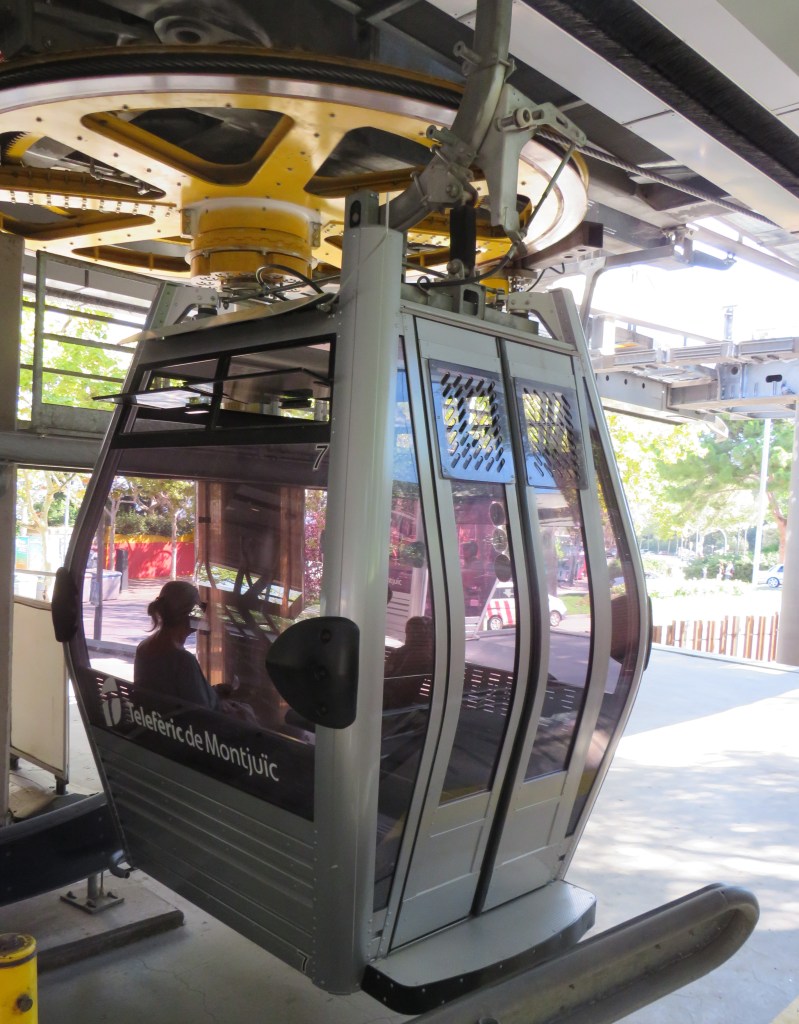
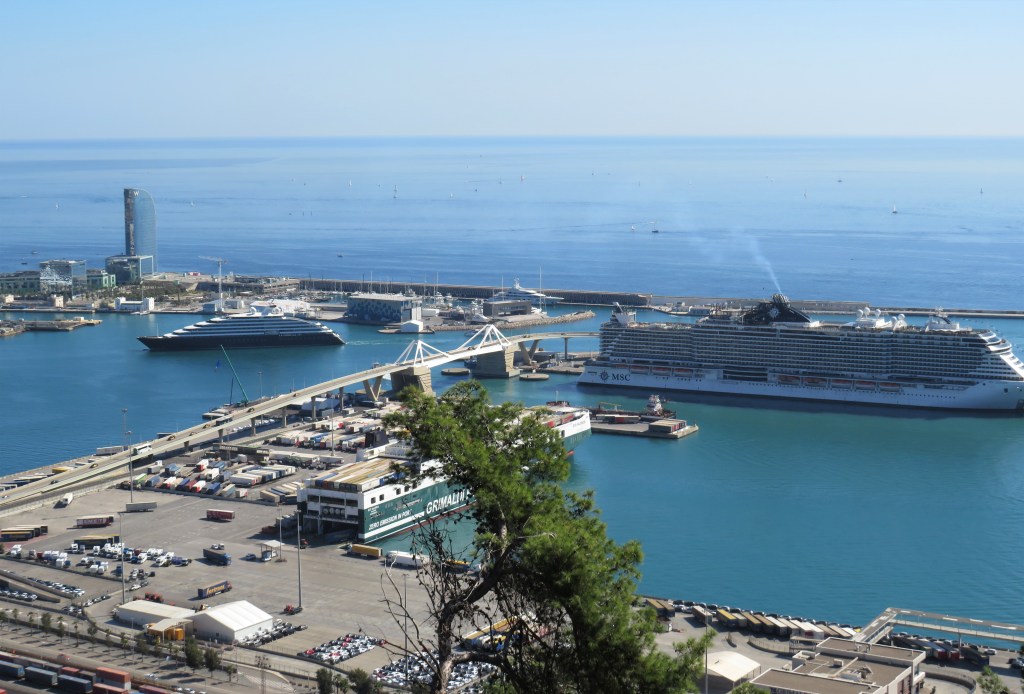
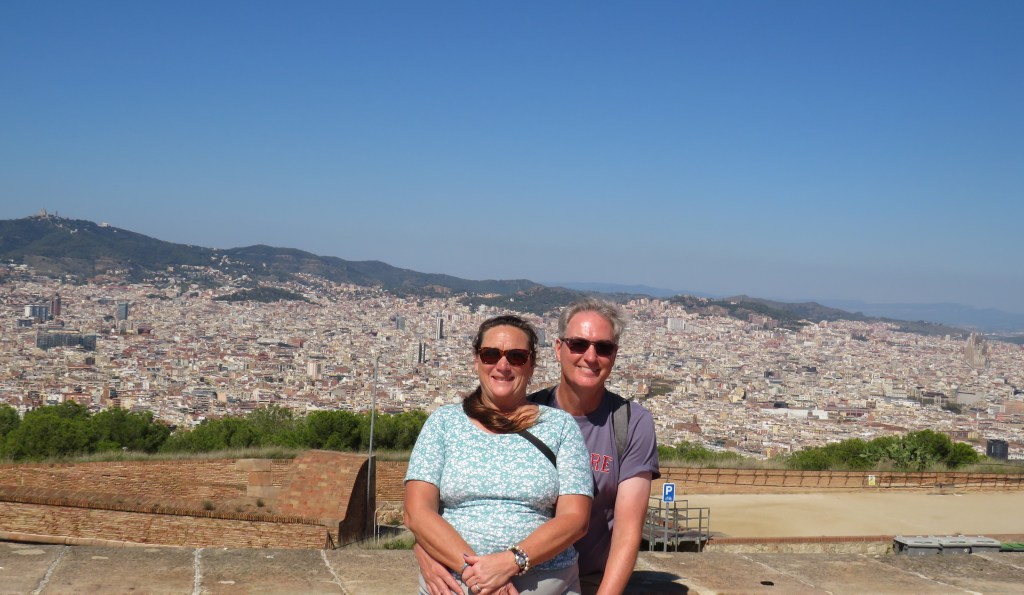
We took the cable cars up the mountain that gave us a spectacular view of Barcelona from above.

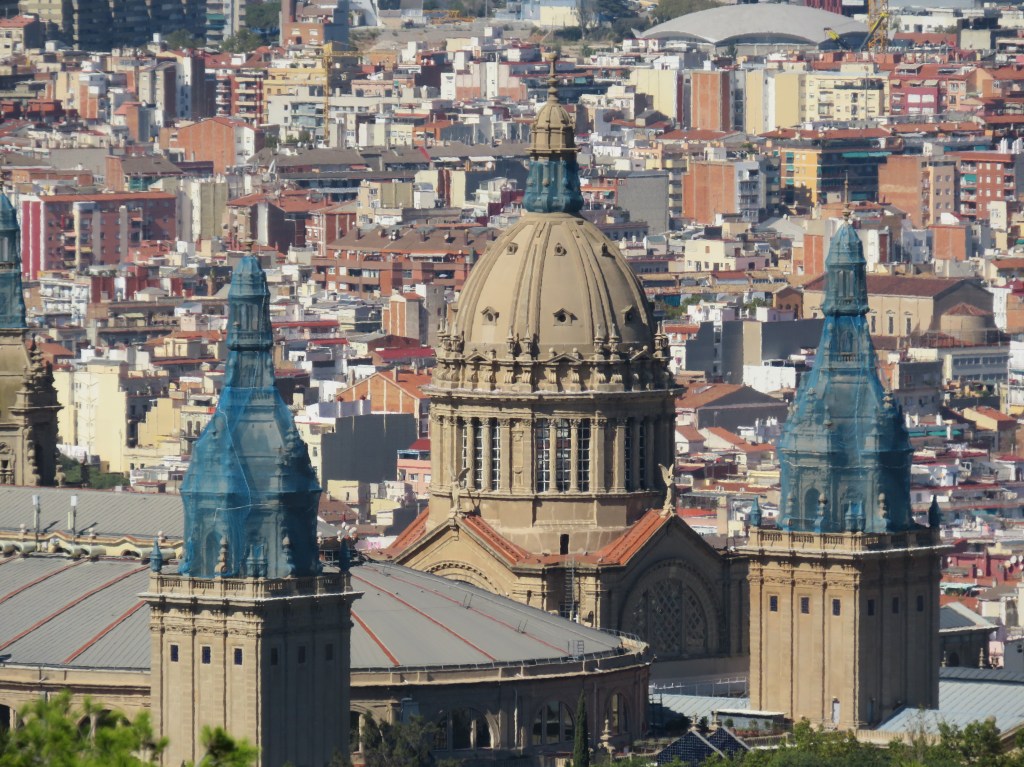
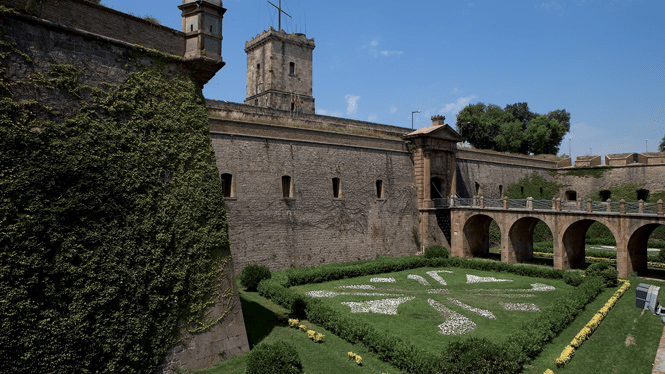
We toured the Castell de Montjuic, which today is a museum and a tribute to its very turbulent past. The Castell de Montjuic was built in 1640 as a military enclave. The fortress, which stands on the site of a watchtower, came under royal ownership and, some 50 years later, was one of the key defense points in the War of the Spanish Succession, between 1705 and 1714. It was built at this location because of the 360º views of the city below.

In the middle of the 18th century, the military engineer, Juan Martín Cermeño, was commissioned to restore the castle which had been badly damaged during the war, and its current appearance dates from this time. The castle has launched bombing raids on the city on a number of occasions and it has also been used as a prison. On 15th October 1940, the president of the Catalan government, Lluís Companys, was executed by firing squad at the castle. The castle was used as a military prison until 1960 when it was given back to the city and used as an army base. Three years later, Franco opened a weapons museum in the castle. In 2007, the castle came under the ownership of Barcelona City Council and, as a result, now belongs to all the citizens of Barcelona.
One of the guard towers.
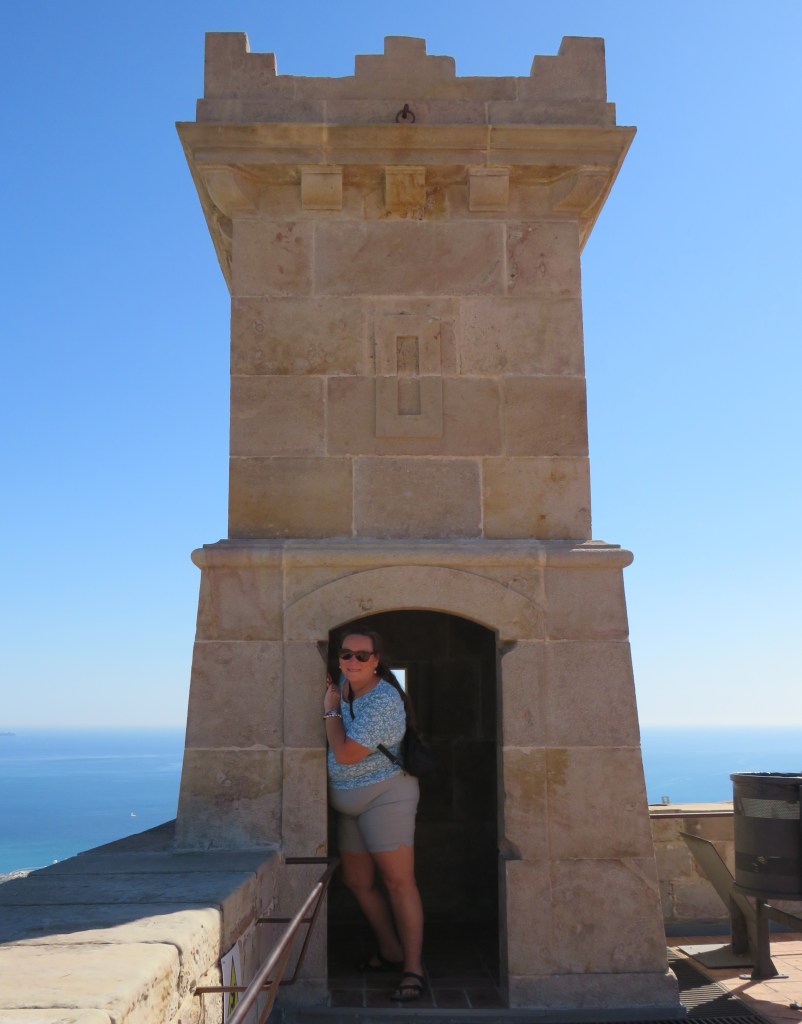
Today, the Castell de Montjuic is used for all kinds of events, and houses a lot of companies within its walls. We actually saw a wedding party taking their wedding pictures as we were there. But not so very long ago, it was still used as a prison that housed mainly political dissidents and military prisoners. The terrors and atrocities that took place within the walls of Castell de Montjuic are still fresh in the minds of many even today. Many people can tell you horror stories of their family members who were incarcerated in the castle, just a generation or two ago.

We toured all around the castle on our own outside, then took the tour of the castle inside.

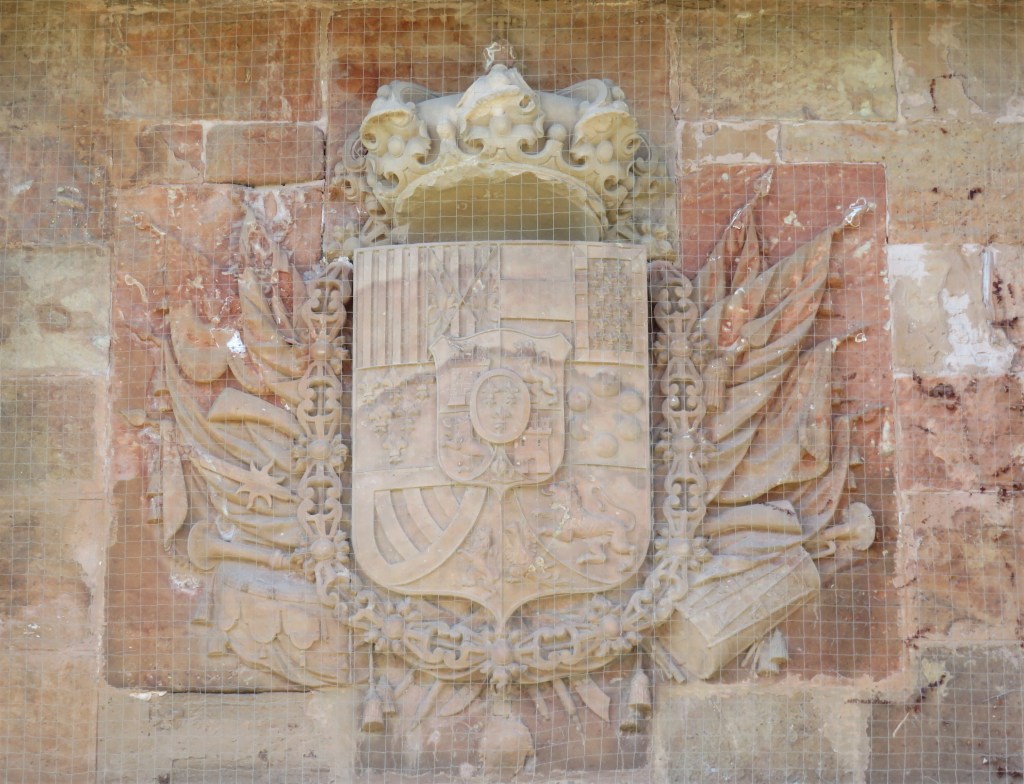
The Royal Crest.
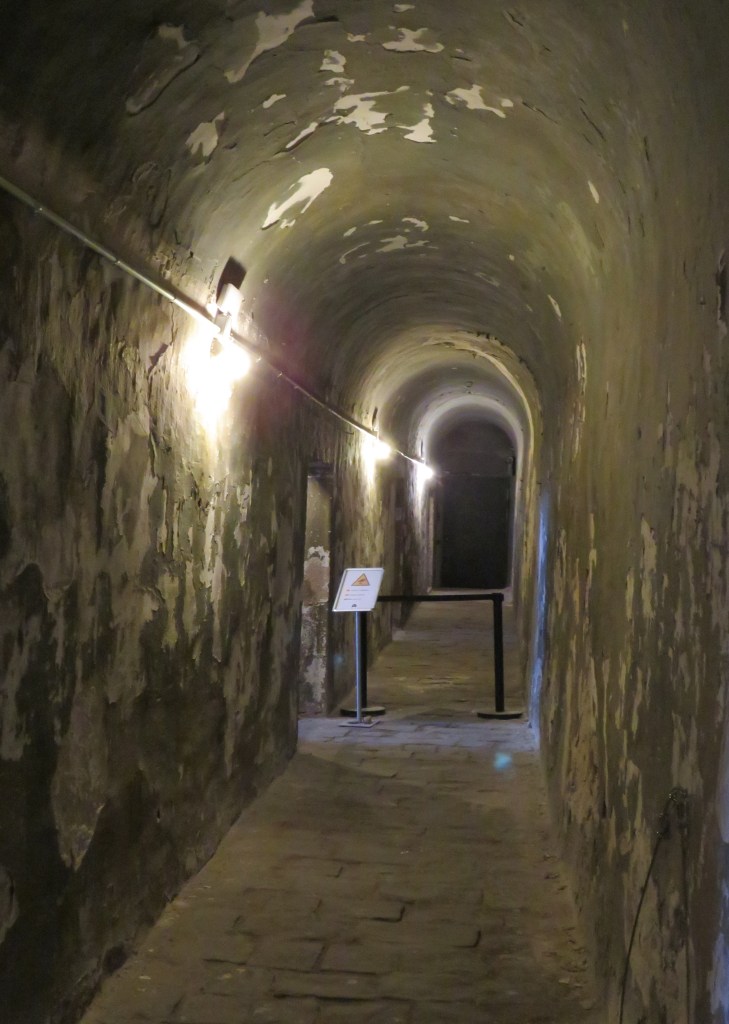
These are the tunnels leading to the “dungeons” or the cells. We were not allowed to take pictures in the cells because they are temperature and light controlled. There are so many drawings and writings on the walls from the prisoners. I think we were told they found over 600 drawings and writings on the walls during the restoration. Many of them are very graphic and very telling of what happened within the cell walls.
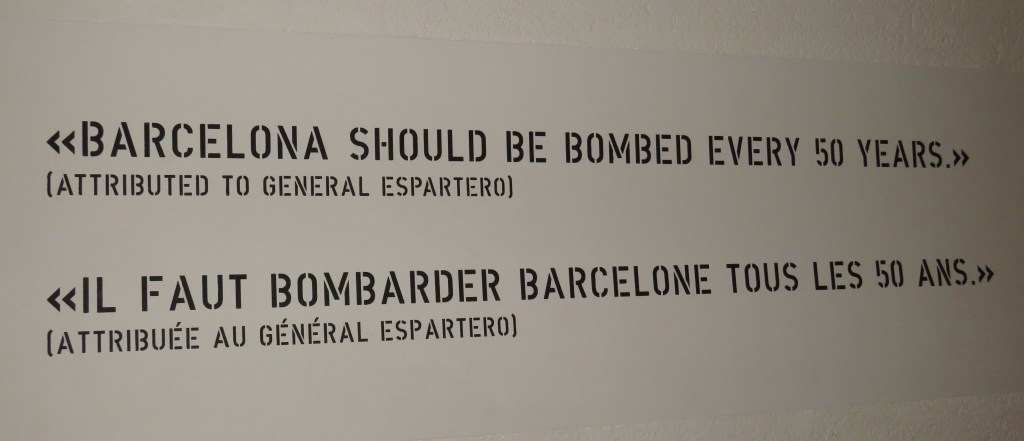
The City of Barcelona, the Catalans and Spain have always had a very tumultuous relationship at best. The Catalans are still fighting for their independence from Spain. Here is one of the plaques on the walls describing the beliefs about Barcelona, from General Espartero.
This was the flag tower on top of the roof. Different flags were displayed to send messages out to Barcelona.

The tour was very interesting and informative. I love history, and I love to learn everything I can about where I go.

The tensions between the Catalans and the Spanish are still very much alive today. We even saw a protest rally being set up in the Platja of Las Ramblas. We left before things got hot and heavy. We didn’t want any part of this battle.

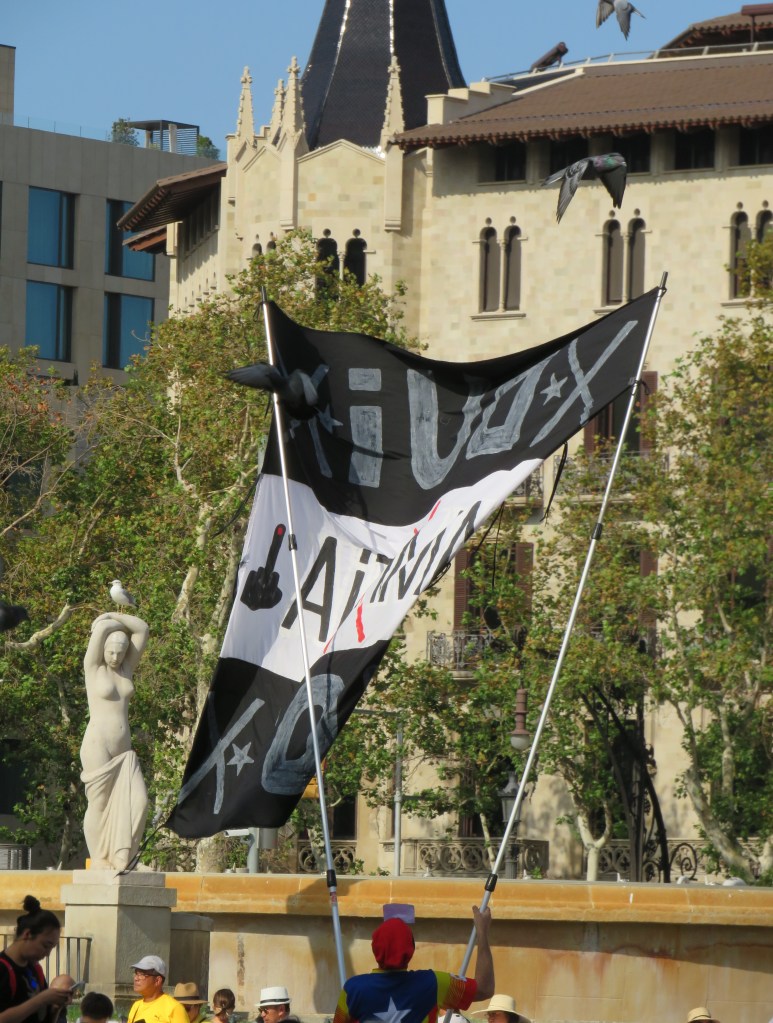
Troubled times, conflict and revolutions have always been a part of history, in Spain, as well as the rest of the world. Unfortunately today, the world is rising in revolution once again. We have to stay vigilant, and stay safe as best as we can.

Back From Barcelona – Parc Guell

Few people realize how prolific Antoni Gaudi’s work was until they visit Spain and Barcelona in particular. His work and renovations on basilicas is what he devoted his life to, as we have seen in both his works on the Cathedral de Santa Maria de Palma Back From Barcelona – Mallorca #5 – The Palma Cathedral and Sagrada Familia. Back From Barcelona – Sagrada Familia. But before devoting his life’s work to the church, Gaudi was also a prolific artist elsewhere too. Parc Guell is one such example.

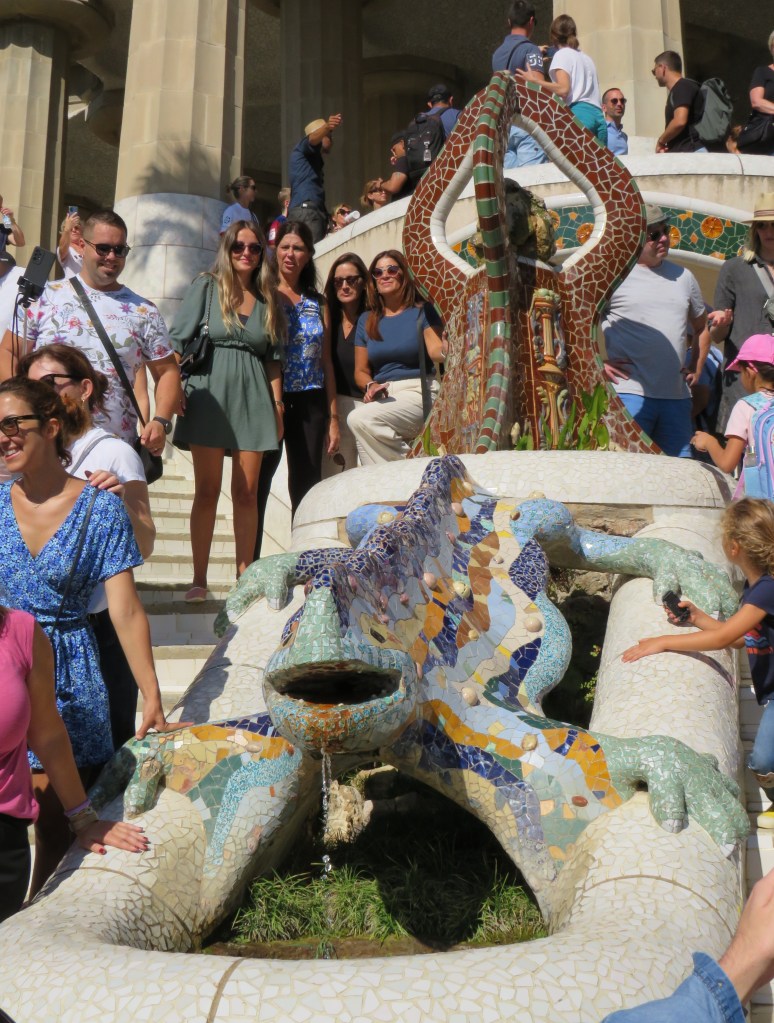
The quirky colorful mosaics and undulating curves of Park Güell are a signature of the legendary Catalan architect Antoni Gaudi, who designed many of the features in this park. Officially opened in 1926 and initially planned as a district for the rich, it is now one of the city’s most popular attractions and a great representation of Catalan modernism. The entrance with two fairytale-like houses and the iconic salamander fountain are the most busy.

Park Güell is an enormous garden with stunning and distinct architectural elements designed by the renowned Catalan architect, Antoni Gaudí. The park is named after Eusebi Güell, a rich entrepreneur and count that had a great passion for Gaudí’s work and who became his patron.

Gaudi planned and directed the construction of the park from 1900 to 1914 for Eusebi Guell for a residential park intended for sixty single-family residences. The project, however, was unsuccessful, and the park became city property in 1923. A lack of buyers led to the works being abandoned in 1914, with only two of the sixty houses envisaged having been built. The park thus became a large private garden, which Güell allowed to be used for public events, while it began to appear in tourist guides to Barcelona as one of the attractions of the city. Though never fully completed, it remains one of Gaudi’s most colorful and playful works.

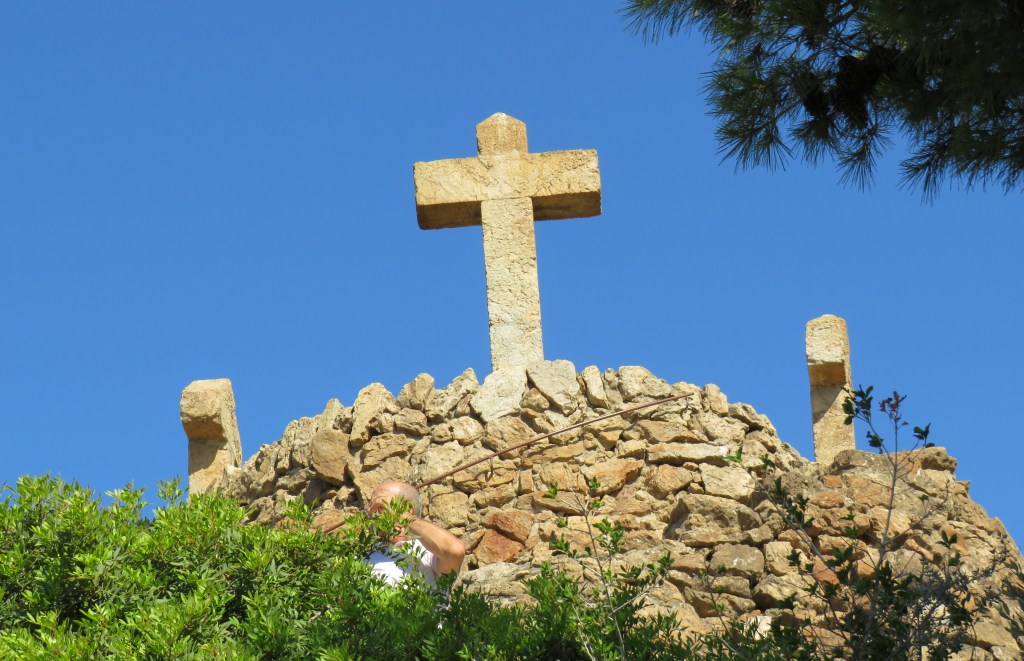
After visiting Sagrada Familia, we decided it would be interesting to see more of Gaudi. Parc Guell it was. It was way up atop a very steep hill, one of many we had to hike before getting up to the park itself. It was most definitely a hiking up steep hills kind of day. Upon entering the park, we had to hike up even more. On the way, we saw the Hill of the Three Crosses. The monument has a circular plan and two ramps of stairs, on top of which are the three crosses and from where there is a magnificent panoramic view of Barcelona. There are two lower crosses and a higher one, that of Jesus; one of the crosses ends in the shape of an arrow. The orientation of the crosses indicates the four cardinal points and the one that ends in an arrow points to the sky, which causes speculation about its meaning. The crosses were destroyed in 1936, during the Civil War, and rebuilt in 1939.

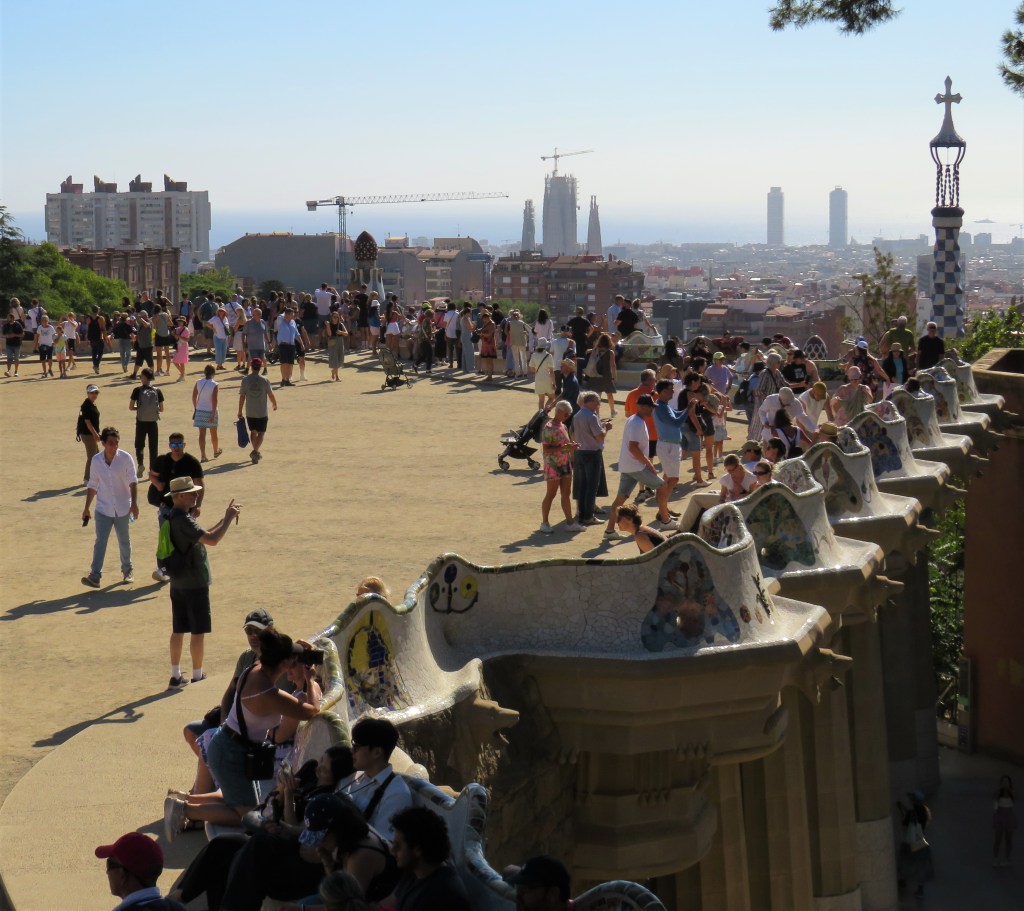
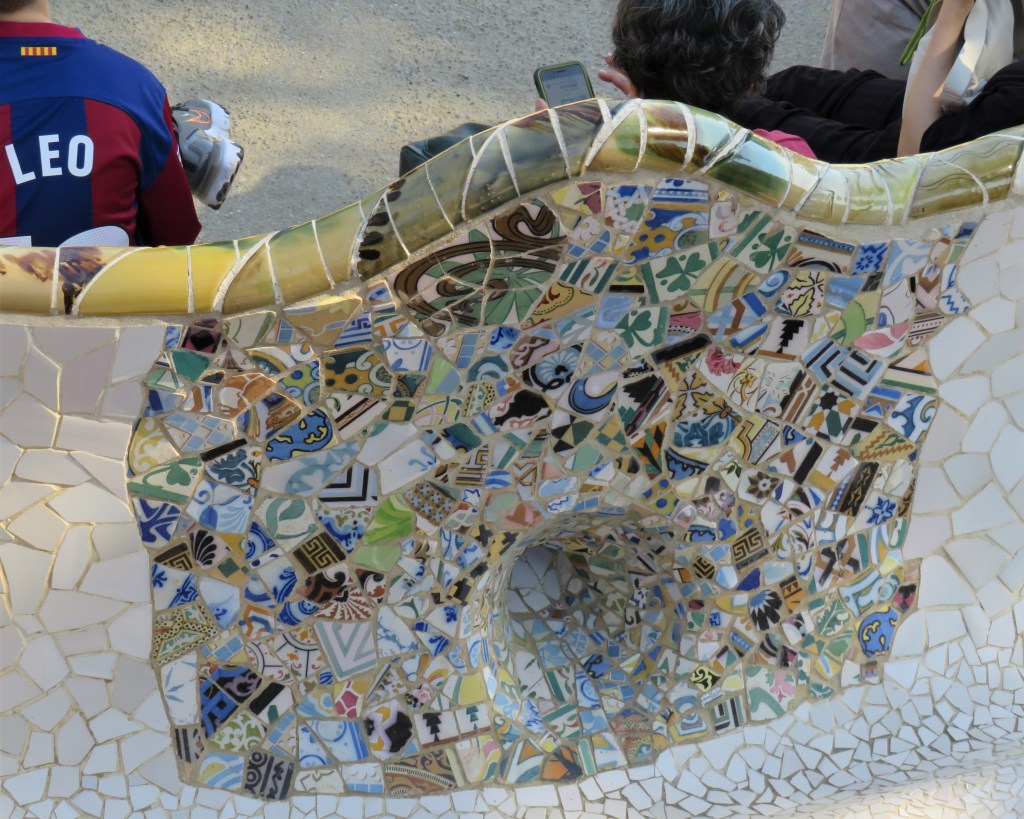
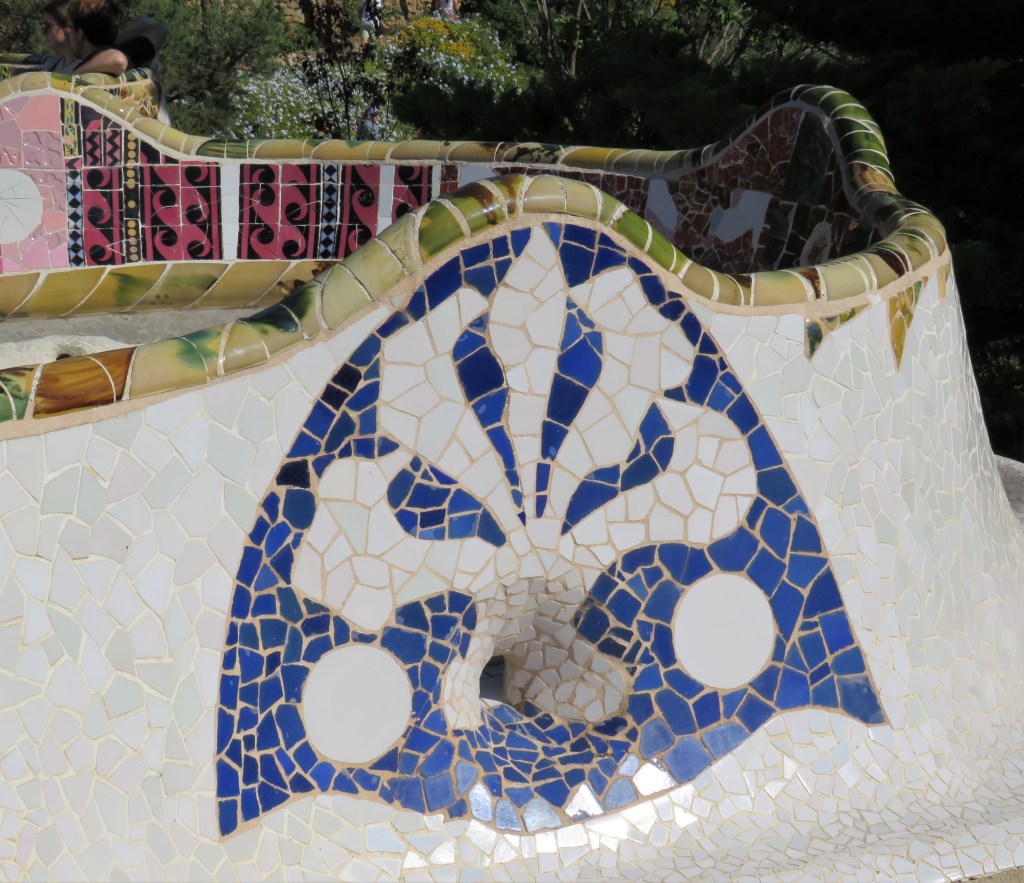
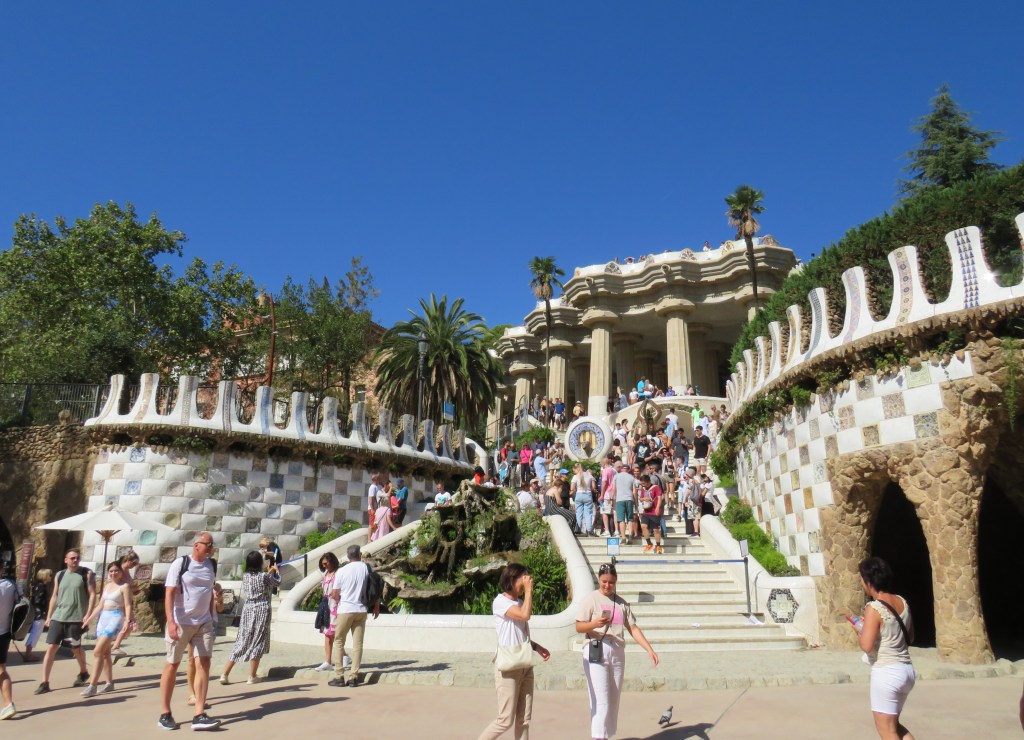
We followed the garden pathways to the park itself, which led us to the winding wall of mosaics and Parc Guell.

Gaudi let loose his imagination. He shaped nature into colonnades, archways, and covered galleries with well-camouflaged artificial structures. It’s a playground for the mind: visual jokes, like columns that simulate palm tree trunks, rubble-surfaced arches that grow out of the ground, and quilts of ceramic tiles. A graceful pavilion is made of twisted angle iron – cheap to make, looks good, and does not lie about its material, yet its shape is as softly curved as climbing vines.

Inside the column room.

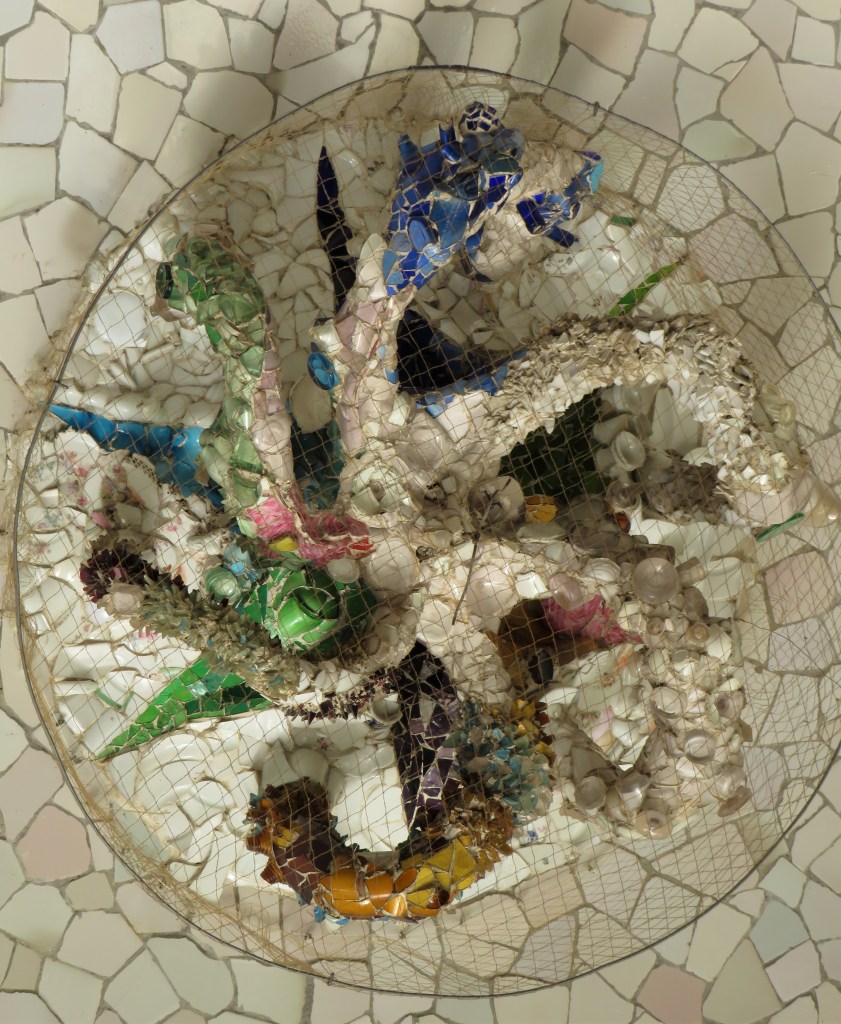
These are some of the many mosaics on the ceiling. I liked this one better.

Larry liked this one more.

The column room leads you to the rest of the park. But before entering the rest of the park, you have to pass the famous dragon fountain.

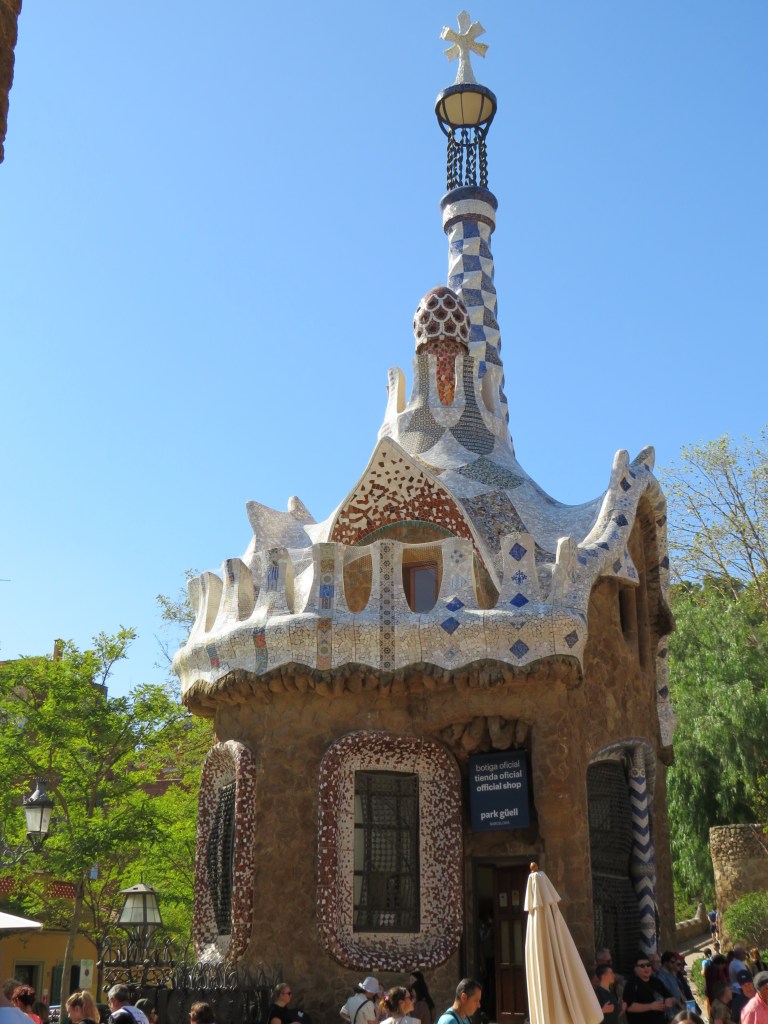
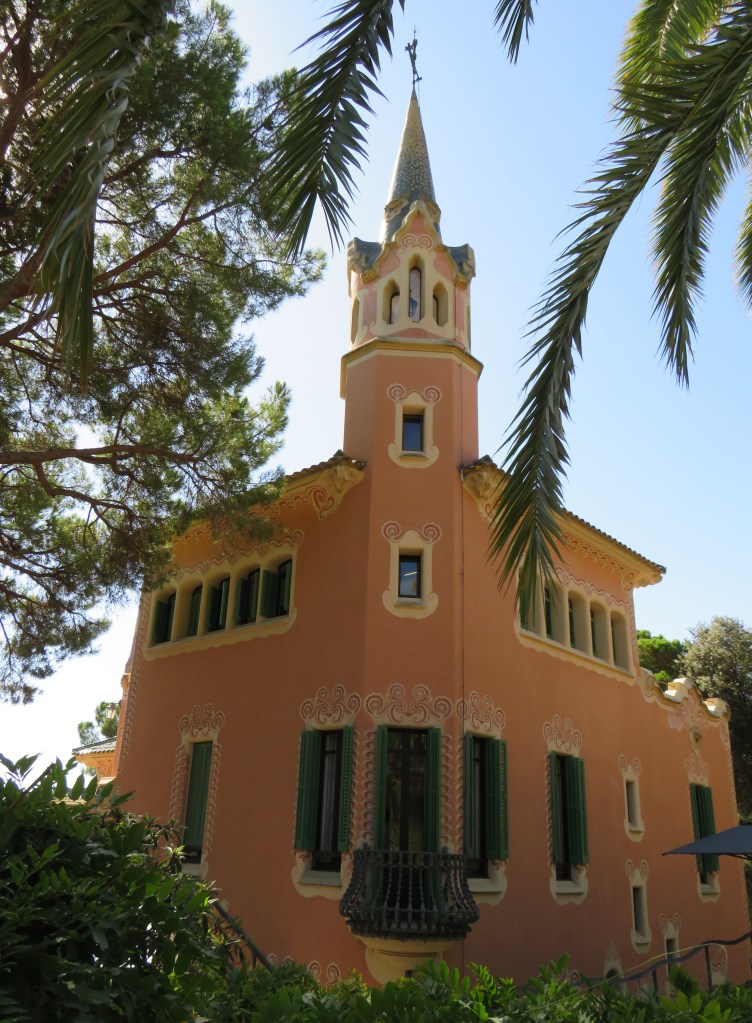
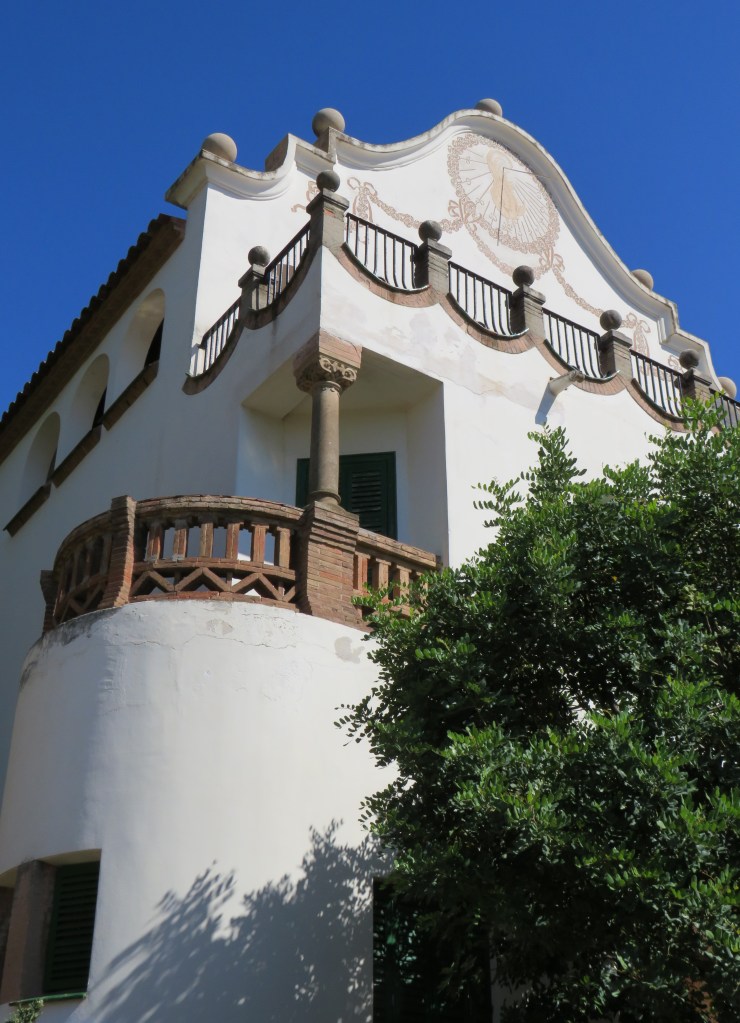
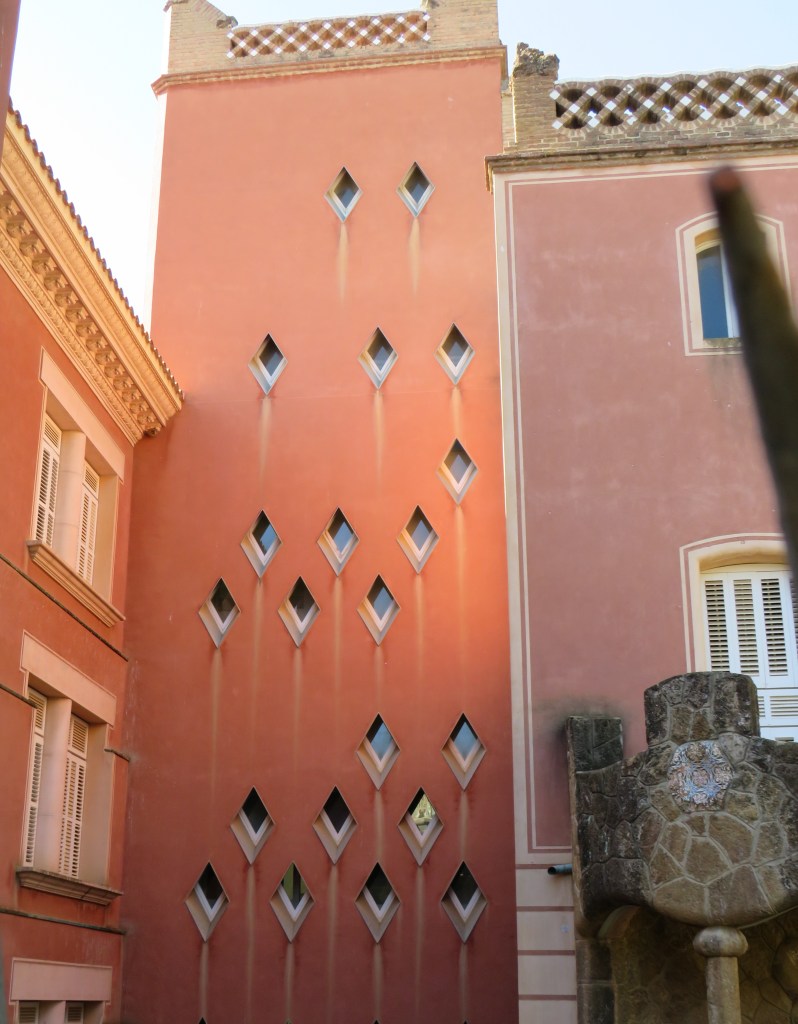
These are the only two houses that were actually completed before opening up the park to the public. We ventured into this one. It was empty, but still very interesting to see.

This house has been turned into a store.

We continued the journey through the gardens. This was actually the house where Gaudi lived until he moved into his studio at Sagrada Familia. We just visited from outside as we were walking by.

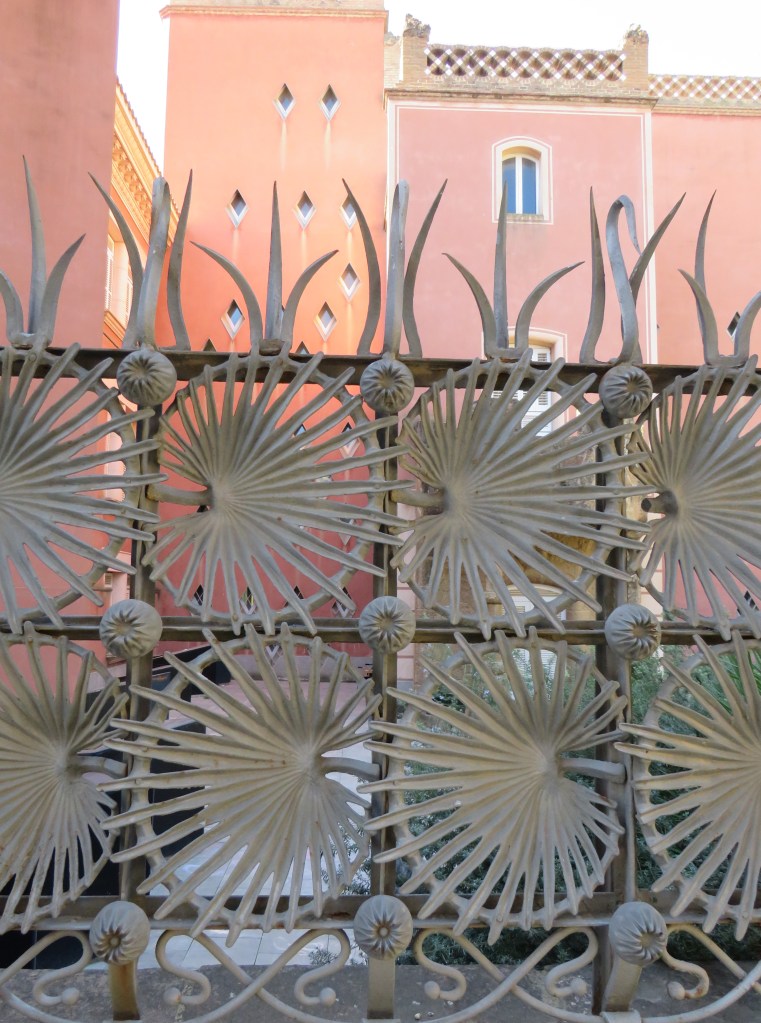
Other houses in the area. They were all very creative and artistic, with a special Gaudi flair.

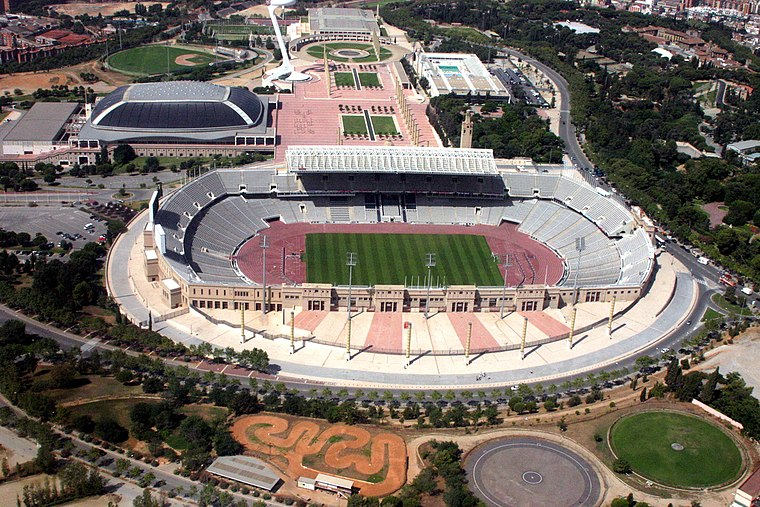
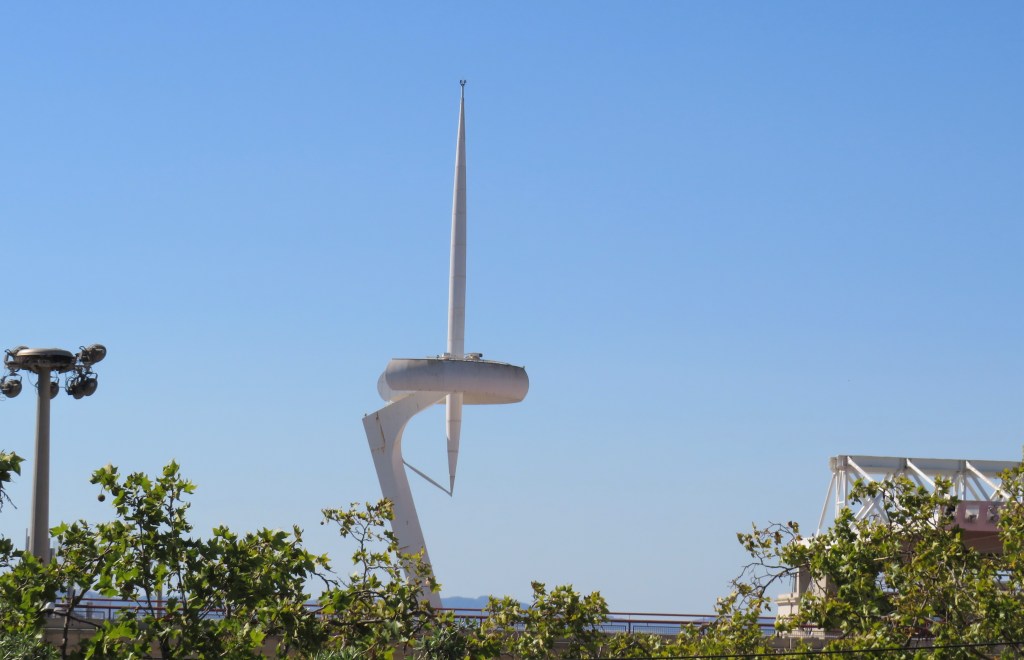
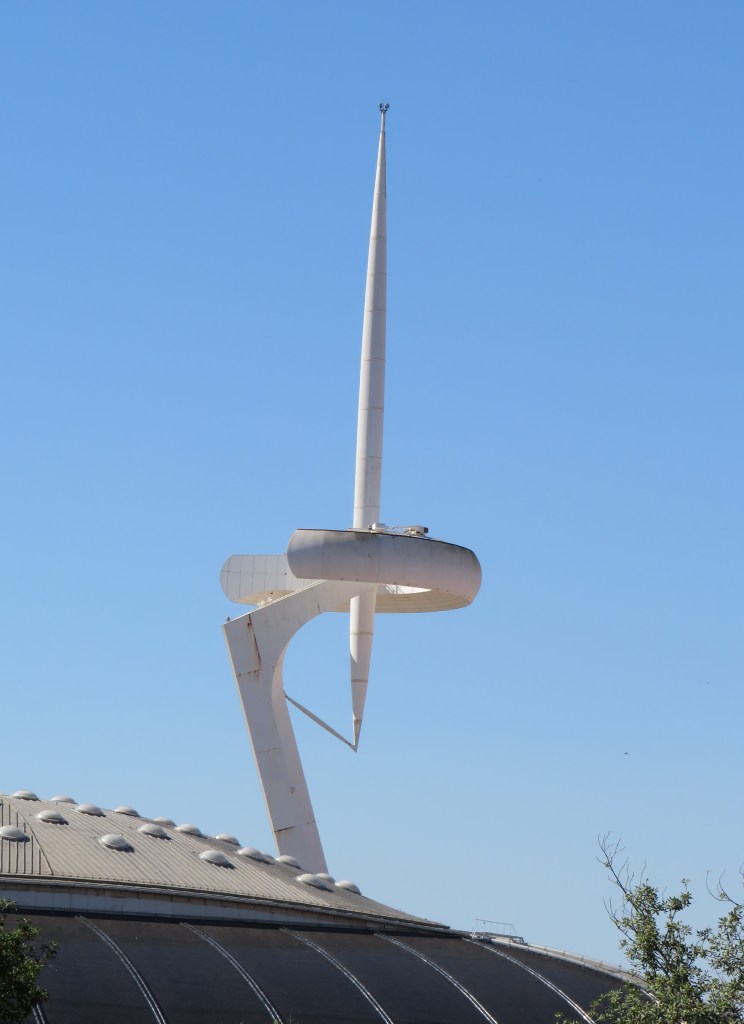
Once we left Parc Guell, we were right by the Barcelona Stadium, or the Estadi Olimpic Lluis Companys, where the 1992 Summer Olympics were held. This is actually near Montjuic (We went to Montjuic as well, but more on that later). We did not go inside the stadium, since it was closed, but we did get to see the Olympic torch.

As you can see, it was yet another colorful and adventurous day in Barcelona. We covered a lot of ground and saw a lot of very interesting things. Barcelona is full of interesting places to see and fun things to do. I guarantee, you will never get bored in Barcelona. 🙂

Stay adventurous and always have fun. But keep your adventures safe (or at least relatively so) and stay well. ‘Til next time.

Back From Barcelona – Lots of Tapas And Other Good Food – #7

We continued our Spanish culinary adventures into Barcelona after leaving Mallorca. Once again, the food was deliciously amazing. We ate a lot of tapas again, as well as other fabulous meals.

On our first day in Barcelona, in between tours, it was lunch time. We knew we had to eat something, but we didn’t want a lot because we knew we had our first night of tapas coming later. Or we thought we weren’t going to eat a lot. Wrong!

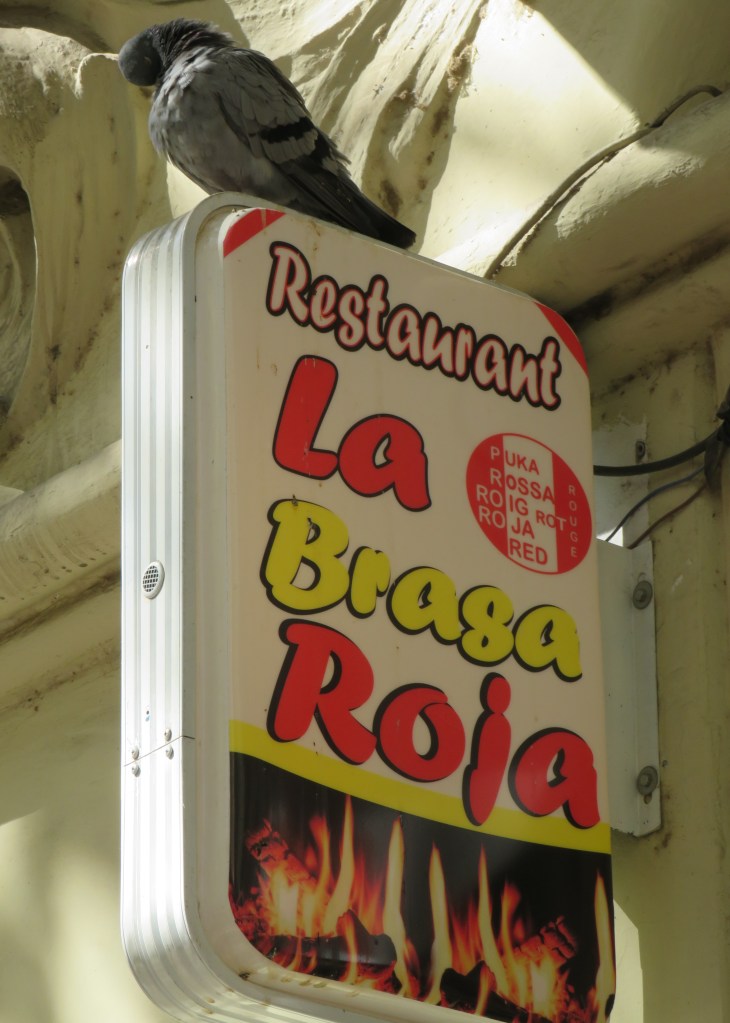
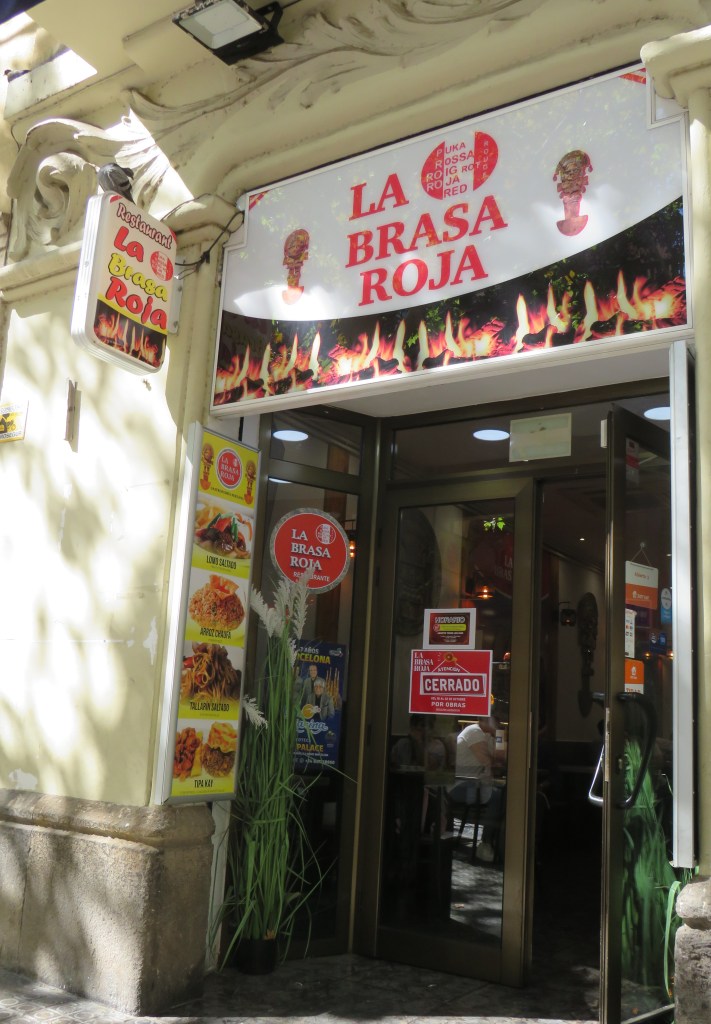
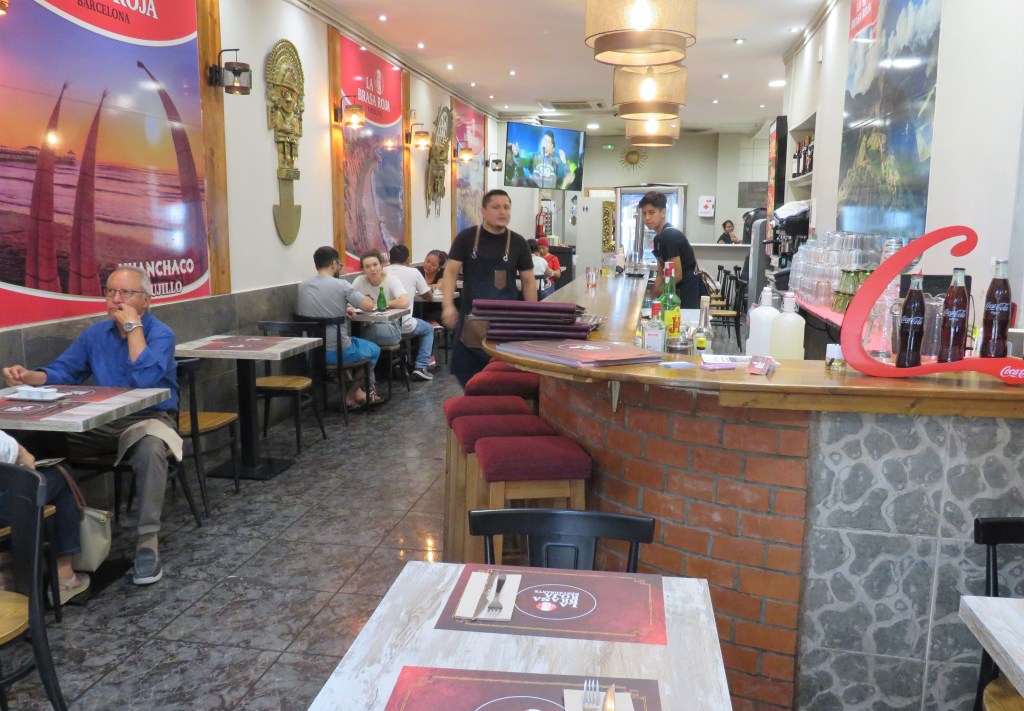
We went to a little Peruvian restaurant called La Brasa Roja. We enjoyed Spanish foods from both the old world and the new. Peru was one of the Spanish colonies.

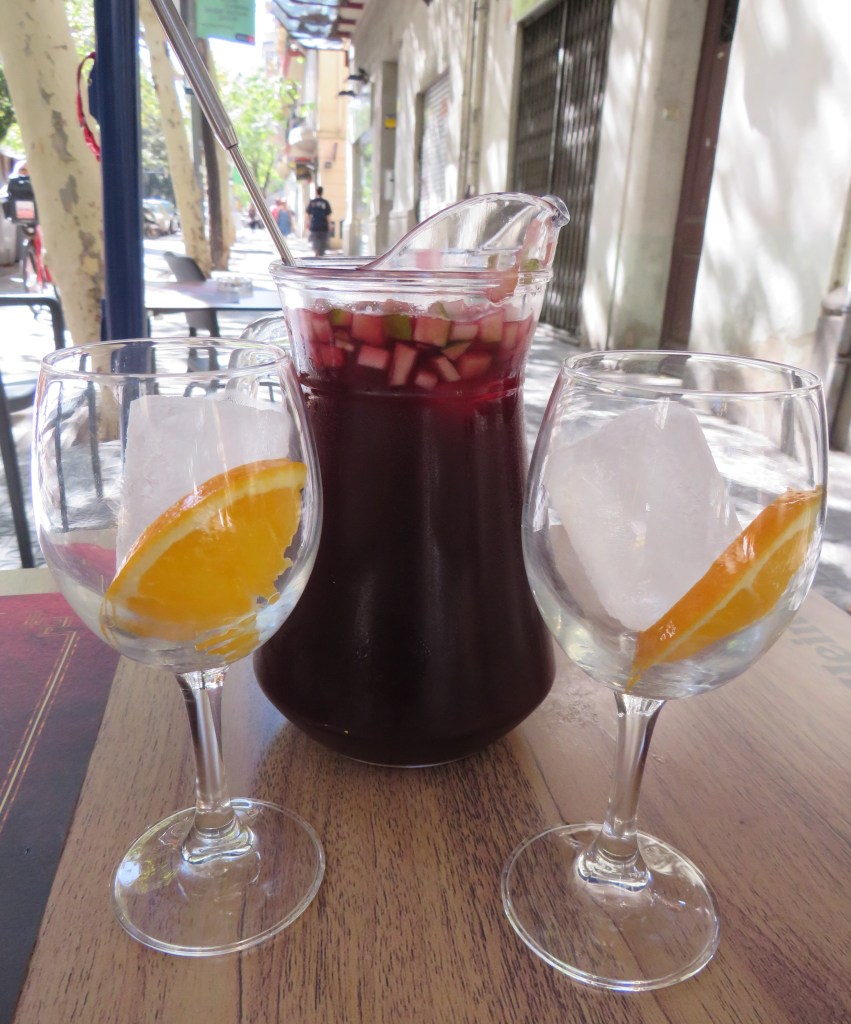
It was a very warm day, so before we ordered our food, we started off with some Sangria. We thought we were going to get a small pitcher, but no. This was our first clue that this restaurant believes in large portions. We drank it all though. It was way too good to leave any unfinished, besides, it’s bad luck:)

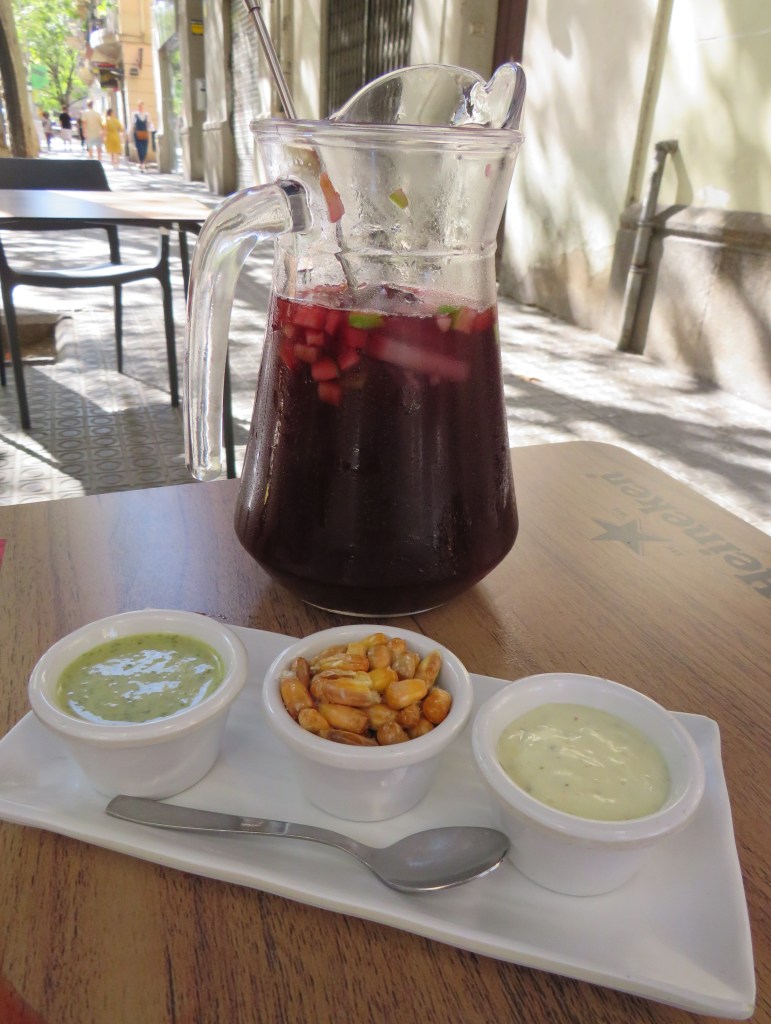
The sangria was followed by a little tray of Peruvian toppings, which we added to our meal. I loved the grilled corn. It’s like popcorn.

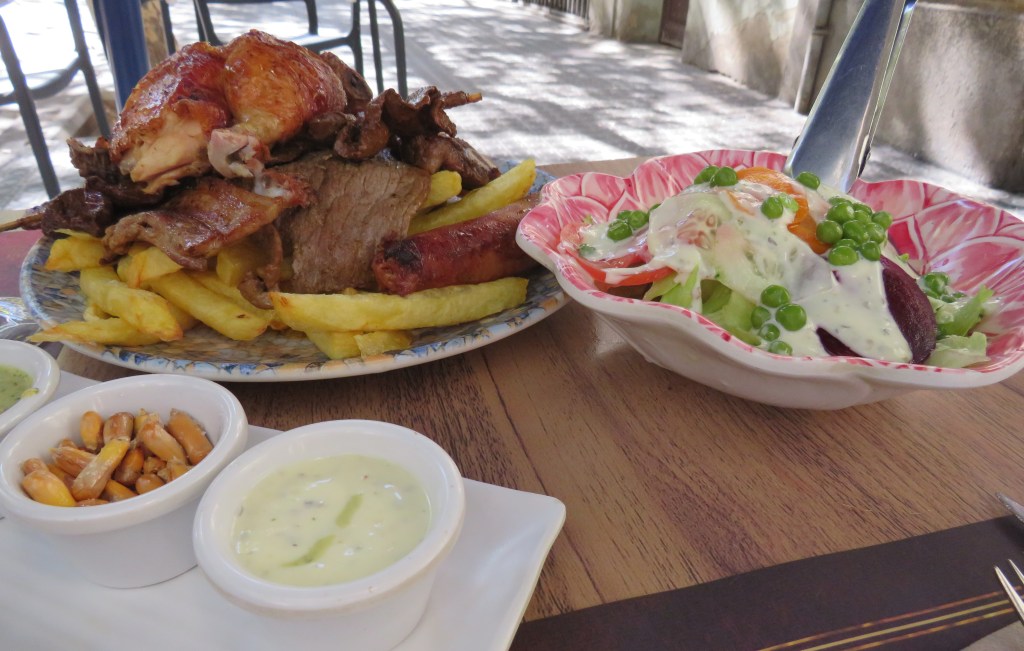
Once again, we ordered one plate and split it between us. But as you can see, it was still a feast. We ordered a mixed meat grilled platter that came with fries and salad. We had chicken, lamb, beef, ribs, and pork. I certainly ate a little of everything, but left the bulk of it for Larry. Again, we ate almost everything. Everything was mui delicioso!

I have no idea where this was, since we found it by literally just strolling around Barcelona, but we are very glad we did stop in. I highly recommend La Brasa Roja to anyone in the area. The food was delicious and the service was great.

Back From Barcelona – Touring Around The Gothic Area

The Gothic Quarter in Barcelona dates back over 2,000 years and is one of the most talked about neighborhoods in the city—full of charm and captivating history. It is the heart of Barcelona. The Gothic Quarter center of the old city of Barcelona stretches from La Rambla to Via Laietana, and from the Mediterranean seafront to the Ronda de Sant Pere. It is a part of Ciutat Vella district. The quarter encompasses the oldest parts of the city of Barcelona, and includes the remains of the city’s Roman wall and several notable medieval landmarks.  Much of the present-day fabric of the quarter, however, dates to the 19th and early 20th centuries. El Call, Barcelona’s old Jewish Quarter, is one of the most beautiful areas of the Gothic Quarter. It is full of shops and restaurants. There are no more Synagogues left in the area, due to destruction in the mid 14th century, but the Jewish Quarter is now marked by gold markers on the streets. These are some of the narrowest streets in all of Barcelona, and they are also filled with a dark history that dates back to medieval times.

We had a very fun and full day. Our first stop was Sagrada Familia Back From Barcelona – Sagrada Familia. From there, we toured around the city Back From Barcelona – Touring Around. We stopped for lunch, more on that later. And finished the day with a fun and informative walking tour of the Gothic Area.

Mario, our guide, was originally from Buenos Aires, Argentina. It was us and one other couple on the tour. The other couple was from Brazil. They speak Portuguese in Brazil, and Mario was great. All evening he switched back and forth from English to Portuguese, and back again, without even so much as a hiccup. We all had a great time. There were no language barriers thanks to Mario and his linguistic skills.

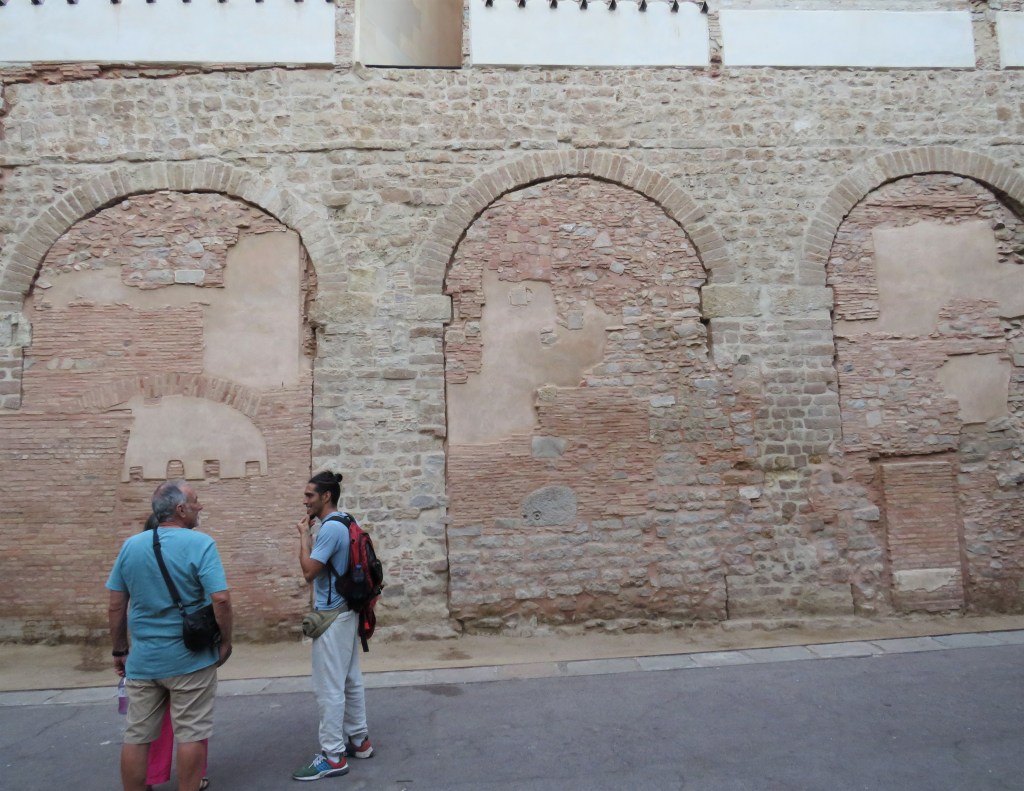
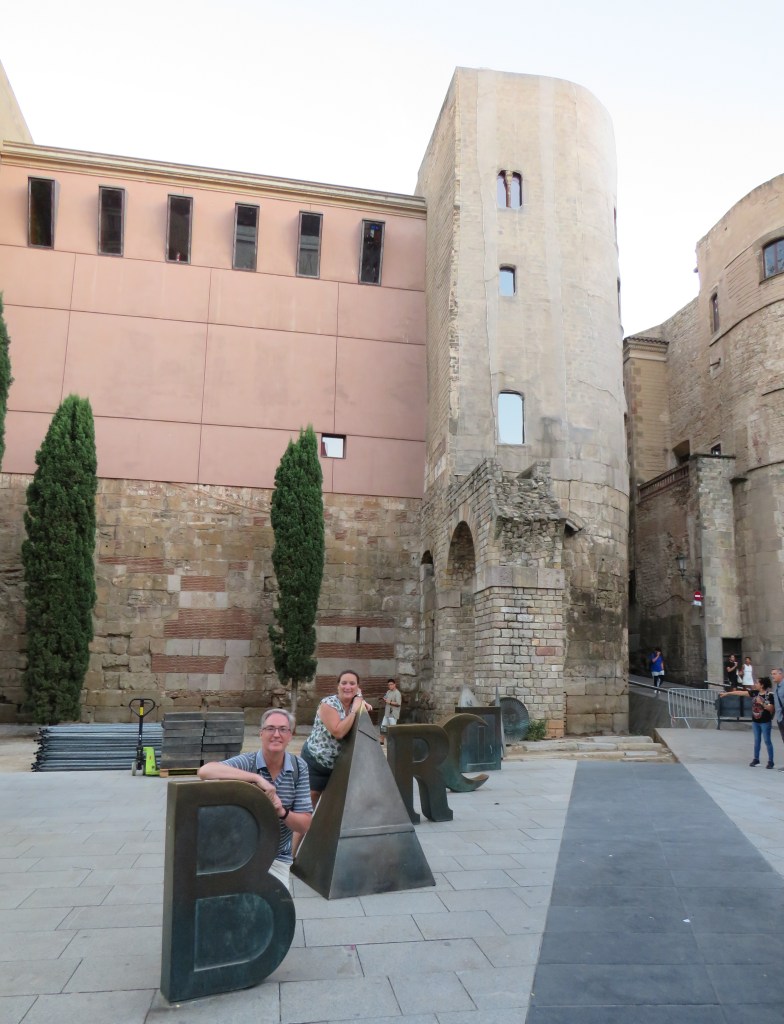
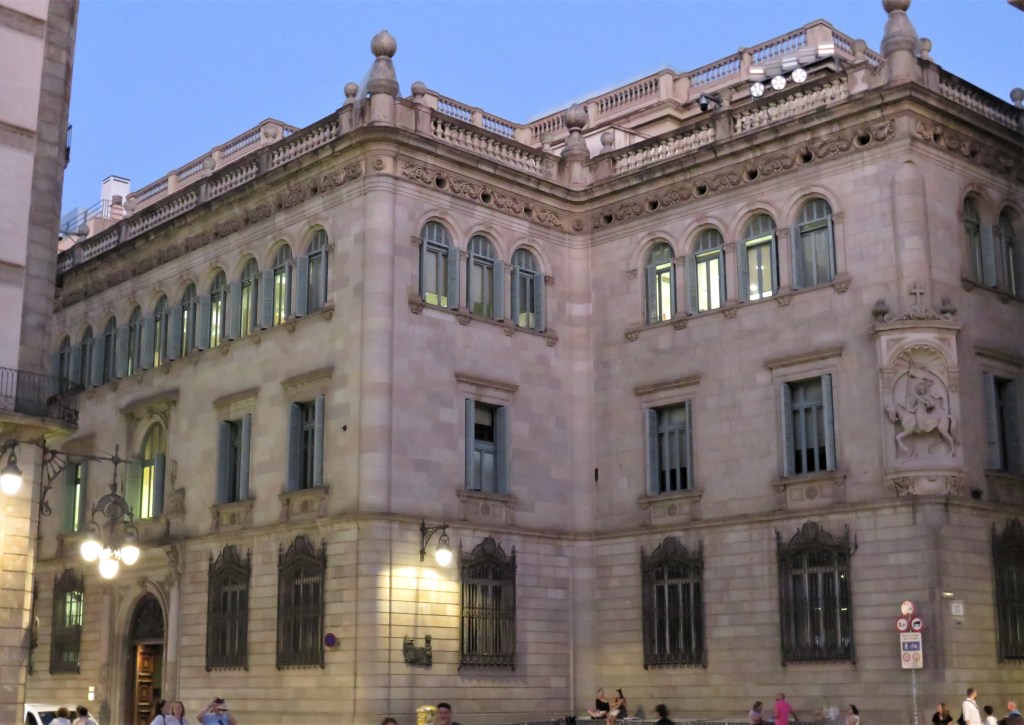
We started out by touring around and getting a brief history of the buildings and the area. This building is one of the oldest in Barcelona, and is made up of the old Roman buildings. Mario is explaining it to the Brazilian couple as I was taking pictures. The outsides of the buildings are mandated to keep with the old traditions, but the insides are updated and are modern and new.

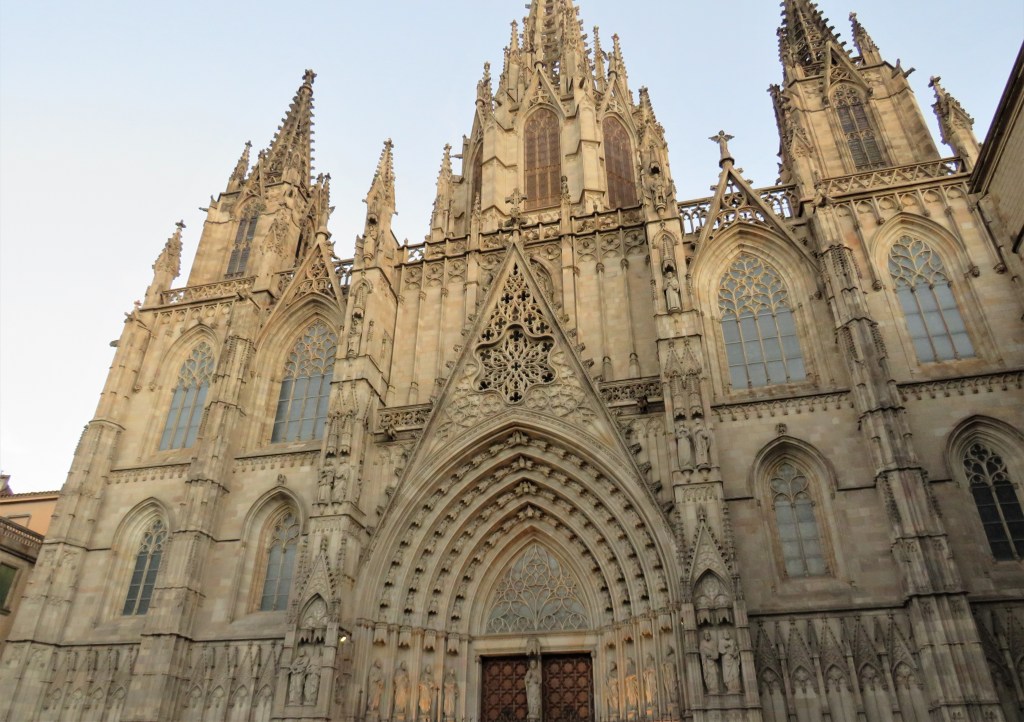
These are some of the old Gothic churches we saw, along with many other of the older, very charming buildings.

As I have said many times, I just love all the attention to detail that goes into every single structure. This is one of the La Seu cathedrals. La Seu is a common name for cathedrals in areas where the Catalan language is spoken. The phrase translates into English as `The See.`

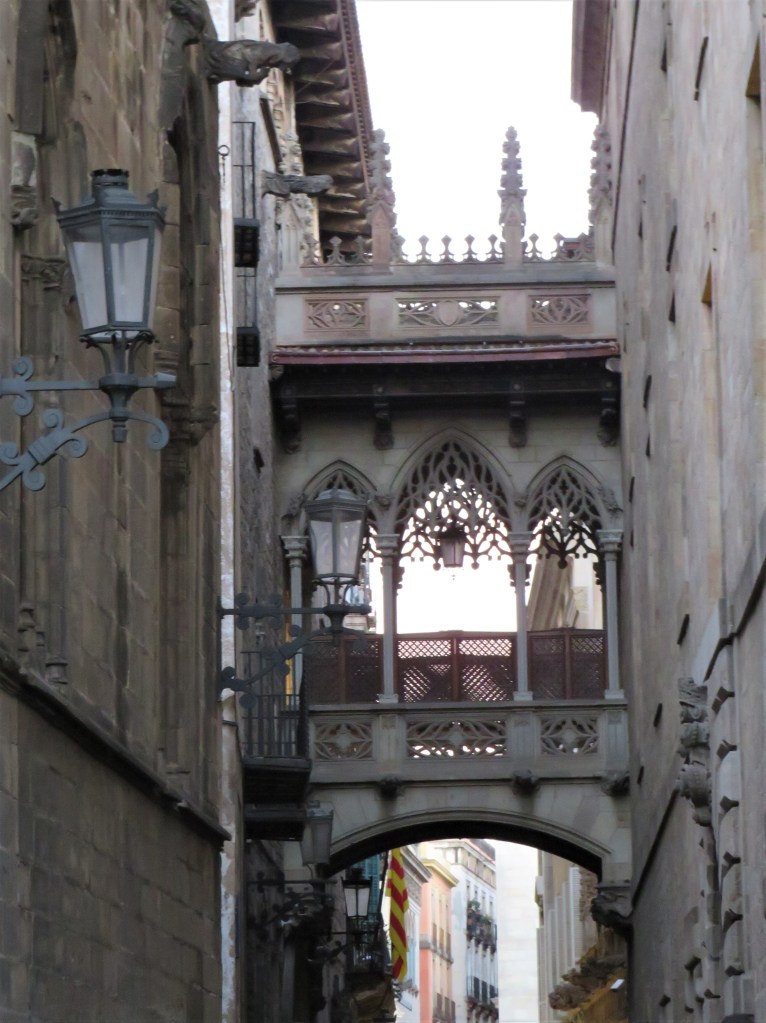
This bridge is a very old, very famous bridge. The Canons used to walk from their apartments to the church on this bridge. Today it is walked by both tourists and residents of the area.

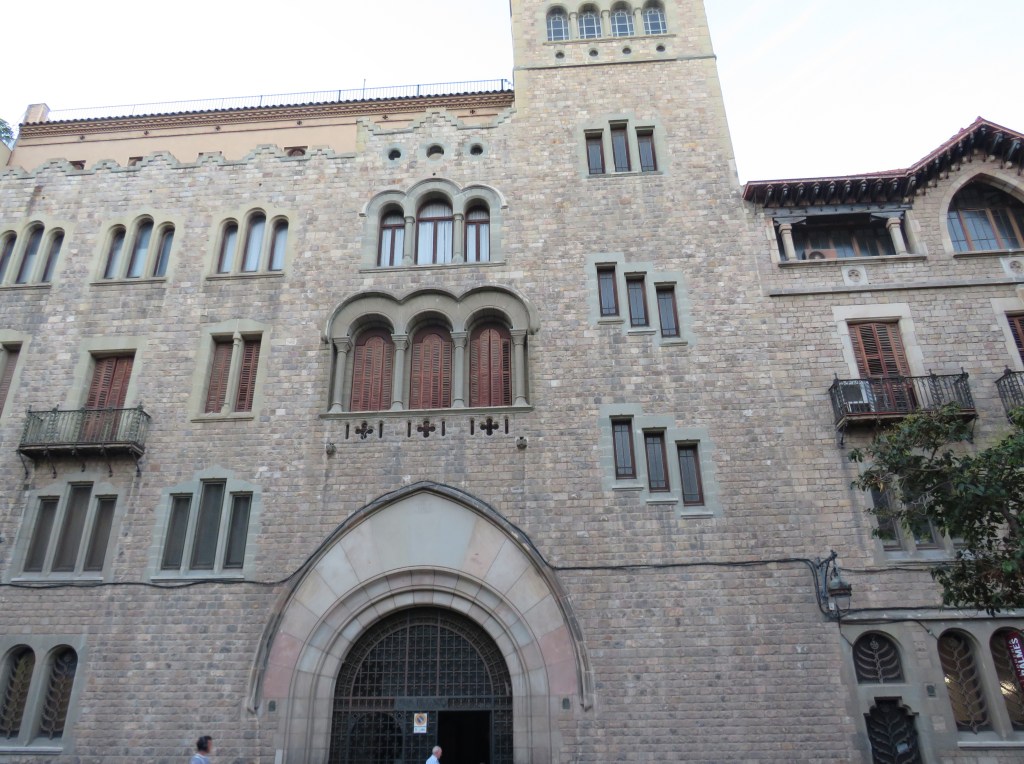
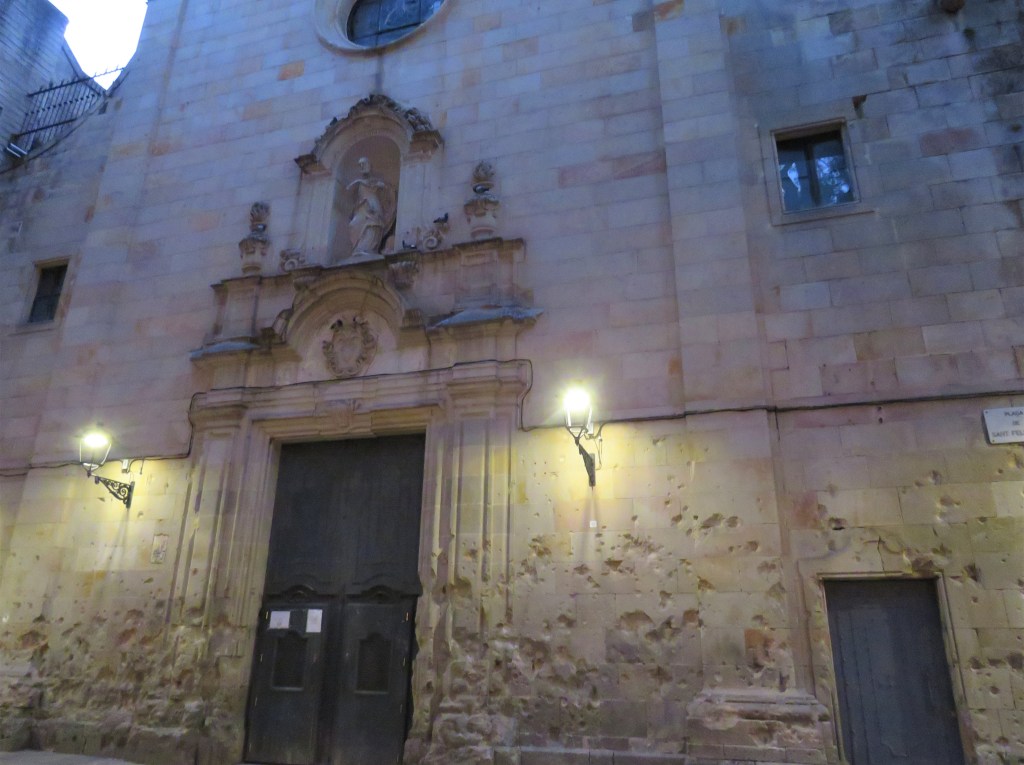
This building has quite a story. During WWII, Spain was supposed to be “neutral” since it had just come out of its own civil war and did not want to get involved in another war. However, apparently Franco didn’t quite understand what the word neutral meant, and he made “friends” with two very evil people who were in charge of the disasters during this horrific time in history; Hitler and Mussolini. This building, which was a school, was bombed and the bomb markings are still left on the wall as a tribute and a reminder of the forty-two students died during the bombing.

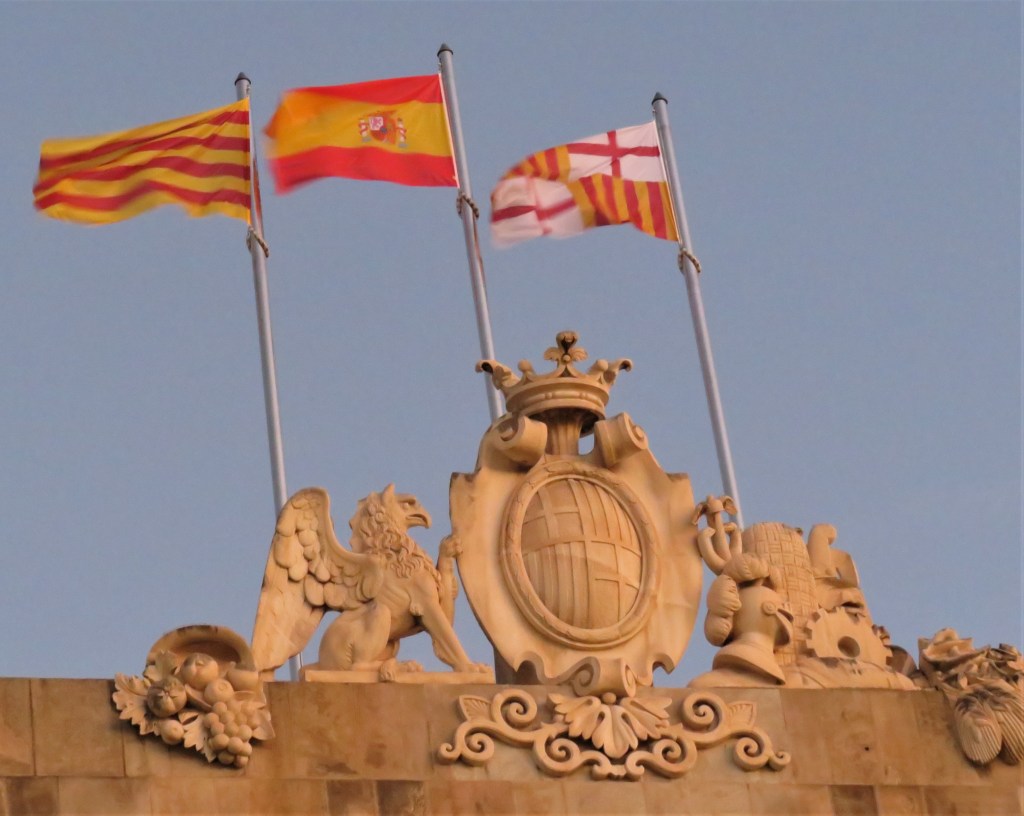
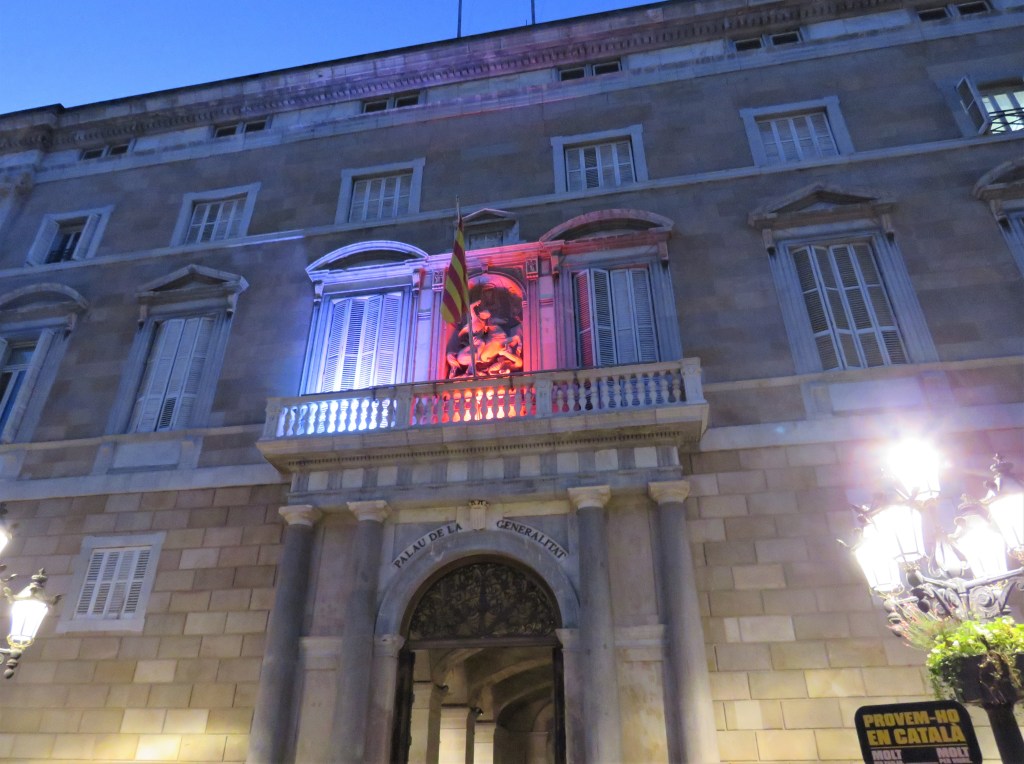
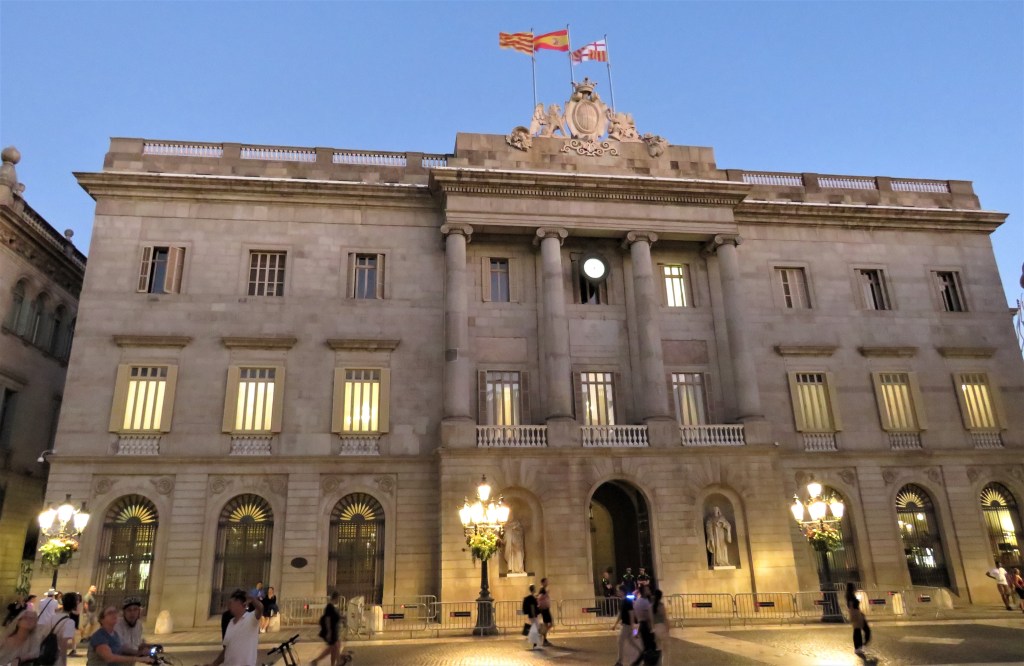
Government Square. This is the Spanish side.

This is the Catalan side.

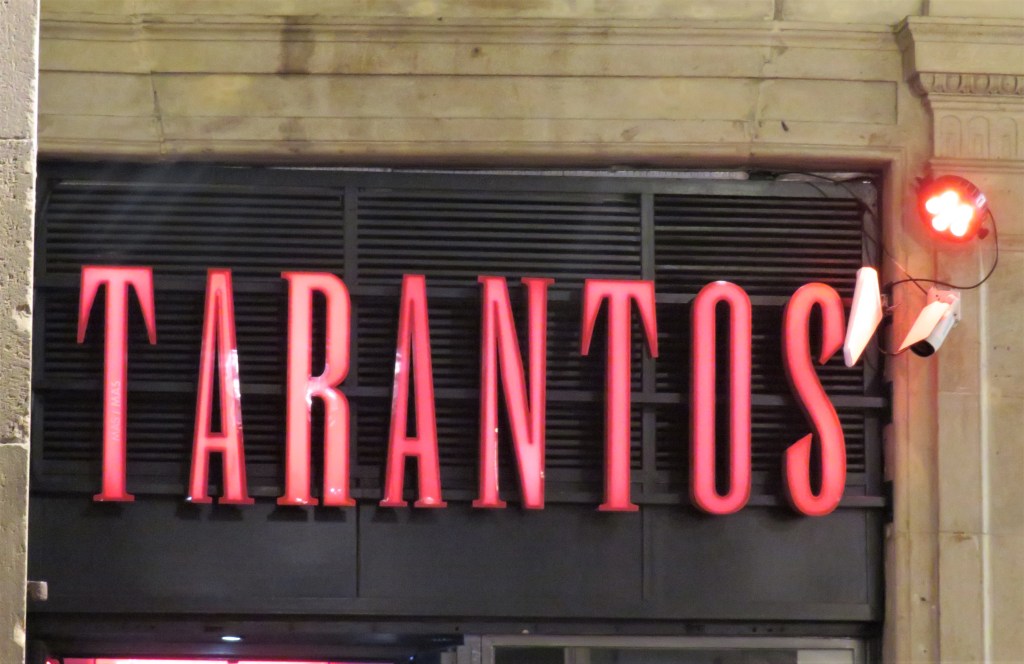
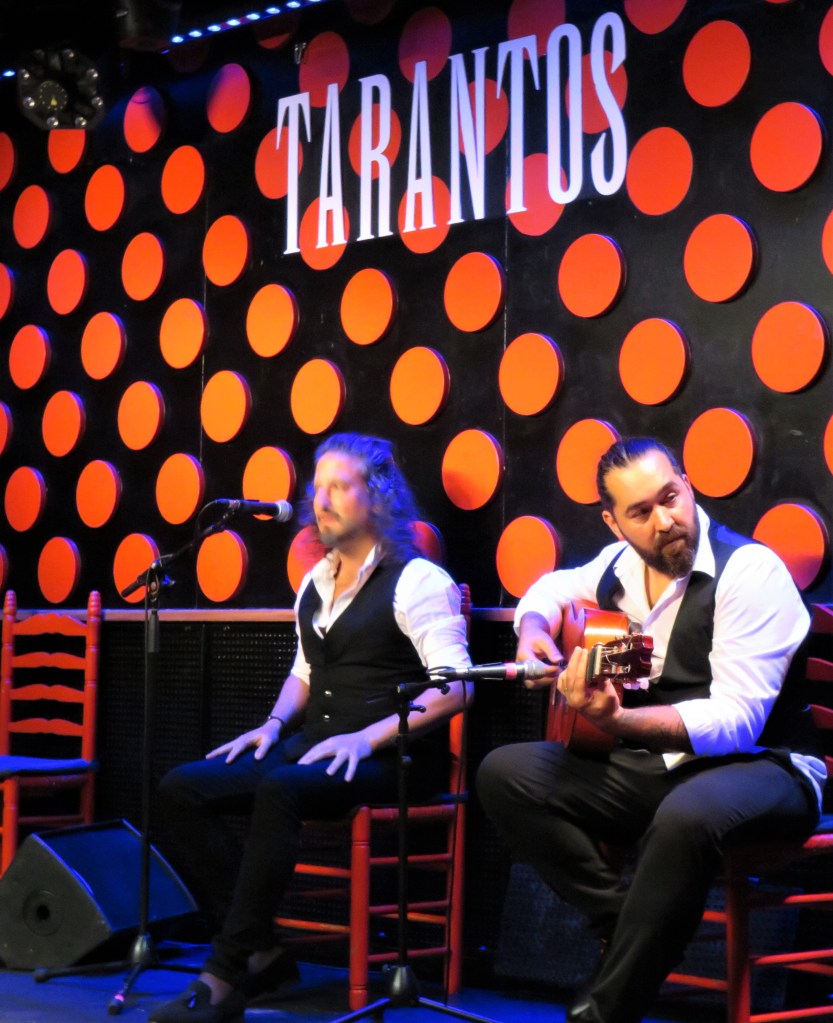
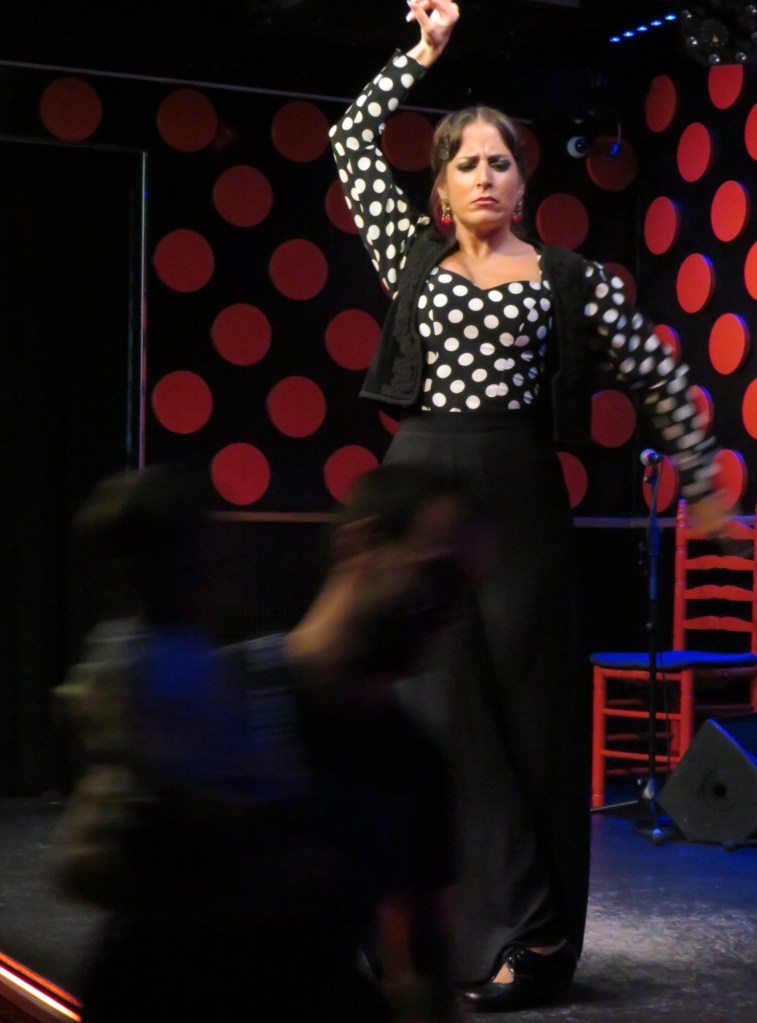
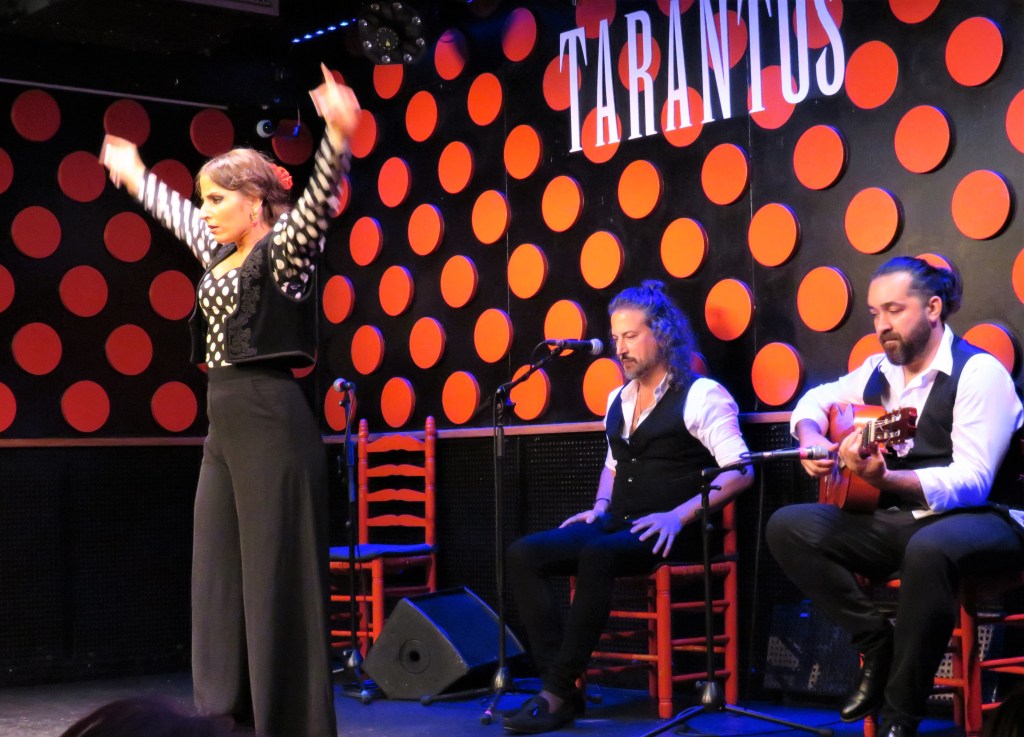
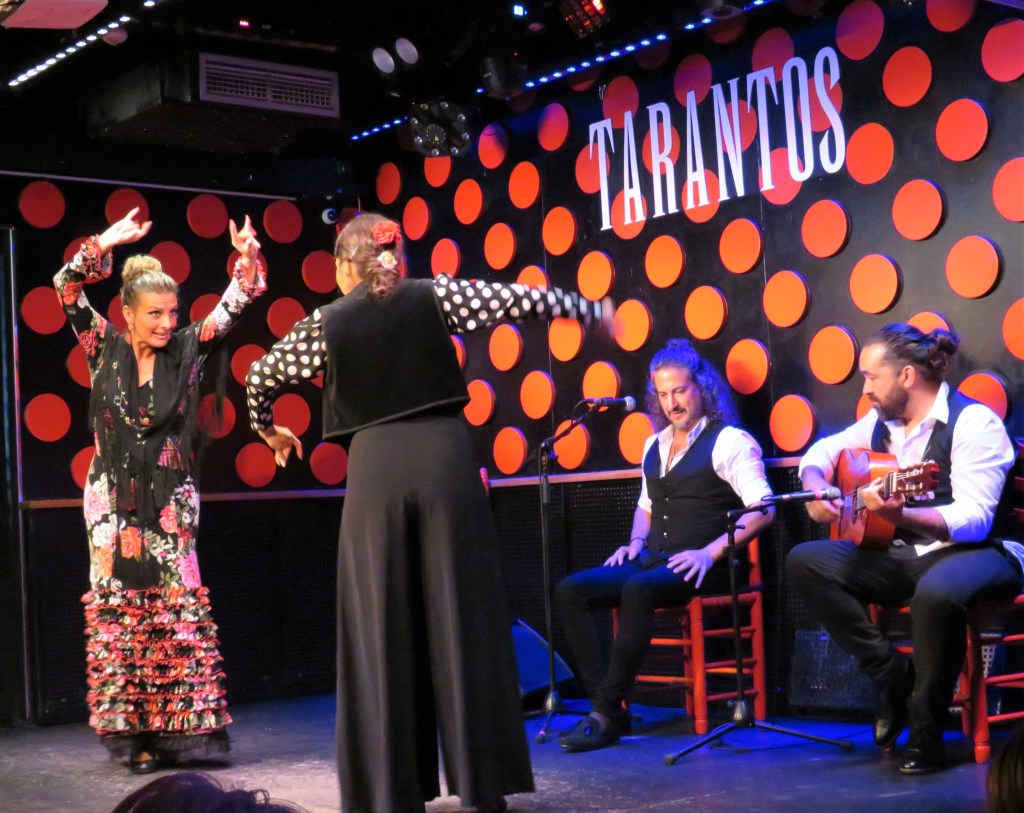
The tour also included a Flamenco show. We went to a place called Tarantos, which is the oldest Flamenco tavernas in Barcelona. I LOVE, LOVE, LOVE Flamenco. It was a great show.

Flamenco, is a form of song, dance, and instrumental (mostly guitar) music commonly associated with the Andalusian Roma (Gypsies) of southern Spain. (There, the Roma people are called Gitanos.) The roots of flamenco, though somewhat mysterious, seem to lie in the Roma migration from Rajasthan (in northwest India) to Spain between the 9th and 14th centuries. These migrants brought with them musical instruments, such as tambourines, bells, and wooden castanets, and an extensive repertoire of songs and dances. In Spain they encountered the rich cultures of the Sephardic Jews and the Moors. Their centuries-long cultural intermingling produced the unique art form known as flamenco. Both the songs and the music are telling a story of the “outcasts” of Spain. One of the things we heard is that Flamenco was about “farmers without a farm”, which makes sense, considering it was originally the music of the Gypsies.

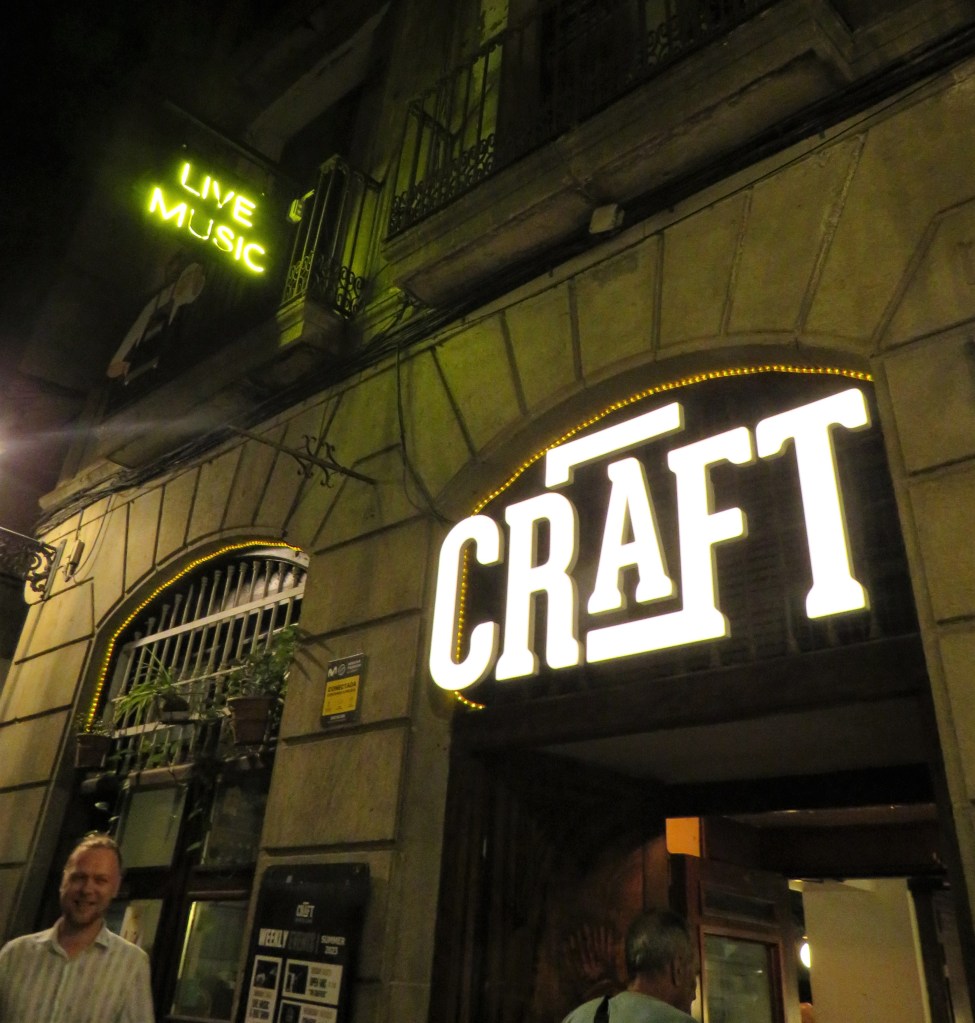
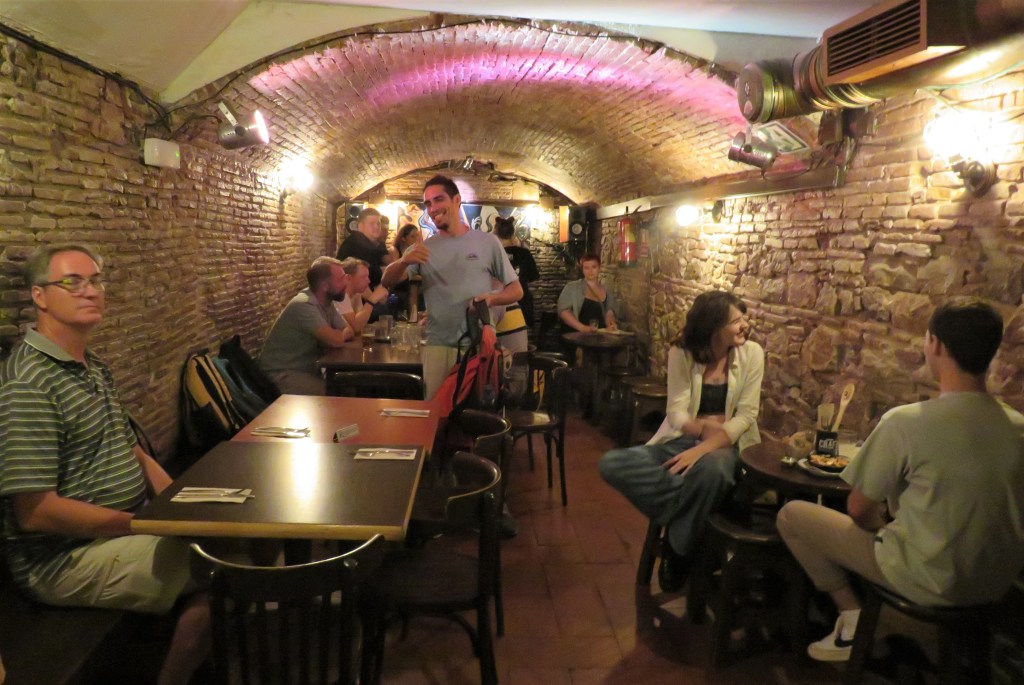
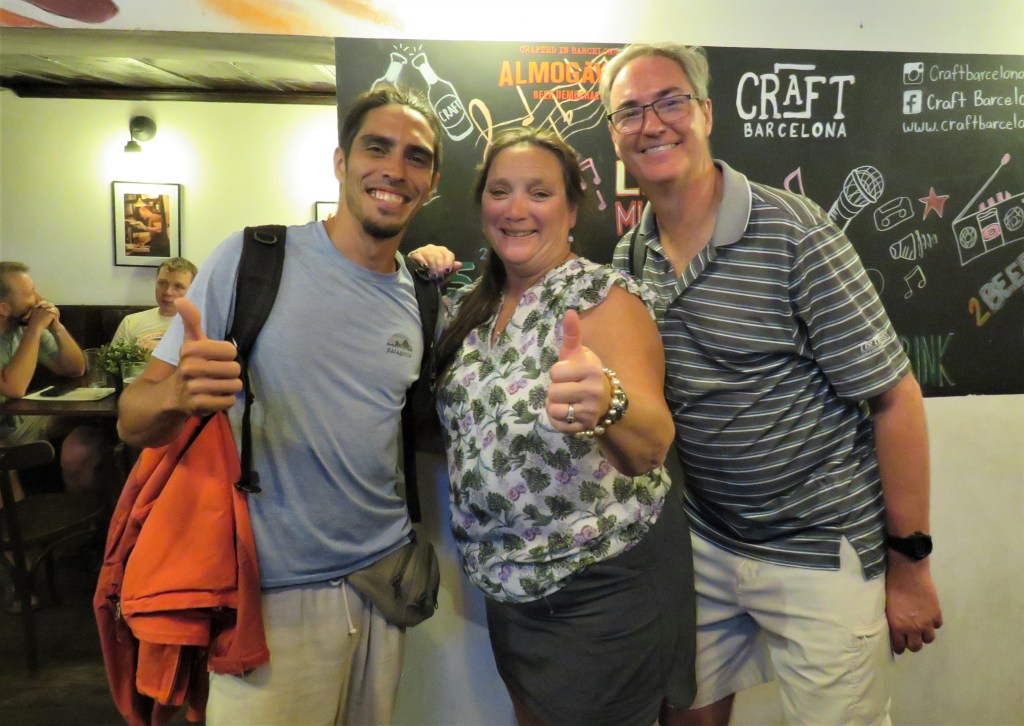
After a very entertaining Flamenco show, we had one more stop to make before calling it an evening. We went to a little club that is famous for its bands, singing, and open mic night, called Craft. Here we enjoyed a round of delicious tapas along with the show. I thought I had taken pictures of the tapas, but I guess I didn’t. We all enjoyed some patatas bravas, chorizo, cheese and croquettes while being entertained by the band.

Mario is also a singer, guitar player and percussionist, so we all encouraged him to sing and perform a couple of songs. He had a lot of fun up on stage and sounded great.

It was a very fun, very full day. We did and saw so much, and this was just day one. We still have a lot more fun adventures ahead.

Have a great day, and make everyday great. Stay safe and stay well. ‘Til next time.

Back From Barcelona – Music In The Streets

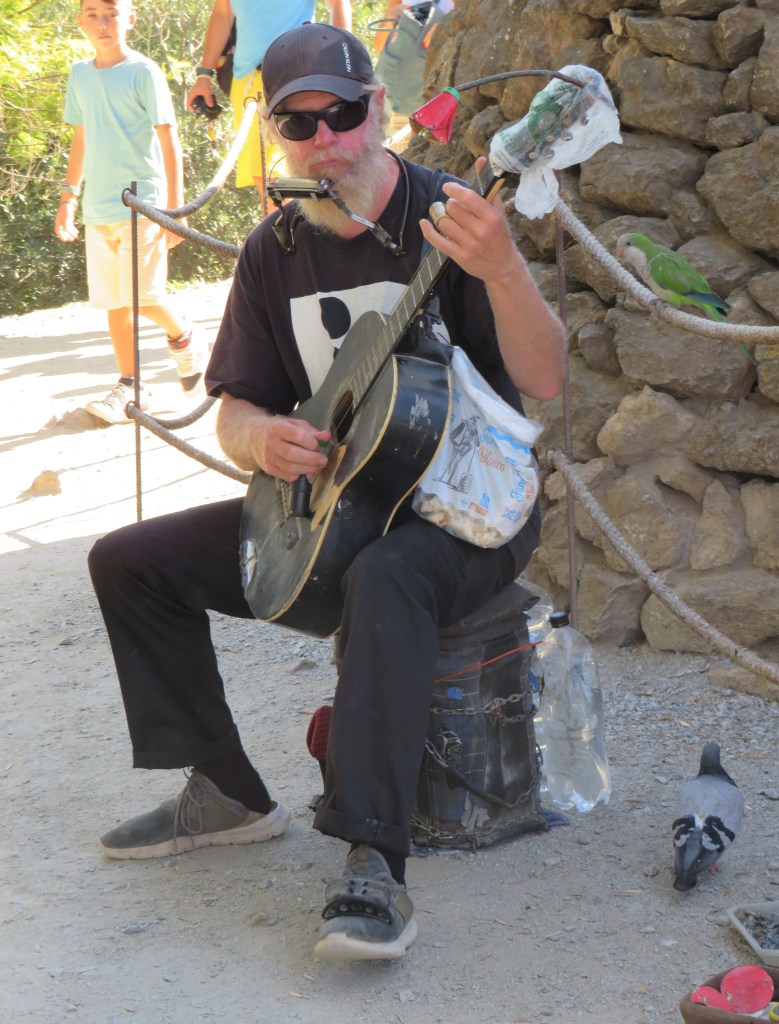
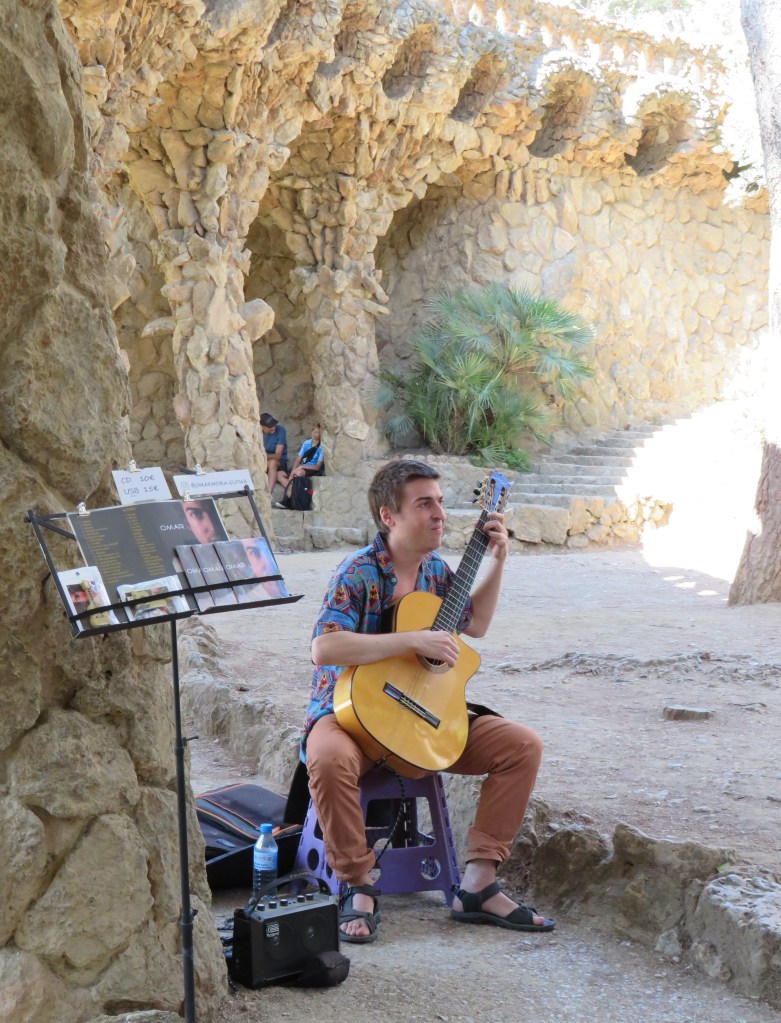
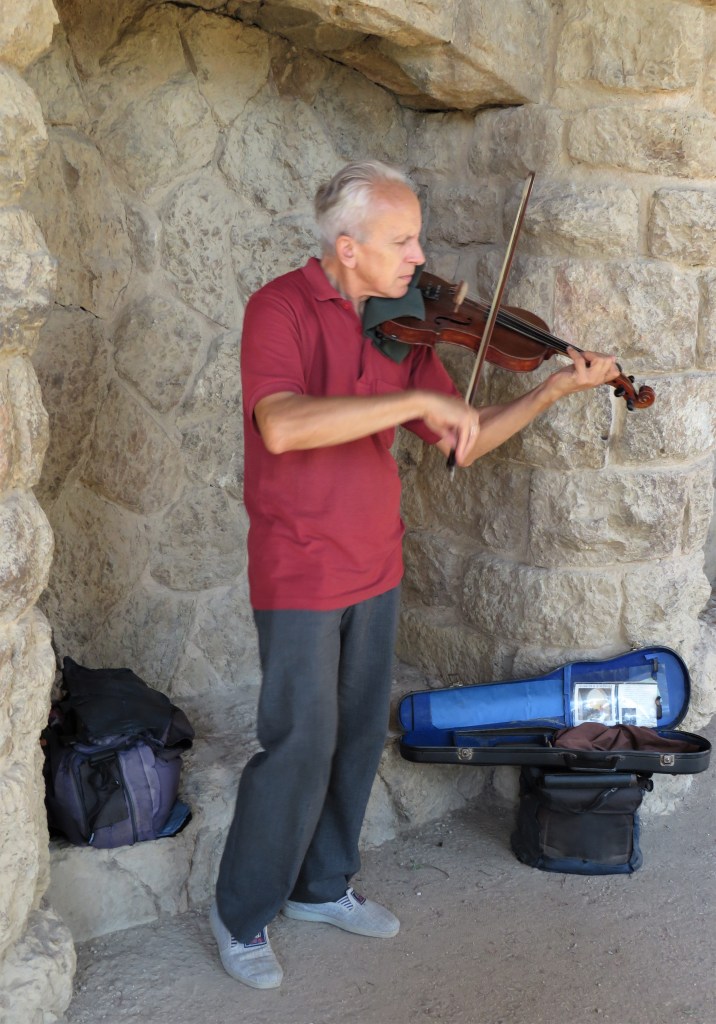
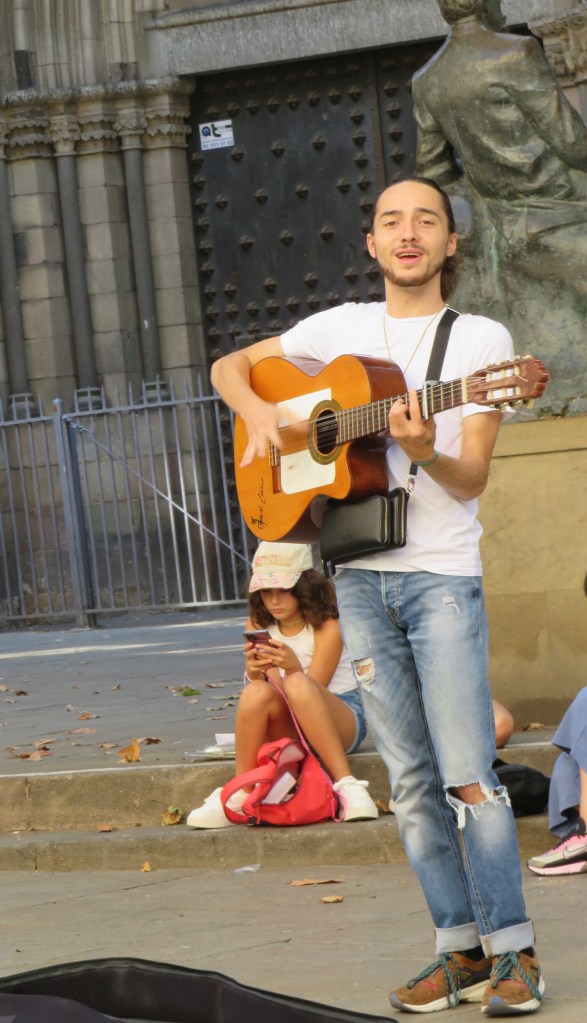
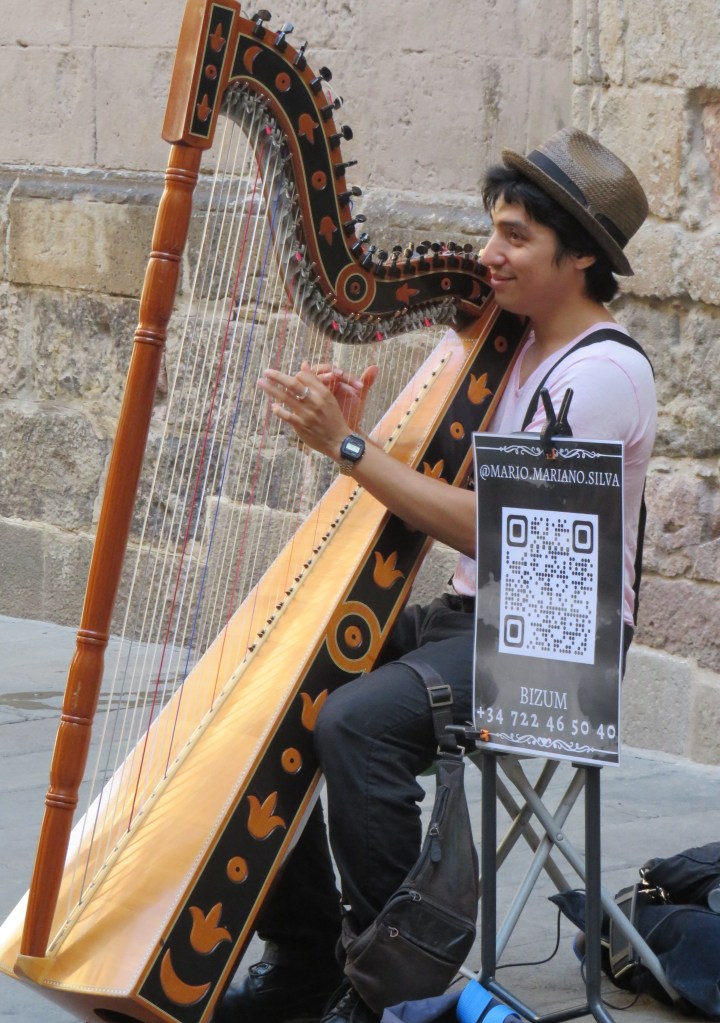
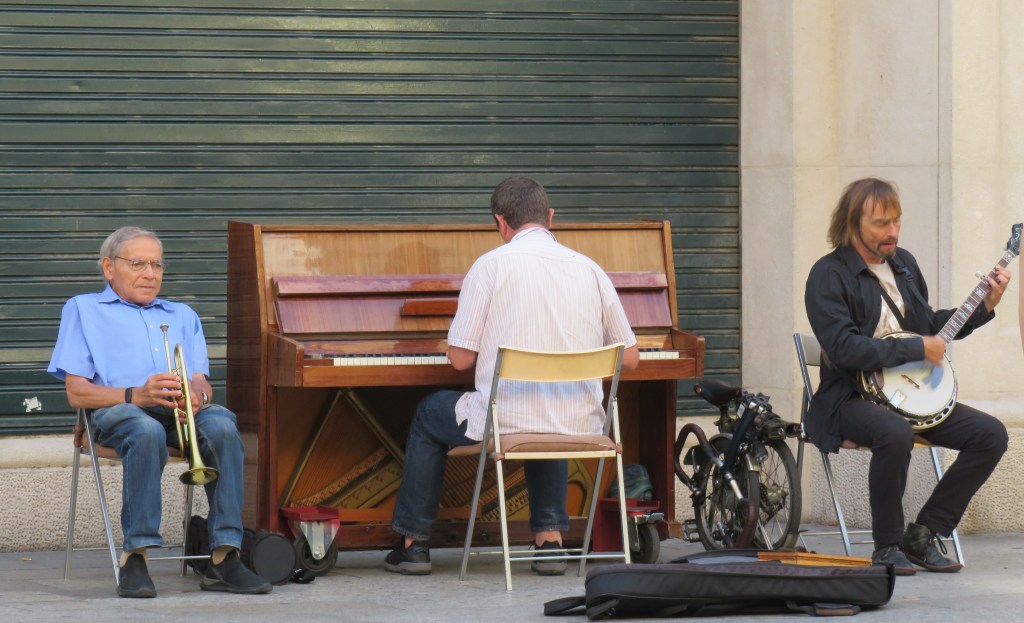
Street performers are very popular all throughout Spain, just like they are in every major city around the world. But the Spanish just seem to take it to another level. We saw so many street performers, passionately doing what they do, in beautiful surroundings.

This gentleman just blew me away. He had a gorgeous, rich baritone voice and broke out into some opera. I thought I was listening to Pavarotti or The 3 Tenors. He was singing a duet with another gentleman.
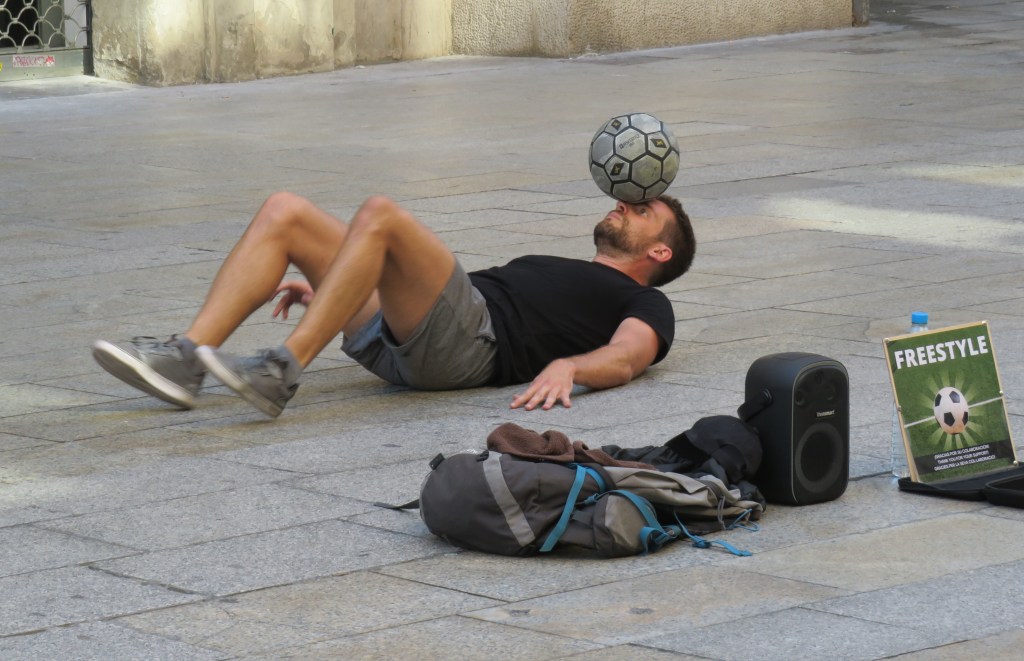
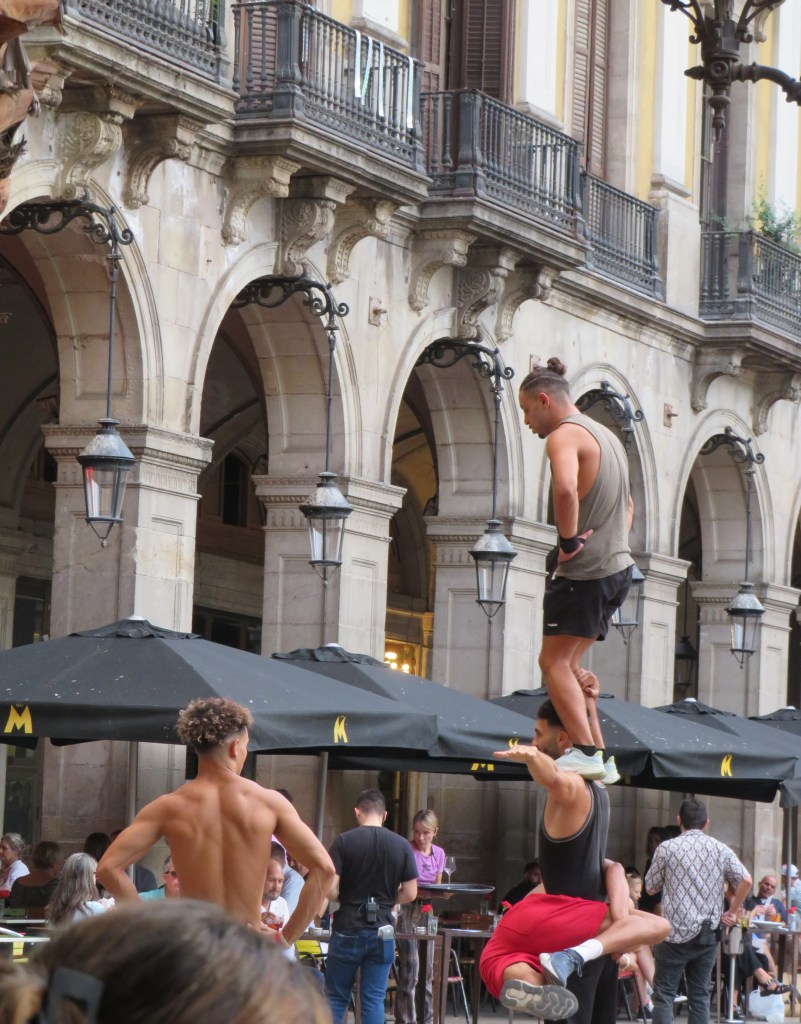
There were also the athletes of the streets. They were fun to watch as well. Good looking men with lots of muscles is ALWAYS fun a nice thing to see. 🙂

As I have said many times before, I just love all the passion and zest for life that the Spaniards all seem to share.

Life is short. Take it all in and have fun. Have a great day and make everyday great. Stay safe and stay well. ‘Til next time.
Back From Barcelona – Touring Around

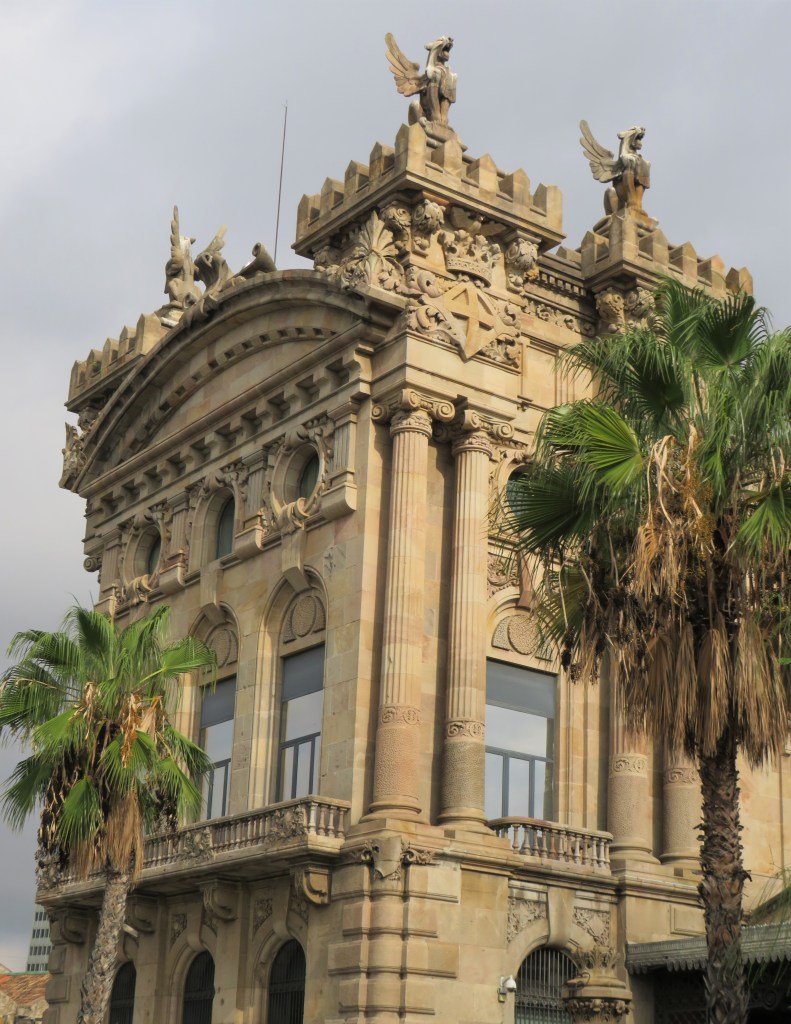
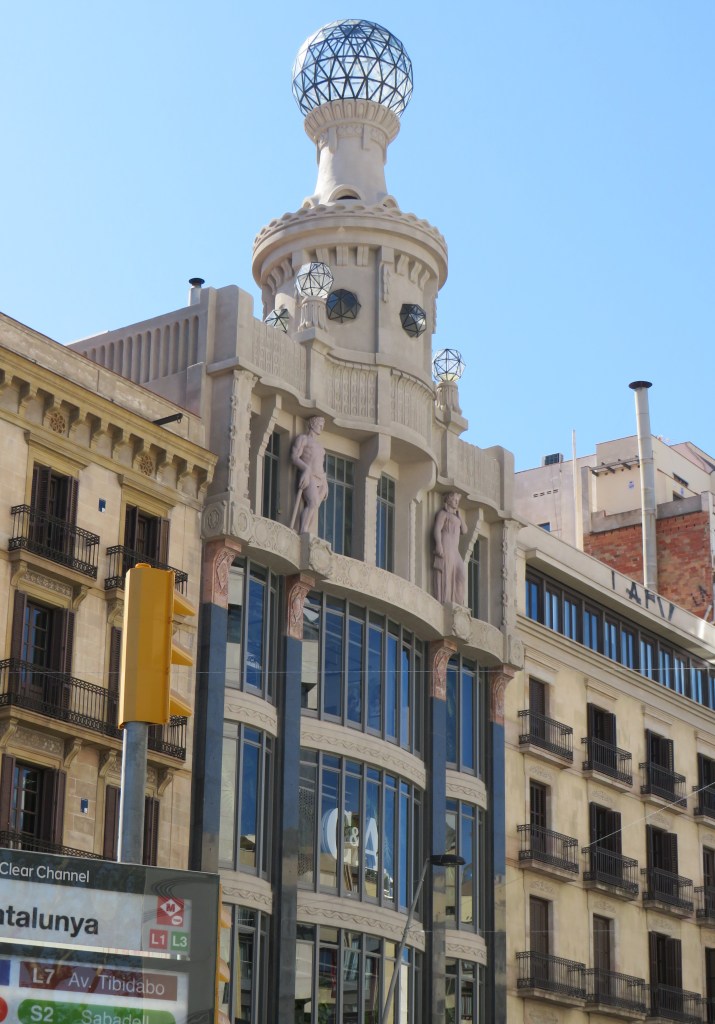
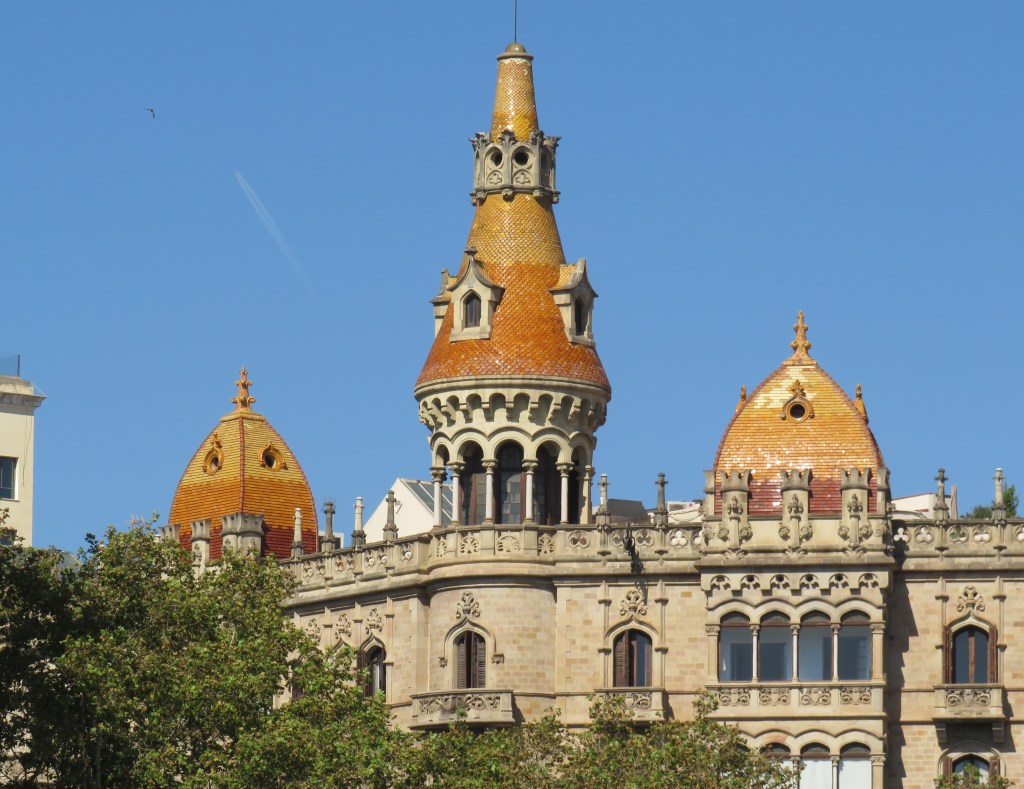
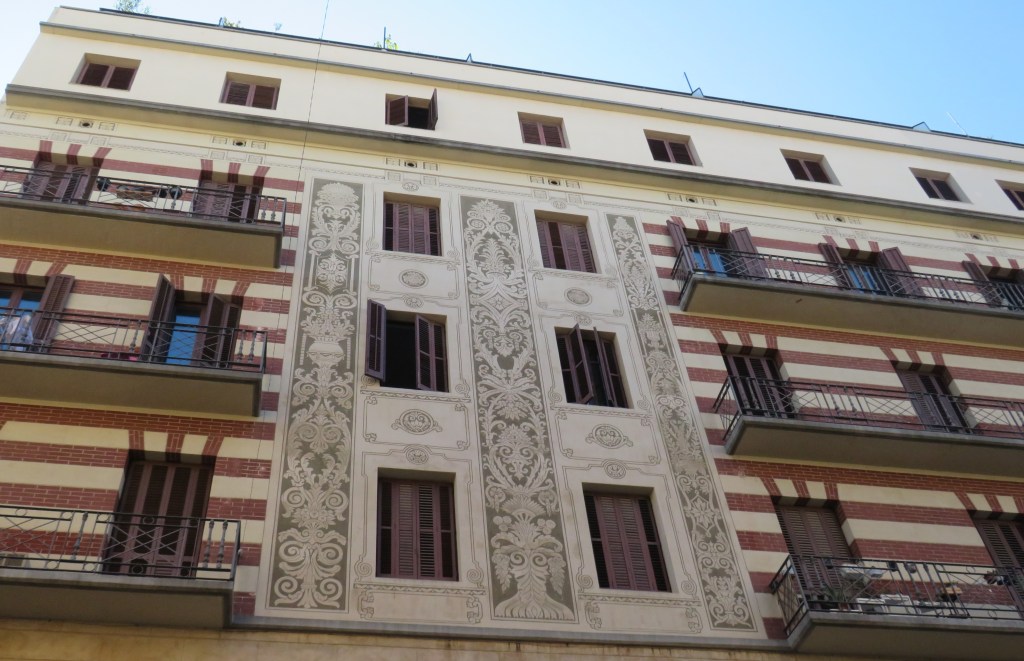
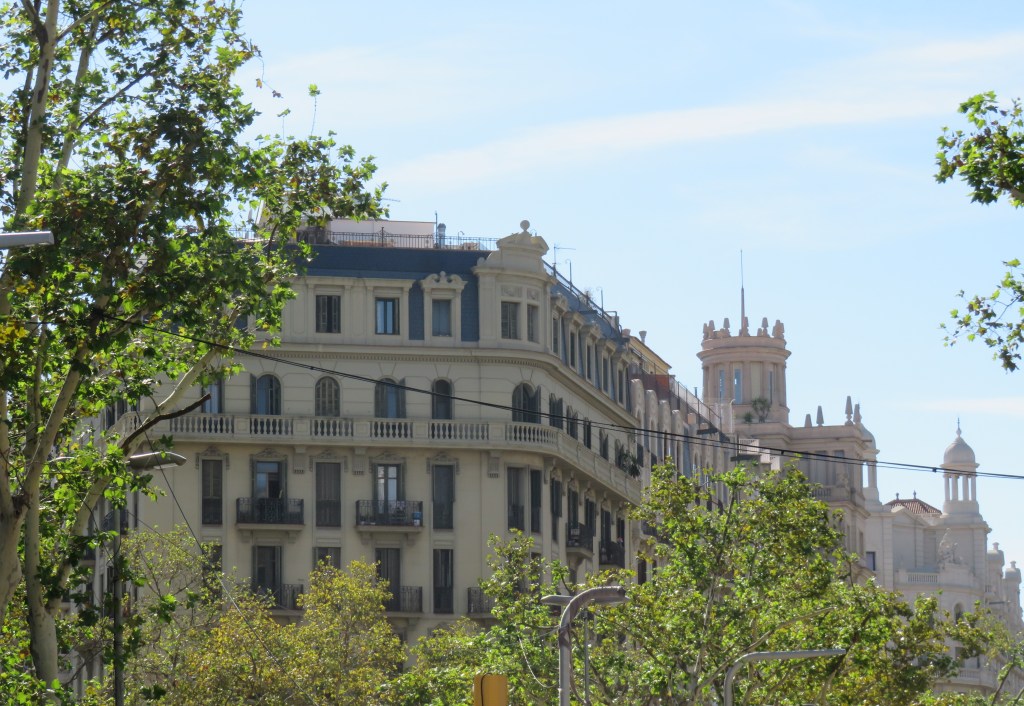
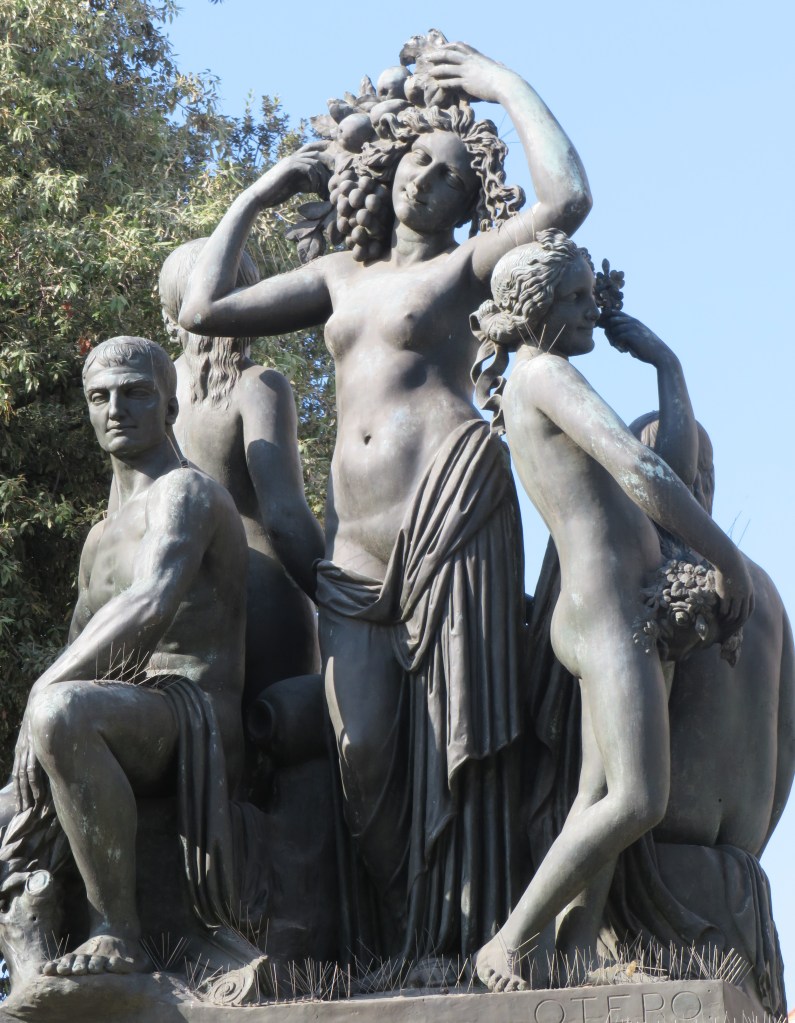
After visiting Sagrada Familia Back From Barcelona – Sagrada Familia we were out and about, taking in the sights before our next fun thing, which was a tour of the Gothic Area that included a fun night out on the town. More on that later. 🙂 We walked all over Barcelona just seeing what we could see. We enjoyed it all. For me, the beautiful and old buildings and artistically crafted sculptures, on everything, was just breath taking. Art and beautiful craftsmanship was on display everywhere.

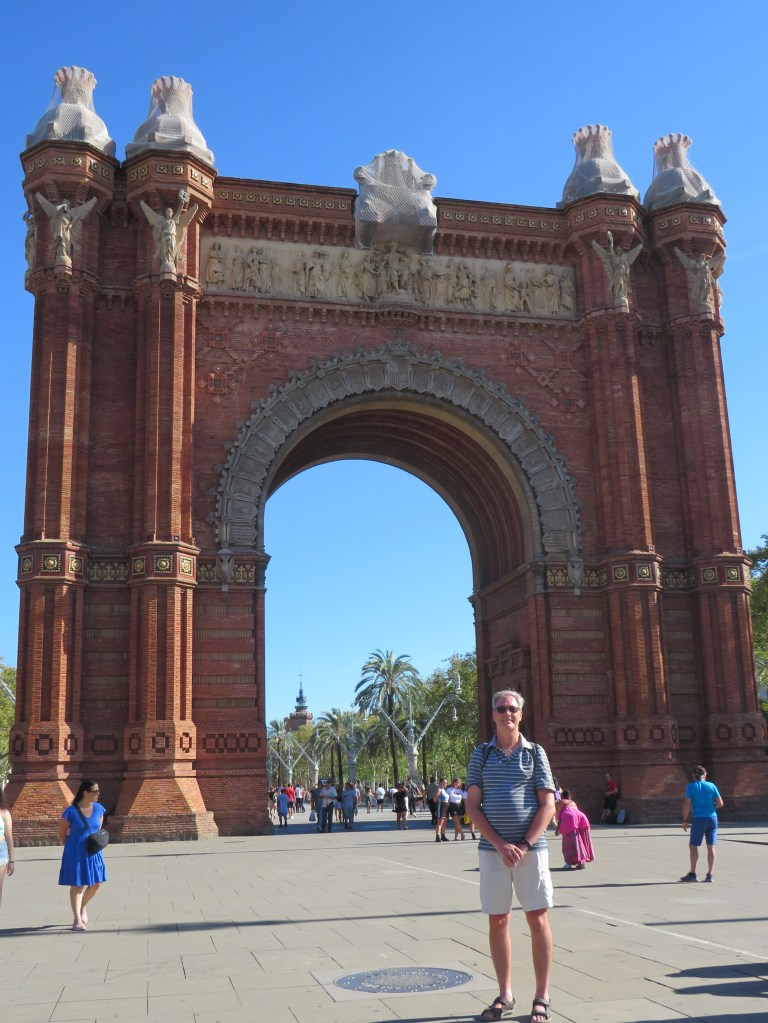
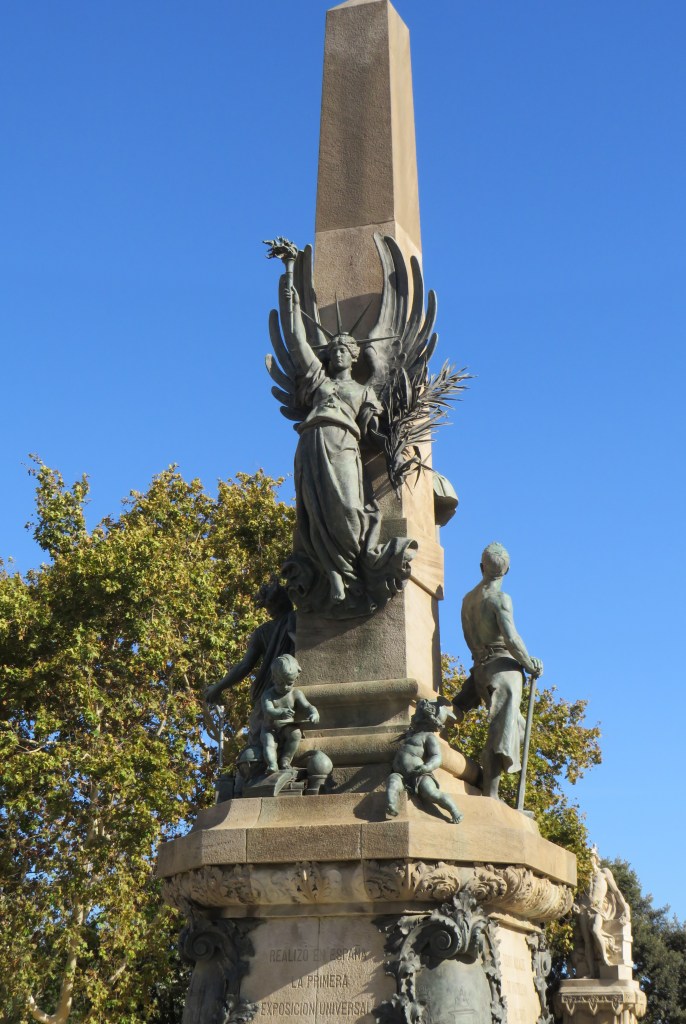
The Spanish version of L’Arc de Triumphe or Arc de Triompfe. It was the gateway to the modern Barcelona of the late 19th century. The architect Josep Vilaseca designed the monument as an allegory of the respect that the city of Barcelona made for the nations and provinces that participated in the 1888 World’s Fair. 

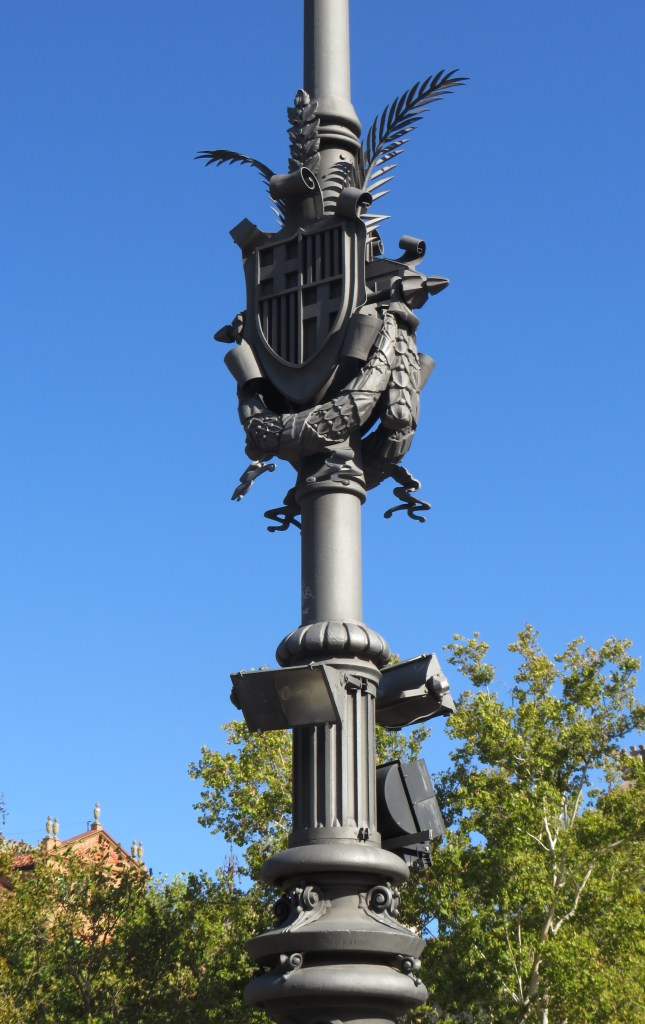
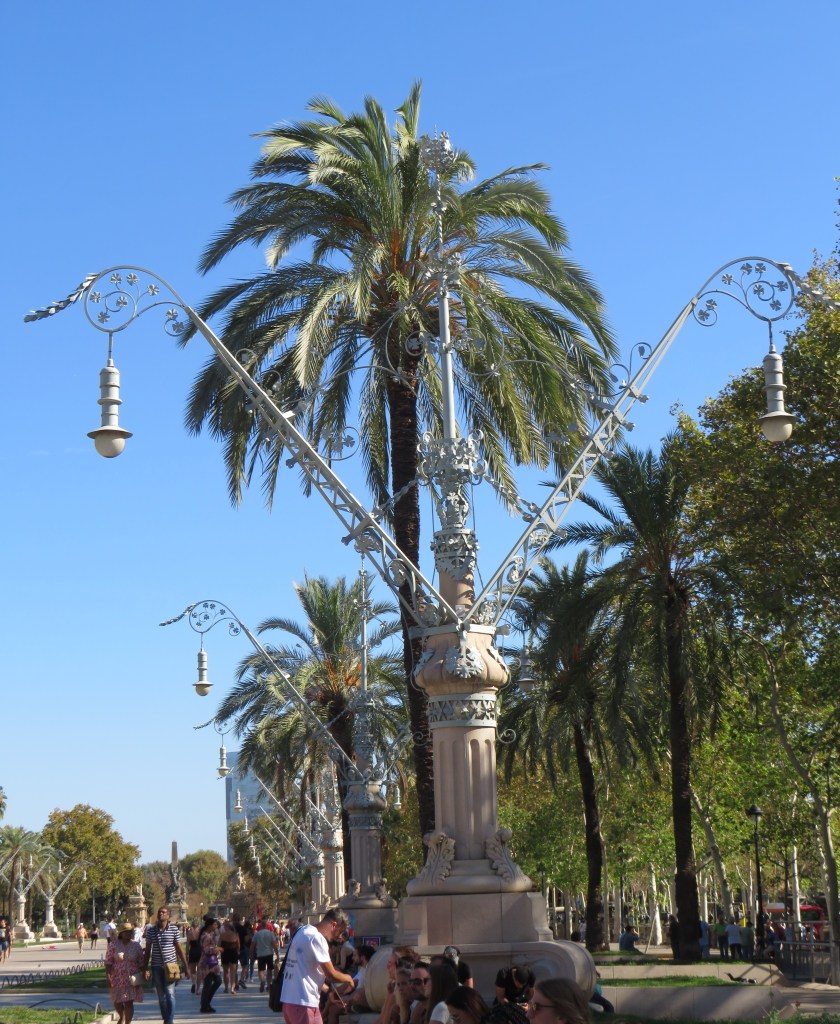
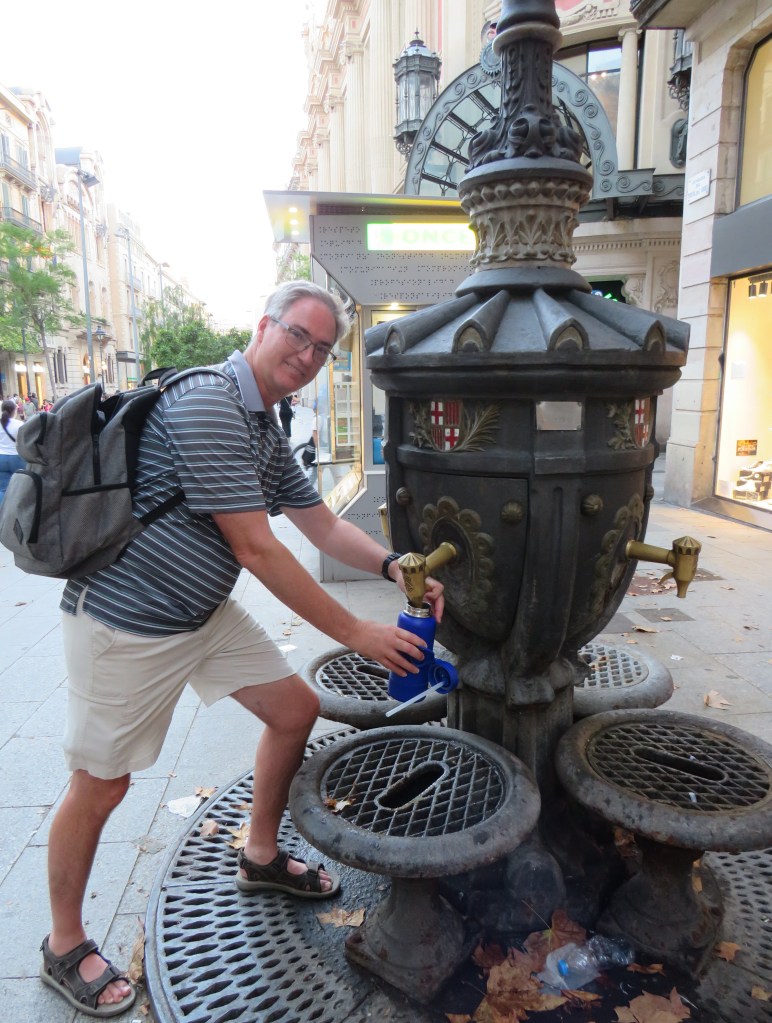
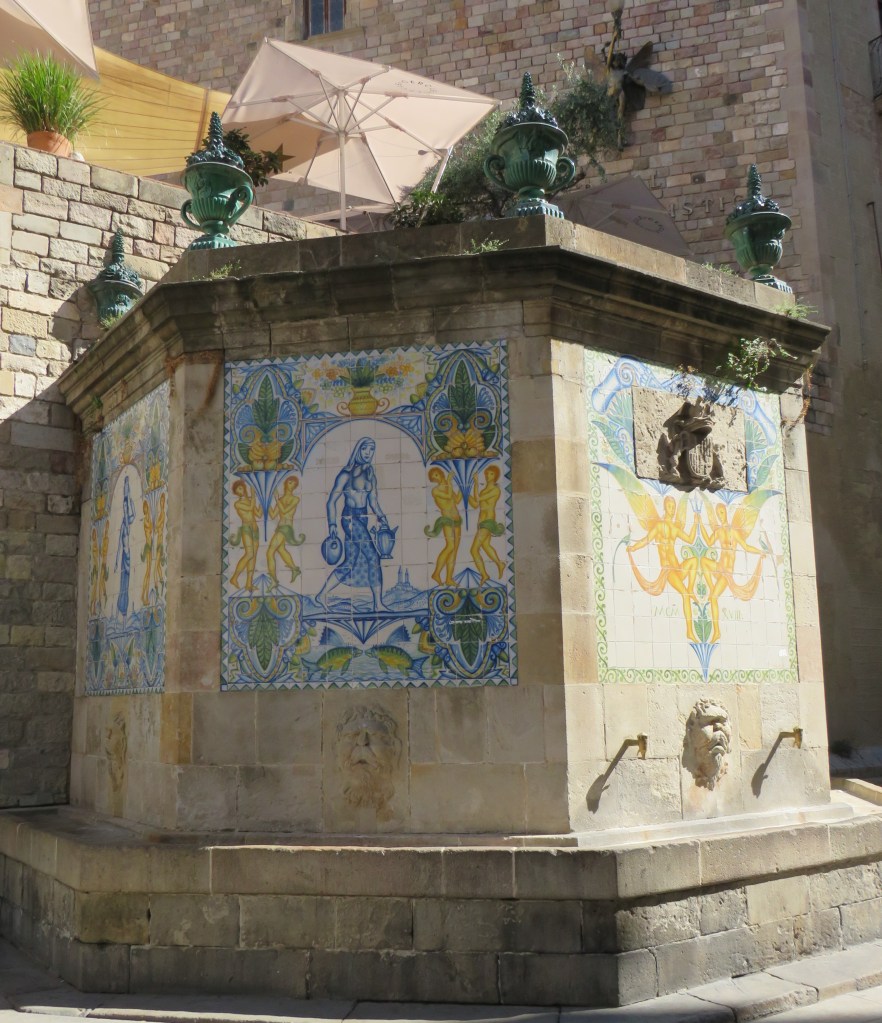
Can you believe this artwork and attention to detail on these light posts and drinking fountains?

I have always been fascinated with architecture. I absolutely love all the old architecture and designs and craftsmanship and skill that go into the making of everything. I wish we still made things like this today. I love all the attention to detail. These old and beautiful designs are the results of 1000’s of years of history that comes from many different influences, both far and near, new and old.

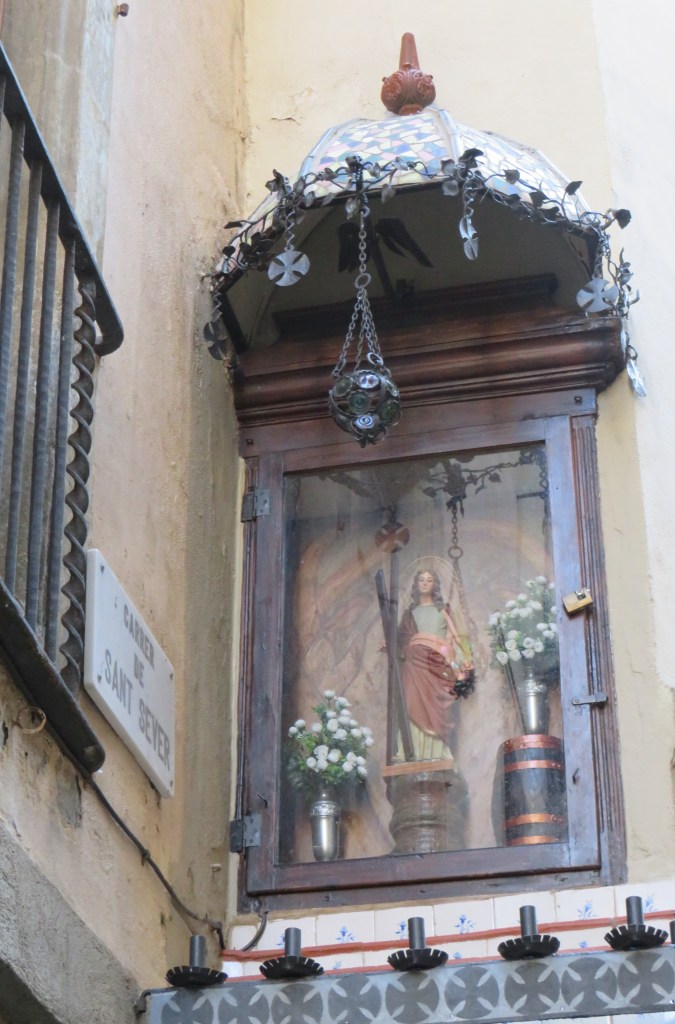
Catholic and religious influences are all over the city too. This shrine was built high into a wall, overlooking the street, by someone’s apartment.

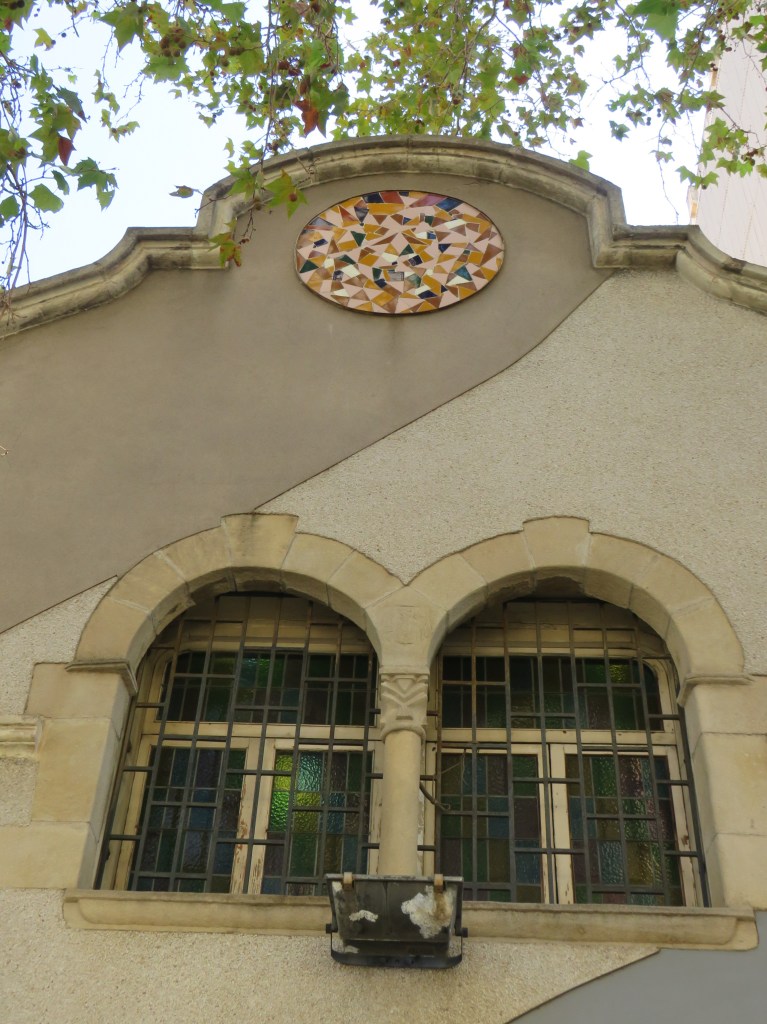
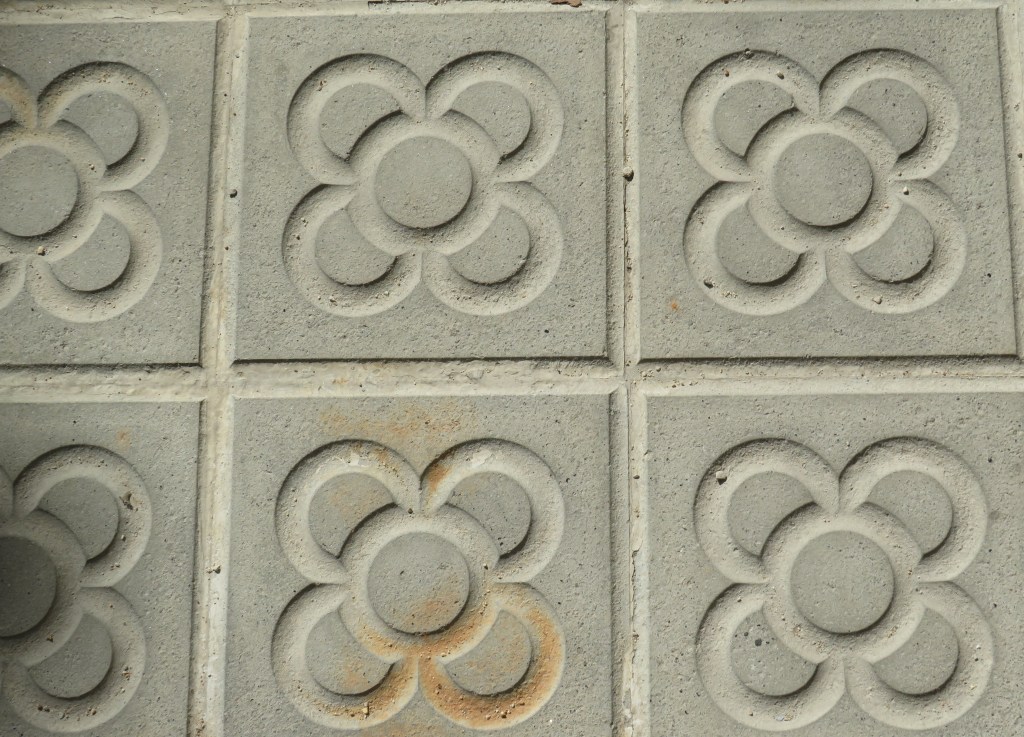
Beautiful mosaics are all over the place as well.

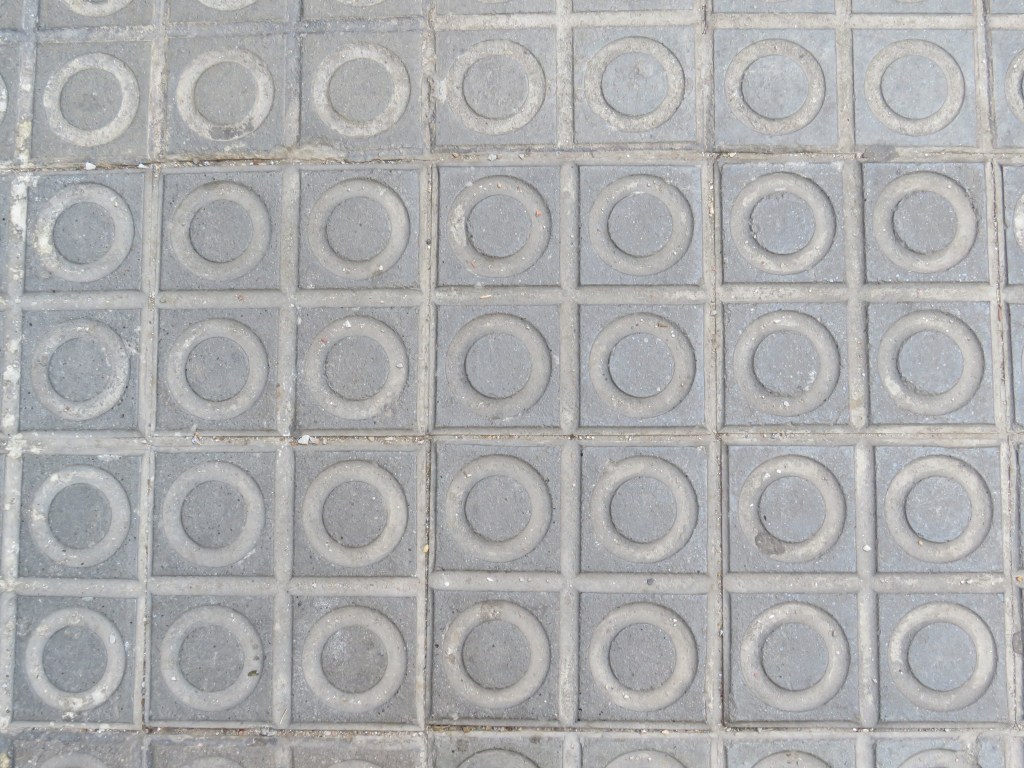
Even the sidewalks are artfully designed.

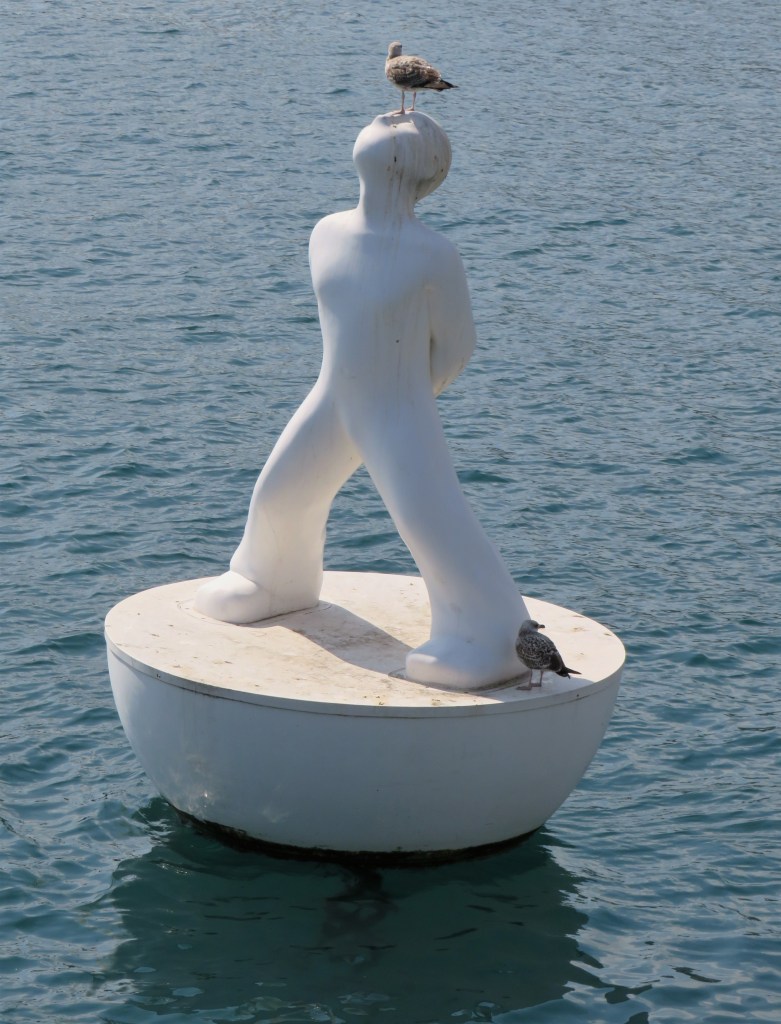
And the buoys are beautiflly created too.

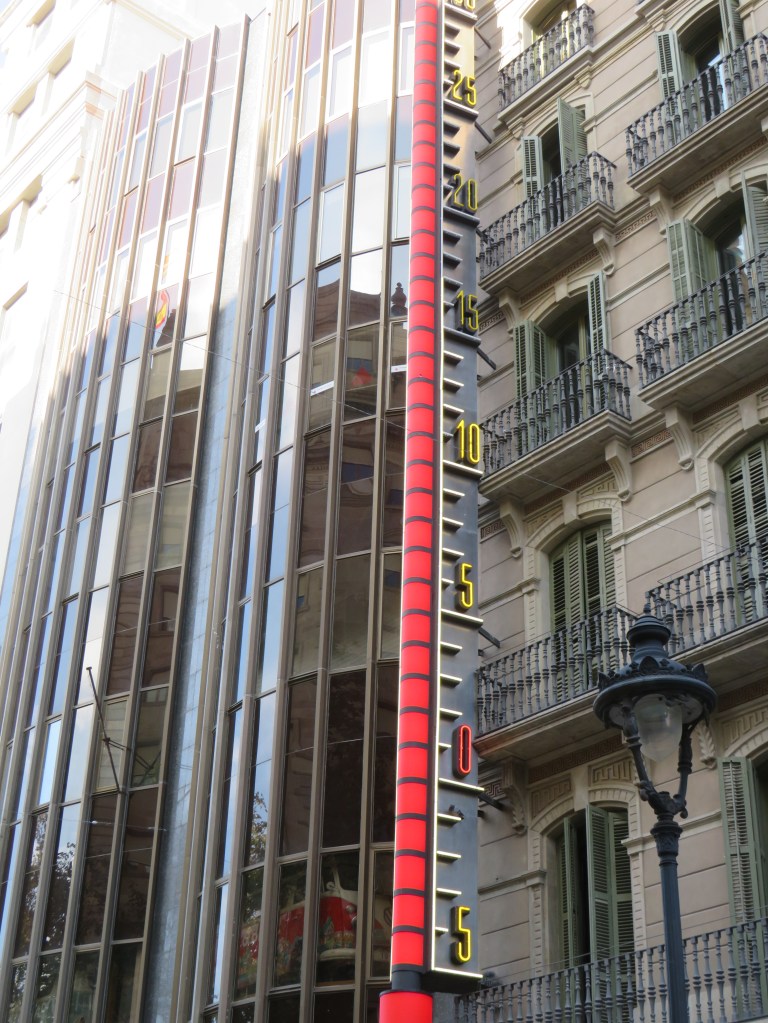
Even some of the new and modern ideas were fun. Believe it or not, this is a thermometer on the side of a building.

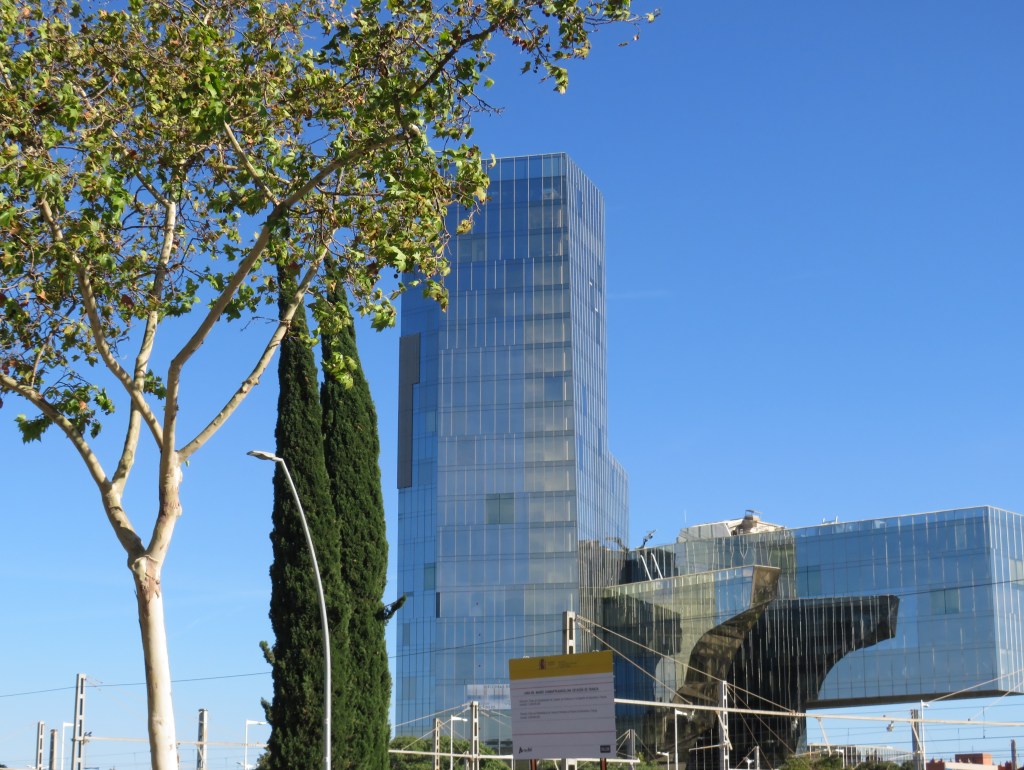
This modern building looks like a taco to me, although it was probably built to represent a sail.

Art and beauty are all around. We just have to open our eyes and look for it.

Have a great day and make everyday great. Stay safe and stay well. ‘Til next time.

Back From Barcelona – Sagrada Familia

OK. I am finally getting to the Barcelona part of our trip. I shared our Mallorcan and Andorra parts of the trip, which were beautiful and amazing. Now it’s time for Barcelona. WOW! What a city. It is so rich with history and culture and PASSION!

We rented a car while in Mallorca, but while in Barcelona, we got around like everyone else does; by the Metro of course. It doesn’t take long to work out the schedules and we got some unlimited passes that allowed us to roam freely all over the place. And roam freely we did too. We saw pretty much ALL of Barcelona. We certainly hit all of the highlights and then some. We did take the Metro a lot, but we also walked a lot too. Larry and I disagree on the distances we walked. I am convinced, beyond a shadow of a doubt, that we walked somewhere between 50-80 miles, at a minimum, whereas Larry doesn’t think we walked that far. Well, I still have the blisters on my feet to prove him wrong.

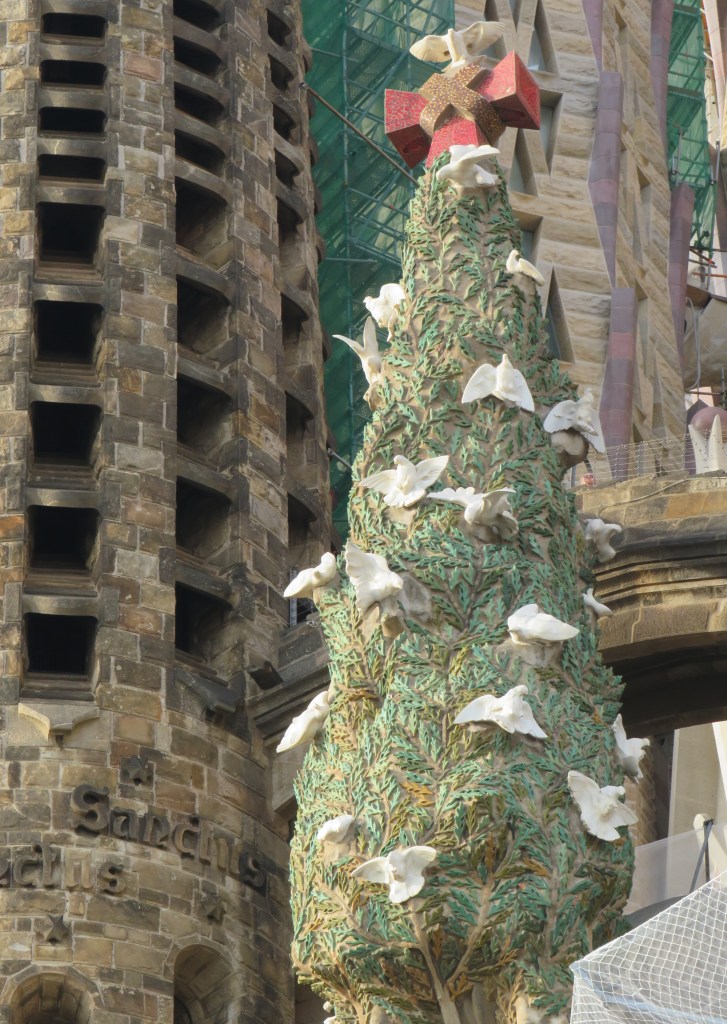
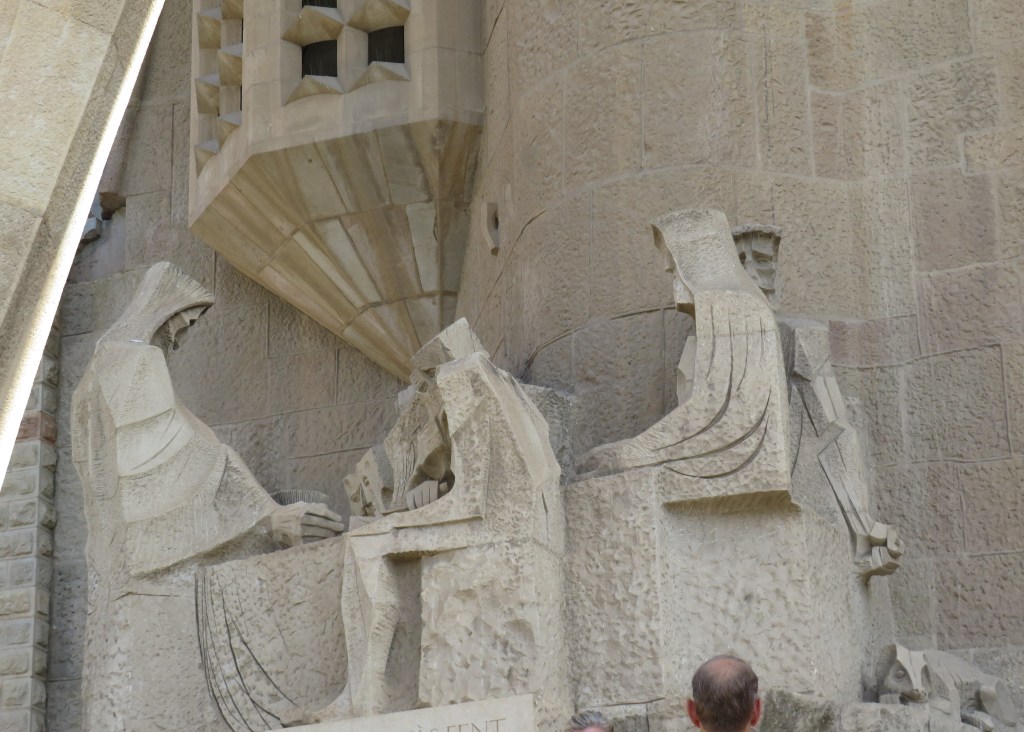
The first thing we did on our first day in Barcelona was head out to Sagrada Familia, or Sacred Family, the huge basilica that is still a work in progress, made famous by Antoni Gaudi. Sagrada Familia is located in the Gothic part of Barcelona. Gaudi devoted 43 years to Sagrada Familia, which was his passion. It has been a work in progress for over 100 years, and counting. It is still not complete, and who knows when, or if, it ever will be. It is something to see, and I am very glad we did see it and tour all around too, but it is not for everyone.

The construction of Sagrada Familia began on March 19, 1892, under the architect Francisco de Paula del Villar, but in 1883 it was taken over by Antoni Gaudi, and he continued to work on it until his death, 43 years later. At first, Gaudi was working on other projects as well, such as the Cathedral de Santa Maria de Palma in Mallorca, Back From Barcelona – Mallorca #5 – The Palma Cathedral and his projects in Parc Quell. He experimented with ideas and concepts in Palma and then brought things over to Barcelona and Sagrada Familia.

It was to be Gaudí’s Expressionist vision of a 20th-century cathedral, where he would use visual symbolism to express the many mysteries of the Christian faith. He became increasingly pious while working on the church; after 1910 he abandoned virtually all other work, and he eventually secluded himself on its site and resided in its workshop. In addition to being devoted to Christianity, Gaudí was an important participant in the Renaixensa, (Renaissance) an artistic revival of the arts and crafts combined with a political revival in the form of fervent anti-Castilian “Catalanism.” Both revivals sought to reinvigorate the way of life in Catalonia that had long been suppressed by the Castilian-dominated and Madrid-centered government in Spain, and the Sagrada Família became the religious symbol of the Renaixensa in Barcelona.

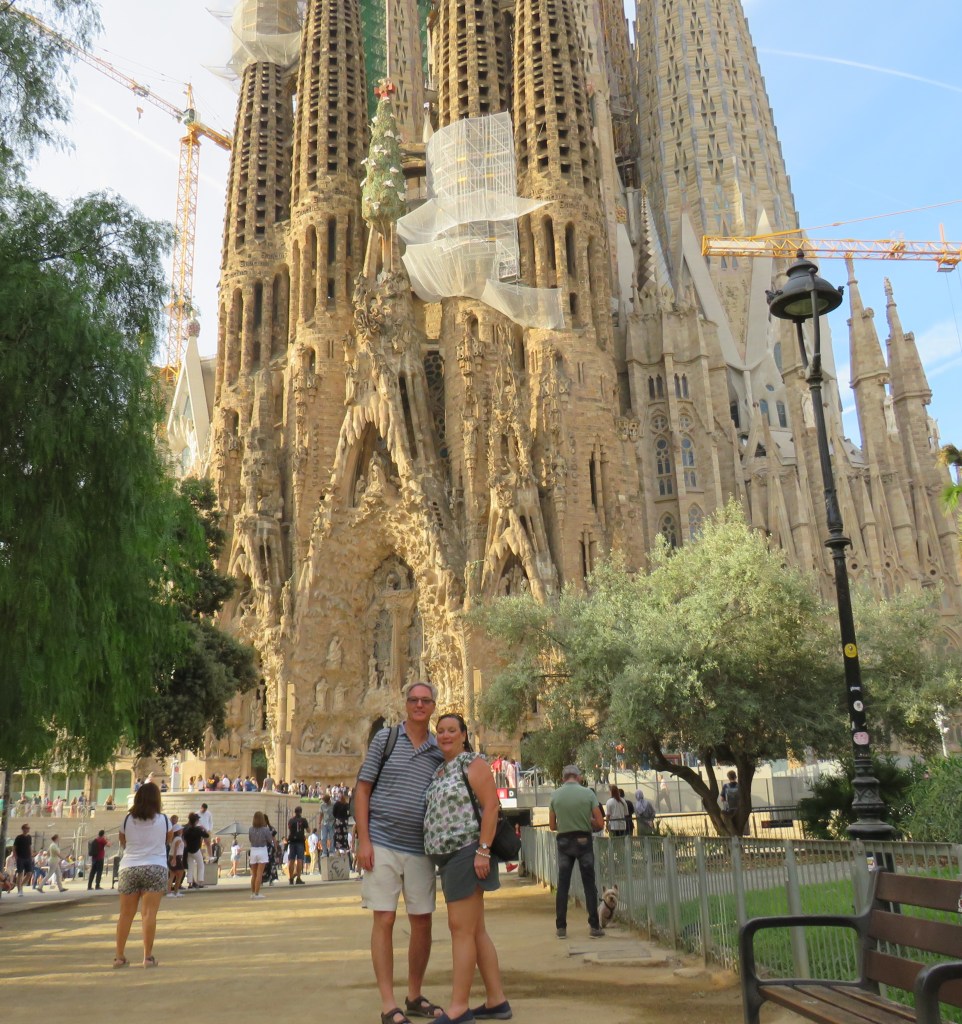
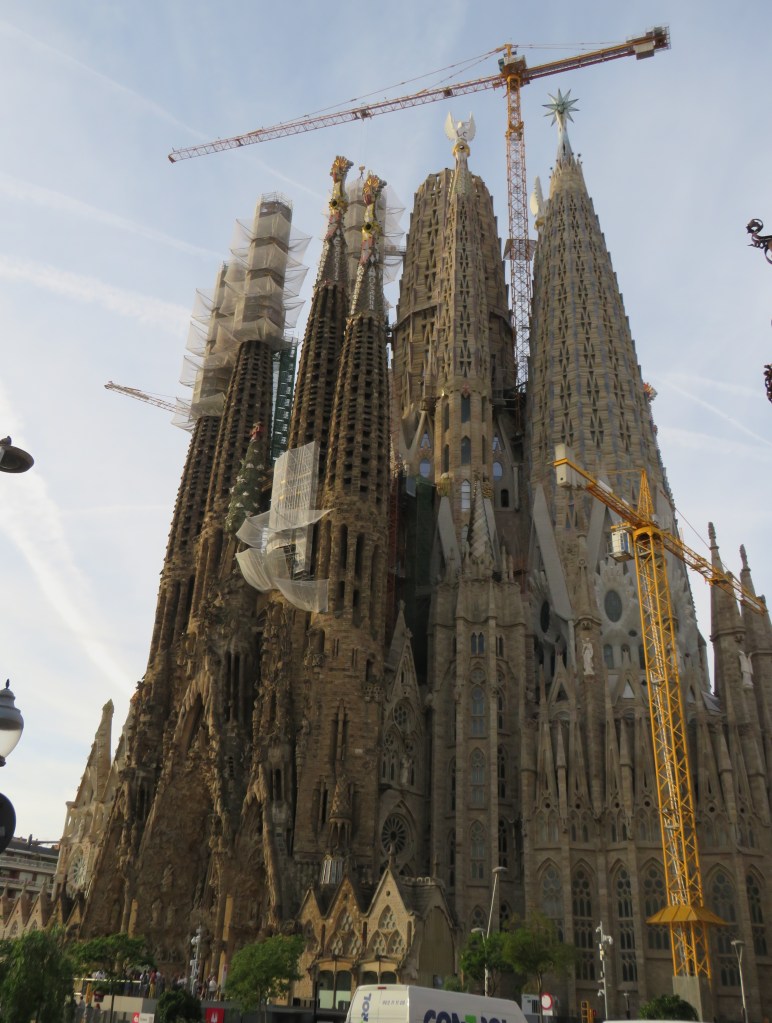
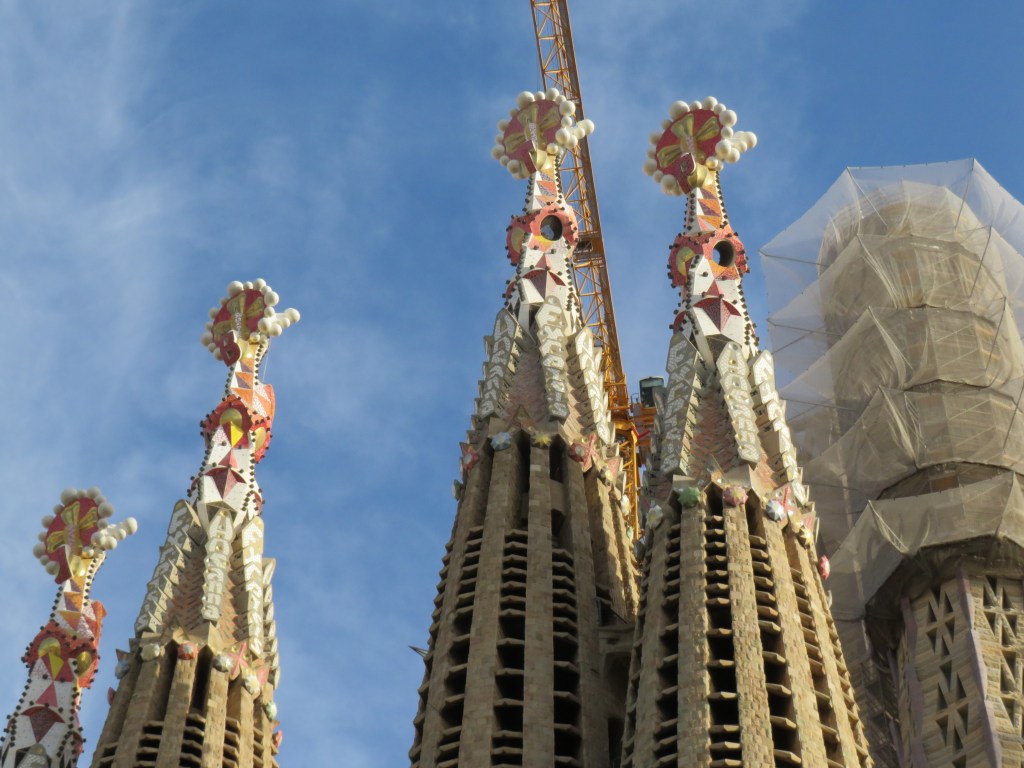
The outside of the front of Sagrada Familia.

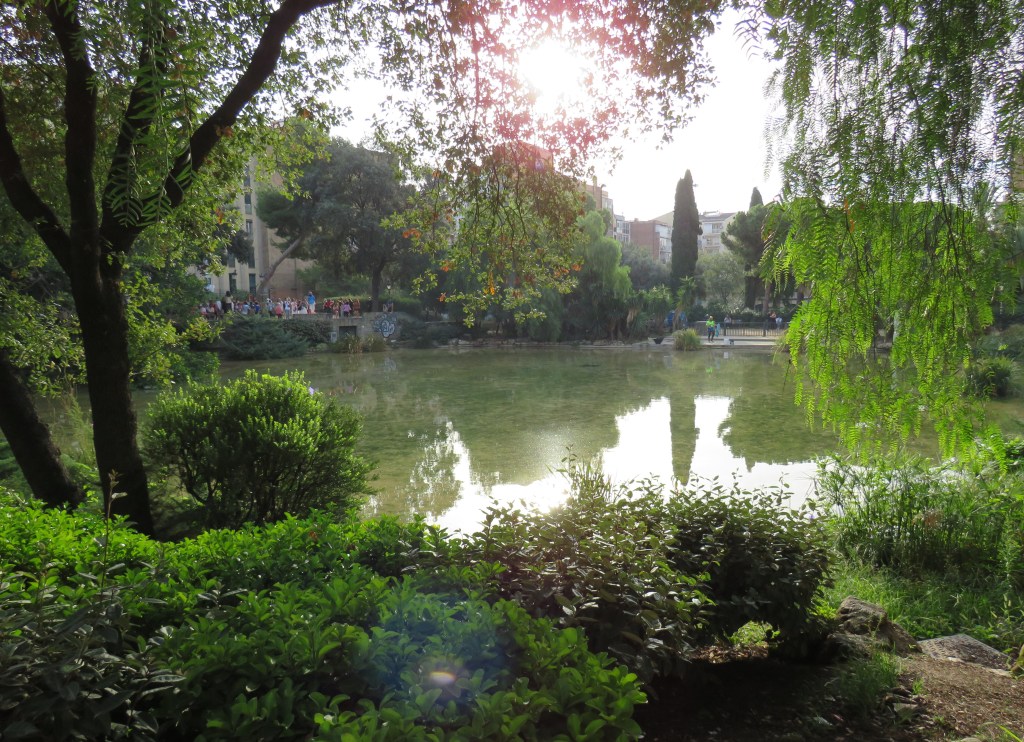
The park across the street as we were waiting to get in for our tour.

Cranes and construction are an everyday part of the basilica and have been since its not so humble beginnings.

Is Sagrada Familia considered a basilica or a cathedral? I always get confused if something is a cathedral or a basilica, but this definition helped me, and should help you too. A church where the bishop’s throne (cathedra) is located is called a cathedral, while basilica refers to a class of Roman public buildings predating Christianity, particularly those with royal association. A cathedral is any church that is the “seat” of a bishop. There is one cathedral per diocese. A basilica, Roman Catholic or Greek Orthodox, is any church named highly important by the pope based on its historical or cultural importance, its art or beauty, its significance in the liturgical life of the Church or a variety of these attributes. Basilica is the highest permanent designation for a church building, and once a church is named a basilica, it cannot lose its basilica status. Many basilicas also serve as the cathedral for their diocese, but not all basilicas are cathedrals. 

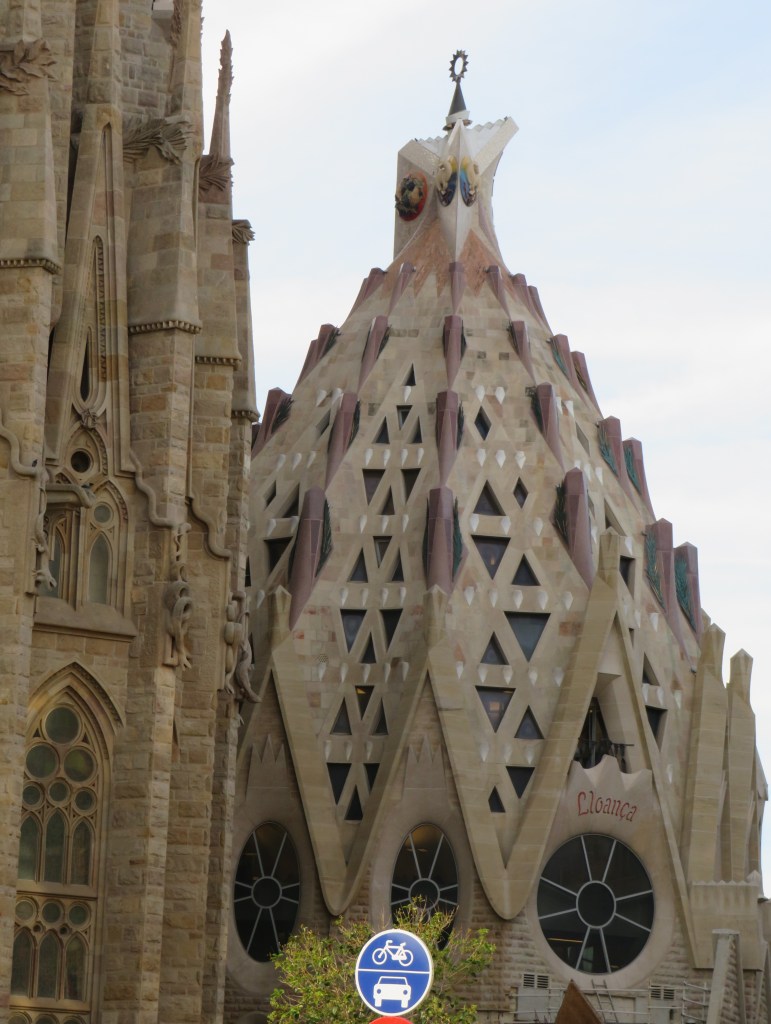
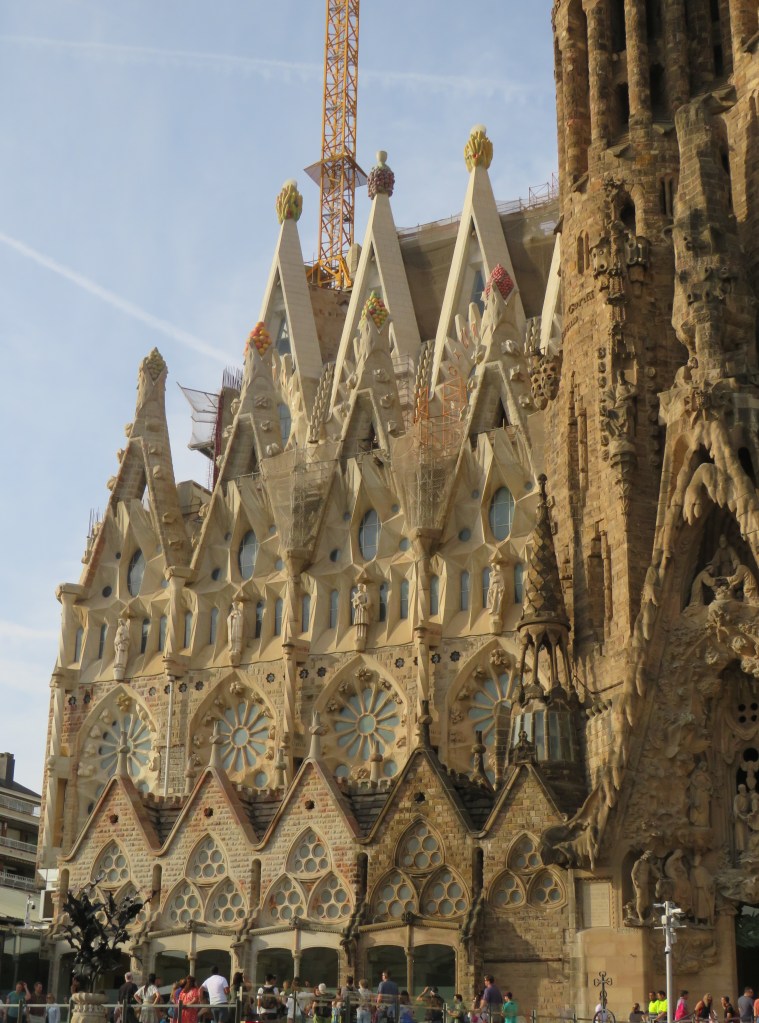
We took so many pictures of Sagrada Familia, and of course, the pictures don’t do the basilica justice. I won’t share ALL of the photos, but I will give you the highlights.

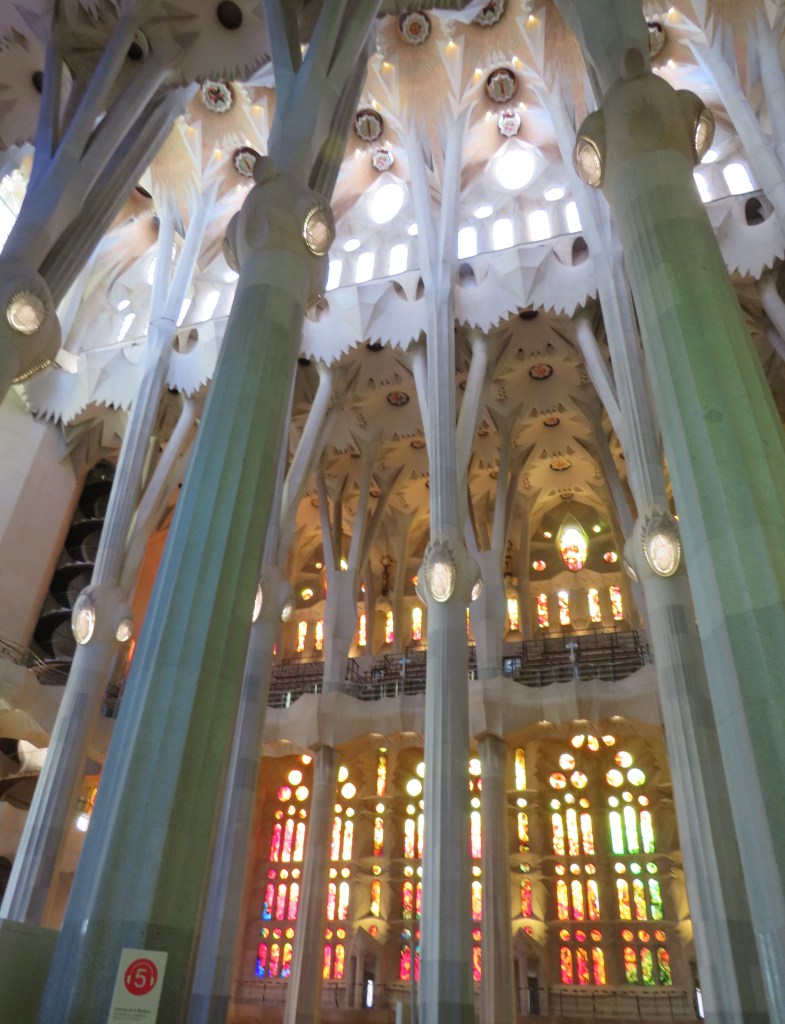
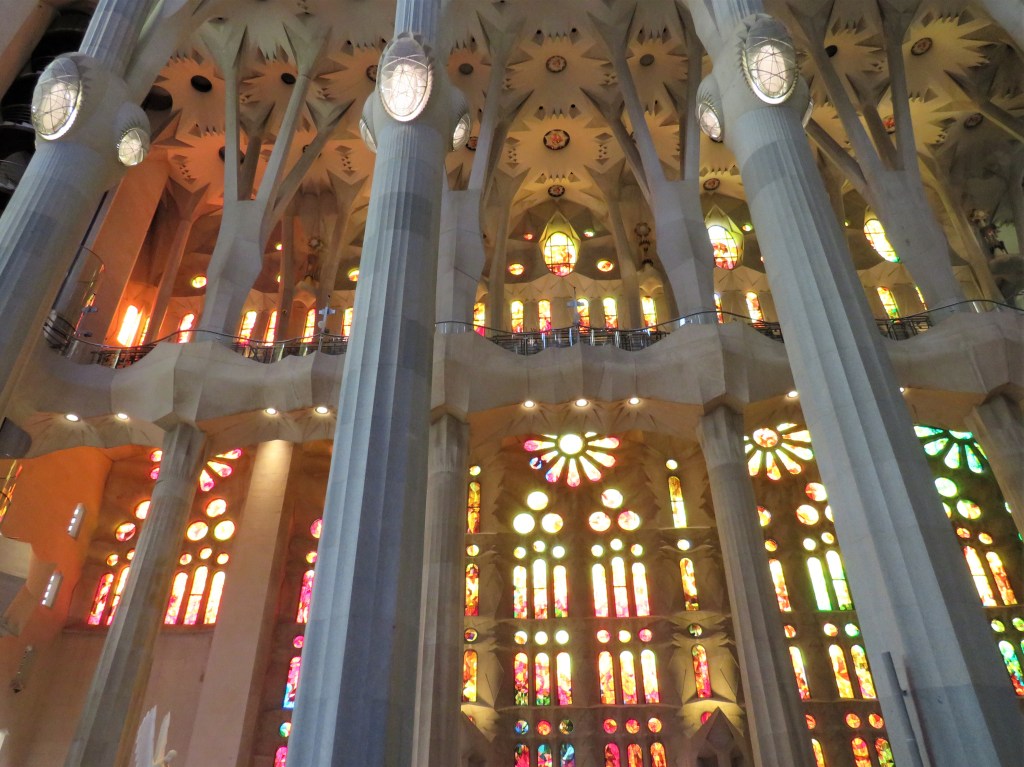
Gaudi was inspired by both nature and light and these influences are expressed in every detail of Sagrada Familia. All the stained glass windows are just absolutely amazing. They are designed to represent and capture the light from both sun rise and sunset.

There are 56 columns within the structure of the basilica. They represent every week of the year plus the four Gospels of Matthew, Mark, Luke, and John.

These are the Eucharist Doors, and have only been opened once, when the Pope consecrated the basilica. On 7 November 2010, Pope Benedict XVI consecrated the church and proclaimed it a minor basilica. They have The Lord’s Prayer on them in Catalan, while the rest of the door is filled with the phrase “Give us this day our daily bread” in fifty different languages. The letters AG (Antoni Gaudi) just happened to fall in the middle, where the handles are, and it is said that this was Antoni Gaudi’s autograph and signature for the basilica.

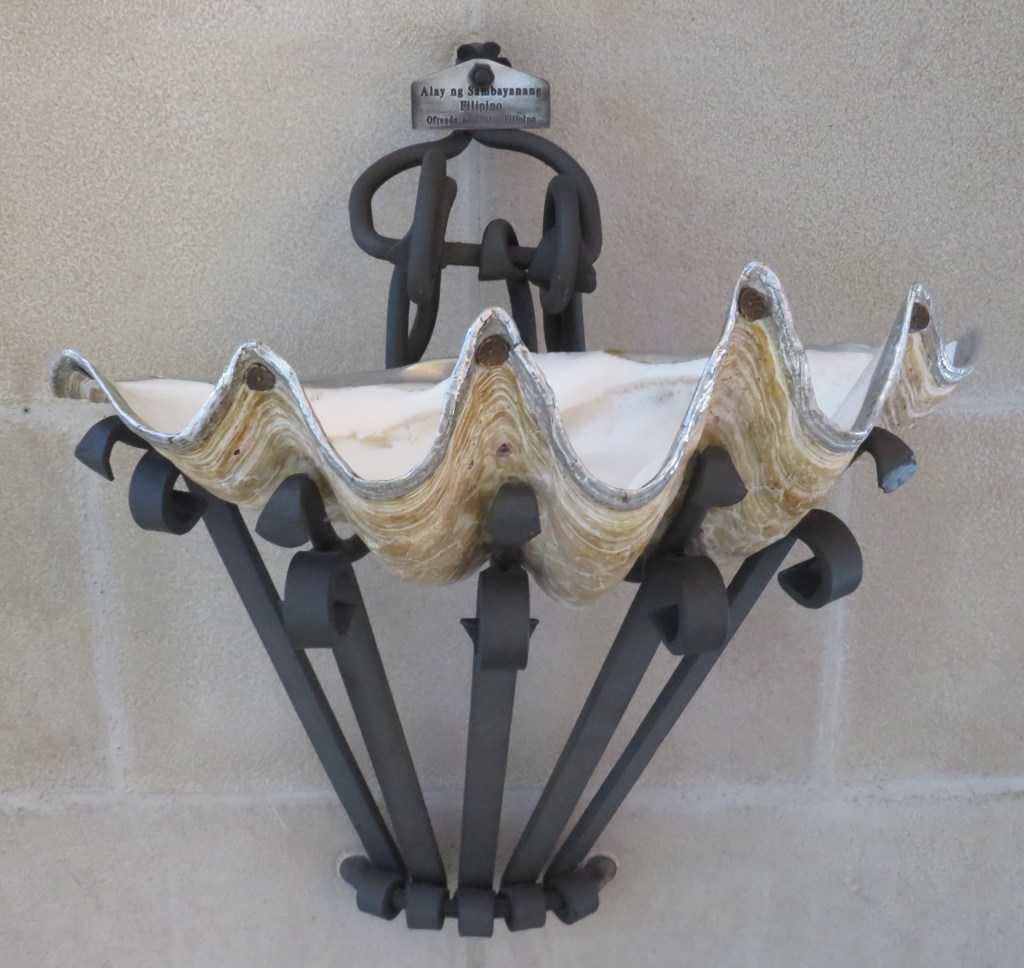
For the sprinkling of Holy Water.

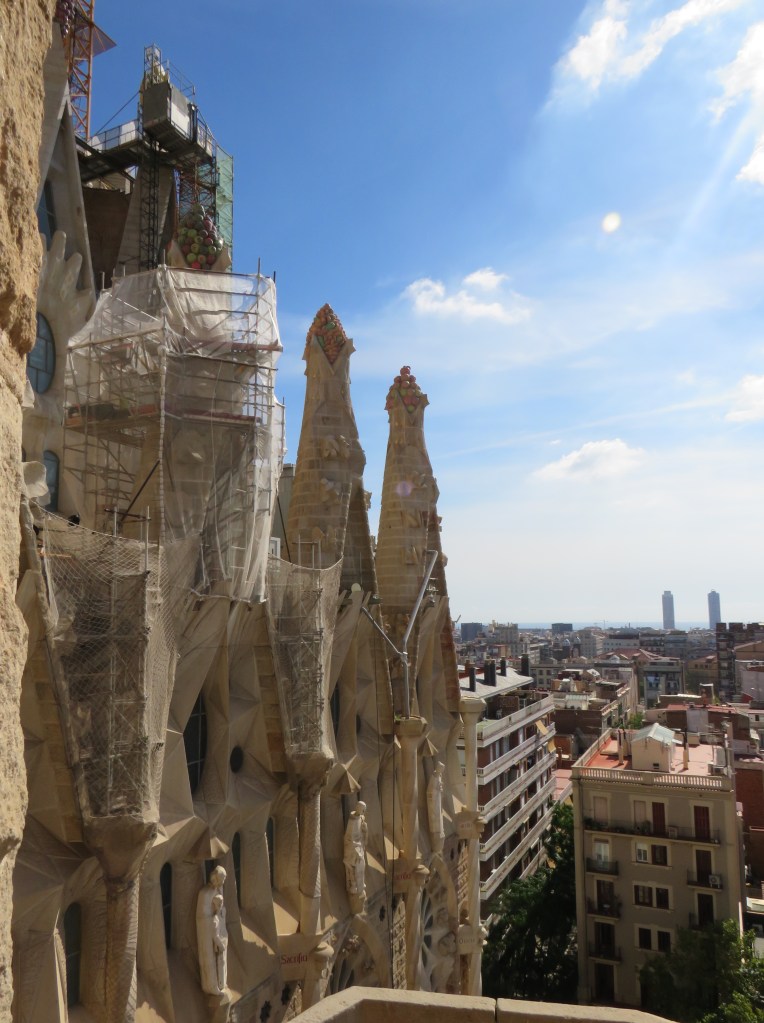
We went up to the bell tower where we had an expansive view of all of Barcelona.

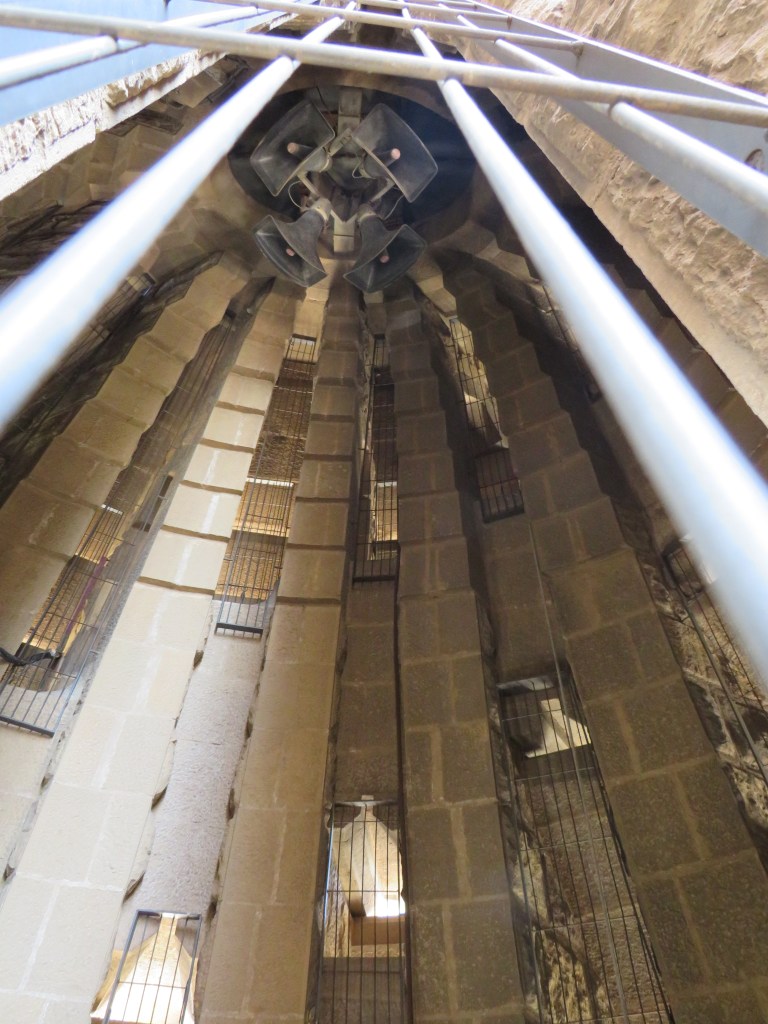
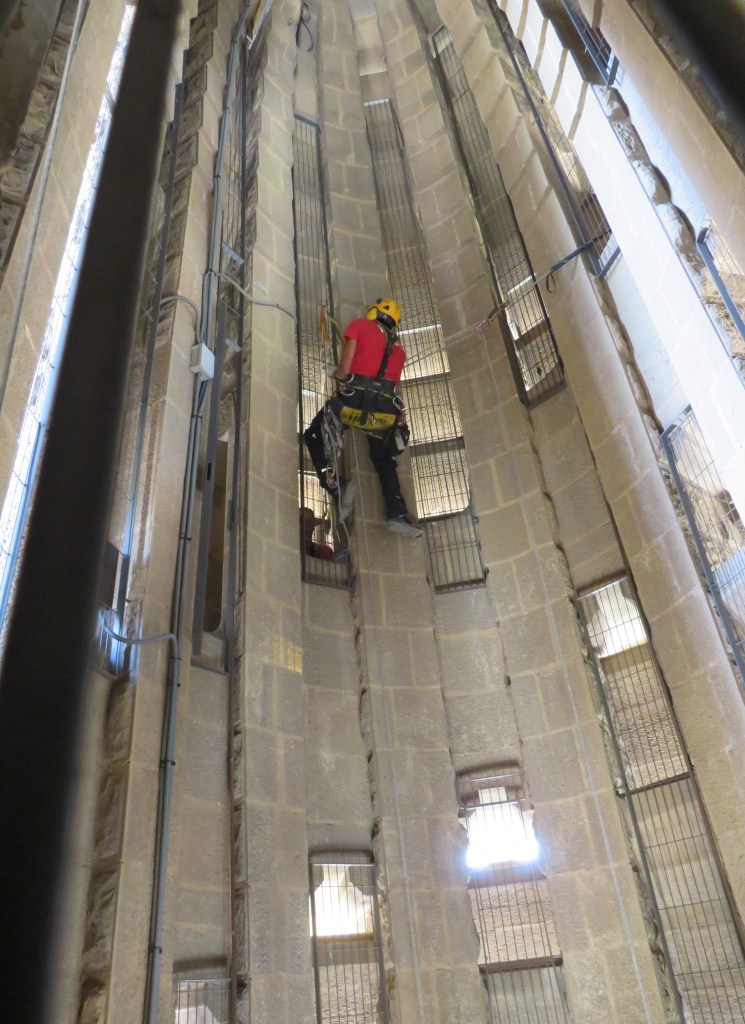
Inside the bell tower.

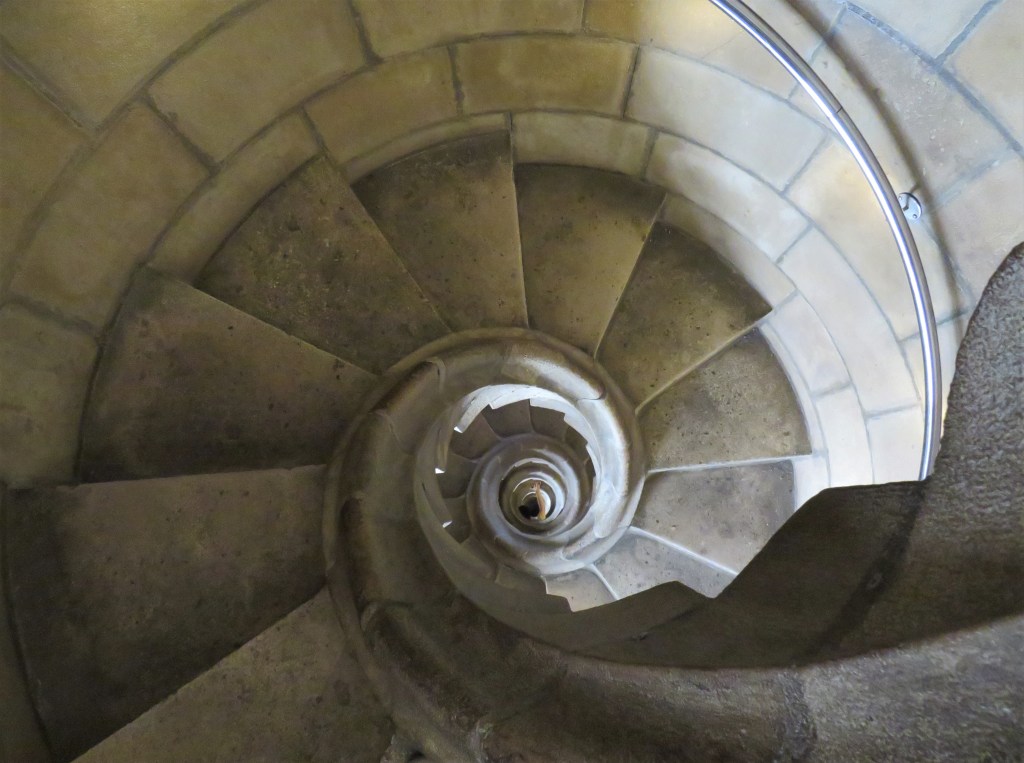
The spiral staircase to the bell tower is shaped like a conical shell of the Nautilus sea shell. It is over 400 steps, and the stairway is very narrow and very winding. I was getting dizzy on the way down, but fortunately we made it down without incident.

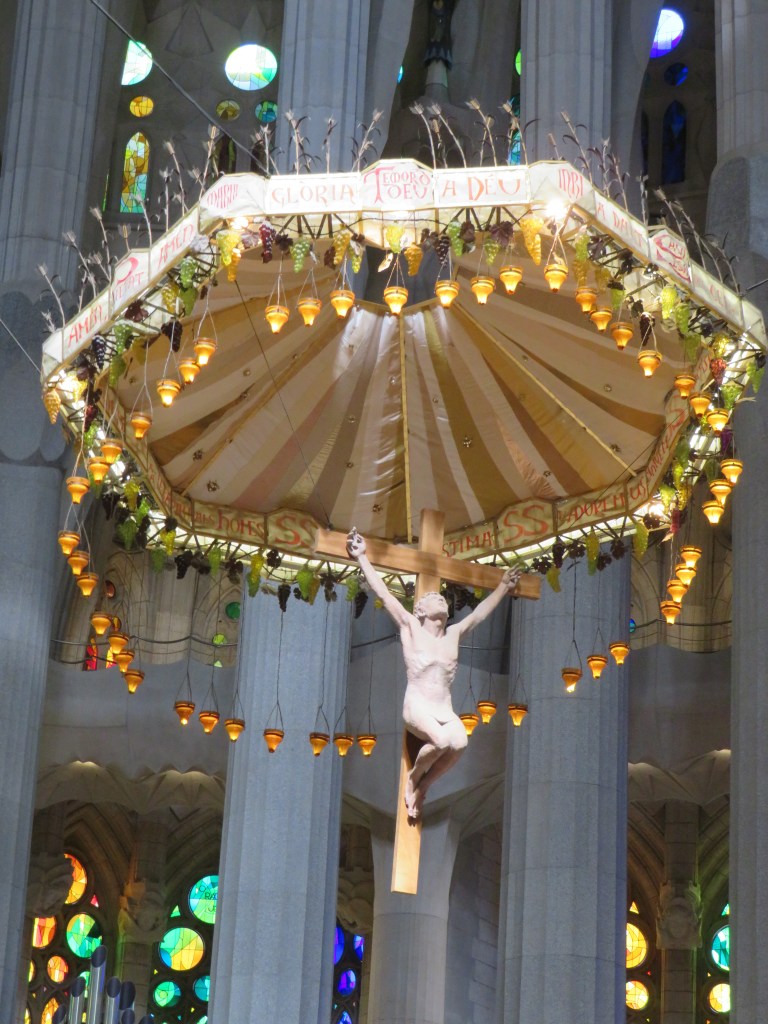
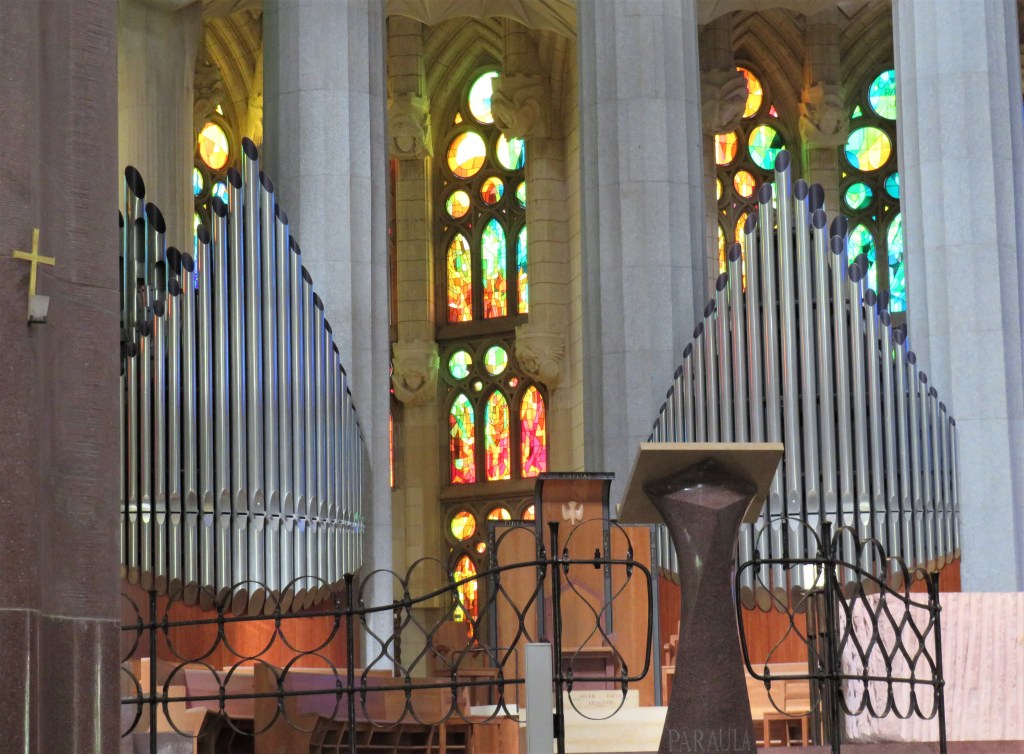
The Cross hangs from the ceiling in the center of the basilica for everyone to see. The huge organ is behind the Cross. They are both highlighted by the magnificent show of lights from the windows.

They still hold mass in the basilica on a regular basis, and we seriously thought about attending. But in order to do so, for a 9:00 AM mass, we would have had to be there no later than about 7:00 AM, and there was no guarantee we would have made it in. They only have seating for 900 people. Though Larry was raised Catholic, and my mother was Catholic, neither of us are Catholic, and there would be no guarantee we could get in to hear a service in Latin or Spanish that neither one of us would understand. We decided to sleep in a bit instead. But it’s the thought that counts, right?!

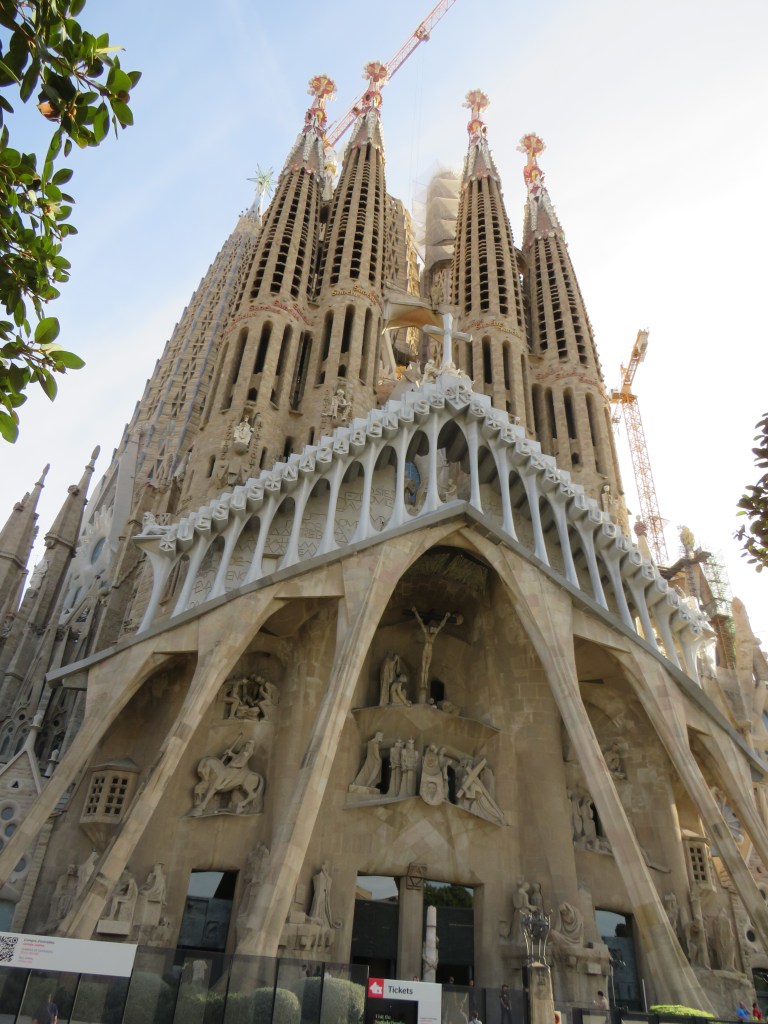
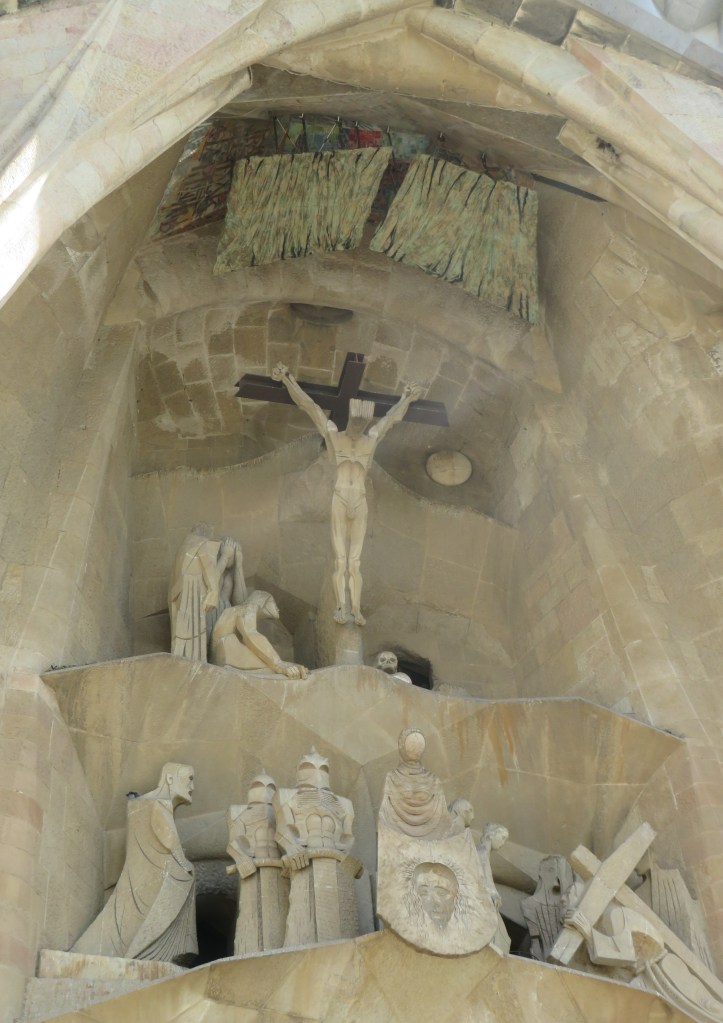
The outside from the back of the basilica. The back represented Christ’s Crucifixion and ascension into Heaven.

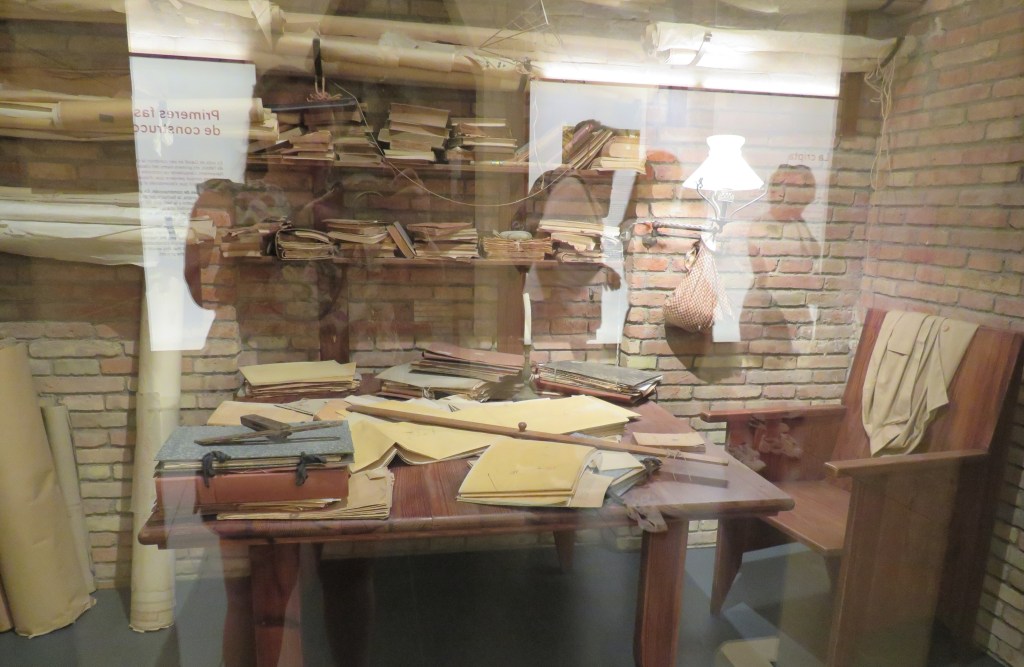
Gaudi’s workshop, where he later resided. The whole Basilica of Sagrada Familia is the story of Christ, from start to finish.

After touring through the basilica, we went into the museum that explained how everything was made and gave the history of Gaudi’s passionate project that he devoted his whole life to. The whole tour was very interesting. I highly recommend seeing Sagrada Familia at least once. It is truly a magnificent work of art, though as I mentioned above, it is not for everyone. Our pastor wanted something from Sagrada Familia, so we bought him a book. After looking through the book, even he said that Gaudi’s creations were like something from an alien planet. :0

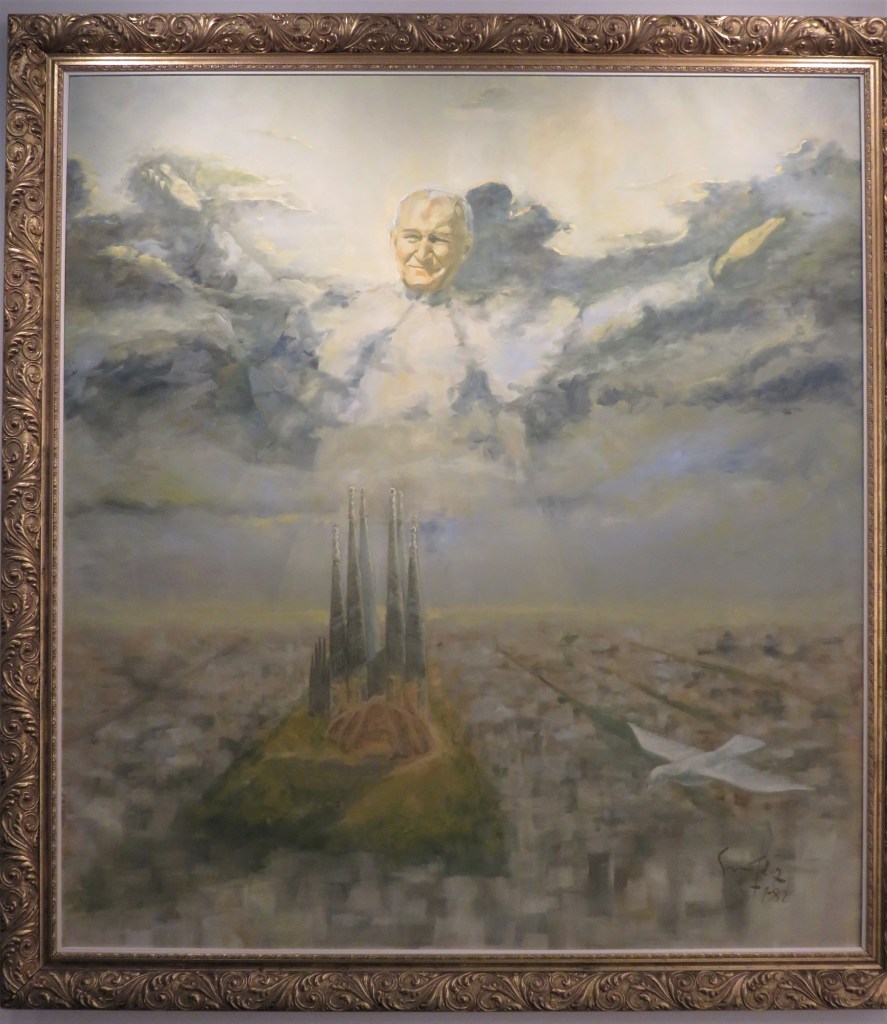
I love this picture depicting God watching over Barcelona.

Sagrada Familia was just the first of many, many fabulous adventures we experienced while in Barcelona. Trust me, I have oh so much more to share. Don’t go anywhere or you’ll miss out.

Have a great day and make everyday great. Stay safe and stay well. ‘Til next time.

Nature Walks – A Friendly Little Bird

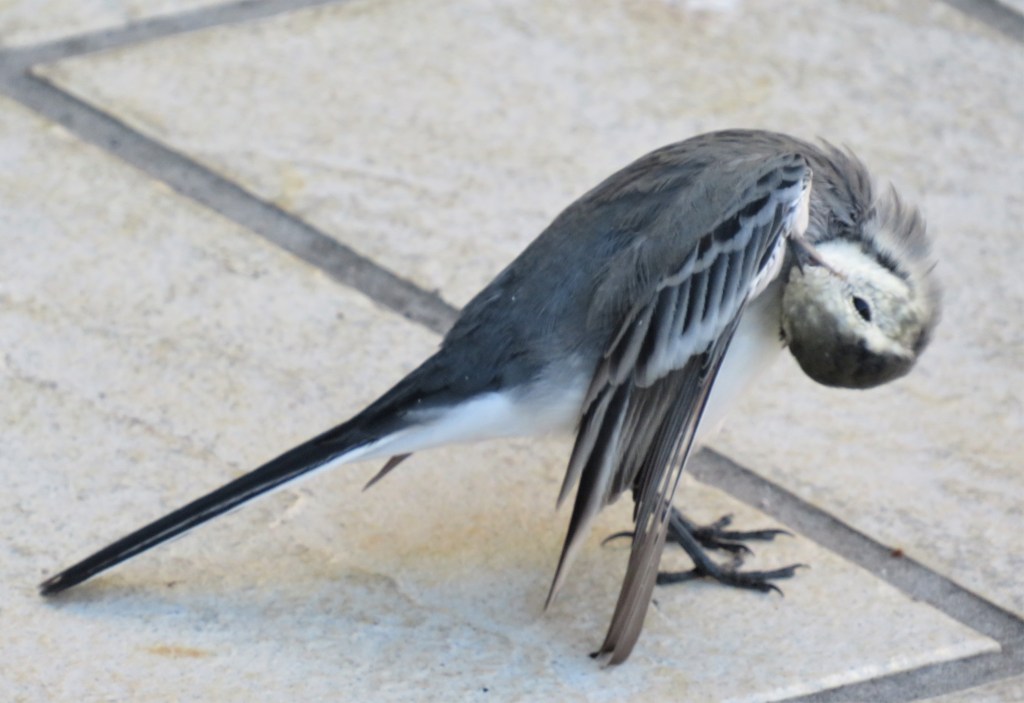
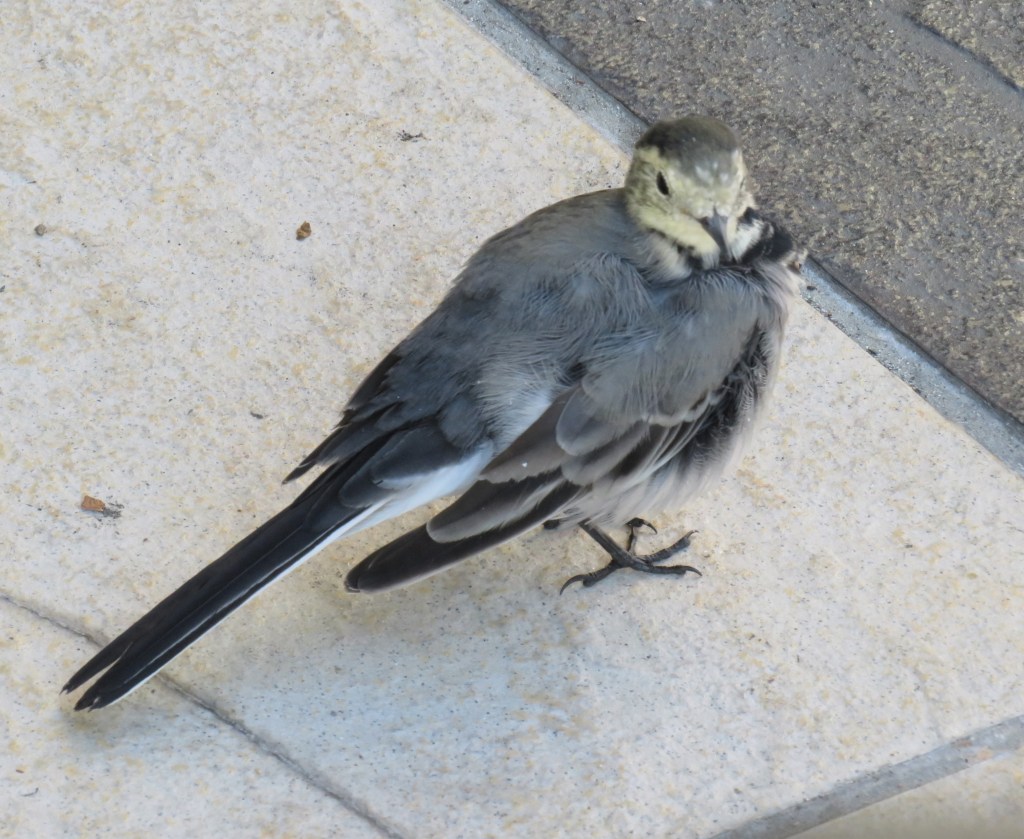
While we were dining at the Vietnamese restaurant in Andorra, A Day In Andorra we had a little bird who was so friendly and was posing for the camera. How could I resist? He was just begging for me to take some pictures of him. 🙂

A Day In Andorra

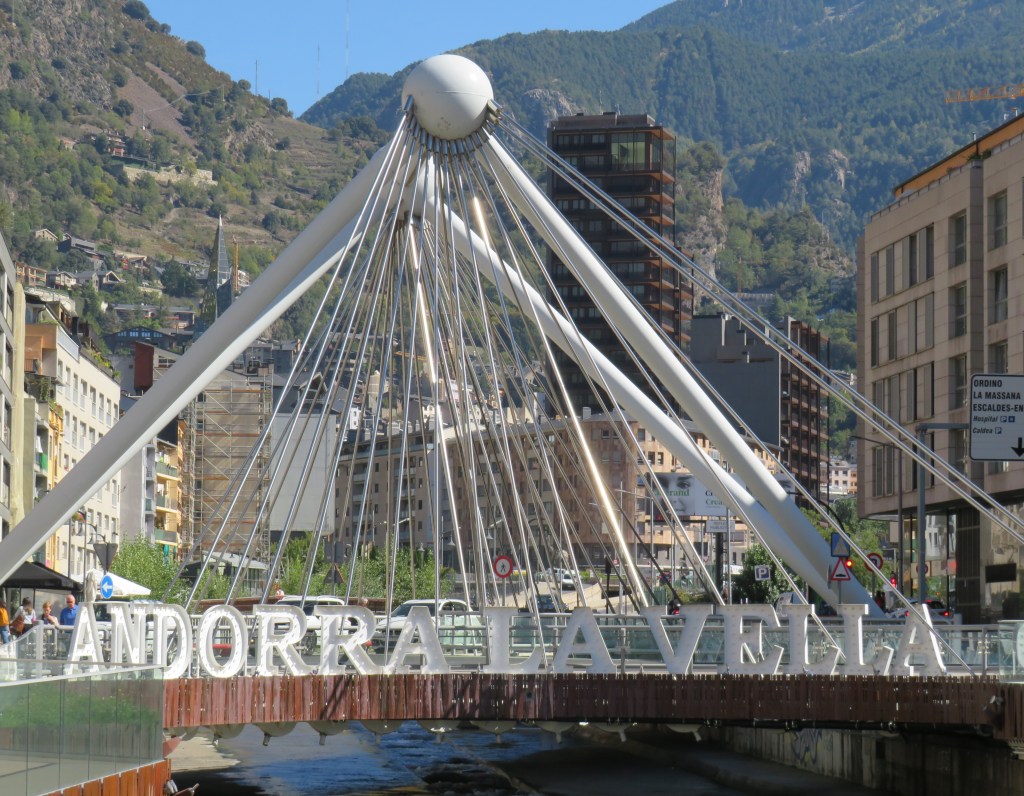
Andorra is a tiny landlocked country in the Pyrenees mountain range between Spain and France. The population is less than 90,000 people. For more than 700 years Andorra was ruled jointly by the leader of France and the Spanish bishop of Urgell, but it gained its independence in 1993. It is one of the smallest countries in Europe, occupying approximately 468 square kilometers. Most people live in the capital city of Andorra La Vella, in one of the seven parishes of the city. The official language is Catalan, but many people speak English, French, Spanish and German as well. The main industry in Andorra is tourism, representing roughly 80% of its GDP. It is known for its skiing and hiking, and duty free shopping.

There are no planes or trains that go into Andorra, but you can take a bus from either France or Spain. We took a three hour bus ride from Barcelona and stayed for the day then returned home once again through the Pyrenees Mountains, the same way we came.

Andorra is a beautiful and clean little country. We enjoyed our visit. We saw and did a lot of walking and hiking while we were there.

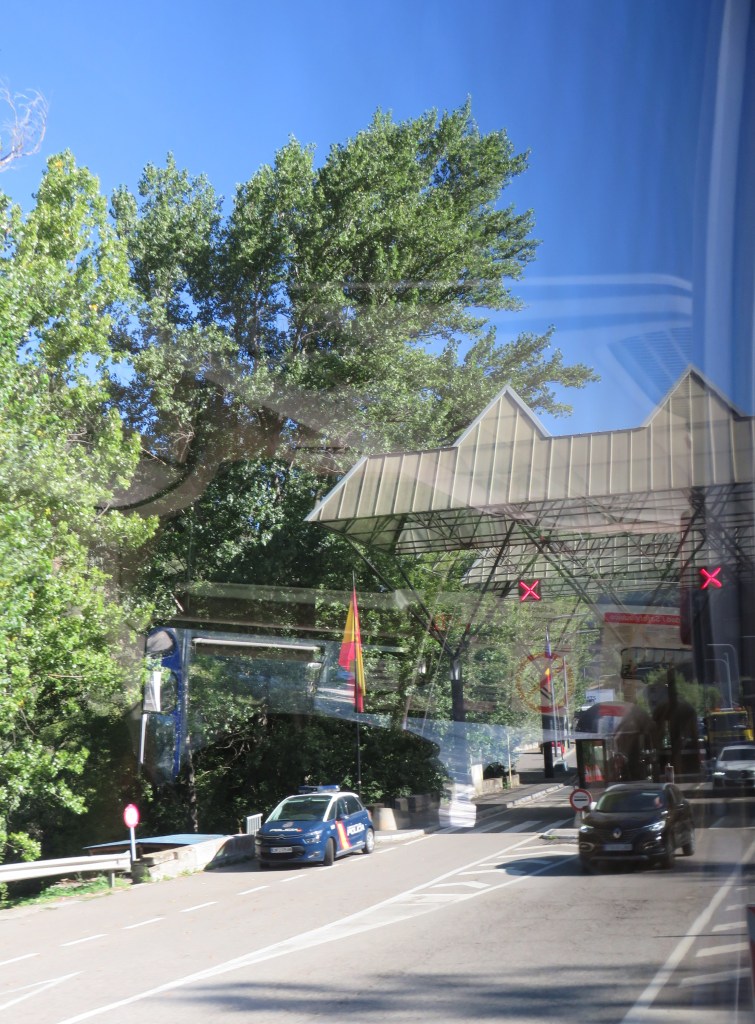
The border between Spain and Andorra. Passports are a must to enter into Andorra. No passport = no entry. We saw this happen to someone who was sitting on the bus right in front of us. He did not have his proper paperwork and/or passport and was thrown off the bus and taken directly back to Barcelona.

Once we got off the bus, we walked all around the city of Andorra La Vella and enjoyed the sights.

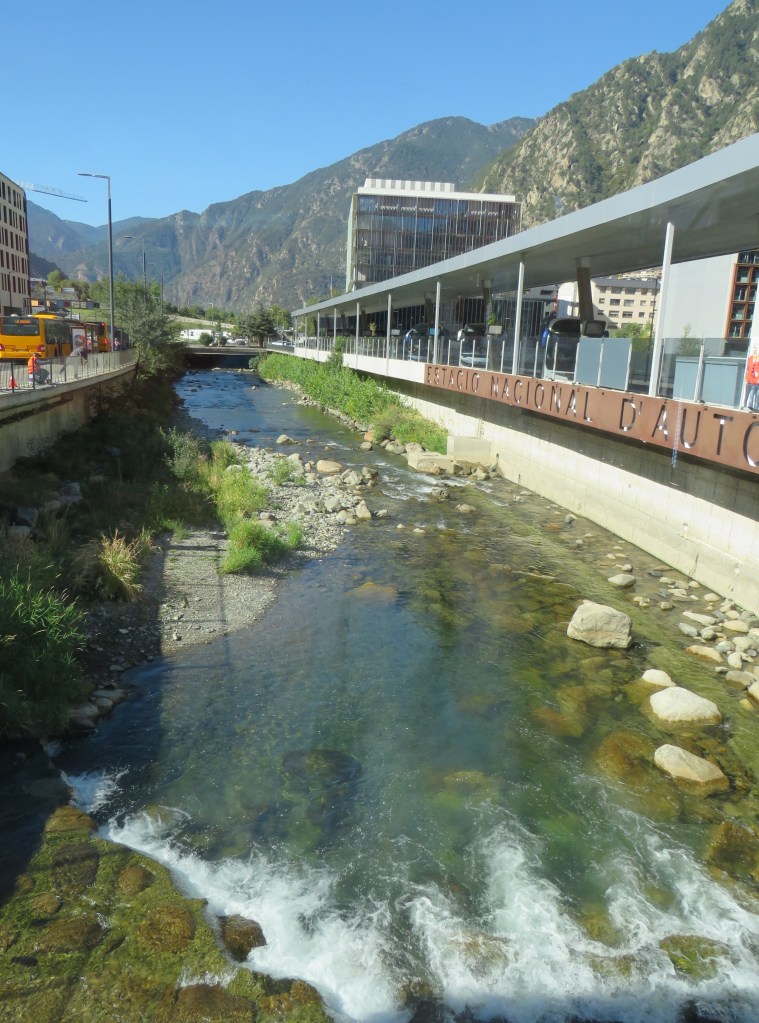
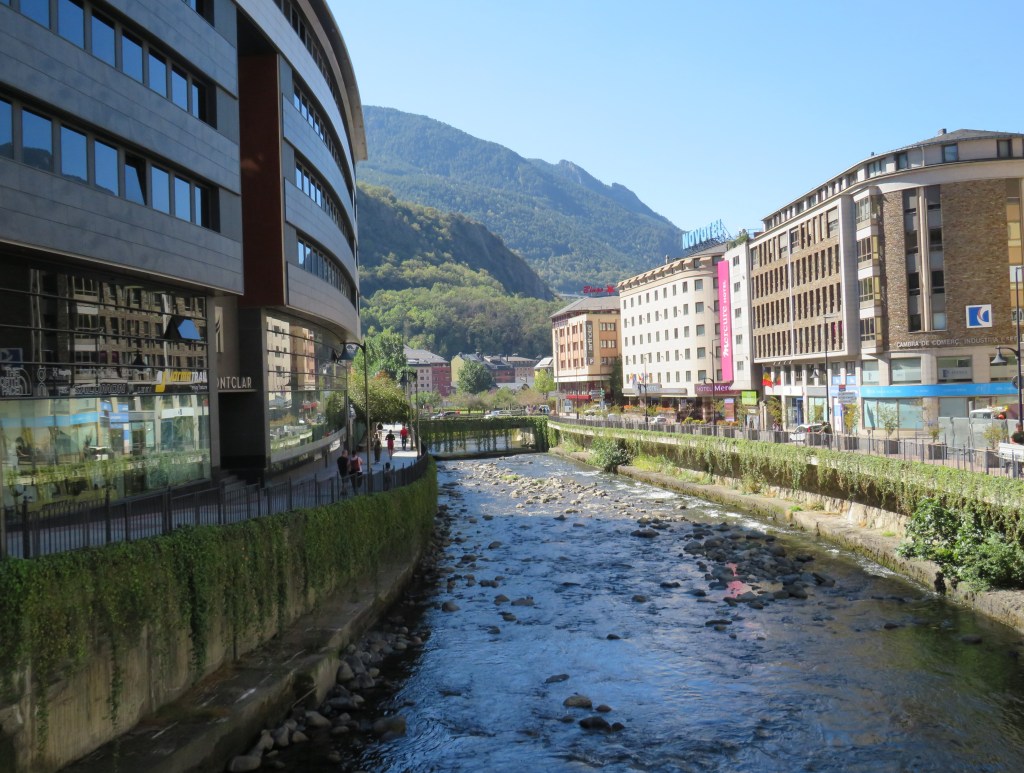
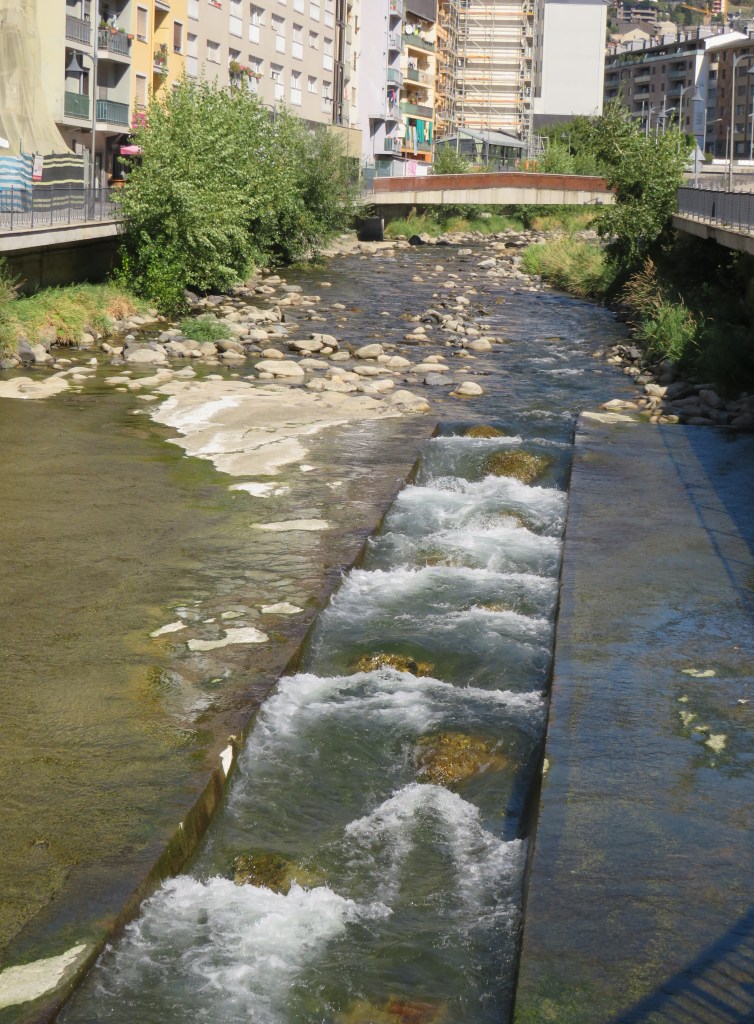
The river runs through the city.

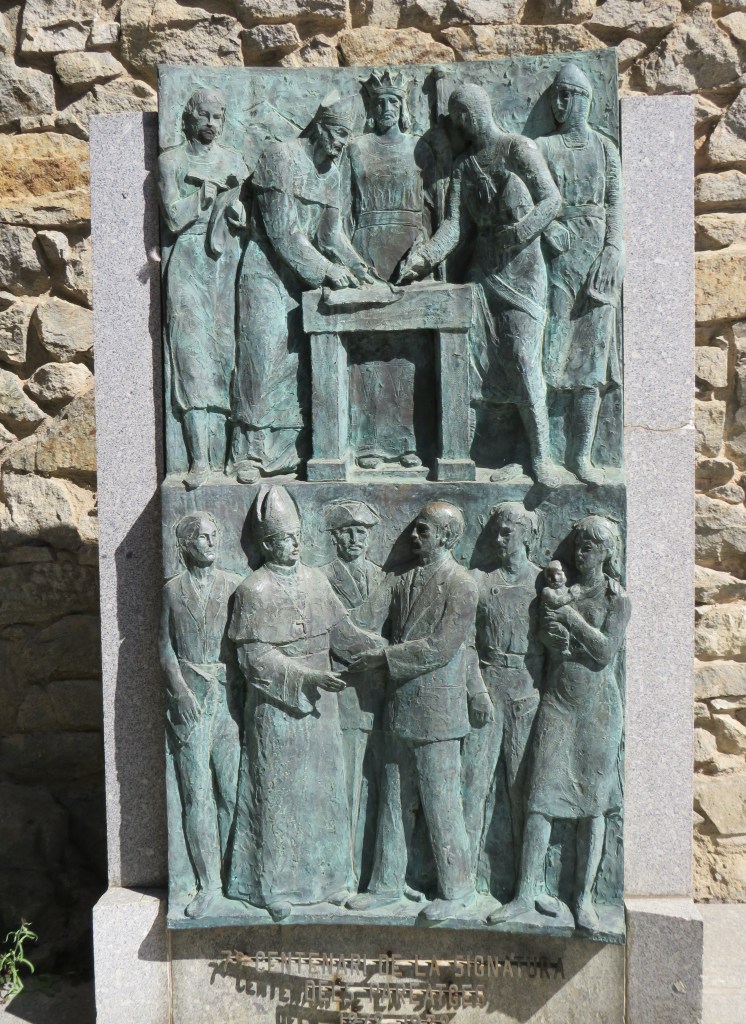
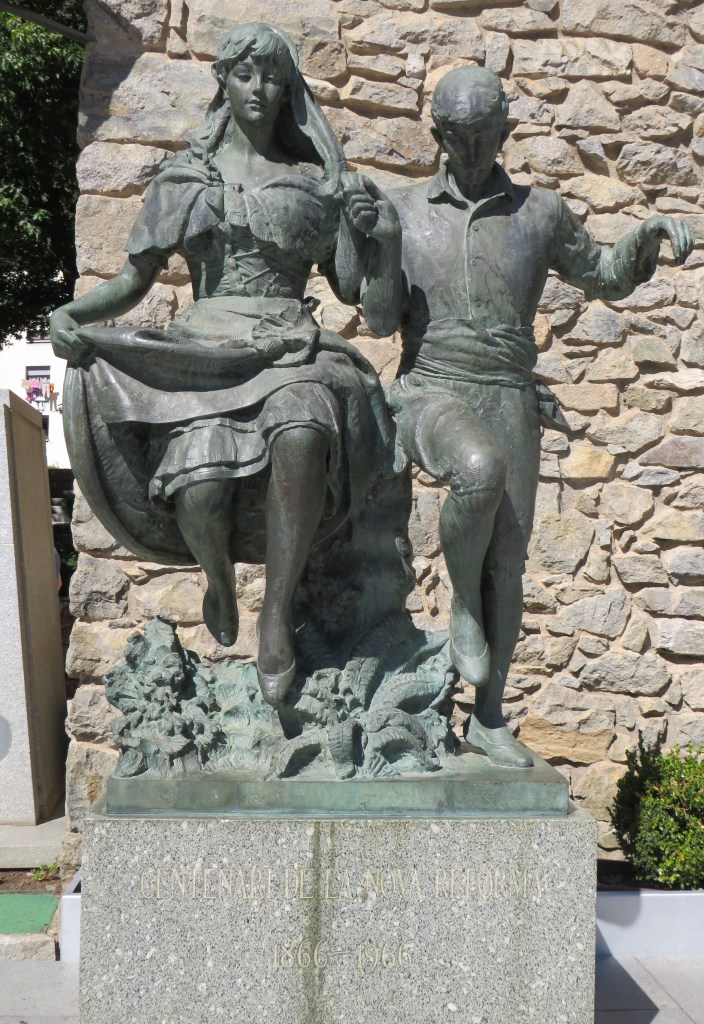
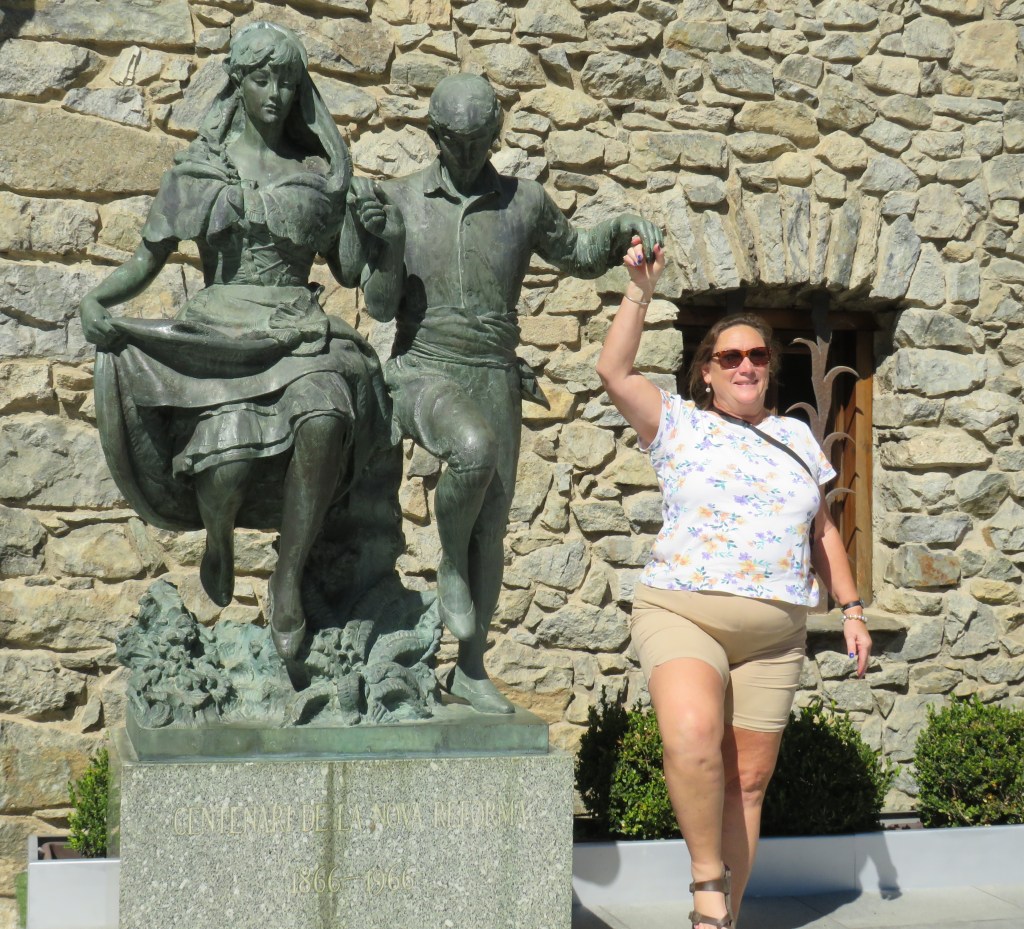
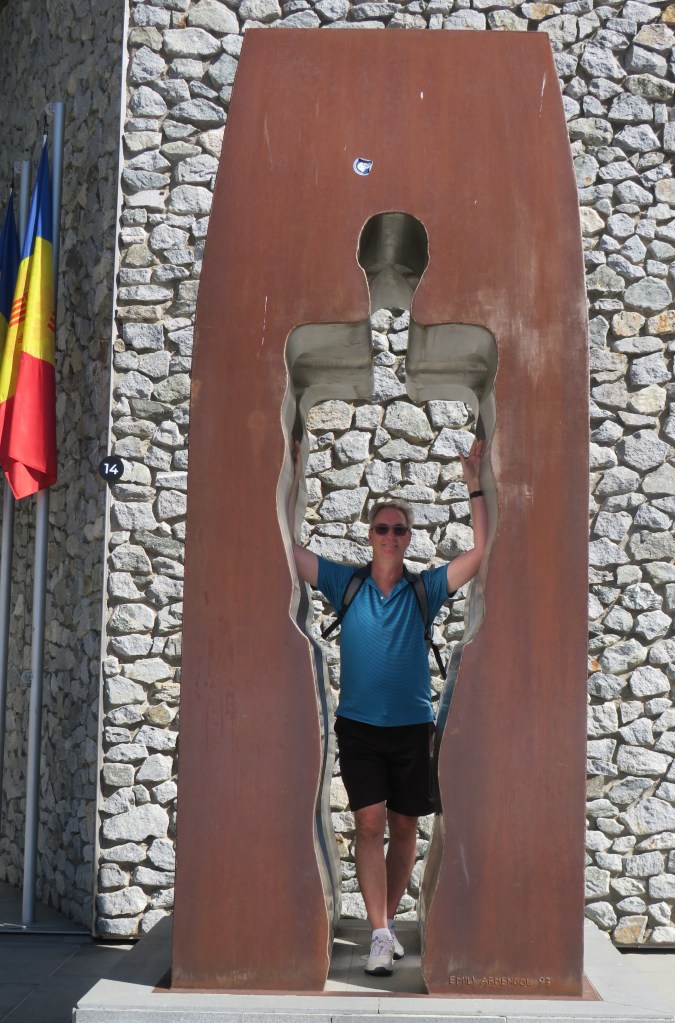
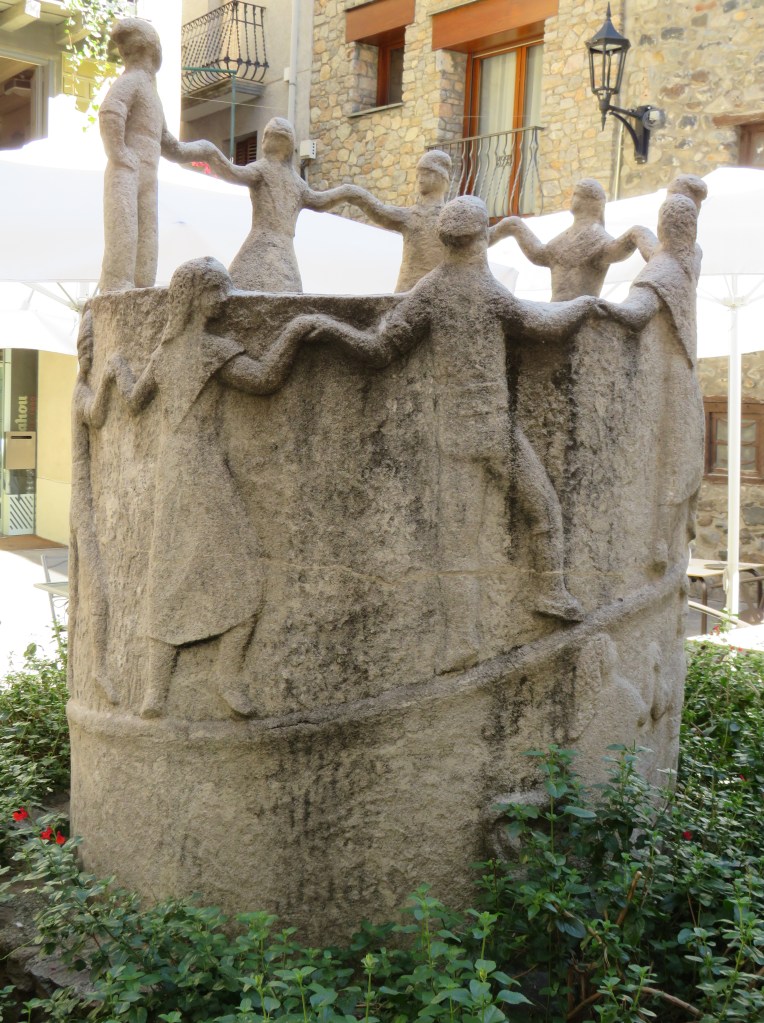
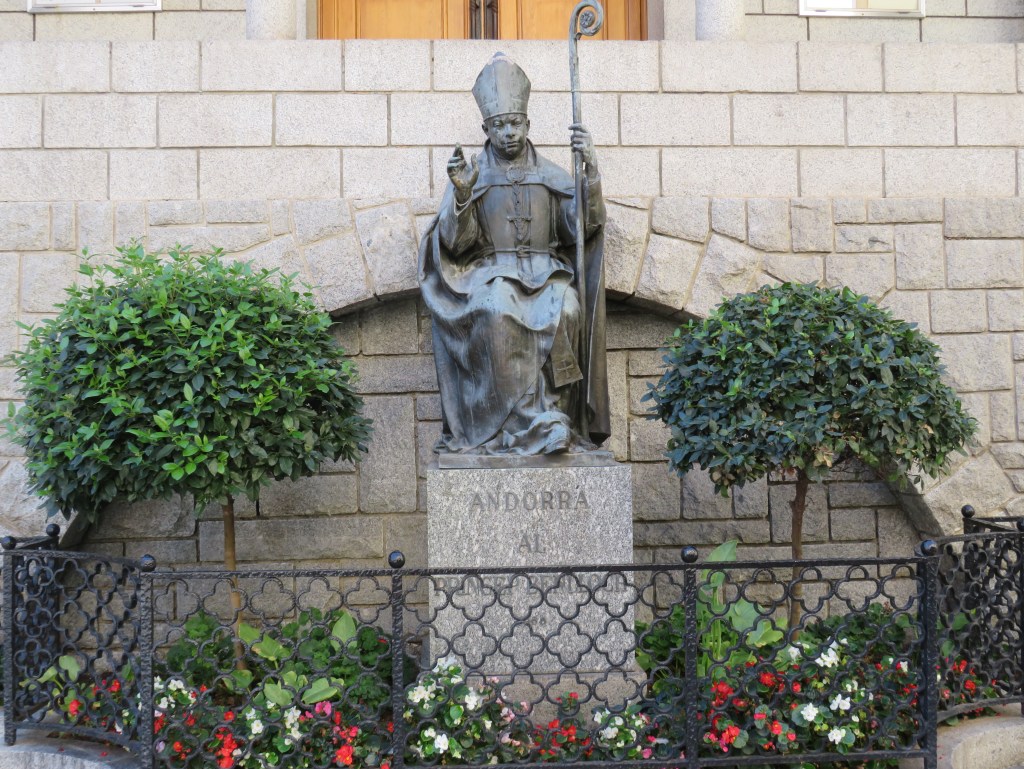
Here is a tribute to their past and some of their traditions. Even though Andorra is a Catalan country, with ties to both Spain and France, it is very Germanic in appearance.

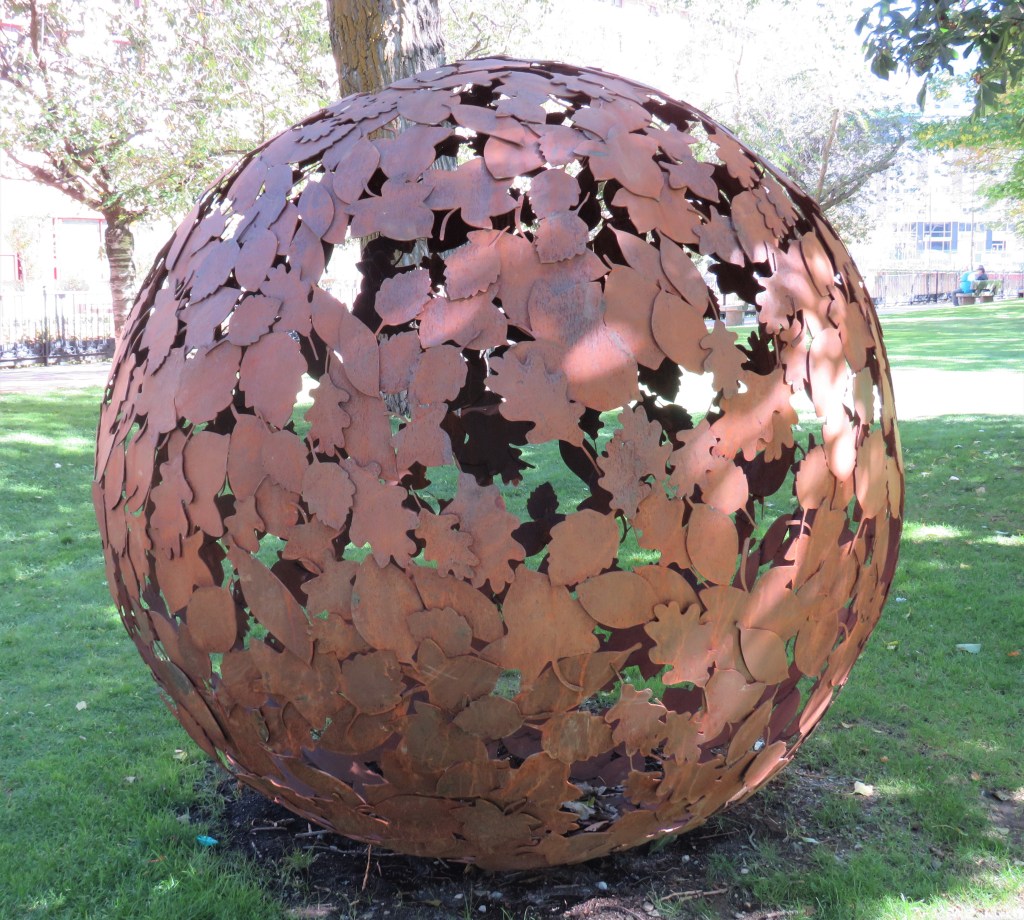
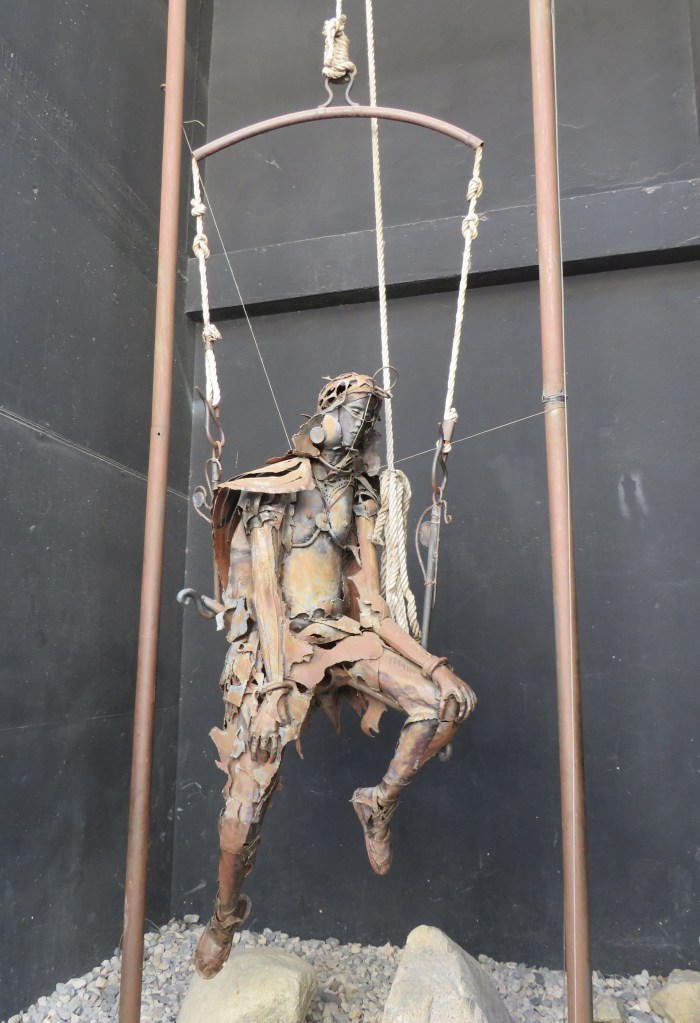
Here is some of the town’s artwork proudly on display. I just love all the attention to detail. When we first arrived it was close to lunch time, so we bought some sandwiches and had a little picnic lunch in the park by the river.

Larry is very tall, but not quite as tall as this guy. 🙂

Even their gates and fences are artfully designed and decorated.

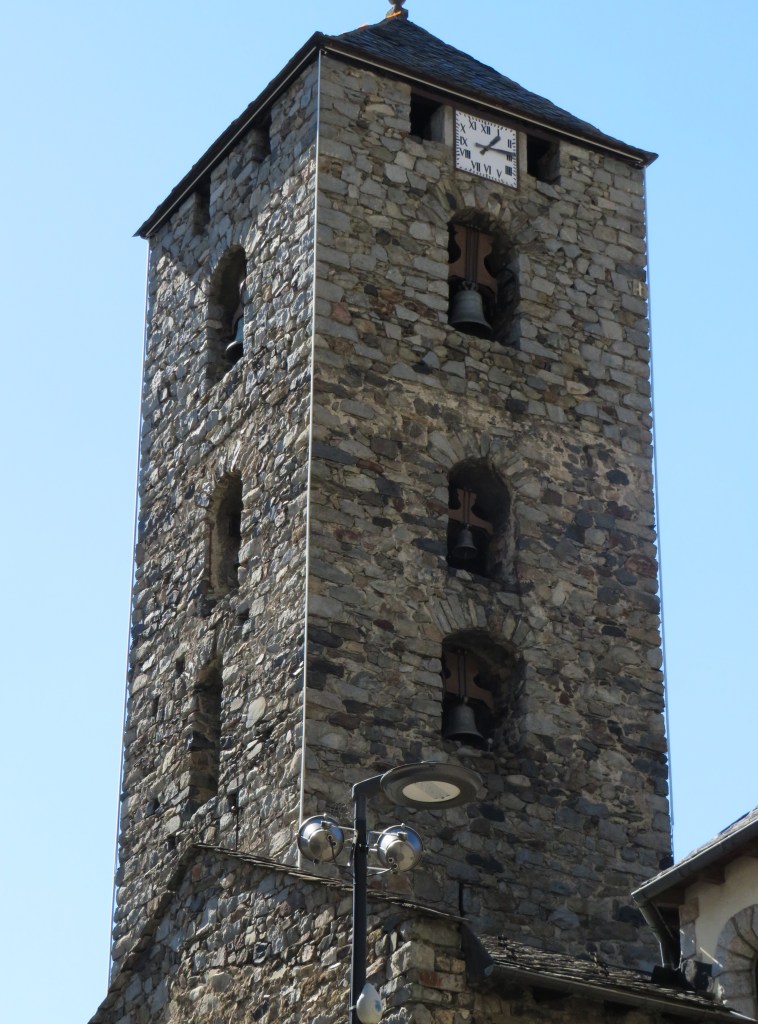
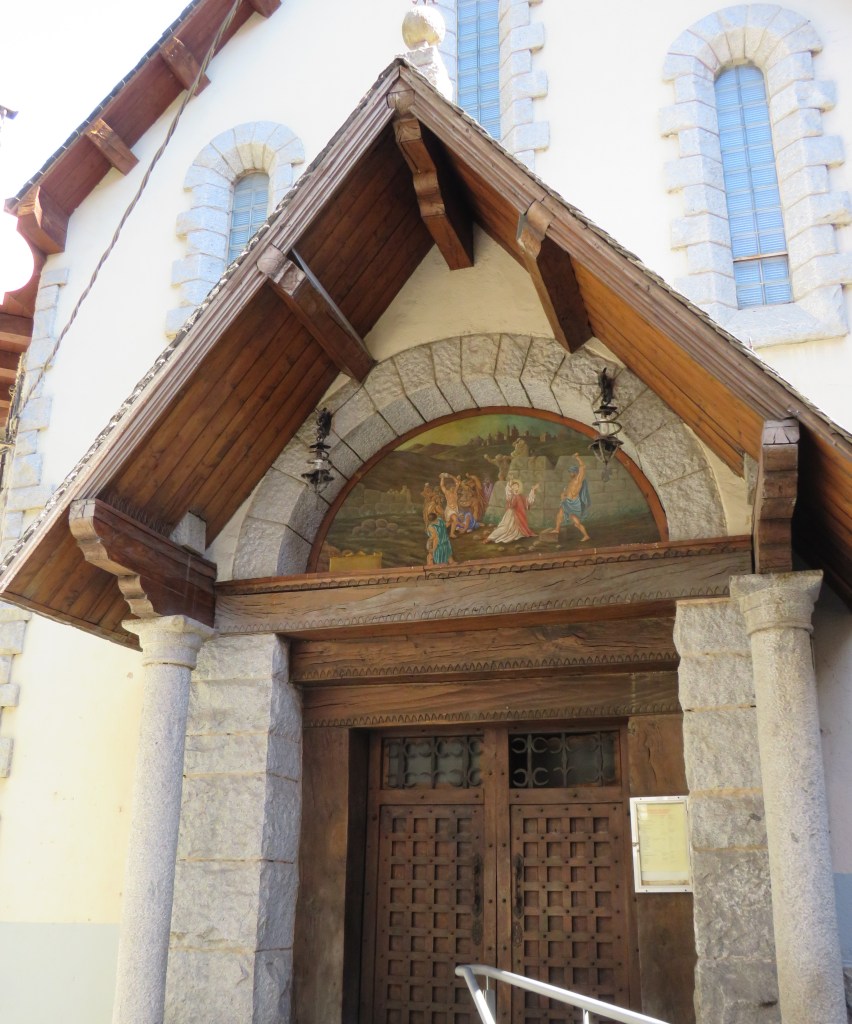
The residents who live in Andorra are primarily Roman Catholic and there are a few beautiful little churches dotting the tiny area.

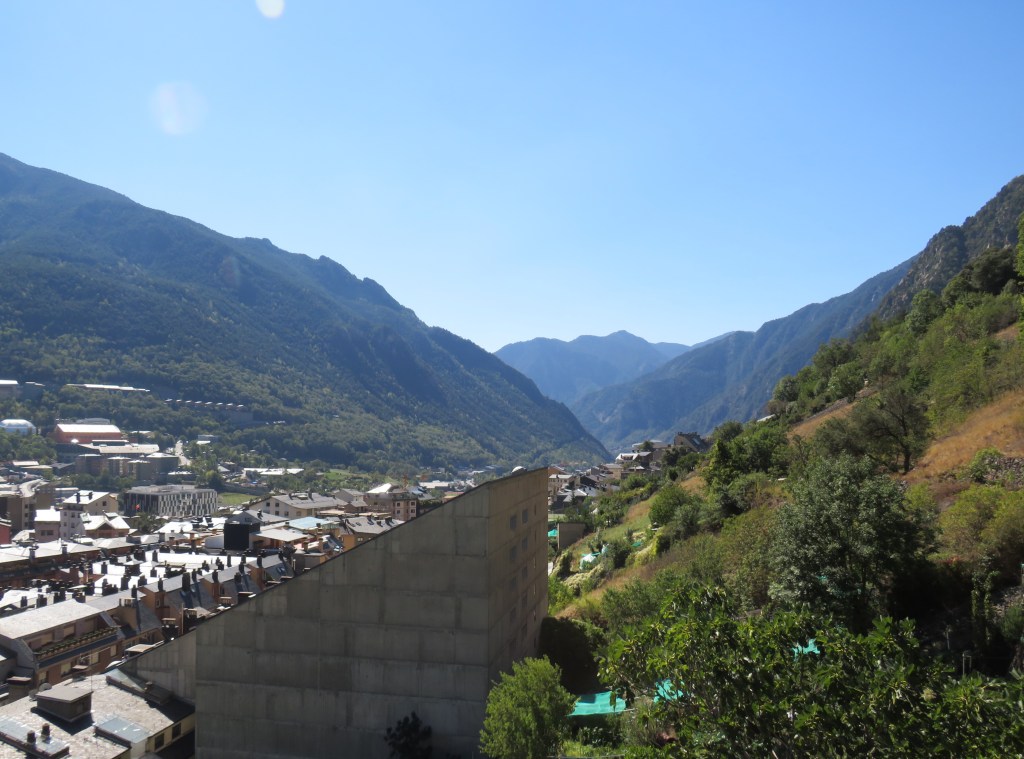
After strolling around and meandering around through town, we took a little hike up through the mountains. Here is our mountain view of the area.

We were in Andorra for a full day. We knew we needed to eat before heading back onto the bus back to Barcelona, so we stopped at a little Vietnamese restaurant for an early dinner. Again, we split what we ordered and enjoyed it all.

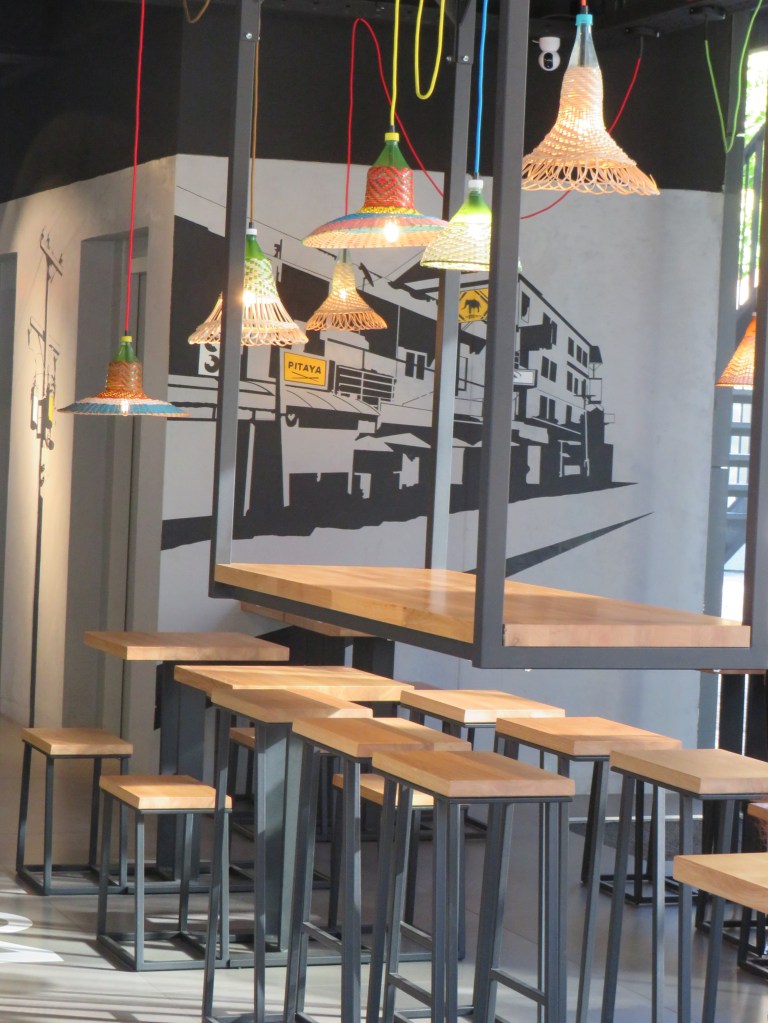
This is a very creative way of recycling the plastic bottles.

We dined outside and enjoyed the sunshine and the view of the park once again. It was a gorgeous day.

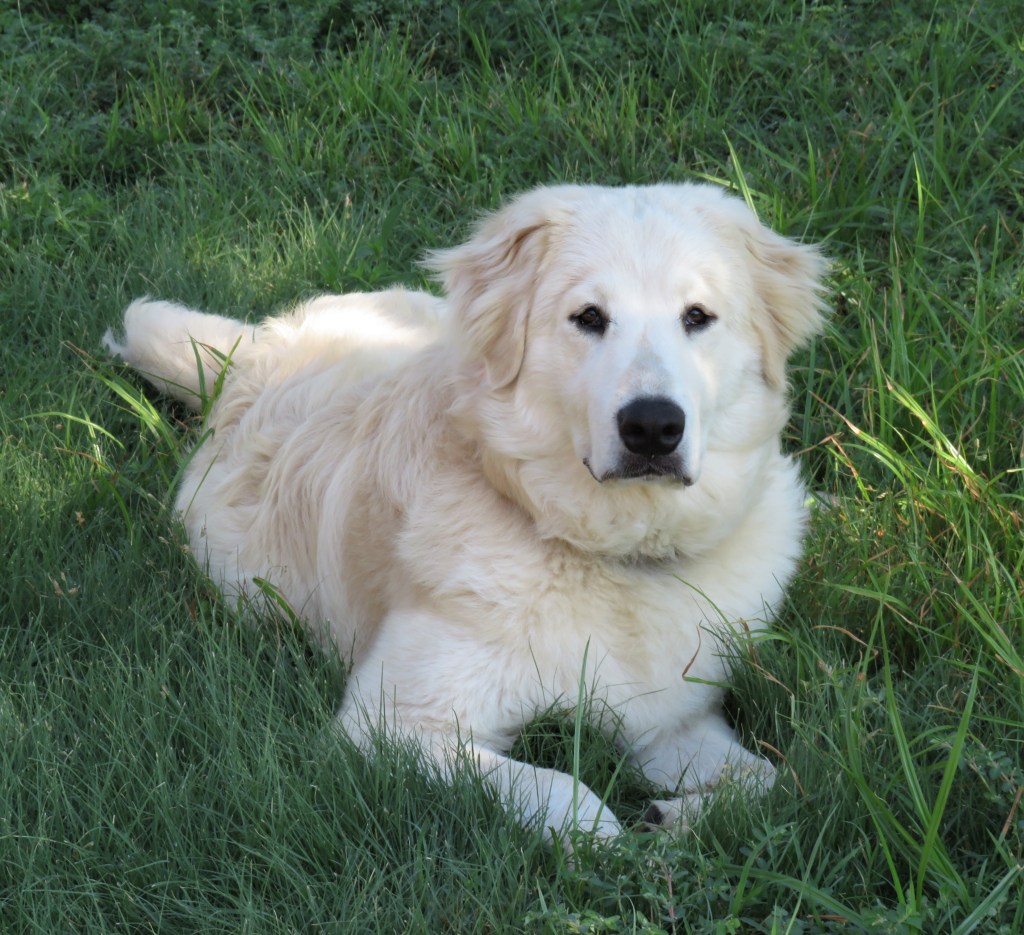
We enjoyed our day in Andorra. Our newest family member Andorra, Dorrie for short, is named after this tiny, little country. She is a Great Pyrenees. We name all our fur babies based on their countries or places of origin.

And so another country, Andorra, gets entered into our ever-growing repertoire of countries visited. Yet another check in our passport. I think we have now been to almost 50 different countries, and 40 of our own 50 states. 🙂

Have a great day and make everyday great. Stay safe and stay well. ‘Til next time.

Nature Walks – Spanish Gulls

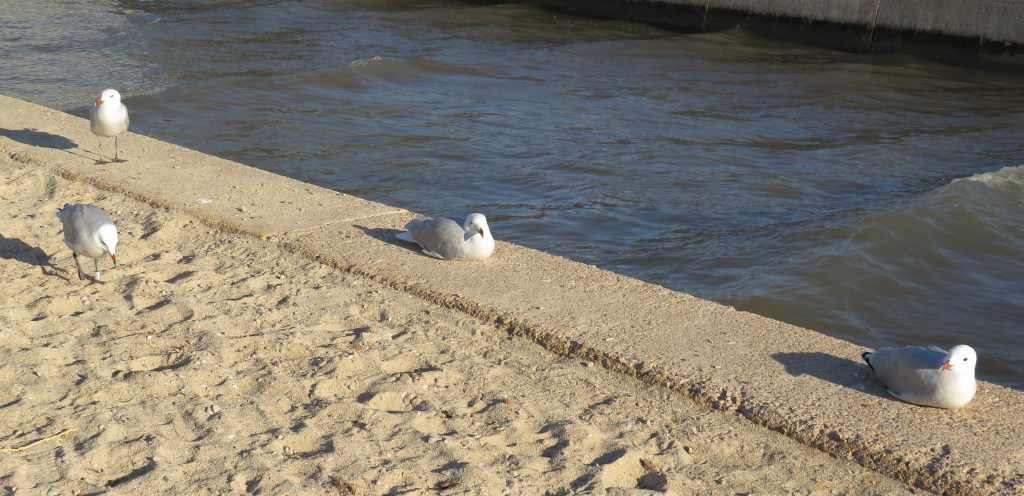
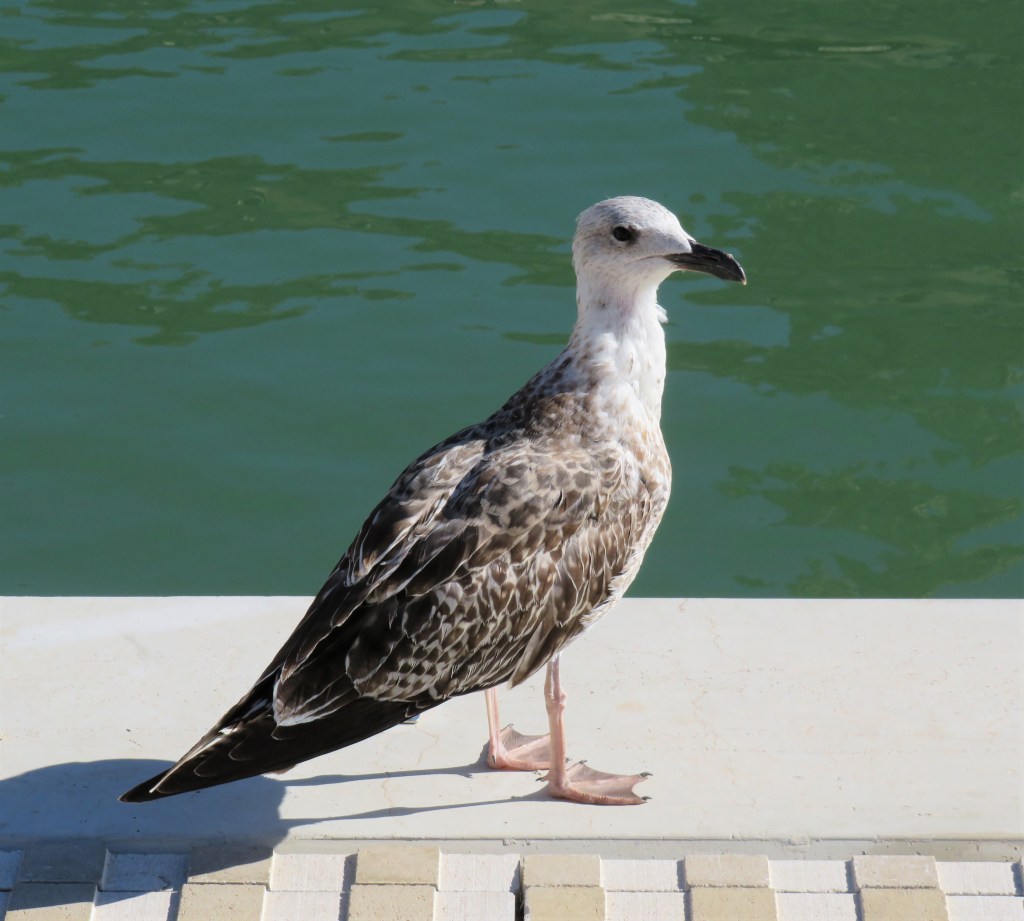
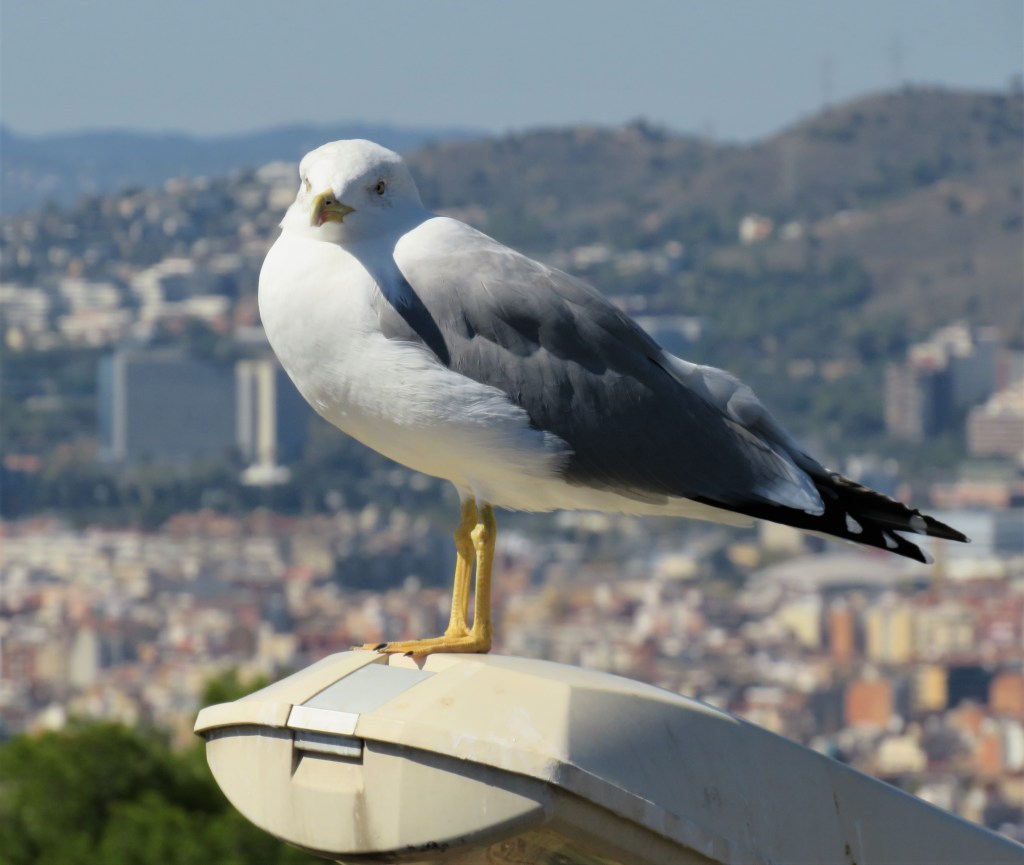
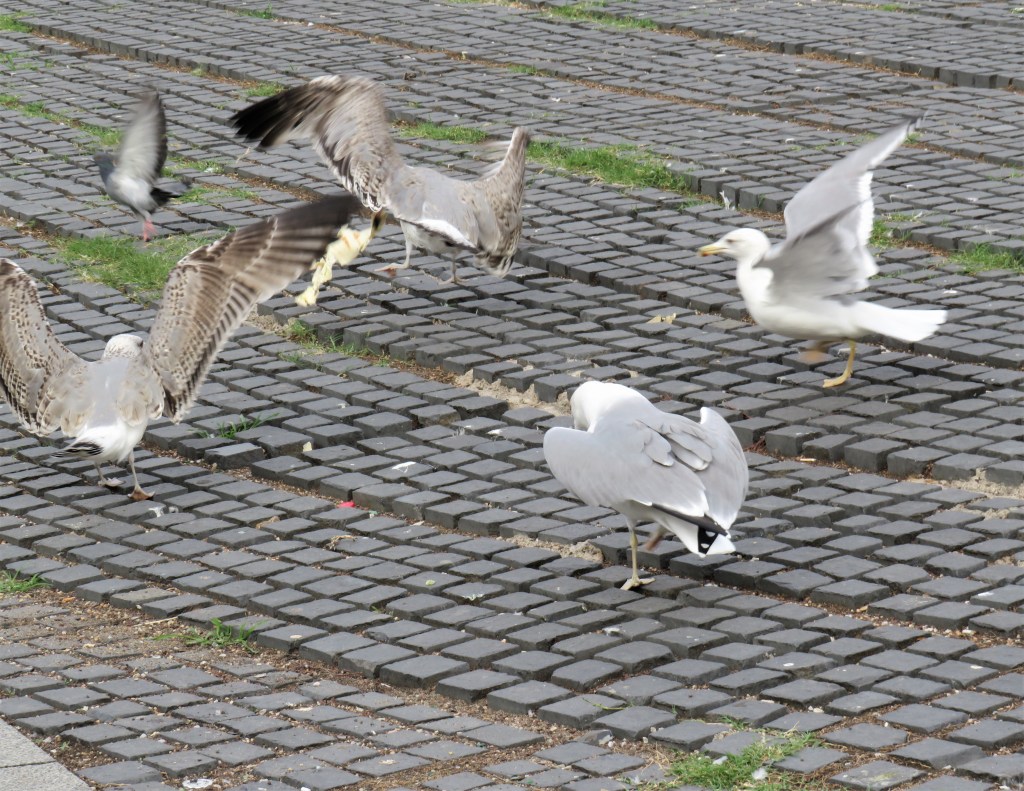
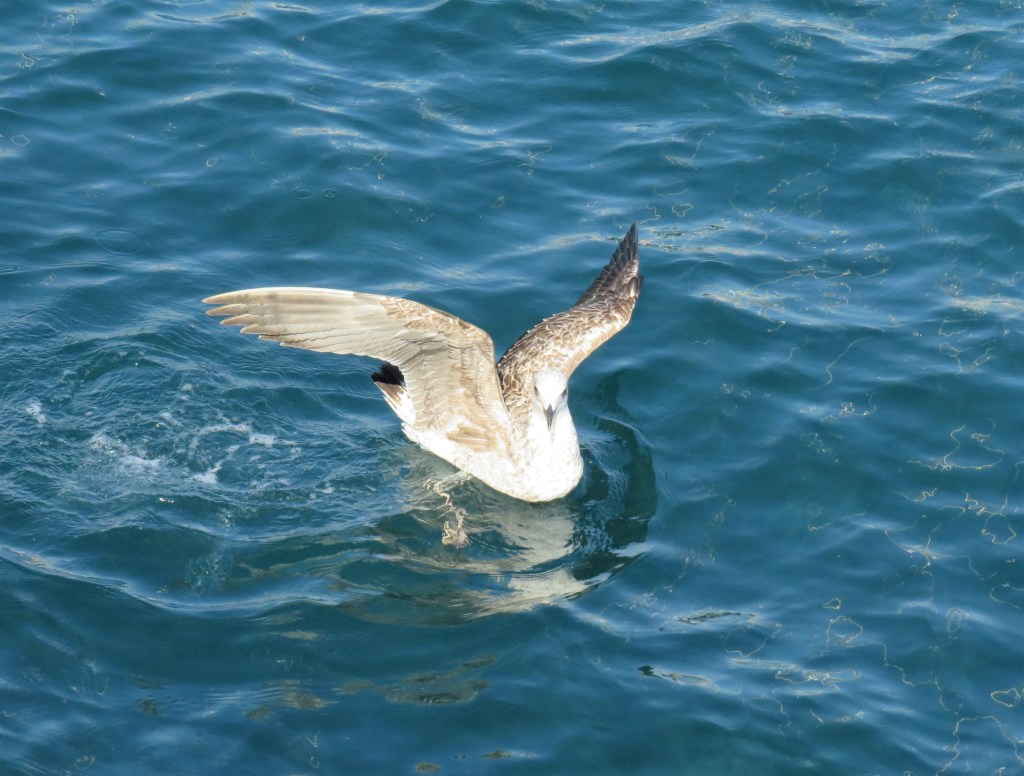
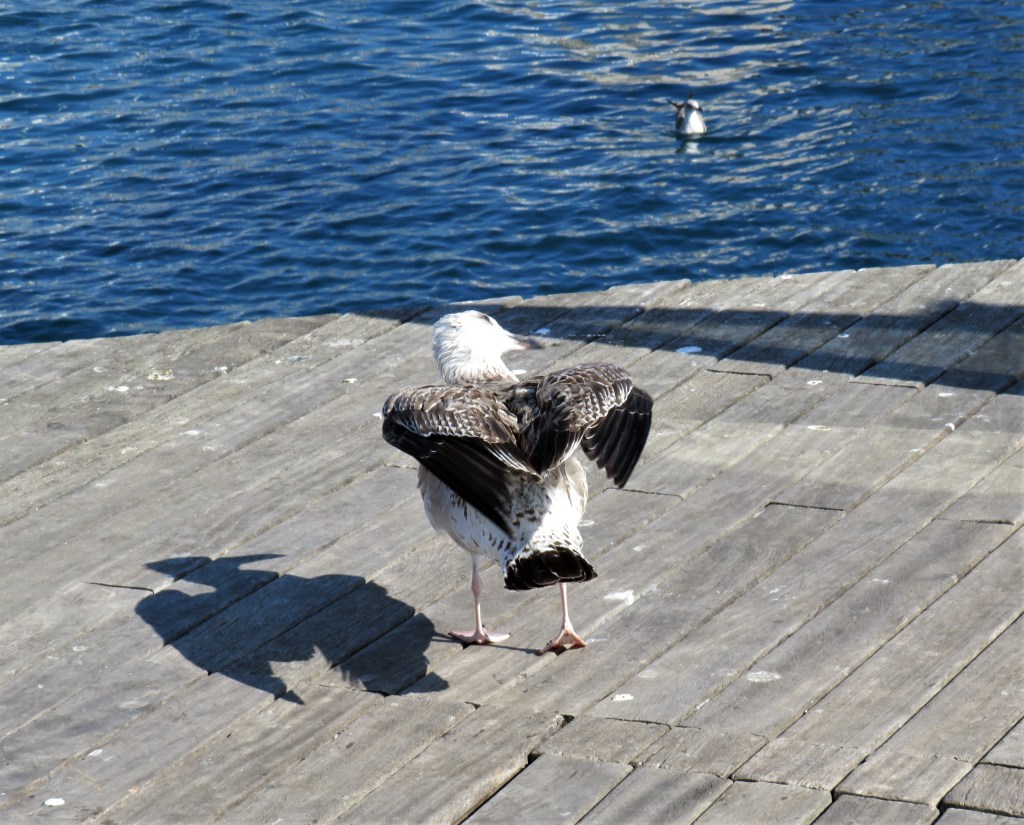
We saw a lot of gulls all over Mallorca and Barcelona. They are so big and were everywhere. They were also very bold. But I loved seeing them all. Some were white and some were brown.

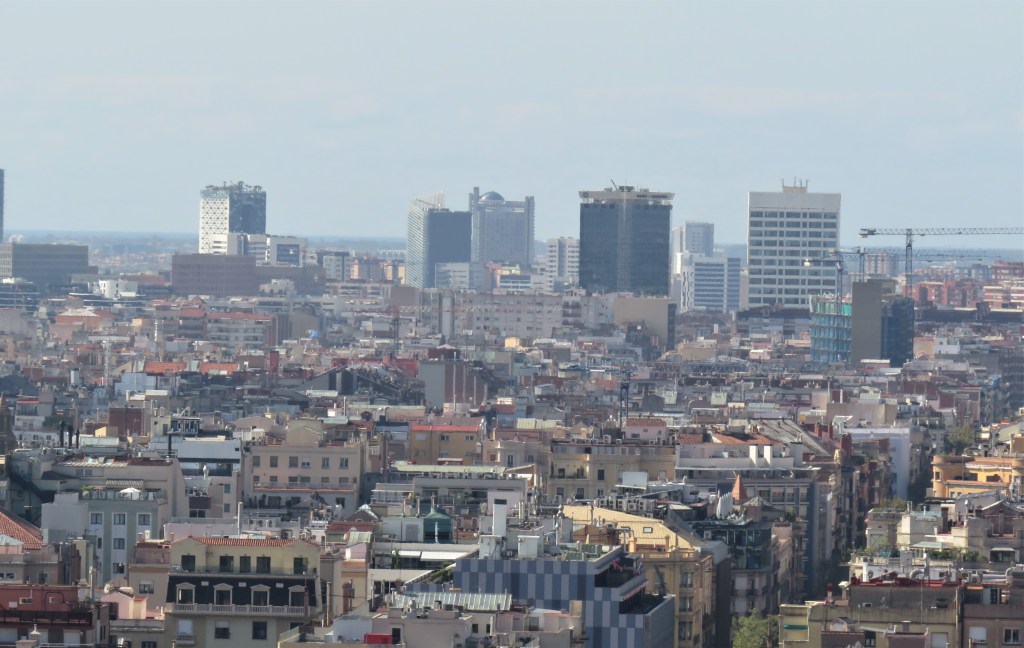
Overlooking Barcelona.

On the Ramblas Plaza or Platja in Catalan.
Mine, mine, mine.

There was a lady feeding the gulls on the pier, even though she was not supposed to. But the gulls love her for it. I get the feeling she does this on a regular basis.

Gulls on the bridge.