It’s A Big One!!!

Well, today is my birthday. I’d really prefer NOT to reveal which one, though I am sure many of can easily figure it out. All I am going to say is it a BIG ONE, that ends in a ZERO. Even though it is early in the day, the birthday wishes have been already been coming in, and so have a few presents. This morning, Larry surprised me with some flowers and a gift certificate for more massages. Our roommate knows I enjoy doing needle work and surprised me with some needlepoint canvases to work on. My niece sent my a fun hat and a CD I had mentioned I wanted. And a real fun themed present, from Julia was a follow-up to the fabulous Christmas present she sent me. Thank you all for the special wishes and fun presents, that you didn’t to send, but I am glad you did. :) This day is already turning out to be a very good, very special day. Thank you all.

For Christmas, Julia sent me some Middle Eastern spices and a delicious Middle Eastern Cookbook. Lebanese Tomato Salad

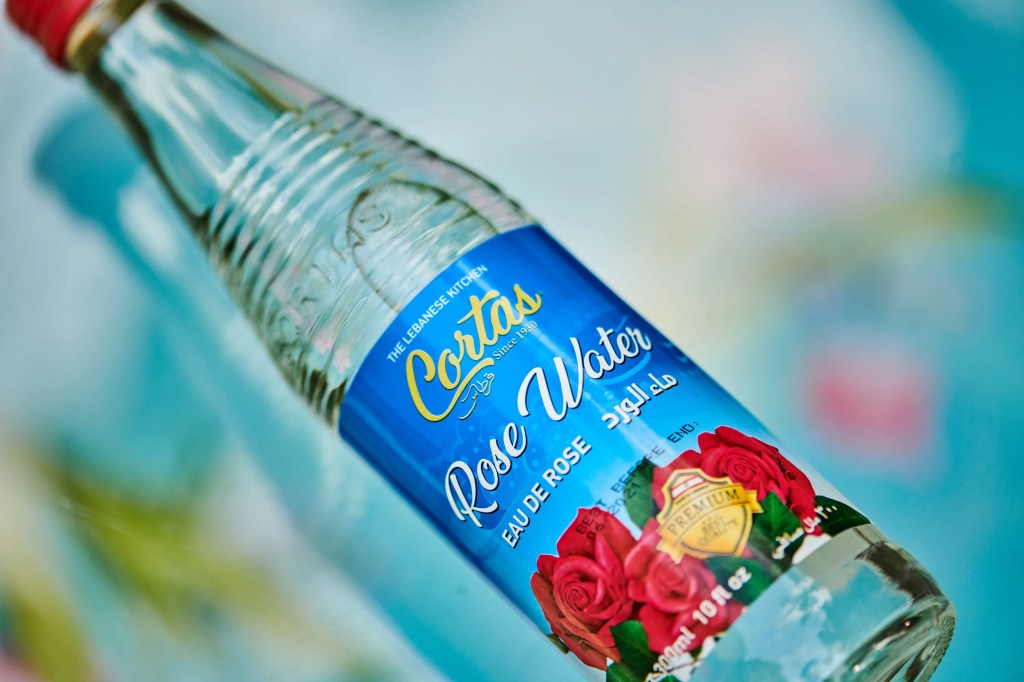
Julia, being the very thoughtful and loving person she is, followed that up with some more fun Middle Eastern goodies for my birthday. 

Well, I felt like she was trying to tell me it was time to make some Middle Eastern food. And that I did too. :)

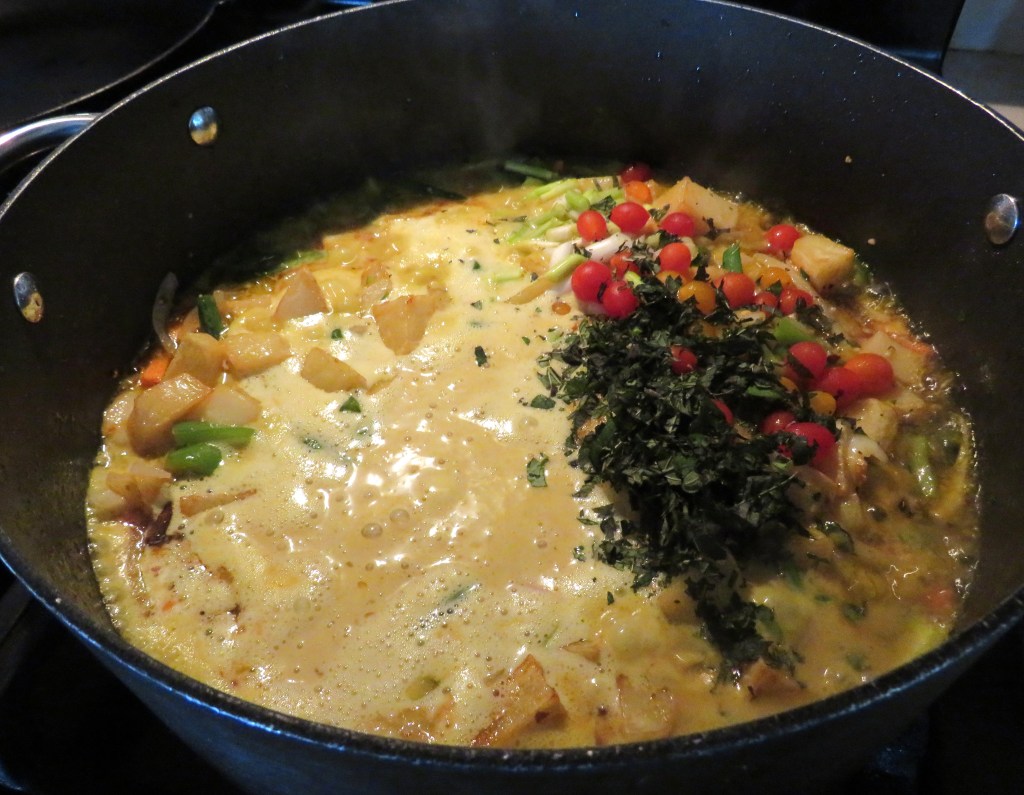
I made a delicious Lebanese mahi mahi dish. Now you all know I NEVER follow a recipe exactly, and I always modify it and make it my own, which is exactly what I did again. That’s why I always say “I am inspired” by a recipe, rather than actually follow a recipe. 

The recipe called for snapper, but I couldn’t find any, so I substituted mahi mahi instead. That was my first change. Then I added both the Sumac and the Za’Atar to the seasonings for the fish before cooking it up. That was change #2. My 3rd change was to add a variety of Middle Eastern vegetables, and for my 4th and final change, I steamed it all in white wine. So, I was most definitely inspired by the delicious recipe in the cookbook, but then I completely made it my own. Funny. This tends to happen, oh all the time. :)

I made the sauce first. It was a yogurt tahini sauce.

Tahini Yogurt Sauce

This is a very simple sauce that will dress up anything from chicken, to falafels to fish, or can even be used as a dip for vegetable crudite.

3/4 cup plain yogurt

1/3 cup tahini sauce

1 tsp salt

2 tsp garlic

1 TBSP lemon juice

dash of either red pepper flakes and/or cayenne pepper

Just whisk everything together and chill until ready to use.

Lebanese Pan-Fried Fish With Vegetables

The original recipe would have been very good too, but I made it even better. Some of our neighbors are from Lebanon, and I took some over to them. They raved about it and loved it too. Whenever I make ethnic foods, I love to have someone from that particular ethnicity or region try it and critique it for me. It is always a big compliment to me when they like what I make. Hanaa and Aziz loved it and wanted the recipe. :)

4 4-oz fish filets, any kind of fish will do

1 TBSP Za’atar

1 TBSP Sumac

salt & pepper to taste

pinch of cayenne pepper

1-2 large tomatoes, chopped

1 TBSP garlic

1 cup mix olives, sliced

1 can artichoke hearts, drained and rinsed

1-2 TBSP olive oil

1-2 TBSP lemon olive oil, optional

1 TBSP butter

1 cup dry white wine

tahini yogurt sauce

1/4 cup toasted pine nuts

chopped parsley

Combine the Za’atar, Sumac, salt & black pepper and cayenne pepper. 

Pat the fish dry with a paper towel. Dip the fish into the spice mixture and coat on both sides.

Get a large skillet very hot, the add the oil(s) and the butter. Place the fish in the skillet, skin side up and cook the fish for about 3 minutes on a medium-high heat. 

After 3 minutes, flip the fish, add the vegetables, the wine, and the rest of the spices, if there are any left, cover and let steam for about 5-7 minutes, or until the fish is thoroughly cooked.

Once the fish is cooked and the vegetables are warmed, serve it over cooked couscous. Add some of the tahini yogurt sauce, the pine nuts and parsley on top and serve with the same wine you used for the sauce and enjoy.

This birthday, even though it is NOT a number I would like to admit to, is already turning out to be a very good birthday. Thank you my dear friend Julia, for always being so thoughtful and generous, and thank you for the inspiration to this delicious meal. And thank you to everyone else who is sending me good, loving birthday wishes as well. :)

Have a great day and make everyday great. Stay safe and stay well. ’Til next time.

Our Trip To Cabo – #11

After a couple of days in La Paz we headed back to Cabo. There was a lot more diving still left to do. :) Snorkeling is fun, but it is NOT diving!!!!! Again, I was happily mostly underwater, doing my thing for the remainder of the trip. I completed my 400th dive while in Cabo, with some to spare. 

After our morning dives, we still continued to explore the area, but Cabo is a pretty small town, and we saw most everything on the first couple of days. We did enjoy the beach at our resort one day after diving though. It felt good just to sit back and relax for a bit. Our resort has a very nice beach.

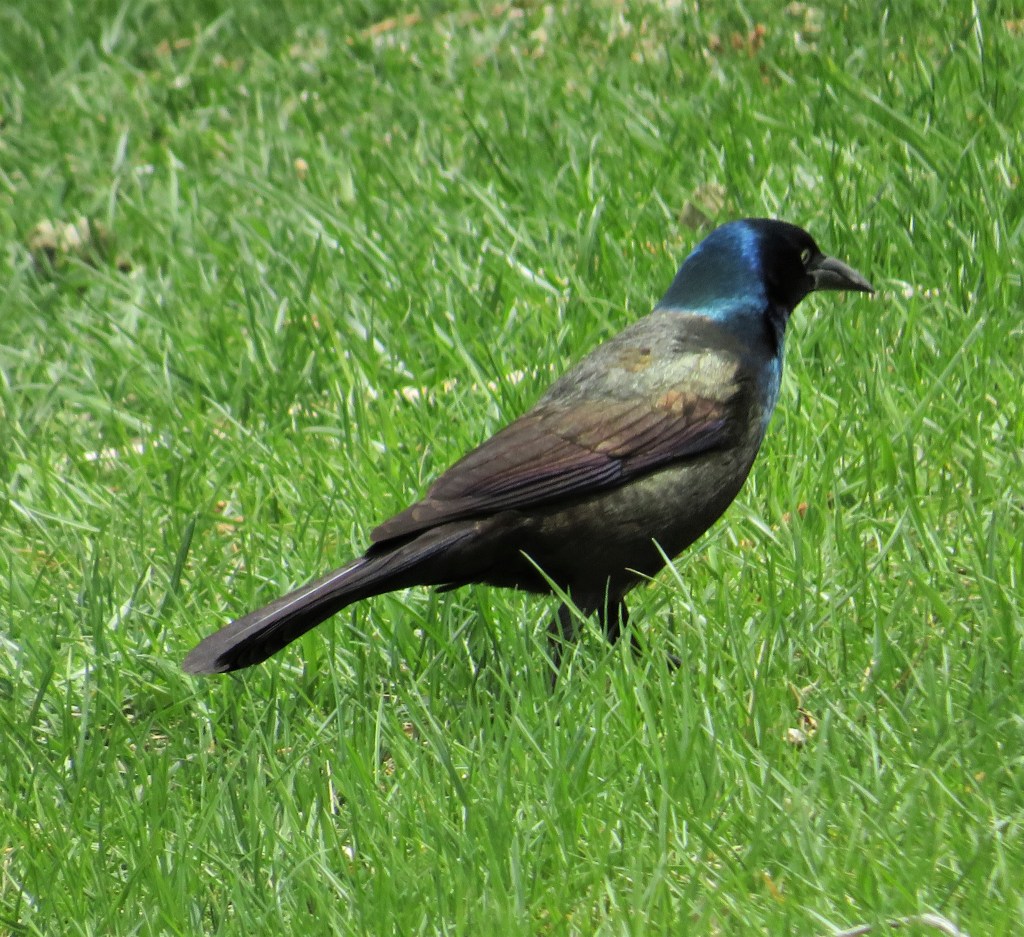
While on the beach, we met a very nice couple, also from Colorado. They only live a few minutes away from us, in the neighboring city of Thornton. It’s a small world after all. :) After talking to them for awhile, we strolled along the beach and this carefree loon caught our attention.

We cleaned up and hit the town again, in search of more delicious food for dinner. You don’t have to look to hard though. There are so many different restaurants all over. We ended up at a sister restaurant to one of the restaurants we had visited earlier in the week, though unbeknownst to us at the time. The menu was exactly the same too, but we tried different things, and it was a different location, so it was the same but different at the same time. :)

The interior walls were decorated with scenes from the ocean and the local marine life, as well as Cabo itself.

The cocina (kitchen) where our delicious meals were prepared.

A house margarita and some garlic bread were the starters.

They were followed by the main meals. I ordered crab. It was delicious, but I really had to work for it. There wasn’t nearly as much food as it would appear, and I shared half of my crab with Larry too.

Larry ordered sea bass. Both were very good and it was nice to enjoy some fresh vegetables.

After dinner, we strolled around some and took in more of the sights of the town.

The town square still had it’s Christmas tree up too.

I don’t know what it is about street art, but I am always fascinated by it.

I like all of these. They represent the history of life in Cabo.

These were all painted on the walls of the little Marine Museum in the town square, but this was all we were able to see, since it was closing for the day when we arrived.

Art and beauty are everywhere. All we have to do is open our eyes to see it all around us. 

Have a great day and make everyday great. Stay safe and stay well. ’Til next time.

Our Trip To Cabo – #10 – La Paz

Our second day in la Paz was even more adventurous than our first day.  Our Trip To Cabo #9 – La Paz Once again, we started off early and ventured out to Espiritu Santo or the Holy Spirit Islands. Isla Espriritu Santo is located in the Sea of Cortez (Gulf of California), about 26 kilometres (16 mi) to its southern tip from the port city of La Paz, Mexico. Together with its sister island Isla Partida, the islands are a rock formation created by a series of violent earthquakes and volcanic activity. As such, volcanic ash and lava make up the majority of their geologic composition.  Espiritu Santo is an uninhabited island off the Baja Coast. Well, it is uninhabited by man (at this current time in history, though about 9,000 years ago, it was inhabited by man), but it is a beautiful wildlife preserve, inhabited by sea birds and marine wildlife. We ventured out to the very tip of the island archipelago to see the the sea lions.

And boy did we ever see the sea lions. Espiritu Santo is home to the largest sea lion colony in the area, where at least 500-600 sea lions reside on a regular basis. This is also their rookery where they give birth to their young. We did see a couple of little tiny babies curled up on their mommas too.

Again, this was a snorkel trip and not a diving trip. We got into the water and the sea lions came right up to us and were swimming and playing right beside us. They are very curious and very playful, especially the juveniles. We were in the water swimming with them for about 45 minutes. They were so much fun. Larry made friends with one special sea lion, or I should say, this sea lion took a special liking to Larry. I was getting a little jealous. :) This one sea lion was tugging at Larry’s fin, and then was curious about the camera and crawled right into Larry’s lap and gave him a big kiss. :)

I think this is more of what I was expecting/hoping for with the whale sharks. I did not expect them to be as friendly or curious as the sea lions, but I expected to just swim with them, even at a distance. We’ve always been taught to let the animals come to you, and not you go to them. If the animals want to touch you, they can, but you cannot touch them. There are a lot of reasons for this, mainly for the safety of both us, but more importantly, for the safety of the animals.

After our fantastic sea lion experience, we went to one of the 6 beaches on Isla Espirtu Santo, for a scrumptious lunch of more ceviche, prepared by our guide Erin. We stayed at the beach for about an hour, then we ventured back to the whale sharks.

We had a 1:00 PM reservation for the whale sharks once again. Larry got in every time, but I again watched from the boat. This experience was a lot more subdued and not as “invasive” to the sharks than our first experience. Our guides were excellent, and it is very evident they love and respect the sharks, as well as the sea lions, and all of nature’s creatures immensely. I have no qualms with them or their company at all. They strictly adhere to the rules and the guidelines set up by the city of La Paz and the nature conservancies there. It is the way the whale shark expeditions are set up through these agencies that I have issue with, definitely not our guides. Our guides were both absolutely fantastic and are very professional, knowledgeable, friendly, helpful and compassionate towards the animals. Their passion for the animals is very evident. We did our La Paz expeditions through Eco Migration, and I would highly recommend them to everyone. 

I forgot to mention that on our first day with the whale sharks, we were escorted back to the harbor by a large pod of about 30 or so bottlenose dolphins. They were all over the place, jumping around in our wake and guiding us safely back to shore. :)

Nature is full of amazing and beautiful things. I am so grateful for all these fantastic experiences and opportunities we have to commune with nature. 

Have a great day and make everyday great. Stay safe and stay well. ’Til next time.
I wish these were my photos, but no they are not. I “borrowed” them all from the stock photos on the internet, taken by professionals.

Our Trip To Cabo #9 – La Paz

We still were looking for good, local seafood while in La Paz. We chose a place called Claro Fish Jr. It was yet another low key restaurant with delicious food. A good way of telling if a place is good or not is to go where the locals go. If the locals go there, chances are it’s going to be very good, authentic food of the area. 

Ceviche was our main food for this trip. We tried so many different kinds of delicious ceviche too. We had delicious ceviche in La Paz as well. We had a tropical mango ceviche which was oh so good. It had just the right amount of heat to balance out the sweetness from the mango and complimented the seafood so well.

Not only did we thoroughly enjoy this fantastic ceviche, but we each ordered a fish taco as well, and then went to the taco bar for “fixin’s”. Larry ordered a smoked marlin taco, which was out of this world and I ordered a scallop taco, which was also very good.

These were the tacos as they came directly from the kitchen. They would have been great as is, but we went to the taco bar and made them even better. :)

I don’t remember what Larry added to his, but I added corn, pico de gallo and some avocado sauce to mine.

Believe me, the food we ate was more than enough to fill us up, but they had flan on the dessert menu and we couldn’t pass it up. So we ordered a flan to split as well. Glad we did too.

!Todo fue excellente! Or everything was excellent! We had a very full, exhilarating and delicious day in La Paz.

Have a great day and make everyday great. Stay safe and stay well. ’Til next time.
Our Trip To Cabo – #8 – La Paz

La Paz is the capitol of Baja California Sur. This vibrant port took many centuries to tame, leaving a fascinating story littered with pearls and pirates, conquistadors and crooners in its wake. It lies about 40 feet (12 metres) above sea level on sheltered La Paz Bay of the Gulf of California (also called Sea of Cortez) and has a hot dry climate. Founded in 1535, with rock paintings and other artifacts dating as far back as 11,000 years ago attest to their presence in most regions of the Baja Peninsula. Hernan Cortes founded a little colony by the bay but named it Santa Cruz. Abandoned and rediscovered again in 1596 and given its final name, La Paz. Spaniards charted the bay in 1533, but a Jesuit mission was not established there until 1720; it was abandoned some 30 years later because of the harsh climate, Indian uprisings, and the loss of much of the local population to introduced diseases. Pearl diving and mining continued to attract Spanish interests, and a permanent settlement was founded in 1811. La Paz became the territorial capital in 1829.

After our first whale shark experience, we cleaned up and went off the explore the city. As you would expect, there are a lot of references and tributes to the surrounding sea, as well as the desert and agricultural life.

This statue is so totally me. My spirit animal has always been the dolphin, and for as long as I can remember, I have always been a mermaid because of my deep love and connection with the water, whether it is a pool, a lake, or my beloved oceans of the world.

This is a statue of Neptune with his seashells or conchas.

A tribute to the pearls of the sea.

This is the dock we left out of for our excursions.

Other sights of La Paz. I think this poor vessel was the victim of a hurricane, and sadly was just left to die. This is at high tide.

The early inhabitants of La Paz and Cabo San Lucas were the Aztecs. The Aztecs and the Mayans were both early inhabitants of Mexico in general, but here it was predominantly the Aztecs.

This is the same boat at sunset and low tide.

As you can see, we explored both the watery world of La Paz as well as the dry land version of the area. We made the most of our time in La Paz, as we always do, no matter where our adventures lead us. 

Have a great day and make everyday great. Stay safe and stay well. ’Til next time.

Our Trip To Cabo -#7 – La Paz

After a couple of days in Cabo, we took a little break and headed to the city of La Paz for some snorkeling with the whale sharks and the sea lions. It was about a 2 hour drive through the dessert from Cabo San Lucas to La Paz. La Paz is the capital of Baja California Sur. 

The route from Cabo to La Paz goes through the desert that is surrounded by the rugged coastline. Cacti line the road as far as the eyes can see. On one side, you have nothing but the lush desert region. On the other side, you still have the desert characteristics, but they are highlighted by the rugged coastline and waters of the Sea of Cortez.

It is also a very agricultural region, known for it’s cattle and bulls. We saw “bull crossing” signs all along the route. Those just cracked me up.

We left Cabo early in the morning to get to La Paz in time for our first whale shark experience. We could only snorkel with them, not dive, so we left all our dive gear back in Cabo, and only took our fins, booties and masks with us.

The whale sharks are beautiful, magnificent creatures. They are gentle giants. Whale sharks are found in warm, temperate and tropical waters all over the world. Oftentimes they live in the open ocean, generally near the water’s surface since that’s where the plankton they eat live. They are sharks, not whales, and are the largest fish in the world. They are plankton eaters. Whale sharks are one of only three species of filter feeding sharks, which means they spend much of their time swimming with an open mouth, sifting tiny plankton, fish, and sometimes an unlucky squid through their gills to get the energy and nutrients they need. These gentle giants have approximately 3,000 small teeth that line their mouths, but they don’t use them.  Their backs are blue-gray in color with unique distributions of white spots and stripes all over their bodies while their bellies are bright white. In the marine environment, having a darker back and a lighter belly is an adaptation called countershading, which helps animals blend into the environment and allow them to avoid predation or sneak up on their prey.

The whale sharks in La Paz are adolescent males, about 9-13 years old. Most of them are about 13 or so feet long. Juvenile whale sharks are often preyed upon by blue sharks, basking sharks, and killer whales but adults aren’t likely to be hunted by anything other than humans, so the juveniles like the protected bays of La Paz where they are left at peace and are not threatened. Once they mature, at about 30 years old, they can exceed lengths of more than 40 feet long and can weigh up to 50,000 lbs. It is estimated they can live between 70-100 years. They are still very mysterious though, and not much is really known about them. The young juvenile males are what are seen most often, since no one really knows where they birth their young or where the females live.

This is the way to experience these beautiful, mysterious creatures in La Paz. They are endangered, so contact with them is very limited and can only be done with special permits.

As with any wild animal, we are NEVER allowed to touch them or get to close. This is NOT either one of us, as these are all stock photos, and the visibility we had was not great. The waters were very murky. I was right above his huge tail. But you get the idea.

And I have a major confession to all of you. Yes, swimming with the whale sharks has always been a big bucket list item for me, and I am so glad I had the experience with them that I did, however, out of principal, I just couldn’t do it, at least not the way it is done, more than once. I encounter wildlife all the time, both in and out of the water. I love the wild and beautiful creatures, and I love seeing them in their own environment. But I have always been taught to respect them and NOT to chase them or approach them, and to let them have their space. I felt like we were chasing these big beautiful creatures, especially on the first day. We would slip out of the boat, then swim to the shark. The sharks got spooked and would swim away, and they swim VERY FAST too, then we would get back on the boat and do it all over again. We did this about 5 or 6 times. I only did it the one time though, then I watched from above. They are just as beautiful from above the water as they are beneath the water’s surface too. Larry swam with them the whole time, but I just couldn’t do it. I just didn’t feel it was right. I would absolutely LOVE to swim with them again, but I want to it in a natural way, and have them come to me, as with all other wild creatures and sea life we encounter. I know this is an almost impossible scenario, but that seems like the best, most humane way to see them in their own environment and habitat, at least to me. 

We spent the night in La Paz because we had another full day of sea life adventures planned for the next day. So we got cleaned up, then went exploring the sights of La Paz.

This was where we stayed for the night. We were in the heart of the city.

Stay tuned. I have more fun and wild adventures yet to share.

Have a great day and make everyday great. Stay safe and stay well. ’Til next time.

Our Trip To Cabo – #6

We were down in the Cabo area for one week. Most of my trip was happily underwater, either in Cabo and the dive sites around the area, or Gordo Banks, which was based out of San Jose Cabo, about 30 minutes northeast of Cabo San Lucas. This unparalleled dive site is rich with incredible and abundant wildlife. What a unique experience to dive at Gordo Banks with schooling hammerheads, hound sharks, school of jack, rays and other pelagic life, at least in theory. There are no guarantees in nature and shark sightings are dependent on water clarity, the depth where they choose to swim, currents, moon cycle and other things we can’t control.  The banks are between 110-150ft deep (33-45meters), so this dive is only for advanced divers who are comfortable descending into the blue. 

I went here for a couple of deep water dives, in hopes of seeing lots of hammerheads sharks and/or lots of mobulas, or devil rays. Larry did not go on this dive with me. I did see both, scalloped hammerheads and mobulas, but only a couple of each. But, it is nature, and these wild creatures follow their own rules and their own agendas. Sometimes they are cooperative, and sometimes not so much. I caught them at a time when they we not so cooperative and decided to do something else at another location. One of the guys I was diving with went back a couple of days later though, and he saw a large school of hammerheads. Go figure. :)

Scalloped hammerhead sharks are moderately large sharks with a global distribution. The most distinguishing characteristic of this shark is its “hammer-shaped” head. They are not known for being aggressive towards humans. Their main sources of food are sting rays or eagle rays. 

Instead of seeing this large school though,

I only saw 2, but the water was very murky, not clear like this picture, and they were down at least 150-160 feet. We went down to 130 feet, which is the limit for recreational divers (though I have pushed the envelope a few times), and they were far below us still. Two, however, is more more than I have previously seen. I saw my first hammerhead in Belize a couple of years ago. So I doubled my sightings this trip. 

This was our first tank. After seeing the 2 hammerheads, we saw A LOT of nothing but BLUE all around us, in every direction for the rest of the dive.

For our 2nd tank, we ventured into the big blue once again. We saw a couple of mobulas early on, and then again, nothing but BLUE for the rest of the dive, once more. 

Mobula is a genus of rays in the family “Mobulidae” that is found worldwide in tropical and warm, temperate seas. Some authorities consider this to be a subfamily of the eagle rays. Their appearance is similar to that of manta rays, which are in the same family, and based on genetic evidence, the mantas belong in Mobula. Species of this genus are often collectively referred to as “devil rays”, “flying mobula”, or simply “flying rays”, due to their propensity for breaching, sometimes in a spectacular manner. These rays gather in groups and leap out of the surface into the air up to around two meters before splashing back into the water. Depending on the species, the devil rays can attain widths up to 1.1–5.2 m (3.6–17.1 ft), the largest being second only to the manta rays in size, which can reach 5.5–7.0 m (18.0–23.0 ft).[3] Despite their size, little is known about the devil rays, much of it anecdotal; the manta rays are better known. Most species entirely lack a tail stinger. In most species having a stinger, it is encased, rendering it harmless.

Diving in the BIG BLUE can be scary and disorienting. It is imperative to be VERY comfortable in the water, and at deep depths. Diving like this IS NOT for everyone, and most definitely NOT for beginners. We all had to pass a test of sorts before being allowed to go out on these dives. When we were diving on the first day, our divemaster was rating and studying us, to determine whether or not we were able to do the blue, deep dives. Needless to say, I passed with flying colors. :)

On the way out to the dive sites though, we had quite a spectacular show from the humpback whales. We saw so many. The males were out further from the coast,

and the females with their calves were close to the shore.

We did catch sight of at least one humpback’s pectoral fin while we were diving, but he was off in the distance, and we really weren’t sure if we had seen it or not until we saw the photos after. We could definitely hear them singing and clicking though all throughout our 2nd dive, so we know they were much closer than we could see.

Though the water was very murky, and visibility was only about 10-20 feet, they were still good dives indeed. I am very glad I was able to have these diving experiences. In my book, there is NO such thing as a bad dive, but many can be challenging, learning experiences. 

I am ALWAYS happiest when I am in the water, diving especially. The water is most definitely my happy place. Find your happy place and do the things that make you happy. Have a great day and make everyday great. Stay safe and stay well. ’Til next time.

Our Trip To Cabo #5 –

We love to explore all parts, and as much of the areas as we can, when we visit a new place. We walk all over. We take in as many of the sights as we can. We see and and experience as much as possible and we try all kinds of restaurants. When we are in a seaside town or area, we tend to eat a lot of fresh seafood, as well as other local foods. That is all part of the trip experience, right?! :)

For our second night in Cabo, we chose a little restaurant that was slightly outside of the main tourist area. We are not really into the tourist areas or scenes. We prefer going off the beaten path a bit.

The vibe was very casual, friendly and relaxed, as with all the other local restaurants we visited. It also featured influences from the sea, as well as other traditional Mexican influences.

We relaxed to a Pacifico beer for Larry and a refreshing mango margarita for me.

Once we ordered, and were waiting for our food to arrive, I set about taking pictures of the restaurant, like I always do.

By the time I had finished my little photo exploration, our food was coming to our table. We started off with a black ceviche, which was a combination of seafood in a soy sauce base. This was a new variation of ceviche for us, but it was very good.

We also ordered a stuffed seabass that we shared as well. The presentation was beautiful and I had to capture our waiter preparing it for us too. Everything was delicious or Todo estuvo delicioso!

Even though we tend to share meals, especially while on vacation, we still could not finish everything. Fortunately our room had a kitchen with a refrigerator. We took what was leftover back to our room, and Larry had it for lunch another day. We actually did this a few times. Having a kitchen and a refrigerator in the room definitely helps cut down on food costs. Though I ABSOUTELY refuse to cook while on vacation, I don’t mind eating leftovers. A large part of the travel experience, at least for me, is to also experience the local foods, and that we do too. :)

Have a great day and make everyday great. Stay safe and stay well. ’Til next time.
Our Trip To Cabo #4

Tequila is a big industry all over Mexico. It has been a part of the Mexican history and culture since before the time of the Aztecs. They used it in their religious rituals. Tequila first came into existence between 250-300 A.D. when the Aztec Indians produced a fermented juice of the agave for their ceremonial wine, ‘plaque’. This liquid was very important to Aztec culture as they worshipped two Gods – Mayahuel (the goddess of the Maguey) and her husband Patecatl, the god of pulque. But tequila, as we know it today, didn’t take place until the arrival of the Spaniards. The Spaniards distilled the agave plants with the same techniques they used for distilling brandy and wine. And from there, tequila grew into the very popular drink it has become today, the world over.

The red volcanic soils in the region of Tequila are well suited for growing the blue agave, and more than 300 million plants are harvested there each year.[1] Agave grows differently depending on the region. Blue agaves grown in the highlands Los Altos region are larger and sweeter in aroma and taste. Agaves harvested in the valley region have a more herbaceous fragrance and flavor. You will find tequila tributes all over Mexico.

Don Pedro Sánchez de Tagle is considered the first person to produce tequila. In 1595, King Philip II of Spain banned the planting of new vineyards in Mexico and other Spanish colonies due to the decline of wine trade with Spain. The main reason behind this is because Mexico is self-sufficient in producing its own wines. The king did this to maintain the market for Spanish products in the New World, and reap the taxes on wine exports. The Marquis of Altamira grabbed the opportunity of the neglected blue agave plants. He built his first Tequila factory in his Hacienda Cuisillos, one of the largest haciendas during that time and amassed a great fortune. The Marquis is now known today as the “Father of Tequila”. Don Pedro also served as the Prior of the Consulado, which is the head of the largest corporation in Mexico.

In 1758, the Cuervo family began distilling tequila and in 1873, the Sauza family followed. If these names don’t sound familiar to you they should—both Cuervo and Sauza are still some of the most popular brand names on the market. Don Cenobio Sauza is also said to have been the one to identify blue agave as the best option for making tequila. Today, in order to be classified as tequila, it must be made from blue agave specifically. It’s at this point in history that the tequila being produced actually began resembling the tequila available now.

Today the tequila industry is booming. And many celebrities have also decided to join the tequila making industry. In Cabo San Lucas, the Red Rocker himself, Sammy Hagar, has made his brand of Cabo Wabo Tequila a multi-million dollar business. He even owns a club by the same name that is always rockin’. He has been honored and distinguished by the people of Cabo for all that he has done to promote their town. Sammy Hagar is Cabo’s most famous, and probably their most loved resident.

I love Sammy Hagar. I am a big Van Halen fan, but an even bigger “Van Hagar” fan. When Sammy joined Van Halen, he took the band to even higher levels than where they were before. We visited Cabo Wabo’s gift shop, but we didn’t eat there or listen to the band that was playing. It was like an hour’s wait, so we decided to dine elsewhere instead. 

Rock on everyone. Sammy Hagar and his Cabo Wabo will definitely help put you in the mood. Stay safe and stay well. ’Til next time.

Our Trip To Cabo – #3

I was happily underwater for most of my trip to Cabo, though I did have some time on dry land to take in the sights above water too. I did not do any night dives this time, so we were free to go off and explore in the afternoons and evenings. Cabo, as I also mentioned before, is influenced by both the sea and the desert as it is surrounded by both. Cabo is definitely a place where the desert meets the sea. Our Trip To Cabo – Day #

I did not see any seahorses this time, but we saw plenty of sea lions and humpback whales. 

It is calving season and the humpbacks were all over. The mommas and their calves were close to the shore, and the adolescent males were out in deeper waters, further away from the shore. It was so cool to actually be able to hear them “talking and clicking” underwater too. :)

These guys are waiting for all the fisherman to get back, and are hoping for some handouts.

I love this. Some very creative person created this marlin out of an old tire.

These very creative creatures were also made from old recycled bits and pieces of metal. We saw an octopus and some turtles on our dives, but no owls.

A wide variety of cacti and succulents were all over.

And brightly colored bougainvillea, of all colors, were the most popular flowers around. They too were everywhere. They were so beautiful. We see bougainvillea all over the tropics, but these were some of the most beautiful, lush bougainvillea plants I have ever seen. 

And where else but in the tropics will you find someone wearing an iguana on his head? I think he wears it well too. :)

I always have so much fun just letting my camera capture whatever I see. You just never know what’s next. :)

Have a great day and make everyday great. Stay safe and stay well. ’Til next time.