I have created this site to help people have fun in the kitchen. I write about enjoying life both in and out of my kitchen. Life is short! Make the most of it and enjoy!
Author: ajeanneinthekitchen
I have worked in the restaurant and catering industry for over 35 years. I attended 2 culinary schools in Southern California, and have a degree in culinary arts from the Southern California School of Culinary Arts, as well as a few other degrees in other areas. I love to cook and I love to feed people.
Whether you are Irish everyday or just for today, here is an Irish prayer for you.
I am off to Portugal. You won’t hear from me for the next two weeks. I will be taking in all the sights and tasting all the great foods of Portugal. But have no fear, you know you will hear all about it once I return home.
Have a great day and make every day great. May 2026 be filled with happiness, good health and prosperity for all. ‘Til Next time.
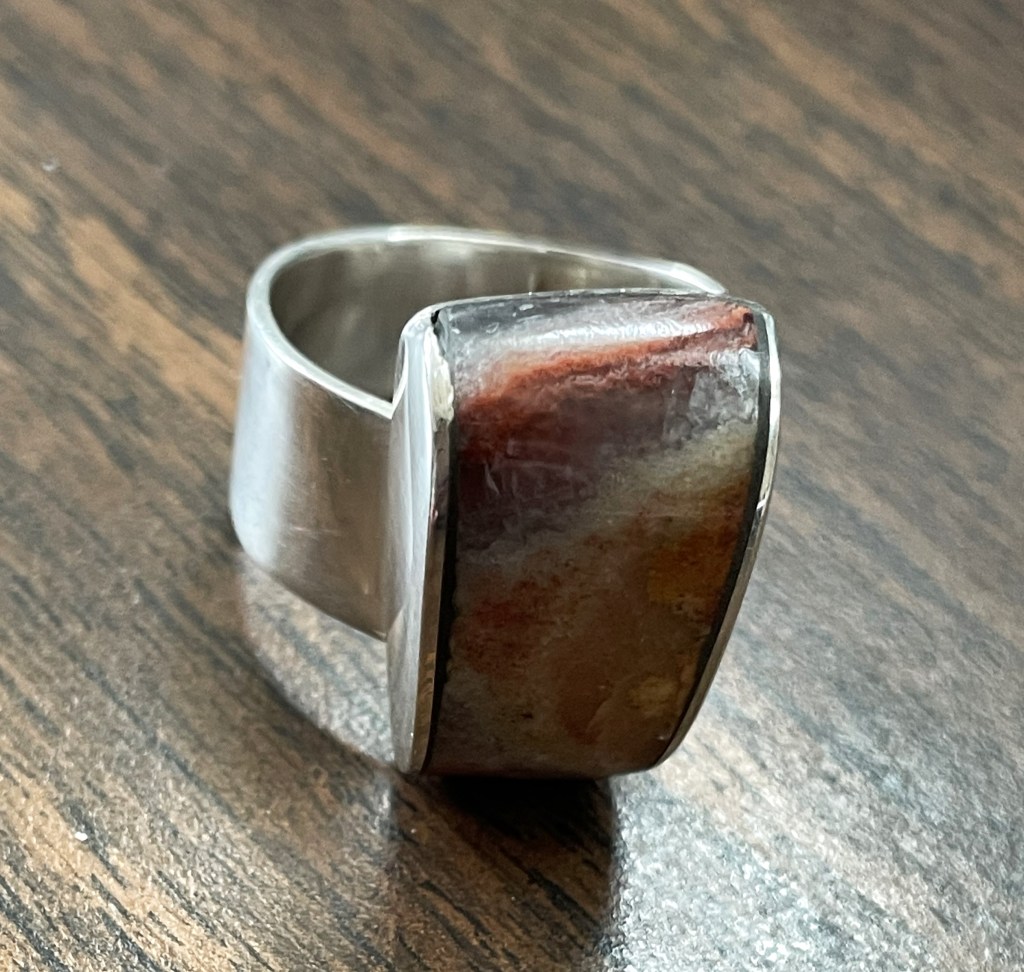
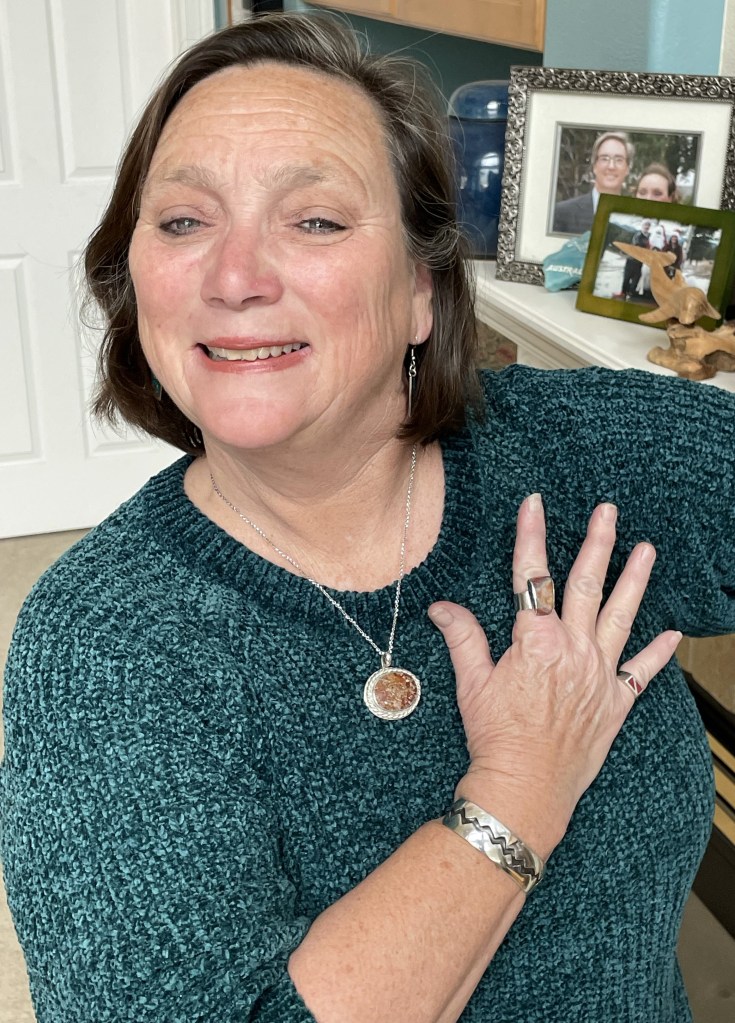
I have officially graduated from silversmithing 101. I finished all three of my assigned projects – all three pieces, my pendant, my bracelet and my ring, and I am the only one in my class who completed them so far, and in less time too. The class was a 10-week class. I missed the first week because I didn’t know about the class, and I am missing the last class (tomorrow) because we will be on a plane en route to Portugal.
I just finished my ring yesterday. Both my ring and my pendant are made with red jasper stones. I wanted them to somewhat match and to be a set.
Each piece had their own specific set of challenges, but I met them all, and made all my pieces. And personally, I think they came out pretty nice too. They are flawed and have plenty of mistakes, but then, so do I. 🙂
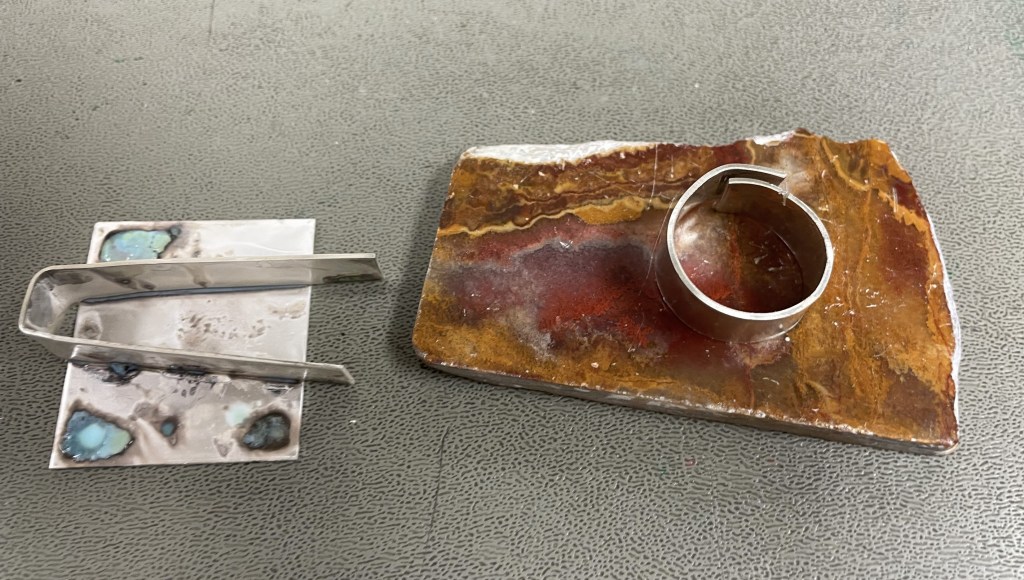
I had to shape the silver to make my ring and solder the bezel together. Then I had to file and solder and cut my stone.
Once everything was soldered together, it was file, file, file and sand, sand, sand, using different sized files and different grades of sandpaper.
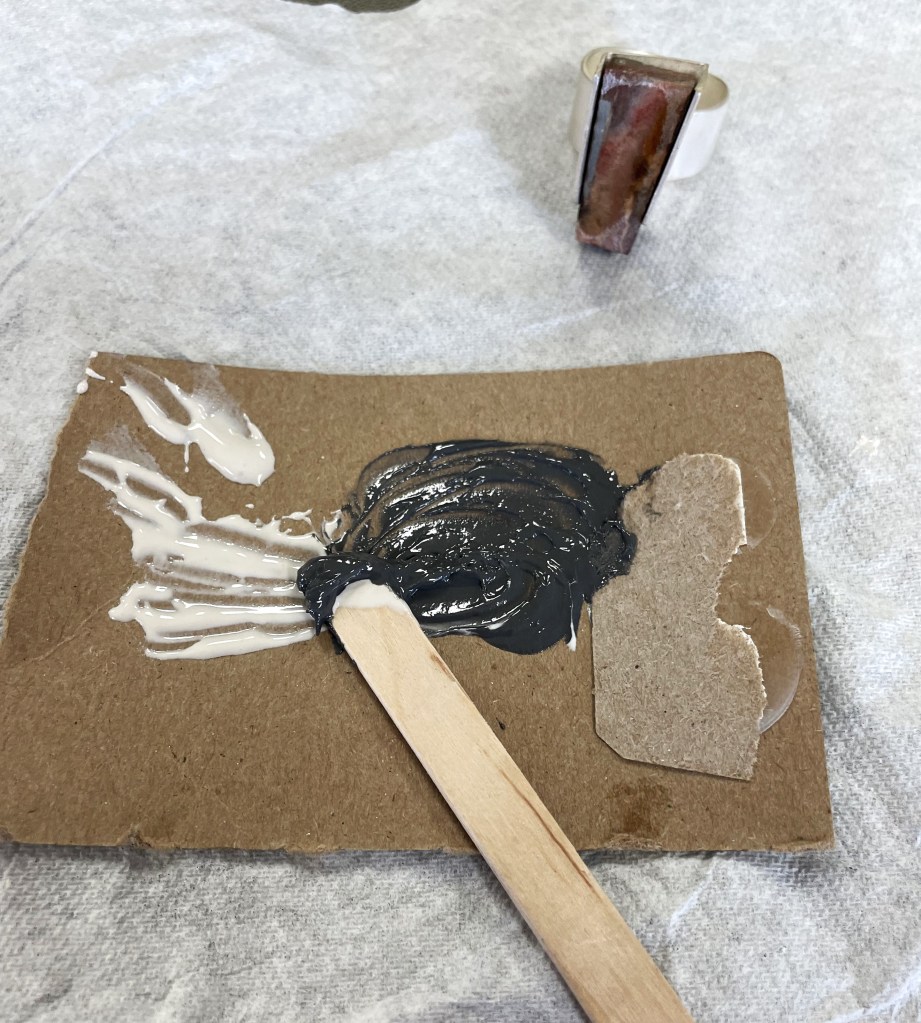
I made my epoxy and set my stone. To set the stone, I needed to make sure the stone was set in place and had to let it dry for 24 hours before I was able to cut it down and shape it. This was definitely a process, and I had to reset it after the initial 24 hour wait because I had gaps between my silver and my stone. So I had to redo this whole step. Needless to say, I wasn’t too happy about that. We mix two different parts of the epoxy together in equal parts then generously spread it all over the bezel.
I had to hold it together like this in between each waiting period, waiting for the epoxy to completely dry and set.
After the second try, it was finally ready to cut the stone and shape it on the stone drill.
Once this was done, I had to shape the silver on the metal cutter. Then sand and polish again and again, before finally being able to finish it up on the polishing machines.
And Voila! Les pieces de resistance!
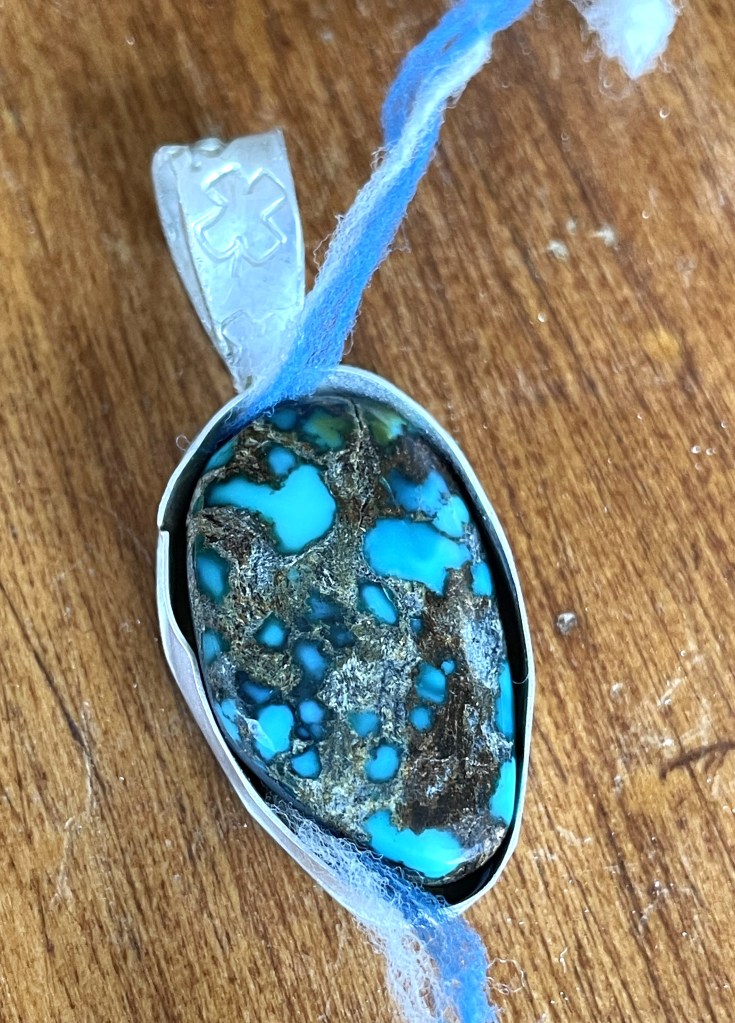
And not to brag or anything, but NOT only did I finish all three of the assigned pieces, I also started working on a fourth piece as well. I had the time and I had the silver and stones, so why not, right?! I am actually almost finished with that piece too. I will finish that up in my next class, after we return home. I started another pendant, this time using a Chinese turquoise. I wear mostly blues and greens anyway, so this is more me. I am about 2/3 finished with this piece.
I made some mistakes on my bezel that I am correcting, and I am once again in the sand and polish phase. I have already done two or three polishes, and have at least one more to go before finally setting the stone and completing my pendant. We use dental floss when working with the stones before finally setting them. The dental floss makes it easier to remove them while we are still working on everything else. But this piece will be completed literally on my first class of the second session. I am that close to finishing it. I almost finished yesterday, but I still have more tweaking to do first. Don’t worry, I have cleaned the piece up a lot since taking this picture of it. 🙂
The second session, silversmithing 201, gives us a lot more freedom and interpretation to use own own ideas for our pieces. I will make another bracelet, but very different from the first one, and a barrette that will also use the Chinese turquoise. I am also thinking of some earrings to match. I already purchased what I need for these. Then, who knows what I will make. 🙂 I made my bale out of some of my scrap pieces, and I was playing with a stamp I bought, so it has a floral design to it too.
Ten weeks ago, I had no idea I would be making jewelry, and look at me now. I am now officially a jewelry maker, and loving it. 🙂 You are never too old to learn new things. Keep growing and keep challenging yourself, and just keep on getting better and better. You just never know what is out there waiting for you. Never give up, and never give up on yourself. I think, this is the mystical fountain of youth we have all heard about. 🙂
Have a great day and make everyday great. Til next time.
Yesterday morning, Mike, Lauren, Larry and I all went on a bird watching walk at nearby Barr Lake. It was a beautiful day, but we were all a little disappointed with the bird watching experience, for different reasons. I can’t speak for anyone else, but I see the same exact birds the ornithologists were talking about in my very own backyard, all the time, and I see more of them too. I know my birds every bit as much they do, and maybe even better. I caught “the experts” making false statements a couple of times, and Larry and I pointed out different birds to them, that they would have missed otherwise, like the wild turkey and the Northern Harrier. I don’t think they believed me when I said I see the same birds and much more around my own lakes until I showed them some pictures of the birds I have taken. That being said, though, it was still a beautiful day to commune with nature, and we did still have a good time.
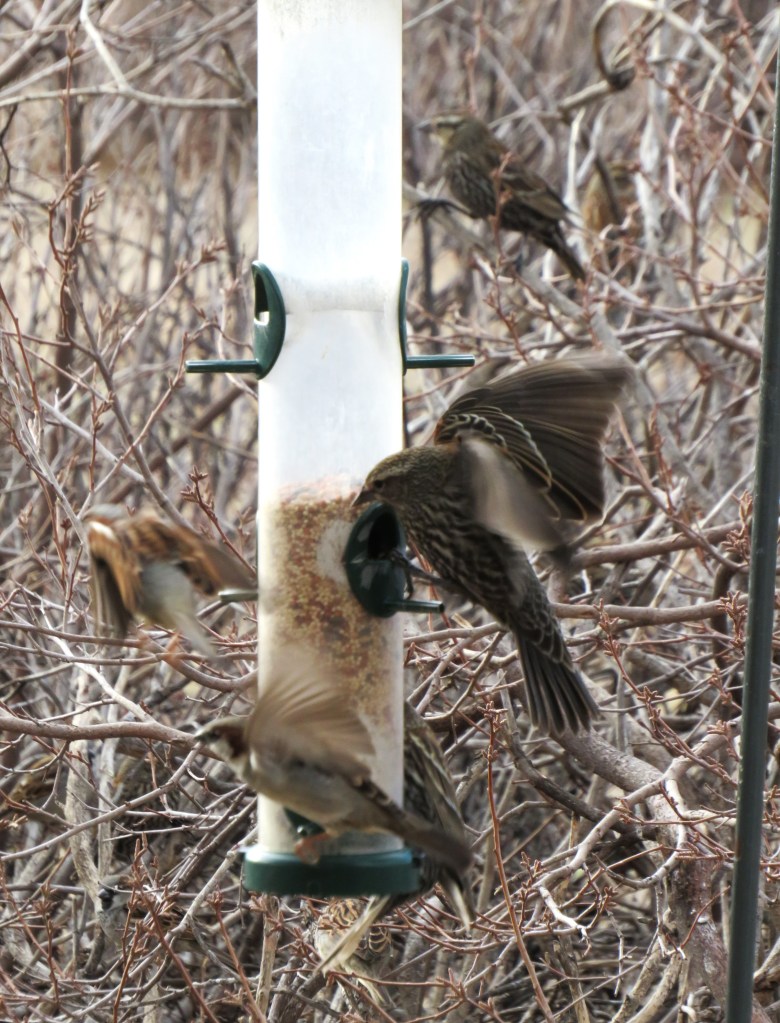
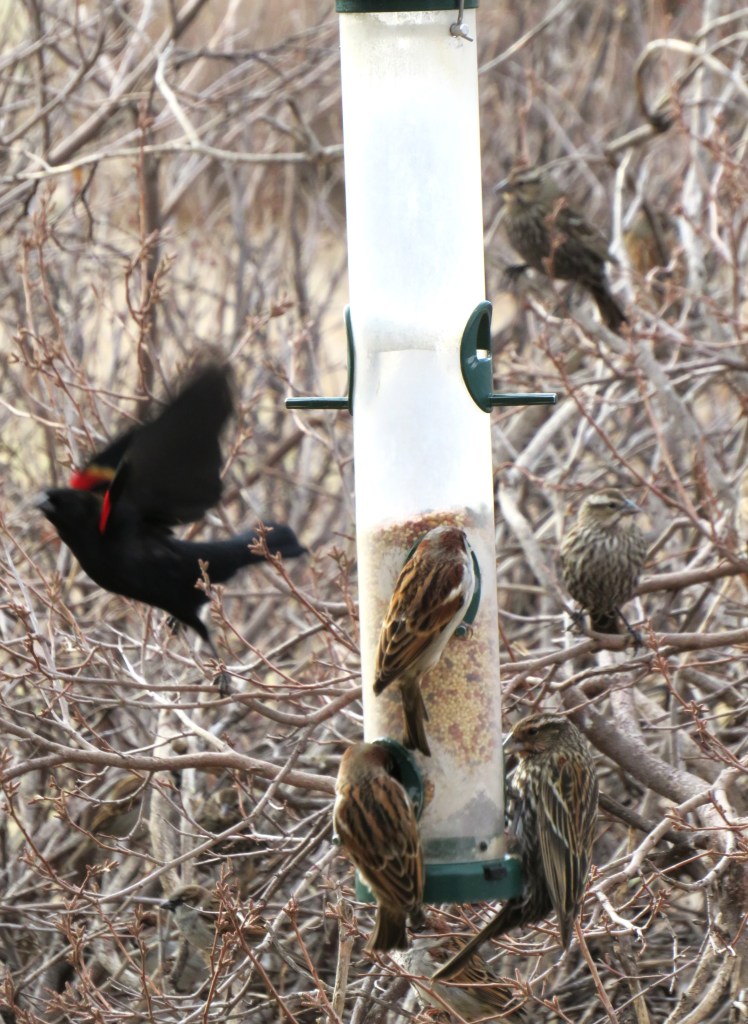
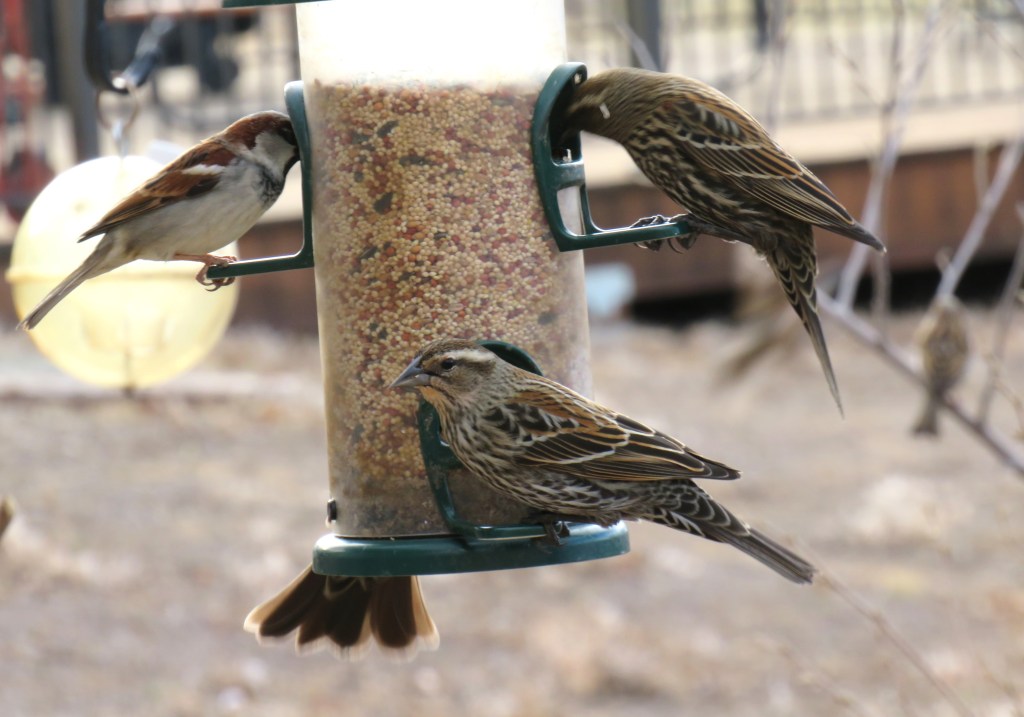
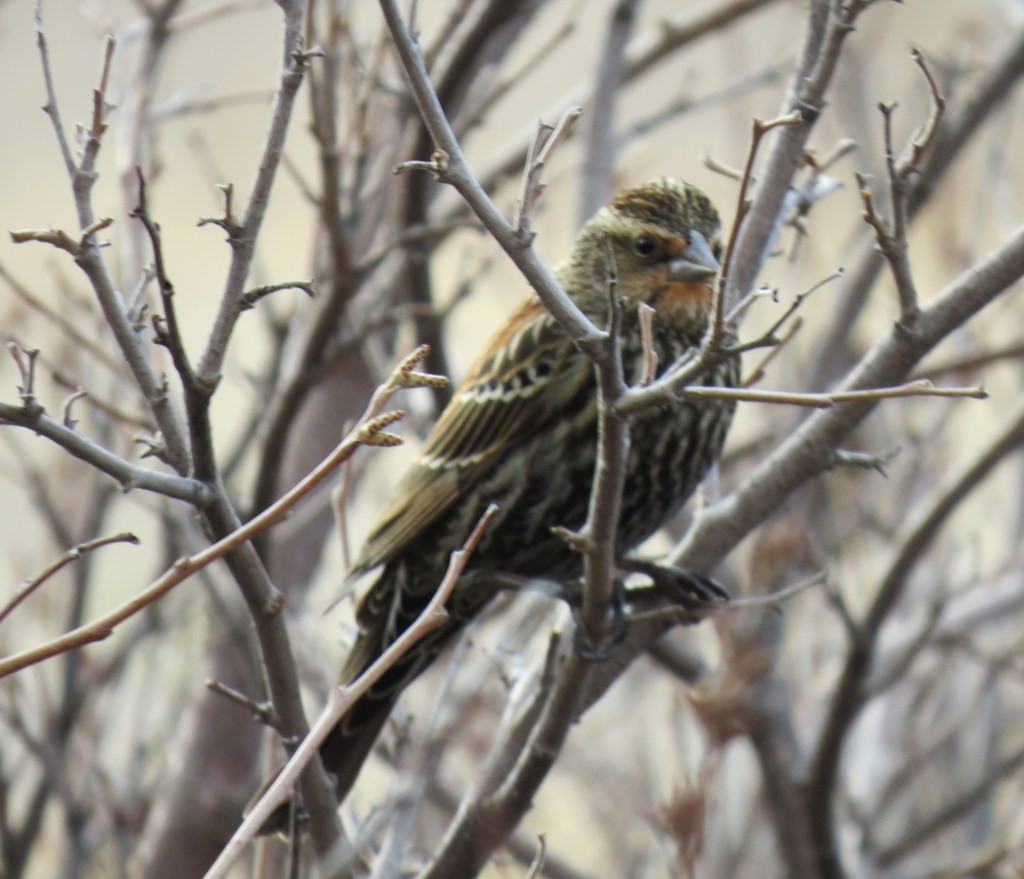
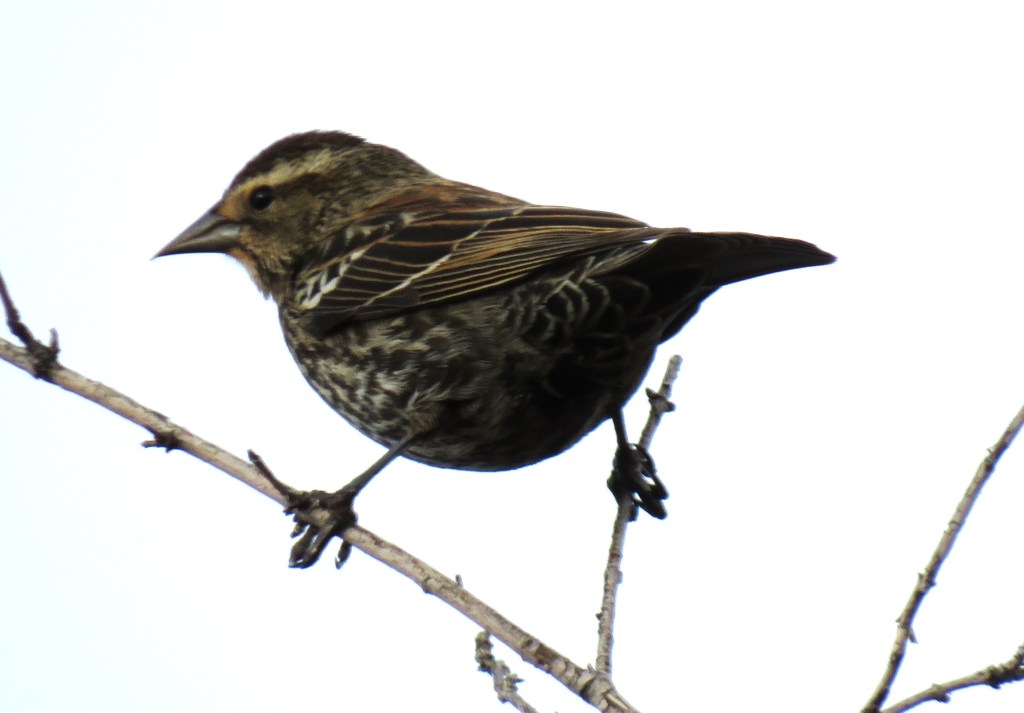
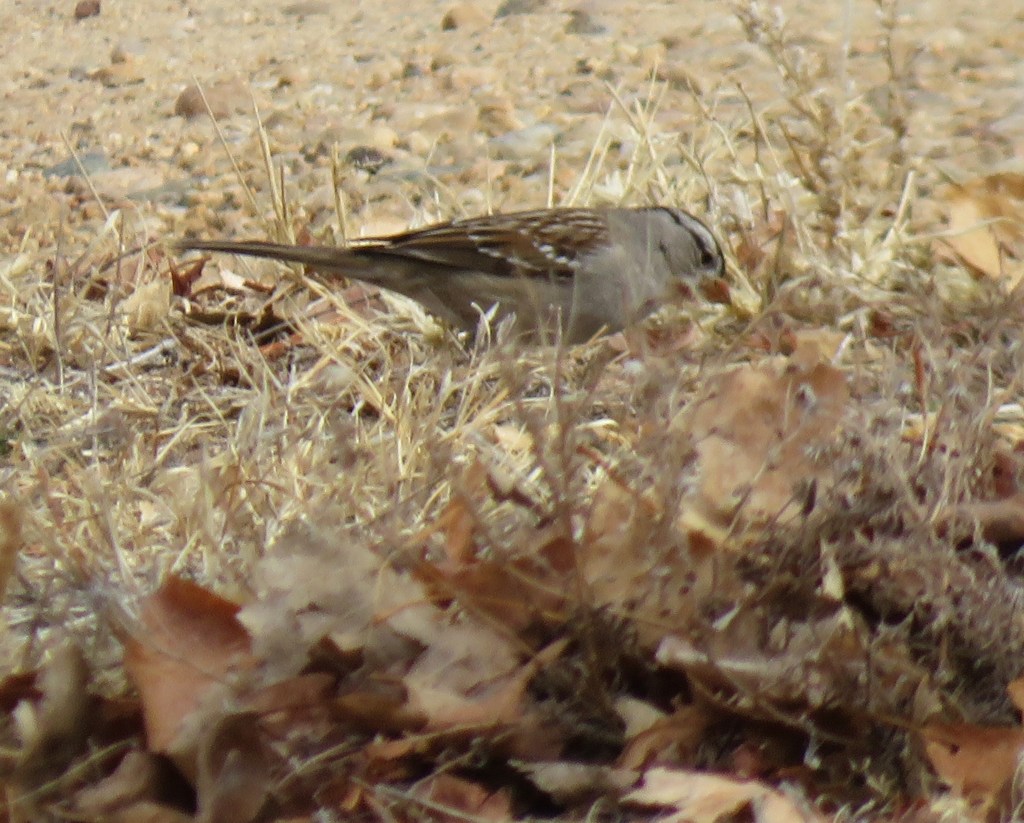
We saw more birds eating at the bird feeders behind the Nature Center than we did out on our walk. There were mainly various sparrows and red-winged black birds.
We saw and heard a few other various birds as well, perched in the trees.
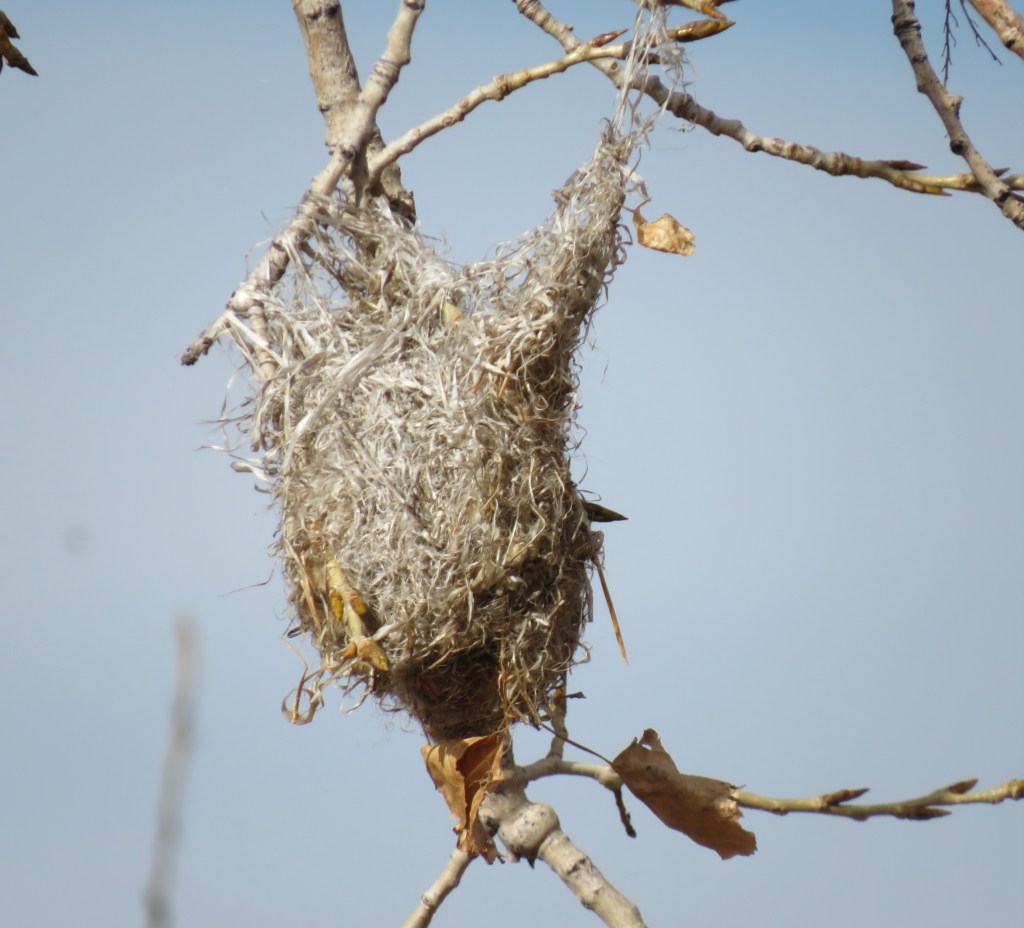
We saw lots of birds nests, mostly bullet oriole nests all throughout the trees.
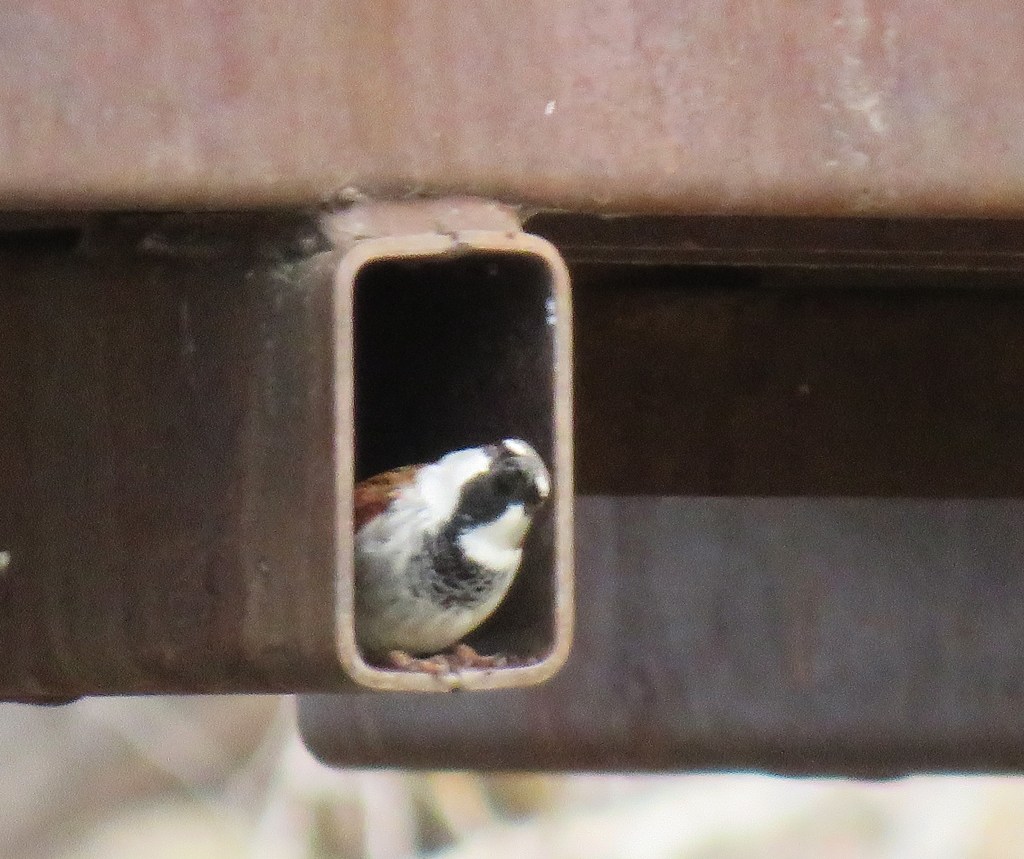
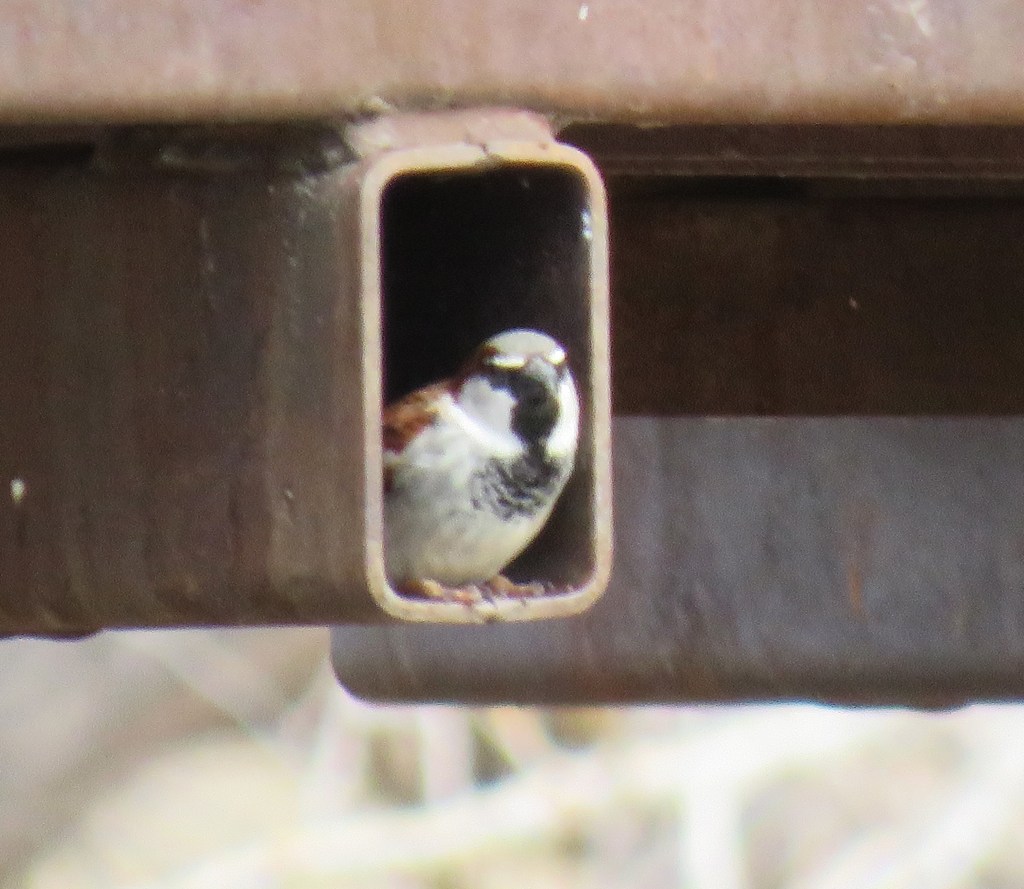
Ironically, I did not get any shots while out walking with the “experts”, but got all these shots either before or after we had finished the tour. I love these little sparrows underneath the bridge.
This little guy was looking for food by the bushes back at the Nature Center.
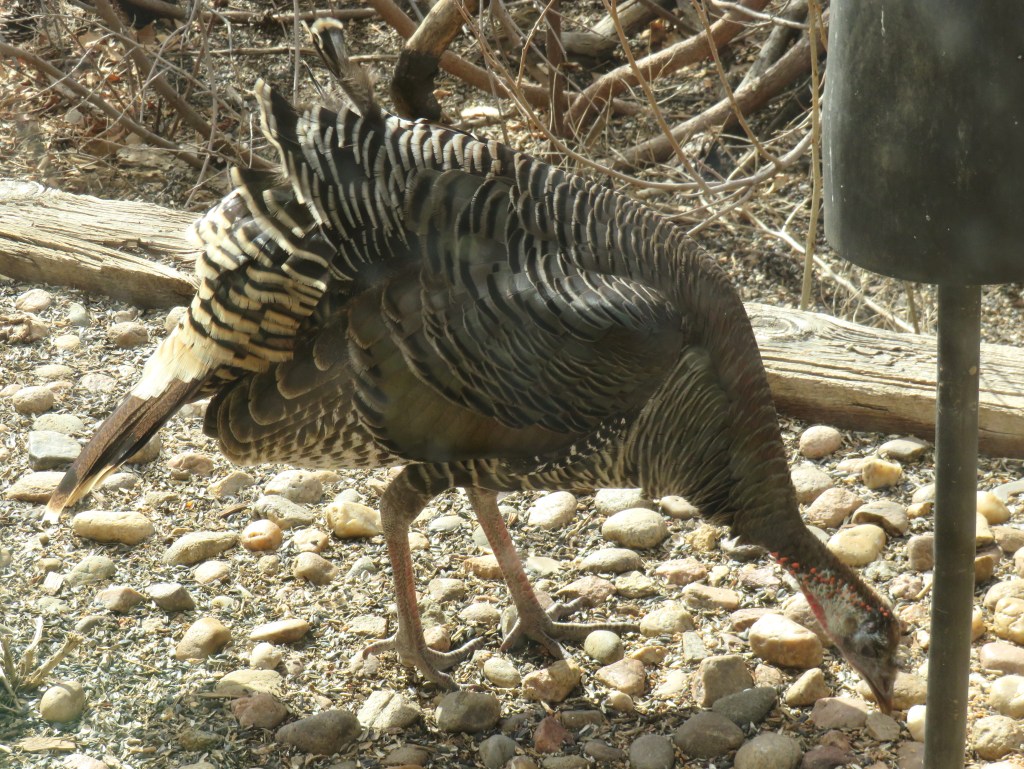
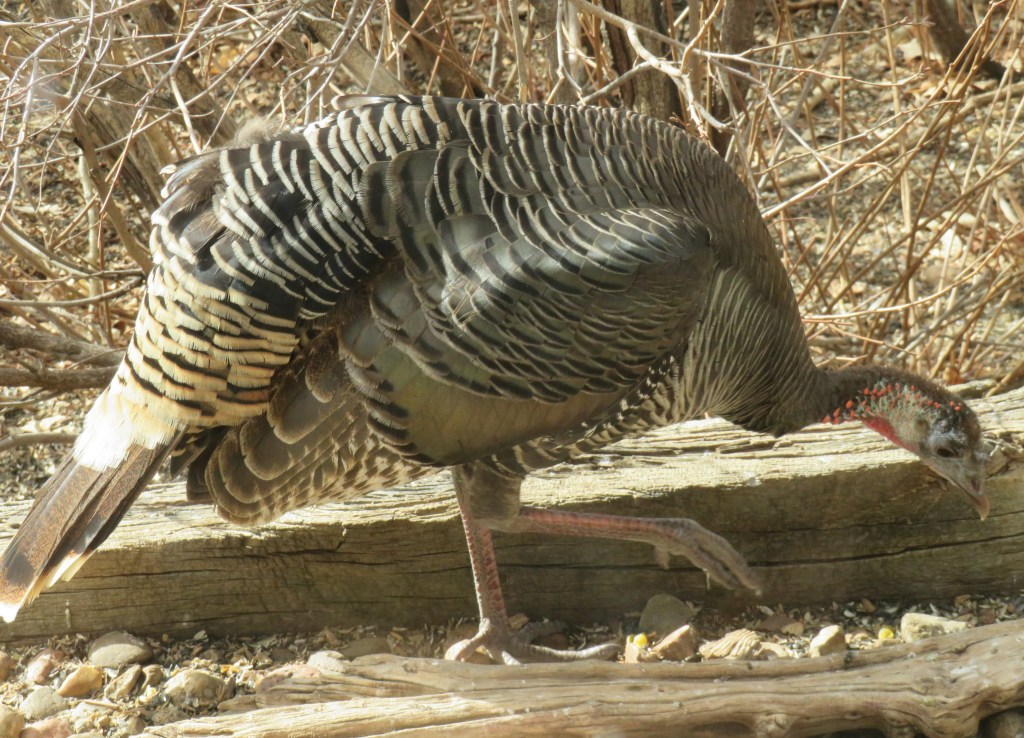
We saw a wild turkey out on the walk too, Larry is the one that pointed it out to the “experts”. On first glance, the “experts” thought is was a Canadian goose, but to their credit, we were quite a bit a way, though they had their big scope and should have been able to tell right away. But again, once we got back to the bird feeders, at the back of the Nature Center, sure enough, the turkey was there too, eating with the rest of the birds.
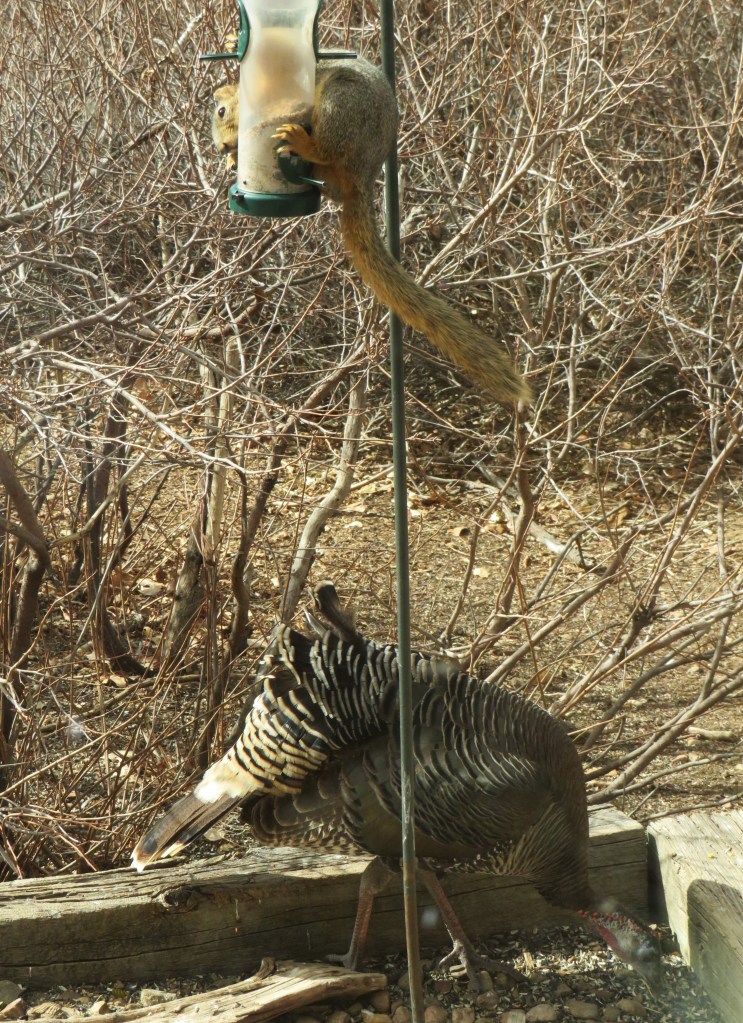
I like this shot of the turkey and the squirrel.
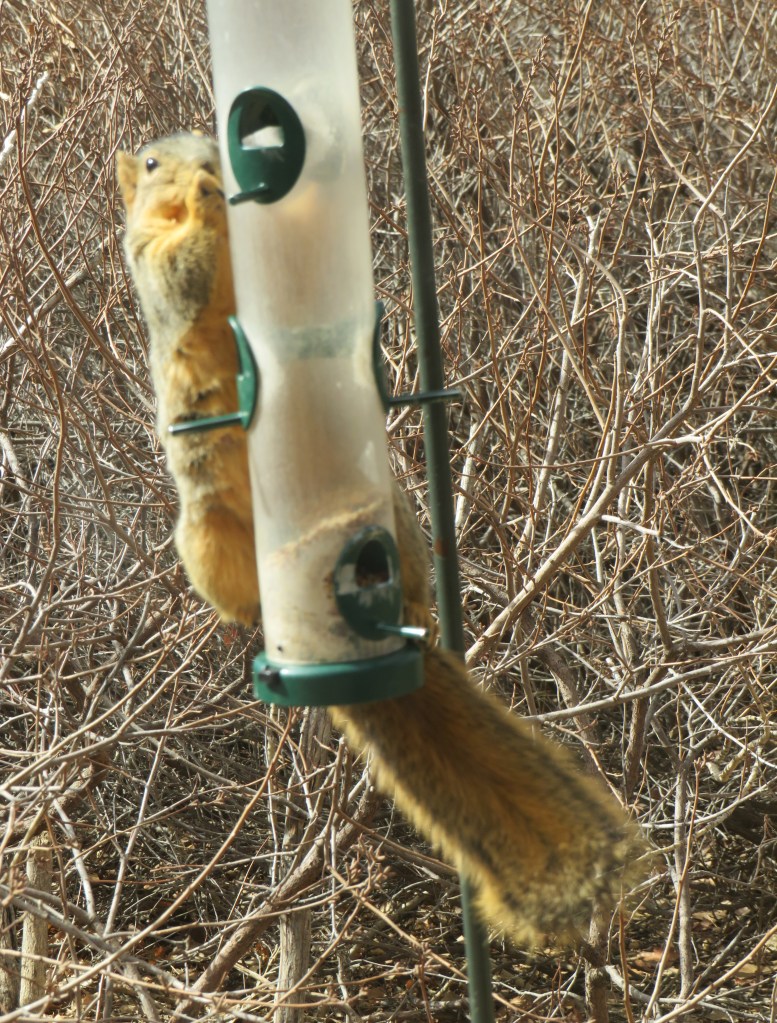
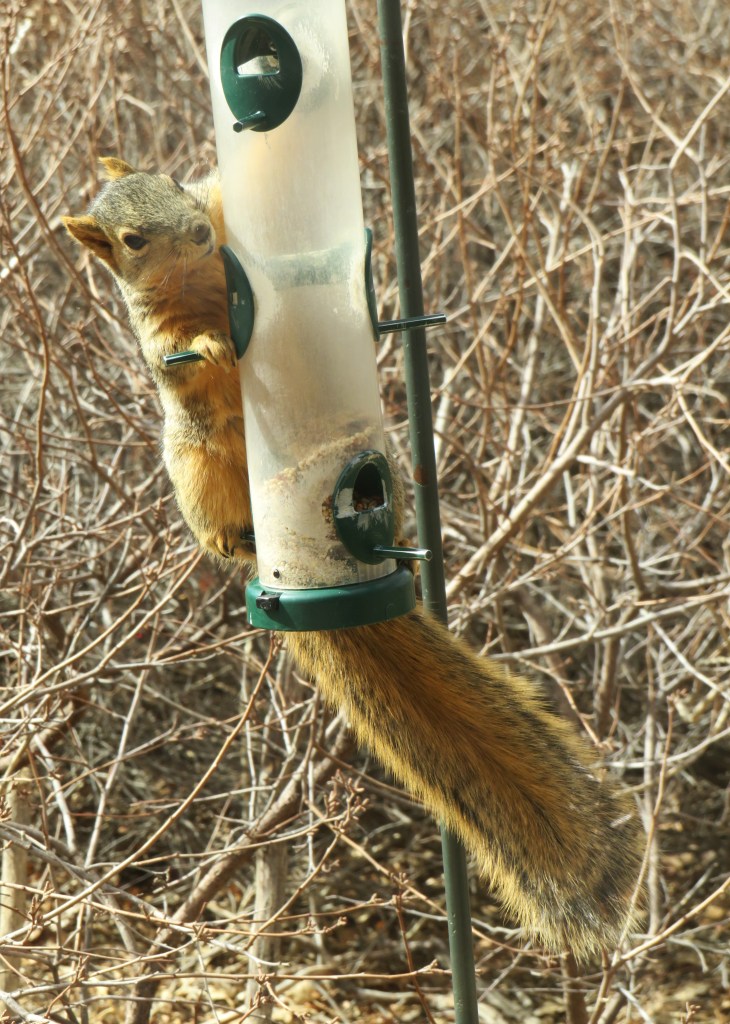
I really like these photos of the squirrel though. He got caught and he is 100% guilty, and he knows it!
After our bird walk, we took Mike & Lauren out to Rosa Cantina for lunch Rosa Cantina. We even embarrassed Mike and had the servers sing him Happy Birthday. They really enjoyed that a lot. We all did. 🙂 After lunch, we took a little break, then Mike & Lauren came back over for game night. Mike said he enjoyed his birthday festivities. 🙂
We had a good time, and as I said, it was a beautiful day, but we all decided we got more out of it from walking around on our own than we did from the event itself. But it was free, which is good. Ironically, once we got back home, I was sitting at our dinning room table, looking out our big window that faces our lake, and just in my own trees, in my own backyard, I saw blue jays, gray-headed juncos, and a beautiful Cooper’s Hawk all within minutes of each other. Much more than we saw on the bird walk. 🙂
No matter what you do, make the most out of every situation. have a great day and make everyday great. May 2026 be filled with happiness, good health and prosperity for all. ‘Til next time.
Can you believe “A Jeanne in the Kitchen” has been around for 8 years now? My 8th bloggoversary was on March 13th. WOW!! Time flies when you’re having fun. Let’s hope for at least 8 more. 🙂
Happy Anniversary with WordPress.com! You registered on WordPress.com 8 years ago. Thanks for flying with us. Keep up the good blogging.
A big thank you to all of you. None of this would have been possible without you. We make a great team. 🙂
Once again, we are getting ready to pack our bags and take a trip. In a few days we will be off to Portugal. This is our first time in Portugal. Larry has been busy planning this trip for months now, and now it is finally here. Because we will be traveling once again, that also means it is time to clear our the fridge, making it as empty as we can before we leave. We are eating all kinds of odds and ends and using up all of our leftovers.
Soups, chilis and salads are always good ways to use up leftovers. We had some steak fajitas leftovers, but not enough for a full meal on their own. So I turned them into a salad and made a chili lime vinaigrette to top them. I also used 3 of my Alliums too, garlic, red onions and green onions All In The Family. 🙂
Chili Lime Vinaigrette
I just threw everything into the food processor and processed until it was all smooth and creamy. I also added some “secret” ingredients too. 🙂 I just had some tiny bits of other vinaigrettes that I added as well, just to give more flavor and to use them up mainly.
2/3 cup olive oil
2 TBSP lime vinegar
2 TBSP lime olive oil
1/3 cup cilantro
1/4 cup lime juice
1 TBSP garlic
1 jalapeno, seeded
2 tsp Dijon mustard
1 tsp cumin
1 tsp dried oregano
1 tsp dried thyme
Process in the food processor and save until you are ready to use.
I built my salads starting with a bed of Romaine lettuce, cheese for Larry, red onions and tomatoes. Then I added the steak fajita mix, which was sliced steak, mushrooms, onions, garlic and bell peppers.
I cut up some tortillas and pan fried them until they were crispy and added those on top, along with a sprinkling of sliced green onions. And Voila, salad is served. Juneau is trying her best to sneak some of the tortilla strips. 🙂
We leave Tuesday, so I probably won’t be doing too much cooking between now and then, though I will still have fun things (hopefully) to share. Between now and the time we leave, I will be very busy trying to do last minute things before taking off. I am working hard at finishing my ring, my last piece of jewelry for this class session. I will be working on it again today and Sunday too if need be, in order to get that finished. Then of course, I need to do all the last minute laundry and house cleaning before we go too. Tomorrow we will have a full day celebrating Mike’s birthday as well. So, as you see, I will be a busy beaver between now and the time we catch our flight. But that’s OK. I like to stay busy and to be useful. 🙂
Have a great day and make everyday great. Life is what you make it, so make it fantastic. May 2026 be filled with happiness, good health and prosperity for all. ‘Til next time.
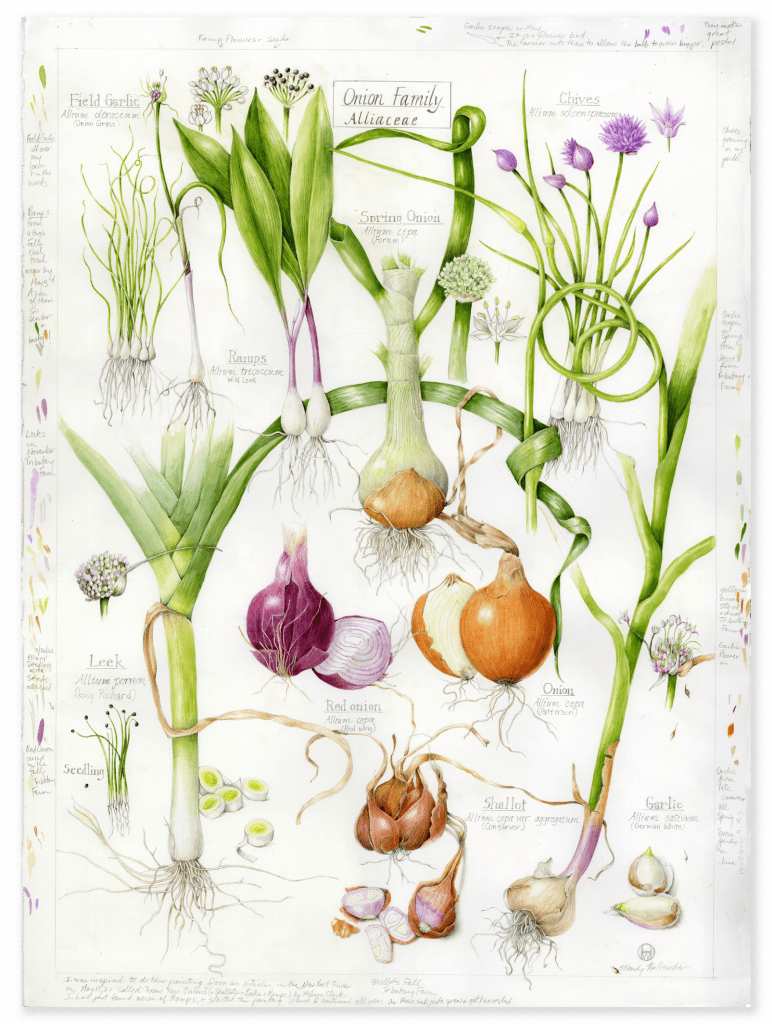
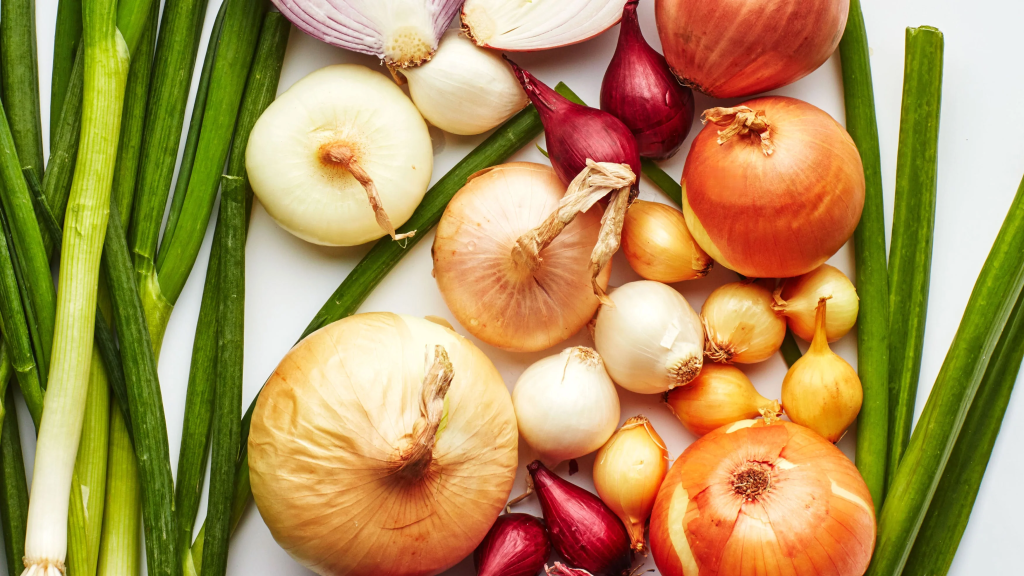
There are over 1000 species of monocotyledonous flowering plants, including essential, aromatic culinary staples like onions, garlic, leeks, shallots, and chives that are all part of the same family of plants. They are all part of the Allium family. All of these “family members” are valued for their ability to build flavor, add aroma, and bring balance to both simple and complex dishes. (Cook Fork Plate https://cookplatefork.com/. Thank you once again for the inspiration for this article. 🙂 )
The most popular and widely used members of this bulbous family are of course onions, garlic, shallots, leeks, green onions, and chives. We all use them in most of our dishes, regardless of ethnicity or location. These are used worldwide. I know I use them for literally almost everything I cook.
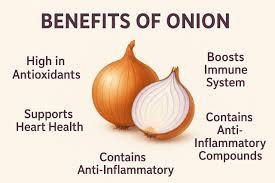
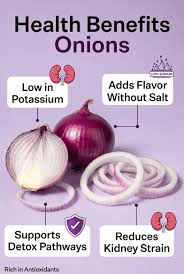
Not only are these Alliums used to enhance the flavors of everything we cook, but they are also known for their health benefits too. They are all high in vitamin C, so in the past, they were prescribed as treatments for scurvy. They are also rich in sulfur compounds and polyphenols (like quercetin), so they are associated with cardiovascular protection, anti-cancer activity, lower blood pressure, and immune system support.
Like with many ancient foods, it is believed onions and other members of the Allium family were first grown in Central Asia and then spread from there. The Allium family has been around since around 1750 BCE, and have been cultivated for at least 5000 years. At first, again like so many other foods, these foods were for the wealthy and important people. But since these plants are easy to grow and they grow in most areas, they soon became food for everyone. By the Middle Ages, onions, garlic and their other family members had become dietary staples for the peasants and the poor all throughout Europe. And like many other things, as their popularity grew, they traveled all over the world. Today, onions, garlic and other Allium family members are grown all over the world, and are used in all different kinds of foods, found in dishes and recipes from all ethnicities. They are eaten and enjoyed both raw and cooked. They are pungent when eaten raw, but are sweet when cooked.
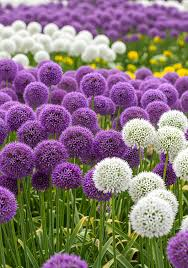
The Alliums are hardy plants and can grow almost everywhere. They can grow in full sun light or light shade. They are often used as a companion plant, planted next to other plants, like broccoli, because they are a natural pesticide due to their pungent aromas. There are a few varieties of ornamental onion plants as well, and even those are strongly scented. And they all flower too, when they are ready to seed. So not only to they enhance all of our favorite recipes and protect your other plants from insects, but they look pretty in your garden too.
There are a lot of folklore and tall tales associated with the Allium family members as well. Here are some fun facts I bet you didn’t know about some of your favorite ingredients.
Garlic was eaten by early Greek Olympic athletes and Greek and Roman soldiers to enhance their performances and to give them strength.
Onions were used as part of funeral rites and traditions because it was believed they helped the deceased with their journeys to the other side.
Because of their spherical shapes, it was believed they represented eternal life. This idea was popular because the name “onion” is thought to come from the Latin word unis, which means one. This was referring to the unity of the onion layers that make up the whole onion.
Garlic was thought to repel vampires and therefore was thought of as a protection against evil.
I LOVE onions and garlic. But I HATE how onions make me cry so much. Why do they make us cry? Onions make us cry because they are loaded with irritants that are stimulated when exposed to the air. When we cut them, we expose these irritants. The tears we cry are called reflex tears. These form when your eyes are exposed to irritants, such as smoke and onion fumes. Onions spew enzymes and sulfenic acid when their skin is broken. These compounds combine to produce propanethial S-oxide, which is an irritating gas. The tears we cry when cutting onions is actually a defense mechanism our body produces to protect us from harm; the harm of the irritants from the propanethial S-oxide. Propanethial S-oxide turns into sulfuric acid when it touches the water layer that covers and protects your eyeballs. The more people cry, the more sensitive they are to the propanethial S-oxide. Which means I must be HIGHLY sensitive to it, because even when cutting just 1 onion, I cry like a baby, my eyes burn something terrible and my nose drips and drips. The onions that generate the harshest chemical reaction have lots of sulfur-containing compounds. These include yellow, red, and white onions. Sweeter types, such as green onions, have less sulfur, are less pungent, and produce fewer tears in most people. But as uncomfortable as it is, the onion cry isn’t dangerous at all. The length of time you store onions affects their potency and tear-producing abilities. Fresher onions are less likely to cause crying than those that have been stored for an extended period of time. HMMMM! So they say. I cry no matter how fresh my onions are; EVERY TIME! I have tried “all the tricks” that are supposed to help with the crying, NOTHING works for me, although I have to say, putting the onions in the refrigerator for about 30 minutes or so before cutting them does help a little. Maybe you will have better luck. 🙂
I hope your learned something new things about some of our favorite ingredients to almost all of the foods we eat. I know I did. 🙂
Have a great day and make everyday great. Life is what you make it, so make it fantastic. May 2026 be filled with happiness, good health and prosperity for all. ‘Til next time.
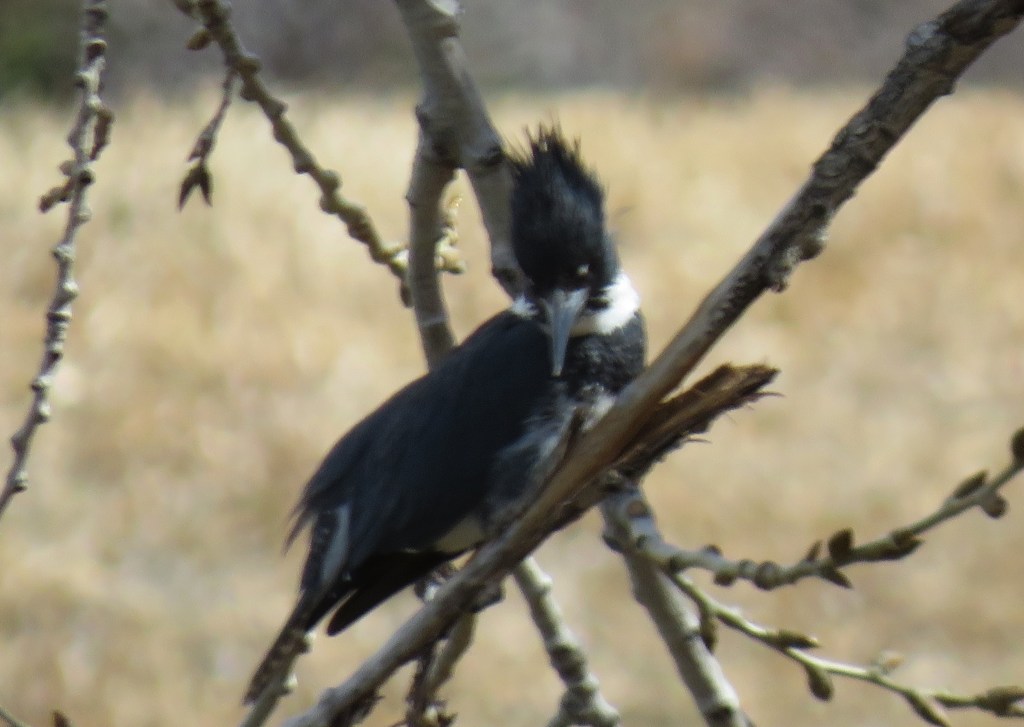
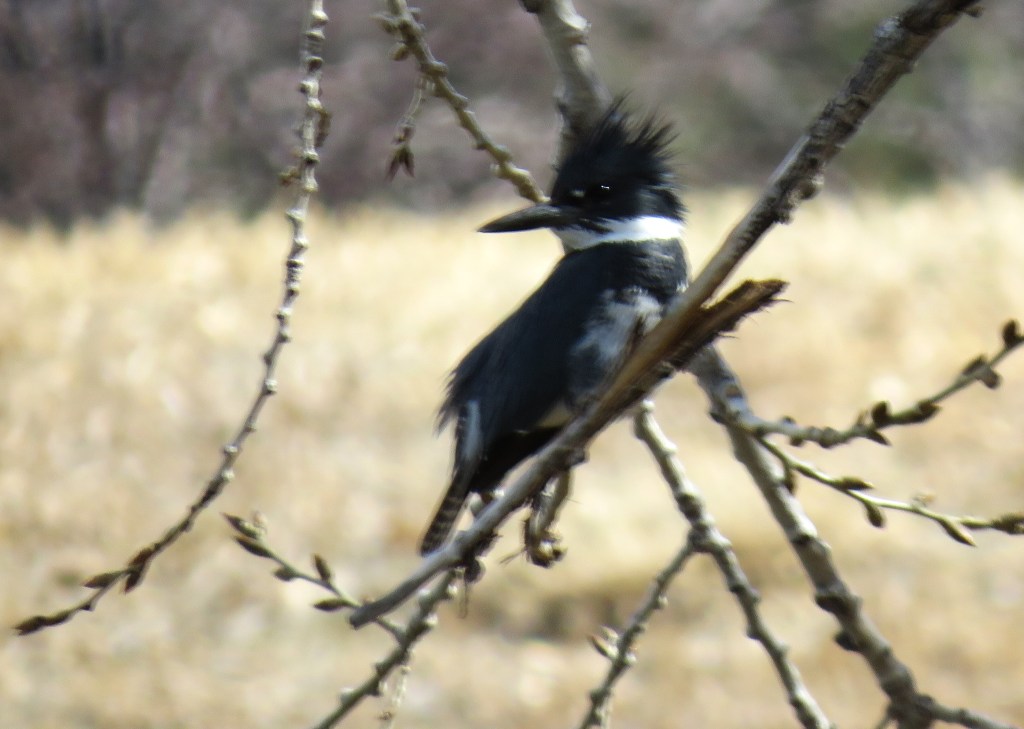
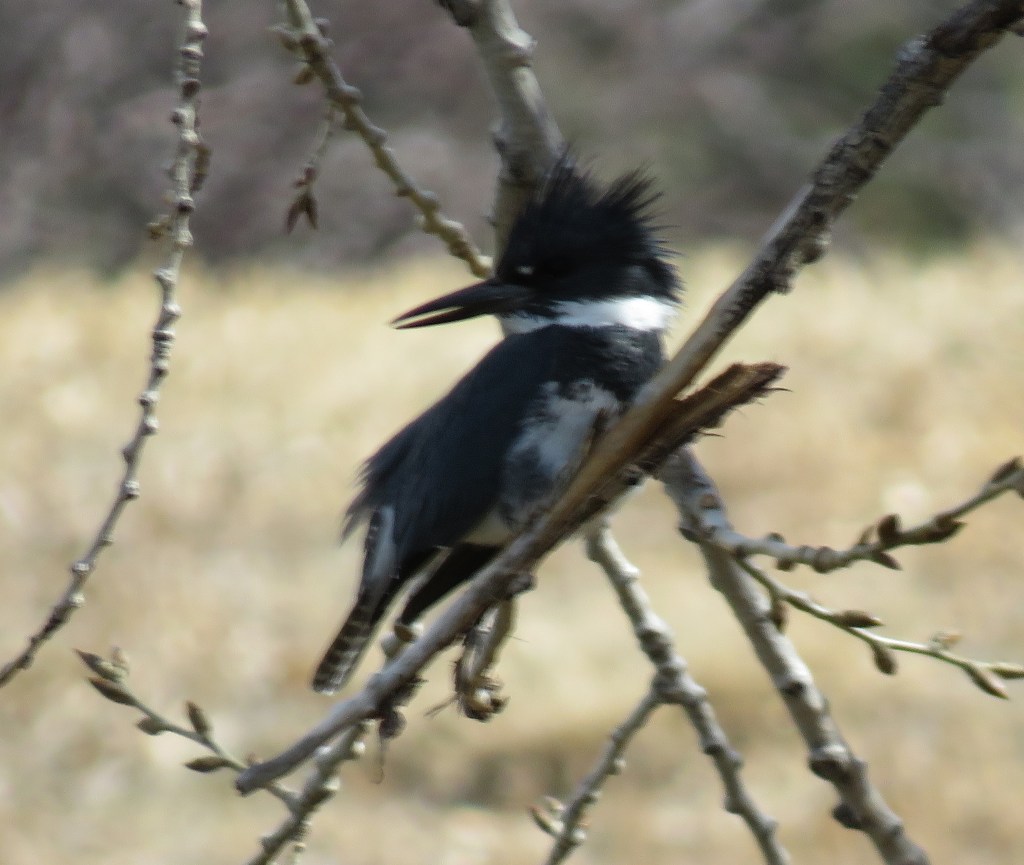
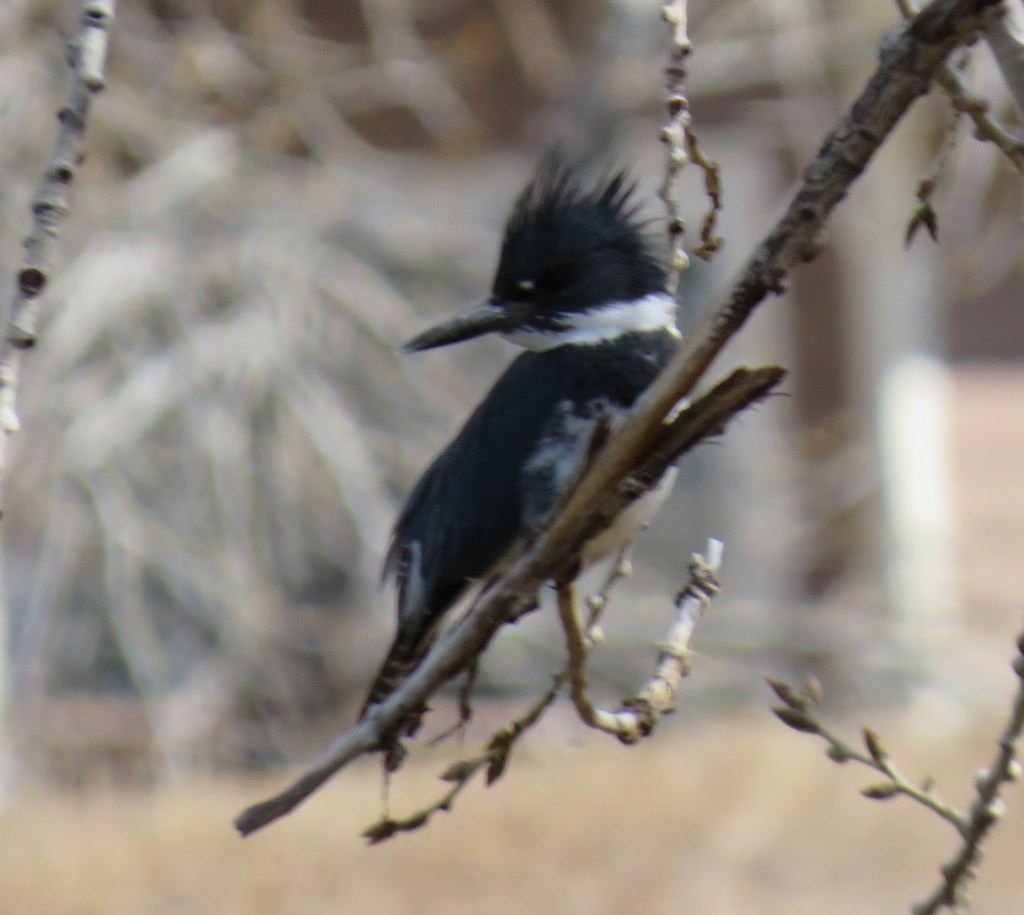
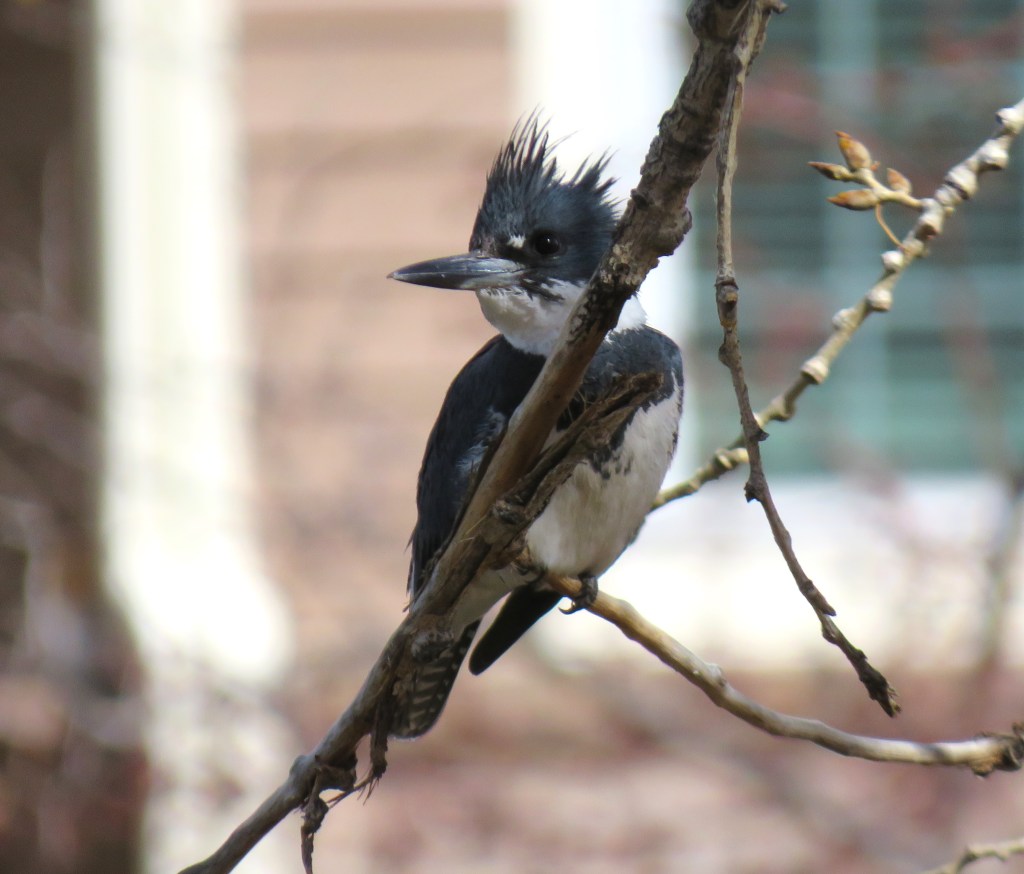
It was yet another quiet day around the lakes for the most part. But when I least expected it, I saw a Belted Kingfisher fly right past me. I saw him in flight, and looked for him, but didn’t see him until a little later. And there he was, perched in a tree. He was waiting for me and was ready to have his picture taken. I was more than happy to oblige too. 🙂
Be prepared for the unexpected and you will often be very pleasantly surprised. Life passes by pretty quickly, so be ready for it when it come your way. If you are lucky enough, it just may slow down long enough for you to catch a glimpse of it. 🙂
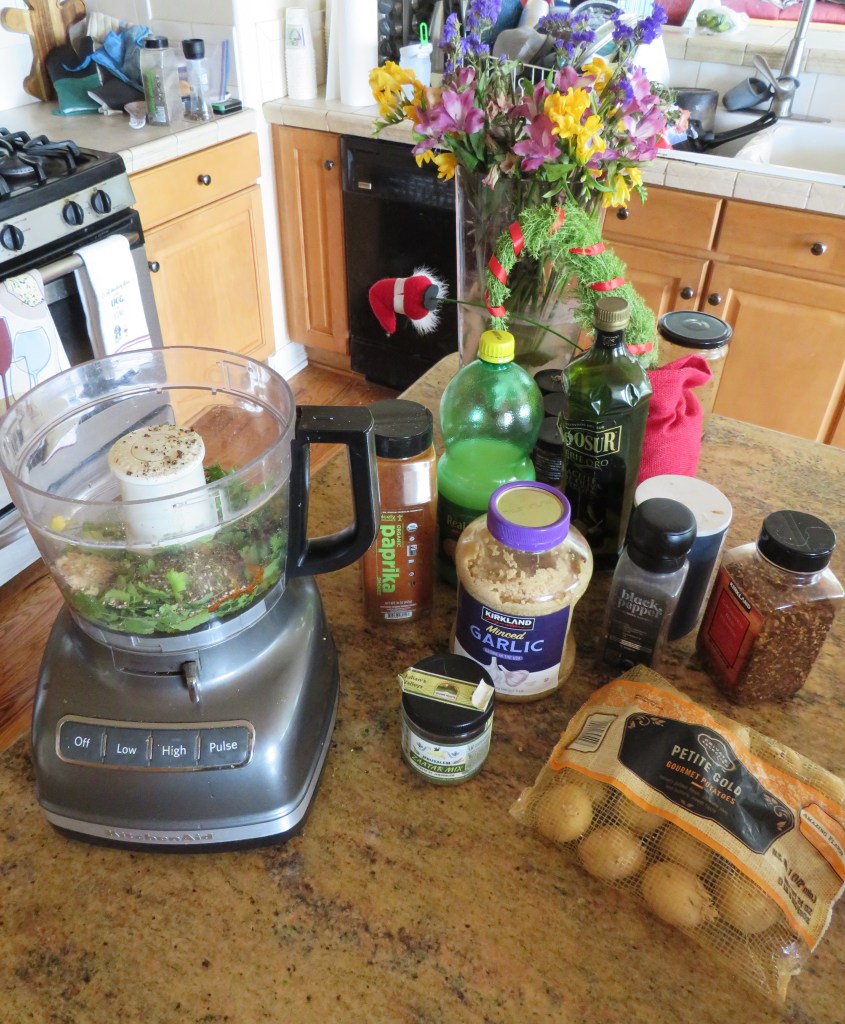
Thank you to Cook Fork Plate at https://cookplatefork.com/ for this delicious idea for Lebanese potatoes or Batata Harra. Of course I made the recipe my own, but I was inspired by his idea. They came out great. They were so full of flavor.
Batata harra is Arabic for spicy potatoes. The “spice” in batata harra typically comes from Aleppo pepper or crushed red pepper flakes. It is a classic Lebanese-fried dish of crispy,cubed twice-fried potatoes tossed in a fragrant, zesty sauce of cilantro, garlic, chili, and lemon. Originating in Lebanon and widely popular throughout the Levant (including Syria), it is a staple of Lebanese cuisine and a cornerstone of the mezze (appetizer) platter. It is also enjoyed in many parts of Spain, and are a cousin to patatas bravas. As with many other classic dishes that have been around for generations, this dish started out as a poor man’s meal, because the ingredients were inexpensive and readily available. Today, it is enjoyed by everyone.
Lebanese Potatoes with Cilantro & Lemon
The lemon cilantro sauce really made the potatoes pop. It is similar to a lemon pesto sauce that I mixed in with the potatoes. You can make the cilantro lemon sauce in advance too.
2 lbs Yukon gold potatoes, quartered
1 cup fresh cilantro
2-3 TBSP olive oil
1 TBSP garlic
1 tsp paprika
1-2 tsp Za’Atar seasoning
salt & pepper to taste
1 tsp red pepper flakes
4 TBSP lemon juice
olive oil and butter for cooking
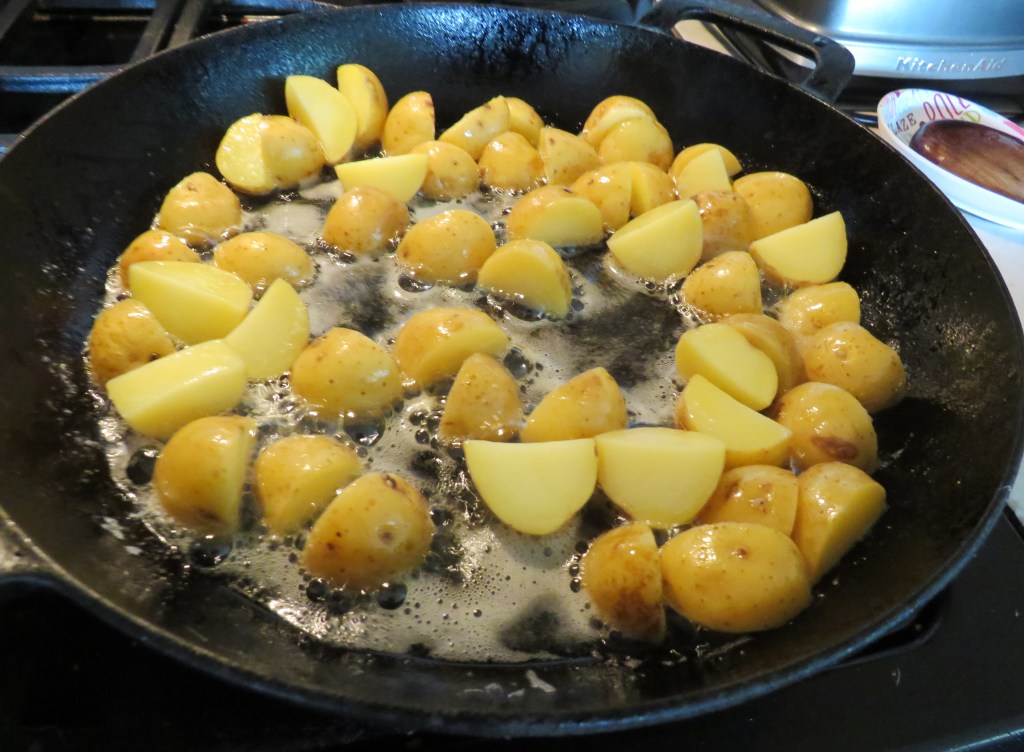
Par boil the potatoes for about 10-15 minutes in water with about 1 TBSP of vinegar, then drain. Get a large skillet very hot and add about 2 TBSP of olive oil and 1-2 TBSP butter. Add the potatoes and cook for about 15-20 minutes, or until browned, stirring frequenlty.
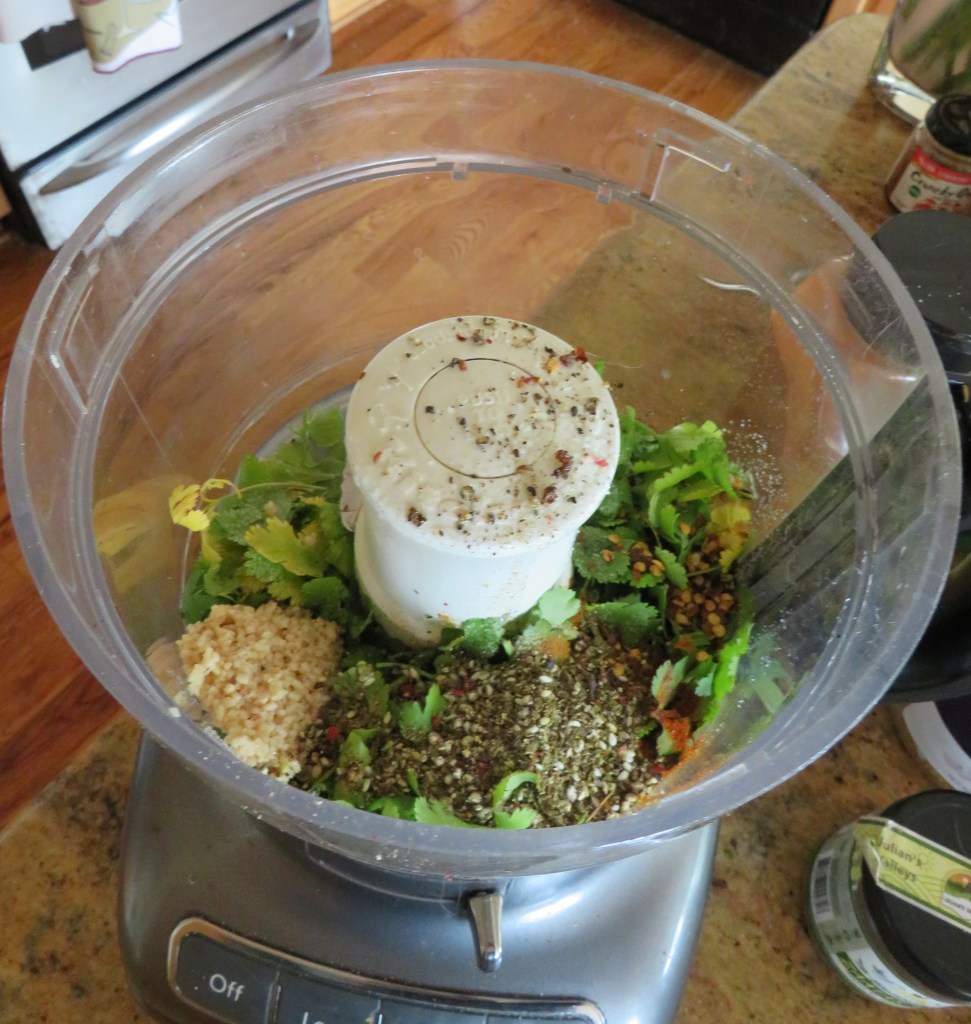
Place all the other ingredients into a food processor and process until it is all blended together and liquid.
Once the potatoes are browned, add the sauce to the potatoes, and mix together thoroughly. Continue to cook for about 5-7 minutes, stirring frequently.
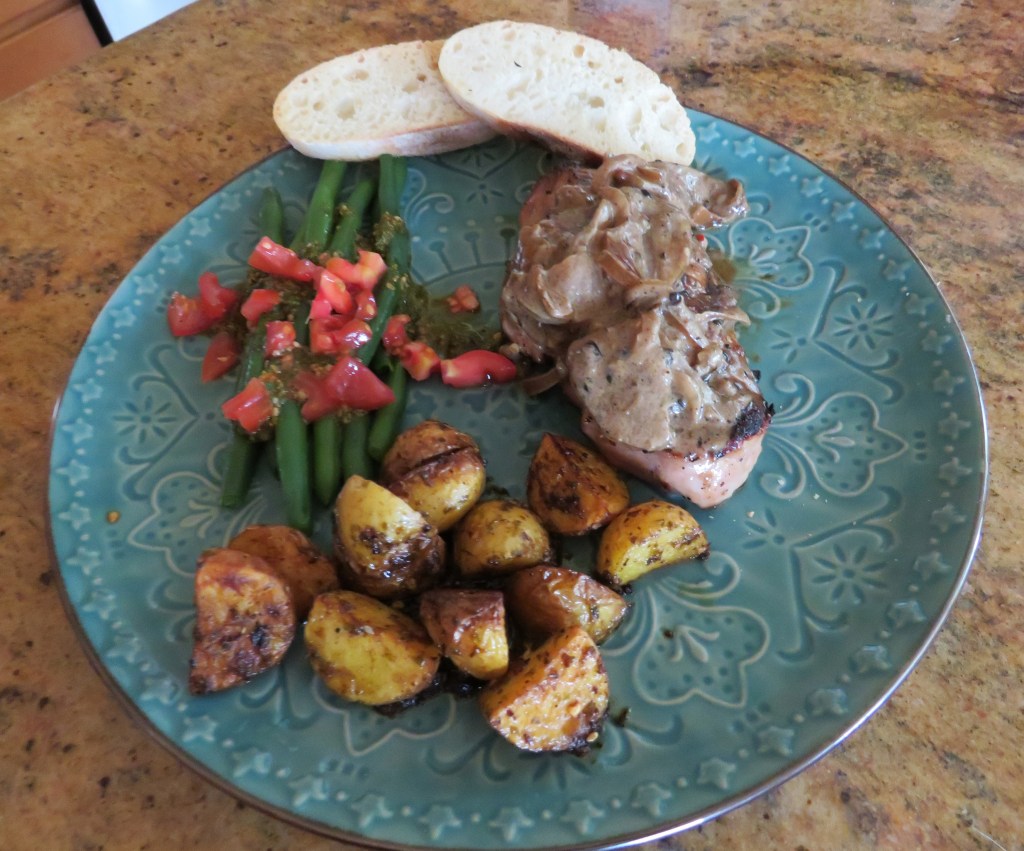
Serve alongside your favorite entrees and enjoy. I served it next to some pork chops with the rest of my whiskey sauce Smoked Turkey In Whiskey Sauce and some green beans. I used some of the remaining sauce for my green beans as well, to give them more pizzazz. Delicious!
Have a great day and make everyday great. Life is what you make it, so make it fantastic. May 2026 be filled with happiness, good health and prosperity for all. ‘Til next time.
Hooded Mergansers are quite common on our lakes. After Mallards, they are probably our most common ducks. I have tons of pictures of them. I love the Mergansers though. And even though I have a ton of pictures of them, they are still entertaining and fun to capture with my camera. Today, both Mr. & Mrs. Merganser were sitting on log in the water, just as happy as they could be. They allowed me to get a few good shots, then off they went. It was time for a swim.
As I continued my walk around the lakes, I even spotted the same turtle in the same spot as I saw it yesterday. It too was just logging in. Maybe there are some eggs there. Who knows? 🙂
You just never know what you’re going to see. No matter what, it’s always interesting. I know our lakes like the back of my hands, but I never get bored, although I do vary my walks all the time too, just for more variety and for longer walks. 🙂
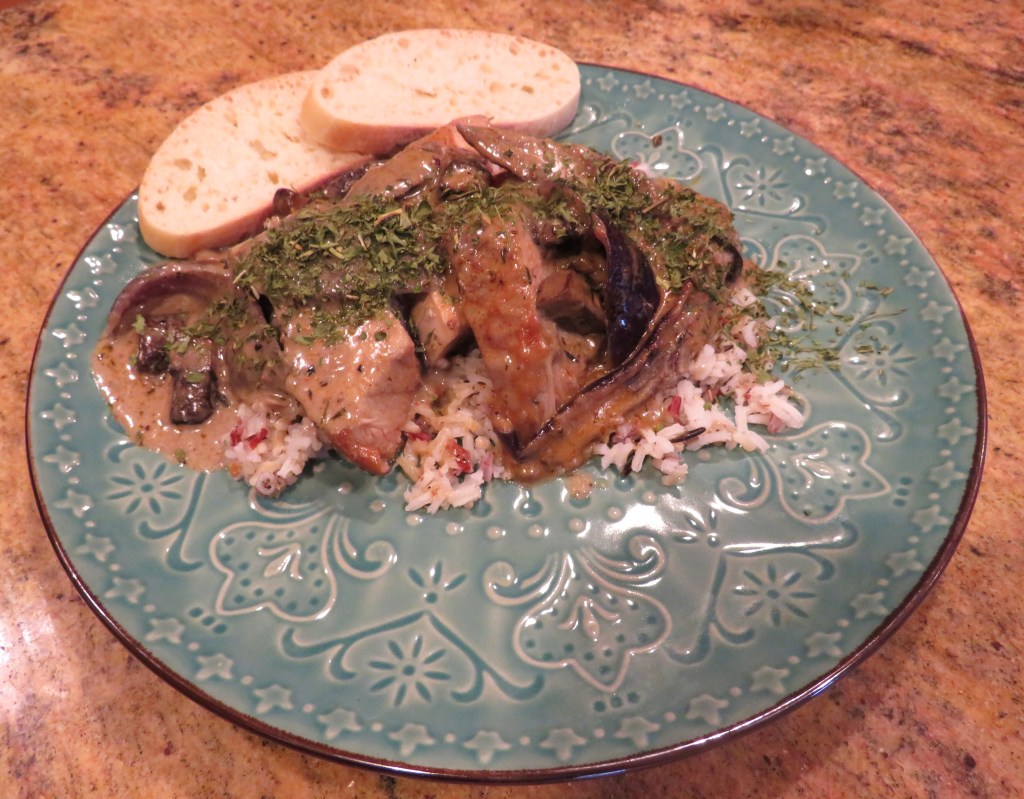
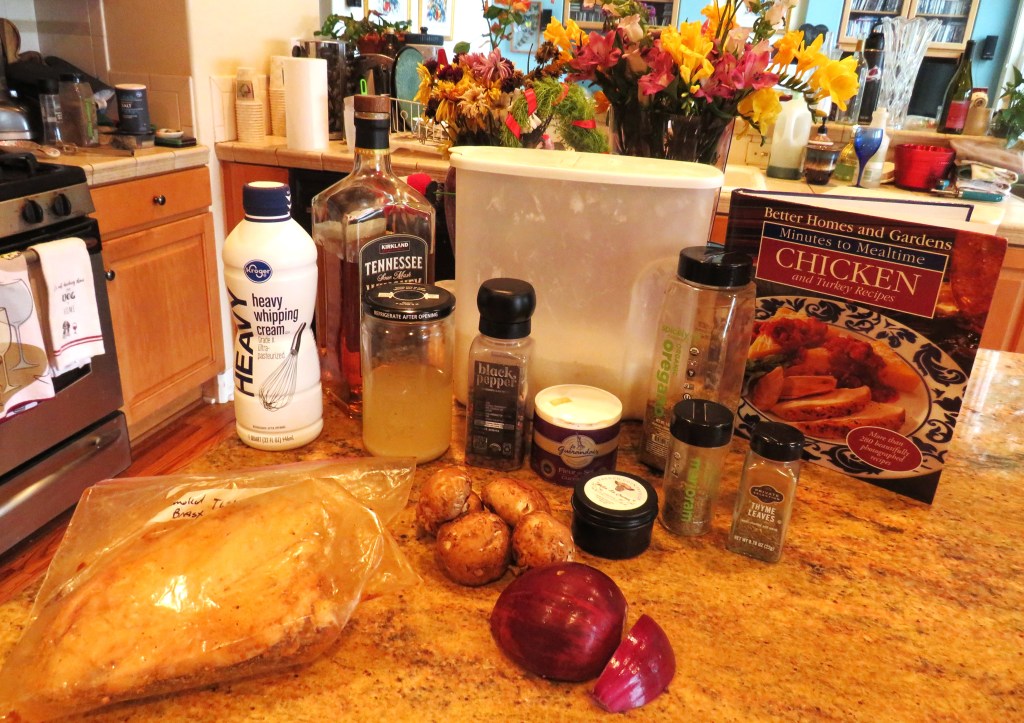
Larry took some smoked turkey out of the freezer for this week’s meat rotation. The turkey was very good on its own, but I couldn’t just serve it that way again. I needed to sauce it up. So, I went to my bookshelves and started looking through my cookbooks for a good solution. I came up with a whiskey sauce to top the turkey.
Smoked Turkey in Whiskey Sauce
We smoked our own turkey, but you can easily buy them already smoked too. The sauce is easy-peasy and only requires a few basic ingredients and a little whiskey; maybe some for the sauce and some for the cook. 🙂 You can also cook the turkey in the sauce too if you want to start with raw turkey or chicken breast.
3 lbs smoked turkey breast or chicken
1-2 onions, cut into wedges
2 cups mushrooms, either sliced or quartered
1 cup chicken broth
1/4-1/2 cup whisky
salt & pepper
1/2 cup heavy whipping cream
1/2-1 tsp each dried oregano, thyme, and marjoram; you can also use fresh herbs too
1 TBSP paprika
olive oil for cooking
butter to finish the sauce
If you are using raw chicken or turkey, brown the meat first. Once it is browned, remove from the heat and set aside to keep warm. If your chicken or turkey is already cooked, skip this step.
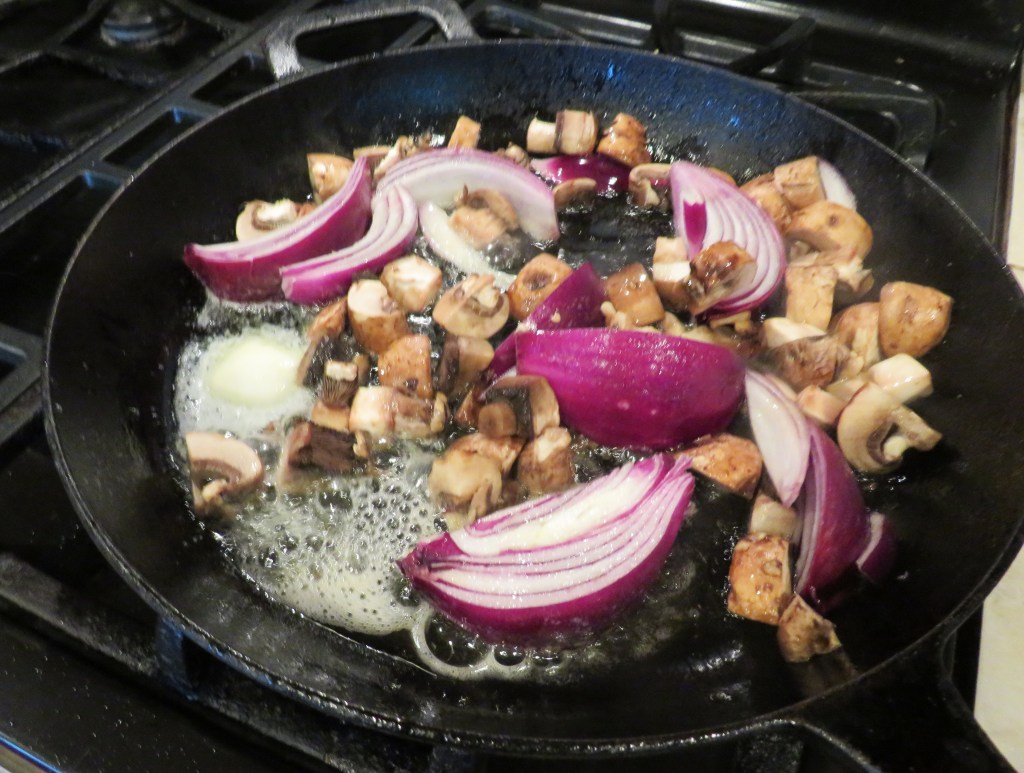
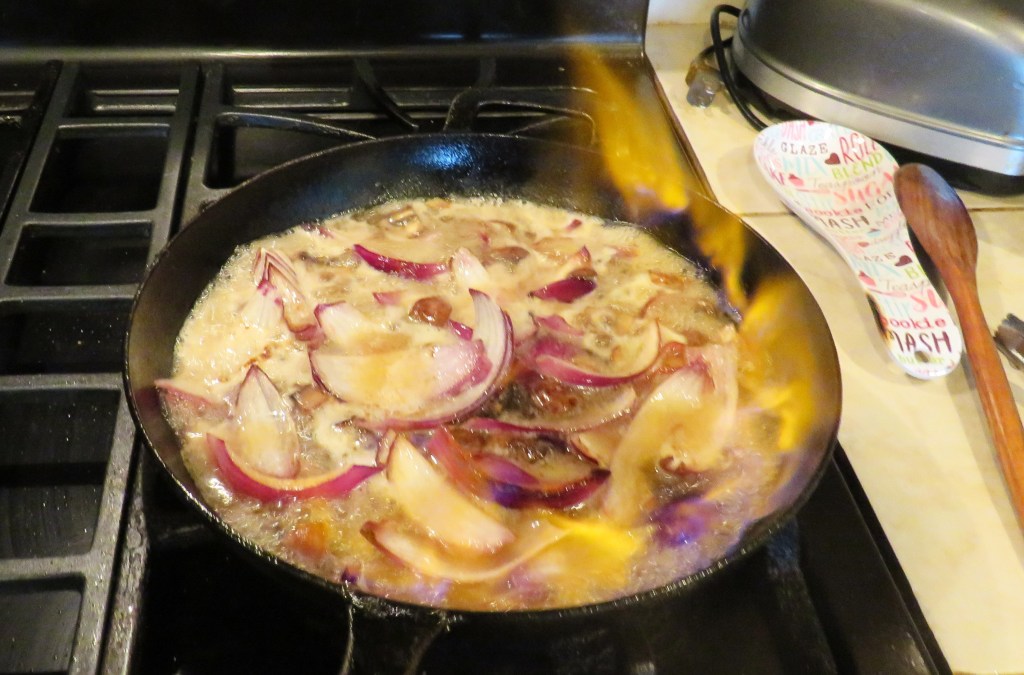
Place the onion wedges in a large, hot skillet with oil and butter and brown for about 3 minutes. Add the mushrooms, chicken broth and whiskey, bring to a boil, then reduce the heat to a simmer.
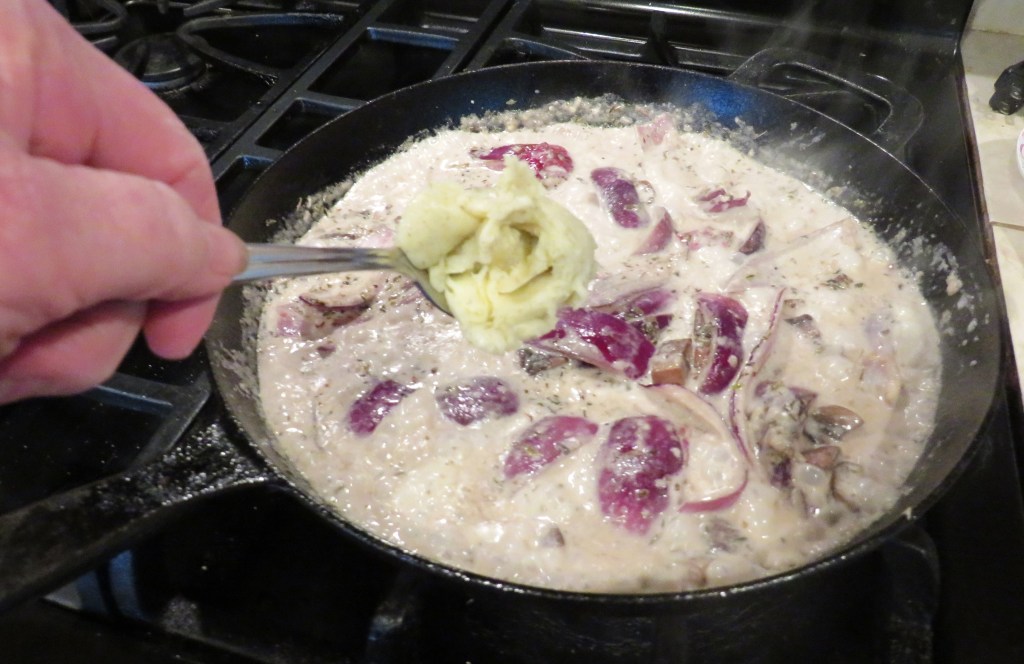
Add the seasonings and the cream. Mix everything together thoroughly, bring to a boil, then reduce the heat to a simmer. Add the butter. I used some of my Bella La Crema specialty butter to monter au buerre (finish with butter) Bella La Crema.
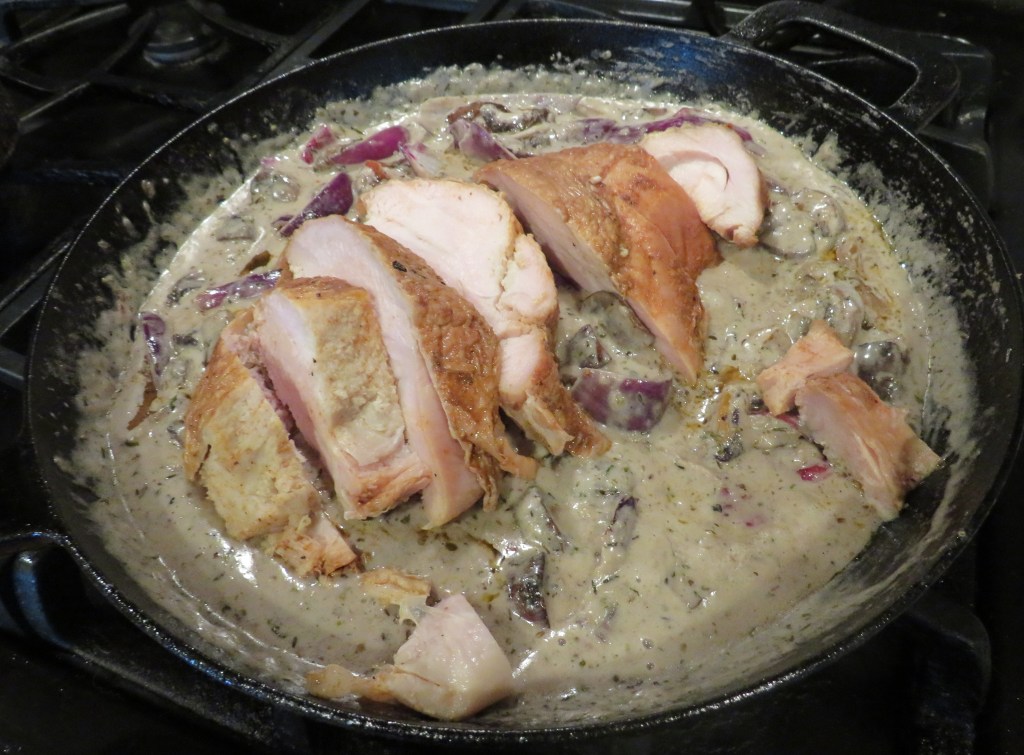
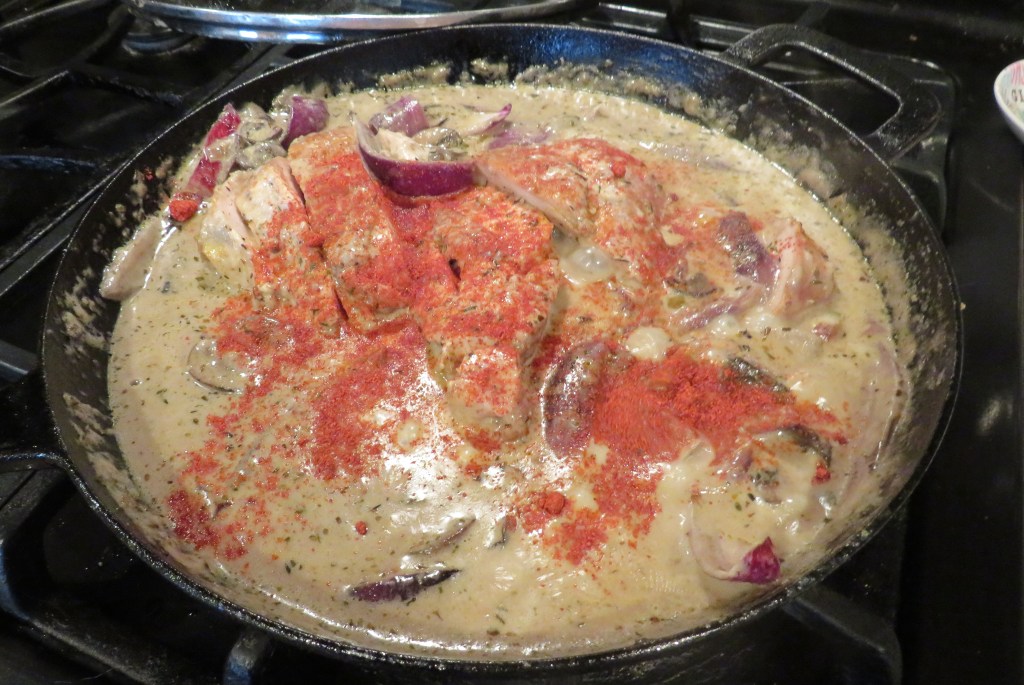
Re-add the chicken or turkey to the sauce, add the paprika and cover and let simmer for about 3-5 minutes, or until the meat is thoroughly heated.
When everything is hot, serve over rice or noodles and enjoy. You already have the mushrooms and onions, so no need for additional vegetables unless you want to add more.
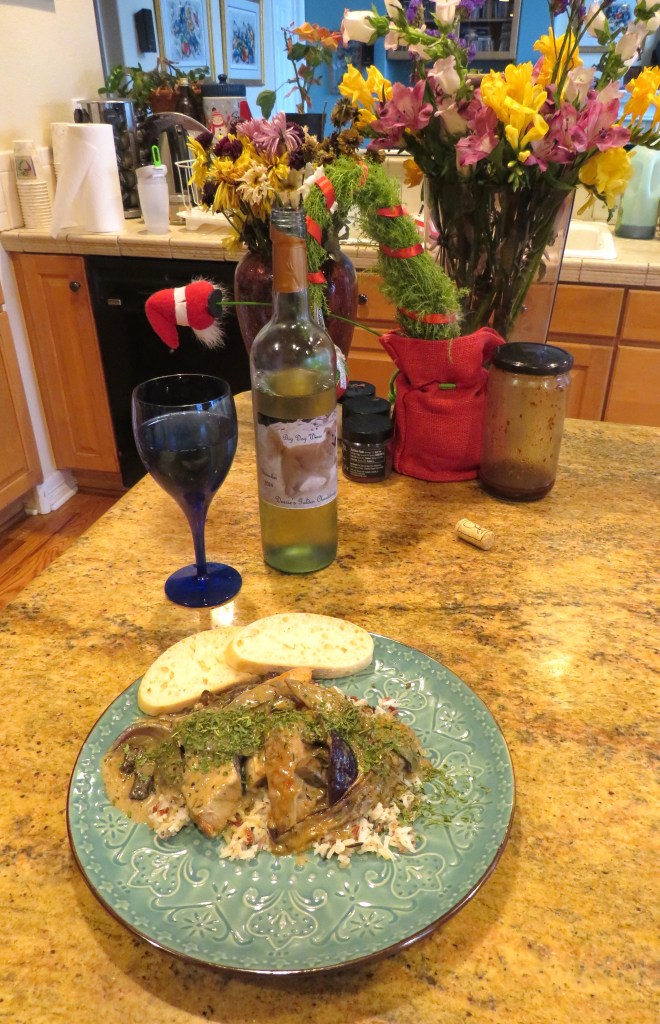
I served it over wild rice, with some warmed bread on the side, and one of our own chardonnays. Because the sauce is a thick, creamy sauce, an acidic white wine is best. The acidity of the white wine will cut the fat of the sauce.
Have a great day and make everyday great. Life is what you make it, so make it fantastic. May 2026 be filled with happiness, good health and prosperity for all. ‘Til next time.




























 A Jeanne in the Kitchen