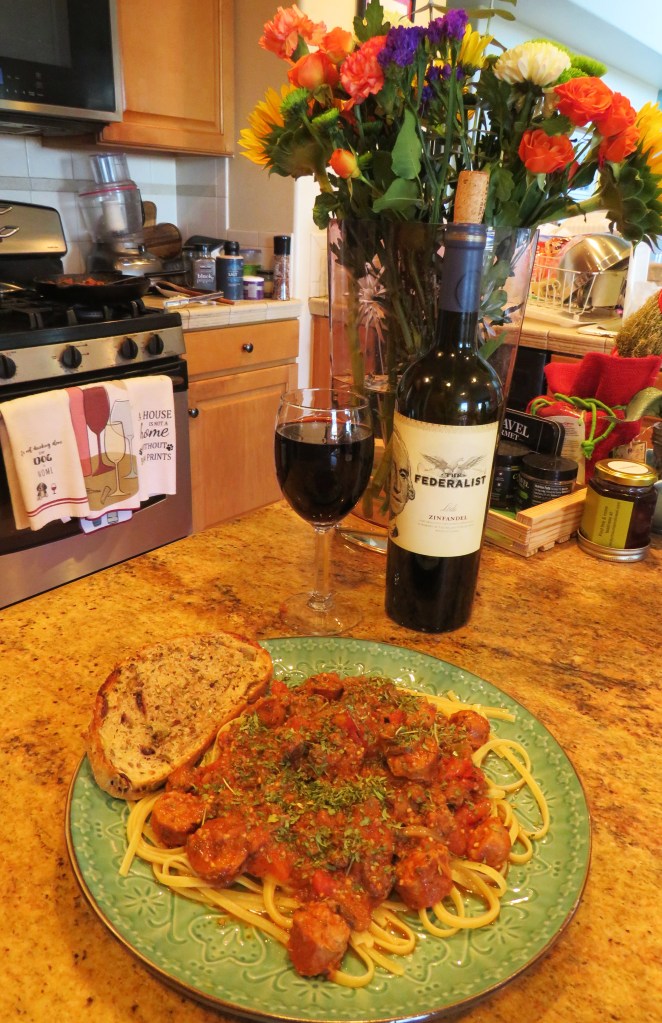
Larry is real good about eating whatever I make. But sometimes he (we both) just wants good comfort food, and some old favorites. This time he was asking for spaghetti. We both love spaghetti, and of course I obliged.
Spaghetti is the type of pasta used, and it can be used for anything, but in our house, and many others too I suspect, spaghetti means spaghetti bolognese. My version is loaded with meat, both ground hamburger and sausage, usually hot Italian sausage, and a thick, rich tomato sauce with lots of garlic and herbs.
Spaghetti Bolognese is an international comfort food that evolved outside of Italy. While inspired by the slow-cooked meat ragù alla bolognese from Bologna, Italy, the global pairing of the meat sauce with long strands of spaghetti became popular through 20th-century emigration, post-war restaurant culture, and the widespread availability of dried pasta. In Bologna, authentic ragù is traditionally served with broad, flat egg pasta like tagliatelle or used in baked dishes like lasagna—never with round, dried spaghetti. The word ragù comes from the French word ragout (a stewed meat dish), which influenced northern Italian cuisine during the late 18th century.
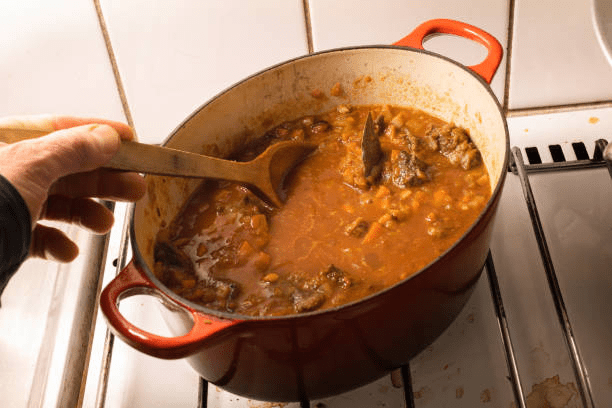
When Italian immigrants moved en masse to the United State, the UK and Australia, they brought their traditional recipes with them. But as was often the case, they had to improvise and use what was readily available and more economic. They started using spaghetti instead of their traditional tagliatelle. Spaghetti bolognese became popular after WWI, but it’s popularity really exploded and became a global phenomenon after WWII. Post-World War II, the dish exploded in popularity across British and American households. Cooks increased the tomato content relative to the meat, added garlic or herbs uncommon in traditional northern Italian cooking, and cemented “Spaghetti Bolognese” as a global staple. Ironically, most Italians in Italy do not recognize or even acknowledge the standard global version of spaghetti bolognese. It is totally different from what they would serve. The main difference is that Italian ragù alla bolognese is a thick, meat-heavy cream-and-wine braise with very little tomato, whereas American ” Bolognese” is a tomato-forward, quick-simmered meat sauce typically served over spaghetti.
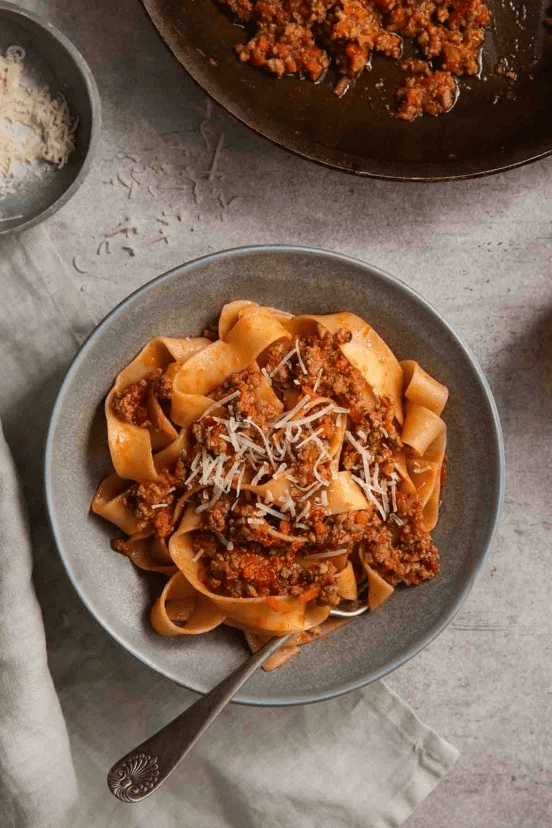
This is the Italian version of spaghetti bolognese.
I love doing deep dives into the foods we eat. I love to learn about their history and origins. I love food and I find food to be so fascinating too.
Have a great day and make everyday great. Life is short. Enjoy every moment and live life to the fullest. ‘Til next time.


I don’t think Larry would be alone in liking whatever your chef skills dream up! 😏😍🤗
LikeLiked by 1 person
AWWWW!!!! Thank you. 🙂
LikeLiked by 1 person
I really enjoy your history of foods posts. My husband and I found it interesting that, when we in Northern Italy (the Piedmont) a number of years ago, we never had anything with tomatoes or tomato sauce the entire week, and very little pasta. All of the food was phenomenal, with the best pork I’ve ever eaten. My most memorable meal was delicious first roasted rabbit.
LikeLiked by 1 person
Thank you. I love doing them too. 🙂 Northern Italy doesn’t use a lot of tomato based sauces. I think those are used more in the Southern party of Italy.
LikeLike
You can’t beat a good Spag Bol!
LikeLiked by 1 person
I know, right?! 🙂
LikeLiked by 1 person
Absolutely
LikeLiked by 1 person
🙂 🙂 🙂
LikeLiked by 1 person
I love spaghetti bolognese, but I’d love to taste the traditional version! I’ve never been to Italy, maybe some day I’ll taste it!
LikeLiked by 1 person
I think everyone loves spaghetti bolognese. 🙂
LikeLike