Avocados are a staple in any Latin American diet. They have been part of the diet in Mexico and Central America for more than 10,000 years. The name avocado is derived from the ancient Aztec word ahuacatl, which means testicle. It got this name because it is said that avocados are shaped like a man’s testicle. Avocados were first enjoyed as wild fruits but were domesticated and cultivated about 5000 years ago. Because of their shape and name, avocados were associated with fertility. They were also thought of as an aphrodisiac and were used in many different ancient ceremonial rituals. The avocado was extremely important among the indigenous people of ancient Mesoamerica, as the fruit provided sustenance and possessed mythological powers. For instance, the Aztecs believed the fruit provided strength to whomever consumed it, and in ancient Maya, the fourteenth month of their calendar (K’ank’in) is represented by the glyph for the avocado.
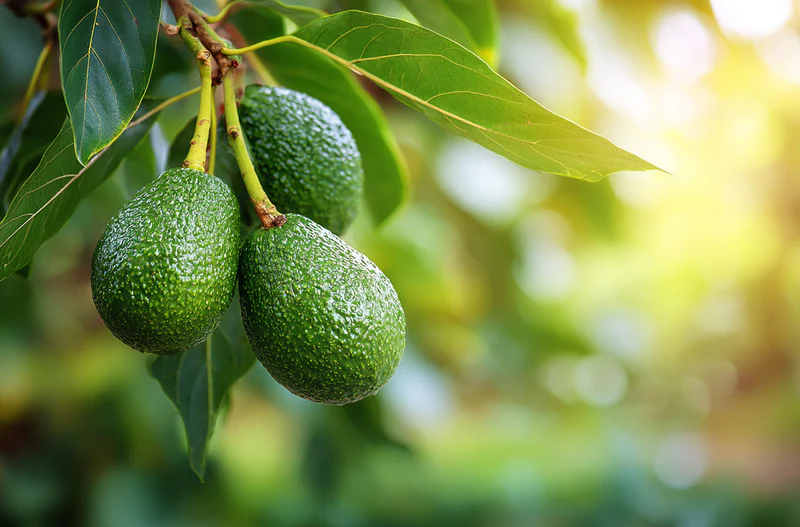
The popularity of the avocado grew as the world grew. When the Spanish explorers came to the new world, they brought this delicious fruit to back to Europe, where it’s popularity grew exponentially. It was known by many different names, such as the avocado pear or the alligator pear. It got the name alligator pear because of its skin, which was thought of as alligator-like. In India, avocados are called butter fruit because of their rich, buttery consistency and flavor.
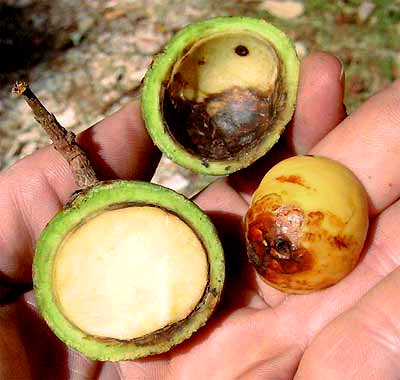
Avocados are fruits, not vegetables. They are known as large berries because the seed is on the inside of the fruit. It grows from a flower’s ovary and holds a pit. However, people treat it like a vegetable in the kitchen because it has a savory taste. Avocados are considered to be soft endocarps because the innermost layer of the fruit wall that directly surrounds the seed. In a true berry, this layer is fleshy and soft. In a drupe (like a peach or a plum), this layer hardens into a woody “stone” or “pit”. Because the avocado’s skin around its seed is thin and leathery rather than hardened, it is a berry. So when eating an avocado, you are actually eating a piece of fruit rather eating a vegetable. It’s all so confusing.
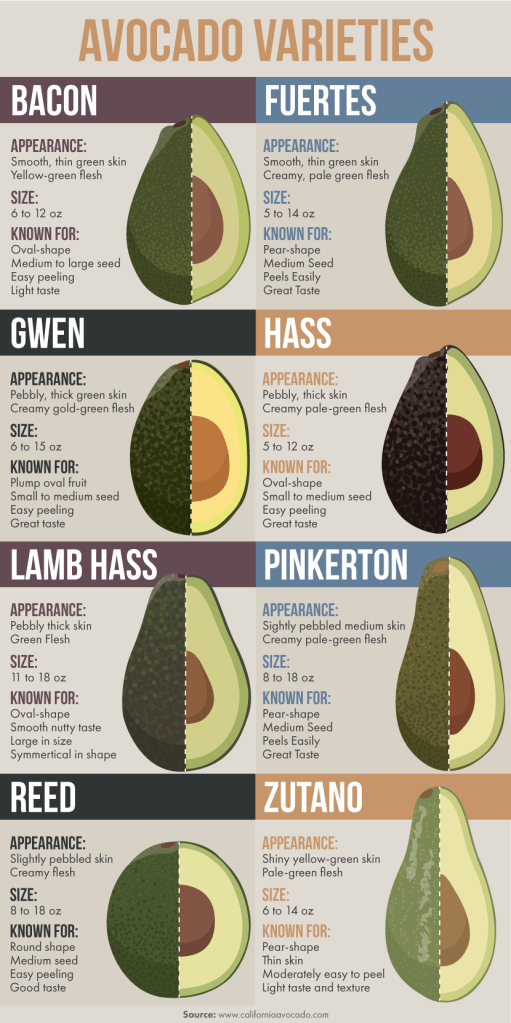
There are 23 different varieties of avocados enjoyed all over the world. Each type has its own unique traits and characteristics. I won’t go through all 23 types of avocados here, but just know there are quite a few different types available.
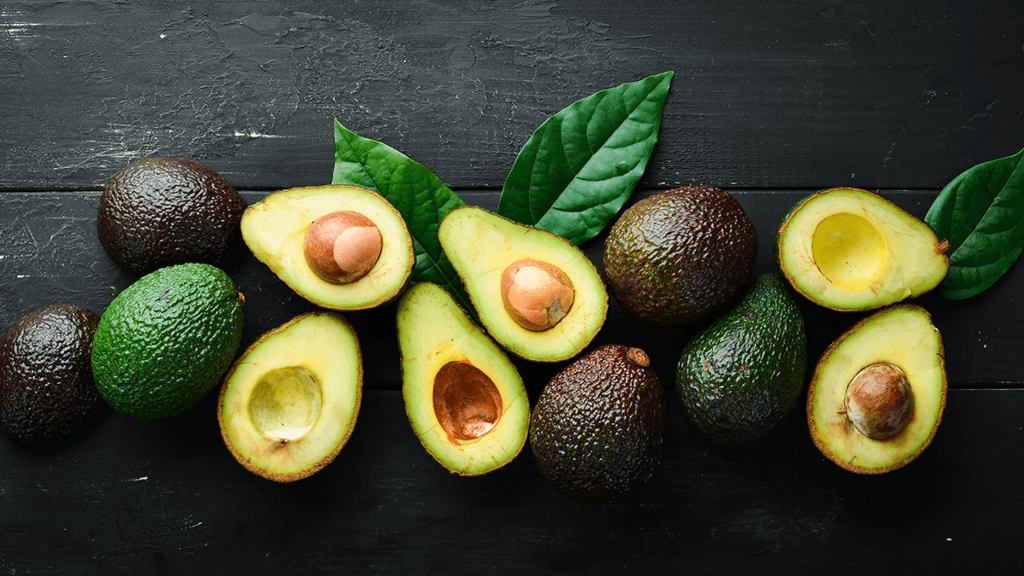
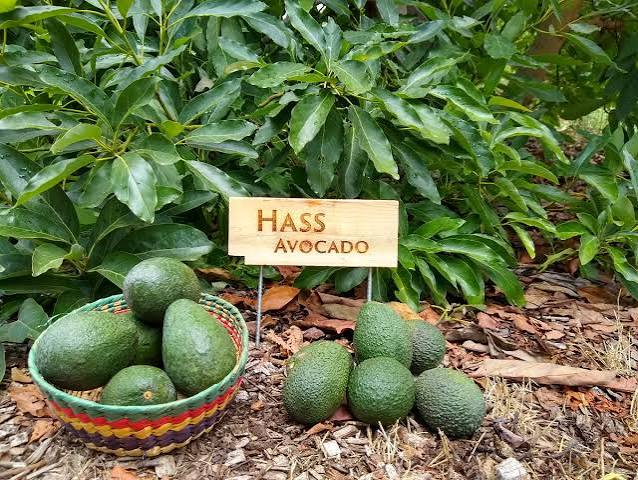
In the United States, and for most of the rest of the world, the Hass avocado is one of, if not the most popular, variety of avocados found. It has a distinctive pebbly skin that changes from green to purplish-black as it ripens. The flesh is creamy, smooth, and rich in flavor, making it a favorite for guacamole, salads, and stuffed avocados.
The Hass originated in California in the early 20th century, with a tree planted by Rudolph Hass being the first of its kind. Today, it’s grown not only in California but also in most other avocado-growing nations. It makes up 90% of Mexico’s huge production and is also Columbia’s most-grown avocado. It’s hands down the most widely cultivated avocado variety globally. Hass avocados are available year-round because they are grown in multiple regions, but they typically have a peak season in California from late winter to early summer.
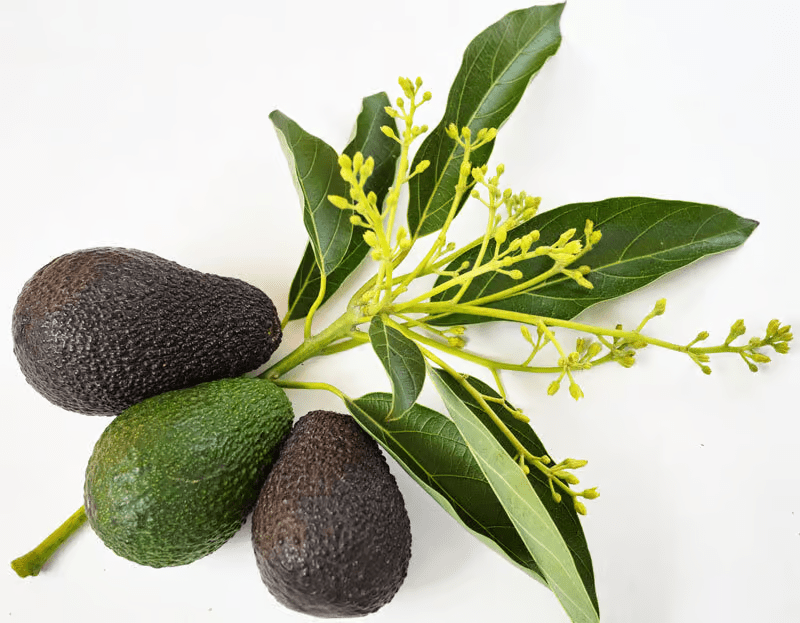
Type A and Type B avocados refer to the two flowering groups of avocado trees, which are important for the pollination and production of avocados. Avocado trees are unique in that they have a reproductive system that depends on cross-pollination between different varieties within the two types. Type A Avocados are also called the Mexican, open as female flowers in the morning and then close in the afternoon. On the following day, they open as male flowers, releasing pollen. Type A avocados tend to have thicker skins and higher oil content than Type B. The Haas, Bacon and Zutano are common Type A varieties. Type B avocados are also known as the Guatemalan. Common Type B avocado varieties include Fuerte, Pinkerton, and Puebla.
To ensure successful pollination and a good avocado crop, Type A and Type B avocado trees are often planted in close proximity so that they can cross-pollinate. For example, if you have a Type A avocado tree, planting a Type B avocado tree nearby will enhance pollination and result in better fruit production. This interdependence between Type A and Type B avocado trees is necessary because avocado flowers are self-incompatible, meaning they cannot typically pollinate themselves. The side effect of planting Type A and Type B trees together is that over time many natural avocado hybrids occurred.
Avocados are very nutritious, but because of their high fat content, are not necessarily low in calories. They are a good source of fiber and healthy fats. They are good sources of the foillowing:
- 2 grams protein
- 15 grams fat
- 9 grams carbs
- 7 grams fiber
- 11% RDA Vitamin C
- 14% RDA Vitamin E
- 20% RDA Folate
- 14% RDA Potassium
- 3% RDA Iron
- 1% RDA Calcium
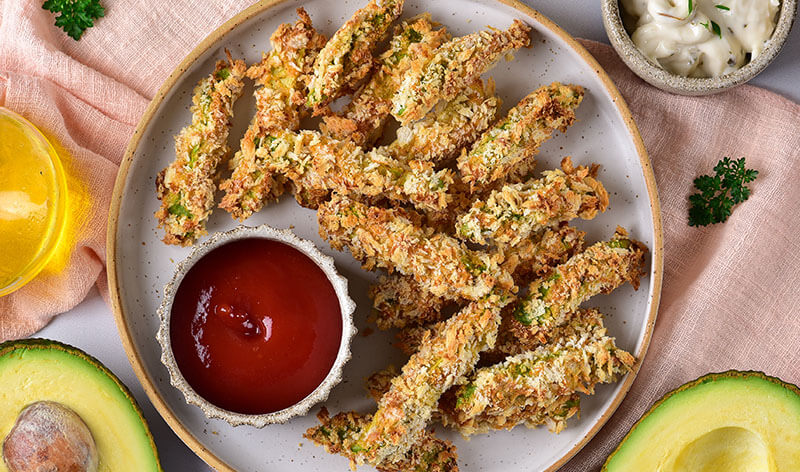
Avocados are very versatile foods. You can use them in all kinds of delicious recipes. Most of the time, they are eaten cold or mashed or used as spreads or dips. But did you know they can also be cooked too? The possibilities are endless. Just use your imagination and be creative to see what you can come up with.

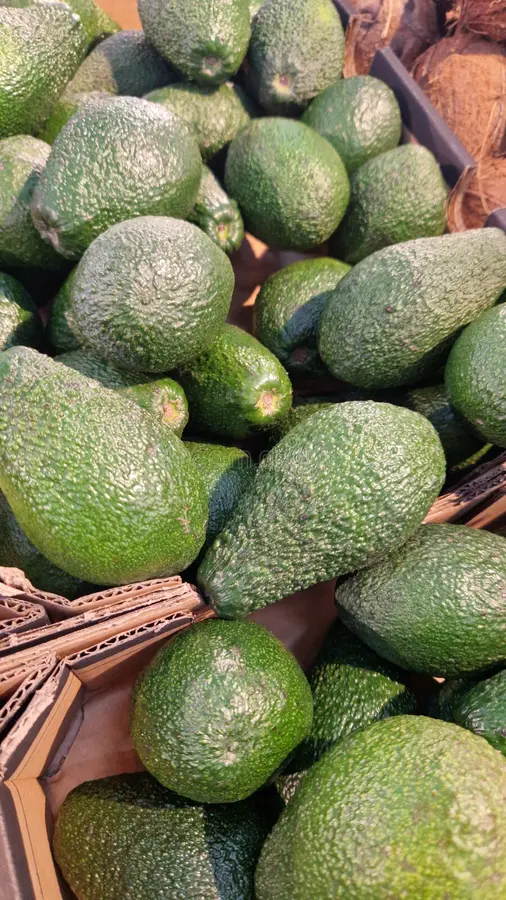
I love avocados and could eat them every day, but Larry does not care for them so I don’t buy them as often as I would like. I remember growing up in California, people would beg you to take them by the bag full because they were so abundant and would just fall from their trees. Today, they are getting to be pretty pricy, I guess, in part because of their popularity.
Life is short. Make the most out of everyday and live life to the fullest. Have a great day and make everyday great. ‘Til next time.



Thanks for sharing. Have a great weekend. 🙂
LikeLike
Love avocados!!!!
LikeLiked by 1 person
Me too!!!! 🙂
LikeLiked by 1 person
I didn’t know the origin of the word, but it is hilarious! In Peru, Chile and others they’re called palta. Now I wonder what palta actually means !
LikeLiked by 1 person
Cool. I had no idea they were also named palta. The things we learn. 🙂 🙂 🙂
LikeLike
23 different varieties of avocados, wow! I didn’t know that! Here in Thailand we find the Haas, and Australian varieties, but also a Thai variety which is a bit bigger and doesn’t have the “crocodile skin” ☺️ but a smoother skin…the taste is the same though 😉 Love them 😋
LikeLiked by 1 person
I love all kinds of avocados too. I didn’t know that either until I started doing my research. 🙂
LikeLiked by 1 person
Love avocados! We’ve never cooked them, need to look into that. Thanks for sharing.
LikeLiked by 1 person
Thank you. Same here. I’ve never cooked them either, but it sounds intriguing. 🙂
LikeLiked by 1 person
We once read a recipe for eggs fried in avocado. The instruction was to add eggs to halved avocados, season with salt, black pepper and garlic powder and then fry these for some 15 minutes in a hot oven. We made a copy of the recipe but never made it. For some reason it doesn’t sound like a great idea?
LikeLiked by 1 person
Oh I think it sounds interesting. 🙂
LikeLiked by 1 person
We tried making Baked Egg in Avocado…. https://cookanddrink.org/2025/07/01/baked-egg-in-avocado/
LikeLike
Oh, I love avocados. I knew there were more varieties than we see in our grocery stores, but I didn’t realize that there were so many.
LikeLiked by 1 person
Same here. 🙂
LikeLiked by 1 person
🙂🙂🙂
LikeLiked by 1 person
Like most normal people ( 😉 ) I love avocados. I’m reminded of a poster I saw in Florida saying “Other fruits would be jealous, but they think he’s a vegetable.”
I made a vegan chocolate pie once, where the filling was avocado, cocoa, agave syrup, and vanilla whipped up in a food processor. I served it to my husband and his brother without telling them what was in it, and they loved it – asked for second helpings!
Do you know anything about the pits/seeds being edible and beneficial? I read something about that once, but they taste bitter to me.
LikeLiked by 1 person
I’ve made vegan chocolate pudding in a similar way.
I don’t think they are edible, but I’m not sure. 🙂
LikeLiked by 1 person