It’s been a hot minute since I’ve done a deep dive, so I thought it was time to do another one. This time, I am going to talk about eggplants. I love eggplant, but I do not cook it very often because Larry is not a fan.
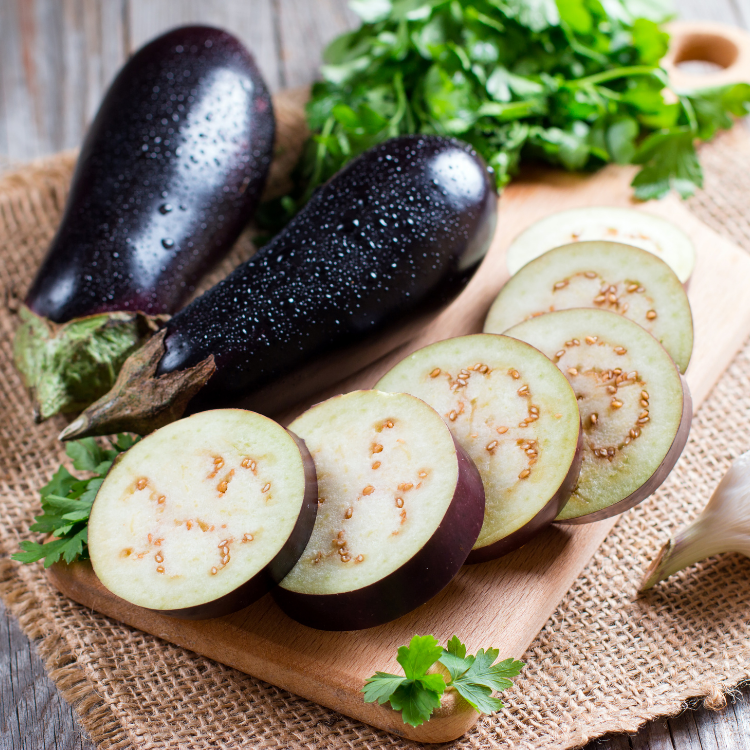
When we think of eggplants we think of Mediterranean foods, and we are correct in that belief. However, eggplants were actually a gift from Asia long before they found their way to the Mediterranean. Evidence supports they were first cultivated in China and India as early as 59 BCE. They made their way to the Mediterranean regions around the 8th century through the Arab traders, and spread to the rest of the world as the world grew. Their wilder cousins trace their roots back to Africa.
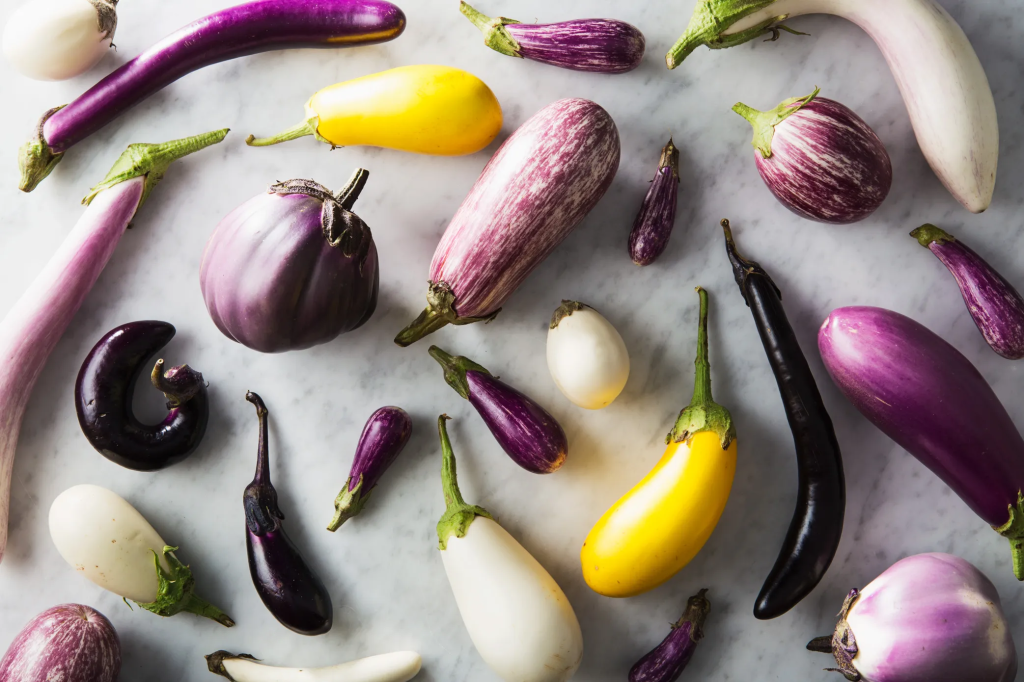
Today, there are many different varieties and names of eggplants, as they are called by the Americans, Canadians and Australians. They are also known as aubergines, which is derived from the original Arabic name, al-badhinjan. In India, they are often called brinjal, stemming from its Portuguese translation, beringela. In many parts of Europe they were and still are known as “mad apples”. The English name “eggplant” originated during the 18th century from the white or yellow varieties that looked exactly like goose or chicken eggs. In both Germany and Austria, they are known as egg fruit. The word aubergine, which is the French word for eggplant, ultimately stems from the Sanskrit vātiga-gama, which means “the plant that cures the wind.” This ancient name reflects its historical use in Ayurvedic medicine to alleviate flatulence and digestive issues. Their natural chelating properties can assist the liver in filtering toxins. Furthermore, its high fiber content is excellent for gut health, promoting smooth digestion. In Medieval times, eggplants were also thought of as aphrodisiacs.
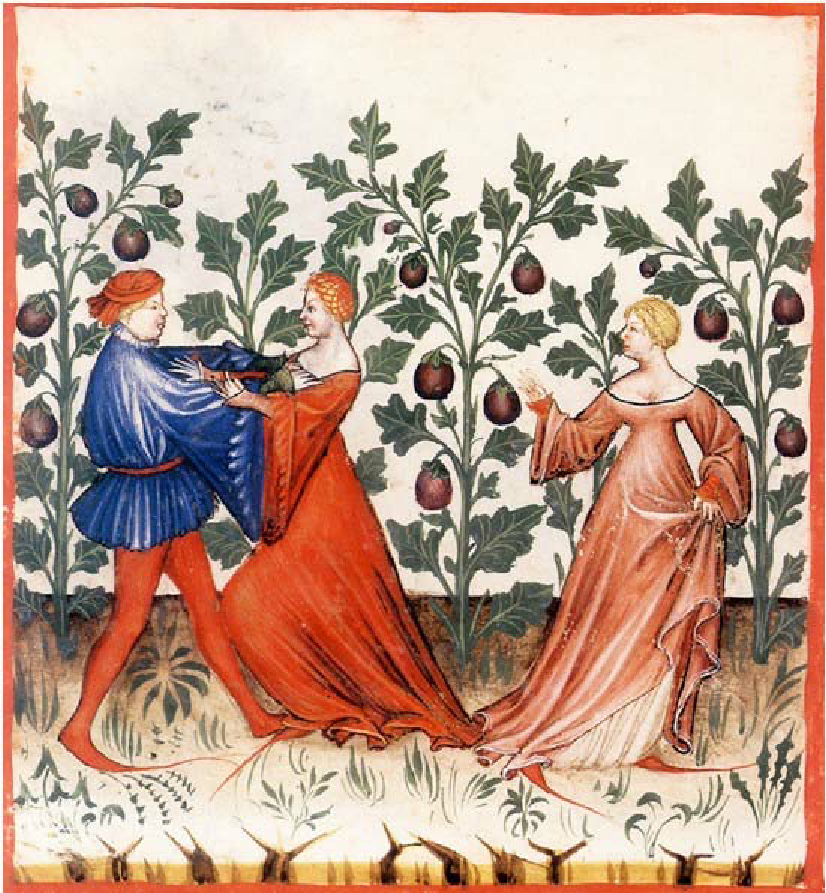
Eggplants are very healthy for us in many different ways. As I just mentioned, they are good for many digestive issues and ailments, but they are also good for many other health issues as well. Eggplants are rich in dietary fiber, potassium, and vitamins that support normal blood pressure and improve overall blood flow. The antioxidants in the skin help reduce plaque buildup in the aorta and main arteries, meaning they are heart healthy vegetables. They are also considered to be good brain food because they contain Nasunin, an antioxidant found abundantly in the purple skin, which protects cell membranes in the brain from oxidative stress and helps prevent neurodegenerative disorders. They are good for the pancreas because they have a very low glycemic index. The fiber slows the absorption of sugar into your bloodstream, which takes the burden off the pancreas by preventing rapid blood sugar spikes, which in turn helps control diabetes. The majority of the antioxidants are concentrated in the skin, so don’t throw the skins away. Use them when cooking the eggplants.

There are many different varieties of eggplants found all over the world, but the there are three main types that we eat – Solanum melongena, Solanum integrifolium, and Solanum gilo. They come in all colors, shapes and sizes, each with their own unique personality and characteristics. Most of what we eat are the S. melongena varieties.
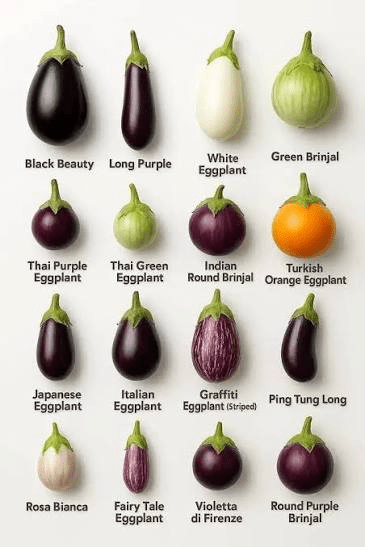
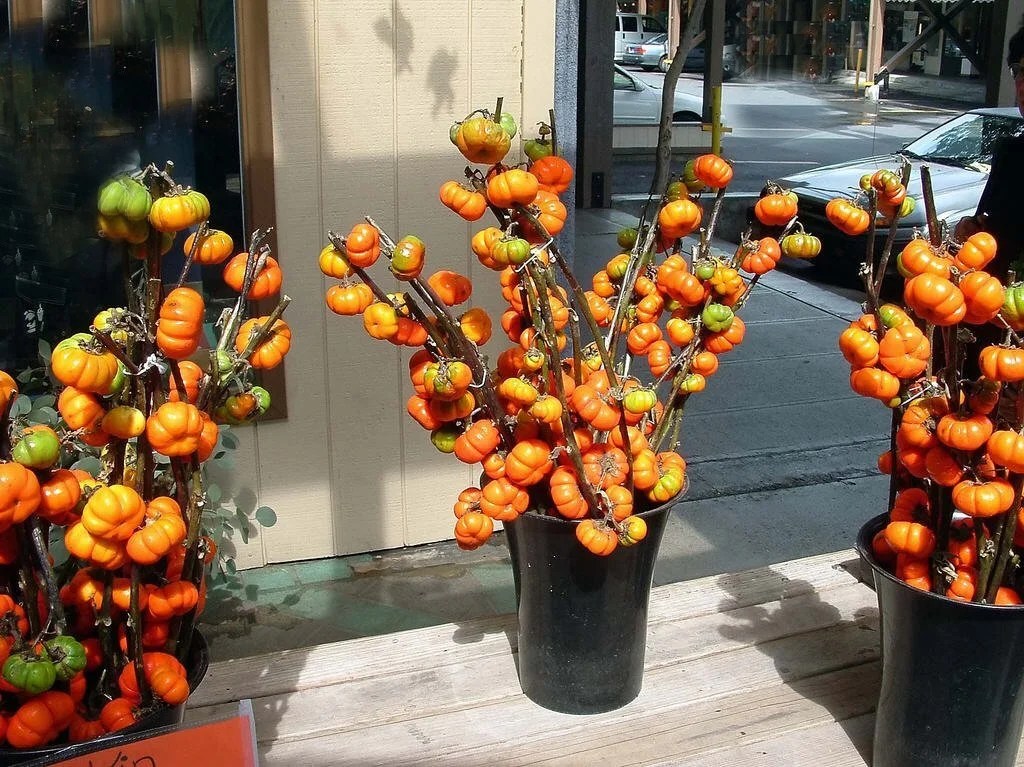
S. gilo is a cultivar of the Ethiopian eggplant, and S. integrifolium is commonly called “pumpkin on a stick.” It’s actually an eggplant and you really can eat it, but most people grow these as ornamentals due to how eye catching they are in flower arrangements and such. I never knew these were actual eggplants or that they were edible. I thought they were purely ornamental. I learn something new everyday. 🙂
Eggplants, by whatever name you call them, are members of the nightshade family, which also includes tomatoes, potatoes (but not sweet potatoes), eggplants, tomatillos, bell peppers, jalapeños, chili peppers, cayenne, habaneros, and many, many more. In fact, there are roughly 2000 members of the nightshade family found all over the world. Europe did not, as is generally the case with all nightshades, take too well to this initially. It’s not their fault, really. Almost all the nightshades indigenous to Europe are deadly.
Some eggplants will have spiny stems, some not. They have all 5 petals per flower, which can range in color from purple to white. They have that “classic” nightshade look to them with the vibrant yellow stamens and conical petal arrangement. The flowers are largely self-pollinating, but sometimes bees and birds do like to get into the mix on the cross-pollination front.
As of 2014, 50 million tons of eggplant were grown, providing net annual values of 10 billion dollars! The rise in popularity of ketogenic diets also helps eggplant get more traction, because it’s a fantastic low-carb veg that is diverse enough in what it can do to perform a wide array of culinary tasks. Additionally, as we learn more and more about what a nutritional powerhouse eggplant is, that also helps spread the word, as it were. There is an endless amount of ways to cook eggplant, as is usually the case with something that has been around for millennia and is popular all over the world. You are not limited at all in the possibilities, so let your imagination run wild.
I hope this was interesting and educational for you. I know I learned some new things. I hope you did too.
Have a great day and make everyday great. Learn something new everyday and share it with others. Life is short. Make the most out of everyday and live life to the fullest. Enjoy the ride. ‘Til next time.


 A Jeanne in the Kitchen
Thanks again 🙂
LikeLike
Thanks—this is fascinating. Because it’s another edible member of the Solanaceae, I had assumed it was also a New World species. Food history is so interesting.
LikeLiked by 1 person
Thank you. I agree. I love food history, but then again, I love history AND I love food. 🙂
LikeLike
Hmmm … now I’m in the mood for some eggplant parmesan. .. 😉
LikeLiked by 1 person
That does sound good. YUMMY! 🙂
LikeLiked by 1 person
I love eggplant and know I know a little more about them. Maggie
LikeLiked by 1 person
SWEET!!! Thanks Maggie. 🙂
LikeLike
I’ve never had egg plant, not that I am aware of anyway, I’d probably like it if I did try it!
LikeLiked by 1 person
Some people love it and others don’t care for it at all. I think it may be an acquired taste. 🙂
LikeLike
I had no idea that there were so many varieties
LikeLiked by 1 person
I didn’t either until I started doing some research. 🙂
LikeLiked by 1 person
These posts are so informative
LikeLiked by 1 person
Thank you. I learn a lot from them too. 🙂
LikeLiked by 1 person
As do we
LikeLiked by 1 person
YAY!!!!!!! 🙂
LikeLiked by 1 person
How interesting. I learned a lot about eggplant. am growing lots of different types of eggplants this year.
LikeLiked by 1 person
Cool! I will be excited to hear about your favorites. 🙂
LikeLiked by 1 person
I love the Thai green ones in the green curry, the orange one I’ve never seen it ☺️ So many varieties…
LikeLiked by 1 person
Yes. I didn’t know there were that many either, 🙂
LikeLiked by 1 person
I love eggplant. Delish. They make a great side dish.
LikeLiked by 1 person
That they do. 🙂
LikeLike