Abby Holt has contributed a few articles about the food and restaurant industry that I have shared with you in the past. She has submitted another interesting article that I am once again sharing with you.
Here is Abby’s article:
How Culinary Pros Can Turn Experience Into a Thriving Food Consulting Business
For culinary professionals and food industry experts who’ve spent years refining standards, systems, and taste, the next career move often feels boxed in: stay on the line, move into management, or step away from the work entirely. The challenge is that hard-won expertise can be obvious in a kitchen but hard to translate into a service clients understand and trust enough to pay for. Consulting entrepreneurship offers a way of transforming culinary experience into a food consulting business that creates income without abandoning the industry. The opportunity is real when expertise is positioned as outcomes, not effort.
What Food Consulting Really Means
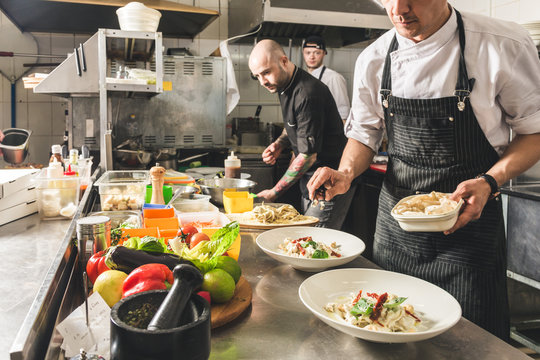
Food consulting is paid problem-solving for food businesses, using your know-how to improve a result like sales, safety, or consistency. It fits naturally for pros with deep industry expertise because clients buy decisions, plans, and implementation support, not kitchen hours. Specialization makes the offer legible: one clear lane, one clear promise, one clear way to measure progress. Consulting is an art of relationships and execution, so a focused niche helps you set expectations, deliver faster, and earn repeat work. Think of it like a chef’s station. A sauce specialist (a saucier) ships plates faster than someone juggling every component, and quality stays predictable. The same focus turns your experience into packages clients can budget for. With that clarity, choosing the right client category becomes much easier.
Match Your Experience to Client Types—and a Winning Offer
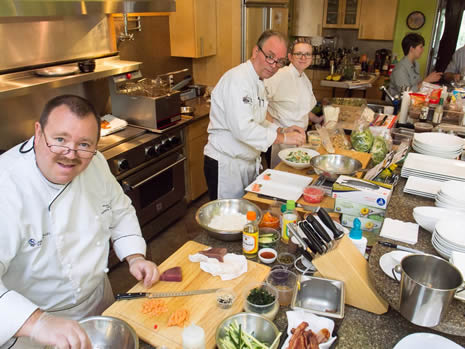
Once you understand that food consulting is really about applying specialized expertise to solve business problems, the next move is choosing who you want to solve them for. The client landscape is wider than restaurants alone. Many consultants build thriving practices with food manufacturers that need help with product formulation, process tweaks, or operational improvements. Others partner with consumer packaged goods (CPG) brands looking for recipe development and product refinement that can translate to consistent, scalable production. Hospitality businesses, from hotels to event operations, often seek support with menu creation and kitchen execution that fits their service style.
Media companies also hire culinary pros for recipe development and related food content, where accuracy, repeatability, and professional credibility matter. Seeing these options side by side makes it easier to shape a resilient business: when one segment slows, another may still need the same core expertise delivered in a different way. That diversification can also help you clarify a practical food consulting business model that matches what you’re best at and what clients will pay for.

How to Launch and Grow a Food Consulting Business
This process helps you move from “I have experience” to “I run a consulting service” with clear offers, a simple way to get clients, and delivery systems that make your work easier to scale.
- Set up the basics and decide how you’ll operate
Start with a business name, a simple brand promise (who you help and what outcome you deliver), and a dedicated way to handle money and paperwork. Keep your setup lean, but treat it like a real operation by outlining your schedule, your tools, and how you will communicate with clients.
- Package your expertise into 2 to 3 clear services
Choose a few offers that match your strengths and your buyer’s urgent problems, such as menu improvement, product development support, kitchen training, or process cleanup. Write each offer as a defined scope with deliverables and timelines, because measurable inspection criteria are the difference between “helping” and a service a client can approve and renew.
- Create a repeatable delivery workflow
Build a simple checklist for discovery, diagnostics, recommendations, implementation support, and follow-up, so every project runs the same way. Include what you need from the client, what you will produce, and how you will confirm the result, because defining the inspection scope thinking prevents scope creep and keeps projects profitable.
- Win your first clients with focused outreach
Start with warm connections: former colleagues, vendors, owners, and brand teams who already trust your judgment, and ask for one intro at a time to your ideal buyer. Pair that with proof-driven visibility like one case study post, a one-page service sheet, and a short pitch that names the problem you fix and the result you deliver.
- Grow by productizing, not overworking
After a few projects, turn what repeats into templates, training decks, audit checklists, and standard reports you can reuse. Add retainer options (monthly QA checks, seasonal menu updates, ongoing R and D support) so revenue becomes steadier and your calendar stays predictable.
Food Consulting Questions People Ask Before Starting
Q: What is the biggest mistake when launching a food consulting offer?
A: Trying to help everyone with everything. Pick one buyer type and one painful problem, then write a scope that names deliverables, timing, and what is out of scope. A simple rule: if you cannot explain the outcome in one sentence, it is not ready to sell.
Q: How should I price my services if I do not have consulting case studies yet? A: Start with fixed packages for common problems, not hourly rates, so clients can approve a clear budget. Set a floor price based on your time plus a buffer for revisions, then raise rates after every 3 to 5 completed projects. If a prospect pushes for a discount, reduce scope before reducing price
Q: When should I use a retainer versus a one-time project?
A: Use a project when the goal is a defined change like a menu refresh or a training rollout. Use a retainer when the client needs ongoing decisions, updates, or quality checks. A good decision rule: if work will recur monthly, price it monthly.
Q: How do I prevent scope creep with clients who keep adding “quick asks”?
A: Create one shared document that lists deliverables and a change process. Reply to new requests with two options: add-on fee or swap for an existing task. This keeps relationships positive while protecting profit.
Q: Can I consult if clients want tech help like inventory systems or AI tools?
A: Yes, but sell outcomes, not software. Many teams struggle with adoption because 74 percent of companies face hurdles in scaling AI value when metrics and ownership are unclear, so include training, a pilot period, and a success checklist in your scope.
Build a Sustainable Food Consulting Practice Through Client
Value
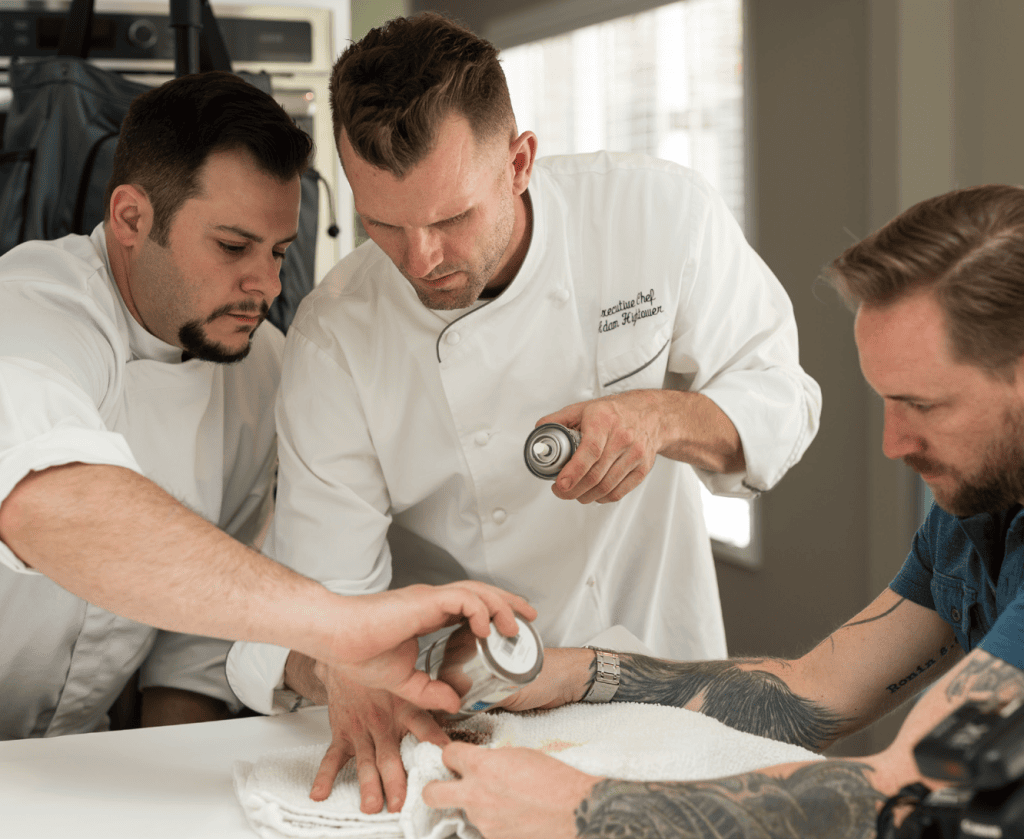
Food consulting can feel like a tug-of-war between what you know in the kitchen and what it takes to run a real business. Long-term consulting success comes from industry knowledge integration paired with business planning importance and a client-focused approach that keeps scope, pricing, and expectations aligned. When those pieces work together, your work becomes repeatable, your referrals increase, and consulting business sustainability stops depending on luck or hustle. Client value is the only strategy that scales in consulting. Choose one next action this week: define the outcome you deliver for a specific client type and write it as a one-sentence promise. That clarity builds resilience, for your clients’ operations and for your own stability and growth.

Being a Chef Consultant is a good gig if you can get it, but with any consulting job, they are not always easy to obtain or sustain. But good luck to all who choose to pursue this line of work. Getting your first client is always the hardest part.
Thank you once again Abby for this interesting and informative article. You can reach out to Abby Holt at abby.holt@craftability.org if you have any questions or would like to get more information from her.
deep industry expertise – https://swoopfunding.com/us/start-a-business/consulting-business/consulting-business-checklist/
art of relationships – https://wifitalents.com/business-consulting-industry-statistics/
food consulting business model – https://www.zenbusiness.com/start-a-business/food-service/food-consulting/
measurable inspection criteria – https://www.qcadvisor.com/blog/packaging-inspection/
defining the inspection scope – https://www.qcadvisor.com/blog/packaging-inspection/
74 percent of companies face hurdles in scaling AI value – https://www.innovationleader.com/professional-services/the-end-of-consulting-as-we-know-it-client-power-and-the-ai-revolution/
Have a great day and make everyday great. Life is short. Live life to the fullest and enjoy the ride. ‘Til next time.



Thanks for sharing. Have a great day. 🙂
LikeLike
a very well written and very interesting article from Abby! X
LikeLiked by 1 person
She has sent me a few pieces. It is a good piece, but I don’t think it’s really a viable option for most people. It’s unpredictable.
LikeLike
Interesting
LikeLiked by 1 person
It is , but I don’t think it is a viable career path for most people. It’s very unpredictable.
LikeLiked by 1 person
You’re best placed to comment.
LikeLiked by 1 person