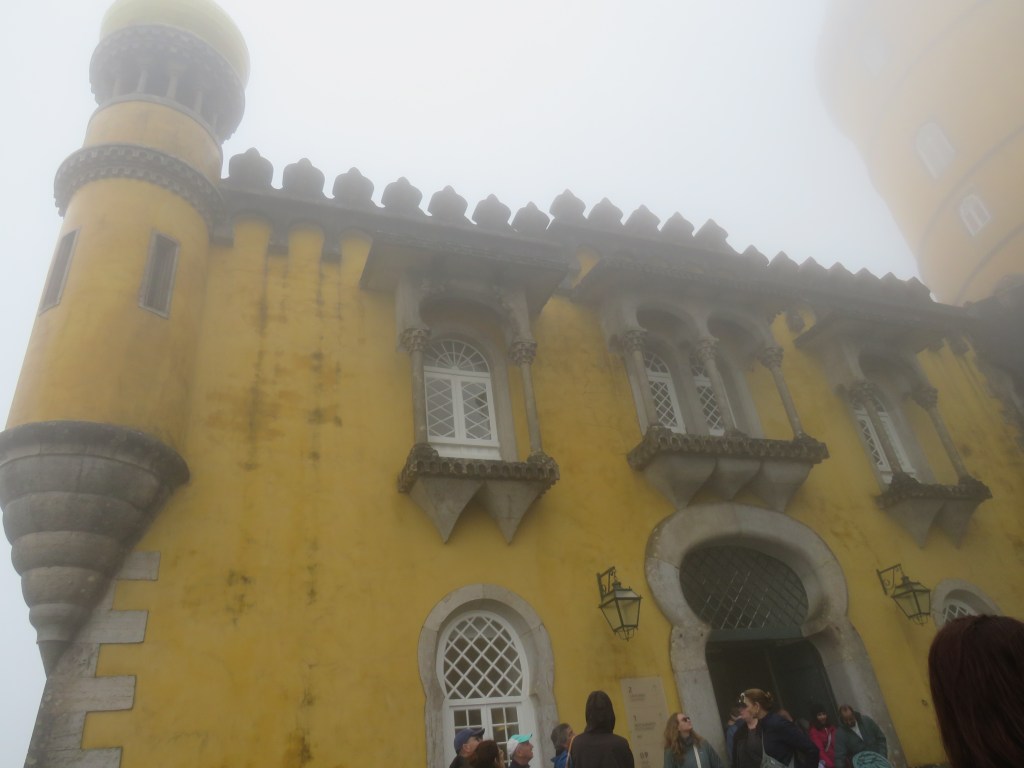
It was another early morning train ride, this time our destination was Sintra. Our first stop was a trip to the romantic, mystical, magical Pena Palace. It was even more magical and mystical because of the deep fog layer that covered the mountain when we first arrived. Pena Palace or Palacio da Pena is a vibrant, hilltop Romanticist palace featuring diverse architectural styles and panoramic views. The train only took us so far. After getting off the train we hired a cab to take us up as far as he could. Then …. we had to hike up the mountain for about 1/4 mile, straight up, to get to the actual castle. It was well worth it, even if it was yet another tough climb. Portugal has many, many STEEP, STEEP hills all over. If you really want to see and explore Portugal, there is no getting around these steep hills.
Sintra, a UNESCO World Heritage site near Lisbon, is a breathtaking hilltop town renowned for its 19th-century Romanticist palaces, misty pine-covered forests, and dramatic, colorful, and eclectic architecture. Major attractions include the iconic Pena Palace, the mystical Quinta da Regaleira, and the medieval Moorish Castle, making it a premier, magical day trip from Lisbon.
Pena Palace is the legacy of the artist king, King Ferdinand II.
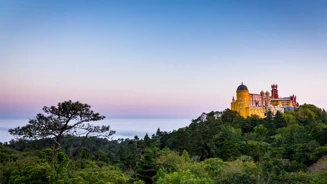
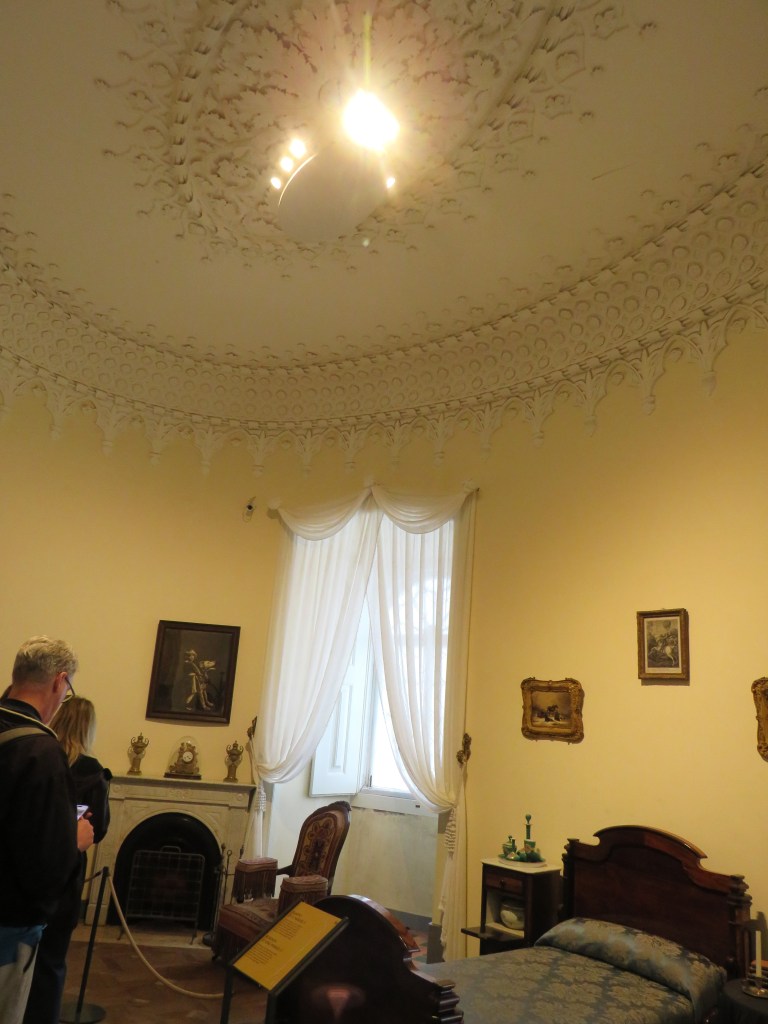
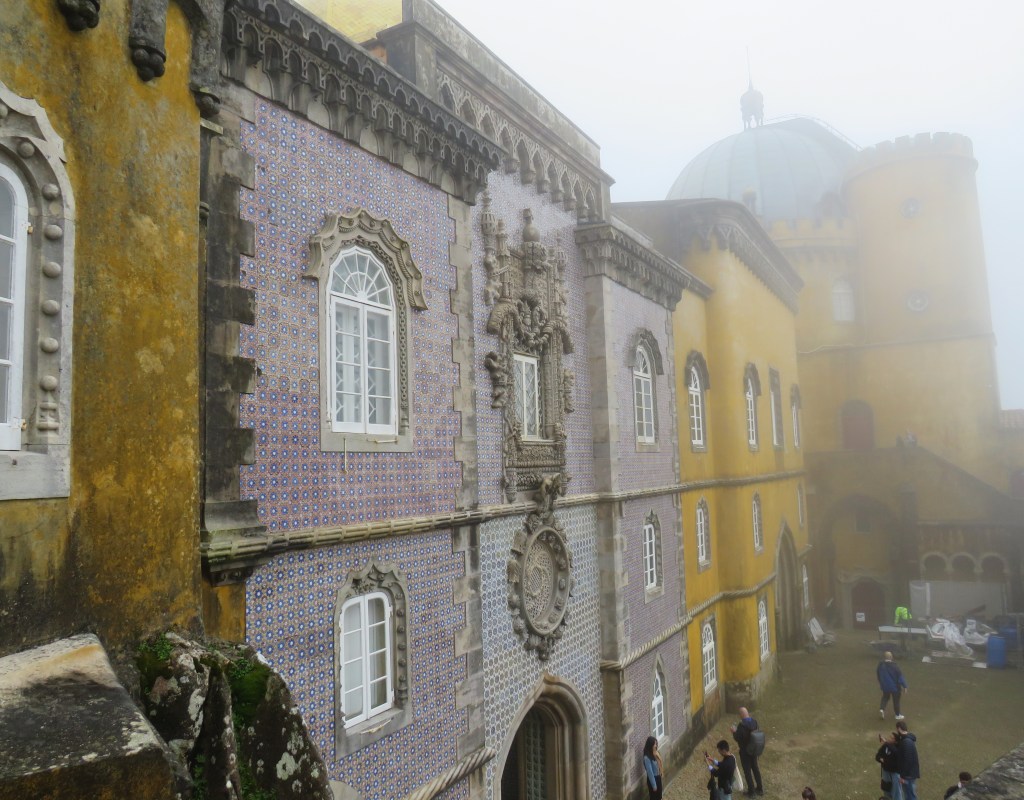
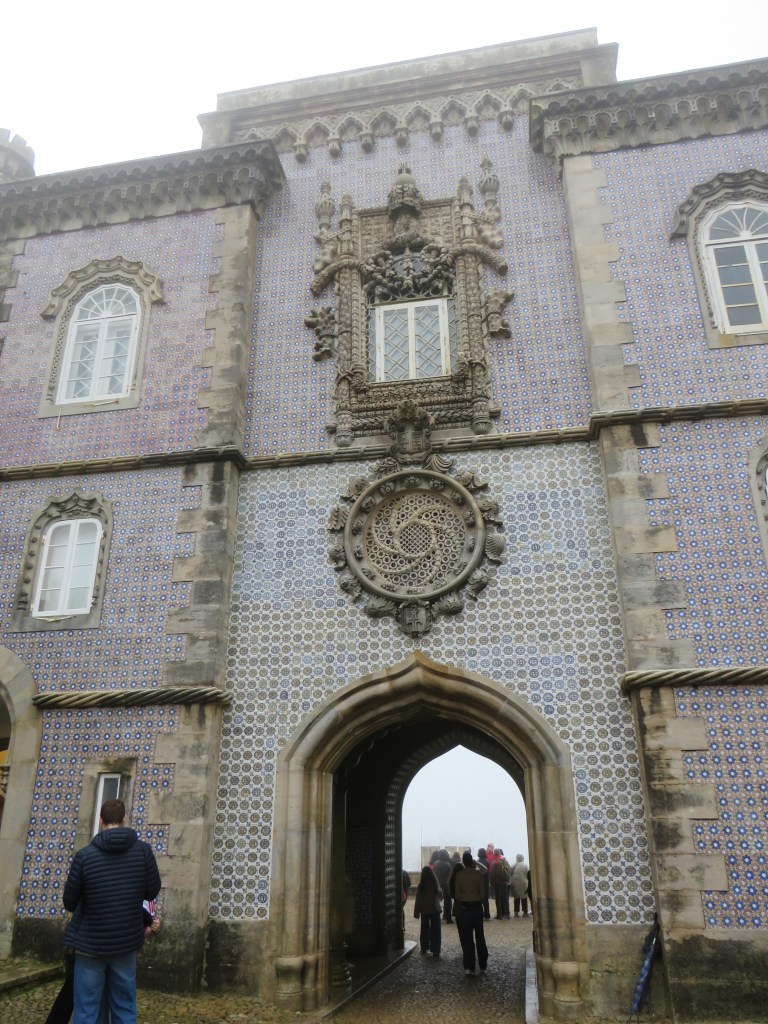
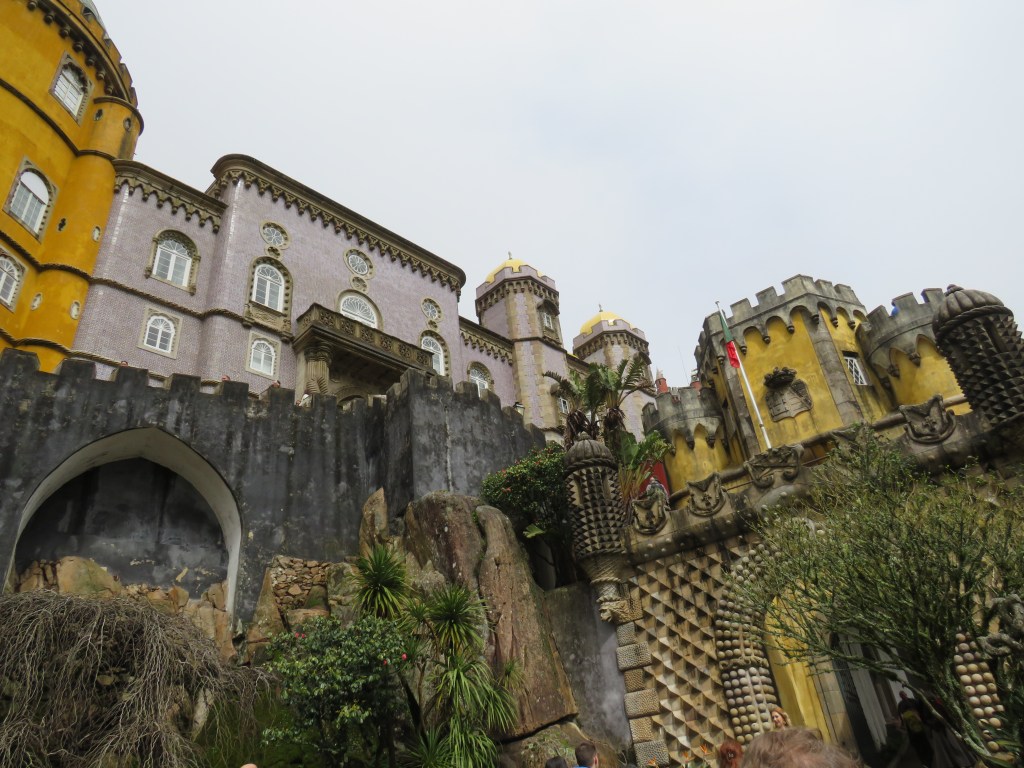
The Palace of Pena is the result of two distinct periods, reflected in its complex and seemingly fantastical architecture. To the 16th-century monastery, the consort king Ferdinand II added, in the mid-19th century, an entirely new palace. Even today, the palace’s silhouette clearly reveals these two construction phases, harmoniously combined by 19th-century Romanticism. The two wings served different purposes, although some domestic functions — such as bedrooms, studies and dining rooms — recur in both. However, while private apartments predominate in the former monastery, or Old Palace, state rooms are found only in the New Palace. This architectural duality allows visitors to explore two distinct visitor circuits.
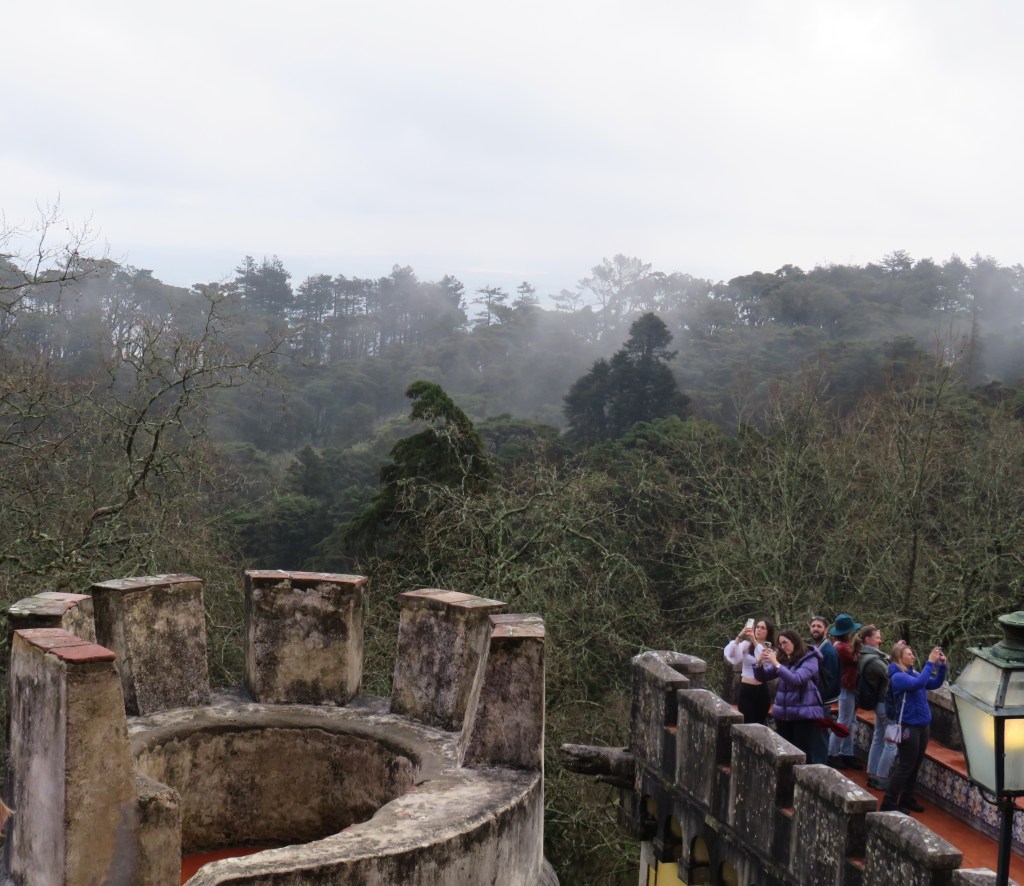
But the construction of Pena Palace actually started much, much earlier. The original construction began in the 12th century, following reports of apparitions of Our Lady, a chapel was erected on this site, and was a religious site for many centuries. King Ferdinand II purchased the castle in 1838, and expanded the castle, mixing and matching architecural styles. This sixteenth century monastery held an enormous degree of fascination for the king stemming both from his Germanic education and the romantic imaginary prevailing at the time that attracted him to the hills and the aesthetic value of the ruins. The original project was simply to restore the building as the summer residence for the royal family but his enthusiasm led him to opt for the construction of a palace and extending the pre-existing construction under the supervision of Baron Wilhelm Ludwig von Eschwege, a mineralogist and mine engineer who was then residing in Portugal. The building is circled by other architectural structures that appeal to the medieval imaginary, such as the parapet paths, the lookout towers, an access tunnel and even its own drawbridge. The palace incorporates architectural references displaying Manueline and Moorish influences that together produce a surprising scenario recollecting “a thousand and one nights.” The Palace of Pena thus emerged from the combination of the former Hieronymite monastery with a sophisticated 19th-century building, reflecting a taste for Romantic revivalism.
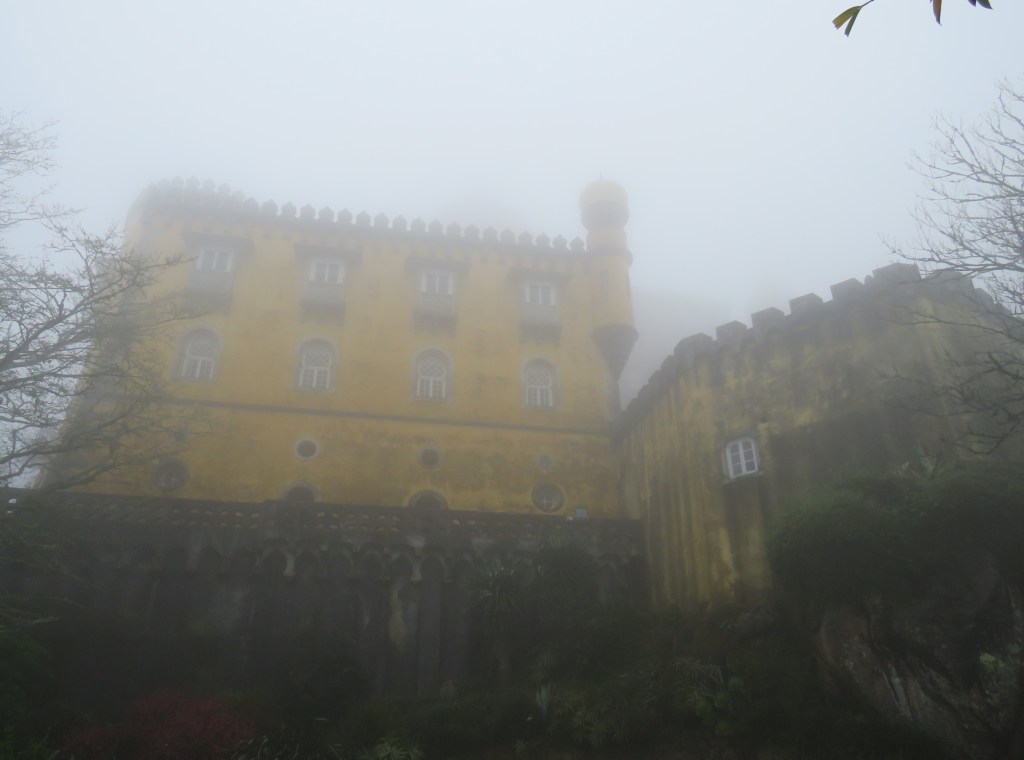
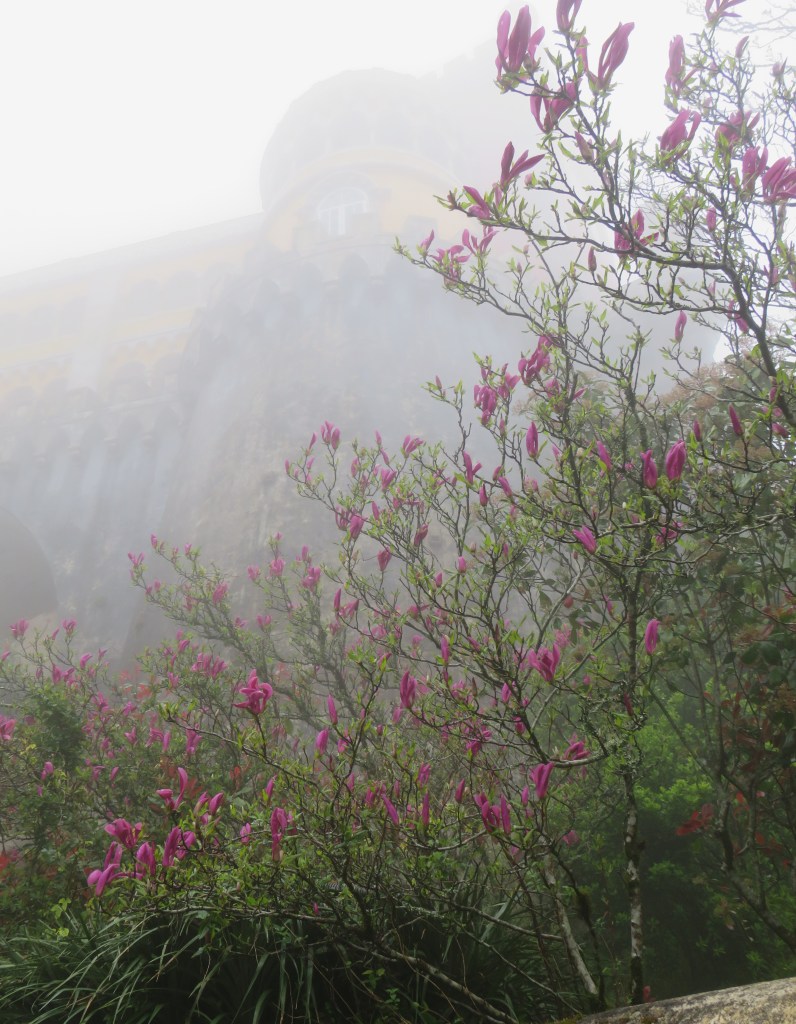
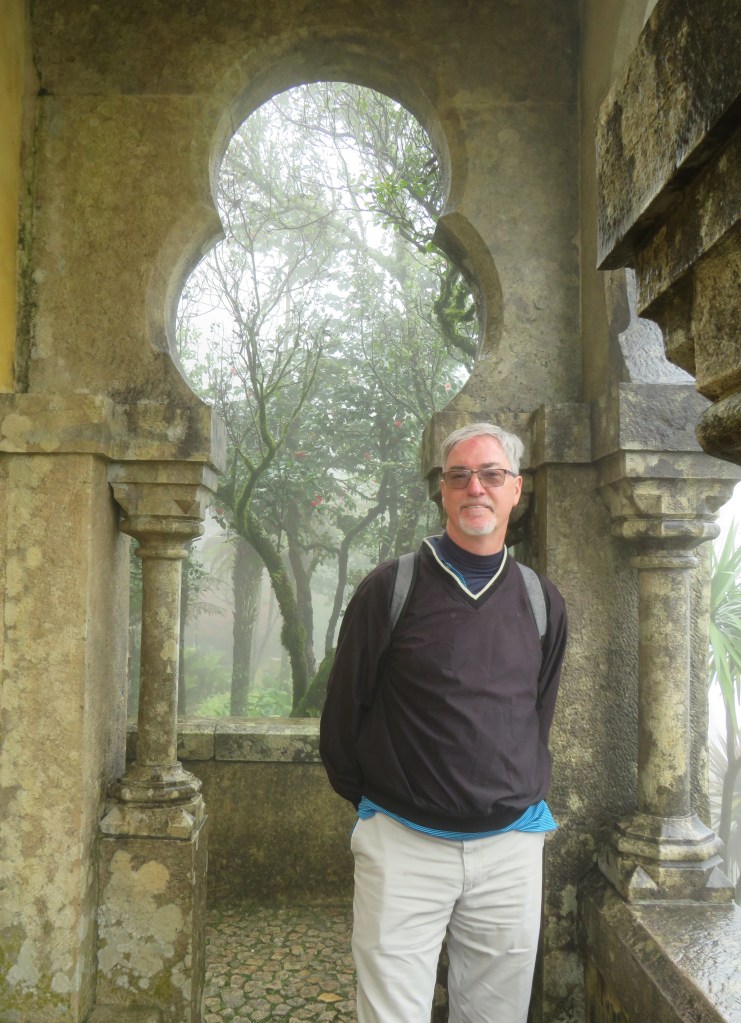
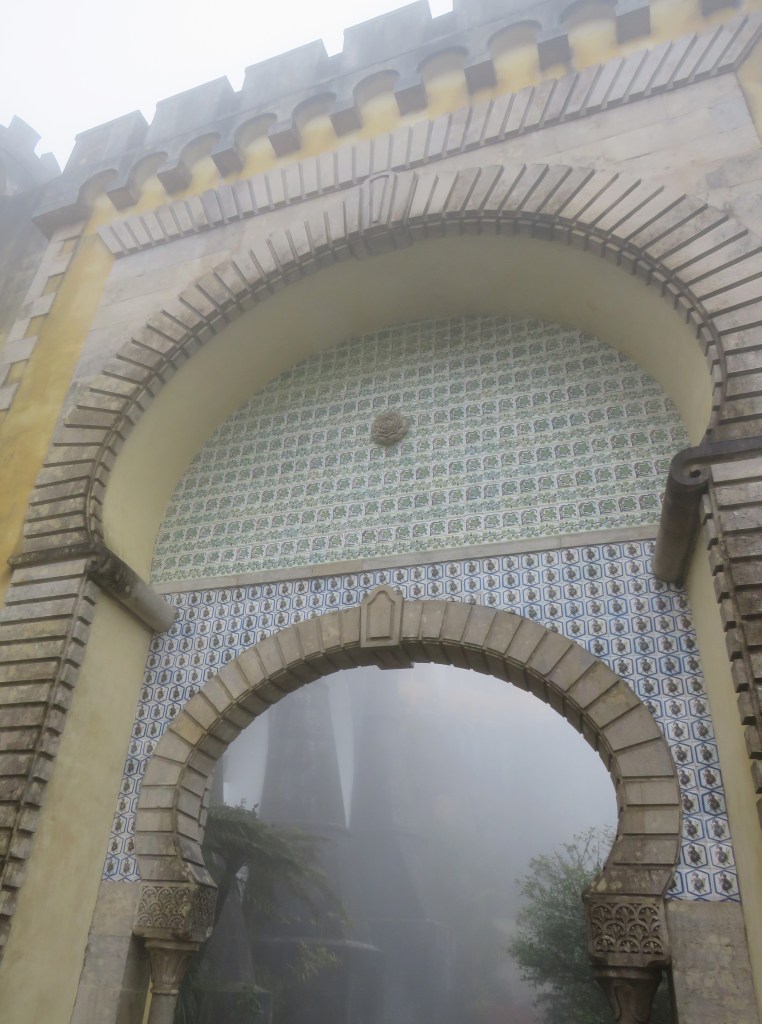
We got there early, which was a good thing. That gave us plenty of time to hike up the mountain, catch our breath, relieve ourselves and explore the grounds a bit before our scheduled tour time. In time, the fog cleared too.
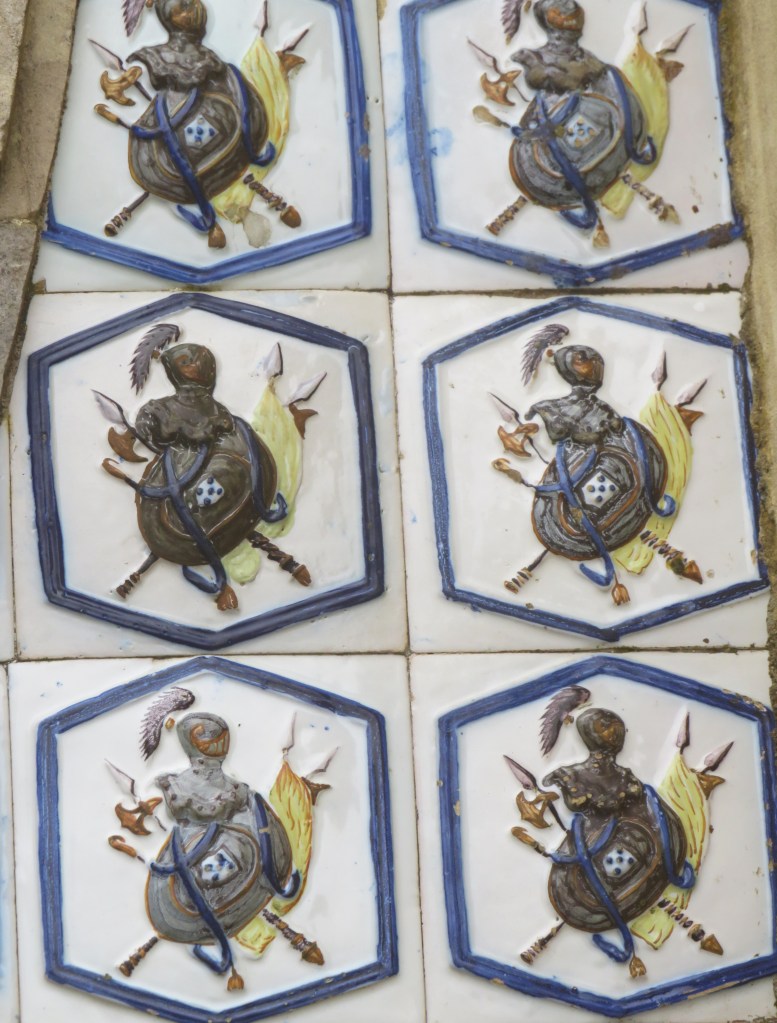
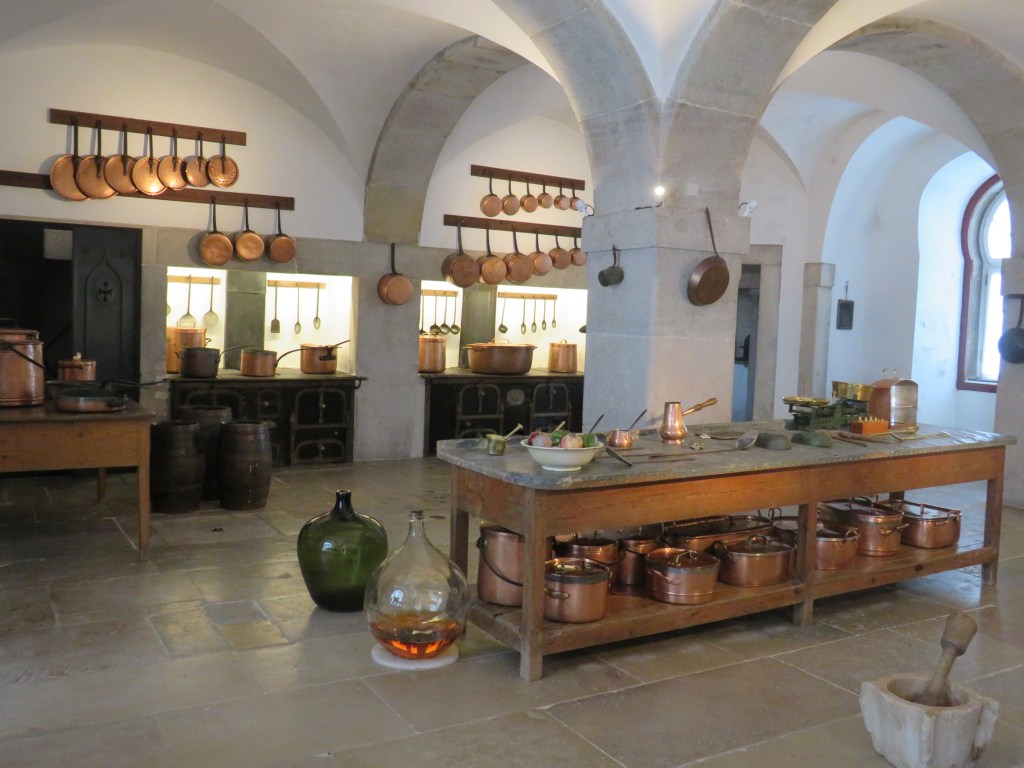
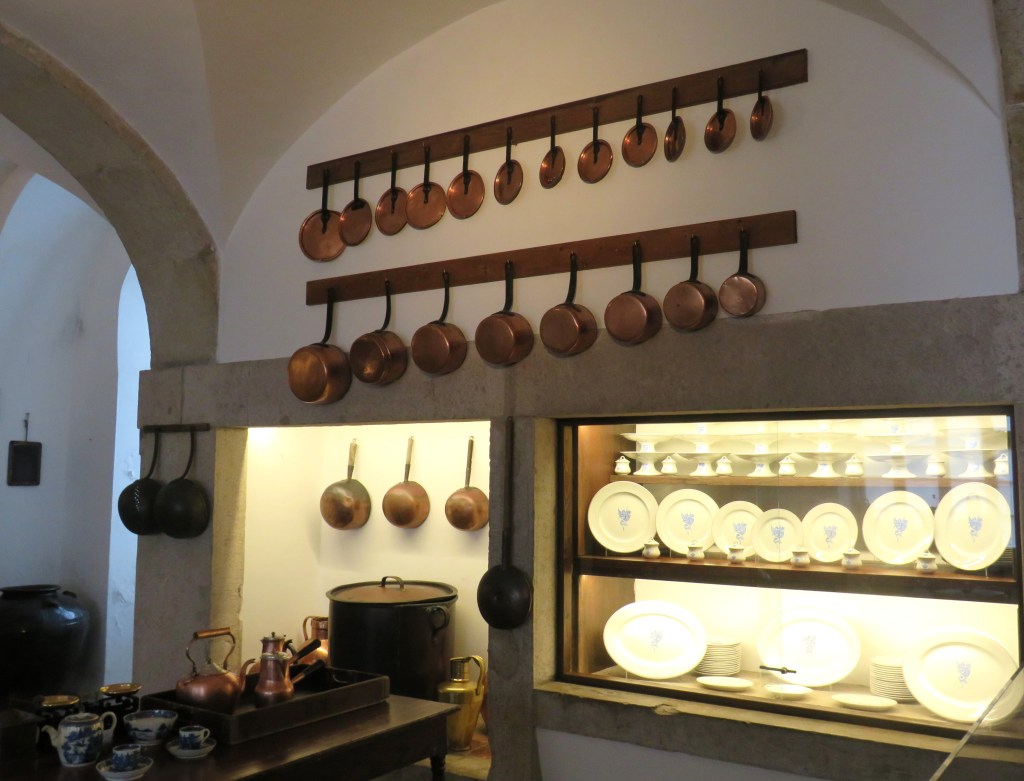
Our time had come to see the inside of the Palace. Once again, we were in awe. It did not disappoint. We started off in the huge kitchen. Again, I would love a BIG kitchen like this. I would have plenty of room for everything I need. 🙂
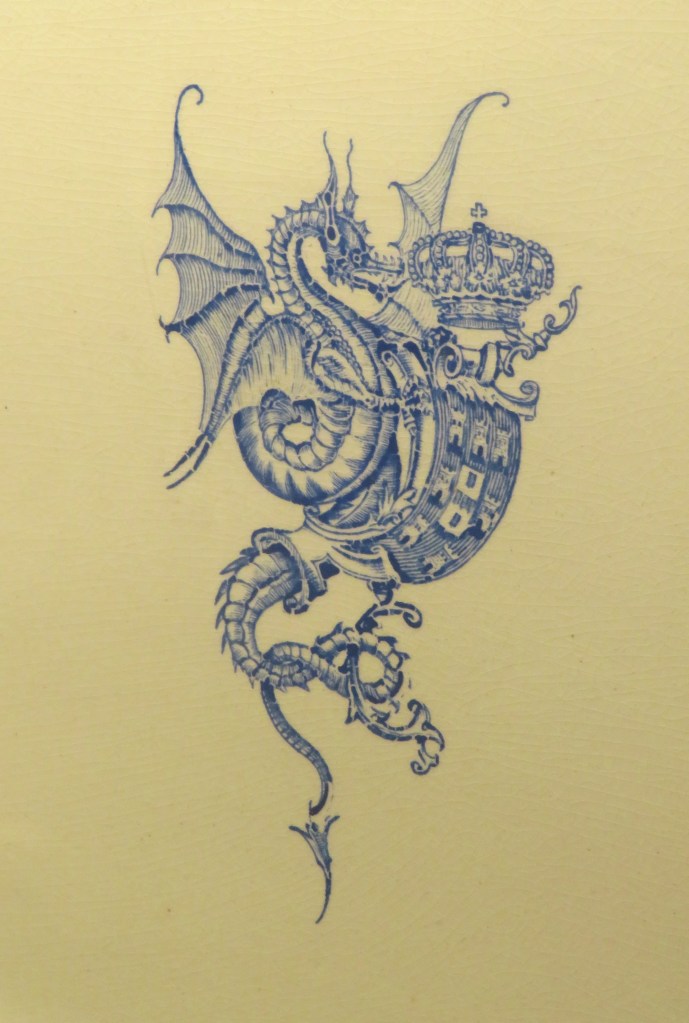
The Royal China and it’s dragon design.
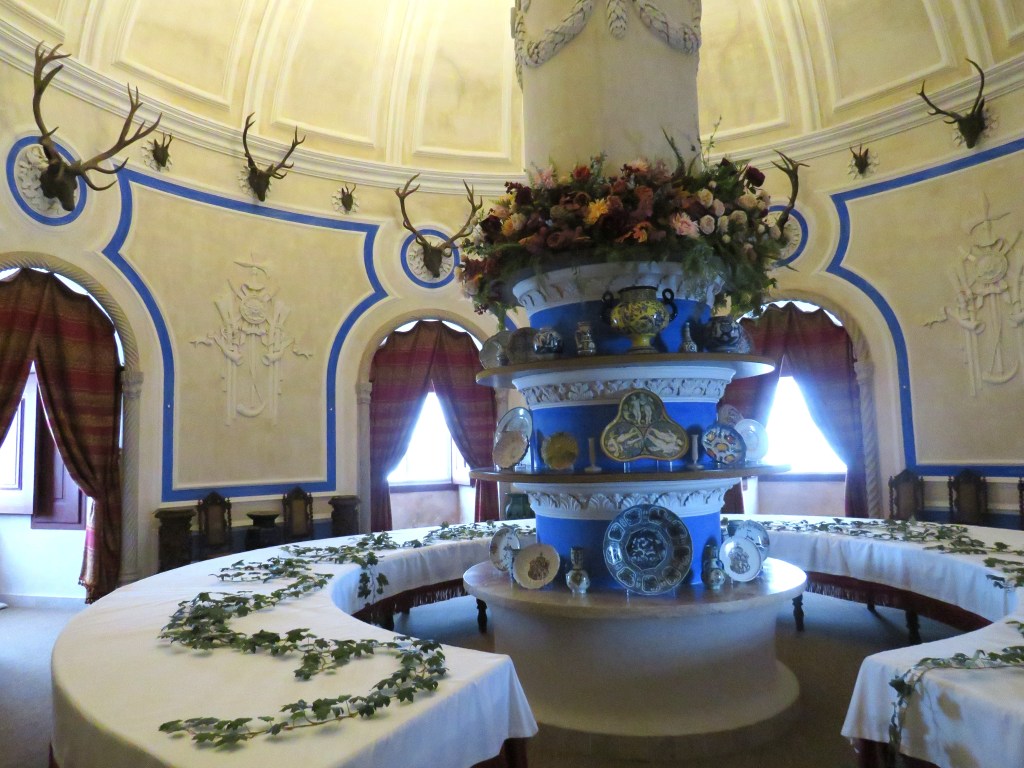
This room is known as the Hunter’s Room.
King Ferdinand’s private chambers.
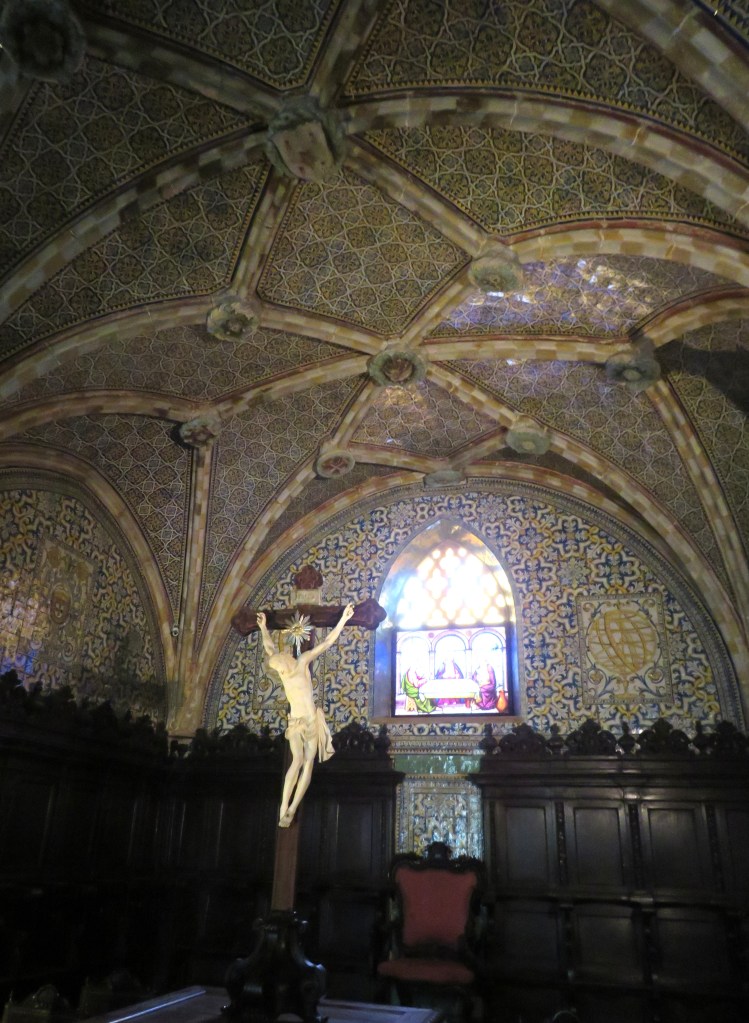
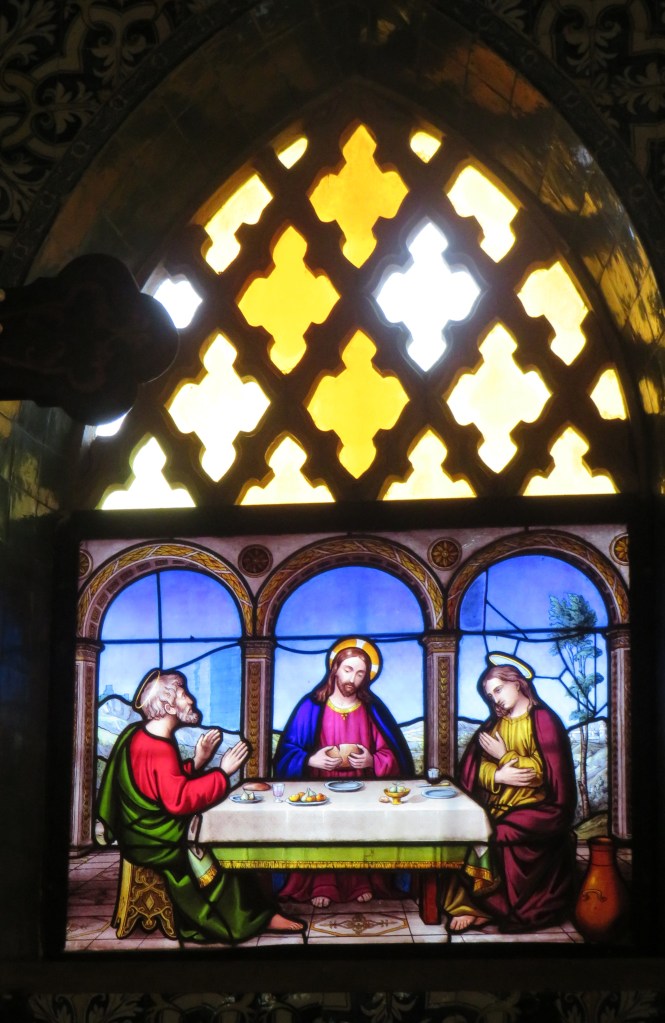
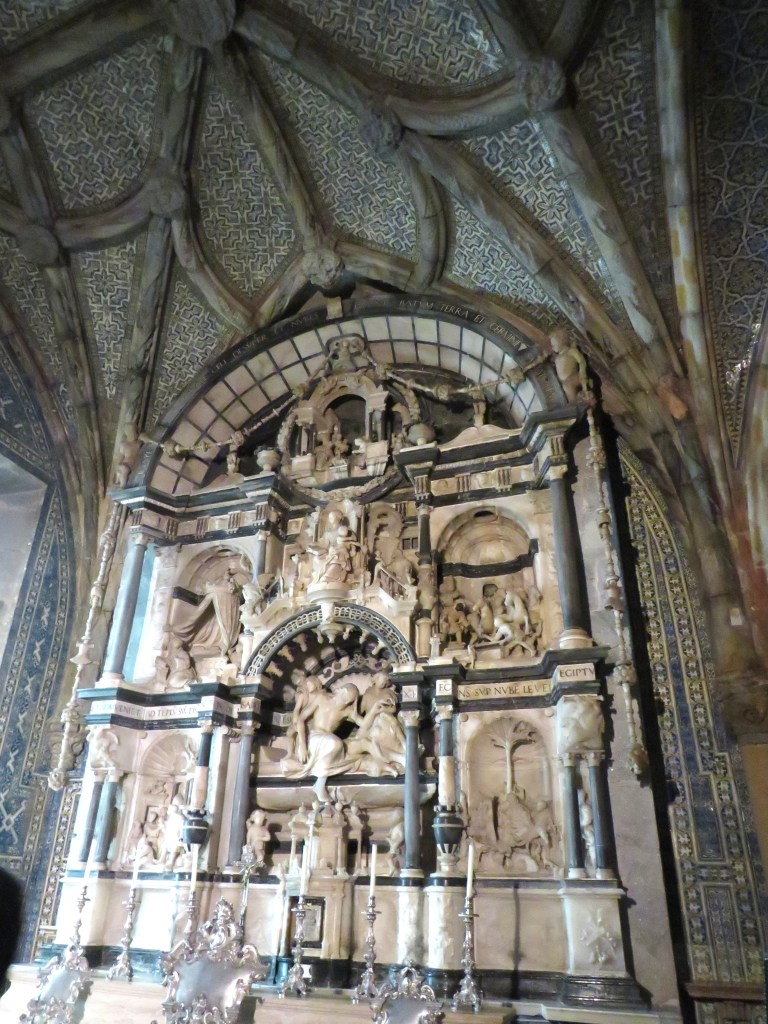
The Royal Chapel
We left the Palace and started our trek through the gardens and beyond. Those are going to be in a separate post though, since I have many more pictures and stories to tell about that; too much to add on here, and definitely more than enough to warrant it’s own posting. 🙂
Haver a great day and make everyday great. Live life to the fullest. It’s not the destination that matters, but the journey. Enjoy the ride, even the challenging parts. They make it all worthwhile in the end. ‘Til next time.


 A Jeanne in the Kitchen
Thanks for sharing. Have a great weekend. 🙂
LikeLike
Gorgeous architectural details
LikeLiked by 1 person
Yes, definitely. I LOVE all the old architecture and attention to details. You just don’t see that in modern architecture.
LikeLiked by 1 person