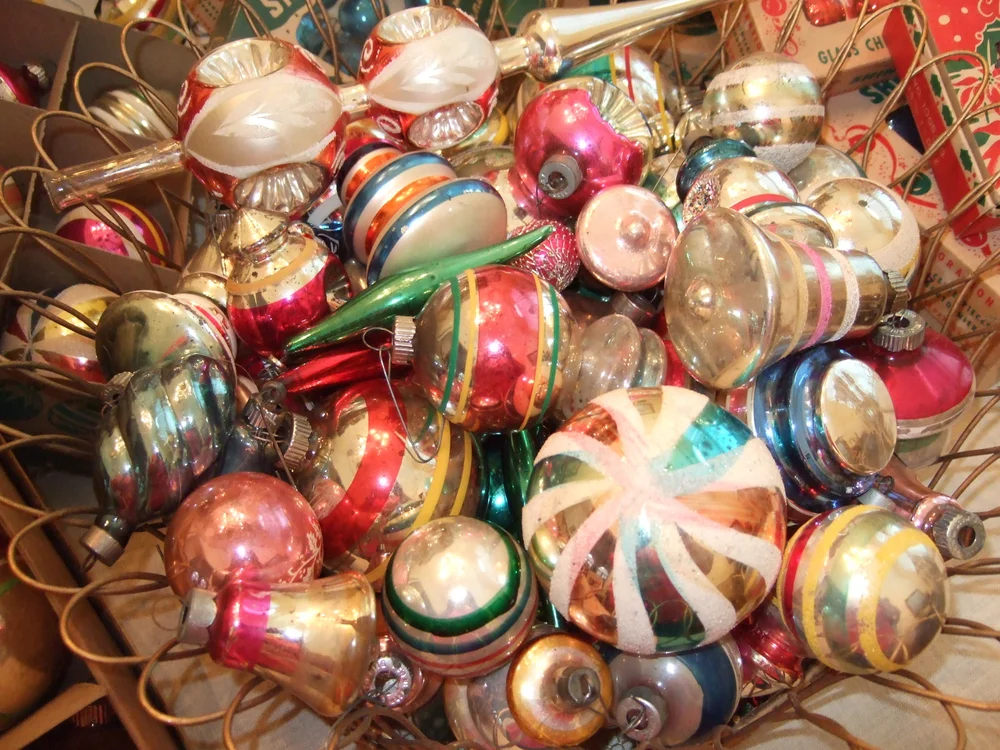
I love Christmas and all its traditions. I love everything about them. I love the lights, the Christmas trees, all the decorations, and of course all the Christmas ornaments on the trees. But there is a new trend that is starting up, especially with the Hollywood elites and celebrities. Many people today are putting up trees, with next to nothing on them as far as decorations and ornaments go. They are called no-ornament or nearly naked trees — they are bare evergreens with nothing on them but white lights or sometimes zero decorations at all. They have their own reasons I suppose and everyone is entitled to their own beliefs. But I find this new trend very sad. This new trend is taking away the personal experiences, the joy and memories of Christmas and unwrapping all the ornaments that we have cherished over the years.
My Christmas trees are filled with so many eclectic ornaments, and I wouldn’t have it any other way. They represent our travels, our hobbies and interests. Some are old and were my parents’ ornaments. Many represent our past and present beloved pets, or our four-legged kids as we call them. Every ornament has its own story and lots of memories attached to it. Our Christmas trees tell the story of our life. “Our ornaments are more than decorations; they are an annual reminder of lives well lived.”

Decorating Christmas trees is a tradition that started in the 16th century in Germany, when people started decorating trees with fruits, nuts and candles. In 1847, a German immigrant named Hans Greiner started making glass bulbs as ornaments to go on the trees. He started crafting glass balls, or baubles, to replace expensive real fruits, creating the first manufactured ornaments. These early glass ornaments, called “Kugels,” were silvered inside and came in various shapes, including fruits and different religious figures. F.W. Woolworth brought these German glass ornaments to America in the 1880s, selling millions and sparking a new craze that is still going strong today. In the late 19th century a picture of Queen Victoria with a decorated Christmas tree made the tradition fashionable in both Britain and America. Ornaments evolved from religious symbols and fruits and nuts to a vast commercial market, with traditions incorporating local cultures (like Ukrainian spiderwebs or Australian kangaroos) and countless other themes.

Decorating the Christmas tree is one of the most cherished holiday traditions around the world. Families gather together each year, pull out boxes of beloved Christmas ornaments, and make memories new together while sharing old memories. Many of these memories form the basis for the traditions that are passed down from generation to generation. Even before Christmas lights were invented, we loved the idea of lighting up a tree. Bits of foil were often added to reflect the light in the room and make the tree glisten!

Many Christmas trees in many households are topped with a star. The star that we use to decorate our trees today is representative of the original Star of Bethlehem. When Jesus was born in Bethlehem, there were three magi (or wise men) who saw an unusual star in the sky and knew that it would lead them to baby Jesus. They followed that star all the way to the stable where Jesus lay in a manger, and brought gifts of gold, incense, and myrrh.

Candy canes were another fun German accent used to decorate trees. The candy cane originated around 1670. Designed to help children sit still during Christmas services, the candy was shaped like a “J” to represent crooks of the shepherds that visited baby Jesus. Around 1900, the red stripes and peppermint flavoring were added. Christians believe that the red stripes represent the blood that Jesus shed on the cross and the peppermint flavoring represents the hyssop plant that was used for Biblical purification. The original candy canes had no flavoring or color and were essentially just “sugar sticks.” Today, candy canes come in all colors and many flavors.

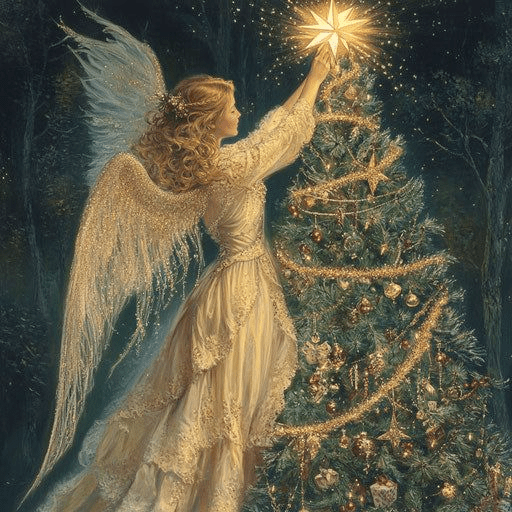
Angels are also found all over Christmas trees and are often at the top as well. They can represent the angel that appeared in Bethlehem to announce the birth of Jesus, the angel Gabriel who told Mary she would give birth to Jesus, or even the idea of angels watching over us and protecting us. Soon after Christmas trees became popular, parents would decorate trees with streamers, telling their children that the streamers were pieces of angel hair that had been caught in the branches. We too have various angels adorning our trees. They are are from all over.
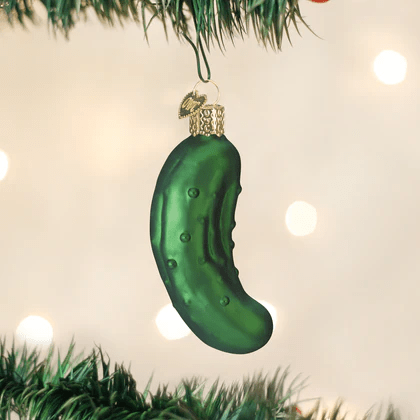
The Christmas pickle is definitely one of the weirdest Christmas ornament traditions to evolve over time! It emerged in the late 19th century as a game that parents created for their children. We have our Christmas pickle ornament too. The Christmas pickle is a fun American Christmas tradition (despite its supposed German roots) where a glass pickle ornament is hidden in a Christmas tree on Christmas Eve; the first child to find it on Christmas morning receives a reward like opening the first gift or an extra present, symbolizing luck and patience, though many Germans have never heard of it. We have now made it part of our Christmas party tradition, and whoever finds it gets a bottle of wine.
However you decorate your Christmas trees, the most important part is always the love shared by all who help with the decorating. It’s about spending time together, making new memories and reliving old, cherished ones. Start your own traditions to pass down through your own generations. These traditions are part of what makes Christmas and the Christmas season so merry.
Merry Christmas and Happy Holidays to all. However you celebrate, celebrate the season with family, friends and loved ones. Stay safe and stay well. ‘Til next time.

 A Jeanne in the Kitchen
Merry Christmas dear 💐
LikeLiked by 1 person
Thank you. Merry Christmas to you as well. 🙂
LikeLiked by 1 person
Thank you, Jeanne, for all your excellent posts all year, and Merry Christmas!
Joanna
LikeLiked by 1 person
Thank you Joanna. My pleasure. Merry Christmas to you as well. 🙂
LikeLike
Thank you, Jeanne!
Joanna
LikeLiked by 1 person
Merry Christmas!
LikeLiked by 1 person
Thank you. Merry Christmas to you as well. 🙂
LikeLiked by 1 person
❤️✨🎄🎁
LikeLiked by 1 person
Merry Christmas! Love and Light God Bless ❤️✨🎄🎁🧑🎄⛄🙏
LikeLiked by 1 person
Thank you. Merry Christmas to you as well. 🙂
LikeLiked by 1 person
Thank you! Enjoy! 🥂✨
LikeLiked by 1 person
You as well. 🙂
LikeLike
Have a wonderful Christmas!
LikeLiked by 3 people
Thank you. You as well. 🙂
LikeLike
I love decorating the tree! It is so much fun! And your right, ornaments, they tell a story, each and every one!
LikeLiked by 1 person
Each and every one. Yes indeed! 🙂 Merry Christmas.
LikeLike
Great looking tree and photo and ornaments. We recently went shopping for ornaments. My wife bought most but I bought a dinosaur bauble. Happy Holidays and Happy New Year to you and your family.
LikeLiked by 1 person
Thank you. Fun ornaments are part of our treasured collections too. Merry Christmas. 🙂
LikeLiked by 1 person
Yes you are right and Merry Christmas to you and your family
LikeLiked by 1 person
Thank you. Merry Christmas to you and yours as well. 🙂
LikeLiked by 1 person
Thank you Jeanne
LikeLiked by 1 person
You are very welcome. 🙂
LikeLiked by 1 person
Excellent, informative post Jeanne, thank you.
LikeLiked by 1 person
Avec plaisir. De rien. 🙂
LikeLiked by 1 person
Merry CHRISTmas, Jeanne. 🌟✨💫🥁📯🔔
LikeLiked by 1 person
Thank you Gail. Merry Christmas to you as well. 🙂
LikeLiked by 1 person
Thank you!
LikeLiked by 1 person
You are very welcome. 😉
LikeLiked by 1 person
Wishing you a beautiful happy Christmas— just imagining your kitchen overflowing with activities and good things ✨♥️💫
LikeLiked by 1 person
Thank you. Merry Christmas to you as well. 🙂
LikeLiked by 1 person