I am in between Holiday and Christmas celebrations right now, and am still in a Southeast Texas frame of mind. So I made some gumbo. Gumbo is a dish that is rich in tradition, with influences from many different cultures. And even though it is known for being a Louisiana dish, Southeast Texas and Louisiana share a lot of the same cultural influences. They are kissing cousins in many ways.
Gumbo is a thick soup that could be considered the defining dish of South Louisiana, and yet, there is no standard recipe, as the dish straddles both Creole and Cajun cuisines, racial lines, and, in more recent times, even the boundaries of Louisiana. By the time of the Louisiana Purchase in 1803, gumbo had become deeply ingrained in the local diet. The dish was prevalent among Cajuns, Creoles, and people of color, no matter their socioeconomic station. Gumbo’s varied history reflects the evolution of agricultural production and creolization, a hybridized blending of multicultural traditions, in Louisiana. Gumbo’s history is a rich cultural fusion, originating in 18th-century Louisiana as a blend of West African, French, Spanish, and Native American culinary traditions, with its name likely coming from the Bantu word for okra, “ki ngombo”. Key ingredients like okra (West African thickener) and sassafras (Native American filé powder) were combined with French roux and local seafood, evolving from a humble stew into Louisiana’s iconic state dish, documented in print by 1802 and appearing in cookbooks by the 1820s and 1880s.
Gumbo started as a resourceful dish, combining available ingredients like seafood, meats, and vegetables. The choice between okra, filé, or roux defined different regional styles (e.g., okra in African tradition, roux in French, filé in Native American). The base of onions, celery, and bell peppers became a foundational flavor element. Creole gumbo (New Orleans) often includes tomatoes and is sometimes richer; Cajun gumbo (rural Louisiana) uses a darker roux and can be more rustic. Today, gumbo is the official state cuisine of Louisiana, celebrated for its cultural significance and diverse variations. As with many dishes that have evolved over time, there are many different variations of gumbo, and a lot of those variations come from what is available locally and seasonally. It can be made with seafood, wild game, sausage, meat, vegetables, or any combination thereof. Even the spices and the thickening agents vary, as do the colors of the roux.
Gumbo with Shrimp and Andouille Sausage

I have eaten and enjoyed many different styles of gumbo, but my favorites tend to be the lighter colored and thicker styles. The roux is not browned as much, which tends to make the gumbo thicker and not as much of a nutty flavor.
I made this particular gumbo with both shrimp and Andouille sausage, and of course the “Holy Trinity” of Cajun/Creole food, celery, peppers, and onions, plus garlic and various Cajun/Creole spices.
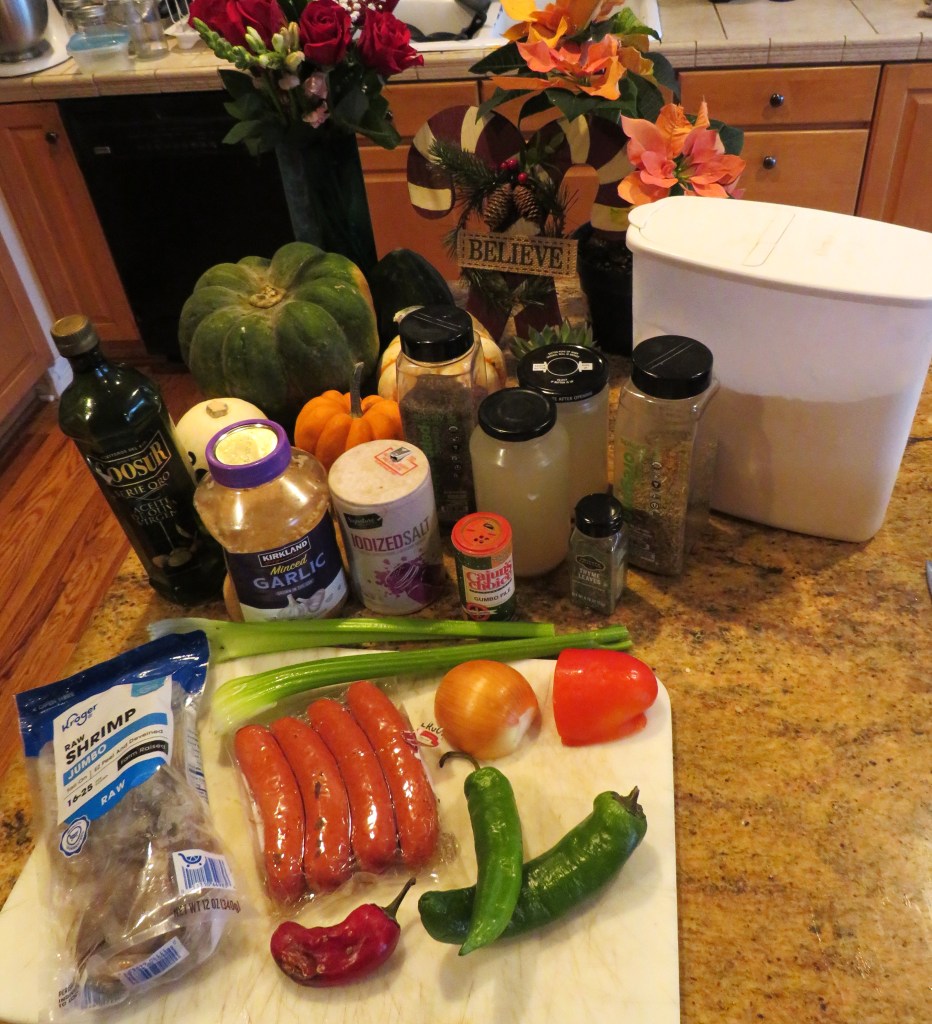
1-1 1/2 lbs large shrimp, peeled and deveined
1-1 1/2 lbs Andouille sausage, cooked and sliced
2-3 celery ribs, sliced
1 onion, diced
1 green bell pepper or 2-3 Anaheim peppers, diced
1 red bell pepper, diced
1-2 jalapeno or red jalapeno peppers, diced fine
1-2 TBSP garlic
6-8 cups chicken stock
2-3 TBSP flour
2-3 TBSP olive oil and butter
salt & pepper to taste
1 TBSP Cajun/Creole spice
2-3 tsp dried oregano
2 tsp dried thyme
Cook the shrimp in a hot pot with the oil and butter until completely pink. Then remove from the pot and set aside.

Add the peppers, onions, celery and garlic and more oil and butter if needed. Cook for about 3-5 minutes or until the onions are translucent and the vegetables are softened a bit.
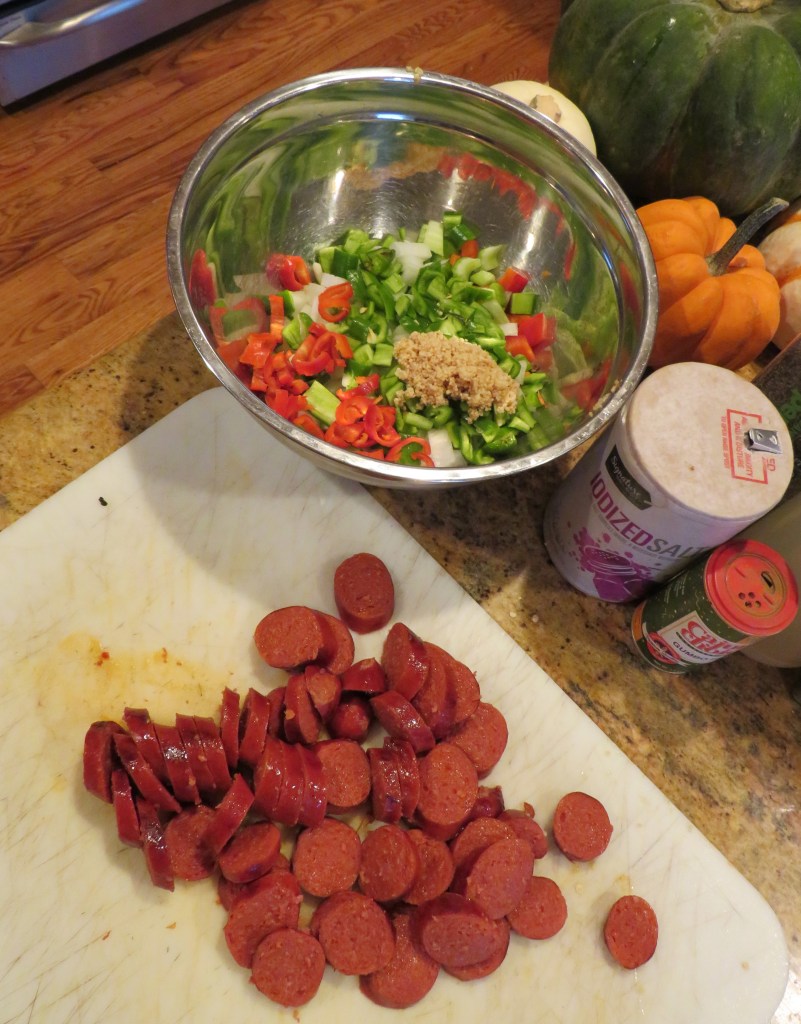
After the vegetables have softened a bit, add the flour and incorporate well into the mixture. The amount of time you cook the flour will determine the color and intensity of the roux. The longer you cook it, the darker it will become, and the more intense the nutty flavor. This is purely a personal choice depending on how you like it. There is no right or wrong way.
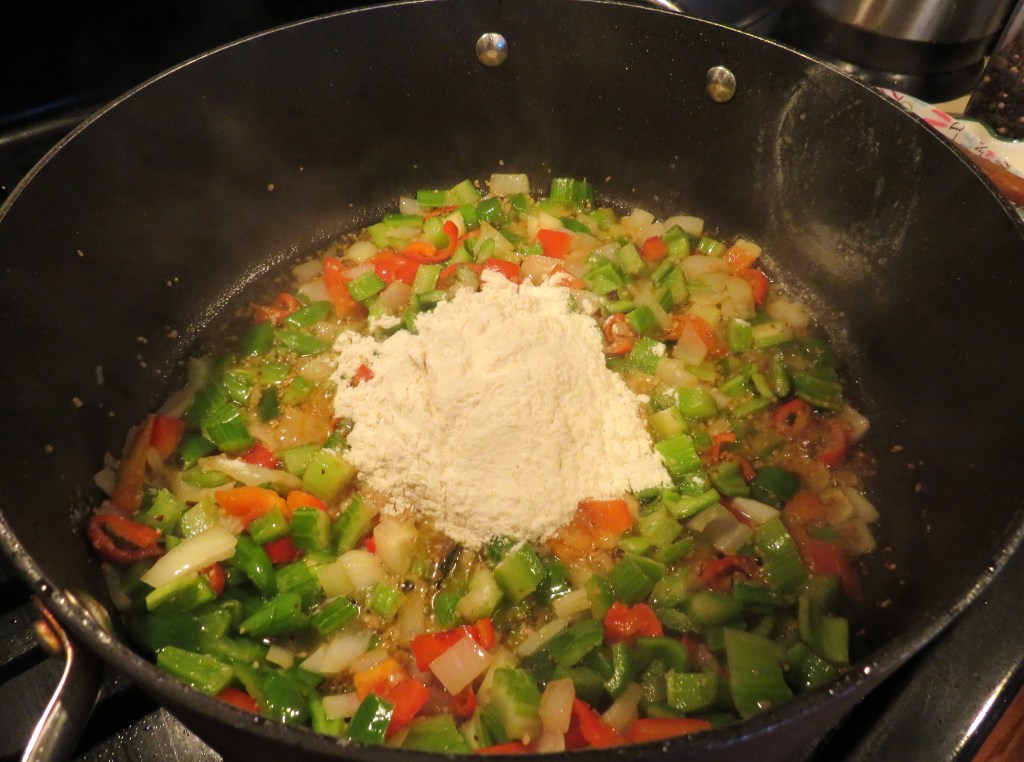
Once the roux is to the color and intensity you desire, add the chicken broth and seasonings and mix together well. Bring to a boil.

Reduce the heat to a simmer and add the cooked shrimp and the Andouille sausage. Cover and simmer for at least 1-2 hours, stirring frequently.

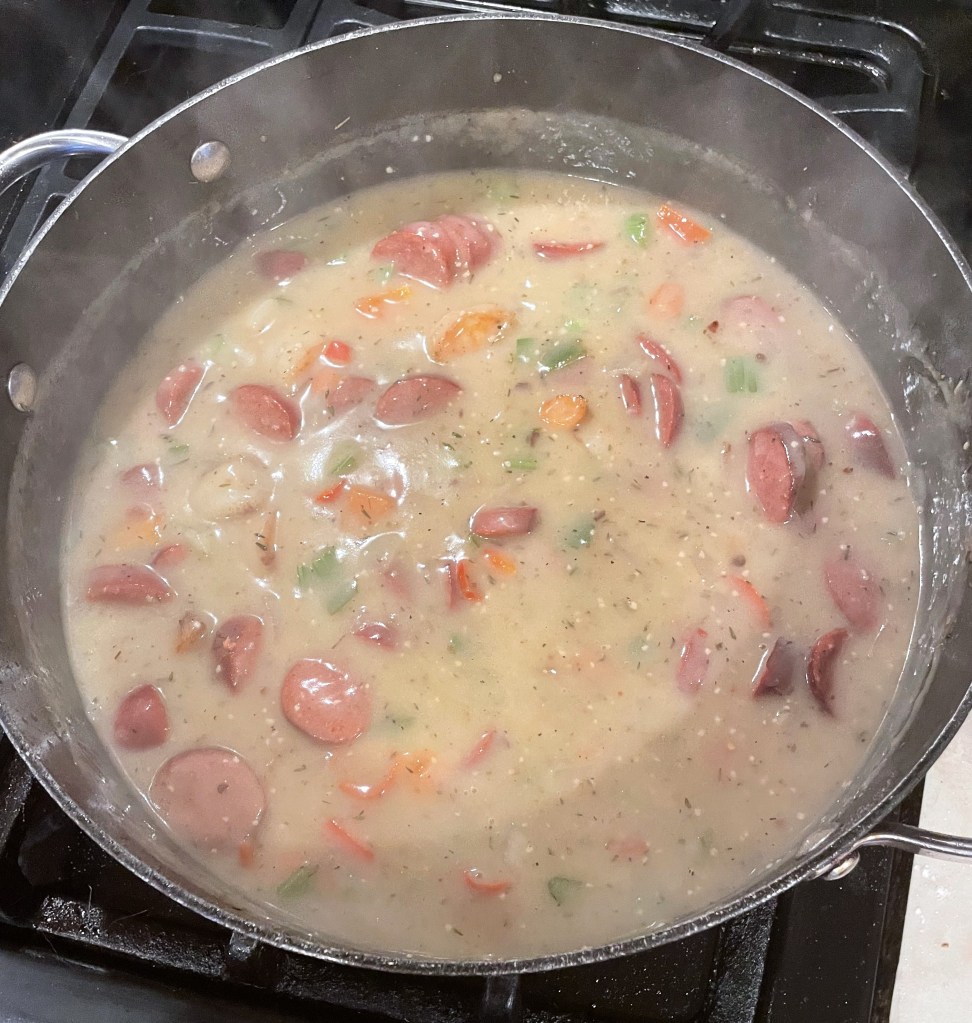
Serve hot, in a bowl, with cooked rice and red beans if you like, with cornbread, biscuits or warmed bread on the side. I GAR-UN-TEE y’all are going to love this one. 🙂
Have a great day and make everyday great. Have a very Merry Christmas and a Happy Holiday season. Stay safe and stay well. ‘Til next time.

 A Jeanne in the Kitchen
You know what, I’m not sure about this one. You cook the cooked shrimp for a further 1-2 hours? Did I understand that correctly?
LikeLiked by 1 person
It can go either way, but they are not really cooking too much because it is a low simmer. 🙂
LikeLiked by 1 person
Well, you’re the expert.
LikeLiked by 1 person
No expert, just adventurous. 🙂
LikeLiked by 1 person
I’ve never eaten gumbo! I think I’d love it though. If I ever visit Louisiana, I’ll try it!
LikeLiked by 1 person
If you ever visit Louisiana, you’ll have to add it to you bucket list of things to try. 🙂
LikeLike
My husband made a hole in my head talking about his mother’s gumbo, but by the time we got married, she was, sadly, too sick to cook. Yours sounds fantastic!
LikeLiked by 1 person
Thank you. I do have a lot of Southern roots, you know. 🙂
LikeLiked by 1 person
I am aware of your Southern roots, darling, and you draw on them to make spectacular food.
LikeLiked by 1 person
Thank you. 🙂
LikeLike