Bananas are some of the most popular “fruits” in the whole world. They are also some of the oldest and healthiest foods on the planet as well. Everyone loves bananas. I know I sure do.
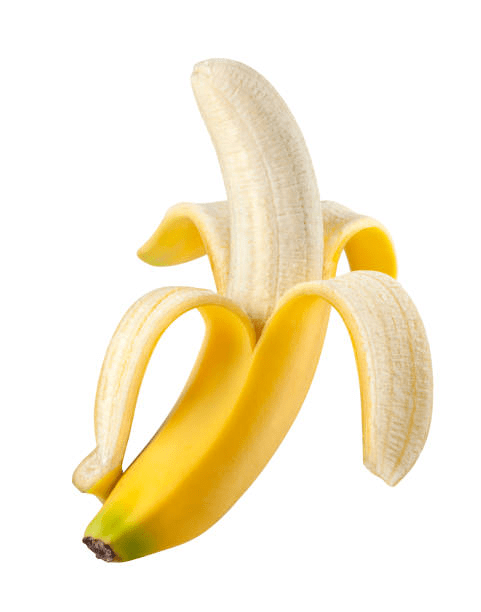
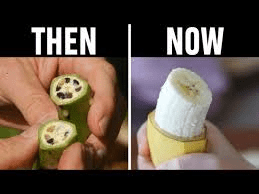
Bananas originated in Southeast Asia, likely New Guinea, around 10,000 years ago, with early domestication focusing on wild, seedy fruits. Wild bananas were small, seedy, and not very palatable. Wild bananas from their native tropical regions of Southeast Asia, Australia and parts of Africa, are quite different from the cultivated varieties we buy at the store today. They are small, have hard peels, and are full of large, hard seeds. Modern edible bananas have been selectively bred by humans to have larger, seedless fruits with thin, easy-to-peel skins.

Starting around 7,000 years ago in places like Papua New Guinea, humans began domesticating bananas through a process of selective breeding. Through genetic accidents and human cultivation, seedless, fleshy varieties emerged. Early farmers encountered “happy genetic accidents,” such as spontaneous mutations that produced plants with fewer, or no seeds. They crossbred these wild species, combining genes to produce more desirable traits. Through this selective process, humans developed seedless, fleshy bananas that could be propagated by replanting suckers (offshoots) from the parent plant. This was a crucial step in the domestication of bananas.
Today bananas are grown in about 100 countries all over the world and come in many different varieties, from large to small, from red to blue to green to yellow. Today, there are over 1000 types of bananas, but we mostly eat just one type. The most popular banana variety is called the Cavendish, named after the Duke of Devonshire, William Cavendish. In the 19th century, Cavendish successfully grew bananas that were imported from Mauritius, in his hothouse. The edible Cavendish is a sterile triploid (three sets of genes) that does not produce viable seeds. Instead, new plants are created as clones from the stems of existing plants, making the Cavendish population genetically uniform. The Cavendish banana is the only type commonly sold in supermarkets today, but before the 1960s, a different variety called the Gros Michel was popular. The Gros Michel was wiped out by a disease known as Panama disease. Bananas are the 4th largest staple food crop in the world today, following wheat, rice and maize (corn).


We all think bananas are fruit. I even just referenced them as fruit above. But bananas are actually a type of berry instead. Bananas are classified as berries because their flesh contains seeds (though they are very small and sterile in cultivated bananas), not on the outside. The seeds are on the inside. “They are formed in big bunches from a large, purple or red teardrop-shaped flower” (p. 12 -The Story of Food) from the banana plant. The edible parts of the banana plants are not grown on the trunk but on the root structure. What looks like a banana tree is actually a giant herb with a trunk made of tightly wrapped leafstalks, not wood. Because the edible parts are grown on the root structure, that makes them technically and biologically an herb.

Bananas are very healthy for both humans ands animals too. In fact, they are some of the healthiest foods around. They are loaded with all kinds of nutrients and are low in calories. Eating a banana will cure just about whatever ails you. If you are not feeling well, for any reason, just peel a banana.
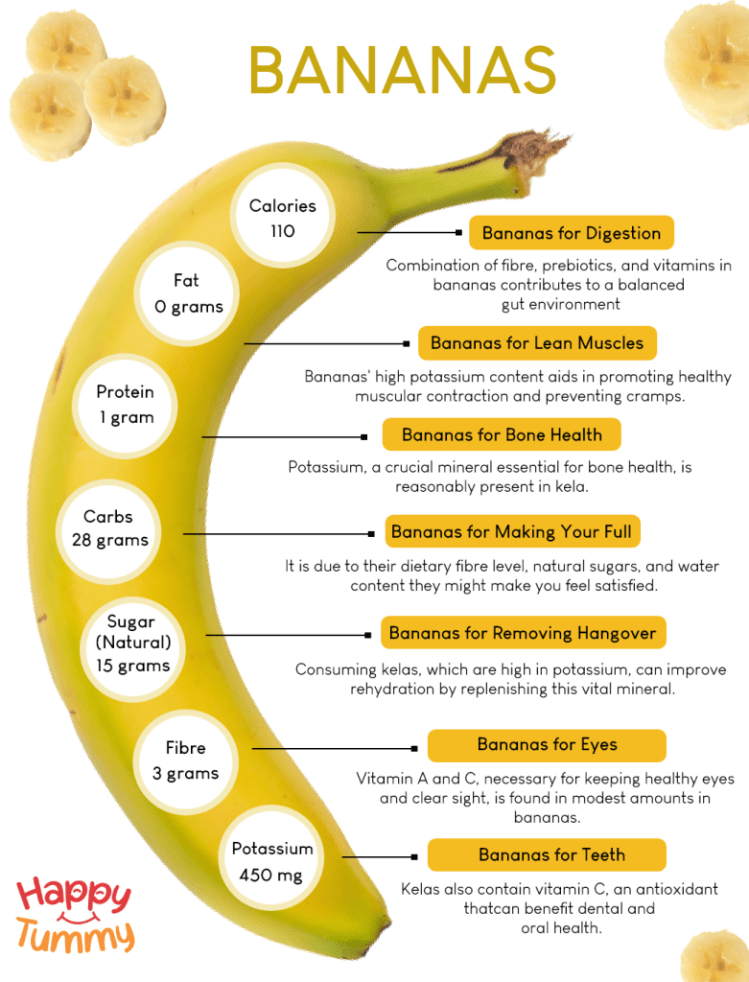
Some more fun facts about bananas.
Bananas are radioactive.
Bananas contain small amounts of the radioactive isotope potassium-40, but the levels are so low and natural that they pose no health risk.

Bananas float.
Bananas are less dense than water, which is why they float when placed in a liquid.
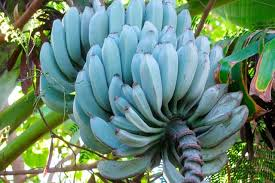
Bananas can be black, red and blue!
Red and blue, long and thin, fat and short, round or softly squared, there are more than 1000 varieties of the Banana, which is in the Musa family. The classic yellow banana found in supermarkets is called the Cavendish, after a British duke found a way to grow them in greenhouses in England, making it possible for Iceland to be one of the biggest exporters of bananas. Mostly people who leave Rancho Mastatal and who live outside of the tropics, stop eating bananas because the supermarket ones (grown in monocultures far away or in greenhouses) are just not worth eating anymore.
You can eat the flower.
Like so many wonders of the world, it is both beautiful and edible! A popular choice is when it is cooked into a picadillo: chopped fine and cooked down with a bit of oil, salt and farm to table pepper. It is delicious. Especially if you’re a lover of the consistency of artichoke or mushroom!

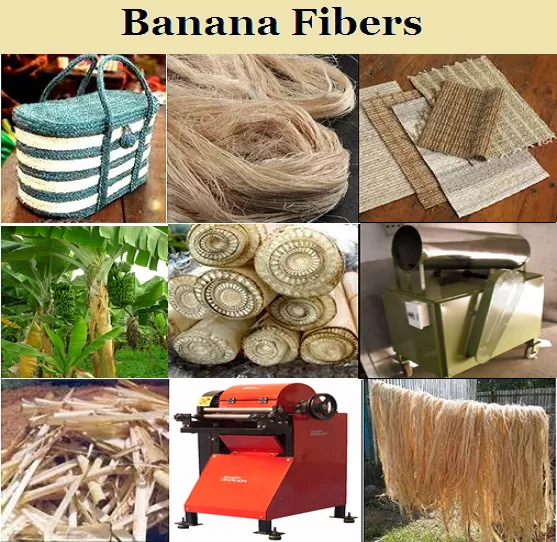
The “trunk” can be turned into weaving material.
Peel the skin of the “trunk” from top to bottom, dry the strips in the sun and you’ll have very strong fiber material to make baskets, mats or belts out of. Banana fibers can be woven into an attractive silk like fabric, which in Japan and Indochina are used for clothes and hats. In Tahiti the leaves and “trunk” of the fe’i variety is used as weaving material and turned into thongs, lashings and fans!
You can eat the trunk.
If you are actively managing your bananas you probably cut away younger ones in the clump, only keeping the three generations (grandmother, mother and daughter) growing. In south East Asia they eat the young “trunks” as commonly as lettuce! Very thinly sliced, and then soaked in water and vinegar for a while, they add it as a fresh garnish in their soups, or turn it into a salad adding herbs, fish-sauce and toasted peanuts.

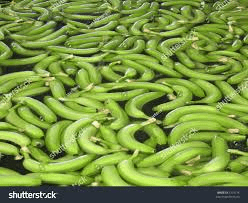
Green bananas are a perennial staple.
They can be used in cooking like we use the potato, simply boil them in water – the whole thing with its skin – and do as you please! You can also cut them into smaller pieces to add to a delicious stew, blend them with herbs and fry them into fritters, grate them and make a green banana hash, slice them thin and dehydrate to make banana flour. We enjoy all these creative ways to use a local food as a staple in our diets.

Plantains are similar to the green bananas and are used in similar ways. Plantains are used in many different tropical cultures and recipes. A plantain to the untrained eye could easily be mistaken for a banana. In fact, it belongs to Musaceae, the banana family of plants, and it’s closely related to the common banana. Believed to be native to Southeast Asia, plantains are grown in tropical regions around the world and in a variety of cuisines. Unripe plantains are green to yellow, difficult to peel, and the fruit is hard with a starchy flavor—this is the perfect stage for boiling and frying them. They are technically fruits, but much like the tomato and unlike the banana, they are eaten and cooked as if they were a vegetable. When fully ripe, plantains are black, with a flavor that some people describe as similar to a banana but not as sweet. Most people prefer them cooked even at this stage.

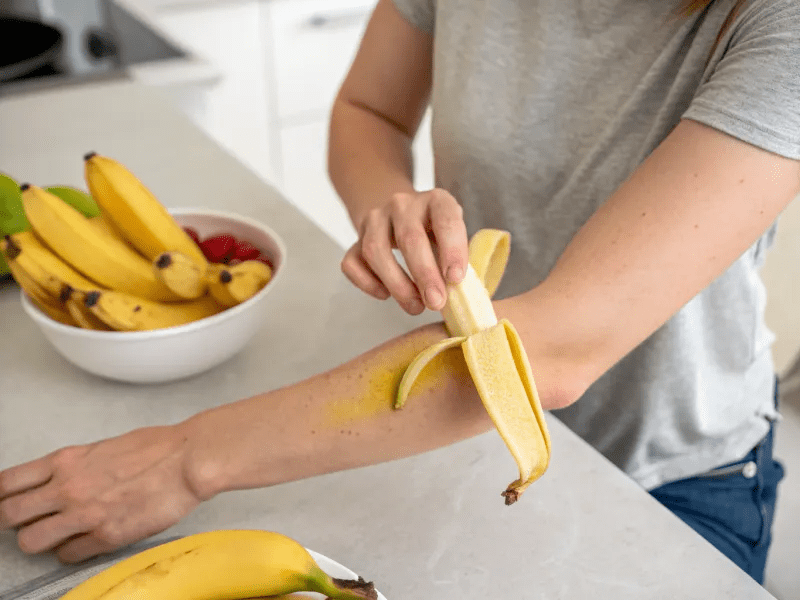
Banana skin helps reduce itching.
The plant itself flourishes in tropical, hot and damp environments, mostly filled with mosquitoes – fortunately the banana skin eases the itch.
Bananas are also very good to eat when you have an upset stomach. They help to stabilize the stomach and digestive problems and help with quelling the nauseous feelings, as well as so many other diseases and disorders. Bananas and their peels are effective in curing and alleviating all kinds of simple health issues.
Dirt or ash helps remove its sticky juice.
Harvesting bananas gives off all kinds of juices, especially when you process the green banana and flower. You can clean the machete, knifes or cutting boards by rubbing dirt or ash on it. It may sound crazy but it works.
When harvesting, rub the stem in dirt; when processing/cooking them green, use as much banana leaves/paper to protect table and other material from the juice. But once you have it on a knife or cutting board, it helps to rub any kind of dirt or ash and then wash.
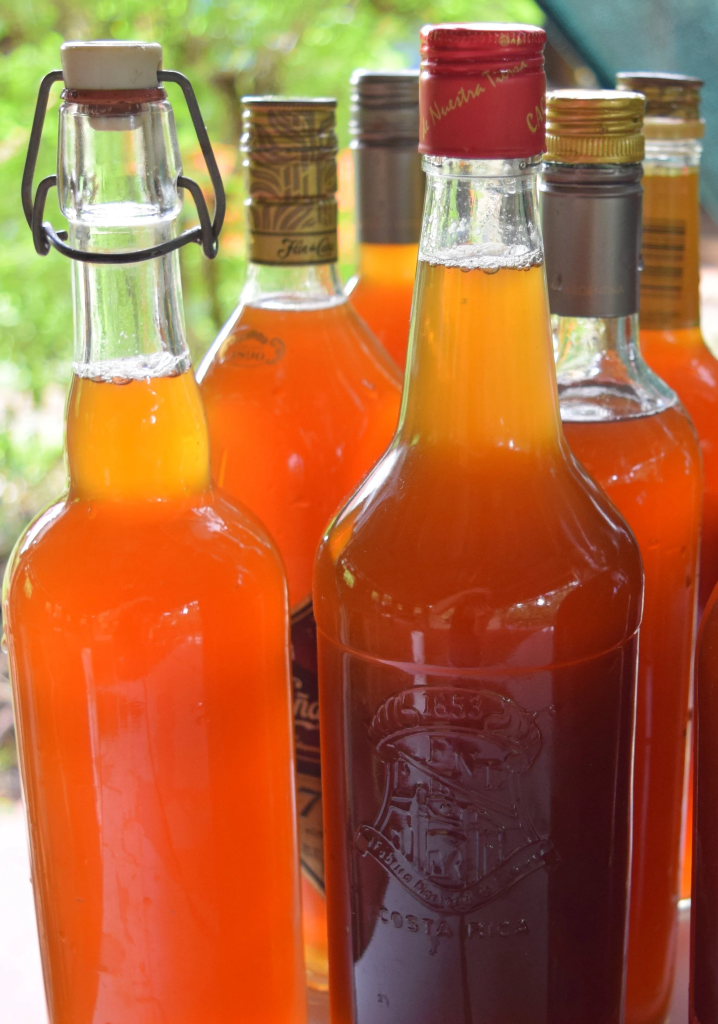
Once they are too ripe, you can turn them into wine or vinegar!
You can never have too many bananas. Well maybe you can have too many to eat out of hand, which happens to use often. That’s when we make homemade banana vinegar! The super ripe, falling off the bunch-juicy-black-kinda ripe, means loads of sugar, which is an opportunity for yeast to have a big feast, eating the sugars and making alcohol! Permaculture principle– produce no waste.
PACKED with potassium that reduces muscle spasms very efficiently.
The average daily banana intake is about 3 to 5 bananas, which for many, they find that their muscle spasms has completely disappeared. Bananas also contain the neurotransmitters, dopamine and serotonin that lifts up the mood.
The stages of the banana. They are edible in all stages, and every stage has a different flavor and texture. I like them and eat and use them in most stages. The only stages I am not overly fond of are the immature and barely ripe stages. I use the very ripe and over ripe bananas for baking. They are perfect for baking purposes when they are really soft.

Here are some other uses for banana peels too that you might not have known about.

You may have always liked or even loved bananas, but now you can say you really KNOW bananas too. Thank you to Stay Healthy Weekly at http://stayhealthyweekly.news/?jetpack_skip_subscription_popup for the inspiration for this post.
So peel a banana and kick back. It will help keep you healthy and well, and you can use them for many other things too. Have a great day and make everyday great. ‘Til next time.

 A Jeanne in the Kitchen
who knew bananas were so versatile! X
LikeLiked by 1 person
I know, right?! 🙂
LikeLike
Wow! OH returned yesterday from volunteering at an Ironman feedzone with 10kgs of…….bananas. Now, aside for banana cake for this weekend’s cycling club trip, I have plenty of food for thought. Thank you Jeanne
LikeLiked by 1 person
YAY! Avec plaisir mon aimee. 🙂
LikeLiked by 1 person
Bon appetit, Sheree!
LikeLiked by 2 people
Merci. 🙂
LikeLike
Busy trying to use them up now
LikeLiked by 1 person
I see a lot of baking in your immediate future. 🙂
LikeLiked by 1 person
You’re correct
LikeLiked by 1 person
I knew it. 🙂 🙂 🙂
LikeLiked by 1 person
A few days ago, we read a post mentioning banana ketchup, a condiment well known in the Philippines. We were intrigued! We made it and it turned out to be delicious.
LikeLiked by 1 person
Cool! I’ve never heard of that. I’ll have to give it a try. What would you use it for?
LikeLiked by 1 person
We liked it with an eggplant omelette.
LikeLiked by 1 person
Interesting. Thanks. I’ll have to look into that. 🙂
LikeLiked by 1 person
Thanks for an interesting and informative post… think I’ll go eat a banana. 😋
LikeLiked by 2 people
My pleasure. 🙂 Enjoy! 🙂
LikeLike
Thanks for sharing. Have a great day. 🙂
LikeLike