Though the name states this is a Bengalese stew, this dish actually is believed to have originated in Malaysia and Southeast Asia instead. If it were truly Bengalese, it would not have shrimp, and true Bengalese food doesn’t use coconut milk so much either, so it is really kind of a misnomer. 🙂
Some food experts suggest the dish gained significant popularity during the British colonial era. The British, who found the texture of prawns more appealing than some local fish, embraced dishes like Chingri Malaikari, leading to its increased prestige. Most likely, this recipe was based on a version of Chingri malakari, the signature dish of Bengal. This Bengali style Prawn curry is sautéed with delicate spices and cooked in coconut milk, which is in itself an adaptation of a Malay curry. Over time, the name evolved and its foreign origin was forgotten, with people later mistaking “malai” to mean “cream”. During the spice trade era, Bengal’s position on the Bay of Bengal made it a central hub for trade with Southeast Asia. This enabled a broad exchange of ingredients and culinary ideas. Trade between Bengal and Southeast Asia dates back to at least the Pala and Chandra Dynasties (8th to 12th centuries), which likely facilitated the introduction of coconut-based curries.
West Bengali food is shaped by many different cultures and influences. The cuisine of West Bengal has been influenced by foreign ingredients and cooking styles since the Middle Ages, mainly during the Mughal rule. Shrimp curry does not have a single point of origin, but rather developed in many countries where shrimp and curries were popular, including India, Southeast Asia, and the Caribbean. It became widespread through cultural exchange and trade, with notable variations in cuisines such as the Goan Prawn Curry from India, Thai curries with coconut milk, and Trinidadian shrimp curry. The origin of Prawn Malai Curry lies in the coastal Bengal region, which is renowned for its seafood and distinctive culinary traditions. The proximity to the sea means an abundance of fresh seafood, and prawns have been a major part of Bengali cuisine for centuries.
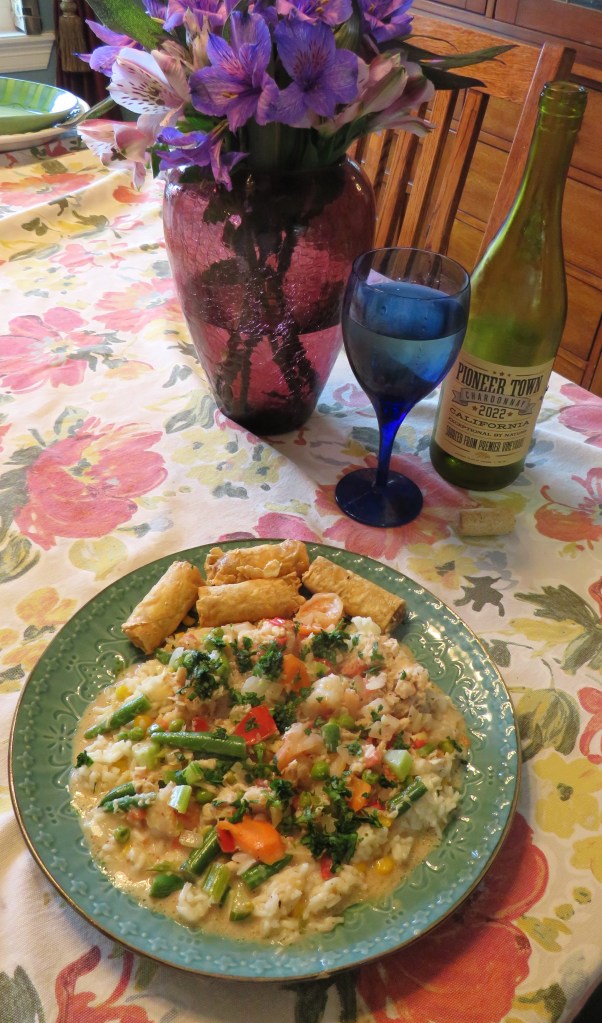
I made my own version of this delicious stew, and added a ton of vegetables as well as some crab too. I served it over rice with corn, and cilantro, basil and oregano on top.
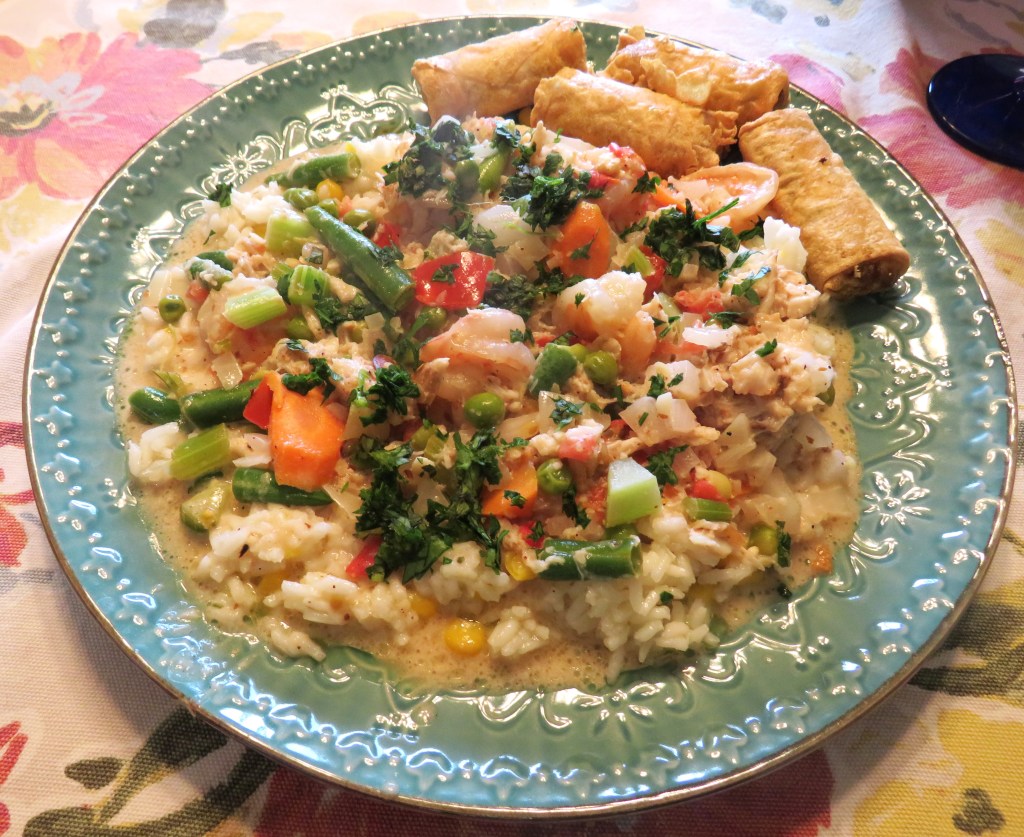
Bengalese Shrimp and Crab Stew
When the original version was created, it was served only to the wealthy or for special celebrations, such as weddings or festivals. But today, with the ingredients readily available, many people, regardless of their background enjoy this simple dish.
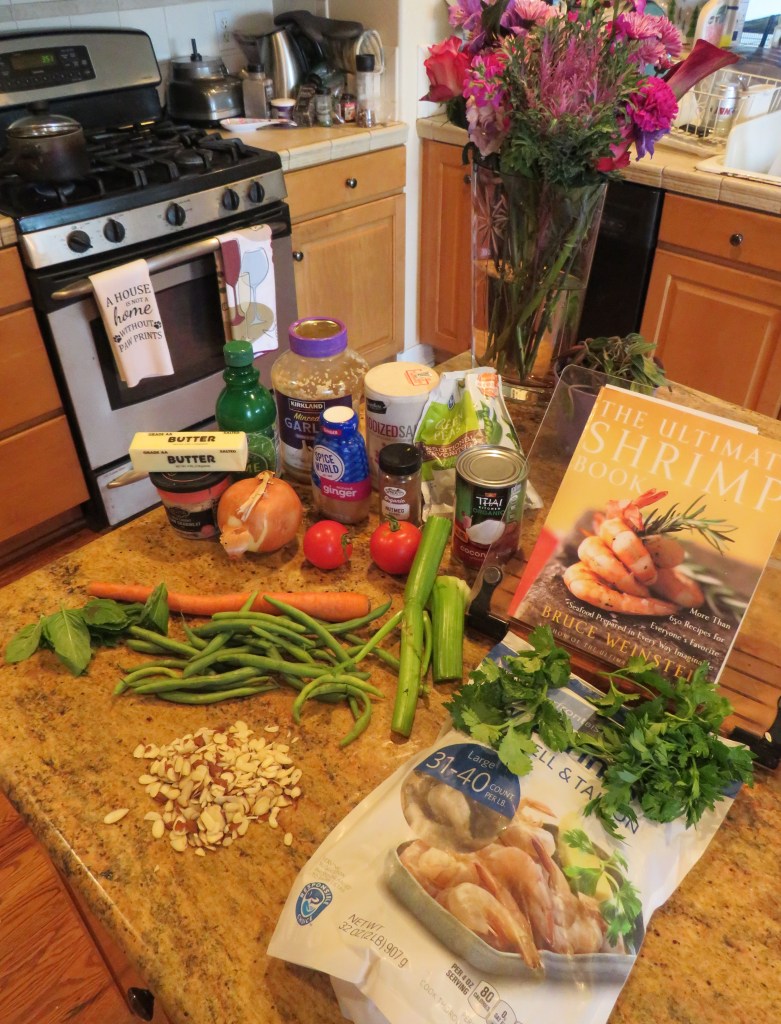
1-1 1/2 lbs large prawns, peeled and deveined
1 tub or can of crab
1/2 onions, diced
1 TBSP garlic
1 TBSP ginger
1 carrot, sliced Asian style
1 cup peas
1-1 1/2 cups green beans, cut into pieces about 1 inch in size
1-2 ribs, celery, diced
salt to taste
red pepper flakes to taste, optional
1 tsp nutmeg
1-2 tomatoes, diced
3/4 cup chicken or fish stock
1/2 cup ground almonds
1 can coconut milk
1-2 TBSP lime juice
butter and olive oil, or lime olive oil for cooking
1 TBSP either fresh basil, cilantro, or oregano, or any combination thereof
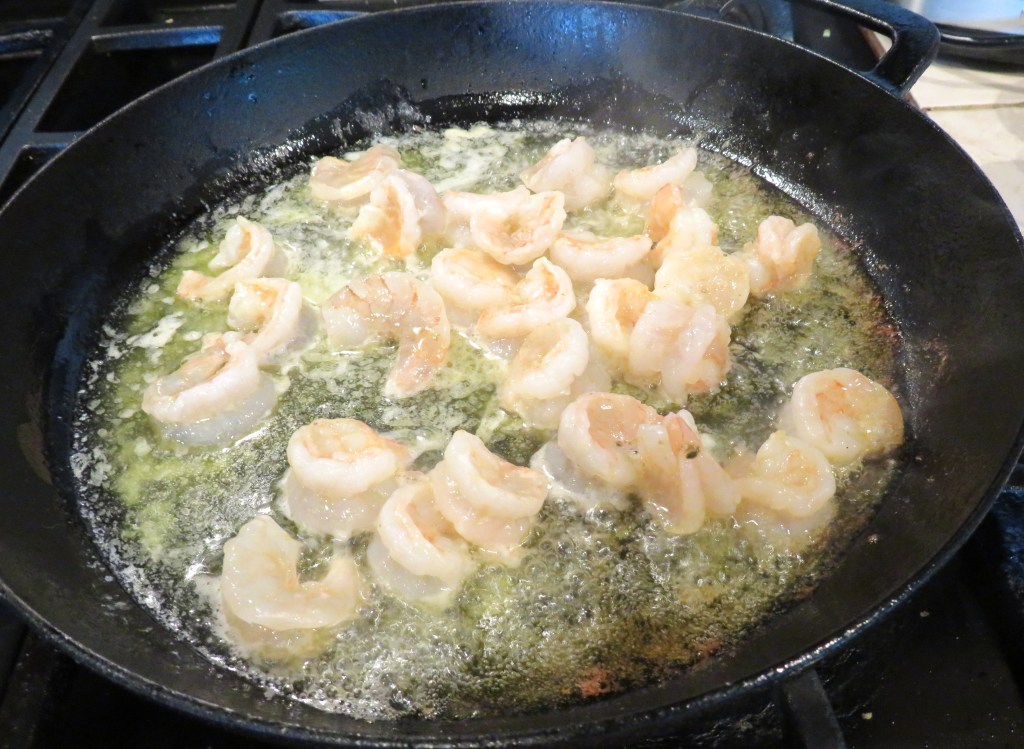
Get a large skillet very hot and add the oil, butter and shrimp. Cook for about 3 minutes, or until the shrimp is cooked, then remove from the heat, set aside and keep warm.
Add all the vegetables except the tomatoes, and cook for about 5-7 minutes, or until al dente.

Add the chicken stock, coconut milk, seasonings and tomatoes. Bring to a boil, then reduce the heat to a simmer.
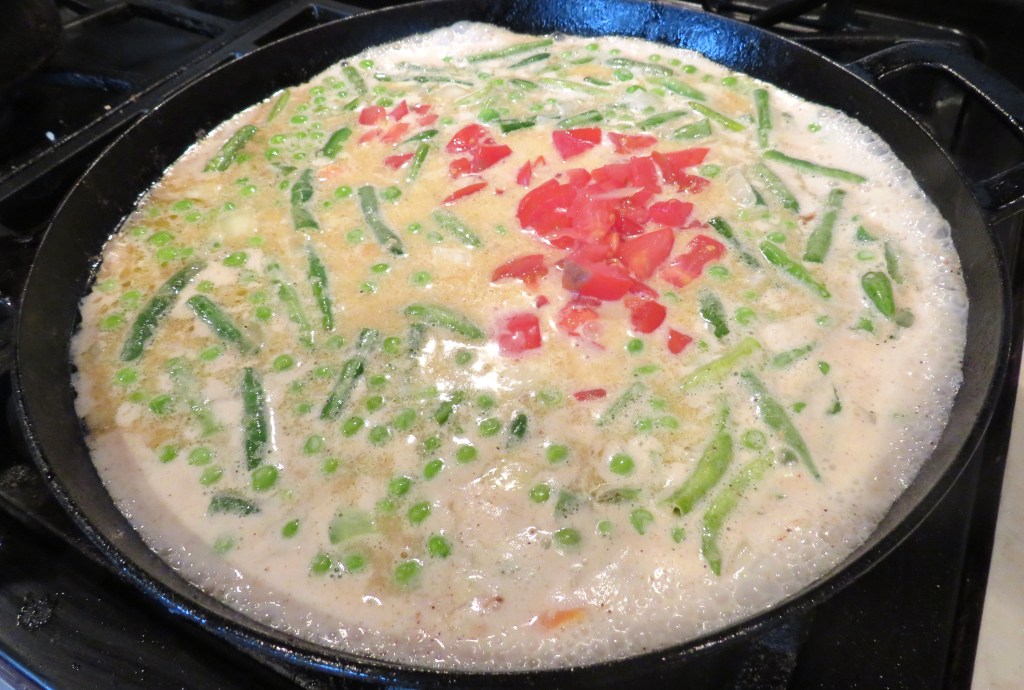
Add the ground almonds and continue to cook for about about 2 minutes, or until it starts to thicken.
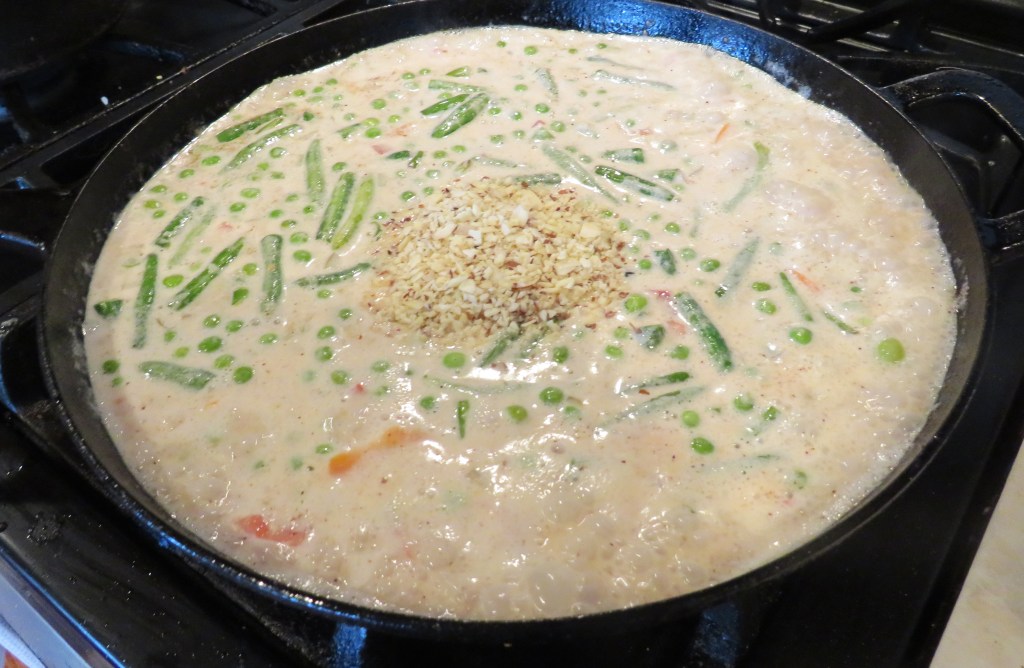
Add the shrimp and the crab and mix everything together thoroughly. Add most of the chopped herbs right at the end of the cooking process, and mix, reserving some of the herbs for a topping later.

Serve over your favorite kind of rice and add a few more of the herbs on top. I added some spring rolls on the side and served it with a cool, refreshing chardonnay on the side. Enjoy.
Have a great day and make everyday great. Stay safe and stay well. ‘Til next time.

 A Jeanne in the Kitchen
I don’t eat prawns, so I would not like a prawn curry, but I’d make this with chicken, or beef, and love it!
LikeLiked by 1 person
It would be good with chicken too. Beef, not so much for this dish. 🙂
LikeLike
Looks and sounds fabulous!
LikeLiked by 1 person
Thank you. Larry and I both thought it needed an extra little kick though. An easy fix. 🙂
LikeLiked by 1 person
🌶️🌶️🌶️
LikeLiked by 1 person
Sounds delicious!
LikeLiked by 1 person
Thank you. 🙂
LikeLike
Deliciousness! 😋
LikeLiked by 1 person
Thank you. It was too. 🙂
LikeLiked by 1 person
😋
LikeLiked by 1 person
Thank you again. Enjoy. Have a great day. 🙂
LikeLiked by 1 person
❤️💯
LikeLiked by 1 person
I’d make it without the crab, just more shrimp
LikeLiked by 1 person
That would be good too. 🙂
LikeLiked by 1 person
I got quite confused when I read your first paragraph as we use shrimp pretty much with every vegetables. I am from Bangladesh (it was East Bengal area of Indian subcontinent). But reading your second paragraph gave me some interesting insight about that. To clarify, I don’t think it’s true though. Because Bengal is river-based area.
On another note, this looks delicious 😊
LikeLiked by 1 person
Thank you for the corrections. Google! They make mistakes too, and I have never been there, so I relied on Google. 🙂
LikeLiked by 1 person
You’re very welcome my dear friend! #GoodWorks❤️💯
LikeLiked by 2 people
Thank you. 🙂
LikeLiked by 1 person