Pistachios are old nuts, having been around for anywhere between 8,000-12,000 years. They originated in the Middle East, specifically the region encompassing modern-day Turkey, Iran, Syria, Lebanon, and parts of Russia and Afghanistan. Today, pistachios are grown in many areas of the world, with the main producers being Iran, The United States and California in particular, and Turkey. California began large-scale pistachio production in the 1970’s. Today, the pistachio industry in California alone is a multi-billion dollar industry. California may be a major pistachio producer, but the experts still say the pistachios from either Iran or Turkey taste better. They have a very distinct flavor that the California pistachios do not have. American-grown pistachios are, on average, larger and plumper. American pistachio shells are naturally tan and never bleached. Iranian nuts are often bleached to mask discoloration. American pistachios are more uniform in size because of strict grading standards.

Pistachios are always associated with happiness, good luck and good fortune, in many different cultures. They are known as the smiling nut in Iran because of how the shell splits as the nuts, or kernels, inside ripen, which makes them look like they are smiling. They are also known as the happy nut in China. The nuts are often given as a gift during the Chinese New Year because they symbolize health, happiness and good fortune. In Israel and Russia, hearing the cracking of a pistachio nut was seen as a good omen. In the Middle East it means you will have a happy relationship so couples would meet under pistachio trees and wait to see if the nuts might tell them that their relationship was going to be successful. Pistachios are one of two nuts listed in the Bible. The other nut in the Bible is the almond. They were both listed in Genesis 43:11 as gifts to Egypt, as the “best products of the land”.
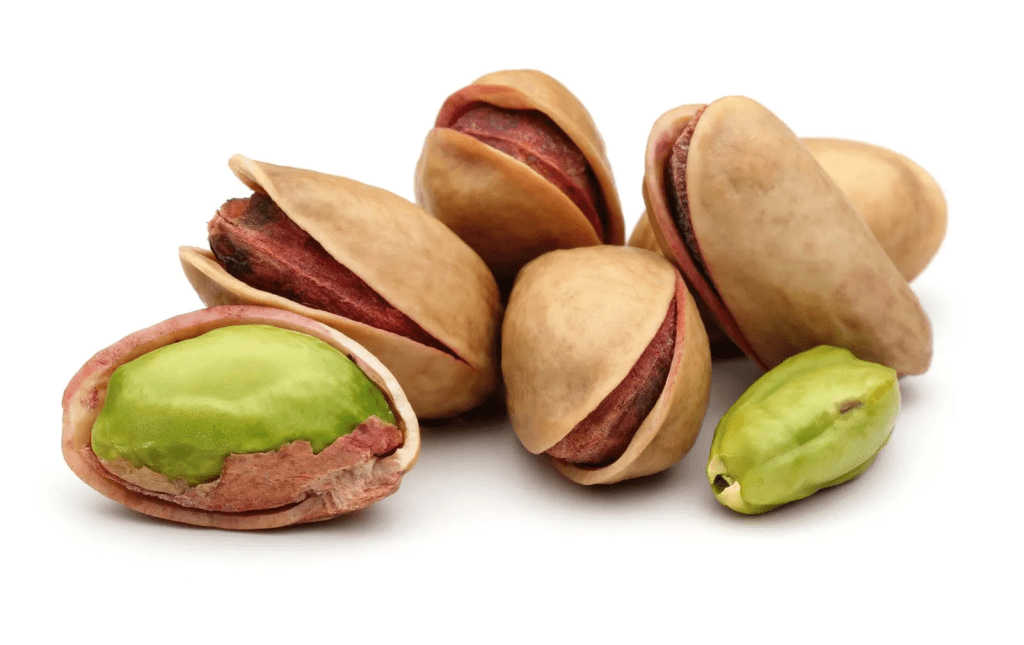
Pistachios were highly sought after treats all along the Silk Path, from traders from all over. As their popularity grew, so did their presence, all throughout Europe and beyond. In Persia (modern day Iran), pistachio trade and ownership of pistachio groves meant riches and high status. At first they were highly prized by the elite and the wealthy due to their original difficulty to produce. They were considered a treat for royalty, and only wealthy people could afford them. Legend has it that the Queen of Sheba forbid commoners from growing these delicious green treats. Originally, they were smuggled out of Iran because they were so highly prized by the wealthy and the royalty, and not meant to be enjoyed by commoners.

Not only are pistachios very tasty and delicious, but they are also very healthy for you too. A single 1 oz serving of pistachios has as much protein as an egg. That’s about a handful or 49 nuts for 6 grams of protein. Like many other nuts, pistachios are a good source of a wide variety of vitamins, minerals and antioxidants that not only provide excellent nutrition for the calories, they provide many other health benefits as well. Studies show they may help lower cholesterol, blood pressure, and blood sugar, promote healthier blood vessels and healthier gut bacteria. They are packed with nutrients, including healthy fats, protein, fiber, and antioxidants. However, moderation is key, as they are calorie-dense, and are comprised of 45% fat.
While still growing on the trees, pistachios resemble olives on the trees.
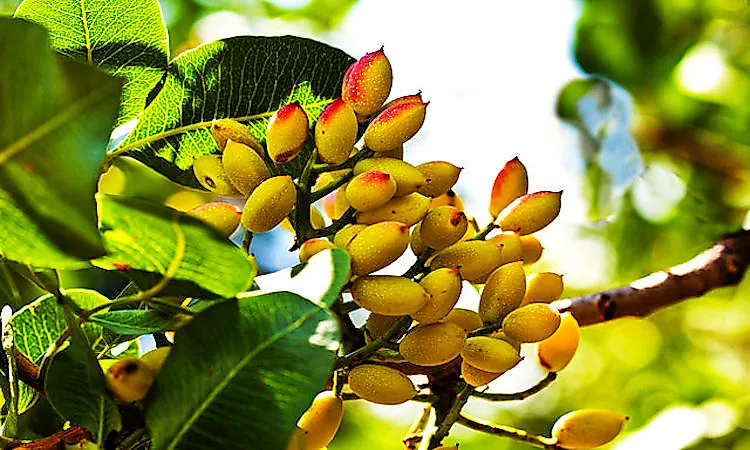
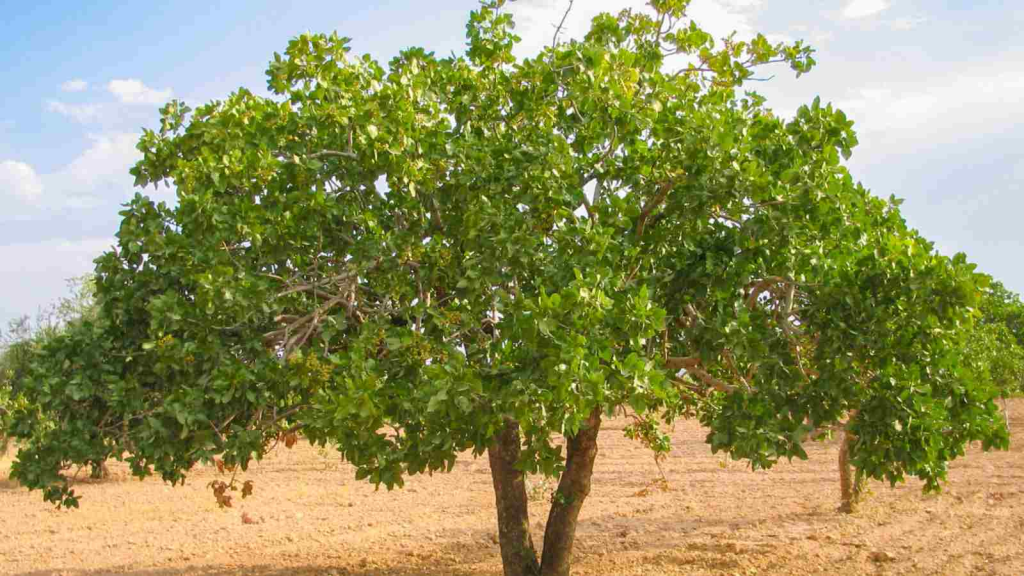
Pistachios are nuts, that resemble olives while growing on their trees, but are actually related to poison ivy. Pistachios, along with cashews and mangos, belong to the same plant family, Anacardiaceae, which also includes poison ivy. This family of plants produces urushiol, the oily substance that causes allergic reactions in many people, leading to the characteristic itchy rash associated with poison ivy. While pistachios are related to poison ivy, most commercially available pistachios are processed in a way that removes or neutralizes the urushiol, so they don’t typically cause a reaction. While pistachios are in the same family as poison ivy, the way they are processed significantly reduces or eliminates the presence of urushiol. The shells are often roasted, which helps to destroy the allergen.
I have learned a lot of new information about pistachios. I hope you have too. Have a great day and learn something new everyday. Stay safe and stay well. ‘Til next time.

 A Jeanne in the Kitchen
I do like snacking on pistachios. 💚🌿
LikeLiked by 2 people
Me too. 🙂
LikeLike
I did not know any of this, thanks Jeanne.
LikeLiked by 3 people
De rien. Avec plaisir. 🙂
LikeLiked by 1 person
Bruce loves pistachios! This was a really fun informative post. It brought back a memory of RV travels. When we were fulltime RVing, we did a tour of a pistachio farm, McGinn’s PistachioLand, in Alamogordo, NM. We saw got to see the trees and hear how they harvested pistachios. They never touch the ground! A large upside down umbrella is placed under the trees and the trees are shaken by a machine. We got see the world’s largest pistachio in their parking lot. In their store, we got to sample lots of pistachio products as well as salsas made from Hatch chiles.
LikeLiked by 1 person
Very cool. That would be interesting. 🙂
LikeLiked by 1 person
new information for me –
LikeLiked by 1 person
WHOOOOO HOOOO!!! I’ve done my job. 🙂 🙂 🙂
LikeLiked by 1 person
Awesome work always my dear friend! ❤️💯
LikeLiked by 2 people
Thank you. Have a great weekend. 🙂
LikeLiked by 1 person
You’re very welcome! Thanks! Have a great weekend as well!
LikeLiked by 2 people
Thank you. Shall do. 🙂
LikeLiked by 1 person
Thanks for sharing. Have a great day. 🙂
LikeLiked by 1 person
You’re very welcome my dear friend! ❤️💯
LikeLiked by 1 person
🙂 🙂 🙂
LikeLike
❤️💯
LikeLiked by 1 person
that is all so interesting! I enjoyed reading all about these nuts!
LikeLiked by 1 person
Thank you. Glad you enjoyed it. 🙂
LikeLike
A wealth of information!
LikeLiked by 1 person
SWEET! I’ve done my job here. 🙂
LikeLiked by 1 person
Sure have, darling.
LikeLiked by 1 person
🙂 🙂 🙂
LikeLiked by 1 person
A truly fantastic read. Your writing style is both engaging and informative.
LikeLike
Thank you. My pleasure. Glad you enjoyed it. 🙂
LikeLike
Thank you for this insightful piece. It’s given me a lot to think about.
LikeLike
Great post! Really enjoyed reading this. Keep up the excellent work!
LikeLike
Thank you. Glad you enjoyed it. 🙂
LikeLike