Before I start this post, I am making this disclaimer: I AM NOT A DOCTOR. I am NOT advocating for one choice or the other. I am simply presenting information I have found in my research. What you decide to do is strictly between YOU AND YOUR DOCTOR. I am NOT trying to spark any arguments or discourse. As with anything, anyone can find evidence and experts to support their own beliefs and theories. I am simply giving you my humble opinion, based on years and years of working in the food industry.
There are so many fad diets out there today, and sadly, most of them do not work long term. They are NOT designed to work long term, and many can have some serious side effects if they are carried out for long periods of time. Most doctors and people in the medical profession are not required to take more than 1 course in nutrition, and nutrition is a very gray area for a lot of medical professionals, just as much as it is for the rest of us. Back in my early days of college, I was a Bio major/pre-med. I took my one nutrition course for that as was required, and then some. Food and nutrition have always been something I’ve pursued and have been very interested in. Food is my passion. When I switched gears and became a chef, I had to take a lot of nutrition courses in order to get my culinary degree. I also have worked with food on a daily basis for over 40 years. Then when I switched gears once again, and became a sports trainer and a coach, I took more nutrition courses, specializing in sports nutrition. Needless to say, I know a little bit about food.
One of the big food debates today is gluten vs. gluten free. I personally am NOT a fan of any diet that tells you to eliminate whole food groups, unless of course it is for medical reasons. In my studies and research, when you eliminate whole food groups, you also eliminate many essential nutrients as well. My belief is that everything in moderation is the best diet to follow, both for food, and for life in general.

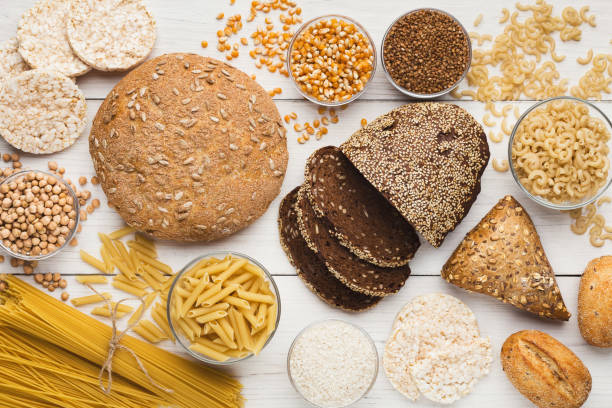
Gluten is a protein found naturally in wheat, barley, rye, wheat berries, spelt, durum, emmer, semolina, farina, farro, graham, khorasan wheat, einkorn, and triticale (a blend of wheat and rye). Oats—though naturally gluten free—often contain gluten from cross-contamination when they are grown near, or processed in the same facilities as the grains. Gluten is also sold as wheat gluten, or seitan, a popular vegan high-protein food. Less obvious sources of gluten include soy sauce and modified food starch. Gluten gives food a sticky texture and helps with the rise and chewiness of baked goods. It’s a common ingredient in many foods, including bread, pasta, and many processed items. A gluten-free diet excludes eating anything with gluten in it. Currently, 1 in 5 Americans have chosen a gluten-free diet, but most of those have chosen it without needing to, and without a doctor’s recommendation.
There are definitely people who probably should avoid gluten in their diets, but the vast majority of people DO NOT fall into that category. People with celiac disease and gluten intolerances are those who should avoid eating a lot of foods that contain gluten. Celiac’s Disease, an autoimmune disease that affects about 1 percent of the population, is characterized by flat intestinal lining and generalized malabsorption of nutrients. A lot of individuals without celiac’s disease are cutting gluten because they believe it makes them feel better. This condition has been coined “non-celiac gluten sensitivity,” but this sensitivity has not been scientifically confirmed to exist. The feeling of wellness could be due to cutting out gluten, or it could be because they are cutting out more processed or otherwise unhealthy foods. The Gluten-free Diet—Fad or Necessity?Written by: Carly Crompton
According to Genetic Literacy Project, Science Not Ideology, “There are still questions as to whether ‘non-celiac gluten sensitivity’ is even a real condition in those who are NOT celiac sufferers.” According to the Celiac Disease Foundation, gluten-free living appeals to about 30 percent of American adults — but seems to still be widely misunderstood. About 1 in 133 people or about 1 percent, have celiac disease, an inherited autoimmune disease that causes damage to the small intestine when gluten is ingested, but about 83% of them are undiagnosed or misdiagnosed with other conditions. About 0.4 percent of people have a doctor-diagnosed wheat allergy, according to a 2006 study. In those people, a true allergic response to wheat (which contains gluten) can include skin, respiratory and gastrointestinal symptoms. A larger group of people is estimated to have what’s called “non-celiac gluten sensitivity,” which may also produce similar symptoms but is not very well understood by experts. “We don’t really know the mechanism by which this arises,” says Crowe. According to the National Foundation for Celiac Awareness, as many as 18 million Americans may have some non-celiac sensitivity to gluten. But for most of the people who aren’t celiac, avoidance of gluten is little more than a badge of honor. At the very least, there are serious questions about the wisdom of buying gluten free just for the sake of doing it. A recent research report by the National Health and Nutrition Examination Survey found that over the past five years, there was a 300% increase in the number of people reporting going on a gluten-free diet. At the same time, the prevalence of celiac disease has remained stable. It is important to note that gluten is a problem only for those who react negatively to it, or test positive for celiac disease. Most people can and have eaten gluten most of their lives, without any adverse side effects.

Peter Green, director of the Celiac Disease Center at Columbia University, and Ivor Hill, professor of clinical pediatrics at The Ohio State University College of Medicine are two of many experts who believe that a gluten-free diet for most people is an unhealthy choice. More and more doctors are recommending against a gluten-free diet too. Numerous studies have shown that diets that are gluten free tend to be deficient in protein, folate, iron, niacin, riboflavin, thiamin, B12, zinc, selenium, and fiber. In addition, they are more apt to have higher levels of nickel, which is highly allergenic to some patients. Here are some more reasons why a gluten-free diet is not the best option for the general population:
- A gluten-free diet is expensive. It is estimated that a gluten-free diet will add roughly 1/3 more to your average food costs. So if you are watching your pennies, a gluten-free diet is not the answer.
- Gluten-free foods often contain more calories than gluten foods. If you are trying to watch your weight, a gluten-free diet is not the answer. You will end up consuming more calories with a gluten-free diet than you would with a gluten diet.
- Gluten-free foods often have more sodium added than gluten foods. If you are trying to lower your salt and sodium intake, again, a gluten-free diet is not your answer.
- Gluten-free foods are low in fiber and also lack calcium, iron, and certain B group vitamins. Foods that are high in fiber are better for you all the way around. They fill you up faster, therefore you will eat less and they help keep you regulated. If you are missing out on the needed minerals and vitamins in the foods you eat, then you will have to find other sources for them. Minerals and vitamins that occur naturally in foods is always a better option than having them introduced to the system through secondary means. Getting enough whole grains in your diet is especially important if you’re at risk for heart disease or diabetes.
- Many studies have linked whole grain consumption with improved health outcomes. For example, groups with the highest intakes of whole grains including wheat (2-3 servings daily) compared with groups eating the lowest amounts (less than 2 servings daily) were found to have significantly lower rates of heart disease and stroke, development of type 2 diabetes, and deaths from all causes.
- Gluten may also act as a prebiotic, feeding the “good” bacteria in our bodies. Arabinoxylan oligosaccharide is a prebiotic carbohydrate derived from wheat bran that has been shown to stimulate the activity of bifidobacteria in the colon. These bacteria are normally found in a healthy human gut. Changes in their amount or activity have been associated with gastrointestinal diseases including inflammatory bowel disease, colorectal cancer, and irritable bowel syndrome.
- Taste is another factor. I know the evolution of gluten-free foods has come a long way, but for me personally, I find most gluten-free foods don’t taste good. To me, most of them taste like cardboard and tend to have the same consistency.
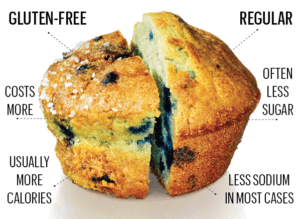
Some gluten-free foods use potato or rice starch instead of whole grains, which has less important nutrients such as fiber, iron, zinc and folate. Additionally, gluten-free foods contain a lot more fat. One of gluten’s functions in baked goods is to hold it together; fat is a good substitute for this. Cutting out gluten all together might be great to avoid those refined sugars, but substituting it with gluten-free foods is not always the best options. The “Gluten Free” label has little to do with nutritional value, and is much more of a marketing campaign that persuades shoppers to think this is a healthier food. The Gluten-free Diet—Fad or Necessity?Written by: Carly Crompton
The gluten-free food industry has grown 136% from 2013 to 2015 with almost $12 billion in sales in 2015. Interestingly, studies show that people who do not have celiac disease are the biggest purchasers of gluten-free products. Consumer surveys show that the top three reasons people select gluten-free foods are for “no reason,” because they are a “healthier option,” and for “digestive health.” For those who are not gluten-intolerant, there is no data to show a specific benefit in following a gluten-free diet, particularly if processed gluten-free products become the mainstay of the diet. In fact, research following patients with celiac disease who change to a gluten-free diet shows an increased risk of obesity and metabolic syndrome. This could be partly due to improved intestinal absorption, but speculation has also focused on the low nutritional quality of processed gluten-free foods that may contain refined sugars and saturated fats and have a higher glycemic index.


I took this deep dive into gluten vs. gluten free once again for my own information on my own personal journey to better health. When I discussed with my doctor that I was looking for a holistic and more natural approach to my thyroid meds, she told me I needed to go completely gluten-free then. Well, based on my research, and my own long-held personal beliefs about eliminating whole food groups, I can tell you this much; it ain’t happenin’! I can cut down, and there are always healthier options, but I AM NOT cutting gluten out completely. I think that would do more harm than good.
As I mentioned above, and have mentioned before, EVERYONE has to make their own decisions and discuss those decisions with their own doctor. I am NOT a doctor and DON’T proclaim to be one. But when I am curious about things, I do my research and dig, and dig, and then dig some more. I go into deep dives. A lot of times, I surprise myself with my findings, but more so than not, because sadly there are so many people who don’t or won’t do their own research and ask their own questions, many people don’t like my findings. All I am doing is presenting the information that I find. It is up to you to do with it what you like.
Have a great day and make everyday great. Stay safe and stay well. It’s up to you on how healthy you want to be. ‘Til next time.

 A Jeanne in the Kitchen
Jeanne ❤ … This is a fantastic deep dive into gluten, and you said it best, “The Gluten Battle” !! It’s been a long battle for me (True celiac – inherited) !! My husband gets sympathy pains (lol) … but we have been on the journey a few years now. The bread was always hard, and the crackers used to break teeth. You are so right about the calories and sneaky sugar into everything. Plus, the expense meant I have had to change my approach to groceries, baking, dining out, holidays, events, you name it !! Fast food = no such thing !! I hope you find better solutions but can vouch, I haven’t had to worry about extra pounds, I sleep well, and my stomach hasn’t dropped out on me since … I’m gluten free baby (lol) ~ 😀 Thank you for sharing and caring … your recipes and pics always look beyond scrumptious, and I have found substitutes to make almost anything !!
LikeLiked by 1 person
Thank you so much for sharing your story and your insight, as well as your kind words. Have a great day. 🙂
LikeLiked by 1 person
Thank you 😀 and you as well ~ ❤
LikeLiked by 1 person
Thank you. 🙂
LikeLike
Sadly I do have Celiacs confirmed by doctors so I miss out on many foods
LikeLiked by 1 person
Sorry to hear that. You have to do what’s right for you. I respect that. 🙂
LikeLiked by 1 person
Fascinating and informative
LikeLiked by 1 person
Thank you. 🙂
LikeLiked by 1 person
I’m reminded of a fellow homeschooling mom I got to know, years ago. Our group had weekly park day get togethers, and often brought snacks to share. She had to bring her own special food. She couldn’t eat any grain except oats, and was allergic to dairy and soy. Things that are often hidden ingredients in everything! I asked her, what’s left? Not much, she said! She didn’t find out until she was an adult that she couldn’t digest these foods. Her entire life until then, she thought it was normal to have major stomach pains after eating, and had no idea other people didn’t feel pain after eating, too.
Health is a very individual thing, and doctors often have no clue unless it’s their specialty. Sometimes, “I don’t know why, but I feel better by doing X instead of Y” is all we can go with.
LikeLiked by 3 people
I couldn’t agree with you more. We are all individuals and our health is very individual too. Thanks for sharing. 🙂
LikeLiked by 1 person
I would never give up gluten! I just couldn’t do it!
LikeLiked by 1 person
Giving up gluten is not a healthy choice either. Good for you. 🙂
LikeLike
I enjoyed reading this post. The research is fascinating.
LikeLiked by 1 person
Thank you. I like doing these too. The last couple have been personal though. 🙂
LikeLike
Lots of interesting information here, but the fact that impressed me most is that you have to take more courses in nutrition to become a chef than you do to become a doctor.
LikeLiked by 1 person
Thank you. I know, right?! 🙂
LikeLiked by 1 person
I Just found this I thought you would be interested in. While the amount of required nutrition education for doctors varies, the general recommendation is for 25 hours of nutrition training during medical school. However, a significant number of medical schools fall short of this recommendation. Many schools do not meet this recommendation. Studies show that the average nutrition training hours are often much lower, with some surveys indicating an average of only 11 hours across the entire medical program. Less than 20 percent of medical schools have a single required course in nutrition. https://www.youtube.com/watch?v=-DSHzVLICjU
LikeLiked by 1 person
Yet another great information-packed post.
LikeLiked by 2 people