People have been cooking with herbs and spices for 1000’s of years. The first known herbal use dates back to over 60,000 years ago, back to the Stone Age. Every country and every culture has its own herbs, but spices originated in Asia, the Middle East and The Mediterranean countries. Herbs & spices have played an essential part in the shaping of world history. They have been directly responsible for the opening up of major trade routes, advances in medical science and the development of international food tastes. It is believed that the ancient peoples wrapped their meats in different plant leaves, as either a way to store them, transport them, or to preserve them, and this may have been how they discovered these plants infused their flavors to the meats.
Herbs are plants whose leaves are used for foods, medicines, scents and/or flavors. Herbs are the fresh and dried leaves generally of temperate plants and are usually green in color. Spices are the flowers, fruit, seeds, bark, and roots typically of tropical plants and range from brown to black to red in color. In general, spices have a more pungent flavor than herbs. Some plants can produce both herbs and spices at the same time. For example, for the plant Coriandrum sativum, the leaves are used as the herb cilantro while the seed is used as the spice coriander. Most of these are from the tropical regions of the world.


People started trading for herbs and spices in Egypt around 1550 BC. Anise, mustard, saffron, cinnamon, pepper and cassia were some of the earliest spices traded along what was commonly known as the Silk Road, which was “a network of land and sea routes connecting the Far East to the West, brought luxury goods, including spices, to Europe and beyond” (p. 313 The Story Of Food – An Illustrated History of Everything We Eat). Around 80 BC, Alexandria was established as the trading hub, since it was fairly central to the East and the West. The Early Romans were the first to introduce different herbs and spices to Europe. These aromatic spices were used for food, medicines and cosmetics and scents.

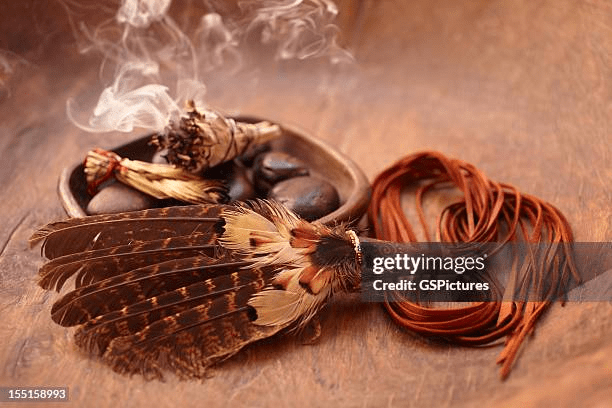
The use of plants as herbs has been important to all cultures since long before history was recorded. Hundreds of tribal cultures have used wild and cultivated herbs for medicinal and food purposes for thousands of years. Herbs are mentioned in Genesis, the first chapter of the Bible, and throughout its text. As civilizations developed so did the knowledge for the use of herbs. Herbs were crucial in Medieval medicine, and were used for all kinds of tonics and treatments, as well as for natural insect repellants, deodorants and as offerings to protect against evil spirits. Most herbs, though used for cooking and medicinal purposes, were also symbolic to early civilizations. For example, borage (Borago officinalis) was given to those who needed courage, while rosemary (Rosmarinus officinalis) was given to others for remembrance. Sage, particularly white sage, holds deep cultural and spiritual significance for many Native American tribes. It’s used in ceremonies, rituals, and traditional medicine for its perceived ability to cleanse, purify, and promote healing. The practice of using sage in this way, often called smudging, is a sacred act that deserves respect and understanding.

India is the country that produces the most spices in the world. India’s diverse climate and monsoon rains provide ideal conditions for growing a wide range of spices. It accounts for over 45% of the global spice trade and cultivates 75 of the 109 internationally recognized spice varieties. The Indian subcontinent has a long history of spice cultivation and trade, dating back thousands of years. It should come as no surprise either, that with India producing over 45% of 75+ types of the world’s spices, that India is the country that also eats the most spices too. Nigeria and Bangladesh are close seconds.

Out of all the spices from all over the world, there is one that reigns supreme. It is black pepper. Black pepper is known as the king of spices because it is the most traded and sought after spice in the world. Unlike its perennial companion, salt, which is easily available in any nook and corner of the world, the black pepper owes its origins to Kerala – a state in South India. And with a king, usually comes a queen. The queen of spices is cardamom, though nutmeg is a close second. These three spices are the most important and most widely sought after spice crops of the world. Turmeric might be considered to be either the prince or princess of spices, and is quickly gaining in popularity throughout the world as well, because of its perceived health benefits, especially its anti-inflammatory and antioxidant properties. It is also widely used in food, supplements, and skincare products. One of the rarest, and most expensive spices is saffron. An ounce of saffron is valued at more than an ounce of gold. It is the world’s most expensive spice because it takes so much time and effort to produce. Saffron can cost an eye watering $500 – $5,000 per pound. The spice comes from the stigma of the saffron crocus flower and it can take up to 75,000 flowers to produce just one pound of spice.

I have a very large selection of different herbs and spices on hand in my kitchen at all times. I have many different spices that are used for various ethnic dishes, and then I have the basics that I use everyday. So next time you are cooking, don’t be afraid to spice things up. By adding different spices and/or herbs to your dishes, you can easily transform them from ordinary to exotic just by adding a new spice. Have fun and enjoy.
Have a great day and make everyday great. Stay safe and stay well. ‘Til next time.

 A Jeanne in the Kitchen
I couldn’t cook without herbs and spices
LikeLiked by 1 person
Me neither. Just think how boring and bland the food would be. 🙂
LikeLiked by 1 person
Exactly
LikeLiked by 1 person
!!! 🙂 🙂 🙂
LikeLiked by 1 person
I love my herbs and spices in every dish that I eat!
LikeLiked by 2 people
Me too. 🙂
LikeLike
Thanks again. 🙂
LikeLike
Fascinating – so much important information!
LikeLiked by 1 person
Thank you. I like doing these deep dives. 🙂
LikeLiked by 1 person
They are excellent and very helpful, too.
LikeLiked by 1 person
Thank you. I learn a lot by doing them too. 🙂
LikeLiked by 1 person
I am sure you do.
LikeLiked by 1 person
🙂 🙂 🙂
LikeLiked by 1 person
What a fund of information ! Thank you very much
LikeLiked by 1 person
Thank you. My pleasure. 🙂
LikeLike