We are all familiar with the popular Christmas carol, “Chestnuts Roasting On An Open Fire” by Nat King Cole, written by Mel Torme in the 1940’s. But other than the song, what do we really know about chestnuts?
Chestnuts are a cold-weather treat, appearing in markets in the late fall or early winter, so it makes sense that they would be a holiday favorite.
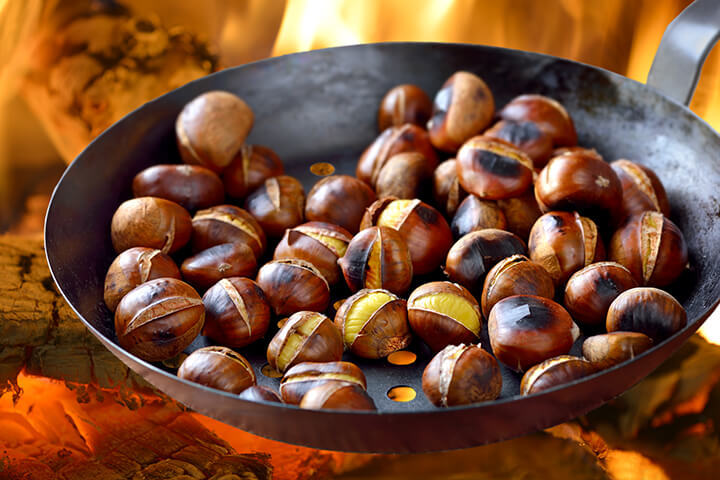
Chestnuts are very old nuts, dating back millions of years; in fact, about 85 million years. Chestnuts appear in the fossil record over 85 million years ago, with evidence suggesting their origins in eastern Asia. They then spread to Europe and North America.
When looking for chestnuts look for large, glossy nuts that feel heavy for their size and that are free from cracks or chips. Ensure that the chestnuts haven’t dried out by shaking the nut — pass on any that you hear rattling. Chestnuts that have not been dried or preserved are more perishable than other nuts, and only last for about a week before getting moldy. But once dried, preserved or made into flour, chestnuts have a relatively long shelf life.
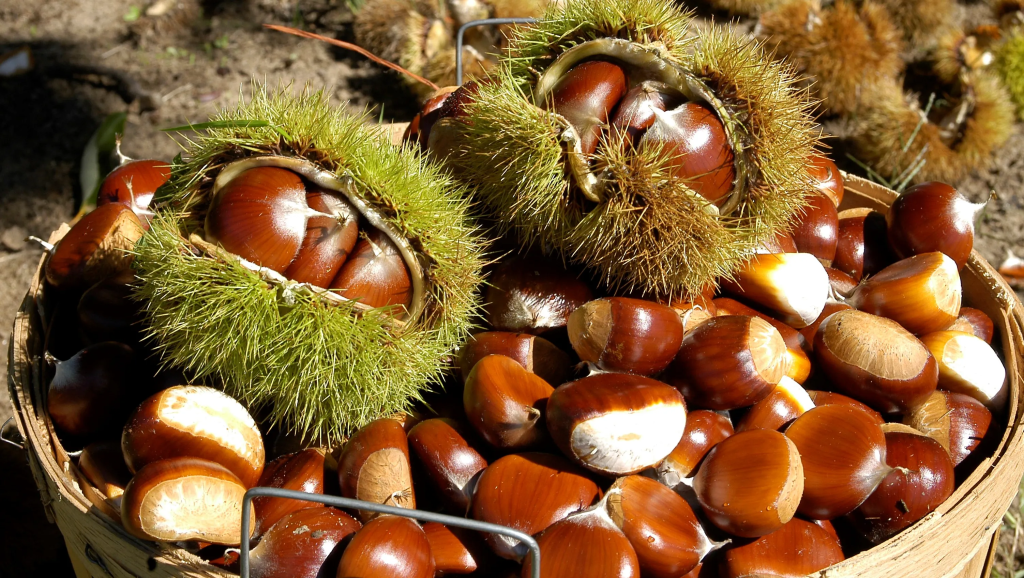
As with anything that has been around through the millennia, there are quite a few varieties of what we know as the chestnut. The most known and recognized varieties, however, are the American (C. dentata), Japanese (C. crenata), European (C. sativa) and Chinese (C. mollissima) species.
In Europe, nutrient-rich chestnuts have long been an important staple food, crucial to groups living in the mountainous regions of the Mediterranean (especially parts of France and Italy). The “Cambridge World History of Food” refers to these as “chestnut civilizations,” that is, groups that “had to fashion their lives around the trees, from planting the trees to processing the fruits.” The ancient Romans are said to have planted chestnut trees wherever they conquered. Up until the 1940’s, chestnuts were widely grown in the United States as well, but in 1904, a deadly virus, known as chestnut blight, came and virtually started killing all the American chestnut trees. The American chestnut was virtually wiped out; biologists at Columbia University report that over 3.5 billion American chestnut trees were lost in less than 40 years. Before the 20th century, however, American chestnut trees accounted for roughly 25% of chestnut trees worldwide.
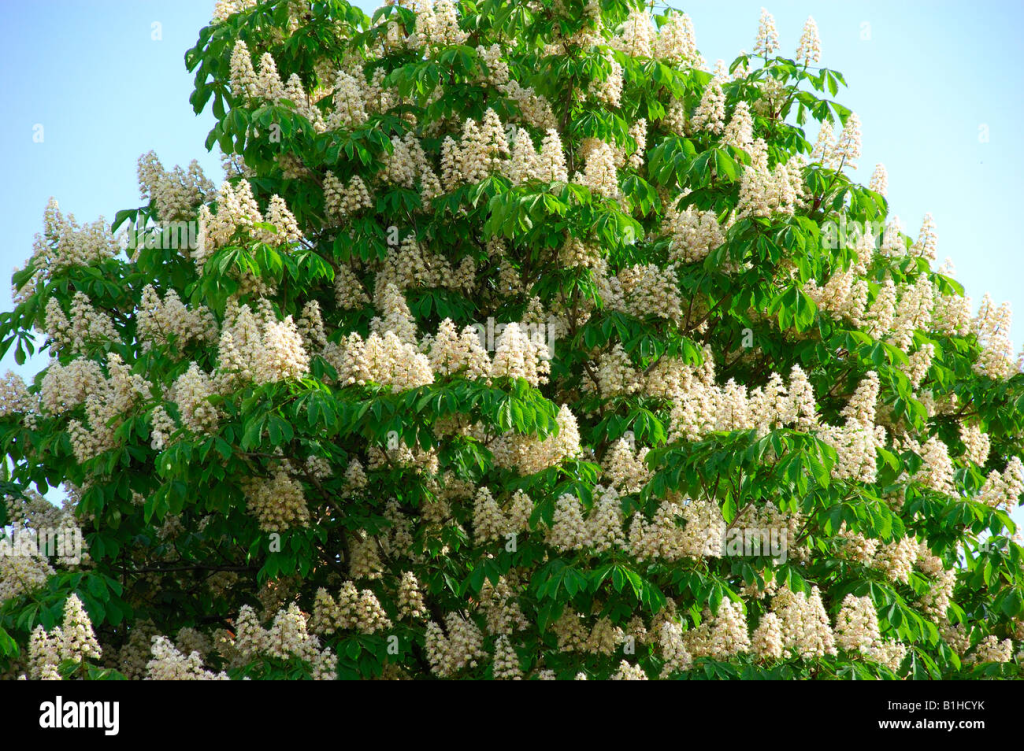
Chestnuts are the seeds of the Castanea sativa tree. They like to grow in the mountainous forest areas, especially in regions of southern Europe, Turkey, and Asia. Beyond their culinary uses, chestnut trees are often planted for their ornamental value. The majestic appearance of chestnut trees, especially when in bloom, makes them a popular choice in parks and gardens.
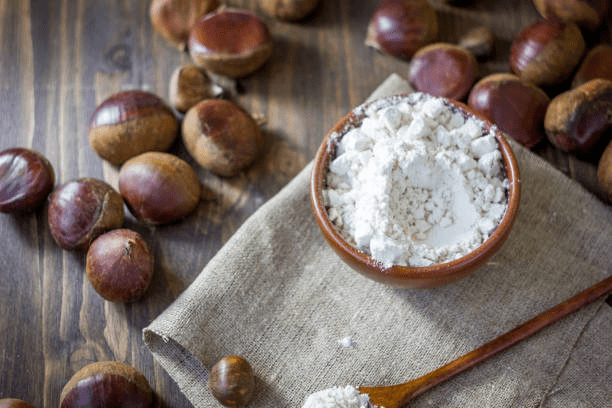
The flavors and texture of chestnuts are different than other nuts. They are sweet and have a texture similar to flour. In their early days, chestnuts were also ground into gluten-free flour. They were a major source of carbohydrates for 1000’s of years for many people of many cultures. Before corn and potatoes were introduced to Europe, chestnuts were the main source of carbohydrates and starch for Europeans. Because of their unique taste and texture, they are also very versatile nuts and are found in many different recipes, ranging from soups to pasta to breads and desserts. In Europe and Asia, chestnuts have served as a staple food during periods of famine or scarcity, in large part because of their vitally important characteristic to produce a high yield, which helps when other crops fail due to adverse conditions. The high yield of nuts per tree provides a substantial quantity of food with relatively low maintenance.
Most tree nuts are mostly made of fat, but because chestnuts are mainly made up of starches and sugars, they have a different nutritional profile than most other nuts. Ten roasted chestnuts provide about 15 % of your daily fiber needs. They’re an excellent source of vitamin C, which most nuts don’t provide, and a good source of vitamin B6, folate, potassium, copper and manganese. They’re lower in fat than most other nuts and also relatively low in protein.
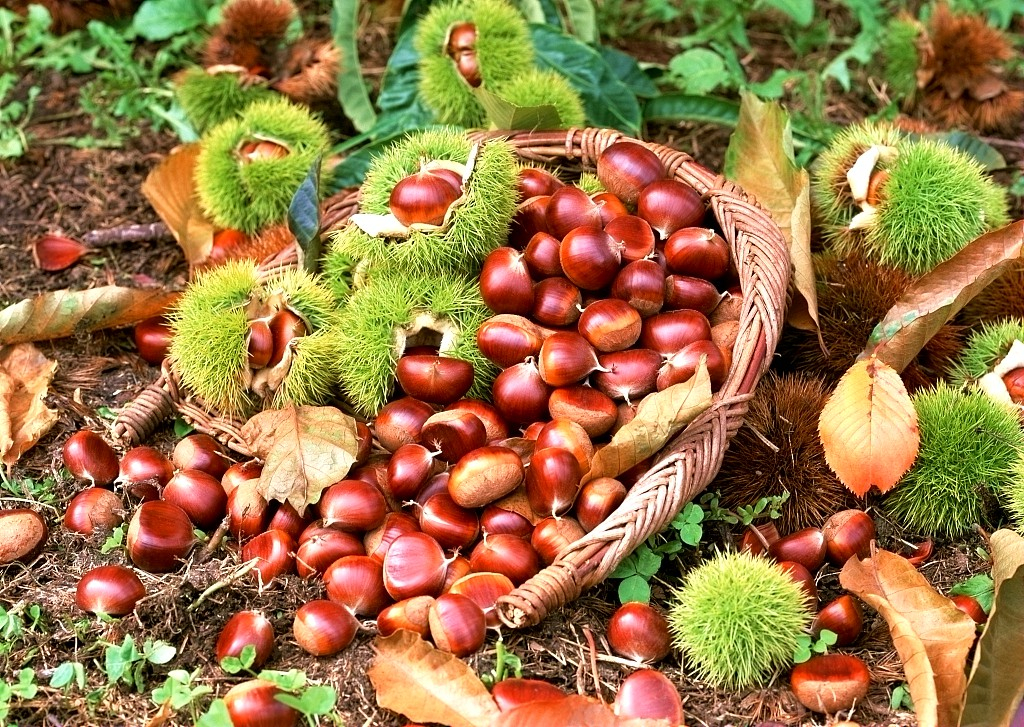
Chestnuts were not just for good eating though. They also held various cultural and symbolic references too. Celtic mythology credited them as a source of wisdom and as a sacred symbol, connecting the earthly realm with the spiritual world. In Japan, they were considered to represent good fortune. Korean culture associated chestnuts with fertility and they were incorporated into wedding rituals and given as gifts to symbolize a fruitful union. Ancient Romans associated chestnuts with abundance, fertility and prosperity. In Italian folklore, chestnuts were used to bring good luck and ward off evil spirits.
Chestnuts have also been used for medicinal purposes throughout the ages. Since ancient times, Traditional Chinese Medicine (TCM) practitioners have turned to chestnuts to treat circulatory problems. Horse chestnut (definitely NOT the same nut though) was also used as an astringent, diuretic, for reducing edema or swelling, alleviating inflammation, acting as an expectorant for treating respiratory problems, and combating viruses. They are also administered to tonify the kidneys, potentially enhancing vitality and reproductive health and to strengthen the spleen, aiding in digestion and nutrient absorption. Crushed chestnuts or chestnut paste were also applied topically as poultices for injuries or joint pain. Oils and ointments were similarly applied externally to address conditions like eczema or dermatitis. TCM practitioners also incorporated chestnuts into their patients’ diets for their nourishing properties.
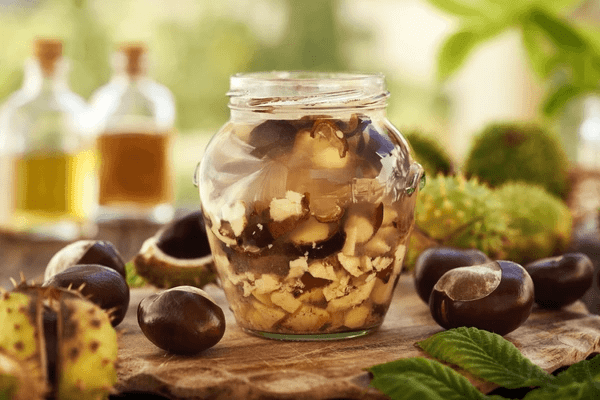
Chestnuts have undoubtedly earned their place as a cherished food and cultural icon. Roasted, boiled, or baked, these little brown nuggets have been more than just a snack; they’ve been our companions through thick and thin, weaving themselves into the fabric of the human experience.
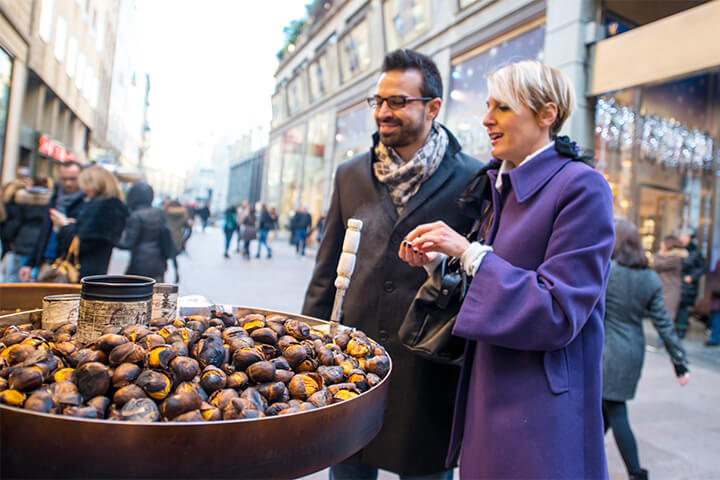
So go ahead and roast those chestnuts over an open fire. Enjoy all the delicious and healthy benefits they have to offer. They are definitely a gift from above.
Have a great day and make everyday great. Stay safe and stay well. ‘Til next time.

 A Jeanne in the Kitchen
thanks for all of this fascinating info on chess nuts. I learned a lot! Xx
LikeLiked by 1 person
SWEET! That’s the plan Ma’am. 🙂
LikeLike
I love these posts – so informative
LikeLiked by 3 people
Merci. I like doing them too. I learn so much. I will keep them coming. 🙂
LikeLiked by 1 person
Excellent news
LikeLiked by 1 person
🙂 🙂 🙂
LikeLiked by 1 person
Thanks again. 🙂
LikeLike
Excellent article! Your points are well-articulated and persuasive.
LikeLike
Thank you. 🙂
LikeLike
Thanks for sharing your thoughts. Very insightful and thought-provoking.
LikeLike
Thank you. 🙂
LikeLike