SALT. We all need it. It is essential for life. Today, we all take salt and it’s processes for granted, but for 1000’s of years, salt was a highly prized and sought after commodity. It is used to season and preserve foods. It is given to animals in the forms or salt licks or salt blocks. It is necessary for plants to live and thrive in the form of fertilizers and nutrients. It has been used as money and ceremonial practices. It has influenced our language. It is used for medicinal and therapeutic purposes. It has caused war and peace.
Salt is found in many different varieties all of over the world. Our world’s oceans are comprised of roughly 2/3 salt water. There are at least 40 different kinds of salts found all over the world. Most salts come from either salt mines or from refined and evaporated seawater.
Here are some of the more popular types of salt that are used.

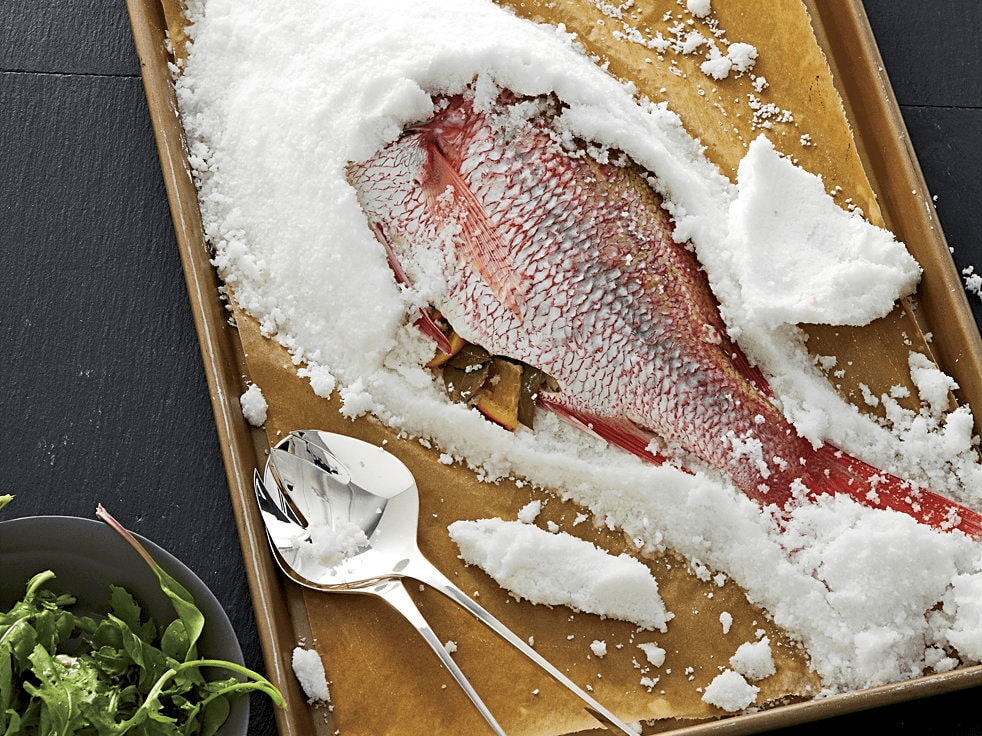
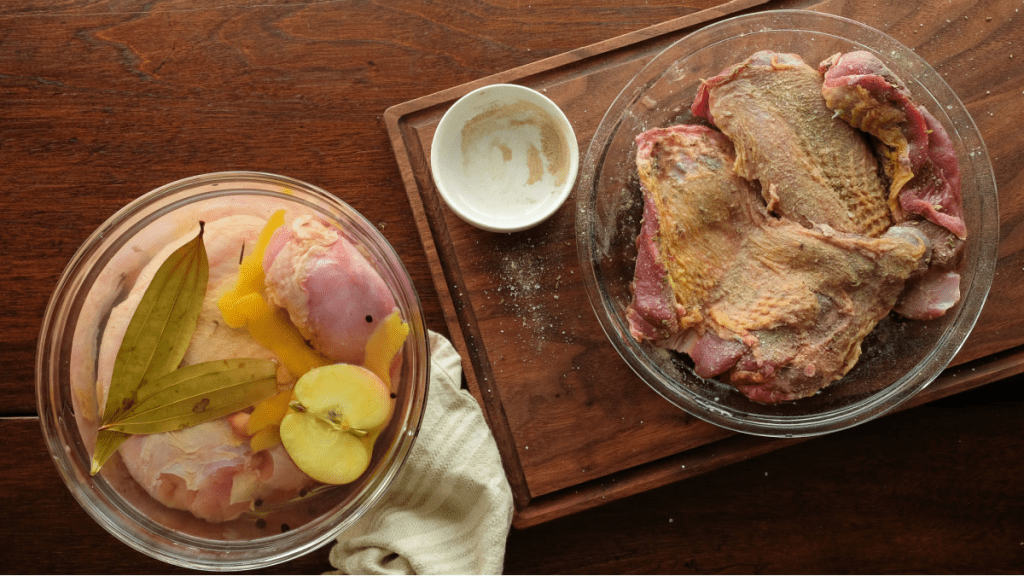
We all know salt is used to help season food. It is probably the most widely used seasoning for all foods, of all times. But aside from seasoning our foods, salt is also used a food preservative as well. There is a dry salting method, which is just as it would imply, rubbing dry salt over meats and fish first and then placing the meats in a tub with more salt. And there is also a method called wet salting, which is basically a salt brine mixed with different spices and seasonings and water or other liquids. This method can preserve food indefinitely, and was used before refrigeration methods for sailors, travelers and everyday people and uses alike. Though after a long period of time, the meats and fish do become very difficult to eat and less and less palatable over time.
Dry salting method.
Wet brining.
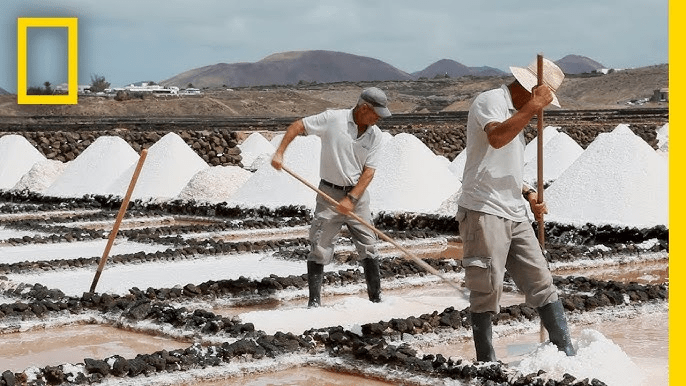
Many societies have been built around salt. What is now thought to have been the first city in Europe is Solnitsata, in Bulgaria, which was a salt mine, providing the area now known as the Balkans with salt since 5400 BC. A very ancient salt-works operation has been discovered at the Poiana Slatinei archaeological site next to a salt spring in Lunca, Neamț County, Romania. Evidence indicates that Neolithic people of the Precucuteni Culture were boiling the salt-laden spring water through the process of briquetage to extract salt as far back as 6050 BC.[14] The salt extracted from this operation may have directly correlated with the rapid growth of this society’s population soon after production began.[15] The harvest of salt from the surface of Xiechi Lake near Yuncheng in Shanxi, China, dates back to at least 6000 BC, making it one of the oldest verifiable saltworks.[16] (Wikipedia). Salt Lake City, Utah is another example of a society formed around a huge salt lake and salt rich area.
We’ve seen the huge salt mines in Bonaire, and have dived in the water nearby. It is a very rich and vibrant area with lots of marine life. It’s actually one of our favorite dive sites in Bonaire too, for the very reason that is it is so full of life.

With the spread of civilization, salt became one of the world’s main trading commodities. Salt has been used as a form of currency in many different cultures around the world for centuries. People would trade salt blocks, salt cakes, salt bars known as amole, or in bulk. The term salary, comes from the Ancient Romans and their word salarium, or money used to purchase salt. The Roman soldiers were often paid in salt too. Marco Polo noted that tiny salt cakes were imprinted with images of Grand Khan were used as coins in Tibet. The word salad also comes from the Ancient Roman word salata, meaning salty. They would add salt to their leafy greens to “allay their bitterness”. (p. 306 The Story of Food, An Illustrated History of Everything We Eat)
This is mural depicting the Ancient Mayas using salt as currency, about 2500 years ago.

Because salt is so valuable and is necessary for life, many wars have been started because of salt. Salt was a source of currency and power. Salt was often referred to as “white gold”. Those who had the salt also had the money and had the power. The main reason for salt wars was due to the difficulty in obtaining and processing it in the early years. Salt wars, in the historical context, generally refer to conflicts arising from disputes over access to, control of, or taxation of salt, a vital resource throughout history. Salt wars often involved struggles for political and economic dominance, especially in regions where salt deposits were significant. These conflicts have occurred in various locations and times throughout history, ranging from ancient China to 19th-century Texas. There have been many wars fought over salt and salt rights, all over the world for 1000’s of years, with one of the latest salt wars, being fought in Texas, between 1877-1878. The battle was over who owned the mineral rights to the salt when Texas was fighting Mexico for it’s independence from Mexico. Often the wars were settled once the salt rights, including profits, mineral rights, and taxation rights, were agreed upon. Salt and the taxation of salt and its mineral rights were also partly responsible for the French revolution in 1789.

Salt is the main nutrient for our body’s cells. Cells must have salt and sodium in order to survive. For every 40 kilos of weight, 100 g of salt is needed. Salt is vital to life for so many reasons. These charts highlight the health reasons for including salt in our daily diets much better than I could explain them.
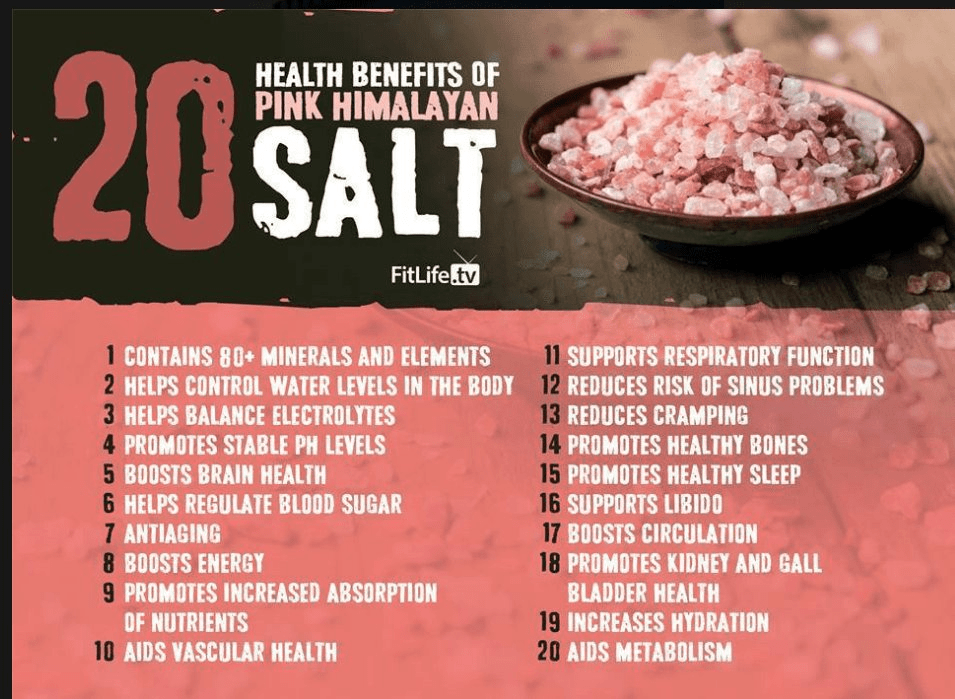

There are various reasons and benefits for using different kinds of salts, but salt in general, regardless of what type you choose, is a necessity for life. Some salts are better for food purposes, while others have more therapeutic and other health benefits.
“Salt is a natural mineral that goes far beyond the kitchen. It’s used for taste, health, agriculture, cosmetics, spirituality, and even revolution“. ( 11 Types of Salt: History, Health Benefits, Farming Use & Profit, World Farmer Story, https://worldcrop.wordpress.com/) Salts are found in beauty agents as well as relaxing methods. I personally absolutely LOVE using the Himalayan salt rocks when getting a massage. I find using the hot salt rocks combined with a deep tissue massage work out all my tensions and stress. I also love salt rubs too. They are great for exfoliation of dead skin cells and for revitalizing and re-energizing the body. The Ancient Egyptians used salts in the mummification processes, because of the preservative qualities of salt. Salt acts as a natural desiccant, accelerating the drying process. The process was called natron.
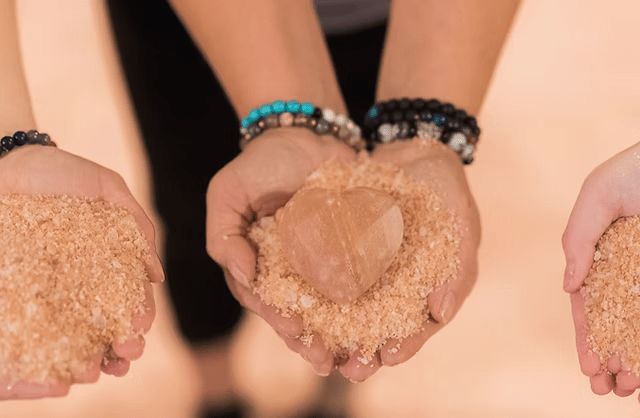
The use of salts also has many different ceremonial purposes as well, dating back for many centuries, from many different cultures. Since Biblical times, salt has been known as a symbol of purity and loyalty, as well as trust and friendship. In the Russian culture, salt is a sign of hospitality when sharing salted bread with each other. (Dolly, please verify. 🙂 ) The Arab cultures offer breads with salt to their guests as a sign of trust between them. Again, referencing the Ancient Romans, “Trust no one unless you have eaten salt with them”. (p. 307 The Story of Food, An Illustrated History of Everything We Eat) In Medieval times in Northern Europe, “salt was sprinkled around butter churns to stop witches from souring the butter, and it was also used to protect people and animals from the bad intentions of witches and fairies”. (p. 304 The Story of Food, An Illustrated History of Everything We Eat). In various beliefs and superstitions, demons are thought to dislike salt due to its symbolic association with purity, protection, and divine presence, which are antithetical to the nature of malevolent entities. In many cultures, salt was scattered on top of graves as away of to purify the resting place of the departed and ensure their safe passage to the next realm.
With this I close my deep dive into salt and all of its various uses. Thank you to both Cook Plate Fork at https://cookplatefork.com/ https://cookplatefork.com/2025/07/03/seasoned-with-history-how-salt-and-black-pepper-became-culinary-essentials/ and World Farmer Story at https://worldcrop.wordpress.com/ 11 Types of Salt: History, Health Benefits, Farming Use & Profit for you inspiration, quotes, and help for this story. If you are not familiar with either of these sites, by all means, stop by and check them out. They are full of good, valuable and interesting information.
Have a great day and make everyday great. Stay cool, stay safe and stay well. ‘Til next time.

 A Jeanne in the Kitchen
Thank you, Jeanne, for your erudite essay on SALT, but you missed the extraordinary salt mines in Poland, where there are rooms with statues, even chandeliers, all sculpted from salt, and beautiful.
Joanna
LikeLiked by 2 people
Cool! I had NO idea about those. Those sound fascinating! Thanks for sharing. 🙂 Happy 4th.
LikeLike
They are in Wieliczka, a place of many tourists visiting.
Joanna
LikeLiked by 1 person
Cool! I will have to put that on my one-day list. 🙂
LikeLike
Perhaps you can see how extraordinary this place is, and why people come from all over the world to see it, if you look it up on Google. What is also astonishing is that everything is created by miners, and not some great artist.
Joanna
LikeLiked by 1 person
PS I checked and it is a very good coverage of these unique salt mines, and the history dating back to the 13th century. Stunning photos!
Joanna
LikeLiked by 1 person
SWEET! Do you have a link you can share?
LikeLike
All you do, Jeanne, is ask Google for the Wieliczka salt mines in Poland, and it comes with all the information and wonderful photos.
Joanna
LikeLiked by 1 person
Cool beans. Thank you. I’ll check it out. 🙂
LikeLike
WOW! Fascinating! Whoever created these was very talented indeed. Thanks for sharing. 🙂
LikeLike
The were all miners who created this amazing place, this is why it is so unique. I have to tell you that what inspired them was their love for God, and the statues have a religious connection.
Joanna
LikeLiked by 1 person
You can see their love in every detail. 🙂
LikeLike
Yes, it is very impressive!
Joanna
LikeLiked by 1 person
That it is! 🙂
LikeLike
I’m a big salt fan, love salt on my food!
LikeLiked by 1 person
I love salt, but a little goes a long way for me. 🙂
LikeLike
Awesome work always! ❤️💯
LikeLiked by 1 person
Thank you. 🙂
LikeLiked by 1 person
❤️💯
LikeLiked by 1 person
wow –
LikeLiked by 2 people
Who knew? Wonderful information – thank you.
LikeLiked by 1 person
My pleasure. Glad you enjoyed it. I always learn so much when I do these deep dives. 🙂 Have a happy, safe 4th.
LikeLike
Love these interesting and informative posts
LikeLiked by 1 person
Thank you. I like doing them too. I always learn so much. 🙂
LikeLiked by 1 person
You’re very welcome my dear friend! #GoodWorks❤️💯
LikeLiked by 1 person
🙂 🙂 🙂
LikeLiked by 1 person
I love when you do these history posts…
Jeanne…can I ask for a favor? Do you have a post on making Gnocchi? I want to make it today homemade…I’ve seen some youtube things but I was wondering if you have one?
LikeLiked by 1 person
Thank you Max. I enjoy doing them too. I learn so much when I dive deep.
Here are a couple I posted ages ago. Happy, safe 4th.
LikeLiked by 1 person
Thank you ! Happy fourth to you also!
LikeLiked by 1 person
Thank you and my pleasure. 🙂
LikeLiked by 1 person