Cashews are some of my favorite nuts. I love them. I could easily eat handfuls at a time, but I have to limit myself. One, they are expensive nuts, and two, they are high in fat. So like anything, eat and enjoy them in moderation.
Cashews originated in northeastern Brazil. The indigenous Tupi people were the first to utilize the cashew, calling them acajou, meaning “nut that produces itself”. This name refers to the cashew’s unique fruit structure, where the nut hangs below the fleshy cashew apple. Instead of growing like conventional nuts, they grow out of the base of cashew apples like little tails. However, for this reason, they are the only ‘nut’ that sells solely without a shell. The part of the “nut” we actually eat is really the seed rather than a nut.

All cashews have to be “cooked” or roasted to some degree before eating them. To eat them completely raw, would be dangerous, since the raw nuts are toxic. Cashew kernels are cooked in processing to remove this toxic liquid, and the resulting product is sold as “raw.” The seed has a double shell containing an allergenic phenolic resin containing an anacardic acid. This composition is a potent skin irritant. Chemically, this resin is related to the more well-known allergenic oil urushiol, a toxin in poison ivy. Some people are allergic to cashew nuts, but it is much more common for them to be allergic to the outer coating on the fruit’s skin, rather than the nut itself. The outer shell causes skin irritation.
The cashew was first discovered by Europeans in Brazil around 1558. Because of the irritating shells, they were thought to be inedible at first. Over time, there was a realization that it was the fruit skin, not the irritating seeds, that was inedible. It was the local native tribe, the Tupi-Indians, that showed the Europeans otherwise. Consequently, the Portuguese were shown how to roast the cashews to get the irritant off. Once the Portuguese explorers learned how to properly roast the fruits/nuts, they became very popular, and they took them back to Goa, India and then to West Africa.

From Brazil, the Portuguese explorers brought the cashew pants to Goa, India and to West Africa. Once the cashews were introduced to Goa and to India as a whole, they soon began to thrive in their new environment. The Indians used the cashews for many different things, including grinding them to a paste as a base for their curries and making them into a powder for their desserts. They also discovered healing properties in the nut, and cashews became very popular. Cashews offer a variety of health benefits due to their rich nutrient profile. They are a good source of healthy fats, protein, and various vitamins and minerals, which can contribute to heart health, blood sugar regulation, and improved digestion. Additionally, cashews contain antioxidants that may help protect against cell damage and reduce the risk of certain diseases.

Harvesting processing the cashews in India and West Africa.
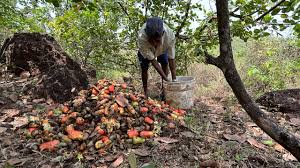


Like with so many things, we don’t realize all the processing steps that are necessary before we get to see and enjoy the end results of these delicious seeds.
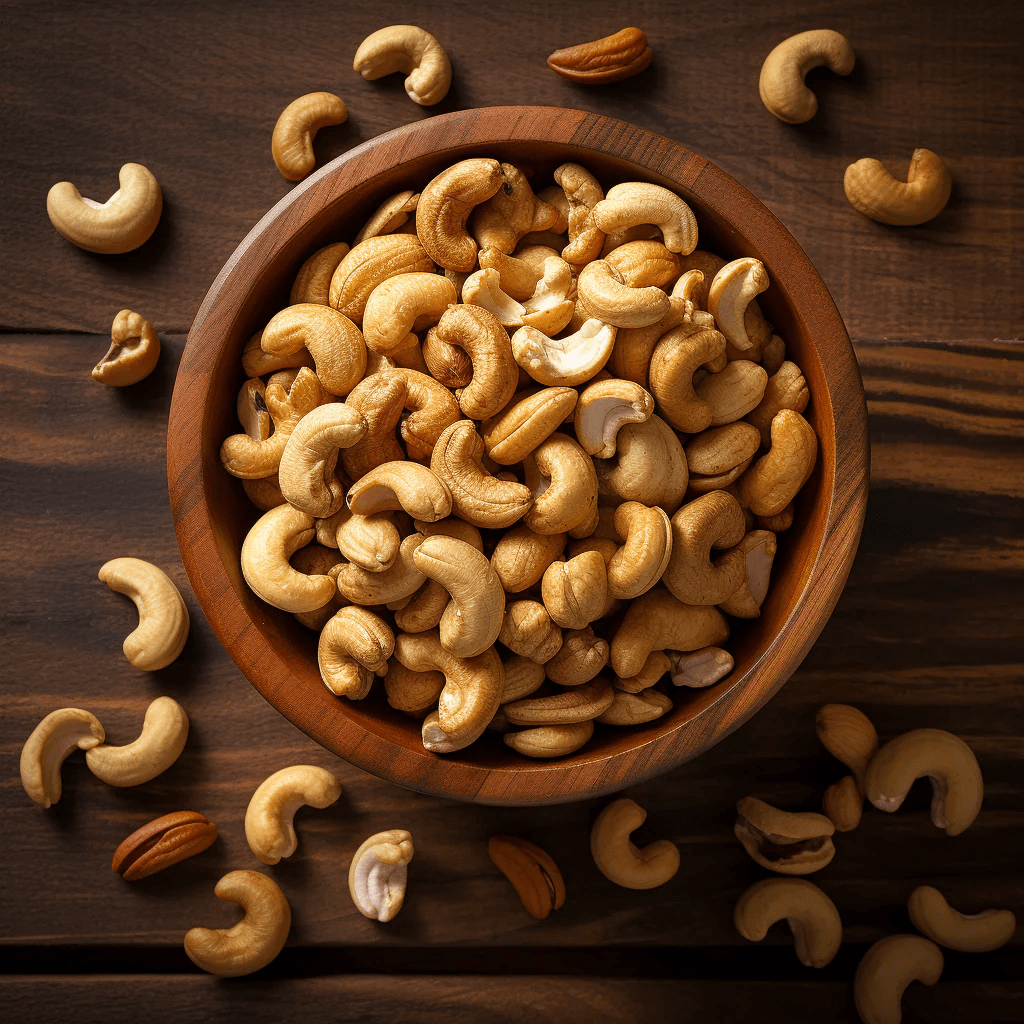
Europe was introduced to cashews in the 16th century. Not only did the Europeans enjoy the nuts themselves, but they soon learned how to produce cashew wine from the cashew apples too.

We actually have some of this sweet cashew wine in our liquor cabinet, from one of our Belize trips.

Cashews were introduced to America in 1905 and became a very popular American snack around the 1920’s. There are cashews grown in the United States, but only in those states or territories that have warm, tropical climates that are frost free, like Florida, Hawai’i or Puerto Rico. Though cashews are very popular in the United States, most of the kernels are imported, with the bulk coming from India.
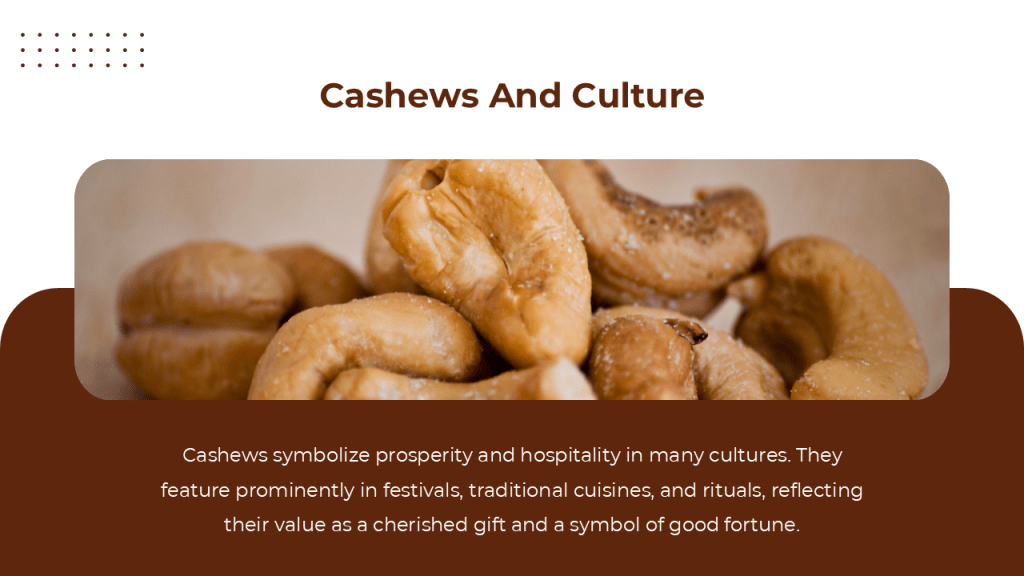
As with many foods, cashews symbolize much more than just a delicious, healthy snack to eat. In many cultures, they represent good luck, prosperity, and abundance. In the Vietnamese culture, cashews are a traditional gift for Tet, the Lunar New Year, symbolizing wishes for success and happiness. The shape of the cashew nut, resembling an old coin, also contributes to its association with wealth and prosperity. In some traditions, dreaming about cashews can be interpreted as a sign of blessings, luck, and potential for success, particularly in business or long-term projects. The color “cashew” is sometimes associated with a warm, grounding, and balanced energy, similar to the earth tones of brown, with an added touch of vibrancy.

As always, when I do these deep dives into the foods we eat and their history, I and I hope learn and enjoy them like I do too.
Eat your cashews, stay healthy, and be prosperous. Have a great day and make everyday great. ‘Til next time.

 A Jeanne in the Kitchen
Fascinating – I too love them
LikeLiked by 2 people
Merci. Je suis heureux que cela vous ait plu.
LikeLiked by 1 person
I love cashews, especially salted ones! Yummy!
LikeLike
Me too! 🙂
LikeLike
Thanks for sharing! I just learned something new about cashews—so interesting!
LikeLike
WHOOOOO HOOOOOO!!!! My pleasure. Glad you enjoyed it. 🙂
LikeLike
Thanks for sharing. Have a great day. 🙂
LikeLike
C’est très intèressant! Et un des mes favorits 🙂
LikeLiked by 1 person
Merci. Je suis heureux que cela vous ait plu.
LikeLiked by 1 person
Great story! Thanks for sharing.
LikeLiked by 1 person
Thank you. Glad you enjoyed it. 🙂
LikeLiked by 1 person