People have been eating canned or tinned fish since the 19th century. Canned and tinned are the same thing, but in the US we usually refer to foods as canned whereas in Europe they are known as tinned. It is just purely syntax.
Necessity is often the mother of invention. The trend of canning fish started in France, in 1795, with the French Government trying to figure out ways to feed their soldiers. They offered a prize of 12,000 francs (today that would be $250,000 US) to anyone who could find a way to safely store food so the soldiers could take it with them into the battlefields, without the food going bad. The first person to come up with a solution was French Chef Nicolas Appert in 1810, when he “devised a way of boiling foods and sealing them in glass bottles. The first ‘canned’ food was born and Appert claimed his prize”. (P. 12 – The Magic of Tinned Fish – Chris McDade).

Countries all over the world were soon on board with this fabulous idea of tinning fish, and other foods as well, that made food transportable and affordable for everyone. By 1820, the genius of canned fish and canned foods spread to Britain, where Peter Durand started putting foods in cans rather than glass bottles, and started supplying canned or tinned foods for the Royal Navy. Durand was the first person to patent the tinned can for foods. France and England were going back and forth on updating this version of healthy, affordable and transportable foods, with France taking over once again when Pierre Joseph Colin, out of Brittany, became the first person to start tinning sardines. Tinned sardines were supplied to Napoleon’s soldiers, providing them with a much needed protein source they could take with them. Tinned fish is full of healthy fats, lean protein and even calcium from the bones.
Before the canning processes, fish and seafood were preserved through pickling or salting, which limited its shelf life and transportability.
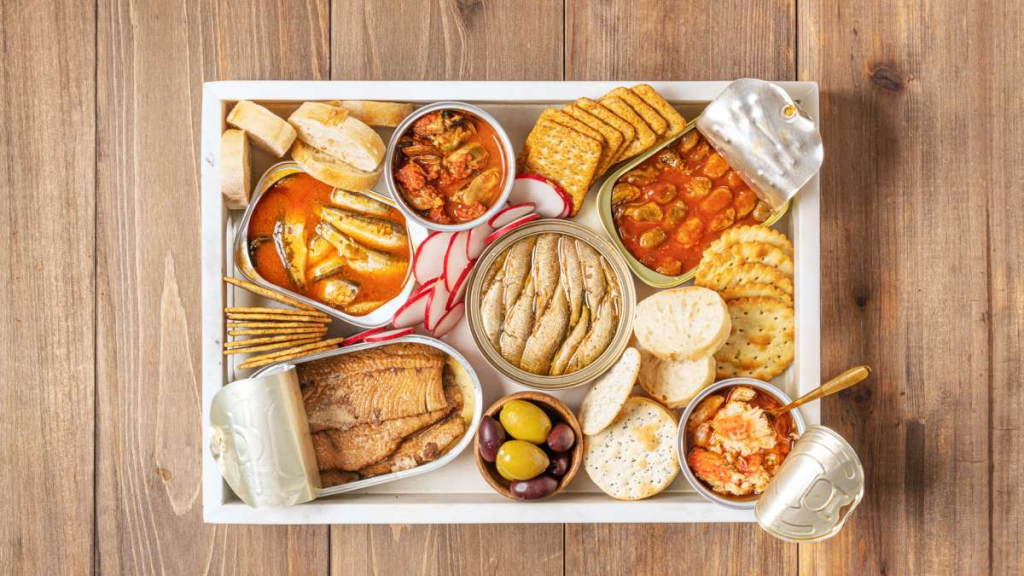
Today, most of the preserved seafood options come in cans, though there are still some varieties that are jarred in glass bottles. It is generally considered that the cans are better because they are lighter, take up less space, and tend to preserve the food longer. Glass jars allow people to see what they are getting. If stored properly, there is no difference in the quality of foods from either storing apparatus, however, if not stored properly, if foods stored in glass jars is exposed to sunlight, the food will spoil sooner than if stored in cans or tins. As with anything, there are pros and cons and personal preferences to both methods.
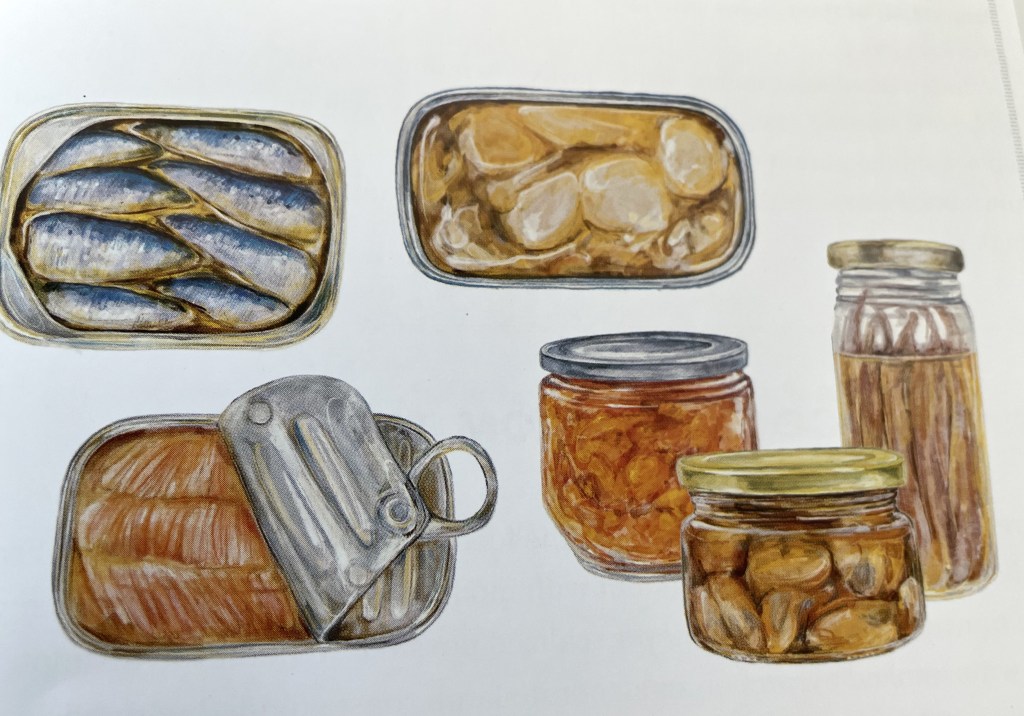
Canning fish soon became a great way to provide healthy, nutritious fish to everyone, especially since it requires NO refrigeration and takes up very little space. Canned fish is good for as long as it remains sealed. Once it is opened it is meant to be eaten immediately after. Because canned or tinned fish is so convenient and affordable, it has become Portugal and Spain’s version of fast food. Tinned sardines are by far the most popular tinned fish in Europe, especially on the Iberian Peninsula, because sardines account for nearly 1/3 of all the fish caught in Portugal. The best canned or tinned fish are those that are processed shortly after being caught. Most often, the tinned fish only contain a few simple, basic ingredients too, making them very healthy.
Canned fish, with the exception of canned tuna, in the United States is not nearly as popular as it is in Europe, though its popularity is gaining. Americans can be snobs, in many ways, and especially when it comes to foods. At first canned fish was considered to be “poor man’s food”, and most Americans thought only fresh seafood was good. But if you did not live by the coast, or could not afford for fresh fish to be stored in cold conditions in order to transport it, you were out of luck. Though sardines were first canned on the East Coast in 1875, Americans, other than the European immigrants, did not really pick up the trend of eating canned fish until much later. On the West coast, people were catching and eating both canned salmon and tuna. Southern California started canning tuna in 1903, and it really gained in popularity during WWII, due to its abundance and affordability. Today, many seafoods are canned and are enjoyed by many people around the world.
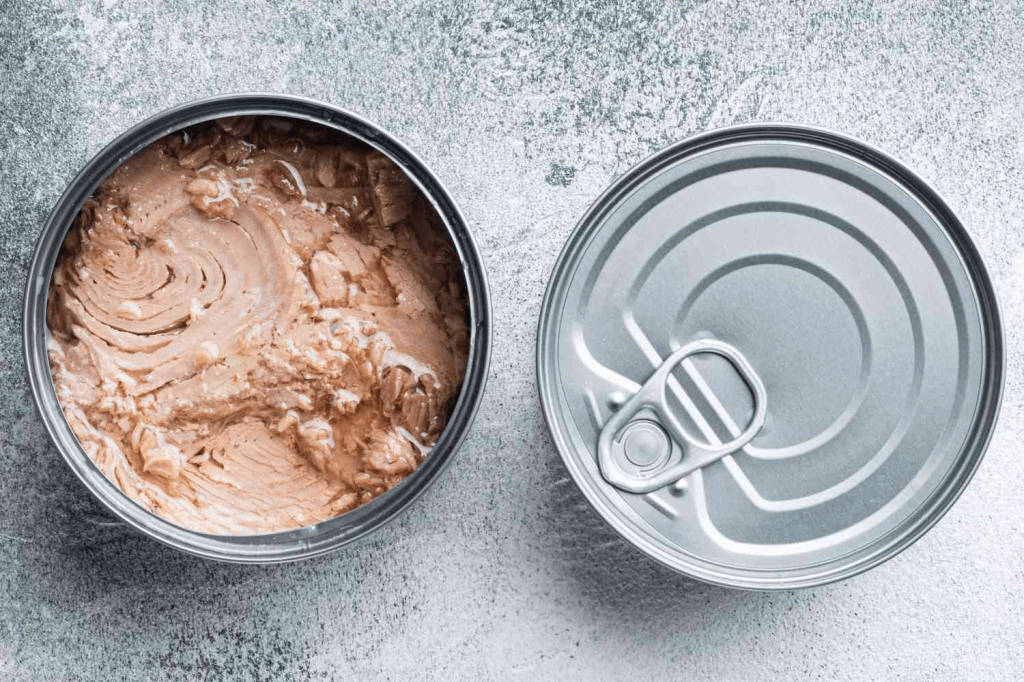
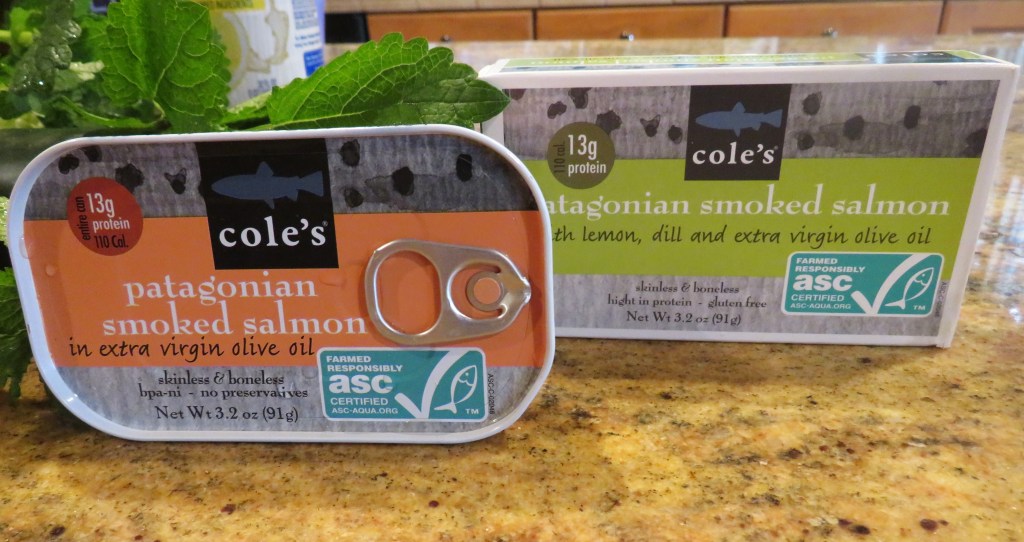
Stock up on those canned or tinned seafood options. They are good for you and good to take with you when you are on the go. They are quick, healthy, packed protein sources that will never go out of style.
Have a great day and make everyday great. Stay safe and stay well. ‘Til next time.


I always have tinned sardines and tuna (in jars) in my cupboard.
LikeLiked by 1 person
SWEET! 🙂 🙂 🙂
LikeLiked by 1 person
Thanks for sharing. Have a great weekend and stay cool. 🙂
LikeLike
That was totally interesting! Thank you.
LikeLiked by 2 people
Thank you. My pleasure. Glad you liked it. 🙂
LikeLiked by 1 person
Something on topic but off….I’ve heard of restaurants getting points knocked off because of dent in cans…I never understood that until someone said….the chances are very low…but a pinhole in one can cause trouble. Thats rare though I’m sure.
LikeLiked by 1 person
Tuna and sardines are very popular here in Ireland. I have not eaten much canned fish, because I’m not into seafood! X
LikeLiked by 1 person
I don’t eat a lot of tinned seafood, but I LOVE fresh seafood. 🙂
LikeLike
Growing up, we didn’t eat canned fish. As an adult, it grew on me and I’ve learned to eat a variety of canned fish. It’s a must now and no matter where I’m at, I can open one up and enjoy.
LikeLiked by 1 person