Belize borders Mexico and Guatemala. They share a common history with the Mayans and Mayan chocolate, among many other shared commonalities. The cacao bean, or the “bean of the Gods” is also grown in Belize, though on the mainland and not so much in Ambergris Caye. Mayan chocolate is very popular all throughout Belize as well as Mexico. On one of our non-diving days, we took a chocolate making class and learned how to make Belizan/Mayan chocolate.

We were back at the Belize Chocolate Company, also known as the Chocolate Boutique.


The class started with a short video of how the cacao is grown and processed.
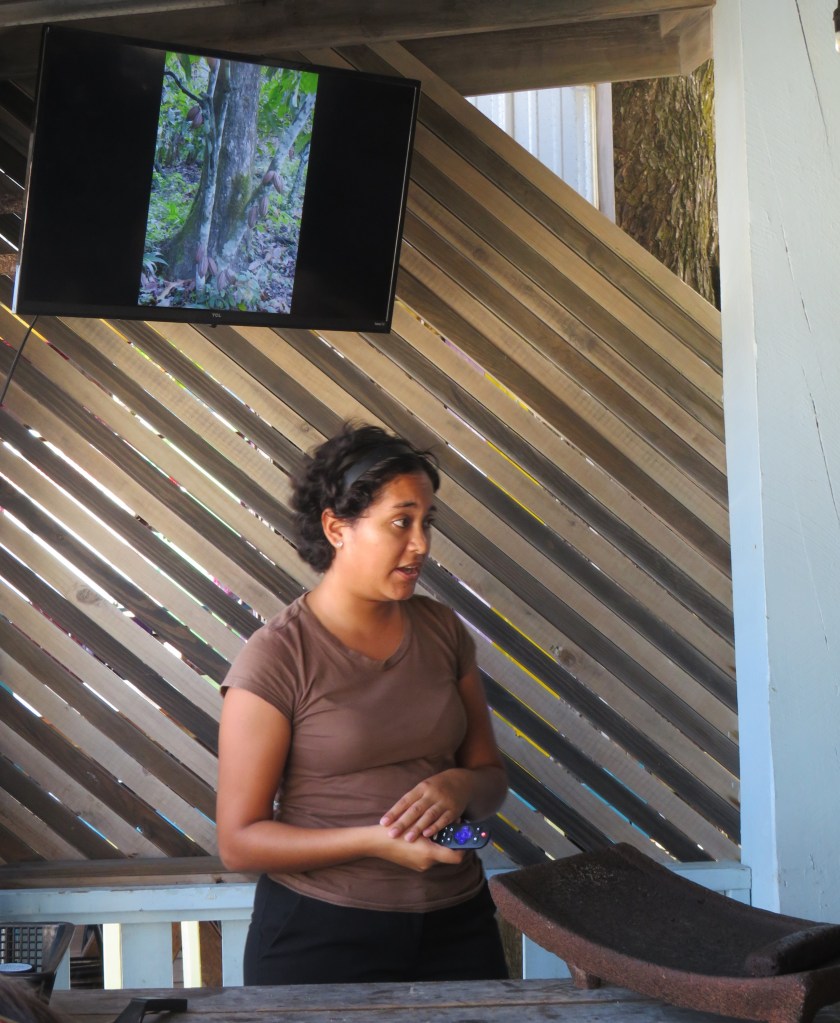
Everything was explained and then the demonstrations began. This is the cacao bean or pod. The white “slimy” interior is removed first to reveal the beans. Each pod contains roughly 50-60 beans. Once the beans are removed from the pod, they are fermented in boxes that are covered in banana leaves and then sun-dried.
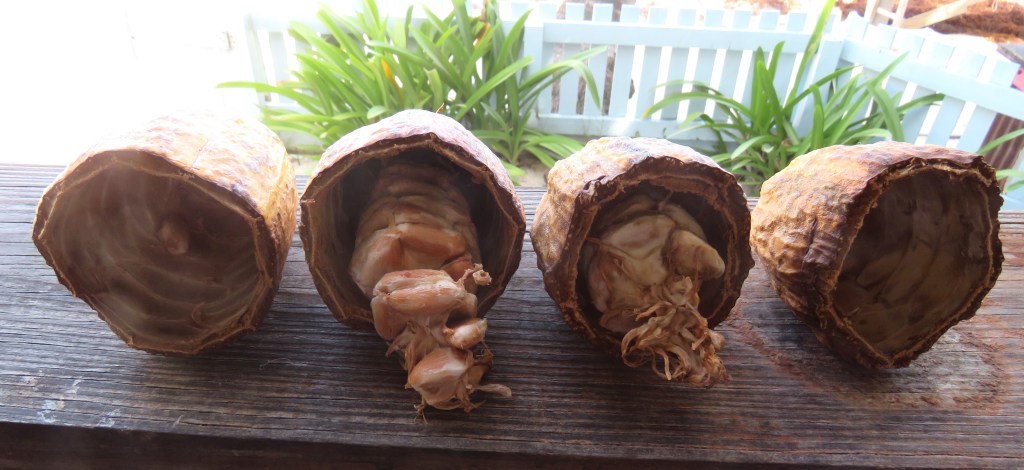
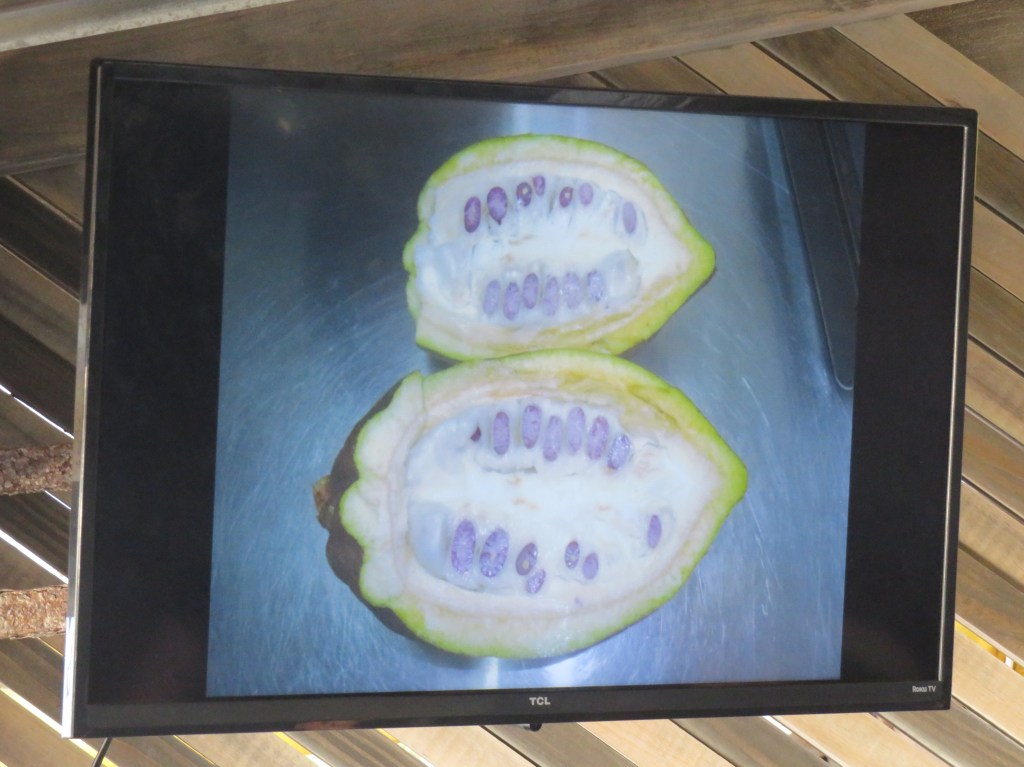
Once dried, they are then roasted in a big roaster. There are 2 locations in Ambergris Caye/San Pedro. One is the shop, where we were, and the other is the production site, a little bit further down the road.

Every bit of the pod and beans are used. Nothing is wasted. The shell is used to make both mulch and cacao tea. The nibs are left, and that is what is broken down to make the actual chocolate that we eat, or drink, as the Ancient Mayans originally did. The Mayan word for chocolate, “xocolatl“, meant “bitter water”. And believe me, it is BITTER! Nothing like the chocolate we are used to eating, that’s for sure! This name reflects the original consumption of chocolate as a liquid beverage, often flavored with chili peppers and other spices, similar to a mole sauce. The word “chocolate” itself is derived from the Mayan word “xocoatl”. The nibs are then ground down to form a paste. The paste is the part that is used. The ancient Mayans drank it with nothing but boiling water. Today we add sugar and dried milk.

Pouring the chocolate nibs out to be ground into the chocolate paste. These large bowls are family heirlooms, passed down from the generations. They are used to grind anything from chocolate to corn.
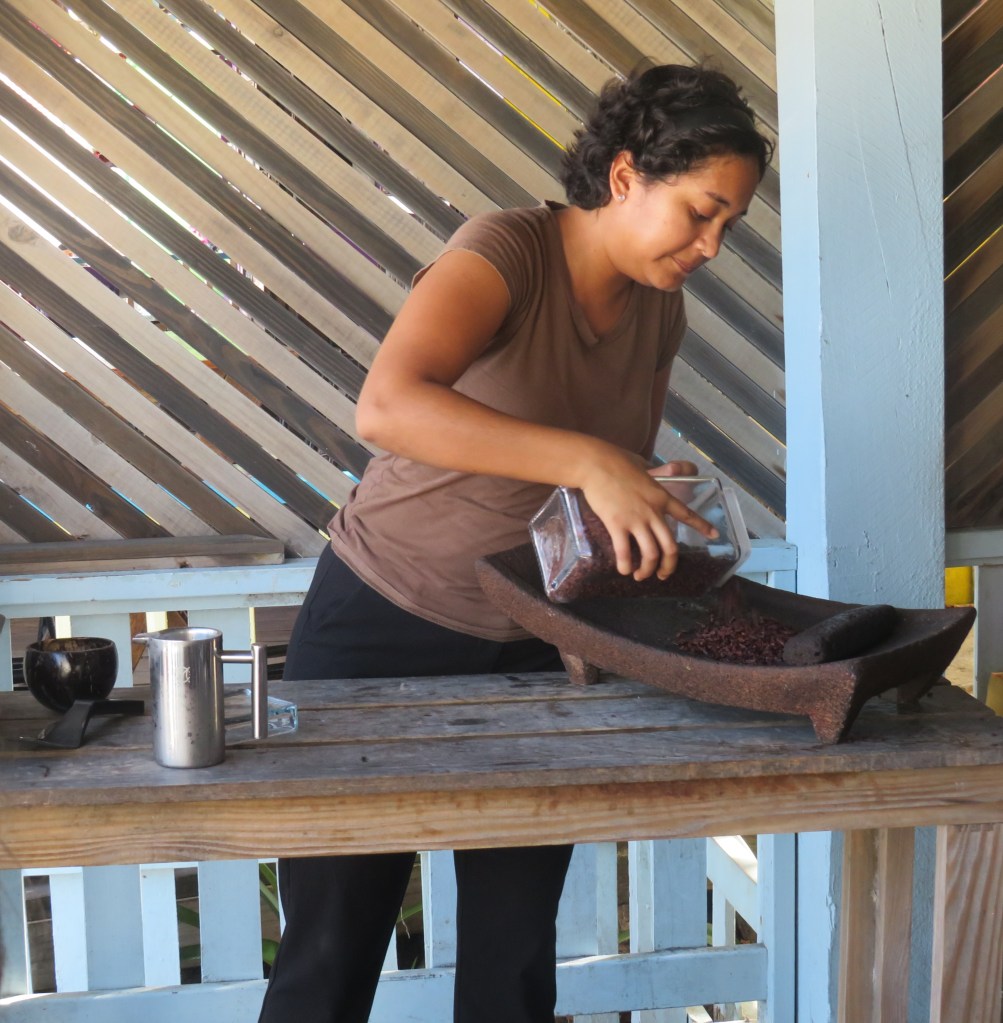
Grinding down the cacao nibs is truly a talent. The technique is in the wrist, and is all about speed and applying the right amount of pressure. We all got a chance to try out our chocolate making skills. None of us were nearly as skilled as our instructor. 🙂


Once the nibs are ground to a paste, they are mixed with boiling water to make a thick paste. We tasted it at every stage. I will be brutally honest with you; it was AWFUL this way.

Next we added the sugar, for the dark chocolate and the sugar and the dried milk and ground it all some more to make the milk chocolate. Dried milk is used so it doesn’t spoil and has a longer shelf life. If you like dark chocolate, the general mixture is 70% pure cacao to 30% sugar, but there are plenty of other variations as well.
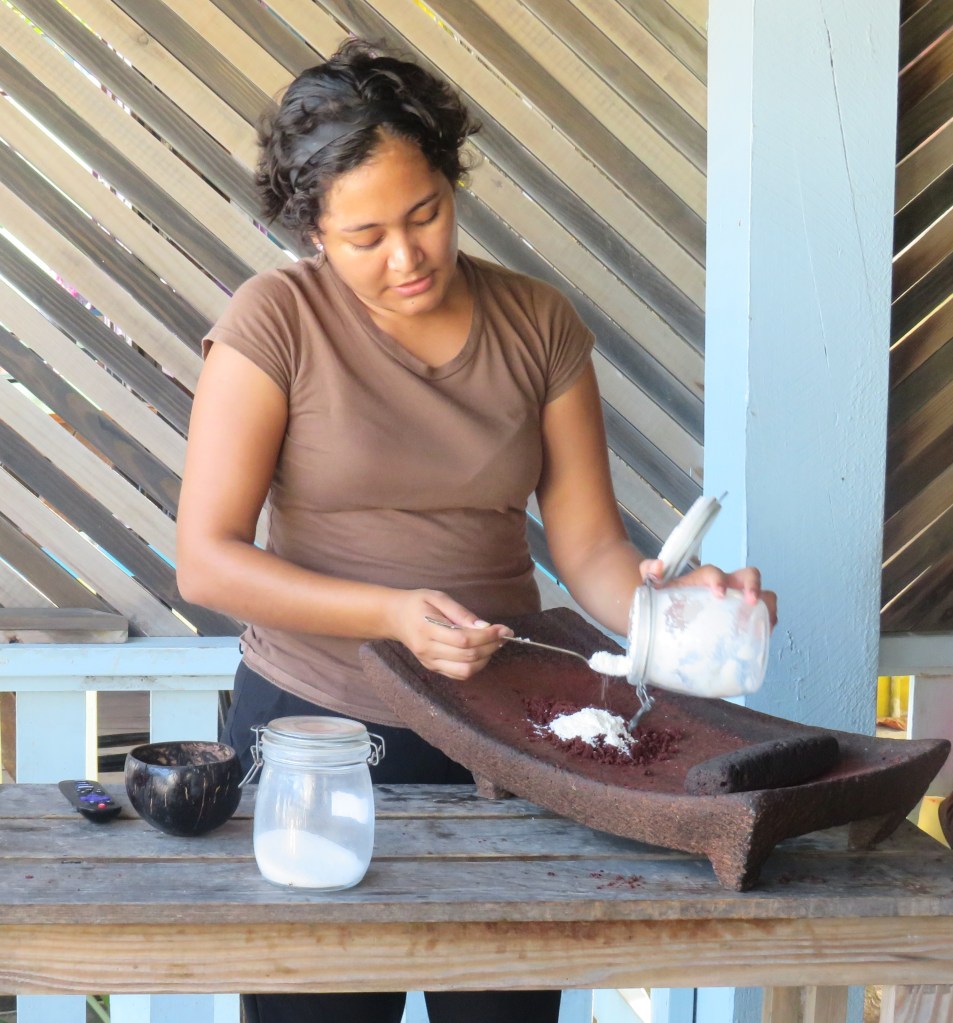
The chocolate was very good once the sugar and/or milk were added.
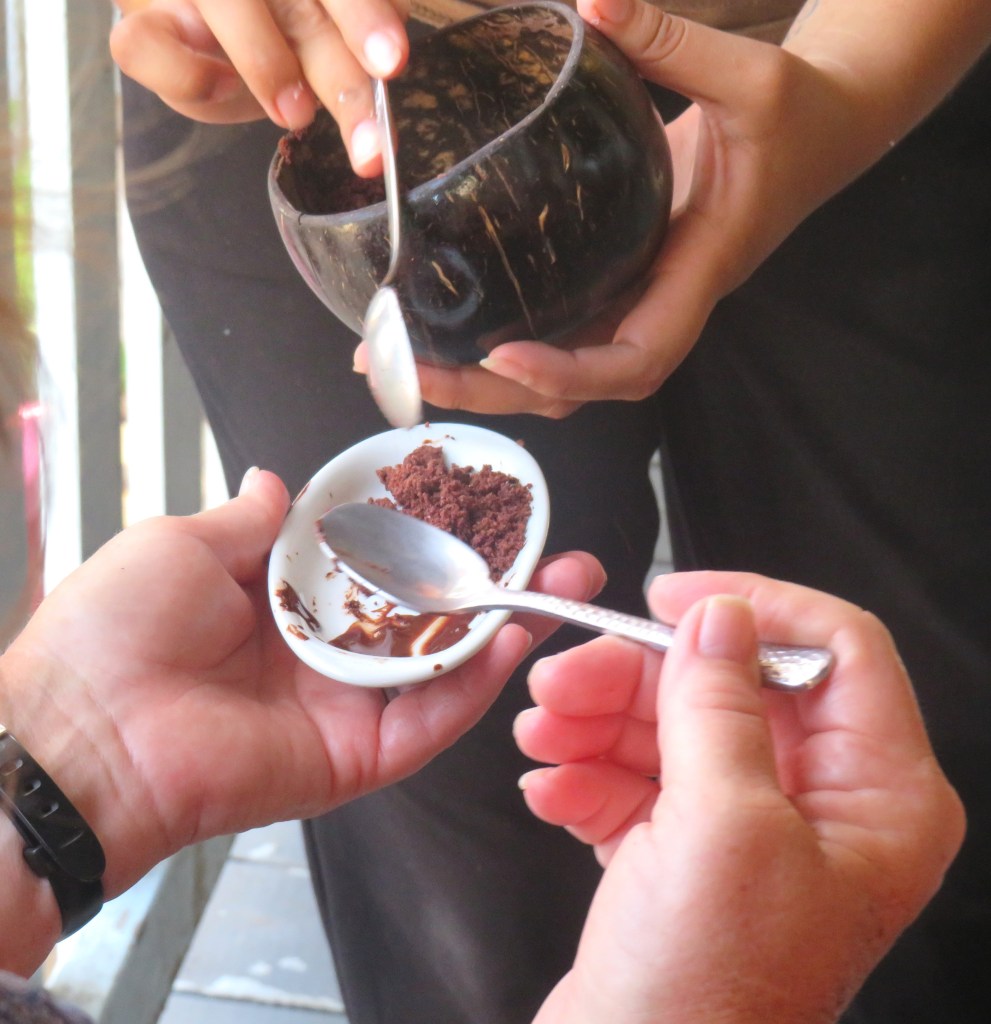
This is how the Mayans and the Belizans make both their dark and milk chocolate. To make their white chocolate, the cocoa butter that has been extracted during the pressing process is mixed with sugar and dried milk. It has many different uses, both edible and non edible. To make it edible, again, sugar is added and blended into the cacao butter. We all sampled the dark, milk and white chocolate. They were all very good and all very different. The Mayan chocolate is not nearly as smooth as the European chocolates we are all accustomed to.

The class was very interesting and informative, though I would have liked a little more hands-on experience. You can take group classes, like I did, or you can have a private class, that will allow for more hands-on experience. I enjoyed the chocolate class a lot. It was a fun, unique learning experience.
“Life is like a box of chocolates. You never know what’ya gonna get”, Forrest Gump. Have a great day and make everyday great. Stay safe and stay well, and eat your daily dose of chocolate. ‘Til next time.

 A Jeanne in the Kitchen
Pure Deliciousness! ❤️💯😋
LikeLiked by 1 person
It was indeed. 🙂
LikeLiked by 1 person
😋
LikeLiked by 1 person
Thanks for sharing the love. Have a great day. 🙂
LikeLiked by 1 person
You’re very welcome my dear friend! #GoodWorks❤️💯
LikeLiked by 1 person
🙂 🙂 🙂
LikeLike
❤️💯
LikeLiked by 1 person
Like you I prefer classes that are more hands on
LikeLiked by 1 person
It was still a good class though. 🙂
LikeLiked by 1 person
I remember reading historical accounts about Europeans and their introduction to the cocoa bean. They recorded how important and valued the coco bean was in the culture, and did recognize that it was a great honour to be offered the drink, even though they found it unpleasantly bitter. They did not like it at all! And yet, they introduced it to Europe and it became popular there as a drink, well before people figured out using sugar and milk and, eventually, conching it.
I do wonder how people end up consuming such products regularly. Usually, things that are so bitter are rejected as potentially poisonous!
LikeLiked by 1 person
I love learning about all the history behind the foods we eat and enjoy. 🙂
LikeLiked by 1 person
Interesting to learn where the chocolate is actually coming from and the history.
LikeLiked by 1 person
Thank you. I think so too. 🙂
LikeLiked by 1 person
When I was a Middle School Spanish teacher I always did a lesson on the production of chocolate, or xocolatl in Nahuatl. Thanks for reteaching me about making chocolate.
LikeLiked by 1 person
Cool. My pleasure. 🙂
LikeLike
that sounds really fun and interesting! I love all 3 kinds of chocolate, and I would love to take a chocolate making class!
LikeLiked by 1 person
It was fun and very informative. 🙂
LikeLike
Fascinating! I wish I were there.
LikeLiked by 1 person
That would have been fun. 🙂
LikeLiked by 1 person