Pork has been a staple in Chinese cooking for at least about 8,000 years. Pork is one of the most consumed meats in China and in other parts of Asia as well. When the Chinese refer to meats, unless it is specified as something else, it almost always means pork. They use pork for everything.
The Chinese path from pig to pork began in the Stone Age. Pigs were the first domesticated animals in China. Genetic and archaeological evidence shows that the Chinese people domesticated pigs from wild boar about 8,000 to 9,000 years ago, although human management of boar populations probably began even earlier. Pork’s prevalence in Chinese cuisine and culture stems from a combination of historical, economic, and practical factors: pigs are efficient meat producers, easily raised and requiring minimal land, and have been a cultural symbol of prosperity and fertility, making them a staple in Chinese diets and rituals ever since. Not only are pigs (pork) a staple in Chinese food, but the pig also represents wealth and prosperity, as well as family and virility, in the Chinese and Asian cultures.
Today, China consumes roughly 50% of all pork that is produced. Pork is also the most widely eaten meat around the world too, not just in China. It is estimated that global pork consumption is around 36% of all meats. Chicken comes in second, at 33% and beef is third, at around 24%.
We eat just about everything in our house. We buy our meats in bulk and store as much as we can in the freezer, to use later. Larry has a routine, and he tries to pull out a little of each meat or fish from the freezer to use once a week. He calls it his meat rotation plan. This time, he pulled out some pork chops. I turned them into a Chinese dish with vegetables.
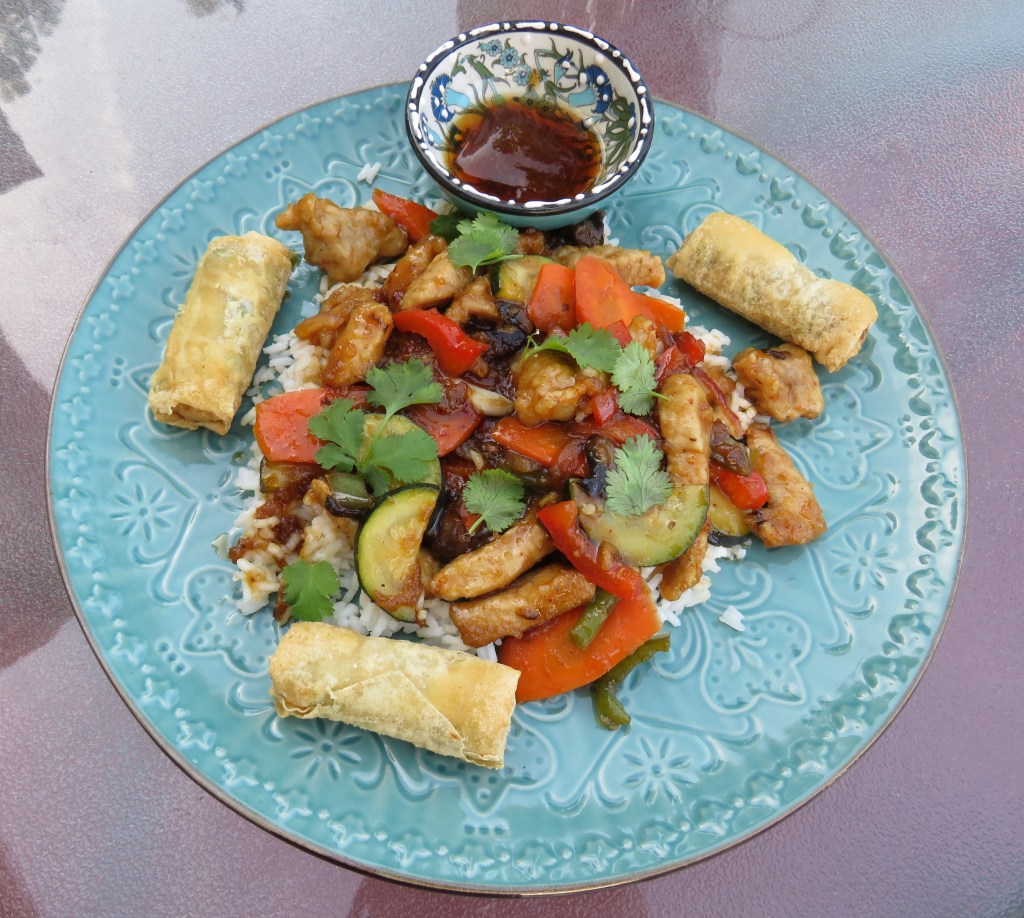
Chinese Pork & Vegetables
I add a ton of different vegetables to almost everything I cook. We eat a wide variety of vegetables in and with almost every meal. This meal included both red and green bell peppers, zucchini, carrots, mushrooms, onions and garlic.
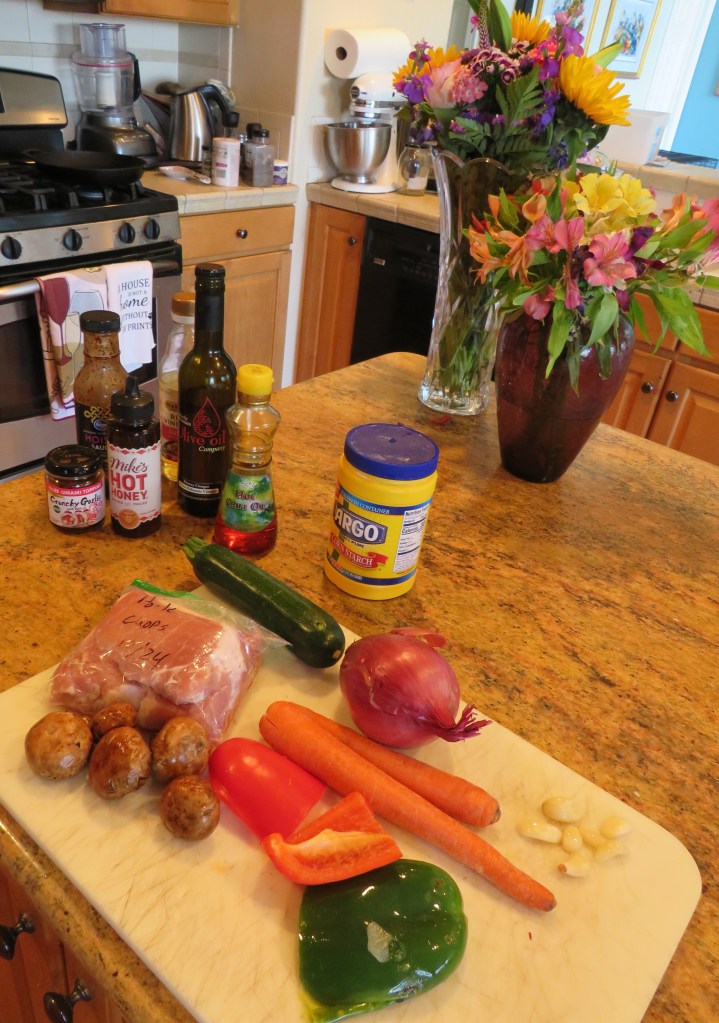
I sliced the pork into thin strips and coated it with cornstarch. You can make this same exact dish with chicken or beef too.
No real recipe here, since I was just using up some of my little bits of this and that.

My sauce was kind of a sweet, sour and spicy blend.

1/2 cup honey ginger balsamic vinegar
1/3-1/2 cup Hoisin sauce
1-2 TBSP rice vinegar
2-3 TBSP hot honey
1-2 tsp crunch garlic
Mix everything together and set aside until ready to uase.
The vegetables take the longest to cook, so I cooked them first in a very hot skillet with some olive oil and hot chili oil. You can use a wok too. I have both, but I actually prefer a skillet to a wok. It’s just a personal preference. Both serve the same purpose. Cook the vegetables for about 5-7 minutes, stirring frequently.

Remove the vegetables and set aside, keeping them warm. Cook the meat until it is almost browned and cooked thoroughly.

When the meat is cooked, re-add the vegetables and mix together thoroughly.
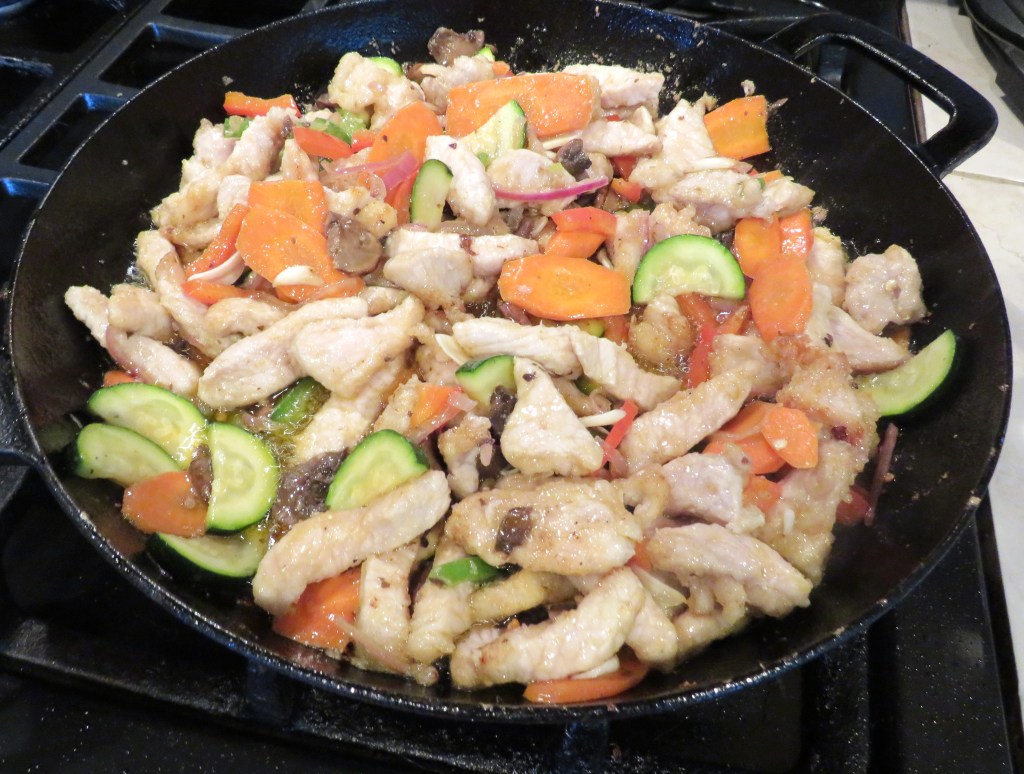
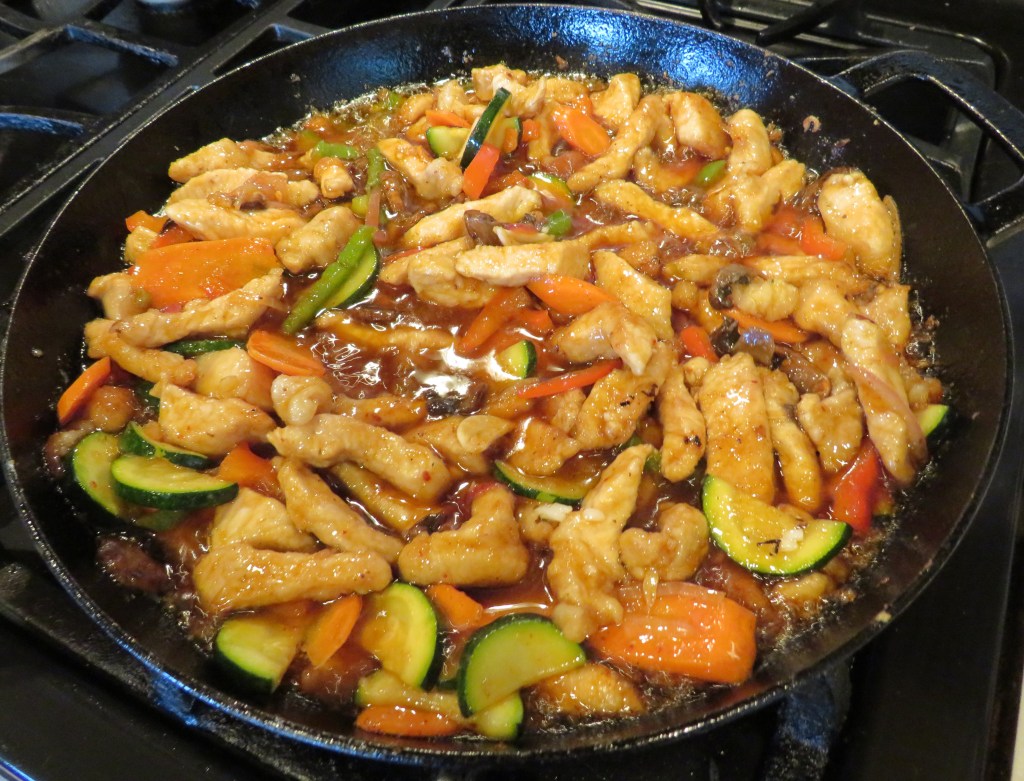
Cook for an additional 2-3 minutes, stirring frequently. Then add the sauce. Bring to a boil, then reduce the heat to a simmer and continue to cook for an additional 2-3 minutes, stirring constantly.
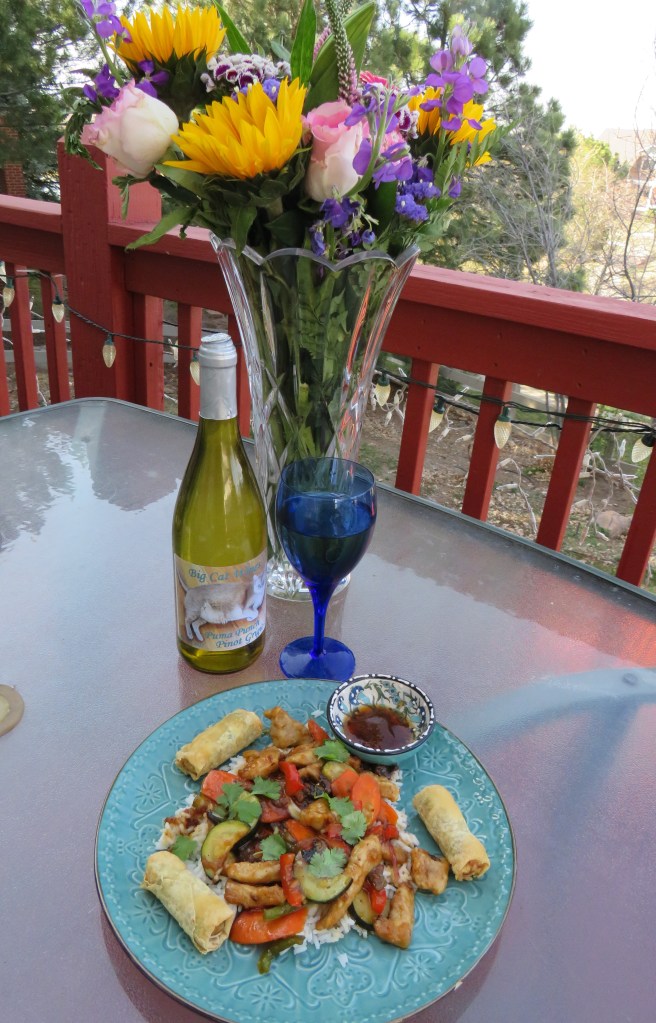
I served it over some rice cooked with a dash of black garlic and ginger olive oil, then added a little fresh cilantro on top. I added some spring rolls on the side to complete the meal. I served it with one of our own wines, a Pinot Grigio that we recently made and bottled. Delicious!
Have a great day and make everyday great. Stay safe and stay well. ‘Til next time.


I must take a greater look at Chinese cuisine
LikeLiked by 1 person
I love doing the historical dives into the foods we eat. 🙂
LikeLiked by 1 person
Yummy! I love chinese food! Pork is a favourite meat that I love to eat!
LikeLiked by 1 person
Thank you. Then I think you would like this one too. 🙂
LikeLike
Thanks for sharing. Have a great day. 🙂
LikeLike