Sweet peppers, also known as bell peppers, are part of the same family as their hot, fiery cousins, the hot peppers or chili peppers (not to be confused with the band, The Red Hot Chili Peppers). They all belong to the same family, the Solanaceae family. Eggplants are also part of this same plant family. The main difference between sweet or bell peppers and their hot cousins is that sweet peppers are genetically deficient of the “heat” chemical, capsaicin. Not only are they very mild in heat, but they also have a slightly sweet flavor to them, especially the red or purple peppers. They become sweeter as they ripen and their colors change. They are harvested at either green, mature or colored stages. All peppers start out green, then change colors as they mature. Sweet, or bell, peppers mature into a variety of colors including red, yellow, orange, lavender, purple, and chocolate. The bell peppers have a crisp, thick flesh and are suitable for eating fresh or for stuffing and baking.

Believe it or not, sweet peppers actually come in white too. The white bell pepper is a translucent white to pale yellow colored bell pepper with a crisp, sweet flavor. This pepper variety produces an abundance of white bell fruits. These peppers turn from translucent to pale yellow when mature. The white bell is a great addition to any salad or meal. White bell pepper cultivars are heirloom varieties, meaning they have been around since before World War II and are open-pollinated while others are hybrids. Unlike the more uniform, greenhouse-grown, white Holland bell peppers, white bell peppers are grown outdoors in a variety of conditions. While this variety is difficult to find in the commercial marketplace, white bell peppers are favored by home gardeners and local farms for their ease of growth, high yields, unusual coloring, and sweet flavor.
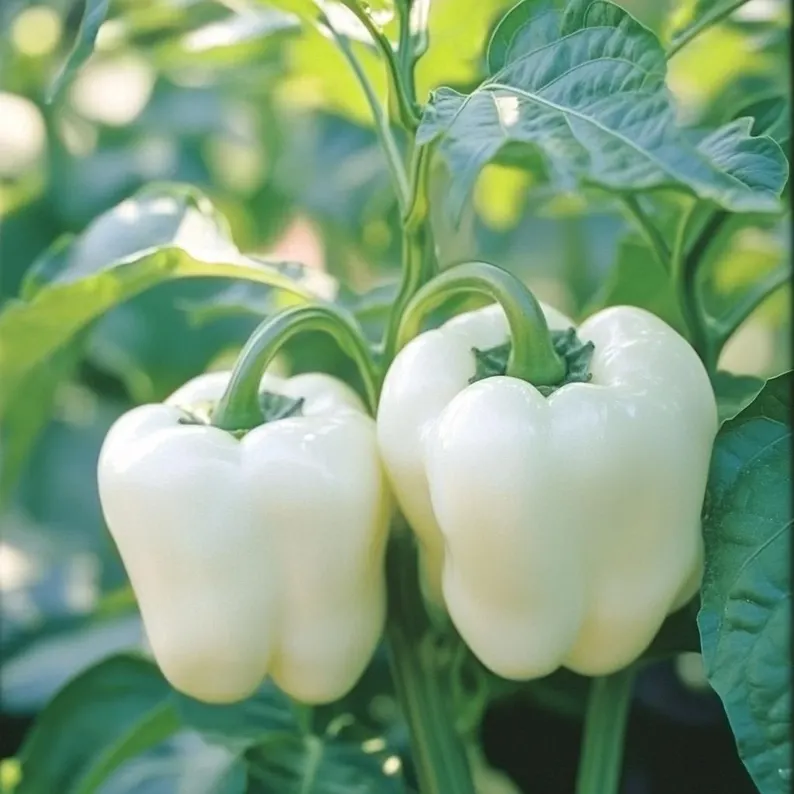
Sweet peppers, also known as mild bell peppers, originated from Mexico where they have been used by humans since around 7000 BC. They were introduced into Europe toward the end of the 15th century by Spanish and Portuguese explorers, and their cultivation later spread to Africa.

The vegetables we call peppers include chilli, chile, azi, cayenne, hot peppers and sweet or bell peppers. Among the five cultivated species of Capsicum, C. annuum is the most commonly cultivated for pungent, hot peppers and non-pungent, or sweet bell peppers. They get their name “bell” peppers because of their bell shape. Today, these popular peppers are grown in most regions of the world, but predominantly in these countries: India, China, Korea, Hungary, Spain, Nigeria, Thailand, Turkey, Kenya, Sudan, Uganda, Japan, Ethiopia, Indonesia, Pakistan, Mexico and the United States.
Paprika is a sweet pepper that is grown mainly for its color that makes various foods more attractive. The fruits are long, banana shaped peppers and when they mature they develop into a dark-red color. When dried and ground, this thin-walled pepper becomes the flavorful condiment paprika, a favorite spice used in Hungarian cooking, as well as many other parts of the world.

Sweet cherry peppers, also known as pimento or pimiento peppers, are harvested when mature as green to deep-red pepper and are generally used in processing as pickled.


Hot peppers refer to those that taste hot, and can range from the relatively mild Anaheim to the blazingly hot Habaneros or even hotter, ghost peppers. Among the known hot peppers, the following are the most important:
Red chili
These small cone-shaped peppers are often 1–4 mm long and have medium-thick flesh. They are usually used dried and ground in chili powder.
Green chili
These are the long, green two-celled mildly pungent Anaheim-type peppers that are so flavorful in chili spicing. They turn red at maturity but are nearly always harvested when they are still green for roasting.
Red hot peppers
These peppers vary in plant and fruit size and shape. These scorchers, such as chiltepin, chili pequin, Tabasco, and Thai, mature red and zest up foods.

Peppers of all kinds are actually fruit, and not vegetables, as we often refer to them. Fruits have their seeds on the inside, and pepper seeds are all inside the peppers, thus making them fruit. Vegetables come from roots, leaves or stems and do not contain seeds. Vegetable seeds are all external, and on the plant itself.
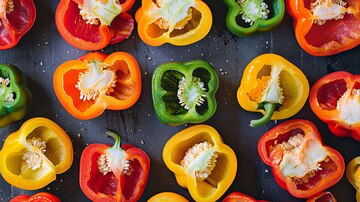
Here is a fun fact about peppers I bet no one knew, myself included. We know sweet peppers as large, hollow, thick-fleshed vegetables, but the original strain was named “bell” for a very good reason. They had a rather hard, thin wall, and contained an elongated vestigial stigma inside. The stigma is part of the female complement of the flower, the outermost part which often produces nectar and/or sweet aromas to entice pollinators.
This leftover stigma acted as a natural clapper, striking the walls of the bell pepper as it swayed in the wind. As a result, sweet peppers were a very noisy crop. So much so, in fact, that during high winds, maturing bell peppers would startle livestock, causing them to bolt, and would keep villagers awake at night. So for over 400 years, bell peppers were relegated to a curiosity, and not widely cultivated.

Now, we all know a lot more about peppers; sweet bell peppers and hot peppers, than we did before. So pepper it up. Use these peppers in a wide variety of different ways. Spice up your foods and/or make them pretty and festive. Play with your colors and be creative.
Have a great day and make everyday great. Stay safe and stay well. ‘Til next time.


I love sweet peppers! I love the hot ones too!
LikeLiked by 3 people
Me too. I cook with them all the time. 🙂
LikeLike
What a fascinating deep dive into the world of peppers! I had no idea about the origins of the “bell” name or the quirky history of noisy peppers startling livestock—what a fun fact! It’s amazing how versatile and colorful peppers are, from sweet to spicy, and how they’ve traveled the globe to become a staple in so many cuisines. Definitely inspired to “pepper it up” in the kitchen now! 🌶️🫑
LikeLiked by 1 person
YAY!!! Glad you enjoyed it. 🙂
LikeLike
Interesting!
LikeLiked by 2 people
Merci. 🙂
LikeLiked by 1 person
Thanks for sharing. Have a great day. 🙂
LikeLike
Very interesting information.
LikeLiked by 2 people
Thank you. 🙂
LikeLiked by 1 person
You are very welcome, darling.
LikeLiked by 1 person