Tequila, the well-known Mexican spirit, has been around for centuries.
1000 B.C. to 200 A.D.: The Aztecs Ferment Agave
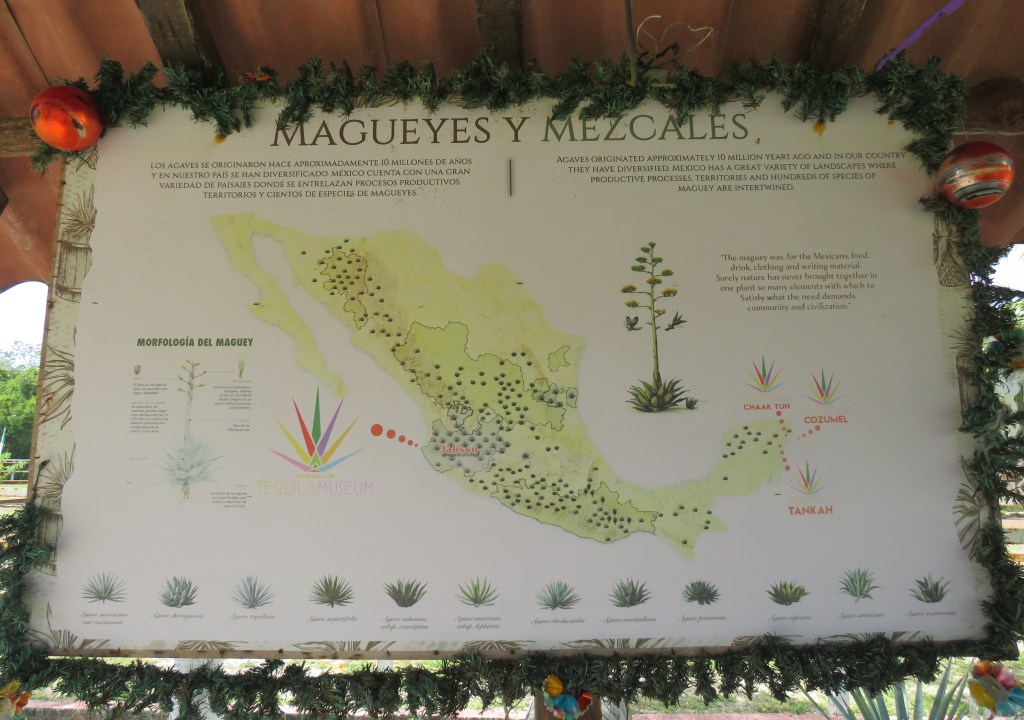
Tequila didn’t start out as the partier’s shot of choice. It didn’t even start out as the tequila we know today. The Aztecs prized a fermented drink known as pulque, which used the sap of the agave plant (this technique was also likely used by the Olmecs, an even older civilization dating back to 1000 B.C. that was based in the lowlands of Mexico). The milky liquid was so important to Aztec culture that they worshipped two gods known for their relationship to booze. The first was Mayahuel, the goddess of the maguey, and the second was her husband Patecatl, the god of pulque. Though the first documentation of pulque—on stone walls, of course—appeared around 200 A.D., the drink really caught on centuries later when the Aztecs received a surprise visit from the Spanish.
1400s & 1500s: The Spanish Distill Agave
While there are multiple theories on the beginning of agave distillation, a common telling involves the Spanish invasion and primitive mud stills. The parched Spaniards couldn’t be without their brandy for too long, so when supplies began to run low, they improvised with mud and agave, essentially creating what we know today as mezcal. (Remember: All tequilas are technically mezcals, but not all mezcals are tequilas.) In the mid-1500s, the Spanish government opened a trade route between Manila and Mexico, and in the early 1600s, the Marquis of Altamira built the first large-scale distillery in what is now Tequila, Jalisco.

1700s to 1800s: Modern Tequila is Born
The Cuervo family, who everyone now knows and loves, began commercially distilling tequila in 1758, followed later by the Sauza family in 1873 (and, we’re sure, a few other small producers in between). According to Salon, Don Cenobio Sauza was responsible for identifying blue agave as the best for producing tequila—and by this point what we now know as tequila was likely being produced at these distilleries.
1974: “Tequila” Becomes the Intellectual Property of Mexico
In a move to take ownership of the term “tequila,” the Mexican government declared the term as its intellectual property in 1974. This made it necessary for tequila to be made and aged in certain areas of Mexico, and it also made it illegal for other countries to produce or sell their own “tequila.” The Tequila Regulatory Council was additionally created to ensure quality and promote the culture surrounding the spirit.
Tequila is a large part of the Mexican culture. We had to do our part to learn and appreciate the culture more. We were more than happy to do some tastings, in the name of higher learning of course. 🙂 There was a Tequila Museum, with a couple of locations on the island. We did not know they were part of the same family owned business until later.

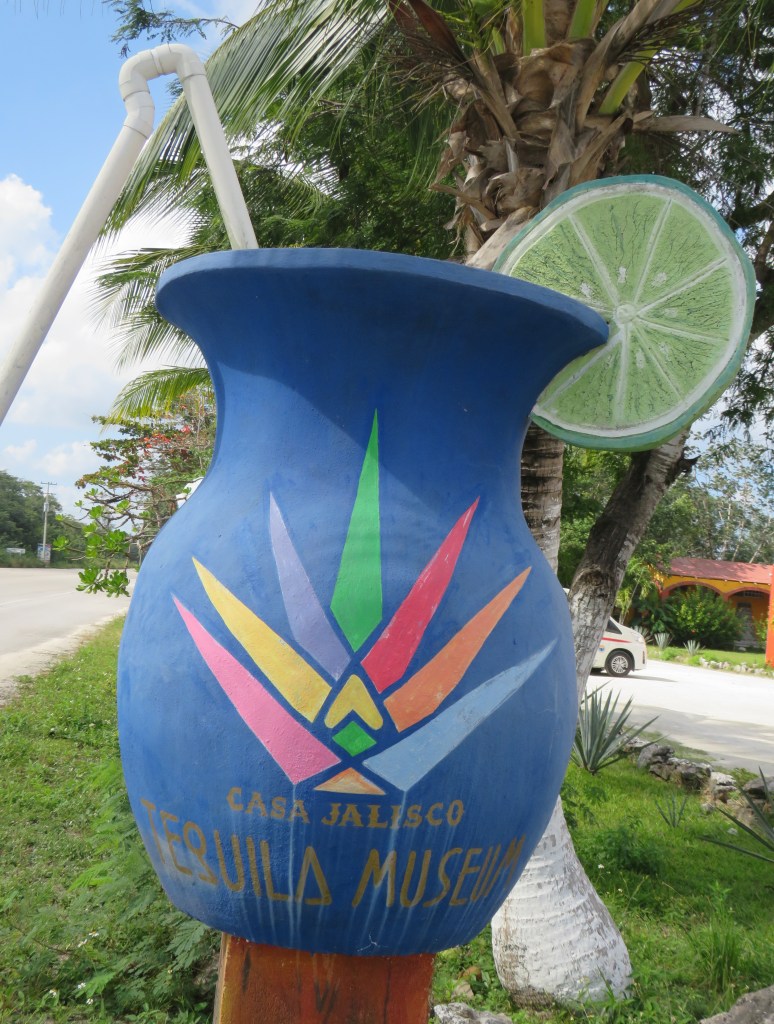
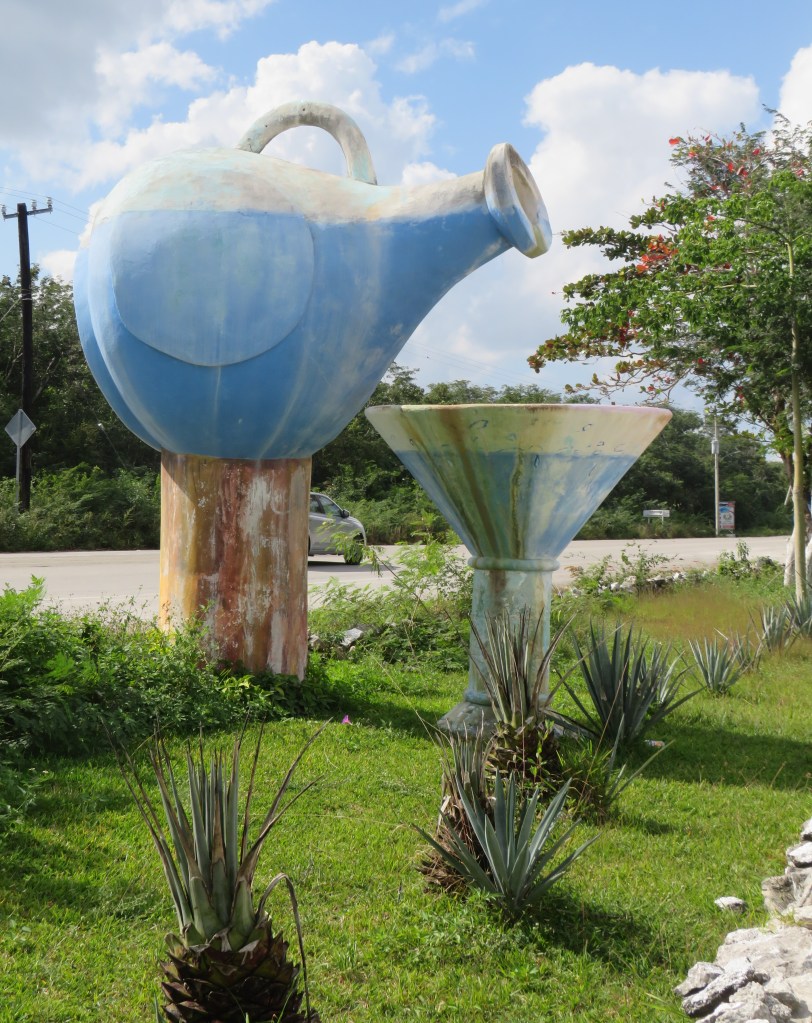
At the first place we went to, we were told the tour was free, but we were expected to buy at least one bottle of tequila for at least $60. We declined and almost left, but then we were told we could visit the grounds up to the house, but we could not go any further, and we could not take pictures inside the house. We agreed to that.

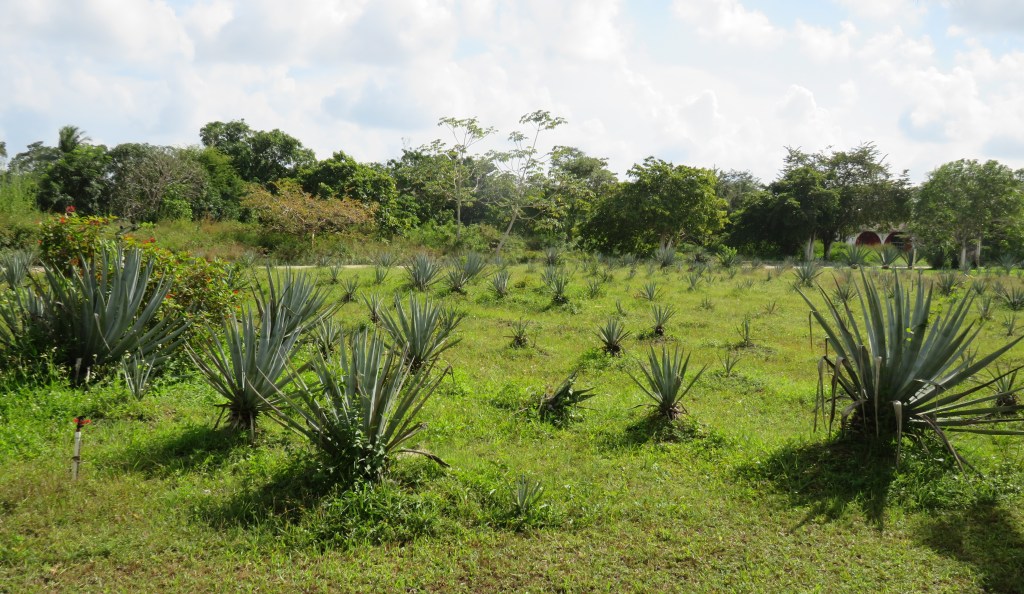
Larry is hard at work.
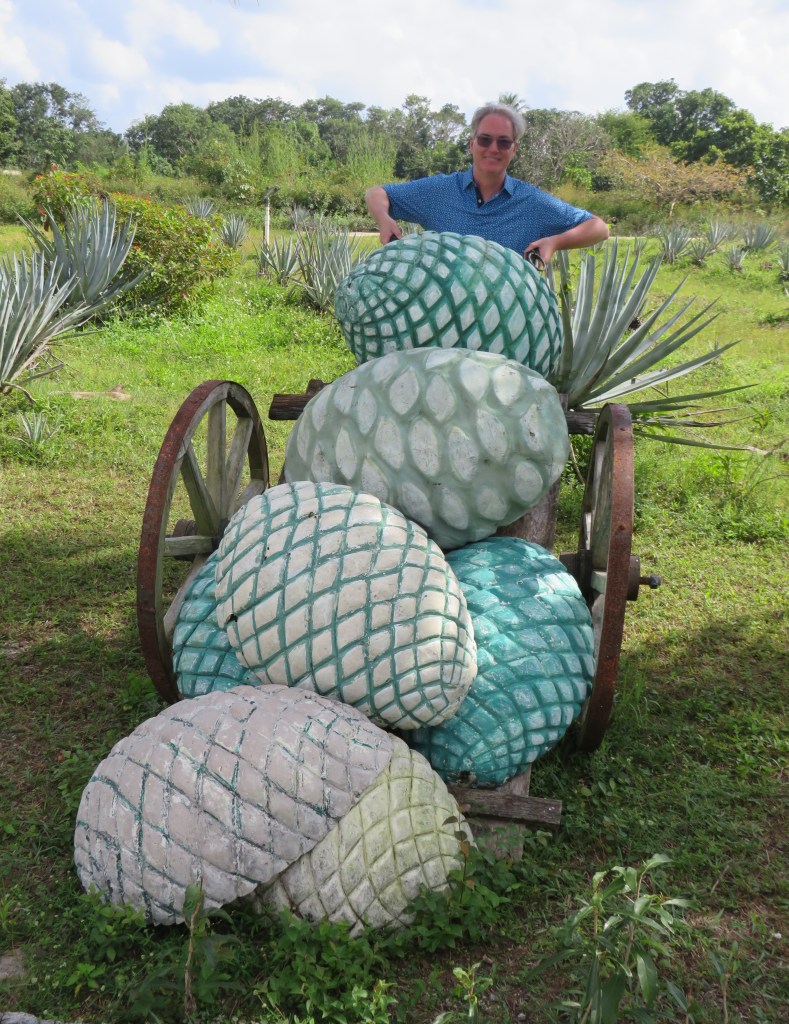
After “hauling around the bases of the agaves”, Larry needed a break and is sitting on the head of the snake. In Mayan culture, the snake represents life, rebirth, renewal, and a connection between the gods and humanity.

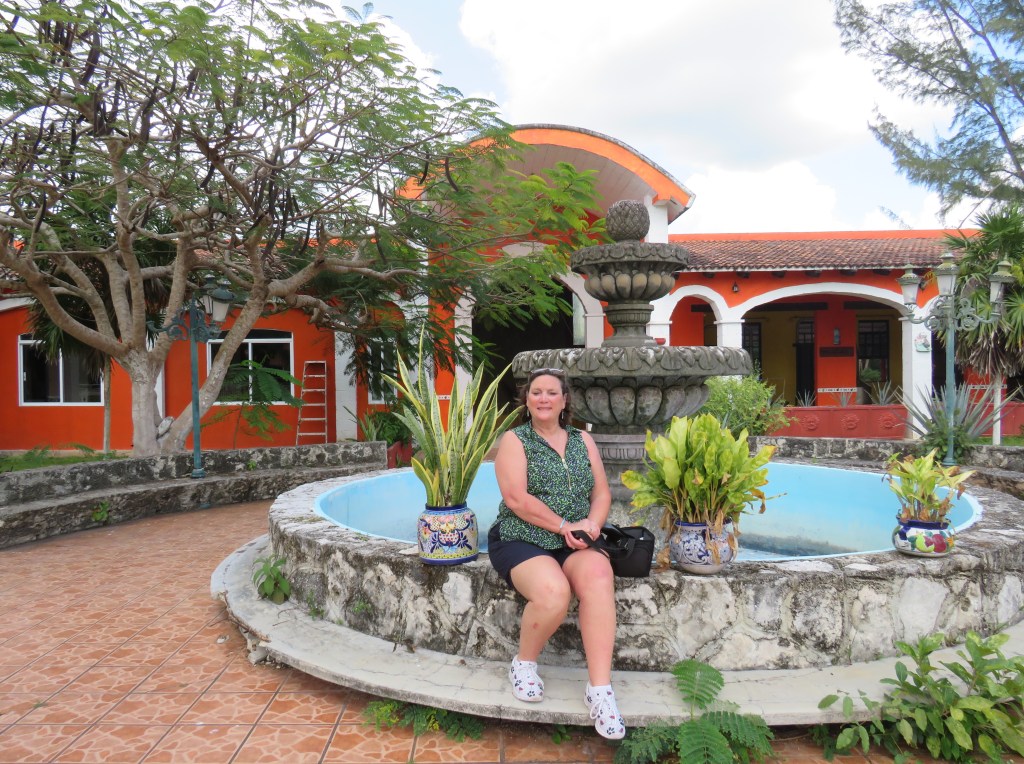
As you all know I am NOT a fan of snakes, at all, so I chose to sit by the fountain instead. The house in the background is the museum.
One of the tequila gods.

Horses and burros are an integral part of the tequila industry, even today.

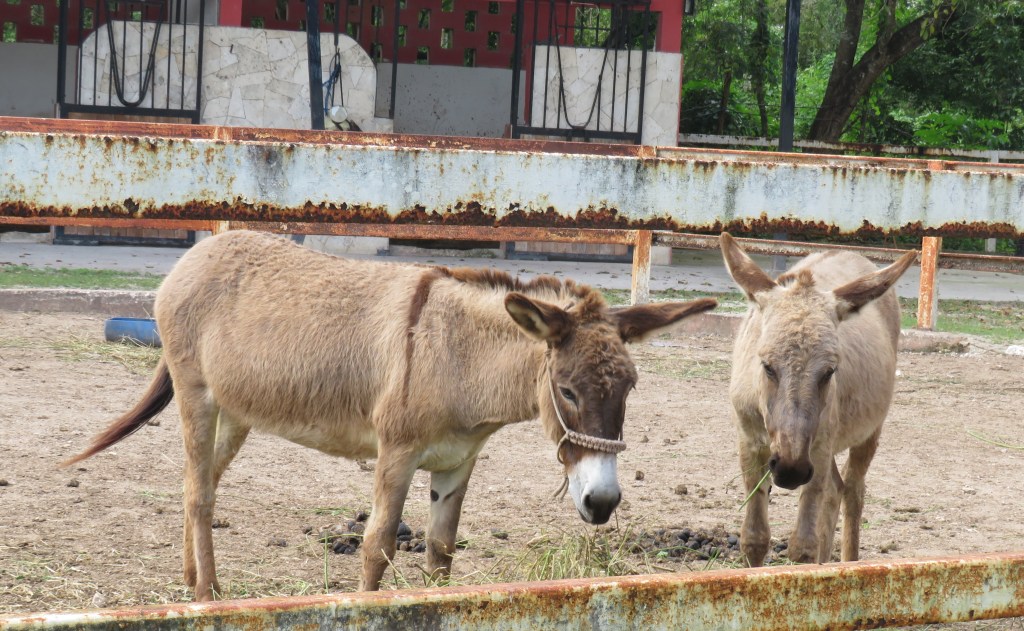
This was all we could see at the first place without the mandatory purchase of an expensive bottle of tequila. But a couple of days later, we found a place where we could taste the tequilas, with no expectations of making a purchase. That is when we found out they were part of the same family.
This lovely lady gave us the history of tequila and the tastings for free.


They were all good, and we each had our favorites. My favorite was the aged, sipping tequila. Of course. That was one of the more expensive options. Larry liked one of the lighter tequilas. We tasted, but did not purchase any. I love my wines, as you all know, but neither of us really drink much hard alcohol at all. So a little taste was all we really needed.
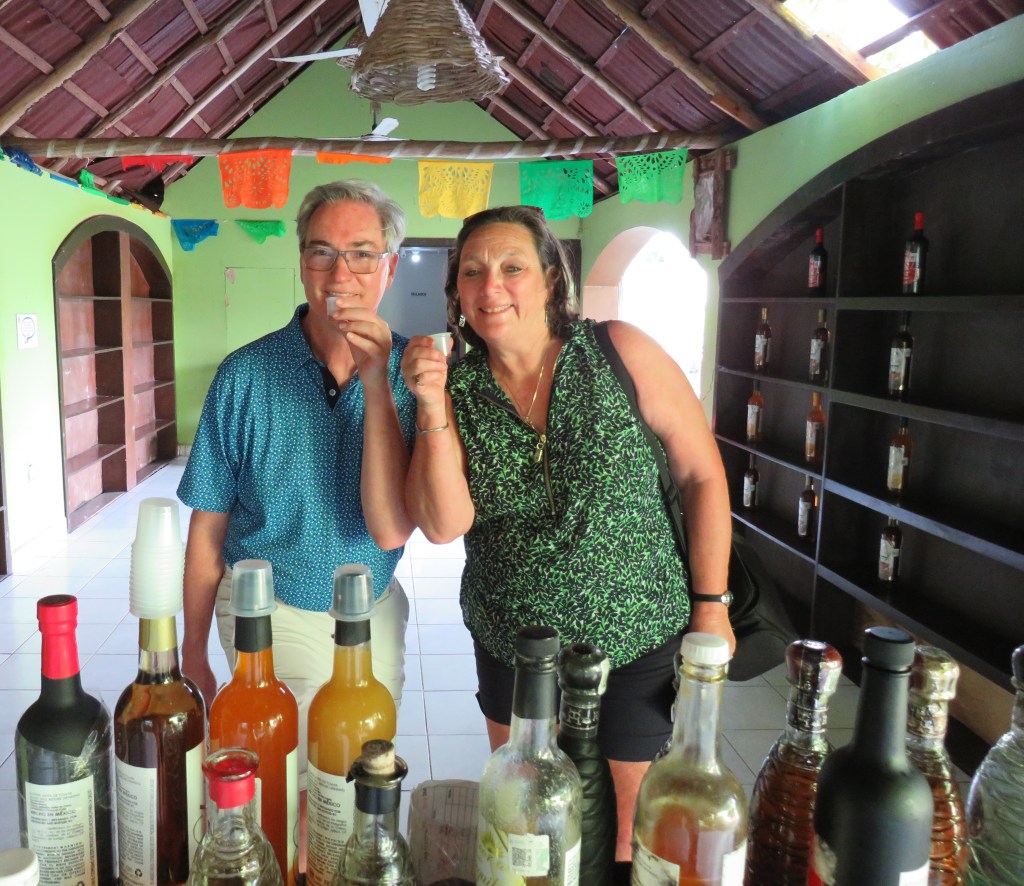
!SALUD! Cheers!
Have a great day and make everyday great. Stay safe and stay well, and don’t let the tequila take over. 🙂 ‘Til next time.

 A Jeanne in the Kitchen
Good to see Larry working so hard! 😆
LikeLiked by 2 people
I know, right?! 🙂 🙂 🙂
LikeLiked by 1 person
Absolutely!
LikeLiked by 1 person
🙂 🙂 🙂
LikeLike
Fascinating history. Thanks for sharing! I’ve never understood the appeal of tequila (or most alcohol in general), but find the whole process of making alcohol interesting. Who even thought of leaving liquid to “go bad” to make such a different liquid that is good?
Little side not regarding dates. The AD comes before the year. Most people put it after – especially now that so many have started to use BCE and CE, which I think it silly and refuse to do. 😄 Since AD means Anno Domini or In the Year of our Lord, we get our current year as AD 2025, or “In the Year of our Lord, 2025”, but BC is Before Christ, so 1000 BC is “1000 years Before Christ.”
Just a bit of trivia. 😉
LikeLiked by 2 people
Thanks I love it. Confession – I just cut and pasted that part. 🙂
LikeLiked by 1 person
😂😂
LikeLiked by 1 person
Margaritas
LikeLiked by 1 person
Yes Ma’am. 🙂
LikeLiked by 1 person
Cheers
LikeLiked by 1 person
!Salud!
LikeLiked by 1 person
That was interesting information about mezcals and tequila and the history. Despite living in Texas, and having visited or worked in 50 countries I have not been to Mexico yet. Great photos.
LikeLiked by 1 person
Thank you. There is a lot to see and do in Meat’s for sure. 🙂
LikeLiked by 1 person
Tequilla comes from agave – who knew!
LikeLiked by 1 person
Yes Ma’am. 🙂 🙂 🙂
LikeLiked by 1 person
Thanks again. 🙂
LikeLike
fascinating! I learned so much from reading this! Thanks for sharing!
LikeLiked by 1 person
Thank you. That’s the plan Ma’am. 🙂
LikeLike