We humans LOVE our sweets. We have for many 1000’s of years. Archeologists have discovered that we have been craving sweet tasting foods for at least 10,000 years. There are many theories behind our sweet cravings too.
One reason for our sweet tooth is because foods that taste sweet usually have a higher caloric count and provide an energy boost. The sugar high is real. Back in the early years of humans, these characteristics were helpful survival methods.
Another theory is that sweet foods helped people avoid bitter tasting toxic foods. It was thought the sweeter the food, the safer it would be. (Not taking into account all the problems we now know of that are attributed to eating too much sugar today).
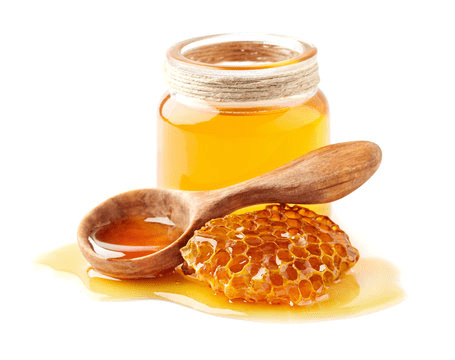
Honey was the first form of sweet foods. Evidence supports that honey was gathered by the primitive peoples of the Mesolithic Period, over 10,000 years ago. Honey is thought of as one of the most prized foods in history. Today, honey is cultivated all over the world.
Honey is rich in nutrients and has many curative and healing properties for all kinds of ailments and wounds. In the early days, these healing properties often made the difference between life and death to many people.
Honey is also one of the few foods that NEVER really goes bad, if properly stored. Honey has been found in ancient Egyptian tombs, that is 1000’s of years old, that is still good and edible today.
In the tropics of New Guinea, there was another type of sweet produce that was growing wild. It was the native sugar canes. The New Guineans started cultivating this wild plant about 6000 BCE. Through trade, the popularity of this delicious sweet cane spread to Polynesia and India. The crude form of sugar was extracted from the sugar cane came from India abound 400 BCE. From there, sugar cane spread again, and is grown in warm, tropical climates all over over the world.

Brown sugar is another form of sugar, that is richer and darker than refined white sugar. Brown sugar is made by adding molasses syrup to boiling sugar crystals or coating white granulated sugar with molasses. It contains more moisture than white sugar, which is why it hardens over time and behaves differently in baking. While sugar beets and sugar cane are used to make white granulated sugar, only molasses from sugar cane is used in the production of brown sugar. Molasses from sugar cane is what gives brown sugar its color, with less needed to make light brown sugar and more for dark brown sugar.

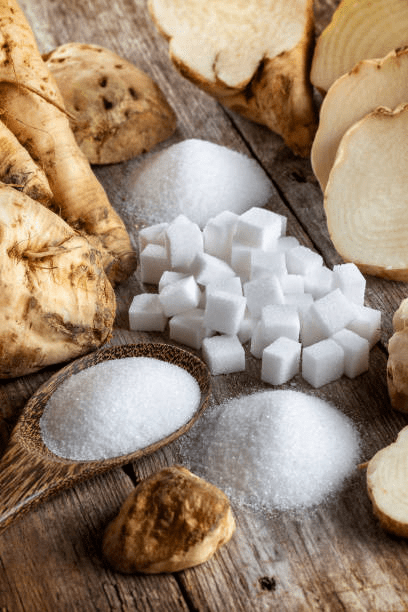
During the Renaissance times in Europe, sugar was only something the very rich could afford. Sugar was known as white gold and a small bag would cost the equivalent of a day’s wages. It wasn’t until the early 19th century that refined sugar became popular amongst the average lay people. And that was after German chemist, Andreas Margraff, discovered the sweet sugar qualities from sugar beets.
In 1700, people consumed about 4 pounds of sugar per year. By 1800, people consumed about 22 pounds per year. By 1900, people consumed about 90 pounds per year. By 2012, over 50% of Americans consumed a half pound of sugar per day – or, over 180 pounds of sugar per year. We definitely have an insatiable sweet tooth! The more we have, the more we want.
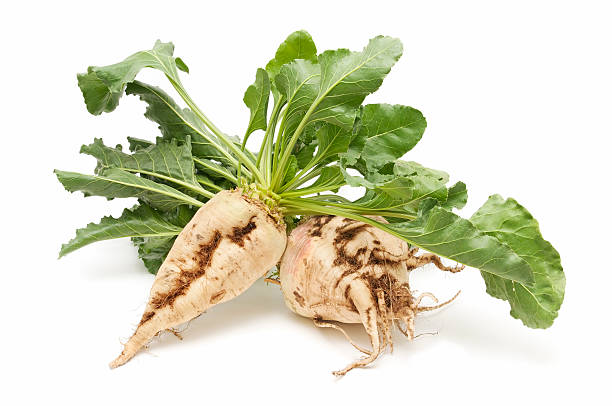
Sugar beets are root vegetables that prefer colder climates, so they are grown all over Europe and Russia. With the discovery of the sugar beets, sugar became much more readily available and cheaper to everyone, thus becoming a staple in the 19th and 20th centuries around the world.
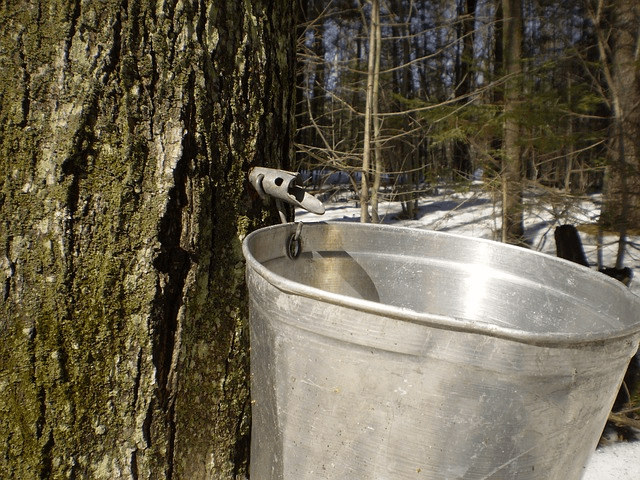
There is also maple syrup, only produced in Canada, New England and the Appalachian Mountains of the United States. There are roughly 128 different species of maple trees, but only a few are suitable for making maple syrup, with a high sugar content of about 2-5%. About 80% of the world’s maple syrup comes from the Quebec area of Canada. It is graded on the density and color of the syrup, that has been boiled down from the sap. The darker the color, the stronger the flavor.

So satisfy that sweet tooth, but in moderation. As we know, consuming too much sugar, or anything for that matter, definitely has its consequences too. Happy New Year. May it be safe, happy, healthy and prosperous for all. ‘Til next time.

 A Jeanne in the Kitchen
Sugar beets moonshine is the Ukraine national pride item.
LikeLiked by 1 person
Good to know. I had no idea. 🙂
LikeLiked by 1 person
😻
LikeLiked by 1 person
very interesting post Jeanne, I did not know all of this about sugar, I learned a lot reading this!
LikeLiked by 1 person
WHOOOO HOOOOO!!!! Mission accomplished. 🙂
LikeLike
Thanks for sharing the sweetness. Have a great day. 🙂
LikeLike