Confit, pronounced cone-fee. What is it? Anyone who has ever worked in an upscale kitchen or has been professionally trained knows what it is. But most people haven’t had that kind of training. So what is a confit?
The practice of confit first came to modern consciousness in France in 1859 with the publication of Henriette Davidis’ “Practical Cookbook” (via Mon Panier Latin),but has been around since the 13th century. It is often associated with the southwest region of France known as Gascony, which is also recognized for its traditions around foie gras, rendered duck and goose fat, and other duck and goose-derived consumable goods.
Confit is a French cooking technique that involves slowly cooking food in fat at a low temperature to preserve it. The word confit comes from the French word confire meaning to preserve and the Latin word (conficere), meaning “to do, to produce, to make, to prepare. It is used for meat, vegetables and fruit. It is a method of cooking foods in fat. Today, we use oils and grease most often, but it used to be that cooked foods, or foods preserved in salt, were stored in air-tight containers of fat, kept in cool, dry places. Some of the more popular early methods were to preserve foods in either duck fat or goose fat. In French culinary traditions, duck confit represents a balance between rustic simplicity and refined taste, showcasing the French appreciation for both high-quality ingredients and traditional cooking techniques.
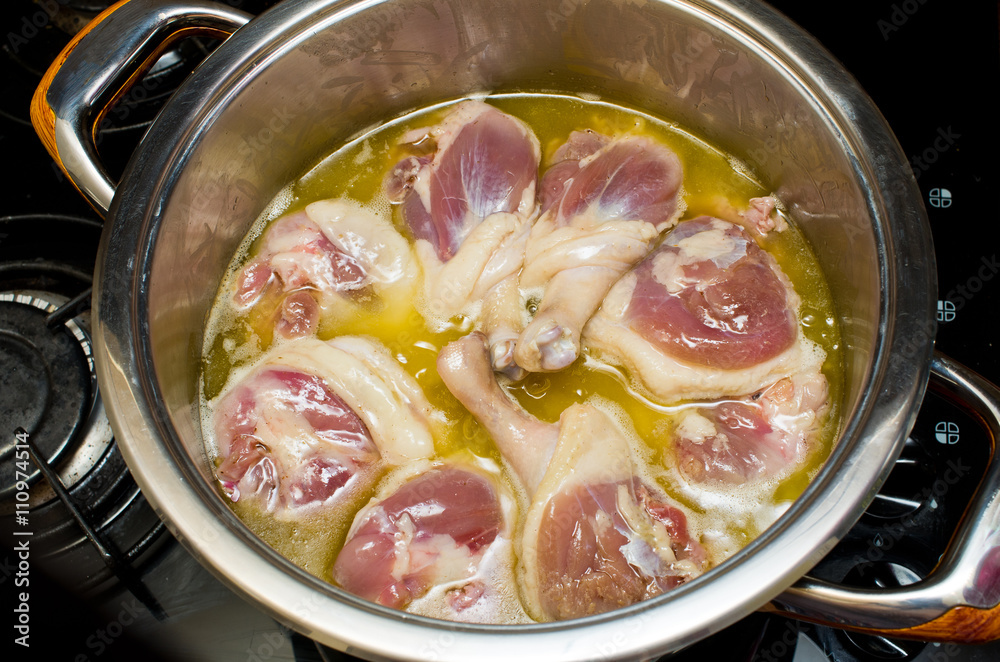
Confits are perfect for storing and preserving red meats or wild game, though any kind of meat can be used. Duck confit can be stored in the refrigerator for about a month, and can be reused, once it has been strained and placed in a clean container. It will be fine to reuse so long as you filter out any chunks of food introduced in the cooking process.
Serious Eats informs us that traditional confit relies on both an ample amount of salt to preserve the ingredients as well as a thick layer of oil to create a temperature-stable, anaerobic environment where bad bacteria cannot survive. So, what is the confit process, and how does it work?
The first step in the process is rubbing salt into the protein of choice, and usually spices, herbs, minced garlic, or other flavor-enhancing ingredients. This is usually allowed to marinate for 24 hours or more, or until the meat adopts its flavor (via Serious Eats). The spices are then rinsed from the meat and submerged in oil. According to Force Meat Academy, if you cook your confit at 200 degrees Fahrenheit it will be done in four to six hours, but if you cook it at 300 degrees Fahrenheit, it will be done in two hours.
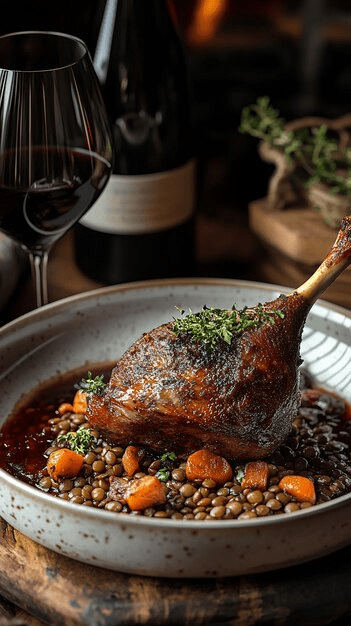
Confit used to be used primarily as a way of preserving foods. Today, it is not so much about the food preservation as it is about the taste and texture of certain foods, like potatoes and other vegetables cooked in confit.

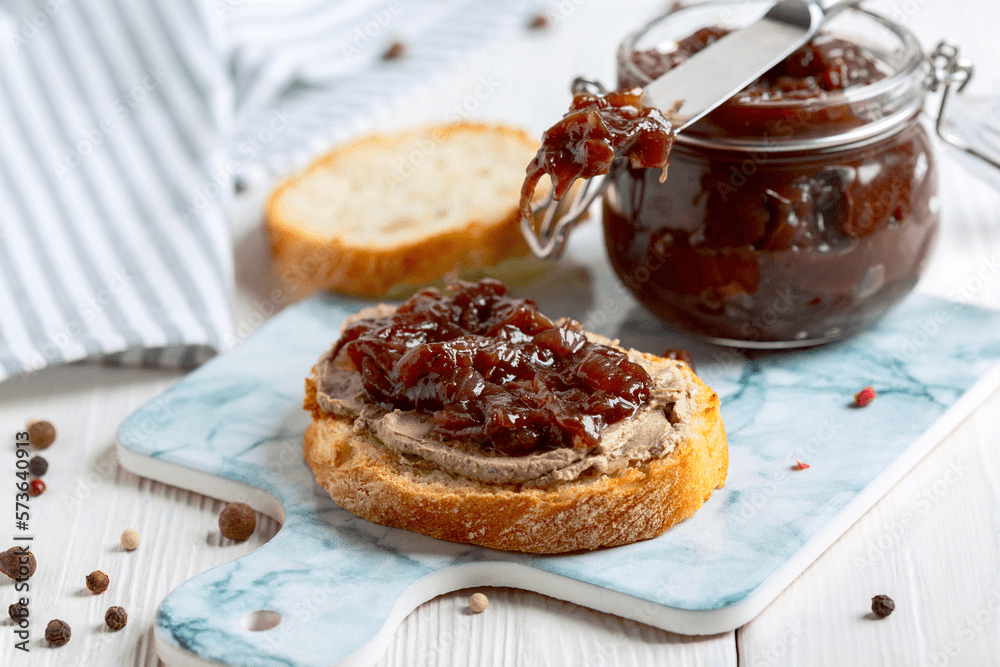
Red onion confit.
The only times I have really used confits was back in my culinary school days. So, yes, I too am very rusty in the art of cooking with confit. Though I do cook things in olive oil on a daily basis. This is a trip back through the early days of culinary history. I do love my history. I hope you do too.
Have a great day and make everyday great. Stay safe and stay well. ‘Til next time.

 A Jeanne in the Kitchen
I had no idea that there was any other confit, but the duck one, and I love it. Thank you for educating me.
LikeLiked by 3 people
My pleasure. 🙂
LikeLiked by 1 person
very interesting I never knew this existed! I am learning and love it!
LikeLiked by 1 person
Thank you. There is so much good information out there just waiting to be uncovered and shared. 🙂
LikeLike
I love confit garlic and use it in dishes in preference to raw garlic
LikeLiked by 1 person
I never thought of that. YUM! 🙂
LikeLiked by 1 person
amazing
LikeLiked by 1 person
Thank you. 🙂
LikeLike
I love informative posts like this one. Great job explaining a technique that yields delicious results!!! 
Have a delicious day,
Sandy Axelrod
TheTravelingLocavores.com http://thetravelinglocavores.com/ instagram.com/TheTravelingLocavores http://instagram.com/TheTravelingLocavores pinterest.com/TheTravelingLocavores http://pinterest.com/TheTravelingLocavores twitter.com/SandyAxelrod http://twitter.com/SandyAxelrod facebook.com/TheTravelingLocavores http://facebook.com/TheTravelingLocavores
>
LikeLiked by 1 person
thank you. My pleasure. I like stuff like this too. I am a food geek. I admit it. 🙂
LikeLike
I love that you are a food geek too! We food geeks need to stick together. 
Have a delicious day,
Sandy Axelrod
TheTravelingLocavores.com http://thetravelinglocavores.com/ instagram.com/TheTravelingLocavores http://instagram.com/TheTravelingLocavores pinterest.com/TheTravelingLocavores http://pinterest.com/TheTravelingLocavores twitter.com/SandyAxelrod http://twitter.com/SandyAxelrod facebook.com/TheTravelingLocavores http://facebook.com/TheTravelingLocavores
>
LikeLike
Yes we do! 🙂 🙂 🙂 You have a delicious day too. 🙂
LikeLike