Have you ever thought about all the different ways to cut vegetables? Why do we have so many different cuts? What do they all mean? Vegetables are a staple ingredient in many cuisines, and the way they are cut can have a significant impact on the final outcome of a dish. Ingredients cut into uniform pieces at an appropriate size not only cook more easily, but also taste better.
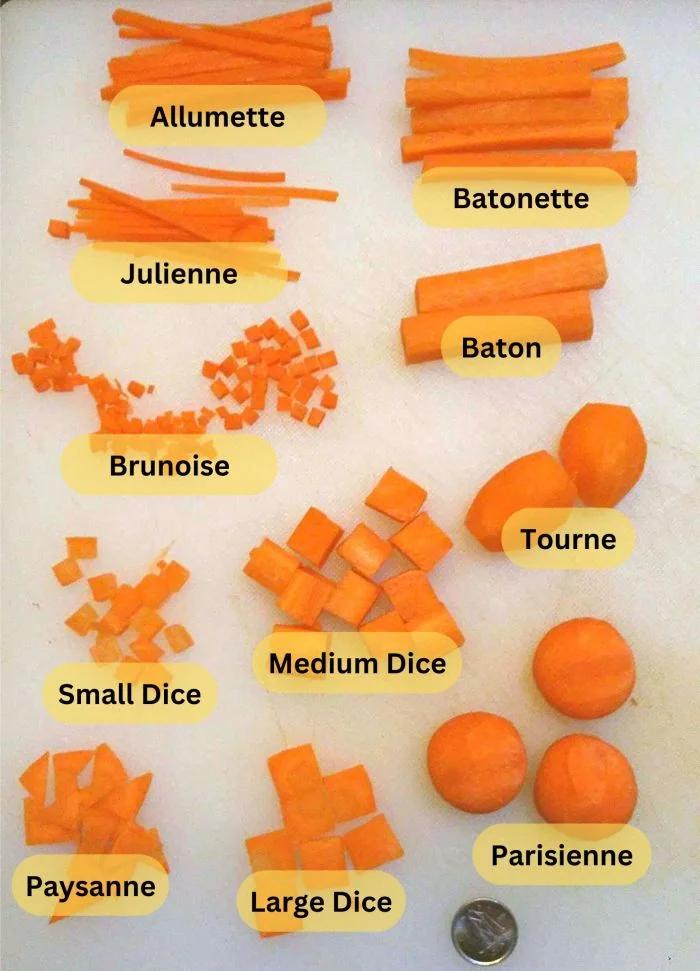
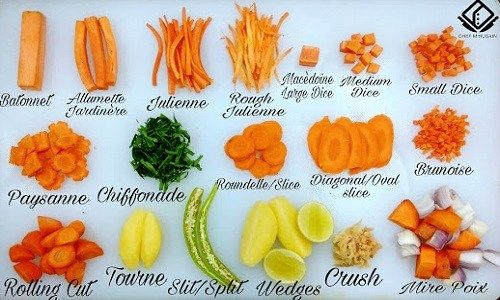
These are the basic cuts, but there are plenty of other popular styles and types of cutting methods as well. And all of these types of cuts have different variations within each style too.
- Julienne Cut or French Cut – The julienne cut is a classic vegetable cut that involves slicing the vegetables into thin, matchstick-like strips. This cut is commonly used for carrots, celery, and other long vegetables. Julienne cut vegetables are great for adding texture and color to salads, stir-fries, and other dishes. This cut is also popular for making vegetable garnishes.
2. Brunoise Cut – The brunoise cut involves finely dicing the vegetables into small cubes of about 1/8 inch in size. This cut is often used for aromatic vegetables such as onions, carrots, and celery, and is a popular choice for making soups, stews, and sauces. The small size of the brunoise cut allows for quick and even cooking, which makes it ideal for recipes that require a uniform texture.
3. Chiffonade Cut – The chiffonade cut is a technique that involves stacking the leaves of leafy vegetables like spinach, basil, and lettuce, then rolling them tightly before slicing them into thin ribbons. This cut is commonly used for adding a pop of color and flavor to salads, sandwiches, and other dishes.
4. Mirepoix Cut – The mirepoix cut involves dicing vegetables into small, uniform pieces and is typically made up of onion, celery, and carrot. This cut is used as a flavor base for many recipes, such as soups, stews, and sauces. The mirepoix cut is often cooked in oil or butter before adding other ingredients to the pan.
5. Paysanne Cut – The paysanne cut involves slicing vegetables into thin, uniform pieces about the size of a quarter. This cut is commonly used for root vegetables such as potatoes, carrots, and turnips, and is a popular choice for roasting and sautéing. The paysanne cut allows for even cooking and provides a visually pleasing appearance to the dish.
6. Oblique Cut – The oblique cut is a diagonal cut made to elongated vegetables like carrots, potatoes, or zucchinis. It can be done by cutting the vegetable on a 45-degree angle or longer. This technique is great for adding a touch of elegance to dishes like roasted vegetables or stir-fries.
Aside from these fancy names and versions of cuts, there are also the basics, such as chopping, mincing and slicing, which are just as, if not more, important than the other cutting methods. These different cutting methods all have their functions and work to bring out the best flavors and qualities of the different vegetables as they are being used.
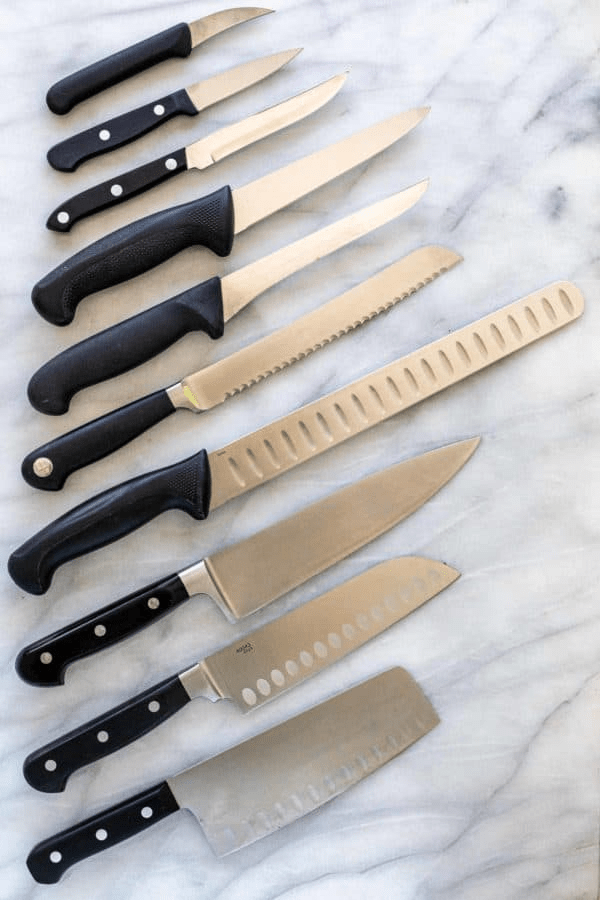
Every chef has to learn how to make these cuts as part of our basic knife skills. There are different lines of thought about which knife or knives to use as well, but most of us, who are properly trained, can do just about anything with our chef’s knife, which is our best friend, a pairing knife, and a bread slicer. Those are certainly the knives I use most often.
It used to be vegetables were an after thought to the main entree, and not much thought went into the preparation of them. But today, vegetables are just as important as the main entree. The are important nutritionally, as well as the flavors, eye appeal and elegance and sophistication they bring to the plates and to menus we lovingly prepare and serve to others.
The goal of cooking vegetables properly is to maintain their fresh, attractive qualities, while enhancing their flavors, texture and colors. Learning how to cut vegetables properly also teaches you how to maintain and preserve these characteristics and qualities. Cooking vegetables changes vegetables in four ways. It changes 1) the texture; 2) the flavor; 3) the color and 4) the nutrient value of the vegetables.
Changing the texture is one of the main reasons for cooking vegetables. Many vegetables are high in fibers, which is necessary to give them shape and firmness. But these high fibers also make them very difficult to eat and to process in their original state. We cook them in order to break down these fibers, which in turn makes them easier to eat and digest. All vegetables cook differently, but most are best when cooked al dente or firm to the bite. Cooking vegetables too much or too little changes the flavors, the textures and the nutritional qualities of the vegetables, again, emphasizing the importance of cooking them properly.
As gorgeous as these vegetables are, many would not be edible if they were not cooked and cooked properly.

So now that you know why we cut our vegetables the way(s) we do, go out, be bold, and cut your vegetables like a pro.
Have a great day and make everyday great. Stay safe nd stay well. ‘Til next time.

 A Jeanne in the Kitchen
Great!
LikeLiked by 2 people
Thank you. 🙂
LikeLiked by 1 person
I’d say, be bold and cut them any which way you like! Thank you for educating me, dear Jeanne.
LikeLiked by 1 person
My pleasure. 🙂
LikeLiked by 1 person
I did not realize there were so many ways to cut veggies! Pretty cool!
LikeLiked by 1 person
There are more ways too, that I didn’t mention. 🙂
LikeLike