Cornbread is as American as apple pie, but its origins date back far beyond the inception of this country. With roots in Mesoamerican, Native American, and African cultures; history and people have shaped this iconic American bread into what it is today.
The Native Americans and Cornbread
Corn, also called maize, is the most widely planted staple crop on Earth. It is thought to have been bred from wild grasses in what is now Mexico over 7,000 years ago. As civilizations grew and flourished in the Americas so did maize. Many different varieties were developed that were able to survive in starkly different locations and climates, from present-day Illinois to Peru. It became one of the most important resources in the Americas, and Native Americans had many creative uses for all parts of the crop. The husks could be used to weave baskets or a mattress, and the kernels could be made into hominy or ground with a mortar and pestle to make cornmeal for cooking.
Corn was so prevalent in the Americas at this time that cornmeal became a major staple in the diets of Native Americans. Early cornbread consisted of cornmeal, water, and salt and was baked over a fire or in a hearth. Without milk, eggs, or sugar, early versions of the bread were quite different than what we eat today, but they offered a vital source of energy. Iroquois messengers who traveled between villages would carry cornmeal as their only source of nourishment for the journey. Mixed with water to make cornbread, it made for a quick and energizing meal.
The Early Americans
The Native Americans introduced the Pilgrims to corn. In both Plymouth Rock and Jamestown, the settlers were introduced to corn by Native Americans in the region who taught them how to grow and cook it. After finding success in growing corn, European settlers quickly adopted the new crop which became a vital food source in their diets. Recipes such as cornbread became a mainstay in the new settlements and the broader American colonies that followed them. Cornbread remained a popular alternative to wheat bread because most of the wheat grown in the colonies was exported to Great Britain. The wheat that was not shipped overseas was difficult to transport along America’s coast making it somewhat of a rare commodity in colonies outside of the Mid-Atlantic region. Due to its scarcity, wheat bread became something that was reserved for special occasions, while cornbread was typically used in everyday cooking and meals.
Even though early colonists considered cornmeal more of a rudimentary, everyday staple ingredient, cornbread recipes continued to evolve and even became a symbol of pride in the Southern colonies. By the eighteenth century cornbread started to resemble something closer to a modern recipe. Colonists would add ingredients like molasses, butter, and milk to improve the taste. The batter was either baked into what was called a common loaf, or formed into patties and fried also known as hoecakes or johnny cakes. During the Revolutionary War, cornbread also played a significant role in feeding troops as it was cheap, easy to transport, and a good source of calories. Much like the Iroquois messengers, patriot soldiers would sometimes subsist solely on cornmeal and water that was fried or baked over a campfire to make cornbread.
The African Influence
For Black Americans, cornbread is more than just a comfort food. It is a symbol of their ancestors ingenuity, resilience, and strength in the face of adversity. Throughout the American colonies and into the nineteenth century, enslaved Americans were given very meager rations to cook with, most often whatever was considered “undesirable” by slaveowners. These rations would include leftover greens, animal parts, molasses, and grains like rice or cornmeal. Cornmeal became essential to the survival of these individuals, and to make it last they developed ways of stretching the ingredients to feed more people.
Cornbread Today
Today, most Americans, no matter their background have a recipe for cornbread that’s passed down through generations. These recipes tell the stories of our past and speak to American culture in many ways. If you’re from the north, your cornbread most likely has sugar or honey in it. If you’re from the south, you may not use sweetener in your bread at all. Those in Appalachia may still prepare cornbread the old-fashioned way simply using ground corn, hot water, and lard. Our recipes tell the story of where we’ve been and will continue to evolve through time. However, no matter where you’re from or what your background is, all can agree that there are not many dishes out there that have stood the test of time and feel quite as American as cornbread.
My mother was from southeast Texas, and cornbread is a daily staple, found on almost every table. There are so many different recipes for cornbread in Texas. I can’t say I have tried them all, but I have tried a lot. But I am always up for more research and experimentation. 🙂
When I made my low country boil Low Country Boil, of course, I had to serve it with cornbread and honey butter.
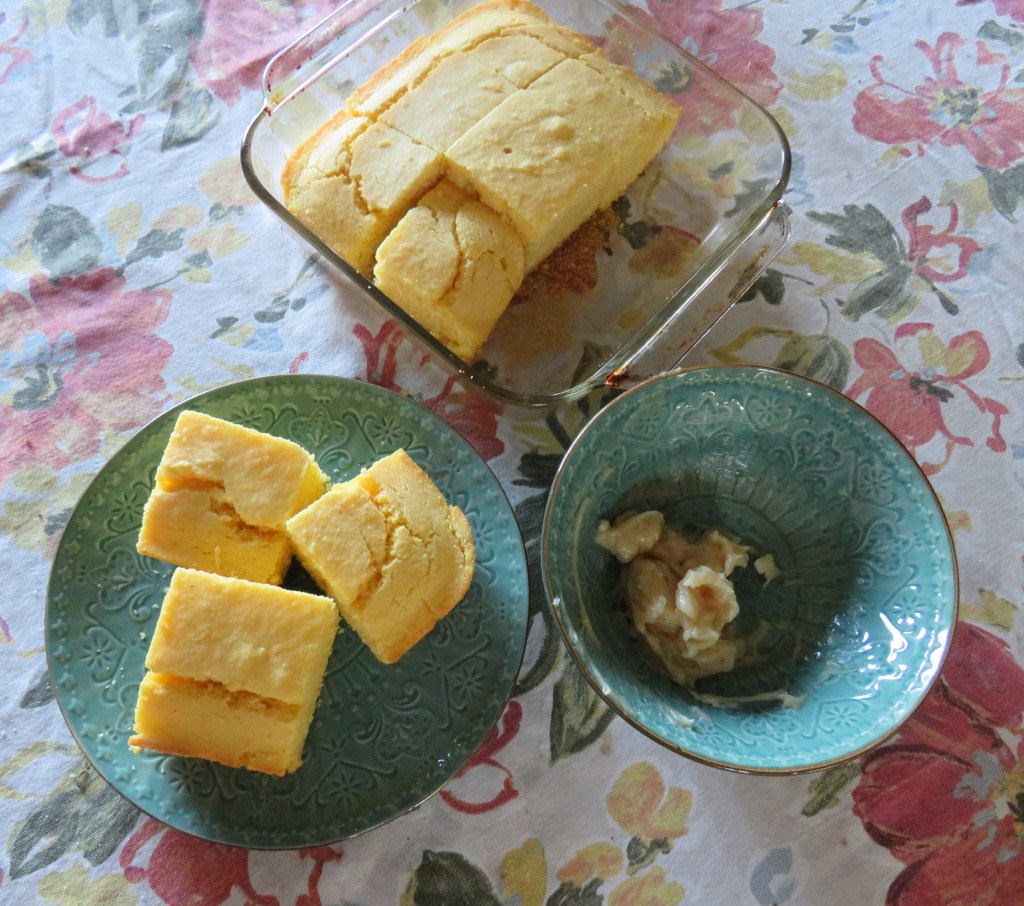
Simple Old Fashioned Cornbread
This particular recipe is as simple as you can get, but it’s still delicious. I try all different kinds of recipes, all the time, for everything. I really enjoy adding jalapenos, corn and red peppers to my cornbread as well, but sometimes, I just want simple.
Preheat the oven to 425* F or 218*C.
Spray a 9×9 square pan with cooking spray.
2 cups yellow cornmeal
1/2 cup flour
1/4 tsp salt
2 1/tsp baking powder
1 TBSP sugar
1 egg
1/3 cup vegetable oil
1 1/2 cups milk
Combine all the dry ingredients together and mix well.
Mix the egg, milk and vegetable oil together, then incorporate into the dry mixture with a spatula. Just mix until everything is blended together, then pour into the prepared pan and spread out evenly.
Bake for about 25 minutes, or until it is set and golden, and a toothpick inserted in the middle comes out clean. Let cool for a bit, then slice and top with honey butter. DELICIOUS!!!!
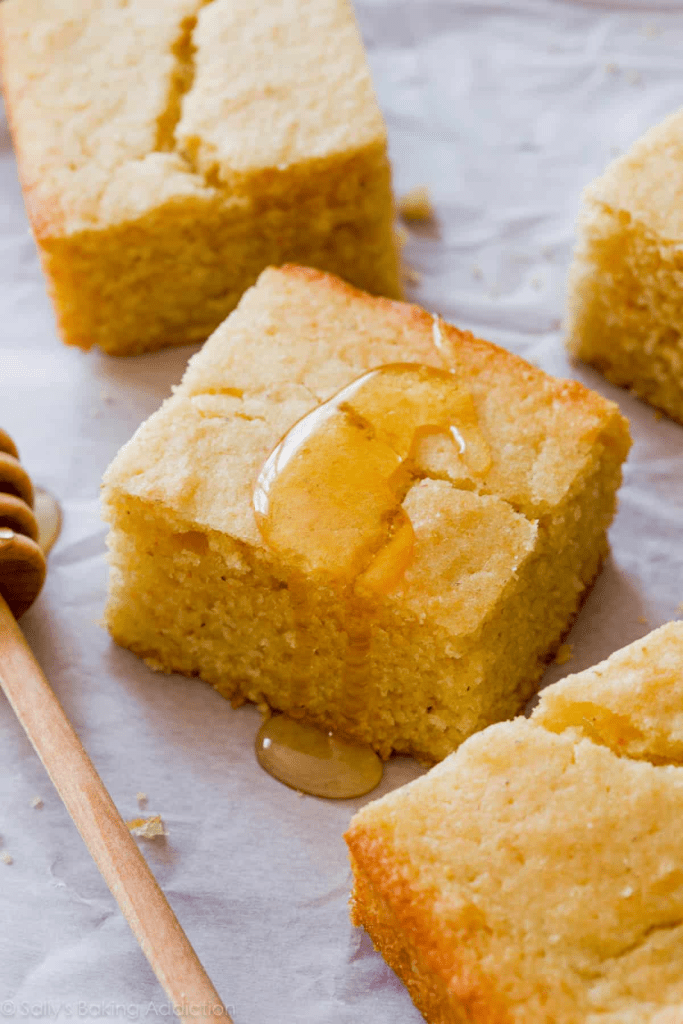
Cornbread goes with everything. There’s nothing that isn’t made better with a little cornbread and honey butter.
Have a great day and make everyday great. Stay safe and stay well. ‘Til next time.

 A Jeanne in the Kitchen
Ah, this brought back good memories. Growing up, there was always cornbread on the table at dinner time. I loved cornbread sticks best. They were always crispy, crusty and crunchy. For Sunday dinner, we would have cornbread and wheat dinner rolls.
LikeLiked by 1 person
YUMMY!!!!!!
LikeLiked by 1 person
Interesting to know more about this staple
LikeLiked by 1 person
Happy to help. 🙂
LikeLiked by 1 person
Interesting history! Love corn bread and really everything made with corn!🌽
LikeLiked by 2 people
Me too. 🙂
LikeLiked by 1 person
Thank you, Jeanne, for your wonderfully erudite essay on cornbread.
Joanna
LikeLiked by 1 person
My pleasure. Glad you liked it. 🙂
LikeLike
Yes! This is such a yummy dish! I love cornbread! xo
LikeLiked by 2 people
Me too. 🙂
LikeLike
Love a cornbread! This looks tasty, and I love the idea of the honey butter. This Northerner likes her cornbread sweetened a bit, but I always thought that it was strange. When I lived in the south, so many of the breads and desserts were so much sweeter than what we make in the north, I would have thought the south would add more sweet to the cornbread, but maybe that comes with the drizzles!
LikeLiked by 2 people
The southerners do like stuff sweet, so I agree, it seems a bit odd. 🙂
LikeLiked by 1 person
We were definitely on the same wave length. We had “johnny cake” over the weekend. It was wonderful. 😋🌿🍁
LikeLiked by 2 people
I love it when great minds think alike. 🙂
LikeLiked by 2 people
Me, too. 👏
LikeLiked by 1 person
🙂 🙂 🙂
LikeLiked by 2 people
I love cornbread and I also love all the historical background you provided, dear Jeanne.
LikeLiked by 1 person
I knew you would appreciate that. 🙂
LikeLiked by 1 person
😻
LikeLike
Thanks for sharing the love. Have a great day. 🙂
LikeLike