Asparagus has been around almost since the beginning of time, going back at least to the 1st century. As with all vegetables, the first asparagus was discovered in the wild. A wild asparagus has thin shoots, thinner than a pencil, and is much different than the asparagus that you find in the stores. There are records of it growing in ancient Greece and Rome. Egyptians over 2,000 years ago cultivated asparagus for medicinal reasons and legend has it that it was so revered they offered it up to gods in their rituals.
Asparagus gets its name from the Persian word “asparag” which means
shoot or stalk. In English speaking countries, at first it was called “sparagus” meaning sparrow grass. Asparagus comes in white, purple and green. In the United States, green is the most popular version. In the Mediterranean countries and other parts of Europe, white is the preferred choice. The white and green asparagus are the same plant only the white parts have been buried in about 6 inches of soil so the sun cannot turn it green. Purple is found mostly in Italy.

Asparagus is a favorite in our house. We eat it on a regular basis. It goes well with everything and can be prepared in many different ways. I prefer the thinner stalks to the fatter, chunkier stalks. I think they are a lot more tender, but then, maybe that is just me. It’s all a personal choice and preference. This time I roasted it in a lemon pepper sauce and topped it with cherry tomatoes and a little Parmigiano cheese. !Delicioso!

Lemon Pepper Asparagus and Tomatoes

Preheat the oven to 400* F or 205* C.
1 lb asparagus, ends trimmed
1-2 TBSP lemon juice
1 TBSP lemon balsamic vinegar
1-2 TBSP olive oil and/or lemon olive oil
1-2 tsp sugar
2 tsp garlic
1-2 tsp fresh ground black pepper
coarse salt to taste
1 cup mixed cherry tomatoes, cut in half
1/3 cup Parimigiano cheese
Combine the lemon juice, oil(s), vinegar, salt and garlic together. Gently toss the asparagus spears into the mixture, then spread out in a single layer on a baking pan.
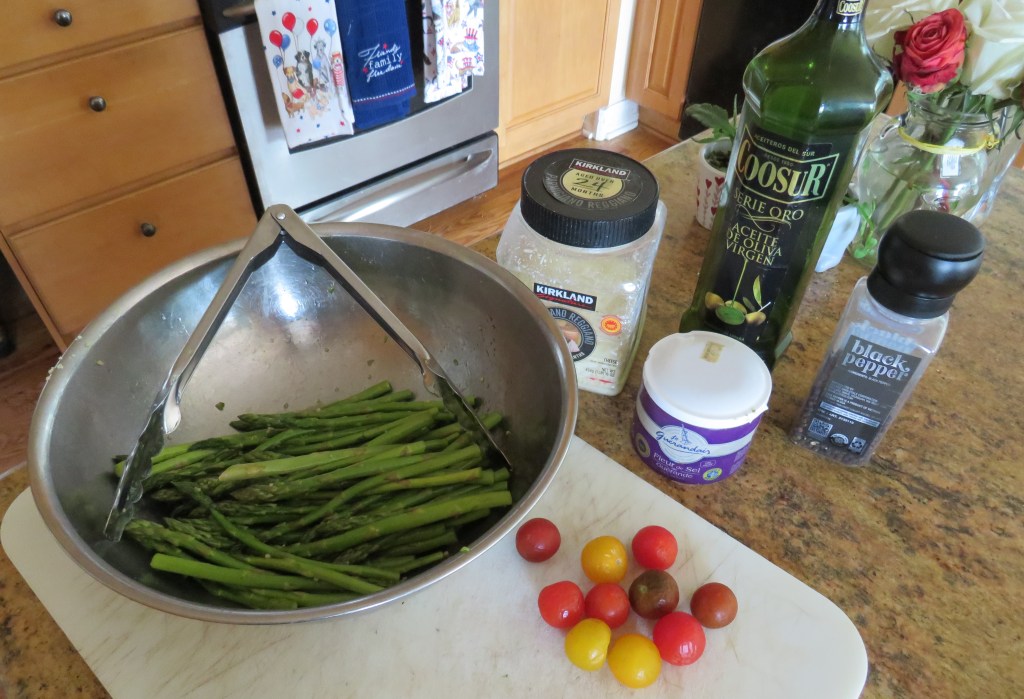

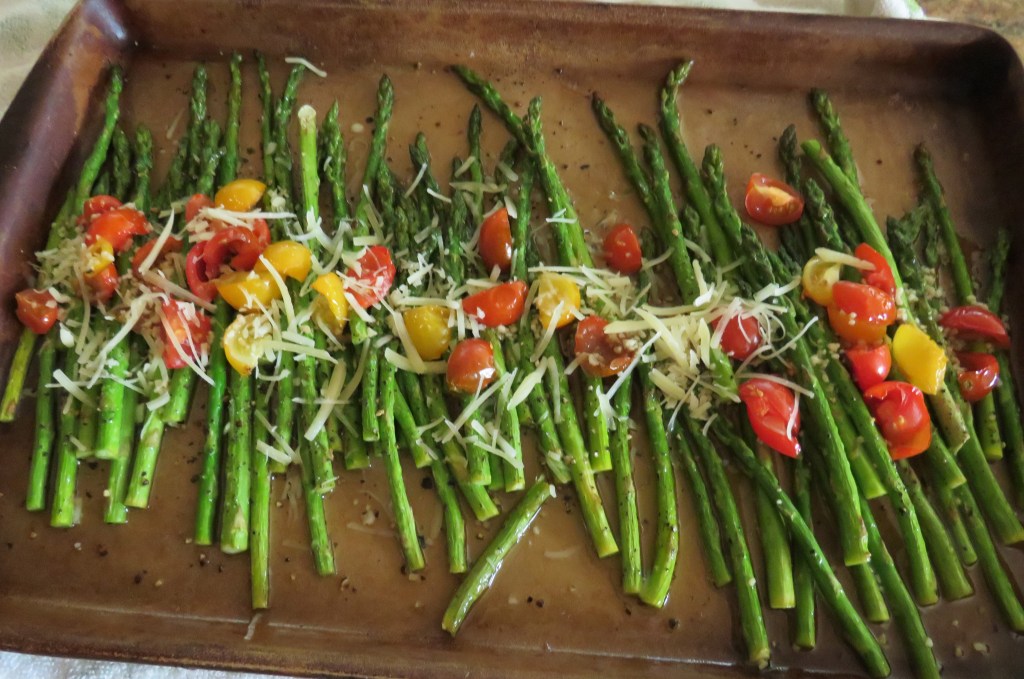
Top with a few grinds of the black pepper and top with the tomato halves. Roast for about 10-12 minutes. I like using the mixed cherry tomatoes because it makes the dish very festive and colorful.
Top with the Parmigiano cheese and serve alongside your favorite entree. It’s simple, easy-peasy and delicious. It goes with everything too. I promise, you’re going to love it.
Have a great day and make everyday great. Stay safe and stay well. ‘Til next time.

 A Jeanne in the Kitchen
So delicious! And what a beautiful dish! Look at all those colors! 😋😉
LikeLiked by 1 person
Thank you. 🙂
LikeLiked by 1 person
we eat asparagus sometimes in my house! That looks really delicious!! 😋😋
LikeLiked by 2 people
Thank you. It was too. 🙂
LikeLike
A feast for the eyes before being a feast for the stomach!
LikeLike
Thank you. 🙂 🙂 🙂
LikeLiked by 1 person
Thank you, Jeanne, for the excellent dish which I could have happily any day. I also like your lesson in the history of the plants. Your photos add to the impact of your words!
Joanna
LikeLiked by 1 person
AWWWW!!! Thank you. Glad you are enjoying it. 🙂
LikeLike
You are welcome!
Joanna
LikeLiked by 1 person
🙂 🙂 🙂
LikeLike
I love, love, love asparagus
LikeLiked by 2 people
Merci. Moi aussi. 🙂
LikeLiked by 1 person
This looks great! Can’t wait to try it. (We have asparagus almost every night in the summer – love it!)
LikeLiked by 1 person
Oh please let me know what you think. I think you’re going to love it. 🙂
LikeLike
Yummy! The thinner ones are more tender; it’s not just you. You are the chef, of course, but I’ve heard it in Italy.
LikeLiked by 2 people
Then it MUDST be true. 🙂 🙂 🙂
LikeLike
We love asparagus, especially the white ones!
LikeLike
I love asparagus too. 🙂
LikeLiked by 1 person
The Sala plant is a vital resource in South Asia, known for its distinctive physical features and extensive medicinal uses. Its bark, resin, and leaves have been integral to traditional medicine for centuries, offering natural remedies for a variety of health issues. As research into traditional plant-based medicines continues, the Sala plant remains an important subject of study for its potential therapeutic applications.
https://www.indianetzone.com/38/sala_plant.htm
LikeLiked by 1 person
Thanks for the information. 🙂
LikeLike