Once again, Noah and I did some international cooking. This time we did some Asian or Pacific Rim cooking. We made some Asian steak with a Chinese mustard and honey sauce with Thai pineapple and shrimp fried rice and green onion pancakes Green Onion Pancakes.
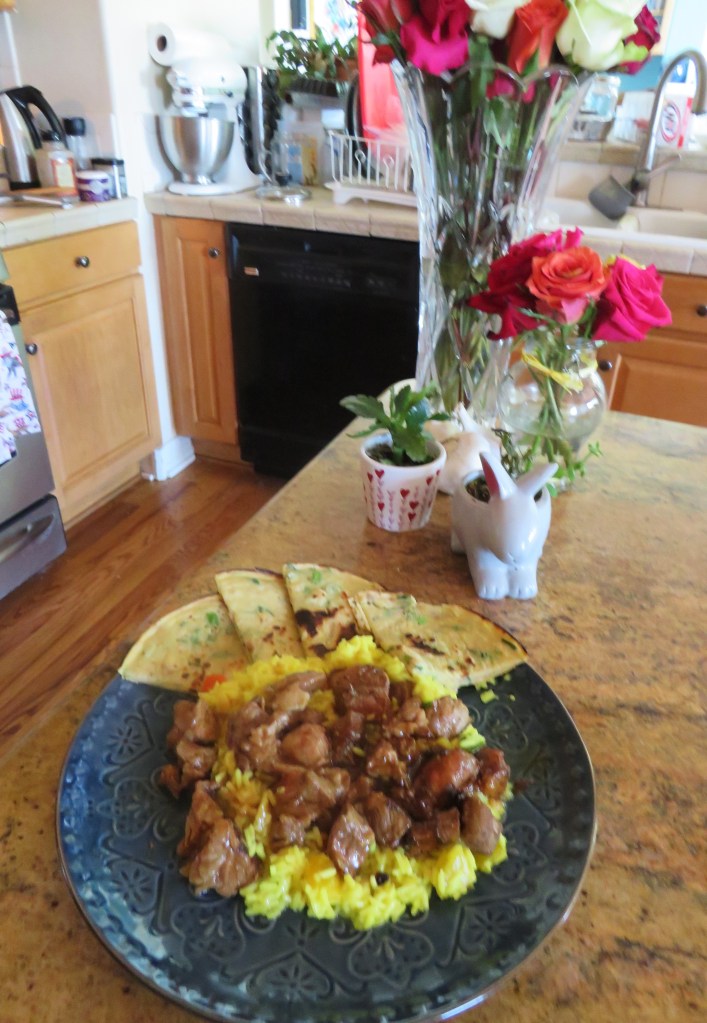
Asian, or Pacific Rim, cooking encompasses foods from many different countries – Thai, Malay, Japanese, Indian, regional Chinese, Vietnamese, Polynesian, and Korean, as well as Australian and New Zealand. These are all good on their own, but they have all been fused together with Western influences as well, offering the best of both worlds.
Flavors from around the world have been blending and fusing together for centuries, ever since the first days of the spice trades. They were further enhanced by the colonizations of countries, and by mass immigrations of peoples from around the world moving to other areas. Flavor fusions are nothing new.
My favorite Asian tastes come from more of the South Eastern Pacific regions. I love all the spicy, limey and coconut goodness of Thai food. I also love Indian foods, again for the same reasons.
Beef is rising in popularity in Asian cooking, but it is still nowhere nearly as popular as either pork or chicken. Beef lends itself very well to all the different Asian seasonings and spices.
Steak with Chinese Mustard and Honey Sauce
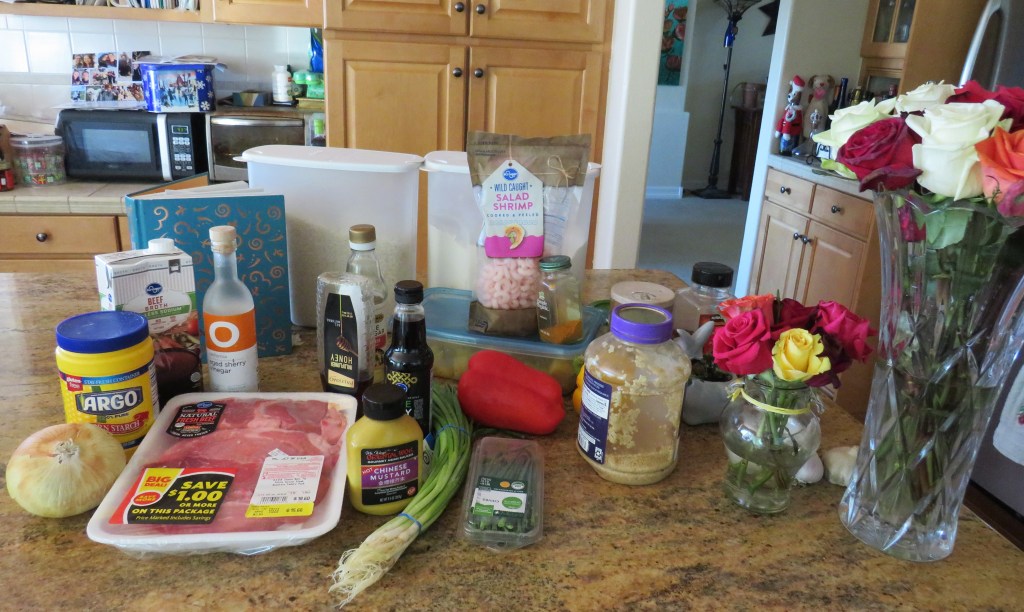
1 1/2 lbs steak – I used petite sirloin this time
1 large shallot, chopped
1 1/2 TBSP sherry or sherry vinegar
1 1/2 TBSP rice vinegar
2 tsp hot Chinese mustard, or to taste
1/2 cup beef broth
2 1/2 tsp soy sauce
1-2 tsp honey
1/2 tsp cornstarch mixed with 1 tsp cold water
1/2 tsp sesame oil
1 TBSP green onions, sliced Asian style, or at an angle
oil for cooking
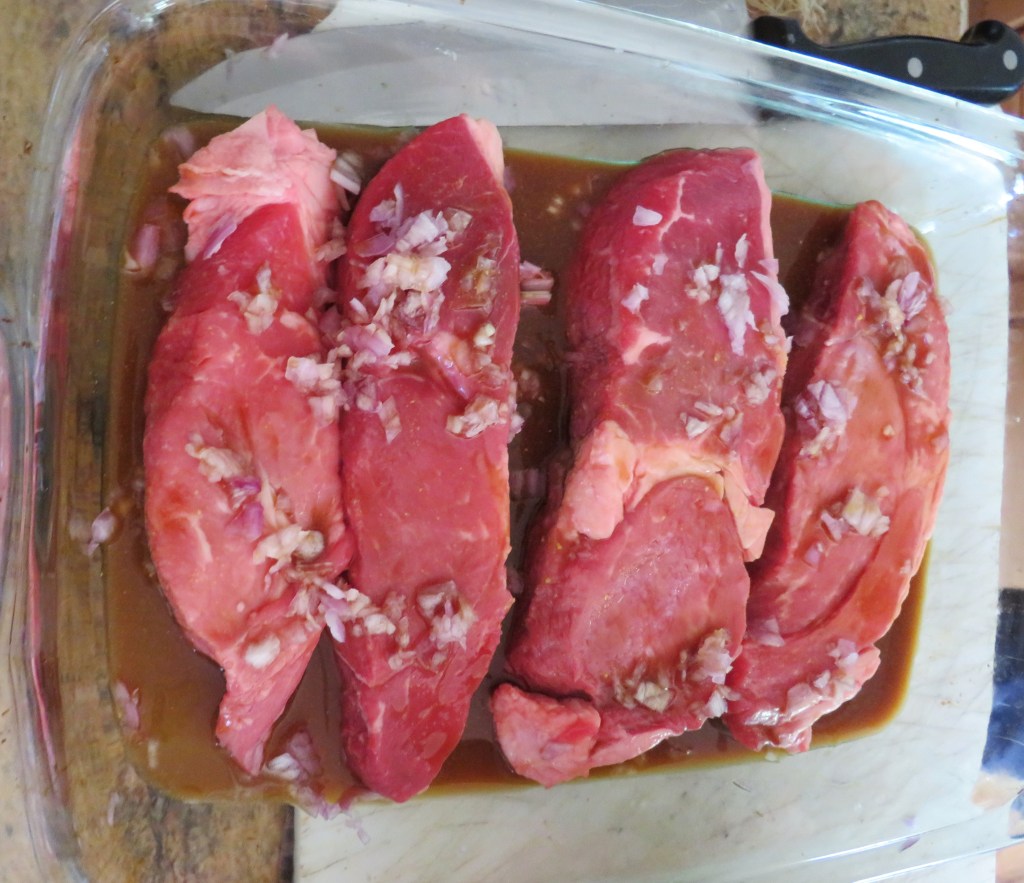
Mix the vinegar, sherry, beef broth, soy sauce, honey and mustard together. Top the steak with the chopped shallots, then add the liquid over the shallots and steak. Allow to marinate for at least 30 minutes or so before cooking.
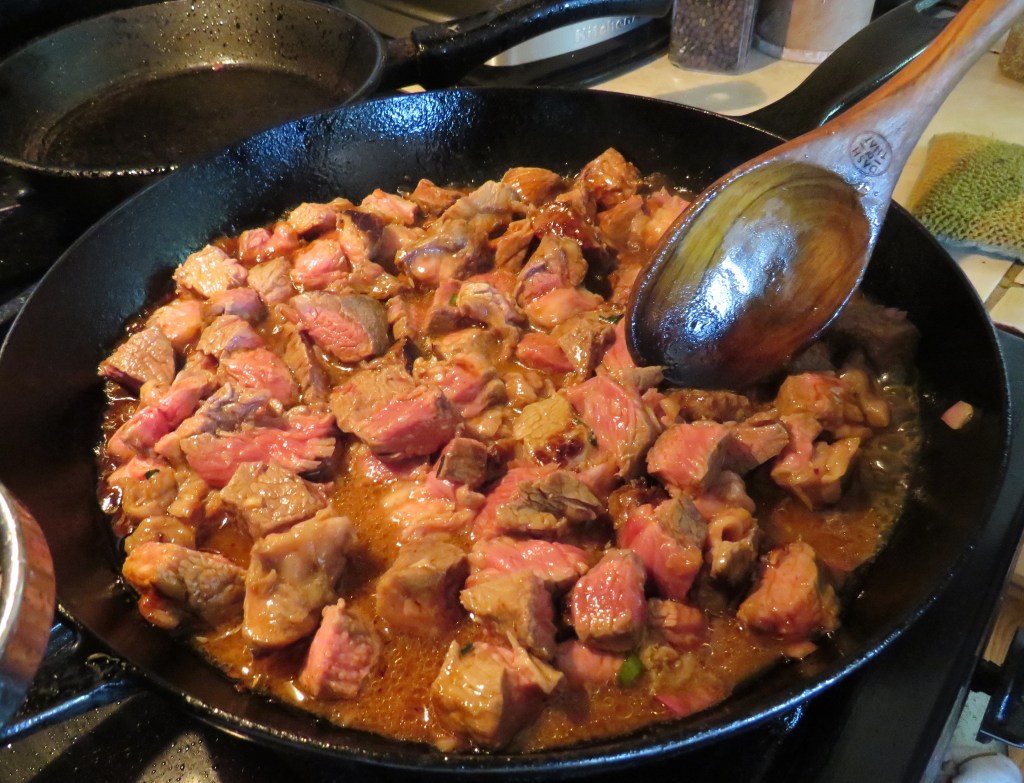
Get a large skillet or wok very hot, then add the steak. Cook for about 3 minutes per side, to sear the steak, reserving the liquid. Once it is browned, remove the steak and let it cool for a bit then cut into thin strips, or cubes, as Noah did.
Combine the cornstarch and water and add to the reserved sauce. Add to the skillet, and place the cut meat back into the sauce to finish cooking. Add the sesame oil and green onions and mix in with the meat.
You can serve this deliciously spicy meat with rice, noodles or like we did, with an Asian pineapple fried rice.
Noah is fun to cook with. He is very adventurous, and likes to try everything. He gives me ideas, then tells me to surprise him. And that I do. For instance, this time, he just said he wanted to do something Asian, but it was up to me to come up with the recipes. No problem. I can easily come up with recipes. 🙂 He loves to eat, and he tries everything as well, making it a lot of fun. He eats every bite of everything we cook too. He gave this meal another two-thumbs up, saying it was one of his favorites, so far. I think you will like it a lot too. 🙂
Be adventurous, be bold, and try new things. Most importantly though, have fun. Have a great day and make everyday great. Stay safe and stay well. ‘Til next time.

 A Jeanne in the Kitchen
That looks really good! I’ll give Noah a credit for cooking! 👍🏻👍🏻
LikeLiked by 4 people
You are the same. You LOVE to cook and eat everything too, which makes it fun to cook with you too. 🙂
LikeLike
OMG! Thank you! 😃😃🙏🙏
It’s very fun and it’s been a long time since we haven’t cook together! We should cook together sometime! 👍🏻👍🏻. Whenever your available will do it!
LikeLiked by 1 person
It has been a long time. We’ll work something out. 🙂
LikeLike
Looks delicious
LikeLiked by 2 people
Thank you. 🙂
LikeLiked by 1 person
My mouth is watering. I’ve never had hot Chinese mustard. Is it really spicey? Sounds like it would balance out the sweetness from the honey nicely.
LikeLiked by 1 person
Thank you. It can be spicy. It gets its heat from brown mustard seeds, which are more pungent and have more heat than white mustard seeds. When combined with cold water, the mustard’s enzyme myrosinase breaks down glucosinolates into isothiocyanates, which produces the mustard’s characteristic heat. The amount of heat produced depends on the type of mustard seeds used, and some seeds are hotter than others. I just looked this up. 🙂 It does balance the sweetness from the honey too. 🙂
LikeLiked by 1 person
I was gonna say – if she knows all that by hard… dayum! 😀
LikeLiked by 1 person
🙂 🙂 🙂 No. I am NOT that smart. 🙂
LikeLiked by 1 person
Oh, you don’t have to be so modest 😉
LikeLiked by 1 person
🙂 🙂 🙂 You give me too much credit. 🙂
LikeLiked by 1 person
Or you don’t give yourself enough?! I give credit where credit’s due. Alright? 😛
LikeLiked by 1 person
Or you don’t give yourself enough?! I give credit where credit’s due. Alright? 😛
LikeLiked by 1 person
OK. You win. 🙂 :):)
LikeLiked by 1 person
yummy
LikeLiked by 1 person
Thank you. 🙂
LikeLike