Auguste Escoffier is known as the father of modern cuisine. He invented over 5,000 recipes, published Le Guide Culinaire textbook and developed approaches to kitchen management. He redefined French cooking and established new culinary principles that encompassed refinement, organization, and innovation. His meticulous attention to detail and emphasis on quality ingredients set a new standard for professional cooking. So suffice it to say, M. Escoffier knows a few things about food and cooking.
One of the many things M. Escoffier is known for is creating the basis for all sauces, known as the Mother Sauces. There are five basic sauces, in Escoffier’s opinion, that started all the other sauces we use today. I don’t know if I agree with this theory of not, but most classically trained chefs do. We are at least taught this in culinary school. But, you all know I am a rebel, and I was most definitely a rebel in culinary school too. My favorite Chef Instructor, Chef Andre Averseign, used to tell me all the time, ” Non, non, non, Jeanne – [gee-ne], dis is not right”. Then he would taste it, and say “oh, dis is good”. 🙂
According to the French Chefs, sauces are the foundation of fine cuisine. Their preparation is considered the most important business in every large kitchen. But with any recipe, the written words, which are what we call the “recipe” are “only a guide to the real thing. The reality is in the performance. No recipe can represent the human creativity and complexity”. (p. xiv, preface, The Sauce Bible, Guide to Saucier’s Craft, by David Paul LaRousse).

The Mother Sauces are: Hollandaise, Veloute, Bechamel, Espagnole and Tomato.

Hollandaise Sauce –
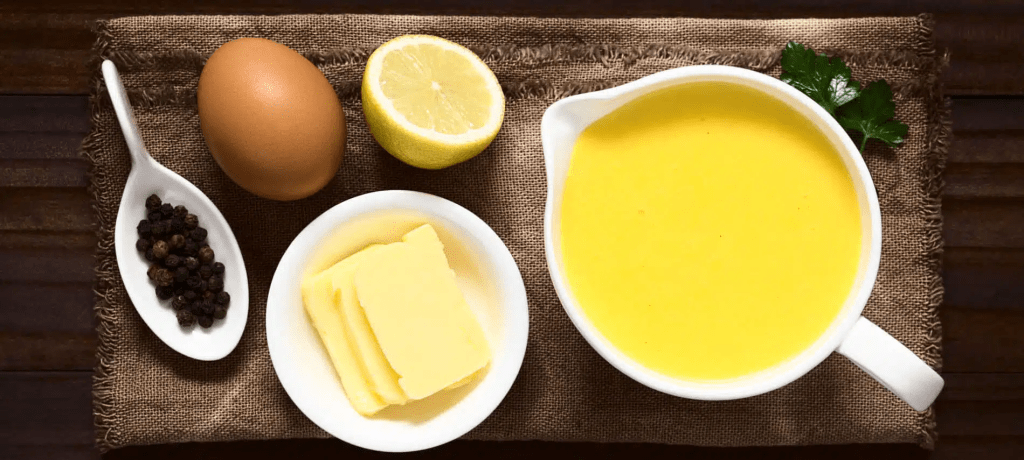
A traditional Hollandaise sauce is a sauce made from egg yolks, melted butter, lemon juice or vinegar, a dash of Dijon mustard, and a dash of nutmeg. It is usually served with fish, eggs, vegetables or chicken. Despite having “Holland” in its name, it’s generally agreed among chefs that Hollandaise sauce was first born in France and was originally known as Sauce Isigny, named after a small town in Normandy famous for its butter and cream. According to history, France couldn’t produce its own butter during the First World War and imported it from Holland – which led to it being known as Hollandaise. A Bearnaise sauce is a close cousin to Hollandaise, but it is usually made with tarragon, shallots and vinegar. Rich, creamy butter sauces used for a variety of dishes today are direct descendants of both of these sauces. I love Hollandaise sauce and rich, buttery sauces in general, and make them quite often, but then I love ANYTHING with butter.
Veloute Sauce –
Veloute is another butter sauce, along the same lines as a Bearnaise sauce. Velouté much like Bechamel Sauce, is a creamy white sauce which is thickened with a roux. While both sauces are smooth, creamy and generally white or cream colored, the biggest difference between them is that veloute is made with a white stock or broth, (most commonly chicken stock or fish stock), and Bechamel is made using milk. Veloute sauce is usually served over lighter meats, like chicken, fish and pork or vegetables. I make veloute variations quite often too. Again, it is the butter delivery system.

Bechamel Sauce –
A traditional Bechamel sauce only has three ingredients, milk, melted butter and flour, and of course simple seasonings. Often, there is a hint of fresh nutmeg used in a Bechamel sauce too. It starts with a blond roux, made by whisking flour and butter for about 2 minutes in a saucepan on the stove. That’s just long enough to cook the flour without browning it to eliminate the pasty taste that comes from raw flour. Once the roux has bubbled for a minute or two, add half the milk and whisk to eliminate any lumps. Then whisk in the remaining milk. A Bechamel sauce can be used for any of the same dishes and recipes as either a hollandaise or a veloute sauce. It is also the base for many cheese sauces too.

Espagnole Sauce –
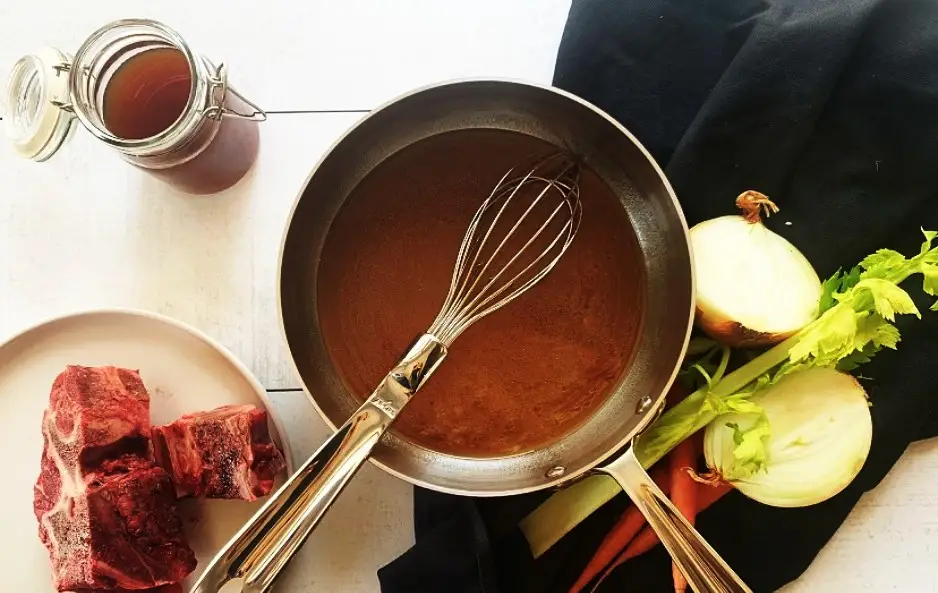
Espagnole (pronounced like the word for Spanish: español) is a basic brown sauce that is also one of the five mother sauces of classical cuisine. It’s also the starting point for a rich and deeply flavorful sauce called demi-glace, which is traditionally served with red meats.
Making espagnole sauce is not too different from making velouté—they’re both essentially stock-based sauces thickened with roux. Where they differ is that espagnole is made with brown stock (i.e. beef stock), and it includes additional ingredients such as tomato purée (which adds color and acidity) and mirepoix, which is a fancy name for chopped up carrots, celery, and onions. These add a tremendous amount of flavor and aroma to the sauce.
The last of the five Mother Sauces is a tomato sauce. We ALL know what tomato sauces are, especially if we eat anything Italian. 🙂 Sauce tomat is one of the classic French mother sauces. It’s deeply tomato-y, creamy without cream, and can be used as a base for braised meat, thinned for soup, or tossed with pasta.
The French, Mother Sauce method of making a tomato sauce –
The sauce starts with lightly browning diced salt-cured pork, followed by softening the mirepoix (finely chopped onions, carrots, and celery) for a few minutes. Add garlic, a bay leaf, a few sprigs of thyme, whole tomatoes crushed in a bowl, and stock. Cover the pot and pop it in the oven for a slow simmer.
All that deliciousness comes with a time commitment. The sauce needs to simmer for a couple of hours to build and concentrate all of those flavors, but that can be done handily in the oven, allowing you to use your time however you please instead of standing over the stove.

So when I say “sauce it up”, now you can sauce it up in the traditional French chefs’ way too. Chef Raymond Oliver says “a sauce is not only the fluid part of a cooked dish, but the very soul of cooking”,(p. xiv, preface, The Sauce Bible, Guide to Saucier’s Craft, by David Paul LaRousse) . Now this, I do agree with. The sauce is what makes the meal. 🙂
Make your day saucy and live it up. Have a great day and make everyday great. Stay safe and stay well. ‘Til next time.

 A Jeanne in the Kitchen
Thanks Jeanne! I think it’s fair to say that Escoffier benefitted from a classification of French sauces by Marie Antoine Carême, published in 1833. He identified Espagnole, Velouté, Allemande and Béchamel.
LikeLiked by 1 person
Merci. I did not know that. 🙂
LikeLiked by 1 person
If you are interested: Ian Kelly wrote a biography with recipes called “Cooking for Kings” about the life of Carême.
LikeLiked by 1 person
Thank you. Yes, I will try to find it. I would be very interested in reading that. 🙂
LikeLike
Monsieur Escoffier was born in the neighbouring town of Villeneuve Loubet which has a museum of the same name there.
LikeLiked by 1 person
Very cool! I would love to see that. 🙂
LikeLiked by 1 person
What a great post! I enjoyed reading about Monsieur Escoffer. You don’t hear about much about him now.
LikeLiked by 1 person
Thank you. No. He seems to have been forgotten and put on the back burners because of all the celebrity chefs.
LikeLiked by 1 person
Virtual visit here https://viewfromtheback.com/2018/11/01/trip-to-villeneuve-loubet/
LikeLiked by 1 person
Beautiful! I would love to visit one day. 🙂
LikeLiked by 1 person
Then you’ll be able to visit me too
LikeLiked by 1 person
That would be so much fun. 🙂
LikeLiked by 1 person
Exactly
LikeLiked by 2 people
🙂 🙂 🙂
LikeLiked by 1 person
Thank you for the excellent tutorial.
LikeLiked by 1 person
My pleasure. 🙂
LikeLike
Lol laughing hard at the chef in culinary school saying that to you! So funny!
LikeLiked by 1 person
He used to tell me that all the time. 🙂
LikeLike
This is a whole dissertation, darling!
LikeLiked by 1 person
🙂 🙂 🙂
LikeLiked by 1 person
😻
LikeLiked by 1 person
I do agree sauce is a very big part of a successful dish, and this was a very informative and educational look at these classic mixtures. That culinary chef should have tasted first…and then issued his “verdict.”😊
LikeLiked by 1 person
Thank you. Chef Andre was still my favorite chef instructor. He was a good guy. I learned so much from him, as well as my other instructors. 🙂
LikeLiked by 1 person