We were down in the Cabo area for one week. Most of my trip was happily underwater, either in Cabo and the dive sites around the area, or Gordo Banks, which was based out of San Jose Cabo, about 30 minutes northeast of Cabo San Lucas. This unparalleled dive site is rich with incredible and abundant wildlife. What a unique experience to dive at Gordo Banks with schooling hammerheads, hound sharks, school of jack, rays and other pelagic life, at least in theory. There are no guarantees in nature and shark sightings are dependent on water clarity, the depth where they choose to swim, currents, moon cycle and other things we can’t control. The banks are between 110-150ft deep (33-45meters), so this dive is only for advanced divers who are comfortable descending into the blue.
I went here for a couple of deep water dives, in hopes of seeing lots of hammerheads sharks and/or lots of mobulas, or devil rays. Larry did not go on this dive with me. I did see both, scalloped hammerheads and mobulas, but only a couple of each. But, it is nature, and these wild creatures follow their own rules and their own agendas. Sometimes they are cooperative, and sometimes not so much. I caught them at a time when they we not so cooperative and decided to do something else at another location. One of the guys I was diving with went back a couple of days later though, and he saw a large school of hammerheads. Go figure. :)
Scalloped hammerhead sharks are moderately large sharks with a global distribution. The most distinguishing characteristic of this shark is its “hammer-shaped” head. They are not known for being aggressive towards humans. Their main sources of food are sting rays or eagle rays.
Instead of seeing this large school though,
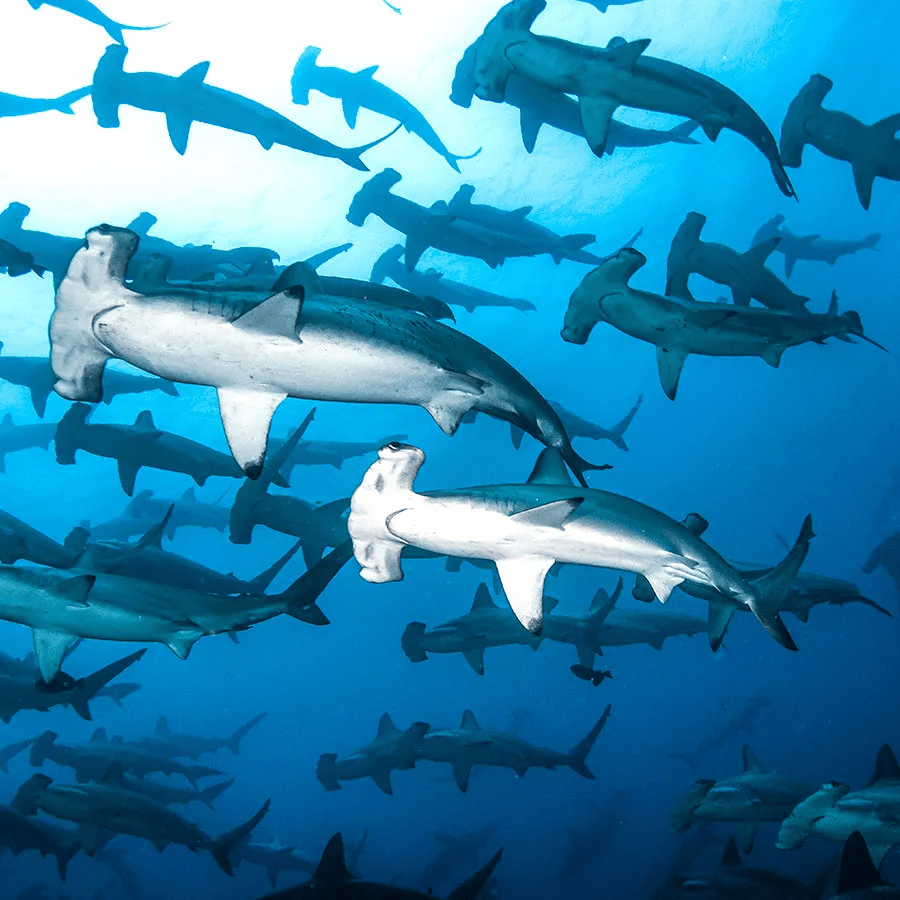
I only saw 2, but the water was very murky, not clear like this picture, and they were down at least 150-160 feet. We went down to 130 feet, which is the limit for recreational divers (though I have pushed the envelope a few times), and they were far below us still. Two, however, is more more than I have previously seen. I saw my first hammerhead in Belize a couple of years ago. So I doubled my sightings this trip.
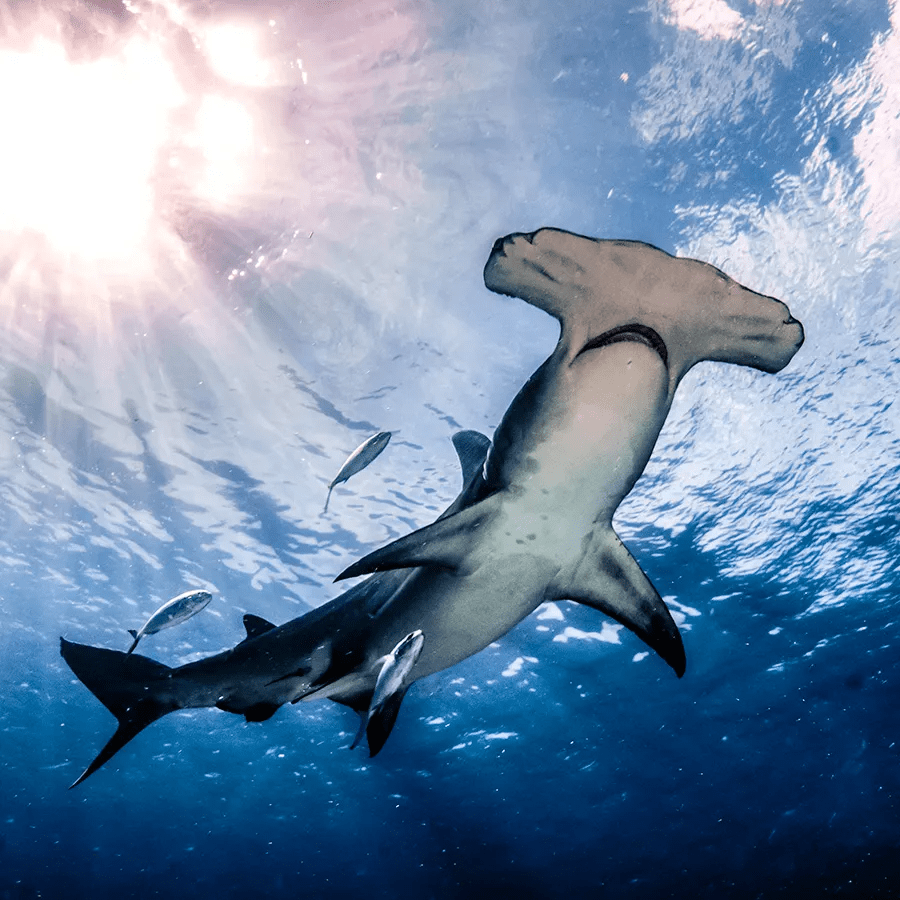
This was our first tank. After seeing the 2 hammerheads, we saw A LOT of nothing but BLUE all around us, in every direction for the rest of the dive.
For our 2nd tank, we ventured into the big blue once again. We saw a couple of mobulas early on, and then again, nothing but BLUE for the rest of the dive, once more.
Mobula is a genus of rays in the family “Mobulidae” that is found worldwide in tropical and warm, temperate seas. Some authorities consider this to be a subfamily of the eagle rays. Their appearance is similar to that of manta rays, which are in the same family, and based on genetic evidence, the mantas belong in Mobula. Species of this genus are often collectively referred to as “devil rays”, “flying mobula”, or simply “flying rays”, due to their propensity for breaching, sometimes in a spectacular manner. These rays gather in groups and leap out of the surface into the air up to around two meters before splashing back into the water. Depending on the species, the devil rays can attain widths up to 1.1–5.2 m (3.6–17.1 ft), the largest being second only to the manta rays in size, which can reach 5.5–7.0 m (18.0–23.0 ft).[3] Despite their size, little is known about the devil rays, much of it anecdotal; the manta rays are better known. Most species entirely lack a tail stinger. In most species having a stinger, it is encased, rendering it harmless.
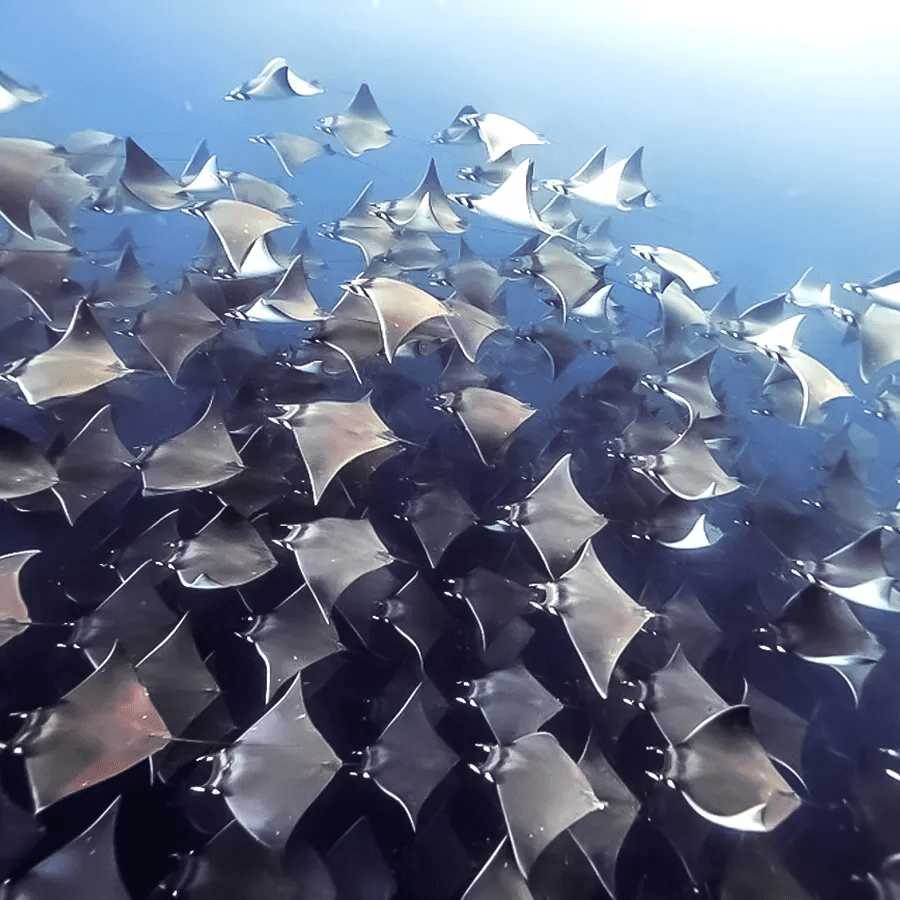
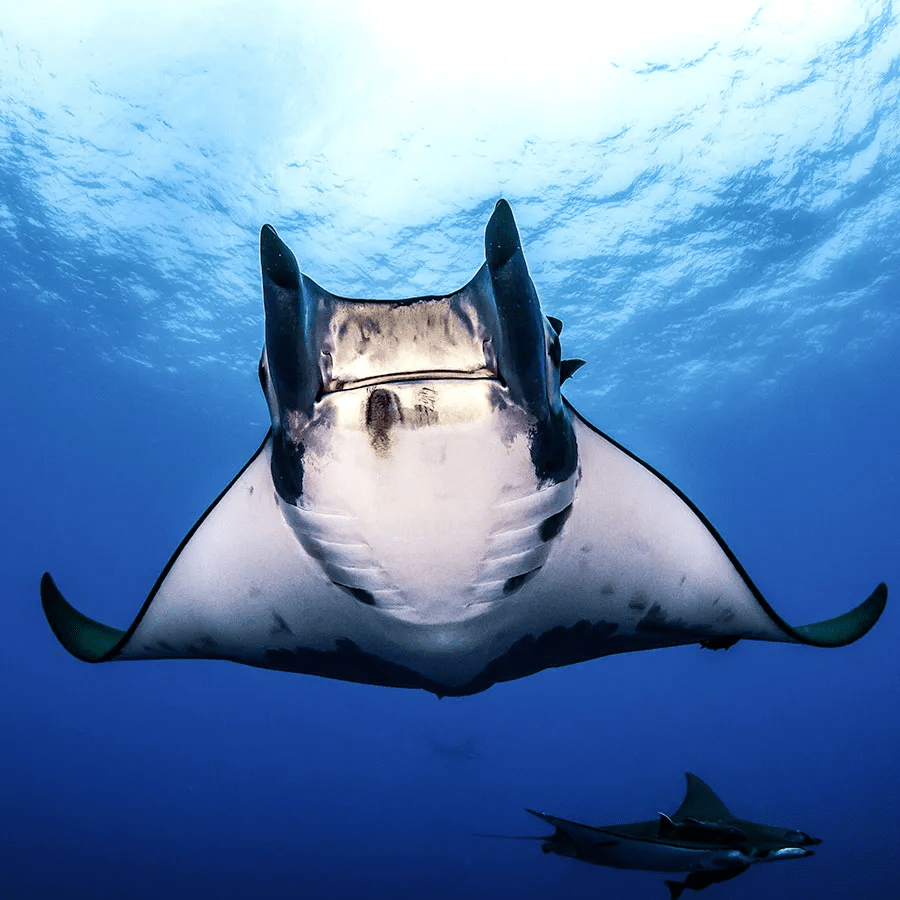
Diving in the BIG BLUE can be scary and disorienting. It is imperative to be VERY comfortable in the water, and at deep depths. Diving like this IS NOT for everyone, and most definitely NOT for beginners. We all had to pass a test of sorts before being allowed to go out on these dives. When we were diving on the first day, our divemaster was rating and studying us, to determine whether or not we were able to do the blue, deep dives. Needless to say, I passed with flying colors. :)
On the way out to the dive sites though, we had quite a spectacular show from the humpback whales. We saw so many. The males were out further from the coast,
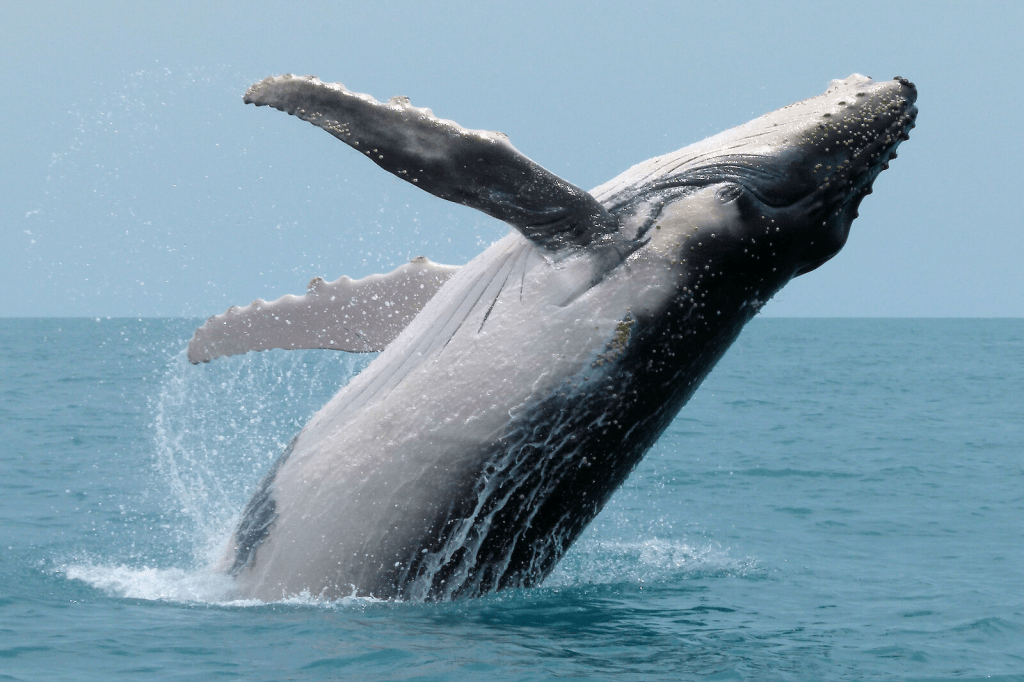
and the females with their calves were close to the shore.
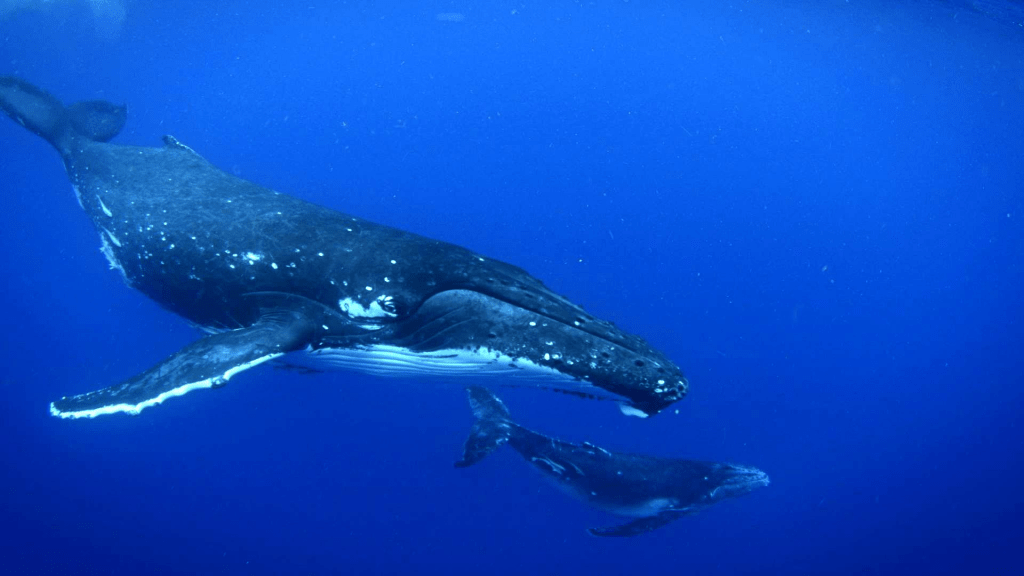
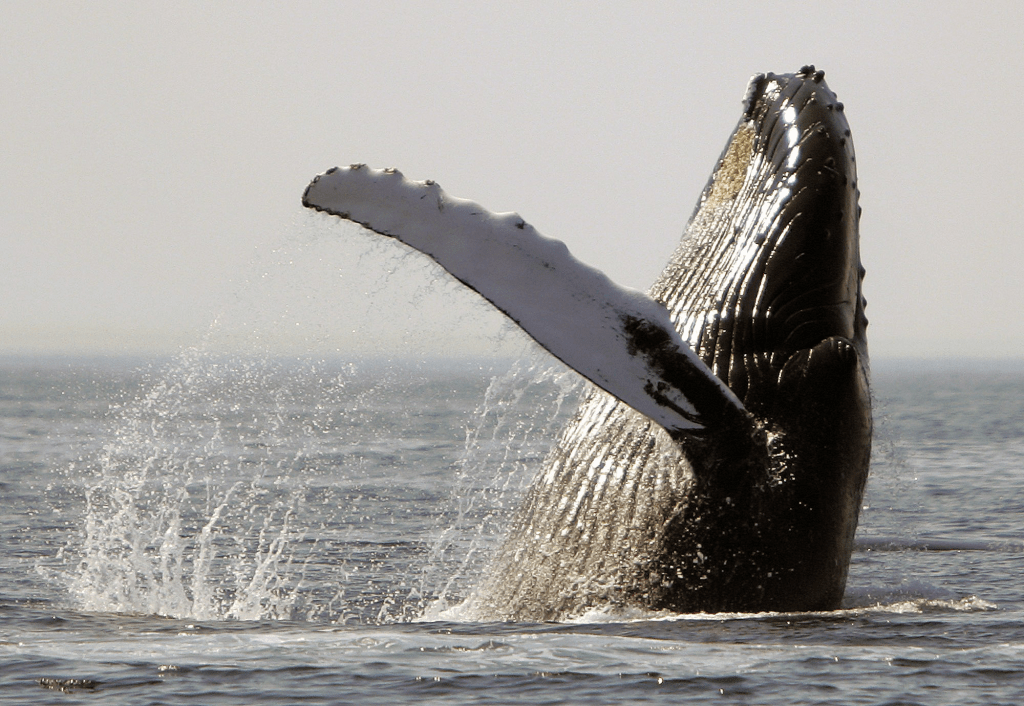
We did catch sight of at least one humpback’s pectoral fin while we were diving, but he was off in the distance, and we really weren’t sure if we had seen it or not until we saw the photos after. We could definitely hear them singing and clicking though all throughout our 2nd dive, so we know they were much closer than we could see.
Though the water was very murky, and visibility was only about 10-20 feet, they were still good dives indeed. I am very glad I was able to have these diving experiences. In my book, there is NO such thing as a bad dive, but many can be challenging, learning experiences.
I am ALWAYS happiest when I am in the water, diving especially. The water is most definitely my happy place. Find your happy place and do the things that make you happy. Have a great day and make everyday great. Stay safe and stay well. ’Til next time.

 A Jeanne in the Kitchen
Fabulous photos Jeanne and that’s as close as I want to get to them
LikeLiked by 2 people
I wish I was this kind of awesome photographer, but I did not take these photos unfortunately. These are stock photos from professional photographers. If I would take photos like this, I would definitely be making some serious bank $$$. 🙂
LikeLiked by 2 people
Wishful thinking
LikeLiked by 1 person
🙂 🙂 🙂 Yes indeed. 🙂
LikeLiked by 1 person
That is fantastic that you saw the hammerheads, and it must’ve been thrilling! 😀
LikeLiked by 1 person
Yes, indeed. They are magnificent creatures. 🙂
LikeLike
This is so incredibly fascinating. Just a thrill to read and experience the dives through your words. Thank you!
LikeLiked by 1 person
Thank you. I LOVE my diving!!!!! 🙂
On a different note, Schippelli’s, the Italian restaurant I told you about that was converted from a church in Castle Rock, had a wall collapse, so it is closed indefinitely. It was 136 years old.
LikeLike
Noooo! I heard about a church that collap[sed. I did realize it was the same one.
LikeLike
Yep. Same one. 😦
LikeLike
Sounds like a good trip! We tried Gordo Banks a few years ago, and we didn’t see anything except for Jellyfish. Visibility during our trip was super poor. Looks like you had much better viz.
LikeLiked by 1 person
Our viz wasn’t great either, but we did see jellyfish and the comb jellies too.
LikeLiked by 1 person
Amazing thrills!
LikeLiked by 1 person
Yes indeed. 🙂
LikeLiked by 1 person