Few people realize how prolific Antoni Gaudi’s work was until they visit Spain and Barcelona in particular. His work and renovations on basilicas is what he devoted his life to, as we have seen in both his works on the Cathedral de Santa Maria de Palma Back From Barcelona – Mallorca #5 – The Palma Cathedral and Sagrada Familia. Back From Barcelona – Sagrada Familia. But before devoting his life’s work to the church, Gaudi was also a prolific artist elsewhere too. Parc Guell is one such example.
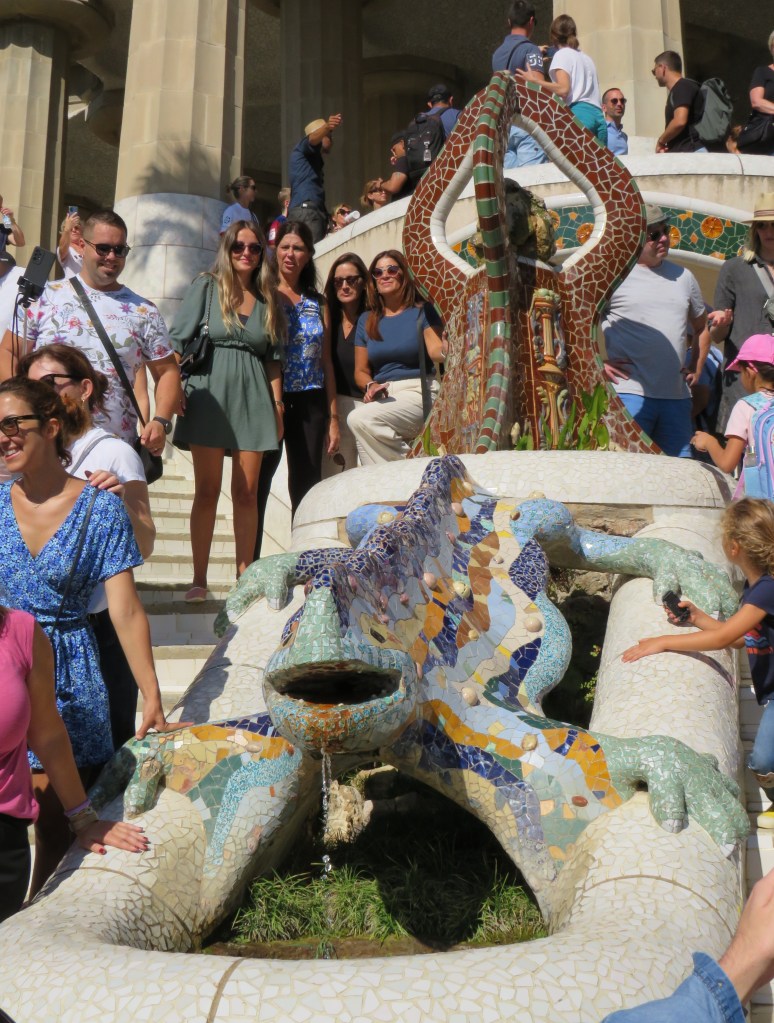
The quirky colorful mosaics and undulating curves of Park Güell are a signature of the legendary Catalan architect Antoni Gaudi, who designed many of the features in this park. Officially opened in 1926 and initially planned as a district for the rich, it is now one of the city’s most popular attractions and a great representation of Catalan modernism. The entrance with two fairytale-like houses and the iconic salamander fountain are the most busy.

Park Güell is an enormous garden with stunning and distinct architectural elements designed by the renowned Catalan architect, Antoni Gaudí. The park is named after Eusebi Güell, a rich entrepreneur and count that had a great passion for Gaudí’s work and who became his patron.
Gaudi planned and directed the construction of the park from 1900 to 1914 for Eusebi Guell for a residential park intended for sixty single-family residences. The project, however, was unsuccessful, and the park became city property in 1923. A lack of buyers led to the works being abandoned in 1914, with only two of the sixty houses envisaged having been built. The park thus became a large private garden, which Güell allowed to be used for public events, while it began to appear in tourist guides to Barcelona as one of the attractions of the city. Though never fully completed, it remains one of Gaudi’s most colorful and playful works.
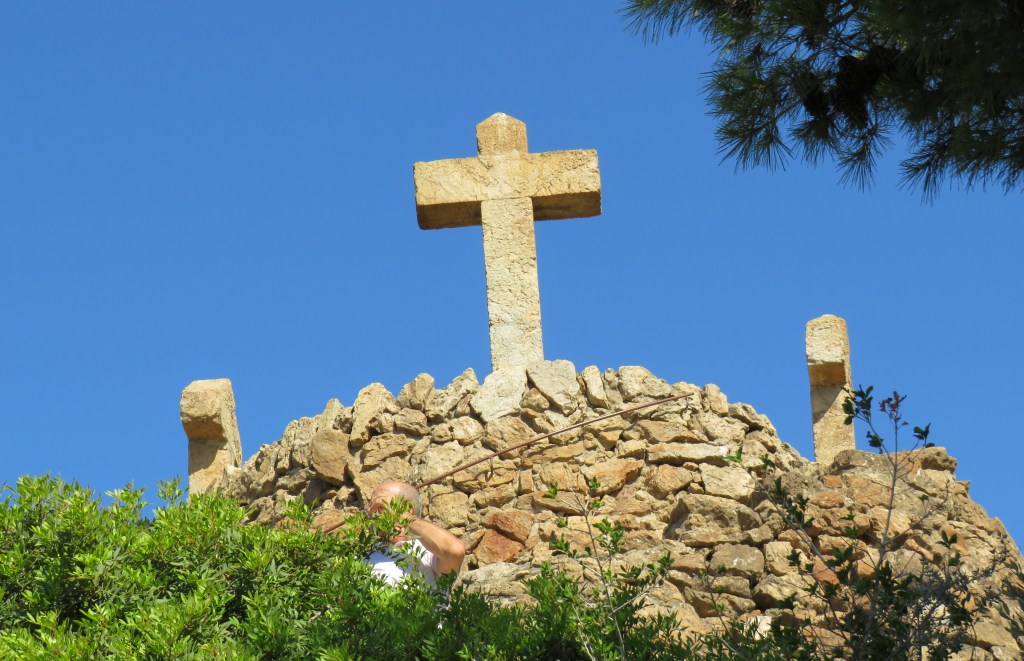
After visiting Sagrada Familia, we decided it would be interesting to see more of Gaudi. Parc Guell it was. It was way up atop a very steep hill, one of many we had to hike before getting up to the park itself. It was most definitely a hiking up steep hills kind of day. Upon entering the park, we had to hike up even more. On the way, we saw the Hill of the Three Crosses. The monument has a circular plan and two ramps of stairs, on top of which are the three crosses and from where there is a magnificent panoramic view of Barcelona. There are two lower crosses and a higher one, that of Jesus; one of the crosses ends in the shape of an arrow. The orientation of the crosses indicates the four cardinal points and the one that ends in an arrow points to the sky, which causes speculation about its meaning. The crosses were destroyed in 1936, during the Civil War, and rebuilt in 1939.
We followed the garden pathways to the park itself, which led us to the winding wall of mosaics and Parc Guell.


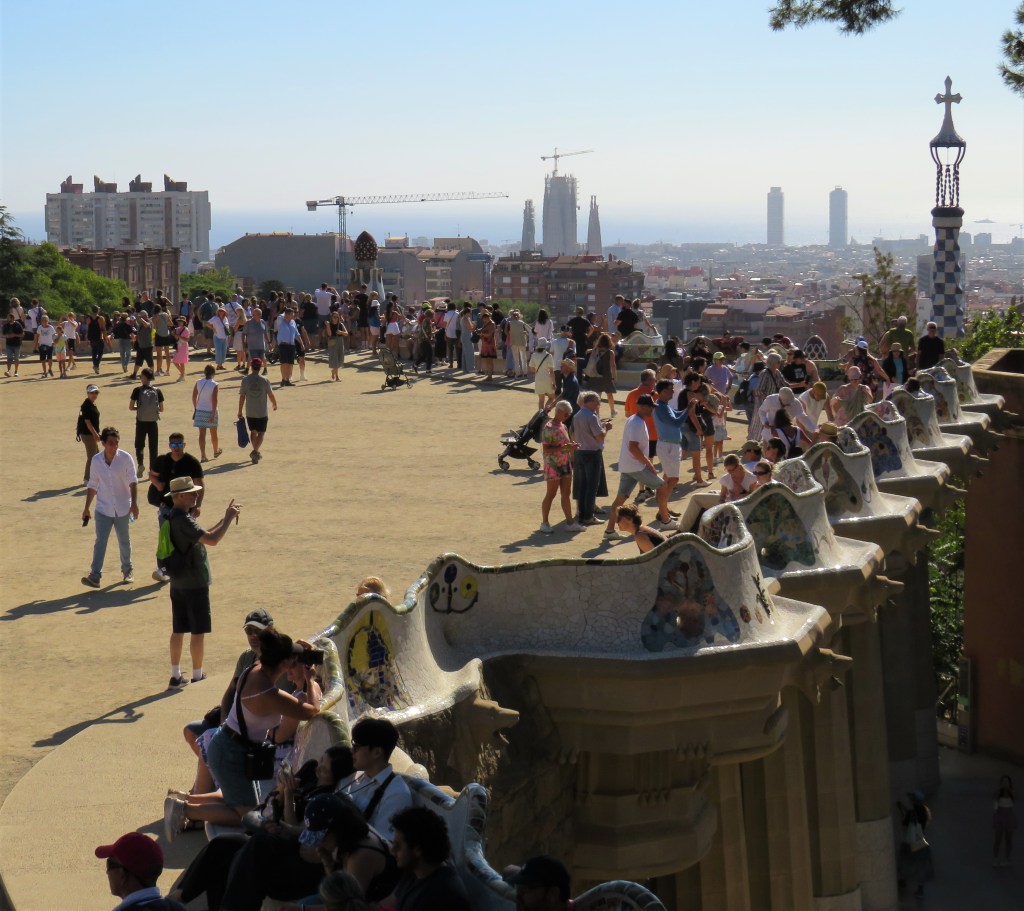
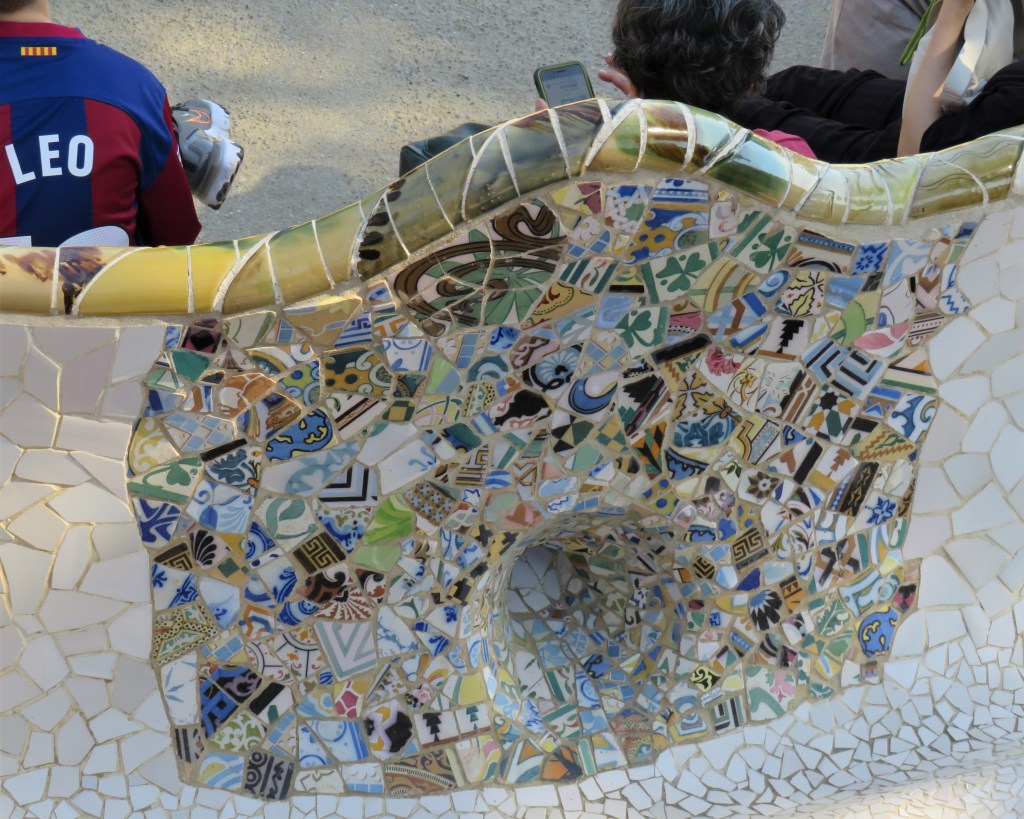
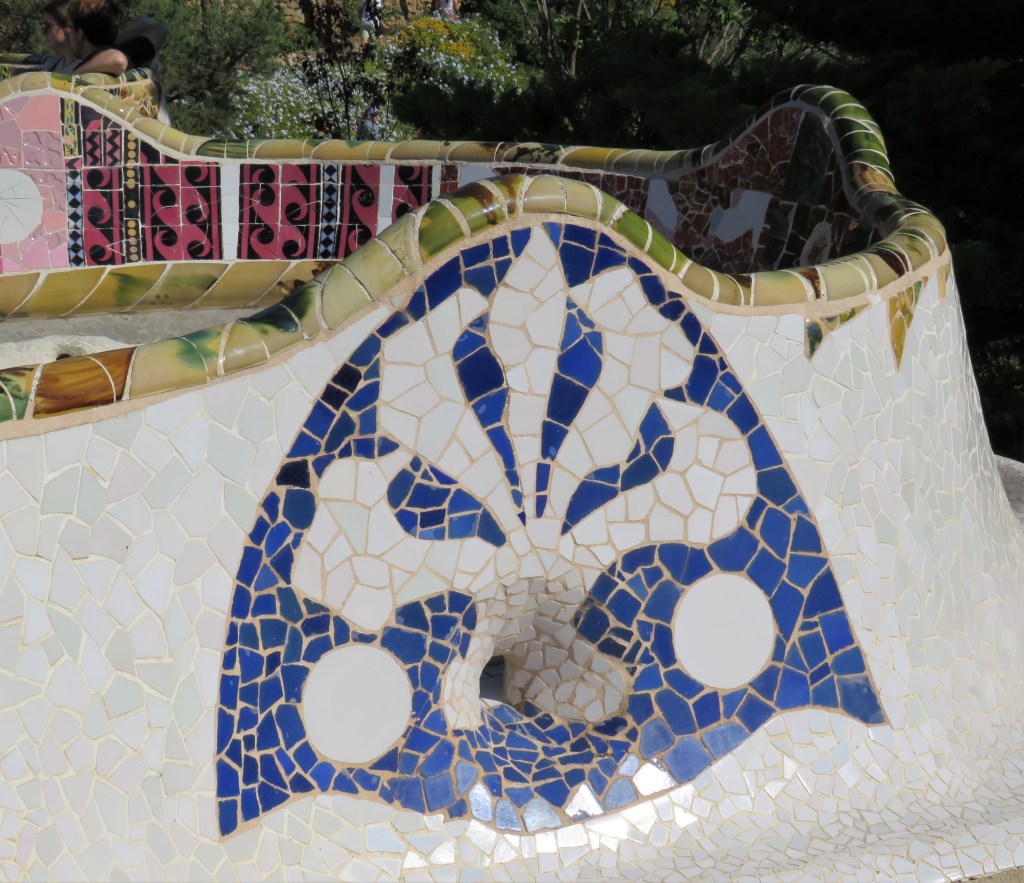

Gaudi let loose his imagination. He shaped nature into colonnades, archways, and covered galleries with well-camouflaged artificial structures. It’s a playground for the mind: visual jokes, like columns that simulate palm tree trunks, rubble-surfaced arches that grow out of the ground, and quilts of ceramic tiles. A graceful pavilion is made of twisted angle iron – cheap to make, looks good, and does not lie about its material, yet its shape is as softly curved as climbing vines.
Inside the column room.

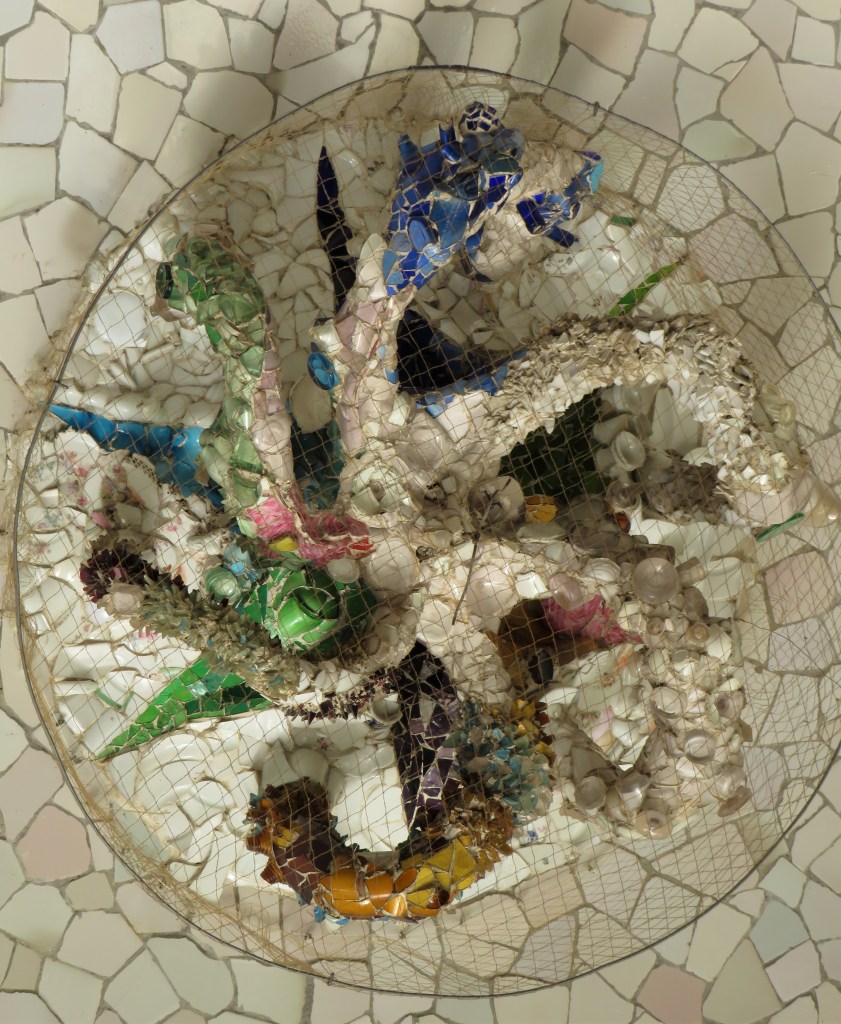
These are some of the many mosaics on the ceiling. I liked this one better.

Larry liked this one more.
The column room leads you to the rest of the park. But before entering the rest of the park, you have to pass the famous dragon fountain.
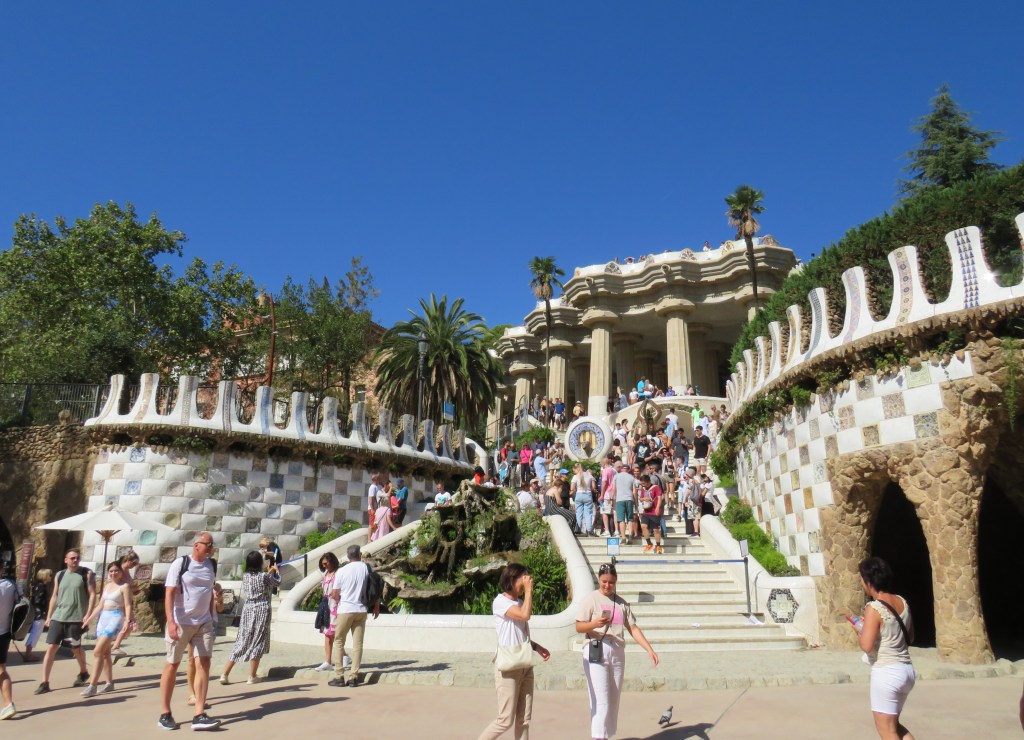
These are the only two houses that were actually completed before opening up the park to the public. We ventured into this one. It was empty, but still very interesting to see.

This house has been turned into a store.
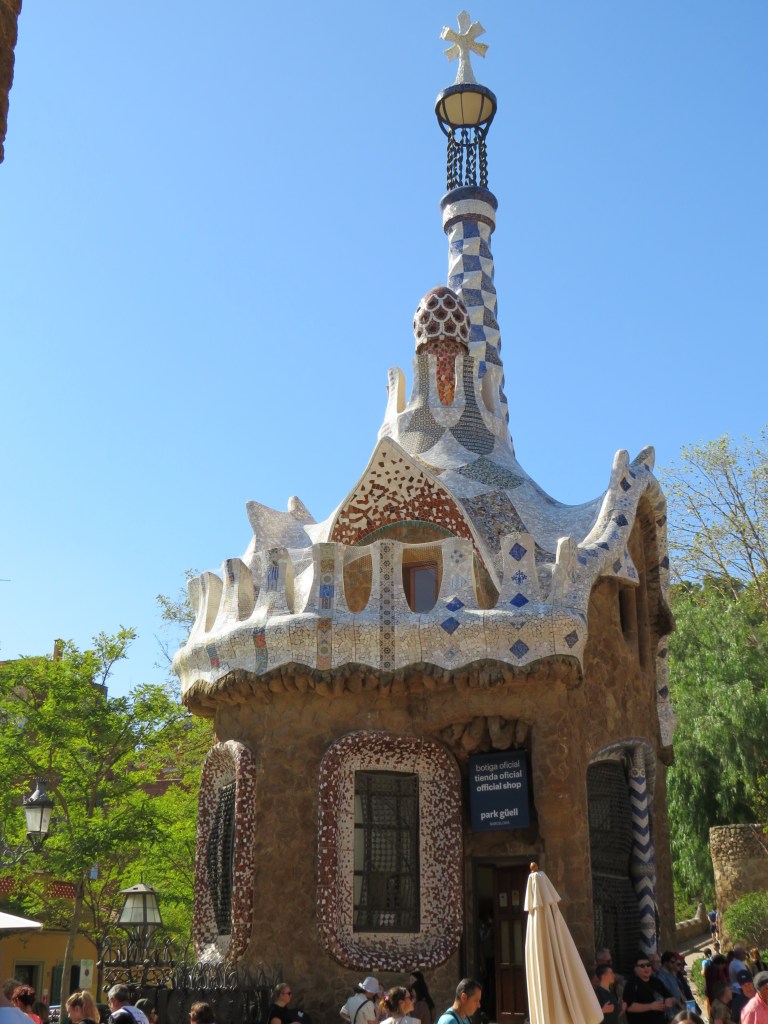
We continued the journey through the gardens. This was actually the house where Gaudi lived until he moved into his studio at Sagrada Familia. We just visited from outside as we were walking by.
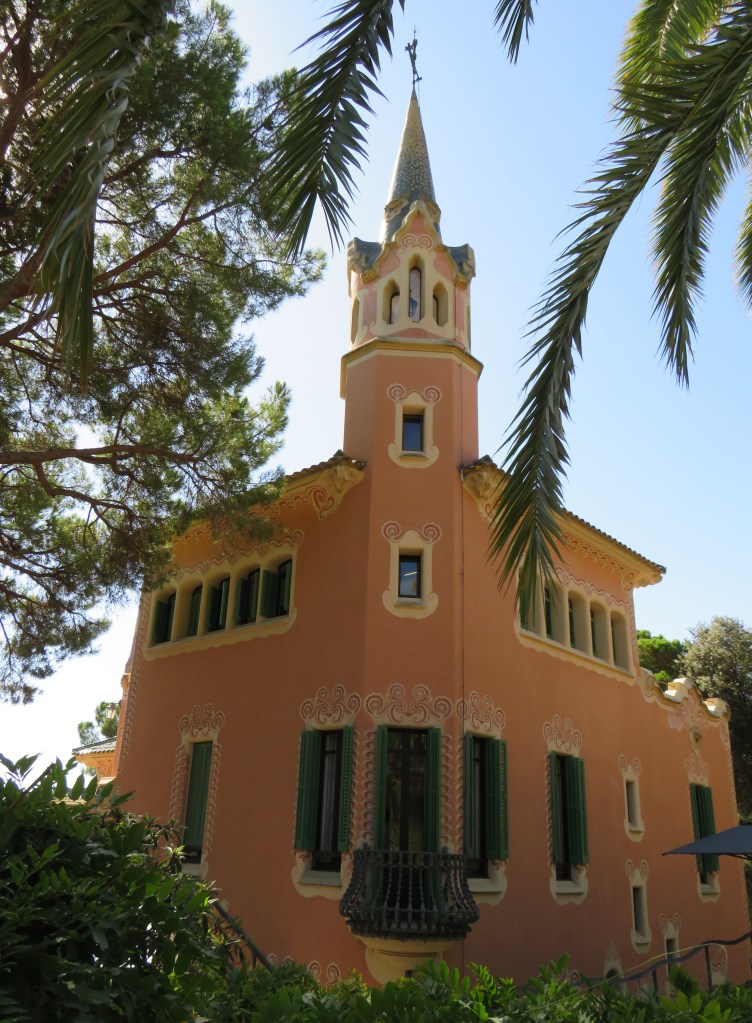
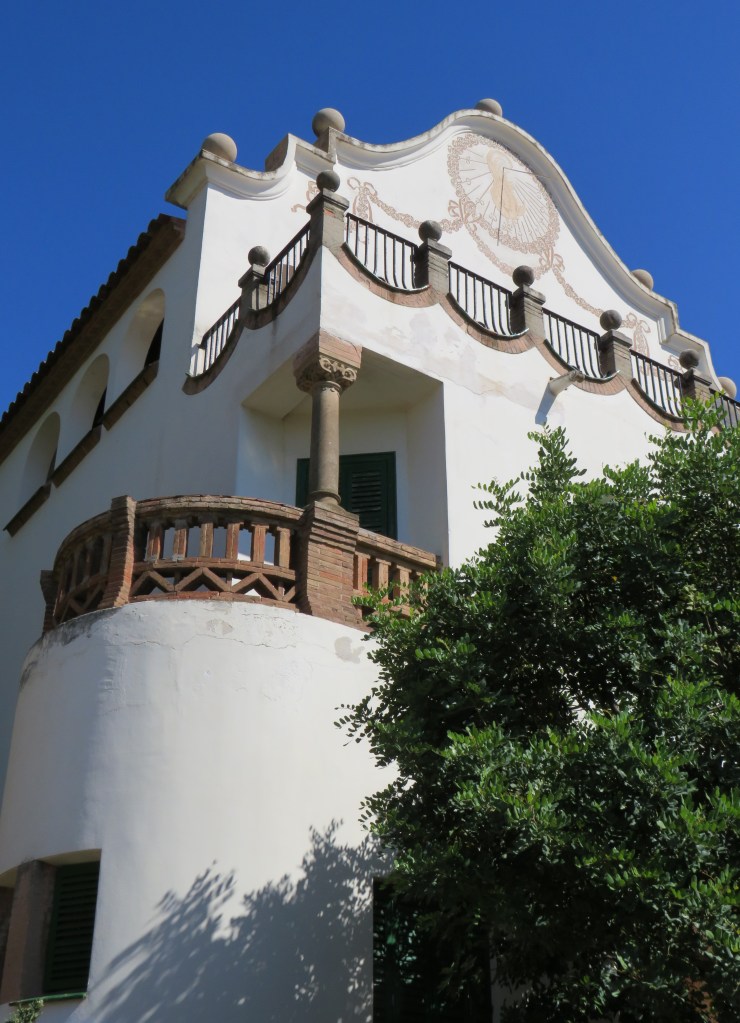
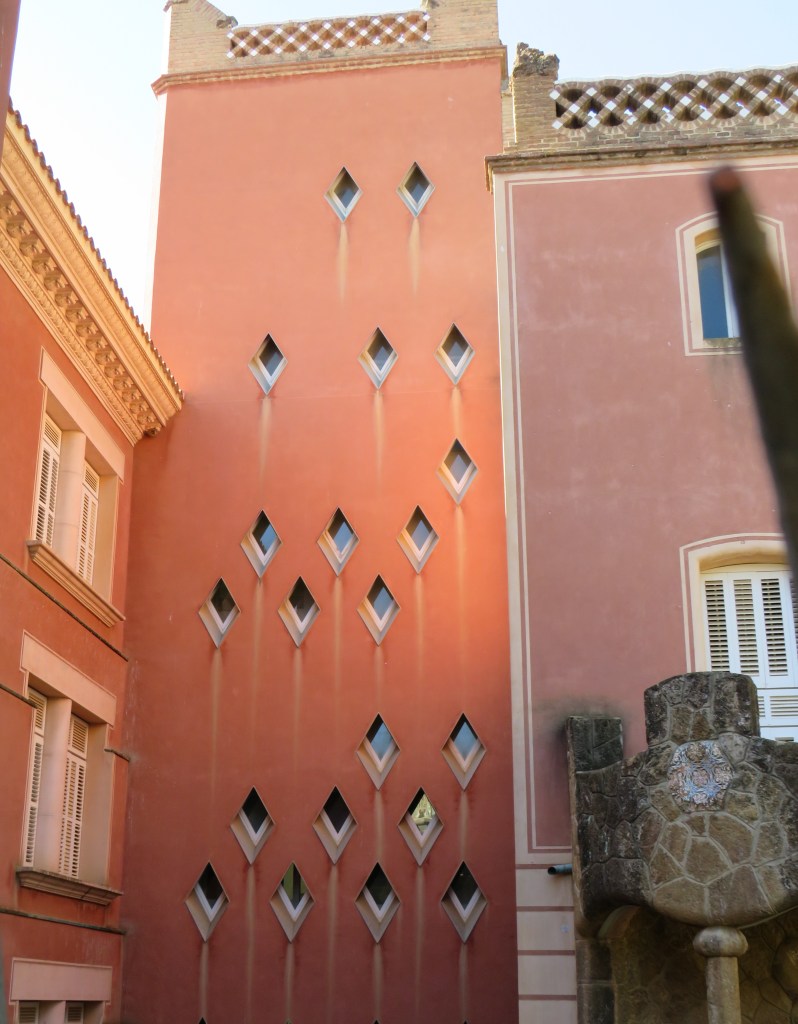
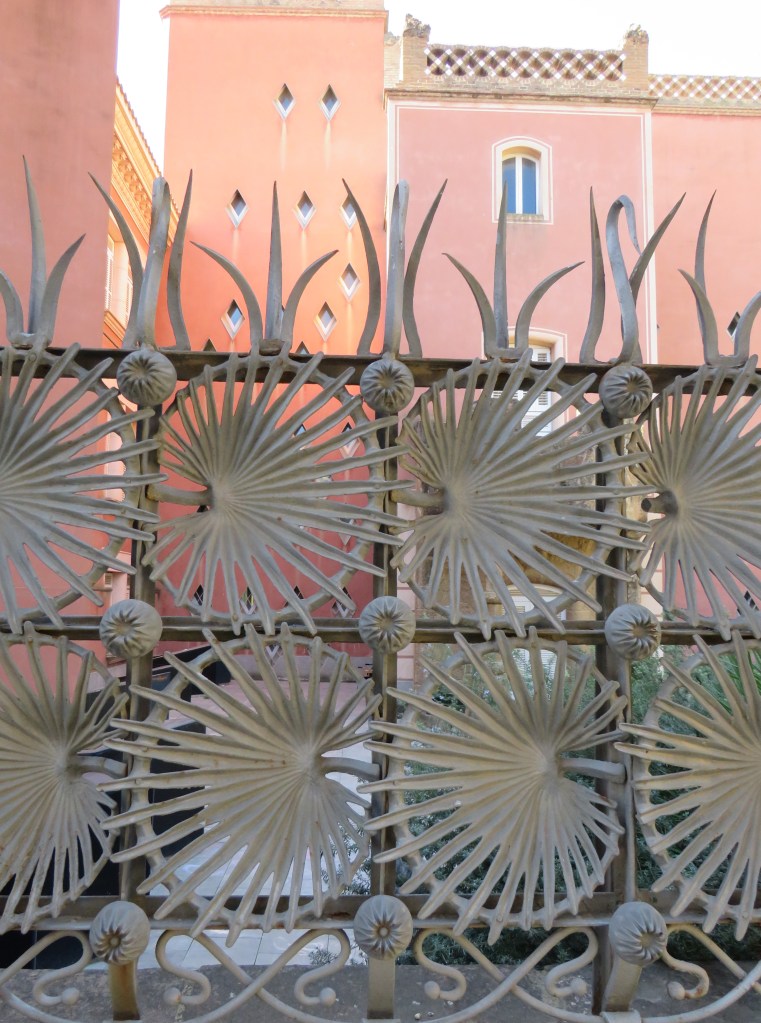
Other houses in the area. They were all very creative and artistic, with a special Gaudi flair.


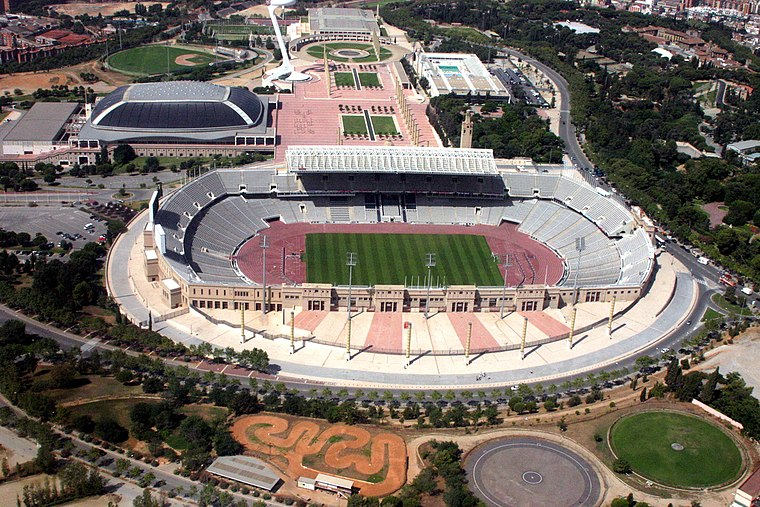
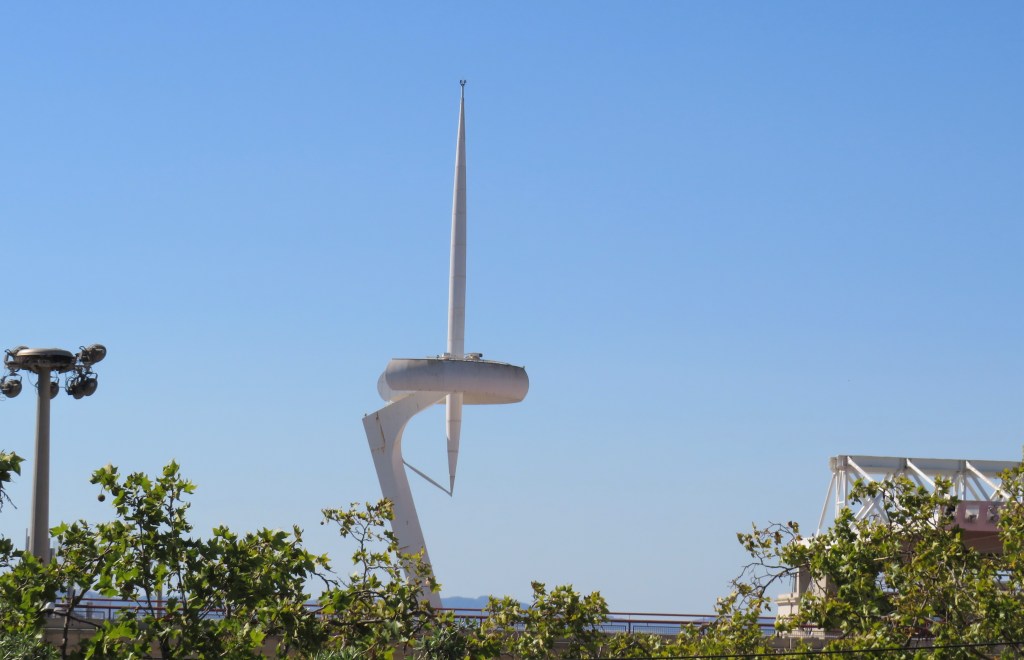
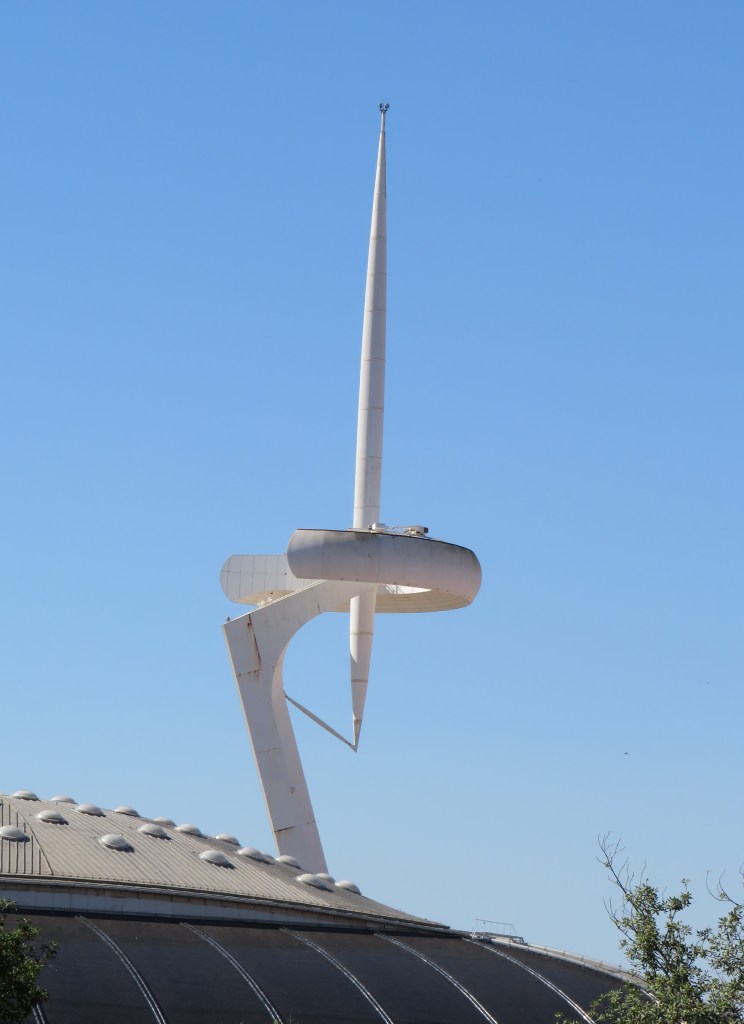
Once we left Parc Guell, we were right by the Barcelona Stadium, or the Estadi Olimpic Lluis Companys, where the 1992 Summer Olympics were held. This is actually near Montjuic (We went to Montjuic as well, but more on that later). We did not go inside the stadium, since it was closed, but we did get to see the Olympic torch.
As you can see, it was yet another colorful and adventurous day in Barcelona. We covered a lot of ground and saw a lot of very interesting things. Barcelona is full of interesting places to see and fun things to do. I guarantee, you will never get bored in Barcelona. 🙂
Stay adventurous and always have fun. But keep your adventures safe (or at least relatively so) and stay well. ‘Til next time.

 A Jeanne in the Kitchen
This is fantastic!! Thank you for this terrific tour of Gaudi’s masterpieces.
LikeLiked by 2 people
My pleasure. I have oh so much more to still share too. 🙂
LikeLiked by 1 person
Do you see me turning green with envy? LOL
LikeLiked by 1 person
I thought I saw a little greenish tint. 🙂
LikeLiked by 1 person
😻
LikeLiked by 1 person
Ditto
LikeLiked by 2 people
Avec plaisir. 🙂
LikeLiked by 1 person
Such beautiful architecture and mosaics and so whimsical!
LikeLiked by 1 person
Yes. Very whimsical indeed. 🙂
LikeLiked by 1 person
Absolutely gorgeous! Gaudi’s work is on my must see list 😉
LikeLiked by 1 person
Barcelona is the place to go for you then. 🙂
LikeLiked by 1 person
Those mosaics are beautiful!
LikeLiked by 1 person
Yes, they are. 🙂
LikeLike